Showing posts with label Rayfield A. Waller. Show all posts

Saturday, November 29, 2014

Rayfield Waller On the Death of His Mother And The Social Death of the United States


City of Children:  Why Ferguson Will Have Little to No Impact on America’s Conscience
by Rayfield A. Waller
The Panopticon Review

Photos:  Officer Darren Wilson's .40 caliber automatic revolver that Wilson used to murder Michael Brown and Black Elitist Avatar, Bill Cosby

"Negroes have always held the lowest jobs, the most menial jobs, which are now being destroyed by automation. No remote provision has yet been made to absorb this labor surplus. Furthermore, the Negro's education, North and South, remains, almost totally, a segregated education. And, the police treat the Negro like a dog."
 
--James Baldwin, 1966

7AM-- 28 November, 2014 - Detroit
 
My mother died this morning. An annoying if well-meaning nurse at the rehab center Mother spent her last year in prattled yesterday that Mother was about to ‘transition,’ and offered to provide my sisters and I with ‘grief counseling’ while passersby in the hallway called her death a ‘home going’.

Just a week ago I spent my last hour with Mother on the last completely lucid day she lived. It was difficult to hold a conversation with her by then; she was only speaking in whispers, with bouts of irrationality and memory loss.

“Are you feeding my cat at the house?” she kept asking me, and I kept gently reminding her that her cat, Mitzi, is no longer ‘at the house’ that mother left empty as her illness progressed, but that Mitzi lives with me now, and is eating regularly.

I mentioned to her that I was trying but was unable to write something about the young man who’d been killed in Ferguson. “Which one is that?” she asked. She had a television on in the room nearly 24 hours but she had not noticed the news reports. “A Ferguson, Missouri cop named Darren Wilson isn’t going to face any charges for killing an unarmed black teenager named Michael Brown,” I told her, and she then whispered to me secret—something I had long suspected or maybe just felt in my bones.

“They can do us any way they want to, the police, and they always made me feel like trash. They were always looking at me, talking to me, touching me.”

“Touching you? Who!? The police?” I asked her, shocked. “Yeah,” she whispered, matter-of-factly, focusing on me with a look almost of accusation, as if to draw my attention to what a fool I must be. “I had good hair in high school, you know,” she said. Indeed, she had been a very beautiful young woman in her teen years—looking like a cinema idol, like Lena Horne. “I was light skinned, and pretty. That was why I loved your father. He was dark skinned, strong, and he could protect me.”

A dozen lights went off in my head at hearing this. It didn’t seem she was talking about having been raped by the police, but rather something in some way more insidious: that she had spent her youth, under segregation, feeling eternally at risk of rape; that she had perhaps even been physically mistreated, pushed around, maybe even fondled by them. I could get her to say nothing more about it. She merely shook her head disdainfully, whispering, “I’d kill ‘em all if I could. They can do us any way.” She then went back to her whispered talk about how I should arrange the little windowsill Christmas decorations I had brought for her.

It had always been in the back of my mind: why my mother in the years of my childhood had been so strangely detached, lacking in many of the typical characteristics of ‘motherhood’. She never learned to cook very well, she was never very affectionate toward us; her love had an edge of spite to it, a coldness that both toughened me and left me wanting affection and attention—two classic drivers that have motivated so many artists, writers, pimps and stand-up comedians to seek an audience or a customer base for whom to perform their art. The benefits of neurosis.

My mother had for years been a shut-in, even when healthy; after my father’s death she had retreated into a world of her own—spoiled by me and my sisters, conceited, self-absorbed, allowing herself to physically degenerate by refusing to push herself, refusing to socialize with other senior citizens. She had the air of a deposed queen. My father had been her king, her entire kingdom made of his lifelong catering to her every serious need and passing whim. It had been hard for me to fill those shoes once he had died. Many times over the decade since his death I have joked that I wish I could dig him up and slap his face for the monster he created of my mother. If not for her flight from reality and from daily struggle after he’d died, her fight with cancer might have been an easier one: she refused to do the necessary physical therapy after cancer surgery that might have strengthened her enough to do chemo therapy, and had she done chemo, it might have saved her life.

But now I was considering for the first time what must lie beneath my mother’s (and my father’s) strange behaviors. My mother’s family, light skinned, fine haired, half Choctaw from Alabama, had not taken kindly to Mother marrying into a dark skinned, broad nosed, though solidly middle-class Waller family full of distinctly Mandinka descended men, the mirror opposite of the somewhat yellow and ‘Dapper Dan’ haired men on my mother’s side. All my life my parents had been almost sickly sweet on one-another, at times even besotted with their devotion. Even during periods of conflict, several separations (but never a divorce), and even when paired off with other partners and lovers, the gravitational attraction between them would always draw them back together.

During my father’s slow degeneration and death in a nursing home my mother dutifully visited him regularly, washed his clothing, fed him by hand, and sat talking to him hour after hour, just as he had brought her offerings of food almost nightly after work, even though they no longer lived under the same roof. I recall an old photo of them just after marrying, before children. The contract between his muscular blackness and her lithe, vivid yellow beauty is arresting.

Despite all my degrees, my being a professor of history, and despite all I certainly know of America’s crimes against us, still I was brought up short by this casual, whispered voice of reality from my terminally ill mother; this reminder of just how rank and ugly America’s treatment of us has been, and that all of us have been touched by it, if not personally, than through the inheritance of pain and humiliation our own parents and grandparents have suffered.

The bitterness and the hurt that I heard in my Mother’s whisper for that moment could have lit the dark side of the moon. Of course she was in love with my father. My father’s own seething resentment of white supremacy during my childhood made him an apt protector of us all. He once tossed an offensive White insurance salesman off the front porch like so much potatoes in a sack, partly because he had leered at my mother—a sharp and clear memory of my childhood, but the meaning I now realize, may have been lost on me: I came to know my mother and father in the 1970s—my earliest coherent memories of them—during a time of uproar and of protest; a time when Black power was giving efficacy and a voice to my family and to all the adults around me.

But my parents did not come into existence in the 1970s. They were both born in the 1930s just after the grip of the depression had released my grandparents but while lynching, violence, and the most horrifying brutality was still legal or at least permissible in the United States. Even after the two sides of my family migrated North, the more urbane forms of brutality and threat to Black life and limb lived on in the occupational forces that terrorized Black men and women in the cities: the police.

Of course my mother, beautiful, intelligent, gifted (she might have been a great visual artist had she not been born Black in Detroit, and the consensus among her family and friends were that she would certainly have been a famous model or an actress), made a choice early in her life to be SAFE rather than to risk disapproval or worse yet, too much attention from Whites. Of course my mother retreated into the strong Black arms of my father, retreated from risk, from the world of Whites, retreated even from her own beauty and genius, and though she forever regretted not becoming an artist, contented herself with being safe.

We live in a country that prides itself on memory loss, on repression of real feeling and thought.

On the morning before she died, I was inundated by many of the medical workers, surrounding patients who’d made friends with Mother, nurses, and other people around me with the kind of psychic dissonance that is common in the presence of imminent death. Losing my mother was bad enough without having to also endure the hardship of maudlin American folkways and platitudes. In the United States the bourgeois language of death is a presumptuous syntax whose vocabulary of clichés is often thrown like so many bric-a-bracs at our heads. I am only at the start of the ritual, for I still have the indignity of selecting a final overpriced catafalque and an ignominious hole in the ground, with a funeral as the necessary linking verb. Having begun in the death room itself yesterday the spectacle will now move to a wake and a funeral, ending with a gathering of strangers posed as family at some agreed-upon grave site somewhere under the dubious, soothing anointing of a priest or minister or a rabbi. All of them, earnest as they will be, able to  say nothing that can fill a void in us as easily as the void of the grave will straightaway be filled by a narrow box.

This ritual response to death may comfort some, but on the day of Mother’s departure from me it all seems insultingly mollifying to anyone who must endure death or witness it happening to loved ones. It is meant to garble our emotional responses to a primal experience of pain when the beloved is torn from us. Death after all is humanity’s most dreaded consummation, father of a hundred thousand poems, threnodies, and Kaddishes of lament. Like war and childbirth, death is one of the universal terrors implicit in the rite of adulthood. If one is inclined to this, it must be comforting, I suppose, but if not so inclined it seems an insult to have one’s proper adult grief sullied by clumsy rituals or superstitious folkways meant to blunt the reality of the finality of separation. “My mother,” I snapped at a rehab worker, is not ‘going home,’ she is going off into oblivion.” It is I’m sure, just that; the same oblivion we are all bound for and that rounds our lives into a perfect circle from somebody’s womb (the mother I’ve lost) to everyone’s  tomb (Mother Earth), and I’m fine with that—if people would just stop prattling and leave me alone with my grief. It was a cruel thing to say to the innocent but it was the only way to make the nurse leave me alone. She later wheeled into the death room a cart laden with ‘Chips Ahoy” cookies, graham crackers, and a carafe of coffee for me, my sisters, and my two brothers in law.

I later apologized to her. Suffer the children, right?

As I said, this is a country that renounces deep reflection or critical analysis of any sort, and in which not even many Black people will face the actual scars we all carry of a real history of brutality and exploitation meted out even against our families’ older generations. Far less likely are White liberal TV news analysts or White policy makers or elected official to look honestly at the balk the Negro carries and see their own Anglo identity and their own possible future, or see their own European Ethnic grandparents’ perhaps too-shameful past as refugees rousted from their shtetls,  ghettos, forest encampments, villages, and peasant shanties across Europe, to be cast afloat on a desperate journey to New York Harbor and packed like cattle onto Ellis Island to have their ethnic names scoured and sanitized via Anglicizing them, next to  be processed like so much chum, before flooding into the tenement kingdoms of early twentieth century industrial America that surely then and does now have a plan for them and for making a profit off of them.

Not even those who are proclaiming their identification with the murderers of Michael Brown and of Trayvon Martin (Trayvon’s killer himself a son of a Cuban immigrant and a white American) can or do honestly confront the actual inner lives of their own grandparents. Not every TV yawping head is a Dave Zirin; too many are cut rate Sean Hannitys who’ve conveniently forgotten their Irish immigrant roots. We are living out the myth of Sisyphus. No progress ever can nor ever will be made in terms of race, because we are constitutionally unable to face the original crime of race in America: the Transatlantic Corporate Slave Trade and the human chattel industry it nurtured; the settling of North America by the clearing project of genocide against Native peoples followed by the multi-BILLION Pounds Sterling and American Greenbacks in primitive accumulation through slave labor (a model for later industrial and current service industry WAGE SLAVE LABOR) that literally built an entire continent, cleared the woodlands, harrowed and excavated the mineral wealth of the wounded Earth, established an agricultural base, then founded a new industrial power, with its attendant continental infrastructure of roads, bridges, waterways, ports, railways, and highways. All of these things were either constructed literally by captured African labor or by the wealth produced by captured African labor.

All the putrid, red herring debates going on now in the media over whether or not Michael Brown struck Darren Wilson about the face until he was blushed, rushed at Wilson, attacked him, whether or not Mike reared up ‘like hulk Hogan’, like ‘a demon’ or mighty beast and roared, sending shards of fear through the poor defenseless (except for his .40 caliber automatic service weapon) cop who in his raw, gut wrenching terror at Giant Negro Mike’s superhuman monstrosity had no choice but to shoot him repeatedly until dead, are absurd and typical avoidance of the point. What if Mike did rush headlong into certain death (after all, even Hulk Hogan himself would have been put down by several shots from a 40 caliber automatic)? What if Mike, like me with my mother’s nurse, like you stopped on your own doorstep by the cop who doesn’t believe you really live in your house, or like hundreds of thousands of other Black men in America, felt on that day that he was tired of being tall, hefty, strong, but restrained by the social conditions he lived under? Or, what if he was just like so many other young Black men—like the hundreds of young Black men I have seen in my university course, who are full of testosterone and energy and frustrated force and who lacked good judgment since after all, he was just a mannish CHILD despite his physiogamy? Likely if he had lived he’d have been a child tried as an adult for assaulting a police officer. Since he’s dead, it is his murderer, an adult, who seems right now to be going through public trial as a child. Again, Americans would rather preoccupy their public discourses with potboilers, spectacle, lurid gossip, thrillers, and titillation rather than the history of repression and containment by occupational forces posing as police, who, in the case of Darren Wilson LITERALLY ‘demonize’ our children as beasts.

How does history square with Darren Wilson’s apparently unconscious, overt appeal to Black male ‘brute’ mythologies? His rankly racist testimony to the grand jury he sat before, the transcripts of which are now available but whose shockingly primitive, backward leaning, old 1800’s anthropological racism few news outlets other than MSNBC and few commentators other than Dave Zirin have the willingness or the intelligence to directly comment on, was sprinkled heavily with classic, absurd claims of feeling ‘like a child under attack’ by the supposedly hulking, brutish, superhumanly mighty beast-like assault of an unarmed young Black male whose very Blackness was and is a deadly weapon requiring the use of deadly force to mitigate or to subdue.

The childlike non-response of media, of average folks on the street, of commentators, and slack-jawed, slack-minded politicians betrays just how underdeveloped Americans are intellectually, at this point in American devolution.America is more like an enormous city than a country. Burgeoning, low-brow, and petty, this glorified city. Every state has the same stores, the same eateries, the same non-news stories, the same fondling of shop-worn myths and lies, the same retreat into nostalgic, self-protective racism deployed by Anglos who wish to guard against looking at their own oppression under late capitalism, via the tactic of demonizing Blacks and Latinos. There is in city to city the same meandering, illiterate retreat into ferocious consumerism by young American Blacks who desperately want to guard against the daunting task at hand, which ought to be their historical imperative to continue their grandparent’s legacy of freedom struggle. Each state, like a glorified neighborhood in a city, is populated by the same people—the smug but fragile middle classes, the beat down though still struggling working classes--some of whom manage gamely to keep the union movements and anti-foreclosure movement afloat, the sold-out, cynical elder Black opportunists whose avatar, we now see, must have always been alleged rapist, Bill Cosby—the 60 and 70-something Blacks who once waged a civil rights struggle but who now recline on the residual economic benefits bled for by the masses but now accrued by a Colored elite. The same things coast-to-coast, the same people, many of them thinking and doing the same things, believing the same lies. One might think there is no originality or creativity left to the place—it’s like a great big mean spirited mall.

But last week Mother had these words for me also: she told me as I was about to leave that she loved the Christmas decorations I’d tediously arranged for her under her whispered direction. “That’s so beautiful. I like beautiful things. I wish I could give you something.”

I kissed her forehead and smiled down at her. “You gave me a childhood, Mother,” I said, “And from that I made myself an adult.”

This is the challenge of this glorified city, city of children that is America. We won’t learn anything at all from this latest destruction of a young Black life, but mark these words, you’ve heard them before: when we finally embrace who and what we all really are and where we came from, when it becomes just as routine for young Anglo lives to be destroyed with impunity by a barbaric, militarized police force, the lesson will suddenly become quite clear. That and only that will mark childhood’s end in this petty little city we call America.

Where ever you are now, Bessie Lee Dukes-Waller, I love and thank you for the life you gave to me.

Thursday, August 14, 2014

Rayfield Waller On The Murder Of Michael Brown, White Supremacy, the Mythology of American Society, Incipient Fascism, And What It All Means--For Real

In America a Black Man/Child is Seen As a Beast, not a Man
by Rayfield A. Waller
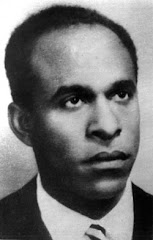
RAYFIELD A. WALLER
Michael Brown's death at the hands of some racist, probably psyched out cop geeked up on America's constant, saturation media fount of dehumanizing imagery and mythology about the young, Black male body, is just another urban street execution of a young Black man/child, because in America a young Black man/child is NOT a man, not a child, not human, but a terrorizing threat; cops see the young Black male as innately threatening, as a physical danger, and as a death sentence for all cops everywhere, waiting to happen, sauntering insolently down the urban street, potentially blocking traffic (and therefore blocking precious commerce), potentially raping little Anglo girls, snarling, drinking forty ounce beers, scowling, urinating up against buildings, and most crucial of all LURKING AND PLANNING TO KILL COPS. It little mattered that Michael Brown was and did none of these things.

I’m talking about what the Young Black male is in the eyes of the police, not in the eyes of we average citizens, not in the eyes of all who know, who teach, and who nurture young Black boys, those of us who are hurt and outraged now--the Blacks who are bitter and angry, the Anglos who are saying, ‘hey, wait just a minute here, another Black boy shot?? This is not supposed to still be happening in MY lifetime, my middle school civics textbooks told me so’.

Not in YOUR eyes, reader, but in the eyes of the Po-Po’s, in the eyes of J Nab, of One-Time, of the Shark-in-the-Dark, Justice in a Can, John Law, Johnny Take Down, the Smooth Cruise, the Cops, the Jaw Breakers, the Screw Crew, the Concrete Justice Squad, the Chokers, the Shakedowns, Sudden Deathers, the Cocaine Thieves, the Occupation Army (just a few of the affectionate names for the police we use here in Detroit).

In THEIR eyes a young Black man is a ('potential') criminal, animal, oversexed, hulking, threatening, beast with superhuman strength who must be shoot five, nine, thirty times even if unarmed, who can and will yank the squad car door clean off and pull the officer of the Law out with one hand like Mighty Joe Young, and bite that officer’s penis off, then hurl him 100 yards through the air like a rag into a wall then saunter over to stamp the officer’s head flat as a pumpkin. Unarmed? No Black male beast is ever without arms--his ARMS are his arms.

The police are racist, yes, but it goes far deeper than that; the police are an occupation force in ethnic Brown and Black communities, period. In 2014, long after the idealistic TV images of 'Adam 12', 'The Rookies,' 'NYPD', and 'Cagney and Lacey', back when 3 out of 10 schoolchildren when asked would say they wanted to be 'the policeman who protects people some day', the present-day police in abandoned, unemployed, crumbling urban America are like the rear-guard on the frontiers of a collapsing Roman Empire, left behind just like the 'barbarians' they guard local property against.

One of the chief concerns of what used to be 'citizens' police review boards' and of various city hall citizen consultants, community organizers, citizen lobby groups such as ACORN, and public policy auxiliaries to city council committees, was not just police brutality but the underlying economic causes of police brutality (going deeper than simple 'racism'): lack of community policing; lack of cops trained well enough to walk a beat, not just cruise the streets; a representative ethnic makeup to local police forces that mirror the ethnic makeup of the communities they police; the extant powerlessness, economic and political, of poor, Black, and Latino communities; the overall economic health of the cities themselves and of their economic base; and most of all, the issues of segregation, of red lining, of blue lining, and the occupation mentality that arises from these social, political, and economic injustices once they become fatally STRUCTURAL and SYSTEMIC.

The loss of democracy in America, combined with the relentless ratcheting up of economic injustice over the past thirty years, and a collapse of social mobility, education, and employment, (matching the disappearance of citizens' review, political auxiliaries, community organizations, and citizen consultancy) all create the atmosphere in which the racism, corruption, and out-and-out violence of inner city police grows and thrives. We can assume, in advance of the details that will surely come about Ferguson police and about the particular currently unknown cop who murdered Michael Brown, that his murderer was, or was a cohort among, the kind of cops who in large numbers in urban America, are pension and salary-reduced due to austerity, are middle tier state school (or even increasingly online and low tier for profit college) criminal justice program graduates, are failures, many, on their last go at passing the detectives' exam, are filled with myths by the local police academy, are seeing their traditionally racist national union losing clout steadily, and are the PENULTIMATE consumers of semiotic myths about Blackness and about young Black masculinity.

If we multiply every fearful stereotype, every dehumanizing racist, sexist, White supremacist fantasy that every comparatively well-spoken, politically crafty inner city police commissioner for the past generation might have or might have learned from Hollywood, by a HUNDRED we get the beat cop. The beat cop is the much less sophisticated, politically careless, non-articulate (at least when it comes to communicating rationally with the citizens he patrols) guardian not of citizen safety but of local commercial property and the exact degree of civil order that allows daily business to function and turn a profit. He is often an Anglo (but sometimes a just as disconsolate Black), over-equipped, under-educated, over-stressed unto PTSD, divorced, sometimes alcoholic, even sometimes drug addicted, 'spam in a can' enforcer of occupation, alienated as hell from his (or her) assigned patrol community, and saddled with yes, a typically American urban police mentality that includes racism.

Here’s evidence:

1. Why did the cop get so bent out of shape by these kids walking in the street? (Why do YOU and ME get bent out of shape? You urban readers, you know you do. If you live in more depressed urban centers or in underemployed Black exurbs like Ferguson, in the inner cities of Chicago South, Detroit East, Philly South, NYC Bronx, LA West, or where ever American city streets have become broken, dilapidated, overgrown, with few or no sidewalks left as passable, young Black people WALK IN THE STREET, because America is now a 3rd World nation, a debtor nation, a nation whose neglected infrastructure is collapsing, and people cannot walk on many of the sidewalks anymore–poor and working class Black neighborhoods don’t even HAVE sidewalks anymore, not from street to street. I see it every day in Detroit, and it annoys me to have people walking where I need to be driving. Well, It doesn’t just annoy the police, it frightens them, it triggers them, it upsets their instincts, it makes them crazy, jumpy, AFRAID because they dread seeing beasts who might shoot them as they drive by, walking in the street--I've observed this irrational behavior among Detroit police, most of whom are Black).

2. Why did this cop attack not the smaller, dread-locked, more intelligent, more articulate, in fact uncannily articulate friend of Michael Brown, who was the one talking back to him in the first place (and now ironically is the one speaking and talking and witnessing and talking and TALKING in the media right now in his very well turned southern accent, his very competent vocabulary, his very sympathetic calm, respectful objectivity about his friend’s murder, hammering those coffin nails into this cop’s judicial fate with each well-turned phrase)? Better he had attacked THAT young man, not Michael. Why did he kill Michael? Because he FEARED big, strapping Michael, even if he didn’t even know he feared him. He might even have been planning, when he pushed his door open so violently and hit the two boys, only to have the cruiser door bounce back and hit him, to harass the one who was TALKING, but when that door hit Michael, Big Mike, the cop’s innate, American, Anglo, racist CONDITIONING took over and he reached out and took Big Mike by the throat, I'm guessing, and ultimately shot Michael in the face. When he drew his gun, Michael, who was no fool, RAN, perhaps ran having already sustained a facial gunshot wound. Running is what I would have done. Michael looked at that gun, looked into that cop’s eyes and saw what was to come, as I have seen myself, in the past. Luckily for me, the Detroit cops never drew on me–they simply beat me senseless with clubs, and I count myself lucky it was clubs, not guns. Yeah, Ivy League degree possessing, university professor scholarship boy me. too. America is a tough town if you’re Black.

3. Why did he shoot at an UNARMED Black boy IN THE FACE, REPORTEDLY, unnecessarily, and then shoot him multiple times even though his arms were raised? Didn't he know he would go down for that? See #1 Above.

Finally, here's some international context: remember Tienanmen Square in China? Remember the huge pro-democracy demonstrations carried out by young, college aged Chinese people in their capital city? Remember how the Chinese ruling class reacted, despite the fact that 35-50 percent of those crowds were night-to-night composed of their own, literal, CHILDREN (reports varied on the percentages, but it is a FACT that some percentage of those kids were children of the straight up, pig foot vinegar funk dunked RULING ELITES, and they rolled tanks over those kids, their own kids, to break their protests up):

https://www.youtube.com/watch?v=XJBnHMpHGRY

America, China, Gaza (pictures of Black men and their children on their knees in the street with cops pointing guns at them look JUST LIKE Gaza, don’t they??), Ferguson, NY City, it’s all the same thing–you and me are in SOME TROUBLE.

The only way at this point this won’t engulf us all, all Americans Black, Anglo, or whatever, is if we unite, put MILLIONS of people in the street, and take back our democracy.

Sorry my Black people, but too many of our instincts are obsolete. You still think racism is about race, about YOU. You Anglos who want to sympathize, are making the same mistake–it’s not about your Black friends and your children’s Black friends at college, or even your Black brother in law, its about YOU. Check out those plentiful videos of young Whites getting the mess beat out of them and getting shot at and gassed last year.

I won’t even bother saying to progressive Anglos ‘what they do to me now they will be doing to you later’ because they are already doing it, and if you haven’t already figured that out by now then just go back to your righteous outrage and post more ‘poor Black people’ comments on ABAGOND, I’m not talking to you. My alternate take is this: the ONLY way Ferguson will get any response out of the authorities, as MLK himself realized and as the history, not famtasy but history of the 60’s and 70’s clearly document, is not with ‘civil rights’ marches that end with them being shot at, corralled by cop armies like pigs as we’ve seen on TV and on NEWSONE (http://newsone.com/3043932/kmovs-brittany-noble-reports-from-the-frontlines-in-ferguson-mo-video/), and having dogs surround them, but by taking a cue from the looters (and from American history) and recognizing that NO URBAN UPRISING from 1968 to the present has ever succeeded in changing public policy without presenting a direct threat to BUSINESS, to corporate PROFITS, and to capitalism as usual.

The looters are damaging their own communities and making no real difference in future public policy other than to expose themselves to injury and death at the hands of the sophisticated weaponry the police all have now thanks to the Patriot Act. But those who criticize the looters for not being ‘peaceful’ and ‘non violent’ are fools. That is because the ruling class in Feguson already understand what I am saying and have not been protecting the homes and businesses of Blacks or the working class, but have been cutting off access roads to the LOCAL MALLS and surrounding CORPORATE BUILDINGS. The looters, as always, are being contained, so guess what? Those looters must be at least on the right track.

The lesson the looters demonstrate as in the 60’s, is that WE all have to JOIN TOGETHER as a population to put MILLIONS into the streets to STOP BUSINESS in this country, to TURN AROUND THE CONGRESS, to ELECT an actual president (I don’t know, maybe Elizabeth Warren, or how about Cornel West??) who CAN over rule the Republican legislature because we voted republicans OUT of the legislature, and because we ended CAPITALISM as USUAL.

That’s gonna be a big step and a big decision for Black people, because We love capitalism, and useless consumption, status, gold lame, gilt, houses, cars, all as signs of ‘suck-sess’ and even of ‘freedom’. We have swallowed the lie that money can save us, but we need, now more than ever, to wake up and look at whose blood is on that money we think can save us–it’s our own blood as well as the blood of Asians, Africans, Arabs, Latin Americans, and the peasants of the Earth. Increasingly, it is the blood of every fellow American citizen.

THAT’s what Michael Brown’s death means, and the deaths of all the other Michael Browns and OCCUPYers to come, really means.

RAYFIELD A. WALLER is a poet, cultural critic, labor activist, and political journalist who is a professor of literature, history,  Africana Studies, and the social sciences at Wayne State University and Wayne County Community College in the postindustrial city of Detroit, Michigan


http://www.pressherald.com/2014/08/13/police-officers-name-withheld-in-shooting-of-teen/

All,

So let me get this straight. You mean to tell me that it's quite alright to savagely slaughter an innocent unarmed teenager walking down the street but it's not alright for us to know even the identity of the vicious coldblooded murderer who did it? Oh...I see...the teenager was BLACK and the murderer was WHITE (with a badge) so that makes it A-OK. Right? Oh I see now...what was I thinking? That the black teenager's life was at least as important as that of the unidentified murderer...Excuse me, my bad, I must have lost my mind for a second there...This is the citadel of White Supremacist Law and Domination after all,,,As usual we must remember that these United Snakes remain as always the eternal domain of the 3H Club (Hatred, Hubris, and Hypocrisy)...

Kofi

Missouri police officer’s name withheld in shooting of teen

Death threats and unrest make it unsafe to identify the officer who fatally shot an unarmed black teenager, the police chief says.


BY MATT PEARCE   
LOS ANGELES TIMES


FERGUSON, Mo. — As demonstrators gathered for the fourth straight day Tuesday, the Ferguson, Missouri, Mo., police chief said that because of death threats he will not publicly release the name of the police officer who fatally shot an unarmed black teenager whose killing has roiled racial tensions in the St. Louis suburb.

The parents of Michael Brown, 18, who was shot multiple times Saturday during a street confrontation with a Ferguson police officer, have called on authorities to release the name of the officer and prosecute him. Local law enforcement authorities and the Justice Department have launched parallel investigations into the shooting.

Protesters drop to their knees and raise their arms during a rally in Clayton, Mo., on Tuesday for Michael Brown Jr., who was shot and killed by a police officer Saturday. The Associated Press

Lesley McSpadden, the mother of 18-year-old Michael Brown, holds a photo of her son, seen at top left, as she attends a news conference Monday in Jennings, Mo. Michael Brown was shot and killed in a confrontation with police in the St. Louis suburb of Ferguson, Mo., on Saturday. 

On Monday, Ferguson Police Chief Thomas Jackson said he would reveal the identity of the officer by noon Tuesday. But after threats were made to the police department and on social media, a spokesman for the department said it is not safe at this time to release the officer’s name.

The announcement comes after another night of unrest Monday, albeit smaller than the previous night, when vandals broke windows, looted and damaged 12 businesses in Ferguson.

In Monday night’s standoff, police in riot gear fired tear gas into crowds of protesters and arrested up to 15 people.

The heated protests in part have reflected the racial divisions in Ferguson, population 21,000, where two-thirds of residents are black but police and city officials are predominantly white. Black leaders have called for nonviolent demonstrations to address racism in the Ferguson and greater St. Louis police departments.

“The unrest that has taken place in the wake of Mr. Brown’s death at the hands of police is the unfortunate result of the understandable pain and frustration felt by that community,” said Sherrilyn Ifill, president and director-counsel of the NAACP Legal Defense & Education Fund Inc. “That pain and frustration are mirrored in communities across this country where unarmed black teens and adults have been killed by police and civilians. These feelings must be met with proactive efforts to address to what is clearly a deeply flawed system of police and civilian responses to perceived black criminality.”

On Monday the Justice Department announced an investigation in conjunction with the separate county police inquiry.

PBS NEWSHOUR REPORTS

The killing of 18-year-old Michael Brown by a police officer in a suburb of St. Louis, Missouri, has sparked outrage and protests. Brown, a young African-American man, was unarmed. Jeffrey Brown gets reaction from Sherrilyn Ifill of the NAACP Legal Defense and Educational Fund and Greg Meyer, former captain of the Los Angeles Police Department.


Killing of a Missouri teenager by police triggers unrest (Video):

https://www.youtube.com/watch?v=cQ4Je_8dp70


TRANSCRIPT:

GWEN IFILL: Now to a police shooting of a Missouri teenager that sparked racial tension, violence and looting in a Saint Louis suburb over the weekend.

RELATED LINKS
Justice Department accuses Albuquerque police of ‘unjustified force’
After Trayvon, Renewed Conversation on Stigma Facing Black Men in America
‘Fruitvale Station’ Recalls Real Life Drama of Oakland Man’s Final Hours


Jeffrey Brown has the story.

JEFFREY BROWN: It was all set in motion Saturday, when 18-year-old Michael Brown was shot repeatedly by a police officer in the Saint Louis suburb of Ferguson, Missouri. Brown was unarmed and witnesses maintained he was an innocent victim.

WOMAN: He was running. And then he turned around and put his arms up. He just stopped, put his hands up after he had gotten shot repeatedly.

JEFFREY BROWN: The chief of police of Saint Louis County, who’s leading the investigation, said the incident began with a scuffle.

JON BELMAR, Chief, Saint Louis County, Missouri: It is our understanding at this point in the investigation that within the police car there was a struggle over the officer’s weapon. There was at least one shot fired within the car.

JEFFREY BROWN: The officer was placed on administrative leave. His identity and race were not released.

But the killing sparked outrage and protests yesterday afternoon. And demonstrations continued into the night. Then came a candlelight vigil that began peacefully, but turned violent, as some protesters looted stores and vandalized cars in a confrontation with police.

The mayor said a small group caused the trouble; 32 people were arrested.

Charlie Dooley is the county’s executive.

CHARLIE DOOLEY, Saint Louis County Executive: We’re on top of this situation. We understand their frustration. We understand their concern. We are asking that all the public be calm, be patient and be prayerful.

JEFFREY BROWN: Another vigil and protest march were held today.

And Brown’s parents spoke at a news conference.

LESLEY MCSPADDEN, Victim’s mother: That’s my firstborn son. Anybody that know me knew how I felt about my son. I just wish I could have been there to help him, anything. He didn’t deserve that.

JEFFREY BROWN: And the FBI confirmed it is reviewing the shooting for possible civil rights violations.

It’s the latest such case since the fatal shooting of Trayvon Martin in 2012 by a neighborhood watch member in Florida. Last month, in New York City, another black man, Eric Garner, died after being put in a chokehold by police, according to a medical examiner.

And in Los Angeles, onlookers videotaped Marlene Pinnock as she was beaten by a California Highway Patrol officer.

We get reaction now from Sherrilyn Ifill, president of the NAACP’s Legal Defense Fund, and Greg Meyer, a former captain for the Los Angeles Police Department who’s written on and testified in use-of-force cases around the country.

Well, Sherrilyn Ifill, let me start with you. It’s still early in this investigation. What do you think are the most important facts to learn and who is best to determine them?

SHERRILYN IFILL, NAACP Legal Defense and Educational Fund: Well, I think would be terrific if we learned the name of the officer and something about his record on the force, obviously the eyewitness accounts — and they are conflicting eyewitness accounts — between residents of the community who say they observed what happened, and what we are hearing from the police department.

We don’t know the name of the officer or anything about him. I think we’re entitled to know that. He is a public servant. And so we’re going to know what happened during that encounter between Mike Wood (sic) and the police.

Frankly, the account that we have heard about this struggle for the gun is all too familiar and, frankly, raises a lot of questions. And so we need an investigation to happen. I’m pleased that the FBI has joined — they have not taken over — it’s a concurrent investigation.

But we need an investigation to happen quickly. And we need answers quickly. We are still waiting for charges in the Eric Garner case. And I think these are the kinds of things that are creating frustration within communities around the country.

JEFFREY BROWN: Let me ask Greg Meyer.

From a police perspective, when you have these kinds of questions over use of deadly force, what has to come out? What are the important facts that you want to see brought out?

GREG MEYER, Former Captain, Los Angeles Police Department: Well, first of all, the investigations tend not to happen quickly. They tend to be very thorough and they take some time.

What has to happen here is a realization that this officer was in this situation. You’re going to get that officer’s statement. You’re going to get witness statements. I’m not aware that there is any video or audio evidence in this case.

If there is, all of that would be part of what’s analyzed too. Ultimately, the system will decide, through policy review, training review and legal review, was this officer’s actions reasonable under the Constitution of the United States? We’re not going to know for some time how to evaluate that.

And I would just add briefly, about 10 percent of all officers that are murdered in this country each year in modern times are murdered with their own handgun. That’s down from 20 percent a generation ago, because I think we’re getting better at retaining our weapons.

But the struggle over the gun is a big question in this case that will have to be answered.

JEFFREY BROWN: Well, Sherrilyn Ifill, you can respond to that and I want you to pick up on where you ended. What — we saw the strong response in the community and nationwide. Tell us where that’s coming from.

SHERRILYN IFILL: Well, I think there is a local response that has to do with the relationship between the African-American community and the constabulary in Ferguson, which I think bears some investigation as well.

If you look at the statistics involving arrests, stops and so forth in that town prepared by their police department, African-Americans are the subject of 90 percent of the stops, whether in vehicles, whether on the street, whether on local roads, whether on the highway.

And, interestingly, however, the greatest amount of contraband that’s found happens with stops of white residents. So I think there may be a local story that needs to come out. But there’s also a national story. You just alluded to several of the incidents. I talked about Eric Garner.

We know that a man was killed in the Wal-Mart in Ohio last week by police officers who was unarmed. We saw the disgusting video of Ms. Pinnock being brutally beaten on a highway by a California police officer. And that’s just in the last few months. These incident goes back decades.

We could rattle off names and use up the entire NewsHour doing so of cases of police-involved attacks, shootings, assaults on unarmed African-Americans. And so I think the larger issue is about the way in which the police force in cities all over this country engage with unarmed, nonviolent African-Americans, the perception of criminality when African-Americans are seen, and the often violent and disproportionately violent response of police officers who are trained and should be trained public servants, trained in defusing situations.

The gun should be the last resort, and, too often, we see it as the first resort.

JEFFREY BROWN: Well, let me ask Greg Meyer.

Do you sense that police forces around the country see cases like this as part of a systemic problem? And to what extent are they responding to it and retraining to respond?

GREG MEYER: Well, I think every incident is different, whether it’s an African-American person involved or not.

There’s more and more training going on, and more and more training programs being developed on, for example, how to handle mentally ill people. There’s more and more court oversight. I know in the Ninth Circuit out in the Western United States, the federal Ninth Circuit Court of Appeals has issued at least one opinion where they’re looking not just at the moment that force was used, as was what was traditionally looked at, but also what’s leading up to it.

What tactics are the officers engaging in before they go in and use force on someone? So it’s an evolving issue. We’re going to see more and more videos.

GREG MEYER: I mean, police officers have videos on their bodies in many cities now. That’s only going to increase, in addition to all the other videos that we know are out there.

JEFFREY BROWN: Just very briefly, in our last minute, Mr. Meyer, do you sense, though, that police forces understand the anger that this quickly arouses in communities around the country?

GREG MEYER: Oh, sure, especially in the big places, New York, Los Angeles, other big cities.

These things happen with more frequency than they do in the smaller jurisdictions, for sure. So, the police officers get some experience with understanding the frustration that’s out there, the anger that’s out there. Videos especially drive people emotionally. And we’re a nation of laws, not emotion.

JEFFREY BROWN: OK.

And, Sherrilyn Ifill, just in 20 seconds, please, a last — a last word?

SHERRILYN IFILL: Dead children actually drive people emotionally even more than videos, people who are unarmed, watching a man be choked to death on nationwide television who clearly is unarmed.

Those things actually arouse, and appropriately arouse, emotion. And they shouldn’t arouse the emotions just of African-Americans, but of every American. We are a nation of laws. And we want police officers to be accountable to the law, just as the citizenry should be as well.

GREG MEYER: Absolutely.

JEFFREY BROWN: All right, Sherrilyn — Sherrilyn Ifill and Greg Meyer, thank you both very much.


http://billmoyers.com/2014/08/13/not-just-ferguson-11-eye-opening-facts-about-americas-militarized-police-forces/
 

PERSPECTIVES

Not Just Ferguson: 11 Eye-Opening Facts About America’s Militarized Police Forces
August 13, 2014
by Alex Kane
Moyers & Company

[This post originally appeared at AlterNet.]


Police wearing riot gear try to disperse a crowd Monday, Aug. 11, 2014, in Ferguson, Missouri. Authorities in Ferguson used tear gas and rubber bullets to try to disperse a large crowd Monday night. (AP Photo/Jeff Roberson)


The “war on terror” has come home — and it’s wreaking havoc on innocent American lives. The culprit is the militarization of the police.

The weapons that destroyed Afghanistan and Iraq have made their way to local law enforcement. While police forces across the country began a process of militarization — complete with SWAT teams and flash-bang grenades — when President Reagan intensified the “war on drugs,” the post-9/11 “war on terror” has added fuel to the fire.

Through laws and regulations like a provision in defense budgets that authorizes the Pentagon to transfer surplus military gear to police forces, local law enforcement agencies are using weapons found on the battlefields of South Asia and the Middle East.

A recent New York Times article by Matt Apuzzo reported that in the Obama era, “police departments have received tens of thousands of machine guns; nearly 200,000 ammunition magazines; thousands of pieces of camouflage and night-vision equipment; and hundreds of silencers, armored cars and aircraft.” The result is that police agencies around the nation possess military-grade equipment, turning officers who are supposed to fight crime and protect communities into what looks like an invading army. And military-style police raids have increased in recent years, with one count putting the number at 80,000 such raids last year.

In June, the American Civil Liberties Union (ACLU) brought more attention to police militarization when it issued a comprehensive, nearly 100-page report titled, War Comes Home: The Excessive Militarization of American Policing. Based on public records requests to more than 260 law enforcement agencies in 26 states, the ACLU concluded that this police militarization “unfairly impacts people of color and undermines individual liberties, and it has been allowed to happen in the absence of any meaningful public discussion.”

The information contained in the ACLU report — and in other investigations into the phenomenon — is sobering. From the killing of innocent people to the almost complete lack of debate on these policies, police militarization has turned into a key issue for Americans. It is harming civil liberties, ramping up the “war on drugs,” impacting the most marginalized members of society and transforming neighborhoods into war zones. Here are 11 important — and horrifying — things you should know about the militarization of police.

1. It harms, and sometimes kills, innocent people. When you have heavily armed police officers using flash-bang grenades and armored personnel carriers, innocent people are bound to be hurt. The likelihood of people being killed is raised by the practice of SWAT teams busting down doors with no warning, which leads some people to think it may be a burglary and try to defend themselves. The ACLU documented seven cases of civilians dying in these kinds of raids, and 46 people being injured. That’s only in the cases the civil liberties group looked at, so the true number is actually higher.

Take the case of Tarika Wilson, which the ACLU summarizes. The 26-year-old biracial mother lived in Lima, Ohio. Her boyfriend, Anthony Terry, was wanted by the police on suspicion of drug dealing. So on January 4, 2008, a SWAT team busted down Wilson’s door and opened fire. A SWAT officer killed Wilson and injured her one-year-old baby, Sincere Wilson. The killing sparked rage in Lima and accusations of a racist police department, but the officer who shot Wilson, Sgt. Joe Chavalia, was found not guilty on all charges.

2. Children are impacted. As the case of Wilson shows, the police busting down doors care little about whether there’s a child in the home. Another case profiled by the ACLU shows how children can be caught in the crossfire — with devastating consequences.

In May, after their Wisconsin home had burned down, the Phonesavanh family was staying with relatives in Georgia. One night, a SWAT team with assault rifles invaded the home and threw a flash-bang grenade — despite the presence of kids’ toys in the front yard. The police were looking for the father’s nephew on drug charges. He wasn’t there. But a 19-month-old named Bou Bou was — and the grenade landed in his crib.

Bou Bou was wounded in the chest and had third-degree burns. He was put in a medically induced coma.

Another high-profile instance of a child being killed by paramilitary police tactics occurred in 2010, when seven-year-old Aiyana Stanley-Jones died in Detroit. The city’s Special Response Team (Detroit’s SWAT) was looking for Chauncey Owens, a suspect in the killing of a teenager who lived on the second floor of the apartment Jones lived in.

Officers raided the home, threw a flash-bang grenade, and fired one shot that struck Jones in the head. The police agent who fired the fatal shot, Joseph Weekley, has so far gotten off easy: a jury trial ended in deadlock last year, though he will face charges of involuntary manslaughter in September. As The Nation’s Mychal Denzel Smith wrote last year after Weekley was acquitted: “What happened to Aiyana is the result of the militarization of police in this country…Part of what it means to be black in America now is watching your neighborhood become the training ground for our increasingly militarized police units.”

Bou Bou and Jones aren’t the only cases of children being impacted.

According to the ACLU, “of the 818 deployments studied, 14 percent involved the presence of children and 13 percent did not.” It was impossible to determine whether children were present in the rest of the cases studied.

3. The use of SWAT teams is often unnecessary. In many cases, using militarized teams of police is not needed. The ACLU report notes that the vast majority of cases where SWAT teams are deployed are in situations where a search warrant is being executed to look for drugs. In other words, it’s not even 100 percent clear whether there are drugs at the place the police are going to. These situations are not why SWAT was created.

Furthermore, even when SWAT teams think there are weapons, they are often wrong. The ACLU report shows that in the cases where police thought weapons would be there, they were right only a third of the time.

4. The “war on terror” is fueling militarization. A growing number of agencies have taken advantage of the Department of Defense’s “1033” program, which is passed every year as part of the National Defense Authorization Act. The number of police agencies obtaining military equipment like mine-resistant ambush protected vehicles (MRAPs) has increased since 2009, according to USA Today, which notes that this “surplus military equipment” is “left over from U.S. military campaigns in Iraq, Afghanistan and elsewhere.” This equipment is largely cost-free for the police agencies that receive them.

In addition to the Pentagon budget provision, another agency created in the aftermath of 9/11 is helping militarize the police. The Department of Homeland Security’s (DHS) grants funnel military-style equipment to local police departments nationwide. According to a 2011 Center for Investigative Reporting story published by The Daily Beast, at least $34 billion in DHS grants have gone to police agencies to buy military-style equipment. This money has gone to purchase drones, tactical vests, bomb-disarming robots, tanks and more.

5. It’s a boon to contractor profits. The trend towards police militarization has given military contractors another lucrative market where they can shop their products. Companies like Lockheed Martin and Blackhawk Industries are making big bucks by selling their equipment to agencies flush with Department of Homeland Security grants.

In addition to selling equipment, contractors also sponsor training events for SWAT teams, like Urban Shield, a major arms expo that has attracted increasing attention from activists in recent years. SWAT teams, police agencies and military contractors converge on Urban Shield, which was held in California last year, to train SWAT teams and promote the equipment.

6. Border militarization and police militarization go hand in hand. The “war on terror” and “war on drugs” aren’t the only wars helping police militarization. There’s also the war on undocumented immigrants.

The notorious Sheriff Joe Arpaio, infamous for brutal crackdowns on undocumented immigrants, is the paradigmatic example of this trend. According to the ACLU, Arpaio’s Maricopa County department has acquired a machine gun so powerful it could tear through buildings on multiple city blocks. In addition, he has 120 assault rifles, five armored vehicles and ten helicopters. Other law enforcement agencies in Arizona have obtained equipment like bomb suits and night-vision goggles.

Then there’s a non-local law enforcement agency on the border: the Border Patrol, which has obtained drones and attack helicopters. And Border Patrol agents are acting like they’re at war. A recent Los Angeles Times investigation revealed that the Border Patrol killed 19 people from January 2010-October 2012 — including some incidents in which the agents were under no lethal, direct threat.

7. Police are cracking down on dissent. In 1999, massive protests rocked Seattle during the World Trade Organization meeting. The police cracked down hard on the demonstrators using paramilitary tactics. Police fired tear gas at protesters, causing all hell to break loose.

Norm Stamper, the Seattle police chief at the time, criticized the militarized policing he presided over in a Nation article in 2011. “Rocks, bottles and newspaper racks went flying. Windows were smashed, stores were looted, fires lighted; and more gas filled the streets, with some cops clearly overreacting, escalating and prolonging the conflict,” wrote Stamper.

More than a decade after the Seattle protests, militarized policing to crack down on dissent returned with a vengeance during the wave of Occupy protests in 2011. Tear gas and rubber bullets were used to break up protests in Oakland. Scott Olsen, an Occupy Oakland protester and war veteran, was struck in the head by a police projectile, causing a fractured skull, broken vertebrae and brain swelling.

8. Asset forfeitures are funding police militarization. In June, AlterNet’s Aaron Cantú outlined how civil asset forfeiture laws work.

“It’s a legal fiction spun up hundreds of years ago to give the state the power to convict a person’s property of a crime, or at least, implicate its involvement in the committing of a crime. When that happened, the property was to be legally seized by the state,” wrote Cantú. He went on to explain that law enforcement justifies the seizure of property and cash as a way to break up narcotics rings’ infrastructure. But it can also be used in cases where a person is not convicted, or even charged with a crime.

Asset forfeitures bring in millions of dollars for police agencies, who then spend the money for their own uses. And for some police departments, it goes to militarizing their personnel.

New Yorker reporter Sarah Stillman, who penned a deeply reported piece on asset forfeitures, wrote in August 2013 that “thousands of police departments nationwide have recently acquired stun grenades, armored tanks, counterattack vehicles, and other paramilitary equipment, much of it purchased with asset-forfeiture funds.” So SWAT teams have an incentive to conduct raids where they seize property and cash that then goes into their budgets for more weapons.

9. Dubious informants are used for raids. As The New Yorker’s Stillman wrote in another piece, informants are “the foot soldiers in the government’s war on drugs. By some estimates, up to eighty percent of all drug cases in America involve them.” Given SWAT teams’ focus on finding drugs, it’s no surprise that informants are used to gather information that lead to military-style police raids.

A 2006 policy paper by investigative journalist Radley Balko, who has done the most reporting on militarized policing, highlighted the negative impact of using informants for these raids have. Most often, informants are “people who regularly seek out drug users and dealers and tip off the police in exchange for cash rewards,” and other drug dealers who inform to gain leniency or cash from the police. But these informants are quite unreliable — and the wrong information can lead to tragic consequences.

10. There’s been little debate or oversight. Despite the galloping march towards militarization, the ACLU report notes that “there does not appear to be much, if any, local oversight of law enforcement agency receipt of equipment transfers.” One of the group’s recommendations is for states and local municipalities to enact laws encouraging transparency and oversight of SWAT teams.

11. Communities of color bear the brunt. Across the country, communities of color are the people most targeted by police practices. In recent years, the abuse of “stop and frisk” tactics has attracted widespread attention because of the racially discriminatory way it has been applied.

Militarized policing has also targeted communities of color. According to the ACLU report, “of all the incidents studied where the number and race of the people impacted were known, 39 percent were Black, 11 percent were Latino, 20 were white.” The majority of raids that targeted blacks and Latinos were related to drugs — another metric exposing how the “war on drugs” is racist to the core.

The views expressed in this post are the author’s alone, and presented here to offer a variety of perspectives to our readers.

Alex Kane is AlterNet’s New York-based World editor, and an assistant editor for Mondoweiss. Follow him on Twitter @alexbkane


Friday, July 19, 2013

Dr. Robin Kelley, Tim Wise, and Rayfield Waller On the Larger Political, Ideological, and Cultural Meaning and Contexts of the Trayvon Martin Verdict

http://www.counterpunch.org/2013/07/15/the-us-v-trayvon-martin/

https://www.facebook.com/pages/The-Panopticon-Review/342702882479366

All,

A typically incisive, informative, and profound piece by renowned author, scholar, historian, teacher, and activist Robin D.G. Kelley...Please read and share with others...

Kofi

How the System Worked
The US v. Trayvon Martin
JULY 15, 2013 
by ROBIN D.G. KELLEY
Counterpunch


[Editor's note: The following article by Mr. Kelley will also be appearing in the Huffington Post today]

DR. ROBIN D.G. KELLEY

In the aftermath of the Sandy Hook Elementary School massacre, Texas Congressman Louie Gohmert, Virginia Governor Bob McDonnell, Senator Rand Paul, Florida State Representative Dennis Baxley (also sponsor of his state’s Stand Your Ground law), along with a host of other Republicans, argued that had the teachers and administrators been armed, those twenty little kids whose lives Adam Lanza stole would be alive today.   Of course, they were parroting the National Rifle Association’s talking points.  The NRA and the American Legislative Exchange Council (ALEC), the conservative lobbying group responsible for drafting and pushing “Stand Your Ground” laws across the country, insist that an armed citizenry is the only effective defense against imminent threats, assailants, and predators.

But when George Zimmerman fatally shot Trayvon Martin, an unarmed, teenage pedestrian returning home one rainy February evening from a neighborhood convenience store, the NRA went mute.  Neither NRA officials nor the pro-gun wing of the Republican Party argued that had Trayvon Martin been armed, he would be alive today.  The basic facts are indisputable: Martin was on his way home when Zimmerman began to follow him—first in his SUV, and then on foot.  Zimmerman told the police he had been following this “suspicious-looking” young man.  Martin knew he was being followed and told his friend, Rachel Jeantel, that the man might be some kind of sexual predator.  At some point, Martin and Zimmerman confronted each other, a fight ensued, and in the struggle Zimmerman shot and killed Martin.

Zimmerman pursued Martin.  This is a fact.  Martin could have run, I suppose, but every black man knows that unless you’re on a field, a track, or a basketball court, running is suspicious and could get you a bullet in the back.  The other option was to ask this stranger what he was doing, but confrontations can also be dangerous—especially without witnesses and without a weapon besides a cel phone and his fists.  Florida law did not require Martin to retreat, though it is not clear if he had tried to retreat.  He did know he was in imminent danger.

Where was the NRA on Trayvon Martin’s right to stand his ground?  What happened to their principled position?  Let’s be clear: the Trayvon Martin’s of the world never had that right because the “ground” was never considered theirs to stand on.  Unless black people could magically produce some official documentation proving that they are not burglars, rapists, drug dealers, pimps or prostitutes, intruders, they are assumed to be “up to no good.”  (In the antebellum period, such documentation was called “freedom papers.”)  As Wayne LaPierre, NRA’s executive vice president, succinctly explained their position, “The only thing that stops a bad guy with a gun is a good guy with a gun.”   Trayvon Martin was a bad guy or at least looked and acted like one.  In our allegedly postracial moment, where simply talking about racism openly is considered an impolitic, if not racist, thing to do, we constantly learn and re-learn racial codes.  The world knows black men are criminal, that they populate our jails and prisons, that they kill each other over trinkets, that even the celebrities among us are up to no good.  Zimmerman’s racial profiling was therefore justified, and the defense consistently employed racial stereotypes and played on racial knowledge to turn the victim into the predator and the predator into the victim.  In short, it was Trayvon Martin, not George Zimmerman, who was put on trial.  He was tried for the crimes he may have committed and the ones he would have committed had he lived past 17.  He was tried for using lethal force against Zimmerman in the form of a sidewalk and his natural athleticism.

The successful transformation of Zimmerman into the victim of black predatory violence was evident not only in the verdict but in the stunning Orwellian language defense lawyers Mark O’Mara and Don West employed in the post-verdict interview.  West was incensed that anyone would have the audacity to even bring the case to trial—suggesting that no one needs to be held accountable for the killing of an unarmed teenager.  When O’Mara was asked if he thought the verdict might have been different if his client had been black, he replied: “Things would have been different for George Zimmerman if he was black for this reason: he would never have been charged with a crime.”  In other words, black men can go around killing indiscriminately with no fear of prosecution because there are no Civil Rights organizations pressing to hold them accountable.

And yet, it would be a mistake to place the verdict at the feet of the defense for its unscrupulous use of race, or to blame the prosecution for avoiding race, or the jury for insensitivity, or even the gun lobby for creating the conditions that have made the murder of young black men justifiable homicide.  The verdict did not surprise me, or most people I know, because we’ve been here before.  We were here with Latasha Harlins and Rodney King, with Eleanor Bumpurs and Michael Stewart.  We were here with Anthony Baez, Michael Wayne Clark, Julio Nunez, Maria Rivas, Mohammed Assassa.   We were here with Amadou Diallo, the Central Park Five, Oscar Grant, Stanley “Rock” Scott, Donnell “Bo” Lucas, Tommy Yates.  We were here with Angel Castro, Jr.  Bilal Ashraf, Anthony Starks, Johnny Gammage, Malice Green, Darlene Tiller, Alvin Barroso, Marcillus Miller, Brenda Forester.  We’ve been here before with Eliberto Saldana, Elzie Coleman, Tracy Mayberry, De Andre Harrison, Sonji Taylor, Baraka Hall, Sean Bell, Tyisha Miller, Devon Nelson, LaTanya Haggerty, Prince Jamel Galvin, Robin Taneisha Williams, Melvin Cox, Rudolph Bell, Sheron Jackson.  And Jordan Davis, killed in Jacksonville, Florida, not long after Trayvon Martin.  His murderer, Michael Dunn, emptied his gun into the parked SUV where Davis and three friends sat because they refused to turn down their music.  Dunn is invoking “stand your ground” in his defense.

The list is long and deep.  In 2012 alone, police officers, security guards or vigilantes took the lives of 136 unarmed black men and women—at least twenty-five of whom were killed by vigilantes. In ten of the incidents, the killers were not charged with a crime, and most of those who were charged either escaped conviction or accepted reduced charges in exchange for a guilty plea.  And I haven’t included the reign of terror that produced at least 5,000 legal lynchings in the United States, or the numerous assassinations—from political activists to four black girls attending Sunday school in Birmingham fifty years ago.

The point is that justice was always going to elude Trayvon Martin, not because the system failed, but because it worked.  Martin died and Zimmerman walked because our entire political and legal foundations were built on an ideology of settler colonialism—an ideology in which the protection of white property rights was always sacrosanct; predators and threats to those privileges were almost always black, brown, and red; and where the very purpose of police power was to discipline, monitor, and contain populations rendered a threat to white property and privilege.  This has been the legal standard for African Americans and other racialized groups in the U.S. long before ALEC or the NRA came into being.  We were rendered property in slavery, and a threat to property in freedom.  And during the brief moment in the 1860s and ‘70s, when former slaves participated in democracy, held political offices, and insisted on the rights of citizenship, it was a well-armed (white) citizenry that overthrew democratically-elected governments in the South, assassinated black political leaders, stripped African-Americans of virtually all citizenship rights (the franchise, the right of habeas corpus, right of free speech and assembly, etc.), and turned an entire people into predators.  (For evidence, read the crime pages of any urban newspaper during the early 20th century.  Or just watch the hot new show, “Orange is the New Black.”)

If we do not come to terms with this history, we will continue to believe that the system just needs to be tweaked, or that the fault lies with a fanatical gun culture or a wacky right-wing fringe.  We will miss the routine character of such murders: according data compiled by the Malcolm X Grassroots Movement, a black person is killed by the state or by state-sanctioned violence every 28 hours.  And we will miss how this history of routine violence has become a central component of the U.S. drone warfare and targeted killing.  What are signature strikes if not routine, justified killings of young men who might be Al-caeda members or may one day commit acts of terrorism?  It is little more than a form of high-tech racial profiling.

In the end, we should be able to prevent another Sandy Hook school tragedy—and the $7.7 million dollars that poured into Newtown on behalf of the victims suggests a real will to do all we can to protect the innocent.  But, sadly, the trial of Travyon Martin reminds us, once again, that our black and brown children must prove their innocence every day.  We cannot change the situation by simply finding the right legal strategy.  Unless we challenge the entire criminal justice system and mass incarceration, there will be many more Trayvon Martins and a constant dread that one of our children might be next.  As long as we continue to uphold and defend a system designed to protect white privilege, property and personhood, and render black and brown people predators, criminals, illegals, and terrorists, we will continue to attend funerals and rallies; watch in stunned silence as another police officer or vigilante is acquitted after taking another young life; allow our government to kill civilians in our name; and inherit a society in which our prisons and jails become the largest, most diverse institutions in the country.

Robin D. G. Kelley, who teaches at UCLA, is the author of the remarkable biography Thelonious Monk: The Life and Times of an American Original (2009) and most recently Africa Speaks, America Answers: Modern Jazz in Revolutionary Times (2012).

http://www.counterpunch.org/2013/07/15/no-innocence-left-to-kill/


JULY 15, 2013

Racism, Injustice and Explaining America to My Daughter
No Innocence Left to Kill
by TIM WISE
Counterpunch

 TIM WISE
You remember, forever and forever, that moment when you first discover the cruelties and injustices of the world, and having been ill-prepared for them, your heart breaks open.

I mean really discover them, and for yourself; not because someone else told you to see the elephant standing, gigantic and unrelenting in the middle of your room, but because you saw him, and now you know he’s there, and will never go away until you attack him, and with a vengeance.

Last night, and I am writing it down so that I will not forget — because I already know she will not — my oldest daughter, who attained the age of 12 only eleven days ago, became an American. Not in the legal sense. She was already that, born here, and — as a white child in a nation set up for people just like her — fully entitled to all the rights and privileges thereof, without much question or drama. But now she is American in the fullest and most horrible sense of that word, by which I mean she has been truly introduced to the workings of the system of which she is both a part, and, at the same time, merely an inheritor. A system that fails — with a near-unanimity almost incomprehensible to behold — to render justice to black peoples, the family of Trayvon Martin being only the latest battered by the machinations of American justice, but with all certainty not the last.

To watch her crumble, eyes swollen with tears too salty, too voluminous for her daddy to wipe away? Well now that is but the latest of my heartbreaks; to have to hold her, and tell her that everything will be OK, and to hear her respond, “No it won’t be!” Because see, even though she learned last night about injustice and even more than she knew before about the racial fault lines that divide her nation, she is still a bit too young to fully comprehend the notion of the marathon, as opposed to the sprint; to understand that this is a very long race, indeed that even 26.2 miles is but a crawl in the long distance struggle for justice. And that if she is as bothered by what she sees as it appears, well now she will have to put on some incredibly strong running shoes, because this, my dear, is the work.

This is why daddy does what he does. Now you know.

And yes, I am fully aware that there are still those who would admonish me for even suggesting this case was about race. Not just the defenders of George Zimmerman, with whom I shall deal in a moment, but even the state, whose prosecutors de-racialized this case to a point that frankly was as troubling as anything the defense tried to do. Maybe more. I mean, the defense’s job is to represent their client, and I cannot fault them for having done so successfully. But the prosecution’s job is to make it clear to the jury what the defendant did and preferably why he did it. By agreeing to a fundamentally colorblind, “this isn’t about race,” narrative, they gave away the best part of their arsenal before the war had really started.

Because anyone who still believes that this case had nothing to do with race — or worse, that it was simply a tragedy, the racial meaning of which was concocted by those whom they love to term “race hustlers” — are suffering from a delusion so profound as to call into question their capacities for rational thought. And yet still, let us try to reason with them for a second, as if they were capable of hearing it. Let’s do that for the sake of rational thought itself, as a thing we still believe in; and for our country, which some of us still believe — against all evidence — is capable of doing justice and living up to its promises. In short, let’s give this one more shot.

Those who deny the racial angle to the killing of Trayvon Martin can only do so by a willful ignorance, a carefully cultivated denial of every logical, obvious piece of evidence before them, and by erasing from their minds — if indeed they ever had anything in there to erase — the entire history of American criminal justice, the criminal suspicion regularly attached to black men, and the inevitable results whenever black men pay for these suspicions with their lives. They must choose to leave the dots unconnected between, for instance, Martin on the one hand, and then on the other, Amadou Diallo or Sean Bell or Patrick Dorismond, or any of a number of other black men whose names — were I to list them — would take up page after page, and whose names wouldn’t mean shit to most white people even if I did list them, and that is the problem.

Oh sure, I’ve heard it all before. George Zimmerman didn’t follow Trayvon Martin because Martin was black; he followed him because he thought he might be a criminal. Yes precious, I get that. But whatyou don’t get — and by not getting it while still managing to somehow hold down a job and feedyourself, scare the shit out of me — is far more important. Namely, if the presumption of criminality that Zimmerman attached to Martin was so attached because the latter was black — and would not have been similarly attached to him had he been white — then the charge of racial bias and profiling is entirely appropriate.

And surely we cannot deny that the presumption of criminality was dependent on this dead child’s race can we? Before you answer, please note that even the defense did not deny this. Indeed, Zimmerman’s attorneys acknowledged in court that their client’s concerns about Martin were connected directly to the fact that previous break-ins in the neighborhood had been committed by young black males.

This is why it matters that George Zimmerman justified his following of Martin because as he put it, “these fucking punks” always get away. In other words, Zimmerman saw Martin as just another “fucking punk” up to no good, similar to those who had committed previous break-ins in the community. But why? What behavior did Martin display that would have suggested he was criminally inclined? Zimmerman’s team could produce nothing to indicate anything particularly suspicious about Martin’s actions that night. According to Zimmerman, Martin was walking in the rain, “looking around,” or “looking around at the houses.” But not looking in windows, or jiggling doorknobs or porch screens, or anything that might have suggested a possible burglar. At no point was any evidence presented by the defense to justify their client’s suspicions. All we know is that Zimmerman saw Martin and concluded that he was just like those other criminals. And to the extent there was nothing in Martin’s actions — talking on the telephone and walking slowly home from the store — that would have indicated he was another of those “fucking punks,” the only possible explanation as to why George Zimmerman would have seen him that way is because Martin, as a young black male was presumed to be a likely criminal, and for no other reason, ultimately, but color.

Which is to say, Trayvon Martin is dead because he is black and because George Zimmerman can’t differentiate — and didn’t see the need to — between criminal and non-criminal black people. Which is to say, George Zimmerman is a racist. Because if you cannot differentiate between black criminals and just plain kids, and don’t even see the need to try, apparently, you are a racist. I don’t care what your Peruvian mother says, or her white husband who married the Peruvian mother, or your brother, or your black friends, or the black girl you took to prom, or the black kids you mentored. If you see a black child and assume “criminal,” despite no behavioral evidence at all to suggest such a conclusion, you are a racist. No exceptions. That goes for George Zimmerman and for anyone reading this.

And here’s the thing: even in the evidentiary light most favorable to George Zimmerman this would remain true. Because even if we believe, as the jury did, that Zimmerman acted in self-defense, there can be no question that were it not for George Zimmerman’s unfounded and racially-biased suspicions that evening, Trayvon Martin would be alive, and Zimmerman would be an entirely anonymous, pathetic wanna-be lawman, about whom no one would much care. It was he who initiated the drama that night. And even if you believe that Trayvon Martin attacked Zimmerman after being followed by him, that doesn’t change.

But apparently that moral and existential truth matters little to this jury or to the white reactionaries so quick to praise their decision. To them, the fact that Martin might well have had reason to fear Zimmerman that night, might have thought he was standing his ground, confronted by someone who himself was “up to no good” is irrelevant. They are saying that black people who fight back against someone they think is creepy and who is following them, and might intend to harm them, are more responsible for their deaths than those who ultimately kill them. What they have said, and make no mistake about it, is that any white person who wants to kill a black person can follow one, confront them, maybe even provoke them; and as soon as that black person perhaps takes a swing at them, or lunges at them, the white pursuer can pull their weapon, fire, and reasonably assume that they will get away with this act. I can start drama, and if you respond to the drama I created, you are to blame, not me.

But we know, if we are remotely awake, that this same logic would never be used to protect a black person accused of such an act. Let’s travel back to 1984 shall we, and hypothetically apply this logic to the Bernhard Goetz case in a little thought experiment so as to illustrate the point.

Goetz, as you’ll recall, was the white man who, afraid of young black men because he had been previously mugged, decided to shoot several such youth on a subway. They had not threatened him. They had asked him for money, and apparently teased him a bit. But at no point did they threaten him. Nonetheless, he drew his weapon and fired several rounds into them, even (according to his own initial account, later recanted), shooting a second time at one of the young men, after saying, “You don’t look so bad, here, have another.”

Goetz, predictably, was seen as a hero by the majority of the nation’s whites, if polls and anecdotal evidence are to be believed. He was a Dirty Harry-like vigilante, fighting back against crime, and more to the point, black crime. Ultimately he too would successfully plead self-defense and face conviction only on a minor weapons charge.

But let us pretend for a second that after Goetz pulled his weapon and began to fire at the young men on that subway, one of them had perhaps pulled his own firearm. Now as it turns out none of the boys had one, but let’s just pretend. And let’s say that one of them pulled a weapon precisely because, after all, he and his friends were being fired upon and so, fearing for his life, he opted to defend himself against this deranged gunman. And let’s pretend that the young man managed to hit Goetz, perhaps paralyzing him as Goetz did, in fact, to one of his victims. Does anyone seriously believe that that young black man would have been able to press a successful self-defense claim in court the way Goetz ultimately did? Or in the court of white public opinion the way Zimmerman has? If you would answer yes to this question you are either engaged in an act of self-delusion so profound as to defy imagination, or you are so deeply committed to fooling others as to make you truly dangerous.

But we are not fooled.

We don’t even have to travel back thirty years to the Goetz case to make the point, in fact. We can stay here, with this case. If everything about that night in Sanford had been the same, but Martin, fearing this stranger following him — the latter not identifying himself at any point as Neighborhood Watch — had pulled a weapon and shot George Zimmerman out of a genuine fear that he was going to be harmed (and even if Zimmerman had confronted him in a way so as to make that fear more than speculative), would the claim of self-defense have rung true for those who are so convinced by it in this case? Would this jury have likely concluded that Trayvon had had a right to defend himself against the perceived violent intentions of George Zimmerman?

Oh, and would it have taken so long for Martin to be arrested in the first place, had he been the shooter? Would he have been granted bail? Would he have been given the benefit of the doubt the way Zimmerman was by virtually every white conservative in America of note? And remember, those white folks were rushing to proclaim the shooting of Martin justified even before there had been any claim made by Zimmerman that Trayvon had attacked him. Before anyone had heard Zimmerman’s version of the story, much of white America, and virtually its entire right flank had already decided that Martin must have been up to no good because he wore a hoodie (in the rain, imagine), and was tall (actually according to the coroner he was 5’11″ not 6’2″ or 6’4″ as some have claimed), and that because of those previous break-ins, Zimmerman had every right to confront him.

No, Martin-as-shooter would never have benefitted from these public pronouncements of innocence the way Zimmerman did.

Because apparently black people don’t have a right to defend themselves. Which is why Marissa Alexander, a woman who had suffered violence at the hands of her husband (by his own admission in fact), was recently sentenced to 20 years in prison after firing a warning shot into a wall when she felt he was about to yet again harm her.

And so it continues. Year after year and case after case it continues, with black life viewed as expendable in the service of white fear, with black males in particular (but many a black female as well and plenty of Latino folk too) marked as problems to be solved, rather than as children to be nurtured. And tonight, their parents will hold them and try to assure them that everything is going to be OK, even as they will have to worry again tomorrow that their black or brown child may represent the physical embodiment of white anxiety, and pay the ultimate price for that fact, either at the hands of a random loser with a law enforcement jones, or an actual cop doing the bidding of the state. In short, they will hold their children and lie to them, at least a little — and to themselves — because who doesn’t want their child to believe that everything will be alright?

But in calmer moments these parents of color will also tell their children the truth. That in fact everything is not going to be OK, unless we make it so. That justice is not an act of wish fulfillment but the product of resistance. Because black parents know these things like they know their names, and as a matter of survival they make sure their children know them too.

And if their children have to know them, then mine must know them as well.

And now they do.

If their children are to be allowed no innocence free from these concerns, then so too must mine sacrifice some of their naiveté upon the altar of truth.

And now they have.

So to the keepers of white supremacy, I should offer this final word. You can think of it as a word of caution. My oldest daughter knows who you are and saw what you did. You have made a new enemy. One day, you might wish you hadn’t.

Tim Wise is author of many books, including his most recent, DEAR WHITE AMERICA: LETTER TO A NEW MINORITY published by City Lights (2012).  Cornel West calls Wise “A vanilla brother in the tradition of (antiracism and antislavery fighter) John Brown,”


The Dialectics of ‘Stand Your Ground’
(We’d Best Examine Some Fundamental Issues in the Zimmerman Case Other Than the Verdict)
By Rayfield A. Waller
The Panopticon Review


The link below is from an old Lawrence O'Donnell broadcast on MSNBC. It shows the MSNBC host angrily grilling Attorney Craig Sonner, one of George Zimmerman’s original defense attorneys, in absentia, on the many oddities surrounding Zimmerman. It was aired before the verdict, in fact it was aired in April, early in the breaking news cycle about Zimmerman's killing of Trayvon Martin.  

http://tv.msnbc.com/2012/12/27/msnbcs-most-watched-in-2012-lawrence-odonnell-eviscerates-zimmerman-lawyer/


O’Donnell’s intensity and passion back then speaks even now to some of the outright strangeness of this case, strangeness that has as yet not been closely examined nor thoughtfully and thoroughly analyzed in the media, and the list is lengthy:

There is the outrageous and anti-constitutional nature of the 'Concealed Carry Stand Your Ground' law with its racial overtones similar to that of the very sort of laws passed in the south during the violentpost-reconstruction era to empower White Americans to legally kill‘freedmen’--former African slaves, to kill them for being 'uppity', for speaking freely, for raising a hand to defend themselves against assault, in short for living in public while Black; there is the strange lag in the time between Martin’s death and the police department bothering toidentify his body, which lay in a morgue for three days as a “John Doe”while police reportedly declined to question neighbors about his identity and to inform his family; there is the conduct of the Sanford, Floridapolice in general who overtly provided protection, cover, and assistance to Zimmerman, and who apparently leaked personal information to the media about Trayvon Martin that was seemingly meant to tarnish his character and thus influence the jury pool; There are Juror B-37’scomments since the verdict to MSNBC that the jury instruction from the judge regarding Florida law since “Stand Your Ground”, essentially ‘locked the jurors into’ a vote to acquit; and there is the absurd nature of the law itself, which, upon close reading, could easily have legally allowed Martin to be absolved if only he had killed Zimmerman first, as a best possible (frontier justice) outcome—exposing the logical conclusioni.e. jurisprudence that the real implication of “Stand Your Ground” is that it is a law allowing—encouraging—Florida residents to engage inbattle royal gunfights with the survivor being indemnified against a charge of murder, though the mindset of the media, the courts, the defense and the prosecution attorneys in Florida is that the law protects ‘law abiding (Anglo)’ citizens against ‘potentially violent (Colored)’ citizens; meanwhile, on July 9 Illinois state legislators overrode their governor’s veto to vote a ‘concealed carry’ statute into law, becomingthe last of the 50 states to allow their citizens to carry concealed weapons in public; simultaneous to this nearly uncommented upon landmark in American public policy, Illinois state representative, Monique Davis, a Black woman and rabid Christian fundamentalist has called for the national guard to be deployed into Chicago to stem the ‘mayhem’ in her words, of young Blacks involved in a record number of incidents of gun violence; there are the Florida officials who didn't act to arrest Zimmerman or investigate his crime until hundreds of thousands of protesters across the country raised their voices; and of course there is the loss of crucial material evidence because Zimmerman (the ‘law abiding’ one) was allowed to walk free; there is as well the hefty amount of money that flowed into Zimmerman's possession that apparently paid for his first, mysterious media monkey attorneys, Craig Sonner and Hal Uhrig  (it was Sonner who lied to media that Zimmerman had suffered a broken nose in his encounter with Martin, and it was he O’Donnellcastigated after he fled the MSNBC studios to avoid the interview he hadagreed to earlier) and paid for Zimmerman’s second legal team of starattorneys (Mark O'Mara and Don West who strangely now claim that they have not been paid though they expect to be some day when the reportedly well-off Zimmerman ‘can afford to’).

All of this, and not just the verdict in the court trial, is a basis for this country's progressives to go back to the streets (as we have been) to demand that the Justice Department do a thorough investigation (so far they have reportedly merely conducted interviews), and launch a federal prosecution not just of Zimmerman but of every public and elected official involved in what current and former Florida residents like me all know to be the long-standing corruption and racism that festers in Florida's anti-brown skin, paranoid Anglo and middle class 'gated communities' and suburbs.

The Trayvon Martin Murder is systemically tied to the death of Arthur McDuffie, and to everything McDuffie's death said about Florida, none of which has changed, but has merely intensified, and with the concealed carry and ‘Stand Your Ground’ laws has now been institutionalized and legalized: namely Anglo racial hysteria, and the compulsion some White hysterics have to murder people of color rather than tolerate their public freedom and public presence as free agents and free citizens. I could write a book about the suspicion and racism I myself have encountered in Orlando's, in Hollywood's, and in Fort Lauderdale's suburbs when I used to drive up to those communities from Miami or would just pass through onthe train or the greyhound bus and having to endure the racial panic of Florida southerners freeked out by Blacks, Haitians, dark Puerto Ricans, and dark Dominicans from Miami.

Lastly: this case ought to be a breaking point for the naive ideology at large among Blacks that we should go on tolerating and excusing Barack Obama's reticence and haplessness when it comes to racial and economic justice, and the realities of systemic inequality. So far he has made no truly decisive or authoritative, declarative statement from the oval officethat he will not tolerate a return to the segregationist era's open season on Black lives. Eric Holder’s announcement that a federal probe will belaunched  was made not in a White House Press Conference or in the Rose Garden but at the Washington convention of a black sorority—an apparent attempt to sooth core constituents more than bring the weight of thefederal government to bear.

Where is President Obama’s voice? Is he at least as useful to us as Kennedy was, who in his first (and only) administration, made a loud and clear statement against segregation, violence against Blacks, and Southern racism? For, history records that two Anglo presidents, Lincoln and Kennedy, neither one particularly disposed toward a passionate concern with the well-being of Blacks, did utter profoundly decisive words in defense of Black humanity and freedom that removed doubt Among Anglo Americans about presidential commitment to justice or at least to legislative and public policy change:

Despite the inaccuracies and mawkish melodrama of Spielberg's film, "Lincoln," the 16th president actually did bark at Congressman James Alley, when Alley demurred over raising the final decisive votes to pass the 14th Amendment: "I am the president of the United States, clothed with immense power, and I expect you to procure those votes!" He backed up that bark by signing the landmark amendment.

Despite his prolonged foot dragging on racial equality and the civil rights movement marching across the sanguinated south, Kennedy, fifty years ago last Friday, finally confronted the unmitigated ferocity of a very un Hyannis Port-like racial violence in Alabama, Georgia, and Mississippi, and confronted the unwillingness of rapidly segregationist southern governors to accept his presidential authority.

Kennedy took to the oval office to clear the throat of that immense presidential power Lincoln had barked about, and made his first decisive statement against the recalcitrance of American brutality against Black lives, saying, "I hope that every American, regardless of where he lives, will stop and examine his conscience about this and other related incidents. This nation was founded by men of many nations and backgrounds. It was founded on the principle that all men are created equal, and that the rights of every man are diminished when the rights of one man are threatened...Today, we are committed to a worldwide struggle to promote and protect the rights of all who wish to be free...It ought to be possible, in short, for every American to enjoy the privileges of being American without regard to his race or his color...One hundred years of delay have passed since President Lincoln freed the slaves, yet their heirs, their grandsons, are not fully free. They are not yet freed from the bonds of injustice. ” Kennedy went on, with his attorney general, to deploy US Marshalls to force Governor Wallace to acceptschool desegregation; he nationalized the Alabama National Guard to take away Wallace's fangs--the first time the true powers of the presidency, the military, and the attorney general, were deployed expressly in the act of physically enforcing the amendment Lincoln fought to pass.

The Zimmerman verdict, coming eerily right on the heels of the fifty year anniversary of Kennedy’s historic act of declaration, is a direct challengeto the principles of life and liberty, equal justice, federal authority, civil rights, and due process—the very principles that African Americans havealways had to wait on special legislation, federal powers, and unusual enforcement, to claim.

The strange irregularities, abuses of power, and so far the federal failure to speak with a clear authority and resounding declaration, are the crucial underpinnings of the Zimmerman verdict, as is the nagging question as the days pass since the verdict: Is Obama capable of being at least as forthright as Lincoln and Kennedy, neither of whom were of African descent, but both of whom were moved, for whatever reasons, todeclare federal power and push the US toward the correct side of justice?