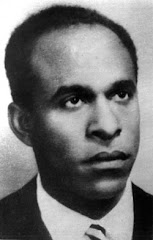
Discourse that allows us to express a wide range of ideas, opinions, and analysis that can be used as an opportunity to critically examine and observe what our experience means to us beyond the given social/cultural contexts and norms that are provided us.
Late Fascism: Race, Capitalism and the Politics of Crisis by Alberto Toscano Verso, 2024
[Publication date: October 24, 2023]
How do we understand the return of fascism today?
In
a world shaken by ecological, economic and political crises, the forces
of authoritarianism and reaction seem to have the upper hand. How
should we name, map and respond to this state of affairs?
Late Fascism
turns to theories of fascism produced in the past century, testing
their capacity to illuminate our moment and challenging many of the
commonplaces that debate on this extremely charged term devolves into.
It can be tempting for any contemporary assessment of fascism to reach
for historical analogy. Fascism is defined by returns and repetitions,
but it is not best approached in terms of steps and checklists dictated
by a selective reading of Italian Fascism or National Socialism.
Rather
than treating fascism as an unrepeatable phenomenon or identifying it
with a settled configuration of European parties, regimes, and
ideologies, Toscano approaches fascism as a problem and a process, one
that is intimately linked to capitalism's demands for domination.
Drawing especially on Black radical and anti-colonial theories of racial
fascism, Late Fascism makes clear the limits of identifying fascism
simply with the political violence of bygone European regimes.
Developing anti-fascist theory is a vital and urgent task. From the
"Great Replacement" to campaigns against critical race theory and
"gender ideology", today's global far-right is launching lethal panics
about the threats to traditional political, sexual and racial regimes. Late Fascism
allows us to rediscover some truly inspiring anti-fascist thinkers,
rooted in their turn in largely anonymous collective practices of
worldmaking against domination, traditions of the oppressed that remain a
resource for those set on dismantling the hierarchies and segregations
that the partisans of Order and Tradition seek to revive and reimpose.
REVIEWS
"There
are no unearned claims here. Rather, one feels that Toscano has thought
through the political stakes of every single sentence in this crucial
book. Late Fascism is
painstaking in accounting for, differentiating, and connecting the many
historical contexts and iterations of fascism - from the onset of
colonial modernity, through the mid-twentieth century, to the present
day."
--Jordy Rosenberg, author of Confessions of the Fox
"Alberto Toscano's Late Fascism
brilliantly elucidates what Adorno once called 'the meaning of working
through the past' to grasp fascism's capacious aptitude for untimely
reappearances to resolve crises, real or not, to save capitalism from
itself and restore the necessary political order such rescue operations
require. Rather than drawing upon fascism's past in his approach,
Toscano 's account persuasively lays to rest an interpretative scheme
that explains such unscheduled repetitions by appealing to analogical
comparisons of past and present as if they were the same. His own
strategy positions history and memory against the present to disturb one
another, unveiling uneven historical differences and incommensurables
removed from an everyday dominated by exchange. Toscano's lasting
achievement is the program of watchfulness he so carefully constructs to
uncover the contemporaneity of late fascism in our midst, but never too
late to recognize its ever-present morbidities."
—Harry Harootunian, Emeritus Professor of History, University of Chicago
"In
this bold book, Alberto Toscano argues that the old checklist for
identifying and understanding contemporary fascism won't work. To
apprehend its present-day manifestations, we must consult writers from
the Black radical tradition and critical ethnic studies. With his
characteristic erudition, Toscano combines innovative readings of
Western Marxism with insightful interpretations of the genealogies of
anti-racism. This is an indispensable book for a distressing time."
—Roderick A. Ferguson, Yale University
"Alberto
Toscano is one of the most significant and original political theorists
of our contemporary moment. In this work on the nature and aetiology of
late fascism, he moves us beyond the European interwar examples as
fascism's "ideal-type," and deconstructs the alleged opposition of
fascism and liberal democracy. He instead emphasizes multiple origins,
locations, and temporalities of fascisms; the imbrication of fascisms
within colonialism, slavery, capitalism and counter-revolution; and is
precise about fascisms' libidinal claims and the weaponizing of
atavistic social energies turned against racial, religious, sexual and
gendered others. Toscano engages an illuminating range of anti-fascist
thought: from Ernst Bloch, Georges Bataille, and Leo Löwenthal, to
Angela Davis and George Jackson; from Stuart Hall and Ruth Wilson
Gilmore to Jairus Banaji and Furio Jesi - with dazzling results."
—Lisa Lowe, author of The Intimacies of Four Continents
"Can
we speak of fascism before fascism? Alberto Toscano believes we can. In
his learned excavation of debates across the twentieth century, he
revives still unanswered questions about the location of the prison, the
market, and the bedroom in theories of fascism. He also reminds us to
ask what late fascism is afraid of. What is it trying to prevent? In
this way, a study of fascism becomes a roundabout recovery of repressed
and forgotten utopias-a flashlight in the dead of night."
—Quinn Slobodian, author of The Globalists
"Late Fascism
is brilliant, incisive, and right on time. We are living through a
moment when the "F" word is no longer taboo and the threat of fascism
lurks everywhere. And yet, so mired in debates over definitions,
typologies, and analogies that our understanding of fascism remains
elusive. Alberto Toscano avoids this trap by turning to anti-fascist
thinkers, whose groundings in anticolonial, antiracist, and
anticapitalist struggles remind us that liberalism is no enemy of
fascism, and fascists flower in the hot house of capitalism." —Robin D. G. Kelley, author of Freedom Dreams: The Black Radical Imagination
"Toscano's
wide-ranging, erudite study is both theoretically satisfying and
politically inspiring - an essential reference for rethinking fascism
and antifascist politics today."
—Michael Hardt, author of The Subversive Seventies
"In
this book, Toscano provides us with the language and analysis necessary
to theorize our current moment, one in which the danger of fascism is
as real as ever."
—Jake Romm, Protean
"Toscano's
high-octane new book on heterodox theories of fascism ... traces the
myriad ways it has been deployed over the past 100 years, mining each of
them for parallels with the present."
—Oliver Eagleton, The New Statesman
"Concise and intellectually ambitious."
—Andrew O'Hehir, Salon
"Late Fascism is such an important book."
—Jason Read, e-Flux
"Toscano's
penetrating, theoretically grounded analysis is an essential resource
for understanding and confronting the resurgence of reactionary
ideologies."
—Dimitri Vouros, LSE Review of Books
ABOUT THE AUTHOR:
Alberto Toscano
is Professor of Critical Theory in the Department of Sociology and
Co-Director of the Centre for Philosophy and Critical Theory at
Goldsmiths, University of London, and Term Research Associate Professor
at the School of Communications at Simon Fraser University. He is the
author of Fanaticism: On the Uses of an Idea (Verso, 2010; 2017, 2nd ed.), Cartographies of the Absolute (with Jeff Kinkle, Zero Books, 2015), Una visión compleja. Hacía una estética de la economía (Meier Ramirez, 2021), La abstracción real. Filosofia, estética y capital (Palinodia, 2021), and the co-editor of the 3-volume The SAGE Handbook of Marxism (with Sara Farris, Bev Skeggs and Svenja Bromberg, SAGE, 2022), and Ruth Wilson Gilmore's Abolition Geography: Essays in Liberation (with Brenna Bhandar, Verso, 2022). He is a member of the editorial board of the journal Historical Materialism: Research in Critical Marxist Theory
and is series editor of The Italian List for Seagull Books. He is also
the translator of numerous books and essays by Antonio Negri, Alain
Badiou, Franco Fortini, Furio Jesi and others.
Episode 12: Alberto Toscano on Late Fascism: Race, Capitalism & the Politics of Crisis +Black Radicalism:
This interview took place on 30 January 2024. Toscano discusses his recent book, Late Fascism: Race, Capitalism & the Politics of Crisis (Verso, 2023), as well as the Black Radical Tradition in America and internationally, abolition, as well as the relationship between fascism and liberalism historically as today. Toscano also offers an insightful commentary on disturbing parallels between far right culture and certain trends in "anti-woke," left-wing white nationalism in North America.
Alberto
Toscano discusses his major new book Late Fascism: Race, Capitalism and
the Politics of Crisis. This free event delved into Toscano’s latest
book, highlighting the continued and necessary development of ongoing
anti-fascist thought and organization.
Toscano was in dialogue with Gastón Gordillo, Lisa Lowe, and Jordy
Rosenberg and the Q&A moderation by Am Johal. Presented by the SFU
Vancity Office of Community Engagement and the SFU School of
Communication.
In a world shaken by ecological, economic and political crises, the
forces of authoritarianism and reaction seem to have the upper hand. How
should we name, map and respond to this state of affairs?
The rich archive of twentieth-century debates on fascism can steer a
path through an increasingly authoritarian present. Developing
anti-fascist theory is an urgent and vital task. From the ‘Great
Replacement’ to campaigns against critical race theory and ‘gender
ideology’, today’s global far right is launching lethal panics about the
threats to traditional political, sexual and racial hierarchies.
Drawing especially on Black radical and anti-colonial theories of
fascism, Toscano makes clear the limits of associating fascism primarily
with the kind of political violence experienced by past European
regimes. Rather than looking for analogies from history, we should see
fascism as a mutable process, one anchored in racial and colonial
capitalism, which both predates and survives its crystallization in
Mussolini’s Italy and Hitler’s Germany. It is a threat that continues to
evolve in the present day.
Today February 23, 2018 marks the 150th year birthdate or sesquicentennial of the legendary W.E.B. DuBois (1868-1963) one of the world's greatest and most important as well as influential scholars, public intellectuals, philosophers, historians, sociologists, radical activists, political leaders, and cultural critics of the past century. In homage to and celebration of this pivotal world historical figure and his extraordinary life, work, and legacy we offer the following articles, commentary, and documentary material. Enjoy and pass the word…
Producer/Director: Louis Massiah, Writer/Narrators: Wesley Brown, Thulani Davis, Toni Cade Bambara and Amiri Baraka
The long and remarkable life of Dr. William Edward Burghardt (W.E.B) Du Bois (1868-1963) offers unique insights into an eventful century in African American history. Born three years after the end of the Civil War, Du Bois witnessed the imposition of Jim Crow, its defeat by the Civil Rights Movement and the triumph of African independence struggles
Du Bois was the consummate scholar-activist whose path-breaking works remain among the most significant and articulate ever produced on the subject of race. His contributions and legacy have been so far-reaching, that this, his first film biography, required the collaboration of four prominent African American writers. Wesley Brown, Thulani Davis, Toni Cade Bambara and Amiri Baraka narrate successive periods of Du Bois' life and discuss its impact on their work.
Part One: Black Folk and the New Century (1895-1915)
Du Bois' first sociological work, The Philadelphia Negro, and, even more, The Souls of Black Folk, examined the cultural and political psychology of the American African Diaspora. During the same period, racism was institutionalized under the Jim Crow system. Du Bois emerged as the most outspoken critic of Booker T. Washington's advocacy of accommodation to segregation. He co-founded the Niagara Movement and then the NAACP to agitate for full equality between blacks and whites.
Part Two: The Crisis and the New Negro (1919-1929)
Du Bois created the NAACP's magazine, The Crisis, which became a vital organ in the burgeoning African American cultural movement, the Harlem Renaissance. Du Bois also was a founder of the Pan African movement, organizing the first international congresses of leaders from Africa and the Diaspora.
Part Three: A Second Reconstruction? (1934-1948)
Dismissed from the editorship of The Crisis for his radical views, Du Bois was forced to resume his academic career at age 68. It was now the Depression and he became more open to leftist ideology as reflected in his magnum opus, Black Reconstruction.
Part Four: Color, Democracy, Colonies and Peace (1949-1963)
Du Bois' continuing anti-racist activism and growing leftist sympathies made him a target during the McCarthy years. He was indicted and for a time his passport was revoked. In 1961, Kwame Nkrumah, the president of the newly independent African state of Ghana, invited him to participate in that country's development; Du Bois accepted, living there for the remainder of his life.
CRITICAL COMMENTS:
"An absolutely incredible job! Your film on Du Bois nears perfection . . . A resonantly full work of art. I can't imagine that Du Bois himself would not weep in gratitude upon seeing the work."
--Houston A. Baker Jr., University of Pennsylvania
"Scholar, activist, father of Pan-Africanism, founder of the twentieth-century struggle for civil rights, W.E.B. Du Bois succeeds in capturing this remarkable man and his significance. It will enlighten anyone - student scholar or general viewer - fortunate enough to see it."
--Eric Foner, Columbia University
"Sets a new standard for documentary film. The brilliance of interpretation and historical breadth make it a fitting tribute to the man whom I believe is the most important intellectual of our century."
--Robin D. G. Kelley, New York University
"One of the essential tools for teaching about the great Dr. Du Bois...Hearing this most self-reflective of men speaking in his own voice about the meaning of the central events of his life is at once profoundly moving and a source of insight."
--K. Anthony Appiah, Harvard University
"A beautiful and moving epic - not only about a brilliant and important figure but about the struggle of a people in the 20th century...Will make a wonderful teaching tool. I was personally inspired."
--Lani Guinier, University of Pennsylvania
All,
Today February 23, 2018 marks the 150th year birthdate or
sesquicentennial of the legendary W.E.B. DuBois (1868-1963) one of the
world's greatest and most important as well as influential scholars,
public intellectuals, philosophers, historians, sociologists, radical
activists, political leaders, and cultural critics of the past century.
In homage to and celebration of this pivotal world historical figure and
his extraordinary life, work, and legacy we offer the following
articles, commentary, and documentary material Enjoy and pass the word…
Kofi
Gayatri Chakravorty Spivak: "Running after Du Bois" The American Academy in Berlin November 2017
W.E.B. Du Bois was the most influential black intellectual of his time.
In this talk, Columbia University professor Gayatri Chakravorty Spivak
considers Du Bois in the great diversity of his positions—from the
American “Negro” all the way to global communism and Pan-Africanism,
with reference to his literary and autobiographical works as well. Her
focus is his analysis of the emergence of US “abolition-democracy” as
reflected in Du Bois’s massive Black Reconstruction in America
1860-1880, a pioneering study of the societal role black Americans
played in the crucial period after the Civil War.
Gayatri
Chakravorty Spivak is University Professor, and a founding member of
the Institute for Comparative Literature and Society. B.A. English
(First Class Honors), Presidency College, Calcutta, 1959. Ph.D.
Comparative Literature, Cornell University, 1967. D. Litt, University of
Toronto, 1999; D. Litt, University of London, 2003; D. Hum, Oberlin
College, 2008; D. Honoris Causa, Universitat Roveri I Virgili, 2011; D.
Honoris Causa, Rabindra Bharati, 2012; Kyoto Prize in Thought and
Ethics, 2012; Padma Bhushan 2013; D.Honoris Causa, Univeridad Nacional
de San Martin, 2013; D. Litt, University of St. Andrews, 2014; D.
Honoris Causa, Paris VIII, 2014; Presidency University, 2014; D. Hum,
Yale University, 2015; D. Litt, University of Ghana-Legon, 2015; D.
Honoris Causa, Universidad de Chile, 2016; Lifetime Scholarly
Achievement from the Modern Language Association of America, 2018.
Fields:
19th- and 20th-century literature; politics of culture; feminism; Marx,
Derrida; globalization. Books: Myself Must I Remake: The Life and
Poetry of W. B. Yeats (1974), Of Grammatology (translation with critical
introduction of Jacques Derrida, De la grammatologie, 1976), In Other
Worlds: Essays in Cultural Politics (1987; Routledge Classic 2002),
Selected Subaltern Studies (ed., 1988), The Post-Colonial Critic:
Interviews, Strategies, Dialogues (1990), Thinking Academic Freedom in
Gendered Post-Coloniality (1993; 2d ed forthcoming), Outside in the
Teaching Machine (1993; Routledge classic 2003), Imaginary Maps
(translation with critical introduction of three stories by Mahasweta
Devi, 1994), The Spivak Reader (1995), Breast Stories (translation with
critical introduction of three stories by Mahasweta Devi, 1997), Old
Women (translation with critical introduction of two stories by
Mahasweta Devi, 1999), Imperatives to Re-Imagine the Planet / Imperative
zur Neuerfindung des Planeten (ed. Willi Goetschel, 1999; 2d ed.
forthcoming), A Critique of Postcolonial Reason: Towards a History of
the Vanishing Present (1999), Song for Kali: A Cycle (translation with
introduction of Ramproshad Sen, 2000), Chotti Munda and His Arrow
(translation with critical introduction of a novel by Mahasweta Devi,
2002), Death of a Discipline (2003), Other Asias (2005), An Aesthetic
Education in the Age of Globalization (2012), Readings (2014), Du Bois
and the General Strike (forthcoming). Significant articles: "Subaltern
Studies: Deconstructing Historiography" (1985), "Three Women's Texts and
a Critique of Imperialism" (1985), "Can the Subaltern Speak?" (1988),
"The Politics of Translation" (1992), "Moving Devi" (1999), "Righting
Wrongs" (2003), "Ethics and Politics in Tagore, Coetzee, and Certain
Scenes of Teaching" (2004), "Translating into English" (2005),
"Rethinking Comparativism" (2010), "A Borderless World" (2011), "General
Strike" (2012), "Crimes of Identity" (2014), "Our World" (2014).
Activist in rural education and feminist and ecological social movements
since 1986.
W.E.B.
Du Bois was the most influential black intellectual of his time. In
this talk, Columbia University professor Gayatri Chakravorty Spivak
considers Du Bois…vimeo.com
All,
Today
February 23, 2018 marks the 150th year birthdate or sesquicentennial of
the legendary W.E.B. DuBois (1868-1963) one of the world's greatest and
most important as well as influential scholars, public intellectuals,
philosophers, historians, sociologists, radical activists, political
leaders, and cultural critics of the past century. In homage to and
celebration of this pivotal world historical figure and his
extraordinary life, work, and legacy we offer the following articles,
commentary, and documentary material Enjoy and pass the word…
AMHERST
-- Although he was born 150 years ago, W.E.B. Du Bois is as relevant as
today's headlines, an executive at the University of Massachusetts
library named after him says.
"He
is still teaching us about injustice in the world," said Carol Connare,
UMass Amherst Libraries W.E.B. Du Bois Center director of Library
Development and Communication.
Du
Bois, who was born in Great Barrington, founded the NAACP and created
"The Crisis," a magazine for that organization that looked at race and
social injustice.
The
UMass Board of Trustees voted Oct. 5, 1994, to name the library in
honor of the African-American historian and activist. The library holds
his writings.
UMass
and Great Barrington are holding events to honor Du Bois all month to
commemorate the 150th anniversary of his birth on Feb. 23.
Director of UMass Du Bois Center gives away books to call attention to library namesake
Whitney Battle-Baptiste was giving away 500 copies.
He was the first black man to graduate from Harvard, Connare said. He wrote non-fiction and plays.
"We
have this extraordinarily prolific writer, and activist, who is
commenting and changing his mind over time and we have it all documented
in really amazing quality of writing," she said.
He might best be known for "The Souls of Black Folk," which was published in 1903.
"His
ideas are more relevant today than ever and those are ideas about
social injustice of all kinds and how do we as a people address (that),"
Connare said. "Those are questions we're wrestling with today. You can
look back, but here we have this relevance that has never been more
relevant because we're still listening to him.
"He
said that the problem of the 20th century is the color line. And we're
well into the 21st century. It's time to listen," she said.
Upcoming events in Great Barrington include:
Sunday
at 11 a.m., Karla Nicholson, executive director of the Haymarket
People's Fund in Boston, will speak on the "Courage to Change" at the
Macedonia Baptist Church, 9 Rosseter St.
Monday
at 7 p.m., the documentary "Du Bois in Four Voices" will be screened at
Berkshire South, 15 Crissey Road, followed by a panel discussion.
Feb. 23, UMass history students will provide guided tours of the Du Bois home site.
Also
Feb. 23, Reiland Rabaka, University of Colorado at Boulder professor of
African, African American, and Caribbean studies in the department of
ethnic studies, will speak the Mahaiwe Performing Arts center at 7 p.m.
Rabaka
also will speak at UMass Feb. 21 at 4 p.m. at the Old Chapel. His talk
at both locations is titled "W.E.B. Du Bois and the Emergence of the
Civil Rights Movement."
UMass
will celebrate Du Bois' Feb. 23 birthday with cake at 10 a.m. in the
library lobby. There is also a new exhibit in the Learning Commons in
the library showing publications photographs and writing to further
augment his life.
On the UMass Amherst Libraries W.E.B. Du Bois Center homepage, director Whitney Battle-Baptiste wrote:
"We
live in complicated times. For each national victory, there is a
sobering moment to temper our celebration. This has been a summer of
mourning, crying, shouting, and marching, and one also questioning why?
In moments like these, I find myself reaching for the words of Dr. Du
Bois from so long ago, to help with context and perspective."
W.E.B. Du Bois was one of the most important African-American activists during the first half of the 20th century. He co-founded the NAACP and supported Pan-Africanism.
Who Was W.E.B. Du Bois?
Scholar and activist W.E.B. Du Bois was born on February 23, 1868, in Great Barrington, Massachusetts. In 1895, he became the first African American to earn a Ph.D. from Harvard University. Du Bois wrote extensively and was the best known spokesperson for African-American rights during the first half of the 20th century. He co-founded the National Association for the Advancement of Colored People (N.A.A.C.P.) in 1909. Du Bois died in Ghana in 1963.
Early Life & Education
William Edward Burghardt Du Bois, better known as W.E.B. Du Bois, was born on February 23, 1868, in Great Barrington, Massachusetts. While growing up in a mostly European American town, W.E.B. Du Bois identified himself as "mulatto," but freely attended school with whites and was enthusiastically supported in his academic studies by his white teachers. In 1885, he moved to Nashville, Tennessee, to attend Fisk University. It was there that he first encountered Jim Crow laws. For the first time, he began analyzing the deep troubles of American racism.
After earning his bachelor's degree at Fisk, Du Bois entered Harvard University. He paid his way with money from summer jobs, scholarships and loans from friends. After completing his master's degree, he was selected for a study-abroad program at the University of Berlin. While a pupil in Germany, he studied with some of the most prominent social scientists of his day and was exposed to political perspectives that he touted for the remainder of his life.
Du Bois' Unprecedented Accomplishment
Du Bois became the first African American to earn a Ph.D. from Harvard University in 1895, and went on to enroll as a doctoral student at Friedrich-Wilhelms-Universität (now Humboldt-Universität). (He would be awarded an honorary doctoral degree from Humboldt decades later, in 1958.)
Writing and Activism
Not long after, Du Bois published his landmark study — the first case study of an African-American community — The Philadelphia Negro: A Social Study (1899), marking the beginning of his expansive writing career. In the study, he coined the phrase "the talented tenth," a term that described the likelihood of one in 10 black men becoming leaders of their race.
W.E.B. Du Bois' Beliefs
While working as a professor at Atlanta University, W.E.B. Du Bois rose to national prominence when he very publicly opposed Booker T. Washington's "Atlanta Compromise," an agreement that asserted that vocational education for blacks was more valuable to them than social advantages like higher education or political office. Du Bois criticized Washington for not demanding equality for African Americans, as granted by the 14th Amendment. Du Bois fought what he believed was an inferior strategy, subsequently becoming a spokesperson for full and equal rights in every realm of a person's life.
Co-Founder of the N.A.A.C.P.
In 1903, Du Bois published his seminal work, The Souls of Black Folk, a collection of 14 essays. In the years following, he adamantly opposed the idea of biological white superiority and vocally supported women's rights. In 1909, he co-founded the National Association for the Advancement of Colored People and served as editor of its monthly magazine, The Crisis for over 25 years.
Pan-Africanism and Death
A proponent of Pan-Africanism, Du Bois helped organize several Pan-African Congresses to free African colonies from European powers.
W.E.B. Du Bois died on August 27, 1963 — one day before Martin Luther King Jr. delivered his "I Have a Dream" speech at the March on Washington — at the age of 95, in Accra, Ghana, while working on an encyclopedia of the African Diaspora.
VIDEOS:
W.E.B. DuBois - Civil Rights Pioneer
W.E.B. DuBois - Civil Rights Pioneer(TV-PG; 2:22)
W.E.B. DuBois - Rivalry with Booker T. Washington
W.E.B. DuBois - Rivalry with Booker T. Washington(TV-PG; 2:16)
W.E.B. Du Bois - The Niagara Movement
W.E.B. Du Bois - The Niagara Movement(TV-14; 3:46)
W.E.B. Du Bois was one of the most important African-American activists during the first half of the 20th century. He co-founded the NAACP and supported Pan-Africanism.
W.E.B. Du Bois offers lessons to this generation of citizen activists by Cornell William Brooks February 23, 2018 The Boston Globe
PHOTO: John Lindsay/Associated Press. Some 200 members
of the W.E.B. Du Bois Club carry banners and placards as they
demonstrate in front of New York’s City Hall, on March 11, 1966. The
club members were protesting police brutality and Attorney General
Nicholas Katzenback’s recent effort to have the organization register as
a Communist front.
During this tumultuous time in America, the youngest Americans are
being inspired to become advocates by the most American of tragedies —
violence. From the police killing of Michael Brown in Ferguson, Mo., to
the neo-Nazi rally in Charlottesville, Va., to last week’s school
schooting in Parkland, Fla., younger Americans by the millions have been
energized to advocate against persistent police brutality, rising hate
crime, and pervasive gun violence. In the wake of the violent deaths of
Michael Brown, Tamir Rice, Sandra Bland, and Heather Heyer, and of
numerous school shootings, America has witnessed a generationally
unprecedented level of activism. On Friday, the 150th anniversary of the
birth of a global citizen and son of Great Barrington, W.E.B. Du Bois,
offers a few lessons to this generation of citizen activists. In
1899, the life of the still young scholar Dr. William Edward Burghardt
Du Bois was radicalized by a single act of horrific violence. As the
first African-American to earn a PhD from Harvard, Du Bois was then a
31-year-old Atlanta University professor. This already distinguished
professor was walking to a meeting with the editor of The Atlanta
Constitution to discuss the case of Sam Hose, a black laborer who was
accused of murdering his white employer and raping his wife. Du Bois was
all too aware that African-Americans were often falsely accused of
crimes and then, without judge or jury, lynched by mobs. While walking
to meet the editor, Du Bois was informed that Sam Hose had already been
lynched. Indeed, Du Bois learned that Hose’s knuckles were already being
sold as a gruesome souvenir in an Atlanta store. During this
tumultuous time in America, the youngest Americans are being inspired to
become advocates by the most American of tragedies — violence. From the
police killing of Michael Brown in Ferguson, Mo., to the neo-Nazi rally
in Charlottesville, Va., to last week’s school schooting in Parkland,
Fla., younger Americans by the millions have been energized to advocate
against persistent police brutality, rising hate crime, and pervasive
gun violence. In the wake of the violent deaths of Michael Brown, Tamir
Rice, Sandra Bland, and Heather Heyer, and of numerous school shootings,
America has witnessed a generationally unprecedented level of activism.
On Friday, the 150th anniversary of the birth of a global citizen and
son of Great Barrington, W.E.B. Du Bois, offers a few lessons to this
generation of citizen activists. In 1899, the life of the still
young scholar Dr. William Edward Burghardt Du Bois was radicalized by a
single act of horrific violence. As the first African-American to earn a
PhD from Harvard, Du Bois was then a 31-year-old Atlanta University
professor. This already distinguished professor was walking to a meeting
with the editor of The Atlanta Constitution to discuss the case of Sam
Hose, a black laborer who was accused of murdering his white employer
and raping his wife. Du Bois was all too aware that African-Americans
were often falsely accused of crimes and then, without judge or jury,
lynched by mobs. While walking to meet the editor, Du Bois was informed
that Sam Hose had already been lynched. Indeed, Du Bois learned that
Hose’s knuckles were already being sold as a gruesome souvenir in an
Atlanta store. Du Bois later wrote that the lynching of Hose
inspired him to forgo the cool detached logic of an academic for the
heated arguments of advocate. Over the course of his 95 years, Du Bois
founded the NAACP; launched and led the NAACP’s magazine, The Crisis,
served as a progenitor of Pan-Africanism, wrote voluminously against
racism and colonialism, raged against lynching and the wanton taking of
black lives, and defied racism. These are a few lessons for the citizen
activists of this Twitter-age civil rights movement: First, our
heroes and heroines need not demonstrate an uncritical patriotism for
their contributions to demand American recognition and gratitude. After
having been arrested by the American government at age 82 for being a
communist, Du Bois left America and lived out his remaining years in
Ghana. He died estranged from the land of his birth, believing the ideal
of American equality, in the words of scholar David Levering Lewis, to
be a “mirage.” And yet on his deathbed, he sent a telegram of support to
attendees of the 1963 March on Washington. The writings of Du Bois both
painfully castigated and powerfully inspired America to end Jim Crow
segregation in public accommodations with the Civil Rights Act, grant
African-Americans fuller access to the franchise through the Voting
Rights Act, end lynching, and reexamine the white-washed American
history that erased the contributions of African-Americans. Du
Bois and today’s citizen activists cannot be judged by whether they
kneel before or wave the American flag with uncritical enthusiasm but to
the degree they compel America to fulfill her promises to all her
citizens. By this measure, no one has researched, written, spoken, or
advocated more over so many decades for American racial justice. Du Bois
is a heroic figure not for the absence of his criticism but for the
excellence and enduring relevance of his critique and analysis of
American racism. Second, DuBois’s life and legacy make clear that
activism must not be a plaything of the young. Some older Americans
have suggested that activism is a passing phase that millennials and Gen
Xers will grow out of. Du Bois stood against injustice until the edge
of his death bed. True, his world view and writings evolved over the
decades. That said, the protean intensity of his advocacy is reflected
at the University of Massachusetts Amherst, which houses the Du Bois
collection of nearly 300 boxes, or 100,000 items, of correspondence,
speeches, plays, short stories, book reviews, nonfiction books, fables,
and poetry. Lastly, the tools needed to address the
challenges before the country must be interdisciplinary and globally
informed. Du Bois is a role model for today’s generation of activists.
He examined the American and global injustices of his age through the
lens of sociology, economics, literature, poetry, policy, and politics.
It is hard to think of a tool available to him that he did not use
during his long life. The diversity of Du Bois’s advocacy suggests not
only the breadth of his brilliance as one activist but also the variety
of reform opportunities for today’s activists. As we observe the
birthday of W.E.B. Du Bois, there is much for Massachusetts and America
to celebrate. There is far more to emulate. ABOUT THE AUTHOR:
Cornell William Brooks, former president of the NAACP, is a visiting
professor at Boston University School of Theology and Boston University
Law School. NOTE: The following comment is from one of the readers of this article: no-name-02/23/18 11:30 AM "A few facts about the Hose lynching": While he was still alive,his face was skinned, all his body parts were
cut off. then, he was burned alive. A white mob in the thousands cheered
as all this was done. All the major atlanta newspapers wrote approving
articles. Not satisfied, two other African Americans were also lynched.
Another African-American was lynched soon after because he was
complaining about the lynching of Afro-Americans. No one was ever
charged in these murders. The white woman who Hose was accused of
sexually assaulting gave interview in which she acknowledged that she
was never assaulted and that Hose killed her husband in self-defense
after her husband pulled a gun on hose because hose was asking for wages
that were due to him. Can't help wondering where all the
comments are from those who are always writing in support of the
"southern way of life" and segregation as being part of the local
culture"
W.E.B. DuBois Speaks! "Socialism and the American Negro" April 9, 1960
Astonishingly DuBois was 92 years old at the time of this speech!
Published on May 25, 2015
W.E.B. DuBois Speaks! Socialism and the American Negro. The venerable
W. E. B. DuBois (1868-1963), historian and activist, gives an address to
the Wisconsin Socialist Club in Madison on socialism and the struggle
of Black people in America. This speech was given on April 9, 1960 when
DuBois was over 90 years of age and just months before his removal to
Africa where he died in Ghana on August 27, 1963 at the age of 95.
In the speech Du Bois asserts that African Americans must learn the
truth about socialism that they may "preserve their culture, get rid of
poverty, ignorance and disease, and help America live up at least to a
shadow of its vain boast as the land of the free and the home of the
brave."
Audio sections from "Socialism and the American Negro":
0:00 Anecdote about learning meaning of Democracy 0:40 McCarthyism vs. Socialism, Robert Lafollette vs. monopolized wealth, W.E.B. DuBois work 1:35 Collapse of capitalism, socialism, "The New Deal" 3:00 Negro analysis of their condition in America, solutions, and results 4:19 Negro suffrage 5:46 Demands made at Niagra movement meeting in Niagra Falls June 1905 6:13 NAACP organized in 1909 and 1954 supreme court decision on segregation 7:46 Democracy failing in America 9:31 Rising costs of elections ("monopoly", "propaganda", "deception") 9:46 Travel to Europe and Asia as a catalyst for the adoption of socialist views 11:49 "Degeneracy of Capitalism" and personal experience with socialized healthcare in Britiain 12:51 European colonialism, exploitation of colored people, end of colonialism 13:50 Western Europe and American negligence regarding wealth disparity and being impressed with Socialism 15:24 China vs.The West, "spread of socialism and communism", and predictions for 21st century 16:32 NAACP, Necessity for economic foundation in addition legal rights 18:02 Migration to urban, metropolitan areas as a remedy for poverty and its problems 18:42 "The center of the problem", wealth, monopoly, allocation of money for war 19:46 DuBois attends Soviet Peace Conference 24:48 Sun Yat Chen 28:54 W.E.B.DuBois speaks on hypocrisy of Americans regarding prison, mass incarceration, national war debt 30:00 What America must do 33:24 What American Negroes must learn 33:36
Radcliffe fellow Chad Williams is working on a book about what he
considers one of W.E.B. Du Bois’ greatest missteps: “The Black Man and
the Wounded World,” an unfinished history of the African-American
experience during World War I.
by Colleen Walsh Harvard Staff Writer February 22, 2018 Harvard Gazette
Radcliffe
fellow Chad Williams is working on a book about what he considers one of
W.E.B. Du Bois’ greatest missteps: “The Black Man and the Wounded
World,” an unfinished history of the African-American experience during
World War I. Kris Snibbe/Harvard Staff Photographer
The Wounded World: W. E. B. Du Bois and the History of WWI | Chad L. Williams || Radcliffe Institute
The Wounded World: W.E.B. Du Bois, African Americans, and the History of World War I As
part of the 2017–2018 Fellows’ Presentation Series at the Radcliffe
Institute for Advanced Study, Chad L. Williams RI ’18 tells a story that
spans almost two decades, from one world war to the next, and features
as its central character arguably the most significant black
intellectual in American history, W. E. B. Du Bois.
Williams is
an associate professor and the chair of the Department of African and
Afro-American Studies at Brandeis University. He is the 2017–2018 Evelyn
Green Davis Fellow at the Radcliffe Institute, Harvard University. https://www.radcliffe.harvard.edu/peo....
By any measure, W.E.B. Du Bois was an intellectual giant. A historian,
writer, editor, teacher, sociologist, and Civil Rights activist, he was
also the first African-American to receive a Harvard Ph.D., co-founder
of the National Association for the Advancement of Colored People, and
author of several groundbreaking books, including “Black Reconstruction
in America” (1935). But according to historian Chad Williams, Du Bois was also a failure.
As a fellow at the Radcliffe Institute for Advanced Study, Williams is
writing a book about what he considers one of Du Bois’ greatest
missteps: “The Black Man and the Wounded World,” an unfinished history
of the African-American experience during World War I. Unlike many Civil
Rights crusaders of the time, Du Bois urged African-Americans to join
the war effort. But when acts of loyalty and heroism in Europe failed to
translate to the societal change he’d envisioned back home, he began
documenting the results of his misjudgment. “Du Bois as a failure
… that’s a framework for thinking about him that I would never have
really considered,” said Williams, chair of African and Afro-American
studies at Brandeis University. Williams came across Du Bois’
incomplete manuscript at UMass Amherst in 2000 while researching the
Ph.D. dissertation that would become his 2010 book, “Torchbearers of
Democracy: African American Soldiers in the World War I Era.” His years
spent poring over Du Bois’ archives and records helped Williams
understand the professional and personal dimensions to Du Bois’
failings. The inability to finish the book was a source of deep
frustration, while his support of the war and his belief in what the
conflict could have meant for equality in America haunted Du Bois till
his death. “The war was one of the most consequential and
traumatic moments in his life as far as his wrestling with what it meant
to be an African-American,” said Williams. “What he talks about in his
1903 book, ‘The Souls of Black Folk’ — the ‘double consciousness,’ the
twoness of being a Negro and being an American, these two warring
ideals. Du Bois thought that the war would be able to, at least
temporarily, reconcile those two conflicting aspects of black identity
more broadly, but also personally, and that didn’t happen.” More
than 350,000 African-American soldiers served in segregated units during
World War I. Most of the black troops stationed in France were
assigned to ditch digging or the bearing of dead bodies. In time, the
Army created two African-American combat units, the 92nd division made
up of draftees, and the 93rd that comprised black national guardsmen.
While the 93rd “compiled a stellar combat record,” the 92nd floundered. PHOTO: Cover page of W. E. B. Du Bois' Harvard dissertation " The
suppression of the African slave trade in the United States of America,
1638-1871." PHOTO: W. E. B. Du Bois photograph from the Harvard College Class of 1890 Class Book, 1890.
Image 1: Cover page of Du Bois' Harvard dissertation " The suppression
of the African slave trade in the United States of America, 1638-1871."
Image 2: Du Bois' photograph from the Harvard College Class of 1890
Class Book. Courtesy of Harvard University Archives; (2) Pach Bros., New York, New York, United States [photographer] ca. 1890
“Racist white commanders and deliberate neglect from the War Department
doomed the performance of the division from the start, while its black
officers … endured humiliation after humiliation,” Williams said in a
Radcliffe talk in the fall. Du Bois initially saw “Wounded World”
as way to stem the outcry over “Close Ranks,” an editorial he’d written
in July 1918 for the NAACP monthly journal The Crisis in which he
called for African-American soldiers to temporarily put aside their
grievances and join up with the Allied forces in the name of democracy.
Critics branded him a traitor to his race. Du Bois was shaken by the
rebuke. “He viewed writing this book as a form of personal and
political redemption … that he would be able to rehabilitate his
credibility through writing the history of the black experience in the
war,” said Williams. But the project took on an even deeper
meaning when Du Bois interviewed African-American soldiers in France
after the fighting. They recounted the “horrific racism and
discrimination they had endured,” at the hands of fellow servicemen,
said Williams. From that moment on the project became one of
“reclamation.”
PHOTO: African-American soldiers fighting in WWI pose for a company photo. Kris Snibbe/Harvard Staff Photographer
“Du Bois is aware that the official historical record is going to
marginalize the contributions and sacrifices of African-American
soldiers and officers in particular, and that it’s necessary to tell
this history correctly.” Yet that effort led to another failed
opportunity, and a breach of trust. In his drive for accuracy, Du Bois
sent out a call for African-American veterans to send him material
related to their experiences. Letters, diaries, and other documents
poured in. Their willingness to share information showed they were
“investing their hopes and historical visions in Du Bois,” said
Williams. “In the end, those untold stories are part of the real tragedy
of this project.” Du Bois’ disillusionment with the war reached
its peak in 1930s during travels in Russia, China, Japan, and Germany.
The rise of fascism and militarism in Europe and elsewhere convinced him
that the condition of the world “was almost irredeemable,” said
Williams. Any lessons his book could offer would be “almost too late,”
he decided. While Williams referenced Du Bois’ World War I
material in his 2010 book, he knew the manuscript, 800 pages written
over the course of 20 years, was something to which he “would inevitably
turn back.” In an increasingly polarized U.S., Williams thinks a closer
examination of Du Bois’ unfinished work can offer important lessons not
only to scholars but also to the wider public. Table of Contents, 1936, The Black Man and the Wounded World (unpublished), W. E. B. Du Bois.
Image 1: Williams holds a photo of a WWI African-American soldier from
Du Bois' collection. Image 2: Table of Contents for "The Black Man and
the Wounded World" (unpublished, 1936). (1) Kris Snibbe/Harvard Staff Photographer; (2) W.E.B. Du Bois Collection, Special Collections and Archives, Fisk University
“One hundred years later we are still reckoning with the legacies of
World War I, particularly in terms of race and democracy — the same
challenges that Du Bois wrestled with,” he said. “What does it mean to
be African-American? That’s still the fundamental question for many
people, along with how we try to heal the wounds of our still very
wounded world.” And though Williams ultimately calls the story of the unfinished manuscript “a tragedy,” he sees hope in Du Bois’ failure.
“I think it’s instructive for us and for me as a historian to know that
Du Bois, for all of his brilliance and clairvoyance, was genuinely
confused by this moment, and to the end of his life was unsure if he
made the right decision in supporting the war. “If there is any
hope to take from it, it’s the struggle that Du Bois was engaged in and
the commitment that he had, which I think is a commitment that we all
must have — especially today, when we see democracy itself being
undermined and attacked and we see white supremacy resurgent and being
legitimized at the highest levels of our democracy.”
AUDIO: by Lynn Neary February 23, 2018 National Public Radio
PHOTO: W.E.B. Du Bois' The Souls Of Black Folk has been
re-published in a new edition for the author's 150th birthday
anniversary.. C. M. Battey/Getty Images
It was no accident that W.E.B. Du Bois called his book The Souls Of
Black Folk, says Ibram X. Kendi, author of Stamped From The Beginning:
The Definitive History Of Racist Ideas In America. Du Bois wasn't
looking for a catchy title — he was reacting to the reality of his
times. "Racist Americans were making the case that black people
did not have souls," Kendi says. "And the beings that did not have souls
were beasts." Friday is the 150th anniversary of the birth of Du
Bois, the great African-American thinker and writer. To celebrate, The
Souls Of Black Folk has been republished. It's a collection of essays on
black life and race relations in the United States at the turn of the
20th century.
In his introduction to the new edition of The Souls
Of Black Folk, Kendi writes that Du Bois wanted the world "to know the
humanity of black folk." Some of the essays, like one about his time as a
teacher in the rural South, vividly depict what it was like to be
black. Others address the ongoing debates of the time about the best way
to improve black lives. Taken as a whole, the book reads like one long
poem. "It's deeply lyrical, but not just lyrical in the sense
that he had, sort of, beautiful language," Kendi says. "It's lyrical in
the sense that he was able to really capture the complexities and
multiplicities of life." A central metaphor in the book is the
idea that a veil separates white and black America. Blacks can see
through the veil, says Kendi — whites either can't or won't. "In
many ways black people could see the opportunities through the veil that
white people were privileged to have," Kendi says. "White people could
not see through the veil the opportunities that black people were
denied." Many of the ideas that Du Bois outlined in the book
still endure. Dana Williams, head of the English department at Howard
University, has taught the book many times. "It doesn't matter
where the student is in his or her learning experience," Williams says.
"There's always something in The Souls Of Black Folk that students can
identify with." The Souls of Black Folk by W. E. B. Du Bois, Donald B. Gibson and Monica M. Elbert Paperback, 247 pages Nnyla Lampkin is a freshman at Howard. She and several other students gathered recently to discuss the book. "It was amazing to me to hear somebody from the past speaking the way that some of us think today," Lampkin says. One idea that seemed to resonate with the group was Du Bois' concept of
"double consciousness," which describes how difficult it was to be both
black and American — at a time when being American essentially meant
being white. Freshman Hadiyah Cummings says this duality can still be a
struggle. "It's definitely hard having to know I love being black
and I love what I represent, and also knowing that if I want to get a
job that I have to look a certain way or speak a certain way," Cummings
says. "And so having to fight this constant battle of choosing which
side of me am I going to show today and also just wanting to be able to
be unapologetically me and be accepted in both spaces is definitely hard
to deal with." In The Souls Of Black Folk, Du Bois outlines his
ideas about the need for higher education for blacks. He lays the
groundwork for a later essay, "The Talented Tenth," which is also
included in this new edition. This is one of his best known ideas — that
"the Negro race," as he called, it would "be saved by its exceptional
men." Though Du Bois later revised some of his thinking, this
idea has been criticized as elitist. Howard senior Sadiya Malcolm
doesn't see it that way. "To me the proposition is not elitist,"
she says. "It's a responsibility — it's a task. It's about creating
opportunities so that when my nieces or my little brothers and sisters
are going to school, it looks possible — so they have somebody in their
community to go to to say 'well, what's the college process like?' It's
about realizing collectively how we can contribute to our betterment as a
people." At the start of each essay Du Bois includes a bar of
music. These are "The Sorrow Songs" that Du Bois writes about in his
final essay. They are the spirituals and folk songs that emerged from
slavery to become a gift to America — what Du Bois calls the "singular
spiritual heritage of the nation." It is the story of these that touched
Asan Hawkins most deeply. "I don't think any of us have escaped
our childhoods without hearing at least one of these songs," Hawkins
says. "And for him to weave them into each and every one of these
chapters — he lit up our spirits. He gave us something that we could
relate to throughout time. Each song spoke to somebody, each chapter
spoke to somebody." In his introduction, Ibram Kendi notes that
when The Souls Of Black Folk was first released, a black newspaper in
Ohio declared that it should be read "by every person." Kendi believes
that advice still holds today for anyone who wants to understand America
and to see what's on the other side of that veil. Read an excerpt of The Souls of Black Folk (1903): Excerpt: The Souls Of Black Folk The Souls of Black Folk Of Our Spiritual Strivings O water, voice of my heart, crying in the sand, All night long crying with a mournful cry, As I lie and listen, and cannot understand The voice of my heart in my side or the voice of the sea, O water, crying for rest, is it I, is it I? All night long the water is crying to me. Unresting water, there shall never be rest Till the last moon droop and the last tide fail, And the fire of the end begin to burn in the west; And the heart shall be weary and wonder and cry like the sea, All life long crying without avail, As the water all night long is crying to me. — Arthur Symons Between me and the other world there is ever an unasked question:
unasked bysome through feelings of delicacy; by others through the
difficulty of rightlyframing it. All, nevertheless, flutter round it.
They approach me in a half-hesitant sort of way, eye me curiously or
compassionately, and then, instead ofsaying directly, How does it feel
to be a problem? they say, I know an excellentcolored man in my town;
or, I fought at Mechanicsville; or, Do not theseSouthern outrages make
your blood boil? At these I smile, or am interested, orreduce the
boiling to a simmer, as the occasion may require. To the realquestion,
How does it feel to be a problem? I answer seldom a word. And
yet, being a problem is a strange experience — peculiar even for one
who has never been anything else, save perhaps in babyhood and in Europe.
It is inthe early days of rollicking boyhood that the revelation first
bursts upon one,all in a day, as it were. I remember well when the
shadow swept across me. I was a little thing, away up in the hills of New
England, where the dark Housatonic winds between Hoosac and Taghkanic to
the sea. In a wee wooden schoolhouse,something put it into the boys'
and girls' heads to buy gorgeous visiting-cards— ten cents a package —
and exchange. The exchange was merry, till one girl, atall newcomer,
refused my card, — refused it peremptorily, with a glance. Then it dawned
upon me with a certain suddenness that I was different from theothers;
or like, mayhap, in heart and life and longing, but shut out from
theirworld by a vast veil. I had thereafter no desire to tear down that
veil, to creep through; I held all beyond it in common contempt, and
lived above it in aregion of blue sky and great wandering shadows. That
sky was bluest when I couldbeat my mates at examination time, or beat
them at a foot-race, or even beat their stringy heads. Alas, with the
years all this fine contempt began to fade;for the worlds I longed for,
and all their dazzling opportunities, were theirs,not mine. But they
should not keep these prizes, I said; some, all, I wouldwrest from them.
Just how I would do it I could never decide: by reading law, byhealing
the sick, by telling the wonderful tales that swam in my head, —
someway. With other black boys the strife was not so fiercely sunny:
their youthshrunk into tasteless sycophancy, or into silent hatred of
the pale world aboutthem and mocking distrust of everything white; or
wasted itself in a bitter cry,Why did God make me an outcast and a
stranger in mine own house? The shades ofthe prison-house closed round
about us all: walls strait and stubborn to thewhitest, but relentlessly
narrow, tall, and unscalable to sons of night who mustplod darkly on in
resignation, or beat unavailing palms against the stone, orsteadily,
half hopelessly, watch the streak of blue above. After the
Egyptian and Indian, the Greek and Roman, the Teuton and Mongolian,the
Negro is a sort of seventh son, born with a veil, and gifted with
secondsight in this American world — a world which yields him no true
self-consciousness, but only lets him see himself through the revelation
of the otherworld. It is a peculiar sensation, this
double-consciousness, this sense ofalways looking at one's self through
the eyes of others, of measuring one's soulby the tape of a world that
looks on in amused contempt and pity. One ever feelshis twoness, — an
American, a Negro; two souls, two thoughts, two unreconciledstrivings;
two warring ideals in one dark body, whose dogged strength alonekeeps it
from being torn asunder. The history of the American Negro is
the history of this strife, — this longingto attain self-conscious
manhood, to merge his double self into a better andtruer self. In this
merging he wishes neither of the older selves to be lost. Hewould not
Africanize America, for America has too much to teach the world
andAfrica. He would not bleach his Negro soul in a flood of white
Americanism, forhe knows that Negro blood has a message for the world.
He simply wishes to makeit possible for a man to be both a Negro and an
American, without being cursedand spit upon by his fellows, without
having the doors of Opportunity closedroughly in his face. This,
then, is the end of his striving: to be a co-worker in the kingdom
ofculture, to escape both death and isolation, to husband and use his
best powersand his latent genius. These powers of body and mind have in
the past beenstrangely wasted, dispersed, or forgotten. The shadow of a
mighty Negro pastflits through the tale of Ethiopia the Shadowy and of
Egypt the Sphinx.Throughout history, the powers of single black men
flash here and there likefalling stars, and die sometimes before the
world has rightly gauged theirbrightness. Here in America, in the few
days since Emancipation, the black man'sturning hither and thither in
hesitant and doubtful striving has often made hisvery strength to lose
effectiveness, to seem like absence of power, likeweakness. And yet it
is not weakness, — it is the contradiction of double aims.The
double-aimed struggle of the black artisan — on the one hand to
escapewhite contempt for a nation of mere hewers of wood and drawers of
water, and onthe other hand to plough and nail and dig for a
poverty-stricken horde — couldonly result in making him a poor
craftsman, for he had but half a heart ineither cause. By the poverty
and ignorance of his people, the Negro minister ordoctor was tempted
toward quackery and demagogy; and by the criticism of theother world,
toward ideals that made him ashamed of his lowly tasks. The would-be
black savant was confronted by the paradox that the knowledge hispeople
needed was a twice-told tale to his white neighbors, while the
knowledgewhich would teach the white world was Greek to his own flesh
and blood. Theinnate love of harmony and beauty that set the ruder souls
of his people a-dancing and a-singing raised but confusion and doubt in
the soul of the blackartist; for the beauty revealed to him was the
soul-beauty of a race which hislarger audience despised, and he could
not articulate the message of anotherpeople. This waste of double aims,
this seeking to satisfy two unreconciledideals, has wrought sad havoc
with the courage and faith and deeds of tenthousand thousand people, —
has sent them often wooing false gods and invokingfalse means of
salvation, and at times has even seemed about to make themashamed of
themselves. Away back in the days of bondage they thought to see
in one divine event the endof all doubt and disappointment; few men ever
worshipped Freedom with half suchunquestioning faith as did the
American Negro for two centuries. To him, so faras he thought and
dreamed, slavery was indeed the sum of all villainies, thecause of all
sorrow, the root of all prejudice; Emancipation was the key to apromised
land of sweeter beauty than ever stretched before the eyes of
weariedIsraelites. In song and exhortation swelled one refrain —
Liberty; in his tearsand curses, the God he implored had Freedom in his
right hand. At last it came,— suddenly, fearfully, like a dream. With
one wild carnival of blood andpassion came the message in his own
plaintive cadences: — "Shout, O children! Shout, you're free! For God has bought your liberty!" Years have passed away since then, — ten, twenty, forty; forty years
ofnational life, forty years of renewal and development, and yet the
swarthyspectre sits in its accustomed seat at the Nation's feast. In
vain do we cry tothis our vastest social problem: — "Take any shape but that, and my firm nerves Shall never tremble!" The Nation has not yet found peace from its sins; the freedman has not
yet foundin freedom his promised land. Whatever of good may have come in
these years ofchange, the shadow of a deep disappointment rests upon
the Negro people, — adisappointment all the more bitter because the
unattained ideal was unboundedsave by the simple ignorance of a lowly
people. The first decade was merely a prolongation of the vain
search for freedom, theboon that seemed ever barely to elude their
grasp,—like a tantalizing will-o'-the-wisp, maddening and misleading the
headless host. The holocaust of war, theterrors of the Ku-Klux Klan,
the lies of carpetbaggers, the disorganization ofindustry, and the
contradictory advice of friends and foes, left the bewilderedserf with
no new watchword beyond the old cry for freedom. As the time
flew,however, he began to grasp a new idea. The ideal of liberty
demanded for itsattainment powerful means, and these the Fifteenth
Amendment gave him. Theballot, which before he had looked upon as a
visible sign of freedom, he nowregarded as the chief means of gaining
and perfecting the liberty with which warhad partially endowed him. And
why not? Had not votes made war and emancipatedmillions? Had not votes
enfranchised the freedmen? Was anything impossible to apower that had
done all this? A million black men started with renewed zeal tovote
themselves into the kingdom. So the decade flew away, the revolution
of1876 came, and left the half-free serf weary, wondering, but still
inspired.Slowly but steadily, in the following years, a new vision began
gradually toreplace the dream of political power, — a powerful
movement, the rise ofanother ideal to guide the unguided, another pillar
of fire by night after aclouded day. It was the ideal of
"book-learning"; the curiosity, born ofcompulsory ignorance, to know and
test the power of the cabalistic letters ofthe white man, the longing
to know. Here at last seemed to have been discoveredthe mountain path to
Canaan; longer than the highway of Emancipation and law,steep and
rugged, but straight, leading to heights high enough to overlook life. Up the new path the advance guard toiled, slowly, heavily, doggedly;
only thosewho have watched and guided the faltering feet, the misty
minds, the dullunderstandings of the dark pupils of these schools know
how faithfully, howpiteously, this people strove to learn. It was weary
work. The cold statisticianwrote down the inches of progress here and
there, noted also where here andthere a foot had slipped or some one had
fallen. To the tired climbers, thehorizon was ever dark, the mists were
often cold, the Canaan was always dim andfar away. If, however, the
vistas disclosed as yet no goal, no resting-place,little but flattery
and criticism, the journey at least gave leisure forreflection and
self-examination; it changed the child of Emancipation to theyouth with
dawning self-consciousness, self-realization, self-respect. In
thosesombre forests of his striving his own soul rose before him, and he
saw himself,— darkly as through a veil; and yet he saw in himself some
faint revelation ofhis power, of his mission. He began to have a dim
feeling that, to attain hisplace in the world, he must be himself, and
not another. For the first time hesought to analyze the burden he bore
upon his back, that dead-weight of socialdegradation partially masked
behind a half-named Negro problem. He felt hispoverty; without a cent,
without a home, without land, tools, or savings, he hadentered into
competition with rich, landed, skilled neighbors. To be a poor manis
hard, but to be a poor race in a land of dollars is the very bottom
ofhardships. He felt the weight of his ignorance, — not simply of
letters, but oflife, of business, of the humanities; the accumulated
sloth and shirking andawkwardness of decades and centuries shackled his
hands and feet. Nor was hisburden all poverty and ignorance. The red
stain of bastardy, which two centuriesof systematic legal defilement of
Negro women had stamped upon his race, meantnot only the loss of ancient
African chastity, but also the hereditary weight ofa mass of corruption
from white adulterers, threatening almost the obliteration of the Negro
home.
The Souls of Black Folk by W.E.B. Du Bois, 1903
[Audiobook]
Published on January 22, 2016:
Listen to an unabridged recording of W.E.B. Du Bois' classic work of
African-American literature The Souls of Black Folk. Published in 1903,
Du Bois begins his collection of essays on race with the statement that
"the problem of the Twentieth Century is the problem of the color line."
The essays that followed were instrumental to the intellectual argument
for the black freedom struggle in the twentieth century. This audio
book is read in a straightforward manner by Torias Uncle at Librivox
along some brief musical interludes.
Chapter 1 Of Our Spiritual Strivings 0:25:23 Chapter 2 Of the Dawn of Freedom 1:11:54 Chapter 3 Of Mr. Booker T. Washington and Others 1:44:34 Chapter 4 Of the Meaning of Progress 2:09:18 Chapter 5 Of the Wings of Atalanta 2:31:54 Chapter 6 Of the Training of Black Men 3:07:33 Chapter 7 Of the Black Belt 3:51:41 Chapter 8 Of the Quest of the Golden Fleece 4:42:55 Chapter 9 Of the Sons of Master and Man 5:25:38 Chapter 10 Of the Faith of the Fathers (low volume) 6:00:11 Chapter 11 Of the Passing of the First Born 6:17:25 Chapter 12 Of Alexander Crummell 6:42:08 Chapter 13 Of the Coming of John 7:19:08 Chapter 14 Of the Sorrow Songs
"I'm for truth, no matter who tells it. I'm for justice, no matter who it's for or against."
W.E.B. DuBois (1868-1963)
"There is but one coward on earth, and that is the coward that dare not know."
Dr. Martin Luther King, Jr. (1929-1968)
"Change does not roll in on the wheels of inevitability, but comes through continuous struggle. And so we must straighten our backs and work for our freedom. A man can't ride you unless your back is bent. "
James Baldwin (1924-1987)
"Precisely at the point when you begin to develop a conscience you must find yourself at war with your society."
Aimé Césaire (1913-2008)
"A civilization that proves incapable of solving the problems it creates is a decadent civilization. A civilization that chooses to close its eyes to its most crucial problems is a stricken civilization. A civilization that uses its principles for trickery and deceit is a dying civilization."
Nina Simone (1933-2003)
"There's no other purpose, so far as I'm concerned, for us except to reflect the times, the situations around us and the things we're able to say through our art, the things that millions of people can't say. I think that's the function of an artist and, of course, those of us who are lucky leave a legacy so that when we're dead, we also live on. That's people like Billie Holiday and I hope that I will be that lucky, but meanwhile, the function, so far as I'm concerned, is to reflect the times, whatever that might be."
Amilcar Cabral (1924-1973)
"Always bear in mind that the people are not fighting for ideas, for the things in anyone's head. They are fighting to live better and in peace, to see their lives go forward, to guarantee the future of their children ....Hide nothing from the masses of our people. Tell no lies. Expose lies whenever they are told. Mask no difficulties, mistakes, failures. Claim no easy victories..." .
Angela Davis (b. 1944)
"The idea of freedom is inspiring. But what does it mean? If you are free in a political sense but have no food, what's that? The freedom to starve?”
Duke Ellington (1899-1974)
“Jazz is the freest musical expression we have yet seen. To me, then, jazz means simply freedom of musical speech! And it is precisely because of this freedom that so many varied forms of jazz exist. The important thing to remember, however, is that not one of these forms represents jazz by itself. Jazz simply means the freedom to have many forms.”
Amiri Baraka (1934-2014)
"Thought is more important than art. To revere art and have no understanding of the process that forces it into existence, is finally not even to understand what art is."
Frederick Douglass (1817-1895)
"Power concedes nothing without a demand. It never did and it never will. Find out just what any people will quietly submit to and you have found out the exact measure of injustice and wrong which will be imposed upon them, and these will continue till they are resisted with either words or blows, or both. The limits of tyrants are prescribed by the endurance of those whom they oppress.” --August 3, 1857
Cecil Taylor (1929-2018)
“Musical categories don’t mean anything unless we talk about the actual specific acts that people go through to make music, how one speaks, dances, dresses, moves, thinks, makes love...all these things. We begin with a sound and then say, what is the function of that sound, what is determining the procedures of that sound? Then we can talk about how it motivates or regenerates itself, and that’s where we have tradition.”
Ella Baker (1903-1986)
"Strong people don't need strong leaders"
Paul Robeson (1898-1976)
"The artist must take sides. He must elect to fight for freedom or for slavery. I have made my choice. I had no alternative."
John Coltrane (1926-1967)
"I want to be a force for real good. In other words, I know there are bad forces. I know that there are forces out here that bring suffering to others and misery to the world, but I want to be the opposite force. I want to be the force which is truly for good."
Miles Davis (1926-1991)
"Jazz is the big brother of Revolution. Revolution follows it around."
C.L.R. James (1901-1989)
"All development takes place by means of self-movement, not organization by external forces. It is within the organism itself (i.e. within the society) that there must be realized new motives, new possibilities."
Frantz Fanon (1925-1961)
"Now, political education means opening minds, awakening them, and allowing the birth of their intelligence as [Aime] Cesaire said, it is 'to invent souls.' To educate the masses politically does not mean, cannot mean, making a political speech. What it means is to try, relentlessly and passionately, to teach the masses that everything depends on them."
Edward Said (1935-2003)
“I take criticism so seriously as to believe that, even in the midst of a battle in which one is unmistakably on one side against another, there should be criticism, because there must be critical consciousness if there are to be issues, problems, values, even lives to be fought for."
Antonio Gramsci (1891-1937)
“The challenge of modernity is to live without illusions and without becoming disillusioned. There must be pessimism of the intellect and optimism of the will.”
Susan Sontag (1933-2004)
"Do stuff. Be clenched, curious. Not waiting for inspiration’s shove or society’s kiss on your forehead. Pay attention. It’s all about paying attention. Attention is vitality. It connects you with others. It makes you eager. Stay eager."
Kofi Natambu, editor of The Panopticon Review, is a writer, poet, cultural critic, and political journalist whose poetry, essays, criticism, reviews, and journalism have appeared in many literary magazines, journals, newspapers, and anthologies. He is the author of a biography MALCOLM X: His Life & Work (Alpha Books) and two books of poetry: THE MELODY NEVER STOPS (Past Tents Press) and INTERVALS (Post Aesthetic Press). He was the founder and editor of SOLID GROUND: A NEW WORLD JOURNAL, a national quarterly magazine of the arts, culture, and politics and the editor of a literary anthology NOSTALGIA FOR THE PRESENT (Post Aesthetic Press). Natambu has read his work throughout the country and given many lectures and workshops at academic and arts institutions. He has taught American literature, literary theory and criticism, cultural history and criticism, film studies, political science, creative writing, philosophy, critical theory, and music history and criticism (Jazz, Blues, R&B, Hip Hop) at many universities and colleges. He was also a curator in the Education Department of Detroit’s Museum of African American History. Born in Detroit, Michigan, Natambu currently lives in Berkeley, California with his wife Chuleenan.