Showing posts with label Political protest. Show all posts

Tuesday, May 7, 2024

Videos Of Counterprotestors at U.C.L.A. Campus in Los Angeles Reveal Hours Of Openly Violent Attacks On Students in a Pro-Palestinian Encampment While Police Stand By And Allow the Assault To Take Place

 
How Counterprotesters at U.C.L.A. Provoked Violence, Unchecked for Hours

The New York Times used videos filmed by journalists, witnesses and protesters to analyze hours of clashes — and a delayed police response — at a pro-Palestinian encampment on Tuesday.

by Neil Bedi, Bora Erden, Marco Hernandez, Ishaan Jhaveri, Arijeta Lajka, Natalie Reneau, Helmuth Rosales and Aric Toler
 
May 3, 2024
New York Times
 

A New York Times examination of more than 100 videos from clashes at the University of California, Los Angeles, found that violence ebbed and flowed for nearly five hours, mostly with little or no police intervention. The violence had been instigated by dozens of people who are seen in videos counterprotesting the encampment.

The videos showed counterprotesters attacking students in the pro-Palestinian encampment for several hours, including beating them with sticks, using chemical sprays and launching fireworks as weapons. As of Friday, no arrests had been made in connection with the attack.

To build a timeline of the events that night, The Times analyzed two livestreams, along with social media videos captured by journalists and witnesses.

The melee began when a group of counterprotesters started tearing away metal barriers that had been in place to cordon off pro-Palestinian protesters. Hours earlier, U.C.L.A. officials had declared the encampment illegal.

Security personnel hired by the university are seen in yellow vests standing to the side throughout the incident. A university spokesperson declined to comment on the security staff’s response.

It is not clear how the counterprotest was organized or what allegiances people committing the violence had. The videos show many of the counterprotesters were wearing pro-Israel slogans on their clothing. Some counterprotesters blared music, including Israel’s national anthem, a Hebrew children’s song and “Harbu Darbu,” an Israeli song about the Israel Defense Forces’ campaign in Gaza.

As counterprotesters tossed away metal barricades, one of them was seen trying to strike a person near the encampment, and another threw a piece of wood into it — some of the first signs of violence.

Attacks on the encampment continued for nearly three hours before police arrived.

Counterprotesters shot fireworks toward the encampment at least six times, according to videos analyzed by The Times. One of them went off inside, causing protesters to scream. Another exploded at the edge of the encampment. One was thrown in the direction of a group of protesters who were carrying an injured person out of the encampment.

Some counterprotesters sprayed chemicals both into the encampment and directly at people’s faces.

At times, counterprotesters swarmed individuals — sometimes a group descended on a single person. They could be seen punching, kicking and attacking people with makeshift weapons, including sticks, traffic cones and wooden boards.

In one video, protesters sheltering inside the encampment can be heard yelling, “Do not engage! Hold the line!”

In some instances, protesters in the encampment are seen fighting back, using chemical spray on counterprotesters trying to tear down barricades or swiping at them with sticks.

Except for a brief attempt to capture a loudspeaker used by counterprotesters, and water bottles being tossed out of the encampment, none of the videos analyzed by The Times show any clear instance of encampment protesters initiating confrontations with counterprotesters beyond defending the barricades.

Shortly before 1 a.m. — more than two hours after the violence erupted — a spokesperson with the mayor’s office posted a statement that said U.C.L.A officials had called the Los Angeles Police Department for help and they were responding “immediately.”

Officers from a separate law enforcement agency — the California Highway Patrol — began assembling nearby, at about 1:45 a.m. Riot police with the L.A.P.D. joined them a few minutes later. Counterprotesters applauded their arrival, chanting “U.S.A., U.S.A., U.S.A.!”

Just four minutes after the officers arrived, counterprotesters attacked a man standing dozens of feet from the officers.

Twenty minutes after police arrive, a video shows a counterprotester spraying a chemical toward the encampment during a scuffle over a metal barricade. Another counterprotester can be seen punching someone in the head near the encampment after swinging a plank at barricades.

Fifteen minutes later, while those in the encampment chanted “Free, free Palestine,” counterprotesters organized a rush toward the barricades. During the rush, a counterprotester pulls away a metal barricade from a woman, yelling “You stand no chance, old lady.”

Throughout the intermittent violence, officers were captured on video standing about 300 feet away from the area for roughly an hour, without stepping in.

It was not until 2:42 a.m. that officers began to move toward the encampment, after which counterprotesters dispersed and the night’s violence between the two camps mostly subsided.

The L.A.P.D. and the California Highway Patrol did not answer questions from The Times about their responses on Tuesday night, deferring to U.C.L.A.

While declining to answer specific questions, a university spokesperson provided a statement to The Times from Mary Osako, U.C.L.A.’s vice chancellor of strategic communications: “We are carefully examining our security processes from that night and are grateful to U.C. President Michael Drake for also calling for an investigation. We are grateful that the fire department and medical personnel were on the scene that night.”

L.A.P.D. officers were seen putting on protective gear and walking toward the barricade around 2:50 a.m. They stood in between the encampment and the counterprotest group, and the counterprotesters began dispersing.

While police continued to stand outside the encampment, a video filmed at 3:32 a.m. shows a man who was walking away from the scene being attacked by a counterprotester, then dragged and pummeled by others. An editor at the U.C.L.A. student newspaper, the Daily Bruin, told The Times the man was a journalist at the paper, and that they were walking with other student journalists who had been covering the violence. The editor said she had also been punched and sprayed in the eyes with a chemical.

On Wednesday, U.C.L.A.’s chancellor, Gene Block, issued a statement calling the actions by “instigators” who attacked the encampment unacceptable. A spokesperson for California Gov. Gavin Newsom criticized campus law enforcement’s delayed response and said it demands answers.

Los Angeles Jewish and Muslim organizations also condemned the attacks. Hussam Ayloush, the director of the Greater Los Angeles Area office of the Council on American-Islamic Relations, called on the California attorney general to investigate the lack of police response. The Jewish Federation Los Angeles blamed U.C.L.A. officials for creating an unsafe environment over months and said the officials had “been systemically slow to respond when law enforcement is desperately needed.”

Fifteen people were reportedly injured in the attack, according to a letter sent by the president of the University of California system to the board of regents.

The night after the attack began, law enforcement warned pro-Palestinian demonstrators to leave the encampment or be arrested. By early Thursday morning, police had dismantled the encampment and arrested more than 200 people from the encampment.


Wednesday, May 1, 2024

Pulitzer Prize Winning Author, USC Professor, Public Intellectual, and Activist Viet Thanh Nguyen On What is Happening--And Why-- on American College Campuses in Response to the Genocidal War in Gaza and the vital issues of Free Speech, State Censorship, and the Constitutional Right of Students to Protest in the United States

https://zeteo.com/p/a-student-rebellion-against-the-hypocrisy

[Zeteo is a new media organization that seeks to answer the questions that really matter, while always striving for the truth. Founded by Mehdi Hasan, Zeteo is a movement for media accountability, unfiltered news and bold opinions.]

"A Student Rebellion Against the Hypocrisy of Their Elders" - USC Prof & Pulitzer Prize-Winning Author Viet Thanh Nguyen

The students protesting against Israel's genocidal war in Gaza are on the right side of history, as other student movements were in the past.

by Viet Thanh Nguyen
May 1, 2024
Zeteo

Student and other protesters calling for a ceasefire in Gaza gather at the University of Southern California's Alumni Park on April 24, 2024. Photo by David Swanson/Reuters

The violent crackdown on students protesting against Israel’s genocidal war on Gaza reveals the stark hypocrisy of political and academic leaders at our colleges and universities, including my own. Instead of first turning to dialogue and debate – the very skills and values universities should promote – school administrators have turned to police, extreme discipline, and complying with a mainstream consensus that seems more interested in suppressing criticism of Israeli and American policy than protecting students.

From Columbia University to my own University of Southern California, peaceful student encampments in common university areas have been dismantled by city police, with hundreds of students arrested. Some have been suspended, evicted from dormitories, and threatened with expulsion and criminal conviction. At UT Austin, state troopers threw a Fox cameraman to the ground and arrested him. At Emory University, the chair of philosophy, Noelle McAfee, was arrested by a police officer wearing a balaclava, as if he were conducting an antiterrorism raid. Another Emory professor, Caroline Fohlin, who sought to protect students being arrested, was wrestled to the ground by two police officers, handcuffed, and charged with battery.

These student protests against a war that has killed over 34,000 Palestinians, at least two-thirds of whom are women and children, are what professors and administrators love to call a “teachable moment.” Unfortunately, most universities and colleges are failing their academic principles, their students, and their faculty. I wish I could say I was surprised, but after three decades in academia, I am not.

I was arrested twice in college for political protests more than 30 years ago. Along with other Asian Americans and our allies, I participated in sit-ins and occupied the chancellor's office, calling for a more diversified curriculum and faculty that better represented our community. I graduated with four misdemeanors – two each for resisting arrest and trespassing. I was lucky I was not expelled or suspended, but I was also at UC Berkeley at a time when the administration understood that these were not appropriate punishments for young people who were committed to the very principles of truth, justice, debate, and open-mindedness that universities represent. I wish I could say the same for the administrators at universities and colleges today, including my own. But too many administrators have chosen to deploy police clad in riot gear and wielding tear gas, tasers, sniper rifles, and armored vehicles against students.

(Viet Thanh Nguyen at UC Berkeley. Courtesy of Viet Thanh Nguyen)

On my own campus, the USC administration canceled the speech of its valedictorian, Asna Tabassum, after pro-Israel groups on and off campus labeled her antisemitic for including a link on her Instagram to a website that called for the abolition of Israel. Tabassum minored in resistance to genocide, offered through the Advanced Center for Genocide Research. The center’s founding director, Wolf Gruner, called Tabassum one of the most empathetic students he had ever taught. Tabassum said she planned to speak to the commencement audience about hope and human rights. She might or might not have brought up Gaza and Palestine, war and genocide, but even if she did, should that have been a reason to cancel her?

The university administration offered unspecified threats to safety so severe that it felt it could not protect Tabassum or the commencement ceremony, even though former President Barack Obama had attended the commencement the year before and presumably required heightened safety measures. It is difficult not to believe that safety was a pretext for the university to avoid controversy that might antagonize pro-Israel students, family members, and outsiders. But the real consequences of such a controversy would not have been community protest; instead, it would have been political blowback from Congress, donors, and trustees.

viet_t_nguyen

A post shared by @viet_t_nguyen

This strategy of avoidance and appeasement is doomed to failure. Columbia University president Minouche Shafik submitted completely to Republican demands to discipline her faculty and students, but this did not prevent Rep. Elise Stefanik and House Speaker Mike Johnson from demanding her resignation.

Republicans will not be satisfied until students are being clubbed and tear-gassed in a law-and-order spectacle that will please Benjamin Netanyahu and the GOP base. But the right-wing reaction against student protesters is not only about their stance on Israel and Gaza, which includes their willingness to declare the war a genocide and to demand divestment from Israel and the ending of further military aid. Instead, the right wing is stirring a moral panic around antisemitism, using Jewish students and their feelings of being uncomfortable and threatened as a reason to crack down on protesting students.

Racist and antisemitic threats are wrong and should be treated appropriately, which is to say, through academic disciplinary and legal methods targeted at the individuals who issue such threats, not through the deployment of riot police against masses of peaceful protesters. But a big difference exists between being threatened and being uncomfortable, and critics of the protesters – and the anti-war movement in general – blur the two.

This happens by conflating criticism of Israel with antisemitism, even though many student protesters are themselves Jewish. It’s what some have called a “weaponized antisemitism,” which places more value on how some Jewish students feel uncomfortable than how Palestinians are actually being killed en masse by an Israel whose weapons are supplied by the U.S.

Being uncomfortable is not necessarily a problem, and certainly not enough of a problem to shut down free speech and academic debate. Discomfort can be useful, and is even necessary, for us to argue and question our assumptions and those of others, leading to greater intellectual, moral, and political clarity. These are the things that are supposed to happen on college campuses and what Tabassum’s speech at USC might have provoked.

Police confront a pro-Palestine protester at the University of Southern California on April 24, 2024. Photo by Robert Hanashiro/USA TODAY/Reuters

The suppression of student protests today should worry all of us, including those who might support Israel but who are otherwise convinced about the need for free speech and the mission of universities. This is because the moral panic over antisemitism being stoked by the right is only the latest manifestation of a decades-long campaign to discipline and possibly capture academia.

Over the last few decades, American academia has undergone a painful transformation. Tenured faculty have been replaced in ever-greater numbers by faculty without job security. The humanities and social sciences have been depleted. Tuition and loan debt has spiraled rapidly. University presidents – who are increasingly CEOs, politicians, and generals instead of academics – have become ever more beholden to boards of trustees that are often composed of the wealthy and politically connected. Meanwhile, the right has fought to eliminate affirmative action for racial diversity but sought to demand the equivalent of affirmative action for ideological diversity.

In universities, the lack of democracy and transparency is more of a norm than an exception. Faculty and students are routinely ignored by university administrations when it comes to the most serious issues, which is to say those that involve money. This is perhaps why students have felt that their only recourse when it comes to demanding divestment and the end of military aid to Israel was through protest, carried out in public spaces, rather than the futile road of privately appealing to administrators.

The student protesters are on the right side of history, as they were in the 1960s and 1970s, demonstrating against the immoral and racist war the U.S. was waging in Viet Nam, Laos, and Cambodia. The students were right again in the 1980s, campaigning against apartheid and forcing universities to divest from South Africa.

It is amazing how institutions teach idealism, including these cases of opposition to war and apartheid, and are then astonished that students are idealists. We are now witnessing a student rebellion against the hypocrisy of their elders and the powerful, who tell them they have to accept the lesser of two evils, and who weaponize antisemitism to justify genocide.

Student protesters face real penalties in terms of their reputations and job prospects, as well as their physical and emotional well-being. School administrators who stand up for academic principles and defend their students and faculty may lose their positions, but they would return to the ranks of the faculty, and with tenured security. This is the choice the university leaders face, and it is quite different in consequence to what the students face, which makes their cowardice even more disturbing.

The saying “those who can’t do, teach” seems all too true now in this moment. Instead, it is the students who are teaching their professors and the public at large. Through their actions, the students are showing what idealism and conviction actually look like.


ABOUT THE AUTHOR:
 

Zeteo contributor Viet Thanh Nguyen is the Aerol Arnold Chair of English and a professor of English, American Studies and Ethnicity, and Comparative Literature at the University of Southern California. His novel, The Sympathizer, won the Pulitzer Prize for Fiction and numerous other awards. Subscribe to Zeteo to get more from Viet and other Zeteo contributors straight to your inbox.

Saturday, October 21, 2023

U.S. State Department Official Resigns in Protest Over President Biden's Foreign Policy Toward Israel and the Crisis in Gaza

https://www.nytimes.com/2023/10/19/us/state-department-official-resigns-israel-arms.html 

State Department Official Resigns Over Arms Transfers to Israel

Josh Paul spent more than 11 years as the director of congressional and public affairs at the bureau that oversees arms transfers to foreign nations.

Joe Biden and Benjamin Netanyahu sit in leather-style chairs in front of American and Israeli flags.

PHOTO: President Biden with the Israeli prime minister, Benjamin Netanyahu, on Wednesday in Tel Aviv. Mr. Biden is expected to ask Congress for about $10 billion in mostly military assistance to help Israel. Credit: Kenny Holston/The New York Times

by John Ismay
Reporting from Washington
October 19, 2023
New York Times

A State Department official in the bureau that oversees arms transfers resigned this week in protest of the Biden administration’s decision to continue sending weapons and ammunition to Israel as it lays siege to Gaza in its war with Hamas.

In his resignation letter, Josh Paul, who has been the director of congressional and public affairs for the State Department’s Bureau of Political-Military Affairs for over 11 years, said the Biden administration’s “blind support for one side” was leading to policy decisions that were “shortsighted, destructive, unjust and contradictory to the very values we publicly espouse.”

“The response Israel is taking, and with it the American support both for that response and for the status quo of the occupation, will only lead to more and deeper suffering for both the Israeli and the Palestinian people,” he wrote, adding, “I fear we are repeating the same mistakes we have made these past decades, and I decline to be a part of it for longer.”

In an interview, Mr. Paul said that Israel’s cutting off of water, food, medical care and electricity to the Gaza Strip, a region of two million people, should prompt protections in a number of longstanding federal laws intended to keep American weapons out of the hands of human rights violators. But those legal guardrails are failing, he said.

“The problem with all of those provisions is that it rests on the executive branch making a determination that human rights violations have occurred,” Mr. Paul said. “The decision to make a determination doesn’t rest with some nonpartisan academic entity, and there’s no incentive for the president to actually determine anything.”

A State Department representative declined to comment, saying the agency does not discuss personnel matters.

Josh Paul with his arms crossed, posing in front of a stone bridge.
“This administration, I think, knows better and understands some of the complexity, but brought very little of that nuance to the policy decisions that are being made,” said Josh Paul, who resigned from the State Department. Credit:  Courtesy of 
Josh Pau

Mr. Biden has embraced Israel since Hamas killed more than 1,400 people and took nearly 200 hostages in an attack early this month, and his administration is preparing a request of $14 billion in mostly military aid, according to officials familiar with the plan. But in a visit to Tel Aviv on Wednesday, Mr. Biden also warned Israelis not to give in to “an all-consuming rage” that could drive the country too far in response, and his administration has pushed Israel to limit civilian deaths.

Israel has said that the scale and gruesomeness of Hamas’s attack justify its response and that it is acting in compliance with international law.

Mr. Biden has embraced Israel since Hamas killed more than 1,400 people and took nearly 200 hostages in an attack early this month, and his administration is preparing a request of $14 billion in mostly military aid, according to officials familiar with the plan. But in a visit to Tel Aviv on Wednesday, Mr. Biden also warned Israelis not to give in to “an all-consuming rage” that could drive the country too far in response, and his administration has pushed Israel to limit civilian deaths.

Israel has said that the scale and gruesomeness of Hamas’s attack justify its response and that it is acting in compliance with international law.

Mr. Paul, whose resignation was reported earlier by HuffPost, said that he had seen the U.S. government approve numerous sales or shipments of matériel to other Middle Eastern countries, even when he believed federal law should have prevented them from going forward.

“On all of them there’s a moment where you can say, OK, well, you know, it’s out of my hands, but I know Congress is going to push back,” he said, by issuing a hold on the transfer or grilling officials in hearings at the Capitol. “But in this instance, there isn’t any significant pushback likely from Congress, there isn’t any other oversight mechanism, there isn’t any other forum for debate, and that’s part of what got into my decision making.”

Continuing to give Israel what he described as carte blanche to kill a generation of enemies, only to create a new one, does not ultimately serve the United States’ interests, Mr. Paul said.

“What it leads to is this desire to sort of impose security at any cost, including in cost to the Palestinian civilian population,” he said. “And that doesn’t ultimately lead to security.”

“This administration, I think, knows better and understands some of the complexity but brought very little of that nuance to the policy decisions that are being made.”


Friday, October 20, 2023

An Open Letter from Participants in the Palestine Festival of Literature

https://www.nybooks.com/online/2023/10/14/an-open-letter-from-participants-in-the-palestine-festival-of-literature/

NEW YORK REVIEW OF BOOKS
November 2, 2023
Current Issue

An Open Letter from Participants in the Palestine Festival of Literature


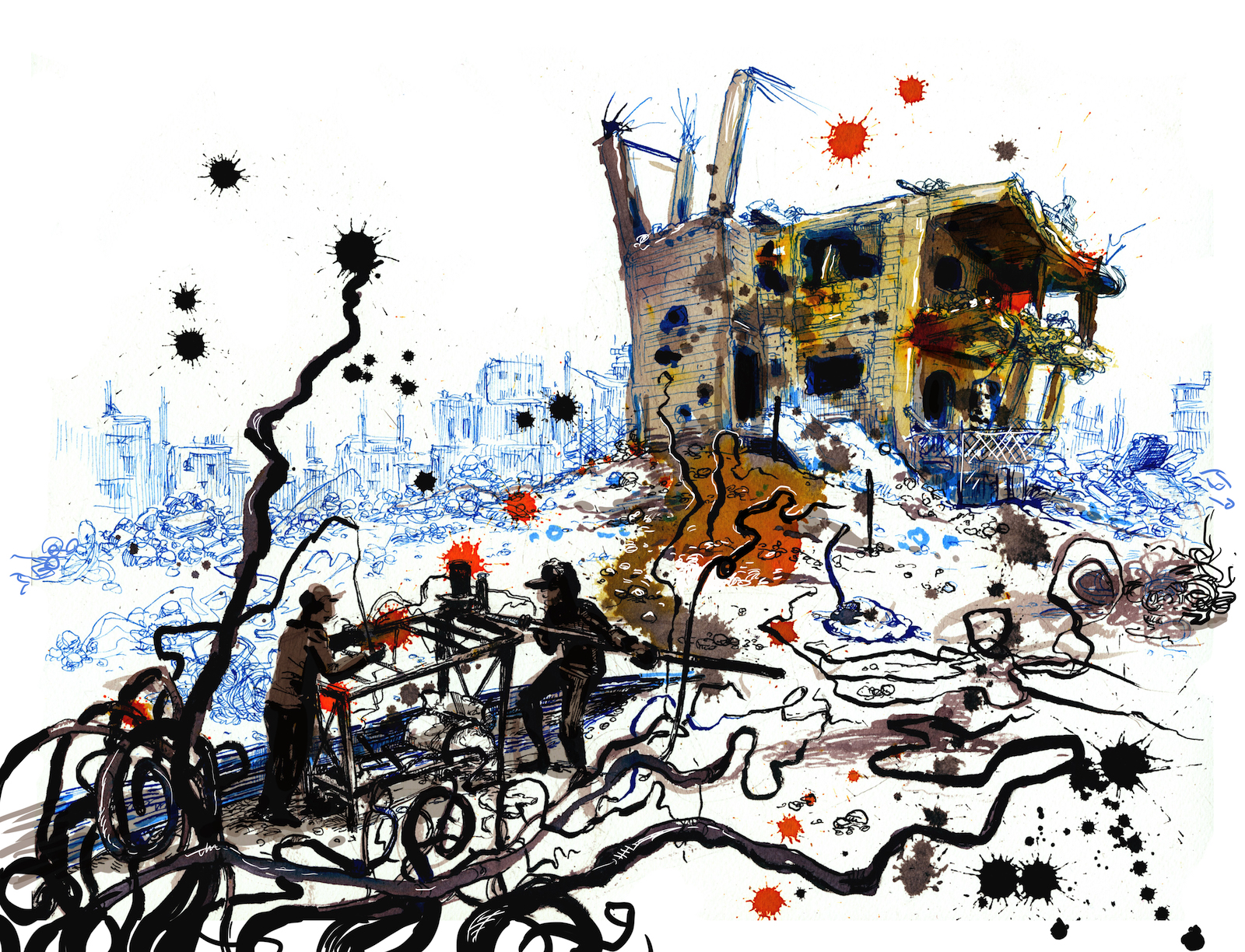
Molly Crabapple.  Illustration by Molly Crabapple

We are writers and artists who have been to Palestine to participate in the Palestine Festival of Literature. We now call for the international community to commit to ending the catastrophe unfolding in Gaza and to finally pursuing a comprehensive and just political solution in Palestine. We have exercised our privilege as international visitors to move around historic Palestine in ways that most Palestinians are unable to. We have met and been hosted by Palestinian artists, human rights workers, writers, historians, and activists. We have stood on stage with them. Many of these people, including the festival organizers based in Palestine, are in fear for their lives right now. One festival organizer is locked down with their child in Ramallah, sharing updates about the people killed by armed settlers last night. One partner in Gaza, a magazine editor, is no longer answering messages.

Israel has imposed what it calls a “complete siege” and told 1.1 million people in Gaza to evacuate within twenty-four hours. To where? After six days of bombing that have already killed 2,215 people, 724 of them children, in the fourth major aerial bombardment in the sixteenth year of closure the question—to where?—rings unanswerable around the world. When Israel’s top general refers to Palestinians as “human animals” and the US State Department deletes a statement calling for “a ceasefire,” then we fear we are watching an ethnic cleansing on a scale unseen in decades.

The governments of the USA, UK, France and others are participating in this crime by ramping up military support for Israel as it wages a war that its officials have plainly stated aims to turn Gaza into a city of tents, or even worse, empty of its people. A population of over two million people, mostly from families that were made refugees in 1948, half of whom are children, have been living under an Israeli and Egyptian blockade since 2007, and to many of them, being told to leave again is not an option. On Saturday, after sixteen years of siege, Hamas militants broke out of Gaza. More than 1,300 Israelis were subsequently killed with over one hundred more taken hostage—some of them friends and family of signatories to this letter. We deplore the loss of all innocent life and now, as we write this letter, Israel is executing the largest expulsion of Palestinians since 1948 as it bombs Gazans without discrimination.

Our words feel small in this terrifying escalation. After so many years and so many deaths we must all, together, say this has to end, and that it can only end with a free Palestine.

Ta-Nehisi Coates
Molly Crabapple
Natalie Diaz
Maaza Mengiste
Anjali Kamat
Solmaz Sharif
Leanne Betasamosake Simpson
Preti Taneja
Mirza Waheed
Zukiswa Wanner
Eve L. Ewing
Benjamin Moser
Jehan Bseiso
Annie Baker
Ashish George
Jacques Testard
Rickey Laurentiis
Subhi Hadidi
Mahdi Sabbagh
Omar Robert Hamilton
Yasmin El-Rifae
Beesan Ramadan
Sabrina Mahfouz
China Miéville
Kamila Shamsie
Madiha Tahir
Remi Kanazi
Nancy Kricorian
Selma Dabbagh
Richard Ford
Kristina Ford
Eileen Myles
Dirk Wanrooij
Marcia Lynx Qualey
Leopold Lambert
Ritu Menon
Tania Nasr
Omar El Khairy
Mabel O. Wilson
Ismail Khalidi
Rachel Holmes
Kamila Shamsie
Remi Kanazi
Madiha Tahir
Josh Begley
Christina B. Handhart
Susan Abulhawa
Ru Freeman
Nick Estes
Samia Henni
Jillian Eddelstein
Mohamed Hanif
Suad Amiry
Youssef Rakha
Robin Yassin-Kassab
Felicity Scott
Adam Foulds
Sarah Carr
Ed Pavlić
Bhakti Shringarpure
Jay Gao
Victoria Brittain
Tania Nasir
Esther Freud
Ghada Karmi
Brigid Keenan
Ben Ehrenreich
Victoria Adukwei Bulley
Isabella Hammad
Ahdaf Soueif
John McCarthy
Nathan Hamilton
Gillian Slovo
Jack Shenker
Alexandra Pringle 
Mohammed El-Kurd
Sharif Abdel Kouddous
Khalid Abdalla
Natasha Soobramanien 
Luke Williams
Bibi Bakare-Yusuf
Maan Abu Taleb
Suheir Hammad
Malika Booker
William Dalrymple
Susannah Clapp
Ibtisam Azem
Suzanne Joinson

Email us letters@nybooks.com


Sunday, January 5, 2020

In their Ongoing Fight Against Imperialism Progressive Iraquis Want Both the United States and Iran To Leave their Country

https://truthout.org/…/iraqs-vote-to-kick-out-u-s-troops-re…

Op-Ed
War & Peace


Iraq’s Vote to Kick Out U.S. Troops Reflects Growing Anti-Imperialist Movement
by Raed Jarrar
January 5, 2020
Truthout


Iraqi protesters in the southern Iraqi city of Nasiriyah clash with supporters of Iraq's pro-Iranian paramilitary group Hashed Al-Shaabi on January 5, 2020, denouncing both the U.S. and Iran as "occupiers" while demanding reforms within their own government.AFP via Getty Images


This morning, the Iraqi Parliament said it loudly and clearly: “The Iraqi government must work to end the presence of any foreign troops on Iraqi soil and prohibit them from using its land, airspace or water for any reason.” Yes, all foreign forces, including the U.S. and Iran.

As we’ve all seen by now, the military escalation between the U.S. and Iran has been dominating headlines since the assassination of Qassim Suleimani, head of the Iran Revolutionary Guard’s “Quds Force.” Chaos and uncertainty surround the situation: Is Iran going to retaliate? Is the U.S. going to attack Iran? Was Suleimani a “good guy” or a “bad guy”? Media pundits are pointing fingers and speculating about the possibility of a Third World War sparked by military confrontation between the U.S. and Iran.

But lost in much of this discourse is the context and fate of Iraq and the Iraqi people. What will happen to the popular protest movement led by Iraqis over the past few months? What will happen next for Iraqis on the ground? The rising violence between the U.S. and Iran inside Iraq threatens Iraqis’ dreams of a better future and will most likely bring about more death and destruction to Iraq. That’s why, as evidenced by the Iraqi Parliament’s vote this morning, Iraqis want them both out.

Since October 2019, there has been an authentic and organic anti-corruption and anti-intervention uprising that has swept across Iraq, mainly led by young Iraqis who came to age after the 2003 U.S.-led invasion. Hundreds of unarmed protesters have been killed and thousands injured in the brutal response by the Iraqi government and its sectarian militias, many of whom are backed by both Iran and the U.S.

The protest movement is pushing for reforms within the Iraqi government, and one of its main calls is an end to all foreign interventions. This particular demand has posed a threat to some of the foreign powers that are fighting a proxy war in the country — mainly, the U.S. and Iran. Both countries have funneled money, weapons and training into Iraq to exert maximum control over the current regime, and Iraqi protesters are fed up with living in a corrupt, dysfunctional client state. In the streets of Baghdad and in the south of Iraq, Iraqis from all different sects and ethnicities have chanted against both the U.S. and Iranian interventions.

In response, the Iranian government has tried to manipulate Iraqis into rechanneling their anger at only the U.S. government. Similarly, the U.S. has also tried to manipulate Iraqis into rechanneling their anger toward Iran. These political games were most evident in the recent tit-for-tat military escalation between the U.S. and Iran in Iraq.


The rising violence between the U.S. and Iran inside Iraq threatens Iraqis’ dreams of a better future and will most likely bring about more death and destruction to Iraq.

In the last few days of 2019, Iranian-backed militias staged 11 separate attacks against U.S. bases in Iraq and tried to link the attacks to the protest movement. One of those attacks ended up killing a U.S. contractor and injuring a number of U.S. troops. The U.S. retaliated by bombing the camps of the pro-Iranian militia in Iraq, Kataeb Hezbollah, killing 24 and injuring over 50 — all of them were Iraqis. The militia then staged the protest at the U.S. Embassy in the Green Zone. The next day, the U.S. bombed the car that had the leader of Kataeb Hezbollah, al-Muhandis, at the Baghdad airport. None of this made it to U.S. headlines because it was more of the same: the U.S. and Iran using Iraqis as pawns in their political games. But the last event is where things got out of control — the same car that was bombed at the airport had in it Qassim Suleimani, the most powerful Iranian military figure.
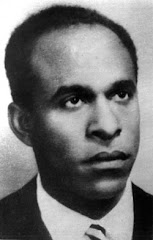
Although Suleimani is only now a household name in the U.S., for anyone in Iraq, Syria, Lebanon, Yemen, or other parts of the Middle East, he is a controversial figure in the Middle East. In a region with raging civil wars, he is a hero to those affiliated with the Iraqi government and Assad regime, but he is nothing more than a notorious mass murderer to others. His militias in the region have killed and tortured civilians and razed entire cities to the ground.

Iraqis want both the U.S. and Iran out of their country.


Yet many in the anti-imperialist anti-war movement in the U.S. are notorious for over-simplifying foreign policy and painting a world in which only U.S. imperialism is “bad” and everyone else — especially those at odds with the U.S. empire — is “good.” Many anti-imperialist activists applied this oversimplified logic to analyses of the Soviet Union and Cuba in the past. And in more recent years there has continued to be a disturbing trend of whitewashing the crimes of leaders like Saddam Hussein, Nicolás Maduro, Bashar al-Assad and Suleimani. Back in 2003, it was necessary to criticize Saddam’s crimes and recognize he was a brutal dictator, and at the same time to oppose a U.S.-led invasion and occupation of Iraq. Now in 2020, it’s necessary to criticize Assad’s crimes and oppose the U.S.-led intervention in Syria. It is also necessary to criticize Suleimani’s crimes and the interventionist and oppressive policies of the Iranian government, and still say no to a U.S. war with Iran.

Even for those Iraqis who view Suleimani as a villain and a symbol of Iran’s unwelcome intervention in their country, news of his assassination by the U.S. was not something to be celebrated. Many Iraqis continue to think Trump is also a villain and still want both the U.S. and Iran out of their country.

From most Iraqis’ perspective, this is not complicated at all: There are no good guys. It’s not about who should interfere in the country, it’s about whether or not foreigners should have a say in Iraq’s present or future.

Iran supporters in Iraq, such as Hezbollah, claim that Iran is the good guy and that Iran can’t withdraw from Iraq because that would hand Iraq to the U.S. Meanwhile, U.S. supporters in Iraq claim that the U.S. is the good guy and if it were to withdraw, that would hand Iraq to Iran. From most Iraqis’ perspective, this is not complicated at all: There are no good guys. It’s not about who should interfere in the country, it’s about whether or not foreigners should have a say in Iraq’s present or future. It’s about giving Iraq back to Iraqis.

Iraqis demonstrators have been loudly and clearly conveying through months of protests that what they want is their independence, sovereignty and self-determination. They have paid a very heavy price with their blood and treasure because of interventions from the U.S., Iran and others.

Today’s vote in the Iraqi Parliament reflects a widespread awareness among Iraqis that military escalation between the U.S. and Iran threatens the Iraqi protest movement and could bring much death and destruction to the already war-torn country.

The best thing that people in the U.S. can do is to recognize Iraqis’ suffering and pain, and demand that our government and military get out of their way. The U.S. presence in Iraq is an obstacle in the way of Iraqi aspiration, and it is also being used as an excuse by Iran and others to continue meddling in Iraq’s business. An immediate end to U.S. military aid and weapons sales to the Iraqi government and a withdrawal from Iraq completely would be two important steps in the right direction.

ABOUT THE AUTHOR:

Raed Jarrar (@raedjarrar) is an Iraqi-American political advocate based in Washington, D.C.

PHOTO: Iraqi protesters in the southern Iraqi city of Nasiriyah clash with supporters of Iraq's pro-Iranian paramilitary group Hashed Al-Shaabi on January 5, 2020, denouncing both the U.S. and Iran as "occupiers" while demanding reforms within their own government. AFP via Getty Images

Thursday, January 10, 2019

The international BDS movement and the egregious political censorship of Angela Davis: Its ominous causes and consequences

All,

This utterly absurd and egregiously dishonest and perverse series of absolutely false statements about exactly who Angela Davis is and what she stands for--and has always stood for in her public political life--regarding the Israeli state vis-a-vis the Palestinian people both within Israel specifically and in the Gaza and West Bank territories generally is a brazenly transparent attempt to brutally censor and bully Ms. Davis into cowed silence on these very important issues regarding human rights in Israel and Palestine and to further pretend that her openly stated positions on these crucial questions are anti-semitic and defames the Israeli people and their general society. This is nothing but an outrageous LIE and has always been a lie on the given historical evidence

NEVER has Ms. Davis taken such a reactionary and oppressive position on Israel and/or the Jewish people generally, and anyone who has paid any attention at all to her actions and statements knows and understands this.  Nor has her open support of the international BDS movement ever advocated, endorsed, supported, or defended anti-semitism, or the defamation of the Jewish people anywhere in the world in any form or context whatsoever.  Thus the ludicrous notion that she should now be denied  a much deserved public recognition of her historically courageous work on behalf of civil and human rights in her native city of Birminham, Alabama is not merely wrong or "misleading" but is absolutely morally and politically indefensible.  The late great Fred Shuttlesworth (1922-2011) one of the finest, most important and most courageous civil rights leaders in the esteemed history of the movement (and an eloquent defender of Davis during his own life and career), must be roiling like  a rotisserie in his grave at this moment. 

To say that that we must all openly protest this ugly miscarriage of justice in the cowardly denial of the civil rights award should at this very late date go without saying.  It is a measure of just how petty, stupid, phony, and manipulative the current corrupt, reactionary and fiercely rightwing forces within Benjamin Netanyahu's Likud party in Israel and their many supporters throughout the world and especially here in the U.S.  have been and continue to be whenever they are confronted with any principled and nonviolent criticism of their politics and policies regarding the Palestinians and their political, economic, social, and cultural status and fate within both Israel and Palestine. 

So as far as Ms. Davis is concerned it is more important and necessary than ever that her personal, intellectual, and political integrity with respect to the BDS movement and the global struggle for the human and civil rights of ALL people generally be strongly defended and protected no matter what.  This massive struggle needless to say includes not only a crucial ongoing critique of what is wrong and why but a strong and  unambiguous protection of the specific human and civil rights and independence of both the Palestinian and Israeli people.  Dig?  Stay tuned...

Kofi   

https://www.nytimes.com/2019/01/08/us/angela-davis-israel-civil-rights-institute.html

Angela Davis Says She’s ‘Stunned’ After Award Is Revoked Over Her Views on Israel
by Niraj Chokshi
January 8, 2019
New York Times
The civil rights activist and scholar Angela Davis speaking at the University of Michigan-Flint in 2015. She is a supporter of the boycott, divestment and sanctions movement, which seeks to apply economic pressure to Israel in protest of its treatment of Palestinians. CreditJake May/The Flint Journal, via Associated Press

Angela Davis, the activist and scholar, said this week that she was “stunned” after a civil rights group in her native Birmingham, Ala., reversed its decision to honor her with an award amid protests over her support for a boycott of Israel.

Professor Davis, once a global hero of the left who has since earned renown for her scholarship, had been selected for the human rights award months ago by the Birmingham Civil Rights Institute, but the group’s board rescinded the honor on Friday.

In announcing the move, the institute did not offer an explanation, saying only that “she unfortunately does not meet all of the criteria on which the award is based.” But Professor Davis said in a statement on Facebook on Monday that she had learned it was because of her “long-term support of justice for Palestine.” The revocation of the award, she added, was “not primarily an attack against me but rather against the very spirit of the indivisibility of justice.”

In a statement expressing dismay at the controversy, Mayor Randall Woodfin of Birmingham said the decision had come amid “protests from our local Jewish community and some of its allies.”

The institute did say in its statement announcing the revocation that it had begun hearing from “concerned individuals and organizations” in late December, around the time the magazine Southern Jewish Life published a piece about the award by its editor, Larry Brook.

In it, he wrote that “for some in the community, there might be some indigestion” at the now-canceled February gala where Professor Davis, who retired from the University of California, Santa Cruz, in 2008, was slated to be honored.

Mr. Brook noted that Professor Davis has supported the boycott, divestment and sanctions movement, known as B.D.S., which seeks to apply economic pressure to Israel until it ends the occupation of the West Bank, treats Palestinians equally under the law and allows the return of Palestinian refugees.

Many Israelis and their allies oppose the movement, viewing it as anti-Semitic and an existential threat to the country. Supporters, including Professor Davis, describe it as a necessary response to what amounts to modern-day apartheid.

Professor Davis, who has delivered that message on college campuses and elsewhere, has also joined prominent black celebrities and thinkers in comparing the struggles of Palestinians to those of African-Americans. Among those celebrities is the actor Danny Glover, who received the Birmingham Civil Rights Institute’s human rights award in 2003.

Israel and its allies have defended against the boycott movement around the world, including in the United States, where polls of young people show support growing for the Palestinian cause.

In recent years, more than a dozen states have passed laws to restrict contractors from boycotting Israel. Some of the laws are being challenged as violations of First Amendment rights.

In his statement, Mayor Woodfin called on the institute and those who opposed its decision to engage in dialogue.

The institute’s reversal provided “an opportunity to engage in conversation about how we work together to resolve our differences constructively and continue to move our community forward,” he said. “I would be pleased to facilitate and participate in any such conversation, now and in the future.”

In her statement, Professor Davis said her activism often involved the linking of movements around the world to those within the United States.

“I support Palestinian political prisoners just as I support current political prisoners in the Basque Country, in Catalunya, in India, and in other parts of the world,” she said. “I have indeed expressed opposition to policies and practices of the state of Israel, as I express similar opposition to U.S. support for the Israeli occupation of Palestine and to other discriminatory U.S. policies.”

Professor Davis became a global progressive leader nearly half a century ago. At the time, she was agitating on behalf of three California inmates accused of murdering a white prison guard when guns she had purchased were used in an attack that was aimed at freeing the inmates but left four people dead, including the assailant.

She was not present during the attack and witnesses testified that the guns were purchased for defense, but Professor Davis nonetheless spent 16 months in jail before an all-white jury acquitted her of all charges. In the interim, “Free Angela” had become a rallying cry.

Since then, she has been recognized for her scholarship and activism around feminism and against mass incarceration. Last year, a Harvard University library acquired her personal archive.

In her statement, Professor Davis said she planned to be in Birmingham next month regardless of the institute’s decision.

“I look forward to being in Birmingham in February for an alternative event organized by those who believe that the movement for civil rights in this moment must include a robust discussion of all of the injustices that surround us,” she said.

Related Coverage:

Boycott Drive Put Israel on a Blacklist. Now Israel Has One of Its Own.
Jan. 7, 2018
Image
Boycott Drive Put Israel on a Blacklist. Now Israel Has One of Its Own.

A New Home for Angela Davis’s Papers (and Her ‘Wanted’ Poster)
Feb. 13, 2018
Image
A New Home for Angela Davis’s Papers (and Her ‘Wanted’ Poster)

She Wouldn’t Promise Not to Boycott Israel, So a Texas School District Stopped Paying Her
Dec. 19, 2018
Image
She Wouldn’t Promise Not to Boycott Israel, So a Texas School District Stopped Paying Her


https://www.al.com/life/2019/01/shuttlesworth-biographer-fred-would-honor-angela-davis.html?fbclid=IwAR1jUYFCjw6Xi_kaB5ijsdgQvoD-q4OiwtyD7WQaI-uC21pN-v38rLy6FRw


Shuttlesworth biographer: Fred would honor Angela Davis


The historian who wrote a definitive biography of the Rev. Fred Shuttlesworth said the legendary firebrand preacher would have loved the idea of controversial activist Angela Davis receiving the human rights award named in his honor. (2007 photo/AP Dave Martin) (AP/Dave )


The historian who wrote a definitive biography of the Rev. Fred Shuttlesworth said the legendary firebrand preacher from Birmingham would have loved the idea of controversial activist Angela Davis, another Birmingham native, receiving the human rights award named in his honor.

“I can’t even imagine Fred Shuttlesworth hesitating for a moment to honor Angela Davis this way,” said Andrew Manis, author of “A Fire You Can’t Put Out” and professor of history at Middle Georgia State University in Macon.

“Fred was willing to work with anybody regardless of their politics,” Manis said. “If they were on the side of freedom as soon as possible and equality as soon as possible, he was on board with them.”

The Birmingham Civil Rights Institute voted Jan. 4 to rescind an award to Davis, after Birmingham Jewish leaders objected to her being named recipient of the Fred Shuttlesward Award. The Feb. 16 gala at which she would have received it was canceled. An alternative event will be organized on the same day, and Davis issued a statement saying she plans to attend.

Davis, an author and retired professor, was known for a life of activism that included memberships in the Black Panther Party and the Communist Party USA.

Her activism on behalf of Palestinians, including calling for divestment and boycotts against Israel, was cited by members of Birmingham’s Jewish community as a reason to question the award and the invitation to speak in the city where she grew up.

Manis, who traveled with and researched Shuttlesworth for 12 years, said he’s not aware of Davis and Shuttlesworth speaking together or being on the same program.

“I never saw a letter or saw anything that indicated a close relationship,” Manis said.

“I’m certain she was aware of him and he was no doubt aware of her.”

Davis was born in Birmingham in 1944 and raised in a neighborhood in Smithfield that was bombed so often it was nicknamed “Dynamite Hill.”

Shuttlesworth was born in Birmingham in 1922 and from 1953-61 was pastor of Bethel Baptist Church in Collegeville, which served as a headquarters for Birmingham’s civil rights activism as Shuttlesworth led the fight against legal segregation in the city’s schools, buses and public accommodations. Shuttlesworth’s church and home were bombed by the Ku Klux Klan. In 1963, although Shuttlesworth was then pastor of a church in Cincinnati, he returned to help lead civil rights marches in Birmingham with the Rev. Martin Luther King Jr.

“He was much more willing to relate and work with people who were politically radical, much more than King was, up until the last couple years of his (King’s) life,” Manis said.

The rough-edged Shuttlesworth, who died in 2011 at 89, would likely be riled up about the decision to withdraw the Shuttlesworth Award from Davis, Manis said.

“I think Fred would be cussing,” Manis said. “He often bragged about being a cussing preacher. I think he’d be cussing about this.”

During his time as a pastor in Birmingham, Shuttlesworth was brutally beaten by a mob, sprayed with city fire hoses, and arrested by police 35 times.

The defining moment for Shuttlesworth came during the 1956 Christmas night bombing that shattered the Bethel Baptist Church and crumbled the parsonage next door. He walked out of the rubble almost unscathed, yet he recalled that the mattress he was sleeping on was blown to bits.

The day after the bombing, he and his supporters were back in the front seats of city buses, defying segregation laws. He was arrested for again riding in whites-only seats in 1958. Even his children were arrested in 1960 for violating bus segregation laws.

Angela Davis stunned at BCRI decision, but still coming to Birmingham
ANGELA DAVIS
https://www.al.com/…/in-caving-to-pressure-to-cancel-davis-… 


In caving to pressure to cancel Davis, BCRI insulted Shuttlesworth, stained its own legacy


The Rev. Fred Shuttlesworth, during a march against racism in Ohio. (Cleveland Plain Dealer files)


The Rev. Fred Shuttlesworth, during a march against racism in Ohio. (Cleveland Plain Dealer files) (David I. Andersen)


This is an opinion column.
WWFD?

What would Rev. Fred Shuttlesworth do?

Certainly not this.

I didn’t have the great fortune of ever meeting the fiery Birmingham preacher who was one of the most seminal figures in our city’s history, but I simply cannot imagine he would have done this.
Or condoned it.

I can’t fathom the man who challenged African Americans to register and vote, who stood shoulder-to-shoulder with Dr. Martin Luther King to organize and lead the critical Children’s Crusade, who stared down Bull Connor to end legal segregation in Birmingham, would have capitulated.

He would not have bowed to anyone trying to dissuade him from honoring someone who fought the same fight— even if they fought with a different fervor, even if they were decidedly more revolutionary.

As long as they fought.

And yet one of our most venerable cultural institutions, the Birmingham Civil Rights Institute, did just that—it crumbled, embarrassingly so, to outside pressures and rescinded its invitation to honor a widely esteemed daughter of Birmingham, activist Angela Davis, with the BCRI’s Fred R. Shuttlesworth Human Rights Award at its annual fund-raising gala next month. (The board, which announced its decision in the depths of darkness on Saturday evening, also said it canceled the event entirely.)

Institute cancels decision to honor Davis with Shuttlesworth Award

It caved to voices clearly uncomfortable with aspects of Davis’ widely known revolutionary past, which includes membership in the Black Panther and Communist parties and, most recently, support for the Boycott, Divestment and Sanctions Movement (BDS) against Israel. (In Chicago in 2017, Davis, who regularly speaks at events nationwide, said she was in “solidarity with the indigenous people of this region,” referring to Palestinians.)

The loudest voices primarily—though not exclusively—came from the city’s Jewish leadership, and the decision transpired suddenly, and stunningly, in a span of just a few days.

Davis, who grew up in a home on Dynamite Hill,’ was indeed announced as the 2019 award recipient last October; it prompted nary a peep. Months later, though, on December 23rd, Larry Brooks, editor of Southern Jewish Life, based in Birmingham, published an essay titled: “Prominent BDS activist Davis to Receive Civil Rights Institute’s Shuttlesworth Award”.

In part, it read: “Something not included in the Institute's publicity for the event is that Davis has also been an outspoken voice in the boycott-Israel movement, and advocates extensively on college campuses for the isolation of the Jewish state, saying Israel engages in ethnic cleansing and is connected to police violence against African-Americans in the United States.”

“When I wrote it,” Brooks told AL.com on Sunday, “it was more to inform the community that there is a bit more to Angela Davis. I figured there might be some who would not want to attend [the gala] because of certain aspects of her activism.”

That essay may have been the spark that grew into a raging flame. “I figure there were some people who reached out to the Institute to see how it all when down,” Brooks said. “The [Birmingham] Jewish Federation was among those.”

Richard Friedman, the BJF’s executive director who, according to sources, participated in the effort to dissuade the BCRI from honoring Davis, did not return a telephone call or text message seeking comment.
BCRI not new to controversy

Theirs, though, was not the only dissenting voice in the cacophony that quickly swayed the BCRI board.

BCRI board vice chair Walter Body said it “received questions from the African-American community, the Jewish community, and the white community. It was not one just community.” (Body would also not reveal specific names)

Among the voices was General Charles Krulak the retired Marine Commander and former president of Birmingham-Southern College. In an email sent to BCRI board members in January 1, and obtained by Al.com, he expressed “sadness” at Davis’ selection.

His feelings, though—which are somewhat diffused by his charge for members to “simply look at her Wikipedia page”—were largely supported by her Communist party membership (“…she was twice a candidate for Vice President of the United States on the CPUSA ticket,” he wrote), her being placed on the Federal Bureau of Investigation’s “10 most wanted fugitive list” (remember, this was J. Edgar Hoover’s FBI) and a reference to a 1972 case in which Davis was found not guilty of “aggravating kidnapping and first degree murder in the death of Judge Harold Haley,” he wrote.

He added: “… the fact that the guns she owned and were used in the crime was judged insufficient to establish her role in the crime.”

The 16-member board voted late last Friday afternoon during an “emergency” telephone meeting in which it, according to sources, went into executive session—meaning only voting members participated. That excluded two ex-officio board members: respected Birmingham icon Odessa Woolfolk and mayor Randall Woodfin.

AL.com submitted an open-records request for the minutes of that meeting to determine the vote tally and how board members voted. As of this posting, we have not received those minutes.

Board chair Mike Oatridge has not returned an email requesting comment on the decision.

To many, across generations, Davis is a icon whose distinctive Afro and recognizable face still adorn t-shirts and posters recounting the era of black empowerment and self-worth that still inspires—and, yes, scares some.
Not surprisingly, the decision prompted a quick and vitriolic backlash, particularly on social media.

Ahmad Ward
on Sunday
*sigh*...this will be a long post so govern yourselves accordingly.

First of all, let me state that I have and will always have nothing but pure, profound love for the Birmingham Civil Rights Institute. I became a professional there. Met my wife there. My children spent most of their lives in those hallways. I deposited an crazy amount of blood, sweat and tears there. I have no intention of bashing them in this post. 

Angela Davis is a daughter of Birmingham. Born in the fi...  See More


Dee Reed
on Sunday
Typically—I think it’s important to make informed statements and to not get caught up in the noise that usually emanates around controversy.
However, the cancellation of the Birmingham Civil Rights Institute’s annual gala, where global human rights activist Angela Yvonne Davis was set to receive the Rev. Fred Shuttlesworth Award, lays heavy on my heart. ❤️


Therefore, silence is not an option... See More

Nadia Richardson
on Sunday
Those who know and understand her contributions and legacy will continue to celebrate her everyday  with our life’s work.

The Outcast Voters League, led by President Frank Matthews, will hold a 10:45 a.m. press conference Monday at Kelly Ingram Park to also call for release the minutes of the meeting. He says the group is “willing to protest” the Institute.

BCRI CEO Andrea Taylor did not respond to requests for comment.

Mayor Woodfin expressed “dismay” at the decision in a lengthy statement released on Sunday, saying it “harks backward, rather than forward — that portrays us as the same Birmingham we always have been, rather than the one we want to be.”

In truth, he is livid about the process.

Birmingham mayor reacts to decision to cancel Davis

Indeed, this decision merited better than being hastily made and supported with details of why Davis was deemed suddenly to “not meet all of the criteria on which the award is based.”

It merited an intentional, in-depth dialogue among all factions, all perspectives—one that just might have resulted in a compromise, perhaps a gala preceded by a smart, public and enlightened discussion about all aspects of Davis’ eclectic journey.

A discussion worthy of the Birmingham we should be.

Worthy of BRCI’s legacy as the globally renowned steward of our city’s deep, rich and vital history.
Worthy of Rev. Fred Shuttlesworth.

In its statement, the BCRI board said: “… we believe this decision is consistent with the ideals of the award’s namesake, Rev. Shuttlesworth.”
It isn’t. Not at all.

Don’t just believe me. Here’s someone who knew Rev. Shuttlesworth, knew him well:
“Rev. Fred Shuttlesworth would be embarrassed and bewildered by such an action,” Dr. Horace Huntley, a retired professor of history at the University of Alabama at Birmingham, and noted keeper of the city’s past, told AL.com. “In fact, it is no secret of how much Rev. Shuttlesworth abhorred the dictatorial nature of the entrenched and out of touch status quo. He exuded courage and was an antidote to cowardliness. Such an action is less indicative of what the Board knows about Angela Davis and more instructive of what the Board fails to understand about Rev. Shuttlesworth.”
…exuded courage…and antidote to cowardliness.

That’s the Rev. Shuttlesworth those who knew him describe. Not a perfect man, but one who spoke his truth to the powers that conspired against him and the people he loved.

Just as Davis—certainly not a perfect woman—has long spoken her truth to powers on these shores and beyond for almost all of her near 75 years.

ABOUT THE AUTHOR:

Roy S. Johnson’s column appears in The Birmingham News, the Huntsville Times, the Mobile Register and AL.com. Hit me up at rjohnson@al.com. 

Follow me at twitter.com/roysj or on Instagram at instagram.com/roysj/

https://www.npr.org/…/civil-rights-award-rescinded-from-ang…

Civil Rights Award Rescinded From Angela Davis After Jewish Community Objections


by Sherrel Wheeler Stewart 
NPR