Showing posts with label The GOP. Show all posts

Tuesday, December 12, 2023

The Fundamental Crisis and Foundational Contradiction Facing the United States During the Upcoming Presidential Election Year of 2024: Fascism guided, informed, and enabled by the Doctrines and Practices of White Supremacy and Global Capitalism--PART 2

DEFEAT FASCISM BEFORE FASCISM DEFEATS YOU

ELECTORAL UPDATE FROM NOVEMBER 2020: OVER 74 MILLION PEOPLE VOTED FOR DONALD TRUMP FOR THE PRESIDENCY. 75% OF THESE VOTES WERE CAST BY WHITE AMERICAN VOTERS ALONE.

74 MILLION IS THE SECOND HIGHEST NUMBER OF VOTES ANY PRESIDENTIAL CANDIDATE FROM EITHER POLITICAL PARTY HAS EVER RECEIVED IN AMERICAN HISTORY.

THE 137 MILLION VOTES THAT TRUMP RECEIVED IN TOTAL FROM THE ELECTIONS OF 2016 AND 2020 IS THE HIGHEST NUMBER OF VOTES THAT ANY PRESIDENTIAL CANDIDATE FROM EITHER POLITICAL PARTY HAS EVER RECEIVED OVER THE COURSE OF TWO ELECTIONS IN AMERICAN HISTORY.

OVER 80 MILLION OF THESE VOTES WERE CAST BY WHITE AMERICAN VOTERS ALONE.


https://www.thenation.com/article/politics/democracy-race-power/


All,

This is yet another outstanding and typically incisive article by Steve Phillips, one of the finest and most intellectually honest as well as truly reliable progressive journalists and activists in this country. Thank you Steve…

Kofi
“What’s Past is Prologue…"
Republicans
Democrats
Voter suppression

The Party of White Grievance Has Never Cared About Democracy

From the Democrats of the Civil War era to the Republicans of the Trump years, the white party has always posed the greatest threat to our political system.

by Steve Phillips
May 26, 2021
The Nation
 
Capitol building
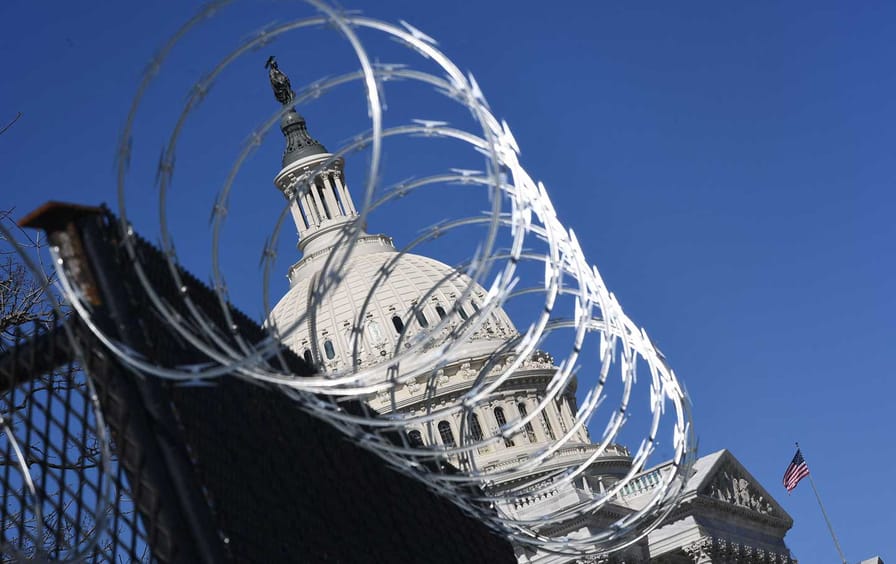
IMAGE: Capitol building. 
(Eric Baradat / AFP via Getty Images)

Alarm bells are ringing about the dangerous implications of the behavior of the Republican Party. By doubling down on defense of the Big Lie that the 2020 election was stolen, punishing any members who reject that lie, refusing to support an investigation into the January 6 insurrection at the Capitol, and unleashing a fusillade of voter suppression legislation across the country, many see these actions as an ominous new trend in American politics that threatens the foundations of our democracy itself.

Viewed through the lens of history, however, none of this is new. The hard truth is that whichever United States political party has been most rooted in the fears, anxieties, and resentments of white people has never cared much about democracy or the Constitution designed to preserve it. Those who do want to make America a multi-racial democracy must face this fact with clear eyes and stiff spines to repel the ever-escalating threats to the nation’s most cherished institutions and values.

Contemporary analysis of domestic politics is obscured by the historical fact that white Americans fearful of the ramifications of equality for people of color have moved their political home from the Democratic Party, which was their preferred vehicle at the time of the Civil War, to the Republican Party, where they reside today. In the 19th century, Democrats dominated the South, led 11 states to secede from the Union, and waged a murderous multiyear war against their fellow Americans. Today, it is the Republicans who are the standard-bearers of the modern-day Confederate cause.

Whatever the label, the party that prioritized protecting white rights has always been more willing to destroy the country than accept a situation where people of color are equal and can participate in the democratic process.

Donald Trump was not the first politician to refuse to accept the results of a presidential contest. After Abraham Lincoln and the anti-slavery Republican Party won the election of 1860, the Confederates did not waste time filing lawsuits and trying to bully state election officials into overturning their state’s election results. They simply severed their ties with the United States of America, seceded from the union with the defiant 1861 Cornerstone Speech by Confederate Vice President Alexander Stephens declaring that “the negro is not equal to the white man,” and quickly organized an army that killed hundreds of thousands of their formerly fellow countrymen.

The violence, bloodshed, and contempt for America’s democratic institutions did not end with the conclusion of the Civil War. Just five days after the Confederates formally conceded defeat and surrendered on April 9, 1865, Confederate sympathizer John Wilkes Booth shot the president of the United States in the back of the head, having told colleagues that Lincoln’s speech in support of allowing Black people to vote “means nigger citizenship,” with Booth vowing, “That is the last speech he will ever make.”

Even passage of constitutional amendments ending slavery, securing equal protection of the laws to people of all races, and guaranteeing the right to vote (the 13th, 14th, and 15th amendments) meant little to the political leaders committed to the concept that America is, first and foremost, a white nation. Much as Southern leaders in the past few months have passed a blizzard of voter suppression legislation in states across the former Confederacy, so too did their predecessors furiously draft laws designed to accomplish with pens and ink what they could not achieve with guns and bullets.

In her book One Person, No Vote, Carol Anderson outlines the “dizzying array of poll taxes, literacy tests, understanding clauses, newfangled voter registration rules” adopted in 1890, all designed to evade and undermine the 15th Amendment’s provision prohibiting laws restricting voting “on account of race.” The antidemocratic motivation behind these new laws was cheerily articulated at the time by Virginia State Representative Carter Glass, who explained in 1890 that that era’s election law reform was designed to ““eliminate the darkey as a political factor.”

A hundred years after the end of the Civil War, the Confederates continued the crusade of doing everything in their power to stop America from becoming a multiracial democracy. As the civil rights movement gained momentum in the 1950s and 1960s, public officials and party leaders across the old Confederacy openly defied and actively undermined the pillars of American democracy.

In response to the Supreme Court’s 1954 Brown v. Board of Education decision desegregating public schools, public officials in Virginia’s Prince Edward County shut down the entire school district for five years. After civil rights activists James Chaney, Andrew Goodman, and Michael Schwerner were murdered in Philadelphia, Mississippi, in 1964 for helping register Black people to vote, the state’s leaders essentially sided with the white nationalist domestic terrorists responsible for the killings by refusing to investigate or prosecute the murderers (some of whom were public officials themselves).

The partisan political migration of the defenders of the Confederacy began as the Black demands for the constitutionally-mandated rights of equality and democracy began to reach a crescendo in the South in the 1960s. After Democrat Lyndon Johnson unequivocally embraced the cause of multiracial democracy declaring in a 1965 nationally television address that “their cause is our cause…and we shall overcome,” fearful whites felt betrayed and abandoned, and Republicans swooped in to offer their party as the home for white racial resentment.

What has been dubbed the Southern strategy began in the 1960s with South Carolina segregationist Senator Strom Thurmond striking a deal with Richard Nixon to rally white support for Nixon against Alabama’s segregationist governor George Wallace’s more naked appeals to aggrieved whites. It worked like a charm, building to the point where Ronald Reagan sealed the deal by offering the unmistakable symbolic solidarity of beginning his 1980 presidential candidacy with a pro “states’ rights” speech to a massive crowd “almost entirely made up of whites” in the very county where Goodman, Cheney, and Schwerner were murdered.

More recently, the reaction to the election and governance of a Black president mirrored prior periods of contempt for the Constitution and resistance to public policies designed to benefit a multiracial electorate. Echoing the actions of those who shut down school districts rather than provide public education to students of all colors, contemporary Confederates shut down the entire federal government in 2013 in attempt to stop the government from providing health care through the Affordable Care Act to Americans. It is no accident that the 11 states of the Confederacy were the leaders in rejecting funding for Medicaid.

Today, 82 percent of Republican voters are white, and the party has comfortably won the white vote in every single presidential election since Johnson signed the Voting Rights Act in 1965. The political home of the defenders of the Confederacy and white power has shifted, but the strategies and tactics of that constituency and its leaders has not.

While none of this is new, fortunately the efforts to defend and expand democracy also extend back over a century, offering important lessons about how to repel efforts to destroy our democratic institutions.

The primary strategy that has worked—and we now have 160 years of empirical evidence to back this up—has been putting the full force of the federal government on the side of equality, justice, and democracy for people of all racial backgrounds, not just white people.

What hasn’t worked is seeking compromise with those contemptuous of democracy, the Constitution, and the social contract underlaying it. Compromise only works when all parties are operating in good faith and subscribing to the same set of core values. How do you compromise with people who identify more with lynchers than with those being lynched?

The most dramatic example of deploying federal power, of course, is the Civil War itself. Also instructive is that after the military conflict, clear-eyed congressional leaders recognized the fragility of the victory and the ferocity of the vanquished and made sure to pass constitutional amendments to entrench equality in the country’s governing document in the form of the 13, 14th, and 15th amendments (and even those were fiercely resisted, barely mustering enough votes in Congress).

In the aftermath of the violent and bloody attacks on peaceful protesters in the 1960s, who thought that the 15th Amendment did in fact apply to them, Lyndon Johnson and Congress passed the Voting Rights Act to, as Johnson said, “establish a simple, uniform standard which cannot be used, however ingenious the effort, to flout our Constitution.”

In 2021, the imperative of the hour is to pass similar legislation as was advanced in prior periods of intense conflict with the enemies of equality. Specifically, HR 1, the For the People Act, and HR 4, the John Lewis Voting Rights Act, will both protect the democratic process and advance the cause of expanding democracy that the Republicans are working so feverishly to obstruct.

In addition to the voting rights legislation, President Biden can use the full force of the bully pulpit of the presidency. More than 100 corporate executives have expressed concern about the viral spread of voter suppression litigation, and he should rally all of them behind a national crusade for democracy where every corporate, entertainment, and sports leader uses their platform to aggressively promote and support voting. Every Amazon package, for example, could come with an 800 number on it on how to vote. Google could provide easy searching for how to vote just as it’s doing for vaccines. iPhones could facilitate voter registration.

Failure to meet this moment would be catastrophic. From the January 1861 start of Confederate secession from the Union to the January 6, 2021, attempted insurrection and failed coup supported by 147 Republican members of Congress, the political party fueled by white fear has scoffed at the Constitution and mocked the notion of fidelity to country over Caucasians. The result after the Civil War was nearly 100 years of Jim Crow voter suppression, widespread domestic racial terrorism, and raging inequality and injustice. None of this is new. The question is, do the current political leaders recognize what is happening, and, if so, do they have the courage to do something about it?
 

ABOUT THE AUTHOR:
 

Steve Phillips is the host of Democracy in Color with Steve Phillips, a color-conscious podcast about politics. He is a senior fellow at the Center for American Progress and is the author of Brown Is the New White: How the Demographic Revolution Has Created a New American Majority. He is a regular contributor to The Nation.


FROM THE PANOPTICON REVIEW ARCHIVES

(Originally posted on October 12, 2012):

Friday, October 12, 2012

OPEN LETTER TO MY SISTER ABOUT AMERICAN POLITICS, WHITE VOTERS, AND BARACK OBAMA:

Here is the real immediate danger in this election for the President...

The major political problem facing both President Obama and American society and culture generally as I've been saying consistently both verbally and in print for many years now is that the United States is thoroughly dominated and controlled by the widespread electoral and institutional racism and sexism of white voters generally (male and female).  As I've pointed out to you and many others over and over again during the past five years in the Panopticon Review the electoral statistics confirming this huge ongoing problem are simply horrific.  For example in the past 60 years going back to 1952 there have been 15 national presidential elections. IN EVERY SINGLE ELECTION EXCEPT ONE (1964) white American voters in general have voted for the Republican candidate 14 times!  (or a whopping 93% of the time!).  During this same period since 1952 over 60%  of ALL WHITE MALE AND FEMALE VOTERS have consistently voted for the Republican candidate (in 2008 65% of them voted for McCain).  Since male and female white Americans together currently make up 74% of the entire U.S. voting population IN 2012 (and in the recent historical past--especially before 1992) constituted anywhere from 80-85% of the American voting population it has always been VERY difficult to get any liberal or progressive politicians elected to the Presidency.  For example of the last 15 elections since 1952 NINE of them were won by the Republicans (Eisenhower in both 1952 and 1956, Nixon in both 1968 and 1972, Ronald Reagan in 1980 and 1984, George H.W. Bush in 1988 and his son George W. Bush in both 2000 and 2004). This means that since 1952 or in the last 60 years ONLY ONE Democratic Party presidential candidate (Bill Clinton who won in 1992 and 1996) has been re-elected while FOUR Republicans have been.  The only other Democratic presidents have been John F. Kennedy who was assassinated before he could finish one term, Lyndon Johnson who served only one term from 1964-1968, Jimmy Carter who also served only one term from 1976-1980, and of course Obama who has served one term.  During this incredible historical run the Republicans have been elected to the White House an amazing 60% of the time over this 60 year period (36 years to 24 for the Democrats).  The overwhelming reason for this is that white voters across the board (that is from every single economic class group from the very poor to the very rich!) have always and continue to vote for the most backward, reactionary, racist, sexist, and militaristic candidates no matter what. These stubbornly ignorant and resentful people NEVER vote in their own political and economic self interest and would rather vote for the super wealthy white Republican male elite who don't give a damn about them EXCEPT at election time.  Still, the average percentage of white voters who voted for Republicans from 1952 to 1992 was well over 70% in every single election and it is only in the last 20 years or since 1992 that this percentage has gone down even a little bit (from 1992-2008 the average percentage of white males and females who voted for the Republican candidate was 60%. The ominous significance of this is that this national white voting demographic alone is larger than the entire African American population (and also happens to be the same size as the entire Latino/Hispanic population). 

This is the reason why both the Republicans and the Tea Party--another national group dominated by white males--continue to  advocate, support, and pass the most virulently racist, sexist, and classist legislation in the country not only in Congress but in state legislatures throughout the country and why Obama has been opposed 100% by the Republicans and the Tea Party ON EVERY SINGLE MAJOR LEGISLATIVE PROPOSAL HE HAS EVER TRIED TO PASS SINCE BEING ELECTED IN 2008. This is why male and female African American, Latino American and Asian American voters are absolutely crucial to Obama if he wants to win (81% of these "minority" voters in general voted for Obama in 2008 and as we know 95% of black voters did)  
The major demographic political shift in recent national elections has been that of white voters (both male and female) UNDER the age of 40 who always vote for Democrats and have done so since 1988.  70% of these voters voted for Obama in 2008. However white voters OVER 40 are notoriously anti-Obama and  thus  pro-Romney.  The very big problem here is that 70% of white voters over 40 who hate Obama make up nearly 40% of the total U.S. electorate.  So until at least one of these generations of white voters start dying out (i.e. including those over 65 years old) we will continue to have a major problem with this group in American politics. And if Obama loses the election it will largely be because of this traditionally very angry, very racist, very sexist, very reactionary, and very pro-wealthy part of the American voting public. This is still the fundamental social and ideological reality in this country and no amount of wishing or simply insisting it was otherwise is gonna change it...Scary, huh?...

Kofi          


On October 10, 2012, my sister wrote:
 
I KNOW WHY FOLKS DON'T LIKE OBAMA...WHAT I NEED TO HEAR MORE ABOUT IS "WHY" FOLKS LIKE ROMNEY...AT ALL???? 

AS YOU POINT OUT, HE'S A PATHOLOGICAL LIAR!!!!!!  ARE THE MIDDLE-AGE AND OLDER WHITE MEN ENOUGH TO PUT HIM OVER THE TOP OR HAVE WE ALL GONE STUPID--I.E., WOMEN, YOUNG FOLK, OLDER AMERICANS WHO NEED THEIR HEALTHCARE, LATINOS, ASIANS, THE LGBT COMMUNITY ETC......
 

Posted by Kofi Natambu at 3:30 AM


https://www.nytimes.com/2016/11/10/us/politics/donald-trump-voters.html

Donald Trump’s Victory Was Built on Unique Coalition of White Voters
 
Patrons at Fred’s Divot, a bar in Ambridge, Pa., watching election returns. Ambridge is in a county won by Donald J. Trump. Credit:  Hilary Swift for The New York Times
  • New York Times

Donald J. Trump’s America flowered through the old union strongholds of the Midwest, along rivers and rail lines that once moved coal from southern Ohio and the hollows of West Virginia to the smelters of Pennsylvania.

It flowed south along the Mississippi River, through the rural Iowa counties that gave Barack Obama more votes than any Democrat in decades, and to the Northeast, through a corner of Connecticut and deep into Maine.

And it extended through the suburbs of Cleveland and Minneapolis, of Manchester, N.H., and the sprawl north of Tampa, Fla., where middle-class white voters chose Mr. Trump over Hillary Clinton.

One of the biggest upsets in American political history was built on a coalition of white voters unlike that of any other previous Republican candidate, according to election results and interviews with voters and demographic experts.


Mr. Trump’s coalition comprised not just staunchly conservative Republicans in the South and West. They were joined by millions of voters in the onetime heartlands of 20th-century liberal populism — the Upper and Lower Midwest — where white Americans without a college degree voted decisively to reject the more diverse, educated and cosmopolitan Democratic Party of the 21st century, making Republicans the country’s dominant political party at every level of government.

Mr. Trump spoke to their aspirations and fears more directly than any Republican candidate in decades, attacking illegal immigrants and Muslims and promising early Wednesday to return “the forgotten men and women of our country” to the symbolic and political forefront of American life. He electrified the country’s white majority and mustered its full strength against long-term demographic decay.

“A lot of stuff he’s talking about is just God-given common sense, which I think both parties have lost,” said Tom Kirkpatrick, 51, a Trump supporter who used to work in an industrial laundry plant and is now on disability. He stood near the Florida State Capitol on Tuesday, holding an American flag. “Let’s put him in. And if he doesn’t do what he says, I’ll help you vote him out.”

But Mr. Trump also won over millions of voters who had once flocked to President Obama’s promise of hope and change, and who on Tuesday saw in Mr. Trump their best chance to dampen the most painful blows of globalization and trade, to fight special interests, and to be heard and protected. Twelve percent of Mr. Trump’s supporters approved of Mr. Obama, according to the exit polls.

Mrs. Clinton won by a greater margin than Mr. Obama among affluent whites, particularly those living in the Democratic Party’s prosperous coastal strongholds: Washington and Boston, Seattle and New York. In Manhattan, where Mr. Trump lives and works — and where his fellow citizens mocked and jeered him as he voted on Tuesday — Mrs. Clinton won by a record margin, amassing 87 percent of the vote to Mr. Trump’s 10 percent. Around the country, she won a majority of voters over all, harvesting the country’s growing and densely packed big cities and a plurality of the suburbs.

But Mr. Trump won low-income white voters to the Republican ticket, reversing a partisan divide along class lines that is as old as the Democratic and Republican Parties — a replay of the “Brexit” vote in June, when the old bastions of England’s Labor-left voted decisively to leave the European Union. His breakthrough among white working-class voters in the North not only erased the Democratic advantage but reversed it, giving him a victory in the Electoral College while he lost the national popular vote.

Most strikingly, Mr. Trump won his biggest margins among middle-income white voters, according to exit polls, a revolt not only of the white working class but of the country’s vast white middle class. He did better than past Republicans in the sprawling suburbs along Florida’s central coasts, overwhelming Mrs. Clinton’s gains among Hispanic voters. He held down Mrs. Clinton’s margins in the Philadelphia suburbs, defying expectations that Mrs. Clinton would outperform Mr. Obama by a wide margin.

Magnified by the constitutional design of the Electoral College, and aided by Republican-led efforts to dampen black and Latino voting in states like North Carolina, Mr. Trump’s America proved the larger on Election Day. It smashed through the Democrats’ supposed electoral “blue wall” — the 18 states carried by Democrats in every election since 1992, such as Michigan and Pennsylvania, plus the diverse and well-educated parts of the country that Mr. Obama attracted in his two races, like New Mexico, Nevada, Virginia and Colorado.

Starting Wednesday, you could walk from the Vermont border through Appalachian coal country to the outskirts of St. Louis without crossing a county Mr. Trump did not win decisively. You could head south through rural and suburban Georgia all the way to South Florida, or northwest through the Upper Midwest, or make a beeline for the West Coast, skirting only the rising Democratic communities of Colorado and the booming multicultural sprawl of Las Vegas before finally reaching Mrs. Clinton’s part of the country.

“It’s not that he was the most polished of politicians,” said Justin Channell, 36, of Brewer, Me., who works at a health insurance company. “I liked the message of the anti-establishment, that corruption in D.C. is so prevalent.”

Mrs. Clinton won the America of big, racially diverse cities and centers of the new economy, from Silicon Valley to the Silicon Slopes of Utah, where many traditionally Republican voters rejected Mr. Trump. But lining up for Mr. Trump was a parallel urban America of smaller cities — places like Scranton, Pa.; Youngstown, Ohio; and Dubuque, Iowa — that boomed during the industrial era, and are still connected by the arteries of the old American economy.

She had hoped for a surge of voting by Latinos, immigrants and African-Americans, a manifestation of the rising American electorate long predicted by liberal strategists and feared by the Republican elite in Washington. But exit polls suggest that Mr. Trump — despite his attacks on immigrants, Muslims and Mexicans, and his clumsy invocation of black neighborhoods mired in chaos and decay — did not fare worse among the African-American and Latino voters who showed up to the polls than Mitt Romney did four years ago.

In Miami-Dade County, where Mr. Trump had more room to lose ground among Hispanic voters than anywhere else in the country, Mrs. Clinton inched up to only 64 percent from Mr. Obama’s 62 percent of the Hispanic vote. Turnout dropped considerably in black communities across the country, from the rural South to Cleveland, Milwaukee and Detroit.

By Wednesday, the notion of a Democratic electoral map advantage bolstered by rising Hispanic power seemed distant. Even if Mrs. Clinton had won Florida, Mr. Trump would have powered to victory through the new Republican heartland, in states like Pennsylvania, Wisconsin and Michigan, where Hispanic voters represent just a fraction of the electorate.

Nor was the growing Hispanic vote — and Mrs. Clinton’s strength among well-educated voters — enough to pull her especially close in either Arizona or Texas, the only two heavily Hispanic states that could have plausibly joined Florida to put her over the top.

Even where Democratic-leaning Hispanics are growing as a force, Mr. Trump’s supporters were waiting on Tuesday.

Anthony Brdar, 42, stood in front of his West Miami polling station, holding a handmade “Vote Trump” sign, and waved a T-shirt of Mr. Obama’s face made to look like the Joker. It called him a tyrant. An out-of-work lawyer who lives in a heavily Hispanic neighborhood in Miami, Mr. Brdar said he had never felt so compelled to vote.

“I feel our country is on the verge of becoming a third world country,” he said. “Our children are not going to have a future. We are not going to have a future.”

Alan Blinder, Jess Bidgood and Frances Robles contributed reporting.

Find out what you need to know about the 2016 presidential race today, and get politics news updates via Facebook, Twitter and the Morning Briefing newsletter.

A version of this article appears in print on , on Page A1 of the New York edition with the headline: White Voters in Broad Bloc Shaped Upset. Order Reprints | Today’s Paper


Trump supporters in front of the Maricopa County Election Department while votes are being counted in Phoenix, Arizona, on November 6. 
 
Olivier Touron/AFP via Getty Images

Filed under:

We need to talk about the white people who voted for Donald Trump

As the media picks apart the voting trends of people of color, it must not ignore the big constant.

Americans will be dissecting the 2020 election for years to come, with analysts and ordinary voters alike parsing who voted for whom and wondering why this race was such a nail-biter. But amid all the remaining uncertainty, one thing is abundantly clear: White people, yet again, showed up for Donald Trump.

In 2016, white voters propelled Trump to the presidency, with 54 percent voting for him and 39 percent voting for Hillary Clinton, according to a 2018 Pew Research Center study. And though the end result might be different in 2020 — exit polls are by no means comprehensive or exact — early evidence shows that white people’s voting patterns look much the same: 57 percent of this group voted to reelect the president while 42 percent voted for Democratic challenger Joe Biden, according to Edison Research’s exit polls of 15,590 voters conducted outside their polling places, at early voting sites, or by phone. That makes white people the only racial group in which a majority voted for Trump, as Charles M. Blow notes at the New York Times.

But much media coverage immediately after Election Day focused on groups that made up much smaller parts of Trump’s coalition, especially Latinx voters, 32 percent of whom voted for the president, and Black voters, just 12 percent of whom did, according to the Edison Research data. News stories charged Latinx voters with helping to “sink” Biden in Florida, and journalists began to analyze Black and Latinx voting patterns region by region with the hope of figuring out why some voters from these groups turned out for Trump.

It’s true that Trump appears to have gained about 3 percentage points each with Black, Latinx, and Asian American voters since 2016 (exit polls appear not to have broken out Indigenous voters, instead lumping them into the category of “other”). And pointing out that none of these groups are monolithic is an important corrective to the inaccurate idea that “people of color” are homogenous or always vote as a bloc.


In 2016, white voters propelled Trump to the presidency, with 54 percent voting for him and 39 percent voting for Hillary Clinton.
Courtney Pedroza/Getty Images

But it’s also increasingly clear that Black, Latinx, and Indigenous voters were core to giving Biden an edge in key swing states like Michigan, Pennsylvania, and Arizona. And as analysts drill down into what happened on Election Day in states and counties around the country, it’s crucial not to lose sight of what’s staring us in the face: The support Trump has always received from white people.

This year, the majority of white Americans voted for Trump, even after a recession and a botched response to a pandemic that has left more than 200,000 dead. And if we simply treat this fact as obvious while Black and Latinx votes are worthy of analysis, we essentially give white voters a pass for backing a racist campaign — twice.

“White voters seem even more likely to vote for Trump in 2020 than in 2016, in large numbers in the majority,” Chryl Laird, assistant professor of government at Bowdoin College and coauthor of the book Steadfast Democrats: How Social Forces Shape Black Political Behavior, told Vox. “What does that say about the progress that we’ve made?”

In what seems like a tight race, there’s been a lot of focus on voters of color

The focus on voters of color started on election night. Trump took Florida, one of the first states to be called, creating the impression among many liberals that Biden was on the edge of losing. Many were looking for answers, and one that got a lot of attention was the fact that Biden had underperformed Hillary Clinton in Miami-Dade County, home to many Cuban-American voters.

In the last two days, we’ve seen numerous examinations of what happened in Miami-Dade, as well as lots of focus on Trump’s gains among Black men nationwide. The fact that Trump appears to have picked up votes since 2016 with every racial group except white men also got a lot of attention (though what appears to be a small gain among white women has been less remarked upon).

It’s perhaps not surprising that voters of color who cast their ballots for Trump have gotten so much focus — after all, Trump has made racism the core of his pitch to voters from the very beginning, when he called Mexicans “rapists” in his 2015 speech launching his first campaign. But as many have pointed out, there’s a lot of diversity among Latinx voters in the US — a categorization that covers almost 60 million people who represent more than 15 origin countries and encompass a range of generational, socioeconomic, and religious identities — and not all of them necessarily had Trump’s 2015 comments top of mind on Tuesday.

What’s more, Trump has made specific outreach to Cuban and Venezuelan Americans in recent weeks while the Biden campaign has been criticized for neglecting Black and Latinx voters. Analysis of their voting patterns — as well as those of Asian American and Indigenous voters — in the coming weeks could help push back against Democrats’ tendency to take these groups of voters for granted.

But an increasingly clear picture is also emerging of Black voters in Georgia, Michigan, Wisconsin, and Pennsylvania helping push Biden to victory — and of Latinx and Indigenous voters in Arizona and elsewhere making a big difference as well. And while much attention has been paid to the minorities of voters of color who cast their ballots for Trump, there’s been less acknowledgment that according to exit polls, the majority of those voters — 87 percent of Black voters, 66 percent of Latinx voters, and 63 percent of Asian American voters — chose Biden.

Instead, as artist and activist Bree Newsome Bass wrote on Thursday, there’s been a tendency “to scapegoat Black voters for a close election.”

The past 48 hrs has been folks trying unsuccessfully to scapegoat Black voters for a close election while denying that the 2020 results lay bare the realities of white America’s racism even more than 2016
 
5:56 AM · Nov 5, 2020

While Biden ultimately defeated Trump, there have been many efforts to identify the blind spot or weakness among Democrats that led to a close election in the midst of a devastating pandemic. But the answer has always been there: White people once again largely backed a president who champions a brand of nationalism that is steeped in racism and xenophobia.

White people have always been the key to Donald Trump’s success

Despite his gains among voters of color, Trump’s base has always been white people. That didn’t change in 2020, when a majority of white voters backed him. And since white voters comprise the majority of the electorate — 65 percent according to Edison Research — they make up by far the largest bloc to support him. Black and Latinx voters, meanwhile, make up 12 and 13 percent, respectively.

Much attention has been paid to a tide shift among white people in recent months. It was just this summer that many white people were said to be experiencing a great awakening, a moment when anti-racism books were flying off the shelves and participants pledged to do better by learning about white supremacy and how to dismantle it. (But let’s face it, white people buying anti-racism books probably weren’t going to vote for Trump in the first place. After all, only 16 percent of white Republicans expressed at least some support for the Black Lives Matter movement in a September survey, down from 37 percent in June.)

A big part of progressives’ mission this year was getting more white people to vote against Trump. But the reality is grim: The presidential race was much closer than predicted, and that’s after Trump’s zero-tolerance family separation policy, after the police killings of George Floyd and Breonna Taylor that Trump did not denounce, after Covid-19 ravaged the country, and after Trump’s impeachment. There has been no widespread rejection of Trump or white supremacy among white Trump supporters or even former supporters.

Perhaps there’s been little discussion about why white people voted for Trump because America has long taken for granted that white people will vote in their best interest — and that’s voting for whiteness regardless of their socioeconomic status or the level of education they’ve attained. There’s Trump’s most hardcore base — the vast majority of whom are white Americans who see no problem with what the president has said and done from the moment he announced his candidacy. They get riled up when he says “send her back!” of a congresswoman and tells the Proud Boys to “stand back and stand by” or when he implements a Muslim travel ban. “They’re aligned with him completely,” Laird told Vox.

Then there’s another group of white voters who aren’t completely aligned with Trump but look past what they dislike about him in favor of his stance on the issues that concern them the most. For example, there may be Trump voters who disagree with Trump’s racist rhetoric but don’t care enough to be dissuaded from backing him because they are pro-life or in favor of gun rights or oppose tax increases on the wealthy. They may be able to conveniently look away from his child separation policies because they like his promise to put America first. Instead of grappling with why anti-racism protests broke in small towns and cities across the nation, they just want things to go back to normal; “law and order” seems like a good solution.

Ultimately, many white voters are simply attached to what Trump represents. “These voters are very much about the idea that the status quo isn’t a problem and that we should make America great again back when we didn’t have to worry about PC culture,” Laird said. “Because when you’re in power, why would you give it up?”

White women seem to have backed Trump in similar or even greater numbers this election than they did in 2016.
Megan Varner/Getty Images
55 percent of white female voters cast their ballots for Trump, according to Edison Research exit polls, while 43 percent voted for Biden.
Jeff Kowalsky/AFP via Getty Images
 
Meanwhile, Trump lost some ground with white men in 2020 relative to 2016
Jeff Kowalsky/AFP via Getty Images

This includes white women, who seem to have backed Trump in similar or even greater numbers this election than they did in 2016 — 55 percent of white female voters cast their ballots for Trump, according to Edison Research exit polls, while 43 percent voted for Biden. White women’s support for Trump has historical precedent — they have long been able to gain power in a sexist society by allying themselves with white supremacy. As historian Stephanie Jones-Rogers told Vox in 2018, “White girls and women were able to exercise power in this nation, from its colonial beginnings, because of their whiteness.” Even against this backdrop, though the fact that a large share of white women seem to have voted to reelect Trump in the midst of a recession and nationwide child care crisis that have affected women most deeply is certainly deserving of scrutiny in the weeks and months to come.

Meanwhile, Trump actually lost some ground with white men in 2020 relative to 2016. However, he still captured a majority, with 58 percent of this group voting for him compared with 40 percent for Biden. There has yet to be much analysis of Trump’s losses among white men — or what role the presence of a male candidate, rather than Hillary Clinton, at the top of the Democratic ticket played in this group’s choices in 2020.

Similarly, white youth were the likeliest to support Trump, with 43 percent of white voters between ages 18 and 29 voting for Trump, according to exit poll data analyzed by the Center for Information & Research on Civic Learning and Engagement. By comparison, just 9 percent of young Black voters, 13 percent of young Asian voters, and 21 percent of young Latino voters backed Trump.

White people have been privileged to evade being at the center of the identity politics debate because America normalizes whiteness. While other voters are solely discussed according to their broad-strokes racial groups, white people are free to deflect and scapegoat these other groups, especially in times of fear and uncertainty. Blatantly ignoring how white people vote proves the power structure is not willing to hold a mirror up to itself.

Biden has defeated Trump, and while there are many factors that have contributed to that victory, one of them is the high voter turnout among Black and Latinx voters. Equally important, though, is underscoring the fact that the majority of white American voters had little to do with it. 

Wednesday, October 11, 2023

Clarence Lusane On White Supremacy and the Republican Party in the United States Today and Chris Hedges On Israel, Hamas, Gaza, and the Palestinian People

https://www.thenation.com/article/politics/racist-republicans-donald-trump/?custno=

It’s No Mystery Why Racists Have Fallen in Love With Trump’s Republican Party

The KKK did not choose to support Donald Trump because he was a Republican—but because they agreed with the ideas that he and other far-right politicians spout.

by Clarence Lusane

October 11, 2023

The Nation

Donald Trump in 2016

Donald Trump at the Republican National Convention on July 21, 2016, in Cleveland, Ohio. (Dennis Van Tine / STAR MAX via AP Photo)

[This article originally appeared at TomDispatch.com. To stay on top of important articles like these, sign up to receive the latest updates from TomDispatch.com.]

In 2020, The Daily Show ran a segment in which statements by Republican leaders, including Donald Trump, Representative Marjorie Taylor Greene (R-Ga.A), Senator Ted Cruz (R-Tex.), and various Fox News personalities were juxtaposed with those made by Ku Klux Klan leaders like former grand wizard David Duke and former imperial wizard Bill Wilkerson. Fired Fox News commentator Tucker Carson, for instance, screeches manically that, because of immigration, “eventually there will be no more native-born Americans.” Immediately following that comment comes former grand wizard Duke saying, “We’ve got to start protecting our race.”

Donald Trump is then shown at a rally (with several Black people behind him wearing “Blacks for Trump” T-shirts) saying about Covid treatments, “If you’re white, you have to go to the back of the line. Discriminating against white people!” Again, there’s a cut to Duke stating, “There is racial discrimination going on right now in this country against massive numbers of white Americans.”

All too sadly, it didn’t take much effort then, nor would it now, to demonstrate that the racist “great replacement theory” that contends white Americans are being radically displaced by immigrants underlies an ever-fiercer defense of so-called Christian nationalist identity. And in our time, that defense has been essential to the rise of what has become the Trumpublican Party and the fierce growth of white racism that’s gone with it.

That Daily Show segment ended with the ultimate irony of Ted Cruz claiming that “the Democrats are the party of the Ku Klux Klan.”

No surprise there. Despite the all-too-obvious convergence of the perspectives of the Republican far right and the white supremacists of the Klan, as well as other avowed racists, Republican party leaders continue to vehemently deny any identification with the KKK or its views. In the process, they regularly issue obligatory statements rejecting bigotry, racism, and anti-Semitism, while passionately disavowing Duke and others like him—all disingenuous and empty gestures of the first order.

Recent Republican behavior paints a very different picture. Earlier this year, for instance, Senator Tommy Tuberville (R-Ala.) got thoroughly twisted in knots trying to defend his statement that “my opinion of a white nationalist, if somebody wants to call them a white nationalist, to me, is an American.” Eventually, he had little choice but to (largely) retreat from that stance—at least officially.

Typically though, whatever they may claim, Representatives Greene and Paul Gosar (R-AZ) had no problem hanging out with racists and neo-Nazis—until, at least, they got caught doing so. In February 2022, they both spoke at the America First Political Action Conference that brought together Islamophobes, hardline nativists, and others on the far right. The gathering was organized by prominent white nationalist and Holocaust denier Nick Fuentes.

Yeah, the very same Fuentes who would have dinner with Donald Trump and Kanye “Ye” West at Mar-a-Lago that November.

Like Trump after that feast, when busted, Greene stated, “I do not know Nick Fuentes. I have never heard him speak. I have never seen a video. I do not know what his views are, so I am not aligned with anything that is controversial.” Despite Trump’s dubious assertation that he didn’t know Fuentes either, he certainly knew his old pal Ye and the controversies generated by a number of his antisemitic statements.

Endorsed by Duke

In 2021, it was Gosar and Greene along with Representatives Matt Gaetz (R-Fla.) and Louie Gohmert (R-Tex.) who attempted to launch an America First Caucus that would champion “uniquely Anglo-Saxon political traditions.” A secret paper, uncovered by Punchbowl News, discussed the forming of that caucus and the rationale behind it (addressing the supposed threat of “mass immigration” to “the long-term existential future of America as a unique country with a unique culture and a unique identity”). No need even to say “white,” of course. After the document was revealed and some Republican leaders criticized the initiative, all parties involved backed down (at least in public).

Time after time, key Republican figures have leaned into the ethos and ideological aims of white nationalism. It’s no wonder that America’s racists, including the KKK, have fallen in love with the modern Trumpublican version of the Republican Party. Once upon a time, of course, and for decades thereafter, the Klan was deeply linked to the Southern wing of the Democratic Party—the Dixiecrats, as they were then known—but began to switch to the GOP as presidential candidate Barry Goldwater and then presidents Richard Nixon (with his infamous “Southern strategy”) and Ronald Reagan exploited white feelings of resentment toward the civil rights movement and the national Democratic Party’s support for racial equality.

In a research paper published by the American Sociological Review, David Cunningham, Justin Farrell, and Rory McVeigh argue that the Klan played a small but meaningful role in the transition of the Democratic South from blue to red. In a number of areas, there was a correlation between the rise of Klan activity and the Southern shift to the Republican Party.

It should be noted that, from 1989 to 1992, David Duke even served as a Republican in the Louisiana State Legislature. Like most white Southerners then, he had been a registered Democrat until, in the late 1980s, he joined a regional shift to the GOP. National party leaders did denounce Duke, but local Republicans were far more ambiguous in their dealings with him. He also ran for the U.S. Senate as a Republican and for president in the 1988 campaign, first on the Democratic and then the Populist Party line. That year, he formally switched to the Republican Party, clearly showing which party at any moment best reflected his white nationalist ideology.

The day after Donald Trump accepted the Republican nomination for president in 2016, Duke announced a run for the Senate in Louisiana, saying, “I believe my time has come. The people of this country, the patriotic, decent, God-fearing people of this country are now right with me.” He promptly also backed Trump, claiming that voting for anyone but him for president would be “treason to your heritage.” And Trump would prove to be in no rush to disavow him (though, in the end, he finally did).

Duke’s time, of course, hadn’t come and he got few votes. Still, more recently, the Klan and the GOP got new life when Republican presidential candidate Vivek Ramaswamy thought it a good idea to liken African American Representative Ayanna Pressley (D-Mass.) and Black scholar Ibram Kendi to what he called “the modern grand wizards of the modern KKK.” Klan leaders, he added, would be “proud” of her. He claimed that all he wanted to do was “provoke an open and honest discussion in this country,” presumably about race, a subject in which he had previously never shown the slightest interest.

Ramaswamy is Hindu and of Indian background. His color and his faith put him at odds with the hardcore evangelicals and white nationalists of the GOP base who have supported Trump. He has tried to argue, aware of that constituency’s prejudices, that he also adheres to Christian values and believes in Jesus.

He now claims that he’s personally never met a white supremacist and that racism in the United States mainly comes from the political left. Like other conservatives, he contends that racism is an individual flaw, rather than systemic, structural, and institutional. Despite a plethora of public rallies by avowed racists, a horrifying series of racist-driven mass murders, and a Homeland Security Department report forecasting that white supremacist extremists “will remain the most persistent and lethal threat to the Homeland,” Ramaswamy dismisses the danger of white supremacy as a kind of myth. As he put it, “I’m sure the boogeyman white supremacist exists somewhere in America. I’ve just never met him. Never seen one, never met one in my life, right? Maybe I’ll meet a unicorn sooner. And maybe those exist, too.”

Sorry, Vivek. For the Black people who were gunned down in Charleston, S.C., Buffalo, N.Y., and Jacksonville, Fla.; the Jews murdered in Pittsburgh, Pa.; and Latinos slaughtered in El Paso, Tex., white supremacy is no joke.

While being roundly criticized by Democrats and civil rights leaders, Ramaswamy mostly heard crickets from fellow Republicans. In interviews, no one ever seems to have asked him about how his pledge to support Donald Trump, should the latter become the Republican presidential nominee, puts him in the position of offering his stamp of approval to a candidate who was actually endorsed by Duke (twice!).

In 2016, Duke infamously announced his fierce support for just one presidential candidate—Donald Trump, of course. In a CNN interview with Jake Tapper on February 28, 2016, Trump initially pretended, all too unconvincingly, that he had never heard of him. (“I don’t know anything about David Duke.”) The next day, after coming under fire, he claimed that he had been wearing “a very bad earpiece” and had misheard the exchange. He then stated, “I disavowed David Duke.”

Trump knew just who Duke was, having discussed him in other interviews in previous years. As early as 1991, he told CNN’s Larry King that support for Duke’s run for governor of Louisiana was “an angry vote,” even if he then failed to address the racism at the heart of Duke’s campaign. In 2000, he did call Duke “a bigot, a racist” on NBC. At the time, Trump was flirting with running for president on the ticket of the Reform Party but blanched when he decided it was too extremist for him to be successful. He clearly grasped that it was in his political interest to distance himself from Duke’s toxicity, but he’s never been aggressively challenged to explain why Duke would have endorsed him in the first place.

“Some Very Fine People on Both Sides”

In 2017, Duke was one of the star attendees of that infamous “Unite the Right” rally in Charlottesville, Va., that brought together hundreds of neo-Nazis, white supremacists, anti-Semites, and far-right extremists from around the nation. The gathering, which turned violent, leading to the murder of protester Heather Heyer and injuries to many others, was initially called to protest the removal of a statue of Confederate Gen. Robert E. Lee.

Trump also opposed that statue’s removal. After Heyer’s murder by a white nationalist in a car, he was forced to make a statement in which he voiced distinctly contradictory views, both condemning and praising the extremists. The president famously denounced the “egregious display of hatred, bigotry, and violence on many sides” and added that “you also had some very fine people on both sides.” By creating such a false equivalency, he clearly meant to assuage those in his base who also didn’t want monuments and memorials to Confederates removed.

Duke was thrilled by Trump’s initial statements. He said that the president “was the only person in the entirety of the U.S. government who pointed out that all the fault was not with the people who came there to defend the Robert E. Lee statue, and those who came to defend the right and heritage of white people.”

Duke also endorsed Trump in 2020 (and will likely do so in 2024). Perhaps predicting Trump’s future fallout with Vice President Mike Pence, and seeing Tucker Carlson for who he truly is, he tweeted, “Trump & Tucker is the only way to stop the commie Bolsheviks! It is the only path to beat them! #TrumpTucker2020.”

Duke did not make a mistake. He took in Trump’s attacks on immigrants (of color) and his view that whites are victimized by racism. He undoubtedly felt all too comfortable with the president’s suggestions that Black-led cities are dirty and dangerous places. While Republicans might dance around or denounce the very idea that they were in any way linked to white supremacists, no less the Klan itself, those groups are all too clear on where they stand in relation to the two parties.

Unfortunately for Trump, the party’s Klan troubles go further than just a rhetorical convergence. In August 2023, special counsel Jack Smith charged Trump with four counts related to the January 6th insurrection under a series of laws written during the post–Civil War Reconstruction era—specifically, Section 241 of Title 18 of the U.S. Code, which was originally adopted as part of the 1870 Enforcement Act to combat the Klan and other white terrorist organizations. Those laws were put in place to protect the voting rights and civil rights of newly free African Americans including, as Reuters reporter Hassan Kanu noted, “the right to have one’s vote counted,” the very right that Trump and his criminal enterprise sought to deny.

In the end, the KKK did not choose to support Donald Trump because he was a Republican but because they agreed with the ideas that he (and other far-right Republicans) spout. It is finally time to face the rise in the twenty-first century of a new form of white nationalism and its alignment with many leaders of the Republican Party, including Trump.
 
ABOUT THE AUTHOR:
Clarence Lusane is a political science professor and interim political science department chair at Howard University, and independent expert to the European Commission Against Racism and Intolerance. His latest book is Twenty Dollars and Change: Harriet Tubman and the Ongoing Fight for Racial Justice and Democracy (City Lights). 

https://scheerpost.com/2023/10/08/chris-hedges-palestinians-speak-the-language-of-violence-israel-taught-them/ 

"This is not to defend the war crimes by either side. It is not to rejoice in the attacks. I have seen enough violence in the Israeli occupied territories, where I covered the conflict for seven years, to loathe violence. But this is the familiar denouement to all settler-colonial  projects. Regimes implanted and maintained by violence engender violence."--Chris Hedges

Chris Hedges Israel Original Palestine

Chris Hedges: Palestinians Speak the Language of Violence Israel Taught Them

Out of Sight, Out of Mind – by Mr. Fish

by Chris Hedges 

Original to ScheerPost

The indiscriminate shootings of Israelis by Hamas and other Palestinian resistance organizations, the kidnapping of civilians, the barrage of rockets into Israel, drone attacks on a variety of targets from tanks to automated machine gun nests, are the familiar language of the Israeli occupier. Israel has spoken this blood-soaked language of violence to the Palestinians since Zionist militias seized more than 78 percent of historic Palestine, destroyed some 530 Palestinian villages and cities and killed about 15,000 Palestinians in more than 70 massacres. Some 750,000 Palestinians were ethnically cleansed between 1947 and 1949 to create the state of Israel in 1948.

Israel’s response to these armed incursions will be a genocidal assault on Gaza. Israel will kill dozens of Palestinians for every Israeli killed. Hundreds of Palestinians have already died in Israel air assaults since the launch of “Operation Al-Aqsa Flood” on Saturday morning, which left 700 Israelis dead. 

Prime Minister Netanyahu warned Palestinians in Gaza on Sunday to “leave now,” because Israel is going to “turn all Hamas hiding places into rubble.”

But where are Palestinians in Gaza supposed to go? Israel and Egypt blockade the land borders. There is no exit by air or sea, which are controlled by Israel. 

The collective retribution against innocents is a familiar tactic employed by colonial rulers. We used it against Native Americans and later in the Philippines and Vietnam. The Germans used it against the Herero and Namaqua in Namibia. The British in Kenya and Malaya. The Nazis used it in the areas they occupied in the Soviet Union, Eastern and Central Europe. Israel follows the same playbook. Death for death. Atrocity for atrocity. But it is always the occupier who initiates this macabre dance and trades piles of corpses for higher piles of corpses.

This is not to defend the war crimes by either side. It is not to rejoice in the attacks. I have seen enough violence in the Israeli occupied territories, where I covered the conflict for seven years, to loathe violence. But this is the familiar denouement to all settler-colonial  projects. Regimes implanted and maintained by violence engender violence. The Haitian war of liberation. The Mau Mau in Kenya. The African National Congress in South Africa. These uprisings do not always succeed, but they follow familiar patterns. The Palestinians, like all colonized people, have a right to armed resistance under international law.   

Israel never had any interest in an equitable settlement with the Palestinians. It built an apartheid state and has steadily absorbed larger and larger tracts of Palestinian land in a slow motion campaign of ethnic cleansing. It turned Gaza in 2007 into the world’s largest open air prison.


What does Israel, or the world community, expect? How can you trap 2.3 million people in Gaza, half of whom are unemployed, in one of the most densely populated spots on the planet for 16 years, reduce the lives of its residents, half of whom are children, to a subsistence level, deprive them of basic medical supplies, food, water and electricity, use attack aircraft, artillery, mechanized units, missiles, naval guns and infantry units to randomly slaughter unarmed civilians and not expect a violent response? Israel is currently carrying out waves of aerial assaults on Gaza, preparing a ground invasion and has cut the power to Gaza, which usually only operates two to four hours per day.

Many of the resistance fighters who infiltrated into Israel undoubtedly knew they would be killed. But like resistance fighters in other wars of liberation they decided that if they could not choose how they would live, they would choose how they would die.

I was a close friend of Alina Margolis-Edelman who was part of the armed resistance in the Warsaw Ghetto uprising in World War II. Her husband, Marek Edelman, was the deputy commander of the uprising and the only leader to survive the war. The Nazis had sealed 400,000 Polish Jews inside the Warsaw Ghetto. The trapped Jews died in the thousands, from starvation, disease and indiscriminate violence. When the Nazis began to transport the remaining Jews to the extermination camps the resistance fighters fought back. None expected to survive.

Edelman, after the war, condemned Zionism as a racist ideology used to justify the theft of Palestinian land. He sided with the Palestinians, supported their armed resistance and met frequently with Palestinians leaders. He thundered against Israel’s appropriation of the Holocaust to justify its repression of the Palestinian people. While Israel dined out on the mythology of the ghetto uprising, it treated the only surviving leader of the uprising, who refused to leave Poland, as a pariah. Edelman understood that the lesson of the Holocaust and the ghetto uprising was not that Jews are morally superior or eternal victims. History, Edelman said, belongs to everyone. The oppressed, including the Palestinians, had a right to fight for equality, dignity and liberty.

“To be a Jew means always being with the oppressed and never the oppressors,” Edelman said.

The Warsaw uprising has long inspired the Palestinians. Representatives of the Palestine Liberation Organization (PLO) used to lay a wreath at the annual commemoration of the uprising in Poland at the Warsaw Ghetto monument.

The more violence the colonizer expends to subdue the occupied, the more it transforms itself into a monster. The current government of Israel is populated by Jewish extremists, fanatic Zionists and religious bigots who are dismantling Israeli democracy and calling for the wholesale expulsion or murder of Palestinians, including those who live inside Israel.

The Israeli philosopher Yeshayahu Leibowitz, whom Isiah Berlin called “the conscience of Israel,” warned that if Israel did not separate church and state it would give rise to a corrupt rabbinate that would warp Judaism into a fascistic cult.

“Religious nationalism is to religion what National Socialism was to socialism,” said Leibowitz, who died in 1994.

He understood that the blind veneration of the military, especially after the 1967 war that captured Egypt’s Sinai, Gaza, the West Bank (including East Jerusalem) and Syria’s Golan Heights, was dangerous and would lead to the ultimate destruction of Israel, along with any hope of democracy.

“Our situation will deteriorate to that of a second Vietnam, to a war in constant escalation without prospect of ultimate resolution,” he warned.

He foresaw that “the Arabs would be the working people and the Jews the administrators, inspectors, officials, and police — mainly secret police. A state ruling a hostile population of 1.5 million to 2 million foreigners would necessarily become a secret-police state, with all that this implies for education, free speech and democratic institutions. The corruption characteristic of every colonial regime would also prevail in the State of Israel. The administration would have to suppress Arab insurgency on the one hand and acquire Arab Quislings on the other. There is also good reason to fear that the Israel Defense Force, which has been until now a people’s army, would, as a result of being transformed into an army of occupation, degenerate, and its commanders, who will have become military governors, resemble their colleagues in other nations.”

He saw that prolonged occupation of the Palestinians would inevitably spawn “concentration camps.”

“Israel,” he said, “would not deserve to exist, and it will not be worthwhile to preserve it.”

The next stage of this struggle will be a massive campaign of industrial slaughter in Gaza by Israel, which has already begun. Israel is convinced greater levels of violence will finally crush Palestinian aspirations. Israel is mistaken. The terror Israel inflicts is the terror it will get.


NOTE TO SCHEERPOST READERS FROM CHRIS HEDGES: There is now no way left for me to continue to write a weekly column for ScheerPost and produce my weekly television show without your help. The walls are closing in, with startling rapidity, on independent journalism, with the elites, including the Democratic Party elites, clamoring for more and more censorship. Bob Scheer, who runs ScheerPost on a shoestring budget, and I will not waver in our commitment to independent and honest journalism, and we will never put ScheerPost behind a paywall, charge a subscription for it, sell your data or accept advertising. Please, if you can, sign up at chrishedges.substack.com so I can continue to post my now weekly Monday column on ScheerPost and produce my weekly television show, The Chris Hedges Report.

ABOUT THE AUTHOR:

Chris Hedges

Chris Hedges is a Pulitzer Prize–winning journalist who was a foreign correspondent for fifteen years for The New York Times, where he served as the Middle East Bureau Chief and Balkan Bureau Chief for the paper. He previously worked overseas for The Dallas Morning News, The Christian Science Monitor, and NPR. He is the host of show The Chris Hedges Report.

He was a member of the team that won the 2002 Pulitzer Prize for Explanatory Reporting for The New York Times coverage of global terrorism, and he received the 2002 Amnesty International Global Award for Human Rights Journalism. Hedges, who holds a Master of Divinity from Harvard Divinity School, is the author of the bestsellers American Fascists: The Christian Right and the War on America, Empire of Illusion: The End of Literacy and the Triumph of Spectacle and was a National Book Critics Circle finalist for his book War Is a Force That Gives Us Meaning. He is a Senior Fellow at The Nation Institute and writes an online column for the web site Truthdig. He has taught at Columbia University, New York University, Princeton University and the University of Toronto.