Discourse that allows us to express a wide range of ideas, opinions, and analysis that can be used as an opportunity to critically examine and observe what our experience means to us beyond the given social/cultural contexts and norms that are provided us.
Please Note: The following list of books is not organized according to any personal hierarchy of the relative value of each individual book. Rather it is a list that seriously considers ALL of the books listed here to be of equal intellectual and cultural value and interest, albeit for different reasons. The bottomline on this list is that each one of these books is extraordinary and invaluable in their own right and represents some of the very best writing published in the United States in 2025.
--Kofi Natambu, Editor
Three Or More Is A Riot: Notes On How We Got Here: 2012-2025 by Jelani Cobb One World, 2025
You Can’t Kill A Man Because Of the Books He Reads: Angelo Herndon’s Fight For Free Speech by Brad Snyder W.W. Norton and Company, 2025
Injustice: How Politics and Fear Vanquished America’s Justice Department by Carol Leonnig and Aaron C. Davis Penguin Press, 2025
The Memoirs Of Robert and Mabel Williams: African American Freedom, Armed Resistance, and International Solidarity Edited by Akinyele Omowale, Gloria Aneb House, and John H. Bracey, Jr. University of North Carolina Press, 2025
Capitalism and Its Critics: A History From the Industrial Revolution To AI by John Cassidy Farrar, Straus and Giroux
Our Fragile Freedoms: Essays by Eric Foner W.W. Norton and Company, 2025
Karl Marx in America by Andrew Hartman The University of Chicago Press, 2025
Toni At Random: The Iconic Writer’s Legendary Editorship by Dana A. Williams Amistad, 2025
Their Accomplices Wore Robes: How the Supreme Court Chained Black America
To the Bottom Of A Racial Caste System by Brando Simeo Starkey Doubleday, 2025
We Are Internationalists: Prexy Nesbitt and the Fight for African Liberation by Martha Biondi University of California Press, 2025
Red Scare: Blacklists, McCarthyism, and the Making Of Modern America by Clay Risen Scribner, 2025
Blind Persistence: The History of the Before Columbus Foundation Edited by Ishmael Reed and Justin Desmangles Baraka Books, 2025
Furious Minds:
The Making of the MAGA New Right by Laura K. Field Princeton University Press, 2025
Firespitter:
The Collected Poems of Jayne Cortez edited by Margaret Busby Nightboat Books, 2025
Perfect Victims and the Politics of Appeal by Mohammad El-Kurd Haymarket Books, 2025
One Day, Everyone Will Have Always Been Against This by Omar El Akkad Alfred Knopf, 2025
Black in Blues: How A Color Tells the Story Of My People
y Imani Perry Ecco, 2025
Mississippi’s Black Cotton by MacArthur Cotton with John Obee NewSouth Books, 2025
Democracy and Beauty: The Political Aesthetics Of W.E.B. Du Bois by Robert Gooding-Williams Columbia University Press, 2025
Oceans Of Time: The Musical Autobiography of Billy Hart (As told to Ethan Iverson) Cymbal Press, 2025
HONORABLE MENTIONS:
The Second Emancipation: Nkrumah, Pan-Africanism, and Global Blackness
At High Tide by Howard W. French Liveright Publishing, 2025
Being Jewish after the Destruction of Gaza: A Reckoning by Peter Beinart Alfred A. Knopf, 2025
Danielle Moodie joins Wajahat Ali to break down a weekend of hate, heartbreak, and heroism. From the Brown University shooting to the Bondi Beach attack and the Reiner family tragedy, they uncover the failures, spin, and cruelty in the aftermath. In Australia, a father and son attacked Jewish worshippers at Bondi Beach on Hanukkah, killing 15. A Muslim immigrant, Ahmed el Ahmed, intervened and saved lives, only for right-wing figures to twist the story into anti-immigrant rhetoric.
Danielle Moodie and Wajahat Ali bring the context, uncover the spin, and discuss the broader implications of these intertwined tragedies, exposing the ongoing failures of leadership, media, and political accountability
This week, Charlie Kirk’s widow, Erika Kirk, traveled to Nashville to meet with Candace Owens, a podcaster who has become the premier purveyor of conspiracy theories about her husband’s murder. If the summit was meant to convince Owens to back off her paranoid and fantastical speculations, it failed. On Thursday, Owens had on her show a man who claimed to have seen Erika Kirk at an army base the day before Kirk’s assassination, implying that Erika was somehow part of the plot against her husband. That plot also involves, in Owens’s telling, the French Foreign Legion, the federal government and leaders of Turning Point, Kirk’s organization, all somehow masterminded by demonic Zionists.
The aftermath of Kirk’s assassination should have been a unifying moment for the right. The facts of the case — Robinson is said to have had a trans partner and was angry about Kirk’s demonization of sexual minorities — would have been easy for conservatives to exploit in their fight against gender nonconformists. But Robinson evidently wasn’t a grand enough enemy for some on today’s right, which is increasingly built on conspiracies and the content they generate. So Kirk’s killing, far from knitting the movement together in grief and anger, has precipitated a bitter, squalid internecine feud.
“Today the conservative movement is in serious danger,” Ben Shapiro said in a blistering speech on the opening night of Turning Point’s AmericaFest conference on Thursday, the first since Kirk’s death. That danger comes not just from the left, Shapiro said, but “from charlatans who claim to speak in the name of principle but actually traffic in conspiracism and dishonesty.” He went on to denounce Owens by name, as well as his fellow Turning Point speakers Tucker Carlson and Steve Bannon.
Shapiro, however, doesn’t have the power to excommunicate Owens. Maybe no one does. Her audience is simply too big. As of this writing, she is ninth on Spotify’s podcasts charts, ahead of every other right-wing podcast except Carlson’s. (Shapiro is at 48, right behind Oprah Winfrey.) A TikTok video she posted after her meeting with Erika Kirk was viewed over 14 million times. Her fandom extends beyond political junkies; on TikTok, you’ll find Owens followers who otherwise post mostly about celebrities and wellness, both subjects she talks about often. In a world where traditional gatekeepers have lost most of their power, she’s a star.
This is partly a story about conservatives creating a monster they can’t control. Owens, after all, has been saying nutty things for a long time. In 2019, she left her job as communications director of Turning Point not long after arguing that Hitler’s real sin was globalism, not nationalism. (“If Hitler just wanted to make Germany great,” she said, it would have been fine.) Rather than ostracize her, however, powerful conservative organizations cultivated her. Republicans invited her to testify before Congress about why white nationalism wasn’t a problem. In 2020 Shapiro hired her at the Daily Wire, his media company, which is where she began her podcast. (They split in 2024 over her increasingly antisemitic rhetoric.) Having elevated her in large part for her willingness to say outrageous things about her opponents, people on the right are now surprised by her willingness to say outrageous things about them.
Owens’s rise, and the damage she’s done to her erstwhile allies, also offers a warning about the danger of the influencer politics that conservatives have excelled at. Since the 2024 election, Democrats have lamented the advantage Republicans have gained in new media, including long-form podcasts, webcasts and vertical video platforms like TikTok. Clearly, liberals should try to figure out how to become competitive in all these mediums, since many Americans rely on them to learn about the world. The problem is that the influencer ecosystem rewards those who promise access to suppressed, esoteric truths, making viewers feel as if they’re part of real-life melodramas. The algorithms are optimized for illiberalism.
I was struck by a stray reference in Owens’s podcast this week to the “mommy sleuths and investigators” in her audience. She was announcing plans to provide these amateur digital detectives with photos of Kirk’s rental car, which somehow, in her telling, point to problems with the investigation of his death. It demonstrated one of her chief innovations: She packages her conspiracy theories in the slick conventions of true crime, allowing people following along on their screens to participate in the search for answers.
QAnon once offered its adherents a similar sense that they were taking part in solving a great mystery. Lately, however, that movement’s energy seems to have dissipated. There was always a strange optimistic streak to QAnon, since it posited that heroic “white hats” were working behind the scenes to set the world right. As one popular meme put it, “Patriots are in control.” But now, Donald Trump is firmly back in power, and no golden age is at hand. Rather than the cathartic unmasking of deep state pedophile networks, we’ve seen Trump struggling to keep the case files of his friend Jeffrey Epstein secret.
For at least some former true believers, disillusionment is setting in. Marjorie Taylor Greene mournfully referenced the QAnon movement’s tropes when she announced her resignation last month. “There is no plan to save the world or a 4D chess game being played,” she said.
If patriots aren’t in control, it raises the question of who is. Unsurprisingly, some entrepreneurial figures on the right have settled on a tried-and-true answer: the Jews. Owens especially has taken this most elemental of paranoid fixations and turned it into something between a soap opera and a live-action roll-playing game. “It’s necessary for people to recognize how greatly evil these Zionists are,” Owens said on her podcast this week, describing them as “Trotskyites” who employ Soviet techniques of mind control. The implication is that if you reject her, you’re falling into their trap.
“Just asking questions, positing vague conspiracies, raving like Alex Jones about secret confederacies that control your life, none of it makes your life better,” Shapiro said in his AmericaFest speech, a cri de coeur against the direction of the movement he’s dedicated his career to. Unfortunately, when it comes to people trying to build an audience, he’s wrong. More on the far right:
Michelle Goldberg has been an Opinion columnist since 2017. She is the author of several books about politics, religion and women’s rights and was part of a team that won a Pulitzer Prize for public service in 2018 for reporting on workplace sexual harassment.
"I'm for truth, no matter who tells it. I'm for justice, no matter who it's for or against."
W.E.B. DuBois (1868-1963)
"There is but one coward on earth, and that is the coward that dare not know."
Dr. Martin Luther King, Jr. (1929-1968)
"Change does not roll in on the wheels of inevitability, but comes through continuous struggle. And so we must straighten our backs and work for our freedom. A man can't ride you unless your back is bent. "
James Baldwin (1924-1987)
"Precisely at the point when you begin to develop a conscience you must find yourself at war with your society."
"A civilization that proves incapable of solving the problems it creates is a decadent civilization. A civilization that chooses to close its eyes to its most crucial problems is a stricken civilization. A civilization that uses its principles for trickery and deceit is a dying civilization."
Nina Simone (1933-2003)
"There's no other purpose, so far as I'm concerned, for us except to reflect the times, the situations around us and the things we're able to say through our art, the things that millions of people can't say. I think that's the function of an artist and, of course, those of us who are lucky leave a legacy so that when we're dead, we also live on. That's people like Billie Holiday and I hope that I will be that lucky, but meanwhile, the function, so far as I'm concerned, is to reflect the times, whatever that might be."
Amilcar Cabral (1924-1973)
"Always bear in mind that the people are not fighting for ideas, for the things in anyone's head. They are fighting to live better and in peace, to see their lives go forward, to guarantee the future of their children ....Hide nothing from the masses of our people. Tell no lies. Expose lies whenever they are told. Mask no difficulties, mistakes, failures. Claim no easy victories..." .
Angela Davis (b. 1944)
"The idea of freedom is inspiring. But what does it mean? If you are free in a political sense but have no food, what's that? The freedom to starve?”
Duke Ellington (1899-1974)
“Jazz is the freest musical expression we have yet seen. To me, then, jazz means simply freedom of musical speech! And it is precisely because of this freedom that so many varied forms of jazz exist. The important thing to remember, however, is that not one of these forms represents jazz by itself. Jazz simply means the freedom to have many forms.”
Amiri Baraka (1934-2014)
"Thought is more important than art. To revere art and have no understanding of the process that forces it into existence, is finally not even to understand what art is."
Frederick Douglass (1817-1895)
"Power concedes nothing without a demand. It never did and it never will. Find out just what any people will quietly submit to and you have found out the exact measure of injustice and wrong which will be imposed upon them, and these will continue till they are resisted with either words or blows, or both. The limits of tyrants are prescribed by the endurance of those whom they oppress.” --August 3, 1857
Cecil Taylor (1929-2018)
“Musical categories don’t mean anything unless we talk about the actual specific acts that people go through to make music, how one speaks, dances, dresses, moves, thinks, makes love...all these things. We begin with a sound and then say, what is the function of that sound, what is determining the procedures of that sound? Then we can talk about how it motivates or regenerates itself, and that’s where we have tradition.”
Ella Baker (1903-1986)
"Strong people don't need strong leaders"
Paul Robeson (1898-1976)
"The artist must take sides. He must elect to fight for freedom or for slavery. I have made my choice. I had no alternative."
John Coltrane (1926-1967)
"I want to be a force for real good. In other words, I know there are bad forces. I know that there are forces out here that bring suffering to others and misery to the world, but I want to be the opposite force. I want to be the force which is truly for good."
Miles Davis (1926-1991)
"Jazz is the big brother of Revolution. Revolution follows it around."
C.L.R. James (1901-1989)
"All development takes place by means of self-movement, not organization by external forces. It is within the organism itself (i.e. within the society) that there must be realized new motives, new possibilities."
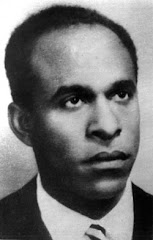
Frantz Fanon (1925-1961)
"Now, political education means opening minds, awakening them, and allowing the birth of their intelligence as [Aime] Cesaire said, it is 'to invent souls.' To educate the masses politically does not mean, cannot mean, making a political speech. What it means is to try, relentlessly and passionately, to teach the masses that everything depends on them."
Edward Said (1935-2003)
“I take criticism so seriously as to believe that, even in the midst of a battle in which one is unmistakably on one side against another, there should be criticism, because there must be critical consciousness if there are to be issues, problems, values, even lives to be fought for."
Antonio Gramsci (1891-1937)
“The challenge of modernity is to live without illusions and without becoming disillusioned. There must be pessimism of the intellect and optimism of the will.”
Susan Sontag (1933-2004)
"Do stuff. Be clenched, curious. Not waiting for inspiration’s shove or society’s kiss on your forehead. Pay attention. It’s all about paying attention. Attention is vitality. It connects you with others. It makes you eager. Stay eager."
Kofi Natambu, editor of The Panopticon Review, is a writer, poet, cultural critic, and political journalist whose poetry, essays, criticism, reviews, and journalism have appeared in many literary magazines, journals, newspapers, and anthologies. He is the author of a biography MALCOLM X: His Life & Work (Alpha Books) and two books of poetry: THE MELODY NEVER STOPS (Past Tents Press) and INTERVALS (Post Aesthetic Press). He was the founder and editor of SOLID GROUND: A NEW WORLD JOURNAL, a national quarterly magazine of the arts, culture, and politics and the editor of a literary anthology NOSTALGIA FOR THE PRESENT (Post Aesthetic Press). Natambu has read his work throughout the country and given many lectures and workshops at academic and arts institutions. He has taught American literature, literary theory and criticism, cultural history and criticism, film studies, political science, creative writing, philosophy, critical theory, and music history and criticism (Jazz, Blues, R&B, Hip Hop) at many universities and colleges. He was also a curator in the Education Department of Detroit’s Museum of African American History. Born in Detroit, Michigan, Natambu currently lives in Berkeley, California with his wife Chuleenan.