Showing posts with label March on Washington. Show all posts

Wednesday, August 28, 2013

Dr. Cornel West Calls Out the Obama Administration and its Black Political Acolytes At the 50th Anniversary of the March On Washington

DR. CORNEL WEST


Cornel West: March Organizers Are Part of the “Obama Plantation”

Cornel West: Washington March Organizers are Part of the “Obama Plantation”; Says Sharpton Attempts to “Contain Black Rage”, Jay-Z an Example of the “Re-Niggerization of the Black Professional Class.”


Bruce Dixon’s Open Letter to Melissa Harris-Perry, Toure, Joy Ann Reid:  Stop the Hate, Grow Some Guts

Glen Ford: US Military Conquest of Africa “All But Complete”

Through AFRICOM and massive amounts of military aid and training, the US literally owns every army on the African continent, except those of Eritrea and Zimbabwe. Glen Ford explains….


Rev. Al Sharpton and other organizers of the March on Washington 50th anniversary commemoration are so tightly tied to “the Obama plantation,” said activist and academic Dr. Cornel West, “we won’t get to focus on the New Jim Crow; we won’t get to focus on the privatization of education; we won’t get to focus on the land grabs and the gentrification of land it the city; we won’t get to focus on working class people; and we certainly won’t get to focus on the drones and those bombs landing on innocent brothers and sisters in Pakistan and Yemen and Somalia, and especially the 222 innocent children who have been murdered by the U.S. government so far, and counting.”

President Obama is scheduled to speak at the August 28 event at the Lincoln Memorial. Dr. West, of the Union Theological Seminary, in New York City, does not plan to attend. “If Martin [Luther King Jr.] were to show up at this march and they asked him to give a speech,” said West, “what he would say would be so subversive that those on the Obama plantation would be revealed for who they are, which is obsessed with career, obsessed with access, obsessed with status as opposed to being obsessed with the suffering of poor Black brothers and sisters.”

Speaking on Black Agenda Television, Dr. West said George Zimmerman’s acquittal in the killing of Trayvon Martin has fueled “an overwhelming Black rage, and Brother Sharpton and the others are trying to contain it, and of course Obama and Holder are fearful of it, because Black rage is always the catalyst to Black self-determination, toward Black self-respect, and toward Black self-defense.”

Dr. West rebuked entertainment mogul Jay-Z, who said his “presence is charity” to Black people, “just like Obama’s is.”

“It’s what I call the re-niggerization of the Black professional class, where you have fear, you have a tremendous sense of being intimidated even though you have big money,” said West. “So you say to Brother Jay-Z, What are you risking? We don’t want to just see you successful, we appreciate it, we want to see you faithful to something bigger than you, and faith has to do with risking something. The only way you become de-niggerized and free is when you are willing to risk, when you’re willing to go against the grain, to show you’re not fearful, you’re not afraid. Unfortunately, Jay-Z at his worst is an example of folk who get so elevated that they don’t show courage and take a risk for something that is bigger than them.”


When the White House gets upset, Black MSNBC talking heads get apoplectic. MSNBC’s Melissa Harris-Perry, Toure and Joy Ann Reid whipped themselves into McCarthyite fervor against secrets-leaker Edward Snowden. Harris-Perry and Reid lost all sense of decorum, screaming like banshees at Wikileaks spokesman Kris Hrafnsson. In an open letter to the trio, Black Agenda Report managing editor Bruce Dixon described Harris-Perry and Reid as playing “a reprehensible game of make believe, where leakers are criminals instead of heroes, Wikileaks is a conspiracy instead of a media organization, Joy Ann’s a tough district attorney and Melissa’s a special agent ready with the handcuffs.” As for Toure’s reflexive defense of Obama’s global dragnet for Snowden: “We all know you’re just repeating what the White House the Pentagon the intelligence agencies tell you. That’s just plain lazy, man,” said Dixon, in his latest Black Agenda Television commentary. “Until the three of you grow the guts and integrity to represent something besides your own shallow careers on the tube, stop the fronting, stop the hate, and leave the real journalists alone.”


Saturday, August 24, 2013

Ari Berman On Why the Major Core Demands of the 1963 March On Washington For Jobs and Freedom Remain More Important, Relevant, and Necessary Than Ever


Time to March on Washington—Again
 
Fifty years after King’s historic march, the struggle for racial justice faces unprecedented challenges.
 

by Ari Berman 
August 14, 2013

This article appeared in the September 2-9, 2013 edition of The Nation.
Demonstrators hold signs during the March on Washington on August 28, 1963
 
They carried signs that demanded “Voting Rights,” “Jobs for All” and “Decent Housing.” They protested the vigilante killing of an unarmed black teenager in the South and his killer’s acquittal. They denounced racial profiling in the country’s largest city.
 
This isn’t 1963 but 2013, when so many of the issues that gave rise to the March on Washington fifty years ago remain unfulfilled or under siege today. That’s why, on August 24, a broad coalition of civil rights organizations, unions, progressive groups and Democratic Party leaders will rally at the Lincoln Memorial and proceed to the Martin Luther King Jr. Memorial to honor the fiftieth anniversary of the march and dramatize the contemporary fight. (President Obama will participate in a separate event commemorating the official anniversary on August 28.) The Supreme Court’s decision gutting the Voting Rights Act in late June and the acquittal of George Zimmerman less than three weeks later make this year’s march “exponentially more urgent” with respect to pressuring Congress and arousing the conscience of the nation, says Ben Jealous, president of the NAACP, a co-sponsor of the march.
“The main themes will be voting rights, state laws like ‘stand your ground’ or local laws like stop-and-frisk, and the whole question of jobs and union-busting,” says the Rev. Al Sharpton of the National Action Network, who convened the march along with Martin Luther King III. “Fifty years after the original march for jobs and justice, we have a new version of the same issue.”

In 1963, current Congressman John Lewis—who nearly died marching for voting rights in Selma, Alabama—was the youngest and most radical speaker at the March on Washington. When Lewis returns to the Lincoln Memorial to address the rally on August 24, he will be the only surviving speaker from that historic afternoon. “We have come a great distance since that day,” he said recently, “but many of the issues that gave rise to that march are still pressing needs in our society—violence, poverty, hunger, long-term unemployment, homelessness, voting rights and the need to protect human dignity.”

When it comes to voting rights, seven Southern states have passed or implemented new restrictions that disproportionately target people of color since the Court’s Voting Rights Act ruling. This follows a presidential election in which voter-suppression efforts took center stage and blacks waited twice as long as whites to vote, on average. On a more structural level, one out of thirteen African-Americans (2.2 million people) cannot vote because of felon disenfranchisement laws—four times higher than the rest of the population.

When it comes to the criminal justice system, there are more black men in prison today than were enslaved in 1850, according to Michelle Alexander’s The New Jim Crow. African-Americans comprise 13 percent of the population but made up 55 percent of shooting deaths in 2010. Under Florida’s “stand your ground” law, “people who killed a black person walked free 73 percent of the time, while those who killed a white person went free 59 percent of the time,” according to the Tampa Bay Times.

When it comes to the economy, the black unemployment rate (12.6 percent) is nearly double that of whites (6.6 percent), almost the same ratio as in 1963. The average household income for African-Americans ($32,068) lags well below that of white families ($54,620) and declined by 15 percent from 2000 to 2010.

These jarring statistics show a clear need for a twenty-first-century civil rights movement. “After the march, my hope is we will see more people going home being committed to doing work in their communities,” says Judith Browne Dianis, co-
director of the Advancement Project, a civil rights organization in Washington co-sponsoring the march. The Moral Mondays protests in North Carolina, the sit-ins by the Dream Defenders in Florida and the spontaneous rallies in 100 cities following the George Zimmerman verdict are evidence of a new wave of civil rights activism. “We’re seeing the civil rights movement rise again,” says Browne Dianis. “People understand that we have to get back to organizing and movement-building.”
For many years, civil rights organizations like the NAACP focused on building institutional power through litigation, lobbying and voting. Though they accomplished a great deal—we now have a two-term African-American president, after all—there’s a growing realization within the civil rights community that the protests and civil disobedience that defined the movement of the 1960s are once again essential to draw more attention to contemporary problems. “I wish this activism had more outbursts than just in North Carolina and Florida,” says civil rights veteran Julian Bond. “You wish it was twenty times as great, but to see these things that are going on—it’s exciting. These tactics are tried and true. They’ve worked in the past, and they’ll work now.”

Yet while the civil rights coalition is more diverse than it was in 1963—now including supporters from women’s rights, environmental, pro-immigration and LGBT groups—the funds are scarce today, even as the needs are growing. The declining strength of organized labor, which has accelerated following the passage of anti-union laws in GOP-controlled states since 2010, has drained the coffers of the organizations most accustomed to mobilizing masses of people. “The movement is more financially
strapped than it has been in modern memory,” says Jealous.
Another daunting obstacle for the civil rights coalition is the right wing’s success in promoting the notion that historic remedies for centuries of discrimination, like the Voting Rights Act and affirmative action, are no longer needed. “One of the great difficulties we have in helping people understand where we are on civil rights today is the desire of so many people to fix the civil rights movement in historical amber and visit it like a museum, without honoring that movement by being dynamically engaged in the principles that the movement stood for,” says Sherrilyn Ifill, director-counsel of the NAACP Legal Defense and Educational Fund, another co-sponsor of the march.

At a recent congressional celebration of the 1963 march at the US Capitol, for example, Senate minority leader Mitch McConnell reminisced about attending the march as a young civil rights activist, and House Speaker John Boehner introduced John Lewis. But when Senate majority leader Harry Reid denounced the flood of new voting restrictions in places like North Carolina and Texas following the Supreme Court’s Voting Rights Act decision and called for a congressional fix—to great applause—McConnell and Boehner remained pointedly silent. “Boehner turned to McConnell with a questioning glance during the applause,” reported the Associated Press.

“You cannot, on the one hand, celebrate the march like John Boehner did, but then undermine what the march stood for, which is jobs and justice,” says Sharpton. “You can’t take a movement and say, ‘I celebrate the drama, but I don’t agree with the content.’”

At the same time, some progressive skeptics of the Obama administration believe the current civil rights leadership is too timid and cozy with those in power. Talk-show host Tavis Smiley predicts the new march will sidestep issues, like systemic poverty and the escalation of drone strikes, that King would have confronted were he alive today. “We’re going to get a lot of platitudes, a lot of great stories, a lot of endearing moments,” Smiley says. “But at the end of the day, we won’t even scratch the surface of the issues King was trying to get us to wrestle with.”

The radical politics of the 1960s civil rights movement, including those of its most mainstream leaders, is often glossed over in contemporary remembrances of pivotal anniversaries. Professor Cornel West, a caustic critic of this year’s commemoration, calls it the “Santa Clausification” of King. Many people also forget just how controversial the march was in 1963, both among the public and inside the civil rights community. Some thought it was too radical. President Kennedy asked the leaders to cancel the march. Lewis’s speech was censored to placate the archbishop of Washington. Bayard Rustin, the veteran socialist and civil rights activist who organized the event, was ostracized within the movement because of his homosexuality. Others thought it was too tame; Malcolm X dubbed it the “Farce on Washington.”

Despite all the criticism, the 1963 march remains a singularly important event in American history: the first time the country really understood what the civil rights movement stood for. The effect was greatest on the marchers themselves. “Many of the people at the march had never been to Washington before,” says Bond. “It was evidence to them that they had done something great and that great things would follow.”

Fifty years later, “there is, unfortunately, too much parallel between now and then,” says Jealous. “This is a moment for all of us to be rebaptized in the struggle.”


Ari Berman also wrote about North Carolina’s new voter-supression legislation in the wake of the Supreme Court's recent gutting of the Voting Rights Act.


About the Author


Ari Berman is a contributing writer for The Nation magazine and an Investigative Journalism Fellow at The Nation.
Also by the Author

North Carolina Republicans Escalate Attack on Student Voting (Civil Rights Activism, Politics)

Republicans in North Carolina are shutting down polling places at college campuses and preventing students from running for office.

Three Questions That Will Decide the Fate of Voting Rights in North Carolina (Racism and Discrimination, Politics)
The key factors that will decide the future of voting rights in North Carolina and across the co
untry

Friday, August 23, 2013

Gary Younge On The Real Historical Meaning and Significance of the March On Washington For Jobs and Freedom in 1963 and Dr. King's 'I Have A Dream' Speech

http://www.thenation.com/article/175764/misremembering-i-have-dream?page=full#

https://www.facebook.com/pages/The-Panopticon-Review/342702882479366


The Misremembering of ‘I Have a Dream’

Fifty years after the March on Washington, Dr. King’s most famous speech, like his own political legacy, is widely misunderstood.

by Gary Younge
August 14, 2013      

This article appeared in the September 2-9, 2013 edition of The Nation.


In this Aug. 28, 1963 file photo, Dr. Martin Luther King Jr. acknowledges the crowd at the Lincoln Memorial for his "I Have a Dream" speech during the March on Washington. (AP Photo/File)


Adapted from The Speech: The Story Behind Martin Luther King Jr.'s Dream, by Gary Younge. (Haymarket Books 2013)

When Dr. Martin Luther King Jr. took the podium on August 28, 1963, the Department of Justice was watching. Fearing that someone might hijack the microphone to make inflammatory statements, the Kennedy DOJ came up with a plan to silence the speaker, just in case. In such an eventuality, an official was seated next to the sound system, holding a recording of Mahalia Jackson singing “He’s Got the Whole World in His Hands,” which he planned to play to placate the crowd.
 
Half a century after the March on Washington and the famous “I Have a Dream” speech, the event has been neatly folded into America’s patriotic mythology. Relatively few people know or recall that the Kennedy administration tried to get organizers to call it off; that the FBI tried to dissuade people from coming; that racist senators tried to discredit the leaders; that twice as many Americans had an unfavorable view of the march as a favorable one. Instead, it is hailed not as a dramatic moment of mass, multiracial dissidence, but as a jamboree in Benetton Technicolor, exemplifying the nation’s unrelenting progress toward its founding ideals.

Central to that repackaging of history is the misremembering of King’s speech. It has been cast not as a searing indictment of American racism that still exists, but as an eloquent period piece articulating the travails of a bygone era. So on the fiftieth anniversary of ”I Have a Dream,” “Has King’s dream been realized?” is one of the two most common and, to my mind, least interesting questions asked of the speech; the other is “Does President Obama represent the fulfillment of King’s dream?” The short answer to both is a clear “no,” even if the longer responses are more interesting than the questions deserve. We know that King’s dream was not limited to the rhetoric of just one speech. To judge a life as full and complex as his by one sixteen-minute address, some of which was delivered extemporaneously, is neither respectful nor serious.

Regardless, any contemporary discussion about the legacy of King’s “I Have a Dream” speech must begin by acknowledging the way we now interpret the themes it raised at the time. Words like “race,” “equality,” “justice,” “discrimination” and “segregation” mean something quite different when a historically oppressed minority is explicitly excluded from voting than it does when the president of the United States is black. King used the word “Negro” fifteen times in the speech; today the term is finally being retired from the US Census as a racial category.

Perhaps the best way to comprehend how King’s speech is understood today is to consider the radical transformation of attitudes toward the man who delivered it. Before his death, King was well on the way to being a pariah. In 1966, twice as many Americans had an unfavorable opinion of him as a favorable one. Life magazine branded his anti–Vietnam War speech at Riverside Church “demagogic slander” and “a script for Radio Hanoi.”

But in thirty years he went from ignominy to icon. By 1999, a Gallup poll revealed that King was virtually tied with John F. Kennedy and Albert Einstein as one of the most admired public figures of the twentieth century among Americans. He ranked as more popular than Franklin Delano Roosevelt, Pope John Paul II and Winston Churchill; only Mother Teresa was more cherished. In 2011, a memorial to King was unveiled on the National Mall, featuring a thirty-foot-high statue sited on four acres of prime cultural real estate. Ninety-one percent of Americans (including 89 percent of whites) approved.

This evolution was not simply a matter of ill feelings and painful memories eroding over time. It was the result of a protracted struggle that sheds light on how the speech for which he is best known is today understood. The bill to establish King’s birthday as a federal holiday was introduced just a few days after his death, with few illusions as to its likely success. “We don’t want anyone to believe we hope Congress will do this,” said union leader Cleveland Robinson at a rally with King’s widow in 1969. “We’re just sayin’, us black people in America just ain’t gonna work on that day anymore.”

Congress would pass the bill, but not without a fight. In 1983, the year Ronald Reagan grudgingly signed Martin Luther King Day into law, he was asked if King was a communist sympathizer. “We’ll know in thirty-five years, won’t we?” he said, referring to the eventual release of FBI surveillance tapes.

* * *

The country’s acceptance of King came with its eventual consensus—won through mass marches, civil disobedience and grassroots activism—that codified segregation had to end. “America was like a dysfunctional drug addict or alcoholic that was addicted, dependent on racial segregation,” says Clarence Jones, who wrote the draft text of King’s “I Have a Dream” speech. “It had tried other treatments and failed. Then comes along Martin Luther King with his multistep program—recovery, nonviolence, civil disobedience and integration—and forces America to publicly confront its conscience. And that recovery program enabled America to embark on the greatest political transformation in history.”

By the time white Americans realized that their dislike of King was spent and futile, he had created a world in which admiring him was in their own self-interest. They embraced him because, in short, they had no choice.

The only question remaining was what version of King should be honored. To remember him now as a leader who sought greater government intervention to help the poor, or who branded the United States “the greatest purveyor of violence in the world today,” as he did at Riverside Church in 1967, would sacrifice posterity for accuracy. He did stand for those things. But those issues, particularly at a time of war and economic crisis, remain live, divisive and urgent. To associate him with them would not raise him above the fray but insert him into it, leaving him as controversial in death as in life.

But remembering him as the man who spoke eloquently and forcefully against codified segregation presents him as an accordant figure whose principled stand rescued the nation in a moment of crisis.

“The speech is profoundly and willfully misunderstood,” says King’s longtime friend Vincent Harding, who drafted the Riverside Church speech. “People take the parts that require the least inquiry, the least change, the least work. Our country has chosen what they consider to be the easier way to work with King. They are aware that something very powerful was connected to him, and he was connected to it. But they are not ready to really take on the kind of issues he was raising even there.”

Instead, the country has chosen to remember a version of “I Have a Dream” that not only undermines King’s legacy but also tells an inaccurate story about the speech itself. King made explicit reference in his oration to both the limits of legal remedy and the need for economic redress to confront the consequences of centuries of second-class citizenship.

“One hundred years later, the life of the Negro is still sadly crippled by the manacles of segregation and the chains of discrimination,” he said (emphasis mine). “One hundred years later, the Negro lives on a lonely island of poverty in the midst of a vast ocean of material prosperity.”

“We refuse to believe,” he said later in the speech, “that there are insufficient funds in the great vaults of opportunity of this nation.”

No reasonable reading of this can limit King’s vision to just that of doing away with Jim Crow. Only by willfully conflating codified segregation with racism, and ignoring not just what King had said elsewhere but also the ample contrary evidence in the speech, could one claim he was arguing that the answer to America’s racial problems lay in merely changing the law.

* * *

When it comes to assessing the political content of the speech, the distinction between segregation and racism is crucial. To the extent that King’s words were about bringing an end to codified, legal segregation, then the dream has been realized. “Whites Only” signs have been taken down; the laws have been struck. Since 1979, Birmingham, Alabama, has had only black mayors. If simply being black—as opposed to the historical legacy of racism—was ever the sole barrier to economic, social or political advancement, that obstacle has been officially removed.

But to the extent that the speech was about ending racism, one can say with equal confidence that its realization is not even close. Black unemployment is almost double that of whites; the percentage of black children living in poverty is almost triple that of whites; black male life expectancy in Washington, DC, is lower than in the Gaza Strip; one in three black boys born in 2001 stands a lifetime risk of going to prison; more black men were disenfranchised in 2004 because they were felons than in 1870, the year the Fifteenth Amendment ostensibly secured their right to vote.

Many of the images King evoked in his dream refrain were simple—“little black boys and black girls [joining] hands with little white boys and white girls”—even if descriptions of how we might reach that promised land  were intermittent and vague. (“Go back to Georgia, go back to Louisiana…knowing that somehow this situation can and will be changed.”) But the speech was clearly more about wider racism than just segregation. By fudging the distinction between the two—or by actively misinterpreting them—it is possible to cast racism as an aberration of the past, as the Supreme Court effectively did when it gutted the Voting Rights Act this past spring. Only then can the vast, enduring differences in the material position of blacks and whites be understood as the failings of individuals rather than the consequences of ongoing institutional, economic and political exclusion. Only then does the emphasis on a single line of the speech—in which King aspired to see new generations who would “not be judged by the color of their skin but by the content of their character”—make any sense.

This particular misreading is most glaring today in discussions of affirmative action. King was a strong proponent of taking race and ethnicity into account when making appointments for jobs and for college admissions, in order to redress historical imbalances. “It is impossible to create a formula for the future,” he wrote, “which does not take into account that our society has been doing something special against the Negro for hundreds of years.”

Yet the right has come to rely on the “content of their character” line to use King as anti-racist cover for its opposition to affirmative action. In 1986, Reagan said: “We are committed to a society in which all men and women have equal opportunities to succeed, and so we oppose the use of quotas. We want a colorblind society. A society that, in the words of Dr. King, judges people not by ‘the color of their skin but by the content of their character.’”

Such distortions in turn explain the ambivalence voiced by those like Harding and a significant element of the black intelligentsia when discussing “I Have a Dream.” It’s not the speech itself about which they are reticent, but rather the way King has been co-opted and his message corrupted. King’s elevation to a patriotic mascot praising America’s relentless and inevitable progress to better days often rankles.

* * *

So when it comes to divining the meaning of King’s speech, there is substantial disagreement. Ironically, given its theme of racial unity, those differences are most pronounced in terms of race.

In a Gallup poll taken in August 2011, the month the King memorial was opened, a majority of blacks said they believed both that the government has a major role to play “in trying to improve the social and economic position of blacks and other minority groups” and that “new civil rights laws are needed to reduce discrimination against blacks.” The figures for whites were 19 percent and 15 percent, respectively. Conversely, over half of whites believed that civil rights for blacks had “greatly improved” in their lifetime, compared with just 29 percent of blacks. Whites were almost six times more likely than blacks to believe that Obama’s policies would “go too far…in promoting efforts to aid the black community,” while blacks were twice as likely as whites to believe they wouldn’t go far enough. Other polls show that whites are four times as likely as blacks to believe that America has achieved racial equality. In short, as the racially polarized responses to George Zimmerman’s acquittal revealed, black and white Americans have very different lived experiences. While the de jure enforcement of segregation has been banned, the de facto experience of it remains prevalent. Any journey through a US city, where widely recognized geographical boundaries separate the races, will bear this out. Blacks and whites are less likely to see the same problems, more likely to disagree on their root causes, and unlikely to agree on a remedy.

“For those who concentrate so much on that one line about ‘the color of their skin’ and ‘the content of their character,’” says Harding, “I wonder how, with the resegregation of our schools and communities, do you get to know the content of anyone’s character if you’re not willing to engage in life together with them?”

There is pretty much only one question on which the views of black and white Americans do coincide, and that is whether they believe King’s dream has been realized. Whenever this question has been asked by major pollsters over the past seven years, the discrepancy between blacks and whites has rarely topped 10 percent. If they agree about the extent to which the problems King invoked have been solved, but disagree on what they are, the inevitable conclusion is that, even as they listen to the same speech, blacks and whites hear very different things.

* * *

It is implausible to imagine that, were King to be raised from the dead, he would look at America’s jails, unemployment lines, soup kitchens or inner-city schools and think his life’s work had been accomplished. Whether one believes that these inequalities are caused by individuals making bad choices or by institutional discrimination, it would be absurd to claim that such a world bears any resemblance to the one King set out to create.

Nor is there anything to suggest that view would have been much altered by the presence of a black man in the White House. The claim that Obama’s election has a connection to King’s legacy has some substance. As Obama himself has often conceded, his election would not have been possible without the civil rights movement, which created the conditions that allowed for the arrival of a new generation of black politicians. But the aim of the civil rights movement was equality for all, not the elevation of one.

There’s no questioning the symbolic value of electing a black president. Yet the fact remains that African-Americans are no better off materially as a result, even if they may have been worse off had he lost, and that the economic gap between blacks and whites has grown under his presidency. The ascent of America’s first black president has coincided with the descent of black Americans’ standard of living. Reasonable people may disagree on the extent to which Obama is responsible for that. But the fact is undeniable.

Symbols should not be dismissed as insubstantial, but they should not be mistaken as substance either. The presence of underrepresented people in leadership positions only has any significantly positive meaning if it challenges whatever obstacles created the conditions for that underrepresentation. To believe otherwise is to trade equal opportunities for photo opportunities, whereby a system looks different but acts the same.

In the final analysis, to ask whether King’s dream has been realized is to misunderstand both his overall politics and the specific ambition of his speech. King was not the kind of activist who pursued a merely finite agenda. The speech in general, and the dream sequence in particular, are utopian. Standing in the midst of a nightmare, King dreamed of a better world where historical wrongs had been righted and good prevailed. That is why the speech means so much to me, and why I believe that, overall, it has stood the test of time.

* * *

I was raised in Britain during the Thatcher years, at a time when idealism was mocked and “realism” became an excuse for capitulation to the “inevitability” of unbridled market forces and military aggression. To oppose that agenda was regarded, by some on the left as well as the right, as impractical and unrealistic. Realism has no time for dreamers.

True, we can’t live on dreams alone. But the absence of utopian ideas leaves us without a clear ideological and moral center and therefore facing a void in which politics is deprived of any liberatory potential and reduced to only what is feasible at any given moment.

In the summer of 1963, with a civil rights bill pending and the white population skittish, King could have limited his address to what was immediately achievable and pragmatic. He might have spelled out a ten-point plan, laid out his case for tougher legislation, or made the case for fresh campaigns of civil disobedience in the North. He could have reduced himself to an appeal for what was possible in a time when what was possible and pragmatic was neither satisfactory nor sustainable.

Instead, he swung for the bleachers. Not knowing whether building the world he was describing was a Sisyphean task or merely a Herculean one, he called out in the political wilderness, hoping his voice would someday be heard by those with the power to act on it. In so doing, he showed it is not naïve to believe that what is not possible in the foreseeable future may nonetheless be necessary, worth fighting for and worth articulating. The idealism that underpins his dream is the rock on which our modern rights are built and the flesh on which pragmatic parasites feed. If nobody dreamed of a better world, what would there be to wake up to?

Ari Berman writes that, fifty years after King’s historic march, the struggle for racial justice faces unprecedented challenges.

Gary Younge August 14, 2013   |    This article appeared in the September 2-9, 2013 edition of The Nation.

..

About the Author


Gary Younge, the Alfred Knobler Journalism Fellow at The Nation Institute, is the New York correspondent for the Guardian and the author of No Place Like Home: A Black Briton's Journey Through the Deep South (Mississippi) and Stranger in a Strange Land: Travels in the Disunited States (New Press). He is also a contributor to The Notion.
Also by the Author

Everyone Loves Mandela (Political Figures, World Leaders, Regions and Countries)

South Africans of all races have reason to celebrate the life of the country’s first post-apartheid president.


Globalization's Scapegoats (Politics, World)
The recent victories of the right-wing, anti-immigrant United Kingdom Independence Party says more about our scapegoats than about its long-term prospects.

http://www.pbs.org/wgbh/americanexperience/features/primary-resources/jfk-mlkdream/

https://www.facebook.com/pages/The-Panopticon-Review/342702882479366


DR. MARTIN LUTHER KING, JR.
1929-1968

Martin Luther King Jr.'s impassioned civil rights speech, delivered during the March on Washington and widely regarded as one of the greatest American speeches ever made:
 

I Have A Dream

Speech delivered by Martin Luther King, Jr., at the Lincoln Memorial, Washington, D.C.
August 28, 1963


Five score years ago, a great American, in whose symbolic shadow we stand signed the Emancipation Proclamation. This momentous decree came as a great beacon light of hope to millions of Negro slaves who had been seared in the flames of withering injustice. It came as a joyous daybreak to end the long night of captivity.

But one hundred years later, we must face the tragic fact that the Negro is still not free. One hundred years later, the life of the Negro is still sadly crippled by the manacles of segregation and the chains of discrimination. One hundred years later, the Negro lives on a lonely island of poverty in the midst of a vast ocean of material prosperity. One hundred years later, the Negro is still languishing in the corners of American society and finds himself an exile in his own land. So we have come here today to dramatize an appalling condition.

In a sense we have come to our nation's capital to cash a check. When the architects of our republic wrote the magnificent words of the Constitution and the declaration of Independence, they were signing a promissory note to which every American was to fall heir. This note was a promise that all men would be guarranteed the inalienable rights of life, liberty, nad the pursuit of happiness.

It is obvious today that America has defaulted on this promissory note insofar as her citizens of color are concerned. Instead of honoring this sacred obligation, America has given the Negro people a bad check which has come back marked "insufficient funds." But we refuse to believe that the bank of justice is bankrupt. We refuse to believe that there are insufficient funds in the great vaults of opportunity of this nation. So we have come to cash this check -- a check that will give us upon demand the riches of freedom and the security of justice. We have also come to this hallowed spot to remind America of the fierce urgency of now. This is no time to engage in the luxury of cooling off or to take the tranquilizing drug of gradualism. Now is the time to rise from the dark and desolate valley of segregation to the sunlit path of racial justice. Now is the time to open the doors of opportunity to all of God's children. Now is the time to lift our nation from the quicksands of racial injustice to the solid rock of brotherhood.

It would be fatal for the nation to overlook the urgency of the moment and to underestimate the determination of the Negro. This sweltering summer of the Negro's legitimate discontent will not pass until there is an invigorating autumn of freedom and equality. Nineteen sixty-three is not an end, but a beginning. Those who hope that the Negro needed to blow off steam and will now be content will have a rude awakening if the nation returns to business as usual. There will be neither rest nor tranquility in America until the Negro is granted his citizenship rights. The whirlwinds of revolt will continue to shake the foundations of our nation until the bright day of justice emerges.

But there is something that I must say to my people who stand on the warm threshold which leads into the palace of justice. In the process of gaining our rightful place we must not be guilty of wrongful deeds. Let us not seek to satisfy our thirst for freedom by drinking from the cup of bitterness and hatred.

We must forever conduct our struggle on the high plane of dignity and discipline. we must not allow our creative protest to degenerate into physical violence. Again and again we must rise to the majestic heights of meeting physical force with soul force. The marvelous new militancy which has engulfed the Negro community must not lead us to distrust of all white people, for many of our white brothers, as evidenced by their presence here today, have come to realize that their destiny is tied up with our destiny and their freedom is inextricably bound to our freedom. We cannot walk alone.

And as we walk, we must make the pledge that we shall march ahead. We cannot turn back. There are those who are asking the devotees of civil rights, "When will you be satisfied?" we can never be satisfied as long as our bodies, heavy with the fatigue of travel, cannot gain lodging in the motels of the highways and the hotels of the cities. We cannot be satisfied as long as the Negro's basic mobility is from a smaller ghetto to a larger one. We can never be satisfied as long as a Negro in Mississippi cannot vote and a Negro in New York believes he has nothing for which to vote. No, no, we are not satisfied, and we will not be satisfied until justice rolls down like waters and righteousness like a mighty stream.

I am not unmindful that some of you have come here out of great trials and tribulations. Some of you have come fresh from narrow cells. Some of you have come from areas where your quest for freedom left you battered by the storms of persecution and staggered by the winds of police brutality. You have been the veterans of creative suffering. Continue to work with the faith that unearned suffering is redemptive.

Go back to Mississippi, go back to Alabama, go back to Georgia, go back to Louisiana, go back to the slums and ghettos of our northern cities, knowing that somehow this situation can and will be changed. Let us not wallow in the valley of despair.

I say to you today, my friends, that in spite of the difficulties and frustrations of the moment, I still have a dream. It is a dream deeply rooted in the American dream.

I have a dream that one day this nation will rise up and live out the true meaning of its creed: "We hold these truths to be self-evident: that all men are created equal."

I have a dream that one day on the red hills of Georgia the sons of former slaves and the sons of former slaveowners will be able to sit down together at a table of brotherhood.

I have a dream that one day even the state of Mississippi, a desert state, sweltering with the heat of injustice and oppression, will be transformed into an oasis of freedom and justice.

I have a dream that my four children will one day live in a nation where they will not be judged by the color of their skin but by the content of their character.

I have a dream today.

I have a dream that one day the state of Alabama, whose governor's lips are presently dripping with the words of interposition and nullification, will be transformed into a situation where little black boys and black girls will be able to join hands with little white boys and white girls and walk together as sisters and brothers.

I have a dream today.

I have a dream that one day every valley shall be exalted, every hill and mountain shall be made low, the rough places will be made plain, and the crooked places will be made straight, and the glory of the Lord shall be revealed, and all flesh shall see it together.

This is our hope. This is the faith with which I return to the South. With this faith we will be able to hew out of the mountain of despair a stone of hope. With this faith we will be able to transform the jangling discords of our nation into a beautiful symphony of brotherhood. With this faith we will be able to work together, to pray together, to struggle together, to go to jail together, to stand up for freedom together, knowing that we will be free one day.

This will be the day when all of God's children will be able to sing with a new meaning, "My country, 'tis of thee, sweet land of liberty, of thee I sing. Land where my fathers died, land of the pilgrim's pride, from every mountainside, let freedom ring."

And if America is to be a great nation this must become true. So let freedom ring from the prodigious hilltops of New Hampshire. Let freedom ring from the mighty mountains of New York. Let freedom ring from the heightening Alleghenies of Pennsylvania!

Let freedom ring from the snowcapped Rockies of Colorado!

Let freedom ring from the curvaceous peaks of California!

But not only that; let freedom ring from Stone Mountain of Georgia!

Let freedom ring from Lookout Mountain of Tennessee!

Let freedom ring from every hill and every molehill of Mississippi. From every mountainside, let freedom ring.

When we let freedom ring, whem we let it ring from every village and every hamlet, from every state and every city, we will be able to speed up that day when all of God's children, black men and white men, Jews and Gentiles, Protestants and Catholics, will be able to join hands and sing in the words of the old Negro spiritual, "Free at last! free at last! thank God Almighty, we are free at last!"


Tuesday, January 22, 2013

The Inspiring Courage of James Hood (1942-2013) and the Profound Legacy of the Civil Rights Movement

Editor's Note:  This article and my response marks the beginning of what will be a year long series of articles,  essays, commentary, and  critical analyses by myself and others of the profound and ongoing historical impact of the pivotal years of 1963 and 1863 in the history of this nation and that of its African American citizens. 
 
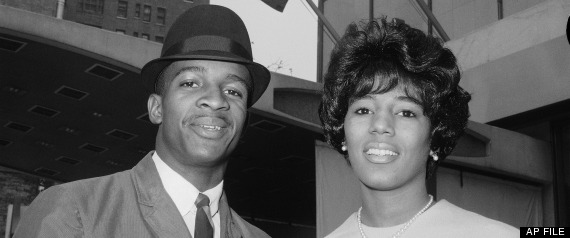
In this June 9, 1963 file photo James Hood and Vivian J. Malone of Alabama pose in New York
All,

History/Time is really moving and I mean FAST. It's incredible:  I remember so clearly this very day--June 11, 1963-- that James Hood and Vivian Malone-- accompanied by the U.S. Deputy Attorney General Nicolas Katzenbach and National Guard troops-- walked right past the arch segregationist Alabama Governor George Wallace who, along with Alabama state troopers, was literally standing in the front entrance door of the University of Alabama trying to physically block them from entering.  I watched this entire dramatic episode on television with my parents in Detroit.  I was absolutely fascinated by this event and my visceral response to it left a very sharp and absolutely indelible impression on me as a child.  A huge synapse went off in my head not only because of what Hood and Malone and the Kennedy administration did--that was extraordinary enough!--but by what  also happened on that very same day.  Imagine:  Less than 10 hours after this event Medgar Evers the legendary NAACP leader and activist from Mississippi (age 37) was assassinated as he was shot in the back by a KKK assassin just as he was taking out his keys to open the front door of his home just before midnight as his wife and three children watched in horror as they came to the door to greet him.  Evers had been at a long meeting of the NAACP that evening discussing the events of that same day which also included a groundbreaking speech by President Kennedy just four hours earlier on national television in which for the very first time his administration made a clear and definitive committment to pushing for and demanding that civil rights legislation be passed--another event I witnessed with my parents on TV that evening.  I remember like it was yesterday with my father saying to me in a very serious tone that I "really needed to see and hear what the President had to say" and that it was very important that I "pay close attention."  My mother and father were watching the speech with such intense riveted interest that I was again mesmerized by what I saw and heard the president say.  In that speech before the entire nation Kennedy said the following:

Finally on this very same day(!!) Dr. Martin Luther King, Jr. and the legendary black labor union leader A. Phillip Randolph announced that they and a national coalition of civil rights organizations, labor unions, civic groups, activists, clergy, and ordinary citizens were organizing a national event known as the 'March on Washinston for Jobs and Freedom' to be held in the nation's capitol of Washington D.C. in two months on August 28, 1963. WHAT AN AMAZING DAY IN AMERICAN HISTORY.  I rest my case...

Kofi


James Hood Dead: Man Who Defied Racial Segregation At University Of Alabama Dies At Age 70By BOB JOHNSON 
01/18/13
Huffington Post 

MONTGOMERY, Ala. — One of the first black students who enrolled at the University of Alabama a half century ago in defiance of racial segregation has died. James Hood of Gadsden was 70.

Officials at Adams-Buggs Funeral Home in Gadsden said they are handling arrangements for Hood, who died Thursday.

Then-Alabama Gov. George Wallace made his infamous "stand in the schoolhouse door" in a failed effort to prevent Hood and Vivian Malone from registering for classes at the university in 1963.

Hood and Malone were accompanied by Deputy U.S. Attorney General Nicholas Katzenbach when they were confronted by Wallace as they attempted to enter the university's Foster Auditorium to register for classes and pay fees.

Wallace backed down later that day and Hood and Malone registered for classes.

UA President Judy Bonner remembered Hood as a man of "courage and conviction" for being one of the first black students to enroll at the university.

"His connection to the university continued decades later when he returned to UA to earn his doctorate in 1997. He was a valued member of The University of Alabama community, and he will be missed. Our thoughts and prayers are with his family during this difficult time," Bonner said.

Hood was the last survivor among the major figures in the schoolhouse door incident. Wallace died in 1998, Vivian Malone Jones in 2005 and Katzenbach last year.

After enrolling, Hood remained at UA for a few months and moved to Michigan, where he received a bachelor's degree from Wayne State University and a master's degree from Michigan State.

He later moved to Wisconsin, where he worked at the Madison Area Technical College for 26 years. He retired in 2002 as chairman of public safety services in charge of police and fire training.

He finally returned to UA later in life to earn his doctorate.

Culpepper Clark, author of "The Schoolhouse Door: Segregation's Last Stand at the University of Alabama," called the schoolhouse door incident "an iconic moment" in the Civil Rights Movement because it provided a confrontation between Wallace and the Kennedy administration. He said the incident was "symbolically important" and helped lead to passage of the Voting Rights Act.

Clark described Hood as a man with a lot of "intellectual energy" who understood the importance of what he did at the University of Alabama in 1963.

"He didn't try to make it into more than what it was," Clark said.

The Rev. Preston Nix grew up in Etowah County and said he knew of Hood, who was several years older than he.

Nix said it took a lot of courage for Hood to challenge the segregation at the University of Alabama in 1963.

Nix said he felt Hood did what he did partly to "pave the way" for others to be able to improve themselves and get a higher education and partly because he wanted to attend the University of Alabama.

Samory Pruitt, vice president for community affairs at UA, agreed with Nix.

"Because of what he did, people like me were afforded the opportunity to go to the University of Alabama," said Pruitt, who is black. "I think it's about people having the opportunity to be the best they can be."