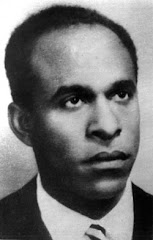
Horn Players (1983)
by Jean-Michel-Basquiat
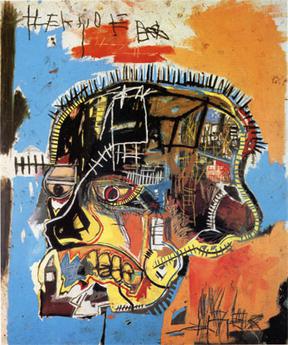 Untitled [Skull] acrylic and mixed media on canvas by Jean-Michel Basquiat, 1981
 FILM REVIEW
A Critique of Jean-Michel Basquiat: The Radiant Child
By Chuleenan Svetvilas
Jean-Michel Basquiat: The Radiant Child is an insightful, humorous, and poignant tribute to a gifted artist who created a remarkable body of work before he died of a drug overdose in 1988 at the age of 27. Through numerous interviews as well as director Tamra Davis’s own footage of the artist, the documentary reveals a complex, enormously talented man who was misunderstood by many and rejected by the art cognoscenti during his lifetime. It’s the first film about Basquiat to provide a nuanced picture of the charismatic artist and to explore the challenges he faced as a black man in the white art world. It is a response to Basquiat, Julian Schnabel’s disappointing 1996 fiction feature film, which did not have the estate’s permission to use Basquiat’s paintings and thus used fake paintings, and to Phoebe Hoban’s infamous 1999 book, Basquiat: A Quick Killing in Art, which is more of a hit piece loaded with scurrilous gossip than a biography.
Davis was a film student in Los Angeles when she became friends with Basquiat during the last years of his life. During that time, she shot a fascinating interview with the artist as well as riveting scenes of the artist working in his California studio. Clips from her footage appear throughout the documentary alongside archival film and video, interviews with art dealers, collectors and critics as well as friends, former girl friends, artists and musicians, and of course, many images of Basquiat’s arresting artwork.
The documentary opens with the words of Langston Hughes’s famous poem “Genius Child”—white text appears on a stark black background. The poem’s refrain is a theme of the film: “Nobody loves a genius child.” Davis deliberately underlines the words “genius child,” telling viewers to pay attention to those words.
The film then offers a tantalizing glimpse of the interview with text explaining that it was filmed two years before his death and that the footage “has not been seen for over twenty years.” A sequence tightly edited to Dizzy Gillespie’s energetic bebop tune “Salt Peanuts” immediately follows: Basquiat dancing, painting, being playful, intercut with clips showing various paintings and the text for the opening credits, each quick cut punctuated by the blare of a horn or syncopated drumbeat. Basquiat’s favorite music was bebop. Words and images and music combine to create a collage portrait, an apt approach for an artist who frequently used words in his paintings and incorporated jazz artists in his work.
Music plays an integral part in the film. Davis chose music evocative of Basquiat’s personality, of his life during a particular period or of the year she was covering, for example, Grandmaster Flash and the Furious Five’s seminal song, “The Message,” takes you immediately back to 1982, the year it was released; John Lee Hooker singing the blues offers a soulful backdrop to a section showing Basquiat’s depiction of black people in his paintings, such as “The Irony of Negro Policeman” and “Jim Crow.”
The film follows a loose chronological structure, beginning in 1978, the year a teenage Basquiat ran away from his Brooklyn home for the final time and escaped to Manhattan, specifically downtown, where artists and musicians flourished and lived hand to mouth. Besides covering the growth of his career as an artist, starting with his early beginnings as the enigmatic graffiti artist SAMO the film also tries to give context to his work and its place in art history.
Davis makes it clear that Basquiat was well aware of the racism in the art world and the media, dismissing his work or portraying him as some sort of “wild child,” “primitive artist” or a “black Picasso” whose work was created by instinct. A startling clip shows the reactionary art critic Hilton Kramer condescendingly claiming that Basquiat’s “contribution to art is so miniscule as to be practically nil.”
Fortunately, Davis has footage of the artist that reveals his thoughts. “Most of my reviews have been more about me as a personality instead of my work,” says Basquiat in one interview. Then he’s asked, “How do you feel about that?” “It’s racist,” he replies. When he’s asked about the claim that he was locked in a basement to paint, Basquiat states, “I was never locked anywhere. If I was white, they would have said ‘artist in residence.’” Clealy, he was no naïf.
Swiss gallery owner Bruno Bishchofberger recalls a conversation with Basquiat in which the artist told him, “These look very sloppy but everything is done for a reason. It has to look like this. Nothing is by chance.”
A delightful sequence cleverly shows the vast range of influences on Basquiat’s work—showing a painting juxtaposed to the object or image that inspired the work: Batman and Robin; a photo of saxophonist Charlie Parker; the mask of Tezcatlipoca from the Aztec period, a sculpture from 19th century Zaire.
The documentary also explores Basquiat’s unique friendship with Andy Warhol, showing photos and footage of the pair together that reveal a genuinely warm and caring relationship. Unfortunately, they had a falling out after their collaboration on a series of paintings was panned by critics who dismissed Basquiat as a mere accessory to Warhol. Then Warhol died, which devastated Basquiat.
The film’s last part takes on a sober tone as people discuss his drug use and his difficulties working on what would be his last exhibit. Here the music shifts to somber classical music as people describe the work in that show, one painting repeatedly says “Man dies” all over the canvas, another one depicts a man riding a skeleton. Text on screen informs that Basquiat left more than 1,000 paintings and 1,000 drawings, and that his paintings have been auctioned at Sotheby’s for millions of dollars. These cold facts are meant to prove his significance as an artist but they are unnecessary. His work speaks for itself. The documentary closes with Fab 5 Freddy, a longtime friend of Basquiat, reciting the Langston Hughes poem introduced at the beginning of the film-- and which he initially read as a eulogy tribute at Basquiat's funeral in 1988 -- a moving ending to a compelling film.
Synopsis:
Jean-Michel Basquiat: The Radiant Child explores the rise and fall of the gifted artist who created more than 1,000 paintings and 1,000 drawings before he died of a drug overdose at the age of 27. This documentary uses music, interviews with friends, former girl friends, artists, musicians, art critics, collectors and gallery owners, archival footage, and images of the artist’s work to craft an intriguing and nuanced portrait.
Chuleenan Svetvilas is a writer and editor based in Berkeley, California.
By Chuleenan Svetvilas
Jean-Michel Basquiat: The Radiant Child is an insightful, humorous, and poignant tribute to a gifted artist who created a remarkable body of work before he died of a drug overdose in 1988 at the age of 27. Through numerous interviews as well as director Tamra Davis’s own footage of the artist, the documentary reveals a complex, enormously talented man who was misunderstood by many and rejected by the art cognoscenti during his lifetime. It’s the first film about Basquiat to provide a nuanced picture of the charismatic artist and to explore the challenges he faced as a black man in the white art world. It is a response to Basquiat, Julian Schnabel’s disappointing 1996 fiction feature film, which did not have the estate’s permission to use Basquiat’s paintings and thus used fake paintings, and to Phoebe Hoban’s infamous 1999 book, Basquiat: A Quick Killing in Art, which is more of a hit piece loaded with scurrilous gossip than a biography.
Davis was a film student in Los Angeles when she became friends with Basquiat during the last years of his life. During that time, she shot a fascinating interview with the artist as well as riveting scenes of the artist working in his California studio. Clips from her footage appear throughout the documentary alongside archival film and video, interviews with art dealers, collectors and critics as well as friends, former girl friends, artists and musicians, and of course, many images of Basquiat’s arresting artwork.
The documentary opens with the words of Langston Hughes’s famous poem “Genius Child”—white text appears on a stark black background. The poem’s refrain is a theme of the film: “Nobody loves a genius child.” Davis deliberately underlines the words “genius child,” telling viewers to pay attention to those words.
The film then offers a tantalizing glimpse of the interview with text explaining that it was filmed two years before his death and that the footage “has not been seen for over twenty years.” A sequence tightly edited to Dizzy Gillespie’s energetic bebop tune “Salt Peanuts” immediately follows: Basquiat dancing, painting, being playful, intercut with clips showing various paintings and the text for the opening credits, each quick cut punctuated by the blare of a horn or syncopated drumbeat. Basquiat’s favorite music was bebop. Words and images and music combine to create a collage portrait, an apt approach for an artist who frequently used words in his paintings and incorporated jazz artists in his work.
Music plays an integral part in the film. Davis chose music evocative of Basquiat’s personality, of his life during a particular period or of the year she was covering, for example, Grandmaster Flash and the Furious Five’s seminal song, “The Message,” takes you immediately back to 1982, the year it was released; John Lee Hooker singing the blues offers a soulful backdrop to a section showing Basquiat’s depiction of black people in his paintings, such as “The Irony of Negro Policeman” and “Jim Crow.”
The film follows a loose chronological structure, beginning in 1978, the year a teenage Basquiat ran away from his Brooklyn home for the final time and escaped to Manhattan, specifically downtown, where artists and musicians flourished and lived hand to mouth. Besides covering the growth of his career as an artist, starting with his early beginnings as the enigmatic graffiti artist SAMO the film also tries to give context to his work and its place in art history.
Davis makes it clear that Basquiat was well aware of the racism in the art world and the media, dismissing his work or portraying him as some sort of “wild child,” “primitive artist” or a “black Picasso” whose work was created by instinct. A startling clip shows the reactionary art critic Hilton Kramer condescendingly claiming that Basquiat’s “contribution to art is so miniscule as to be practically nil.”
Fortunately, Davis has footage of the artist that reveals his thoughts. “Most of my reviews have been more about me as a personality instead of my work,” says Basquiat in one interview. Then he’s asked, “How do you feel about that?” “It’s racist,” he replies. When he’s asked about the claim that he was locked in a basement to paint, Basquiat states, “I was never locked anywhere. If I was white, they would have said ‘artist in residence.’” Clealy, he was no naïf.
Swiss gallery owner Bruno Bishchofberger recalls a conversation with Basquiat in which the artist told him, “These look very sloppy but everything is done for a reason. It has to look like this. Nothing is by chance.”
A delightful sequence cleverly shows the vast range of influences on Basquiat’s work—showing a painting juxtaposed to the object or image that inspired the work: Batman and Robin; a photo of saxophonist Charlie Parker; the mask of Tezcatlipoca from the Aztec period, a sculpture from 19th century Zaire.
The documentary also explores Basquiat’s unique friendship with Andy Warhol, showing photos and footage of the pair together that reveal a genuinely warm and caring relationship. Unfortunately, they had a falling out after their collaboration on a series of paintings was panned by critics who dismissed Basquiat as a mere accessory to Warhol. Then Warhol died, which devastated Basquiat.
The film’s last part takes on a sober tone as people discuss his drug use and his difficulties working on what would be his last exhibit. Here the music shifts to somber classical music as people describe the work in that show, one painting repeatedly says “Man dies” all over the canvas, another one depicts a man riding a skeleton. Text on screen informs that Basquiat left more than 1,000 paintings and 1,000 drawings, and that his paintings have been auctioned at Sotheby’s for millions of dollars. These cold facts are meant to prove his significance as an artist but they are unnecessary. His work speaks for itself. The documentary closes with Fab 5 Freddy, a longtime friend of Basquiat, reciting the Langston Hughes poem introduced at the beginning of the film-- and which he initially read as a eulogy tribute at Basquiat's funeral in 1988 -- a moving ending to a compelling film.
Synopsis:
Jean-Michel Basquiat: The Radiant Child explores the rise and fall of the gifted artist who created more than 1,000 paintings and 1,000 drawings before he died of a drug overdose at the age of 27. This documentary uses music, interviews with friends, former girl friends, artists, musicians, art critics, collectors and gallery owners, archival footage, and images of the artist’s work to craft an intriguing and nuanced portrait.
Chuleenan Svetvilas is a writer and editor based in Berkeley, California.