Showing posts with label Ruth Ben-Ghiat. Show all posts

Wednesday, January 24, 2024

Journalist and Scholar John Ganz On How the 20th Century history of European Fascism Impacts and Informs 21st Century American Fascism--And What It Means

 
"Fascism is a system of political authority and social order intended to reinforce the unity, energy, and purity of communities in which liberal democracy stands accused of producing division and decline...a form of political behavior marked by obsessive preoccupation with community decline, humiliation or victimhood and by compensatory cults of unity, energy and purity, in which a mass-based party of committed nationalist militants, working in uneasy but effective collaboration with traditional elites, abandons democratic liberties and pursues with redemptive violence and without ethical or legal restraints goals of internal cleansing and external expansion.”
—Robert Paxton, “The Anatomy of Fascism”, 2004 
 

Home Politics

American Fascism

Author and scholar John Ganz on how Europe’s interwar period informs the present


by Rick Perlstein
January 24, 2024
American Prospect
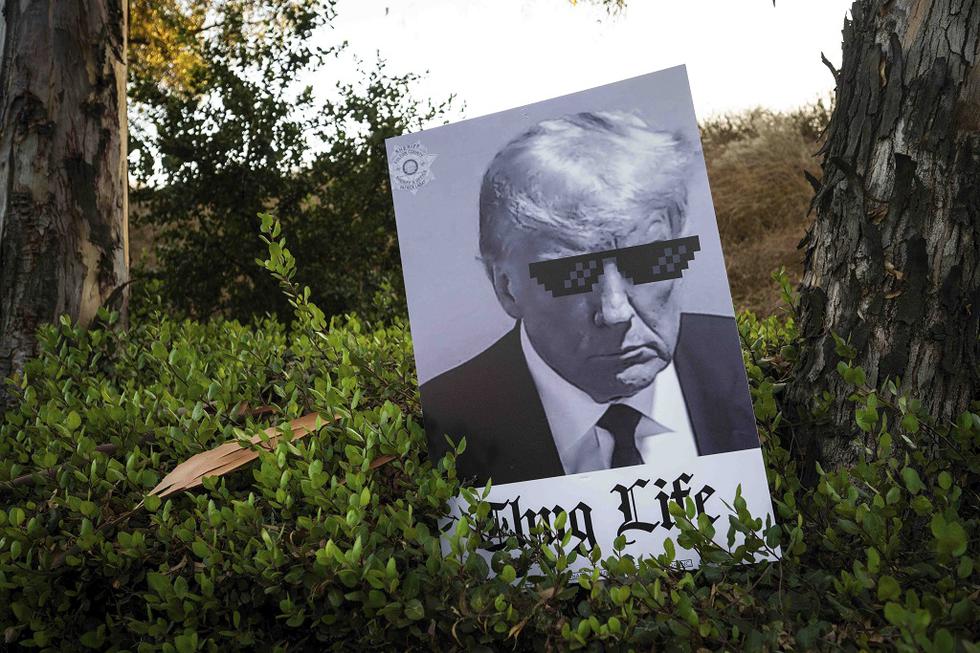


PHOTO:  A sign left behind by Trump supporters at a rally outside the Ronald Reagan Presidential Library in Simi Valley, California, September 27, 2023 Sarah Reingewirtz/The Orange County Register via AP

When Timothy Snyder’s slim volume On Tyranny: Twenty Lessons From the Twentieth Century was rocketing up the best-seller charts in 2017, I noticed an interesting fact: The most illuminating analysts of America’s frightening recent political turn were turning out to be scholars specializing in Europe. When Snyder, Ruth Ben-Ghiat, or Richard Steigmann-Gall noticed phenomena in America’s past or present that resembled something in the right-wing movements they studied in Germany, Italy, or elsewhere, they just said so—blithely indifferent to what every graduate student in American history learns, and what New York Times reporters shout from the rooftops, that America is supposed to be “exceptional.”

The most interesting voice thinking about the connections between interwar Europe and the present-day U.S. happens to be a scholar of both. John Ganz’s forthcoming book When the Clock Broke illuminates the exceedingly odd politics of the U.S. in 1992—including some haunting harbingers of America’s Trumpian turn. The most fascinating posts on his Substack Unpopular Front are deeply learned perambulations through the 20th-century European right. Their most important lesson: Fascism is always less simple than we think it is.

“We have this image in our heads—and this is really hard to get out of people’s heads—of the fascist rise to power that comes from fascist propaganda,” Ganz explains. The stereotype is thugs marching into the seat of government with truncheons, then marching out having seized state power. “It is much more political than that. It has much more to do with negotiations between established political factions and elites … None of these movements were destined to succeed. There was a lot of luck, and there were a lot of contingencies.”

Most fascist parties and movements—Ganz knows their names, and repeats them often, as a reminder of that contingency—never seized any power. They were footnotes. That’s an important insight to address to observers who cite the sheer ridiculousness, abundant incompetence, and outright insanity within Donald Trump’s movement, and have a hard time placing it in the same universe with the movement that almost conquered Europe. After all, if Hitler’s little gang of beer hall brawlers had failed to achieve power, they surely would have looked precisely as ridiculous as all that. As Ganz puts it, “Everything kind of looks farcical until it doesn’t.”

The brawlers are never really the engine of the thing anyway. Ganz explained how Hitler and Mussolini used their more violent elements to destabilize and intimidate, while they took power through the more normal political channels of forming coalitions in parliament and ascending into leadership roles.

More from Rick Perlstein

“The constitutional system in Italy always remained intact,” even when Mussolini became dictator, Ganz notes. “There was still the king, there was still a constitutional monarchy; he was prime minister. The fascist state kind of superimposed itself on that.” There was, for a time, even a robust parliamentary opposition: “Antonio Gramsci, head of the Italian Communist Party, famously was elected to parliament after Mussolini rose to power.”

At least as important to the story are the “responsible conservatives” who made their peace with the strongman, believing he could be controlled. Like Germany’s Vice Chancellor Franz von Papen, architect of the 1933 coalition that made Hitler chancellor, who said: “In two months, we’ll have pushed Hitler so far into the corner that he’ll squeal.” Or the guy who said in 2015, “You know how to make America great again? Tell Donald Trump to go to hell.” That would be one Lindsey Graham, who later decided he liked Trump just fine, once he started winning.

The conceit is similar to what Bill Clinton felt about allowing China into the World Trade Organization: If you bring a radical outlier within the political system, they will act rationally and moderate their worst impulses. Mainstream conservatives in Italy and Germany repeatedly claimed Mussolini and Hitler would turn out to be responsible actors, once they occupied positions of responsibility. American elites followed suit with the absurd refrain, on occasions when Trump managed to act normal for 15 seconds: “He became president of the United States in that moment, period.”

That was CNN’s Van Jones, when Trump paid tribute to a military widow in his first address to a joint session of Congress. Venerable pundit Karen Tumulty still thinks this a reasonable thing to believe. As she wrote in The Washington Post a few weeks back, “In 2016, it was still possible to believe that Trump would grow and change under the weightiness of the office.”

The 1991 documentary Trump: What’s the Deal?—released for free online by its producers when Trump announced his presidential campaign—had already revealed him to be exactly as he would be in 2016. The best line—I quoted it in what I believe was the first piece to evaluate whether Trump was a fascist (not yet, I concluded then)—came from architect Der Scutt. He said that if you want to calculate the truth of one of Donald Trump’s claims: “Divide by two, then divide by four, and you’re closer to the answer.” It also documents his feral racism and consequence-free consorting with criminals in pursuit of his aims.

Mainstream conservatives in Italy and Germany repeatedly claimed Mussolini and Hitler would turn out to be responsible actors, once they occupied positions of responsibility.

There were Karen Tumultys back in the day, too. A 2015 book by historian Despina Stratigakos, Hitler at Home, demonstrates publications around the world dutifully passing on der Führer’s carefully cultivated image as an amiable country squire of whom we could expect reasonable things, in features like this one that ran in The New York Times 11 days before the 1939 blitzkrieg of Poland: “High up on his favorite mountain he finds time for politics, solitude and frequent official parties …”

It sounds crazy that sophisticated people could be that naïve, that late in the game. But listen now to the reports from the World Economic Forum in Davos: “U.S. industry leaders seem overwhelmingly nonplussed with a second Trump term, while foreign chief executives are terrified.” Replied one of the nonplussed: “I’m not sure Europeans understand how weak executive orders are. We have a justice system … it won’t be the end of the world.” Another pronounced Trump “all bark and no bite,” with his tossing aside the 2020 election returns mere bloviation. And besides, “many of his policies were right.”

Call it #vonPapenism. #vonPapenism über alles.

One surprise I took away from my conversation with Ganz is that, in a certain respect, Trump is plus fasciste que les fascistes: that is, more incautiously thugocratic than his European antecedents, at least in the beginning of their rises.

“The heads of these movements had to be very careful about how they would use the fascist paramilitaries, and make this implicit promise to the elite that they could be contained,” Ganz says. “It was always something they needed in their back pocket, right? But sometimes it felt like those people were giving [Hitler and Mussolini] more problems than they were worth.”

But Trump always thought differently. After Charlottesville, he called the thugs “fine people.” Asked about the Proud Boys in a 2020 presidential debate, he said: “Stand back and stand by.” I’d always worried that utterances like these were harbingers of things to come. I suspected that Trump never criticized supporters willing to commit violence on his behalf because that willingness might eventually become useful to him. I saw him as playing politics with something far more than votes: that thugs were valuable currency to keep in his back pocket, to send forth whenever that was what it took to keep power.

Then, on January 6th, he did.

For the briefest moment, the von Papens of the Republican congressional caucus considered cutting him loose. Then they thought better of it. Now that Trump calls his thugs “hostages,” few Republicans seem even to consider expressing alarm. Some have even turned it into a MAGA term of art. “This movement between goons and conservative allies,” Ganz notes, is “something I saw a lot with Trump.”

OUR CONVERSATION SHIFTED TO THE GROUND of political theory. Ganz points out that a book that won a lot of respect for its explanatory power in the European context, Dylan Riley’s The Civic Foundations of Fascism in Europe, has been deployed in the American context by critics of the idea that “fascism” is a relevant category here and now. “[Riley’s] theory,” Ganz explains, “is that, in a society where the political establishment is weak and cannot get consensus behind it, but there is a highly developed civil society—where there are a lot of pressure groups—you can expect something like fascism, as those groups make demands on the political system that it cannot satisfy. And these idiot fucks …”

One of the things I love about Ganz is that he gives it with the bark off.

“… look at that and say, ‘Well, there’s no civil society left in the United States, so that doesn’t work anymore.’”

They mean that nobody shows up to Kiwanis Club meetings these days; that they bowl alone. They are wrong, because they neglect the civil society spaces right-wingers do abundantly show up for. Like services at churches where Trump is venerated like an earthly manifestation of the godhead; like gun groups; like Moms for Liberty chapters; like militias and quasi-militias.

And boy, do they make demands.

There are two ways to think about the failed, weak political establishment, abetted by the sclerosis-inducing nature of our constitutional system. One might think about the state’s failure to deliver the things it used to: adequate physical infrastructure, an economy that provides meaningful work with the kind of protections against firing that powerful unions provide, a safety net to smooth out its rough edges, and increasing moves (Medicare, Medicaid) toward affordable health care. The right sometimes claims they don’t want the government to accomplish these things, but they grew quite excited when Trump promised that he alone could restore, provide, or preserve them.

The other way to think of it involves things people in groups like these demand that no government can deliver: a Christian theocracy many Americans wrongly believe to be their birthright; protection from demographic change; return to a prelapsarian time when America was supposed to have been “great.”

Any way you slice it, the perceived absence of responsive government, the presence of groups positioned to clamor for response, and then government’s failure to respond, does things out in the world.

“This cluster of demands coming from civil society being put on a very weak political establishment is a basic sociological formula for fascism,” as Ganz summarizes Riley’s paradigm.

“And I think that’s what, basically, we have in the United States: a very weak political establishment, but a civil society underneath it that’s looking for a kind of expression. And the expression that it’s taking is pathological … It’s demanding a dictator. Because the party system is unable to answer the demands they have.”


The most important thing for journalists to cover in this presidential election is not how many votes Donald Trump gets, either in the popular total or the Electoral College.

In describing how that longing has historically been expressed, he introduced to me an idea that blew my mind a little. It was articulated during a political crisis in France in the late Third Republic that culminated in a failed march on the Chambre des Députés on the night of February 6, 1934, leaving 16 dead. In correspondence between Ganz and the great historian of fascism Robert Paxton the day after the riots at the U.S. Capitol, both agreed that day bore “a spookily close parallel” to January 6th.

What the right-wing populist marchers were demanding in 1934 Paris was “republic by plebiscite.” Meaning: a true sounding of the French people’s desires, to get around a corrupt parliamentary system “dominated by Jews, and special interests, and the Masons.” That’s the part that blew my mind—because I immediately recognized something like it as a constant during the 70 years or so of right-wing politics in the U.S. that I’ve studied, since the days of Joe McCarthy: conservatives’ faith that a true sounding of the will of the American people would put paid to the foreign intrusion of liberalism for good.

Like the kind of letters George Gallup received in the early 1950s: “If you took a true poll of the American people … you would find them over 95 percent for Senator McCarthy.”

Or Phyllis Schlafly’s tract A Choice Not an Echo, which argued that if the Republicans would only nominate a true conservative he would win in a landslide, but the only reason that didn’t happen was that a few “New York kingmakers” (Mr. Gallup pre-eminent among them, as it happened) manipulated things behind the scenes to make that impossible.

Or the 84 percent of Tea Party adherents who said their views “generally reflect the views of most Americans.”

Or when Mike Lindell, in his campaign for RNC chairman in 2023, said, “This country is 70 percent red. If you remove all the garbage and all the corruption and everything. It’s 70 percent red, and it’s getting redder all the way.”

And, of course, on January 6th.

Various aspects of fascism have been always present on the American right. (In 1981, the virulently and explicitly racist and antisemitic magazine The Spotlight had many times the circulation of any other publication on the right.) They remained contained or undeveloped. With Trump, they burst forth in full flower. The fantasy of the Republican plebiscite—the notion that the true nation is already with them were it not for the deep state’s depredations—was at the essence of the demand at the Capitol on January 6, 2021. “If the government is no longer for the people, it is your duty to overthrow that government and reinstate a new government, for the people,” as a 1/6 terrorist named Christopher Alberts, convicted of bringing a handgun to the Capitol, roused the mob that day.

It is a point I’ll keep repeating: The most important thing for journalists to cover in this presidential election is not how many votes Donald Trump gets, either in the popular total or the Electoral College. To those subsumed inside his cult of personality, the conclusion is already foregone: If you took a true poll of the American people, swept aside the garbage and the corruption of the kingmakers in the media and the deep state (not to mention all those Democratic officials desperate to do anything to cover up their pedophilic cult)—obviously Donald Trump represents the views of most Americans, and is the only legitimate representative of “the people.” The question is how many will be willing to take up arms for this belief, should the people whose job it is to count the votes come up with the “wrong” answer.

Will that be fascism? I’ll quote Jeff Sharlet from our previous interview. “One of the mistakes people make is they say, ‘Well, this doesn’t look like European fascism in 1936.’ Well, that’s because it’s American fascism in 2024.”

The Fundamental Crisis and Foundational Contradiction Facing the United States During the Upcoming Presidential Election Year of 2024: Fascism guided, informed, and enabled by the Doctrines and Practices of White Supremacy and Global Capitalism--PART 11

On The Road To Fascism: The Demagogic Rise of Rightwing Authoritarianism in Trump's America And the Rabid Support of the Republican Party

https://truthout.org/…/fascism-expert-trump-has-laid-the-gr…

Interview
Politics & Elections


Fascism Expert: Trump Has Laid the Groundwork for “Full-On Authoritarian Rule”
by Chauncey DeVega
January 13, 2020
Salon


PHOTO: President Trump delivers remarks in the Roosevelt Room at the White House on January 9, 2020, in Washington, D.C. Ruth Ben-Ghiat, an expert on fascism, says that if Trump is re-elected, the U.S. will tilt even further in the direction of authoritarianism. Jabin Botsford / The Washington Post via Getty Images
Last week, House Speaker Nancy Pelosi announced that Congress will soon send its articles of impeachment for Donald Trump to the Senate, where Republicans are determined to acquit him on all charges, including abuse of power, obstruction of Congress, and encouraging foreign powers to interfere in the 2020 presidential election.

No evidence or witnesses will persuade the Senate majority to reach a conclusion consistent with the obvious facts that Donald Trump should be impeached, convicted and removed from office. The Constitution’s mandate that a impeachment should involve an impartial trial and a fair hearing of evidence and witnesses has no meaning in TrumpWorld.

The Republican Party is now a wholly owned subsidiary of Trump’s regime and an expression of his personal will and power. To that end, Trump has promised financial support to the Republican senators who will soon be voting at his trial. It has also been reported that Trump ordered the execution of Iranian Maj. Gen. Qassem Soleimani in order to ensure that Republican senators would support his acquittal.

In essence, Donald Trump pays political blood money to his supporters. This is more evidence of Trump’s political thuggery and mobster-style behavior that is unbefitting an American president.

Like other dictators, authoritarians, autocrats and political thugs, Donald Trump believes he is above the law. With the support of Attorney General William Barr, this appears increasingly true.

The obscenities continue.

Donald Trump has suggested he is “the chosen one” and God’s messenger on earth. White Christian evangelicals believe this to be true and have pledged themselves to his cult.

Writing at USA Today, historian John Fea described the first event of Trump’s “Evangelicals for Trump” campaign, which occurred in Florida two weeks ago:
His evangelical supporters loved every minute of it. That night, Christians who claim to be citizens of the Kingdom of God went to church, cheered the depraved words of a president and warmly embraced his offer of political power. Such a display by evangelicals is unprecedented in American history.

I usually get angry when members of my tribe worship at the feet of Trump. This time, I just felt sad.

Trump and his allies label Democrats, liberals, progressives and anyone else opposing him as traitors and enemies of the United States. The most recent example: at a rally last Thursday in Toledo, Trump said that Democrats were “vicious horrible people.”

None of this should be surprising. Trump is following the authoritarian’s playbook almost to the letter in his assault on American democracy, the Constitution and the rule of law. The question is not whether Donald Trump is an authoritarian and would-be dictator but rather whether anything or anyone is capable of stopping him.

I recently spoke with historian Ruth Ben-Ghiat in an effort to better understand where America is on its road to fascism and authoritarianism in this fourth year of Trump’s regime.

Ben-Ghiat is a professor of history and Italian studies at New York University and an expert in fascism and authoritarianism. She is the author of Italian Fascism’s Empire Cinema and other books. Her opinion essays and other writing have been featured by CNN, the Washington Post, The New Yorker and the Atlantic.

This conversation has been edited for clarity and length. You can also listen to my full conversation with Ruth Ben-Ghiat through the player embedded below:

Chauncey DeVega: As you watch the Trump regime’s ongoing authoritarian assault on America, how do you feel?

Ruth Ben-Ghiat: I feel very resolute. It is very important not to feel helpless and desperate. In a funny way, I’m not frustrated with the Trump supporters because I understand how the process works. Of course, I’m very upset that there are in fact Trump supporters and I have zero sympathy towards them. But once individuals bond to an authoritarian leader it is a process, like a train that has already departed the station. It is very hard to stop and is well underway.

How is this constant state of temporary hope and then inevitable disappointment impacting the American people? For example, Trump has been impeached. Yet now he will be acquitted by his servants in the Republican Party. The American people are in a manic state because of Trump’s regime.

This is all happening a little bit at a time. Surveying the history of authoritarianism, only in a military coup do you really have an instant change. A person leaves the house in the morning and five hours later they are living in a dictatorship and there is mass violence. But otherwise, even Mussolini and Hitler took many years to get into power.

The shoe drops slowly, and it is hard for many people to discern what is really happening. This is especially true when there are multiple things happening at one time. For example, William Barr and his attacks on the rule of law and how he is part of this right-wing Christian counterrevolution in America. Yes, Trump is impeached, and that is a type of pushback against him and his forces. What judges are doing to slow down Trump’s agenda is very important too. It is very important to not give up because that is what authoritarians want the public to do.

Authoritarian leaders want you to believe that resistance is futile and that you should just give up. If we give up and resign ourselves to the conclusion that impeaching Trump is not going to have an effect, then he has won. Impeachment is extremely important because it will be on the record, marked in the history books as opposition to Trump and his agenda.

Three years into Trump’s regime, why are so many Americans still in a state of denial about this crisis?

They have no reference point for what is going on in America right now. Providing that reference point is one of the things that motivates my work. Many people are also scared. Many people in the news media are afraid to really engage the fact that Trump is an authoritarian because if they do so then reality becomes too threatening, and therefore they would have to take a different stance publicly.

Is this a lack of historical context and knowledge? Is it cowardice?

As I said earlier, only in a military coup do we really see sudden change in a society. Most people are not trained to recognize what is going on with Trump’s authoritarian agenda. If these leading media voices admit that they are living in the middle of a fascist, authoritarian takeover, then what are they going to do about it? Compare the United States to Hong Kong. Those incredible human beings are out there in the streets in Hong Kong day after day, month after month, because they know really well what the stakes are. The American people either do not understand those facts or they do not want to inconvenience themselves and disrupt their lives. That lack of mass protest and resistance is also an indictment of a particular American way of life where people are overly comfortable and take too many things for granted about their culture and democracy and their own lives.

Applying your historical framework and expertise about fascism and authoritarianism, what are Donald Trump and his regime an example of?

Donald Trump is an example of someone who comes up in history, and the way forward has been prepared for him, in this instance by the Tea Party and the Republican Party.

The road was already prepared for Trump by eight years of Barack Obama and how that created a type of mass anger and rage and panic among many white people. People like Donald Trump appear in history and their role is to undo social and political progress. Trump is a figure who is trying to undo everything that Barack Obama stood for and accomplished. But of course, historical figures such as Donald Trump add something new. Trump comes in and he has a “movement.” Trump does not have a political party. At first, Trump said that he was above politics. This is another common thread among authoritarians.

When we say that Trumpism is a “movement,” what specifically do we mean?

Donald Trump said, “This isn’t a party, it’s movement.” Trump did this to excite his potential followers and get their loyalty. At a traditional Republican convention or campaign rally, there are not loyalty oaths. There are not MAGA hats. All successful movements have rituals and symbols. Donald Trump is a marketer. He knows that symbols and rituals and having a movement is how you get people excited. Nobody is excited to show up for the Republican Party. But the Tea Party? Donald Trump? MAGA? That is something different. There are actually people who are addicted to Donald Trump’s rallies. They are following a movement. Of course that movement has now taken over the Republican Party — and Trump transcends the GOP.

Trump is establishing what is known as “personalist rule.” This can happen in failing democracies and in actual authoritarian states. Personalist rule is a process wherein the state comes to revolve around the personal agendas and needs of the ruler. This includes the need to defend the ruler’s corruption. To defend the ruler from the law and judicial processes and investigative journalists. Another indicator of personalist rule is when the leader’s personal obsessions, such as Trump’s wall, begin to monopolize and overtake other policies. This would not be possible and sustainable without the leader’s supporters coalescing in a movement.

There is an obsession in the mainstream news media with Trump’s “white working class” supporters. In that reporting, one of the repeated narratives is that those people feel some type of kinship with him. Somehow, in their delusional minds, Trump’s supporters believe that a supposed billionaire is actually like them. He is “oppressed” and “victimized,” as they are. The premise is absurd. But why is it so compelling for some people?

That is the personality cult. For Trump’s rule to work — as with Putin and other autocrats and authoritarians — the leader must be both an everyman and a superman. The leader is a populist in the sense that he speaks the “language of the people.” Almost all of these types of leaders have a sense of humor where they make crude jokes that get people to laugh. Politically incorrect jokes. Their humor is corrosive, of course. But the jokes work in showing that these types of leaders are very much of the people. Donald Trump uses a fourth-grade vocabulary. He is also very visual. He performs with his body. Yet Donald Trump is a billionaire, and supposedly a great success. The combination of all those traits is very attractive to his followers. “He’s a super success story. He’s done this, he’s done that.”

Consider the expression “TrumpWorld.” It is an accurate description. The goal of Trump and his allies is to colonize society and the media 24/7. To achieve that goal, they need attention and to get inside people’s heads. This is TrumpWorld. Authoritarian leaders also present themselves as victims of coups or other attacks by their enemies. This makes them look vulnerable. These types of leaders talk about emotion in their speeches. Trump does this. He’s always talking about “love” and “hate,” relative to his friends, enemies and rivals. This makes Trump’s followers bond to him because they feel very emotional and want to take care of their leader. This is a very successful strategy by authoritarian leaders like Donald Trump.

Part of the power of the Trump cult is how he promises to be their savior, protector, friend and father figure.

It is no accident that during the impeachment process Donald Trump has said that he is going to stay in office for 28 years. Of course, that is not physiologically possible. But what matters is the fantasy, because Trump is terrified right now. Leaders of that type create fortresses around themselves in a million ways. They do this with flatterers, lackeys and family. Authoritarian leaders like Trump do not want to hear any criticism. They also want and need total control over people because that settles the anxiety.

Trump does this in other ways as well. He does not have permanent appointees. This means they do not have to be confirmed by the Senate. Authoritarian leaders are actually terrified and brittle people inside. That is why they retreat inward. Donald Trump will not take any real questions from the news media. The authoritarian leader’s ego will not permit any questions, and the longer they stay in charge the worse it gets for a country because they lose all sense of reality. Leaders like Donald Trump make bad decisions, such as starting wars. One of the things that scares me the most is that Donald Trump is extremely destructive. Authoritarian leaders like Donald Trump delight in being destructive. Sometimes such people are also self-destructive.

How does authoritarianism impact people’s sense of time and history?

Part of the experience is the anxiety of the minute. Twitter facilitates this because it is not just how many people check the news, but also journalists drip out news stories in the form of small tweets. This is not just one presentation of a story and the facts. It is not like reading the front page of a newspaper and getting the whole narrative at once. Twitter is a filter for information and experience that is constantly changing. People lose perspective on what is important and what is not.

Our capacity for discernment goes down and our anxiety goes up. Everything is made to feel urgent. Yet the more time people spend on Twitter the less time they are doing anything about Donald Trump and the crisis. Twitter is just an example of this problem. But it is the prime example because it is an unhelpful mechanism psychologically, emotionally and politically because it’s like a mass venting session without much real world impact.

How should we understand the ways that Trump and his movement conflate their love for him with loyalty to the country and what it means to be a “real American”?

The civil service has been purged and ruined under the Trump administration. The civil service makes government work. The State Department is a particularly sad example. Career civil servants have been purged because of ideological tests. This can take the form of leader loyalty — which is an ideology of loyalty. It could mean Trump removing experts who know that climate change is real. Civil rights as well. For example, The Department of Health and Human Services under Trump now has a “civil rights office” devoted to the “rights” of right-wing Christian evangelicals who believe their freedom is violated by doctors who agree to perform abortions. The state has been hollowed out. Expertise is gone and ideology rules. The state, the government bureaucracy and civil service are now just a vehicle for the authoritarian leader’s goals.

The end goal is for Trump, Barr, the Republican Party and the conservative movement more generally is to have their own secret police. I keep returning to the question of civil disobedience, protest and corporeal politics as a response to this threat to democracy. Are the American people just cowardly? Have they already surrendered? Is the news media just afraid of the truth? Calm my nerves — or not — about the Trump’s regime’s plans to have political police and other enforcers.

This brings up the question of madness versus method. One of the objections that gets leveled at people who offer these types of analyses about Trump and authoritarianism is, “No, Trump’s just impulsive.” He’s not mentally ill. He may have some dementia, but he knows exactly what he’s doing. Trump’s spokespeople have been very clear that Trump wants his own intelligence and security services.

Such goals are part of the counterrevolution that has been slowly chipping away at democratic institutions, norms and laws under Trump and the Republican Party. Trump is going after the country’s trust in the FBI and intelligence services. All the relevant structures of government that could obstruct what Trump wants to do are being chipped away. What Trump has been doing up to this point is not at all an accident in that regard.

It takes a lot of time to prepare the public for such an outcome. It requires information and psychological warfare. Trump is very expert in those areas. Chip away at reality and objectivity, and then the public is ready for full-on authoritarian rule. The Nazis knew this very well. The public must be shaped and prepared. This is what Goebbels excelled at. The Russians excel at it. Once the public is shaped and prepared, the authoritarian regime can do what it wants.

What is the Trump regime preparing the American people for?

Not only Trump, but many other people around him, including Republican elected officials, have been speaking like authoritarian thugs. They say things such as, “Hillary Clinton needs to be executed.” That is how fascists speak. Making such threats is a type of trial balloon. If Trump wins in 2020, those trial balloons of fascist threats will be able to be made real. Even with all the horrible things that Trump has said and done, his popularity remains stable. Trump’s followers have not deserted him. The 2020 presidential election is almost a referendum and a mandate for Donald Trump to finally do what he’s been threatening to do all along.

What were some moments when the rise of Trumpism, and what feels like a type of inevitability and path dependency, could have been stopped?

This is called “gatekeeping.” Authoritarian leaders and their movements are very clear about being violent. Authoritarians always tell you what they are going to do. It’s just that the American people are not ready to hear it. We do not want to hear the truth that Donald Trump is not kidding with his violent threats and promises. When Trump would not release his tax returns, that was a damning signal of how imperiled America is and was. When Trump said he could shoot someone on the street without losing any followers, that was another moment where I knew we were stuck on a very dangerous path. No American presidential candidate in modern history has threatened to murder someone as part of his campaign. Such behavior is what political thugs do.

The Republican Party’s leaders and other influential voices could have prevented the corruption of the system by this violent outsider. That was one path. The other path was and is to accept Donald Trump fully and claim he’s your savior sent from God. That is the path America is now on.

What comes next with Donald Trump in 2020 and the presidential election?

Exacerbation of the polarization. The goal is to leave people so confused about the truth that they are more and more dependent on Trump while also being increasingly disaffected. Trump may capitalize on some horrible event happening to the United States. Donald Trump has made some very scary declarations that the way to unite a country is through some catastrophe. Trump says that he hopes such a horrible thing does not happen but that is the way a leader can unite the county. Donald Trump has stripped anti-terrorism programs of their resources. He has defunded many national security programs that combat terrorism. If a calamity took place, Donald Trump would use it to declare martial law or some type of ongoing national emergency.
 

ABOUT THE AUTHOR AND INTERVIEWER:

Chauncey Devega is a politics staff writer for Salon.
 

ABOUT THE INTERVIEW SUBJECT:
 

Ben-Ghiat is a professor of history and Italian studies at New York University and an expert in fascism and authoritarianism. She is the author of Italian Fascism’s Empire Cinema and other books. Her opinion essays and other writing have been featured by CNN, the Washington Post, The New Yorker and the Atlantic.

PHOTO: President Trump delivers remarks in the Roosevelt Room at the White House on January 9, 2020, in Washington, D.C. Ruth Ben-Ghiat, an expert on fascism, says that if Trump is re-elected, the U.S. will tilt even further in the direction of authoritarianism. Jabin Botsford / The Washington Post via Getty Images
 

Tuesday, January 14, 2020

On The Road To Fascism: The Demagogic Rise of Rightwing Authoritarianism in Trump's America And the Rabid Support of the Republican Party

https://truthout.org/…/fascism-expert-trump-has-laid-the-gr…

Interview
Politics & Elections


Fascism Expert: Trump Has Laid the Groundwork for “Full-On Authoritarian Rule”
by Chauncey DeVega
January 13, 2020
Salon


PHOTO: President Trump delivers remarks in the Roosevelt Room at the White House on January 9, 2020, in Washington, D.C. Ruth Ben-Ghiat, an expert on fascism, says that if Trump is re-elected, the U.S. will tilt even further in the direction of authoritarianism. Jabin Botsford / The Washington Post via Getty Images

Last week, House Speaker Nancy Pelosi announced that Congress will soon send its articles of impeachment for Donald Trump to the Senate, where Republicans are determined to acquit him on all charges, including abuse of power, obstruction of Congress, and encouraging foreign powers to interfere in the 2020 presidential election.

No evidence or witnesses will persuade the Senate majority to reach a conclusion consistent with the obvious facts that Donald Trump should be impeached, convicted and removed from office. The Constitution’s mandate that a impeachment should involve an impartial trial and a fair hearing of evidence and witnesses has no meaning in TrumpWorld.

The Republican Party is now a wholly owned subsidiary of Trump’s regime and an expression of his personal will and power. To that end, Trump has promised financial support to the Republican senators who will soon be voting at his trial. It has also been reported that Trump ordered the execution of Iranian Maj. Gen. Qassem Soleimani in order to ensure that Republican senators would support his acquittal.

In essence, Donald Trump pays political blood money to his supporters. This is more evidence of Trump’s political thuggery and mobster-style behavior that is unbefitting an American president.

Like other dictators, authoritarians, autocrats and political thugs, Donald Trump believes he is above the law. With the support of Attorney General William Barr, this appears increasingly true.

The obscenities continue.

Donald Trump has suggested he is “the chosen one” and God’s messenger on earth. White Christian evangelicals believe this to be true and have pledged themselves to his cult.

Writing at USA Today, historian John Fea described the first event of Trump’s “Evangelicals for Trump” campaign, which occurred in Florida two weeks ago:
His evangelical supporters loved every minute of it. That night, Christians who claim to be citizens of the Kingdom of God went to church, cheered the depraved words of a president and warmly embraced his offer of political power. Such a display by evangelicals is unprecedented in American history.

I usually get angry when members of my tribe worship at the feet of Trump. This time, I just felt sad.

Trump and his allies label Democrats, liberals, progressives and anyone else opposing him as traitors and enemies of the United States. The most recent example: at a rally last Thursday in Toledo, Trump said that Democrats were “vicious horrible people.”

None of this should be surprising. Trump is following the authoritarian’s playbook almost to the letter in his assault on American democracy, the Constitution and the rule of law. The question is not whether Donald Trump is an authoritarian and would-be dictator but rather whether anything or anyone is capable of stopping him.

I recently spoke with historian Ruth Ben-Ghiat in an effort to better understand where America is on its road to fascism and authoritarianism in this fourth year of Trump’s regime.

Ben-Ghiat is a professor of history and Italian studies at New York University and an expert in fascism and authoritarianism. She is the author of Italian Fascism’s Empire Cinema and other books. Her opinion essays and other writing have been featured by CNN, the Washington Post, The New Yorker and the Atlantic.

This conversation has been edited for clarity and length. You can also listen to my full conversation with Ruth Ben-Ghiat through the player embedded below:

Chauncey DeVega: As you watch the Trump regime’s ongoing authoritarian assault on America, how do you feel?

Ruth Ben-Ghiat: I feel very resolute. It is very important not to feel helpless and desperate. In a funny way, I’m not frustrated with the Trump supporters because I understand how the process works. Of course, I’m very upset that there are in fact Trump supporters and I have zero sympathy towards them. But once individuals bond to an authoritarian leader it is a process, like a train that has already departed the station. It is very hard to stop and is well underway.

How is this constant state of temporary hope and then inevitable disappointment impacting the American people? For example, Trump has been impeached. Yet now he will be acquitted by his servants in the Republican Party. The American people are in a manic state because of Trump’s regime.

This is all happening a little bit at a time. Surveying the history of authoritarianism, only in a military coup do you really have an instant change. A person leaves the house in the morning and five hours later they are living in a dictatorship and there is mass violence. But otherwise, even Mussolini and Hitler took many years to get into power.

The shoe drops slowly, and it is hard for many people to discern what is really happening. This is especially true when there are multiple things happening at one time. For example, William Barr and his attacks on the rule of law and how he is part of this right-wing Christian counterrevolution in America. Yes, Trump is impeached, and that is a type of pushback against him and his forces. What judges are doing to slow down Trump’s agenda is very important too. It is very important to not give up because that is what authoritarians want the public to do.

Authoritarian leaders want you to believe that resistance is futile and that you should just give up. If we give up and resign ourselves to the conclusion that impeaching Trump is not going to have an effect, then he has won. Impeachment is extremely important because it will be on the record, marked in the history books as opposition to Trump and his agenda.

Three years into Trump’s regime, why are so many Americans still in a state of denial about this crisis?

They have no reference point for what is going on in America right now. Providing that reference point is one of the things that motivates my work. Many people are also scared. Many people in the news media are afraid to really engage the fact that Trump is an authoritarian because if they do so then reality becomes too threatening, and therefore they would have to take a different stance publicly.

Is this a lack of historical context and knowledge? Is it cowardice?

As I said earlier, only in a military coup do we really see sudden change in a society. Most people are not trained to recognize what is going on with Trump’s authoritarian agenda. If these leading media voices admit that they are living in the middle of a fascist, authoritarian takeover, then what are they going to do about it? Compare the United States to Hong Kong. Those incredible human beings are out there in the streets in Hong Kong day after day, month after month, because they know really well what the stakes are. The American people either do not understand those facts or they do not want to inconvenience themselves and disrupt their lives. That lack of mass protest and resistance is also an indictment of a particular American way of life where people are overly comfortable and take too many things for granted about their culture and democracy and their own lives.

Applying your historical framework and expertise about fascism and authoritarianism, what are Donald Trump and his regime an example of?

Donald Trump is an example of someone who comes up in history, and the way forward has been prepared for him, in this instance by the Tea Party and the Republican Party.

The road was already prepared for Trump by eight years of Barack Obama and how that created a type of mass anger and rage and panic among many white people. People like Donald Trump appear in history and their role is to undo social and political progress. Trump is a figure who is trying to undo everything that Barack Obama stood for and accomplished. But of course, historical figures such as Donald Trump add something new. Trump comes in and he has a “movement.” Trump does not have a political party. At first, Trump said that he was above politics. This is another common thread among authoritarians.

When we say that Trumpism is a “movement,” what specifically do we mean?

Donald Trump said, “This isn’t a party, it’s movement.” Trump did this to excite his potential followers and get their loyalty. At a traditional Republican convention or campaign rally, there are not loyalty oaths. There are not MAGA hats. All successful movements have rituals and symbols. Donald Trump is a marketer. He knows that symbols and rituals and having a movement is how you get people excited. Nobody is excited to show up for the Republican Party. But the Tea Party? Donald Trump? MAGA? That is something different. There are actually people who are addicted to Donald Trump’s rallies. They are following a movement. Of course that movement has now taken over the Republican Party — and Trump transcends the GOP.

Trump is establishing what is known as “personalist rule.” This can happen in failing democracies and in actual authoritarian states. Personalist rule is a process wherein the state comes to revolve around the personal agendas and needs of the ruler. This includes the need to defend the ruler’s corruption. To defend the ruler from the law and judicial processes and investigative journalists. Another indicator of personalist rule is when the leader’s personal obsessions, such as Trump’s wall, begin to monopolize and overtake other policies. This would not be possible and sustainable without the leader’s supporters coalescing in a movement.

There is an obsession in the mainstream news media with Trump’s “white working class” supporters. In that reporting, one of the repeated narratives is that those people feel some type of kinship with him. Somehow, in their delusional minds, Trump’s supporters believe that a supposed billionaire is actually like them. He is “oppressed” and “victimized,” as they are. The premise is absurd. But why is it so compelling for some people?

That is the personality cult. For Trump’s rule to work — as with Putin and other autocrats and authoritarians — the leader must be both an everyman and a superman. The leader is a populist in the sense that he speaks the “language of the people.” Almost all of these types of leaders have a sense of humor where they make crude jokes that get people to laugh. Politically incorrect jokes. Their humor is corrosive, of course. But the jokes work in showing that these types of leaders are very much of the people. Donald Trump uses a fourth-grade vocabulary. He is also very visual. He performs with his body. Yet Donald Trump is a billionaire, and supposedly a great success. The combination of all those traits is very attractive to his followers. “He’s a super success story. He’s done this, he’s done that.”

Consider the expression “TrumpWorld.” It is an accurate description. The goal of Trump and his allies is to colonize society and the media 24/7. To achieve that goal, they need attention and to get inside people’s heads. This is TrumpWorld. Authoritarian leaders also present themselves as victims of coups or other attacks by their enemies. This makes them look vulnerable. These types of leaders talk about emotion in their speeches. Trump does this. He’s always talking about “love” and “hate,” relative to his friends, enemies and rivals. This makes Trump’s followers bond to him because they feel very emotional and want to take care of their leader. This is a very successful strategy by authoritarian leaders like Donald Trump.

Part of the power of the Trump cult is how he promises to be their savior, protector, friend and father figure.

It is no accident that during the impeachment process Donald Trump has said that he is going to stay in office for 28 years. Of course, that is not physiologically possible. But what matters is the fantasy, because Trump is terrified right now. Leaders of that type create fortresses around themselves in a million ways. They do this with flatterers, lackeys and family. Authoritarian leaders like Trump do not want to hear any criticism. They also want and need total control over people because that settles the anxiety.

Trump does this in other ways as well. He does not have permanent appointees. This means they do not have to be confirmed by the Senate. Authoritarian leaders are actually terrified and brittle people inside. That is why they retreat inward. Donald Trump will not take any real questions from the news media. The authoritarian leader’s ego will not permit any questions, and the longer they stay in charge the worse it gets for a country because they lose all sense of reality. Leaders like Donald Trump make bad decisions, such as starting wars. One of the things that scares me the most is that Donald Trump is extremely destructive. Authoritarian leaders like Donald Trump delight in being destructive. Sometimes such people are also self-destructive.

How does authoritarianism impact people’s sense of time and history?

Part of the experience is the anxiety of the minute. Twitter facilitates this because it is not just how many people check the news, but also journalists drip out news stories in the form of small tweets. This is not just one presentation of a story and the facts. It is not like reading the front page of a newspaper and getting the whole narrative at once. Twitter is a filter for information and experience that is constantly changing. People lose perspective on what is important and what is not.

Our capacity for discernment goes down and our anxiety goes up. Everything is made to feel urgent. Yet the more time people spend on Twitter the less time they are doing anything about Donald Trump and the crisis. Twitter is just an example of this problem. But it is the prime example because it is an unhelpful mechanism psychologically, emotionally and politically because it’s like a mass venting session without much real world impact.

How should we understand the ways that Trump and his movement conflate their love for him with loyalty to the country and what it means to be a “real American”?

The civil service has been purged and ruined under the Trump administration. The civil service makes government work. The State Department is a particularly sad example. Career civil servants have been purged because of ideological tests. This can take the form of leader loyalty — which is an ideology of loyalty. It could mean Trump removing experts who know that climate change is real. Civil rights as well. For example, The Department of Health and Human Services under Trump now has a “civil rights office” devoted to the “rights” of right-wing Christian evangelicals who believe their freedom is violated by doctors who agree to perform abortions. The state has been hollowed out. Expertise is gone and ideology rules. The state, the government bureaucracy and civil service are now just a vehicle for the authoritarian leader’s goals.

The end goal is for Trump, Barr, the Republican Party and the conservative movement more generally is to have their own secret police. I keep returning to the question of civil disobedience, protest and corporeal politics as a response to this threat to democracy. Are the American people just cowardly? Have they already surrendered? Is the news media just afraid of the truth? Calm my nerves — or not — about the Trump’s regime’s plans to have political police and other enforcers.

This brings up the question of madness versus method. One of the objections that gets leveled at people who offer these types of analyses about Trump and authoritarianism is, “No, Trump’s just impulsive.” He’s not mentally ill. He may have some dementia, but he knows exactly what he’s doing. Trump’s spokespeople have been very clear that Trump wants his own intelligence and security services.

Such goals are part of the counterrevolution that has been slowly chipping away at democratic institutions, norms and laws under Trump and the Republican Party. Trump is going after the country’s trust in the FBI and intelligence services. All the relevant structures of government that could obstruct what Trump wants to do are being chipped away. What Trump has been doing up to this point is not at all an accident in that regard.

It takes a lot of time to prepare the public for such an outcome. It requires information and psychological warfare. Trump is very expert in those areas. Chip away at reality and objectivity, and then the public is ready for full-on authoritarian rule. The Nazis knew this very well. The public must be shaped and prepared. This is what Goebbels excelled at. The Russians excel at it. Once the public is shaped and prepared, the authoritarian regime can do what it wants.

What is the Trump regime preparing the American people for?

Not only Trump, but many other people around him, including Republican elected officials, have been speaking like authoritarian thugs. They say things such as, “Hillary Clinton needs to be executed.” That is how fascists speak. Making such threats is a type of trial balloon. If Trump wins in 2020, those trial balloons of fascist threats will be able to be made real. Even with all the horrible things that Trump has said and done, his popularity remains stable. Trump’s followers have not deserted him. The 2020 presidential election is almost a referendum and a mandate for Donald Trump to finally do what he’s been threatening to do all along.

What were some moments when the rise of Trumpism, and what feels like a type of inevitability and path dependency, could have been stopped?

This is called “gatekeeping.” Authoritarian leaders and their movements are very clear about being violent. Authoritarians always tell you what they are going to do. It’s just that the American people are not ready to hear it. We do not want to hear the truth that Donald Trump is not kidding with his violent threats and promises. When Trump would not release his tax returns, that was a damning signal of how imperiled America is and was. When Trump said he could shoot someone on the street without losing any followers, that was another moment where I knew we were stuck on a very dangerous path. No American presidential candidate in modern history has threatened to murder someone as part of his campaign. Such behavior is what political thugs do.

The Republican Party’s leaders and other influential voices could have prevented the corruption of the system by this violent outsider. That was one path. The other path was and is to accept Donald Trump fully and claim he’s your savior sent from God. That is the path America is now on.

What comes next with Donald Trump in 2020 and the presidential election?

Exacerbation of the polarization. The goal is to leave people so confused about the truth that they are more and more dependent on Trump while also being increasingly disaffected. Trump may capitalize on some horrible event happening to the United States. Donald Trump has made some very scary declarations that the way to unite a country is through some catastrophe. Trump says that he hopes such a horrible thing does not happen but that is the way a leader can unite the county. Donald Trump has stripped anti-terrorism programs of their resources. He has defunded many national security programs that combat terrorism. If a calamity took place, Donald Trump would use it to declare martial law or some type of ongoing national emergency.

ABOUT THE AUTHOR AND INTERVIEWER:

Chauncey Devega is a politics staff writer for Salon.

ABOUT THE INTERVIEW SUBJECT:

Ben-Ghiat is a professor of history and Italian studies at New York University and an expert in fascism and authoritarianism. She is the author of Italian Fascism’s Empire Cinema and other books. Her opinion essays and other writing have been featured by CNN, the Washington Post, The New Yorker and the Atlantic.

PHOTO: President Trump delivers remarks in the Roosevelt Room at the White House on January 9, 2020, in Washington, D.C. Ruth Ben-Ghiat, an expert on fascism, says that if Trump is re-elected, the U.S. will tilt even further in the direction of authoritarianism. Jabin Botsford / The Washington Post via Getty Images