Showing posts with label Film criticism. Show all posts

Friday, January 11, 2013

Armond White On 'Lincoln' and "Django Unchained': A Great Film Critic Takes Spielberg and Tarantino To Task And We Learn Precisely Why Cinema Matters As A Result


http://cityarts.info/2012/11/14/the-pageantry-of-rhetoric/

All,
Armond White's review of 'Lincoln' is an extraordinary and profound fusion of cultural/political analysis, historical exegesis, and incisive cinematic critique

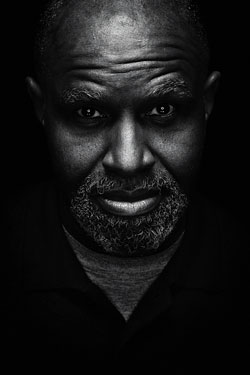
Armond White


The beauty of Armond White's brilliant film criticism is that he ALWAYS challenges the reader to go far beyond merely or lazily agreeing/disagreeing with his POV or his overall analysis of a particular film and consistently forces the viewer/reader to actually THINK about what he's saying and why.  In this way he compels us to actually interrogate both the movie AND White's analysis of it.  Not since Pauline Kael  and Andrew Sarris at their very best, or Manny Farber (who was the best American film critic who ever lived IMO) have we been blessed to have a film critic who not only has an encyclopedic knowledge of "the movies" on a global scale but is also intellectually and emotionally sophisticated enough to realize that modern and postmodern cinema is always essentially about political and cultural ideology (and its aesthetic connections to social consciousness and thus our collective "psychological" response to history) more than anything else.  As a result his dialectical understanding of genre, mise-en-scene, photography, dialogue,  and narrative conventions--and its intricate relationship to acting as both art and craft--really provides a profound insight into what movies are and what they MEAN to us.  In other words Armond routinely does what truly great critics of any art form are compelled to do:  he demands that we question what we are being told and how its being told to us and simultaneously allows and demands that we as "the audience" critically question what we see and what White himself says about it and its various meanings.  As long as White is on the scene real artistic criticism is not yet dead in this country.  Armond is in many ways the last of an original breed in American cultural criticism but hopefully his work is having an important impact on an emerging younger generation of potential critics and intellectuals "out there" in the rest of the country.      

Kofi

The Pageantry of Rhetoric
by ARMOND WHITE
Nov 14, 2012
CityARTS: New York's Review of Culture
New York Film Critics Circle - NYFCC
 
HOW SPIELBERG’S ‘LINCOLN’ PARLAYS THE ‘GREAT MAN’ NOTION OF HISTORY 

 Daniel Day-Lewis as Abraham Lincoln in “Lincoln”
“You begin your second term with semi-divine status,” the 16th President of the United States is told in Steven Spielberg’s film Lincoln. The evidence of that status is in the film’s mythifying visual style that presents Abraham Lincoln as an icon–silhouetted, spectral, sculptural. The people around him, such as white and Negro Union soldiers relating their Civil War experiences of the 1865 Jenkins Ferry massacre during the film’s introduction, are also made into myth. (These weary men have already committed the Gettysburg Address to memory–a presentiment of the schoolboy’s homework in Minority Report.) Spielberg’s intention to line up with “the right side of history” turns the film into cult-of-personality deification. It’s on the side of power–which makes it one of the weirdest pieces of supposedly democratic Americana ever to come out of Hollywood.

The story in Lincoln dramatizes the President’s efforts to install a 13th Amendment to the Constitution that abolishes slavery. His struggle is more than politically correct; it is presumed inarguably correct which takes the movie outside of history; outside of dramatic immediacy. Watching Lincoln is very much like observing a flesh-and-blood diorama. Everything is soon settled (within 2 ½ hours); there’s no emotional suspense.

The trick Spielberg needed to pull off was to make the characters’ moral choices dramatically compelling; analyzing ethics in politics (those pragmatic procedures that deemed the Emancipation Proclamation “a military exigent”). Yet that’s where the film becomes dodgy–open to accusations of merely being a civics lesson, or worse: Spielberg’s equivalent to Richard Attenborough’s still-born hagiography Gandhi, rather than a companion-piece to his thrilling, brilliantly analytical masterpiece Amistad.

In Amistad Spielberg cannily transformed the issue of Slavery into the intricacy of Law; human endeavor and spiritual struggle were historically modified into argument and principle. The Amistad characters Cinque the African (Djimon Hounsou) and John Quincy Adams the political descendant (Anthony Hopkins) grappled with the fact of Slavery. This time Slavery is anthropomorphized. The introduction’s two docile and truculent black soldiers patronizingly prophesize modern attitudes; Lincoln himself (played by Daniel Day-Lewis) describes Slavery as a “disease” which distances it into abstraction. Lincoln attempts to dramatize mere rhetoric. Despite high-flown language, it turns the experience of human lives into platitudes, homilies and predetermined theorems.

For a lesser filmmaker, the prevarications in Lincoln would be disastrous. But Spielberg’s innate filmmaking resources consistently provide rhythmed imagery: Conventional–as when Lincoln’s aides race to get his disingenuous communique. Daring–as when Lincoln dreams his forthcoming struggle as an eerie ship voyage. The film is always something to look at. Congressional arguments are composed to show the vitality of faces and individuals–the elite body politic–like period versions of Francesco Rosi’s courtroom scenes in Hands Across the City and Salvatore Giuliano yet without Rosi’s worry about literal political corruption. Spielberg’s vibrant style just barely offsets the mundanity of parliamentary debate. The fact that Lincoln’s drama comes from predictable dialectic, rather than an in-the-moment philosophical conundrum like Amistad, reveals its insufficiency. Lincoln tilts toward magniloquence, using important sounding words and an exaggeratedly solemn and dignified style.


Spielberg shrewdly chose the histrionic Day-Lewis to impersonate Lincoln with twinkling eyes and a wily, high-pitched voice that humanize the icon. Day-Lewis’ long face is given built-in hollows and shadows that match the Lincoln Memorial and postage stamp figures while also suggesting mysterious depths. His every close-up suggests historical reverence. But this immortality contrasts the fascinating mortal portrayals by Sally Fields as Mary Todd Lincoln, Tommy Lee Jones as Thaddeus Stevens and James Spader as W.N. Bilbo who act through their flesh, courtesy of Janusz Kaminski’s portraitist lighting that suggests the grain of historical painting animated by fluid camerawork. At one point (“It‘s too hard”), Fields’ transition from agony to aggrieved diplomacy is as much the director’s triumph as the actress’. Spader’s grungy agitator feels lived-in while Jones enlivens a cliché Congressional hack–his toupeed-role reaches back to a key idiosyncratic characterization in D.W. Griffith’s The Birth of a Nation.

With Lincoln, Spielberg assumes his place in the descent of American cinematic mythmakers following Griffith and John Ford–a fact already evident–and earned–in Amistad. Here it’s done self-consciously. Not because it’s impossible to portray Abraham Lincoln any way other than worshipfully but because Spielberg and screenwriter Tony Kushner (adapting a book by historian Doris Kearns Goodwin) manipulate Lincoln into a contemporary political paradigm.

Without clarifying the intricacy of the 19th century Republican party and the different principles of early Democrats, Spielberg and Kushner claim Lincoln as their model autocrat–always the smartest man in the room–which becomes a form of adoration. Thaddeus Stevens even refers to Lincoln as “the purest man in America.” Distinct from the cultural myth in Ford’s Young Mr. Lincoln that was widely shared in less jaded times, Lincoln presents a new style giant (a storyteller of superhuman probity and only fleeting moments of the most admirable self-doubt) probably influenced by the current hunger for a great leader whose outstanding talents must be either prefabricated or whose failings go ignored in order to answer a desperate contemporary need for power.

Here’s how Lincoln prevaricates: Scenes where black characters show flawless nobility and strength (whether as a silent, pious gospel chorus entering the senate chambers or unimpeachably dignified servants). Scenes where white politicians focus on issues with little motivation beyond hectoring opposition. These convenient and very modern political defects prevent Lincoln from achieving the historical reach of Amistad or the miraculous suasion that made Mr. Smith Goes to Washington’s change-of-heart scene so moving.

When Lincoln proclaims “We’re stepped out upon the world’s stage now, the fate of human dignity is in our hands. Blood’s been spent to afford us this moment. Now! Now! Now!” the stage metaphor exposes playwright Kushner’s smugness. Lincoln is rife with Kushner’s pedantic tendency. Speechifying characters (especially Lincoln) display conceited literacy, over-stating their differences (their career positions) but never embodying the passions that made Michael Apted’s biography of British abolitionist William Wilberforce Amazing Grace such a remarkable drama of moral inspiration. Kushner’s self-congratulatory approach to the 13th Amendment doesn’t enliven our sense of personal conviction and political maneuvering. Even the powerful “Molasses to Rum to Slaves” trading song in 1776, the Declaration of Independence musical, more clearly outlined America’s practical and political functioning. Both Amazing Grace and 1776 worked as ideational histories; Lincoln merely, well, fantasizes.


Justifying political manipulation and the idolizing of a single politician forces Spielberg and Kushner into the weird position of displacing the moral rigor that distinguished their collaboration on Munich. When Lincoln bases his notion of equality on Euclidian principle, referencing a 2000-year-old secular book as his foundation then praising “a great invisible strength in a people’s union,” Kushner’s vagrant communist-sympathy comes into play. The platitude is barely disguised by Lincoln’s out of nowhere wish to visit the Holy Land “where David and Solomon walked.”

As with Angels in America, Kushner is partial to formula, prescription, disquisition–the pageantry of rhetoric. But Spielberg thrives on movement and imagery and there isn’t enough to keep Lincoln from bogging down in verbiage. It frequently resembles the self-pleasing sophistry favored by this era of punditry and hero-worship.

But cinema’s most memorable political histories have always been films like Young Mr. Lincoln, Amistad and Amazing Grace that attain the ineffable by honestly clarifying history and daring that Capraesque link between dramatized conscience and delineated principle; that’s what stirs one’s soul in Albert Finney’s conversion scene of Amazing Grace which found the perfect symbols and actions to express the passion of ideas. Lincoln weakens from the current political era’s disingenuous pageantry of rhetoric.

In the popular fashion, Spielberg and Kushner fall back on the “great man” theory of history. Their iconography is vague, a fantasy where equality is learned through logic–not experience or faith because in this film’s view no human beings can be taken on faith (as when Lincoln says he doesn’t know any black people. The film’s one-dimensional, anachronistic black characters indicate Spielberg and Kushner progressive elitism; they never absorbed the richness of Jonathan Demme’s Slavery-era Beloved.) This dream of Lincoln, fitted to the solipsistic subjectivity of the political moment eschews Amistad’s beauty and historical clarity to favor a “semi-divine” (that is, non-spiritual) view of political heroism. The fantasy might well be re-titled Dreams From My Father.

Follow Armond White on Twitter at 3xchair


All,

Like I've been saying for many years now:  ARMOND WHITE IS BY FAR THE BEST AND MOST PROFOUND FILM CRITIC IN THE UNITED STATES TODAY.  That he also happens to be a homeboy from Detroit (and a former esteemed editor of mine during the 1980s in Brooklyn, NY--long live the late and lamented City Sun!) only makes me that much more proud of and appreciative of his wonderful intellectual gifts, comprehensive cinematic and literary erudition,  deep critical consciousness, authentically hip sophistication, and fundamentally ethical/moral/political courage. That his critical film reviews are often far more interesting, insightful, inspiring, and necessary than many if not most of the films he is compelled to critique is a testament to how real art--in this context his criticism-- can still survive and thrive in  even the most challenging  and depressing circumstances.  While this larger reality may often look and sound like an unavoidable "moral hazard" of his profession,  in his particular case (thankfully) we are very fortunate that it really isn't...


Kofi  

Still Not a Brother
by ARMOND WHITE
Dec 28, 2012
CityArts:  New York's Review of Culture


A review of 'Django Unchained'

How SamJack stole Tarantino’s epithet orgy Django Unchained

 
Uncle Tom, the black overseer created by Harriet Beecher Stowe and despised ever after, reappears to spy on and punish other slaves in Django Unchained. It is the role Samuel L. Jackson was born to play.  

Here named Stephen, Jackson’s Uncle Tom style shuck-and-jive is prototypical-–even atavistic–-climaxing in the profane, deceitful racial self-hatred that he has accustomed us to in his detestable roles for Django Unchained director Quentin Tarantino, although not those alone.
 

In Django Unchained Jackson is to Tarantino what Step'n Fetchit was to John Ford–the actor who personifies his director’s sense of the Other. This is not an alter-ego thing; it transfers detachment into “sympathy.” Roles like Jules in Pulp Fiction, Ordell in Jackie Brown and now Stephen the ultimate Uncle Tom display Jackson’s patented shamelessness–his Nigger Jim flair. Jackson reverses the anger that 70s black militants felt toward the Uncle Tom figure into an actorly endorsement. He embodies the dangerous Negro stereotypes harbored by Tarantino and every Huck Finn wannabe.

 
That, essentially, is the transgression on view in Django Unchained. This pseudo (not neo-) Blaxploitation film about a freed slave (Jamie Foxx) who goes on a killing spree with a psychopathic bounty hunter (Christoph Waltz) two years before the Civil War (rendering that conflict unnecessary) offers a pointless jamboree of disparate sentimental, anachronistic and absurd elements; it seems aimless until Jackson’s Uncle Tom eventually shows up and galvanizes all Q.T.‘s hostile silliness.

Not to rank Tarantino with Ford or Mark Twain but his diabolical Uncle Tom descends from their precursors, specifically to the way Twain refashioned American social codes into a narrative that to this day gratifies some people’s entrenched racial prejudices. That’s why Huckleberry Finn is canonized while Twain’s Puddinhead Wilson is not. It’s also why SamJack is the true star of Django Unchained and Jamie Foxx, with his pandering, deliberately modern swagger, is not.

There’s no mistaking the division of labor or social/racial hierarchies preserved in Jackson-Tarantino’s spectacle: Tarantino uses a gray-haired, wily Jackson with a deceptive limp and mean scowl to fulfill his white hipster’s fanciful reinterpretation of social history. Through Jackson, QT gets to remake the cultural world he didn’t grow up in (complete with incongruous pop songs) and enjoy how its dangers and excesses effect a subordinate. Brazenly inauthentic, Django Unchained is unmistakably QT’s vision–trivializing slavery’s true deep treachery–and it’s an impersonal, privileged vision.

 
Tarantino, who commands more leverage than any Hollywood director besides Spielberg, is beyond needing to look cool about his race obsession. He’s got Jackson to satisfy his need for pity. [More on this in my forthcoming book Say What?] Pity, according to the hipster definition laid out by Norman Mailer’s classic 1958 essay “The White Negro” (a confession that has entered the subconscious of every Wigger) is the flip side of envy and such pseudo-rebellious class envy borders that thin line next to contempt.

Unlike Ford’s passive naif Stepin Fetchit, Jackson’s Uncle Tom is aggressive, an evil ol’ Brer Rabbit (even nastier than Ordell) who demonstrates how untrustworthy a black man can be. He incites his psychotic Massa (Leonardo DiCaprio) and cock-blocks the simpering romance between the titular stud and his wench (Kerry Washington). This despicable, scowling, sniveling, cursing and cinematically lynched figure reveals what SamJack really means to us: His self-hatred is hilariously grotesque. He’s malicious, not virtuous as Civil Rights Era Ford would idealize Woody Strode in Sergeant Rutledge and The Man Who Shot Liberty Valance. The narrative force exerted by Jackson’s character (and the actor’s lip-smacking glee at exceeding his previous wicked benchmarks) exposes Tarantino’s basic misunderstanding of Blaxploitation. He’s still not a brother.

QT’s misguided delight matches that of black co-producer Reginald Hudlin, a Blaxploitation fan whose name is used to buffer expected complaints about racism. While Django Unchained satisfies the boyish black teen thrill that Hudlin has not outgrown, it primarily proclaims a white hipster’s voyeuristic pleasure in black vengeance–a form of Liberal porn, aberrant hip-hop.

How did Hudlin let Django Unchained erase the politically-charged motivation behind most 70s Blaxploitation films? (Anyone who really knows the Blaxploitation era can only scoff at this movie’s white supremacy.) Insensitivity is evident in the sound and inexcusable repetitions of “nigger” by white characters. QT’s epithet orgy recalls the O.J. Simpson verdict quip “If the word ‘nigger’ could light up the sky, Los Angeles wouldn’t need streetlights.” Django Unchained’s First Amendment mockery suggests it’s lights-out in Obama’s America.

This is not so simple as calling Tarantino, DiCaprio, Waltz, Washington, Hudlin or anyone else racists. (Besides, if QT could reap Oscar nominations for disgracing the Jewish Holocaust in Inglourious Basterds, our culture will surely let him can get away with anything.) These filmmakers simply don’t deliver whatever it is that can justify the word’s utterance as historical accuracy or emotional righteousness. It’s just fodder for Tarantino who single-handedly devised this mash-up of Blaxploitation and Italian Spaghetti westerns out of juvenile amusement–not Harriet Beecher Stowe’s abolitionist principles nor Blaxploitation’s get-whitey ingenuity. Django Unchained’s two antithetical genres only belong together in a reprobated mind.

Tuesday, March 13, 2012

Armond White Critiques 'The Help'


Film critic Armond White (Photo: Michael Lavine)


(Photo: Nigel Parry)


All,

The great Armond White (b. 1953)--in my view the best and by far the most profound and consistently insightful of all contemporary American film critics (and crucially the most important inheritor and innovative extension of the extraordinary legacy of the pioneering and legendary U.S. film critics Manny Farber (1917-2008) and Pauline Kael (1919-2001)--once again nails it in his incisive and typically prescient analysis of the latest Hollywood travesty and determined distortion of African American history and life called 'The Help.' As usual White pays very close and strict attention to the myriad ways in which the real complexities, challenges, and dynamics of race, class, gender, and cultural/social history in the United States are ignored, sandbagged, undermined, neglected, obscured, or simply evaded by the self serving falsifications of fluffy sentimentality and misplaced/irrelevant cinematic platitudes passing themselves off as "empathy" and "understanding".

In a lazy, self indulgent, and irresponsible artistic era where the cultural phenomenon of the rise of Barack Obama--and our various conflicting responses to this phenomenon--has ironically been too often used by both white and black American artists alike as a handy excuse and evasion to do such resolutely shallow, mediocre, idiotic, hollow, and slipshod work as "Precious", an excruciating 21st century "updating" of 'Porgy and Bess' (!), every single thing that the clueless actor and director Tyler Perry either does or--gasps!-- "thinks" about doing, "Memphis", "The Help" , and Katori Hall's egregiously bad "The Mountaintop" (just for a handy shortlist of a disturbingly large number of American films and plays that have been produced and shown in the U.S. since 2008), it is refreshing to know that SOMEONE in "public intellectual" circles is still firmly committed to fully discovering and examining truth and its many consequences in both Art and Life...Thanks Armond...It's still good to know that all is not lost...yet...

Kofi


"The Help demonstrates the conned intelligence of the "post-racial" and "postblack" Obama era, where the anxieties of unequal yet mutually beneficial black-white relationships are conveniently, speciously, put behind us. 'Caroline, or Change' said different—so did Regina Taylor's stunning forbearance in the '90s TV series ""I'll Fly Away and the sisterly confidences of Lynn Nottage's recent Off-Broadway play, "By the Way, Meet Vera Stark." The Help is only truly progressive in the supporting role of Minny, to whom hard-staring comic actress Spencer brings a new kind of nononsense funny—everything Mo'Nique [in "Precious"] missed—whether when asserting, "Minny don't burn fried chicken" or speaking truth to Jessica Chastain's delightfully delusional white outcast...

"...Empathic storytelling like this has considerable charm, but newcomer Tate Taylor's direction and adaptation of the book by Kathryn Stockett indulges prefeminist nostalgia more than it faces the complex realities of American racism. Finding erroneous humor in the way black women outsmarted their white mistresses through wily social courage and culinary artistry is deceptively attractive. To imply that all this has passed and can now be accepted by our advanced, socially tolerant era depends upon a certain falsification of how the black-white, mammy-mistress symbiosis operated. Taylor's interest in updating historical embarrassments leads to a shallow view of a tradition that began in slavery but continues on in the casually sustained interplay of pain and affection, dependence and resentment."

--Armond White

The Help shies away from true insight in favor of entertainment
By Armond White
New York Press

As a piece of entertainment, The Help succeeds where Tyler Perry's For Colored Girls failed: this comic melodrama is geared to please a broad audience by contrasting the experiences of black and white women in 1960s America, just before the Civil Rights Act and the popularity of feminism. Sisterhood is shown as a circumstance of different but shared sacrifices based on gender, but controlled by race and class.

These secret relationships are exposed when Southern belle and aspiring journalist Skeeter Phelan (Emma Stone) writes a memoir-confessional featuring stories told by the black women of Jackson, Miss., that reveal how middleclass white women promote a system that constrains them while they, ironically, keep underclass black women in penury as maids, cooks and wet nurses—"the help."

The title phrase evokes Faulkner's axiom "the keeper of our conscience." Whereas For Colored Girls was an ordeal of suffering that excluded white women's experience, The Help sentimentalizes all female fortitude, delighting, Fried Green Tomatoes-style, in the perseverance of Aibileen (Viola Davis), who boasts, "Looking after white babies, that's what I do"; her best friend Minny (Octavia Spencer), a legendary cook; and lastly, but centrally, Skeeter.

Empathic storytelling like this has considerable charm, but newcomer Tate Taylor's direction and adaptation of the book by Kathryn Stockett indulges prefeminist nostalgia more than it faces the complex realities of American racism. Finding erroneous humor in the way black women outsmarted their white mistresses through wily social courage and culinary artistry is deceptively attractive. To imply that all this has passed and can now be accepted by our advanced, socially tolerant era depends upon a certain falsification of how the black-white, mammy-mistress symbiosis operated. Taylor's interest in updating historical embarrassments leads to a shallow view of a tradition that began in slavery but continues on in the casually sustained interplay of pain and affection, dependence and resentment.

Casting Viola Davis, the wiry, darkskinned Broadway actress who was Oscar-nominated for Doubt, as the grieving, embittered Aibileen immediately distorts the issue. Aibileen narrates, "Babies like fat—they like my fat legs, too," but Davis doesn't fit that Mammy stereotype. Instead, her specialty is a very contemporary, Denzel-style anger— convenient for those who are discomfited by a more complex African-American female personality. (That's probably why Hollywood has yet to adapt Caroline, or Change, Tony Kushner's extraordinary musical on a similar subject.) Aibileen's anger reverses the Mammy complex, changing ambivalence into modern guilt. Except for tomboy Skeeter, the film's white women are extreme caricatures. This simplifies racism as aberrant to American social custom and denies its normality.

When the great Ethel Waters played mammy to Julie Harris in The Member of the Wedding, she represented a fount of human warmth and wisdom that The Help doesn't countenance. Hattie McDaniel in Gone With the Wind, Frances E. Williams as the profoundly named Sybil in The Reckless Moment and Claudia McNeil in A Raisin in the Sun all added their individual ambition and talent to the archetype, making it undeniable and noble—even if it is now unfashionable, it remains endlessly fascinating. The Help doesn't access those actresses' awesome physical presence and spiritual integrity. Davis describes "a bitter seed was planted inside me" to explain Aibileen's sadness, but her neurosis—exactly what Mo'Nique avoided portraying as the ludicrous monster-mammy in Precious— gratifies white guilt rather than admitting collusion and indebtedness. Even Cicely Tyson's appearance as Skeeter's wizened old mammy carries the condescending dignity of her later roles, rather than her '70s landmarks The Autobiography of Miss Jane Pittman and Sounder, which inspired Pauline Kael's pinpoint admiration of her "unconned intelligence."

The Help demonstrates the conned intelligence of the "post-racial" and "postblack" Obama era, where the anxieties of unequal yet mutually beneficial black-white relationships are conveniently, speciously, put behind us. Caroline, or Change said different—so did Regina Taylor's stunning forbearance in the '90s TV series I'll Fly Away and the sisterly confidences of Lynn Nottage's recent Off-Broadway play, By the Way, Meet Vera Stark. The Help is only truly progressive in the supporting role of Minny, to whom hard-staring comic actress Spencer brings a new kind of nononsense funny—everything Mo'Nique missed—whether when asserting, "Minny don't burn fried chicken" or speaking truth to Jessica Chastain's delightfully delusional white outcast.

It is Minny, not Aibileen, who gets to update the most subversive gesture of defiance from The Color Purple. Perhaps true black feminism is still too radical to take center screen in mainstream Hollywood. The Help acknowledges black women's plight, yet tips the balance away from them to Stone's Skeeter—as did such do-gooder feminist race movies as Clara's Heart, Love Field, Ghosts of Mississippi, The Long Walk Home and Far From Heaven. The problematic The Secret Life of Bees took this subject head on; there Dakota Fanning gave a heart-rending portrayal of primal racial interdependence that pierced the self-protective myths of the past and present, while The Help settles for mere entertainment.

Wednesday, December 1, 2010

Jean-Luc Godard vs. Cinema: The Filmmaker as Critic, Activist, and Auteur

Jean-Luc Godard
(b. December 3, 1930)
Jean-Luc Godard Vs. Cinema: The Filmmaker as Critic, Activist, and Auteur
by Kofi Natambu
The Panopticon Review
© December 2010
In many ways the history of cinema is the history of 20th century Western modernism itself as far as theoretical, philosophical, and creative conceptions and representations of the Real are concerned. As such the filmmaker as both director and writer has always been compelled to at least acknowledge if not openly struggle with the corresponding yet often antagonistic challenges of aesthetic and social criticism as an integral part of the very process and realization of the actual experience of making film itself--especially in a genre driven and narrative based medium rooted in the structural and institutional context of monopoly capitalist economics and thus a commercial profit system. As a result the social, ideological, and political dimensions of the art were never really divorced from the consumerist demands, desires, and expectations of its audience(s) or the economic machinations of the system of production that undergirds its existence.
It is in this sense that modernism in film as exemplified by the rise and eventual domination of the industrialized studio system of producing and distributing film as both art object and cultural commodity became synonymous with the aesthetic examination, creative manipulation, and expressive redeployment of social and cultural history. Thus from the very beginning of its emergence as a self consciously cultural and social force after 1915 (via the rise of the American director D.W. Griffith and his aggressively revisionist take on U.S. history in 'The Birth of A Nation' through his simultaneously innovative uses of the moving image and the mise-en-scene as social commentary, populist propaganda, and epic theatre) the imaginative and interpretive power and influence of film as a mass based social and cultural phenomenon and expression shaped our collective perceptions and consciousness of the often contentious relationship of modern art to society via various forms of institutionalized social authority and cultural traditions. It was in this larger historical context that cinema became a fecund and self reflexive source for its creative artists to actively intervene on and transform these given social, cultural, and political traditions and orthodoxies. This intervention took place not only at the level of the composition of the visual image and production design but the expressive dimensions of acting and screen dialogue. With the transformative rise of sound, music, and the human voice as corresponding aspects of the image onscreen the role of the cinematic artist as individual aesthetic force began to assert itself. As a result the commercial rise of the 'star system' for actors found a parallel correspondence in the critical and commercial awareness and celebration of the director-as-auteur (author) in the cinematic marketplace. These developments in the art of filmmaking began to have a profound effect of the mass audience's reception of the work of these artists and also was the impetus for new intellectual and critical discourses to emerge about the purpose, worth, and intentions of film as an artistic medium.
The convergence of these creative, critical, and industrial realities after World War I led to an explosion of film production on a global scale following the technological innovation of sound in movies in 1927. From the 1930s on this convergence of the aesthetic, economic, and cultural/social dimensions of the mass cinematic experience quickly led to a veritable revolution among directors, writers, and critics throughout the U.S., Europe, Asia, and Latin America (and later in Africa) who embraced the film auteur/author template as their own. This international community of writers, directors, actors, cinematographers, technicians, composers, and designers often saw themselves as film artists from other sovereign nation-states sought to position themselves and their work as either localized vernacular extensions of the commercial Hollywood genre film tradition or as stylistically ironic neorealist critics of the U.S. studio system.
Thus from the late 1930s to the late 1950s this international bifircation of institutionalized genre cinema and independent neorealist auteurism led to the precipitous rise of an innovative new generation of filmmakers who influenced by both stylistic tendencies began to emerge after the second World War and followed directly in the footsteps of such major directors and writers of the 1940s and '50s era as Orson Welles, Billy Wilder, Howard Hawks, Nicholas Ray, Sam Fuller, and Alfred Hitchcock (U.S.), Roberto Rossellini, Vittorio de Sica, and Luchino Visconti (Italy), Satyajit Ray (India), Akira Kurosawa and Kenji Mizoguchi (Japan), Jean Renoir and Jean Vigo (France), among a select number of other filmmakers from Europe, Asia, and South America who also sought a new artistic, critical, and ideological relationship with cinema and its history.
It was this critical historical legacy of the modern cinema as an assertive aesthetic and social force in the expansion of discourses available to the artist as both technician and poet, as well as narrator and documentarian, that attracted the rapt attention of a number of young Parisian cineastes, intellectuals, and social critics in France during the mid and late 1950s to create what became known popularly as the French 'New Wave' (Nouvelle Vague). This movement of young film buffs and aspiring writers and directors who spent many long hours together in the many cineaste club theatres of Paris after the second World War was led by a small but highly dedicated group, many of whom became world famous as a result as producing, writing, and directing their own films from 1959 on. Many of their names are now legion in global film history: Francois Truffaut, Claude Chabrol, Jacques Rivette, Eric Rohmer and perhaps the most influential and famous/infamous of them all, Jean-Luc Godard.
What the 'New Wave' of filmmakers sought was nothing short of an entirely new social, economic, creative, and ideological contract with the technical, industrial, and corporate apparatus that was largely responsible for film's production, distribution, and institutional role in the larger matrix of cultural relations that determined and in many ways overdetermined one's public access to cinema. In seeking both an implicit and explicit critique of this structural and thus philosophical framework of what constituted cinema Godard and his comrades, colleagues, co-conspirators, and fellow artists/critics not only wrote about, sponsored, promoted, investigated, supported, and/or dismissed what they saw as either worthy of their interest or inimical to it. Within that vast sphere of often highly spirited contentious debates and socially engaged activity vis-a-vis the massive commercial apparatus that governed most cinematic production and distribution on a global scale lay the larger contextual reality and creative agenda of what constituted the very form(s) and content of what Godard and his New Wave colleagues (and their often highly personal and aesthetically competitive visions) not only thought cinema was and wasn't but most importantly could be.


http://www.google.com/hostednews/afp/article/ALeqM5hlDrHp02kAqTZXx_aZfyUZH8CFqQ?docId=CNG.94591e60ea7188c66e691af71595f0f4.351 

'New Wave' film legend Godard turns 80
By Emma Charlton (AFP)


PARIS — "New Wave" director Jean-Luc Godard, who turned European filmmaking upside-down in the 1960s and who counts the likes of Pedro Almodovar and Quentin Tarantino as his modern-day heirs, turns 80 on Friday.


The French-Swiss director shot to fame in 1960 with "Breathless" in which Jean Seberg played a cropped-haired American in Paris, following up with such classics as "Alphaville" and "Contempt" starring screen icon Brigitte Bardot.

Leader of the "New Wave" generation of filmmakers along with the likes of Francois Truffaut, Godard re-wrote the film rulebook with movies that shunned studio sets in to shoot outside, using improvised scripts and natural sound.

"In the mid-60s, Godard was Picasso: they were the two most famous artists in the world," summed up Jean-Michel Frodon, former head of the Cahiers du Cinema film review that nurtured the "New Wave".

"He was the star of his generation. And even today, you can't talk 20 minutes with David Lynch without him mentioning Godard. Or with David Cronenberg, Gus Van Sant, Jim Jarmusch."

But after a decade of glory, Godard made a clean break with the film establishment in May 1968, after he and a band of fellows hijacked the Cannes festival to draw attention to the student revolt taking place outside.

For the past 30 years Godard has lived as a semi-recluse in the Swiss village of Rolle, from where he sporadically releases auteur films for an audience of die-hard fans.

This year he showed a film at Cannes, "Film Socialisme", a kaleidoscope of image, sound and text journeys through history and ideas, from ancient times to the Holocaust -- but stayed away from the glitzy Riviera festival itself.

Godard's image has also been tarred of late -- especially in the United States -- by charges of anti-Semitism, fuelled by a staunch anti-Zionist and pro-Palestinian stance and by interviews on the Jewish influence in Hollywood.

But his work at the top of his game left a lasting mark on world filmmaking: at this year's Oscars, he received a lifetime achievement award for creating "a new kind of cinema" -- although true to his reputation he stayed at home.

"In Brazil, Japan or China, filmmakers all say Godard helps them think about their own work," said Frodon.
"Pedro Almodovar, for instance, told me how Godard was a sort of intellectual companion who helps him think when he is on a shoot. It helps him, just as it helps Lars von Trier."

And Tarantino's production company "Band apart" is a direct tribute to the director's 1964 movie "Band of Outsiders".

What exactly did Godard bring to filmmaking? "A new way of telling a story, the length of his shots, the rythmic use of editing," said Frodon. "And a way of asking what it means to show a woman's face, her body."

"But more than anything, in each of Godard's shots there is an extraordinary beauty. He is without a doubt the director who best filmed the sky, the trees, nature -- and women too, although in that area he had more competition."

Godard, who acquired Swiss nationality at the age of 21, has said he chose the village of Rolle to settle 30 years ago with his Swiss partner the director Anne-Marie Mieville, "because it is nowhere."
"People here leave him alone," Daniel Belotti, mayor of the village of 6,000 inhabitants, told AFP. "He has his habits, he walks his dog, goes to the cafe on main street, buys a newspaper or cigars."

"I get the sense he does not really want us to celebrate this moment in time," said Frederic Maire of the Swiss cinematheque. "He thinks of the future, his last film is incredibly modern... when you look at his work, it seems he is 20 years old."

Copyright © 2010 AFP. All rights reserved.

Sunday, November 15, 2009

Speaking Truth To Nonsense: Armond White Attacks the Racist Pathology & Minstrel Antics of "Precious"


Armond White


http://www.nypress.com/article-20554-pride-precious.html

All,

I--and thankfully many other people throughout the country--have been loudly singing Armond White's praises for over 20 years now. It's always been my contention--again shared by many--that White is by far the best American film critic since the likes of Pauline Kael and Manny Farber in the 1960s and '70s. Not only that: White--who wrote one of the best and most intellectually provocative books of cultural and social criticism I've ever had the pleasure of reading (The Resistance: Ten Years of Pop Culture That Shook the World, Overlook Press, 1995)--is also an outstanding music and literary critic as well who has painstakingly acquired a much deserved large national following over the past two decades.

That he also happens to be a fellow Detroit homeboy who was once my editor at the late, lamented Brooklyn, NY weekly called The City Sun in the late 1980s makes me feel even more proprietary pride in and love for his always highly insightful, dynamic, and incisive work. This is all a necessary prelude to saying that his latest film critique absolutely NAILS the mindless "pafology" of the insidiously racist and brazenly minstrel-like film "Precious" that perenially corrupt Hollywood is not surprisingly trumpeting as a "masterwork." White calls it "the con job of the year". I heartily concur...

Kofi


Wednesday, November 4, 2009

You can thank media titans Oprah Winfrey and Tyler Perry for much of the hype surrounding Lee Daniels’ film Precious. ARMOND WHITE calls it the ‘Con Job of the Year.’


Pride & Precious
By Armond White
New York Press


SHAME ON TYLER PERRY and Oprah Winfrey for signing on as air-quote executive producers of Precious. After this post-hip-hop freak show wowed Sundance last January, it now slouches toward Oscar ratification thanks to its powerful friends. Winfrey and Perry had no hand in the actual production of Precious, yet the movie must have touched some sore spot in their demagogue psyches. They’ve piggybacked their reps as black success stories hoping to camouflage Precious’ con job—even though it’s more scandalous than their own upliftment trade. Perry and Winfrey naively treat Precious’ exhibition of ghetto tragedy and female disempowerment as if it were raw truth. It helps contrast and highlight their achievements as black American paradigms—self-respect be damned.

Let’s scrutinize their endorsement: Precious isn’t simply a strivers’ message movie; Perry and Winfrey recognize its propaganda value. The story of an overweight black teenage girl who is repeatedly raped and impregnated by her father, molested and beaten by her mother comes from a 1990s identity-politics novel by a poet named Sapphire. It piles on self pity and recrimination consistent with the air-quotes’ own oft-recounted backstories. Promoting this movie isn’t just a way for Perry and Winfrey to aggrandize themselves, it helps convert their private agendas into heavily hyped social preoccupation.

But Perry and Winfrey aren’t all that keep Precious from sinking into the ghetto of oblivion like such dull, bourgie, black-themed movies as The Great Debaters or The Pursuit of Happyness. That’s because the film’s writer-director Lee Daniels works the salacious side of the black strivers’ street. Daniels knows how to turn a racist trick. As producer of Monster’s Ball, Daniels symbolized Halle Berry’s ravishment as integration; Kevin Bacon titillated pedophilia in Daniels’ The Woodsman and Daniels’ directorial debut, Shadowboxing, hinted at interracial incest between stepmother and son Helen Mirren and Cuba Gooding Jr.

Winfrey, Perry and Daniels make an unholy triumvirate.They come together at some intersection of race exploitation and opportunism. These two media titans—plus one shrewd pathology pimp—use Precious to rework Booker T. Washington’s early 20th-century manifesto Up From Slavery into extreme drama for the new millennium: Up From Incest, Child Abuse,Teenage Pregnancy, Poverty and AIDS. Regardless of its narrative details about class and gender, Precious is an orgy of prurience. All the terrible, depressing (not uplifting) things that happen to 16year-old Precious recall that memorable All About Eve line, “Everything but the bloodhounds nipping at her rear-end.”

It starts with the opening scene of Precious’ Cinderella fantasy. Tarted up in a boa and gown, walking a red carpet light years away from her tenement reality, Precious (Gabourey Sidibe) sighs, “I wish I had a light-skinned boyfriend with nice hair.” Her ideal smacks of selfhatred—the colorism issue that Daniels exacerbates without exploring. He casts light-skinned actors as kind (schoolteacher Paula Patton, social worker Mariah Carey, nurse Lenny Kravitz and an actual Down syndrome child as Precious’ first-born) and dark-skinned actors as terrors. Sidibe herself is presented as an animal-like stereotype—she’s so obese her face seems bloated into a permanent pout.This is not the breakthrough Todd Solondz achieved in Palindromes where plus-size black actress Sharon Wilkins artfully represented the immensity of an outcast’s misunderstood humanity. Instead, Sidibe’s fancy-dressed daydream looks laughable; poorly photographed, its primary effect is pathetic.

Daniels employs the same questionable pathos as the family banquet scene at the start of Denzel Washington’s also condescending Antwone Fisher. This cheap ploy of tortured daydreaming uses black American deprivation for sentimentality. It sells materialist fantasy as a universal motivation—no wonder Perry and Winfrey like it. Precious embodies an unenlightening canard.That fantasy opening—depicting the girl’s Obama-like ascension—tantalizes thoughts of advancement and triumph. It ought to be satirical to undercut the norms she aspires to just as Palindromes’ misfit teens subverted MTV’s ideas of youth.

Perry and Winfrey may think Precious is serious, but Daniels is hoisting his freak flag. He gets off on degradation. Flashbacks to Precious’ rape contain a curious montage of grease, sweat, bacon and Vaseline. Later, he intercuts a shot of pig’s feet cooking on a stove with Precious being humped while her mother watches from a corner. Another misjudged scene recreates De Sica’s B&W Two Women—a half-camp trashing of motherhood that compounds the problem of cultural alienation. So does the film’s Ebonics credit sequence and the scene of Precious rotating amidst a bombardment of success icons—Martina Arroyo, MLK, Shirley Chisholm—to which she either relates or is ignorant.This incoherence should not pass for sociology.

Not since The Birth of a Nation has a mainstream movie demeaned the idea of black American life as much as Precious. Full of brazenly racist clichés (Precious steals and eats an entire bucket of fried chicken), it is a sociological horror show. Offering racist hysteria masquerading as social sensitivity, it’s been acclaimed on the international festival circuit that usually disdains movies about black Americans as somehow inartistic and unworthy.

The hype for Precious indicates a culture-wide willingness to accept particular ethnic stereotypes as a way of maintaining status quo film values. Excellent recent films with black themes—Next Day Air, Cadillac Records, Meet Dave, Norbit, Little Man, Akeelah and the Bee, First Sunday, The Ladykillers, Marci X, Palindromes, Mr. 3000, even back to the great Beloved (also produced by Oprah)—have been ignored by the mainstream media and serious film culture while this carnival of black degradation gets celebrated. It’s a strange combination of liberal guilt and condescension.

Birth of a Nation glorified the rise of the Ku Klux Klan as a panicky subculture’s solution to social change. Precious hyperbolizes the class misery of our nation’s left-behinds—not the post- Rapture reprobates of Christianity’s last-days theories, but the Obama-era unreachables—including Precious’ Benetton-esque assortment of remedial school classmates. One explanation is that Precious permits a cultural version of that 1960s political controversy “benign neglect”—its agreed-upon selection of the most pathetic racial images and social catastrophes helps to normalize the circumstances of poverty and abandon that will never change or be resolved.You can think: Precious is just how those people are (although Cops and the Jerry Springer and Maury Povich shows offer enough evidence that white folks live low, too).

Precious’ plot is so outrageous (although the New York Times Magazine touts it as “The Audacity of Precious,” a telling link to Obama’s memoir The Audacity of Hope) that its acclaim suggests an aftershock of all that Hurricane Katrina weeping and lamentation about America’s Others. This movie finally puts the deprivations of Katrina on the big screen—not as smug, political fingerpointing, nor the inconsequential way superliberals Brad Pitt and David Fincher shoehorned Katrina into Benjamin Button, but as sheer melodramatic terror. (Poor Precious endures the most brutal home life since Lillian Gish in the 1918 Broken Blossoms.)

Precious raises ghosts of ethnic fear and exoticism just like Birth of a Nation. Precious and her mother (Mo’Nique) share a Harlem hovel so stereotypical it could be a Klansman’s fantasy. It also suggests an outsider’s romantic view of the political wretchedness and despair associated with the blues. Critics willingly infer there’s black life essence in Precious’ anti-life tale. And the same high-dudgeon tsk-tsking of Hurricane Katrina commentators is also apparent in the movie’s praise. Pundits who bemoan the awful conditions that have not improved for America’s unfortunate are reminded that they are still on top.

This misreading of blues sensibility probably has something to do with the disconnect caused by hip-hop, where thuggishness and criminality romanticize black ghetto life. Director Daniels’ rotgut images of aggressive cruelty and low-life illiteracy aren’t far from gangster rap clichés.The spectacle warps how people perceive black American life— perhaps even replacing their instincts for compassion with fear and loathing.

Media hype helps pass this disdain down to the masses. Precious is meant to be enjoyed as a Lady Bountiful charity event. And look: Oprah,TV’s Lady Bountiful, joins the bandwagon. It continues her abusefetish and self-help nostrums (though the scene where Precious carries her baby past a “Spay and Neuter Your Pets” sign is sick).

Problem is, Perry, Winfrey and Daniels’ pity party bait-and-switches our social priorities.

Personal pathology gets changed into a melodrama of celebrity-endorsed self-pity. The con artists behind Precious seize this Obama moment in which racial anxiety can be used to signify anything anybody can stretch it to mean. And Daniels needs this humorless condescension (Hollywood’s version of benign neglect) to obscure his lurid purposes.

Sadly, Mike Leigh’s emotionally exact and socially perceptive films (Secrets and Lies, All or Nothing, Happy Go Lucky) that answer contemporary miserablism with genuine social and spiritual insight have not penetrated Daniels,Winfrey, Perry’s consciousness—nor of the Oscarheads now championing Precious. They’ve also ignored Jonathan Demme’s moving treatment of the lingering personal and communal tragedy of slavery in Beloved. Both Leigh and Demme understand the spiritual challenges to despair and their richly detailed performances testify to that fact. Sidibe and Mo’Nique give two-note performances: dumb and innocent, crazy and evil. Monique’s do-rag doesn’t convey depths within herself, nor does Mariah Carey’s fright wig. Daniels’ cast lacks that uncanny mix of love and threat that makes Next Day Air so August Wilson- authentic.

Worse than Precious itself was the ordeal of watching it with an audience full of patronizing white folk at the New York Film Festival, then enduring its media hoodwink as a credible depiction of black American life. A scene such as the hippopotamus-like teenager climbing a K-2 incline of tenement stairs to present her newborn, incest-bred baby to her unhinged virago matriarch, might have been met howls of skeptical laughter at Harlem’s Magic Johnson theater. Black audiences would surely have seen the comedy in this ludicrous, overloaded situation, whereas too many white film habitués casually enjoy it for the sense of superiority—and relief—it allows them to feel. Some people like being conned.

For more, read Armond White's reviews of:

Tyler Perry's I Can Do Bad All By Myself
Next Day Air
The Great Debaters
The Pursuit of Happyness
Cadillac Records
Meet Dave
Norbit
Akeelah and the Bee
First Sunday
Palindromes
Mr. 3000


Armond White (born in Detroit, Michigan) is a New York-based film critic, who writes for the alternative weekly New York Press. Recipient of a Master of Fine Arts degree from Columbia University's School of the Arts, he has authored three books on popular culture. White won the ASCAP-Deems Taylor Award for Music Criticism in 1996. He was recently re-elected as Chairman of the New York Film Critics Circle, a post he held in 1994. White has served on juries at the Sundance Film Festival, Mill Valley Film Festival, Tribeca Film Festival and several National Endowment for the Arts panels. He is a member of the National Society of Film Critics and New York Film Critics Online. His reviews for New York Press, Film Comment and The City Sun have been discussed in The New York Times, Time magazine, Cineaste and Sight and Sound and the web magazine Senses of Cinema.

White is the author of The Resistance: Ten Years of Pop Culture That Shook the World (Overlook Press), Rebel for the Hell of It: The Life of Tupac Shakur (Quartet Books), and Keep Moving: The Michael Jackson Chronicles (Resistance Works, WDC).

DVD liner notes penned by White include:

Chameleon Street (Image), Jean-Marie Straub's The Chronicle of Anna Magdalena Bach (New Yorker), Moshen Makhmalbaf's The Silence (New Yorker), Kurosawa's The Hidden Fortress (Criterion), Trouble in Paradise (Criterion), George Washington (Criterion), Rohmer's Love in the Afternoon (Criterion), Charles Burnett's Killer of Sheep (Milestone), David Lean's Hobson's Choice (Criterion), Francois Truffaut's The Last Metro (Criterion). White's DVD commentary can be heard on the Warner Bros. releases Uptown Saturday Night, Let's Do It Again, A Piece of the Action and Superfly. White's insights are also featured on the "Chameleon Street" commentary track.


LETTER TO ISHMAEL REED ABOUT "PRECIOUS" AND THE NEW YORK TIMES REVIEW OF THE FILM

Ish,

The withering contempt for and sheer malice toward black people (and especially black men) that this film represents and embodies is an integral part of a very disturbing and destructive trend among a number of cultural hustlers, thieves, and conmen and women in film, literature, theatre, and the music industry that is being vigorously promoted and marketed by white corporations and Madison Avenue. It's no coincidence that the increasingly casual and overt racism that is routinely displayed in advertising and the media generally is working hand in glove with the contemptible and venal likes of artistic pimps and prostitutes like Lee Daniels, Tyler Perry, and Oprah Winfrey. This development has been dismissing, marginalizing, and destroying the impact and influence of genuine African American artists in all the arts now since the mid '90s and has in the past decade reached its vicious apex in the heinous "work" of such black retrograde and reactionary assholes as the people producing and directing this film. Remember Percival Everett's brilliant novel from 2001 called "Erasure?" Remember his devastating critique of this nexus of white racism and black minstrel confidence schemes in his rendering of the literary work of a phony black author (who sounds a LOT like Sapphire!) called "My Pafology?" Well as you've been brilliantly predicting in your own work for over three decades now this is what this ugly marriage between the white corporate media and Uncle Tom/Aunt Thomasina minstrelism has come to in the modern world. If something is not done to stem this tide it's only going to get worse and soon.

"My Pafology" indeed...

Kofi


http://movies.nytimes.com/2009/11/06/movies/06precious.html?emc=eta1


MOVIE REVIEW

Precious (2008) NYT Critics' Pick

Lionsgate Films

Precious: Based on the novel "Push" by Sapphire, with Gabourey Sidibe in the title role, opens Friday in selected cities.

Howls of a Life, Buried Deep Within

By A. O. SCOTT
Published: November 6, 2009
New York Times


Claireece Jones, the Harlem teenager at the center of “Precious: Based on the Novel ‘Push’ by Sapphire,” lives in a world of specific and overwhelming horror. She goes by her middle name, Precious, which seems like a cruel taunt, since nearly everyone around her thinks she’s worthless and lets her know it.

The Audacity of ‘Precious’ (October 25, 2009)

Precious’s mother, Mary, played with operatic fervor by the comedian Mo’Nique, dispenses a daily ration of humiliation and abuse. The constant verbal and physical violence she directs at her daughter would be shocking even without the monstrous crime that hangs over their dim, dirty apartment like a cloud. Precious, overweight and illiterate — and played by an extraordinarily poised first-time actress named Gabourey Sidibe — has a young daughter and is pregnant for a second time. The father in both cases, who is nowhere to be seen, is Precious’s father too.

This information is bluntly presented at the beginning of Sapphire’s 1996 novel, a first-person narrative composed in rough, stylized dialect. In Lee Daniels’s risky, remarkable film adaptation, written by Geoffrey Fletcher, the facts of Precious’s life are also laid out with unsparing force (though not in overly graphic detail). But just as “Push” achieves an eloquence that makes it far more than a fictional diary of extreme dysfunction, so too does “Precious” avoid the traps of well-meaning, preachy lower-depths realism. It howls and stammers, but it also sings.

Mr. Daniels, directing his second feature (after the vivid and eccentric “Shadowboxer”), is not afraid to mix styles and genres. In his determination to do justice to Claireece’s inner life, as well as to her circumstances, he allows splashes of fantasy, daubs of humor and floods of unabashed melodrama into the drab landscape of her struggle. Ugliness is all around her, but beauty is there too.

There is something almost reckless about this filmmaker’s eclecticism, which extends from the casting — pop stars and television personalities alongside trained and untrained actors — to the visual textures and the soundtrack music. “Precious” is a hybrid, a mash-up that might have been ungainly, but that manages to be graceful instead. It’s partly a bootstrap drama of resilience and redemption, complete with a hardworking teacher (Paula Patton) wrangling a classroom full of disadvantaged girls. It’s also the nearly Gothic story of a child tormented by the cruelty of adults, as lurid as a Victorian potboiler or a modern-day tell-all memoir.

Above all “Precious” is unabashedly populist in its potent emotional appeal — not for nothing did Tyler Perry and Oprah Winfrey sign on as executive producers around the time of the film’s debut at the Sundance Film Festival in January — and at the same time determined to challenge its audience’s complacency as only a genuine work of art can.

Mary, brimming with rage, thwarted love and plain meanness, is a character bound to provoke discomfort. Even otherwise misogynistic hip-hop artists will pay tribute to the heroism of African-American mothers, and to see that piety so thoroughly dispensed with is downright shocking.

Other provocations are more subtle but no less pointed. There are virtually no men in this movie. Precious’s father is glimpsed briefly in flashbacks of his assaults on her, and in the fantasy sequences that provide escape from her pain Precious hobnobs with handsome boys, but otherwise the only male character of significance is a hospital worker played by Lenny Kravitz. Otherwise, Precious’s cosmos, for better and for worse, is a universe of women: the social worker (Mariah Carey, scrubbed of any vestige of divahood); the teacher, Ms. Rain; her co-worker in the remedial education program, played by the comedian and talk show host Sherri Shepherd; and Precious’s fellow students.

These characters all can be seen as surrogate mothers, aunts and sisters, who together provide Precious with a more functional family (to say the least) than what she has at home. But their love is also enabled by institutions and government policies. An unstated but self-evident moral of “Precious,” set during Ronald Reagan’s presidency and based on a book published in the year of Bill Clinton’s welfare reform, is that government can provide not only a safety net, but also, in small and consequential ways, a lifeline.

I will leave it for others to parse the truth or the timeliness of this message. But “Precious” is, in any case, less the examination of a social problem than the illumination of an individual’s painful and partial self-realization. Inarticulate and emotionally shut down, her massive body at once a prison and a hiding place, Precious is also perceptive and shrewd, possessed of talents visible only to those who bother to look. At its plainest and most persuasive, her story is that of a writer discovering a voice. “These people talked like TV stations I didn’t even watch,” she remarks of Ms. Rain and her lover (Kimberly Russell), displaying her awakening literary intelligence even as she marvels at the discovery of her ignorance.

And Ms. Sidibe, perhaps the least-known member of this movie’s unusual cast, is also the glue that holds it together. Nimble and self-assured as Mr. Daniels’s direction may be, he could not make you believe in “Precious” unless you were able to believe in Precious herself. You will.

“Precious” is rated R (Under 17 requires accompanying parent or adult guardian). It has frank depictions of emotional and physical violence, including the sexual abuse of a child.

PRECIOUS


Based on the Novel ‘Push’ by Sapphire

Opens on Friday in New York, Los Angeles, Chicago and Atlanta.

Directed by Lee Daniels; written by Geoffrey Fletcher, based on the novel “Push” by Sapphire; director of photography, Andrew Dunn; edited by Joe Klotz; music by Mario Grigorov; production designer, Roshelle Berliner; produced by Mr. Daniels, Sarah Siegel-Magness and Gary Magness; released by Lionsgate. Running time: 1 hour 49 minutes.

WITH: Mo’Nique (Mary), Paula Patton (Ms. Rain), Maria Carey (Ms. Weiss), Sherri Shepherd (Cornrows), Lenny Kravitz (Nurse John), Kimberly Russell (Katherine) and Gabourey Sidibe (Precious).


http://www.counterpunch.org/reed12042009.html

Weekend Edition
Counterpunch
December 4-6, 2009

Hollywood's Enduring Myth of the Black Male Sexual Predator

The Selling of "Precious"

By ISHMAEL REED

“A niche market could be defined as a component that gives your business power. A niche market allows you to define whom you are marketing to. When you know who are you are marketing to it's easy to determine where your marketing energy and dollars should be spent.”

--Defining Your Niche Market, A Critical Step in Small Business Marketing by Laura Lake

One can view Sarah Siegel on “YouTube” discussing her approach to marketing. During her dispassionate recital she says that she sees a “niche dilemma,” and finds a way to solve that dilemma. Seeing that no one had supplied women with panties that were meant to be visible while wearing low cut jeans, she captured the niche and made a fortune. With five million dollars, she invested in the film Precious, which was adapted from the book Push, written by Ramona Lofton, who goes by the pen name of Sapphire, after the emasculating shrew in “Amos and Andy,” a show created by white vaudevillians Freeman Gosden and Charles Correll.

(Ms. Lofton also knows a thing or two about marketing. Noticing the need for white New York feminists to use black men as the fall guys for world misogyny, while keeping silent about the misogyny of those who share their own ethnic background, she joined in on the lynching of five black and Hispanic boys, “who grew up in jail.” She made money, and became famous. They were innocent!)

When Lionsgate Studio and Harvey Weinstein were quarrelling over the rights to Push, which has been marketed under the title of Precious, about a pregnant 350 pound illiterate black teenager, who has borne her father’s child and is assaulted sexually by her mother, Sarah Greenberg, speaking for Lionsgate, said that the movie would provide the studio with “a gold mine of opportunity,” which is probably true, since the image of the black male as sexual predator has created a profit center for over one hundred years and even won elections for politicians like Bush, The First.

But politicians, the KKK, Nazis, film, television, etc, had done the black male as a rapist to death. The problem for Sarah and Lionsgate and her film company Smokewood, was to solve “ the niche dilemma,” which they saw as selling a black film to white audiences (the people to whom CNN and MSNBC are referring to when they invoke the phrase “The American People.”) An article in The New York Times ,2/4/09, reported on the confusion among the investors as they fumbled about for a marketing plan.

“The studio prides itself on taking on marketing challenges, but “Push”…is one of the biggest to come along in some time, marketing experts say. African-American audiences of all demographics could wince at the film’s negative imagery. As films like “The Great Debaters” and “Miracle at St. Anna” have shown, a release labeled a black film by the marketplace — and

“Push” already has been — can be an incredibly tough sell to mainstream white audiences.

“Lionsgate already seems a little befuddled. On Monday the company initially agreed to discuss the inherent marketing challenges. A few hours later it backtracked, rejecting any marketing talk but saying executives would be happy to speak broadly about their delight in nabbing the movie. Before long that offer was also rescinded.”

Three standing ovations given Push’s test run at Sundance convinced some of the business people that although white audiences might decline to support films that show cerebral blacks, The Great Debaters, in which Denzel Washington plays the great black poet Melvin Tolson, or Spike lee’s Miracle at St. Anna, which shows heroic blacks, they would probably enjoy a film in which blacks were shown as incestors and pedophiles. White audiences continuing to give the film standing ovations and prizes and critical acclaim indicates that when Lionsgate’s co-presidents for theatrical marketing, Sarah Greenberg and Tim Palen said of Precious, “There is simply a gold mine of opportunity here, “they were on the money. It was Geoffrey Gilmore, director of the Sundance Film Festival, who enhanced the sales potential by providing the marketers led by Ms. Siegel with another selling point. In an interview he said that Push might hit “a cultural chord” because of all of the discussion about race prompted by the election of President Obama. It was after their cynical manipulative tying of a black president to their sleazy product that I wanted Sarah to change the name of her panty company from So Low to How Low.

Michael Savage, Rush Limbaugh, and Glenn Beck who engage in a sort of corny 1930s styled racist rhetoric could learn from Sarah. At times they look as though they’ve lost their minds and are not pleasant to look at, while a manicured, buffed Sarah, who doesn’t go lightly on the eye shadow, looks better. She is salmon colored and though middle-aged wears baby doll clothes and if you Google her name, Sarah Siegel, along with “images” you’ll find her posing in photos some of which have blacks smooching her.

The Nov. 22 blog “Gawker” points to the way Limbaugh, Beck and Savage have tried to associate Obama and his administration with rape imagery. Ain’t they out of touch. Sarah Siegel has joined an innovative marketing plan that couples Obama’s name with the most extreme of sexual crimes.

This woman, who hangs out with Hollywood stars and unlike Bill O’ Reilly, an Irish American who has lost his way, knows that blacks are able to handle table utensils-- she’s dined with them—might have invested in a movie that some are calling the worst depiction of black life yet done.

New York Press critic, Armond White, in a brilliant take down of the movie, compares it with Birth of a Nation. I would argue that this movie makes D.W. Griffith look like a progressive. Moreover, I’ve looked at a number of pictures that show how the Nazis depicted blacks and though Jewish and black men appear as sexual predators in many, I’ve never run across one in which minority men are shown as incest violators.

The black sexual predator is represented obsessively in the novel that inspired the bombing of the Oklahoma Federal building and the recent murder of three Pittsburgh policemen. But not even The Turner Diaries, by William Pierce stigmatizes black men as violators of the incest taboo at a time when the black male unemployment rate is 25% in some cities, 50% in New York. It took Hollywood liberals and their pathetic black front people to do that. Is there a role that black actors won’t perform? One that celebrity blacks won’t lend their names to?( If the white Oscar judges perpetrate a cruel joke by awarding this film Oscars, will the black audience members
stage a walk-out even though it might mean never working in that town
again?) Indeed it was Oprah Winfrey’s endorsement of the film that convinced the investors that they were on to a hot property.

The Times’ reports:

“A deal did not emerge for “Push” until about a week after the festival ended, with potential distributors balking over the price insisted upon by Cinetic Media, a New York marketing and sales company for independent film, according to two people with knowledge of how the deal came together but who were not authorized to speak publicly.

“A spokeswoman for Cinetic declined to comment, but bidders said Ms. Winfrey and Mr. Perry had been crucial to the deal’s coming together.”

Indeed, the business model for both the book, Push, by Sapphire renamed
Precious, for the movie by Lionsgate, which beat Harvey Weinstein for the rights in court, was the black incest product, The Color Purple, which has been recycled so many times that comedian Paul Mooney says that he anticipates a Color Purple on ice. But even that incest film doesn’t go as far as Precious, which shows both mother and father engaged in a sexual assault on their daughter in graphic detail, Sarah Siegel’s way of solving her “niche dilemma.”

TheRoot is The Washington Post’s black zine, among whose bosses is Jacob Weisberg-- he says that he helped to launch it and has considerable influence, like deciding who gets hired and fired. The zine’s black face is Henry Louis Gates, Jr. Since the beginning of the movie’s run TheRoot has provided cover for Precious probably because Gates is tight with Oprah Winfrey and wrote a kiss up book about her. (Now that Joel Dreyfuss has taken over, TheRoot will quit being a shameless promoter of stupid NeoCon “tough love” ideology. He is journalist with integrity). TheRoot’s support for the film is at odds with the furor that has erupted among blacks across the country about this film.

Famous journalists like Jack White and Dori Maynard of the Maynard Institute say that they, like thousands of blacks, won’t even go see it. The whites who are behind this film didn’t have a black audience in mind when they drew up the business strategy for the film. Their “niche audience” got their money’s worth. The naked black skinned man Carl of medium built who rapes a 350 pound daughter, who elsewhere in the film goes about flattening people with one punch, is little more than an animal. A vile prop. A person with no story and no humanity. Writer, Cecil Brown, said that Carl is the real victim of the movie during an interview with Aimee Allison, a KPFA interviewer who has brought POVs that up to now have been missing from the Pacifica Network.

Sarah’s “niche audience” is well served. The white characters are altruistic types, there to help downtrodden black people and are among those who are to be admired. They’re there to correct blacks when they make mistakes, like a white girl who shows up in a special education class out of nowhere to explain to the character Precious the difference between the word, “insect,” and “incest.” This also follows the Nazi model. Aryans were idealized; hated minorities were degenerate.

According to this film, if you’re a lucky black woman, a white man will rescue you from the clutches of evil black men, which is why white male critics are slobbering all over this film, giving it standing ovations and awards every day. Even white critics at hip places like The Rolling Stone, a place where Elvis gets credit for “changing American music.” This reminded me of Alice Walker’s appeal to white men to rescue black women, printed in a London newspaper and Steven Spielberg’s comment that when he read The Color Purple all he could do think of was rescuing Celie, the abused heroine (while he has yet to make a movie about the Celies among his ethnic group).

(The Huffington Post’s embrace of the film probably explains Arianna Huffington’s continued scolding of the president. During the week of Nov. 23, she called the president, one of the hardest working presidents in history, “lackadaisical,” which, to black people, who know the dog whistles, means lazy. Shiftless.)

The movie says that if a white knight is not around to sweep you up, maybe a fantasy light skinned boyfriend will do the job. The light skinned literacy teacher, whom the camera favors, and a firm welfare worker of the same skin tone, played by Mariah Carey, who has welfare recipients at her mercy, are among the movies positive characters, while black and brown skinned women are shown as petty, sullen, quick tempered and violent. They romp through the movie scowling and glaring at people and telling people things like “you ain’t shit.” This film includes the worst portrayal of black women I’ve ever seen, which makes TheRoot contributors-- young black women professors- -endorsement of the film puzzling.

These are the types who are using the university curriculum to get even with their fathers and teach courses in black women’s literature, but can’t identify more than three. (The great novelist, the late Kristin Hunter Lattany, who was driven out of her college teaching job by a racist campaign [see her novel, Breaking Away] did not receive a single retrospective from these women.)

They don’t seem to read criticism by black women either. During an endorsement of Precious, one of them, writing in TheRoot, repeated the canard that only black men opposed The Color Purple, when the book and the movie offended some of most prominent literary stars. Barbara Smith, Toni Morrison, Michele Wallace, and bell hooks, who described the film as “aversion therapy” for white women, are authors of scathing comments about the book and Steven Spielberg’s interpretation. Trudier Harris, next to Joyce Joyce, the most prominent of black women critics, said that she discontinued criticizing the book after retaliations from the powerful white feminist academic lobby.

Haven’t these TheRoot contributors read Walker’s “Stepping Into The Same River Twice” where Walker herself objects to Spielberg’s treatment of that book’s incestor, Mr.? Indeed Walker, Tina Turner and bell hooks have observed that in the hands of white male producers directors and scriptwriters, the black male characters in the texts of black women writers become even more sinister. TheRoot accompanied its brown nosing of the movie with a picture of Celie, played by Whoopie Goldberg ( who said that what Polanski did to that child was not “rape, rape”) holding a knife against Mr.’s neck. That scene doesn’t appear in the book. Spielberg put that knife in Celie’s hand. Henry Louis Gates, Jr. who has been appointed Commissar of African American culture said that those who criticized “The Color Purple” were “misguided.” Was he referring to Morrison? Wallace? Hooks?

I suspect that the whites who are behind Precious monkeyed around with the text as well. A film in which gays are superior to black male heterosexuals

(“They don’t rape. They don’t sell crack.”). Next to the whites, the male who treats Precious and her dysfunctional friends with the most understanding is John John, the Gay male nurse.( Lee Daniels, the Gay “director” of the film once ran a nursing business.) In this movie Caribbean Americans are smarter than black Americans.

Oprah Winfrey is listed as the “Executive Director,” along with Tyler Perry, whose movie efforts have been described by writer Thembi Ford as “coonery.” This is the third black man as sexual predator and the second black incest film that Ms. Winfrey has either endorsed or performed in, yet, only a few titles by black male authors have been adopted by her book club. On Sunday, Nov. 23, during a phone interview with Keifer Bonvillin, author of Ruthless, an inside look at the Oprah operation, I asked him about her embrace of the black male as a sexual predator trope. He wrote:

“Last year, I published ‘Ruthless’, (a true story based on conversations I had with Oprah Winfrey’s office manager). The book detailed the unfair treatment African American men received from Oprah Winfrey and the negative stereotypical images of African American men that Oprah sent out in her films. The office manager also gave me a rare glance of Oprah Winfrey’s private life.

“This was the first time one of Oprah Winfrey’s employees spoke openly about her as they are prevented from doing so by strict confidentiality agreements. Oprah tried hard to block publication of the book. She and her attorney went so far as to have me arrested. The charges were dropped and the book was published.

“Since the publication of ‘Ruthless,’ I noticed several profound changes in the way Oprah Winfrey is doing business.

1) Oprah produced ‘The Great Debaters,’ which was the first film produced by Harpo Films (in my opinion) to not have negative stereotypical images of black men.

2) This season, JayZ, became the first African American rap artist to perform on the Oprah Winfrey Show.

3) This season Oprah’s book club selection, ‘Say You’re One
of Them,’ was written by a black man, Liwem Akpan. This was the first time in years a black man who is not one of Oprah’s friends was featured in the book club.

“I was very encouraged by what I was seeing. Then came ‘Precious!’ Like her addiction to food, Oprah does well for a little while but she just can’t help herself.”

Another reason that Ms. Winfrey supports the film is because she endorses the policy points the movie makes about welfare recipients. Precious is encouraged to take a job as home care worker for $2.00 per hour. Throughout the movie, poor women are guided to WorkFare. The movie almost becomes a commercial for the program. The policy message is that welfare recipients are black women who wish to avoid work, who use their time having sex with their daughters, watching television and dining on pig leavings. They don’t intervene when their boyfriends rape their children (even the grandmother refuses to intervene). Oprah’s attitude toward welfare recipients was described by Pat Gowens, editor of “Mother Warriors Voice.” She said that “Oprah Winfrey” is “someone who reinforces the U.S. war on the poor and unequivocally supports white male supremacy.” She writes about what happened to welfare mothers who were invited to appear on her show after threatening to picket the TV megastar.

“For 30 minutes before the show, Oprah’s cheerleader worked the audience into a frenzy of hatred against moms on welfare. When the show started, Welfare Warriors member Linda, an Italian American mom with 3 children, was sandwiched between two women who attacked and pitied her. The African American mom on her right claimed to have overcome her ‘sick dependence on welfare’ and bragged about cheating on welfare and allegedly living like a queen. The white woman on her left was not a mom but had once received food stamps. Both women aggressively condemned Linda for receiving welfare. Throughout the show Oprah alternated between attacking Linda and allowing panel and audience members to attack her. Poor Linda had been prepared to discuss the economic realities of mother work, the failures of both the U.S. workforce and the child support system, and the Welfare Warriors’ mission to create a Government Guaranteed Child Support program (Family Allowance) like those in Europe. But instead Linda was forced to defend her entire life, while Oprah repeatedly demanded, ‘How long have you been on welfare?’

“Later we complained to Oprah and her producer about the false promises they had used to lure us onto the show. (We had engaged in extensive negotiations prior to agreeing to appear. We said yes only after they agreed to discuss welfare reform, not our personal lives.) The producer shoved an Oprah cup (our pay) into our hands and pushed us out the door, angrily denying their treachery.

“By the time we arrived home, we had received calls from moms on both coasts warning us about the promos Oprah was using to advertise her show: ‘They call themselves welfare warriors and they refuse to work. See Oprah at 4:00.’”

Well, as my great grandmother often said, “If you dig a ditch for someone, dig two.” Kitty Kelley, winner of a PEN Oakland Award for censorship has an Oprah biography due from Crown. This might be Oprah’s ditch. The publication of this book is the real reason why Oprah is quitting her show. Kelley has never been sued for libel and her book about the Bush family was so hot ( and useful) that the Bush Klan succeeded in shutting it down with the help of Bush 1st’s golf caddy, NBC’s Matt Lauer. Editors of The New York Times Magazine section hold the same position about welfare recipients as Oprah.

I stopped reading The New York Times Magazine years ago weary of its parade of flesh eating black cannibals, lazy and shiftless welfare mothers. (The Times’ coverage of Africa could be written by Edgar Rice Burroughs.) It is a section of the newspaper where Daniel Moynihan is treated as some kind of Celtic god. This is the guy who accused unmarried black mothers of “speciation.”

A book promoted by the magazine in which all of the crack addicts were black and in which one photo showed a black crack addict, a mother, fellating a John while a baby was strapped to her back even offended Brent Staples, a black member of the editorial board. That crack is a black drug, exclusively, is just another media hoax meant to entertain whites of the kind that dates to the very beginning of the American mass media.

So I wasn’t surprised that the magazine section featured a spread about “Precious” featuring Gabourey Sidibe, the 350 pound actor in the title role, on the cover certainly an act of black exploitation. However the interviewer, gossip writer Lynn Hirschberg, did perform a service by catching Lee Daniels, the “director” of Precious in a couple of exaggerations. In an effort to follow the marketing plan, the title of the article was “The Audacity of Precious,” after Obama’s “The Audacity of Hope” subtitled “Is America Ready For A Movie About An Obese Harlem Girl Raped And Impregnated By Her Abusive Father?” Lionsgate spent big bucks to advertise the movie in the Times.

During Lynn Hirschberg’s interview with Daniels, he claims that he directed Monster’s Ball, about a black woman so dimwitted that she begins a relationship with her husband’s white executioner (though as a porn movie it was superior to Co-Ed Confidential). The husband was played by Sean Puffy Combs.

Turns out that Daniels didn’t direct the film. It was directed by Marc Forster a white director. So, did Daniels direct “Precious” or is really he playing the flak catcher for this heinous project like Oprah Winfrey and Perry? When he went on the set to exercise his role as “director” did the white people who own the movie and provide the crew for this film call security? Hard to say. He also said that he grew up in the ghetto. His aunt disputes this.

The Times has printed no less than four articles all of which have either praised Precious, or gave those who defend the movie the most lines. Two were written by A.O. Scott, who said that this movie about fictional characters was part of a “national conversation about race.” This is the problem with films like “Precious.” White critics like A.O. Scott, who hog all the criticism space as black, Hispanic, and Asian American journalists are being fired in droves, get a chance to pick and choose which cultural products that will ignite a discussion about race usually ones that show blacks as depraved individuals, individuals that are used to blame black men and in this case black women, collectively. He suggests that based upon a movie adapted from a fiction, all black males are incest violators, the kind of group libel aimed at the brothers when Gloria Steinem said that The Color Purple told the truth about black men.

Why didn’t Dexter, Paris Trout or Dorothy Allison’s Bastard Out Of Carolina, begin “a national conversation,” about race? Ted Turner tried to suppress Bastard Out Of Carolina, this white incest film and only through the intervention of Anjelica Huston was the film aired. Turner pronounced it too graphic to be shown on his network CNN, which poses blacks as degenerates 24/7. In several states, Bastard has been banned from classrooms and school libraries.

Also, why doesn’t the Times open its Jim Crow Op Ed page so that a member of Precious’s target, black men, as a class, could respond to this smear, this hate crime as entertainment, this Neo Nazi porn and filth. There are hundreds of black male intellectuals (yes, black men are more than athletes, criminals and entertainers) who would take up the challenge. But the Op Ed page is only open to one black writer, consistently--Orlando Patterson--, who, like the ‘20s writer Claude McKay, is the kind of Jamaican who has nothing but contempt for African Americans.

Sapphire (Ramona Lofton), who wrote the novel Push, also has a biography like Daniel’s that shifts about. First she told Dinitia Smith of the Times (July 2, 1996) that Precious was an actual person. “She lives there,” she said, “pointing at a dowdy building over check cashing store.” Don’t you think that if such a person existed that Lionsgate wouldn’t include her in its marketing plan so ubiquitous that an ad for this film appears on my email screen when I sign in at AOL. It figures? AOL’s expert on black culture and politics is DNesh D’Souza .Their coverage of black culture is limited to black NFL and NBA athletes who get into trouble outside of strip clubs.

Part of the packaging of both the novel and the film has been to cash in the culture of recovery. Sapphire says that she was a former prostitute and a victim of incest (Lee Daniels does his pity party routine during the Times’ interview). She also said that she is a recovering lesbian. In 1986, she began to “remember things.” “An incident of violent sexual abuse “ when she was “3 or 4.” Her father, an Army Sergeant, denied her claim. He died in 1990. (Lee Daniels also “remembered” abuse by his father. I wonder what his aunt would say.)

Her “remembering things,” and being inspired by two other profitable black incest products led Alfred Knopf to give her a $500,000 advance for two books one of which, entitled “American Dreams” included a poem called “Wild Thing,” which blamed the rape of a Central Park Jogger on black boys.

As Steven Spielberg put the knife in Celie’s hand, Sapphire put a rock
and pipe into the hands of boys who spent their youth in jail for a crime that they didn’t commit. She has her narrator say: “ I bring the rock down/ on her head/sounds dull & flat/like the time I busted/the kitten’s head/the blood is real and red/my dick rises.” She has one of the defendants,Yusef Salaam, participating in the rape.“Yosef slams her/ across the face with a pipe.” Yusef Salaam served 5 and ½ years. Do you think that Sapphire might make up to Mr. Salaam for destroying his reputation in a book for which she received $500,000. And what about Naomi Wolfe and other millionaire
feminists whose agitation helped to convict these innocent kids. Maybe
they can join Sapphire in setting up a trust fund for these victims “who
grew up in Jail.And what about Linda Fairstein? She got rich, too.

Called a “Zealot, Crusader, and Megalomaniac,” Linda Fairstein, the Manhattan District Attorney’s Sex Crimes Unit, often shown as an “ultra-blond” in an “air-brushed” photo, saw prosecuting these children as a step toward fame and fortune. In the words of Rivka Gerwirtz Little, author of “Ash-Blond Ambition, Prosecutor Linda Fairstein May Have Tried Too Hard” (Village Voice,11/19/02) they were convicted as a result of the zealousness of the ambitious prosecutor, the Jim Crow media, which found them guilty and contributed to the hysteria surrounding the case ,and by New York feminists, black and white. (Donald Trump wanted the children to get the death penalty.) Little writes,

“The men in all of these cases, who were convicted despite the existence of exculpatory evidence, still see Fairstein and her minions as either zealots or headline seekers, pursuing verdicts that would appease the outraged public. Oliver Jovanovic thinks Fairstein was also making literary hay from her cases.

“Jovanovic, the Columbia University microbiology Ph.D. candidate had dubbed the ‘cybersex’ attacker, who was convicted and sentenced to 15 years to life in prison for kidnapping and sexually torturing a Barnard undergraduate ‘had his own run in with Fairstein.’ After he served nearly two years of his prison term, an appeals court overturned his conviction in 1999, again saying that crucial evidence was withheld during the trial that could have shown Jovanovic and his accuser had a consensual sadomasochistic relationship, or that she simply fabricated the story. Morgenthau dismissed the case before a pending retrial in 2001.”

“Each time one of these cases occurred, her books probably went flying off the shelves,” says Jovanovic.

“She used what happened in that unit to make money, and that is wrong she earned, according to The New York Times, $2.5 million in sales by 1999.”

Little also questioned the rush to judgment of feminists in the case in her, “How Feminists Faltered on the Central Park Jogger Case” (Village Voice, 10/15/02)

“Feminists who rallied on the courthouse stairs outside the 1990 trial of five African American and Latino youth accused in the Infamous rape and beating of the 28-year-old Central Park jogger made It painfully clear-there was a choice to make: gender or race. With flimsy evidence and an almost immediate indictment by the public, advocates for the teens believed they were easy lynch victims and demanded further Investigation and fair trials. But to some feminists, bringing up ‘the race issue’ muddled the case and detracted from the bottom-line issue-violence against women and justice for the victim.

“Thirteen years after the teens were convicted, DNA evidence and a confession to the crime by Matias Reyes, a convicted rapist behind bars, indicate a strong possibility that the five accused-who walked into prison as boys and emerged years later as men-would have been a worthy cause for any left activist group to champion. In the jogger case, no one even considered their five mothers a cause for feminists, though with little money or proper representation, they saw their sons railroaded, and the media portrayed them as out-- of-control ghetto mamas.” The young men, who went to prison as children, Antron McCray, Kevin Richardson, Raymond Santana, Kharey Wise, and Yusef Salaam, received from 5 ½ to 13 years.

Because of his defense of the poem “Wild Thing” by Sapphire (Ramona Lofton), printed in a literary journal, the Portable Lower East Side, which “was a graphic depiction of the thoughts of a participant in the rape and beating of a Central Park jogger,” according to The Washington Post, John Frohnmayer, was fired as head of the National Endowment of the Arts. During an appearance before the National Press Club, he warned that “the political battle over the NEA [was] part of a broader cultural war and invoked the specter of the Nazis' takeover of Europe to underscore his point.” Another technique the Nazis used, whether Frohnmayer knows it, was to blame their enemies for crimes they didn’t commit like the burning of the Reichstag, which is what happened in the Central Park Case. The “wilders,” it turned out were innocent. When Little called to ask feminists who judged the children guilty, when no forensic evidence tied them to the rape, and after Matias Reyes confessed to the crime (his semen matched that collected from the jogger) only one would respond. Susan Brownmiller, who libeled all black men as rapists in her book, Against Our Will, was a holdout.

She said that regardless of the scientific evidence pointing away from the guilt of the five, she still believed that they were guilty. I wonder was Sapphire called. I wonder how she feels about her poem. I wonder whether we would have found out if Katie Couric had given her the kind of grilling that she gave Sarah Palin. One of the reasons that Bryant Gumbel left NBC was that Couric was chosen to interview O.J. Simpson instead of him.

Sapphire, who helped to set up these children ,the way that she and her cynical backers like Sarah Siegel, whose depiction of black men is worst than those found in American Renaissance magazine, have set up black men. In Precious the out of control ghetto mama whom they market is played by Monique. Carl, her husband, who commits the unspeakable, is Sapphire and Sarah Siegel’s “Wild Thing.”

I asked D. Scott Miller, a writer for the San Francisco Bay Guardian his take on the different biographies of Ramona Lofton. He said,

“I would say that her bio has been shortened and extended when it's convenient.

“Here’s the opening of her Amazon Bio:

‘Sapphire was born in 1950 and spent her first twelve years on army bases in California and Texas. As a teenager she lived in South Philadelphia and Los Angeles. She graduated from City College in New York and received an MFA from Brooklyn College. From 1983 to 1993 she lived in Harlem, where she taught reading and writing to teenagers and adults. She lives in New York City.’

“Here's the opening of her bio post-push, but pre-Precious:

‘Ramona Lofton, better known to her readers as Sapphire, was born in 1950 in Fort Ord California. On the surface, her family was characterized as normal and middle class. Her father was an army sergeant and her mother was a member of the Women's Army Corps. As a child, Sapphire's family relocated several time to various cities, states, and countries. When she was only 13 years old, Sapphire's mother became the victim of “alcoholism and eventually departed from her life. Her mother died in 1983. In that same year, her brother, who was then homeless was killed in a public park.’

“I would not say that she is lying, or even stretching the truth. But I see a difference. Don't know which one she's using right now.”

I wasn’t surprised that NPR’s Terry Gross would become part of the film’s promotion. I stopped listening to her years ago because she seemed to have a thing about casting all black men as sexual predators.

She once maneuvered a famous black writer into directing her wrath against her father toward all black men and when a woman from South Africa was brought on to discuss the rapes occurring in that country, Gross asked whether rape in that country was interracial. The woman answered that white men rape too, which seemed to come as a surprise to Ms. Gross. When whatever is bothering Ms. Gross about black men gains entry in The Diagnostic and Statistical Manual of Mental Disorders, maybe the editors will name it after her. Gross’s Syndrome. Or maybe she and Ms. Brownmiller can flip a coin.

I only tuned into Ms. Gross’s interview with Daniels because poet Al Young called and asked me to do so. It was instructive. The NPR airwaves were full of giggles as they carried on their dialogue. At one point, she asked whether violence among blacks is cultural. He said that it was hereditary, thereby signing on to about two centuries of quack race “science” and a Neo-Nazi line promoted by the Times’ Sam Robert’s who once wrote that blacks were “prone” to violence and by the Op Ed pages’ token black contributor, Orlando Patterson, who wrote recently as though violence is black.

This in a country where the National Rifle Association owns or intimidates every politician but Michael Bloomberg; where one hundred million guns are available and where accidental deaths by gunshots in white homes dwarfs those occurring in the inner city, which is not to excuse such deaths, which lead to high homicide rates.

One of the reasons is that the police, white and suburban, have a poor record of solving urban crimes and as a result of NAFTA, thousands have joined the underground economy (in Oakland ,where I live, only 37% of homicides are solved; in nearby Danville, an affluent city, when a white youth’s murder resulted from a drug transaction gone wrong, 11 detectives were assigned to the case, and the killer was caught the next day).

Daniels and Gross’s discussion about the black violence gene occurred at a time when The National Association of Black Journalists was criticizing NPR for its firing of black personnel. And so when the Times and the producers of Precious are profiting from stereotypes that reach back to the Enlightenment, they receive an endorsement from NPR whose “Ghetto 101,” produced by the late Ellen Willis, was one of the most offensive of black pathology ratings boosters and money makers. Violence?

The white majority has given mandates to policies that have resulted in the murders of millions of people since World War II.

While white male critics are campaigning feverishly to land one of two Oscars for Precious, the dissent from some black critics has been blistering. Most notably Armond White who, as a result of his review printed in The New York Press has become a folk hero among young black cyberspace intellectuals of the kind who are making a comeback after about twenty years of the left and right establishments laying black intellectuals on us who sing from the song book as they. One of those who praised White’s review printed in The New York Press, was Kofi Natambu the brilliant young editor of The Panopticon Review. I asked him what he thought was behind Precious:

“The withering contempt and sheer malice for black people (and especially black men) that this film represents and embodies is an integral part of a very disturbing and destructive trend among a number of cultural hustlers, thieves, and conmen and women in film, literature, theatre, and the music industry that is being vigorously promoted and marketed by white corporations and Madison Avenue. It's no coincidence that the increasingly casual and overt racism that is routinely displayed in advertising and the media generally is working hand in glove with the contemptible and venal likes of artistic pimps and prostitutes like Lee Daniels, Tyler Perry, and Oprah Winfrey. This development has been dismissing, marginalizing, and destroying the impact and influence of genuine African American artists in all the arts now since the mid '90s and has in the past decade reached its vicious apex in the heinous "work" of such black retrograde and reactionary assholes as the people producing and directing this film. Remember Percival Everett’s brilliant novel from 2001 called “Erasure?” Remember his devastating critique of this nexus of white racism and black minstrel confidence schemes in his rendering of the literary work of a phony black author (who sounds a LOT like Sapphire!) called "My Pafology?" Well as you've been brilliantly predicting in your own work for over three decades now this is what this ugly marriage between the white corporate media and Uncle Tom/Aunt Thomasina minstrelism has come to in the modern world.

Remember his devastating critique of this nexus of white racism and black minstrel confidence schemes in his rendering of the phony black author (who sounds a LOT like Sapphire!) called ‘My Pafology?’ as now this is what this ugly marriage between the white corporate media and Uncle Tom/Aunt Thomasina minstrelism has come to in the modern world. If something is not done to stem this tide it's only going to get worse and soon.

"My Pafology indeed.”

Armond White wrote:

“Winfrey, Perry and Daniels make an unholy triumvirate. They come together at some intersection of race exploitation and opportunism. These two media titans—plus one shrewd pathology pimp—use Precious to rework Booker T. Washington’s early 20th-century manifesto Up From Slavery into extreme drama for the new millennium: Up FromIncest, Child Abuse, Teenage Pregnancy, Poverty and AIDS. Regardless of its narrative details about class and gender, Precious is an orgy of prurience. All the terrible, depressing (not uplifting) things that happen to 16year-old Precious recall that memorable All About Eve line, “Everything but the bloodhounds nipping at her rear-end.’”

As a result of his dissent A.O. Scott dismissed Armond White as “a contrarian” which means that his conclusions about the film differed from those of white critics. The late Tillie Olson, a genuine progressive, had it right when she pointed out, sagaciously, in The New York Time’s Magazine, that many whites engage in a perverse voyeurism when viewing black culture.

They want to peek behind the curtains of black life to seek confirmation that all of the myths they’ve heard about black life are true. Richard Wright said that “The Negro is America’s metaphor.” More like America’s anti-depressant. People who are miserable in their own lives getting off by consuming black depravity, a big business. The audience at the 2:00 matinee that I attended was 90% white, the marketer’s “niche” audience. Not only did I have to swallow this seedy material for the purpose of entering this review in my forthcoming book, Barack Obama and the Jim Crow Media, subtitled The Return of the Nigger Breakers, but was assaulted by two offensive previews: Clint Eastwood’s movie about Nelson Mandela and Disney’s The Princess and the Frog, a black Princess this time, which, judging from the trailers, will be a remake of Song of the South. In the film, Iku (“eniti ile re mbe lagbedemeji aiye on orun”), the top- hatted mythological figure from the Yoruba religion is depicted as evil (in the film he is Doctor Facilier, “A schemer, a conjurer and a sorcerer of sorts”) ,and a follower of Oshun, a water spirit, with thousands of followers in this hemisphere, is caricatured, in the movie. In the movie her name is Mama Odie. It’s bad enough that Oprah endorses the stupid and mindless Precious but then she has to go perform for Disney. A project that demeans African Religion. And has already criticized by some blacks for the black Princess lacking a black male love interest. The Daily Mail reported on 18th March 2009

“With America’s first African-American president in the White House, Disney is counting on an African-American princess to be a big hit in Hollywood.

“But even though The Princess and the Frog isn’t released until later this year, it is already stirring up controversy.

“For while Princess Tiana and many in the cartoon cast are black – the prince is not.

“Which has led some critics to complain that Disney has ducked the opportunity for a fairytale ending for a black prince and princess.”

Both directors and all of the screen writers for this movie are white men.
I recommend that they an Oprah read William Bascom”s “ Sixteen
Cowries, Yoruba Divination From Africa To The New World.”

This kind of ridiculing of black culture is nothing new for Disney. In a 1932 cartoon Mickey and Minnie were pitted against “fierce niggers.”

The opinions of black movie goers about Precious probably concur with those of White and Courtland Milloy. Courtland Milloy of The Washington Post wrote:

“I watched the movie at a theater in Alexandria where showtimes are nearly around the clock, from 10:15 a.m. to 12:15 a.m. The audience was mostly black women and teenagers. When the lights came up, all of the moviegoers appeared sullen and depressed that I attended.”

Milloy continued:

“After escaping the abuse of her home life, Precious ends up in a halfway house. She is still functionally illiterate and has two babies to care for, one with Down syndrome.

“Strangest of all, many reviewers felt the movie ended on a high note. Time, for instance, wrote that Precious "makes an utterly believable and electrifying rise from an urban abyss of ignorance and neglect.

“Excuse me, the movie ends with the girl walking the streets, babies in her arms, having just learned that her father has died of AIDS -- but not before infecting her.”

As a weak justification, and following the prompting of Geoffrey Gilmore, Lee Daniels told the Times interviewer that he was mindful that the movie contained stereotypes but that was ok because we have a black president, which must thrill the birthers, the tea baggers, those who create posters in which Obama appears as witchdoctor, a Muslim and the joker. On Nov.23 some wingnut put up a picture of Michelle Obama as a monkey at Goggle. The haters of the Obama must really feel in vogue thanks to Daniels.

Another part of the pitch is that the men in the film could be men of any ethnic group a sales pitch used by Pulitzer Prize winner Lynn Nottage for her theatrical products, praised by some the same types who are crazy about Precious. Atlanta Constitution columnist Cynthia Tucker received a Pulitzer for referring to black men as “idle” and “bestial” and they awarded Janet Cooke one for making up a story about black parents who were so rotten that they made heroin available to an eight year old, over the objection of a black panelist who smelled a fraud.Three great playwrights, Adrienne Kennedy, Ed Bullins and Amiri Baraka have never received a Pulitzer. These black men on the screen or on the stage doing terrible things to women could be Bosnians so the line goes.

In her interview with Daniels, Lynn Hirschberg said something similar: “Precious is a stand-in for anyone — black, white, male, female — who has ever been devalued or underestimated.”

To which Milloy answered:

“Let’s see: I lose my job, so I take in a movie about a serially abused black girl and I go, ‘Oh, swell, she’s standing in for me.’

“Maybe there is something to the notion that when human pathology is given a black face, white people don't have to feel so bad about their own. At least somebody's happy.

“Sexual abuse is certainly an equal-opportunity crime, with black and white women similarly affected. But only exaggerated black depravity seems to resonate so forcefully in the imagination.”

Will the “niche” audience for which this movie is intended ever become weary of the brothers being symbol of universal male misogyny? The face on the bull’s-eye at which disgruntled feminists from all ethnic groups aim their arrows, women who are scared to challenge the misogyny practiced by males who share their background? Judging from the box office receipts,
maybe not. As of Nov. 22, three weeks after the debut of the film, box office receipts totaled a gross of $21,277,521.

What is the solution offered by the people behind this film for the millions of blacks who are suffering from a depression during white America’s recession? After a hurried flurry of images belonging to Malcolm X, Martin Luther King, Jr. and Shirley Chisholm, Precious becomes redeemed by semi-literacy and black pride. The film’s true ending occurs when Precious and her mother engage in furious battle; the black pride part seems forced. After the mother/ daughter battle, the movie lingers like a wounded animal that nobody has the nerve to put out of its misery. Even more dreadful was somebody’s idea to tack on one of these trite sistuh solidarity songs.

What else do the film makers recommend that the underclass do, people who in the movie go into stores and rob and down a whole bucket of fried chicken, an image borrowed from The Birth of a Nation? Go to church and get sterilized which is the subtle Eugenics message that appears on a sign, “Spay and Neuter Your Pets,” as Precious and her two children travel to their new apartment.

According to Stefan Kuhl in his book, The Nazi Connection, Eugenics, American Racism and German National Socialism sterilization is an idea that the Germans borrowed from the United States as a way of ending the reproduction of unwanted groups. People who possess a violence gene?

In the mid-seventies, the late Chester Himes predicted that the Establishment was trying to start a war between black men and women. They succeed by treating both groups as opposing sports teams. And so while Armond White has been denounced by defenders of the movie, many of them women, and whites who consider him “contrarian,” the woman who put up the money, Sarah Siegel, has chosen to remain in the background. None of the exchanges I’ve read even mention her name. While the print and blog war over Precious rages on, she relaxes in her mansion, counting the profits from her Gold Mine of Opportunity: Precious; which is to blacks what Mel Gibson’s The Passion of Christ was to Jews.

Finally, who will market the next black movie that white audiences will pay to see? MSNBC has been drawing a lot of laughs from the same demographic by running a story about a black man who has been arrested twice for having intercourse with a horse and infecting the horse. Even the token progressives on MSNBC favor this story. I’ll bet somebody is working on the screenplay and the niche marketing for the film. Sarah, you listening?

Ishmael Reed’s “Barack Obama and the Jim Crow Media: the Return of the Nigger Breakers” will be published in the Spring by Baraka publishers of Quebec. He is the editor of Konch. He can be reached at: ireedpub@yahoo.com