Showing posts with label Racial terrorism. Show all posts

Tuesday, December 26, 2023

The Fundamental Crisis and Foundational Contradiction Facing the United States During the Upcoming Presidential Election Year of 2024: Fascism guided, informed, and enabled by the Doctrines and Practices of White Supremacy and Global Capitalism--PART 7

DEFEAT FASCISM BEFORE FASCISM DEFEATS YOU

"...As fate would have it, Ramaswamy’s surge coincided with a racist atrocity, which helped to clarify the source of the candidate’s popularity. On Saturday, a 21-year-old white man named Ryan Christopher Palmeter murdered three Black people in a Dollar Store in Jacksonville, Fla. The motive for the crime is no mystery. Palmeter, who took his own life after the attack, wrote racist manifestos and decorated his guns with swastikas. Prior to the attack, he had stalked a historically Black educational institution, Edward Waters university.

In television appearances on Sunday news programs, Ramaswamy made a number of incendiary and obscene statements that blamed the mass murder on anti-racism. Speaking on CNN, Ramaswamy said, “The reality is we’ve created such a racialized culture in this country in the last several years…. as the last few burning embers of racism were burning out, we have a culture in this country largely created by media and establishment and universities and politicians that throw kerosene on that racism.” He added, “And I can think of no better way to fuel racism in this country than to take something away from other people on the basis of their skin color.” Ramaswamy made similar remarks on NBC’s Meet the Press, where he claimed to be “genuinely worried that we’re seeing a new wave of anti-Black and anti-Hispanic racism as a consequence of the so-called anti-racist movements.

These remarks, along with the general tenor of his campaign, make clear that Ramaswamy belongs to a particular political niche: the person of color who gains prominence by avowing an anti-anti-racist ideology that is gratifying to right-wing voters. As such, Ramaswamy is heir to presidential candidates like Alan Keyes (who ran in 1996, 2000, and 2008), Herman Cain (2000 and 2012), and Ben Carson (2016). All these candidates were Black men who affirmed a deeply conservative racial politics that cited their own meritocratic success as proof that systematic racism was no barrier to achievement. They all enjoyed brief flourishes of popularity in the presidential primaries—until Republican voters took a closer look. Arguably and ironically, all were thwarted in part by racism, being unable to convince either the majority or a plurality of the GOP to back a Black candidate.

Such candidates have had a niche in the GOP for nearly three decades, and Ramaswamy is satisfying the same perennial GOP appetite for a person of color who will bless the racial status quo as just. But there is one important distinction. Ramaswamy is a person of color—but he’s not Black. He’s of Tamil descent. As such, his message is a harsher one. He’s not saying as the earlier candidates did, “As a Black man who succeeded, I prove that America is not racist. Racism is a thing of the past.” Ramaswamy’s message rather is, “As a person of color, I prove that America is not racist. And if Black Americans are faltering, that is due to their own faults.”

This harsher twist on the narrative of minority success explains why Ramaswamy is the GOP’s POC star in the era of Trump and the backlash to Black Lives Matter (BLM). As Sheelah Kolhatkar noted in a 2022 profile in The New Yorker, “A strain of animus toward Black Americans runs through much of Ramaswamy’s public commentary.” He’s said BLM should mean “Big Lavish Mansions.” He claims that a portly white classmate at Harvard was lower on the social order than “some athletic Black kid who came and got a place on the basketball team.” He argues, “Affirmative action is the single biggest form of institutionalized racism in America today.”


Ramaswamy has strongly praised right-wing intellectual Richard Hanania, who only a few years ago echoed neo-Nazi ideology as a virulent advocate for a white ethnostate. Although he’s disavowed his earlier Nazi views, Hanania remains committed to scientific racism, now holding (reasonably enough) that the racist hierarchy he desires can be maintained in existing liberal capitalism.

Ramaswamy occupies an exposed position as a person of color openly flirting with the white nationalist politics that have been normalized under Trump. This is a precarious stance, and while his potential right-wing followers might love what Ramaswamy says, many of them still don’t like who he is. Among evangelical Christians, there is wariness of Ramaswamy’s Hinduism, which he’s tried to deflect by repeatedly affirming his monotheism.

In July, Ramaswamy tweeted, “Being American isn’t about whether you can ‘trace your ancestry to this land.’ It’s about whether you’re committed to our nation & it core ideal.” This banal assertion of civic nationalism led to a harsh response from a right-wing poster who wrote, “Below you see the limits of high IQ candidates who don’t actually feel rooted in this place.” Ramaswamy retweeted this exchange and described his xenophobic critic as “a thoughtful guy, grateful that he’s surfacing a debate we need to have on the right.” Because of his politics, Ramaswamy has become a sycophant to people who regard him with racist disdain.

This exchange illustrates the core of Ramaswamy’s problem: While there are many white racists who are gratified to hear their ideas echoed by a person of color, there are also many white racists who can never forget that Ramaswamy has brown skin. The racist con game Ramaswamy is playing might get you a seat at the table, but it can never win. "
--Jeet Herr, "The Limits of Vivek Ramaswamy’s Racist Con Game", The Nation, August 28, 2023


https://www.thenation.com/.../vivek-ramaswamys-racist...

Politics

The Limits of Vivek Ramaswamy’s Racist Con Game

While the emerging GOP star benefits from the right’s version of affirmative action, his ugly response to the Jacksonville shootings shows the cost—and constraints—of his strategy.

by Jeet Herr
August 28, 2023
The Nation

PHOTO: Vivek Ramaswamy, 2024 Republican presidential candidate, during the Republican primary presidential debate in Milwaukee, Wis., on August 23, 2023. (Al Drago / Getty)


Improbably, Vivek Ramaswamy is having his moment in the sun, emerging as the unexpected breakout star of the Republican presidential nomination race. Although Donald Trump remains the overwhelming favorite as front-runner, Ramaswamy is rapidly catching up with Florida Governor Ron DeSantis for the number-two spot. This is a remarkable turn of events given that DeSantis enjoys overwhelming financial support from the GOP donor class and, until recently, robust cheerleading from Rupert Murdoch’s media empire. But the rise of Ramaswamy along with DeSantis’s manifest failure to consolidate the anti-Trump vote has given Murdoch and other GOP plutocrats pause.

In Wednesday night’s Trumpless debate, Ramaswamy took command of the stage as the most charismatic and glib speaker—­as well as the one most likely to be attacked by fellow candidates. These attacks, focusing on Ramaswamy’s lack of experience and heterodox skepticism of military assistance to Ukraine only served to strengthen the impression that he was emerging as a major threat to the more establishment candidates. On Thursday, Morning Consult released a post-debate poll showing that Trump retained a commanding lead of 58 percent in the primaries, with DeSantis trailing at 14 percent and Ramaswamy at 11 percent. All other candidates had single digits.

Being in a tight race for distant second might seem like a trivial achievement. But Ramaswamy’s rise means DeSantis’s chances of credibly challenging Trump are rapidly diminishing. That alone changes the dynamics of the race. Further, Ramaswamy now has a plausible chance to be Trump’s running mate—as well as a major GOP power player in future races.

As fate would have it, Ramaswamy’s surge coincided with a racist atrocity, which helped to clarify the source of the candidate’s popularity. On Saturday, a 21-year-old white man named Ryan Christopher Palmeter murdered three Black people in a Dollar Store in Jacksonville, Fla. The motive for the crime is no mystery. Palmeter, who took his own life after the attack, wrote racist manifestos and decorated his guns with swastikas. Prior to the attack, he had stalked a historically Black educational institution, Edward Waters University.


In television appearances on Sunday news programs, Ramaswamy made a number of incendiary and obscene statements that blamed the mass murder on anti-racism. Speaking on CNN, Ramaswamy said, “The reality is we’ve created such a racialized culture in this country in the last several years…. as the last few burning embers of racism were burning out, we have a culture in this country largely created by media and establishment and universities and politicians that throw kerosene on that racism.” He added, “And I can think of no better way to fuel racism in this country than to take something away from other people on the basis of their skin color.” Ramaswamy made similar remarks on NBC’s Meet the Press, where he claimed to be “genuinely worried that we’re seeing a new wave of anti-Black and anti-Hispanic racism as a consequence of the so-called anti-racist movements.”

These remarks, along with the general tenor of his campaign, make clear that Ramaswamy belongs to a particular political niche: the person of color who gains prominence by avowing an anti-anti-racist ideology that is gratifying to right-wing voters. As such, Ramaswamy is heir to presidential candidates like Alan Keyes (who ran in 1996, 2000, and 2008), Herman Cain (2000 and 2012), and Ben Carson (2016). All these candidates were Black men who affirmed a deeply conservative racial politics that cited their own meritocratic success as proof that systematic racism was no barrier to achievement. They all enjoyed brief flourishes of popularity in the presidential primaries—until Republican voters took a closer look. Arguably and ironically, all were thwarted in part by racism, being unable to convince either the majority or a plurality of the GOP to back a Black candidate.

Such candidates have had a niche in the GOP for nearly three decades, and Ramaswamy is satisfying the same perennial GOP appetite for a person of color who will bless the racial status quo as just. But there is one important distinction. Ramaswamy is a person of color—but he’s not Black. He’s of Tamil descent. As such, his message is a harsher one. He’s not saying as the earlier candidates did, “As a Black man who succeeded, I prove that America is not racist. Racism is a thing of the past.” Ramaswamy’s message rather is, “As a person of color, I prove that America is not racist. And if Black Americans are faltering, that is due to their own faults.”

This harsher twist on the narrative of minority success explains why Ramaswamy is the GOP’s POC star in the era of Trump and the backlash to Black Lives Matter (BLM). As Sheelah Kolhatkar noted in a 2022 profile in The New Yorker, “A strain of animus toward Black Americans runs through much of Ramaswamy’s public commentary.” He’s said BLM should mean “Big Lavish Mansions.” He claims that a portly white classmate at Harvard was lower on the social order than “some athletic Black kid who came and got a place on the basketball team.” He argues, “Affirmative action is the single biggest form of institutionalized racism in America today.”

Ramaswamy has strongly praised right-wing intellectual Richard Hanania, who only a few years ago echoed neo-Nazi ideology as a virulent advocate for a white ethnostate. Although he’s disavowed his earlier Nazi views, Hanania remains committed to scientific racism, now holding (reasonably enough) that the racist hierarchy he desires can be maintained in existing liberal capitalism.

Ramaswamy occupies an exposed position as a person of color openly flirting with the white nationalist politics that have been normalized under Trump. This is a precarious stance, and while his potential right-wing followers might love what Ramaswamy says, many of them still don’t like who he is. Among evangelical Christians, there is wariness of Ramaswamy’s Hinduism, which he’s tried to deflect by repeatedly affirming his monotheism.

In July, Ramaswamy tweeted, “Being American isn’t about whether you can ‘trace your ancestry to this land.’ It’s about whether you’re committed to our nation & it core ideal.” This banal assertion of civic nationalism led to a harsh response from a right-wing poster who wrote, “Below you see the limits of high IQ candidates who don’t actually feel rooted in this place.” Ramaswamy retweeted this exchange and described his xenophobic critic as “a thoughtful guy, grateful that he’s surfacing a debate we need to have on the right.” Because of his politics, Ramaswamy has become a sycophant to people who regard him with racist disdain.


This exchange illustrates the core of Ramaswamy’s problem: While there are many white racists who are gratified to hear their ideas echoed by a person of color, there are also many white racists who can never forget that Ramaswamy has brown skin. The racist con game Ramaswamy is playing might get you a seat at the table, but it can never win.


ABOUT THE AUTHOR:


Jeet Heer is a national affairs correspondent for The Nation and host of the weekly Nation podcast, The Time of Monsters. He also pens the monthly column “Morbid Symptoms.” The author of In Love with Art: Francoise Mouly’s Adventures in Comics with Art Spiegelman (2013) and Sweet Lechery: Reviews, Essays and Profiles (2014), Heer has written for numerous publications, including The New Yorker, The Paris Review, Virginia Quarterly Review, The American Prospect, The Guardian, The New Republic, and The Boston Globe.

Saturday, February 7, 2015

Joselyn Barnes and Jack Shuler On the Historical Persistence and Expansion of White Supremacist Violence Against Black People in the U.S. and Globally--And Why It Persists


https://www.facebook.com/pages/The-Panopticon-Review/342702882479366

Bringing Fanon's "Concerning Violence" to Film

 Thursday, 05 February 2015 
 by Alnoor Ladha
 Truthout | Interview
    
A still from from the film Concerning Violence.
                    (Photo: Concerning Violence)

Activist and author Alnoor Ladha interviews Joslyn Barnes, co-producer of Göran Hugo Olsson's film, Concerning Violence, which explores African liberation struggles of the 1960s and 1970s.

Alnoor Ladha: I recently watched Concerning Violence and was in awe during the entire duration of the film. What is it about these scenes from colonialism and imperialism that strike a chord at the deepest core of our humanity?

Joselyn Barnes: That they are true. As Gayatri Chakravorty Spivak says in her preface to the film, "The issue of colonization is a greed shared by humankind. No one is better than anyone; every generation must be trained in the practice of freedom, caring for others, as did [Frantz] Fanon, and that is what colonization stops. Within the greed for capital formation, colonization allows already existing ignorant racism to spread the markets in the name of civilization or modernization or globalization, as it does today. This film captures the tragedy of the moment when the very poor are convinced in the name of a nation, that is going to reject it once it is established on its own two feet, to offer themselves up for a violent killing. Fanon insists that the tragedy is that the very poor is reduced to violence, because there is no other response possible to an absolute absence of response and an absolute exercise of legitimized violence from the colonizers."

Spivak's preface was indeed powerful. And poignant. One could argue, and indeed we do, that our current brand of capitalism, neoliberalism, is simply a continuation of colonialism. That the logic of capital requires extraction, exploitation, violence etc. Would you agree with this line of thinking?

Decolonization, as Fanon pointed out, needs to work in both directions. The colonized and the colonizer both must be decolonized.

I was at a very large dinner party in Park City, Utah, a few weeks before the Mubarak regime tumbled in Egypt. I was genuinely (and retrospectively, naïvely) shocked by how many people at that dinner literally said, "Better the devil you know . . . " meaning they'd rather see the murderous dictatorship continue than take the risk of change for better or worse. But worse for who?

"We know who supplies the weapons; we know who makes the loans; we know who then demands structural adjustment or in a new guise - austerity."

It really struck me that even in this purportedly progressive environment, some people are clearly viewed as more human than others. And here again, we see a certain colonial mentality. Decisions are made every day in Washington, DC, and other centers of power that have a huge impact on the day-to-day lives of millions and millions of people who have no part in making those decisions. But we know who supplies the weapons; we know who makes the loans; we know who then demands structural adjustment or in a new guise - austerity.

We know, but we look away. And we've been looking away for so long that we not only don't see our connection to this global situation, we don't even see that we ourselves are a country rapidly headed in the same direction, where for example those same weapons are being used against some of us (e.g. Ferguson, Missouri), and eventually all of us. Maybe people at a dinner party on the other side of the world will think of us one day when we attempt to rise up, and say, "Well . . . better the devil you know . . ."

Where a regime cannot be established that capitalist interests view as friendly, then the plan B seems to be perpetual destabilization. This Boko Haram situation in Nigeria is a case in point. Who is benefitting from this horrific scourge? And of course, if you just listened to news reports you would never know that the roots go all the way back to colonization, to the discovery of oil, to the assassination of Murtala Muhammed, and beyond. Stability used to be valued for businesses to thrive. But the profits to be reaped through militarization, conflict entrepreneurism, extraction [and] land grabs are so incredibly massive and pertain to the highest echelons of power, that they have overshadowed even a desire for stability. This is an extractive mindset, and what can you call this but a form of colonization?

Indeed. Do you think neoliberalism is better or worse than its predecessor regimes?

I think the current economic system is destroying life as we know it on this planet, because it relies on an idea of unlimited growth that is so evidentially unsustainable, because it relies on militarization and debt, and also because it is inherently inimical to any idea of a commons - or a common good. So I wouldn't say it's a matter of the particular brand of capitalism, e.g. neoliberalism, but the logic of capitalism itself - the commodification of the environment and people through their labor, and private ownership of production.

"We are giving up every freedom but the freedom to choose what to buy or consume."

But I do wonder whether this particularly aggressive form of capitalism - get what you can, while you can - comes from a displaced fear of annihilation (Freud's return of the repressed) or from a fear of not being real enough (Buddhist philosopher David Loy). The latter idea points to a subconscious awareness that our "person" is constructed, which is also exacerbated in this social media era of the curated self.

Or perhaps we are still conditioned by the discredited social Darwinist construct that capitalism is the economic model that best suits our "human nature." Regardless, at this precise moment where the planet's ecological system has reached the limit of supporting what the global economic system demands, we have a no-limits, free-for-all extractive ideology and we are being deluged by an image environment that inculcates a continually deferred fantasy of wealth and power that invites us to enter a virtual reality - and shortly, an augmented reality - where we are giving up every freedom but the freedom to choose what to buy or consume.

What do you think is the relevance of studying the colonial resistances for the current struggle against neoliberalism? What are the key lessons for social movements?

Fanon walks us through Hegel's famous chapter on "Master and Slave" and turns it to his own use, as Gayatri Chakravorty Spivak writes and says in the film's preface: "Fanon's lesson was that you use what the masters have developed and turn it around in the interests of those who have been enslaved or colonized. In this he is with great leaders like W.E.B. Du Bois and Nelson Mandela."

This is certainly worth studying deeply. To consider just one element: the state. Social movements are reimagining the role of the state, recognizing that it is actually critical insofar as it is the only entity that can deal on a mass scale and potentially check the power of multinational corporations. But also that the state cannot be created or captured as it was during colonization, or compromised as it was during the postcolonial period, or in the current era of financialization of neoliberal economic policy, by private capital or global financial institutions in its search for sources of financing.

Ensuring accountability and transparency, as with the work on the halting and return of illicit financial flows, or - as is being proposed by a growing number of developing countries together with civil society across the world - the proposed repayment of the climate debt that the [global] north owes the south, is badly needed. As is a re-evaluation of the catastrophic opportunity costs of the weapons trade, the war on terror, the war on drugs - all sources of the greatest corruption. But even this is not sufficient.

How can the state be reimagined so that it can determine its economy effectively, make decisions about where and how money gets spent, manage resources, build green domestic industries and a fair tax base, address inequalities and ensure human rights? A number of governments in Latin America and the Nordic countries are at the forefront of shaping progressive social policies, but monies to support these are generated within a growth model based on extractive industries, which social movements are challenging.

I agree with Fanon when he concludes, "We must try to set afoot a new human being." One that recognizes, as John Berger once said, that  suffering begins with the existence of the "other" as an unequal. Though, for Fanon, the issue was not about being the other; it was aboutnot even being an other.

What do you think will be the future of the violent struggle against the state? Do you think climate change will exacerbate or accelerate the clash between the power elites and the people?

The US government entity most prepared for climate change is the Pentagon. That says a lot about how the US government views climate change, as well as how it plans to address climate change. And we know from the history of many disasters that in fact it is government agencies that often exacerbate chaos and violence, whereas most ordinary people get themselves organized, cooperate and share when they are not armed to the teeth and concerned about a spectral, harmful "other" invented by elites interested in maintaining their own power.

Unfortunately, the corporate media is intent upon cultivating a culture of fear - and notably, nothing drives consumption like fear. Patriotic duties after 9/11 were spying and shopping, per the Bush II regime. And now they go hand in hand.

Imagined conflicts are connected with scarcity in the popular mainstream narrative, and of course, capitalism runs on scarcity as a premise. But scarcity is mainly a function of inequality, waste [and] poor or ineffectual infrastructure. And that is mainly a question of priorities.

"It's the state as currently realized that is most often violent. It  is capitalism that is the crisis. And climate change is one catastrophic result."

What happens in the streets during a crisis is rarely reported upon accurately. Corporate media creates a spectacle, and emphasis is placed on situations of conflict. In fact, narrative itself relies almost entirely on dramatic conflict in the West [or global] north. I think this has its roots in Judeo-Christian traditions, which demand a protagonist, and have a heavy emphasis on ideas of redemption and justice.

And while I think authentic defense is legitimate, this narrative is perniciously justifying tremendous expenditures on weapons, on massive surveillance - which whistleblowers like Chelsea Manning, Edward Snowden and others have literally risked their lives to reveal for the common good, and which journalists like Julian Assange, Glenn Greenwald, Laura Poitras, Jeremy Scahill, James Risen and Andrew Feinstein have made visible - which is the heart of Fanon - for the common good - and on blatantly unconstitutional and often secret changes to the law, all in the name of keeping us safe. But who is this "us"?

I was not aware until I read Rebecca Solnit's book, A Paradise Built in Hell, that there is a clinical term called "elite panic." But it makes sense - as she notes, elites fear social disorder because it challenges their legitimacy. And they are so used to being in charge that when they are not in charge they actually think no one is in charge, fear the worst and panic. Often they are in a position of power to use or authorize deadly force or to control information that everyone should be privy to, and actually make matters worse or even commit crimes as a result.

It's truly psychotic, and this is where a psychiatrist - to return to Fanon - is useful, because he was able to analyze this insanity and propose a treatment, if not a cure. So, to return to your question, and to provide a Fanonian response: It's the state as currently realized that is most often violent. It is capitalism that is the crisis. And climate change is one catastrophic result.

But it doesn't have to be this way. As Naomi Klein says in her important new book, This Changes Everything, and in the new film that Avi Lewis has made based on this book (which I am producing with him), it's also an opportunity to rethink and rebuild social and economic systems and develop alternatives that will improve our quality of life and our connectedness for the common good.

This is not a utopian hope of ending all conflict - as that kind of hope may actually attenuate neoliberal capitalism. But we do now really have to deal with the inherent contradictions at the heart of our system, stop reaching for the shiny apple of tech fixes and conceive a new narrative. Fortunately, as was evidenced in the process of making Avi Lewis' film, there is already a global pattern of local movements living and working at the forefront of climate change who are modeling alternatives.

We are seeing the effects and constant implementation of imperialistic technik when it comes to terrorism. How do you think Concerning Violence relates to the recent attacks in Paris?

Yes, agreed. War is a diversion, as Walter Benjamin said, and the only way that people can be mobilized not as classes but as masses. Hence, desperately flailing politician Francois Hollande takes a page from the US handbook and declares war on terror - i.e. perpetual war. And his popularity rises, if not soars. "As if air-strikes in Iraq will help France with its social disintegration," Vijay Prashad immediately pointed out in Al-Araby. "There is as much a direct line from the 2005 Clichy-sous-Bois banlieue riots to the alienation of the French-Algerian brothers as any line that goes from them into northern Syria, Iraq or Yemen."

I think we should start there, rather than with the terrible attacks on Charlie Hebdo or the kosher supermarket, because there is something a lot deeper going on than a hashtag activism campaign or purportedly equal-opportunity-offender satire can address. Thomas Chatterton Williams noted in a recent piece in n+1 magazine, "What gets lost in all the sudden reflexive sentimentality is the degree to which #jesuischarlie creates a false binary between legally permissible bigotry and murderous terror - a virtually impossible political bind for many of the already marginalized targets of the publication's relentless ire."

"That is the heart of Fanon - making the invisible visible, both in life and in death."

To examine this from a Fanonian standpoint: When Fanon says in "Concerning Violence" that decolonization is always violent, he means effectively that things have to change, and because of the mindset of power, this means that someone has to lose. He also underscores that it's naïve to think that violence will make the change that's needed. But what we are seeing unfold before our eyes is exactly what Gayatri Chakravorty Spivak points out to in the preface: The moment when people are convinced to offer themselves up for a violent killing, and exploited for this very purpose, "the tragedy is that the very poor is reduced to violence, because there is no other response possible to an absolute absence of response and an absolute exercise of legitimized violence from the colonizers."

Why do we not see this cause and effect equation clearly? Because it is deliberately obfuscated. We immediately get the so-called "terror experts," whom Intercept journalist Jeremy Scahill rightly excoriated this past week. And we get the bugbear "clash of civilizations" narrative when what we are seeing here is more a clash of barbarisms. Western values? Really? Shall we do a body count? Because that is the heart of Fanon - making the invisible visible, both in life and in death.

Teju Cole, in a recent New Yorker article, echoes Judith Butler in her book Frames of War, where both ask the very pertinent question of whose lives are grievable? "Specific lives," Butler says, "cannot be apprehended as injured or lost if they are not first apprehended as living."

This is exactly Fanon's point - whatever is being done to you, the colonized, is not registered as unethical because you don't even appear in an ethical relationship. And this is precisely why so many people live in a situation of violence. And apparently the only way to not be violent is to be invisible within this framework.

In a competition for a kind of visibility, we get 90,000 militarized French police taking to the streets to find three armed men. And a  parade of world leaders, many of whom imprison journalists; disavow, justify, torture and bomb civilians; and have their entire populations under surveillance in programs that dwarf anything the Stasi ever conceived of, under the guise of championing free speech. Among these are repressive regimes that the West has supported and armed. And then there is Benjamin Netanyahu flying in to invite the Jewish population of France to emigrate to Israel, that exemplar of Western values in the Middle East: He-Who-Mows-the-Lawn of Gaza every few years, most recently slaughtering some 2,000 people - a third of them children.

I think Fanon is important here because he has a response to this lunacy. He understood violence as a condition into which he was born. He felt he had to do something about it or he would be complicit. So he left Martinique as a teenager and went to fight the Nazis in World War II. His traumatic experiences, which he details in his work, led him to become a psychiatrist. During the Algerian struggle for independence he dealt with patients who had psychiatric problems because they had been torturers or because they had been tortured. He began to analyze and write about the sick society. And as Professor Lewis Gordon has pointed out, "Fanon had a critique of people who claimed to be anti-violent. If your anti-violence means doing nothing about violence, then you are an agent of violence. You have to actually do something to support human dignity."

Fanon offers a way out of hell, literally by walking us through it. And this is what the film Concerning Violence does so well. This is the project of Fanon, to awaken people to seeing themselves and their societies and countries in ways that they may not have seen themselves, or may not wish to. Everyone needs the practice of freedom, as Spivak said, and every group has to understand that it has to set the conditions for the "new concepts" Fanon proposed. The direction in which we will go, depends on every one of us.

What is the main takeaway from your film? Why did you make it? What lesson do you want to impart on the world?

Louverture Films became involved in making Concerning Violence because we trust Göran Hugo Olsson [the director] and his partners at Story SA in Stockholm, with whom we made Black Power Mixtape: 1967-1975. And also because we feel that Fanon's essay is of tremendous historical and contemporary relevance. It provokes important questions. It's never our intention to impart a lesson. As for the takeaway, I think that's for audiences to decide, it's the viewer who completes the work, after all.

Concerning Violence is showing at select theaters across the United States in February. You can see the viewing schedule here. Lauryn Hill, the narrator of the English language version of the film, will be showing the film and playing acoustic sets at select venues.

Copyright, Truthout. May not be reprinted without permission.

Alnoor Ladha

Alnoor Ladha is a co-founder of /The Rules, a global collective of activists and organizers focused on addressing the root causes of inequality and poverty. He is also a board member of Greenpeace International, USA.

 
Related Stories:

 
20 Years After the L.A. Riots, Revisiting the Rationality of Revolt
By Nigel Gibson, Truthout | News Analysis
Of Illicit Appearance: The L.A. Riots/Rebellion as a Portent of Things to Come
By Lewis Gordon, Truthout | News Analysis
Revolution Is a Warm Gun: Rethinking the Left's Positions on Violence and Gun Control
By Arun Gupta, Truthout | News Analysis
Red Love: Toward Racial, Economic and Social Justice
By Peter McLaren, Lilia D. Monzó, Truthout | Op-Ed


A History of Killing Black Men and Getting Away With It
Friday, 06 February 2015  
by Jack Shuler
Truthout | Op-Ed
                 (Image: Lauren Walker / Truthout)

On February 8, 1968, Samuel Hammond, Delano Middleton and Henry Smith were killed when white highway patrolmen fired at a crowd of students protesting in front of South Carolina State College, a historically black college in Orangeburg, the town where I was born and raised.

That violence was the culmination of weeks of disruption over continued segregation in local medical facilities and at All Star Bowling Lanes. Two days before the shooting, an attempt to integrate that bowling alley had ended in a brawl between students and law enforcement officers. Communications between the college and the community reached a standstill. National Guardsmen rolled in. Patrolmen loaded their weapons.

And then, on a Thursday night, those three young men were killed and at least 28 black men and women were wounded, most of them shot from behind. Gov. Robert McNair expressed his sorrow, but claimed the students had been out of control and had fired first on the highway patrolmen (though there's no proof of that allegation). He blamed former Student Nonviolent Coordinating Committee organizer Cleveland Sellers for what happened. Sellers was the only person connected to the events of that week to serve any jail time. On May 27, 1969, the nine patrolmen were exonerated. The victims received no restitution.

A year after that fateful decision, student protesters at another historically black college, Jackson State College in Mississippi, were fired on, leaving two dead and 10 injured. That event was mostly ignored because a week earlier, Ohio National Guardsman had killed four white students at Kent State. In the balance of things, the official narrative decided those white lives mattered more.

If we take the long view, one that begins with slavery and traces the violence through the lynching epidemic and Jim Crow, we shouldn't be surprised to learn that every 28 hours a black person is murdered by police or vigilante law enforcement.

All that's left of All Star Bowling, the focal point of the 1968 protests, is a rusted sign and dusty lanes that haven't seen pins in more than a decade. The old brick building is flanked by storefront churches in a withered postwar shopping plaza where the parking lot pavement is broken and weeds push through the cracks. But the memory of what happened there in 1968 persists in the collective memory of Orangeburg.

While writing my book Blood and Bone, I mined my town's history - my own history - interviewing neighbors and acquaintances, and researching what happened in Orangeburg in an effort to reconcile with that history. I was humbled by the firsthand accounts, admissions and recollections of those I spoke with - like when victim Ernest Shuler (no relation) described his chronic pain from buckshot still stuck in his  foot. Or when Geraldyne Zimmerman described the fear she felt as she heard the wailing sirens and cars racing down her street that night. Or my great uncle, J.C. Pace, who was on the scene as a state highway patrolman, telling me that he thought about those gunshots every day for the rest of his life.

I found that, no matter whether it was a guardsman or patrolman, a student activist or citizen who was alive then, near to or far from the massacre, they were all touched by those bullets in some way. And when I spoke with archivists, historians, journalists, pastors, community leaders and young college students, those shots were still reverberating for them, too.

But the story seems to reverberate most for black men. Black student leader John Stroman told me in an interview, "[What happened in] Orangeburg taught me one thing: My life ain't mine." The massacre taught him that white people could kill black people and get away with it.

We're still teaching that lesson.

In South Carolina, there have been apologies for what happened in 1968 from governors and mayors, but when it comes down to it, that doesn't amount to real justice.

South Carolina Rep. Bakari Sellers, in the name of his father, among others, continues to present legislation to the state government of South Carolina asking for a new investigation of the massacre. Others write letters to newspapers with the call to never forget. And then, of course, some just want to leave the past exactly there, in the past, wishing no further harm to South Carolina's reputation and legacy. But a state-sanctioned investigation could foster a public conversation that has yet to happen and give South Carolina and this country a desperately needed story of redemption and reparations. It might also validate the concerns those students had in 1968 and that many people still have today.

If we don't do that, we're perpetuating the same old lie - that black lives don't matter.

Copyright, Truthout. May not be reprinted without permission.
 
Jack Shuler is John and Christine Warner professor and associate professor of English at Denison University and author of three books including one exploring the Orangeburg massacre entitled Blood and Bone: Truth and Reconciliation in a Southern Town (University of South Carolina Press, 2012). His most recent book is The Thirteenth Turn: A History of the Noose (PublicAffairs, 2014).

 
Related Stories:

Michael Brown and Anti-Black Violence
By Staff, The Feminist Wire | Op-Ed
Emmett Till, Michael Brown and the Ongoing Struggle for Racial Justice
By Peter Dreier, Truthout | News Analysis
Ferguson October: Activists Call for Nationwide Convergence to Demand Justice for Michael Brown
By Amy Goodman, Democracy Now! | Video Interview
Ferguson Outrage Grows From Local Protests to Global Movement
By Crystal Shepeard, Care2 | Report
Why Are Our Sons Gunned Down? Parents of Black Victims of Police Killings Lead DC March
By Amy Goodman, Democracy Now! | Video Report

Saturday, January 10, 2015

Isabel Wilkerson On the Great Black Migration and the History of White Supremacy And Systemic Racial Oppression in the Northern and Western Regions of the United States

All,

A great article by a great writer, the always profound (and Pulitzer Prize receipient) Isabel Wilkerson…please read and pass the word...

Kofi


Sunday Review | Opinion

When Will the North Face Its Racism?
By ISABEL WILKERSON
JANUARY 10, 2015
NEW YORK TIMES
Lily vendors in Chicago, April 1941. Credit Edwin Rosskam/Library of Congress

ATLANTA — THE groundswell of protests over police brutality in the closing days of 2014, when people dropped to the marble floor of Grand Central Terminal and shut down the Brooklyn Bridge, blocked Lake Shore Drive in Chicago and chanted “I Can’t Breathe” from Boston to Oakland, summoned ghosts not only of the marches of the civil rights era but of the larger forces that led to the arrival of so many African-Americans in the big cities of the North and West in the first place.

Dozens of cities would ultimately join in these demonstrations of discontent. But a map of the largest protests those first nights, and of the high-profile cases of police violence in recent months, lit up like a map of the Great Migration: New York, Chicago, Cleveland, St. Louis, Philadelphia, Washington, Los Angeles, Oakland, all of them the major receiving stations of the movement. These were the places to which generations of African-Americans fled to escape the state-sanctioned violence their descendants have now faced in the North and West.

In matters of racial injustice, the South has been the center of attention since before the time of the Civil War. But the North, with its shorter history of a mass black population, has only more recently dealt with the paradox of an enlightened ideal coexisting with racial disparity. The protests have become a referendum on the black condition since the Great Migration. “The protests are beginning to wake people up to the idea that the problems are not only there but have been obvious all along,” the historian Taylor Branch told me. “It feels like the South in the 1950s.”

It was because of the Great Migration — six million black Southerners fleeing Jim Crow from World War I to the 1970s — that African-Americans now live in every state of the union. They were seeking political asylum within their own country in what was, in effect, one of the nation’s largest and longest mass demonstrations against injustice. It was barely recognized for what it was at the time, arising as it did organically, rather than from a single leader, much like the protests today. Both migrants and protesters were pleading with the world to take notice that something was terribly wrong in the places where they lived.

In the early decades of the 20th century, a caste system ruled the South with such repression that every four days an African-American was  lynched for some perceived breach or mundane accusation — having stolen 75 cents or made off with a mule. Those conditions forced most every black family to consider the best course of action to feel safe and free. “Where can we go,” a black woman in Alabama wrote in 1902, “to feel that security which other people feel?”

Generations later, police killings of African-Americans occur as often as twice a week for at times mundane infractions and at three times the rate as for whites, according to conservative estimates from recent studies. What happens in the moments after these encounters reveals a disregard for black life as disturbing as the shootings themselves. In the case of Tamir Rice, a 12-year-old with a toy gun who was shot within seconds of a squad car’s arrival at a Cleveland park, new video released this week showed officers wrestling the boy’s 14-year-old sister to the ground and handcuffing her as she appeared to run toward her bleeding brother.

Such cases force black families again to consider how to safeguard their children and themselves from the violence they suffer at a disproportionate rate at the hands of authorities assigned to protect them. They are still giving a version of the same talk their ancestors gave their children back in the old country of the South, about answering yes, sir, and no, sir, and watching how they comport themselves around the upper caste and the police.

Now, as then, those kitchen table discussions signal a painful coming to terms with one’s tenuous condition in one’s own land. What was little understood at the time of the migration was that the refugees from the South shared the same dreams as the immigrants who stepped off the ships at Ellis Island, huddled masses yearning to breathe free. One of the few contemporaneous studies in the early years of the migration, published by the Chicago Commission on Race Relations in 1922, surveyed Southern migrants to determine why they had come north and what they had hoped to find. The migrants responded:

“Freedom in voting and the conditions of the colored people here.”

“Freedom and chance to make a living.”

“Freedom and opportunity to acquire something.”

“Freedom of speech, right to live and work as other races.”

“Freedom of speech and action. Can live without fear, no Jim Crow.”


Those desires went little noticed. Indeed, it was resentment toward the Southerners’ arrival and obstacles to their entering the mainstream of Northern life that helped create the current conditions. Northern cities had had limited exposure to African-Americans. These cities were ill-prepared to absorb large numbers of asylum seekers who stood out from the rest of the population.

And so the newcomers were met with suspicion. Often recruited as strikebreakers, they were denied access to some unions and trades and  were paid the lowest wages for the dirtiest work. They were roped off into overcrowded ghettos by means of redlining and periodic firebombings of homes purchased by black residents who breached the de facto wall of segregation.

Unlike the immigrants from Europe, they could not shield themselves from the assumptions about their heritage or blend into the majority just by Anglicizing their names or mastering the senator’s English. They stood out as the children of enslavement and Jim Crow, unable to escape the burden of a pained history.

It was a measure of how dire conditions were in the South that the Great Migration continued into the 1970s. When it began, 90 percent of all African-Americans were living in the South. By the time it ended, nearly half of all African-Americans lived elsewhere.

Notably, however, high profile-cases of police brutality have recently come to be associated with the North rather than the South. And it is in the South that two recent cases of police shootings of unarmed black people resulted in more vigorous prosecution. Last month, as protests raged over the deaths of Michael Brown in Missouri, Eric Garner in New York and John Crawford and Tamir Rice in Ohio, Randall Kerrick, a police officer in Charlotte, N.C., made his first court appearance on a charge of voluntary manslaughter in the 2013 death of Jonathan Ferrell. Mr. Ferrell was an unarmed black motorist who was shot 10 times as he sought help after a car accident. In September, Sean Groubert, a South Carolina state trooper, was fired after shooting an unarmed man, Levar Jones, during a traffic stop over a seatbelt violation. In a widely circulated video of the incident, Mr. Jones asked the trooper with humbling composure, “What did I do, sir?” Then: “Why did you shoot me?” He survived his injuries. The trooper was arrested and charged with aggravated assault and battery, a felony that carries a possible 20-year prison term.

The nation still has far to go, but this, at least, seems cause for hope. It suggests that the South, after decades of wrestling with its history, is now willing to face injustice head on. And it suggests that the North, after decades of insisting that it was fairer and more free, could eventually do the same.

It is not known what will come of the current upheaval in the North. The protests are a response to unprosecuted police brutality but are also a plea for recognition of African-Americans’ humanity. How can success be measured when the goals are so basic and enduring? History tells us that enough people acting together can have an impact beyond what could be imagined. The Great Migration changed American culture as we know it, produced jazz and Motown, playwrights and novelists, and transformed the social geography of most every city outside of the South. At the start of the movement, one of its chroniclers put the migrants’ aims in perspective. “If all of their dream does not come true,” The Chicago Defender newspaper wrote, “enough will come to pass to justify their actions.”

If the events of the last year have taught us anything, it is that, as much progress has been made over the generations, the challenges of color and tribe were not locked away in another century or confined to a single region but persist as a national problem and require the commitment of the entire nation to resolve.

Isabel Wilkerson is the author of “The Warmth of Other Suns: The Epic Story of America’s Great Migration” and a former national correspondent and bureau chief for The New York Times.

Sunday, September 15, 2013

The Horrific Birmingham Alabama Church Bombing that Killed Four Black Girls on September 15, 1963 and the Heinous Legacy of Racial Terrorism in the United States

Vernon Merritt / Birmingham News / Landov. Juanita Jones, center, comforts her sister, Maxine McNair, whose daughter Denise died in the 16th Street Baptist Church bombing on Sept. 15, 1963. At left is Clara Pippen, mother of the two women.


Birmingham Bomb Kills 4 Negro Girls In Church; Riots Flare; 2 Boys Slain

Guard Summoned
Wallace Acts on City Plea for Help as 20 Are Injured
Wallace Orders Guardsmen Out

By Claude Sitton
Special to The New York Times

RELATED HEADLINES
 
Full-Scale F.B.I. Hunt On In Birmingham Bombing

Birmingham, Ala., Sept. 15--A bomb severely damaged a Negro church today during Sunday school services, killing four Negro girls and setting off racial rioting and other violence in which two Negro boys were shot to death.

Fourteen Negroes were injured in the explosion. One Negro and five whites were hurt in the disorders that followed.

Some 500 National Guardsmen in battle dress stood by at armories here tonight, on orders of Gov. George C. Wallace. And 300 state troopers joined the Birmingham police, Jefferson County sheriff's deputies and other law-enforcement units in efforts to restore peace.

Governor Wallace sent the guardsmen and the troopers in response to requests from local authorities.

Sporadic gunfire sounded in Negro neighborhoods tonight, and small bands of residents roamed the streets. Aside from the patrols that cruised the city armed with riot guns, carbines and shotguns, few whites were seen.

Fire Bomb Hurled

At one point, three fires burned simultaneously in Negro sections, one at a broom and mop factory, one at a roofing company and a third in another building. An incendiary bomb was tossed into a supermarket, but the flames were extinguished swiftly. Fire marshals investigated blazes at two vacant houses to see if arson was involved.

Mayor Albert Boutwell and other city officials and civic leaders appeared on television station WAPI late tonight and urged residents to cooperate in ending "this senseless reign of terror."

Sheriff Melvin Bailey referred to the day as "the most distressing in the history of Birmingham."

The explosion at the 16th Street Baptist Church this morning brought hundreds of angry Negroes pouring into the streets. Some attacked the police with stones. The police dispersed them by firing shotguns over their heads.

Johnny Robinson, a 16-year-old Negro, was shot in the back and killed by a policeman with a shotgun this afternoon. Officers said the victim was among a group that had hurled stones at white youths driving through the area in cars flying Confederate battle flags.

When the police arrived, the youths fled, and one policeman said he had fired low but that some of the shot had struck the Robinson youth in the back.

Virgil Wade, a 13-year-old Negro, was shot and killed just outside Birmingham while riding a bicycle. The Jefferson County sheriff's office said "there apparently was no reason at all" for the killing, but indicated that it was related to the general racial disorders.

Another Negro youth and a white youth were shot but not seriously wounded in separate incidents. Four whites, including a honeymooning couple from Chicago, were injured by stones while driving through the neighborhood of the bombing.

The bombing, the fourth such incident in less than a month, resulted in heavy damage to the church, to a two-story office building across the street and to a home.

Wallace Offers Reward

Governor Wallace, at the request of city officials, offered a $5,000 reward for the arrest and conviction of the bombers.

None of the 50 bombings of Negro property here since World War II have been solved.

Mayor Boutwell and Chief of Police Jamie Moore expressed fear that the bombing, coming on top of tension aroused by desegregation of three schools last week, would bring further violence.

George G. Seibels Jr., chairman of the City Council's police committee, broadcast frequent appeals tonight to white parents, urging them to restrain their children from staging demonstrations tomorrow. He said a repetition of the segregationist motorcades that raced through the streets last Thursday and Friday "could provoke serious trouble, resulting in possible death or injury."

The Rev. Dr. Martin Luther King Jr. arrived tonight by plane from Atlanta. He had led Negroes, who make up almost one-third of Birmingham's population, in a five-week campaign last spring that brought some lunch-counter desegregation and improved job opportunities. The bombed church had been used as the staging point by Negro demonstrators.

Curfew Plan Rejected

Col. Albert J. Lingo, State director of Public Safety and commander of the troopers, met with Mayor Boutwell and the City Council in emergency session. They discussed imposition of a curfew, but decided against it.

The bombing came five days after the desegregation of three previously all-white schools in Birmingham. The way had been cleared for the desegregation when President Kennedy federalized the Alabama National Guard and the Federal courts issued a sweeping order against Governor Wallace, thus ending his defiance toward the integration step.

The four girls killed in the blast had just heard Mrs. Ella C. Demand, their teacher, complete the Sunday school lesson for the day. The subject was "The Love That Forgives."

During the period between the class and an assembly in the main auditorium, they went to the women's lounge in the basement, at the northeast corner of the church.

The blast occurred at about 10:25 A.M. (12:25 P.M. New York time).

Church members said they found the girls huddled together beneath a pile of masonry debris.

Parents of 3 Are Teachers

Both parents of each of three of the victims teach in the city's schools. The dead were identified by University Hospital officials as:

Cynthia Wesley, 14, the only child of Claude A. Wesley, principal of the Lewis Elementary School, and Mrs. Wesley, a teacher there.

Denise McNair, 11, also an only child, whose parents are teachers.

Carol Robertson, 14, whose parents are teachers and whose grandmother, Mrs. Sallie Anderson, is one of the Negro members of a biracial committee established by Mayor Boutwell to deal with racial problems.

Addie Mae Collins, 14, about whom no information was immediately available.

The blast blew gaping holes through walls in the church basement. Floors of offices in the rear of the sanctuary appeared near collapse. Stairways were blocked by splintered window frames, glass and timbers.

Chief Police Inspector W. J. Haley said the impact of the blast indicated that at least 15 sticks of dynamite might have caused it. He said the police had talked to two witnesses who reported having seen a car drive by the church, slow down and then speed away before the blast.


Copyright 2010 The New York Times Company


http://nation.time.com/2013/09/12/the-bombing-of-the-16th-street-baptist-church/

On September 15, 1963, two and a half weeks after Martin Luther King’s “I Have a Dream” speech, a dynamite bomb set by members of the Ku Klux Klan erupted, just as twenty six children walked into the basement assembly room of the 16th Street Baptist Church in Birmingham, Alabama. Four girls, Addie Mae Collins, Denise McNair, Carole Robertson, and Cynthia Wesley, were killed, and 22 others were injured. Photographs of the bombing’s aftermath–including the iconic image of blinded Sarah Jean Collins in her hospital bed–shocked the nation and helped give an emotional push for the passage of the Civil Rights Act in 1964.
Prosecutor reflects on 50th anniversary of 1963 Birmingham bombing
September 14, 2013

It was 50 years ago this Sunday a bomb exploded at the 16th Street Baptist Church in Birmingham, Ala., killing four girls: Denise McNair, 11, and Addie Mae Collins, Carole Robertson and Cynthia Wesley, all 14.

Birmingham native G. Douglas Jones befriended the father of one of those girls, and about 40 years later, as a federal prosecutor, he convicted two of the Ku Klux Klan members responsible for the bombing.

Jones, 59, now a private lawyer, spoke with the Los Angeles Times on Friday about his memories of the bombing, the trials that followed and the legacy of the civil rights movement in his hometown.

What is it like in Birmingham today? Do you plan to attend any of the events this weekend marking the anniversary of the bombing?

It’s been a jam-packed couple of weeks. I’ve just been going from one event to the next. It’s a very exciting time—everything seems to be coming together culminating in the church service Sunday afternoon. The Congressional Black Caucus was in town, and I did a panel this morning with [former secretary of State and Birmingham native] Condoleezza Rice and moderated by Gayle King. Bill Cosby is in town for some events, and Spike Lee, who did the movie “Four Little Girls,” he’s going to show that.

It’s a very emotional time, an exciting time—people are really recognizing the significance of what happened in 1963, beginning with the children’s [civil rights] marches and culminating in the deaths of those four children.

What is your memory of the bombing? What was Birmingham like back then?

My personal memory is not what Birmingham was like. I was 9 years old in 1963, a white kid living out in suburbia, and so my life was a very segregated life, a sheltered life. I don’t have any recollections of that day—I knew there was things going on downtown, but I don’t have a recollection of the bombing.

Birmingham was two towns—a black town and a white town. It took me getting into junior high to see things changing. My elementary school was all white, but when I went to the seventh grade I for the first time went to a school that was integrated, and the kids started adapting, trying to work together.

It was years later, in 1977, that Alabama Atty. Gen. Bill Baxley convicted the first Klansman, Robert Chambliss, in connection with the bombing. You were a law student at Samford University outside Birmingham—do you remember that trial?

Baxley, the young attorney general at the time, was one of my heroes. I was a second-year student so I cut classes that week and went and watched Baxley’s argument—it was one of the most amazing things I’ve ever seen. The history, the power, that the law can change things for good, that public-service lawyers can have an effect on the world around you.

It was 20 years later that you became a federal prosecutor and convicted an additional two suspects, Thomas Blanton Jr. and Bobby Frank Cherry. How did that happen?

To finish the case that Bill had started in the same courtroom where I had watched as a kid was truly an amazing time.

The case got reopened a year or so before I became U.S. Attorney for the Northern District of Alabama, appointed by Bill Clinton. Obviously, with the history that I had, I also had some personal history with the McNair family that lost their daughter Denise, the case moved to the top priority for me.

I got to know Chris McNair [the girl’s father] when I was in college, through my political work — I was a young college student involved in politics, he was a newly elected member of the Alabama legislature; he actually represented my area. I had known them for a long time.

They were different cases. With Blanton, we repackaged some of the old evidence and presented it. Cherry ran his mouth a lot. He was his own undoing.

What was it like interviewing the victims' families?

We didn’t initially do much interviewing with the families. I didn’t talk to Bill Baxley about the case either, even though we had been friends for years.

The reason was, I didn’t know if we could win the case, if we had the evidence, and I didn’t want to lose my objectivity. I was just afraid that one day, I might have to tell them I couldn’t do it.

So it was towards the end that we really started working with the families, got them prepped for trial. Ms. Robertson, she was like a saint—she died about two months after the Cherry case was over. I still miss her.

How did you get Cherry’s ex-wife, Willadean, to talk?

Ex-wives are always high on the prospective witness list, but nobody could find her.

In the fall of 1998, we decided to take the investigation in a little bit of a different direction and start calling people for the grand jury. It was no secret what we were doing, calling Klansmen to testify, and a reporter from Jackson, Miss., came and did a story about it.

Willadean read that story in a tiny little town in Montana and she called the FBI and said, “I need to come talk to you.” She drove a couple hundred miles to the nearest office. She just introduced us to her brother, who lived with them for a time; he was in Florida. We had a granddaughter who contacted us who was there at the kitchen table with him talking about the bombing at 16th Street Church. She was just an 11-year-old white kid sitting at the table with a Klansman—she was scared.

Cherry would brag about this to people. With the passage of time, he just got kind of empowered that nothing was going to happen.

How was he able to get away with it for so many years?

It was an open secret among friends. It was an open secret among family members. It was not something that people reported to law enforcement. It just took a full opening of the case and good investigative work to track that down.

What was some of the most powerful evidence and testimony you presented?

The most powerful testimony was the surviving victim, Sarah [Jean Collins Rudolph].

In the Blanton case, there was a tape, what was called “the kitchen tape,” an undercover tape made by the FBI who placed a bug under the kitchen sink of Blanton and his then-wife -- she was his girlfriend at the time of the bombing -- where she asks him where he was on the Friday night before the bombing when he stood her up, he broke a date with her. He says it three times, “We had the meeting to make the bomb”—he admitted it three times.

With Cherry, it was his admissions to family and friends. And I never underestimated the lies that he gave to law enforcement over the years.

You have said prosecuting the cases took an emotional toll on you—did it change the way you see Birmingham?

It changed the way I felt about the city for the positive. By the time we prosecuted these cases, all the bad about Birmingham was known—it was documented. But Birmingham had long before tried to not only put this behind us, but celebrate it with the civil rights museum and the renovating of the Birmingham Civil Rights District. It certainly put the city in a better light when juries, black and white, convicted these guys.

It was an emotionally draining case—it would drain you every day. But from that point on, it’s been nothing but uplifting. We’ve lost witnesses, we’ve lost Ms. Robinson, but the fact of the matter is there’s been so much celebration. Even today, 11 years after the fact, people still stop me and thank me for my service. It’s humbling to have been a part of that. To sit there in the halls of Washington, D.C., the other day and see these girls receive a Congressional Gold Medal is humbling.

This year marks a lot of 50th civil rights anniversaries—sad ones like the bombing, but uplifting ones, too, like the March on Washington. You have said you want people to remember the “hatefulness and viciousness” of that era. Why is that important, and what else should they remember?

In the next couple of years you’re going to see more—anniversaries of the passing of the Civil Rights Act and the Voting Rights Act. I especially hope they mark the passage of the Voting Rights Act as it’s being dismantled by the U.S. Supreme Court in the case that came down this year. I believe we’re taking steps back with regards to civil rights. In legislatures across this country, I believe they are suppressing the rights of minorities to vote with voter ID laws and things of that nature.

On Sept. 15, 1963, hate prevailed over everything as four innocent children were killed. Once that happened, I think so much of America’s consciousness woke up and said, “Oh my God--this is not just a question of culture anymore, it’s a question of hate.” When you remember those deaths and the bombing, what you really think back and do is remember the changes and the catalyst. I think it was one of the things that caused Congress to act and caused the American people to start changing their hearts and minds.

This week in Birmingham is called “Empowerment Week,” and it’s because we are not just focusing on the past but on the future. I think that speaks volumes about not just, look at what we’ve done, but what are we doing. We need to continue expanding whether it’s gay rights, rights for the elderly or the disabled. By looking at the mistakes made by society in the past, maybe we won’t make them again.

So where will you be on Sunday?

The U.S. Attorney General [Eric H. Holder Jr.] and I are friends. I’m looking forward to seeing him and his wife on Sunday. [Former Atlanta mayor and congressman] Andrew Young, [civil rights leader] the Rev. Joseph Lowery—it’s just an exciting time.

Initially I will probably go to the church services—the first one is going to truly be a church service; my wife and I will attend. At about 12:30 p.m. I have to do a C-SPAN show live from the Birmingham Civil Rights Institute, then at 3 p.m. Birmingham time will be the big memorial where Holder will speak and Young will speak, and then we’ll have the dedication of the statue of the girls.


It was 50 years ago this Sunday a bomb exploded at the 16th Street Baptist Church in Birmingham, Ala., killing four girls: Denise McNair, 11, Addie Mae Collins, Carole Robertson and Cynthia Wesley, all 14.

Angela Davis Talks Movingly About the Horrific Racist Bombing of the 16th Baptist Church in Birmingham, Alabama (her hometown) on September 15, 1963 that killed four black girls who were childhood friends of Angela and her sister. This is an excerpt from the critically acclaimed Swedish documentary "The Black Power Mixtape 1967-1975". Davis is being interviewed by a Swedish filmmaker during her incarceration in California State prison in 1972 before she was acquited and released in June 1972 after serving nearly two years in prison.

http://www.youtube.com/watch?v=AG1P1VasTDE


Angela Davis T.B.P.M.
www.youtube.com

Video excerpt from the acclaimed Swedish documentary 'The Black Power Mixtape 1967-1975'

Spike Lee w/ Bobby Rivers: "4 Little Girls":

Birmingham Bomb Kills 4 Negro Girls In Church; Riots Flare; 2 Boys Slain

Guard Summoned
Wallace Acts on City Plea for Help as 20 Are Injured
Wallace Orders Guardsmen Out

By Claude Sitton
Special to The New York Times


RELATED HEADLINES
 
Full-Scale F.B.I. Hunt On In Birmingham Bombing

Birmingham, Ala., Sept. 15--A bomb severely damaged a Negro church today during Sunday school services, killing four Negro girls and setting off racial rioting and other violence in which two Negro boys were shot to death.

Fourteen Negroes were injured in the explosion. One Negro and five whites were hurt in the disorders that followed.

Some 500 National Guardsmen in battle dress stood by at armories here tonight, on orders of Gov. George C. Wallace. And 300 state troopers joined the Birmingham police, Jefferson County sheriff's deputies and other law-enforcement units in efforts to restore peace.

Governor Wallace sent the guardsmen and the troopers in response to requests from local authorities.

Sporadic gunfire sounded in Negro neighborhoods tonight, and small bands of residents roamed the streets. Aside from the patrols that cruised the city armed with riot guns, carbines and shotguns, few whites were seen.

Fire Bomb Hurled

At one point, three fires burned simultaneously in Negro sections, one at a broom and mop factory, one at a roofing company and a third in another building. An incendiary bomb was tossed into a supermarket, but the flames were extinguished swiftly. Fire marshals investigated blazes at two vacant houses to see if arson was involved.

Mayor Albert Boutwell and other city officials and civic leaders appeared on television station WAPI late tonight and urged residents to cooperate in ending "this senseless reign of terror."

Sheriff Melvin Bailey referred to the day as "the most distressing in the history of Birmingham."

The explosion at the 16th Street Baptist Church this morning brought hundreds of angry Negroes pouring into the streets. Some attacked the police with stones. The police dispersed them by firing shotguns over their heads.

Johnny Robinson, a 16-year-old Negro, was shot in the back and killed by a policeman with a shotgun this afternoon. Officers said the victim was among a group that had hurled stones at white youths driving through the area in cars flying Confederate battle flags.

When the police arrived, the youths fled, and one policeman said he had fired low but that some of the shot had struck the Robinson youth in the back.

Virgil Wade, a 13-year-old Negro, was shot and killed just outside Birmingham while riding a bicycle. The Jefferson County sheriff's office said "there apparently was no reason at all" for the killing, but indicated that it was related to the general racial disorders.

Another Negro youth and a white youth were shot but not seriously wounded in separate incidents. Four whites, including a honeymooning couple from Chicago, were injured by stones while driving through the neighborhood of the bombing.

The bombing, the fourth such incident in less than a month, resulted in heavy damage to the church, to a two-story office building across the street and to a home.

Wallace Offers Reward

Governor Wallace, at the request of city officials, offered a $5,000 reward for the arrest and conviction of the bombers.

None of the 50 bombings of Negro property here since World War II have been solved.

Mayor Boutwell and Chief of Police Jamie Moore expressed fear that the bombing, coming on top of tension aroused by desegregation of three schools last week, would bring further violence.

George G. Seibels Jr., chairman of the City Council's police committee, broadcast frequent appeals tonight to white parents, urging them to restrain their children from staging demonstrations tomorrow. He said a repetition of the segregationist motorcades that raced through the streets last Thursday and Friday "could provoke serious trouble, resulting in possible death or injury."

The Rev. Dr. Martin Luther King Jr. arrived tonight by plane from Atlanta. He had led Negroes, who make up almost one-third of Birmingham's population, in a five-week campaign last spring that brought some lunch-counter desegregation and improved job opportunities. The bombed church had been used as the staging point by Negro demonstrators.

Curfew Plan Rejected

Col. Albert J. Lingo, State director of Public Safety and commander of the troopers, met with Mayor Boutwell and the City Council in emergency session. They discussed imposition of a curfew, but decided against it.

The bombing came five days after the desegregation of three previously all-white schools in Birmingham. The way had been cleared for the desegregation when President Kennedy federalized the Alabama National Guard and the Federal courts issued a sweeping order against Governor Wallace, thus ending his defiance toward the integration step.

The four girls killed in the blast had just heard Mrs. Ella C. Demand, their teacher, complete the Sunday school lesson for the day. The subject was "The Love That Forgives."

During the period between the class and an assembly in the main auditorium, they went to the women's lounge in the basement, at the northeast corner of the church.

The blast occurred at about 10:25 A.M. (12:25 P.M. New York time).

Church members said they found the girls huddled together beneath a pile of masonry debris.

Parents of 3 Are Teachers

Both parents of each of three of the victims teach in the city's schools. The dead were identified by University Hospital officials as:

Cynthia Wesley, 14, the only child of Claude A. Wesley, principal of the Lewis Elementary School, and Mrs. Wesley, a teacher there.

Denise McNair, 11, also an only child, whose parents are teachers.

Carol Robertson, 14, whose parents are teachers and whose grandmother, Mrs. Sallie Anderson, is one of the Negro members of a biracial committee established by Mayor Boutwell to deal with racial problems.

Addie Mae Collins, 14, about whom no information was immediately available.

The blast blew gaping holes through walls in the church basement. Floors of offices in the rear of the sanctuary appeared near collapse. Stairways were blocked by splintered window frames, glass and timbers.

Chief Police Inspector W. J. Haley said the impact of the blast indicated that at least 15 sticks of dynamite might have caused it. He said the police had talked to two witnesses who reported having seen a car drive by the church, slow down and then speed away before the blast.


Copyright 2010 The New York Times Company


http://nation.time.com/2013/09/12/the-bombing-of-the-16th-street-baptist-church/

On September 15, 1963, two and a half weeks after Martin Luther King’s “I Have a Dream” speech, a dynamite bomb set by members of the Ku Klux Klan erupted, just as twenty six children walked into the basement assembly room of the 16th Street Baptist Church in Birmingham, Alabama. Four girls, Addie Mae Collins, Denise McNair, Carole Robertson, and Cynthia Wesley, were killed, and 22 others were injured. Photographs of the bombing’s aftermath–including the iconic image of blinded Sarah Jean Collins in her hospital bed–shocked the nation and helped give an emotional push for the passage of the Civil Rights Act in 1964.

http://en.wikipedia.org/wiki/16th_Street_Baptist_Church_bombing

16th Street Baptist Church bombing
From Wikipedia, the free encyclopedia
 
The four girls killed in the bombing (Clockwise from top left, Addie Mae Collins, Cynthia Wesley, Carole Robertson and Denise McNair)

Location 16th Street Baptist Church, Birmingham, Alabama
Date    September 15, 1963;  10:22 a.m.
Attack type    Church bombing, mass murder, hate crime
Deaths    4
Injured (non-fatal)    22
Assailants    Robert Chambliss, Herman Cash, Thomas Blanton and Bobby Cherry
Motive    Racist hate crime


The 16th Street Baptist Church in Birmingham, Alabama was bombed on Sunday, September 15, 1963 as an act of racially motivated terrorism. The explosion at the African-American church, which killed four girls, marked a turning point in the U.S. 1960s Civil Rights Movement and contributed to support for passage of the Civil Rights Act of 1964.

Although city leaders had reached a settlement in May with demonstrators and started to integrate public places, not everyone agreed with ending racial segregation. Bombings and other acts of violence followed the settlement, and the church had become an obvious target. The three-story 16th Street Baptist Church in Birmingham, Alabama had been a rallying point for civil rights activities through the spring of 1963, and was where the students who were arrested during the 1963 Birmingham campaign's Children's Crusade were trained. The church was used as a meeting-place for civil rights leaders such as Martin Luther King, Jr., Ralph David Abernathy and Fred Shuttlesworth. Tensions were escalated when the Southern Christian Leadership Conference (SCLC) and the Congress on Racial Equality (CORE) became involved in a campaign to register African Americans to vote in Birmingham.

Still, the campaign was successful. The demonstrations led to an agreement in May between the city's business leaders and the Southern Christian Leadership Conference (SCLC) to integrate public facilities in the city.

Contents

1 Case
2 Reactions and aftermath
3 Later prosecutions
4 Remembrances
4.1 In film
4.2 In scupture
4.3 Poetry
4.4 Prose and plays
4.5 In music
4.6 In other works
5 See also
6 References
6.1 Further reading
7 External links

Case

In the early morning of Sunday, September 15, 1963, Bobby Frank Cherry, Thomas Blanton,[1]Herman Frank Cash, and Robert Chambliss, members of United Klans of America, a Ku Klux Klan group, planted a box of dynamite with a time delay under the steps of the church, near the basement.[2] At about 10:22 a.m., twenty-six children were walking into the basement assembly room to prepare for the sermon entitled “The Love That Forgives,” when the bomb exploded.[3][4] Four girls, Addie Mae Collins (age 14), Denise McNair (age 11), Carole Robertson (age 14), and Cynthia Wesley (age 14), were killed in the attack,[5] and 22 additional people were injured, one of whom was Addie Mae Collins' younger sister, Sarah.[6] The explosion blew a hole in the church's rear wall, destroyed the back steps and all but one stained-glass window, which showed Christ leading a group of little children.[7]

Civil rights activists blamed George Wallace, the Governor of Alabama, for the killings. Birmingham was a violent city and was nicknamed “Bombingham”, because the city had experienced more than 50 bombings in black institutions and homes since World War I.[8] Only a week before the bombing Wallace had told The New York Times that to stop integration Alabama needed a "few first-class funerals."[9]
A witness identified Robert Chambliss, a member of the Ku Klux Klan, as the man who placed the bomb under the steps of the Sixteenth Street Baptist Church. He was arrested but only charged with possessing a box of 122 sticks of dynamite without a permit. On October 8, 1963, Chambliss received a hundred-dollar fine and a six-month jail sentence for having the dynamite.[10] At the time, no federal charges were filed on Chambliss.[11]
 
The case was unsolved until Bill Baxley was elected Attorney General of Alabama. He requested the original Federal Bureau of Investigation files on the case and discovered that the FBI had accumulated evidence against the named suspects that had not been revealed to the prosecutors by order of J. Edgar Hoover. The files were used to reopen the case in 1971.[12]

In November 1977, the seemingly forgotten case of the Sixteenth Street Baptist Church bombing was brought to Court, where Chambliss, now aged 73, was tried once again and was found guilty and sentenced to life imprisonment.[13] Chambliss died in Lloyd Noland Hospital and Health Center on October 29, 1985.[14]

On May 18, 2000, the FBI announced that the Sixteenth Street Baptist Church bombing had been carried out by the Ku Klux Klan splinter group the Cahaba Boys. It was claimed that four men, Robert Chambliss, Herman Cash, Thomas Blanton and Bobby Cherry had been responsible for the crime.[15] Cash was dead but Blanton and Cherry were arrested, and both have since been tried and convicted.[16]
Reactions and aftermath[edit source]

The explosions increased anger and tension, which were already high in Birmingham. Birmingham’s Mayor Albert Boutwell wept and said, “It is just sickening that a few individuals could commit such a horrible atrocity.” Two more black people were shot to death approximately seven hours following the Sunday morning bombing, 16-year-old Johnny Robinson and 13-year-old Virgil Ware. Robinson was shot by police, reportedly after they caught him throwing rocks at cars and he ignored orders to halt as he fled down an alley. Ware was "shot from ambush"[17] as he and his brother rode their bicycles in a residential suburb, 15 miles north of the city; UPI reported: "Two white youths seen riding a motorcycle in the area were sought by police."[17][18]

In spite of everything, the newly integrated schools continued to meet. Schools had been integrated the previous Tuesday with black and white children in the same classrooms for the first time in that city.[19]

As the news story about the four girls reached the national and international press, many felt that they had not taken the Civil Rights struggle seriously enough. A Milwaukee Sentinel editorial opined, “For the rest of the nation, the Birmingham church bombing should serve to goad the conscience. The deaths…in a sense are on the hands of each of us.”[20]

The city of Birmingham initially offered a $52,000 reward for the arrest of the bombers. Governor George Wallace, an outspoken segregationalist, offered an additional $5,000. However, civil rights activist Dr. Martin Luther King, Jr. wired Wallace that "the blood of four little children ... is on your hands. Your irresponsible and misguided actions have created in Birmingham and Alabama the atmosphere that has induced continued violence and now murder."[7]

Following the tragic event, white strangers visited the grieving families to express their sorrow. At the funeral for three of the girls (one family preferred a separate, private funeral), Martin Luther King, Jr. spoke about life being "as hard as crucible steel." More than 8,000 mourners, including 800 clergymen of all races, attended the service. No city officials attended.[21] The bombing continued to increase worldwide sympathy for the civil rights cause. On July 2, 1964, President Lyndon Johnson signed the Civil Rights Act of 1964, ensuring equal rights of African Americans before the law.

Later prosecutions

FBI investigations gathered evidence pointing to four suspects: Robert Chambliss, Thomas E. Blanton Jr, Herman Cash, and Bobby Frank Cherry. According to a later report from the Bureau, “By 1965, we had serious suspects—namely, Robert E. Chambliss, Bobby Frank Cherry, Herman Frank Cash, and Thomas E. Blanton, Jr., all KKK members—but witnesses were reluctant to talk and physical evidence was lacking. Also, at that time, information from our surveillances was not admissible in court. As a result, no federal charges were filed in the ’60s.”[11] Although Chambliss was convicted on an explosives charge, no convictions were obtained in the 1960s for the killings.
Alabama Attorney General William Baxley reopened the investigation after he took office in 1971, requesting evidence from the FBI and building trust with key witnesses who had been reluctant to testify in the first trial. The prosecutor had been a student at the University of Alabama when he heard about the bombing in 1963. “I wanted to do something, but I didn’t know what.”[22]

In 1977 former Ku Klux Klansman Robert "Dynamite Bob" Chambliss was indicted in the murder of all four girls, tried and convicted of the first-degree murder of Denise McNair, and sentenced to life in prison. He died eight years later in prison.[23]

Thomas E. Blanton, Jr. was tried in 2001 and found guilty at age 62 of four counts of murder and sentenced to life in prison.[24]

Herman Cash died in 1994 without having been charged. Bobby Frank Cherry, also a former Klansman, was indicted in 2001 along with Blanton. Judge James Garrett of Jefferson County Circuit Court ruled "that Mr. Cherry's trial would be delayed indefinitely because a court-ordered psychiatric evaluation concluded that he was mentally incompetent.”[25] He was later convicted in 2002, sentenced to life in prison, and died in 2004.[26]

Remembrances:

In film

A 1997 documentary about the bombing, "4 Little Girls," directed by Spike Lee, was nominated for an Academy Award for "Best Documentary,

A 2002 television drama "Sins of the Father," directed by Robert Dornhelm, is based on the bombing.

Selma, Lord, Selma has a scene that talks about it.

In sculpture:


"That Which Might Have Been, Birmingham, 1963" by sculptor John Henry Waddell (The four girls depicted in symbolic terms, had they been allowed to mature to womanhood.)

http://www.artbyjohnwaddell.com/JHW/That_which_might_have_been.html
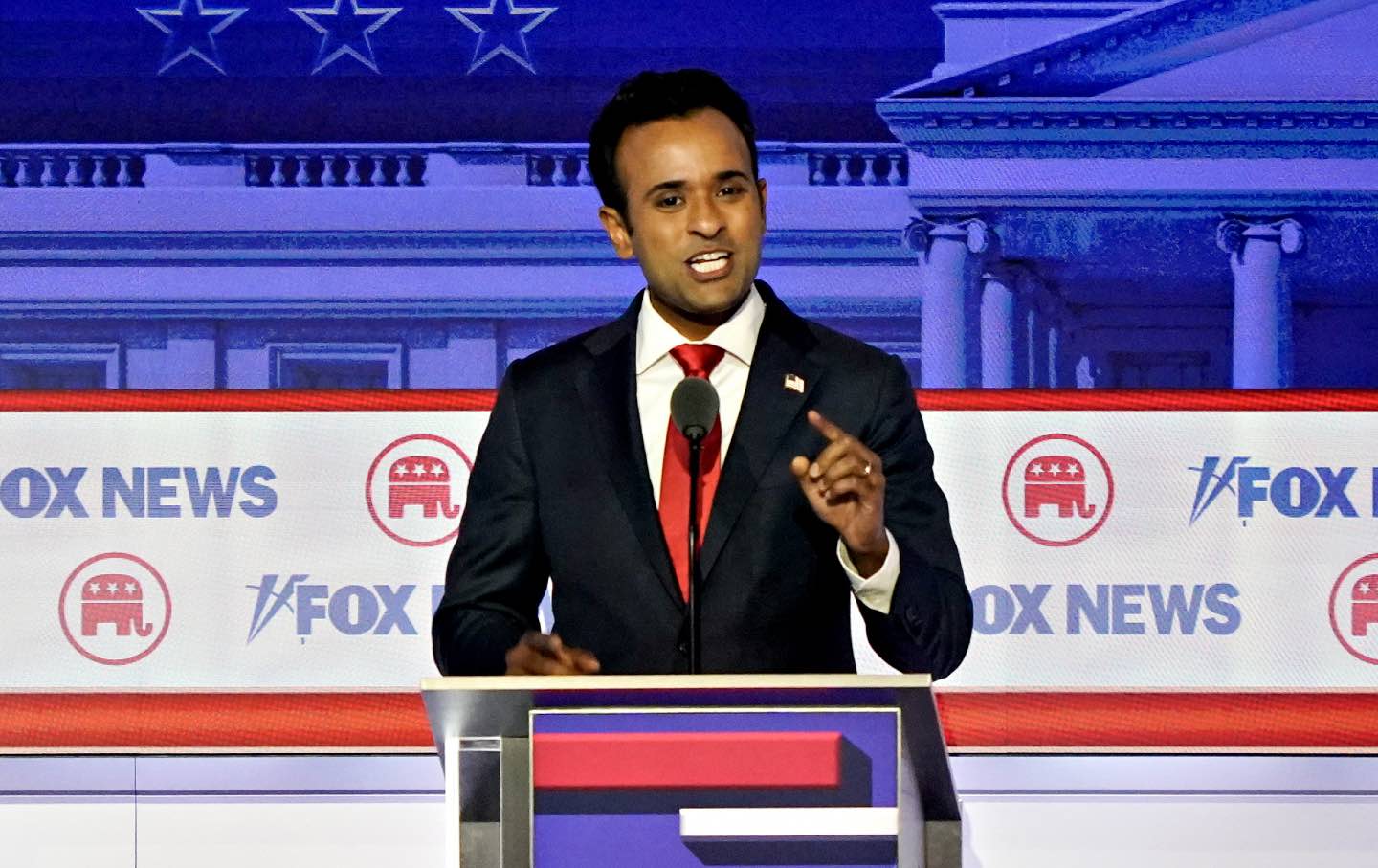
Poetry

The poem "American History" by Michael S. Harper, 1970.
The poem "The Ballad of Birmingham" by Dudley Randall.
The poem "Birmingham Sunday" by Langston Hughes.

Prose and plays

Four Spirits (2003), a novel by Sena Jeter Naslund, was adapted as a play (2006) by her and Elaine Hughes. The world premiere of the play was on February 7, 2008 at the University of Alabama in Huntsville.

The novel Song of Solomon (1977), by Toni Morrison, contains an allusion to this incident.

The novel The Watsons Go to Birmingham - 1963 (1995), by Christopher Paul Curtis, conveys the events of the bombing.
The play, The Stick Wife (1987), by Darrah Cloud, is a fictional account behind the scenes of the bombing, focusing on the wives of the men involved. The play premiered at the Los Angeles Theatre Center in January, 1987.[27]

The novel Bombingham (2001), by Anthony Grooms, set in Birmingham in 1963, contains among other things a fictional account of the bombing of the 16th Street Baptist Church and the shootings later that day.

Carolyn Maull McKinstry's memoir, While the World Watched (2011), provides an eyewitness account of the bombing, the events leading up to it (e.g., the anonymous phone calls made to the church, some of which warned that a bomb would go off, and when), and the climate and life at that time in Birmingham, specifically, and in the Jim Crow South, more generally, as the publisher describes: "from the bombings, riots and assassinations to the historic marches and triumphs that characterized the Civil Rights movement."[28]

The play, Countdown to Boom (2013), written and directed by Kimmika Williams-Witherspoon, co-directed and choreographed by Kariamu Welsh, is a fictional account of the bombing of the 16th Street Baptist Church in Birmingham Alabama. The play premiered at the Temple Performing Arts Center in April, 2013.[29]

The play, The Colored Museum (1986), by George C. Wolfe contains a reference to the bombing in the opening monologue.

In music

The song "Birmingham Sunday", composed by Richard Farina and most famously recorded by Joan Baez in 1964, chronicled the events and aftermath of the bombing.[30]

The song "Mississippi Goddam" was composed and sung by Nina Simone in reaction to the racially-motivated bombings.

The song "Alabama" on John Coltrane's Live at Birdland (recorded November 18, 1963) served as an elegy to the bombing.

The song "American Guernica" by Adolphus Hailstork.

The song "Coded Language" by Saul Williams.

The song "Bear It Away" from the album Wandering Strange by Kate Campbell, was based on this incident.

Phil Ochs - "Golden Ring".

The song "Heart" on Rocky Rivera's self-titled debut album.
The song "Ronnie and Neil" on the Drive-By Truckers' album Southern Rock Opera includes the line "church blows up in Birmingham, four little black girls killed, for no goddamn good reason".

The song "Birmingham Jail" by Chatham County Line on the album IV.

The song "Never Would Have Made It" by Marvin Sapp gives remembrance to the four girls lost.

The song "We Are Alive", by Bruce Springsteen on his Wrecking Ball album, makes mention of the bombing.
The second verse of song "For Women" by Ursula Rucker.
In other works

The "Welsh Window" in the church, itself, was sculpted by John Petts, who also initiated a campaign in Wales to raise money to help rebuild the church. The stained glass window depicts a black man, arms outstretched, reminiscent of the Crucifixion of Jesus, and is inscribed: "Given by The People of Wales".[31]

On May 24, 2013, President Barack Obama signed into law H.R. 360 from the 113th United States Congress, a bill which awarded the Congressional Gold Medal to Addie Mae Collins, Denise McNair, Carole Robertson, and Cynthia Wesley to commemorate the lives they lost in the bombing of the Sixteenth Street Baptist Church.[32] The gold medal was given to the Birmingham Civil Rights Institute to display or loan out to other museums.[32]
See also[edit source]

Alabama portal
African American portal
Christianity portal
1960s portal

African-American history
African-American Civil Rights Movement (1955–1968)
Birmingham campaign
Congressional gold medal award to victims of the 16th Street Baptist Church bombing (H.R. 360; 113th Congress)
James Bevel
Martin Luther King, Jr.
Mass racial violence in the United States
Edgar Nixon
Timeline of the African-American Civil Rights Movement
The Ballad of Birmingham

References:

Jump up ^ http://global.factiva.com/redir/default.aspx?P=sa&an=nytf000020010712dx5200m2b&cat=a&ep=ASE
Jump up ^ Bilal R. Muhammad (2011). The African American Odyssey. books.google.com. ISBN 978-1467035132.
Jump up ^ University of California, Los Angeles.

"BIRMINGHAM CHURCH BOMBED". ucla.edu. Retrieved 2013-06-28.

Jump up ^ "Father Recalls Deadly Blast At Ala. Baptist Church". npr.org. September 15, 2008.

Jump up ^ United States House of Representatives (April 24, 2013). "AWARDING CONGRESSIONAL GOLD MEDAL TO ADDIE MAE COLLINS, DENISE McNAIR, CAROLE ROBERTSON, AND CYNTHIA WESLEY". beta.congress.gov.

Jump up ^ "16th Street Baptist Church Bombing: Forty Years Later, Birmingham Still Struggles with Violent Past". National Public Radio: All Things Considered. 2003-09-15. Retrieved 22 November 2010.

^ Jump up to: a b "Six Dead After Church Bombing". Washington Post. 1963-0-16. Retrieved 2010-11-21.
Jump up ^ "New Bomb Blast Hits Birmingham". The Miami News. 1963-09-25.

Jump up ^ "Columns: Drawn back to Birmingham".
Jump up ^ N.Y. Times Oct. 9, 1963.
^ Jump up to: a b "FBI: A Byte Out of History: The ’63 Baptist Church Bombing". Federal Bureau of Investigation. Archived from the original on 13 October 2010. Retrieved 2010-11-21.

Jump up ^ Clary, Mike (2001-04-14). "Birmingham's Painful Past Reopened". The Los Angeles Times. Retrieved 2009-02-17.

Jump up ^ Anderson, S. Willoughby, "The Past on Trial: Birmingham, the Bombing, and Restorative Justice," California Law Review, 96/2, (April 2008):482.

Jump up ^ "Robert E. Chambliss, Figure in '63 Bombing." The New York Times. Dated October 30, 1985. Retrieved August 29, 2013. "Robert Edward Chambliss... who was convicted of murder in the 1963 bombing of a Birmingham church... died yesterday in a hospital in Birmingham."
Jump up ^

http://www.cnn.com/ALLPOLITICS/time/2000/05/22/ghosts.html

Jump up ^ http://www.telegraph.co.uk/news/worldnews/northamerica/usa/1395117/Klansman-convicted-of-killing-black-girls.html

^ Jump up to: a b William O. Bryant (September 11, 1963). "Six Negro Children Killed in Alabama". The Times News (United Press International). Retrieved 6 September 2012.
Jump up ^ "Six Dead After Church Bombing Blast Kills Four Children; Riots Follow; Two Youths Slain; State Reinforces Birmingham Police". The Washington Post (United Press International). September 16, 1963. Retrieved 6 September 2012.

Jump up ^ "Six Negro Children Killed in Alabama Sunday". The Times-News, Hendersonville, NC. 1963-09-11. Retrieved 2010-11-21.

Jump up ^ "Nation’s Shame". The Milwaukee Sentinel. 1963-09-16. Retrieved 2010-11-21.

Jump up ^ "We Shall Overcome Historic Places of the Civil Rights Movement". National Public Radio. Archived from the original on 17 December 2007. Retrieved 2007-11-19.
Jump up ^ Jenkins, Ray (1977-11-21). "Birmingham Church Bombing Conviction Ended an Obsession of the Prosecutor". The Day (New London, Connecticut). Retrieved 2010-11-21.
Jump up ^ "Klansman Guilty in Death". The Pittsburgh Press. 1977-11-19. Retrieved 2010-11-21.

Jump up ^ "Former Klansman faces prison in 1963 Killings". The Vindicator. 2001-05-02. Retrieved 2011-04-18.
Jump up ^ Sack, Kevin (2001-04-25). "As Church Bombing Trial Begins in Birmingham, the City's Past Is Very Much Present". The New York Times. Retrieved 2010-11-21.
Jump up ^ O'Donnell, Michelle (2004-11-19). "Bobby Frank Cherry, 74, Klansman in Bombing, Dies". The New York Times. Retrieved 2009-02-05.

Jump up ^ http://articles.latimes.com/1987-01-17/entertainment/ca-5072_1_stage-manager
Jump up ^ While the World Watched - Carolyn Maull McKinstry, with Denise George. Tyndale House Publishers. 2/1/2011. ISBN 9781414353036.

Jump up ^ http://templeperformingartscenter.org/events/2013/countdown-boom-we-all-fall-down
Jump up ^ Joan Baez sings "Birmingham Sunday>" link includes lyrics.

Jump up ^ Gary Younge. "The Wales Window of Alabama". Nicola Swords.
^ Jump up to: a b "H.R. 360 - Summary". United States Congress. Retrieved 30 May 2013.

Further reading:

Branch, Taylor (1988). Parting the Waters: America in the King Years, 1954–1963. New York: Simon & Schuster. ISBN 0-671-68742-5.

Sikora, Frank (April 1991). Until Justice Rolls Down: The Birmingham Church Bombing Case. Tuscaloosa, Alabama: University of Alabama Press. ISBN 0-8173-0520-3.
Cobbs, Elizabeth H.; Smith, Petric J. (April 1994). Long Time Coming: An Insider's Story of the Birmingham Church Bombing that Rocked the World. Birmingham, Alabama: Crane Hill. ISBN 1-881548-10-4.

Hamlin, Christopher M. (1998). Behind the Stained Glass: A History of Sixteenth Street Baptist Church. Birmingham, AL: Crane Hill

External links:

Online archives at the Birmingham Public Library, including the investigation and trial
Online History
Additional Information
http://www.artbyjohnwaddell.com/JHW/That_which_might_have_been.html