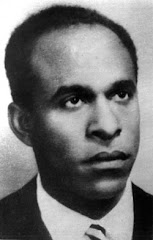
ROY HAYNES
(b. March 13, 1925)
(b. March 13, 1925)


http://www.npr.org/…/when-your-grandfather-is-the-greatest-…
https://www.facebook.com/pages/The-Panopticon-Review/342702882479366
https://www.facebook.com/pages/The-Panopticon-Review/342702882479366
All,
The great Roy Haynes is without a doubt one of the greatest and most important musicians in the history of Jazz whose monumental contributions to the art of creative music over the past 70 years (!) have been--and continue to be--nothing short of astonishing. The only living legend of the music who has played and recorded with every single major/essential figure in the past century of American music from Louis Armstrong, Lester Young, Charlie Parker, Thelonious Monk, Sonny Rollins, and Miles Davis to Sarah Vaughan, Eric Dolphy, Andrew Hill, Jackie McLean and John Coltrane, Haynes is not only a national treasure but given his pervasive impact and creative influence on generations of younger musicians. composers, and improvisors throughout the world he is a global one as well. Happy 90th birthday Mr. Haynes and may your eternally hip, suave, and gracefully stylish presence continue to inspire and educate us all...
Kofi
Legacy
When Your Grandfather Is The Greatest Living Jazz Drummer
February 06, 2013
by Angelika Beener
NPR
When Your Grandfather Is The Greatest Living Jazz Drummer
February 06, 2013
by Angelika Beener
NPR
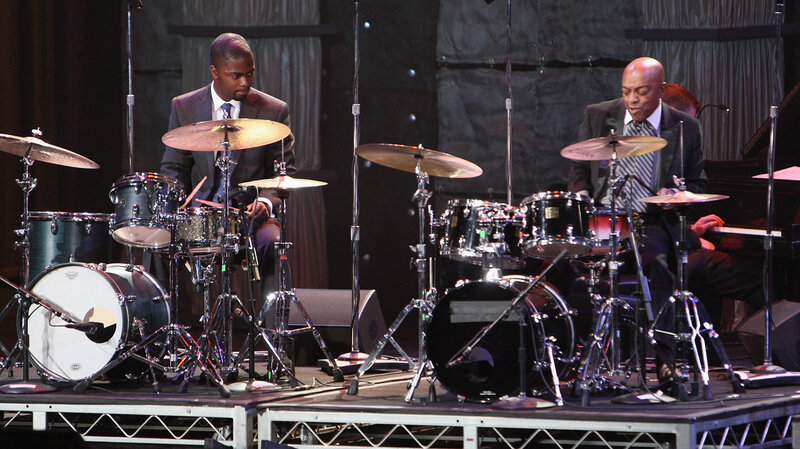
Marcus Gilmore (left) and Roy Haynes perform together in Washington, D.C., in 2009. Haynes' daughter is Gilmore's mother. Theo Wargo/Getty Images
The drummer Marcus Gilmore is coming off a major year in his career. In 2012, DownBeat magazine named him its top Rising Star Drummer in its long-running Critics Poll; pianist Vijay Iyer's trio, of which Gilmore is a member, also took the Jazz Album and Jazz Group of the Year categories. Over the last decade, he's worked with an esteemed roll call of performers including Cassandra Wilson, Nicholas Payton, Kenny Garrett and the legendary pianist Chick Corea, with whom he just recorded a new album. He's currently in the studio working on a solo project.
Gilmore is 25.
It's no secret that he's also the grandson of iconic drummer Roy Haynes, but it's not something Gilmore wears on his sleeve — at least not in a typical sense. While he says he doesn't feel any pressure to follow in such enormous footsteps, he does intently advocate for his grandfather's rightful legacy.
"What people don't realize, when they talk about people like Roy Haynes as one of the great jazz drummers, is that really he is one of the original drummers creating the language for everybody," Gilmore told me in a backstage interview, in between sets with Iyer at the Jazz Standard in New York. "But people don't think about it like that; they think of him as a jazz great. But the thing is really the drum — the trap set — is pretty new, maybe like 100 years. If you're playing that much drums in 1945, that means you're one of the pioneers of the instrument."
In addition to hundreds of recording and performance credits — including those with Charlie Parker, Bud Powell, Sarah Vaughan, Thelonious Monk and John Coltrane — Roy Haynes is also one of the foremost architects of contemporary jazz practice. Arguably, he is the preeminent living jazz musician.
Gilmore's relationship with this 87-year-old legend, his grandfather, is a story of close family ties, an acute sense of history and profound musical irony.
Raising A Drummer
Gilmore was raised in Hollis, Queens, a New York City neighborhood renowned as a settling place of jazz musicians for decades. His musical pedigree runs deep on both sides of his family. His father, a saxophonist, and his mother, a singer, had a gospel group in the '70s. His uncle Craig Haynes, Roy Haynes' son and also a drummer, lived upstairs. Another uncle Graham Haynes, also son to Roy, is a cornetist, composer and one of the founding members of the M-Base Collective.
Music was inescapable, but Gilmore came to the drums on his own terms. In fact, he had to convince his grandfather that percussion was his passion. "I knew I wanted to be a drummer as a profession at 7 years old," he says. "I knew at that point, but I don't know if everybody else knew I was as serious as I was." It would be three more years until Gilmore received his first drum set. On his 10th birthday, his grandfather gave him the one he'd been using.
Both Haynes and Gilmore started their professional careers as teenagers. But while Gilmore attended LaGuardia High School (New York City's arts magnet), The Juilliard School's Music Advancement Program and The Manhattan School of Music, Haynes is primarily self-taught. "He would say, 'Back in my day it's what you call [being] a natural,'" Gilmore says. "I remember it was so simple, the way he would explain things. 'Just start here, and then take it wherever you want to take it ... that sounds about right,' and that was that.
"It was really good for my development," Gilmore adds. "It wasn't that his views were so definitive. He allowed me to find my voice, the way he gave me the information. He was never dictating how things should turn out. He was giving me so much information without saying much at all. Older, wiser people usually do."
While Haynes wasn't giving his grandson formal lessons, he was grooming him for the inevitable. Gilmore was sitting in with his grandfather while still a junior in high school. In 2002, Haynes' Fountain of Youth band was closing out a jam-packed week at the club Birdland, which would become part of a live album. After the set, Haynes introduced the audience to Gilmore, and summoned him on stage to take a solo.
Now He Sings
Around the same time, Haynes started watering the seeds of another pivotal relationship between Gilmore and one of Haynes' longtime friends and colleagues: Chick Corea. The pianist and Haynes have been playing together since the 1960s. "I actually got to play with [Corea] during a Blue Note run [celebrating his birthday]," Gilmore says. "You know, I would always tell Gail, his wife, that we would always play 'Windows' in high school, and she was really happy to hear that. She said, 'Maybe you all can perform for Chick?' and I said that sounded great.
"Then she said, 'Or maybe you can play it with Chick,' and I said, 'Um... that would be great. Yeah, let's go with that one!' And so he let me sit in and I got to play with him and I got to play with [Christian] McBride and Joshua [Redman], and it was amazing. I was really nervous. I do remember after we played it, my grandfather was like, 'You didn't give him a solo!' Then we played 'Straight No Chaser,' and Chick let me solo the whole song."
Chick Corea discusses a passage with Marcus Gilmore during the recording sessions for the two-disc set The Continents. Corea recently recorded another album featuring Gilmore. i
Chick Corea discusses a passage with Marcus Gilmore during the recording sessions for the two-disc set The Continents. Corea recently recorded another album featuring Gilmore.
This relationship would blossom over the next few years. Gilmore was quickly becoming an in-demand drummer, playing with stars like Ravi Coltrane, Clark Terry and Nicholas Payton. Corea eventually asked Gilmore to go on tour with him. "There's no pressure," Gilmore says. "Definitely no pressure from my grandfather, not from myself and not from my family or Chick. Maybe some people in the audience, but I don't really tap into that too much, so it's cool. But there is some irony there. I think it's beautiful, and I know Chick does, too, and I know my grandfather does for sure; he always talks about that."
In 1968, Corea, Haynes and bassist Miroslav Vitous recorded the album Now He Sings, Now He Sobs. Now seen as a landmark record in modern jazz, Now He Sings was one of the first recordings to feature a flat ride cymbal — which Haynes played, of course. Created by the Paiste cymbal company in the 1960s, the flat ride has no bell, giving it a tighter, brighter sound.
Gilmore recently recorded with Corea using that very same ride cymbal. "I mean, of course, for other reasons that record was groundbreaking, but that was one of the things; it was like, 'What's this cymbal [Haynes is] using?'" Gilmore says. "Of course, it's the way he's playing — obviously that's what it comes down to — but the cymbal was pretty different [for that era], so throughout the years, Chick would borrow it from time to time, because there weren't that many at the time. So eventually, in the late '90s, my grandfather gave it to him. Chick broke it out on the first tour I did with him, so I played it on that tour — and on this last record, I played it, as well."
'So Much Information'
Haynes has been a part of several seminal trio recordings, and led his own dynamic trio in the early 2000s, featuring Danilo Perez and John Patitucci. Similarly, Gilmore is making his mark as more than a capable sideman: His musical identity can be integral to the distinctiveness of a band.
Such is the case of the Vijay Iyer Trio, one of the most creative ensembles of the last decade. Gilmore and Iyer have been playing together for just that long, meeting through mutual mentor Steve Coleman. (Gilmore's uncle Graham Haynes, who helped establish M-Base philosophies with Coleman, was responsible for that connection.) Coleman's tutelage proved influential for both musicians, especially in cultivating their interests in non-Western musical traditions. "Most people tend to think of rhythm as secondary to melody or harmony," Gilmore says. "I feel that our work with Steve has furthered our understanding that they are all at the very least paramount in developing one's musical ability. However, it's safe to say that the most recent innovations in music have their foundation in rhythm."
The emergence of hip-hop helps to illustrate Gilmore's point. There's a strong hip-hop influence in Iyer's trio, and between the pianist and his drummer, the two have collaborated with artists like Das Racist, Dead Prez and Flying Lotus. Yet this, too, is just part of a myriad of influences that Gilmore readily admits is ever-evolving and expanding. "One thing I can say is that I listen to a lot of music," Gilmore says. "I spend a lot of time listening. I always try to approach things with an open mind, and I actually thrive on being involved in contrasting situations. It actually helps everything when I'm involved in expressing different parts of myself. I always try to take so much in, and I also have so much in me that I have to express. So I just feel like, for me, it's the most natural thing to be playing with so many different projects, because I have so much to say, but I think that's a result of taking in so much information."
This may be the most profound parallel yet between Haynes and his grandson. Haynes' 60-year career not only encompasses many eras of jazz, but his dexterity in both rhythm and style has taken him across the musical map and beyond genre classification.
"His open-mindedness is definitely one of the reasons he's remained so fresh," Gilmore says. "Another reason is that it was just something he was born with, because in some ways, his playing hasn't changed that much. It's evolved, but in some ways he was playing all that same bad s— in the '40s. I don't know where he got it from. To have him is a treasure. A treasure to the family, but also as a national treasure, too, actually.
"It's really just a huge blessing," he adds. "I mean, you know, it's all I've ever known, but at the same time it's still amazing."
As Gilmore and I wrapped up our conversation, he paused before preparing for the next set. "My mother was going to try to bring [Haynes] down to the club at some point, but I know he has to go on a cruise this weekend. So he probably won't make it out, especially with the bad weather. But my mom called me and said, 'Grandpa said he might not make it, but he said, "If Marcus is there, I'm there."'"
RELATED:
Roy Haynes Fountain Of Youth Band On JazzSet
First Listen: Roy Haynes, 'Roy-alty'
Here's Roy Haynes On David Letterman
https://www.facebook.com/pages/The-Panopticon-Review/342702882479366
All,
This is the magnificent Roy Haynes at 88 years of age in 2013 appearing with his ensemble Fountain of Youth on the David Letterman program...Wanna hear/see/experience what GREAT ART really is all about? Check this out...and pass the word...
Kofi
ROY HAYNES AND HIS 'FOUNTAIN OF YOUTH' QUARTET ON DAVID LETTERMAN SHOW
Roy Haynes: Drums
Jaleel Shaw : Saxophone
Martin Bejerano: Piano
David Wong: Bass
The following is a video interview with Mr. Haynes in 2012:
http://www.midatlanticjazzfestival.org presents an in-depth talk with Jazz percussion legend Roy Haynes, with Nasar Abadey, at the 2012 Mid-Atlantic Jazz Festival. Roy talks about his first drum set, how he never played with Duke Ellington's Orchestra, gigging with Charlie Parker and Lester Young, and other memories, as well as offering some of his tap dancing expertise.
....And still another incredible live performance by Roy and his Fountain of Youth ensemble in Vienna in 2013:
http://jazztimes.com/articles/16173-roy-haynes-snap-crackle
Roy Haynes: Snap Crackle
November 2005
by Ashley Kahn
Jazz Times
Roy Haynes is slightly surprised by the comment. Of course there's an erotic charge in the way he plays drums. "I've been noticing in the last 10 or 15 years, a lot of ladies come up after my performances," he says. "Some of them say they never heard a drummer play like that."
Youthful swagger and confidence still comes easily to the man who hit 80 this past March. Haynes talks it, walks it and wears it. His fashion sense, like his crisp and energetic drum work, has been part of his signature for decades-bassist Al McKibbon didn't dub him "Snap Crackle" for nothing. "He's the most stylish person in the room, at all times," says Jeff "Tain" Watts. "He's been that way for a long time. I read this stuff about him being in Esquire magazine back in the '60s. Yeah-'Snap Crackle,' that says a lot."
Like a well-tailored suit, the nickname Haynes has worn since the '50s continues to fit him well. With a two-stick snare shot, Haynes can still bring a packed nightclub to immediate attention. It's a trick he's been using a lot this year while on the road with his Fountain of Youth band, one of today's most exciting quartets. But if there's one thing that can break Haynes' cool-briefly-it's his sudden status as an octogenarian.
"Eight zero? Man that's unheard of," he shakes his head with mock seriousness. "I didn't know I would ever turn 80. But here it is. Just crept up on me."
Of course, most of the jazz world has been ready, impatient even, to help mark Haynes' milestone. Almost every Haynes gig in 2005 has involved a toast and a drum-shaped cake. "Even before my birthday," the drummer recalls of his hometown, "the mayor in Boston made it 'Roy Haynes Day.'"
On March 16, the day he turned 80, old friends like Chick Corea-and younger ones like Watts-flew to the Bay Area to celebrate with Haynes at Yoshi's. Soon after, in New York City, the drummer had a week's run at the Village Vanguard, and on its Sunday close Haynes' fellow stickmen Jimmy Cobb, Ben Riley, Louis Hayes, Billy Hart and Kenny Washington all dropped by between sets. In New Orleans a few weeks later, Haynes stepped out from behind his kit with microphone in hand-a set-ending move he's become known for-and acknowledged the cheers of the capacity JazzFest crowd. Back in New York City in mid-June, the Jazz Journalists Association declared him drummer of the year.
"It's been pretty good," Haynes says, "but I tell you, I try to take each day at a time. I dream a lot. I think a lot." Snap Crackle chuckles for a moment and adds, "I just like to get on the bandstand and play."
Roy Owen Haynes is old-school hip. He likes to use the term "too tough" in place of "very much." In conversation, he can take charge, leading it in the direction he chooses, preferring the give-and-take of a good chat to an interview-an exercise he approaches guardedly. "Who's this for?" he wants to be reminded before we speak. "What are we talking about?"
Haynes has been approached by "too many people out there who just want to know stuff. They got their questions, they get their answers, but they can't get beyond that. You know I'm good when I'm performing late in the evening, when I'm into my instrument, I can have answers. If they have good ears and good imagination they can get it while I'm serving it. I don't have to talk about it."
One can understand the awe that must strike many who get a moment with the man. He is the legend who backed legends, a direct link back to Charlie Parker, Bud Powell, Lester Young, Sarah Vaughan, Thelonious Monk and John Coltrane. As a leader, his albums are few, but most have become classics: Cymbalism, Out of the Afternoon, We Three. Over a celebrated 60-year career, he has become an ageless, energetic presence, continues to front lineups bursting with young talent and was named a Jazz Master by the National Endowment for the Arts in 1995. That year marked the 50th anniversary of his arrival on the national jazz scene, when the Roxbury, Mass.-born native first played in New York City. It's a story he never tires of telling.
"It was a Savoy-ballroom gig in September, 1945. I was playing in New England, Martha's Vineyard to be exact, with a small band from around Boston. I got a special-delivery letter that came from [big band pioneer] Luis Russell, whom I had never met but he was hearing about me. I responded by sending a telegram telling him I was interested in joining the band but couldn't join until after Labor Day. That was the start."
World War II had just ended. The economy was jumping, and so was uptown.
"Harlem was roaring in those days. I had been to New York before because my brother was in the Army. We would come, my father and his wife, and spend time with him and go down to 52nd Street and that whole thing. But [in '45] I was my own man and excited as heck!"
Before the decade ended Haynes became drummer of choice for large and small groups, joining headliners like Lester Young in '47 and, two years later, Charlie Parker. "I was playing this so-called bebop, but I was a swing drummer and people were dancing while I was playing with Bird, for a little while, anyhow," Haynes says. "From then to now, they're not dancing too tough when I play. But just last summer or the summer before, I was in Harlem at the Charlie Parker festival. We were doing a ballad-something slow-and there was a guy out there dancing to it, making a lot of sense."
It also makes sense Haynes focuses on dance as a way of measuring the progress of his career. Even as he left the ballrooms behind to play behind beboppers like Miles Davis, Kai Winding and Bud Powell, he maintained a giddy, dance-floor effect in his style. It's there on many recordings from the early '50s: I mention two piano-drum jump-ups-"Little Willie Leaps" and "Woody N'You"-on Powell's Inner Fires LP, a live trio gig from '53 that features the drummer and the pianist with Charles Mingus. Haynes recalls the date and his friend in his prime, before mental-health problems started dogging Powell.
"During that period Bud was in an institution. Sometimes he would go to the bridge several times-a lot of weird stuff. But I knew him before, in '45, '46, when we were all 20, 21 years old, before they had given him that shock treatment. That was a whole different Bud Powell. We used to play together a lot at Minton's. I used to go by his house on 141st and St. Nicholas Avenue, and he'd play-he'd play. He was mucho fuego then, on fire!"
As the '50s rolled on, Haynes honed his style. He became known for a melodic sense more associated with the timbales than a trap kit, and for a distinct, self-assured sound. Charles Mingus lauded him for his ability to suggest, rather than state, a beat. Tain Watts says Haynes "has a thing, playing over the time, where it feels like it's free but it's also grooving at the same time-like he has an internal clave or an African clock inside of him that makes it feel rooted. I'd say his fingerprints are definitely the cymbal beat-always pretty and relaxed, yet swinging very, very hard-and the sound of his snare drum, always crisp and high and dry, crackling and exciting."
That sound has proved versatile, too. Haynes worked with Sarah Vaughan for five years, then joined Thelonious Monk from '57 to '59. By '63 he began filling in for Elvin Jones in John Coltrane's quartet, praised by the saxophonist for the way he "stretched the rhythm."
"I just tried to fit in," Haynes says. "One thing about all these different people, they were familiar with me, so I could just go in and do my thing, while listening all the time to what's happening. I can't really describe what I did too tough. I still just go by feeling."
Through the '60s, Haynes added his liberated approach to bands led by George Shearing, Kenny Burrell and Stan Getz, in whose lineup he first met a young pianist named Chick Corea, with whom he would repeatedly team up over the years. Asked to list his favorite sideman recordings, Haynes offers the tunes that others repeatedly mention.
"The one I hear about a lot is that 'Shulie a Bop' with Sarah Vaughan, which was in [1954]-where she introduces the trio in the song, and just before she says my name I say, "Bap!" And she says "Roy!" I say "Bap-bap-bap!" "Haynes!" That's one of the ones. Then there's one with Chick Corea, "Now He Sings, Now He Sobs," that people still talk about all over the world. I was just in Paris a few days ago doing a master class, and naturally somebody brought the record with them. Then there would be 1963 at Newport: "My Favorite Things" with Coltrane, the 18-minute version. I didn't even know that was going to be recorded at the time!"
Of his own favorite recordings as a leader, Haynes is quick to cite 1962's "Out of the Afternoon, the one with [saxophonist] Rahsaan Roland Kirk, [pianist] Tommy Flanagan and [bassist] Henry Grimes. In fact, I got a royalty [payment] just today for it and went to the bank."
Among Afternoon's seven spirited tracks, a standout is "Long Wharf," featuring Haynes vigorously skipping through a brisk set of changes and jaw-dropping breaks. Mention of the tune elicits a warm chuckle: "That's one of my compositions, something I had developed with my group on the bandstand," Haynes says. "Like the tune 'Snap Crackle' that's on there, too. Other musicians called me that, and I always thought it'd be a good title, and I decided to do an introduction like 'Shulie a Bop.' That's Tommy saying 'Roy!' and 'Haynes!' We tried it first with Rahsaan, but for some reason he was sort of spaced," Haynes laughs.
Afternoon was a one-off album for Impulse, inspired by some club jamming.
"During that period I was playing at the Five Spot a lot," Haynes says. "Rahsaan had recently come from Ohio or Chicago or someplace, and he had his own group on the same bill, and we were jamming a little. Henry worked with me quite a bit then and Tommy too. Those guys were kicking butt! We got excited about the idea of doing something together, so I took it to [Impulse head] Bob Thiele, and we did it. [Engineer] Rudy Van Gelder is a big part of that album as well; he got that great drum sound at his studio in New Jersey."
Despite the satisfaction he found in his recordings as a leader, Haynes has balanced his sideman role with that of a headliner through most of his career. In 1970, he established his Hip Ensemble: a rotating, modernist lineup that often featured an electric keyboardist (like Stanley Cowell) or guitarist (Hannibal Peterson, Kevin Eubanks) and usually a saxophonist under the spell of Coltrane (John Klemmer, Ralph Moore, George Adams). As the '80s arrived, he took on another project-forming the lean, hard-charging group the Trio with Chick Corea and Miroslav Vitous-and before the decade ended, served as big-name sideman behind Pat Metheny.
But it's Haynes' inclination to lead that has defined his career in recent years:
"I played with everybody," he says. "But when I was trying to make them sound good, a lot of things I had in mind I didn't do. I think it has a lot to do with me having my own project. Now I do anything I want to do with my own groups."
In 2000 Haynes formed a trio with pianist Danilo Perez and bassist John Patitucci and recorded material for The Roy Haynes Trio (Verve) that drew from all phases of his varied career, including "Shulie a Bop." A year later, he recruited an all-star lineup-trumpeter Roy Hargrove, bassist Dave Holland, saxophonist Kenny Garrett and pianist Dave Kikoski-for his Charlie Parker tribute, Birds of a Feather (Dreyfus). And in 2002 there was a stunning session, ultimately released on Columbia/Eighty-Eight's as Love Letters, that featured guitarist John Scofield, tenor Joshua Redman and, alternately, pianists Kikoski or Kenny Barron and bassists Holland or Christian McBride.
But Haynes is most interested in talking about his current working quartet, Fountain of Youth, with saxman Marcus Strickland, pianist Martin Bejerano and bassist John Sullivan.
"I never expected the record Fountain of Youth on Dreyfus to be nominated for a Grammy," he says. "They only nominate five-that's a pretty great compliment. All the guys when we did the record were in their 20s. I was in my late 70s at the time. But when we get onstage we all become the same age."
The band began to come together a few years ago, with Strickland's self-introduction an important first step.
"I was at the Blue Note in New York one time when Milt Jackson had a big band there [in the late '90s] and I was at the bar," Haynes says. "Marcus comes in with these horns over his shoulders; he was only filling in for a player with Milt at the time. He came right up to me and said, 'Roy Haynes, I want to play with you'-many years before we played together. I don't usually have rules for getting into my band. Then Marcus recommended Martin-they're both from Miami-and he recommended John on bass. That's the connection there."
The band has garnered a loyal and enthusiastic following in its short time together, often calling out for favorites like the group's sly, shadowy reworking of "My Heart Belongs to Daddy."
"I did that same tune with the Birds of a Feather band, only in the studio and then didn't play it much," Haynes says. "I decided we would start playing it, and every place we go it goes over. Even the ladies in Europe knew the title of it, and they knew the melody. I had them singing at the end of it at one point!"
There are moments of surprise and satisfaction in any Haynes performance, but especially with his current ensemble. The drummer leads the way, directing the shape and flow of a tune through his drum kit. "I'm like driving up there. I can feel it, and everyone is listening, seriously. I try to describe what I would like to hear with the instrument, not with words."
"I am what I play," he said at the close of a week-ending set at the Vanguard. Asked to expand on that thought, Haynes says, "I can't describe that. I mean, if it's true, if you're really playing the truth, it's you. There are a lot of people now who want to be drummers and they just go to school, but that's not the drummer I know too much about. If you've been doing this thing as long as I've been doing it-man, it's second nature! It's my religion, it's my life."
Gearbox
Over the years, Haynes has played a traditional set of Ludwigs and sat behind a set of see-through Vistalites. He has been known to play a simple five-piece kit as well as an expanded set-up with a selection of pitched tom-toms, an array of temple blocks, percussion gadgets and a gong. These days, the master drummer leans toward a leaner kit-though the gong is still behind him.
Yamaha Maple Nouveau drums: 5 1/2 x 14 Roy Haynes Signature copper snare drum; 7 1/2 x 10 and 8 x 12 toms; 14 x 14 and 16 x 16 floor tom; 16 x 18 bass drum
Zildjian cymbals: 14-inch A Custom hi-hats; 18-inch A Custom crash; 20-inch K crash ride; 18-inch Custom flat-top ride; 17-inch K Dark Thin crash
Sticks: Zildjian Roy Haynes Artist Series wood tip
Roy Haynes: Snap Crackle
November 2005
by Ashley Kahn
Jazz Times
Roy Haynes is slightly surprised by the comment. Of course there's an erotic charge in the way he plays drums. "I've been noticing in the last 10 or 15 years, a lot of ladies come up after my performances," he says. "Some of them say they never heard a drummer play like that."
Youthful swagger and confidence still comes easily to the man who hit 80 this past March. Haynes talks it, walks it and wears it. His fashion sense, like his crisp and energetic drum work, has been part of his signature for decades-bassist Al McKibbon didn't dub him "Snap Crackle" for nothing. "He's the most stylish person in the room, at all times," says Jeff "Tain" Watts. "He's been that way for a long time. I read this stuff about him being in Esquire magazine back in the '60s. Yeah-'Snap Crackle,' that says a lot."
Like a well-tailored suit, the nickname Haynes has worn since the '50s continues to fit him well. With a two-stick snare shot, Haynes can still bring a packed nightclub to immediate attention. It's a trick he's been using a lot this year while on the road with his Fountain of Youth band, one of today's most exciting quartets. But if there's one thing that can break Haynes' cool-briefly-it's his sudden status as an octogenarian.
"Eight zero? Man that's unheard of," he shakes his head with mock seriousness. "I didn't know I would ever turn 80. But here it is. Just crept up on me."
Of course, most of the jazz world has been ready, impatient even, to help mark Haynes' milestone. Almost every Haynes gig in 2005 has involved a toast and a drum-shaped cake. "Even before my birthday," the drummer recalls of his hometown, "the mayor in Boston made it 'Roy Haynes Day.'"
On March 16, the day he turned 80, old friends like Chick Corea-and younger ones like Watts-flew to the Bay Area to celebrate with Haynes at Yoshi's. Soon after, in New York City, the drummer had a week's run at the Village Vanguard, and on its Sunday close Haynes' fellow stickmen Jimmy Cobb, Ben Riley, Louis Hayes, Billy Hart and Kenny Washington all dropped by between sets. In New Orleans a few weeks later, Haynes stepped out from behind his kit with microphone in hand-a set-ending move he's become known for-and acknowledged the cheers of the capacity JazzFest crowd. Back in New York City in mid-June, the Jazz Journalists Association declared him drummer of the year.
"It's been pretty good," Haynes says, "but I tell you, I try to take each day at a time. I dream a lot. I think a lot." Snap Crackle chuckles for a moment and adds, "I just like to get on the bandstand and play."
Roy Owen Haynes is old-school hip. He likes to use the term "too tough" in place of "very much." In conversation, he can take charge, leading it in the direction he chooses, preferring the give-and-take of a good chat to an interview-an exercise he approaches guardedly. "Who's this for?" he wants to be reminded before we speak. "What are we talking about?"
Haynes has been approached by "too many people out there who just want to know stuff. They got their questions, they get their answers, but they can't get beyond that. You know I'm good when I'm performing late in the evening, when I'm into my instrument, I can have answers. If they have good ears and good imagination they can get it while I'm serving it. I don't have to talk about it."
One can understand the awe that must strike many who get a moment with the man. He is the legend who backed legends, a direct link back to Charlie Parker, Bud Powell, Lester Young, Sarah Vaughan, Thelonious Monk and John Coltrane. As a leader, his albums are few, but most have become classics: Cymbalism, Out of the Afternoon, We Three. Over a celebrated 60-year career, he has become an ageless, energetic presence, continues to front lineups bursting with young talent and was named a Jazz Master by the National Endowment for the Arts in 1995. That year marked the 50th anniversary of his arrival on the national jazz scene, when the Roxbury, Mass.-born native first played in New York City. It's a story he never tires of telling.
"It was a Savoy-ballroom gig in September, 1945. I was playing in New England, Martha's Vineyard to be exact, with a small band from around Boston. I got a special-delivery letter that came from [big band pioneer] Luis Russell, whom I had never met but he was hearing about me. I responded by sending a telegram telling him I was interested in joining the band but couldn't join until after Labor Day. That was the start."
World War II had just ended. The economy was jumping, and so was uptown.
"Harlem was roaring in those days. I had been to New York before because my brother was in the Army. We would come, my father and his wife, and spend time with him and go down to 52nd Street and that whole thing. But [in '45] I was my own man and excited as heck!"
Before the decade ended Haynes became drummer of choice for large and small groups, joining headliners like Lester Young in '47 and, two years later, Charlie Parker. "I was playing this so-called bebop, but I was a swing drummer and people were dancing while I was playing with Bird, for a little while, anyhow," Haynes says. "From then to now, they're not dancing too tough when I play. But just last summer or the summer before, I was in Harlem at the Charlie Parker festival. We were doing a ballad-something slow-and there was a guy out there dancing to it, making a lot of sense."
It also makes sense Haynes focuses on dance as a way of measuring the progress of his career. Even as he left the ballrooms behind to play behind beboppers like Miles Davis, Kai Winding and Bud Powell, he maintained a giddy, dance-floor effect in his style. It's there on many recordings from the early '50s: I mention two piano-drum jump-ups-"Little Willie Leaps" and "Woody N'You"-on Powell's Inner Fires LP, a live trio gig from '53 that features the drummer and the pianist with Charles Mingus. Haynes recalls the date and his friend in his prime, before mental-health problems started dogging Powell.
"During that period Bud was in an institution. Sometimes he would go to the bridge several times-a lot of weird stuff. But I knew him before, in '45, '46, when we were all 20, 21 years old, before they had given him that shock treatment. That was a whole different Bud Powell. We used to play together a lot at Minton's. I used to go by his house on 141st and St. Nicholas Avenue, and he'd play-he'd play. He was mucho fuego then, on fire!"
As the '50s rolled on, Haynes honed his style. He became known for a melodic sense more associated with the timbales than a trap kit, and for a distinct, self-assured sound. Charles Mingus lauded him for his ability to suggest, rather than state, a beat. Tain Watts says Haynes "has a thing, playing over the time, where it feels like it's free but it's also grooving at the same time-like he has an internal clave or an African clock inside of him that makes it feel rooted. I'd say his fingerprints are definitely the cymbal beat-always pretty and relaxed, yet swinging very, very hard-and the sound of his snare drum, always crisp and high and dry, crackling and exciting."
That sound has proved versatile, too. Haynes worked with Sarah Vaughan for five years, then joined Thelonious Monk from '57 to '59. By '63 he began filling in for Elvin Jones in John Coltrane's quartet, praised by the saxophonist for the way he "stretched the rhythm."
"I just tried to fit in," Haynes says. "One thing about all these different people, they were familiar with me, so I could just go in and do my thing, while listening all the time to what's happening. I can't really describe what I did too tough. I still just go by feeling."
Through the '60s, Haynes added his liberated approach to bands led by George Shearing, Kenny Burrell and Stan Getz, in whose lineup he first met a young pianist named Chick Corea, with whom he would repeatedly team up over the years. Asked to list his favorite sideman recordings, Haynes offers the tunes that others repeatedly mention.
"The one I hear about a lot is that 'Shulie a Bop' with Sarah Vaughan, which was in [1954]-where she introduces the trio in the song, and just before she says my name I say, "Bap!" And she says "Roy!" I say "Bap-bap-bap!" "Haynes!" That's one of the ones. Then there's one with Chick Corea, "Now He Sings, Now He Sobs," that people still talk about all over the world. I was just in Paris a few days ago doing a master class, and naturally somebody brought the record with them. Then there would be 1963 at Newport: "My Favorite Things" with Coltrane, the 18-minute version. I didn't even know that was going to be recorded at the time!"
Of his own favorite recordings as a leader, Haynes is quick to cite 1962's "Out of the Afternoon, the one with [saxophonist] Rahsaan Roland Kirk, [pianist] Tommy Flanagan and [bassist] Henry Grimes. In fact, I got a royalty [payment] just today for it and went to the bank."
Among Afternoon's seven spirited tracks, a standout is "Long Wharf," featuring Haynes vigorously skipping through a brisk set of changes and jaw-dropping breaks. Mention of the tune elicits a warm chuckle: "That's one of my compositions, something I had developed with my group on the bandstand," Haynes says. "Like the tune 'Snap Crackle' that's on there, too. Other musicians called me that, and I always thought it'd be a good title, and I decided to do an introduction like 'Shulie a Bop.' That's Tommy saying 'Roy!' and 'Haynes!' We tried it first with Rahsaan, but for some reason he was sort of spaced," Haynes laughs.
Afternoon was a one-off album for Impulse, inspired by some club jamming.
"During that period I was playing at the Five Spot a lot," Haynes says. "Rahsaan had recently come from Ohio or Chicago or someplace, and he had his own group on the same bill, and we were jamming a little. Henry worked with me quite a bit then and Tommy too. Those guys were kicking butt! We got excited about the idea of doing something together, so I took it to [Impulse head] Bob Thiele, and we did it. [Engineer] Rudy Van Gelder is a big part of that album as well; he got that great drum sound at his studio in New Jersey."
Despite the satisfaction he found in his recordings as a leader, Haynes has balanced his sideman role with that of a headliner through most of his career. In 1970, he established his Hip Ensemble: a rotating, modernist lineup that often featured an electric keyboardist (like Stanley Cowell) or guitarist (Hannibal Peterson, Kevin Eubanks) and usually a saxophonist under the spell of Coltrane (John Klemmer, Ralph Moore, George Adams). As the '80s arrived, he took on another project-forming the lean, hard-charging group the Trio with Chick Corea and Miroslav Vitous-and before the decade ended, served as big-name sideman behind Pat Metheny.
But it's Haynes' inclination to lead that has defined his career in recent years:
"I played with everybody," he says. "But when I was trying to make them sound good, a lot of things I had in mind I didn't do. I think it has a lot to do with me having my own project. Now I do anything I want to do with my own groups."
In 2000 Haynes formed a trio with pianist Danilo Perez and bassist John Patitucci and recorded material for The Roy Haynes Trio (Verve) that drew from all phases of his varied career, including "Shulie a Bop." A year later, he recruited an all-star lineup-trumpeter Roy Hargrove, bassist Dave Holland, saxophonist Kenny Garrett and pianist Dave Kikoski-for his Charlie Parker tribute, Birds of a Feather (Dreyfus). And in 2002 there was a stunning session, ultimately released on Columbia/Eighty-Eight's as Love Letters, that featured guitarist John Scofield, tenor Joshua Redman and, alternately, pianists Kikoski or Kenny Barron and bassists Holland or Christian McBride.
But Haynes is most interested in talking about his current working quartet, Fountain of Youth, with saxman Marcus Strickland, pianist Martin Bejerano and bassist John Sullivan.
"I never expected the record Fountain of Youth on Dreyfus to be nominated for a Grammy," he says. "They only nominate five-that's a pretty great compliment. All the guys when we did the record were in their 20s. I was in my late 70s at the time. But when we get onstage we all become the same age."
The band began to come together a few years ago, with Strickland's self-introduction an important first step.
"I was at the Blue Note in New York one time when Milt Jackson had a big band there [in the late '90s] and I was at the bar," Haynes says. "Marcus comes in with these horns over his shoulders; he was only filling in for a player with Milt at the time. He came right up to me and said, 'Roy Haynes, I want to play with you'-many years before we played together. I don't usually have rules for getting into my band. Then Marcus recommended Martin-they're both from Miami-and he recommended John on bass. That's the connection there."
The band has garnered a loyal and enthusiastic following in its short time together, often calling out for favorites like the group's sly, shadowy reworking of "My Heart Belongs to Daddy."
"I did that same tune with the Birds of a Feather band, only in the studio and then didn't play it much," Haynes says. "I decided we would start playing it, and every place we go it goes over. Even the ladies in Europe knew the title of it, and they knew the melody. I had them singing at the end of it at one point!"
There are moments of surprise and satisfaction in any Haynes performance, but especially with his current ensemble. The drummer leads the way, directing the shape and flow of a tune through his drum kit. "I'm like driving up there. I can feel it, and everyone is listening, seriously. I try to describe what I would like to hear with the instrument, not with words."
"I am what I play," he said at the close of a week-ending set at the Vanguard. Asked to expand on that thought, Haynes says, "I can't describe that. I mean, if it's true, if you're really playing the truth, it's you. There are a lot of people now who want to be drummers and they just go to school, but that's not the drummer I know too much about. If you've been doing this thing as long as I've been doing it-man, it's second nature! It's my religion, it's my life."
Gearbox
Over the years, Haynes has played a traditional set of Ludwigs and sat behind a set of see-through Vistalites. He has been known to play a simple five-piece kit as well as an expanded set-up with a selection of pitched tom-toms, an array of temple blocks, percussion gadgets and a gong. These days, the master drummer leans toward a leaner kit-though the gong is still behind him.
Yamaha Maple Nouveau drums: 5 1/2 x 14 Roy Haynes Signature copper snare drum; 7 1/2 x 10 and 8 x 12 toms; 14 x 14 and 16 x 16 floor tom; 16 x 18 bass drum
Zildjian cymbals: 14-inch A Custom hi-hats; 18-inch A Custom crash; 20-inch K crash ride; 18-inch Custom flat-top ride; 17-inch K Dark Thin crash
Sticks: Zildjian Roy Haynes Artist Series wood tip
http://en.wikipedia.org/wiki/Roy_Haynes
https://www.facebook.com/pages/The-Panopticon-Review/342702882479366
https://www.facebook.com/pages/The-Panopticon-Review/342702882479366
Roy Haynes
From Wikipedia, the free encyclopedia
Background information
Birth name Roy Owen Haynes
Born March 13, 1925 (age 90)
Boston, Massachusetts, U.S.
Genres Jazz, bebop, hard bop
Occupation(s) Bandleader, percussionist, composer
Instruments Drums, percussion
Years active 1945–present
Labels Mainstream, Emarcy, Impulse!, Galaxy, New Jazz, Pacific Jazz, Evidence, Vogue
Associated acts Lester Young, Charlie Parker, Bud Powell, Sarah Vaughan, Stan Getz, Wardell Gray
Roy Owen Haynes (born March 13, 1925)[1] is an American jazz drummer and group leader. Haynes is among the most recorded drummers in jazz, and in a career lasting more than 60 years has played in a wide range of styles ranging from swing and bebop to jazz fusion and avant-garde jazz. He has a highly expressive, personal style ("Snap Crackle" was a nickname given him in the 1950s) and is known to foster a deep engagement in his bandmates.[citation needed]
He has also led his own groups, some performing under the name Hip Ensemble.[1] His most recent recordings as a leader are Fountain of Youth[2] and Whereas,[3] both of which have been nominated for a Grammy Award. He continues to perform worldwide.
His son Graham Haynes is a cornetist; his son Craig Haynes and grandson Marcus Gilmore are both drummers.
Contents
1 Early career
2 Later career
3 Technique
4 Endorsements
5 Awards and honors
6 Discography
6.1 As leader/co-leader
6.2 As sideman
7 References
8 External links
Early career
This section does not cite any references or sources. Please help improve this section by adding citations to reliable sources. Unsourced material may be challenged and removed. (February 2014)
Born in the Roxbury section of Boston, Massachusetts, Haynes made his professional debut in 1944 at the age of seventeen in his native Boston.
Haynes began his full-time professional career in 1945. From 1947 to 1949 he worked with saxophonist Lester Young, and from 1949 to 1952 was a member of saxophonist Charlie Parker's quintet. He also recorded at the time with pianist Bud Powell and saxophonists Wardell Gray, and Stan Getz. From 1953 to 1958 he toured with singer Sarah Vaughan and also recorded with her.
Later career
Hayne's influence on the rock world has also been apparent in recent years, with a tribute song recorded by Jim Keltner and Charlie Watts of The Rolling Stones,[4] and recent on-stage appearances with The Allman Brothers Band[5] and Page McConnell of Phish.[6]
A 3 CD/1 DVD boxed set entitled A Life in Time - The Roy Haynes Story[7] was released by Dreyfus Jazz[8] in October 2007. The set chronicles highlights from Haynes career from 1949–2006, including recordings with Parker, Vaughan, Davis, Monk, Corea, Metheny and his own Hip Ensemble and Fountain of Youth quartet. The set was listed by The New Yorker Magazine as one of the Best Boxed Sets of 2007,[9] and was nominated for an award by the Jazz Journalist's Association.
WKCR-FM, New York,[10] surveyed Haynes's career in 301 hours of programming January 11–23, 2009.[11]
Technique
Haynes extracted the rhythmic qualities from melodies and created unique new drum and cymbal patterns in an idiosyncratic, now instantly recognizable style. Rather than using cymbals strictly for effect, Haynes brought them to the forefront of his unique rhythmic approach. He also established a distinctively crisp and rapid-fire sound on the snare; this was the inspiration for his nickname, ‘Snap Crackle’.
Endorsements
Haynes endorses Yamaha drums, pedals & hardware, Zildjian cymbals and Remo drumheads. He also uses his Zildjian Roy Haynes signature drumstick and has a Yamaha Roy Haynes signature snare drum. He previously endorsed Ludwig and Slingerland.
Awards and honors
Esquire named Roy Haynes one of the Best Dressed Men in America in 1960, along with Fred Astaire, Clark Gable and Cary Grant.
He was inducted into the Down Beat Magazine Hall of Fame in 2004. On October 9, 2010, Roy Haynes was awarded the Mid-Atlantic Arts Foundation's BNY Mellon Jazz Living Legacy Award at the Kennedy Center for the Performing Arts in Washington, DC. On December 22, 2010, Haynes was named a recipient of a Grammy Lifetime Achievement Award by the National Academy of Recording Arts and Sciences.[12] Haynes received the award at the Special Merit Awards Ceremony & Nominees Reception of the 53rd Annual Grammy Awards on February 12, 2011.
Discography
As leader/co-leader
1954: Busman's Holiday
1954: Roy Haynes Sextet (originally released as Roy Haynes Modern Group)
1956: Jazz Abroad (Mercury) with Quincy Jones
1958: We Three (New Jazz) with Paul Chambers and Phineas Newborn
1960: Just Us (New Jazz)
1962: Out of the Afternoon (Impulse!)
1963: Cracklin' (New Jazz) with Booker Ervin
1963: Cymbalism (New Jazz)
1964: People
1971: Hip Ensemble (Mainstream)
1972: Equipoise (Mainstream)
1973: Senyah (Mainstream)
1975: Togyu (RCA)
1976: Jazz a Confronto Vol. 29 (Horo)
1976: Sugar Roy
1977: Vistalite
1977: Thank You Thank You
1979: Live at the Riverbop (Marge Records)
1986: True or False (Freelance Records)
1992: Homecoming
1992: When It's Haynes It Roars
1994: My Shining Hour
1994: Te Vou! (with Pat Metheny)
1998: Praise
2000: The Roy Haynes Trio
2000: Roy Haynes
2001: Birds of a Feather: A Tribute to Charlie Parker (with Roy Hargrove, Dave Holland and Kenny Garrett)
2003: Love Letters
2004: Fountain of Youth
2004: Quiet Fire (reissue of Thank You Thank You and Vistalite)
2006: Whereas
2007: A Life in Time: The Roy Haynes Story (3CD-1DVD Boxed Set, 1949-2006)
2011: Roy-Alty
As sideman
1949: Meet Milt Jackson (Milt Jackson)
1951: Miles Davis and Horns (Miles Davis)
1955: In the Land of Hi-Fi (Sarah Vaughan)
1958: Thelonious in Action (Thelonious Monk)
1958: Misterioso (Thelonious Monk)
1958: Portrait of Art Farmer (Art Farmer)
1958: Brass & Trio (Sonny Rollins)
1958: In a Minor Groove (Dorothy Ashby)
1959: Live at the Five Spot (Randy Weston)
1959: A Night at the Vanguard (Kenny Burrell)
1959: The Sonny Side of Stitt (Sonny Stitt)
1960: Outward Bound (Eric Dolphy)
1960: Far Cry (Eric Dolphy)
1960: Soul Street (Jimmy Forrest)
1960: Soul Battle (Oliver Nelson, King Curtis & Jimmy Forrest)
1960: Something Nice (Etta Jones)
1960: The Tommy Flanagan Trio (Tommy Flanagan)
1960: Stittsville, Sonny Side Up (Sonny Stitt)
1960: The Great Kai & J. J. (Kai Winding & J. J. Johnson)
1960: Trane Whistle (Eddie "Lockjaw" Davis)
1961: Here's Jaki, Out Front! (Jaki Byard)
1961: Plenty of Horn (Ted Curson)
1961: Focus (Stan Getz)
1961: The Straight Horn of Steve Lacy (Steve Lacy)
1961: The Blues and the Abstract Truth (Oliver Nelson)
1962: The Song Is Paris (Jackie Paris)
1962: Stitt in Orbit (Sonny Stitt)
1962: Domino (Roland Kirk)
1962: Reaching Fourth (McCoy Tyner)
1962: Ted Curson Plays Fire Down Below (Ted Curson)
1962: Bossa Nova Plus (Willis Jackson)
1963: Black Fire (Andrew Hill)
1963: Yo Ho! Poor You, Little Me (Frank Wess)
1963: Smokestack (Andrew Hill)
1963: Newport '63 (John Coltrane)
1963: Destination... Out! (Jackie McLean)
1964: It's Time! (Jackie McLean)
1964: Blue Spoon (Jimmy Witherspoon)
1966: Tennessee Firebird (Gary Burton)
1967: Duster (Gary Burton)
1968: The Way Ahead (Archie Shepp)
1968: Now He Sings, Now He Sobs (Chick Corea)
1968: The DeJohnette Complex (Jack DeJohnette)
1969: In the World (Clifford Jordan)
1969: Country Roads & Other Places (Gary Burton)
1974: "All The Things We Are" (Dave Brubeck)
1975: Misty Thursday (Duke Jordan)
1976: Trinity (Tommy Flanagan)
1976: Live in Japan (Duke Jordan)
1978: Manhattan Project (Dizzy Reece)
1978: Birds and Ballads (Johnny Griffin)
1978: Blowin' Away (Dizzy Reece and Ted Curson)
1978: Times Square (Gary Burton)
1978: Transfiguration (Alice Coltrane)
1978: Equipoise (Stanley Cowell)
1979: The Trio (Ted Curson)
1983: Trio Music (Chick Corea)
1984: Trio Music Live in Europe (Chick Corea)
1987: Live in Montreaux (Chick Corea)
1987: Blues for Coltrane (McCoy Tyner)
1989: Question and Answer (Pat Metheny)
1994: Wanton Spirit (trio led by Kenny Barron with Charlie Haden)
1996: Flamingo (Michel Petrucciani & Stephane Grappelli)
1998: Like Minds (Gary Burton, Chick Corea, Dave Holland, Pat Metheny)
2011: Sonny Rollins- Road Shows vol.2 (Sonny Rollins)
References
Biography
Fountain of Youth[dead link]
[1][dead link]
"Charlie Watts". Rosebudus.com. Retrieved 2011-10-18.
[2]
Dreyfus Records[dead link]
A Life in Time - The Roy Haynes Story[dead link]
Dreyfus Jazz[dead link]
Best Boxed Sets of 2007 The New Yorker
"WKCR 89.9FM NY". Wkcr.org. Retrieved 2011-10-18.
"Timeoutnj.com". .timeoutny.com. Retrieved 2011-10-18.
"The Recording Academy Announces Special Merit Award Honorees". Grammy.com News. Retrieved December 22, 2010.
External links
Drummerworld: Roy Haynes
Roy Haynes home on Dreyfus Records
Interview
Concert Review
Jazz Police: Concert Review Roy Haynes Live at the Artists' Quarter
Jazz Police: CD Review Where As, 2006
Why I Love Roy Haynes and Why Jazz Education Matters from District Administration Magazine 7/04