Showing posts with label political theory. Show all posts

Monday, February 19, 2024

IN TRIBUTE TO AND APPRECIATION OF AN INTELLECTUAL GIANT AND A WORLD CLASS SCHOLAR, THEORIST, AND ACTIVIST DR. CEDRIC ROBINSON (1940-2016)

https://www.cwmorse.org/capitalism-marxism-and-the-black-radical-tradition-an-interview-with-cedric-robinson/

December 14, 2009

CAPITALISM, MARXISM AND THE BLACK RADICAL TRADITION: An Interview with CEDRIC ROBINSON
 
DR. CEDRIC J. ROBINSON,  1940-2016

THE BROTHERWISE DISPATCH VOL.2, ISSUE #1
DEC/2009-FEB/2010

It is the task of the radical critic to illuminate what is repressed and excluded by the basic mechanisms of a given social order. It is the task of the politically engaged radical critic to side with the excluded and repressed: to develop insights gained in confrontation with injustice, to nourish cultures of resistance, and to help define the means with which society can be rendered adequate to the full breadth of human potentialities.

Cedric Robinson has embraced these tasks. His work explores the relationship between our social order and its negations, particularly Marxism and the Black Radical Tradition. He has examined this relationship in historical, political, and philosophical terms with an orientation that is as comprehensive as it is anti-authoritarian.

I interviewed Robinson by e-mail in January 1999. ~ Chuck Morse

C. MORSE: In the conclusion of Black Marxism: The Making of the Black Radical Tradition you write that "the evolution of Black radicalism has occurred while it has not been conscious of itself as a tradition." Your writings (especially Black Marxism and Black Movements in America) are attempts to introduce a level of self-consciousness to this tradition. Why is this important now and what do you hope this can offer to the development of Black radicalism and radical movements generally?

C. ROBINSON: My work is in a sense notational - reinscribing historical experience - for a political objective. Present generations must know, at the very least, what has been known in order to achieve greater clarification and effectiveness. Just as Thucydides believed that historical consciousness of a people in crisis provided the possibility of more virtuous action, more informed and rational choices, so do I.

At the time I was writing Black Marxism and Black Mass Movements I felt strongly that Black nationalism as it was beings pursued by spokespersons like Stokely Carmichael and Louis Farrakhan was a failed enterprise. As a peevish and perverse inversion of the political culture and racialism which had been used to justify the worst excesses of the exploitation and oppression of Black people, it served as a fictive radicalism, a surrogate mirage of the Black struggle. So both of these works, politically, were written to address the miscomprehensions and conceits of Black nationalism in historical terms: to examine how our ancestors responded to the seductions of this construction of the struggle and their visions of the future social order.

Black Marxism is not a chronological narrative of Black radicalism but a dialectical analysis of the development of racial capitalism, Marxism, and Black opposition. What is it about the Black Radical Tradition that requires this method of analysis?

There are several rationales for the employment of dialectical analysis to the Radical Tradition: they relate to the subject matter, to the audience, and to the method itself.

The Tradition's first stage of development is oppositional, i.e. the negation (resistance) of the negation (slavery); the response to the attempted cultural alienation and the effected physical, geographical and social alienation of slavery.

But slavery itself must be understood in a new way by readers familiar with the melodramatic and Eurocentric narrative of slavery as the capture, impressment, and exploitation of primitive peoples. I attempted to intrude upon the familiar construction of slavery as a superior culture overtaking an inferior culture. This narrative is hegemonic and must be ruptured.

In order to present this to the readers it is important to recognize the cultural history of the enslaved, but this is not easily done. The Black Radical Tradition is not a biological reflex, but a reconstitution of historical, cultural, and moral materials, a transcendence which both transfers and edits earlier knowledges and understandings among the several African peoples enslaved.

The dialectical method is well suited to these tasks.

In Black Marxism you point to a distinctively ‘African consciousness’ that informed the commitments, insights, and politics of Black radicals. What is this consciousness and what is its importance for Black radical politics?

I believe that the historical struggles in Africa and the New World culled some of the best virtues of their native cultures. One such virtue was democracy, the commitment to a social order in which no voice was greater than another (I wrote about some of the precedents for this regime in The Terms of Order).

This alternative to hierarchy also produced a critique of political order; and during the anti-slavery struggles, it achieved a rather sophisticated critique of the rule of law. And the core and tributaries of this moral philosophy were what Greek classicists term the transmutation of the soul. So, from the center of a world view in which the reiteration of names (an African convention in which the name of a recently deceased loved one is given to the next child born) reflected the conservatism and responsibilities of a community, the resolve to value our historical and immediate interdependence substantiates democracy.

This heritage gave Black Radicals many things. For example, it gave them an ability to retain the value of life, a fact that had many consequences, such as presenting restraints on the use of violence as a political instrument.

C.L.R. James

In analyzing the contributions made by W.E.B. DuBois, C.L.R. James, and Richard Wright to the Black Radical Tradition you highlight DuBois’s emphasis on the peasants’ revolutionary role, James’s critique of the Leninist party model, and Wright’s emphasis on the cultural dimensions of revolutionary politics. These observations have been constitutive of the anarchist tradition and, to a lesser degree, libertarian socialism. Do they create a unique common ground upon which Black radicals and anti-authoritarians from other backgrounds can meet?

What these anti-authoritarian traditions have in common is that they confront and show the necessity of avoiding certain conceits which follow from the general theory of revolution in Marxism.

One conceit is class; another is determinancy; and another is the stage-construction of history. As Amilcar Cabral argued thirty years ago, class is not a world-historical phenomena enveloping the histories of all peoples; and culture and consciousness are as powerful in determining choice and behavior as the material reproduction of a society. Finally, the discrete stages of history which Marx borrowed from the Scottish Enlightenment of the 17th century hardly corresponds with any human history, even European’s.

However, I do not believe that it is necessary for a convergence of these traditions to take place. They are all assaults on the same social and political authority. We should remember, for example, that the Russian Revolution - despite its reconstruction as a consequence of the Leninist party - was the result of many different revolutions (revolutions for which Lenin or Trotsky had no responsibility or theoretical understanding). The Tsarist regime did not collapse under the weight of a single force.

Black and other radicals originate and articulate distinct histories which converge and diverge depending on historical circumstance: this was James's conception of the confluences of the Haitian slaves and the French peasantry, etc.; a historical correspondence which was broken by the time Frantz Fanon wrote of French colonialism, French workers, and the colonized subject. These histories of radicalism are neither determined nor dictated by the world-system, merely given local impulse.

Marx believed that a communist society could only emerge from the European working class. Black radicals and others excluded from world-historical significance by Marx confronted this claim and produced important insights into the nature of capitalist development and revolutionary agency. Are these insights developed by Black radicals distinct from those generated by similar confrontations among other peoples?

What is similar is the historical tendency to succumb to the seductions of nationalism on the premise that Marxism is essentially Eurocentric. It is as a response to the denial of historical agency within Marx that many non-western radicals have often thrown themselves into nationalist projects. (Although many recent movements, such as the Nicaraguan Sandinistas, are no longer concerned or consumed by that problem.)

But confrontations with Marx’s historical vision are also shaped by the social context in which they unfold. The Black Radical Tradition emerged in the belly of the beast, in a setting where physical and cultural problems were very immediate and the surveillance of Black radicals was omnipresent. Black radicals thus took slave society, colonial, and post-colonial society at its word and attempted to subvert in on this basis. Whereas Chinese Marxists, for example, saw capitalism and the West as an invasive force coming from without. The Chinese revolutionaries never conceded to the West its self-definition, and thus had a different relationship to Marx's historical vision.

The relationship between the West and Africa, mediated by the development of capitalism, is central to your discussion of Black radical politics. However, at a time when capitalist firms are increasingly globalized and various non-western economies are major factors of the world economy, the ‘West’ plays a more ambiguous role as a center of capitalism. How does this change the character of Black radical politics?

Changes in capitalism have produced changes in Black Radical politics and they also provide new opportunities. For instance, racial capitalism in England and the US exposes the instability of race categories. In England, where South Asians are Black as well as Africans and West Indians, this creates an opportunity for political alliances which were never anticipated by capitalism.

However, Marx and later Marxists were enthralled with the notion that capital would organize the world into a single order and then the proletariat would inherit that ordered world. I have never conceded the notion that the West has ordered the world in a rational whole: no coherent order, no singular whole, has ever been forged under the authority of capital and the unifying language of world systems theory simply does not capture the chaos of capitalism.

For the purposes of liberation, it is not necessary for Black radicalism to shadow or reiterate the world-system. There will be no proletarian armageddon with capitalism. Centralism is anathema to revolutionary change for the courage, resolve, and intelligence necessary to defeat oppression issues from different historical and cultural sites.

I believe it is necessary for the Black Radical Tradition to remain focused upon the cultural legacies that have provided for its strengths. The Tradition is most powerful when it draws on its own historical experiences while resisting the simplifications of Black nationalism. This protocol allows for the emergence and recognition of other radical traditions, drawing their own power from alternative historical experiences.

In Black Marxism you argue that racism is integral to the development of capitalism. However, given the emergence of various Asian economies (including ‘socialist’ China), it appears that capitalism has taken on a much more multi-cultural character. Has the relationship between race and capitalism changed in fundamental ways and, if so, what does this imply for a radical, anti-racist politics?

When we inspect the expansions of capital in Japan, Korea, Malaysia, Indonesia, etc. we discover racial protocols. These are encrusted from much earlier histories (for example, a thousand years of slavery in Korea).

What is important to remember is that capital never develops according to pure market exigencies or rational calculus. Whatever the organization of capitalism may be and whoever constitutes its particular agencies, capitalism has a specific culture. As Aristotle first revealed, capital accumulation is essentially irrational. And as was the case in his time, race, ethnicity, and gender were powerful procedures for the conduct of accumulation and value appropriation.

You describe a dialectic between Black radicalism and the larger social order in which Black radicalism gradually evolves, understanding itself more deeply and articulating a more incisive, revolutionary critique. However, revolutionary, anti-capitalist commitments are far less prevalent in Black politics and theory today than a decade or two ago. What does this indicate about the evolution of the Tradition as a whole?

I do not believe that the Black Radical Tradition is at a low point. For example, there are vanguard movements in the Tradition: think of the reception of Nelson Mandela in the US after his release from prison. He became a marker for the advance of the Black Radical Tradition as a whole in the minds of many Black Americans. On the other hand, local conditions in places like the US have not produced such world historical individuals in recent times.

But the world is dynamic, constantly changing, constantly creating new possibilities (see, for instance, how far revolutionary agendas were pursued by youth gangs in Chicago, Los Angeles, and San Francisco in the post-Civil Rights era). All over the US, Black Radicalism is manifesting itself in urban churches, in theory (i.e. doctrine) and practice (i.e. volunteerism). What will be the next phase, when the rule of law becomes transparently farcical, the Christian right achieves its fascist perfection, and the State acquires a predominantly carceral posture towards the majority of Blacks, Latinos, etc.?

The conflicted relationship between intellectuals and popular movements is an important theme in your work. Does the emergence of high-profile Black Studies departments (at Harvard, example) and the popularity of writers such as Cornell West, bell hooks, Henry Louis Gates Jr., etc. mark a new stage in the relationship between Black intellectuals and movements?

Hegemonic control of Black Studies is as important to capital as any other field of knowledge production. The selective breeding of Black intellectuals in this country is even older than the appearance of the philanthropic Black colleges of the late 19th century; and the necessity of dominating Black knowledge production finds a template in the Gunnar Myrdahl enterprise in the years of World War II.

However, Black Studies is revolutionary in its political and historical origins and intellectual impulses. To paraphrase C.L.R. James, who insisted that Black Studies was the study of Western Civilization, Black Studies is a critique of Western Civilization. This is all too apparent in one of the first articulations of radicalism by David Walker in 1829. Modern slavery, Walker demonstrated, was not like Ancient Mediterranean slavery; modern Christianity could not oblige a Just God; education had to have a revolutionary emancipation as its central virtue, etc. So at those sites of its inception, Black Studies was seen as preparatory to re-articulating justice and the Good.

The Tradition is by now well prepared to defend itself against attempts to colonize it: after all Black revolutionists were working with George Washington Carver at Booker T. Washington's Tuskegee preserve. Imagine the contradictions!

As a new and controversial development in the analysis of ethnicity, what role do you think ‘Whiteness Studies’ can play in fighting white supremacy and what are its limitations?

Whiteness Studies deconstruct and decenter whiteness, showing that it is an artifice, that it has a history and one that does not go back very far. The best of the work (like George Lipsitz's The Possessive Investment in Whiteness) is an extension of radical Black Studies.

Although it is currently in fairly progressive hands, problems could emerge. For example, it could be used to challenge the very existence of Black Studies. It could lend itself to arguments such as: "we’ve gone too far: we’ve had Black Studies, now we have White Studies, what we need to do is prosecute a universal American identity". Or, in the same vein: "if you can’t give us resources for White Studies then the you shouldn’t provide resources for Black Studies." These are possibilities.

The American University integrates people into the capitalist social order and is also the primary setting in which radical social criticism is (currently) developed. How has academia helped or hindered your work as radical social critic?

The academy is indifferent if not hostile to Black Studies. Since WWII the University has become very dependent upon state support and Black Studies has remained outside the pale of this support. For example, the most well funded research on Black youth are essentially police studies. Racism simply remains a powerful break on Black Studies and research in the academy.

The hostility and indifference to Black Studies makes collaborative work very difficult. So, too often, serious work is done in the singularity of private labor. This has presented difficulties for me and many others working in the field. This obstacle frustrates not only individual efforts but also the development of Black Studies as such.

Given the distinctions you have made between Marxism and the Black Radical Tradition, how do you define your own political commitments?

What name do you give to the nature of the Universe? There are some realms in which names, nomination, is premature. My only loyalties are to the morally just world; and my happiest and most stunning opportunity for raising hell with corruption and deceit are with other Black people. I suppose that makes me a part, an expression, of Black Radicalism.

Please tell me about your forthcoming book, The Anthropology of Marxism: A Study of Western Socialism?

This work attempts to extricate the history and origins of socialism in the West from Marxism. This requires moving beyond the chronological constraints imposed by Marx (socialism can only follow capitalism, etc.) and suggesting a more open epistemology of socialism. In a sense I revisit familiar sites (Hegel, Kant, Engels, etc.) only to mark forgotten and suppressed work (e.g. Hegel's study of British political economy) in order to proceed to the unexpected richness of the history of socialist visions and pursuits.

Please tell me about future projects you have planned.

My next project concerns the American racial imagination formed from and cast through American films. This is another attempt to get at the social imagination, particularly how it relates to the changing construction of Blackness.

As someone fascinated with culture and its potentialities, interrogating film is another means of determining how popular cultures contest with mass cultures; the latter being stories about the world and human experience which are manufactured for the masses by elites. Aristotle once wrote that the many are wiser than the few. In the best sense of this observation, the conflict between social history and popular cultures, on the one hand, and induced memories of the past on the other may be the most important site of analysis in a civilization whose technicians can now design virtual reality. Under these changed circumstances it becomes even more imperative that we can distinguish authentic (historical) radicalism from imagined radicalism.

**Cedric Robinson - Interviewed by Chuck Morse for Perspectives on Anarchist Theory, Vol.3, No.1, Spring 1999**
 

Friday, January 12, 2024

IMPORTANT NEW BOOKS:

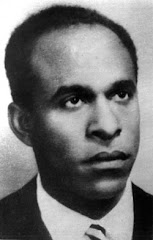
Frantz Fanon
by James S. Williams
Reaktion Books, 2024

[Publication date: January 1, 2024]

A biography of the revolutionary philosopher and psychiatrist.
 
Doctor, militant, essayist, ambassador, teacher, journalist, pan-Africanist, Frantz Fanon sought to decolonize mid-twentieth-century culture as he embodied a new kind of intellectual. Born in colonial Martinique, he fought for France during World War II but later renounced his citizenship and fought in the Algerian War of Independence. This book emphasizes Fanon’s gift for self-invention and performance as it follows his short but extraordinary life and explores how his pioneering work in psychiatry influenced his revolutionary philosophy.

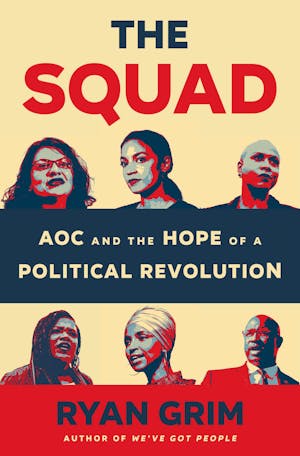
The Squad: AOC and the Hope of a Political Revolution
by Ryan Grim
‎Henry Holt and Co.


[Publication date: December 5, 2023]

The Squad

Semafor's Best Political Book of 2023

A riveting insider account of the progressive movement in Congress centering A.O.C., Rashida Tlaib, Jamaal Bowman, Cori Bush, Ayanna Pressley, and Ilhan Omar―their rise, their efforts to set an ambitious agenda for the country, and their struggle to find their footing within the Democratic party.

The Squad
is the definitive, must-read book about the most exciting figures defining our new era. The story is urgent, and the stakes are high―for the country and the world―and Grim, an experienced political reporter who covered the Squad before they were the Squad, is uniquely qualified to tell it.

When Bernie Sanders, an obscure Vermont senator, launched his quixotic 2016 presidential campaign, few could have seen just how radically the Democratic Party would transform in just a few short years―or that such a transformation could be led by a Bronx bartender volunteering for Bernie in her spare time. The world as it was when that campaign began is almost unrecognizable today, and the Squad has both shaped and been shaped by the seismic social, cultural, and political changes underway.

Referred to informally as the Squad, led by the preternaturally politically savvy Alexandria Ocasio-Cortez, the group laid down a marker for an aggressive left-wing agenda. Grim takes you behind the scenes as that new energy makes impact with Washington, and the Squad spends as much time fending off assaults from Donald Trump―who regularly singled them out and led chants of “send them back” at rallies―as they did battling their own party’s sclerotic leadership. As they’ve grown in office, they’ve had to contend with the eternal question that confronts outsiders who power their way into the inside: Are they still radical organizers willing and able to lead a political revolution? 


ABOUT THE AUTHOR:


Ryan W. Grim is an American author and journalist. Grim was Washington, D.C. bureau chief for HuffPost and is the Washington, D.C. bureau chief for The Intercept. He is also a political commentator for Breaking Points and appears frequently on The Majority Report with Sam Seder,. His writings have appeared in several publications, including Rolling Stone, The Washington Post, and Politico. He is the author of This Is Your Country on Drugs and We've Got People: From Jesse Jackson to Alexandria Ocasio-Cortez, the End of Big Money and the Rise of a Movement


The Rebels: Elizabeth Warren, Bernie Sanders, Alexandria Ocasio-Cortez, and the Struggle for a New American Politics
by Joshua Green
‎Penguin Press, 2024

[Publication date: January 9, 2024] 

From the author of the #1 New York Times bestseller Devil’s Bargain comes the revelatory inside story of the uprising within the Democratic Party, of the economic populists led by Elizabeth Warren, Bernie Sanders, and Alexandria Ocasio-Cortez.

In his classic book
Devil’s Bargain, Joshua Green chronicled how the forces of economic populism on the right, led by the likes of Steve Bannon, turned Donald Trump into their flawed but powerful vessel. In The Rebels, he gives an epic account of the long struggle that has played out in parallel on the left, told through an intimate reckoning with the careers of the three political figures who have led the charge most prominently. Based on remarkable inside sourcing and razor-sharp analysis, The Rebels uses the grand narrative of a political party undergoing tumult and transformation to tell an even larger story about the fate of America.

For many years, as Green recounts, the Democrats made their bed with Wall Street and big tech, relying on corporate money for electioneering and embracing the worldview that technological and financial innovation and globalization were a powerful net good, a rising tide lifting all boats. Yes, there were howls of pain, but they were written off by most of the elites as the moaning of sore losers mired in the past. There were always some Democratic politicians representing the old labor base who resisted the new dispensation, but these figures never made it very far on a national level. For one thing, they didn’t have the money. But as income inequality ballooned, widening the gulf between the wealthy elite and everyone else, pressures began to build.

With the 2008 crisis, those forces finally erupted into plain sight, turning this book’s protagonists into national icons. At its heart,
The Rebels tells the riveting human story of the rise and fight of Elizabeth Warren, Bernie Sanders, and Alexandria Ocasio-Cortez from the financial crisis on, as outrage over the unfairness of the American system formed a flood tide of political revolution. That same tide that would sweep Trump into office was blunted on the left, as the Democratic party found itself riven by culture war issues between its centrists and its progressives. But the winds behind economic populism still howl at gale force. Whether the Democrats can bridge their divisions and home in on a vision that unites the party, and perhaps even the country, in the face of the most violently deranged political landscape since the Civil War will be the ultimate test of the legacies of all three characters. 

A masterful account of one of the defining political stories of our age,
The Rebels cements Joshua Green’s stature at the first rank of American writers explaining how we’ve arrived at this pass and what lies ahead.
 
 
ABOUT THE AUTHOR:
 
 
Joshua Green is author of the #1 New York Times bestseller, "Devil's Bargain: Steve Bannon, Donald Trump, and the Storming of the Presidency" (Penguin), a national correspondent for Bloomberg Businessweek, and a CNN political analyst. Previously, Green was an editor at the Atlantic and the Washington Monthly, and a political columnist for the Boston Globe. He's also written for the New Yorker, Esquire, Rolling Stone, Vanity Fair and other publications. Green regularly appears on CNN's shows, HBO’s Real Time with Bill Maher, and PBS’s Washington Week and Frontline. 
 

Monday, December 7, 2020

https://inciteseminars.com/we-will-be-black/

Incite Seminars
rigorous and rebellious learning
We Will be Black: Cedric J. Robinson, Black Marxism, and Beyond
Two Saturdays, December 12 & 19th, 2020
12-3pm Eastern (US+Canada). Online via Zoom.
Joshua M. Myers, PhD
PHOTO: Zora Neale Hurston in Haiti, 1937, Library of Congress

“We will be Black not because we are not white, but because of our history and the achievements of our struggle.” – Cedric J. Robinson

Though Cedric J. Robinson was a trained political theorist, his understanding of revolution went beyond the logics of “the political.” Drawing upon his experiences in Black communities, an eclectic range of academic influences, and an organizing background, Robinson developed the idea of a Black Radical tradition. It was a tradition that possessed its own sense of the origins of the problems of the modern world, and how they might be addressed. It is that tradition which was responsible for the forms of resistance that emerged among the enslaved and their descendants. 
 
As a problem for thought, the Black Radical tradition existed in relation to a multiplicity of Western theories of reality and change: political economy, charismatic authority, anarchism, Marxism, as well as the aesthetic.
 
This two-part seminar will explore the foundations of Black Marxism, utilizing the wider scope of Robinson’s intellectual work, as well as focus on his background in West Oakland’s Black world, his student activism at the University of California, his international travels and experiences, and his work as a media activist. Yet the focus will remain the nature of the Black Radical tradition—not merely one or a collection of individual actors— and how it constitutes one way that human beings have struggled against modern oppressions.
In the first week, we will discuss Robinson’s biography and his early works in political theory, focusing on how these early impulses led to later works and intellectual concerns. In the following week, we will discuss the contexts leading to the development of Black Marxism, before exploring the conceptual intervention that this text made and its lasting impact.
 
Facilitator: Joshua M. Myers is an Associate Professor of Africana Studies in the Department of Afro-American Studies at Howard University. He is the author of We Are Worth Fighting For: A History of the Howard University Student Protest of 1989 (NYU Press, 2019) and the editor of A Gathering Together: Literary Journal. His intellectual biography of Cedric J. Robinson is forthcoming from Polity Press in late 2021.

Readings (PDFs will be provided prior to the session):

Week One:

Robin D.G. Kelley – “Cedric J. Robinson: The Making of a Black Radical”
Cedric J. Robinson – “Introduction” and “The Order of Politicality” in The Terms of Order
Cedric J. Robinson – “Manichaeism and Multiculturalism”
Cedric J. Robinson – “Preface” in Forgeries of Memory and Meaning
Week Two:
Cedric J. Robinson – “Coming to Terms: The Third World and the Dialectic of Imperialism”
Cedric J. Robinson – “An Inventory of Contemporary Black Politics”
Cedric J. Robinson – “Introduction” and “The Nature of the Black Radical Tradition,” in Black Marxism
 
Time: Two Saturdays, December 12 & 19th, 12pm-3pm. Online via Zoom.

Seminar Cost:

$60 – Member Ticket for Incite Seminars Patreon 

Supports at any level:

$90 – True Cost Ticket
$120 – Generous Supporter Ticket
$30 –Student, Contingent Scholar, Activist Ticket
$1+ – Solidarity Donation Ticket 

Registration

Please register by buying a ticket at our Eventbrite page. We are committed to making all our offerings accessible to those who are eager to learn, regardless of financial means. If you have any questions or concerns, please email inciteseminarsphila@gmail.com.

Incite |rouse, urge, encourage, stimulate.

Seminar | breeding ground, plant hothouse; gathering of a small group to discuss a topic intensively.

We create public seminars that incite personal exploration and inspire community action.
Incite Seminars offers an educational experience. We do so by gathering an engaged group of participants for a dynamic exchange of ideas, led by skilled facilitators. All of our facilitators have a deep relationship to a subject or topic through intensive study or practice.

Our sessions are as enjoyably accessible as they are intellectually rigorous. We are certain you will find our seminars refreshingly satisfying, relevant, and even fun. No prior knowledge of a subject is presupposed. Read more about the process here. (Until further notice, all of our sessions are online.)

We are a member-supported, 501(c)3 educational non-profit. We receive no grants or money from outside funders, and are supported through event registrations and Patreon contributions. 
 
We invite you to join our Rigorous and Rebellious Learning community at any level you feel inspired! Thank you.
 
When we’re not in COVID-19 quarantine, our home is The Bourse, 111 South Independence Mall East, Suite 540, Philadelphia, PA 19106 (5th Street between Market and Chestnut). Here’s a map. 
 
Register now for our current seminars. Descriptions here. We look forward to seeing you at a session soon!
 
Registration
 
 
Millennials Are Killing Capitalism

Cedric Robinson, the Black Radical Tradition and Racial Regimes with Joshua Myers

SOUNDCLOUD AUDIO: 1 HOUR AND 11 MINUTES (length of recording)

Follow Millennials Are Killing Capitalism and others on SoundCloud.


Joshua M. Myers is an Assistant Professor of Africana Studies at Howard University. He is the author of We Are Worth Fighting For: A History of the Howard University Student Protest of 1989, which came out in 2019 on NYU Press. He is also the editor of A Gathering Together: Literary Journal. Among his current projects, the book Cedric Robinson: Black Radicalism Beyond The Order of Time. In this episode, Myers gives a brief biography of Cedric Robinson’s early life and discusses the key contributions of Black Marxism: The Making of The Black Radical Tradition. We discuss the Black Radical Tradition and racial capitalism in tension and dialogue with modes of radicalism that emanated from Europe. Along the way Myers debunks several common misreadings of Robinson’s work, and urges readers to engage Black Marxism within and along with the whole body of Robinson’s writing as well as the rich tradition of Black Radical thought.

ABOUT CEDRIC ROBINSON:
(1940-2016):

Dr. Robinson was Professor in the Department of Black Studies and the Department of Political Science at the University of California, Santa Barbara.. He received his BA from the University of California, Berkeley and his MA and Ph.D. from Stanford University. He served as Chair of the Department of Black Studies as well as of Political Science and has also served as the Director of the Center for Black Studies at UCSB. His fields of teaching and research are modern political thought, radical social theory in the African Diaspora, comparative politics, and media and politics. Dr. Robinson is the author of Black Marxism: The Making of the Black Radical Tradition, Terms of Order: Political Science and the Myth of Leadership and Black Movements in America. He is also the author of numerous articles on US, African and Caribbean political thought; Western social theory, film and the press. His most recent work includes The Anthropology of Marxism, a monograph study of the historical and discursive antecedents of Marxism, and research into anti-facism in Africa and the African Diaspora in the 1920s and 1930s.

 
PHOTO (L-R): Dr. Cedric Robinson and Professor Joshua M. Myers


NOTE: This post can also now be found here at the Panopticon Review On Facebook page.


Tuesday, October 18, 2011

The Struggle Continues: The Theoretical and Practical Dimensions of the Occupy Wall Street Movement, Our Political Economy and the State

http://www.nytimes.com/2011/10/09/opinion/sunday/occupy-wall-street-and-the-tea-party.html?_r=1&pagewanted=all


All,

In the past I have often found myself at distinct theoretical, strategic, and tactical odds with Gitlin and his myopic, reductive, and self serving notions of what really constitutes radical democracy within the multiracial/multinational context and character of mass struggle in this country but this time I think his insights into the essential and very important 'Occupy Wall Street' movement are not only correct but right on target. Let the truly new, decisive, and necessary fight to really change the direction of this country begin...

Kofi

"Dare To Struggle, Dare To Win"


OPINION

The Left Declares Its Independence
By TODD GITLIN
October 8, 2011
New York Times


"...OCCUPY Wall Street, then, emanates from a culture — strictly speaking, a counterculture — that is diametrically opposed to Tea Party discipline.

So where do these romantics go from here? The Zuccotti Park core doesn’t seem to have a plan, or even to take kindly to the idea of consolidating a list of demands. And yet, by taking the initiative, they have aroused, as with the Oct. 5 march, less romantic and more conventionally organized allies who do not disdain political demands. Such is the cunning of political history. Having set out to be expressive, the anarchists have found themselves playing, willy-nilly, a most strategic role.

Such movements hope to remain forever under construction, fluid, unfixed. They slip laughingly through the nets of journalism, which prefers hard-and-fast answers to the question “What do you people want?”

But the interesting, difficult, even decisive moment in the career of such a movement comes when allies arrive, especially allies not so enamored of horizontal democracy and more taken by the idea of getting results. These forces showed up on Oct. 5. De facto, there is an alliance in the cards.

It makes sense. Here, finally, is what labor and the activist left have been waiting for. For two years, Barack Obama got the benefit of the doubt from fervent supporters — I’d bet that many of those in Lower Manhattan during these weeks went door-to-door for him in 2008 — and that support explains why no one occupied Wall Street in 2009. Now, as Jeremy Varon, a historian at the New School, said of Zuccotti Park: “This is the Obama generation declaring their independence from his administration.”

By allying itself with the protest, the left at large is telling the president that a campaign slogan that essentially says “We’re better than Eric Cantor” won’t cut it in 2012. “We are the 99 percent” would be more like it. If President Obama takes this direction, the movement’s energy may be able to power a motor of significant reform.

That raises the question, though, of whether the inchoate quality of the Occupy Wall Street movement can continue. Probably not, since an evolving alliance demands concrete goals, strategies and compromises. But perhaps something of the initial free spirit can flourish. There is plenty of public sentiment to nourish it. It doesn’t take public opinion polls to detect American anger at the plutocracy and the impunity with which it lords it over the country.

The culture of anarchy is right about this: The corporate rich — those ostensible “job creators” who somehow haven’t gotten around to creating jobs — rule the Republican Party and much of the Democratic Party as well, having artfully arranged a mutual back-scratching society to enrich themselves. A refusal to compromise with this system, defined by its hierarchies of power and money, would be the current moment of anarchy’s great, lasting contribution.

Until now, fury at the plutocracy and the political class had found no channel to run in but the antigovernment fantasies of the Tea Party. Now it has dug a new channel. Anger does not move countries, but it moves movements — and movements, in turn, can move countries. To do that, movements need leverage. Even Archimedes needed a lever and a place to stand to move the world. When Zuccotti Park meets an aroused liberalism, the odd couple may not live happily ever after. But they can make a serious run at American dreams of “liberty and justice for all.”

Monday, February 15, 2010

Henry Giroux On Democracy & Authoritarianism in American Politics Today

http://www.truthout.org/democracy-and-threat-authoritarianism-politics-beyond-barack-obama56890

All,

On the let's-get-very-serious-front: Henry Giroux's typically searing and boldly comprehensive critique goes with laserlike accuracy to the very heart of the real ongoing crisis in American society, economy, and culture today and reveals in ominous and painstaking detail just what genuine challenges and extremely severe problems we are faced with in the wake of the many thoroughly reactionary and destructive policies and programs of the Bushwhacker regime and the present reluctance and/or refusal to seriously address and reverse/eliminate them by the present Obama administration. Truth and Consequences indeed...

Kofi


Democracy and the Threat of Authoritarianism: Politics Beyond Barack Obama

Monday 15 February 2010
by: Henry A. Giroux, t r u t h o u t | Op-Ed

"Education is the point at which we decide whether we love the world enough to assume responsibility for it and by the same token save it from ruin which, except for renewal, except for the coming of the new and young, would be inevitable. And education, too, is where we decide whether we love our children enough not to expel them from our world and leave them to their own devices, nor to strike from their hands their chance of undertaking something new, something unforseen by us, but to prepare them in advance for the task of renewing a common world."
-- Hannah Arendt[1]

A Turn to the Dark Side of Politics

The American media, large segments of the public and many educators widely believe that authoritarianism is alien to the political landscape of American society. Authoritarianism is generally associated with tyranny and governments that exercise power in violation of the rule of law. A commonly held perception of the American public is that authoritarianism is always elsewhere. It can be found in other allegedly "less developed/civilized countries," such as contemporary China or Iran, or it belongs to a fixed moment in modern history, often associated with the rise of twentieth century totalitarianism in its different forms in Germany, Italy and the Soviet Union under Stalin.

Even as the United States became more disposed to modes of tyrannical power under the second Bush administration - demonstrated, for example, by the existence of secret CIA prisons, warrantless spying on Americans and state-sanctioned kidnapping - mainstream liberals, intellectuals, journalists and media pundits argued that any suggestion that the United States was becoming an authoritarian society was simply preposterous. For instance, the journalist James Traub repeated the dominant view that whatever problems the United States faced under the Bush administration had nothing to do with a growing authoritarianism or its more extreme form, totalitarianism.[2] On the contrary, according to this position, America was simply beholden to a temporary seizure of power by some extremists, who represented a form of political exceptionalism and an annoying growth on the body politic. In other words, as repugnant as many of Bush's domestic and foreign policies might have been, they neither threatened nor compromised in any substantial way America's claim to being a democratic society.

Against the notion that the Bush administration had pushed the United States close to the brink of authoritarianism, some pundits argued that this dark moment in America's history, while uncharacteristic of an aspiring democracy, had to be understood as temporary perversion of American law and democratic ideals that would end when George W. Bush concluded his second term in the White House. In this view, the regime of George W. Bush and its demonstrated contempt for democracy was explained away as the outgrowth of a serendipitous act of politics - a corrupt election and the bad-faith act of a conservative court in 2000, or a poorly run election campaign in 2004 by an uncinematic and boring Democratic candidate.

According to this narrative, the Bush-Cheney regime exhibited such extreme modes of governance in its embrace of an imperial presidency, its violation of domestic and international law, and its disdain for human rights and democratic values that it was hard to view such anti-democratic policies as part of a pervasive shift towards a hidden order of authoritarian politics, which historically has existed at the margins of American society. How else to label such a government other than shockingly and uniquely extremist, given its political legacy that included the rise of the security and torture state; the creation of legal illegalities in which civil liberties were trampled; the launching of an unjust war in Iraq legitimated through official lies; the passing of legislative policies that drained the federal surplus by giving away more than a trillion dollars in tax cuts to the rich; the enactment of a shameful policy of preemptive war; the endorsement of an inflated military budget at the expense of much-needed social programs; the selling off of as many government functions as possible to corporate interests; the resurrection of an imperial presidency; an incessant attack against unions; support for a muzzled and increasingly corporate-controlled media; government production of fake news reports to gain consent for regressive policies; use of an Orwellian vocabulary for disguising monstrous acts such as torture ("enhanced interrogation techniques"); furtherance of a racist campaign of legal harassment and incarceration of Arabs, Muslims and immigrants; advancement of a prison binge through a repressive policy of criminalization; establishment of an unregulated and ultimately devastating form of casino capitalism; the arrogant celebration and support for the interests and values of big business at the expense of citizens and the common good, and the dismantling of social services and social safety nets as part of a larger campaign of ushering in the corporate state and the reign of finance capital.

Authoritarianism With a Friendly Face

In the minds of the American public, the dominant media and its accommodating pundits and intellectuals, there is no sense of how authoritarianism in its soft and hard forms can manifest itself as anything other than horrible images of concentration camps, goose-stepping storm troopers, rigid modes of censorship, and through chilling spectacles of extremist government repression and violence. That is, there is no sense of how new modes of authoritarian ideology, policy, values and social relations might manifest themselves in degrees and gradations so as to create the conditions for a distinctly undemocratic and increasingly cruel and oppressive social order. There is no sense, as the late Susan Sontag suggested in another context, how emerging registers of power and governance "dissolves politics into pathology."[3]

It is generally believed that in a constitutional democracy, power is in the hands of the people, and that the long legacy of democratic ideals in America, however imperfect, is enough to prevent democracy from being subverted or lost. And, yet, the lessons of history provide clear examples of how the emergence of reactionary politics, the increasing power of the military, and the power of big business subverted democracy in Argentina, Chile, Germany and Italy. In spite of these histories, there is no room in the public imagination to entertain what has become the unthinkable - that such an order in its contemporary form might be more nuance, less theatrical, more cunning, less concerned with repressive modes of control than with manipulative modes of consent - what one might call a mode of authoritarianism with a distinctly American character.[4]

Historical conjunctures produce different forms of authoritarianism, though they all share a hatred for democracy, dissent and civil liberties. It is too easy to believe in a simplistic binary logic that strictly categorizes a country as either authoritarian or democratic, which leaves no room for entertaining the possibility of a mixture of both systems.

American politics today suggests a more updated if not different form of authoritarianism. In this context, it is worth remembering what Huey Long said in response to the question of whether America could ever become fascist: "Yes, but we will call it anti-fascist."[5] Long's reply indicates that fascism is not an ideological apparatus frozen in a particular historical period, but a complex and often shifting theoretical and political register for understanding how democracy can be subverted, if not destroyed, from within.

This notion of soft or friendly fascism was articulated in 1985 in Bertram Gross' book "Friendly Fascism," in which he argued that if fascism came to the United States it would not embody the same characteristics associated with fascist forms in the historical past. There would be no Nuremberg rallies, doctrines of racial superiority, government-sanctioned book burnings, death camps, genocidal purges or the abrogation of the Constitution. In short, fascism would not take the form of an ideological grid from the past simply downloaded onto another country under different historical conditions. Gross believed that fascism was an ongoing danger and had the ability to become relevant under new conditions, taking on familiar forms of thought that resonate with nativist traditions, experiences and political relations.[6]

Similarly, in his "Anatomy of Fascism," Robert O. Paxton argued that the texture of American fascism would not mimic traditional European forms, but would be rooted in the language, symbols and culture of everyday life. He wrote, "No swastikas in an American fascism, but Stars and Stripes (or Stars and Bars) and Christian crosses. No fascist salute, but mass recitations of the Pledge of Allegiance. These symbols contain no whiff of fascism in themselves, of course, but an American fascism would transform them into obligatory litmus tests for detecting the internal enemy."[7]

It is worth noting that Umberto Eco, in his discussion of "eternal fascism," also argued that any updated version of fascism would not openly assume the mantle of historical fascism; rather, new forms of authoritarianism would appropriate some of its elements, making it virtually unrecognizable from its traditional forms. Like Gross and Paxton, Eco contended that fascism, if it comes to America, will have a different guise, although it will be no less destructive of democracy. He wrote:

Ur-Fascism [Eternal Fascism] is still around us, sometimes in plainclothes. It would be much easier for us if there appeared on the world scene somebody saying, "I want to reopen Auschwitz, I want the Blackshirts to parade again in the Italian squares" Life is not that simple. Ur-Fascism can come back under the most innocent of disguises. Our duty is to uncover it and to point our finger at any of its new instances - everyday, in every part of the world.[8]

The renowned political theorist Sheldon Wolin, in "Democracy Incorporated," updates these views and argued persuasively that the United States has produced its own unique form of authoritarianism, which he called "inverted totalitarianism."[9] Wolin claimed that under traditional forms of totalitarianism, there are usually founding texts such as "Mein Kampf," rule by a personal demagogue such as Adolph Hitler, political change enacted by a revolutionary movement such as the Bolsheviks, the Constitution rewritten or discarded, the political state's firm control over corporate interests and an idealized and all-encompassing ideology used to create a unified and totalizing understanding of society. At the same time, the government uses all of the power of its cultural and repressive state apparatuses to fashion followers in its own ideological image and collective identity.

Wolin argued that, in the United States, an emerging authoritarianism appears to take on a very different form.[10] Instead of a charismatic leader, the government is now governed through the anonymous and largely remote hand of corporate power and finance capital. That is, political sovereignty is largely replaced by economic sovereignty as corporate power takes over the reigns of governance. The dire consequence, as David Harvey pointed out, is that "raw money power wielded by the few undermines all semblances of democratic governance. The pharmaceutical, health insurance and hospital lobbies, for example, spent more than $133 million in the first three months of 2009 to make sure they got their way on health care reform in the United States."[11] The more money influences politics, the more corrupt the political culture becomes. Under such circumstances, holding office is largely dependent on having huge amounts of capital at one's disposal, while laws and policies at all levels of government are mostly fashioned by lobbyists representing big business corporations and commanding financial institutions. Moreover, as the politics of the health care reform indicate, such lobbying, as corrupt and unethical as it may be, is not carried out in the open and displayed by insurance and drug companies as a badge of honor - a kind of open testimonial to the disrespect for democratic governance and a celebration of their power. The subversion of democratic governance in the United States by corporate interests is captured succinctly by Chris Hedges in his observation that

Corporations have 35,000 lobbyists in Washington and thousands more in state capitals that dole out corporate money to shape and write legislation. They use their political action committees to solicit employees and shareholders for donations to fund pliable candidates. The financial sector, for example, spent more than $5 billion on political campaigns, influenc[ing] peddling and lobbying during the past decade, which resulted in sweeping deregulation, the gouging of consumers, our global financial meltdown and the subsequent looting of the US Treasury. The Pharmaceutical Research and Manufacturers of America spent $26 million last year and drug companies such as Pfizer, Amgen and Eli Lilly kicked in tens of millions more to buy off the two parties. These corporations have made sure our so-called health reform bill will force us to buy their predatory and defective products. The oil and gas industry, the coal industry, defense contractors and telecommunications companies have thwarted the drive for sustainable energy and orchestrated the steady erosion of civil liberties. Politicians do corporate bidding and stage hollow acts of political theater to keep the fiction of the democratic state alive.[12]

Rather than forcing a populace to adhere to a particular state ideology, the general public in the United States is largely depoliticized through the influence of corporations over schools, higher education and other cultural apparatuses. The deadening of public values, civic consciousness and critical citizenship is also the result of the work of anti-public intellectuals representing right-wing ideological and financial interests,[13] a dominant media that is largely center-right and a market-driven public pedagogy that reduces the obligations of citizenship to the endless consumption and discarding of commodities. In addition, a pedagogy of amnesia works through celebrity culture and its counterpart in corporate-driven news, television, radio and entertainment to produce a culture of stupidity, censorship and diversionary spectacles.

Depoliticizing Freedom and Agency

Agency is now defined by a market-driven concept of freedom, a notion that is largely organized according to narrow notions of individual self-interest and limited to the freedom from constraints. Central to this concept is the freedom to pursue one's self-interest independently of larger social concerns. For individuals in a consumer society, this often means the freedom to shop, own guns and define rights without regards to the consequences for others or the larger social order.

When applied to economic institutions, this notion of freedom often translates into a call for removing government regulations over the market and economic institutions. This notion of a deregulated and privatized freedom is decoupled from the common good and any understanding of individual and social responsibility. It is an unlimited notion freedom that both refuses to recognize its social consequences and has no language for an ethic that calls us beyond ourselves, that engages our responsibility to others. Within this discourse of hyper-individualized freedom, individuals are not only "liberated from the constraints imposed by the dense network of social bonds," but they are also "stripped of the protection which had been matter-of-factly offered in the past by that dense network of social bonds."[14]

Freedom exclusively tied to personal and political rights without also enabling access to economic resources becomes morally empty and politically dysfunctional. The much heralded notion of choice associated with personal and political freedom is hardly assured when individuals lack the economic resources, knowledge and social supports to make such choices and freedoms operative and meaningful. As Zygmunt Bauman pointed outs, "The right to vote (and so, obliquely and at least in theory, the right to influence the composition of the ruler and the shape of the rules that bind the ruled) could be meaningfully exercised only by those 'who possess sufficient economic and cultural resources' to be safe from the voluntary or involuntary servitude that cuts off any possible autonomy of choice (and/or its delegation) at the root.... [Choice] stripped of economic resources and political power hardly assure[s] personal freedoms to the dispossessed, who have no claim on the resources without which personal freedom can neither be won nor in practice enjoyed."[15] Paul Bigioni has argued that this flawed notion of freedom played a central role in the emerging fascist dictatorships of the early 20th century. He wrote:

It was the liberals of that era who clamored for unfettered personal and economic freedom, no matter what the cost to society. Such untrammeled freedom is not suitable to civilized humans. It is the freedom of the jungle. In other words, the strong have more of it than the weak. It is a notion of freedom that is inherently violent, because it is enjoyed at the expense of others. Such a notion of freedom legitimizes each and every increase in the wealth and power of those who are already powerful, regardless of the misery that will be suffered by others as a result. The use of the state to limit such "freedom" was denounced by the laissez-faire liberals of the early 20th century. The use of the state to protect such "freedom" was fascism. Just as monopoly is the ruin of the free market, fascism is the ultimate degradation of liberal capitalism.[16]

This stripped-down notion of market-based freedom that now dominates American society cancels out any viable notion of individual and social agency. In embracing a passive attitude toward freedom in which power is viewed as a necessary evil, a conservative notion of freedom reduces politics to the empty ritual of voting, and is incapable of understanding freedom as a form of collective, productive power, which enables "a notion of political agency and freedom that affirms the equal opportunity of all to exercise political power in order to participate in shaping the most important decisions affecting their lives.[17]

This merging of the market-based understanding of freedom as the freedom to consume and the conservative-based view of freedom as a restriction from all constraints refuses to recognize that the conditions for substantive freedom do not lie in personal and political rights alone; on the contrary, real choices and freedom include the individual and collective ability to actively intervene in and shape both the nature of politics and the myriad forces bearing down on everyday life - a notion of freedom that can only be viable when social rights and economic resources are available to individuals.

Of course, this notion of freedom and choice is often dismissed either as a vestige of socialism or simply drowned out in a culture that collapses all social considerations and notions of solidarity into the often cruel and swindle-based discourse of instant gratification and individual gain. Under such conditions, democracy is managed through the empty ritual of elections; citizens are largely rendered as passive observers as a result of giving undue influence to corporate power in shaping all of the essential elements of political governance and decision making; and manufactured appeals to fear and personal safety legitimate both the suspension of civil liberties and the expanding powers of an imperial presidency and the policing functions of a militaristic state.

I believe that the formative culture necessary to create modes of education, thought, dialogue, critique and critical agency - the necessary conditions of any aspiring democracy - is largely destroyed through the pacification of intellectuals and the elimination of public spheres capable of creating such a culture. Elements of a depoliticizing and commodifying culture become clear in the shameless propaganda produced by the so-called "embedded" journalists, while a corporate-dominated popular culture largely operates through multiple technologies, screen cultures and video games that trade endlessly in images of violence, spectacles of consumption and stultifying modes of (il)literacy.

Funded by right-wing ideological, corporate and militaristic interests, an army of anti-public intellectuals groomed in right-wing think tanks and foundations dominate the traditional media, police the universities for any vestige of critical thought and dissent and endlessly spread their message of privatization, deregulation and commercialization, exercising a powerful influence in the dismantling all public spheres not dominated by private and commodifying interests. These "experts in legitimation," to use Antonio Gramsci's prescient phrase, peddle civic ignorance just as they renounce any vestige of public accountability for big business, giant media conglomerates and financial mega-corporations.

Under the new authoritarianism, the corporate state and the punishing state merge as economics drives politics and repression is increasingly used to contain all those individuals and groups caught in the expanding web of extreme inequality and powerlessness that touches everything from the need for basic health care, food and shelter to the promise of a decent education. As the social state is hollowed out under pressure from free-market advocates, right-wing politicians and conservative ideologues, the United States has increasingly turned its back on any semblance of social justice, civic responsibility and democracy itself. How else to explain the influential journalist Thomas Friedman's shameless endorsement of military adventurism in a New York Times article? Friedman argued, "The hidden hand of the market will never work without a hidden fist. McDonald's cannot flourish without McDonnell Douglas, the designer of the US Air Force F-15. And the hidden fist that keeps the world safe for Silicon Valley's technologies to flourish is called the US Army, Air Force, Navy and Marine Corps."[18] Freedom in this discourse is inextricably wedded to state and military violence, and is a far cry from any semblance of a claim to democracy.

Zombie Politics and the Culture of Cruelty

Another characteristic of an emerging authoritarianism in the United States is the correlation between the growing atomization of the individual and the rise of a culture of cruelty, a type of zombie politics in which the living dead engage in forms of rapacious behavior that destroy almost every facet of a substantive democratic polity. There is a mode of terror rooted in a neoliberal market-driven society that numbs many people just as it wipes out the creative faculties of imagination, memory and critical thought. Under a regime of privatized utopias, hyper individualism and ego-centered values, human beings slip into a kind of ethical somnolence, indifferent to the plight and suffering of others. Though writing in a different context, the late Frankfurt School theorist Leo Lowenthal captures this mode of terror in his comments on the deeply sedimented elements of authoritarianism rooted in modern civilization. He wrote:

In a system that reduces life to a chain of disconnected reactions to shock, personal communication tends to lose all meaning.... The individual under terrorist conditions is never alone and always alone. He becomes numb and rigid not only in relation to his neighbor but also in relation to himself; fear robs him of the power of spontaneous emotional or mental reaction. Thinking becomes a stupid crime; it endangers his life. The inevitable consequence is that stupidity spreads as a contagious disease among the terrorized population. Human beings live in a state of stupor, in a moral coma.[19]

Implicit in Lowenthal's commentary is the assumption that as democracy becomes a fiction, the moral mechanisms of language, meaning and morality collapse and a cruel indifference takes over diverse modes of communication and exchange, often as a register of the current paucity of democratic values, identities and social relations. Surely, this is obvious today as all vestiges of the social contract, social responsibility and modes of solidarity give way to a form of social Darwinism with its emphasis on ruthlessness, cruelty, war, violence, hyper modes of masculinity and a disdain for those considered weak, dependent, alien or economically unproductive.

This culture of cruelty is especially evident in the hardships and deprivations now visited upon many young people in the United States. We have 13.3 million homeless children; one child in five lives in poverty; 17,000 have died in the last decade because they lacked health insurance; too many are now under the supervision of the criminal justice system, and many more are unemployed and lack any hope for the future.[20]

Moreover, we are subjecting more and more children to psychiatric drugs as a way of controlling their alleged unruly behavior while providing huge profits for drug companies. As Evelyn Pringle pointed out, "in 2006 more money was spent on treating mental disorders in children aged 0 to 17 than for any other medical condition, with a total of $8.9 billion"[21] Needless to say, the drugging of American children is less about treating genuine mental disorders than it is about punishing so called unruly children, largely children of the poor, and creating "lifelong patients and repeat customers for Pharma!"[22] Stories abound about poor young people being raped, beaten and dying in juvenile detention centers, needlessly trafficked into the criminal justice system as part of a profit-making scheme cooked up by corrupt judges and private correction facilities administrators, and being given powerful antipsychotic medicines in schools and other state facilities.[23]

Unfortunately, this regression to sheer Darwinism is not only evident in increasing violence against young people, cutthroat reality TV shows, hate radio and the Internet, it is also on full display in the discourse of government officials and politicians and serves as register of the prominence of both a kind of political infantilism and a culture of cruelty. For instance, the Secretary of Education, Arnie Duncan, recently stated in an interview in February 2010, "The best thing that happened to the education system in New Orleans was Hurricane Katrina."[24] Duncan's point, beyond the incredible inhumanity reflected in such a comment, was that it took a disaster that uprooted thousands of individuals and families and caused enormous amounts of suffering to enable the Obama administration to implement a massive educational system, pushing charter schools based on market-driven principles that disdain public values, if not public schooling itself.

This is the language of cruelty and zombie politicians, a language indifferent to the ways in which people who suffer great tragedies are expelled from their histories, narratives and right to be human. Horrible tragedies caused in part by government indifference are now covered up in the discourse and ideals inspired by the logic of the market. This mean and merciless streak was also on display recently when Lt. Gov. Andre Bauer, who is running for the Republican nomination for governor in South Carolina, stated that giving people government assistance was comparable to "feeding stray animals." The utterly derogatory and implicitly racist nature of his remark became obvious in the statement that followed: "You know why? Because they breed. You're facilitating the problem if you give an animal or a person ample food supply. They will reproduce, especially ones that don't think too much further than that. And so what you've got to do is you've got to curtail that type of behavior. They don't know any better."[25]

Lowenthal's argument that in an authoritarian society "stupidity spreads as a contagious disease" is evident in a statement made by Michele Bachmann, a Republican Congresswoman, who recently argued, "Americans should purchase [health] insurance with their own tax-free money."[26] That 43 million Americans are without health insurance because they cannot afford it seems lost on Bachmann, whose comments suggest that these uninsured individuals, families, unemployed workers and children are not simply a disposable surplus, but actually invisible and therefore unworthy of any acknowledgment.

The regressive politics and moral stupidity are also evident in the emergence of right-wing extremists now taking over the Republican Party. This new and aggressive political formation calls for decoupling market-driven financial institutions from any vestige of political and governmental constraint, celebrates emotion over reason, treats critical intelligence as a toxin possessed largely by elites, wraps its sophomoric misrepresentations in an air of beyond-interrogation, "we're just folks" insularity, and calls for the restoration of a traditional, white, Christian, male-dominated America.[27] Such calls embody elements of a racial panic that are evident in all authoritarian movements and have increasingly become a defining feature of a Republican Party that has sided with far right-wing thugs and goon squads intent on disrupting any vestige of the democratic process. This emerging authoritarian element in American political culture is embodied in the presence of Sarah Palin, Rush Limbaugh and Glenn Beck - right-wing extremists who share a contempt for reason and believe in organizing politics on the model of war, unconditional surrender, personal insults, hyper-masculine spectacles and the complete destruction of one's opponent.

Authoritarianism feeds on such excesses and the moral coma that accompanies the inability of a society to both question itself and imagine an alternative democratic order. Unfortunately, the problems now facing the United States are legion and further the erosion of a civic and democratic culture. Some of the most glaring issues are massive unemployment; a rotting infrastructure; the erosion of vital public services; the dismantling of the social safety net; expanding levels of poverty, especially for children; and an imprisonment binge largely affecting poor minorities of color. But such a list barely scratches the surface. In addition, we have witnessed in the last 30 years the restructuring of public education as either a source of profit for corporations or an updated version of control modeled after prison culture, coupled with an increasing culture of lying, cruelty and corruption, all of which belie a democratic vision of America that now seems imaginable only as a nostalgic rendering of the founding ideals of democracy.

Dangerous Authoritarianism or Shrinking Democracy

Needless to say, many would disagree with Wolin's view that the United States is in the grip of a new and dangerous authoritarianism that makes a mockery of the country's moral claim to being a model of democracy at home and for the rest of the world. For instance, liberal critics such as Robert Reich, the former secretary of labor under President Bill Clinton, refers to America's changing political landscape as a "shrinking democracy."[28] For Reich, democracy necessitates three things: "(1) Important decisions are made in the open. (2) The public and its representatives have an opportunity to debate them, so the decisions can be revised in light of what the public discovers and wants. And (3) those who make the big decisions are accountable to voters,"[29] If we apply Reich's notion of democracy, then it becomes evident that the use of the term democracy is neither theoretically apt nor politically feasible at the current historical moment as a description of the United States. All of the conditions he claims are crucial for a democracy are now undermined by financial and economic interests that control elections, buy off political representatives and eliminate those public spheres where real dialogue and debate can take place. It is difficult to imagine that anyone looking at a society in which an ultra-rich financial elite and mega-corporations have the power to control almost every aspect of politics - from who gets elected to how laws are enacted - could possibly mistake this social order and system of government for a democracy.

A more appropriate understanding of democracy comes from Wolin in his claim that:

democracy is about the conditions that make it possible for ordinary people to better their lives by becoming political beings and by making power responsive to their hopes and needs. What is at stake in democratic politics is whether ordinary men and women can recognize that their concerns are best protected and cultivated under a regime whose actions are governed by principles of commonality, equality, and fairness, a regime in which taking part in politics becomes a way of staking out and sharing in a common life and its forms of self-fulfillment. Democracy is not about bowling together but about managing together those powers that immediately and significantly affect the lives and circumstances of others and one's self. Exercising power can be humbling when the consequences are palpable rather than statistical - and rather different from wielding power at a distance, at, say, an "undisclosed bunker somewhere in northern Virginia."[30]

Wolin ties democracy not merely to participation and accountability, but to the importance of the formative culture necessary for critical citizens and the need for a redistribution of power and wealth, that is, a democracy in which power is exercised not just for the people by elites, but by the people in their own collective interests. But more importantly, Wolin and others recognize that the rituals of voting and accountability have become empty in a country that has been reduced to a lockdown universe in which torture, abuse and the suspension of civil liberties have become so normalized that more than half of all Americans now support the use of torture under some circumstances.[31] Torture, kidnapping, indefinite detention, murder and disappeared "enemy combatants" are typical practices carried out in dictatorships, not in democracies, especially in a democracy that allegedly has a liberal president who ran on the promise of change and hope. Maybe it's time to use a different language to name and resist the registers of power and ideology that now dominate American society.

While precise accounts of the meaning of authoritarianism, especially fascism, abound, I have no desire, given its shifting nature, to impose a rigid or universal definition. What is to be noted is that most scholars agree that authoritarianism is a mass movement that emerges out of a failed democracy, and its ideology is extremely anti-liberal, anti-democratic and anti-socialistic.[32] As a social order, it is generally characterized by a system of terror directed against perceived enemies of the state, a monopolistic control of the mass media, an expanding prison system, a state monopoly of weapons, political rule by privileged groups and classes, control of the economy by a limited number of people, unbridled corporatism, "the appeal to emotion and myth rather than reason; the glorification of violence on behalf of a national cause; the mobilization and militarization of civil society; [and] an expansionist foreign policy intended to promote national greatness."[33] All of these tendencies were highly visible during the former Bush administration.

With the election of Barack Obama to the presidency, there was a widespread feeling among large sections of the American public and its intellectuals that the moment and threat of authoritarianism had passed. And, yet, there are many troubling signs that, in spite of the election of Obama, authoritarian policies not only continue to unfold unabated within his administration, but continue outside of his power to control them. In this case, anti-democratic forces seem to align with many of the conditions that make up what Wolin calls the politics of inverted totalitarianism.

I think it is fair to say that authoritarianism can permeate the lived relations of a political culture and social order, and can be seen in the ways in which such relations exacerbate the material conditions of inequality, undercut a sense of individual and social agency, hijack democratic values and promote a deep sense of hopelessness, cynicism and, eventually, unbridled anger. This deep sense of cynicism and despair on the part of the polity in the face of unaccountable corporate and political power lends credence to Hannah Arendt's notion that at the heart of totalitarianism is the disappearance of the thinking, dialogue and speaking citizens who make politics possible. Authoritarianism as both an ideology and a set of social practices emerges within the lives of those marked by such relations, as its proponents scorn the present while calling for a revolution that rescues a deeply anti-modernist past in order to revolutionize the future.

Determining for certain whether we are in the midst of a new authoritarianism under the leadership of Barack Obama is difficult, but one thing is clear: any new form of authoritarianism that emerges in the current time will be much more powerful and complex in its beliefs, mechanisms of power and modes of control than the alleged idealism of one man or one administration. The popular belief, especially after Bush's defeat, was that the country had made a break with its morally transgressive and reactionary past and that Obama signified not just hope, but political redemption. Such views ignored both the systemic and powerfully organized financial and economic forces at work in American society, while vastly overestimating the power of any one individual or isolated group to challenge and transform them. Even as the current economic meltdown revealed the destructive and distinctive class character of the financial crisis, the idea that the crisis was rooted in systemic causes that far exceeded a few bailouts was lost even on liberal economists such as Paul Krugman, Jeffrey Sachs and Joseph Stiglitz.

Within such economic analyses and narratives of political redemption, the primacy of hope and "critical exuberance" took precedence over the reality of established corporate power, ideological interests and the influence of the military-industrial complex. As Judith Butler warned soon after Obama's victory, "Obama is, after all, hardly a leftist, regardless of the attributions of 'socialism' proffered by his conservative opponents. In what ways will his actions be constrained by party politics, economic interests, and state power; in what ways have they been compromised already? If we seek through this presidency to overcome a sense of dissonance, then we will have jettisoned critical politics in favor of an exuberance whose phantasmatic dimensions will prove consequential."[34] In retrospect, Butler's comments have proven prescient, and the hope that accompanied Obama's election has now been tempered by not simply despair, but, in many quarters, outright and legitimate anger.

If Bush's presidency represented an exceptional anti-democratic moment, it would seem logical that the Obama administration would have examined, condemned and dismantled policies and practices at odds with the ideals of an aspiring democracy. Unfortunately, such has not been the case under Obama, at least up to this point in his administration. Within the past year, Obama has moved decidedly to the right, and, in doing so, he has extended some of the worst elements of the counterterrorism policies of the Bush administration. He has endorsed the use of military commissions, argued for the use of indefinite detention with no charges or legal recourse for Afghan prisoners, extended the USA Patriot Act,[35] continued two wars while expanding the war in Afghanistan and largely reproduced Bush's market-driven approach to school reform.[36]

As Noam Chomsky pointed out, Obama has done nothing to alter the power and triumph of financial liberalization in the past 30 years.[37] He bailed out banks and financial investment institutions at the expense of the 26.3 million Americans who are either unemployed or do not have full time jobs along with the millions who have lost their homes. His chief economic and foreign policy advisers - Tim Geithner, Lawrence Summers and Robert Gates - represent a continuation of a military and big business orientation that is central to the ideologies and power relations of a undemocratic and increasingly bankrupt economic and political system. While claiming to enact policies designed to reduce the federal deficit, Obama plans to cut many crucial domestic programs while increasing military spending, the intelligence budget and foreign military aid. Obama has requested a defense budget for 2011 of $708 billion, in addition to calling for $33 billion to finance the wars in Iraq and Afghanistan. This budget is almost as large as the rest of the entire world's defense spending combined. Roger Hodge provides a useful summary of Obama's failings, extending from the perversion of the rule of law to the authoritarian claim of "sovereign immunity" He wrote:

Obama promised to end the war in Iraq, end torture, close Guantanamo, restore the constitution, heal our wounds, wash our feet. None of these things has come to pass. As president, with few exceptions, Obama either has embraced the unconstitutional war powers claimed by his predecessor or has left the door open for their quiet adoption at some later date. Leon Panetta, director of the Central Intelligence Agency, has declared that the right to kidnap (known as "extraordinary rendition") foreigners will continue, just as the Bush administration's expansive doctrine of state secrets continues to be used in court against those wrongfully detained and tortured by our security forces and allies. Obama has adopted military commissions, once an unpardonable offense against our best traditions, to prosecute terrorism cases in which legitimate convictions cannot be obtained. ... The principle of habeas corpus, sacred to candidate Obama as "the essence of who we are," no longer seems so essential, and reports continue to surface of secret prisons hidden from due process and the Red Cross. Waterboarding has been banned, but other "soft" forms of torture, such as sleep deprivation and force-feeding, continue - as do the practices, which once seemed so terribly important to opponents of the Bush regime, of presidential signing statements and warrantless surveillance. In at least one respect, the Obama Justice Department has produced an innovation: a claim of "sovereign immunity" in response to a lawsuit seeking damages for illegal spying. Not even the minions of George W. Bush, with their fanciful notions of the unitary executive, made use of this constitutionally suspect doctrine, derived from the ancient common-law assumption that "the King can do no wrong," to defend their clear violations of the federal surveillance statute.[38]

Moreover, by giving corporations and unions unlimited freedom to contribute to elections, the recent Supreme Court decision in Citizens United v. Federal Election Commission provided a final step in placing the control of politics more firmly in the hands of big money and large corporations. In this ruling, democracy, like everything else in American culture, was treated as a commodity and offered up to the highest bidder. As a result, whatever government regulations are imposed on big business and the financial sectors will be largely ineffective and will do little to disrupt casino capitalism's freedom from political, economic and ethical constraints. Chris Hedges is right in insisting that the Supreme Court's decision "carried out a coup d'état in slow motion. The coup is over. We lost. The ruling is one more judicial effort to streamline mechanisms for corporate control. It exposes the myth of a functioning democracy and the triumph of corporate power.... The corporate state is firmly cemented in place."[39]

In light of his conservative, if not authoritarian, policies, Obama's once inspiring call for hope has been reduced to what appears to be simply an empty performance, one that "favours the grand symbolic gesture over deep structural change every time."[40] What once appeared as inspired rhetoric has largely been reduced to fodder for late-night television comics, while for a growing army of angry voters it has become nothing more than a cheap marketing campaign and disingenuous diversion in support of moneyed interests and power. Obama's rhetoric of hope is largely contradicted by policies that continue to reproduce a world of egotistic self-referentiality, an insensitivity to human suffering, massive investments in military power and an embrace of those market-driven values that produce enormous inequalities in wealth, income and security. There is more at stake here than a politics of misrepresentation and bad faith.

There is an invisible register of politics that goes far beyond the contradiction between Obama's discourse and his right-wing policies. What we must take seriously in Obama's policies is the absence of anything that might suggest a fundamental power shift away from casino capitalism to policies that would develop the conditions "that make it possible for ordinary people to better their lives by becoming political beings and by making power responsive to their hopes and needs."[41]

In Obama's world, cutthroat competition is still the name of the game, and individual choice is still simply about a hunt for bargains. Lost here is any notion of political and social responsibility for the welfare, autonomy and dignity of all human beings, but especially those who are marginalized because they lack food, shelter, jobs, and other crucial basic needs. But, then again, this is not Obama's world; it is a political order and mode of economic sovereignty that has been in the making for quite some time and now shapes practically every aspect of culture, politics and civic life. In doing so, it has largely destroyed any vestige of real democracy in the United States.

I am not suggesting that in light of Obama's continuation of some of the deeply structured authoritarian tendencies in American society that people should turn away from the language of hope, but I am saying that they should avoid a notion of hope that is as empty as it is disingenuous. What is needed is a language of critique and hope that mutually inform each other, and engagement in a discourse of hope that is concretely rooted in real struggles and capable of inspiring a new political language and collective vision among a highly conservative and fractured polity.

Maybe it is time to shift the critique of Obama away from an exclusive focus on the policies and practices of his administration and develop a new language, one with a longer historical purview and deeper understanding of the ominous forces that now threaten any credible notion of the United States as an aspiring democracy. As Stuart Hall insisted, we "need to change the scale of magnification" in order to make visible the anti-democratic relations often buried beneath the hidden order of politics that have taken hold in the United States in the last few decades.[42] It may be time to shift the discourse away from focusing on either Obama's failures or urging progressives and others to develop "the organizational power to make muscular demands"[43] on the Obama administration. Maybe the time has come to focus on the ongoing repressive and systemic conditions, institutions, ideologies and values that have been developing in American society for the last 30 years, forces that are giving rise to a unique form of American authoritarianism. I agree with Sheldon Wolin that the "fixation upon" Obama now "obscures the problems" we are facing.[44] Maybe it is time to imagine what democracy would look like outside of what we have come to call capitalism, not simply neoliberalism as its most extreme manifestation. Maybe it is time to fight for the formative culture and modes of thought and agency that are the very foundations of democracy. And maybe it time to mobilize a militant, far-reaching social movement to challenge the false claims that equate democracy and capitalism.

If it is true that a new form of authoritarianism is developing in the United States, undercutting any vestige of a democratic society, then it is equally true that there is nothing inevitable about this growing threat. The long and tightening grip of authoritarianism in American political culture can be resisted and transformed. This dystopic future will not happen if intellectuals, workers, young people and diverse social movements unite to create the public spaces and unsettling formative educational cultures necessary for reimagining the meaning of radical democracy.

In part, this is a pedagogical project, one that recognizes consciousness, agency and education as central to any viable notion of politics. It is also a project designed to address, critique and make visible the common-sense ideologies that enable neoliberal capitalism and other elements of an emergent authoritarianism to function alongside a kind of moral coma and political amnesia at the level of everyday life.

But such a project will not take place if the American public cannot recognize how the mechanisms of authoritarianism have impacted on their lives, restructured negatively the notion of freedom and corrupted power by placing it largely in the hands of ruling elites, corporations and different segments of the military and national security state. Such a project must work to develop vigorous social spheres and communities that promote a culture of deliberation, public debate and critical exchange across a wide variety of cultural and institutional sites in an effort to generate democratic movements for social change.

Central to such a project is the attempt to foster a new radical imagination as part of a wider political project to create the conditions for a broad-based social movement that can move beyond the legacy of a fractured left/progressive culture and politics in order to address the totality of the society's problems. This suggests finding a common ground in which challenging diverse forms of oppression, exploitation and exclusion can become part of a broader challenge to create a radical democracy. We live at a time that demands a discourse of both critique and possibility, one that recognizes that without an informed citizenry, collective struggle and viable social movements, democracy will slip out of our reach and we will arrive at a new stage of history marked by the birth of an authoritarianism that not only disdains all vestiges of democracy, but is more than willing to relegate it to a distant memory.

Notes:

[1]. Hannah Arendt, "Between Past and Future" (New York: Penguin Books, [1968] 1993), p. 196.

[2]. James Traub, "The Way We Live Now: Weimar Whiners," New York Times Magazine (June 1, 2003). For a commentary on such intellectuals, see Tony Judt, "Bush's Useful Idiots," The London Review of Books 28:18 (September 21, 2006).

[3]. Cited in Carol Becker, "The Art of Testimony," Sculpture (March 1997), p. 28.

[4]. This case for an American version of authoritarianism was updated and made more visible in a number of interesting books and articles. See, for instance, Chris Hedges, "American Fascists: The Christian Right and the War on America" (New York: Free Press, 2006); Henry A. Giroux, "Against the Terror of Neoliberalism: Politics Beyond the Age of Greed" (Boulder: Paradigm Publishers, 2008); and Sheldon S. Wolin, "Democracy Incorporated: Managed Democracy and the Specter of Inverted Totalitarianism" (Princeton: Princeton University Press, 2008).

[5]. Cited in Paul Bigioni, "Fascism Then, Fascism Now," Toronto Star (November 27, 2005).

[6]. See Bertram Gross, "Friendly Fascism: The New Face of Power in America" (Montreal: Black Rose Books, 1985).

[7]. Robert O. Paxton, "The Anatomy of Fascism" (New York: Alfred A. Knopf, 2004), p. 202.

[8]. Umberto Eco, "Eternal Fascism: Fourteen Ways of Looking at a Blackshirt," New York Review of Books (November-December 1995), p. 15.

[9]. Wolin, "Democracy Incorporated."

[10]. Along similar theoretical lines, see Stephen Lendman, "A Look Back and Ahead: Police State in America," CounterPunch (December 17, 2007). For an excellent analysis that points to the creeping power of the national security state on American universities, see David Price, "Silent Coup: How the CIA is Welcoming Itself Back onto American University Campuses," CounterPunch 17:3 (January 13-31, 2010), pp. 1-5.

[11]. David Harvey, "Organizing for the Anti-Capitalist Transition," Monthly Review (December 15, 2009).

[12]. Chris Hedges, "Democracy in America Is a Useful Fiction," TruthDig (January 24, 2010).

[13]. See Janine R. Wedel, "Shadow Elite: How the World's New Power Brokers Undermine Democracy, Government, and the Free Market" (New York: Basic Books, 2010).

[14]. Zygmunt Bauman, "Liquid Times: Living in an Age of Uncertainty" (London: Polity Press, 2007), pp. 57-58.

[15]. Bauman, "Liquid Times," p. 64.

[16]. Bigioni, "Fascism Then, Fascism Now."

[17]. Cornelius Castoriadis, "The Nature and Value of Equity, Philosophy, Politics, Autonomy: Essays in Political Philosophy" (New York: Oxford University Press, 1991), pp. 124-142.

[18]. Thomas L. Friedman, "A Manifesto for the Fast World," New York Times Magazine (March 28, 1999).

[19]. Leo Lowenthal, "Atomization of Man, False Prophets: Studies in Authoritarianism" (New Brunswick, NJ: Transaction Books, 1987), pp. 182-183.

[20]. I have taken up this issue in Henry A. Giroux, "Youth in a Suspect Society: Democracy or Disposability?" (New York: Palgrave, 2009). For a series of brilliant commentaries on youth in America, see the work of Tolu Olorunda in The Black Commentator, Truthout, and other online journals.

[21]. Evelyn Pringle, "Why Are We Drugging Our Kids," Truthout (December 14, 2009).

[22]. Pringle, "Why Are We Drugging Our Kids"

[23]. See Nicholas Confessore, "New York Finds Extreme Crisis in Youth Prisons," New York Times (December 14, 2009), p. A1; Duff Wilson, "Poor Children Likelier to Get Antipsychotics," New York Times (December 12, 2009), p. A1; and Amy Goodman, "Jailing Kids for Cash," Truthout (February 17, 2009).

[24]. Jake Tapper, "Political Punch: Power, Pop, and Probings" from ABC News Senior White House Correspondent; Duncan: "Katrina Was The 'Best Thing' for New Orleans School System," ABC News.com (January 29, 2010).

[25]. Nathaniel Cary, "GOP Hopeful: People on Public Assistance - 'Like Stray Animals,'" Truthout (January 23, 2010).

[26]. Cited in Frank Rich, "The State of Union is Comatose," New York Times (January 31, 2010), p. WK10.

[27]. See, for example, Patrick J. Buchanan, "Traditional Americans are Losing Their Nation," WorldNetDaily (January 24, 2010).

[28]. Robert Reich, "Our Incredible Shrinking Democracy," AlterNet (February 2, 2010).

[29]. Reich, "Our Incredible Shrinking Democracy."

[30]. Wolin, "Democracy Incorporated," pp. 259 - 260.

[31]. Heather Maher, "Majority of Americans Think Torture - 'Sometimes' Justified," Common Dreams (December 4, 2009).

[32]. See, for example, Kevin Passmore, "Fascism" (London: Oxford University Press, 2002); and Robert O. Paxton, "The Anatomy of Fascism" (New York: Knopf, 2004).

[33]. Alexander Stille, "The Latest Obscenity Has Seven Letters," New York Times (September 13, 2003), p. 19.

[34]. Judith Butler, "Uncritical Exuberance?" IndyBay.org (November 5, 2008).

[35]. For an excellent analysis of the current status of the Patriot Act, see William Fisher, "Patriot Act - Eight Years Later," Truthout (February 3, 2010).

[36]. Glenn Greenwald has taken up many of these issues in a critical and thoughtful fashion. See his blog at Salon.

[37]. Noam Chomsky, "Anti-Democratic Nature of US Capitalism Is Being Exposed," The Irish Times (October 10, 2008).

[38]. Roger D. Hodge, "The Mendacity of Hope," Harper's Magazine (February, 2010), pp. 7-8.

[39]. Chris Hedges, "Democracy in America Is a Useful Fiction," TruthDig (January 24, 2010).

[40]. Naomi Klein, "How Corporate Branding Has Taken Over America," The Guardian/UK, (January 16, 2010) .

[41]. Wolin, "Democracy Incorporated," p. 259.

[42]. Stuart Hall and Les Back, "In Conversation: At Home and Not at Home," Cultural Studies, Vol. 23, No. 4, (July 2009), pp. 664-665.

[43]. Naomi Klein, "How Corporate Branding Has Taken Over America," The Guardian/UK, (January 16, 2010).

[44]. Wolin, "Democracy Incorporated," p. 287.