Showing posts with label Elizabeth Warren. Show all posts

Friday, January 12, 2024

IMPORTANT NEW BOOKS:

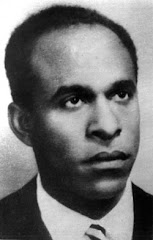
Frantz Fanon
by James S. Williams
Reaktion Books, 2024

[Publication date: January 1, 2024]

A biography of the revolutionary philosopher and psychiatrist.
 
Doctor, militant, essayist, ambassador, teacher, journalist, pan-Africanist, Frantz Fanon sought to decolonize mid-twentieth-century culture as he embodied a new kind of intellectual. Born in colonial Martinique, he fought for France during World War II but later renounced his citizenship and fought in the Algerian War of Independence. This book emphasizes Fanon’s gift for self-invention and performance as it follows his short but extraordinary life and explores how his pioneering work in psychiatry influenced his revolutionary philosophy.

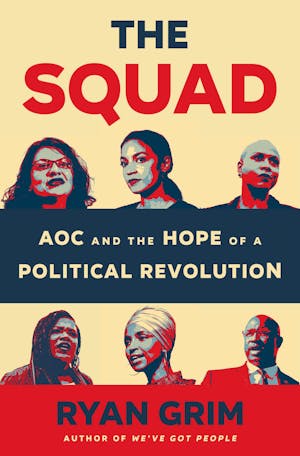
The Squad: AOC and the Hope of a Political Revolution
by Ryan Grim
‎Henry Holt and Co.


[Publication date: December 5, 2023]

The Squad

Semafor's Best Political Book of 2023

A riveting insider account of the progressive movement in Congress centering A.O.C., Rashida Tlaib, Jamaal Bowman, Cori Bush, Ayanna Pressley, and Ilhan Omar―their rise, their efforts to set an ambitious agenda for the country, and their struggle to find their footing within the Democratic party.

The Squad
is the definitive, must-read book about the most exciting figures defining our new era. The story is urgent, and the stakes are high―for the country and the world―and Grim, an experienced political reporter who covered the Squad before they were the Squad, is uniquely qualified to tell it.

When Bernie Sanders, an obscure Vermont senator, launched his quixotic 2016 presidential campaign, few could have seen just how radically the Democratic Party would transform in just a few short years―or that such a transformation could be led by a Bronx bartender volunteering for Bernie in her spare time. The world as it was when that campaign began is almost unrecognizable today, and the Squad has both shaped and been shaped by the seismic social, cultural, and political changes underway.

Referred to informally as the Squad, led by the preternaturally politically savvy Alexandria Ocasio-Cortez, the group laid down a marker for an aggressive left-wing agenda. Grim takes you behind the scenes as that new energy makes impact with Washington, and the Squad spends as much time fending off assaults from Donald Trump―who regularly singled them out and led chants of “send them back” at rallies―as they did battling their own party’s sclerotic leadership. As they’ve grown in office, they’ve had to contend with the eternal question that confronts outsiders who power their way into the inside: Are they still radical organizers willing and able to lead a political revolution? 


ABOUT THE AUTHOR:


Ryan W. Grim is an American author and journalist. Grim was Washington, D.C. bureau chief for HuffPost and is the Washington, D.C. bureau chief for The Intercept. He is also a political commentator for Breaking Points and appears frequently on The Majority Report with Sam Seder,. His writings have appeared in several publications, including Rolling Stone, The Washington Post, and Politico. He is the author of This Is Your Country on Drugs and We've Got People: From Jesse Jackson to Alexandria Ocasio-Cortez, the End of Big Money and the Rise of a Movement


The Rebels: Elizabeth Warren, Bernie Sanders, Alexandria Ocasio-Cortez, and the Struggle for a New American Politics
by Joshua Green
‎Penguin Press, 2024

[Publication date: January 9, 2024] 

From the author of the #1 New York Times bestseller Devil’s Bargain comes the revelatory inside story of the uprising within the Democratic Party, of the economic populists led by Elizabeth Warren, Bernie Sanders, and Alexandria Ocasio-Cortez.

In his classic book
Devil’s Bargain, Joshua Green chronicled how the forces of economic populism on the right, led by the likes of Steve Bannon, turned Donald Trump into their flawed but powerful vessel. In The Rebels, he gives an epic account of the long struggle that has played out in parallel on the left, told through an intimate reckoning with the careers of the three political figures who have led the charge most prominently. Based on remarkable inside sourcing and razor-sharp analysis, The Rebels uses the grand narrative of a political party undergoing tumult and transformation to tell an even larger story about the fate of America.

For many years, as Green recounts, the Democrats made their bed with Wall Street and big tech, relying on corporate money for electioneering and embracing the worldview that technological and financial innovation and globalization were a powerful net good, a rising tide lifting all boats. Yes, there were howls of pain, but they were written off by most of the elites as the moaning of sore losers mired in the past. There were always some Democratic politicians representing the old labor base who resisted the new dispensation, but these figures never made it very far on a national level. For one thing, they didn’t have the money. But as income inequality ballooned, widening the gulf between the wealthy elite and everyone else, pressures began to build.

With the 2008 crisis, those forces finally erupted into plain sight, turning this book’s protagonists into national icons. At its heart,
The Rebels tells the riveting human story of the rise and fight of Elizabeth Warren, Bernie Sanders, and Alexandria Ocasio-Cortez from the financial crisis on, as outrage over the unfairness of the American system formed a flood tide of political revolution. That same tide that would sweep Trump into office was blunted on the left, as the Democratic party found itself riven by culture war issues between its centrists and its progressives. But the winds behind economic populism still howl at gale force. Whether the Democrats can bridge their divisions and home in on a vision that unites the party, and perhaps even the country, in the face of the most violently deranged political landscape since the Civil War will be the ultimate test of the legacies of all three characters. 

A masterful account of one of the defining political stories of our age,
The Rebels cements Joshua Green’s stature at the first rank of American writers explaining how we’ve arrived at this pass and what lies ahead.
 
 
ABOUT THE AUTHOR:
 
 
Joshua Green is author of the #1 New York Times bestseller, "Devil's Bargain: Steve Bannon, Donald Trump, and the Storming of the Presidency" (Penguin), a national correspondent for Bloomberg Businessweek, and a CNN political analyst. Previously, Green was an editor at the Atlantic and the Washington Monthly, and a political columnist for the Boston Globe. He's also written for the New Yorker, Esquire, Rolling Stone, Vanity Fair and other publications. Green regularly appears on CNN's shows, HBO’s Real Time with Bill Maher, and PBS’s Washington Week and Frontline. 
 

Friday, March 15, 2013

SINCE WHEN ARE THE BIG BANKS, WALL STREET, AND CORPORATE WELFARE MORE IMPORTANT AND NECESSARY THAN THE NEEDS AND DESIRES OF THE PEOPLE?


"For the Love of Money" (1973)

The magnificent funkmeisters known as the O'JAYS bring us the WHOLE truth and nothing but from 1973.  Proving once again that a mere 40 years is actually as close as 5 minutes ago if we're paying attention to what is really going on...and why...

"Forgive me.  I must start by pointing out that three years after a horrific financial crisis caused by massive fraud, not a single financial executive has gone to jail and that's wrong..."
--Documentary filmmaker and writer Charles H. Ferguson upon receiving his Academy Award in 2011 for the best documentary for his outstanding film on the Wall Street financial crisis of 2008 "Inside Job"  


"It is not so technical that average people cannot understand it... It was really quite simple, what happened. It was a bank robbery and it was a bank robbery committed not by someone who walked into the bank with a gun but committed by the president of the bank."
--Charles H. Ferguson,  Writer and director of the 2011 Academy Award winning documentary "Inside Job"

From "Behind the Heist":

http://www.youtube.com/watch?v=wHU9xj6g-e8


All,

EVERYBODY PLEASE SAY IT ALOUD OVER AND OVER AGAIN UNTIL WE FIND THE COLLECTIVE POLITICAL AND MORAL WILL TO ACTUALLY DO SOMETHING ABOUT IT...


Big Bank Immunity:  When Do We Crack Down on Wall Street?
Big Bank Immunity:  When Do We Crack Down on Wall Street?...

Kofi

Attorney General Eric Holder speaks at a news conference at the Justice Department in Washington, Oct. 9, 2012. Holder has told the Senate Judiciary Committee that the Justice Department may have to restrain its prosecutors in dealing with the big banks. (Photo: Luke Sharrett / The New York Times)

Big Bank Immunity: When Do We Crack Down on Wall Street?
Monday, 11 March 2013
By Dean Baker
Truthout | News Analysis


The Wall Street gang must really be partying these days. Profits and bonuses are as high as ever as these super-rich takers were able to use trillions of dollars of below-market government loans to get themselves through the crisis they created. The rest of the country is still struggling with high unemployment, stagnant wages, underwater mortgages and hollowed-out retirement accounts, but life is good again on Wall Street.

Their world must have gotten even brighter last week when Attorney General Eric Holder told the Senate Judiciary Committee that the Justice Department may have to restrain its prosecutors in dealing with the big banks because it has to consider the possibility that a prosecution could lead to financial instability. Not only can the big banks count on taxpayer bailouts when they need them; it turns out that they can share profits with drug dealers with impunity. (The case immediately at hand involved money laundered for a Mexican drug cartel.) And who says that times are bad?

It's hard to know where to begin with this one. First off, we should not assume that just because the Justice Department says it is concerned about financial instability that this is the real reason that they are not prosecuting a big bank. There is precedent for being less than honest about such issues.

When Enron was about to collapse in 2002 as its illegal dealings became public, former Treasury Secretary Robert Rubin, who was at the time a top Citigroup executive, called a former aide at Treasury. He asked him to intervene with the bond-rating agencies to get them to delay downgrading Enron's debt. Citigroup owned several hundred million dollars in Enron debt at the time. If Rubin had gotten this delay, Citigroup would have been able to dump much of this debt on suckers before the price collapsed.

The Treasury official refused. When the matter became public, Rubin claimed that he was concerned about instability in financial markets.

It is entirely possible that the reluctance to prosecute big banks represents the same sort of fear of financial instability as motivated Rubin. In other words, it is a pretext that the Justice Department is using to justify its failure to prosecute powerful friends on Wall Street. In Washington, this possibility can never be ruled out.

However, there is the possibility that the Justice Department really believes that prosecuting the criminal activities of Bank of America or JP Morgan could sink the economy. If this is true, then it makes the case for breaking up the big banks even more of a slam dunk, since it takes the logic of too big to fail one step further.

Just to remind everyone, the simple argument against too big to fail is that it subsidizes risk-taking by large banks. In principle, when a bank or other company is engaged in a risky line of business, those who are investing in the company or lending it money demand a higher rate of return in recognition of the risk.

However, if they know that government will back up the bank if it gets into trouble, then investors have little reason to properly evaluate the risk. This means that more money will flow to the TBTF bank, since it knows it can undertake risky activities without paying the same interest rate as other companies that take on the same amount of risk. The result is that we have given the banks an incentive to engage in risky activity and a big subsidy to their top executives and creditors.

If it turns out that we also give them a get-out-of-jail free card when it comes to criminal activity, then we are giving these banks an incentive to engage in criminal activity. There is a lot of money to be gained by assisting drug dealers and other nefarious types in laundering their money. In principle, the laws are supposed to be structured to discourage banks from engaging in such behavior. But when the attorney general tells us that the laws cannot be fully enforced against the big banks, he is saying that we are giving them incentive to break the law in the pursuit of profit.

Our anti-trust laws are supposed to protect the country against companies whose size allows them inordinate market power. In principle, we would use anti-trust law to break up a phone company because its market dominance allowed it to charge us $10 a month too much on our cable. How could we not use anti-trust policy to break up a bank whose size allows it to profit from dealing with drug dealers and murderers with impunity?


Copyright, Truthout. May not be reprinted without permission of the author.


DEAN BAKER

Dean Baker is a macroeconomist and co-director of the Center for Economic and Policy Research in Washington, DC. He previously worked as a senior economist at the Economic Policy Institute and an assistant professor at Bucknell University.   He is a regular Truthout columnist and a member of Truthout's Board of Advisers.

http://www.motherjones.com/mojo/2013/03/elizabeth-warren-senate-banking-committee-hearing-money-laundering
 

Elizabeth Warren Slams Federal Regulators Over Bank Money Laundering
by Erika Eichelberger
March 7, 2013

On Thursday, the Senate held a hearing to ask federal regulators why they are not stopping banks from allowing money laundering. Sen. Elizabeth Warren (D-Mass.) was the highlight of the show, slamming a Treasury official who refused to weigh in on whether the banks should face more severe penalties.

In December, the giant international bank HSBC was fined $1.9 billion for illegally allowing millions in Mexican drug trafficking money to be laundered through its accounts. But it's not just HSBC—this is a systemic problem. Ten banks have been penalized in recent years for failure to comply with anti-money laundering rules. The Senate banking committee held the hearing in order to interrogate regulators at the Federal Reserve, Treasury Department, and the Office of the Comptroller of the Currency about why they are not doing more to stop these kinds of shenanigans.

All of the regulators said they were working on improving regulations and enforcement and protested that it was up to the Department of Justice—not them—to decide whether prosecution was appropriate. (The Justice Department did not have a witness at the hearing.) They were reluctant to weigh in on whether they thought HSBC should have faced trial, even though they consult closely with the DOJ on bank activities. That infuriated Warren:

The US government takes money laundering very seriously for a good reason. And it puts strong penalties in place… It's possible to shut down a bank... Individuals can be banned from ever participating in financial services again.  And people can be sent to prison. in December, HSBC admitted to... laundering $881 million that we know of... They didn't do it just one time... They did it over and over and over again… They were caught doing it, warned not to do it, and kept right on doing it. And evidently made profits doing it. Now, HSBC paid a fine, but no individual went to trial. No individual was banned from banking and there was no hearing to consider shutting down HSBC's actives in the US.... You're the experts on money laundering. I'd like your opinion. What does it take? How many billions of dollars do you have to launder for drug lords and how many sanctions do you have to violate before someone will consider shutting down a financial institution like this?

David Cohen, the undersecretary for terrorism and financial intelligence at Treasury, responded that his department had imposed on HSBC "the largest penalties we've imposed on any financial institution."

Warren got annoyed. "I'm asking: what does it take to get you to move towards even a hearing to consider shutting down operations for money laundering?" she said.

Cohen kept evading and Warren got more annoyed. "I'm not hearing your opinion on this," she said. "What does it take even to say, 'here's where the line is'? Draw a line, and if you cross that line you're at risk for having the bank closed."

Cohen said he had views, but couldn't get into it.

"It's somewhere beyond $881 million in drug money," Warren concluded on her own, and went on to spell out the injustice of it all. "If you're caught with an ounce of cocaine, you're going to go to jail... But if you launder nearly a billion dollars for international cartels and violate sanctions you pay a fine and you go home and sleep in your own bed a night."

"How would you explain this to your neighbor?" Sen. Jeff Merkley (D-Ore.) asked, noting that the fine slapped on HSBC amounted to about one percent of its profits over 10 years. "Does that really send a message?"

The regulators reiterated they were working on improving oversight and such, but admitted that they were not doing enough. Jerome Powell, who is on the board of governors at the Federal Reserve, conceded that big banks may not only be too big to to fail, but also too big to prosecute. "Until we finish [writing the rules implementing Dodd-Frank financial reform law] I couldn't look [my neighbor] in the eye… I don't think it's fair."


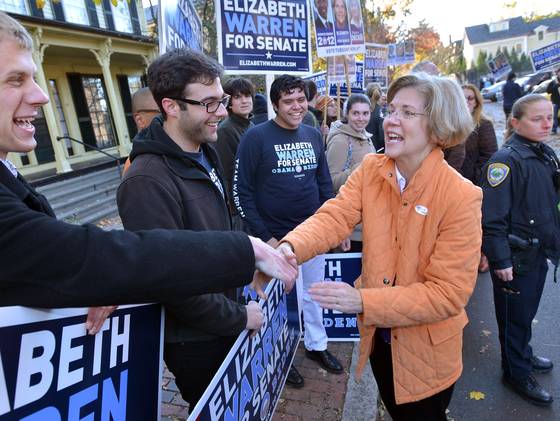
Massachusetts Senator Elizabeth Warren
 
http://tpmdc.talkingpointsmemo.com/2013/03/elizabeth-warren-comes-out-swinging-banks-regulators.php

TPMDC

Elizabeth Warren Comes Out Swinging Against Banks

by SAHIL KAPUR 
MARCH 11, 2013
TPM


Progressives fell in love with Elizabeth Warren because they saw in her a fighter — someone who would break from Washington’s longstanding tradition of cozying up to big banks and instead hold them accountable for bad behavior.

She hasn’t disappointed.

Just two months into her new job as Massachusetts senator, the former consumer advocate has used her perch to publicize and rail against shady practices by financial institutions and what she views as leniency from the regulators tasked with overseeing them.

The latest example came last Thursday during a Banking Committee hearing, when Warren demanded answers from a panel of federal regulators as to why the multinational bank HSBC got off with a fine for money laundering for Mexican drug cartels — along with violating international sanctions against several countries, including Iran and Libya — when people caught with drugs go to jail for life.

“No one individual went to trial, no individual was banned from banking and there was no hearing to consider shutting down HSBC’s activities here in the United States,” Warren said. “So … what does it take? How many billions of dollars do you have to launder for drug lords and how many economic sanctions do you have to violate before someone will consider shutting down a financial institution like this?”

When her questions were repeatedly dodged by Treasury’s overseer of financial crimes David Cohen and Federal Reserve governor Jerome Powell, it set her off.

“If you’re caught with an ounce of cocaine, the chances are good you’re going to go to jail. If it happens repeatedly, you may go to jail for the rest of your life,” Warren said. “But evidently, if you launder nearly a billion dollars for drug cartels and violate international sanctions, your company pays a fine and you go home and sleep in your own bed at night — every single individual associated with this. I just — I think that’s fundamentally wrong.”

HSBC declined to comment on Warren or the hearing, but said it is carrying out the $1.9 billion settlement it reached with the federal government last December.

“We continue to implement the December 2012 agreement with the US government, and since 2011, we have taken extensive actions to put in place the highest standards to protect against current and emerging threats from financial crime,” HSBC spokesman Rob Sherman told TPM. “To do our part in the long-term fight against financial crime, we also will continue to work closely with governments and regulators around the world.”

That hearing followed an exchange in mid-February when Warren caught a panel of half a dozen senior bank regulators flat-footed by asking them, simply: “Can you identify when you last took [one of] the Wall Street banks to trial?”

“We do not have to bring people to trial,” said Thomas Curry, who leads the Office of the Comptroller of the Currency. She retorted, “I appreciate that you say you don’t have to bring them to trial. My question is when did you bring them to trial?”

None of the regulators could answer, responding with a series of dodges and non sequiturs. Warren had made her point — and she didn’t hesitate to drive it home.

“There are district attorneys and United States attorneys out there every day squeezing ordinary citizens on sometimes very thin grounds and taking them to trial in order to make an example, as they put it,” the freshman senator said. “I’m really concerned that ‘too big to fail’ has become ‘too big for trial.’”


Prior to her Senate run, Warren helped craft and initially lead the Consumer Financial Protection Bureau until Republican filibusters forced her out. During her campaign against former Sen. Scott Brown (R-MA), she promised to fight for consumers and take on errant financial practices widely seen as having incubating the collapse of 2008-2009.

Big business suspected Warren would make life uncomfortable for them. The U.S. Chamber of Commerce warned during the campaign that “no other candidate in 2012 represents a greater threat to free enterprise than Professor Warren” — a reference to her time as a Harvard Law School professor.

The Progressive Change Campaign Committee, a liberal activist group which helped elect Warren, is thrilled with her so far, sending their members videos of her exchanges with regulators. An email last weekend solicits donations to “mobilize support for Warren’s agenda.”

“Bank regulators need to hold Wall Street accountable and Elizabeth Warren is doing her best to make sure that happens,” said Matt Wall, a PCCC spokesman. “We couldn’t be more proud.”


Follow @sahilkapur

Sahil Kapur is a congressional reporter for TPM. He previously covered politics and public policy for numerous publications including The Guardian and The Huffington Post. He can be reached at sahil [at] talkingpointsmemo.com.


http://www.rollingstone.com/politics/news/gangster-bankers-too-big-to-jail-20130214

Gangster Bankers:  Too Big to Jail

How HSBC hooked up with drug traffickers and terrorists.   And got away with it

by Matt Taibbi
FEBRUARY 14, 2013 
Rolling Stone
Illustration by Victor Juhasz

The deal was announced quietly, just before the holidays, almost like the government was hoping people were too busy hanging stockings by the fireplace to notice. Flooring politicians, lawyers and investigators all over the world, the U.S. Justice Department granted a total walk to executives of the British-based bank HSBC for the largest drug-and-terrorism money-laundering case ever. Yes, they issued a fine – $1.9 billion, or about five weeks' profit – but they didn't extract so much as one dollar or one day in jail from any individual, despite a decade of stupefying abuses.

People may have outrage fatigue about Wall Street, and more stories about billionaire greedheads getting away with more stealing often cease to amaze. But the HSBC case went miles beyond the usual paper-pushing, keypad-punching  sort-of crime, committed by geeks in ties, normally associated  with Wall Street. In this case, the bank literally got away with murder – well, aiding and abetting it, anyway.

Daily Beast: HSBC Report Should Result in Prosecutions, Not Just Fines, Say Critics

For at least half a decade, the storied British colonial banking power helped to wash hundreds of millions of dollars for drug mobs, including Mexico's Sinaloa drug cartel, suspected in tens of thousands of murders just in the past 10 years – people so totally evil, jokes former New York Attorney General Eliot Spitzer, that "they make the guys on Wall Street look good." The bank also moved money for organizations linked to Al Qaeda and Hezbollah, and for Russian gangsters; helped countries like Iran, the Sudan and North Korea evade sanctions; and, in between helping murderers and terrorists and rogue states, aided countless common tax cheats in hiding their cash.

"They violated every goddamn law in the book," says Jack Blum, an attorney and former Senate investigator who headed a major bribery investigation against Lockheed in the 1970s that led to the passage of the Foreign Corrupt Practices Act. "They took every imaginable form of illegal and illicit business."

That nobody from the bank went to jail or paid a dollar in individual fines is nothing new in this era of financial crisis. What is different about this settlement is that the Justice Department, for the first time, admitted why it decided to go soft on this particular kind of criminal. It was worried that anything more than a wrist slap for HSBC might undermine the world economy. "Had the U.S. authorities decided to press criminal charges," said Assistant Attorney General Lanny Breuer at a press conference to announce the settlement, "HSBC would almost certainly have lost its banking license in the U.S., the future of the institution would have been under threat and the entire banking system would have been destabilized."

It was the dawn of a new era. In the years just after 9/11, even being breathed on by a suspected terrorist could land you in extralegal detention for the rest of your life. But now, when you're Too Big to Jail, you can cop to laundering terrorist cash and violating the Trading With the Enemy Act, and not only will you not be prosecuted for it, but the government will go out of its way to make sure you won't lose your license. Some on the Hill put it to me this way: OK, fine, no jail time, but they can't even pull their charter? Are you kidding?

But the Justice Department wasn't finished handing out Christmas goodies. A little over a week later, Breuer was back in front of the press, giving a cushy deal to another huge international firm, the Swiss bank UBS, which had just admitted to a key role in perhaps the biggest antitrust/price-fixing case in history, the so-called LIBOR scandal, a massive interest-rate rigging conspiracy involving hundreds of trillions ("trillions," with a "t") of dollars in financial products. While two minor players did face charges, Breuer and the Justice Department worried aloud about global stability as they explained why no criminal charges were being filed against the parent company.

"Our goal here," Breuer said, "is not to destroy a major financial institution."

A reporter at the UBS presser pointed out to Breuer that UBS had already been busted in 2009 in a major tax-evasion case, and asked a sensible question. "This is a bank that has broken the law before," the reporter said. "So why not be tougher?"

"I don't know what tougher means," answered the assistant attorney general.

Also known as the Hong Kong and Shanghai Banking Corporation, HSBC has always been associated with drugs. Founded in 1865, HSBC became the major commercial bank in colonial China after the conclusion of the Second Opium War. If you're rusty in your history of Britain's various wars of Imperial Rape, the Second Opium War was the one where Britain and other European powers basically slaughtered lots of Chinese people until they agreed to legalize the dope trade (much like they had done in the First Opium War, which ended in 1842).

A century and a half later, it appears not much has changed. With its strong on-the-ground presence in many of the various ex-colonial territories in Asia and Africa, and its rich history of cross-cultural moral flexibility, HSBC has a very different international footprint than other Too Big to Fail banks like Wells Fargo or Bank of America. While the American banking behemoths mainly gorged themselves on the toxic residential-mortgage trade that caused the 2008 financial bubble, HSBC took a slightly different path, turning itself into the destination bank for domestic and international scoundrels of every possible persuasion.

Three-time losers doing life in California prisons for street felonies might be surprised to learn that the no-jail settlement Lanny Breuer worked out for HSBC was already the bank's third strike. In fact, as a mortifying 334-page report issued by the Senate Permanent Subcommittee on Investigations last summer made plain, HSBC ignored a truly awesome quantity of official warnings.

In April 2003, with 9/11 still fresh in the minds of American regulators, the Federal Reserve sent HSBC's American subsidiary a cease-and-desist  letter, ordering it to clean up its act and make a better effort to keep criminals and terrorists from opening accounts at its bank. One of the bank's bigger customers, for instance, was Saudi Arabia's Al Rajhi bank, which had been linked by the CIA and other government agencies to terrorism. According to a document cited in a Senate report, one of the bank's founders, Sulaiman bin Abdul Aziz Al Rajhi, was among 20 early financiers of Al Qaeda, a member of what Osama bin Laden himself apparently called the "Golden Chain." In 2003, the CIA wrote a confidential report about the bank, describing Al Rajhi as a "conduit for extremist finance." In the report, details of which leaked to the public by 2007, the agency noted that Sulaiman Al Rajhi consciously worked to help Islamic "charities" hide their true nature, ordering the bank's board to "explore financial instruments that would allow the bank's charitable contributions to avoid official Saudi scrutiny." (The bank has denied any role in financing extremists.)

In January 2005, while under the cloud of its first double-secret -probation agreement with the U.S., HSBC decided to partially sever ties with Al Rajhi. Note the word "partially": The decision  would only apply to Al Rajhi banking and not to its related trading company, a distinction that tickled executives inside the bank. In March 2005, Alan Ketley, a compliance officer for HSBC's American subsidiary, HBUS, gleefully told Paul Plesser, head of his bank's Global Foreign Exchange Department, that it was cool to do business with Al Rajhi Trading. "Looks like you're fine to continue dealing with Al Rajhi," he wrote. "You'd better be making lots of money!"

But this backdoor arrangement with bin Laden's suspected "Golden Chain" banker wasn't direct enough – many HSBC executives wanted the whole shebang restored. In a remarkable e-mail sent in May 2005, Christopher Lok, HSBC's head of global bank notes, asked a colleague if they could maybe go back to fully doing business with Al Rajhi as soon as one of America's primary banking regulators, the Office of the Comptroller of the Currency, lifted the 2003 cease-and-desist order: "After the OCC closeout and that chapter is hopefully finished, could we revisit Al Rajhi again? London compliance has taken a more lenient view."

After being slapped with the order in 2003, HSBC began blowing off its requirements both in letter and in spirit – and on a mass scale, too. Instead of punishing the bank, though, the government's response was to send it more angry letters. Typically, those came in the form of so-called "MRA" (Matters Requiring Attention) letters sent by the OCC. Most of these touched upon the same theme, i.e., HSBC failing to do due diligence on the shady characters who might be depositing money in its accounts or using its branches to wire money. HSBC racked up these "You're Still Screwing Up and We Know It" orders by the dozen, and in just one brief stretch between 2005 and 2006, it received 30 different formal warnings.

Nonetheless, in February 2006 the OCC under George Bush suddenly decided to release HSBC from the 2003 cease-and-desist  order. In other words, HSBC basically violated its parole 30 times in just more than a year and got off anyway. The bank was, to use the street term, "off paper" – and free to let the Al Rajhis of the world come rushing back.

After HSBC fully restored its relationship with the apparently terrorist-friendly Al Rajhi Bank in Saudi Arabia, it supplied the bank with nearly 1 billion U.S. dollars. When asked by HSBC what it needed all its American cash for, Al Rajhi explained that people in Saudi Arabia need dollars for all sorts of reasons. "During summer time," the bank wrote, "we have a high demand from tourists traveling for their vacations."

The Treasury Department keeps a list compiled by the Office of Foreign Assets Control, or OFAC, and American banks are not supposed to do business with anyone on the OFAC list. But the bank knowingly helped banned individuals elude the sanctions process. One such individual was the powerful Syrian businessman Rami Makhlouf, a close confidant of the Assad family. When Makhlouf appeared on the OFAC list in 2008, HSBC responded not by severing ties with him but by trying to figure out what to do about the accounts the Syrian power broker had in its Geneva and Cayman Islands branches. "We have determined that accounts held in the Caymans are not in the jurisdiction of, and are not housed on any systems in, the United States," wrote one compliance officer. "Therefore, we will not be reporting this match to OFAC."

Translation: We know the guy's on a terrorist list, but his accounts are in a place the Americans can't search, so screw them.

Remember, this was in 2008 – five years after HSBC had first been caught doing this sort of thing. And even four years after that, when being grilled by Michigan Sen. Carl Levin in July 2012, an HSBC executive refused to absolutely say that the bank would inform the government if Makhlouf or another OFAC-listed name popped up in its system – saying only that it would "do everything we can."

The Senate exchange highlighted an extremely frustrating dynamic government investigators have had to face with Too Big to Jail megabanks: The same thing that makes them so attractive to shady customers – their ability to instantaneously move money around the world to places like the Cayman Islands and Switzerland – makes it easy for them to play dumb with regulators by hiding behind secrecy laws.

When it wasn't banking for shady Third World characters, HSBC was training its mental firepower on the problem of finding creative ways to allow it to do business with countries under U.S. sanction, particularly Iran. In one memo from HSBC's Middle East subsidiary, HBME, the bank notes that it could make a lot of money with Iran, provided it dealt with what it termed "difficulties" – you know, those pesky laws.

"It is anticipated that Iran will become a source of increasing income for the group going forward," the memo says, "and if we are to achieve this goal we must adopt a positive stance when encountering difficulties."

The "positive stance" included a technique called "stripping," in which foreign subsidiaries like HSBC Middle East or HSBC Europe would remove references to Iran in wire transactions to and from the United States, often putting themselves in place of the actual client name to avoid triggering OFAC alerts. (In other words, the transaction would have HBME listed on one end, instead of an Iranian client.)

For more than half a decade, a whopping $19 billion in transactions involving Iran went through the American financial system, with the Iranian connection kept hidden in 75 to 90 percent of those transactions. HSBC has been headquartered in England for more than two decades – it's Europe's largest bank, in fact – but it has major subsidiary operations in every corner of the world. What's come out in this investigation is that the chiefs in the parent company often knew about shady transactions when the regional subsidiary did not. In the case of banned Iranian transactions, for instance, there are multiple e-mails from HSBC's compliance head, David Bagley, in which he admits that HSBC's American subsidiary probably has no clue that HSBC Europe has been sending it buttloads of banned Iranian money.

"I am not sure that HBUS are aware of the fact that HBEU are already providing clearing facilities for four Iranian banks," he wrote in 2003. The following year, he made the same observation. "I suspect that HBUS are not aware that [Iranian] payments may be passing through them," he wrote.

What's the upside for a bank like HSBC to do business with banned individuals, crooks and so on? The answer is simple: "If you have clients who are interested in 'specialty services'  – that's the euphemism for the bad stuff – you can charge 'em whatever you want," says former Senate investigator Blum. "The margin on laundered money for years has been roughly 20 percent."

Those charges might come in many forms, from upfront fees to promises to keep deposits at the bank for certain lengths of time. However you structure it, the possibilities for profit are enormous, provided you're willing to accept money from almost anywhere. HSBC, its roots in the raw battlefield capitalism of the old British colonies and its strong presence in Asia, Africa and the Middle East, had more access to customers needing "specialty services" than perhaps any other bank.

And it worked hard to satisfy those customers. In perhaps the pinnacle innovation in the history of sleazy banking practices, HSBC ran a preposterous offshore operation in Mexico that allowed anyone to walk into any HSBC Mexico branch and open a U.S.-dollar account (HSBC Mexico accounts had to be in pesos) via a so-called "Cayman Islands branch" of HSBC Mexico. The evidence suggests customers barely had to submit a real name and address, much less explain the legitimate origins of their deposits.

If you can imagine a drive-thru heart-transplant clinic or an airline that keeps a fully-stocked minibar in the cockpit of every airplane, you're in the ballpark of grasping the regulatory absurdity of HSBC Mexico's "Cayman Islands branch." The whole thing was a pure shell company, run by Mexicans in Mexican bank branches.

At one point, this figment of the bank's corporate imagination had 50,000 clients, holding a total of $2.1 billion in assets. In 2002, an internal audit found that 41 percent of reviewed accounts had incomplete client information. Six years later, an e-mail from a high-ranking HSBC employee noted that 15 percent of customers didn't even have a file. "How do you locate clients when you have no file?" complained the executive.

It wasn't until it was discovered that these accounts were being used to pay a U.S. company allegedly supplying aircraft to Mexican drug dealers that HSBC took action, and even then it closed only some of the "Cayman Islands branch" accounts. As late as 2012, when HSBC executives were being dragged before the U.S. Senate, the bank still had 20,000 such accounts worth some $670 million – and under oath would only say that the bank was "in the process" of closing them.

Meanwhile, throughout all of this time, U.S. regulators kept examining HSBC. In an absurdist pattern that would continue through the 2000s, OCC examiners would conduct annual reviews, find the same disturbing shit they'd found for years, and then write about the bank's problems as though they were being discovered for the first time. From the 2006 annual OCC review: "During the year, we identified a number of areas lacking consistent, vigilant adherence to BSA/AML policies. . . . Management responded positively and initiated steps to correct weaknesses and improve conformance with bank policy. We will validate corrective action in the next examination cycle."

Translation: These guys are assholes, but they admit it, so it's cool and we won't do anything.

A year later, on July 24th, 2007, OCC had this to say: "During the past year, examiners identified a number of common themes, in that businesses lacked consistent, vigilant adherence to BSA/AML policies. Bank policies are acceptable. . . . Management continues to respond positively and initiated steps to improve conformance with bank policy."

Translation: They're still assholes, but we've alerted them to the problem and everything'll be cool.

By then, HSBC's lax money-laundering controls had infected virtually the entire company. Russians identifying themselves as used-car salesmen were at one point depositing $500,000 a day into HSBC, mainly through a bent traveler's-checks operation in Japan. The company's special banking program for foreign embassies was so completely fucked that it had suspicious-activity  alerts backed up by the thousands. There is also strong evidence that the bank was allowing clients in Sudan, Cuba, Burma and North Korea to evade sanctions.

When one of the company's compliance chiefs, Carolyn Wind, raised concerns that she didn't have enough staff to monitor suspicious activities at a board meeting in 2007, she was fired. The sheer balls it took for the bank to ignore its compliance executives and continue taking money from so many different shady sources  while ostensibly it had regulators swarming  all over its every move is incredible. "You can't make up more egregious money-laundering that permeated an entire institution," says Spitzer.

By the late 2000s, other law enforcement agencies were beginning to catch HSBC's scent. The Department of Homeland Security started investigating HSBC for laundering drug money, while the attorney general's office in West Virginia snooped around HSBC's involvement in a Medicare-fraud case. A federal intra-agency meeting was convened in Washington in September 2009, at which it was determined that HSBC was out of control and needed to be investigated more closely.

The bank itself was then notified that its usual OCC review was being "expanded." More OCC staff was assigned to pore through HSBC's books, and, among other things, they found a backlog of 17,000 alerts of suspicious activity that had not been processed. They also noted that the bank had a similar pileup of subpoenas in money-laundering cases.

Finally it seemed the government was on the verge of becoming genuinely pissed off. In March 2010, after seeing countless ultimatums ignored, they issued one more, giving HSBC three months to clear that goddamned 17,000-alert backlog or else there would be serious consequences. HSBC met that deadline, but months later the OCC again found the bank's money-laundering controls seriously wanting, forcing the government to take, well . . . drastic action, right?

Sort of! In October 2010, the OCC took a deep breath, strapped on its big-boy pants and . . . issued a second cease-and-desist order!

In other words, it was "Don't Do It Again" – again. The punishment for all of that dastardly defiance was to bring the regulatory process right back to the same kind of double-secret-probation  order they'd tried in 2003.

Not to say that HSBC didn't make changes after the second Don't Do It Again order. It did – it hired some people.


In the summer of 2010, 25-year-old Everett Stern was just out of business school, fighting a mild case of wanderlust and looking for a job but also for adventure. His dream was to be a CIA agent, battling bad guys and snatching up Middle Eastern terrorists. He applied to the agency's clandestine service, had an interview even, but just before graduation, the bespectacled, youthfully exuberant Stern was turned down.
He was crushed, but then he found an online job posting that piqued his interest. HSBC, a major international bank, was looking for people to help with its anti-money-laundering program. "I thought this was exactly what I wanted to do," he says. "It sounded so exciting."

Stern went up to HSBC's offices in New Castle, Delaware, for an interview, and that October, just days after the OCC issued the second Don't Do It Again letter, he started work as part of HSBC's "expanded" anti­money-laundering program.

From the outset, Stern knew there was something weird about his job. "I had to go to the library to take out books on money-laundering," Stern says now, laughing. "That's how bad it was." There were no training courses or seminars on money-laundering  – what it was, how to detect it. His work mainly consisted of looking up the names of unsavory characters on the Internet and then running them through the bank's internal systems to see if they popped up on any account names anywhere.

Even weirder, nobody seemed to care if anybody was doing any actual work. The Delaware office was mostly empty for a long while, just a giant unpainted room with a few hastily arranged cubicles and only a dozen or so people in it, and nobody really watching any of the workers. Stern and a fellow co-worker  would routinely finish all their work by 10:30 in the morning, then spend a few hours throwing rocks into a quarry located behind the bank offices. Then they would go back to their cubicles and hang out until 3 p.m. or so, or until it was at least plausible that they'd put in a real workday. "If we asked for any more work," Stern says, "they got angry."

Stern earned a starting salary of $54,900.

Soon enough, though, out of boredom and also maybe a little bit of patriotism, Stern started to sift through some of the backlogged alerts and tried to make sense of them. Almost immediately, he found a series of deeply concerning transactions. There was an exchange company wiring large sums of money to untraceable destinations in the Middle East. A Saudi fruit company was sending millions, Stern found with a simple Internet search, to a high-ranking figure in the Yemeni wing of the Muslim Brotherhood. Stern even learned that HSBC was allowing millions of dollars to be moved from the Karaiba chain of super markets in Africa to a firm called Tajco, run by the Tajideen brothers, who had been singled out by the Treasury Department as major financiers of Hezbollah.

Every time Stern brought one of these discoveries to his bosses, they rolled their eyes at him, if not worse. When he alerted his boss that a shipping company with ties to Iran was doing a lot of business with the bank, he blew up. "You called me over for this?" the boss snapped.

Soon after, the empty office started to fill up. What HSBC did in the way of hiring new staff was actually pretty clever. It liqui dated its credit-card-collections unit and moved the bulk of the employees over to the anti-money-laundering department. Again, without really training anyone at all, it put hundreds of loud, gum-chewing, mostly uneducated, occasionally rowdy call-center workers on a new gig, turning them into money-laundering investigators.

Stern says his co-workers not only sucked at their jobs, they didn't even know what their jobs were. "You could walk into that building today," he says, "and ask anyone there what money laundering is – and I guarantee you, no one will know."

When something fishy pops up in connection with a bank account, the bank generates an alert. An alert can be birthed by almost anything, from someone wiring $9,999 (to keep under the $10K reporting level) to someone wiring large sums in round numbers to someone else opening an account with a phony-sounding name or address.

When an alert gets generated, the bank is supposed to promptly investigate the matter. If the bank doesn't clear the alert, it creates a "Suspicious Activity Report," which is handed over to the Treasury Department to be investigated.

Stern then found himself in the middle of a perverse sort-of anti compliance mechanism. HSBC had "complied" with the government's Don't Do It Again, Again order by hiring hundreds of bodies whom it turned into an army for whitewashing suspicious transactions. Remember, the complaint against HSBC was not so much that it had specifically allowed terrorist or drug money through, but that it had allowed suspicious accounts to pile up without being checked.

The boss at Stern's Delaware office gave his new team goals: Everyone was to try to clear 72 alerts a week. For those of you keeping score at home, that's nearly two alerts investigated and cleared every hour. According to Stern, almost any kind of information was good enough to clear an alert. "Basically, if a company had a website, you could clear them," he says.

Soon enough, HSBC's compliance executives were circulating cheery e-mails. "Great job by some Delaware professionals in the early part of the week," wrote Stern's boss on June 30th, 2011. The e-mail was subject-lined, "The 60-plus crowd," signifying accolades to employees who had cleared more than 60 suspicious transactions that week.

After trying in vain to convince his bosses to at least let him do his job and look for money-laundering, Stern decided to turn whistle-blower, telling the FBI and other agencies what was going on at the bank. He left work at HSBC in 2011, fully expecting that the government would drop the hammer on his former employers.

By that time, numerous agencies, including the Department of Homeland Security, had crawled all the way up HSBC's backside, among other things examining it as part of a major international narcotics investigation. In one four-year period between 2006 and 2009, an astonishing $200 trillion in wire transfers (including from high-risk countries like Mexico) went through without any monitoring at all. The bank also failed to do due diligence on the purchase of an incredible $9 billion in physical U.S. dollars from Mexico and played a key role in the so-called Black Market Peso Exchange, which allowed drug cartels in both Mexico and Colombia to convert U.S. dollars from drug sales into pesos to be used back home. Drug agents discovered that dealers in Mexico were building special cash boxes to fit the precise dimensions of HSBC teller windows.

Former bailout inspector and federal prosecutor Neil Barofsky, who has helped secure numerous foreign money-laundering indictments, points out that the people HSBC was doing business with, like Colombia's Norte del Valle and Mexico's Sinaloa cartels, were "the worst trafficking organizations imaginable" – groups that don't just commit murder on a mass scale but are known for beheadings, torture videos ("the new thing now," he says) and other atrocities, none of which happens without money launderers. It's for this reason, Barofsky says, that drug prosecutors are not shy about dropping heavy prison sentences on launderers. "Frankly, our view of money-laundering was that it was on par with, and as significant as, the traffickers themselves," he says.

Barofsky was involved in the first extradition of a Colombian national (Pablo Trujillo, a member of the same cartel that HSBC moved money for) on money laundering charges. "That guy got 10 years," says Barofsky. "HSBC was doing the same thing, only on a much larger scale than my schmuck was doing."

Clearly, HSBC had violated the 2010 Don't Do It Again, Again order. Everett Stern saw it with his own eyes; so did the OCC and the U.S. Senate, whose Permanent Subcommittee on Investigations decided to target the company for a yearlong investigation into global money-laundering. The bank itself, in response to the Senate investigation, acknowledged that it had "sometimes failed to meet the standards that regulators and customers expect." It would later go on to say that it was even "profoundly sorry."

A few days after Thanksgiving 2012, Stern heard that the Justice Department was about to announce a settlement. Since he'd left HSBC the year before,  he'd had a rough time. Going public with his allegations had left him emotionally and financially devastated. He'd been unable to find a job, and at one point even applied for welfare. But now that the feds were finally about to drop the hammer on HSBC, he figured he'd have the satisfaction of knowing that his sacrifice had been worthwhile.

So he went to New York and sat in a hotel room, waiting for reporters to call for his comments. When he heard the news that the "punishment" Breuer had announced was a deferred prosecution agreement – a Don't Do It Again, Again, Again agreement, if you will – he was flabbergasted.

"I thought, 'All that, for nothing?' " he says. "I couldn't believe it."

The writer Ambrose Bierce once said there's only one thing in the world worse than a clarinet: two clarinets. In the same vein, there's only one thing worse than a totally corrupt bank: many corrupt banks.

If the HSBC deal showed how much dastardly crap the state could tolerate from one bank, Breuer was back a week later to show that the government would go just as easy on banks that team up with other banks to perpetrate even bigger scandals. On December 19th, 2012, he announced that the Justice Department was essentially letting Swiss banking giant UBS off the hook for its part in what is likely the biggest financial scam of all time.

The so-called LIBOR scandal, which is at the heart of the UBS settlement, makes Enron look like a parking violation. Many of the world's biggest banks, including Switzerland's UBS, Britain's Barclays and the Royal Bank of Scotland, got together and secretly conspired to manipulate the London Interbank Offered Rate, or LIBOR, which measures the rate at which banks lend to each other. Many, if not most, interest rates are pegged to LIBOR. The prices of hundreds of trillions of dollars of financial products are tied to LIBOR, everything from commercial loans to credit cards to mortgages to municipal bonds to swaps and currencies.

If you can imagine executives at Ford, GM, Mitsubishi, BMW and Mercedes getting together every morning to fix the prices of aluminum and stainless steel, you have a rough idea of what the LIBOR scandal is like, except that in the car-company analogy, you'd be dealing with absurdly smaller numbers. These are the world's biggest banks getting together every morning to essentially fix the price of money. Low LIBOR rates are an indicator that banks are strong and healthy. These banks were faking the results of their daily physicals. In banking terms, they were juicing.

Two different types of manipulation took place. In 2008, during the heat of the global crash, banks artificially submitted low rates in order to present an image of financial soundness to the markets. But at other times over the course of years, individual traders schemed to move rates up or down in order to profit on individual trades.

There is nobody anywhere growing weed strong enough to help the human mind grasp the enormity of this crime. It's a conspiracy so massive that the lawyers who are suing the banks are having an extremely difficult time figuring out how to calculate the damage.

Here's how it works: Every morning, 16 of the world's largest banks submit numbers to a London based panel indicating what interest rates they're charging other banks to borrow money and what they themselves are charged. The LIBOR panel then takes those 16 different interest rates, tosses out the four highest and the four lowest, and averages out the remaining eight to create that day's LIBOR rates – the basis for interest rates almost everywhere in the world.

The fact that the LIBOR panel tosses out the four highest and lowest numbers every day is an important detail, because it means that it is difficult to artificially influence the final rate unless multiple banks are conspiring with each other. One bank lying its ass off and reporting that banks are lending money to each other basically for free doesn't move the needle much. To really be sure you're creating an artificially low or high interest rate, you need a bunch of banks on board – and it turns out that they were.

For perhaps as far back as 20 years, banks have been submitting phony numbers, often in concert with other banks. They did it for a variety of reasons, but the big one, typically, is that a bank trader is holding some investment tied to LIBOR – bundles of currencies, municipal bonds, mortgages, whatever – that would earn more money if the interest rate was lower. So what would happen is, some schmuck trader at Bank X would call the LIBOR submitter and offer him cash, booze, a blow job or just a pat on the back to get him to submit a fake number that day.

The scandal first blew up last year when the British megabank Barclays admitted to its part in the fixing of LIBOR rates. British regulators released a cache of disgusting e-mails showing traders from many different banks cheerfully monkeying around with your credit-card bills, your mortgage rates, your tax bill, your IRA account, etc., so that they could make out better on some sordid trade they had on that day. In one case, a trader from an unnamed bank sent an e-mail to a Barclays trader thanking him for helping to fix interest rates and promising a kickass bottle of bubbly for his efforts:

"Dude. I owe you big time! Come over one day after work, and I'm opening a bottle of Bollinger."

UBS was the next bank to confess, and its settlement – $1.5 billion in fines – was much the same, only the e-mails released were, if anything, more disgusting and damning. The British Financial Services Authority – equivalent to our SEC – discovered thousands of requests to fudge rates over a period of years involving dozens of different individuals and multiple banks. In many cases, the misdeeds were committed more or less openly, in writing, with traders and brokers baldly offering bribes in texts and e-mails with an obvious unconcern for punishment that later, sadly, proved justified.

"I will fucking do one humongous deal with you," begged one UBS trader who wanted a broker to fix the rate. "I'll pay, you know, $50,000, $100,000."

British regulators aren't hiding the size of the scandal. The UBS settlement demonstrated, without a doubt, that the LIBOR scandal involved more than just one or two banks, and probably involved hundreds of people at many of the world's largest and most prestigious financial institutions – in other words, a truly epic case of anti-competitive collusion that called into question whether the world's biggest banks are innovating a new, not-entirely capitalist form of high finance. "We have said there are five further institutions under investigation," says Christopher Hamilton of the FSA. "And there is a large number of individuals as well." (At press time, another bank, the Royal Bank of Scotland, also settled for LIBOR-related offenses.)

This dovetailed with what Bob Diamond, the former head of Barclays, told the British Parliament the day after he stepped down last year. "There is an industrywide problem coming out now," he said. Michael Hausfeld, a famed class-action lawyer who is suing the banks over LIBOR on behalf of cities like Baltimore whose investments lost money when interest rates were lowered, says the public still hasn't grasped the importance of comments like Diamond's. "Diamond essentially said, 'This is an industrywide problem,'" Hausfeld says. "But nobody has defined what this is yet."

Hausfeld's point – that Diamond's "industrywide problem" might be more than just a few guys messing with rates; it could be a systemic effort to pervert capitalism itself – underscores the extreme miscalculation of both recent no-prosecution deals.

At HSBC, the bank did more than avert its eyes to a few shady transactions. It repeatedly defied government orders as it made a conscious, years-long effort to completely stop discriminating between illegitimate and legitimate money. And when it somehow talked the U.S. government into crafting a settlement over these offenses with the lunatic aim of preserving the bank's license, it succeeded, finally, in making crime mainstream.

UBS, meanwhile, was a similarly elemental case, in which the offenses  didn't just violate the letter of the law – they threatened the integrity of the competitive system. If you're going to let hundreds of boozed-up bankers spend every morning sending goofball e-mails to each other, giving each other super hero nicknames while they rigged the cost of money (spelling-challenged UBS traders dubbed themselves, among other things, "captain caos," the "three muscateers" and "Superman"), you might as well give up on capitalism entirely and just declare the 16 biggest banks in the world the International Bureau of Prices.

Thus, in the space of just a few weeks, regulators in Britain and America teamed up to declare near-total surrender to both crime and monopoly. This was more than a couple of cases of letting rich guys walk. These were major policy decisions that will reverberate for the next generation.

Even worse than the actual settlements was the explanation Breuer offered for them. "In the world today of large institutions, where much of the financial world is based on confidence," he said, "a right resolution is to ensure that counter-parties don't flee an institution, that jobs are not lost, that there's not some world economic event that's disproportionate to the resolution we want."

In other words, Breuer is saying the banks have us by the balls, that the social cost of putting their executives in jail might end up being larger than the cost of letting them get away with, well, anything.

This is bullshit, and exactly the opposite of the truth, but it's what our current government believes. From JonBenet to O.J. to Robert Blake, Americans have long understood that the rich get good lawyers and get off, while the poor suck eggs and do time. But this is something different. This is the government admitting to being afraid to prosecute the very powerful – something it never did even in the heydays of Al Capone or Pablo Escobar, something it didn't do even with Richard Nixon. And when you admit that some people are too important to prosecute, it's just a few short steps to the obvious corollary – that everybody else is unimportant enough to jail.

An arrestable class and an unarrestable class. We always suspected it, now it's admitted. So what do we do?


This story is from the February 28th, 2013 issue of Rolling Stone.


MITT AND HIS BAIN CAPITAL GANG DURING THE RAYGUN YEARS...TRICKLE DOWN ANYONE?...

Wednesday, November 7, 2012

President Obama Soundly Defeats Mitt Romney And Is Re-elected To A Second Term; Five Women From the Democratic Party Are Elected To The Senate

Damon Winter/The New York Times
Americans voted to give President Obama a second chance to change Washington.

Damon Winter/The New York Times
President Obama, with his family, took the stage at McCormick Place in Chicago early Wednesday to speak at his victory party. 


All,


Once again just as they did in 2008 in soundly defeating the McCain/Palin ticket the breathtaking strategic, tactical, and highly disciplined organizational brilliance of Team Obama (especially the incredible campaign leadership of the 'Two Davids'--Axelrod and Plouffe--as well as that of their major organizing cohorts Jim Messina, and the always dynamic Stephanie Cutter) prevailed over the fiercely reactionary and billion dollar 'Super-Pac' fueled Romney and Ryan rightwing machine.  The winning combination of extraordinary political mobilization skills and creative mastery of social media linked to the historically unprecedented voter participation of Obama's vaunted national coalition of African Americans, Latinos, Women, Asian Americans and young people under 40 was a very convincing textbook example of how to effectively organize and motivate an emerging new national demographic coalition that in both stylistic and substantive terms opposes, repudiates, and categorically rejects the socially lethal doctrines of white supremacy and sexist patriarchy and misogyny that  thoroughly defines the Republican and Tea Party.

That said it is now essential that this same progressive coalition make absolutely certain and insist that the President fight and stand up to the rightwing bullies in Congress and not give in to their demagogic bluster and blackmail on every major issue facing us in the very near future.  Obama ran a GREAT campaign and seriously deserves all the kudos and hyperbolic praise he has received.  Hopefully this will remind him that to be a great leader he must have and be prepared  to  assert courage, integrity, determination, and conviction.   Only time will tell if he--and the rest of us--has what it takes to truly change the direction of this country...Stay tuned...

Kofi


Obama Wins New Term as Electoral Advantage Holds
By JEFF ZELENY and JIM RUTENBERG
November 6, 2012
New York Times
 
Barack Hussein Obama was re-elected president of the United States on Tuesday, overcoming powerful economic headwinds, a lock-step resistance to his agenda by Republicans in Congress and an unprecedented torrent of advertising as a divided nation voted to give him more time.

In defeating Mitt Romney, the president carried Colorado, Iowa, Ohio, New Hampshire, Virginia and Wisconsin, a near sweep of the battleground states, and was holding a narrow advantage in Florida. The path to victory for Mr. Romney narrowed as the night wore along, with Mr. Obama winning at least 303 electoral votes.

A cheer of jubilation sounded at the Obama campaign headquarters in Chicago when the television networks began projecting him as the winner at 11:20 p.m., even as the ballots were still being counted in many states where voters had waited in line well into the night. The victory was far narrower than his historic election four years ago, but it was no less dramatic.

“Tonight in this election, you, the American people, reminded us that while our road has been hard, while our journey has been long, we have picked ourselves up, we have fought our way back,” Mr. Obama told his supporters early Wednesday. “We know in our hearts that for the United States of America, the best is yet to come.”

Mr. Obama’s re-election extended his place in history, carrying the tenure of the nation’s first black president into a second term. His path followed a pattern that has been an arc to his political career: faltering when he seemed to be at his strongest — the period before his first debate with Mr. Romney — before he redoubled his efforts to lift himself and his supporters to victory.

The evening was not without the drama that has come to mark so many recent elections: For more than 90 minutes after the networks projected Mr. Obama as the winner, Mr. Romney held off calling him to concede. And as the president waited to declare victory in Chicago, Mr. Romney’s aides were prepared to head to the airport, suitcases packed, potentially to contest several close results.

But as it became increasingly clear that no amount of contesting would bring him victory, he called Mr. Obama to concede shortly before 1 a.m.

“I wish all of them well, but particularly the president, the first lady and their daughters,” Mr. Romney told his supporters in Boston. “This is a time of great challenges for America, and I pray that the president will be successful in guiding our nation.”

Hispanics made up an important part of Mr. Obama’s winning coalition, preliminary exit poll data showed. And before the night was through, there were already recriminations from Republican moderates who said Mr. Romney had gone too far during the primaries in his statements against those here illegally, including his promise that his get-tough policies would cause some to “self-deport.”

Mr. Obama, 51, faces governing in a deeply divided country and a partisan-rich capital, where Republicans retained their majority in the House and Democrats kept their control of the Senate. His re-election offers him a second chance that will quickly be tested, given the rapidly escalating fiscal showdown.

For Mr. Obama, the result brings a ratification of his sweeping health care act, which Mr. Romney had vowed to repeal. The law will now continue on course toward nearly full implementation in 2014, promising to change significantly the way medical services are administrated nationwide.

Confident that the economy is finally on a true path toward stability, Mr. Obama and his aides have hinted that he would seek to tackle some of the grand but unrealized promises of his first campaign, including the sort of immigration overhaul that has eluded presidents of both parties for decades.

But he will be venturing back into a Congressional environment similar to that of his first term, with the Senate under the control of Democrats and the House under the control of Republicans, whose leaders have hinted that they will be no less likely to challenge him than they were during the last four years.

The state-by-state pursuit of 270 electoral votes was being closely tracked by both campaigns, with Mr. Romney winning North Carolina and Indiana, which Mr. Obama carried four years ago. But Mr. Obama won Michigan, the state where Mr. Romney was born, and Minnesota, a pair of states that Republican groups had spent millions trying to make competitive.

Americans delivered a final judgment on a long and bitter campaign that drew so many people to the polls that several key states extended voting for hours. In Virginia and Florida, long lines stretched from polling places, with the Obama campaign sending text messages to supporters in those areas, saying: “You can still vote.”

Neither party could predict how the outcome would affect the direction of the Republican Party. Moderates were hopeful it would lead the rank and file to realize that the party’s grass-roots conservatism that Mr. Romney pledged himself to during the primaries doomed him in the general election. Tea Party adherents have indicated that they will argue that he was damaged because of his move to middle ground during the general election.

As he delivered his brief concession speech early Wednesday, Mr. Romney did not directly address the challenges facing Republicans. His advisers said that his second failed quest for the White House would be his last, with his running mate, Representative Paul D. Ryan of Wisconsin, standing as one of the leaders of the party.

“We have given our all to this campaign,” said Mr. Romney, stoic and gracious in his remarks. “I so wish that I had been able to fulfill your hopes to lead this country in a different direction.”

The results were more a matter of voters giving Mr. Obama more time than a second chance. Through most of the year slight majorities of voters had told pollsters that they believed his policies would improve the economy if they could stay in place into the future.

Mr. Obama’s campaign team built its coalition the hard way, through intensive efforts to find and motivate supporters who had lost the ardor of four years ago and, Mr. Obama’s strategists feared, might not find their way to polls if left to their own devices.

Up against real enthusiasm for Mr. Romney — or, just as important, against Mr. Obama — among Republicans and many independents, their strategy of spending vast sums of money on their get-out-the-vote operation seemed vindicated on Tuesday.

As opinion surveys that followed the first debate between Mr. Romney and Mr. Obama showed a tightening race, Mr. Obama’s team had insisted that its coalition was coming together as it hoped it would. In the end, it was not a bluff.

Even with Mr. Obama pulling off a new sweep of the highly contested battlegrounds from Nevada to New Hampshire, the result in each of the states was very narrow. The Romney campaign was taking its time early Wednesday to review the outcome and searching for any irregularities.

The top issue on the minds of voters was the economy, according to interviews, with three-quarters saying that economic conditions were not good or poor. But only 3 in 10 said things were getting worse, and 4 in 10 said the economy was improving.

Mr. Romney, who campaigned aggressively on his ability to turn around the deepest economic downturn since the Great Depression, was given a narrow edge when voters were asked which candidate was better equipped to handle the economy, the interviews found.

The electorate was split along partisan lines over a question that drove much of the campaign debate: whether it was Mr. Obama or his predecessor, George W. Bush, who bore the most responsibility for the nation’s continued economic challenges. About 4 in 10 independent voters said that Mr. Bush should be held responsible.

The president built a muscular campaign organization and used a strong financial advantage to hold off an array of forces that opposed his candidacy. The margin of his victory was smaller than in 2008 — he held an advantage of about 700,000 in the popular vote early Wednesday — but a strategic firewall in several battleground states protected his Electoral College majority.

As Mr. Romney gained steam and stature in the final weeks of the campaign, the Obama campaign put its hopes in perhaps one thing above all others: that the rebound in the auto industry after the president’s bailout package of 2009 would give him the winning edge in Ohio, a linchpin of his road to re-election.

Early interviews with voters showed that just over half of Ohio voters approved of the bailout, a result that was balanced by a less encouraging sign for the president: Some 4 in 10 said they or someone in their household had lost a job over the last four years.

He defeated Mr. Romney 52 percent to 47 percent in Hamilton County, home to Cincinnati, but only because of the number of votes he banked in the month leading up to Election Day.

Mr. Obama won despite losing some of his 2008 margins among his key constituencies, including among younger voters, blacks and Jewish voters, yet he appeared to increase his share among Hispanics and Asians. Early exit poll results showed Latinos representing about 1 in 10 voters nationwide, and voting for Mr. Obama in greater numbers than four years ago, making a difference in several states, including Colorado and Florida.

He held on to female voters, according to preliminary exit polls conducted by Edison Research, but he struggled even more among white men than he did four years ago.

Mr. Romney’s coalition included disproportionate support from whites, men, older people, high-income voters, evangelicals, those from suburban and rural counties, and those who call themselves adherents of the Tea Party — a group that had resisted him through the primaries but had fully embraced him by Election Day.

The Republican Party seemed destined for a new round of self-reflection over how it approaches Hispanics going forward, a fast-growing portion of the voting population that senior party strategists had sought to woo before a strain of intense activism against illegal immigration took hold within the Republican grass roots.

It was the first presidential election since the 2010 Supreme Court decision loosening restrictions on political spending, and the first in which both major-party candidates opted out of the campaign matching system that imposes spending limits in return for federal financing. And the overall cost of the campaign rose accordingly, with all candidates for federal office, their parties and their supportive “super PACs” spending more than $6 billion combined.

The results Tuesday were certain to be parsed for days to determine just what effect the spending had, and who would be more irate at the answer — the donors who spent millions of dollars of their own money for a certain outcome, or those who found a barrage of negative advertising to be major factors in their defeats.

While the campaign often seemed small and petty, with Mr. Romney and Mr. Obama intensely quarreling and bickering, the contest was actually rooted in big and consequential decisions, with the role of the federal government squarely at the center of the debate.

Though Mr. Obama’s health care law galvanized his most ardent opposition, and continually drew low ratings in polls as a whole, interviews with voters found that nearly half wanted to see it kept intact or expanded, a quarter wanted to see it repealed entirely and another quarter said they wanted portions of it repealed.

In Chicago, as crowds waited for Mr. Obama to deliver his speech, his supporters erupted into a roar of relief and elation. Car horns honked from the street as people chanted the president’s name.

“I feel like it’s a repudiation of everything the Republicans said in the campaign,” said Jasmyne Walker, 31, who jumped up and down on the edge of a stone planter in a downtown plaza. “Everybody said that if he lost it would be buyer’s remorse — that we were high on hope in 2008. This says we’re on the right track. I feel like this confirms that.”


Michael Cooper contributed reporting.
by Howard Fineman
11/07/2012
Huffington Post


NEW YORK -- President Barack Obama did not just win reelection tonight. His victory signaled the irreversible triumph of a new, 21st-century America: multiracial, multi-ethnic, global in outlook and moving beyond centuries of racial, sexual, marital and religious tradition.

Obama, the mixed-race son of Hawaii by way of Kansas, Indonesia, Los Angeles, New York and Chicago, won reelection in good part because he not only embodied but spoke to that New America, as did the Democratic Party he leads. His victorious coalition spoke for and about him: a good share of the white vote (about 45 percent in Ohio, for example); 70 percent or so of the Latino vote across the country, according to experts; 96 percent of the African-American vote; and large proportions of Asian Americans and Pacific Islanders.

The Republican Party, by contrast, has been reduced to a rump parliament of Caucasian traditionalism: white, married, church-going -- to oversimplify only slightly. "It's a catastrophe," said GOP strategist Steve Schmidt. "This is, this will have to be, the last time that the Republican Party tries to win this way."

The GOP chose as its standard-bearer Mitt Romney, whose own Mormon Church until recent decades discriminated officially against blacks. His campaign made little serious effort to reach out to Hispanics voters, and Romney hurt himself by taking far-right positions on immigration during the GOP primaries. He made no effort whatsoever in the black community.

Obama reached out not only racially and ethnically, but in terms of lifestyle. Analysts made fun of, and Republicans derided, his campaign's focus on discrete demographic and social slices of the electorate, including gays and lesbians. But the message was one about the future, not the American past.

U.S. Census numbers tell the story. In the first decade of the new millennium, the Asian-American population rose 43.3 percent, the African-American population 12.3 percent, the Latino community 43 percent -- and the white population just 5.7 percent.

To be sure, the president won because of his stand on the issues -- health care reform, Wall Street regulation, the auto industry bailout, among others. But his victory is something more: a sense that we are all in this together as a society, no matter who we are or how we live our lives.

I saw this new America at the heart of the Obama reelection effort, in their campaign offices. In one office in Virgina, for example, the local campaign manager was Pakistani-American, the volunteers were of every race and background, the people heading out to handle the signup drive were Hispanic, and the event they were working on was a concert by Bruce Springsteen.
Senator-Elect Elizabeth Warren
(Photo: Josh Reynolds, AP)
Democrats keep control of U.S. Senate
by Susan Davis
USA TODAY


Democrats are going to maintain their hold on the U.S. Senate.

3:05AM EST November 7, 2012 - Democrats will maintain control of the U.S. Senate after their candidates picked up Republican-held seats in Indiana, Maine and Massachusetts, leaving the GOP no path to a takeover with the remaining competitive races that remain undecided.

Senate Majority Leader Harry Reid, D-Nev., offered a concillatory tone and called for compromise as Congress faces a daunting series of fiscal challenges in the months ahead.

"Democrats and Republicans must come together, and show that we are up to the challenge," Reid said. "This is no time for excuses. This is no time for putting things off until later. We can achieve big things when we work together."

It is the second election cycle in a row in which Republicans were favored to make gains because they were defending fewer seats, only to see their chances diminish because of missteps by their own candidates.

Sen. John Cornyn, R-Texas, chairman of the National Republican Senatorial Committee, said the party needs to take some time to process the impact of Tuesday's results.

"It's clear that with our losses in the Presidential race, and a number of key Senate races, we have a period of reflection and recalibration ahead for the Republican Party," Cornyn said. "While some will want to blame one wing of the party over the other, the reality is candidates from all corners of our GOP lost tonight. Clearly we have work to do in the weeks and months ahead."

In Indiana, Republican Richard Mourdock failed to recover from a late controversy over his remarks at a debate that pregnancy resulting from rape is "God's will" in explaining his opposition to abortion rights. Democratic Rep. Joe Donnelly was declared the winner by a narrow margin in a victory that delivered a fatal blow to lingering GOP hopes for a takeover.

Indiana Republican Senate candidate Richard Mourdock failed to recover from a late controversy over his remarks on abortion rights.(Photo: Michael Conroy, AP)

Harvard University professor and former Obama administration official Elizabeth Warren handily defeated GOP Sen. Scott Brown in one of the highest-profile races of the 2012 cycle, and the most costly in the state's history. Her victory was critical to Democrats' efforts to maintain control and hailed by liberal activists who supported her campaign.

In Maine, former Gov. Angus King sailed to victory despite the GOP's best efforts to make it a competitive race. King ran as an independent and has not said which party he intends to caucus with, but he is widely expected to sit with Democrats in the chamber. To that end, King criticized GOP strategist Karl Rove in his victory speech for directing super PAC money into Maine in an effort to defeat King. "I hope that man never comes to Maine," King said.

An early duo of Democratic re-election victories came in Ohio for Sen. Sherrod Brown and in Florida for Sen. BIll Nelson, thwarting long-shot GOP efforts for pick-ups in those states. Recent Democratic concerns about Connecticut quickly evaporated after Democratic Rep. Chris Murphy handily defeated former World Wrestling Entertainment CEO Linda McMahon, who spent nearly $100 million of her own fortune for a Senate seat in 2010 and 2012.
Sen. Sherrod Brown thwarted a long-shot GOP effort to pick up Ohio.(Photo: Tony Dejak, AP)

In Missouri, Democratic Sen. Claire McCaskill, who was targeted heavily by Republicans, pulled out a convincing win against Republican Rep. Todd Akin, whose campaign foundered after he claimed that women who were victims of rape had a biological defense against becoming pregnant.

Former Democratic Gov. Tim Kaine defeated Republican former governor and senator George Allen in the hotly contested Virginia race, maintaining the party's hold on the seat. Democratic Rep. Tammy Baldwin defeated former GOP Gov. Tommy Thompson in Wisconsin and made history: She is the first openly gay person elected to the U.S. Senate.

Republicans scored a rare victory in Nebraska, where Republican Deb Fischer defeated former Democratic Sen. Bob Kerrey, who was seeking a comeback. Fischer's victory was a GOP pick-up because the seat is currently held by retiring Democratic Sen. Ben Nelson. GOP Rep. Jeff Flake also handily won in Arizona against Democrat Richard Carmona. Texas also elected Republican Ted Cruz, a popular candidate among Tea Party activists.

In Nevada, Democratic Rep. Shelley Berkley held a narrow lead over GOP Sen. Dean Heller, another potential Democratic pick-up, but the race remained tight. Republicans were also eyeing a potential pick-up in North Dakota, where Democrat Heidi Heitkamp held a narrow lead over GOP Rep. Rick Berg in a state Republican Mitt Romney won easily.

If either Berkley or Heitkamp secures a victory, 2012 would make history for sending a new record of non-incumbent freshman women senators to the Senate. The record was set in 1996 when four new women were sent to the Senate. Four women have already won including Baldwin, Fischer, Warren and Democrat Mazie Hirono in Hawaii.

Montana was too close to call in a race pitting incumbent Democratic Sen. Jon Tester against GOP Rep. Denny Rehberg in a state Romney carried comfortably.

There were 33 Senate seats up for re-election, 23 Democrats and 10 Republicans, and most incumbents were favored to win handily. Five Republican senators and 17 Democratic senators faced no real re-election threat. With Republicans maintaining control of the U.S. House, Congress will be divided by near-identical margins next year.

All,

Elizabeth is a REAL progressive and a very strong, independent, and effective leader.  She is now also the best and most accomplished grassroots activist and public intellectual in the U.S. Senate...

Kofi


Elizabeth Warren Election Results: 
Consumer Advocate Unseats Scott Brown
11/07/2012


Elizabeth Warren defeated Sen. Scott Brown (R-Mass.) Tuesday in the race for U.S. Senate, NBC News and CBS News projected.

The Harvard Law professor and consumer advocate had narrowly been favored in recent days, as polls showed her with a slight lead over the incumbent senator.

Warren was the intellectual godmother of the Consumer Financial Protection Bureau and was its first head. She was denied a permanent appointment due to objections from congressional Republicans and from within the Treasury Department.

From the beginning, the Massachusetts Senate race attracted national attention. Brown, who opposed Obamacare, won election to the Senate in a 2010 special election at the height of the health care reform debate following the death of Sen. Ted Kennedy (D-Mass.) Warren's impassioned advocacy for economic fairness caused liberals to rally around their candidacy. Democrats were eager to reclaim the seat that Kennedy held for over four decades.

As a result, Warren became one of the top Senate fund-raisers of all time, surpassing Hillary Clinton's 2000 Senate run. Brown was also successful in fundraising, having a significant war chest from his 2010 run.

The race was neck-and-neck for most of the race, but Warren pulled away narrowly after her speech at the Democratic National Convention in Charlotte, N.C. In September.

Warren stressed that the race was about control of the Senate, and tied Brown to the national GOP. Brown distanced himself from other Senate candidates like Todd Akin of Missouri and Richard Mourdock of Indiana. In the end, Warren had an easier lift as a Democrat in a deep blue state, and Brown's moderate image only carried him so far.