Discourse that allows us to express a wide range of ideas, opinions, and analysis that can be used as an opportunity to critically examine and observe what our experience means to us beyond the given social/cultural contexts and norms that are provided us.
Showing posts with label Barack Obama's A More Perfect Union speech. Show all posts
Showing posts with label Barack Obama's A More Perfect Union speech. Show all posts
The following insightful article by Pamela Gerloff in today's Huffington Post goes to the very heart of precisely why Barack Obama's profoundly important and moving speech on the history and politics of racism in the United States last Tuesday makes him a genuine political leader and statesman of our time and indicates what the real challenges are for the rest of us not only in this election year but far beyond it in our collective future. Needless to say if we blow this democratic opportunity for change and social transformation that Obama's candidacy is providing us we'll only have ourselves to blame. Gerloff's piece reminds us in particularly reflective and eloquent terms what is really at stake in this election and why Obama's individual role as catalyst and medium for this mass 'collective consciousness' is so crucial in any proper or accurate assessment of the meaning of his speech and its actual place in our lives as American citizens.
Obama's Real Challenge: Shifting the Collective Consciousness by Pamela Gerloff The Huffington Post Posted March 23, 2008
"Most men occasionally stumble over the truth, but most pick themselves up and continue as if nothing happened." -- Winston Churchill
Churchill's words about the human propensity to ignore the truth that is right in front of us reminds me of the mainstream media's response to Senator Obama's speech on race. The speech was filled with profound truths, and yet so many in the media -- interviewers, newscasters, and pundits alike -- have merely picked up where they left off, continuing as if nothing happened.
But something did happen, something profound. In years to come, the speech Obama gave this week will be ranked among the most significant in our nation's history. Like Lincoln's Gettysburg address, John F. Kennedy's exhortation to "Ask not what your country can do for you, but what you can do for your country," or Martin Luther King's "I have a dream" vision of a unified America free of bigotry and hatred, historians will view Obama's speech as an eloquent address producing effects far greater than "just words" ever could. His nuanced truth-telling about race in America, at a pivotal point in our history, offers all Americans a choice:
Will we just pick ourselves up and continue as if nothing happened? Or will we rise to the challenge and finally, as a nation, begin to talk about race in a way that heals, not hurts? Will we use this moment to bring about real change or will we use it to keep replaying the same old tapes of anger, bitterness, and resentment that have not united, but rather, divided us?
Not only did Obama's speech -- at once personal and intellectual -- reveal some of the subtle complexities of American race relations; it also revealed that Obama is the only candidate in this election who even comes close to understanding the underlying mechanics of societal change. Not just how to create policy changes in Washington, but how to create the shifts in collective attitudes and beliefs that are needed to enable more fair, just, and effective policies to take hold. This is the hidden power of words, and of authentic truth-telling. Together, they can change the collective consciousness.
Barack Obama's uniqueness as a politician is that he understands that real change involves a change in consciousness; and he is gifted at bringing it about. The challenge he now faces is the age-old dilemma encountered by anyone who has the potential to move a group or nation to a new level of awareness: How do you introduce to a collective a profound shift in attitude, belief, and understanding -- and not be silenced or marginalized in the process?
Typically, powerful, authentic leadership or new ideas that threaten the status quo evoke reptilian-brain survival responses from the "powers that be" -- be they political or religious authorities, scientific and medical establishments, or modern news media. Consider Galileo, who was put under house arrest and silenced by the Church for asserting that the Earth revolved around the Sun; or Martin Luther, who was forced into hiding for proclaiming his religious views; or the demonstrators in Tiananmen Square, gunned down and imprisoned by Chinese authorities for demonstrating on behalf of human rights.
The masses, although sometimes at the forefront of consciousness shifts, nonetheless also have a long tradition of rejecting opportunities to lift their consciousness. The Christian story of Easter offers a timely example. On Palm Sunday the crowd hails Jesus as King of the Jews. Only a few days later, they demand that he be crucified. In the Christian tradition, the triumph of Christ was of course that he rose again, thereby profoundly shifting the consciousness of all "who have ears to hear."
This story of resistance to transformational change, followed by eventual triumph, has replayed itself throughout human history. Individuals with high ideals, vision, and a capacity to communicate important truths to others manage to be left alone initially -- until they come out from under the radar. Then the gatekeepers of the collective consciousness step in to swat them down.
Eventually, however, a consciousness shift does occur, simply because it must. Consciousness cannot remain static forever.
A legitimate role of gatekeepers is to examine a potential shift in consciousness to be sure it will benefit the whole. Gatekeepers may rightly stall it long enough to ask reasonable questions, in order to vet the change before it spreads too far, knowing that any shift in consciousness will change our ways of thinking and believing, our very way of life.
The trouble comes only when the human mind cannot discern between legitimate vetting of a new potential shift and survival-response reactions to a threat to the status quo. When the latter occurs, humanity's familiar pattern repeats itself: two steps forward, one step back. In this way, we make slow and plodding progress, as a nation and as a species.
But every now and then a bright light shines. Those who recognize that light are drawn to it. They see it, hear its message, and welcome it into their midst. They allow it to call forth the better nature in themselves. And if humanity is lucky, there are enough visionary representatives among the people to produce a leap in the consciousness of a nation, perhaps the world. In such cases, the usual patterns of plodding gain don't hold; instead, significant advances in political, scientific, religious or other realms occur: the civil rights and women's movements in the United States, glasnost in the USSR, the end of apartheid in South Africa. Even the radical reduction in patient infections -- brought about through the simple practice of washing hands before surgery -- required a collective shift of consciousness within the medical profession, which had initially resisted the idea.
Barack Obama's challenge is to lift the consciousness of the people -- and still remain in the game. Although profoundly skilled at the change game, he cannot do this alone. Success will require a genuine shift of consciousness in the people he hopes to lead.
This is why so many Obama supporters are so profoundly committed to this election. They are not merely swooning over a cult figure. They are responding to the call to go higher, wider, deeper, truer. They know it is only a leap of consciousness that will produce the depth of change the world now seeks.
Obama's remarkable success thus far suggests that we may indeed be approaching a tipping point in our collective psyche. The people of our nation may perhaps be ready to "tip" to a higher level. But will the gatekeepers of the consciousness let the new consciousness break through?
Each of us, like the media commentators and reporters, is a gatekeeper. Each of us is part of the collective psyche. And each of us now has a choice to make. Having stumbled over the truth, will we just pick ourselves up and continue as if nothing happened? Or will we seize this opportunity and assist the leap to a new level of consciousness--in ourselves and in our nation?
Will we let the truths Obama has been speaking be seen and heard for what they are? Will we help our country turn to dialogue and respectful examination of these truths? Will we dare to continue the conversation about race that Obama has begun? Will we stand with him in this pivotal moment? (And will we let the media and others know where we stand?)
Or will we let this messenger's voice be trivialized and marginalized, drowned in the din made by those who are missing the point?
What kind of gatekeepers will we be?
Pamela Gerloff is co-author, with Robert W. Fuller, of Dignity for All: Rankism Unmasked (forthcoming, Spring 2008).
Here's a white man who grew up in a wealthy family with black servants under highly privileged circumstances in Apartheid South Africa (which outside of Nazi Germany was the most oppressive and racist society in the world for over a century), and even HE fully understands and acknowledges what millions of white, Latino, and Asian Americans in this country fail or simply refuse to grasp: That what Barack Obama said in his speech three days ago is the most clear-eyed, profound, and honest public meditation by an American politician on racism and its ongoing impact on American life in half a century.
It is a measure of just how appallingly ignorant and full of fear, hatred, jealousy, and cruelty far too many 'other' Americans are with respect to their fellow African American citizens that Mr. Roger Cohen can come to this country with a self admittedly 'shameful' historical background as a wealthy white South African and eventual compassionate witness to the horrors, stupidities, and severely oppressive consequences of Apartheid on his fellow South Africans--both black and white--and yet testify so intelligently and eloquently on precisely WHY Obama's already legendary speech of March 17, 2008 was so important, accurate, and necessary to any realistic and HONEST appraisal of what America actually happens to be both historically and in contemporary terms as opposed to the endless self-serving, fantasy ridden, and egomaniacal myths and lies that it habitually tells itself it is.
It just goes to show once again that Truth and Justice in society is only acquired, found useful, and made an integral part of our daily lives when one is consciously willing and able to recognize, defend, and honor the humanity of 'all others' no matter what the price (the late, great James Baldwin called it "the price of the ticket") because one's own human existence is not worth anything at all if it fails to acknowledge and embrace this fundamental reality. The following iconic figures from the endless pantheon of African Americans's highly complex political, cultural, and intellectual legacy have spent CENTURIES telling this truth out loud in public and demanding that ALL Americans take complete and immediate moral, ethical, and ideological responsibility for it. Their (last) names are legion throughout the world: DuBois, King, X, Baldwin, Tubman, Douglass, Wells-Barnett, Truth, Hamer, Baker, Baraka, Morrison, Reed, Powell, Williams, Himes, Hurston, Moses, Newton, A. Davis, Monroe Trotter, Hughes, Brooks, Wideman, Wilson, Coltrane, Hendrix, Dolphy, Ayler, Gaye, Holiday, Young, Wright, Fitzgerald, Ellington, Strayhorn, Basie, Monk, M.Davis, Parker, Mingus, Roach, Jones, F. Hampton, Cherry, Henderson, Cole, and too many others to mention.
What Mr. Cohen hasn't forgotten--like these African American icons--is that genuine freedom and self determination is the result of an often agonizing process that courageously insists on struggling with, and painfully acting on, what one knows and subsequently embraces as truth whether one is "understood", "accepted" or considered "popular" or not. What matters is whether one is mentally and spiritually prepared to pay the price of consciousness with engaged commitment and a dedication to purposeful action. Then and only then can one truly be free and thus a real member of the human community. Clearly, Cohen and Obama really do 'get it'. It's completely up to the rest of us to do the same.
Kofi
OP-ED COLUMNIST
Beyond America’s Original Sin By ROGER COHEN New York Times
Published: March 20, 2008
There are things you come to believe and things you carry in your blood. In my case, having spent part of my childhood in apartheid South Africa, I bear my measure of shame.
Roger Cohen
As a child, experience is wordless but no less powerful for that. How vast, how shimmering, was Muizenberg beach, near Cape Town, with all that glistening white skin spread across the golden sand!
The scrawny blacks were elsewhere, swimming off the rocks in a filthy harbor, and I watched from my grandfather’s house and I wondered.
Once, a black nanny took me out across the road to a parapet above a rail track beside that harbor. “You wouldn’t want me to drop you,” she said.
The fear I felt lingered. I returned recently to measure how far I would have fallen. In memory, the abyss plunged 100 feet. Reality revealed a drop of 10. That discrepancy measures a child’s panic.
A “For Sale” sign was up on what had been the family house. I inquired if I might visit and received a surly rebuff. But not before I glimpsed the mountain behind where my father hiked and where I feared the snakes among the thorn bushes.
Fear, shadowy as the sharks beyond the nets at Muizenberg, was never quite absent from our sunlit African sojourns. My own was formed of disorientation: I was not quite of the system because my parents had emigrated from Johannesburg to London. So, on return visits, I wandered into blacks-only public toilet or sat on a blacks-only bench.
Blacks only — and I was white. Apartheid entered my consciousness as a kind of self-humiliation. The black women who bathed me as an infant touched my skin, but their world was untouchable.
Only later did a cruel system come into focus. I see white men, gin and tonics on their breath, red meat on their plates, beneath the jacarandas of Johannesburg, sneering at the impossibility of desiring a black woman.
A racial divide, once lived, dwells in the deepest parts of the psyche. This is what was captured by Barack Obama’s pitch-perfect speech on race. Slavery was indeed America’s “original sin.” Of course, “the brutal legacy of slavery and Jim Crow” lives on in forms of African-American humiliation and anger that smolder in ways incommunicable to whites.
Segregation placed American blacks in the U.S. equivalent of that filthy African harbor.
It takes bravery, and perhaps an unusual black-white vantage point, to navigate these places where hurt is profound, incomprehension the rule, just as it takes courage to say, as Obama did, that black “anger is real; it is powerful; and to simply wish it away, to condemn it without understanding its roots, only serves to widen the chasm of misunderstanding that exists between the races.”
Progress, since the Civil Rights Movement, or since apartheid, has assuaged the wounds of race but not closed them. To carry my part of shame is also to carry a clue to the vortexes of rancor for which Obama has uncovered words.
I understand the rage of his former pastor, the Rev. Jeremiah Wright, however abhorrent its expression at times. I admire Obama for saying: “I can no more disown him than I can disown the black community.”
Honesty feels heady right now. For seven years, we have lived with the arid, us-against-them formulas of Bush’s menial mind, with the result that the nuanced exploration of America’s hardest subject is almost giddying. Can it be that a human being, like Wright, or like Obama’s grandmother, is actually inhabited by ambiguities? Can an inquiring mind actually explore the half-shades of truth?
Yes. It. Can.
The unimaginable South African transition that Nelson Mandela made possible is a reminder that leadership matters. Words matter. The clamoring now in the United States for a presidency that uplifts rather than demeans is a reflection of the intellectual desert of the Bush years.
Hillary Clinton said in January that: “You campaign in poetry, but you govern in prose.” Wrong. America’s had its fill of the prosaic.
The unthinkable can come to pass. When I was a teenager, my relatives advised me to enjoy the swimming pools of Johannesburg because “next year they will be red with blood.”
But the inevitable bloodbath never came. Mandela walked out of prison and sought reconciliation, not revenge. Later Mandela would say: “It always seems impossible until it’s done.”
Like countless others, I came to America because possibility is broader here than in Europe’s narrower confines. Perhaps it’s my African “original sin,” but when Obama says he “will never forget that in no other country on earth is my story even possible,” I feel fear slipping away, like a shadow receding before the still riveting idea that “out of many we are truly one.”
It's hard to know where to begin today with the endless blizzard of stuff on Obama, his speech on "Race" in America, and the hysterical racist slander, lies, smears, and libelous misrepresentations of fact and truth in the so-called "controversy" over Obama's spiritual advisor Dr. Jeremiah Wright. However I must and will carry on regardless. Please click on the following links for the various articles dealing with these and related issues today:
Obama's speech was extraordinary and confirms that he is in fact one of the very few politicians in this country with the very rare mark of a true Statesman's poise, insight, clarity, intelligence and VISION. What distinguishes Obama and his campaign is that he realizes that the real fight for Democracy lies ultimately not with him (or Clinton or McCain) but with US--the citizens of this Nation. He also articulates the much deeper and profound understanding that without this mass consciousness and committment to far greater goals and desires than merely electing people like himself to office we cannot possibly change the society in which we live. Obama also expresses that this struggle and his role within it is ENTIRELY DEPENDENT ON WHAT WE THE PEOPLE DO AND/OR DON'T DO. This is of course obvious on many levels but it can't be said or acknowledged too many times in a society where so many people are too often lost in the wilderness of fear, hatred, ignorance, confusion, bitterness, cynicism, and despair. It's crucial and necessary that our 'leadership' be mature and humble enough to realize that it can't possibly accomplish anything of lasting value and importance without OUR ongoing dedication to change.
So is Barack Obama perfect? Hardly. Is he flawless? Of course not. Is he the be all and end all of all our most precious dreams and desires? Don't be ridiculous. Is he without contradictions? Not in a million years. But there is tremendous potential for greatness in this man and what he represents and publicly stands for that gives us far more than mere "hope" or "belief." He gives us all an opportunity to grow and change as politically and socially engaged citizens in a context that is fundamentally rooted in who we are and not merely in who Obama represents himself to be. That is the mark of a true leader and if we take that particular quality for granted we do so at our own peril.
Kofi
Friend --
Barack Obama just finished a major speech on race in America and building a more perfect union.
Remarks of Senator Barack Obama: 'A More Perfect Union'
Philadelphia, PA | March 18, 2008 As Prepared for Delivery
"We the people, in order to form a more perfect union."
Two hundred and twenty one years ago, in a hall that still stands across the street, a group of men gathered and, with these simple words, launched America's improbable experiment in democracy. Farmers and scholars; statesmen and patriots who had traveled across an ocean to escape tyranny and persecution finally made real their declaration of independence at a Philadelphia convention that lasted through the spring of 1787.
The document they produced was eventually signed but ultimately unfinished. It was stained by this nation's original sin of slavery, a question that divided the colonies and brought the convention to a stalemate until the founders chose to allow the slave trade to continue for at least twenty more years, and to leave any final resolution to future generations.
Of course, the answer to the slavery question was already embedded within our Constitution - a Constitution that had at its very core the ideal of equal citizenship under the law; a Constitution that promised its people liberty, and justice, and a union that could be and should be perfected over time.
And yet words on a parchment would not be enough to deliver slaves from bondage, or provide men and women of every color and creed their full rights and obligations as citizens of the United States. What would be needed were Americans in successive generations who were willing to do their part - through protests and struggle, on the streets and in the courts, through a civil war and civil disobedience and always at great risk - to narrow that gap between the promise of our ideals and the reality of their time.
This was one of the tasks we set forth at the beginning of this campaign - to continue the long march of those who came before us, a march for a more just, more equal, more free, more caring and more prosperous America. I chose to run for the presidency at this moment in history because I believe deeply that we cannot solve the challenges of our time unless we solve them together - unless we perfect our union by understanding that we may have different stories, but we hold common hopes; that we may not look the same and we may not have come from the same place, but we all want to move in the same direction - towards a better future for our children and our grandchildren.
This belief comes from my unyielding faith in the decency and generosity of the American people. But it also comes from my own American story.
I am the son of a black man from Kenya and a white woman from Kansas. I was raised with the help of a white grandfather who survived a Depression to serve in Patton's Army during World War II and a white grandmother who worked on a bomber assembly line at Fort Leavenworth while he was overseas. I've gone to some of the best schools in America and lived in one of the world's poorest nations. I am married to a black American who carries within her the blood of slaves and slaveowners - an inheritance we pass on to our two precious daughters. I have brothers, sisters, nieces, nephews, uncles and cousins, of every race and every hue, scattered across three continents, and for as long as I live, I will never forget that in no other country on Earth is my story even possible.
It's a story that hasn't made me the most conventional candidate. But it is a story that has seared into my genetic makeup the idea that this nation is more than the sum of its parts - that out of many, we are truly one.
Throughout the first year of this campaign, against all predictions to the contrary, we saw how hungry the American people were for this message of unity. Despite the temptation to view my candidacy through a purely racial lens, we won commanding victories in states with some of the whitest populations in the country. In South Carolina, where the Confederate Flag still flies, we built a powerful coalition of African Americans and white Americans.
This is not to say that race has not been an issue in the campaign. At various stages in the campaign, some commentators have deemed me either "too black" or "not black enough." We saw racial tensions bubble to the surface during the week before the South Carolina primary. The press has scoured every exit poll for the latest evidence of racial polarization, not just in terms of white and black, but black and brown as well.
And yet, it has only been in the last couple of weeks that the discussion of race in this campaign has taken a particularly divisive turn.
On one end of the spectrum, we've heard the implication that my candidacy is somehow an exercise in affirmative action; that it's based solely on the desire of wide-eyed liberals to purchase racial reconciliation on the cheap. On the other end, we've heard my former pastor, Reverend Jeremiah Wright, use incendiary language to express views that have the potential not only to widen the racial divide, but views that denigrate both the greatness and the goodness of our nation; that rightly offend white and black alike.
I have already condemned, in unequivocal terms, the statements of Reverend Wright that have caused such controversy. For some, nagging questions remain. Did I know him to be an occasionally fierce critic of American domestic and foreign policy? Of course. Did I ever hear him make remarks that could be considered controversial while I sat in church? Yes. Did I strongly disagree with many of his political views? Absolutely - just as I'm sure many of you have heard remarks from your pastors, priests, or rabbis with which you strongly disagreed.
But the remarks that have caused this recent firestorm weren't simply controversial. They weren't simply a religious leader's effort to speak out against perceived injustice. Instead, they expressed a profoundly distorted view of this country - a view that sees white racism as endemic, and that elevates what is wrong with America above all that we know is right with America; a view that sees the conflicts in the Middle East as rooted primarily in the actions of stalwart allies like Israel, instead of emanating from the perverse and hateful ideologies of radical Islam.
As such, Reverend Wright's comments were not only wrong but divisive, divisive at a time when we need unity; racially charged at a time when we need to come together to solve a set of monumental problems - two wars, a terrorist threat, a falling economy, a chronic health care crisis and potentially devastating climate change; problems that are neither black or white or Latino or Asian, but rather problems that confront us all.
Given my background, my politics, and my professed values and ideals, there will no doubt be those for whom my statements of condemnation are not enough. Why associate myself with Reverend Wright in the first place, they may ask? Why not join another church? And I confess that if all that I knew of Reverend Wright were the snippets of those sermons that have run in an endless loop on the television and You Tube, or if Trinity United Church of Christ conformed to the caricatures being peddled by some commentators, there is no doubt that I would react in much the same way
But the truth is, that isn't all that I know of the man. The man I met more than twenty years ago is a man who helped introduce me to my Christian faith, a man who spoke to me about our obligations to love one another; to care for the sick and lift up the poor. He is a man who served his country as a U.S. Marine; who has studied and lectured at some of the finest universities and seminaries in the country, and who for over thirty years led a church that serves the community by doing God's work here on Earth - by housing the homeless, ministering to the needy, providing day care services and scholarships and prison ministries, and reaching out to those suffering from HIV/AIDS.
In my first book, Dreams From My Father, I described the experience of my first service at Trinity:
"People began to shout, to rise from their seats and clap and cry out, a forceful wind carrying the reverend's voice up into the rafters....And in that single note - hope! - I heard something else; at the foot of that cross, inside the thousands of churches across the city, I imagined the stories of ordinary black people merging with the stories of David and Goliath, Moses and Pharaoh, the Christians in the lion's den, Ezekiel's field of dry bones. Those stories - of survival, and freedom, and hope - became our story, my story; the blood that had spilled was our blood, the tears our tears; until this black church, on this bright day, seemed once more a vessel carrying the story of a people into future generations and into a larger world. Our trials and triumphs became at once unique and universal, black and more than black; in chronicling our journey, the stories and songs gave us a means to reclaim memories that we didn't need to feel shame about...memories that all people might study and cherish - and with which we could start to rebuild."
That has been my experience at Trinity. Like other predominantly black churches across the country, Trinity embodies the black community in its entirety - the doctor and the welfare mom, the model student and the former gang-banger. Like other black churches, Trinity's services are full of raucous laughter and sometimes bawdy humor. They are full of dancing, clapping, screaming and shouting that may seem jarring to the untrained ear. The church contains in full the kindness and cruelty, the fierce intelligence and the shocking ignorance, the struggles and successes, the love and yes, the bitterness and bias that make up the black experience in America.
And this helps explain, perhaps, my relationship with Reverend Wright. As imperfect as he may be, he has been like family to me. He strengthened my faith, officiated my wedding, and baptized my children. Not once in my conversations with him have I heard him talk about any ethnic group in derogatory terms, or treat whites with whom he interacted with anything but courtesy and respect. He contains within him the contradictions - the good and the bad - of the community that he has served diligently for so many years.
I can no more disown him than I can disown the black community. I can no more disown him than I can my white grandmother - a woman who helped raise me, a woman who sacrificed again and again for me, a woman who loves me as much as she loves anything in this world, but a woman who once confessed her fear of black men who passed by her on the street, and who on more than one occasion has uttered racial or ethnic stereotypes that made me cringe.
These people are a part of me. And they are a part of America, this country that I love.
Some will see this as an attempt to justify or excuse comments that are simply inexcusable. I can assure you it is not. I suppose the politically safe thing would be to move on from this episode and just hope that it fades into the woodwork. We can dismiss Reverend Wright as a crank or a demagogue, just as some have dismissed Geraldine Ferraro, in the aftermath of her recent statements, as harboring some deep-seated racial bias.
But race is an issue that I believe this nation cannot afford to ignore right now. We would be making the same mistake that Reverend Wright made in his offending sermons about America - to simplify and stereotype and amplify the negative to the point that it distorts reality.
The fact is that the comments that have been made and the issues that have surfaced over the last few weeks reflect the complexities of race in this country that we've never really worked through - a part of our union that we have yet to perfect. And if we walk away now, if we simply retreat into our respective corners, we will never be able to come together and solve challenges like health care, or education, or the need to find good jobs for every American.
Understanding this reality requires a reminder of how we arrived at this point. As William Faulkner once wrote, "The past isn't dead and buried. In fact, it isn't even past." We do not need to recite here the history of racial injustice in this country. But we do need to remind ourselves that so many of the disparities that exist in the African-American community today can be directly traced to inequalities passed on from an earlier generation that suffered under the brutal legacy of slavery and Jim Crow.
Segregated schools were, and are, inferior schools; we still haven't fixed them, fifty years after Brown v. Board of Education, and the inferior education they provided, then and now, helps explain the pervasive achievement gap between today's black and white students.
Legalized discrimination - where blacks were prevented, often through violence, from owning property, or loans were not granted to African-American business owners, or black homeowners could not access FHA mortgages, or blacks were excluded from unions, or the police force, or fire departments - meant that black families could not amass any meaningful wealth to bequeath to future generations. That history helps explain the wealth and income gap between black and white, and the concentrated pockets of poverty that persists in so many of today's urban and rural communities.
A lack of economic opportunity among black men, and the shame and frustration that came from not being able to provide for one's family, contributed to the erosion of black families - a problem that welfare policies for many years may have worsened. And the lack of basic services in so many urban black neighborhoods - parks for kids to play in, police walking the beat, regular garbage pick-up and building code enforcement - all helped create a cycle of violence, blight and neglect that continue to haunt us.
This is the reality in which Reverend Wright and other African-Americans of his generation grew up. They came of age in the late fifties and early sixties, a time when segregation was still the law of the land and opportunity was systematically constricted. What's remarkable is not how many failed in the face of discrimination, but rather how many men and women overcame the odds; how many were able to make a way out of no way for those like me who would come after them.
But for all those who scratched and clawed their way to get a piece of the American Dream, there were many who didn't make it - those who were ultimately defeated, in one way or another, by discrimination. That legacy of defeat was passed on to future generations - those young men and increasingly young women who we see standing on street corners or languishing in our prisons, without hope or prospects for the future. Even for those blacks who did make it, questions of race, and racism, continue to define their worldview in fundamental ways. For the men and women of Reverend Wright's generation, the memories of humiliation and doubt and fear have not gone away; nor has the anger and the bitterness of those years. That anger may not get expressed in public, in front of white co-workers or white friends. But it does find voice in the barbershop or around the kitchen table. At times, that anger is exploited by politicians, to gin up votes along racial lines, or to make up for a politician's own failings.
And occasionally it finds voice in the church on Sunday morning, in the pulpit and in the pews. The fact that so many people are surprised to hear that anger in some of Reverend Wright's sermons simply reminds us of the old truism that the most segregated hour in American life occurs on Sunday morning. That anger is not always productive; indeed, all too often it distracts attention from solving real problems; it keeps us from squarely facing our own complicity in our condition, and prevents the African-American community from forging the alliances it needs to bring about real change. But the anger is real; it is powerful; and to simply wish it away, to condemn it without understanding its roots, only serves to widen the chasm of misunderstanding that exists between the races.
In fact, a similar anger exists within segments of the white community. Most working- and middle-class white Americans don't feel that they have been particularly privileged by their race. Their experience is the immigrant experience - as far as they're concerned, no one's handed them anything, they've built it from scratch. They've worked hard all their lives, many times only to see their jobs shipped overseas or their pension dumped after a lifetime of labor. They are anxious about their futures, and feel their dreams slipping away; in an era of stagnant wages and global competition, opportunity comes to be seen as a zero sum game, in which your dreams come at my expense. So when they are told to bus their children to a school across town; when they hear that an African American is getting an advantage in landing a good job or a spot in a good college because of an injustice that they themselves never committed; when they're told that their fears about crime in urban neighborhoods are somehow prejudiced, resentment builds over time.
Like the anger within the black community, these resentments aren't always expressed in polite company. But they have helped shape the political landscape for at least a generation. Anger over welfare and affirmative action helped forge the Reagan Coalition. Politicians routinely exploited fears of crime for their own electoral ends. Talk show hosts and conservative commentators built entire careers unmasking bogus claims of racism while dismissing legitimate discussions of racial injustice and inequality as mere political correctness or reverse racism.
Just as black anger often proved counterproductive, so have these white resentments distracted attention from the real culprits of the middle class squeeze - a corporate culture rife with inside dealing, questionable accounting practices, and short-term greed; a Washington dominated by lobbyists and special interests; economic policies that favor the few over the many. And yet, to wish away the resentments of white Americans, to label them as misguided or even racist, without recognizing they are grounded in legitimate concerns - this too widens the racial divide, and blocks the path to understanding.
This is where we are right now. It's a racial stalemate we've been stuck in for years. Contrary to the claims of some of my critics, black and white, I have never been so naïve as to believe that we can get beyond our racial divisions in a single election cycle, or with a single candidacy - particularly a candidacy as imperfect as my own.
But I have asserted a firm conviction - a conviction rooted in my faith in God and my faith in the American people - that working together we can move beyond some of our old racial wounds, and that in fact we have no choice is we are to continue on the path of a more perfect union.
For the African-American community, that path means embracing the burdens of our past without becoming victims of our past. It means continuing to insist on a full measure of justice in every aspect of American life. But it also means binding our particular grievances - for better health care, and better schools, and better jobs - to the larger aspirations of all Americans -- the white woman struggling to break the glass ceiling, the white man whose been laid off, the immigrant trying to feed his family. And it means taking full responsibility for own lives - by demanding more from our fathers, and spending more time with our children, and reading to them, and teaching them that while they may face challenges and discrimination in their own lives, they must never succumb to despair or cynicism; they must always believe that they can write their own destiny.
Ironically, this quintessentially American - and yes, conservative - notion of self-help found frequent expression in Reverend Wright's sermons. But what my former pastor too often failed to understand is that embarking on a program of self-help also requires a belief that society can change.
The profound mistake of Reverend Wright's sermons is not that he spoke about racism in our society. It's that he spoke as if our society was static; as if no progress has been made; as if this country - a country that has made it possible for one of his own members to run for the highest office in the land and build a coalition of white and black; Latino and Asian, rich and poor, young and old -- is still irrevocably bound to a tragic past. But what we know -- what we have seen - is that America can change. That is the true genius of this nation. What we have already achieved gives us hope - the audacity to hope - for what we can and must achieve tomorrow.
In the white community, the path to a more perfect union means acknowledging that what ails the African-American community does not just exist in the minds of black people; that the legacy of discrimination - and current incidents of discrimination, while less overt than in the past - are real and must be addressed. Not just with words, but with deeds - by investing in our schools and our communities; by enforcing our civil rights laws and ensuring fairness in our criminal justice system; by providing this generation with ladders of opportunity that were unavailable for previous generations. It requires all Americans to realize that your dreams do not have to come at the expense of my dreams; that investing in the health, welfare, and education of black and brown and white children will ultimately help all of America prosper.
In the end, then, what is called for is nothing more, and nothing less, than what all the world's great religions demand - that we do unto others as we would have them do unto us. Let us be our brother's keeper, Scripture tells us. Let us be our sister's keeper. Let us find that common stake we all have in one another, and let our politics reflect that spirit as well.
For we have a choice in this country. We can accept a politics that breeds division, and conflict, and cynicism. We can tackle race only as spectacle - as we did in the OJ trial - or in the wake of tragedy, as we did in the aftermath of Katrina - or as fodder for the nightly news. We can play Reverend Wright's sermons on every channel, every day and talk about them from now until the election, and make the only question in this campaign whether or not the American people think that I somehow believe or sympathize with his most offensive words. We can pounce on some gaffe by a Hillary supporter as evidence that she's playing the race card, or we can speculate on whether white men will all flock to John McCain in the general election regardless of his policies.
We can do that.
But if we do, I can tell you that in the next election, we'll be talking about some other distraction. And then another one. And then another one. And nothing will change.
That is one option. Or, at this moment, in this election, we can come together and say, "Not this time." This time we want to talk about the crumbling schools that are stealing the future of black children and white children and Asian children and Hispanic children and Native American children. This time we want to reject the cynicism that tells us that these kids can't learn; that those kids who don't look like us are somebody else's problem. The children of America are not those kids, they are our kids, and we will not let them fall behind in a 21st century economy. Not this time.
This time we want to talk about how the lines in the Emergency Room are filled with whites and blacks and Hispanics who do not have health care; who don't have the power on their own to overcome the special interests in Washington, but who can take them on if we do it together.
This time we want to talk about the shuttered mills that once provided a decent life for men and women of every race, and the homes for sale that once belonged to Americans from every religion, every region, every walk of life. This time we want to talk about the fact that the real problem is not that someone who doesn't look like you might take your job; it's that the corporation you work for will ship it overseas for nothing more than a profit.
This time we want to talk about the men and women of every color and creed who serve together, and fight together, and bleed together under the same proud flag. We want to talk about how to bring them home from a war that never should've been authorized and never should've been waged, and we want to talk about how we'll show our patriotism by caring for them, and their families, and giving them the benefits they have earned.
I would not be running for President if I didn't believe with all my heart that this is what the vast majority of Americans want for this country. This union may never be perfect, but generation after generation has shown that it can always be perfected. And today, whenever I find myself feeling doubtful or cynical about this possibility, what gives me the most hope is the next generation - the young people whose attitudes and beliefs and openness to change have already made history in this election.
There is one story in particularly that I'd like to leave you with today - a story I told when I had the great honor of speaking on Dr. King's birthday at his home church, Ebenezer Baptist, in Atlanta.
There is a young, twenty-three year old white woman named Ashley Baia who organized for our campaign in Florence, South Carolina. She had been working to organize a mostly African-American community since the beginning of this campaign, and one day she was at a roundtable discussion where everyone went around telling their story and why they were there.
And Ashley said that when she was nine years old, her mother got cancer. And because she had to miss days of work, she was let go and lost her health care. They had to file for bankruptcy, and that's when Ashley decided that she had to do something to help her mom.
She knew that food was one of their most expensive costs, and so Ashley convinced her mother that what she really liked and really wanted to eat more than anything else was mustard and relish sandwiches. Because that was the cheapest way to eat.
She did this for a year until her mom got better, and she told everyone at the roundtable that the reason she joined our campaign was so that she could help the millions of other children in the country who want and need to help their parents too.
Now Ashley might have made a different choice. Perhaps somebody told her along the way that the source of her mother's problems were blacks who were on welfare and too lazy to work, or Hispanics who were coming into the country illegally. But she didn't. She sought out allies in her fight against injustice.
Anyway, Ashley finishes her story and then goes around the room and asks everyone else why they're supporting the campaign. They all have different stories and reasons. Many bring up a specific issue. And finally they come to this elderly black man who's been sitting there quietly the entire time. And Ashley asks him why he's there. And he does not bring up a specific issue. He does not say health care or the economy. He does not say education or the war. He does not say that he was there because of Barack Obama. He simply says to everyone in the room, "I am here because of Ashley."
"I'm here because of Ashley." By itself, that single moment of recognition between that young white girl and that old black man is not enough. It is not enough to give health care to the sick, or jobs to the jobless, or education to our children.
But it is where we start. It is where our union grows stronger. And as so many generations have come to realize over the course of the two-hundred and twenty one years since a band of patriots signed that document in Philadelphia, that is where the perfection begins.
"I'm for truth, no matter who tells it. I'm for justice, no matter who it's for or against."
W.E.B. DuBois (1868-1963)
"There is but one coward on earth, and that is the coward that dare not know."
Dr. Martin Luther King, Jr. (1929-1968)
"Change does not roll in on the wheels of inevitability, but comes through continuous struggle. And so we must straighten our backs and work for our freedom. A man can't ride you unless your back is bent. "
James Baldwin (1924-1987)
"Precisely at the point when you begin to develop a conscience you must find yourself at war with your society."
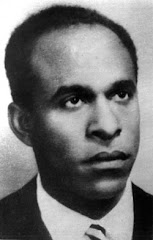
Aimé Césaire (1913-2008)
"A civilization that proves incapable of solving the problems it creates is a decadent civilization. A civilization that chooses to close its eyes to its most crucial problems is a stricken civilization. A civilization that uses its principles for trickery and deceit is a dying civilization."
Nina Simone (1933-2003)
"There's no other purpose, so far as I'm concerned, for us except to reflect the times, the situations around us and the things we're able to say through our art, the things that millions of people can't say. I think that's the function of an artist and, of course, those of us who are lucky leave a legacy so that when we're dead, we also live on. That's people like Billie Holiday and I hope that I will be that lucky, but meanwhile, the function, so far as I'm concerned, is to reflect the times, whatever that might be."
Amilcar Cabral (1924-1973)
"Always bear in mind that the people are not fighting for ideas, for the things in anyone's head. They are fighting to live better and in peace, to see their lives go forward, to guarantee the future of their children ....Hide nothing from the masses of our people. Tell no lies. Expose lies whenever they are told. Mask no difficulties, mistakes, failures. Claim no easy victories..." .
Angela Davis (b. 1944)
"The idea of freedom is inspiring. But what does it mean? If you are free in a political sense but have no food, what's that? The freedom to starve?”
Duke Ellington (1899-1974)
“Jazz is the freest musical expression we have yet seen. To me, then, jazz means simply freedom of musical speech! And it is precisely because of this freedom that so many varied forms of jazz exist. The important thing to remember, however, is that not one of these forms represents jazz by itself. Jazz simply means the freedom to have many forms.”
Amiri Baraka (1934-2014)
"Thought is more important than art. To revere art and have no understanding of the process that forces it into existence, is finally not even to understand what art is."
Frederick Douglass (1817-1895)
"Power concedes nothing without a demand. It never did and it never will. Find out just what any people will quietly submit to and you have found out the exact measure of injustice and wrong which will be imposed upon them, and these will continue till they are resisted with either words or blows, or both. The limits of tyrants are prescribed by the endurance of those whom they oppress.” --August 3, 1857
Cecil Taylor (1929-2018)
“Musical categories don’t mean anything unless we talk about the actual specific acts that people go through to make music, how one speaks, dances, dresses, moves, thinks, makes love...all these things. We begin with a sound and then say, what is the function of that sound, what is determining the procedures of that sound? Then we can talk about how it motivates or regenerates itself, and that’s where we have tradition.”
Ella Baker (1903-1986)
"Strong people don't need strong leaders"
Paul Robeson (1898-1976)
"The artist must take sides. He must elect to fight for freedom or for slavery. I have made my choice. I had no alternative."
John Coltrane (1926-1967)
"I want to be a force for real good. In other words, I know there are bad forces. I know that there are forces out here that bring suffering to others and misery to the world, but I want to be the opposite force. I want to be the force which is truly for good."
Miles Davis (1926-1991)
"Jazz is the big brother of Revolution. Revolution follows it around."
C.L.R. James (1901-1989)
"All development takes place by means of self-movement, not organization by external forces. It is within the organism itself (i.e. within the society) that there must be realized new motives, new possibilities."
Frantz Fanon (1925-1961)
"Now, political education means opening minds, awakening them, and allowing the birth of their intelligence as [Aime] Cesaire said, it is 'to invent souls.' To educate the masses politically does not mean, cannot mean, making a political speech. What it means is to try, relentlessly and passionately, to teach the masses that everything depends on them."
Edward Said (1935-2003)
“I take criticism so seriously as to believe that, even in the midst of a battle in which one is unmistakably on one side against another, there should be criticism, because there must be critical consciousness if there are to be issues, problems, values, even lives to be fought for."
Antonio Gramsci (1891-1937)
“The challenge of modernity is to live without illusions and without becoming disillusioned. There must be pessimism of the intellect and optimism of the will.”
Susan Sontag (1933-2004)
"Do stuff. Be clenched, curious. Not waiting for inspiration’s shove or society’s kiss on your forehead. Pay attention. It’s all about paying attention. Attention is vitality. It connects you with others. It makes you eager. Stay eager."
Kofi Natambu, editor of The Panopticon Review, is a writer, poet, cultural critic, and political journalist whose poetry, essays, criticism, reviews, and journalism have appeared in many literary magazines, journals, newspapers, and anthologies. He is the author of a biography MALCOLM X: His Life & Work (Alpha Books) and two books of poetry: THE MELODY NEVER STOPS (Past Tents Press) and INTERVALS (Post Aesthetic Press). He was the founder and editor of SOLID GROUND: A NEW WORLD JOURNAL, a national quarterly magazine of the arts, culture, and politics and the editor of a literary anthology NOSTALGIA FOR THE PRESENT (Post Aesthetic Press). Natambu has read his work throughout the country and given many lectures and workshops at academic and arts institutions. He has taught American literature, literary theory and criticism, cultural history and criticism, film studies, political science, creative writing, philosophy, critical theory, and music history and criticism (Jazz, Blues, R&B, Hip Hop) at many universities and colleges. He was also a curator in the Education Department of Detroit’s Museum of African American History. Born in Detroit, Michigan, Natambu currently lives in Berkeley, California with his wife Chuleenan.