Discourse that allows us to express a wide range of ideas, opinions, and analysis that can be used as an opportunity to critically examine and observe what our experience means to us beyond the given social/cultural contexts and norms that are provided us.
The double standards of free speech on Palestine amid Israel’s war on Gaza
As the war in Gaza continues, why is the West cracking down on free speech?
A battle is playing out in the realm of public opinion on Israel’s war on Gaza.
While demonstrations have taken place across the globe in solidarity
with Palestinians, there have been campaigns to silence critics of
Israel’s actions.
Commentators, academics and even common citizens have reported
increasing threats and retaliation for expressing their views or voicing
solidarity with the Palestinian people, often in countries that
proclaim to uphold values of freedom of expression and democracy.
On UpFront, Marc Lamont Hill speaks to Dima Khalidi,
director of Palestine Legal, and Ilan Pappe, renowned author and
professor of history at Exeter University, about the limits to free
speech on the Israel-Gaza war.
Author and journalist Marc Lamont Hill knows better than most what can happen to media professionals who advocate for Palestinian liberation. Fired from CNN back in 2018 for doing exactly that, he’s an excellent resource to weigh in on Gaza, and how the mainstream media messaging around the issue of Palestinian liberation is changing rapidly. Also, he dives in to his viral interview with a former Israeli deputy former minister re collective punishment, and explains what he learned from interviewing a Hamas spokesperson. You won’t want to miss this.
Thousands rallied at the U.S. Capitol this week calling for an immediate ceasefire in Gaza, in what organizers with IfNotNow and Jewish Voice for Peace called the largest-ever protest of Jews in support of Palestine. Hundreds were also arrested during a sit-in of the Cannon House Office Building. We feature addresses by Rep. Rashida Tlaib, the only Palestinian American member of Congress, and author Naomi Klein.
Democracy Now! is an independent global news hour that airs on over 1,500 TV and radio stations Monday through Friday. Watch our livestream at democracynow.org Mondays to Fridays 8-9 a.m. ET.
"I did not think it was possible to examine in 20 minutes what Gaza in Context does with such compelling clarity: Israeli policies toward Gaza and Palestine, which are inseparable; the core problems affecting Gaza and the deliberateness of the policies that have led to Gaza's disablement; Gaza's centrality in the Israeli-Palestinian conflict; and some common myths surrounding Gaza and the history of the conflict overall, which are straightforwardly debunked.An immensely valuable teaching tool, the film's power also lies in its fundamental humanity, a heartfelt entreaty to end the oppression and violence so that all people in this tortured part of the world may aspire to a future in which their children can flourish."--Dr. Sara Roy, Senior Research Scholar, Center for Middle Eastern Studies, Harvard University
"Gaza in Context is a superb film accompanied by an excellent teaching guide with seminal articles on the various aspects of the subject, discussion questions, reading list and bibliography. Not only does the 20- minute- film provide the essential facts necessary for an understanding of the problem it helps the viewer understand the context, history and nature of the Israeli policy that brought the Gaza Strip to where it is today. It does this without committing the common error of treating Gaza in isolation from the rest of Palestine but helps explain the consistency in the Israeli policy over the years and throughout Palestine while focusing on its implications and manifestations for Gaza. The film ends with a cri de Coeur to all of us to do what we can to bring an end to what the film convincingly argues is not a natural but a human- made disaster and save Gaza from continuing to be a zone of death."
--Raja Shehadeh, Palestinian lawyer, novelist, political activist, affiliate of the International Commission of Jurists, and a founder of the human rights organization Al-Haq.
"Israel's deliberate fragmentation of the Palestinian people and their land for the past 70 years has also fragmented the Palestinian narrative and struggle for rights. This is just one reason why it is vital that efforts to stop and reverse Israel's colonization project adopt a holistic framework of analysis. Gaza in Context does just that: It zeroes in on Israel's repeated assaults against the besieged strip but then broadens out to show how Israel's attacks on Gaza are part of a consistent plan against the entire Palestinian people, a plan that from day one has sought to minimize the number of Palestinians in historic Palestine and maximize the number of Israeli Jews. The 20-minute film and accompanying educational materials succinctly provide the missing context in so many accounts of the conflict. It is an excellent entry point for the many thousands who are beginning to support Palestinian rights and an important refresher for others that have been involved in the movement for longer. Spread the word!" --Nadia Hijab, Executive Director, Al-Shabaka: The Palestinian Policy Network
“Gaza in Contextshould be required viewing for everyone, including those familiar with the situation in Palestine. Powerful, informative, and persuasive, Noura Erakat delivers a fusillade of facts with concision and passion, obliterating in twenty minutes some three decades of media misinformation about Israel’s occupation of Palestine. An effective teaching tool, irrespective of one’s political position.”-- Robin D. G. Kelley, Professor of History and African American Studies, UCLA
"Gaza in Contextis a fantastic educational instrument, conveying in 20 minutes what it would take most people a lifetime to learn. It gives an accurate and visually brilliant portrayal of the tragedy that has befallen not only Gaza, but the entire Palestinian people."
--Dr. Richard Falk, Professor Emeritus of International law, Princeton University, former United Nations Special Rapporteur to the Occupied Palestinian Territories.
"Gaza in Context is an excellent educational resource that places Israel’s ongoing attacks on Palestinians in Gaza in their proper political context, that of settler colonialism, resistance to such colonialism and the Palestinian struggle to stay alive. In 20 minutes, this film debunks many of the Israeli-perpetuated myths — myths that have been conveniently adopted by others — by focusing on facts. The various articles and discussion questions accompanying the film serve as essential tools for those wishing to learn more."--Diana Buttu, Palestinian lawyer, analyst and former advisor to the PLO.
The film in four parts
Gaza in Context, Part I.
Watch Part 1 of the film, and check out the accompanying section of the teaching guide.
Gaza in Context, Part III.
Watch Part III of the film, and check out the accompanying section of the teaching guide.
Gaza in Context, Part II.
Watch Part II of the film, and check out the accompanying section of the teaching guide.
Gaza in Context, Part IV.
Watch Part IV of the film, and check out the accompanying section of the teaching guide.
In 2010 she was a co-founder of Jadaliyya, an online magazine published in English, Arabic, and French, and which is affiliated with the non-profit Arab Studies Institute, operating in Washington, D.C. and Beirut.
Dr. West rejoins Bad Faith to talk about his choice to leave the Green Party, and whether it’s really the best strategic option. He then weighs in on the violence on Israel/Palestine and the controversies around the left’s response. What does he make of the Harvard student groups joint letter in response to Hamas’s attack? How does one acknowledge grief and compassion at the murder of Israeli civilians, without validating media narratives that exclusively value Israeli lives without acknowledging the ongoing occupation of Palestinians? It’s the kind of tough, empathic, important conversation we’ve come to expect from Dr. West.
Subscribe to Bad Faith on YouTube to access our full video library.
Find Bad Faith with Briahna Joy Gray on Twitter (@badfaithpod) and Instagram (@badfaithpod).
Theme by Nick Thorburn (@nickfromislands)
ABOUT THE PARTICIPANTS:
Briahna Joy Gray (b. August 15, 1985) is an American political
commentator, lawyer, and political consultant who served as the National
Press Secretary for the Bernie Sanders 2020 presidential campaign. Gray is a contributing editor for Current Affairs, and was a senior politics editor for The Intercept. She hosts her own podcast, Bad Faith, and co-hosts The Hill's web series Rising. Ms. Gray is a graduate of both Harvard University and Harvard Law School
Dr. Cornel West (b. June 2, 1953) is currently the Dietrich Bonhoeffer Chair at Union Theological Seminary and is the former Professor of the Practice of Public Philosophy at
Harvard University and Professor Emeritus at Princeton University.
Cornel West graduated Magna Cum Laude from Harvard in three years and
obtained his M.A. and Ph.D. in Philosophy at Princeton.A democratic socialist, two of Dr. West's most influential books areRace Matters (1993) and Democracy Matters (2004).He has written 20 books and has edited 13 and is widely recognized as one of the major, most important, and highly influential public intellectuals, scholars, critics, and activists in the world today.
Marc Lamont Hill Speaks On Israel-Hamas War, International Law, History + More
Marc Lamont Hill (b. December 17, 1978) is an American academic, author, activist, and television personality. He is a professor of urban education at the CUNY Graduate Center in New York City. Hill is the host of UpFront on Al Jazeera English, VH1 Live! on VH1, and Basketball Wives reunion shows. He is also a BET News correspondent. He is the author or co-author of four books: the award-winning Beats, Rhymes, and Classroom Life: Hip-Hop Pedagogy and the Politics of Identity; The Classroom and the Cell: Conversations on Black life in America; the New York Times bestseller Nobody: Casualties of America’s War on The Vulnerable from Ferguson to Flint and Beyond; and Gentrifier. He has also published two edited books: Media, Learning, and Sites of Possibility; and Schooling Hip-Hop: New Directions in Hip-Hop Based Education.
Trained as an anthropologist of education, Dr. Hill holds a Ph.D. (with distinction) from the University of Pennsylvania. He finished his undergraduate studies at Temple University, where he received his B.S. in education and Spanish in 2000. He later earned both an M.A. and a Ph.D. from the University of Pennsylvania. His research focuses on the intersections between culture, politics, and education in the United States and the Middle East.
"I'm for truth, no matter who tells it. I'm for justice, no matter who it's for or against."
W.E.B. DuBois (1868-1963)
"There is but one coward on earth, and that is the coward that dare not know."
Dr. Martin Luther King, Jr. (1929-1968)
"Change does not roll in on the wheels of inevitability, but comes through continuous struggle. And so we must straighten our backs and work for our freedom. A man can't ride you unless your back is bent. "
James Baldwin (1924-1987)
"Precisely at the point when you begin to develop a conscience you must find yourself at war with your society."
Aimé Césaire (1913-2008)
"A civilization that proves incapable of solving the problems it creates is a decadent civilization. A civilization that chooses to close its eyes to its most crucial problems is a stricken civilization. A civilization that uses its principles for trickery and deceit is a dying civilization."
Nina Simone (1933-2003)
"There's no other purpose, so far as I'm concerned, for us except to reflect the times, the situations around us and the things we're able to say through our art, the things that millions of people can't say. I think that's the function of an artist and, of course, those of us who are lucky leave a legacy so that when we're dead, we also live on. That's people like Billie Holiday and I hope that I will be that lucky, but meanwhile, the function, so far as I'm concerned, is to reflect the times, whatever that might be."
Amilcar Cabral (1924-1973)
"Always bear in mind that the people are not fighting for ideas, for the things in anyone's head. They are fighting to live better and in peace, to see their lives go forward, to guarantee the future of their children ....Hide nothing from the masses of our people. Tell no lies. Expose lies whenever they are told. Mask no difficulties, mistakes, failures. Claim no easy victories..." .
Angela Davis (b. 1944)
"The idea of freedom is inspiring. But what does it mean? If you are free in a political sense but have no food, what's that? The freedom to starve?”
Duke Ellington (1899-1974)
“Jazz is the freest musical expression we have yet seen. To me, then, jazz means simply freedom of musical speech! And it is precisely because of this freedom that so many varied forms of jazz exist. The important thing to remember, however, is that not one of these forms represents jazz by itself. Jazz simply means the freedom to have many forms.”
Amiri Baraka (1934-2014)
"Thought is more important than art. To revere art and have no understanding of the process that forces it into existence, is finally not even to understand what art is."
Frederick Douglass (1817-1895)
"Power concedes nothing without a demand. It never did and it never will. Find out just what any people will quietly submit to and you have found out the exact measure of injustice and wrong which will be imposed upon them, and these will continue till they are resisted with either words or blows, or both. The limits of tyrants are prescribed by the endurance of those whom they oppress.” --August 3, 1857
Cecil Taylor (1929-2018)
“Musical categories don’t mean anything unless we talk about the actual specific acts that people go through to make music, how one speaks, dances, dresses, moves, thinks, makes love...all these things. We begin with a sound and then say, what is the function of that sound, what is determining the procedures of that sound? Then we can talk about how it motivates or regenerates itself, and that’s where we have tradition.”
Ella Baker (1903-1986)
"Strong people don't need strong leaders"
Paul Robeson (1898-1976)
"The artist must take sides. He must elect to fight for freedom or for slavery. I have made my choice. I had no alternative."
John Coltrane (1926-1967)
"I want to be a force for real good. In other words, I know there are bad forces. I know that there are forces out here that bring suffering to others and misery to the world, but I want to be the opposite force. I want to be the force which is truly for good."
Miles Davis (1926-1991)
"Jazz is the big brother of Revolution. Revolution follows it around."
C.L.R. James (1901-1989)
"All development takes place by means of self-movement, not organization by external forces. It is within the organism itself (i.e. within the society) that there must be realized new motives, new possibilities."
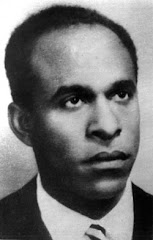
Frantz Fanon (1925-1961)
"Now, political education means opening minds, awakening them, and allowing the birth of their intelligence as [Aime] Cesaire said, it is 'to invent souls.' To educate the masses politically does not mean, cannot mean, making a political speech. What it means is to try, relentlessly and passionately, to teach the masses that everything depends on them."
Edward Said (1935-2003)
“I take criticism so seriously as to believe that, even in the midst of a battle in which one is unmistakably on one side against another, there should be criticism, because there must be critical consciousness if there are to be issues, problems, values, even lives to be fought for."
Antonio Gramsci (1891-1937)
“The challenge of modernity is to live without illusions and without becoming disillusioned. There must be pessimism of the intellect and optimism of the will.”
Susan Sontag (1933-2004)
"Do stuff. Be clenched, curious. Not waiting for inspiration’s shove or society’s kiss on your forehead. Pay attention. It’s all about paying attention. Attention is vitality. It connects you with others. It makes you eager. Stay eager."
Kofi Natambu, editor of The Panopticon Review, is a writer, poet, cultural critic, and political journalist whose poetry, essays, criticism, reviews, and journalism have appeared in many literary magazines, journals, newspapers, and anthologies. He is the author of a biography MALCOLM X: His Life & Work (Alpha Books) and two books of poetry: THE MELODY NEVER STOPS (Past Tents Press) and INTERVALS (Post Aesthetic Press). He was the founder and editor of SOLID GROUND: A NEW WORLD JOURNAL, a national quarterly magazine of the arts, culture, and politics and the editor of a literary anthology NOSTALGIA FOR THE PRESENT (Post Aesthetic Press). Natambu has read his work throughout the country and given many lectures and workshops at academic and arts institutions. He has taught American literature, literary theory and criticism, cultural history and criticism, film studies, political science, creative writing, philosophy, critical theory, and music history and criticism (Jazz, Blues, R&B, Hip Hop) at many universities and colleges. He was also a curator in the Education Department of Detroit’s Museum of African American History. Born in Detroit, Michigan, Natambu currently lives in Berkeley, California with his wife Chuleenan.