Howard Zinn
1922-2010
http://www.nytimes.com/2010/01/29/us/29zinn.html
All,
There is a great deal of loose, self serving, and irresponsible talk about "public intellectuals" in American culture and politics today. Many have been given this distinct and even rare honor but the truth is many if not most of those so anointed don't really deserve the honor. The reason is that being a true public intellectual requires far more than merely acquiring a bunch of college degrees or being lauded, even feted, by academe and the established order. In fact many of the most important, accomplished, and enduring public intellectuals over the past century in the United States either didn't attend college at all or stopped attending altogether before going on to the so-called hallowed halls of graduate school where far too many keen and inquiring minds have been wasted and discarded by the lazy, unexamined dogmas and doctrines of the academy.
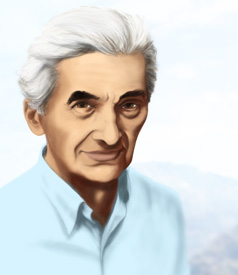
Thankfully Howard Zinn was a human being, scholar, historian, critic, and activist who truly embodied and epitomized the very best in the public intellectual tradition despite having three academic degrees. He did so because he was always even more personally committed to the larger transformation of society via a deeply passionate and disciplined engagement with the struggles of the working classes and the poor, the oppressed and exploited, the disenfranchised and discarded. It was this lifelong personal, intellectual, and political involvement that further enhanced and grounded his outstanding scholarly work in social , cultural, and political history and philosophy. In a period where so many are tragically addicted to the shallowness, narcissism, and inanity of 'celebrity culture--a social disease that has even penetrated the formerly immune worlds of historical scholarship, social activism and teaching--it was individuals like Howard Zinn (and generational friends and colleagues like Noam Chomsky, Gore Vidal, Ralph Nader, Amiri Baraka, and Toni Morrison) who have kept the serious, mature, and committed public intellectual tradition alive and thriving amidst all the distracting hype, noise, and nonsense of contemporary American life.
So thank you Mr. Zinn. Your extraordinary work and life will continue to serve as an inspiration and a beacon for those who still love, respect, and honor what is most valuable and useful in our lives as activists, artists, intellectuals, and human beings.
Kofi
Interview with Howard Zinn at University of California Berkeley (Video)
Howard Zinn, Historian, Is Dead at 87
By MICHAEL POWELL
Published: January 28, 2010
New York Times
Howard Zinn, historian and shipyard worker, civil rights activist and World War II bombardier, and author of “A People’s History of the United States,” a best seller that inspired a generation of high school and college students to rethink American history, died Wednesday in Santa Monica, Calif. He was 87 and lived in Auburndale, Mass.
The cause was a heart attack he had while swimming, his family said.
Proudly, unabashedly radical, with a mop of white hair and bushy eyebrows and an impish smile, Mr. Zinn, who retired from the history faculty at Boston University two decades ago, delighted in debating ideological foes, not the least his own college president, and in lancing what he considered platitudes, not the least that American history was a heroic march toward democracy.
Almost an oddity at first, with a printing of just 4,000 in 1980, “A People’s History of the United States” has sold nearly two million copies. To describe it as a revisionist account is to risk understatement. A conventional historical account held no allure; he concentrated on what he saw as the genocidal depredations of Christopher Columbus, the blood lust of Theodore Roosevelt and the racial failings of Abraham Lincoln. He also shined an insistent light on the revolutionary struggles of impoverished farmers, feminists, laborers and resisters of slavery and war.
Such stories are more often recounted in textbooks today; they were not at the time.
“Our nation had gone through an awful lot — the Vietnam War, civil rights, Watergate — yet the textbooks offered the same fundamental nationalist glorification of country,” Mr. Zinn recalled in a recent interview with The New York Times. “I got the sense that people were hungry for a different, more honest take.”
In a Times book review, the historian Eric Foner wrote of the book that “historians may well view it as a step toward a coherent new version of American history.” But many historians, even those of liberal bent, took a more skeptical view.
“What Zinn did was bring history writing out of the academy, and he undid much of the frankly biased and prejudiced views that came before it,” said Sean Wilentz, a professor of history at Princeton University. “But he’s a popularizer, and his view of history is topsy-turvy, turning old villains into heroes, and after a while the glow gets unreal.”
That criticism barely raised a hair on Mr. Zinn’s neck. “It’s not an unbiased account; so what?” he said in the Times interview. “If you look at history from the perspective of the slaughtered and mutilated, it’s a different story.”
Few historians succeeded in passing so completely through the academic membrane into popular culture. He gained admiring mention in the movie “Good Will Hunting”; Matt Damon appeared in a History Channel documentary about him; and Bruce Springsteen said the starkest of his many albums, “Nebraska,” drew inspiration in part from Mr. Zinn’s writings.
Born Aug. 24, 1922, Howard Zinn grew up in New York City. His parents were Jewish immigrants, and his father ran candy stores during the Depression without much success.
“We moved a lot, one step ahead of the landlord,” Mr. Zinn recalled. “I lived in all of Brooklyn’s best slums.”
He graduated from Thomas Jefferson High School and became a pipe fitter in the Brooklyn Navy Yard, where he met his future wife, Roslyn Shechter. Raised on Charles Dickens, he later added Karl Marx to his reading, organized labor rallies and got decked by a billy-club-wielding cop.
He joined the Army Air Corps in 1943, eager to fight the fascists, and became a bombardier in a B-17. He watched his bombs rain down and, when he returned to New York, deposited his medals in an envelope and wrote: “Never Again.”
“I would not deny that war had a certain moral core, but that made it easier for Americans to treat all subsequent wars with a kind of glow,” Mr. Zinn said. “Every enemy becomes Hitler.”
He and his wife lived in a rat-infested basement apartment as he dug ditches and worked in a brewery. Later they moved to public housing and he went to college on the G.I. Bill.
He earned a B.A. at New York University and master’s and doctoral degrees at Columbia University. In 1956 he landed a job at Spellman College, a historically black women’s college, as chairman of the history department. Among his students were Marian Wright Edelman, founder of the Children’s Defense Fund; Alice Walker, the novelist; and the singer and composer Bernice Johnson Reagon.
Mr. Zinn served on the Student Nonviolent Coordinating Committee and marched for civil rights with his students, which angered Spellman’s president.
“I was fired for insubordination,” he recalled. “Which happened to be true.”
Mr. Zinn moved to Boston University in 1964. He traveled with the Rev. Daniel Berrigan to Hanoi to receive prisoners released by the North Vietnamese, and produced the antiwar books “Vietnam: The Logic of Withdrawal” (1967) and “Disobedience and Democracy” (1968).
He waged a war of attrition with Boston University’s president at the time, John Silber, a political conservative. Mr. Zinn twice organized faculty votes to oust Mr. Silber, and Mr. Silber returned the favor, saying the professor was a sterling example of those who would “poison the well of academe.”
Mr. Zinn’s book “La Guardia in Congress” (1959) won the American Historical Association’s Albert J. Beveridge Award. “A publisher went so far as to publish my quotations, which my wife thought was ridiculous,” Mr. Zinn said. “She said, ‘What are you, the pope or Mao Tse-Tung?’ ”
Mr. Zinn retired in 1988, concluding his last class early so he could join a picket line. He invited his students to join him.
Mr. Zinn wrote three plays: “Daughter of Venus,” “Marx in Soho” and “Emma,” about the life of the anarchist Emma Goldman. All have been produced. His last article was a rather bleak assessment of President Obama for The Nation. “I’ve been searching hard for a highlight,” he wrote.
Rosyln Zinn died in 2008. Mr. Zinn is survived by a daughter, Myla Kabat-Zinn of Lexington, Mass.; a son, Jeff Zinn, of Wellfleet, Mass.; and five grandchildren.
Mr. Zinn spoke recently of more work to come. The title of his memoir, he noted, best described his personal philosophy: “You Can’t Be Neutral on a Moving Train.”
Howard Zinn
Born
August 24, 1922
Brooklyn, New York, U.S.
Died
January 27, 2010 (aged 87)
Santa Monica, California
Occupation
Professor, Historian, Playwright
Spouse(s)
Roslyn Zinn (died 2008)
Howard Zinn (August 24, 1922 – January 27, 2010) was an American historian and Professor of Political Science at Boston University from 1964 to 1988.[2] He was the author of more than 20 books, including A People's History of the United States (1980). Zinn was active in the civil rights, civil liberties and anti-war movements in the United States, and wrote extensively on all three subjects.
Life and career
Early life
Zinn was born to a Jewish immigrant family in Brooklyn. His father, Eddie Zinn, born in Austria-Hungary, immigrated to the U.S. with his brother Phil before the outbreak of World War I. Howard's mother Jenny Zinn emigrated from the Eastern Siberian city of Irkutsk.
Both parents were factory workers with limited education when they met and married, and there were no books or magazines in the series of apartments where they raised their children. Zinn's parents introduced him to literature by sending 25 cents plus a coupon to the New York Post for each of the 20 volumes of Charles Dickens' collected works.[3] He also studied creative writing at Thomas Jefferson High School in a special program established by poet Elias Lieberman.[4]
World War II
Zinn eagerly joined the Army Air Force during World War II to fight fascism, and he bombed targets in Berlin, Czechoslovakia and Hungary.[5] Zinn's later anti-war stance was, in part, informed by his own experiences in the military. In April, 1945, he participated in one of the first military uses of napalm, which took place in Royan, France.[6]
The bombings were aimed at German soldiers who were, in Zinn's words, hiding and waiting out the closing days of the war. The attacks killed not only the German soldiers but also French civilians, facts Zinn uncovered nine years after the bombings when he visited Royan to examine documents and interview residents. In his books, The Politics of History and The Zinn Reader, he described how the bombing was ordered at the war's end by decision-makers most probably motivated by the desire for career advancement rather than for legitimate military objectives.
Zinn said his experience as a bombardier, combined with his research into the reasons for and effects of the bombing of Royan, sensitized him to the ethical dilemmas faced by G.I.s during wartime.[7] Zinn questioned the justifications for military operations inflicting civilian casualties in the Allied bombing of cities such as Dresden, Royan, Tokyo, and Hiroshima and Nagasaki in World War II, Hanoi during the U.S. war in Vietnam, and Baghdad during the U.S. war in Iraq. In his pamphlet "Hiroshima: Breaking the Silence", Zinn laid out the case against targeting civilians.[8]
Education
After World War II, Zinn attended New York University on the GI Bill, graduating with a B.A. in 1951 and Columbia University, where he earned an M.A. (1952) and a Ph.D. in history with a minor in political science (1958). His master's thesis examined the Colorado coal strikes of 1914.[9] His doctoral dissertation LaGuardia in Congress was a study of Fiorello LaGuardia's congressional career, and it depicted LaGuardia representing "the conscience of the twenties" as LaGuardia fought for public power, the right to strike, and the redistribution of wealth by taxation.[9] "His specific legislative program," Zinn wrote, "was an astonishingly accurate preview of the New Deal." It was published by the Cornell University Press for the American Historical Association. While at Columbia, his professors included Harry Carman, Henry Steele Commager, and David Donald.[9] La Guardia in Congress won the American Historical Association's Beveridge Prize as the best English-language book on American history.
He was also a post-doctoral Fellow in East Asian Studies at Harvard University from 1960 to 1961.
Academic career
Zinn was Professor of History at Spelman College in Atlanta, Georgia from 1956 to 1963. Later he was Professor of Political Science, Boston University from 1964 to 1988. He was also Visiting Professor at both the University of Paris and University of Bologna.
Zinn came to believe that the point of view expressed in traditional history books was often limited. He wrote a history textbook, A People's History of the United States, to provide other perspectives on American history. The textbook depicts the struggles of Native Americans against European and U.S. conquest and expansion, slaves against slavery, unionists and other workers against capitalists, women against patriarchy, and African-Americans for civil rights. The book was a finalist for the National Book Award in 1981.[10]
In the years since the first edition of A People's History was published in 1980, it has been used as an alternative to standard textbooks in many high school and college history courses, and it is one of the most widely known examples of critical pedagogy. According to the New York Times Book Review it "routinely sells more than 100,000 copies a year".[11]
In 2004, Zinn published Voices of A People's History of the United States with Anthony Arnove. Voices expands on the concept of ""A People's History and it provides a large collection of dissident voices in long form. It is intended as a companion to A People's History and it parallels its structure.
The People Speak, scheduled for release on DVD in February 2010, is a documentary movie inspired by the lives of ordinary people who fought back against oppressive conditions over the course of the history of the United States. The film includes performances by Zinn, Matt Damon, Morgan Freeman, Bob Dylan, Bruce Springsteen, Eddie Vedder, Viggo Mortensen, Josh Brolin, Danny Glover, Marisa Tomei, Don Cheadle, and Sandra Oh.[12][13][14]
Civil Rights movement
In 1956, Zinn was appointed chairman of the department of history and social sciences at Spelman College, where he participated in the Civil Rights movement. There he lobbied with historian August Meier[15] "to end the practice of the Southern Historical Association of holding meetings at segregated hotels."[16]
At Spelman, Zinn served as an adviser to the Student Nonviolent Coordinating Committee (SNCC) and in 1964, he wrote the book SNCC: The New Abolitionists. He also collaborated with historian Staughton Lynd and mentored young student activists, among them writer Alice Walker and Marian Wright Edelman, founder and president of the Children’s Defense Fund. In a journal article, Edelman discusses Zinn as a major influence in her life and she tells of his accompanying students to a sit-in at the segregated white section of the Georgia state legislature.[17]
Although Zinn was a tenured professor, he was dismissed in June 1963, after siding with students in their desire to challenge Spelman's traditional emphasis on turning out "young ladies" when, as Zinn described in an article in The Nation, Spelman students were likely to be found on the picket line, or in jail for participating in the greater effort to break down segregation in public places in Atlanta. Zinn's years at Spelman are recounted in his autobiography You Can't Be Neutral on a Moving Train: A Personal History of Our Times. His seven years at Spelman College, Zinn said, "are probably the most interesting, exciting, most educational years for me. I learned more from my students than my students learned from me."[18]
While at Spelman, Zinn wrote that he observed 30 violations of the First and Fourteenth amendments to the United States Constitution in Albany, Georgia, including the rights to freedom of speech, freedom of assembly and equal protection under the law. In an article on the civil rights movement in Albany, Zinn described the people who participated in the Freedom Rides to end segregation, and the reluctance of President John F. Kennedy to enforce the law.[19] Zinn has also pointed out that the Justice Department under Robert F. Kennedy and the Federal Bureau of Investigation, headed by J. Edgar Hoover, did little or nothing to stop the segregationists from brutalizing civil rights workers.[20]
Zinn wrote frequently about the struggle for civil rights, both as a participant and as a historian[21] His second book, The Southern Mystique[22] was published in the same year as his book on the Student Nonviolent Coordinating Committee (SNCC), 1964. In his book on the SNCC, Zinn describes how the sit-ins against segregation were initiated by students and, in that sense, were independent from the efforts of the older, more established civil rights organizations.
He returned to Spelman in 2005 to give the commencement address.[23][24] His speech "Against Discouragement,"[25] is available online at numerous sources.
Anti-war efforts
Fresh from writing two books about his research, observations, and participation in the Civil Rights movement in the South, Zinn accepted a position in the political science department at Boston University in 1964. His classes in civil liberties were among the most popular offered at BU with as many as 400 students subscribing each semester to the non-required class. He taught at BU for 24 years and retired in 1988. Zinn wrote one of the earliest books calling for the U.S. withdrawal from its war in VietNam. VietNam: The Logic of Withdrawal was published by Beacon Press in 1967 after articles that would later form the basis for the book had appeared in Commonwealth, The Nation, The Register-Leader, and Ramparts.
Zinn was a member of the Advisory Board of the Disarm Education Fund.[26]
Vietnam
Zinn's diplomatic visit to Hanoi with Rev. Daniel Berrigan, during the Tet Offensive in January 1968, resulted in the return of three American airmen, the first American POWs released by the North Vietnamese since the U.S. bombing of that nation had begun. The event was widely reported in the news media and discussed in a variety of books including Who Spoke Up? American Protest Against the War in Vietnam 1963–1975 by Nancy Zaroulis and Gerald Sullivan.[27] Zinn and the Berrigan brothers, Dan and Philip, remained friends and allies over the years.
Daniel Ellsberg, a former RAND consultant who had secretly copied The Pentagon Papers, which described the internal planning and policy decisions of the United States government during the Vietnam War, gave a copy of them to Howard and Roslyn Zinn.[28] Along with Noam Chomsky, Zinn edited and annotated the copy of The Pentagon Papers that Ellsberg entrusted to him. Zinn's longtime publisher, Beacon Press, published what has come to be known as the Senator Mike Gravel edition of The Pentagon Papers, four volumes plus a fifth volume with analysis by Chomsky and Zinn.
At Ellsberg's criminal trial for theft, conspiracy, and espionage in connection with the publication of the Pentagon Papers by The New York Times, defense attorneys called Zinn as an expert witness to explain to the jury the history of U.S. involvement in Vietnam from World War II to 1963. Zinn discussed that history for several hours, later reflecting on his time before the jury. "I explained there was nothing in the papers of military significance that could be used to harm the defense of the United States, that the information in them was simply embarrassing to our government because what was revealed, in the government's own interoffice memos, was how it had lied to the American public. The secrets disclosed in the Pentagon Papers might embarrass politicians, might hurt the profits of corporations wanting tin, rubber, oil, in far-off places. But this was not the same as hurting the nation, the people," Zinn wrote in his autobiography. Most of the jurors later said that they voted for acquittal. [p. 161] However, the federal judge dismissed the case on the ground that it had been tainted by President Nixon's administration's burglary of the office of Ellsberg's psychiatrist.
Zinn's testimony as to the motivation for government secrecy was confirmed in 1989 by Erwin Griswold, who as U.S. solicitor general during the Nixon administration, prosecuted The New York Times in the Pentagon Papers case in 1971.[29] Griswold persuaded three Supreme Court justices to vote to stop The New York Times from continuing to publish the Pentagon Papers, an order known as "prior restraint" that has been held to be illegal under the First Amendment to the U.S. Constitution. The papers were simultaneously published in The Washington Post, effectively nulling the effect of the prior restraint order. In 1989, Griswold admitted that there was no national security damage resulting from the publication of the papers.[29] In a column in the Washington Post, Griswold wrote: "It quickly becomes apparent to any person who has considerable experience with classified material that there is massive over classification and that the principal concern of the classifiers is not with national security, but with governmental embarrassment of one sort or another."
Zinn supported the G.I. antiwar movement during the U.S. war in Vietnam. In the 2001 film Unfinished Symphony, Zinn provides a historical context for the 1971 antiwar march by Vietnam Veterans against the War. The marchers traveled from Lexington, Massachusetts, to Bunker Hill, "which retraced Paul Revere's ride of 1775 and ended in the massive arrest of 410 veterans and civilians by the Lexington police." The film depicts "scenes from the 1971,[30] during which former G.I.s testified about atrocities" they either participated in or witnessed in Vietnam.[31]
Iraq
Zinn opposed the invasion and occupation of Iraq, and wrote several books about it. He asserted that the U.S. would end its war with, and occupation of, Iraq when resistance within the military increased, in the same way resistance within the military contributed to ending the U.S. war in Vietnam. He compared the demand by a growing number of contemporary U.S. military families to end the war in Iraq to the parallel "in the Confederacy in the Civil War, when the wives of soldiers rioted because their husbands were dying and the plantation owners were profiting from the sale of cotton, refusing to grow grains for civilians to eat."[32] Zinn argued that "There is no flag large enough to cover the shame of killing innocent people for a purpose which is unattainable."[33]
Jean-Christophe Agnew, Professor of History and American Studies at Yale University, told the Yale Daily News in May 2007 that Zinn’s historical work is "highly influential and widely used".[34] He observed that it is not unusual for prominent professors such as Zinn to weigh in on current events, citing a resolution opposing the war in Iraq that was recently ratified by the American Historical Association.[35] Agnew added, “In these moments of crisis, when the country is split — so historians are split.”[36]
Death
While traveling, Zinn died of an apparent heart attack while swimming[37] in Santa Monica, California on January 27, 2010. He is survived by his daughter Myla Kabat-Zinn, son Jeff Zinn and five grandchildren.[38]
Awards
Zinn received the Thomas Merton Award and the Eugene V. Debs Award. In 1998, he won the Lannan Literary Award[39] for nonfiction and the following year won the Upton Sinclair Award, which honors social activism. In 2003, Zinn was awarded the Prix des Amis du Monde diplomatique[40] for the French version of his seminal work, Une histoire populaire des Etats-Unis.
On October 5, 2006, Zinn received the Haven's Center Award for Lifetime Contribution to Critical Scholarship in Madison, Wisconsin.[41]
Howard Zinn
Bibliography
Artists in Times of War (2003) ISBN 1-58322-602-8.
The Cold War & the University: Toward an Intellectual History of the Postwar Years (Noam Chomsky (Editor) Authors: Ira Katznelson, R. C. Lewontin, David Montgomery, Laura Nader, Richard Ohmann,[42] Ray Siever, Immanuel Wallerstein, Howard Zinn (1997) ISBN 1-56584-005-4.
Declarations of Independence: Cross-Examining American Ideology (1991) ISBN 0-06-092108-0[43]
Disobedience and Democracy: Nine Fallacies on Law and Order (1968, re-issued 2002) ISBN 0-89608-675-5.
Emma: A Play in Two Acts About Emma Goldman, American Anarchist (2002) ISBN 0-89608-664-X.
Failure to Quit: Reflections of an Optimistic Historian (1993) ISBN 0-89608-676-3.
The Future of History: Interviews With David Barsamian (1999) ISBN 1-56751-157-0.
Hiroshima: Breaking the Silence (pamphlet, 1995) ISBN 1-884519-14-8.
Howard Zinn On Democratic Education Donaldo Macedo, Editor (2004) ISBN 1-59451-054-7.
Howard Zinn on History (2000) ISBN 1-58322-048-8.
Howard Zinn on War (2000) ISBN 1-58322-049-6.
You Can't Be Neutral on a Moving Train: A Personal History of Our Times (1994) ISBN 0-8070-7127-7
Justice in Everyday Life: The Way It Really Works (Editor) (1974) ISBN 0-89608-677-1.
Justice? Eyewitness Accounts (1977) ISBN 0-8070-4479-2.
La Otra Historia De Los Estados Unidos (2000) ISBN 1-58322-054-2.
LaGuardia in Congress (1959) ISBN 0-8371-6434-6, ISBN 0-393-00488-0.
Marx in Soho: A Play on History (1999) ISBN 0-89608-593-7.
New Deal Thought (editor) (1965) ISBN 0-87220-685-8.
Original Zinn: Conversations on History and Politics (2006) Howard Zinn and David Barsamian.
Passionate Declarations: Essays on War and Justice (2003) ISBN 0-06-055767-2.
The Pentagon Papers Senator Gravel Edition. Vol. Five. Critical Essays. Boston. Beacon Press, 1972. 341p. plus 72p. of Index to Vol. I-IV of the Papers, Noam Chomsky, Howard Zinn, editors.
A People's History of the Civil War: Struggles for the Meaning of Freedom by David Williams, Howard Zinn (Series Editor) (2005) ISBN 1-59558-018-2.
A People's History of the United States: 1492 – Present (1980), revised (1995)(1998)(1999)(2003) ISBN 0-06-052837-0.
A People's History of the United States: Teaching Edition Abridged (2003 updated) ISBN 1-56584-826-8.
A People's History of the United States: The Civil War to the Present Kathy Emery Ellen Reeves Howard Zinn (2003 teaching edition) ISBN 1-56584-725-3.
A People's History of the United States: The Wall Charts by Howard Zinn and George Kirschner (1995) ISBN 1-56584-171-9.
A People's History of American Empire (2008) by Howard Zinn, Mike Konopacki and Paul Buhle. ISBN 978-0805087444.
The People Speak: American Voices, Some Famous, Some Little Known (2004) ISBN 0-06-057826-2.
Playbook by Maxine Klein, Lydia Sargent and Howard Zinn (1986) ISBN 0-89608-309-8.
The Politics of History (1970) (2nd edition 1990) ISBN 0-252-06122-5.
Postwar America: 1945 – 1971 (1973) ISBN 0-89608-678-X.
A Power Governments Cannot Suppress (2006) ISBN 978-0872864757.
The Power of Nonviolence: Writings by Advocates of Peace Editor (2002) ISBN 0-8070-1407-9.
SNCC: The New Abolitionists (1964) ISBN 0-89608-679-8.
The Southern Mystique (1962) ISBN 0-89608-680-1.
Terrorism and War (2002) ISBN 1-58322-493-9 (interviews, Anthony Arnove (Ed.)).
The Twentieth Century: A People's History (2003) ISBN 0-06-053034-0.
Three Strikes: Miners, Musicians, Salesgirls, and the Fighting Spirit of Labor's Last Century (Dana Frank, Robin Kelley, and Howard Zinn) (2002) ISBN 0-8070-5013-X.
Vietnam: The Logic of Withdrawal (1967) ISBN 0-89608-681-X.
Voices of a People’s History of the United States (with Anthony Arnove, 2004) ISBN 1-58322-647-8.
A Young People's History of the United States, adapted from the original text by Rebecca Stefoff; illustrated and updated through 2006, with new introduction and afterword by Howard Zinn; two volumes, Seven Stories Press, New York, 2007.
Vol. 1: Columbus to the Spanish-American War. ISBN 978-1-58322-759-6.
Vol. 2: Class Struggle to the War on Terror. ISBN 978-1-58322-760-2.
The Zinn Reader: Writings on Disobedience and Democracy (1997) ISBN 1-888363-54-1.
Contributor
Admirable Radical: Staughton Lynd and Cold War Dissent, 1945–1970 (2010), Kent State University Press by Carl Mirra ISBN 978-1-60635-051-5
A Gigantic Mistake by Mickey Z, (2004) ISBN 1-930997-97-3.
A People's History of the Supreme Court by Peter H. Irons (2000) ISBN 0-14-029201-2.
A Political Dynasty In North Idaho, 1933-1967 by Randall Doyle (2004) ISBN 0-7618-2843-5.
American Political Prisoners: Prosecutions Under the Espionage and Sedition Acts by Stephen M. Kohn (1994) ISBN 0-275-94415-8.
American Power and the New Mandarins by Noam Chomsky (2002) ISBN 1-56584-775-X.
Broken Promises Of America: At Home And Abroad, Past And Present: An Encyclopedia For Our Times by (Douglas F. Dowd (2004) ISBN 1-56751-313-1.
Deserter From Death: Dispatches From Western Europe 1950-2000 by Daniel Singer (2005) ISBN 1-56025-642-7.
Ecocide of Native America: Environmental Destruction of Indian Lands and Peoples by Donald Grinde, Bruce Johansen (1994) ISBN 0-940666-52-9.
Eugene V. Debs Reader: Socialism and the Class Struggle by William A. Pelz (2000) ISBN 0-9704669-0-0.
From a Native Son: Selected Essays in Indigenism, 1985 – 1995 by Ward Churchill (1996) ISBN 0-89608-553-8.
Green Parrots: A War Surgeon's Diary by Gino Strada, (2005) ISBN 88-8158-420-4.
Hijacking Catastrophe: 9/11, Fear And The Selling Of American Empire by Sut Jhally editor, Jeremy Earp editor, (2004) ISBN 1-56656-581-2.
If You're Not a Terrorist…Then Stop Asking Questions! by Micah Ian Wright, (2004) ISBN 1-58322-626-5.
Iraq: The Logic of Withdrawal by Anthony Arnove, (2006) ISBN 978-1-59558-079-5.
Impeach the President: The Case Against Bush and Cheney Dennis Loo (Editor), Peter Phillips (Editor) Seven Stories Press: 2006) ISBN 1583227431.
Life of an Anarchist: The Alexander Berkman Reader by Alexander Berkman Gene Fellner, editor, (2004) ISBN 1-58322-662-1.
Long Shadows: Veterans' Paths to Peace by David Giffey editor, (2006) ISBN 1-89185-964-9.
Masters of War: Latin America and United States Aggression from the Cuban Revolution Through the Clinton Years by Clara Nieto, Chris Brandt (trans) (2003) ISBN 1-58322-545-5.
Peace Signs: The Anti-War Movement Illustrated by James Mann, editor (2004) ISBN 3-283-00487-0.
Prayer for the Morning Headlines: On the Sanctity of Life and Death by Daniel Berrigan (poetry) and Adrianna Amari (photography), (2007) ISBN 978-1-934074-16-9.
Silencing Political Dissent: How Post-9-11 Anti-terrorism Measures Threaten Our Civil Liberties by Nancy Chang, Center for Constitutional Rights (2002) ISBN 1-58322-494-7.
Soldiers In Revolt: GI Resistance During The Vietnam War by David Cortright, (2005) ISBN 1-931859-27-2.
Sold to the Highest Bidder: The Presidency from Dwight D. Eisenhower to George W. Bush by Daniel M. Friedenberg (2002) ISBN 1-57392-923-9.
The Autobiography of Abbie Hoffman Intro by Norman Mailer, Afterword by HZ (2000) ISBN 1-56858-197-1.
The Case for Socialism by Alan Maass, (2004) ISBN 1-931859-09-4.
The Forging of the American Empire: From the Revolution to Vietnam, a History of U.S. Imperialism by Sidney Lens (2003) ISBN 0-7453-2101-1.
The Higher Law: Thoreau on Civil Disobedience and Reform by Henry David Thoreau, Wendell Glick, editor, (2004) ISBN 0-691-11876-0.
The Iron Heel by Jack London, (1971) ISBN 0-143-03971-7.
The Sixties Experience: Hard Lessons about Modern America by Edward P. Morgan, (1992) ISBN 1-56639-014-1.
You Back the Attack, We'll Bomb Who We Want by Micah Ian Wright, (2003) ISBN 1-58322-584-6.
A People's History of the American Revolution by Ray Raphael, (2002) ISBN 0-06-000440-1 Howard Zinn Foreword for New Press People's History Series.
Recordings
A People's History of the United States (1999)
Artists in the Time of War (2002)
Heroes & Martyrs: Emma Goldman, Sacco & Vanzetti, and the Revolutionary Struggle (2000)
Stories Hollywood Never Tells (2000)
You Can't Blow Up A Social Relationship, CD including Zinn lectures and performances by rock band Resident genius (Thick Records, 2005)[44]
Theatre
Emma (1976)
Daughter of Venus (1985)
Marx in Soho (1999)
Biographies
Deb Ellis and Denis Mueller, Howard Zinn: You Can't Be Neutral on a Moving Train (film 2004)[45]
Davis D. Joyce, Howard Zinn: A Radical American Vision (Prometheus Books, 2003), ISBN 1-59102-131-6