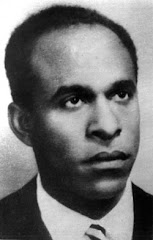
Exclusive: The award-winning Indian novelist warns that the world is on the brink of nuclear calamity and economic collapse, and laments her own government's gutlessness.
A note from our Editor-in-Chief:
My friend, the acclaimed novelist and activist Arundhati Roy, one of the bravest women I know, was in conversation in New Delhi on Monday about her recent book ‘Mother Mary Comes To Me.’ At the end of the event, Arundhati delivered impassioned remarks on the war in Iran, US imperialism, and India's own role in all of this. She has shared the text of those remarks exclusively with Zeteo, and you can read it below.

But Iran is not Gaza. The theater of this new war could expand to consume the whole world. We are on the brink of nuclear calamity and economic collapse. The same country that bombed Hiroshima and Nagasaki could be readying itself to bomb one of the most ancient civilizations in the world. There will be other occasions to speak of this in detail, so here, let me simply say that I stand with Iran. Unequivocally. Any regimes that need changing, including the US, Israel, and ours, need to be changed by the people, not by some bloated, lying, cheating, greedy, resource-grabbing, bomb-dropping imperial power and its allies who are trying to bully the whole world into submission.
Iran is standing up to them, while India cowers. I am ashamed of how gutless, how spineless our government has been. Long ago, we were a poor country of very poor people. But we had pride. We had dignity. Today, we are a rich country with very poor, unemployed people who are fed on a diet of hatred, poison, and falsehoods instead of real food. We have lost pride. We have lost dignity. We have lost courage. Except in our movies.
What sort of people are we whose elected government cannot stand up and condemn the US when it kidnaps and assassinates heads of state of other countries? Would we like that done to us? For our prime minister to have traveled to Israel and embraced Benjamin Netanyahu just days before he attacked Iran – what does it mean? For our government to sign a groveling trade deal with the US that literally sells our farmers and textile industry down the river, only days before the US Supreme Court declared Trump’s tariffs illegal – what does it mean? For us to now be given ‘permission’ to buy oil from Russia – what does it mean? What else do we need permission for? To go to the bathroom? To take a day off work? To visit our mothers?
Every day, US politicians, including Donald Trump, mock and demean us publicly. And our prime minister laughs his famous, vacuous laugh. And hugs on. At the height of the genocide in Gaza, the government of India sent thousands of poor Indian workers to Israel to replace expelled Palestinian workers. Today, while Israelis take shelter in bunkers, it is being reported that those Indian workers are not allowed into those shelters. What the hell does all this mean? Who has put us into this absolutely humiliating, shameless, disgusting place in the world?
Some of you will remember how we used to joke about that florid, overblown Chinese communist term, “Running Dog of Imperialism.” But right now, I’d say, it describes us well. Except, of course, in our twisted, toxic movies in which our celluloid heroes strut on, winning phantom war after war, dumb and over-muscled. Fueling our insatiable bloodlust with their gratuitous violence and their shit for brains.
Arundhati Roy is an award-winning Indian author. Her novel, ‘The God of Small Things,’ won the Booker Prize in 1997. Her memoir, Mother Mary Comes To Me, was published last year.
The views expressed in this article are the author’s own and do not necessarily reflect those of Zeteo.
Check out more from Zeteo:


Credit: Evelyn Hockstein/Reuters

Trump Is the Anti-Trump
by Jamelle Bouie
March 11, 2026
New York Times
Listen · 8:56 minutes
There is an alternate universe in which Donald Trump is the popular, successful president of his imagination.
In this world, Trump has a clear view of the political landscape. He knows he won a narrow victory, not a landslide. He knows that his key voters — the ones who put him over the top, as opposed to his core voters — elected him to lower the cost of living and turn the page back to where it was before the pandemic. And while he has the advantage of an unpopular predecessor — an easy repository for blame should things go wrong — he also starts the clock with a small and finite amount of political capital. The modern American public is wary, fickle and quick to anger. The right move is to invest that capital carefully, not to gamble with the people’s trust.
This hypothetical President Trump would take the path of least political resistance. He would work with the Republican majority in Congress to send a new round of stimulus checks, rehashing the most important political success of his first term and fulfilling his promise to lower costs for most Americans. He would work with Congress to pass modest tariffs on critical goods and he would take a less draconian path on deportations, focusing, as he promised, on people in jails and prisons — “the worst of the worst.” And he would put hard political limits on his most fanatical aides and deputies, such as Russell Vought and Stephen Miller. This Trump wouldn’t give Elon Musk his run of the executive branch and he would sideline his own desire for retribution against his political opponents, or at least channel his rage into something more productive. He would also decline to hand management of the federal government to an ignominious cadre of hacks, apparatchiks and television personalities.
In short, this Trump would rerun the approach of his first term. He would still be corrupt. He would still stretch the limits of common decency. He would still be bombastic, transgressive and contemptuous of political norms. But he would be restrained, somewhat, by the practical realities of governance. And this restraint would give our hypothetical Trump the leeway to pursue his more authoritarian goals — to curtail civil society and consolidate power over the entire federal government, courts and Congress included.
From the perspective of liberal society and constitutional government, this alternative world, in which a more cautious and methodical Trump successfully builds public and political support for the transformation of the United States into a full-throated authoritarian regime, would have been the worst-case scenario for a second Trump term.
We are lucky, then, that this alternate reality is unimaginable. There is no apparent evidence that Trump is capable of even the slightest bit of deferred gratification. If life is a series of marshmallow tests, then he has failed one after the other, kept afloat only by his immense wealth and privilege. The actual Trump is so solipsistic, so plainly consumed with narcissism, so deeply indifferent to the details of governance and so eager to satisfy his basest impulses that there was little chance he’d ever complete the authoritarian consolidation of his dreams.
All of this is simply to contrast what might have been with what plainly is: a presidency in terminal decline, if not outright collapse. Consider the big picture. Trump is nearly as unpopular now as he has ever been. His average approval rating ranges from a net negative of about 13 points to a net negative of nearly 20 points. He is underwater on every issue of consequence. The Supreme Court nullified his signature economic program and his immigration enforcement actions are so toxic with voters that they’ve forced him to fire his head of Homeland Security, Kristi Noem. He has wrecked the coalition that brought him into office with major reversals among Latinos, young men and Black Americans, and he is treading water with his core supporters, white voters without college degrees.
Trump insists, of course, that he is as popular as ever, but even Republican lawmakers see the writing on the wall. There has been a historic number of retirements from Congress, led mostly by Republicans.
Last, but far from least, is the president’s foolhardy, reckless and immoral war in Iran, which was started with neither public buy-in nor congressional authorization. It didn’t take long after the bombing began before it destroyed an elementary school, killing more than 175 people, most of them children. Nearly two weeks in, the conflict has already grown beyond its initially limited scope, involving other belligerents and threatening the global economy. It is no surprise, then, that this is also the most unpopular war in modern American history, with few supporters beyond the president’s fellow partisans.
It is tempting to think that the president’s political collapse doesn’t really matter — that, as the Teflon Don, he suffers no particular consequences for his bad behavior. And it is true that the shamelessness, celebrity and cult of personality that defines Trump (and Trumpism) also work to buoy him in the face of political catastrophe. He might sink below water, but he’ll never go under. To end the story there, however, is to miss the larger relationship between presidential standing and presidential power.
“Presidential commands are never self-executing,” the political scientist Jeffrey Tulis observes in his book “The Rhetorical Presidency,” paraphrasing another political scientist, Richard Neustadt. “Their efficacy depends upon artful wielding of informal power through bargaining — by showing other politicians that they will be helped, or at least not hurt, by doing what the president wants.”
The second Trump administration is defined by its total embrace of the “imperial presidency” and the “unitary executive.” But a key weakness of both concepts is that they treat presidential power as rigid, well defined and highly formal — the “core duties” of Chief Justice John Roberts’s opinion in Trump v. United States.
The reality is more complicated. It may seem as if presidents have the power to command, to issue orders and see immediate results. But as Tulis reminds us, successful presidents do not order as much as they coax, cajole and persuade, for the straightforward reason that the formal authority of the presidency is limited compared with other actors in government. A skeptical lawmaker or recalcitrant bureaucrat can derail a presidential agenda and leave the chief executive at the mercy of an angry public. It’s for this reason that the most able men to hold the office of chief executive have rarely seen fit to act as tyrants, raining demands down onto the rest of the executive branch. They act instead as conveners, working to align different interests in pursuit of a single goal.
Presidential standing, in this paradigm, is the currency that makes presidential power work. A popular and well-liked president has more resources to deploy in pursuit of his agenda. He has the informal power he needs to bolster his more circumscribed formal authority. A distrusted, divisive and unpopular president, on the other hand, quickly finds that he is unable to work his will on political actors who are more worried about their own fates than the president’s interests and appetites.
And that is what we’ve seen with this president, a year after he gambled his political capital away in a disastrous attempt to reshape the nature of the American political system. His fast-eroding position has curtailed Trump’s ability to pressure lawmakers into backing his agenda: See the president’s empty demands for Congress to pass the SAVE America Act or the ongoing shutdown of the Department of Homeland Security. This rapid decline has also lowered the cost of institutional resistance to the administration’s attempts to curtail civil society and done the same for judicial opposition to the president’s most aggressive power grabs. I do not think it is an accident that the two most consequential rulings against Trump issued by this Supreme Court were decided as the president’s standing entered a tailspin.
You will notice that after months of teasing the possibility, Trump has mostly stopped talking about serving an unconstitutional third term. Perhaps he still intends to. Or perhaps he has enough self-awareness to know that he is not the triumphant leader of his imagination. That he is, instead, a lame duck whose White House is in disarray and whose actions have plunged the world into chaos. He thought he might remake the country in his own image. Instead, he’s likely to leave it like one of his casinos: broke, broken and in desperate need of new management.
If impeachment weren’t a dead letter, then we could remove him and end his misrule. As it is, we have nearly three more years to live through. It’s an open question whether we survive it intact.
More on Trump and Iran:
Opinion | Thomas B. Edsall
The Smash-and-Grab Presidency Reaches Its Apex
March 10, 2026
Opinion | Ezra Klein and Annie Galvin
I Asked a Former Trump Official to Justify This War
March 10, 2026
Opinion | Lydia Polgreen
Trump’s Fantasy Is Crashing Down
March 6, 2026
Opinion | David French
War and Peace Cannot Be Left to One Man — Especially Not This Man
March 1, 2026
ABOUT THE AUTHOR:
Jamelle Bouie became a New York Times Opinion columnist in 2019. Before that he was the chief political correspondent for Slate magazine. He is based in Charlottesville, Va.
https://www.nytimes.com/2026/02/25/opinion/trump-state-of-the-union-real.html
Opinion
What Trump Hath Wrought
Listen · 7:34 minutes


by Jamelle Bouie
February 25, 2026
New York Times
For President Trump and his allies, the 2024 election was less a vote for a new administration than it was an enabling act for a new sovereign. Americans had done more than give Trump the White House the way it might bless any candidate with presidential power. In their view, the vote was akin to regime change, the start of a new Constitution, a new covenant and a new commandment: Thou shalt have no other laws before Trump.
What followed, in the first year of the president’s second term, was an effort to subordinate the entire society to the whims of one man. He did not do this alone. Rather than defend its prerogatives as the first branch among equals, the Republican-led Congress neutralized itself as a constitutional force, deferring to Trump as he destroyed the federal bureaucracy, subverted the rule of law, targeted opponents and rivals with threats and blackmail and governed by executive decree. And, eager to put in effect its baroque theories of unlimited presidential power, the Republican-led Supreme Court gave sanction to Trump’s effort to remake the executive branch in his image, even when history, tradition, law and the will of the people through Congress said otherwise.
Worse, in the months before Trump won his second election, the same court freed him from fear of criminal prosecution in an extraordinary declaration of presidential immunity. The court opened the door to rampant corruption and abuse of power, and Trump walked right through it.
But as confident as the president and his boyars appeared to be in those first months, they were also in a race against the clock. The reality of the situation was that the American people — or, at least, a little less than half of the people who cast ballots in November 2024 — did not vote for Trump to be an outer-borough Viktor Orban. They voted for lower prices and greater prosperity. And each moment the president spent on his ideological obsessions — from his attacks on racial integration in government to his effort to punish pro-Palestinian speech on college campuses — was one he did not spend on the promises that put him into office.
The most self-destructive of the president’s obsessions was his single-minded devotion to tariffs, which promised to undermine the economy and raise the cost of everyday life for millions of Americans. In fact, according to a recent report from the nonpartisan Tax Foundation, the president’s tariffs cost the average household $1,000 last year.
Then there was immigration. As many voters heard it, Trump would direct the nation’s immigration resources toward people who had committed violent crimes. The “worst of the worst,” as he likes to put it. But as he and especially Stephen Miller, his chief domestic policy adviser, meant it, “mass deportation was a plan to remove as many brown-skinned immigrants from the country as they could get their hands on, undocumented or otherwise. If those immigrants were here legally or had pending legal status, then the administration would target them as if they were criminals, seizing law-abiding people to send to squalid detention camps in Texas and Florida, where they would be deported to whatever country might take them. And if those immigrants had legal status — if they had done things the right way — then the administration would do everything it could to nullify that status so that it could target them with the full force of the federal government.
To pursue its project of mass deportation, the president and his allies in Congress pumped tens of billions of dollars into both Customs and Border Protection and Immigration and Customs Enforcement. This cash infusion — which made the agency as well funded as some of the world’s militaries — went to hiring officers and constructing facilities, including the conversion of vast warehouses capable of holding thousands of people in cramped conditions. It also funded operations in cities targeted by the president, if not for high rates of immigration, then for political opposition. With masked agents toting military-grade weapons as they seized people off the streets or from their homes, ICE and the Border Patrol ceased to be law enforcement agencies and began to operate instead as state-sponsored paramilitaries, loyal to the leader and not to the rule of law.
To assist them, the president would also turn the American military against the public with showy occupations of major cities, including the nation’s capital, which would be adorned with images of a glowering Trump as our dear leader — Big Brother with a spray tan. But, again, the clock was ticking. To remake the nation, Trump had to move fast. He had to consolidate a new authoritarian regime before the opposition could get its footing and before the broader public could react to the transformation.
Winston Churchill is said to have joked that “Americans can always be trusted to do the right thing once all other possibilities have been exhausted.” Something along those lines seemed to take place in 2025, as Americans slowly woke up to the president’s assault on their liberties.
In particular, they saw the unilateral destruction of federal agencies, the military occupations and the use of masked men to snatch immigrants as the start of something dangerous, and they began to react. First with protests and then at the ballot box.
November saw large Democratic Party victories in Virginia and New Jersey — elections considered bellwethers of the public mood. Then came Operation Metro Surge, the Trump administration’s attack on Minnesota, and the twin cities of Minneapolis and St. Paul in particular, under the pretext of immigration enforcement. And in response to this tyrannical exercise of arbitrary authority, ordinary Minnesotans organized to protect their neighbors from seizure and rendition. Two of those Minnesotans, Renee Good and Alex Pretti, were killed by immigration agents for their resistance. The White House thought that this might intimidate the opposition. What it did instead was enrage much of the country.
On Tuesday, Trump gave his State of the Union address. “What a difference a president makes,” he said. Trump believes he is popular, strong and successful. The truth says otherwise. He is as unpopular as he’s ever been. His approval in high-quality surveys from CNN, the American Research Group and Reuters hovers between 36 and 40 percent. His disapproval rating reaches as high as 60 percent. Even the most skilled presidents would struggle to recover from this kind of collapse. We can safely assume that for Trump, things will only get worse.
One consequence of the president’s deterioration with the public is that it has almost certainly led others to offer stiffer resistance than usual. Last week, for example, the Supreme Court struck down his tariffs as unlawful, a gut punch to his domestic policy agenda. And the actions of ICE, in particular, have proved to be so unpopular that large majorities want the agency changed, reformed or ended altogether.
What Trump has, a little more than one year into his second term, is a failed presidency: one that has crashed on the rocks of his ambition to supplant constitutional government with that of his will. Yes, he has done a tremendous amount of damage. And yes, he has degraded American democracy to the point that it is on life support. But he’s failed to make himself a dictator, and the public is poised to punish his party for his transgressions.
Unfortunately, that will be the easy part. It’s what comes after that that will test our ability to make the union whole again.
More on the first year of Trump’s second term:
Opinion | Ezra Klein and Jack McCordick
Who Has the Power in Trump’s White House?
Feb. 20, 2026
Opinion | Thomas B. Edsall
Has Trump Thrown the Democrats a Lifesaver?
Feb. 17, 2026
Opinion | M. Gessen
One Year of Trump. The Time to Act Is Now, While We Still Can.
Jan. 18, 2026
ABOUT THE AUTHOR:
Jamelle Bouie became a New York Times Opinion columnist in 2019. Before that he was the chief political correspondent for Slate magazine. He is based in Charlottesville, Va.
A version of this article appears in print on March 1, 2026, Section SR, Page 3 of the New York edition with the headline: What Trump Hath Wrought. Today’s Paper
NEW POLL: Most Americans Believe Trump Launched Iran War to Cover Up Epstein Scandal
An exclusive Drop Site/Zeteo/Data For Progress survey also finds likely American voters are split on whether Trump is more responsive to the American people or to Israel.
by Ryan Grim
March11, 2026
Zeteo

Trump on March 9, 2026, in Doral, Florida. Photo by Roberto Schmidt/Getty Images
A majority of likely American voters believe that Donald Trump launched the war on Iran at least in part to distract from the Jeffrey Epstein scandal that had engulfed his presidency, according to a new survey.
The survey found that a solid 52-40 majority of voters agreed with the statement, with the other 8% saying they were unsure as to his motivations. The findings will come as little surprise to a public that has morphed Trump’s codename for the war, Operation Epic Fury, into “Operation Epstein Fury.”
The belief that Trump is trying to knock Epstein off the front pages by going to war with Iran is most strongly held, unsurprisingly, by Democrats, who agree with the statement by an 81-14 margin. For those under 45, it is approaching an article of faith, with a 66-26 majority agreeing with the idea. But even a quarter of Republicans told pollsters that Trump launched the war as a distraction from Epstein.
The survey of 1,272 likely voters, using a national web panel of respondents, was conducted from March 6 to March 8 by Data for Progress, and paid for by Drop Site News and Zeteo. We put the survey into the field in order to be able to ask the American people the kind of questions mainstream news organizations shy away from. The precise wording of the questions can be found here, with breakdowns among party, race, gender, and age.
The public’s belief that Trump waged the ongoing war to distract from the Epstein scandal was branded as antisemitic this week by the Anti-Defamation League and the Washington Post, which said the viral claim owed its popularity to a “pro-Iran propaganda network.”
“Pretty quickly after the conflict began, this conspiratorial rebranding of Operation Epic Fury into ‘Operation Epstein Fury’ started circulating on social media platforms,” Oren Segal, the ADL’s “senior vice president of counter-extremism and intelligence,” told the Post. An ADL report said the phrase “Epstein Fury” has been mentioned more than 90,000 times by roughly 60,000 accounts. The Post did not explain why it was antisemitic to believe that Trump launched the war to distract from the Epstein scandal beyond noting that Epstein was Jewish.
The Post recently laid off its entire Middle East team. Nevertheless, according to the Post, Iranians are trying to undermine American support for the war by linking it to Epstein. “To erode public support for the joint U.S.-Israel military operation, Iranian state media has sought to portray those countries’ leaders as part of a corrupt and depraved ‘Epstein class’ or ‘Epstein regime,’” the paper reported, claiming that the “the message is spreading through generically named ‘news’ accounts” shilling for Iran. The term “Epstein class” was, in fact, first used by American Democratic politicians such as Senator Jon Ossoff, who is Jewish, and Rep. Ro Khanna, who is not.
Israel’s Influence
The survey also probed the question of Israeli influence over Trump’s decision-making. Americans were split over the question of Trump’s loyalty, with 47% saying he is more responsive to the American people than to Israel, and 46% saying he is more responsive to Israel.
Among independents, a crucial voting block that swung the election to Trump, half – 50-44% – said that Trump prioritizes Israeli interests over those of Americans. Among Republicans, 17% said the same. Democrats overwhelmingly held that view, 75-17%.
Asked if the Trump administration was pursuing its war with Iran “primarily for American interests” or “primarily for Israeli interest,” the public was also divided, but half – 50-41% – said that he was considering America first. Another 9% said they didn’t know.
Still, no president has ever gone into war with 41% of the country convinced he was doing so on behalf of a foreign country, putting Trump and Israel’s war in uncharted territory.
Electoral Backlash
The survey found that Americans are sour on it, with 55% saying they disapproved; among those, 39% said they strongly disapproved, while just 42% approved. This result is in line with other polls on the war.
Overwhelmingly, voters believe the war will make their lives worse. The survey was in the field before the wild volatility in the oil market, but even then, 49% of voters said the war “will make my life more difficult” compared to just 10% who said they’d see an improvement. One third said it would have no impact.
More pressing for Washington, however, may be the public’s attitude toward politicians and candidates who support the war or support emergency supplemental funding for the war, which Trump has requested. The survey asked whether voters would be more likely or less likely to vote for a congressional candidate in 2026 or a presidential candidate in 2028 if they support the war or support new war funding.
For Democratic voters, the question is existential. A candidate who supports the war will be badly punished by primary voters in the 2026 congressional elections, with voters saying they’d be 79% less likely to support them, a number that held roughly the same for 2028 presidential candidates.
Republicans, however, would be more likely to support a pro-war candidate by a net 39 points, with only 20% saying it would make them less likely to back the candidate for president.
In the general election, this means voters would be less likely to support a congressional candidate by 19 points; roughly the same result holds for candidates who vote for war spending. Among presidential candidates, the number is negative 19.
Ballistic Missiles
Still, the poll found contradictory views among Americans. By a net margin of 70 points – 83-13% – votes said it was important to them that Iran be prevented from possessing ballistic missiles capable of reaching Israel. (In hindsight, the word “prevent” may have been the wrong one to use, since Iran already possesses such weapons.)
Asked if Iran should be allowed to possess ballistic missiles “because countries have a right to defend themselves,” only 13% agreed, while 14% said it’s “not a concern of the United States.” The remaining two-thirds said that they should be prevented from having them.
Girls’ Elementary School Strike
Finally, we asked how much voters had read, seen, or heard about the attack on the girls’ school in southern Iran, which killed more than 175 people, mostly young girls.
A full 32% said they had heard nothing at all, and another 23% said they had heard “a little.” Some 29% said they’d heard “some,” and 16% had heard “a lot.”
Of those who had heard of it, 70% believed it was the work of either Israel, the US, or the US and Israel together. A quarter of Americans believes Iran hit the school – a theory that was promoted by Trump and a cadre of war defenders without evidence. Republicans are the only demographic where a substantial portion holds that view, with 45% blaming Iran, 45% blaming the US and/or Israel, and 10% unsure.
ABOUT THE AUTHOR:
Ryan Grim
Reporter for Drop Site, Co-Host of Breaking Points, author of We’ve Got People, The Squad, and This Is Your Country On Drugs.