Saturday, April 9, 2011

A Major Loss: The Death of Manning Marable, 1950-2011: Historian, Scholar, Journalist, Critic, and Activist


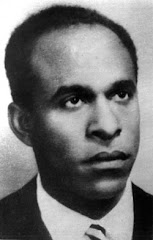
The author and historian Manning Marable
Philippe Cheng

.
http://www.nytimes.com/2011/04/02/books/malcolm-x-biographer-dies-on-eve-of-publication-of-redefining-work.html?src=ISMR_AP_LO_MST_FB

All,

I've just discovered over the past five minutes some absolutely shocking news that is nothing less than a catastrophic loss for African American studies and truly visionary academic and activist oriented scholarship in this country--the untimely death at age 60 of Dr. Manning Marable. There are simply no words to adequately describe just how devastating this incalculable loss is. Dr. Marable was the finest, most intellectually advanced, socially responsible, and seriously committed scholar in African American studies in this country and he is an individual who simply cannot be replaced on any level as either scholar, teacher, theorist, or social activist. I'm so personally stunned at the moment that I can't go for now so I will save what energy I have to talk about this major loss and what it means for all of us in much greater detail tomorrow on the Panopticon Review site. In the meantime my heart and soul goes out to Manning's family, friends, and colleagues from all over the world who are grieving for this monumental figure and his many extraordinary contributions to our collective struggle and his enrichment of our lives. Manning was a man of great integrity, passion, independence, discipline, and compassion who fundamentally transformed our understanding of history, politics, sociology, and critical thought in our time. To say he will be deeply missed by many is a huge understatement...

Kofi
April 2, 2011


On Eve of Redefining Malcolm X, Biographer Dies
By LARRY ROHTER

April 1, 2011
New York Times


For two decades, the Columbia University professor Manning Marable focused on the task he considered his life’s work: redefining the legacy of Malcolm X. Last fall he completed “Malcolm X: A Life of Reinvention,” a 594-page biography described by the few scholars who have seen it as full of new and startling information and insights.


Richard Saunders/Schomburg Center for Research in Black Culture
Malcolm X, the black nationalist, with his wife, Betty Shabazz, and their daughters Attallah, left, and Qubilah around 1962.

The book is scheduled to be published on Monday, and Mr. Marable had been looking forward to leading a vigorous public discussion of his ideas. But on Friday Mr. Marable, 60, died in a hospital in New York as a result of medical problems he thought he had overcome. Officials at Viking, which is publishing the book, said he was able to look at it before he died. But as his health wavered, they were scrambling to delay interviews, including an appearance on the “Today” show in which his findings would have finally been aired.

The book challenges both popular and scholarly portrayals of Malcolm X, the black nationalist leader, describing a man often subject to doubts about theology, politics and other matters, quite different from the figure of unswerving moral certitude that became an enduring symbol of African-American pride.

It is particularly critical of the celebrated “Autobiography of Malcolm X,” now a staple of college reading lists, which was written with Alex Haley and which Mr. Marable described as “fictive.” Drawing on diaries, private correspondence and surveillance records to a much greater extent than previous biographies, his book also suggests that the New York City Police Department and the F.B.I. had advance knowledge of Malcolm X’s assassination but allowed it to happen and then deliberately bungled the investigation.

“This book gives us a richer, more profound, more complicated and more fully fleshed out Malcolm than we have ever had before,” Michael Eric Dyson, the author of “Making Malcolm: The Myth and Meaning of Malcolm X” and a professor of sociology at Georgetown University, said on Thursday. “He’s done as thorough and exhaustive a job as has ever been done in piecing together the life and evolution of Malcolm X, rescuing him from both the hagiography of uncritical advocates and the demonization of undeterred critics.”

Over the course of a 35- year academic career, Mr. Marable wrote and edited numerous books about African-American politics and history, and remained one of the nation’s leading Marxist historians. But the biography is likely to be regarded as his magnum opus. He obtained about 6,000 pages of F.B.I. files on Malcolm X through the Freedom of Information Act, as well as records from the Central Intelligence Agency, State Department and New York district attorney’s office. He also interviewed members of Malcolm X’s inner circle and security team, as well as others who were present when Malcolm X was shot to death.

Poor health had slowed his progress, but Mr. Marable remained optimistic. “For a quarter-century I have had sarcoidosis, an illness that gradually destroyed my pulmonary functions,” he wrote in the volume’s acknowledgments. “In the last year in researching this book, I could not travel and I carried oxygen tanks in order to breathe. In July 2010, I received a double lung transplant, and following two months’ hospitalization, managed a full recovery.” (An interview with The New York Times was planned, but did not take place.)

The book’s account of the assassination of Malcolm X, then 39, on Feb. 21, 1965, is likely to be its most incendiary claim. Mr. Marable contends that although Malcolm X embraced mainstream Islam at least two years before his death, law-enforcement authorities continued to see him as a dangerous rabble-rouser.

“They had the mentality of wanting an assassination,” Gerry Fulcher, a former New York City police detective who participated in the surveillance of Malcolm X, told Mr. Marable for the book.

That is why “law-enforcement agencies acted with reticence when it came to intervening with Malcolm’s fate,” the book asserts. “Rather than investigate the threats on his life, they stood back.”

In a statement, Paul Browne, the chief spokesman for the Police Department, said, ”As much as conspiracy theorists may press to reach a sweeping, unsupported and untrue conclusion, the fact is the N.Y.P.D. was not complicit in Malcolm X’s assassination, and it’s gratuitously false to suggest as much.”

Based on his new material, Mr. Marable concluded that only one of the three men convicted of killing Malcolm X was involved in the assassination, and that the other two were at home that day. The real assassination squad, he writes, had four other members, with connections to the rival Nation of Islam’s Newark mosque — two of whom are still alive and have never been charged.

Since Malcolm X’s death, the posthumous “Autobiography,” along with “Malcolm X,” Spike Lee’s 1992 film drawn from it, has made a pop-culture hero out of the man who was born Malcolm Little. But the Marable book contradicts and complicates key elements of his life story.

Malcolm X himself contributed to many of the fictions, Mr. Marable argues, by exaggerating, glossing over or omitting important incidents in his life. These episodes include a criminal career far more modest than he claimed, an early homosexual relationship with a white businessman, his mother’s confinement in a mental hospital for nearly 25 years and secret meetings with leaders of groups as divergent as the Ku Klux Klan and the Palestine Liberation Organization.

“Malcolm X: A Life of Reinvention” shows, for instance, that at a time when Malcolm X claimed in the autobiography to have “devoted himself to increasingly violent crime” in New York, he was actually in Lansing, Mich., his hometown. Mr. Marable attributes the embroidery of “amateurish attempts at gangsterism” to Malcolm X’s wish to demonstrate that the Nation of Islam’s gospel of pride and self-respect had the power to redeem even the most depraved criminal.

“In many ways, the published book is more Haley’s than its author’s,” Mr. Marable writes, noting that Haley, who died in 1992, was a liberal Republican and staunch integrationist who held “racial separation and religious extremism in contempt” but was “fascinated by the tortured tale of Malcolm’s personal life.”

The book maintains that several chapters of the autobiography explaining Malcolm X’s evolving but still radical political vision were deleted before publication, perhaps out of Haley’s desire to produce a work that “frames his subject firmly within mainstream civil rights respectability at the end of his life.”

The Marable book also sheds new light on Malcolm X’s departure from the Nation of Islam and the subsequent feud with the organization and its founder, Elijah Muhammad, preceding his assassination. That split is usually attributed to theological and political differences and the jealousy of Muhammad’s children and inner circle.

But Mr. Marable also points to an episode of almost Oedipal sexual duplicity, in which Elijah Muhammad impregnated a woman Malcolm X had loved since he was a young man. “Malcolm must have felt a deep sense of betrayal,” Mr. Marable writes.

Malcolm X’s subsequent trip to Mecca in 1964 — a likely turning point in his religious evolution — was recounted in both the autobiography and the biopic. The Marable book, however, provides extensive new material about a second, 24-week trip to Africa and the Middle East later that year, drawing on Malcolm X’s own travel diary and providing details on a campaign he waged to have the United States condemned for racism in a vote at the United Nations.

As part of that effort to open a foreign front for the civil rights struggle, which was closely monitored by American governmental agencies, Malcolm X met with numerous African heads of state as well as Chinese and Cuban diplomats. The Johnson administration was so upset, Mr. Marable writes, that Nicholas Katzenbach, the acting attorney general, considered prosecuting him for violating a law that bans United States citizens from negotiating with foreign states.

“These are new facts being unveiled, showing just how serious and sustained was Malcolm’s interest in the global dimension” of the domestic civil rights struggle, Mr. Dyson said. “They really do suggest he was a subversive figure, trying to undermine the best interests of the U.S. government” in the name of a larger pan-African cause. “That is a fresh insight, one of many.”

Mr. Marable’s editor, Wendy Wolf, said Friday evening that “his every fiber was devoted to the completion of this book.” She added: “It’s heartbreaking he won’t be here on publication day with us.”

Tuesday, April 5, 2011

Melissa Harris-Perry On The Blackening of America

Melissa Harris-Perry

http://www.thenation.com/article/159597/are-we-all-black-americans-now?page=full

All,

An insightful analysis and commentary by The Nation columnist and Princeton University African American Studies professor and activist Melissa Harris-Perry...

Kofi


Are We All Black Americans Now?
Melissa Harris-Perry
March 30, 2011

This article appeared in the April 18, 2011 edition of The Nation.

In the months following September 11, my colleague Cornel West offered this insight: national political elites used the devastating attacks to promote the “niggerization of the American people.” West understood that long before 9/11, African-Americans were intimately familiar with terrorism. Through the Jim Crow century, they were routinely and randomly brutalized and murdered by well-organized groups of whites acting beyond the confines of the official state but with the tacit consent of their society. Under the shadow of lynching, black Americans learned what it meant to feel, as West describes, “unsafe, unprotected, subject to random violence, and hated for who they are.” After 9/11 far too many Americans, unaccustomed to this sense of collective intimidation, felt helpless to halt an unjustified war or the erosion of civil liberties. Thus, whether or not they were black, Americans were “niggerized” by the attacks.

In recent months, I have been reminded of Professor West’s analysis because one way to read our current moment is as a blackening of America. The social, economic and political conditions that have long defined African-American life have descended onto a broader population, and it has been instructive to watch how the nation has responded.

Initially, conservatives argued that Tea Party activists had every right to be disgusted with national leadership and to demand swift economic intervention to combat the near 10 percent unemployment rate. Since the mid-1970s, except for a brief dip between 1998 and 2002, unemployment among African-Americans has routinely exceeded 10 percent, yet African-Americans were rarely encouraged to blame systems or organize collectively. Instead blacks were stereotyped as lazy and undeserving. This characterization has been an effective ideological tool for politicians intent on limiting social programs, cutting welfare, ignoring cities, slashing job training and neglecting housing.

Within months, the Tea Party shifted its focus to the deficit. As it did, policy debates about the poor and unemployed came to mirror decades of discourse about black Americans. Extensions of unemployment insurance were decried as “creeping socialism.” Echoing theories of dependency leveled against African-Americans for decades, one conservative blogger suggested that extending unemployment benefits would create “a permanent entitlement and would perpetuate unemployment.” Perhaps, in this moment, Americans understood how dangerously corrosive the characterization of the poor as “idle” is for black people.

This past November the TSA introduced screening procedures that many Americans—liberals and conservatives alike—deemed intrusive, random and demeaning. But for decades urban police forces have regularly employed race-based traffic stops and pedestrian stop-and-frisks in African-American communities. These policing practices have done little to make neighborhoods safer, but they have contributed to massive incarceration rates for black men. Justifying their racially punitive behavior as a reasonable response to potential crime, police forces have acted largely with the consent of white Americans, some of whom later decried the TSA’s new procedures. Perhaps, for a moment, they felt the stinging humiliation that routinely accompanies black life.

Few events more clearly demonstrated the blackening of America than the standoff in Wisconsin. Like the nineteenth-century leaders of Southern states who stripped black citizens of voting rights, public accommodation and civic associations, Wisconsin’s Republican majority dismantled the hard-won basic rights of Wisconsin workers. Like those Confederate leaders, the Wisconsin GOP used intimidation, threats and even the police against demonstrators and rival officials. As the saga unfolded, many Wisconsin citizens felt stunned that their once-secure rights might be eliminated. For a moment, perhaps, they glimpsed the experience of black men and women who watched the shadow of Jim Crow blot out the promises of emancipation.

The 1880s were also the decade when efforts to create corporate personhood were initiated by wealthy railroad barons. In a 2010 article, James and Tomilea Allison (psych professor at Indiana University and former mayor of Bloomington, respectively) traced how these corporate interests misrepresented past cases so that the Supreme Court eventually relied on nonexistent precedent to twist Fourteenth Amendment protections intended for newly freed slaves to instead offer shelter for profiteering corporations. More than a century later, these arguments were crucial to the Citizens United decision, which putatively endowed extraordinarily wealthy corporations with an “equal” right to electoral influence but in practice gave them breathtakingly unequal representation. Perhaps, as they are reduced to a fraction of a citizen, other Americans now catch a glimpse of what it means to be codified as only three-fifths of a person.

Today corporate greed, conservative ideology, manufactured right-wing populism and progressive complicity are making more and more Americans into, as Professor West might characterize them, “niggers.” Rather than try to escape the pain of experiencing some small familiarity with blackness, Americans could choose to learn from generations of African-Americans who resisted dehumanizing processes of domination and inequality. During the 2008 election Obama’s detractors tried to smear him by suggesting that “Hussein” was a terrorist’s moniker. As a demonstration of solidarity, thousands of Americans informally declared that they too would be known by the middle name Hussein. It was purely symbolic, but it rested on a belief in the power to change meaning by embracing rather than eschewing that which is labeled subordinate, alien, dangerous and shameful. By embracing our collective blackness, perhaps we can find the fortitude and creativity necessary to face the continuing erosion of our national social safety net in the face of a persistent economic crisis.


Melissa Harris-Perry
COLUMNIST
The Nation

Melissa Harris-Perry, an associate professor of politics and African-American studies at Princeton University, is completing her latest book, Sister Citizen: A Text for Colored Girls Who've Considered Politics When Being Strong Isn't Enough. She is a contributor to MSNBC.

Monday, April 4, 2011

The Ongoing Stark and Disturbing Reality of Race And Class in the United States

http://truthout.org/americas-most-segregated-cities-likely-stay-way/1301468400?q=unemployment-african-americans-rises-despite-job-growth/1301544000

All,

The bad news is that African Americans generally are not currently "benefiting" from the slight bump moving downward in the still horrific national unemployment rate...And the good news is...uh....shit...Who are we fooling?--THERE AIN'T NO GOOD NEWS...

Kofi


Unemployment for African-Americans Rises, Despite Job Growth
1 April 2011
by Dean Baker
Center for Economic and Policy Research
Truthout

Employment among blacks fell back almost to its low-point for the downturn.

The economy added 216,000 jobs in March, pushing the overall unemployment rate down to 8.8 percent. The growth was driven entirely by a 230,000 gain in the private sector, as the government sector lost jobs for the fifth consecutive month. The employment-to-population ratio (EPOP) also edged up to 58.5 percent -- the highest ratio since September -- although this is still 4.4 percentage points below the pre-recession peak.

African Americans do not appear to be sharing in the benefits of recent job growth. The EPOP for African Americans fell back by 0.3 percentage points to 51.9 percent, just 0.1 percentage points above the recession low hit September. The EPOP for black teens stands at just 14.8 percent. The overall unemployment rate for African Americans rose by 0.2 percentage points to 15.5 percent.

The big gainers in this report were white women who had a 0.2 percentage-point drop in their unemployment rate to 6.9 percent. Their EPOP rose by 0.4 percentage points to 55.7 percent. By contrast, the unemployment rate for white men edged down slightly from 7.8 to 7.7 percent, but their EPOP actually edged down from 68.1 percent to 68.0 percent.

The employment situation for Hispanics also improved with their unemployment rate dropping by 0.3 percentage points to 11.3 percent. This is down from 13.2 percent in November.

The median and average duration of unemployment spells both increased, with the latter setting another record high at 39.0 weeks. The share of the unemployed who have been unemployed for more than 26 weeks also hit a record high of 45.5 percent. Interestingly, the number of people who have been unemployed less than five weeks rose by 59,000, the first increase since November. This may be an aberration, but it is not consistent with the improving labor market picture elsewhere in the household survey.

The job gains in the establishment survey were widely spread across sectors. Manufacturing added 17,000 jobs in March, its fifth consecutive monthly gain. Retail added 17,700 jobs after losing 7,800 in February. Employment services added 35,900 jobs, following a gain of 32,000 the prior month. While this is a good sign, it is worth noting that this sector added 167,000 jobs in the three months from October, 2009 to January of 2010.

Health care added 36,600 jobs for the month, somewhat more than its 23,000 monthly growth rate over the last year. Restaurants added 26,500 workers, following a gain of 36,000 jobs the prior month. Accounting added an extraordinary 20,200 jobs, 2.5 percent of employment in the sector; although half of this was a bounceback from a February decline.

One serious negative item is that wages have been essentially flat over the last two months. Nominal wage growth over both the last quarter and year have both been 1.7 percent. This is somewhat trailing inflation, especially if the recent increases in food and energy prices are not reversed.

One interesting pattern in the relatively strong growth of the last two months is the share of production workers in total job growth. Of the 472,000 jobs created since January, 92.3 percent or 434,000 have been production or non-supervisory positions. By contrast, only 82.4 percent of jobs overall are in this category. Since these jobs generally require less education, the recent growth implies more demand for less-educated workers.
While the recent acceleration in job growth is encouraging, it is still an extremely weak recovery from a downturn as severe as we have just experienced. Based on the experience of the last two severe recessions, 1974-75 and 1981-82, we should be expecting job growth in the range of 400,000 a month. Instead, we are still seeing a rate of job growth that is below the 250,000-a-month average from the 90s.

It is still questionable as to whether even this pace of growth can be maintained in the wake of falling house prices and government cutbacks. It is worth noting that the employment diffusion index, which shows the percentage of industries planning to add jobs, fell from 68.7 in February to 62.4 in March. This is not going in the right direction.

American Racism, The Entrenched Reality of Racial Segregation, and the Insidious Post-Racial Myth

http://truthout.org/americas-most-segregated-cities-likely-stay-way/1301468400

All,

"Post-racial" my black ass!...Racism is not merely alive but THRIVING in these United Hates 392 years after our "most recent arrival" here...As the late great Bob Marley said: "Many more will have to suffer/many more will have to die/don't ask me why/such a natural mystic blowing in the wind..."

Kofi


America's Most Segregated Cities Likely to Stay That Way
Sunday 3 April 2011
by Earl Ofari Hutchinson
New America Media


The recent report that America’s most segregated cities are just as -- if not more -- segregated than they were a couple of decades ago is hardly a revelation. The report focused on the top 10 most segregated cities. But this could easily be expanded to find vast and unbroken pockets of racial segregation in many of the nation’s smaller and mid-size cities as well. A casual drive through any of the major urban neighborhoods in America, a walk through the neighborhood schools, hospitals, and clinics reveal the stark pattern of the two Americas. In fact, even three or four urban Americas: an America that is poor, black and Latino; an America that is black and middle class; an America that is white, working class and middle class; and one that’s white and wealthy.

But whichever urban America one travels through, the line dividing the neighborhoods is as deep as the Grand Canyon. There are the usual suspects to blame for the rigid segregation. Poverty, crime, lender redlining, a decaying industrial and manufacturing inner city, white and middle-class black and Hispanic flight, crumbling inner-city schools, the refusal of major business and financial institutions to locate in minority neighborhoods, and cash-strapped city governments that have thrown in the towel on providing street repairs and basic services.

This tells a big part of the story of the chronic segregation, but it's only part of the story. The painful truth three years after the election of America’s first black president is that there are far too many policy makers, political leaders, and many whites that still think that segregation is too much a longstanding, even immutable, way of life in America to ever change. The entire history of Northern urban segregation is damning proof of that.

In the decades before the passage of the 1964 Civil Rights Act, the great migration of blacks from the South before and after both World Wars, and the flight of whites from urban neighborhoods to the suburbs locked in place the economic, social, and political mindset that racial segregation was a fact of life in the North and would stay that way. Redlining, zoning laws, and the federal government’s deliberate policy of bolstering residential segregation insured that. Even as the Jim Crow barriers tumbled in the South and blacks and whites mingled in schools, public facilities, and more and more neighborhoods, residential segregation in the North remained America’s idée fixe.

Every census report in the post-Civil Rights era and the countless Urban League’s State of Black America reports showed that the inner cities continued to get blacker and browner and poorer, while the suburbs got whiter and more well to do. That trend isn’t likely to change.

With President Obama and Congressional leaders trying to figure out where to cut every penny they can from education, health care and employment programs, there is absolutely no chance of any new spending or initiatives to be put on the legislative table to deal with the continuing decay of urban neighborhoods. Some experts have pointed to the increasing gentrification by young whites and non-blacks of some urban neighborhoods as a hopeful sign that residential segregation could in time pass away. That’s not likely. In fact, studies have shown that gentrification has not altered the neighborhood racial segregation patterns as much as is popularly presented. Many of the old homes that have been renovated as chic, pricey, apartments and townhouses, have been gobbled up, not by whites and non-blacks, but by upwardly-mobile black professionals. They are upscale, but they are still black, and so are the freshly gentrified neighborhoods they live in.

Urban racial segregation, then, may not be the permanent lot of American society, but if past decades and current policies are any sign, America’s most segregated cities will stay that way for more census counts to come.

Friday, April 1, 2011

Elizabeth Warren and the Consumer Financial Protection Bureau vs. the American Chamber of Commerce

Elizabeth Warren
http://www.nytimes.com/2011/03/31/business/31warren.html?_r=1&nl=us&emc=politicsemailema4
All,

Elizabeth Warren is one of the very few individuals in Obama's current administration whose outstanding track record, progressive policy expertise, conviction, clarity, and fundamental sense of justice, fairness, and compassion I trust 100%. Warren is very tough, very smart, and very fair and is ALWAYS thinking of advocating for and protecting the best interests of American workers, families, and consumers first and foremost and is NOT AFRAID of the bullying tactics, lies, and endless political misrepresentations of either Big Business or the Republican party. If the President had any guts he would elevate her current position as the major aide charged with "setting up" the CFPB to the administrative and policy HEAD of the Bureau. The right and the corporate elite in this country absolutely despises and fears her. She's that good...

Kofi


Warren Defends Agency at Chamber of Commerce

by EDWARD WYATT
March 30, 2011
New York Times


WASHINGTON — She never actually uttered “I come in peace,” but Elizabeth Warren, the Obama administration aide charged with setting up the new Consumer Financial Protection Bureau, might have felt like an alien visiting an anxious planet Wednesday when she went to the United States Chamber of Commerce.

Elizabeth Warren
Stephen Crowley/The New York Times

Elizabeth Warren, an Obama adviser, is in charge of setting up a consumer protection agency.


Warren Defends Agency at Chamber of Commerceby EDWARD WYATTMarch 30, 2011
New York Times

WASHINGTON — She never actually uttered “I come in peace,” but Elizabeth Warren, the Obama administration aide charged with setting up the new Consumer Financial Protection Bureau, might have felt like an alien visiting an anxious planet Wednesday when she went to the United States Chamber of Commerce.


“I do not consider myself in hostile territory right now because I believe we share a point of principle: competitive markets are good for consumers and for businesses,” Ms. Warren told about 300 executives at the chamber’s annual conference on capital markets. But, she added, “Markets don’t work in the way they are supposed to unless there are some well-enforced rules.”

The detail and scope of those rules are what worry the members of the chamber and some members of Congress, both of whom have been vocal in their criticism of the regulatory powers given to the new consumer agency by the Dodd-Frank Act, the financial regulation bill signed into law last July.

The disagreements between Ms. Warren and one of her chief critics, Representative Spencer Bachus, Republican of Alabama and chairman of the House Financial Services Committee, grew more heated hours after her address. Mr. Bachus accused Ms. Warren of mischaracterizing her recent participation in the mortgage service industry settlement talks.

Last week, Ms. Warren told the committee that she provided “advice” to the Treasury secretary and others about a possible settlement but was not involved in the negotiations. State attorneys general and federal officials are discussing a settlement with mortgage service companies in response to questionable foreclosure practices.

On Wednesday afternoon, Mr. Bachus released a seven-page document titled “Perspectives on Settlement Alternatives in Mortgage Servicing,” which, in a letter to Ms. Warren, he said demonstrated that she had a larger role than she had indicated to the committee.

“It is plain that the C.F.P.B. has done more than provide ‘advice’ on the proposed servicing settlement,” Mr. Bachus wrote. The letter requested that Ms. Warren consider “if there are any aspects of that testimony related to the C.F.P.B.’s role in the mortgage servicer settlement negotiations that you wish to clarify or correct.”

The letter was co-signed by Representative Shelley Moore Capito, Republican of West Virginia and chairwoman of the subcommittee on financial institutions and consumer credit.

Jen Howard, a spokeswoman for the consumer agency, said that Ms. Warren correctly characterized her participation. “As Elizabeth Warren testified to Congress earlier this month, the consumer bureau provided advice to various officials involved in the mortgage servicing law enforcement matter,” Ms. Howard said in a statement. “She is aware that not everyone agrees with that advice or how to address the serious deficiencies at some of the nation’s largest mortgage servicing firms.”

Mr. Bachus, a consistent critic of both the consumer agency and Ms. Warren, filled that role again Wednesday when he addressed the Chamber of Commerce conference immediately before she spoke.

Noting that he has introduced a bill to change the governance of the consumer bureau from a single director to a five-person, bipartisan commission, he characterized the powers given to the head of the consumer agency as unmatched in government.

“They regulate all financial products and services, so if it involves a dollar changing hands, they can regulate it, or she can, because she actually has total discretion” over consumer financial products, Mr. Bachus said. “If George Washington came back today, or Abraham Lincoln or Warren Buffett signed up, I wouldn’t give that person total discretion.”

Ms. Warren was followed by Thomas J. Donohue, president and chief executive of the chamber, who warned that the consumer agency could choke off economic growth in the United States.

“If not used carefully, the C.F.P.B.’s tremendous power to go after bad actors could cause serious collateral damage to America’s job creators,” he said.

Ms. Warren has disputed the notion that the consumer agency has unbridled power. “There are plenty of checks in place,” she said, including a law governing how federal agencies write and adopt new regulations. Its rules, like those of any agency, can be overturned by Congress or federal courts.

In addition, she said, the consumer bureau is “the only bank regulator — and perhaps the only agency anywhere in government — whose rules can be overruled by a group of other agencies,” specifically the Financial Stability Oversight Council, composed of nine regulatory agency heads and an independent insurance industry expert. A two-thirds vote of the council is required to overturn a consumer agency rule.

Ms. Warren also warned against making the agency subject to annual appropriations of Congress, saying it would inject politics into the regulatory structure and cause banks and other regulated agencies to lobby for looser oversight.

Regulation and competition are not, she said, mutually exclusive. “In fact, when done right, they support each other,” Ms. Warren said. “Are the Chamber’s members, as citizens or business owners and executives, in a better place today because the F.A.A. regulates air safety, because the states regulate insurance companies, because the federal government enforces antitrust statutes? Of course they are. And so is this country.”

“I do not consider myself in hostile territory right now because I believe we share a point of principle: competitive markets are good for consumers and for businesses,” Ms. Warren told about 300 executives at the chamber’s annual conference on capital markets. But, she added, “Markets don’t work in the way they are supposed to unless there are some well-enforced rules.”

The detail and scope of those rules are what worry the members of the chamber and some members of Congress, both of whom have been vocal in their criticism of the regulatory powers given to the new consumer agency by the Dodd-Frank Act, the financial regulation bill signed into law last July.

The disagreements between Ms. Warren and one of her chief critics, Representative Spencer Bachus, Republican of Alabama and chairman of the House Financial Services Committee, grew more heated hours after her address. Mr. Bachus accused Ms. Warren of mischaracterizing her recent participation in the mortgage service industry settlement talks.

Last week, Ms. Warren told the committee that she provided “advice” to the Treasury secretary and others about a possible settlement but was not involved in the negotiations. State attorneys general and federal officials are discussing a settlement with mortgage service companies in response to questionable foreclosure practices.

On Wednesday afternoon, Mr. Bachus released a seven-page document titled “Perspectives on Settlement Alternatives in Mortgage Servicing,” which, in a letter to Ms. Warren, he said demonstrated that she had a larger role than she had indicated to the committee.

“It is plain that the C.F.P.B. has done more than provide ‘advice’ on the proposed servicing settlement,” Mr. Bachus wrote. The letter requested that Ms. Warren consider “if there are any aspects of that testimony related to the C.F.P.B.’s role in the mortgage servicer settlement negotiations that you wish to clarify or correct.”

The letter was co-signed by Representative Shelley Moore Capito, Republican of West Virginia and chairwoman of the subcommittee on financial institutions and consumer credit.

Jen Howard, a spokeswoman for the consumer agency, said that Ms. Warren correctly characterized her participation. “As Elizabeth Warren testified to Congress earlier this month, the consumer bureau provided advice to various officials involved in the mortgage servicing law enforcement matter,” Ms. Howard said in a statement. “She is aware that not everyone agrees with that advice or how to address the serious deficiencies at some of the nation’s largest mortgage servicing firms.”

Mr. Bachus, a consistent critic of both the consumer agency and Ms. Warren, filled that role again Wednesday when he addressed the Chamber of Commerce conference immediately before she spoke.

Noting that he has introduced a bill to change the governance of the consumer bureau from a single director to a five-person, bipartisan commission, he characterized the powers given to the head of the consumer agency as unmatched in government.

“They regulate all financial products and services, so if it involves a dollar changing hands, they can regulate it, or she can, because she actually has total discretion” over consumer financial products, Mr. Bachus said. “If George Washington came back today, or Abraham Lincoln or Warren Buffett signed up, I wouldn’t give that person total discretion.”

Ms. Warren was followed by Thomas J. Donohue, president and chief executive of the chamber, who warned that the consumer agency could choke off economic growth in the United States.

“If not used carefully, the C.F.P.B.’s tremendous power to go after bad actors could cause serious collateral damage to America’s job creators,” he said.

Ms. Warren has disputed the notion that the consumer agency has unbridled power. “There are plenty of checks in place,” she said, including a law governing how federal agencies write and adopt new regulations. Its rules, like those of any agency, can be overturned by Congress or federal courts.

In addition, she said, the consumer bureau is “the only bank regulator — and perhaps the only agency anywhere in government — whose rules can be overruled by a group of other agencies,” specifically the Financial Stability Oversight Council, composed of nine regulatory agency heads and an independent insurance industry expert. A two-thirds vote of the council is required to overturn a consumer agency rule.

Ms. Warren also warned against making the agency subject to annual appropriations of Congress, saying it would inject politics into the regulatory structure and cause banks and other regulated agencies to lobby for looser oversight.

Regulation and competition are not, she said, mutually exclusive. “In fact, when done right, they support each other,” Ms. Warren said. “Are the Chamber’s members, as citizens or business owners and executives, in a better place today because the F.A.A. regulates air safety, because the states regulate insurance companies, because the federal government enforces antitrust statutes? Of course they are. And so is this country.”


http://www.prwatch.org/node/9912

Elizabeth Warren 2.0
Submitted by Mary Bottari on February 3, 2011
banking economy BanksterUSA Real Economy Project

In a savvy move, the new Consumer Financial Protection Bureau launched its first website today. The CFPB was created by the passage of the Dodd-Frank Wall Street reform bill in July 2010 and is headed on an interim basis by well-known consumer advocate, Elizabeth Warren. While the agency will not officially open its doors for formal consumer complaints until July 2011, the new website offers the agency an opportunity to start reaching out to consumers to hear their ideas on how the institution can best serve the public.

"We're excited to announce the launch of our website, ConsumerFinance.gov, for one very important reason –- to start a conversation with you. With the launch of our site, we will be open for suggestions," Elizabeth Warren explained in a statement.


While the agency will have a hard time dealing with actual consumer complaints until it hires more staff and formally opens its doors, the website offers staff a mechanism for communicating with an anxious public -- who, in my experience, has been clamoring for Elizabeth Warren's contact information ever since the passage of the Wall Street reform bill.

It is a clever idea and good customer relations.

Get Involved in the Conversation!

Visit the website at ConsumerFinance.gov.

"Like" the agency on Facebook.


Wednesday, March 30, 2011

MoveOn.org Calls Out Obama, General Electric, and their CEO Jeff Immelt For Insulting and Exploiting American Workers

From:"Lenore Palladino, MoveOn.org Political Action"
Date: March 30, 2011
To: "Kofi Natambu"
Subject: A slap in the face

Dear MoveOn member,

According to The New York Times, last year General Electric (GE) made over $14.2 billion in profit, but paid NO federal tax.1 None.

In fact, thanks to the millions GE spent lobbying Congress, we American taxpayers actually owed GE $3.2 billion in tax credits.2

Now GE is slashing health benefits and retirement benefits for new employees among non-union workers and is expected to push unions to accept similar cutbacks3, while its CEO, Jeff Immelt, gets a 100% pay raise.4

What's worse? Immelt now sits as chair of the President's Council on Jobs and Competitiveness (Jobs Council), representing corporate America to the President on matters like job creation and corporate taxation.That's a slap in the face to every hardworking, tax-paying American—especially GE employees.

That's why we're teaming up with Russ Feingold and his new group Progressives United today to call for Immelt to go. Will you join the call?

Sign the petition calling for GE CEO Jeff Immelt to step down as chair of the President's Jobs Council.

One of the chief ways GE avoids paying taxes is by shifting a large portion of its profits overseas, and jobs follow.5 Now GE's CEO is the person charged with helping the President create jobs here in America. That's just perverse.

And if the American people got back just the $3.2 billion GE took in tax credits, it would pay for the programs that House Republicans want to gut, like community health centers providing care to over three million low-income people6 and food and health care assistance to pregnant women, new moms, and children.7 We'd even have enough left to save the jobs of over 21,000 teachers across the country.8

The American deficit is being weighed down by hundreds of billions spent on bailing out major corporations. The tea party's plan is to make working families pay through devastating cuts, instead of making corporations with billions in profits pay their fair share.

But if we can hold Immelt accountable for GE's corporate irresponsibility, the nation will turn its attention to the injustice of corporate tax evasion in the face of the Republicans' budget-slashing attack on working families.

Make it all happen by signing the petition calling for Immelt to go. Just click below—and share this email with your friends, family, and social networks today.

http://pol.moveon.org/immelt_must_go/?id=26713-9442574-sj8LXIx&t=2

Thanks for all that you do.

–Lenore, Tim, Marika, Kat, and the rest of the team

Sources:

1. "G.E.'s Strategies Let It Avoid Taxes All Together," The New York Times, March 24, 2011
http://www.moveon.org/r?r=207259&id=26713-9442574-sj8LXIx&t=3

2. Ibid.

3. "After Paying Zero Income Taxes, GE Plans To Ask Its Union Workers To Make Wage and Benefits Concessions", ThinkProgress, March 28, 2011

http://www.moveon.org/r?r=207260&id=26713-9442574-sj8LXIx&t=5

4. "UPDATE: GE Doubles CEO Immelt's Compensation, Shrinks Board", Smart Money, March 14, 2011

http://www.moveon.org/r?r=207261&id=26713-9442574-sj8LXIx&t=6

5. "G.E.'s Strategies Let It Avoid Taxes All Together," The New York Times, March 24, 2011

http://www.moveon.org/r?r=207259&id=26713-9442574-sj8LXIx&t=7

6. "NACHC Statement in Response to the Budget from the House Appropriations Committee," National Association of Community Health Centers website, February 9, 2011

http://www.moveon.org/r?r=206514&id=26713-9442574-sj8LXIx&t=8

7. "Bye Bye, Big Bird. Hello, E. Coli.," The New Republic, February 12, 2011

http://www.moveon.org/r?r=206104&id=26713-9442574-sj8LXIx&t=9

8. Based on an annual teacher's salary of $42,500, as noted in the Payscale website (updated March 19, 2011), accessed March 30, 2011

http://www.moveon.org/r?r=207263&id=26713-9442574-sj8LXIx&t=10

Want to support our work? We're entirely funded by our 5 million members—no corporate contributions, no big checks from CEOs. And our tiny staff ensures that small contributions go a long way. Chip in here.


Saturday, March 26, 2011

Corporate Exploitation, Personal Addictions, and Media Codependency in Hollyweird: Charlie Sheen vs. CBS and Warner Brothers Television


Adonis Rising


Is it just me or is actor Charlie Sheen poised to pull off the biggest heist since the Brink's job?

by Patricia Calloway

On March 7, 2011 CBS and Warner Bros. Television announced the firing of actor Charlie Sheen from the hit show "Two and a Half Men" following weeks of public controversy and negative publicity which included alleged anti-semitic remarks made by the actor against the show's creator Chuck Lorre. Since then Sheen has been on the lips of just about everybody you know and a lot of people you don't, media people who just can't stop trying to pimp him and his situation.

But Sheen has taken all of this, the biased news stories, the constant crush of paparazzi, restraining orders, the removal of his children by the state, even imprisonment inside his own home due to the media jackals lurking just outside the security gates of the community he's trying to raise his children in and turned it onto its head and into the greatest show on earth; not if, but when he wins his $100 million breach of contract lawsuit against his corporate tormentors at CBS and Warner Bros. Television he will emerge as the slickest mofo since D.B. Cooper.

God, it's good to be alive right now.

Viva Charlie!

In a flurry of major media appearances and interviews Charlie Sheen has managed to do what many Hollywood celebrities either cannot or will not do; he has put his corporate owners on notice that he has taken control and ownership of Charlie Sheen, his name, his image and profitability both present and future using the very media that is chomping at the bit to use and destroy him. He is gaining his freedom the old-fashioned way, through struggle and hardship, having seized control of his career and life from the jaws of the hyenas who would just as soon help him to die as continue to use him as youth demographic bait for their old, tired assed network.

During the Week of Charlie Awesomeness, when he was doing interview after interview with all the major networks, CBS tossed the idea to the media of recasting "Two and a Half Men" with a different actor in a scenario that would help save the show; as far back as April 2010 the network was toying with this same idea (and quite publicly) after Sheen was arrested on Christmas Day 2009 in Aspen, Colorado for misdemeanor assault and felony menacing involving a domestic dispute with his wife, Brooke Mueller. He eventually plead guilty in August 2010 and in a plea deal he received 30 days in rehab, 30 days probation and 36 hours of anger management and was sentenced to time already served at Promises Treatment Center. He and his wife reconciled in February 2010 and both completed alcohol rehab that year. Sheen began to re-evaluate "Two and a Half Men" and announced he was taking time off from the program to pull himself, his marriage and his life together.

At the time, 26, 365 polled viewers were asked Can The Show Survive Without Charlie; 84% of them answered 'No'. When asked What Should The Network Do If He Leaves, 81% responded 'Cancel the Show';

When he returned to the show it was very clear to CBS that Sheen was the butter on their bread.

Season 7 of "Two and a Half Men" started September 21, 2009 and was originally slated to run for 22 episodes but that increased to 24 episodes in November. In February Sheen entered rehab for three weeks and the season was peeled back by two episodes.

Season 7 averaged 14.89 million viewers for the entire 22 episodes, but for the first six episodes airing after the Aspen arrest, from January 11, 2010 to March 8, 2010, "Two and a Half Men" enjoyed a ratings average of 17.01 million viewers. On March 23, 2010, ratings for the show dropped back to normal and the remaining four episodes of the season averaged 14.15 million.

Sheen was arrested October 26, 2010 for an incident at New York's Plaza Hotel where he caused $7,000 in damages and threatened a naked hooker because he couldn't find his cellphone and wallet; for the four weeks following this incident, from November 2, 2010 to November 23, 2010, the show averaged 13.91 million viewers, not a huge difference from the Season 7 average.

Sensing a pattern? Sheen's outlandish behavior was a bit of a boon for CBS. If I were a betting woman, I'd put $1.25 on the network turning a blind eye to his problems and behavior in favor of keeping the 15 million viewers he brought them each week. Sheen's self-destructive behavior was overlooked repeatedly; perhaps it was seen as the price of doing business. After all, "Two and a Half Men" is worth billions, yes, with a "b", billions of dollars in worldwide syndication and distribution rights and none of it would be possible without him.

So what if he's tore up from the floor up? Move the furniture around. Somebody get his leg.

There's your moral turpitude right there.

In a February 28, 2010 interview Sheen demanded a 50% increase in pay from the show which would net him $3 million per episode. He reasoned that compared to what the show is making and is worth, CBS could afford it. A week later they fired him; what a coincidence.

Sheen was accused of being anti-semitic by the media because he called the show's creator, Chuck Lorre by his Hebrew name, Chaim Levine; that didn't stick to him as Sheen is Jewish through his mother, artist Janet Templeton. Sheen told TMZ: "I was addressing the man, not the bulls**t TV persona. So you're telling me that anytime someone calls me Carlos Estevez (his birth name) they are being anti-Latino?"

"Two and a Half Men" has been CBS' number one show for the past seven years because of Charlie Sheen's work, persona and popularity. CBS' attempt to rob, yes, rob Charlie Sheen of the billions that are his is nothing short of despicable. You don't have to love him, but you do have to love fairness, equitable treatment, honest pay for honest work and equitable compensation for one's contributions on the job. I'm not talking about Sheen the crazy TV star because that's what they want you to look at while they quietly steal his money; I'm talking about Sheen the worker and so is he.

And therefore Charlie Sheen is waging a revolution of sorts, an emancipation effort that serves as both a warning to corporate execs who foolishly underestimated him and as an escape template for others to reproduce. He must be acutely aware that the only way he can insure his freedom is by taking power for himself and not giving it back to CBS and Warner Brothers Television.

How Emiliano Zapata is that?

The Acorn and the Tree

His father, actor Martin Sheen, has a long history in liberal Democratic politics and social activism. He has supported a number of causes including the Bobby Kennedy campaign and the1965 farm worker movement with Cesar Chavez in California, anti-nuclear protests in Nevada and has opposed the war in Iraq. He lends his support to groups such as Help Darfur Now, Earth First! and By Any Means Necessary (BAMN).

Charlie Sheen is actively involved in breast cancer awareness and is a major donor and supporter of the HIV/AIDS assistance organization Aid for AIDS in Los Angeles. He is also a prominent advocate of the 9/11 Truth Movement which believes the attacks were an inside job; the media made him out to be a conspiracy kook after his interview on "The Alex Jones Show" gained mainstream media attention in 2009.

Since September 2009 when Sheen first contacted President Obama and urged him to investigate the attacks, the media has cranked up its scrutiny of him; his life is already a fishbowl but the added pressure of just about every media outlet trying to catch you dirty would make a man feel uncomfortable and a little paranoid. It might make a man with addiction issues feel worse than that.

In light of this the Christmas 2009 incident in Aspen seems inevitable. Sheen and his wife got into an argument; she threatened to divorce him and he snapped. Even though they reconciled the following February it wasn't enough; Sheen filed for divorce from his wife eight months later. His greatest fear had come upon him.

B***h Betta Have My Money

On March 10, 2010 Chuck Lorre, CBS and Warner Brothers Television were sued by Charlie Sheen for $100 million dollars. In a 30-page complaint Sheen charges Chuck Lorre fired him illegally; not only was he in breach of Sheen's contract but he was in violation of federal law prohibiting the firing of sick persons. Sheen's radio comments about Lorre are protected speech so he can't be fired for exercising that right; Sheen charges that the comments are the real reason behind his firing.

The "hilarious, but legally sound" lawsuit is said to tell all and then some about the operations behind the show and the actions of its bigwigs. Experts expect a quick settlement with Sheen from Lorre, CBS and Warner Brothers to avoid further embarrassment; Sheen can't seem to stop making fun of them in "their" media.

Because Chuck Lorre didn't like what Sheen said about him on the air and because CBS doesn't want to share a bigger slice of the billions they stand to make off Sheen with him he was fired on a trumped-up morals clause; now isnt' that the pot calling the kettle black?

You can't fire a man for indecent behavior you have tolerated, underwritten and encouraged for almost as long as he's worked for you simply because he's making you rich. You can't pretend you haven't entered into a contract with a man when he demands fair and equitable treatment under that contract from you. You can't defame a man because he knows what he's worth and is trying to protect his value.

Sheen has also demanded that cast and crew members of "Two and a Half Men" get paid for the remaining episodes. His contract included a "pay or play" clause that pays him for all episodes plus residuals whether he works or not. Remember in November 2010 when the season was extended to 24 episodes but was put back to 22 episodes when Sheen went to rehab? Well, he signed a contract for 24 episodes and is owed for the remainder and so is the cast and crew. They are not working yet are under contract; who will step over CBS to hire them? As displaced workers they are eligible for unemployment compensation from the state of California, and thank goodness, but Sheen has put CBS on notice that he expects his people to be paid.

What this thing is about is worker's rights, employment law and contract law, period. It is not about an "out-of-control" star, it's not about a drug addict who hangs out with hookers. This is about a corporation's attempt to deny its employees justice and their rights under the law, like in the state of Wisconsin; it's about unrestrained corporate greed, greed by any means necessary up to and including the deaths of workers, like at British Petroleum; it's about the immoral lack of respect and disregard for worker's dignity, like at DeBeers. And it is about a corporation's refusal to negotiate billions of dollars in present and future earnings from a man's work with that man, like the NFL owners.

Don't ever think it's about anything else.

You're Not the Boss of Me

This past Friday it was announced that Sheen's one-man show, "My Violent Torpedo of Truth" has been expanded to 22 shows. He originally scheduled five dates, the first for April 2 at the Fox Theatre here in Detroit. He will make an estimated $7 million dollars a month on shows sold out within 18 minutes of their announcement on his Twitter page where followers were able to purchase tickets to the event.

Since joining Twitter Sheen has entered the Guiness Book of World Records as the fastest person to achieve one million followers in the shortest amount of time. Before he ever tweeted Sheen had 10,000 followers; in the next 24 hours he had attracted one million. As of March 20, 2010 Charlie Sheen has 3 million followers and a train load of sponsors lining up to get on his page.

Behold this piece of Charlie awesomeness: his deal with LiveNation gives him 85% of profits plus merchandising and afterparty appearances. This is possible because tickets were purchased via Twitter; Sheen doesn't need LiveNation's ticket booth so his overhead is low. Low overhead, high profit. One dollar from every ticket sold for his show will be donated to the American Red Cross for the Japanese Earthquake Relief Fund.

He shows us how to deal with circling buzzards like LiveNation by stripping them of their power to fleece; they're not the boss of him or his tickets.

Sheen scares the hell out of Them. The more he talks the more They freak out; They have put great stock in maintaining the illusion of celebrity because it gives them an endless supply of fresh bodies to exploit for their own ends. He doesn't give a s**t what we think about him, he just does his thing and in doing so he strips away the mystique of fame and celebrity. He lets us see that it's all smoke and mirrors and sleight of hand.

He holds up Hollywood's hypocrisy and falsity like the severed head of the Medusa and allows us to gaze upon its horror and ugly simplicity. No, he will not obey and behave, no he will not hide his contempt for the thing that is killing him. No, he will not apologize for his lifestyle choices; he's an addict who doesn't care if you know that he likes hookers and mountains of coke and fast cars and gunplay and terrorizing his wives.

He's like your cousin Reggie only Charlie Sheen will work and he's rich. Deal with it.

Angel with a Dirty Face

Sheen brings us in through the front of the tent then closes the curtain behind us as we watch in shock and awe the truth about the world he lives and works in. We're cool with that because it's real and we know he's being honest with us and that he respects us. This drives Them to fits because They do the opposite; Sheen consistently breaks the spells They keep trying to cast over us and offers up his life as a testimony to Their lies.

Charlie Sheen is on the verge of revolution and I'm glad to see it. His lawsuit will singlehandedly bitch slap not one but two corporations by exposing their greed and immorality, their deceit and their cruel disregard toward workers. Through him we'll see for ourselves their whoredoms and pathetic weaknesses and in comparison to Them he will look like a saint.

Viva el verdad! Viva la justicia! Viva Santo Carlos Estevez!


Patricia Calloway paints, writes, blogs and cheers for workers the world over in Detroit, Michigan.