https://convergencemag.com/articles/the-white-republic-response-by-bill-fletcher-jr/
[https://convergencemag.com/articles/the-white-republic-and-the-struggle-for-racial-justice/]
Racial Justice
Democracy
Danger from the Right
‘The White Republic’: Response by Bill Fletcher, Jr.

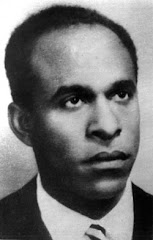
BILL FLETCHER, JR.
by Bill Fletcher Jr.
May 11, 2021
Convergence Magazine

Bill Fletcher Jr. argues that to fight the white republic, we must build the politics of a new majority.
A Convergence Series

In “The White Republic and The Struggle for Racial Justice,” Bob Wing contended that the U.S. state is racist to the core, and this has specific implications for our movements’ work going forward, especially the need to replace this racist state with an anti-racist state. Here Bill Fletcher, Jr. kicks off a series of responses to Bob Wing’s article. “What I would add to what Bob has argued is that the fightback must necessitate the building of the politics of a “new majority,” he writes. OrgUp has published a number of other responses as well; we encourage readers to add your voice, and to check out the contributions from Gerald Horne, Erin Heaney, Peter Olney & Rand Wilson, Van Gosse, and Barry Eidlin. This discussion then wraps up with some concluding thoughts by Bob Wing.
Build the politics of a new majority
There is little to disagree with in Bob Wing’s powerful piece, “The White Republic and the Struggle for Racial Justice.” The argument is tight, concise, accurate and compelling. The following, therefore, aims to highlight certain points and draw out pieces that I believe need further elaboration.
The white republic
Bob is correct in identifying the U.S. as a “white republic.” It is important to clarify that the U.S. is a specific form of capitalist state. It is not simply “racial capitalism” (is there any capitalism that is actually non-racial?) but is a racial settler state. This is implicit in Bob’s piece, but it needs to be drawn out because it helps one to better understand the construction of racist and national oppression in the U.S.
The thirteen colonies, and then the U.S., were founded on the basis of genocide against the First Nations and the annexation of their land. This is critical to highlight because of the error of many people who see the “original sin” of the U.S. being exclusively that of racial slavery of Africans. The founding of the settler-colony assumed the removal of the people who were already here. This was followed by the introduction of forced labor from both Europe and Africa, and the eventual and orchestrated transformation of all African forced labor into racial slaves for life (and the lives of their children) by the end of the 1600s.
The expansion of this early capitalist state—the colonies followed by the U.S.—resulted in the racialization of acquired populations. This is why the acronym that has become strangely popular—“BIPOC” (Black, Indigenous & People Of Color)—misses the mark entirely. BIPOC invisible-izes acquired, racialized populations and the reality of settler-colonial expansion. With the expansion, the newly acquired populations, e.g., Mexicans, Puerto Ricans, Micronesians, Hawaiians, as well as imported Asians, were racialized. They were placed in a specific racial hierarchy in order to both justify their oppression as well as to implement social control over all subaltern populations.
The “white republic” is an effective way to define and articulate this construction and it is the renewal of the white republic that right-wing populists today lust after. They, and particularly the neofascists, wish the formal reestablishment of such a state, which is one of the reasons that the description of the nationally specific form of right-wing populism as “neo-Confederate” is so compelling.
White privilege
Bob’s assertion of the importance of the concept of “white privilege” needs to be applauded and reiterated. But it also needs a slight clarification.
In part because of the way that the term has been bastardized by many people infected with postmodernism, it is important to understand white privilege as representing a “system” rather than a set of holiday presents given out to so-called white people. White privilege means a system that ensures a differential in treatment imposed on populations by the ruling elite. This is not, in the main, a problem of the behavior of this or that individual. It is instead suggesting that a particular population is defined by the ruling elites as being relevant and, in fact, superior, therefore making them eligible for a certain level of treatment superior to those beneath them. This differential in treatment does not rest upon the strengths or weaknesses of the economy but is built into the system and into the state over decades and centuries. It plays itself out in all fields, including jobs, housing, education, healthcare, and law enforcement.
Thus, opposing white privilege is not represented by a white person standing up in a conference renouncing their “white privilege,” but rather by the actual practice of anti-racist class struggle. It can be symbolized by the John Browns and Ann Bradens of the world.
The rise of the New Right
Here I would slightly disagree with Bob. Today’s right emerged out of the ashes of the Barry Goldwater campaign. This soon-to-be-entitled “New Right” clearly formulated a struggle to overturn the “Second Reconstruction,” including but not limited to the victories of the Civil Rights Movement. In fact, what came to be understood as “The New Right” sought to overturn the 20th century and the accumulated popular victories that had been won (particularly the victories in the struggles against male supremacy). They undertook this work through a combination of litigation, legislation/political action, and the development of right-wing mass movements. This is a critical point to emphasize because the battle, though mainly fought on the terrain of race, was far from exclusively fought there. For example, it extended to the fights around women’s and LGBTQ rights and foreign policy. What at first, to many, seemed to be an almost chaotic, spontaneous backlash was neither chaotic nor a backlash; it was a well-organized counterattack.
The mass movements tended to be led by cadre from various right-wing organizations, but they allowed their respective campaigns and movements to have a low ‘entry fee’ so that they could become quite mass.
It is important to emphasize that the rise of this New Right took place before the economic decline of the U.S. and the diminishing living standard of the average U.S. working person. This bears emphasis because there are many on the Left who think of the rise of the New Right as a mass phenomenon as being an expression of the economic anxiety of white working people and middle strata. As it turns out, it is far more complicated than that, and much of the root of this cancerous growth can be found in an intense fear of competition with what are thought of as illegitimate populations and, as a result, white displacement. It is also worth noting that the mass base for this new, right-wing populist movement was not mainly a movement of the white poor or even of white working people, but of middle and upper income whites who feared both being squeezed economically and being displaced by the masses of color.
Fighting back
What I would add to what Bob has argued is that the fightback must necessitate the building of the politics of a “new majority.” This means anti-racist politics, for sure, but more specifically, the building of a popular democratic bloc of forces that unites in fighting for the so-called Third Reconstruction, i.e., a fight for structural reforms in the current system as laying the foundation for moving towards a more fundamental social transformation.
In order to advance in this direction, we must be aware that the ruling circles are divided in several distinct ways. There are the Neo-Confederate forces (which includes those who advance neo-liberalism; those who are for a white “welfarism”; and the neofascists); Green Capital (mainly in the Democratic Party; those who believe that neo-liberalism is dead and that a new form of accumulation is necessary, one that must address the environmental crisis, and one that may necessitate compromises with the popular classes); and the Democratic Party neo-liberals (those holding on to the Clintonesque approach of politically liberal and socially conservative). These forces are engaging each other at the moment and the Neo-Confederates, who have gained control of the Republican Party, have now become the party for dictatorship. This does not mean that they are necessarily fascist, but that they aim to make voter suppression key to their electoral strategy which aims at the building of a neo-apartheid state.
Thus, the “new majority” must be constituted in such a way that it is not seen as a demographic bloc, but a bloc of popular forces and social movements that represents the oppressed. In this context, the battle for democracy, and specifically, the battle for consistent democracy and against racist and national oppression becomes key in determining the outcome of the turbulence of the current era.
The environmental catastrophe may condemn humanity to extinction, but the success in the rebuilding of a neo-Confederate bloc on the basis of racism, national oppression and male supremacy will guarantee dictatorship.

Tagged:
Racial Justice
Multi-Racial Democracy
Building the ‘White Stripe’: The Young Patriots, Jesse Jackson, and SURJ
Tagged:
Organizing Practice
How We Can Defeat Authoritarianism Together
Racial Justice
Democracy
Danger from the Right
Governing Power
Multi-Racial Democracy
ABOUT THE AUTHOR:

Bill Fletcher Jr.
Bill Fletcher, Jr. is a longtime socialist, trade unionist and international solidarity activist. A cofounder of standing4democracy.org and the US Campaign for Western Sahara, Fletcher is a critically acclaimed writer of both fiction and nonfiction.
https://convergencemag.com/articles/the-white-republic-and-the-struggle-for-racial-justice/
Racial Justice
Electoral Strategy
Governing Power
The White Republic and the Struggle for Racial Justice
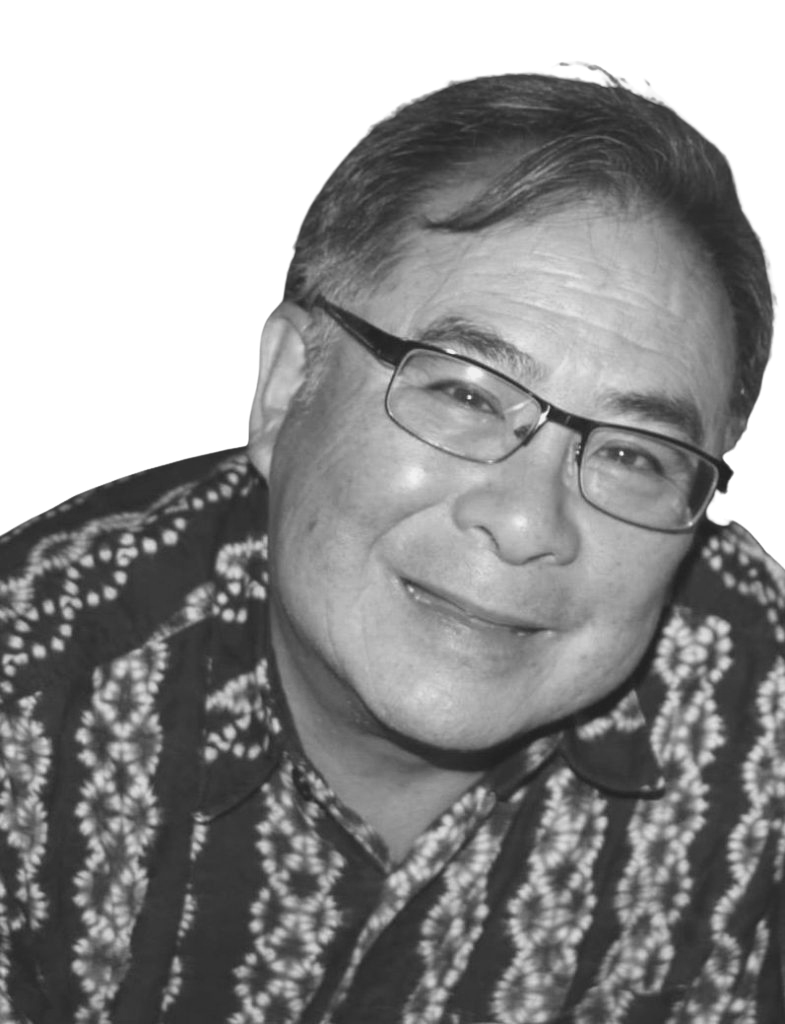
by Bob Wing
April 29, 2021
Convergence
BOB WING
The fight against the white republic is the central democratic and class struggle of our time.
A Convergence Series
This is the first article.
Not a day goes by without some reminder of the pervasiveness and persistence of white supremacy in this country – whether the police murder of another unarmed Black person or a new assault on voting rights or civil liberties. “Recognizing that the U.S. is a racist white republic helps ground our understanding that the racist state plays a central role in shaping and enforcing racial capitalism and systemic racism,” Bob Wing contends. In the article that follows, he details the history behind this observation and its strategic implications for our movements’ work going forward, especially the need to replace the racist state with an antiracist state. OrgUp has published a number of responses to Bob Wing’s article; we encourage readers to add your voice, and to check out the contributions from Bill Fletcher, Jr., Gerald Horne, Erin Heaney, Peter Olney & Rand Wilson, Van Gosse, and Barry Eidlin. This discussion then wraps up with some concluding thoughts by Bob Wing.
Far from recoiling at Trump’s failed coup of January 6, the GOP is avidly regrouping around him and launching an even more ruthless campaign of voter disenfranchisement to seize power. The polarization between racist authoritarianism and a multiracial democracy is white-hot.
There are many things that progressives need to do to win this historic fight. One of the less obvious, yet crucial, projects is to sharpen the conceptual understandings that guide our work.
For example, the Black Lives Matter movement, flanked by immigrant and Native struggles, has energized public appreciation of “systemic racism” and renewed Black-led antiracist activism. Among progressives, “racial capitalism” has won an enthusiastic audience as more people realize that U.S. capitalism and racism are inseparable.
As these concepts get popularized, we ought to deepen them and oppose the inevitable attempts to water them down, de-radicalize, divide and de-center the struggle against racism.
The state and white supremacy
I also believe that our movement needs to more thoroughly digest and strategically act upon the harsh reality that racism is, first and foremost, imposed by white racist political power. In particular, the fight against racism is choked if it does not target white power and its constituent political institutions, especially the institutions that embody and exercise the power of the state.
To help capture this, I will highlight the concept of the “white republic” and discuss its historical basis and strategic implications.
By calling the U.S. a “white republic,” I mean that the U.S. government was, from the very beginning, built by and for whites and as a dictatorship over Black and Native peoples. (It could also be called a “racist state,” which is less provocative but has the same meaning, and I will use them interchangeably.) This is why, for centuries, “American” was nearly synonymous with “white,” while African Americans were bereft “strangers in their own homeland.”
In my view, the “state” (commonly referred to as “government”) is the most potent form that ruling class power takes and wields to fashion the society as a whole in its image and interest. Laws, taxes, and armed forces are its foundations.
However, no ruling class can gain the broad social base needed for stability without forming fairly durable but still changing alliances with other social forces. Governmental laws and institutions incorporate these non-ruling class social forces and become the most potent form of these partnerships.
Thus, the dominant ruling class force of the time and place usually shapes the state. But it is also defined by the unities and contradictions between competing ruling class fractions as well as the agreements and conflicts with major non-ruling class forces, primarily those inside the ruling alliance, and even international forces. The state can also be impacted by those who may challenge it, and even occupied or toppled.
Consequently, when I refer to the U.S. as a white republic, I mean that the dominant ruling class fractions and their main alliance partners have been overwhelmingly white and united by and for the system of white privilege, racist oppression, and settler colonialism throughout its history.
White privilege and racial oppression. White privilege and racial oppression are inherently interconnected, two sides of the same coin. White privilege most famously consists of systemic economic and social benefits denied to non-whites, such as favored access to better jobs, housing, wealth, and education.
These material benefits are augmented by political power (such as the ability to vote and have one’s vote counted and the ability to influence or determine public policy), freedom (versus racist terror and discrimination), police and court protection, and citizenship, not to speak of an enduring sense of cultural and intellectual superiority.
Such privileges vary by class, gender, nativity, and other historical factors. But even today, a household headed by a white non-high school graduate has twice the wealth of a household headed by a Black college graduate. Such a family is also unlikely to suffer from voter disenfranchisement, discrimination, hate speech, or police murder.
Together these privileges constitute a formidable material, ideological, and psychological “white racial interest” and “white identity” that often undercuts the class interests and democratic sensibilities of many white people. White privilege is an indispensable glue that unites many white people of all classes with the ruling class against racial justice. It has also, from the beginning, often given rise to neo-fascist populist movements for white terror and authoritarianism like the one we see today.
Race is pivotal. The now centuries-old racist white cross-class alliance of those who support white power and privilege is central to the U.S. ruling alliance and U.S. state. For much of U.S. history, white racist coalitions dominated both of the main political parties, and there was little difference between them on racial policy. The most apparent exceptions were during the Civil War and Reconstruction and the Civil Rights era to today.
After the Voting Rights Act of 1965, for the first time in U.S. history, the vast majority of the worst racists and reactionaries migrated to one party, the Republican, while most of those left of center, including most voters of color, gravitated to the Democrats. The political and racial polarization between the parties has reached an extreme. Since the 2000 presidential election, it has become evident that the Republicans cannot win without suppressing voters of color, and the Democrats cannot succeed without unleashing those voters.
Race is the pivot of U.S. politics.
Stages of governing power
Recognizing that the U.S. is a racist white republic helps ground our understanding that the racist state plays a central role in shaping and enforcing racial capitalism and systemic racism. It helps clarify that the present-day struggle against racist authoritarianism continues a central theme of U.S. history; it’s no temporary aberration. It suggests that we can only win by building a cross-class antiracist alliance powerful enough to divide and defeat the multi-class racist forces that stand in the way of racial, social, economic, and climate justice, peace, and democracy.
It also means that racial justice forces need to win governing power within the current system and then continue to build the strength to dismantle the racist state and replace it with an antiracist one.
Virtually all the government institutions—among them the U.S. Senate, the Electoral College, the FBI, Immigration and Customs Enforcement (ICE), the military, the Federal Reserve, Treasury—were constructed to serve the white republic. Racism and other forms of oppression are built into their missions, assumptions, structure, and functioning.
Struggles to defund the police, abolish ICE and prisons, and transform the Electoral College directly challenge racist state institutions. Efforts to reform these institutions can lead to significant gains, and calling for their immediate abolition is not always the best tactical choice. But we should place specific reform campaigns in the context of a strategic framework that envisions replacing these institutions with a new system of antiracist, social justice institutions.
Such a process promises to be long and complicated, but if we do not set our sights on it now, we will never get there. Unless we ultimately replace most or all state institutions that reinforce and re-embed racism, racial justice will remain a “dream deferred.” Our advances will constantly be subject to racist rollback and restoration within a system that tilts strongly in favor of white supremacy.
Twice before, U.S. movements mounted powerful challenges to the white republic: The Civil War and Reconstruction, and the Civil Rights period, the Second Reconstruction. Both times the movements won historic advances but ended in the restoration of the racist state.
This time, however, the political conditions are more favorable. A third reconstruction anchored in the fight for racial justice would start us on the path to dismantling white supremacy and be a huge step forward for working class and people’s power. It would thereby lay the basis for ending the entire system of racial capitalism.
The fight against the white republic and for an antiracist democracy is the central democratic and class struggle of our time.
Slaveholders led the independence movement
More than 150 years before the founding of the most infamous racist state, the apartheid state of South Africa, the U.S. was founded as a white slaveholding settler-colonial state. The new U.S. was an advanced democracy—but for white people only. It was a terroristic dictatorship for Black and Native peoples on whose land and labor the entire enterprise rested. The U.S. was not simply a “democracy with flaws that needed correcting.”
The anti-colonial independence movement in the U.S. was led by slaveholders rather than anti-slavery forces as in former slave colonies such as Haiti and Cuba. U.S. slaveholders’ main elite allies were white merchants, the biggest of whom sold the products of enslaved laborers (tobacco, cotton, rice, sugar) at home and abroad.
Their mass base was the majority of the white population of small farmers and independent tradespeople. These people were free of exploitation and endowed with historically extraordinary political and individual rights, and eyeing even more opportunity to the west.
Consequently, with the invention of the cotton gin and the burgeoning international market for cotton, the country intensified and expanded slavery and the expropriation of Native peoples while strengthening and institutionalizing the power of slaveholders, settler colonialists, and their allies to shape the country as a whole.
The U.S. was founded on federalism that gave states and localities some autonomy, and it was vast in territory compared to its population. Consequently, there were many variations in race relations, what Van Gosse calls a “patchwork nation.” There were class conflicts among whites and radical movements to expand democratic rights, such as the abolitionist and women’s suffrage movements. A few states gave limited rights to a few Black property owners.
But even in the places with the most expansive expression of democratic rights, whites were in control. They excluded African Americans and Native peoples from the ruling coalition and the polity.
The Civil War and Reconstruction destroyed slavery and threatened the racist state. The revolutionary 13th, 14th, and 15th Amendments, the Union occupation of the former Confederacy, and disenfranchisement of most former slaveholders, produced the first democratic period in U.S. history.
But in less than fifteen years, a renewed cross-class white consensus for white supremacy and Indian removal decimated Reconstruction. Sharecropping, prison labor, Jim Crow segregation, disenfranchisement enforced by racist terror, lynching, and genocide again excluded Black and Native peoples from the fruits of their land, labor, and rights–and spread to encompass Mexicans and Chinese.
The white republic, now led by northern industrial and finance capitalists instead of slaveholders, was restored and settler colonialism expanded into global imperialism.
Civil rights: the second reconstruction
The U.S. racist state was once again threatened in the 1960s, this time by the Black-led Civil Rights and Black Power movements, flanked by the Chicana/o, Native, and Asian American movements, the anti-Vietnam war and international solidarity movements, white student radicalism, widespread workers’ strikes, and the women’s and gay liberation movements.
These movements won great victories, revitalizing, broadening, and deepening the post-Civil War amendments with the Civil Rights Act, the Voting Rights Act, the Immigrant and Nationality Act, and the War on Poverty. They expanded the New Deal to include people of color (though domestic and farmworkers were still excluded from many benefits). It was a Second Reconstruction.
But the Democratic Party leadership’s commitment to the Vietnam War undermined these gains, split the antiracist movement, and opened the way for a rapid Republican-led white backlash. Black enfranchisement could not overcome a 90% white electorate backed by the racist power of the state.
Former McCarthyite Richard Nixon won election in 1968 on a racist law-and-order program. Ronald Reagan consolidated the white cross-class consensus to destroy the antiracist movements and re-enforce white power. These resulted in decades of conservative Republican rule and a fractured, centrist Democratic Party. Nixon and Reagan’s all-out attacks stifled the peoples’ movements.
Colorblindness, meritocracy, privatization, fiscal conservatism, and neo-liberalism became the ideological cloaks for the new corporate racism. The Rainbow Coalition mounted a powerful challenge to Reaganism and Democratic backsliding but could not sustain itself.
Matt Bruenig’s summary of a Federal Reserve study was on point: “Whites are so advantaged that the median wealth among white families headed by someone with less than a high school diploma ($51,300) is larger than that for Black families headed by someone with a college degree ($25,900) and Hispanic families with a college degree ($41,000).” Meanwhile, about two million people are imprisoned, and unarmed African Americans are still being murdered on the streets by police—who usually get off scot-free.
The Civil Rights movement ended the white dictatorship, but the U.S. government is still mainly built for and by white people. Lani Guinier aptly dubbed it “The Tyranny of the Majority.”
New challenges to the racist state
The victories of the 1960s also set in motion two significant developments that would mature into today’s challenge to the racist state. Massive immigration and electoral mobilization among people of color changed the political landscape, starting in the 1990s.
Racial Demographic Change. The de-racialization of immigration policy won in the Immigration and Nationality Act of 1965 as part of the Civil Rights revolution ignited a vast increase in people of color. In 1965 Latinas/os numbered approximately four million and Asians only 1.2 million. Today there are more than 60 million Latinas/os and 18 million Asians in the U.S., along with millions of immigrants and their U.S.-born descendants from the Middle East and Africa.
By the early 1990s, it became common to project that people of color would become the majority of the U.S. population by about 2040.
Electoral alignment in communities of color. Meanwhile, African Americans, Asians, Latinas/os, and Native peoples steadily increased their voter turnout and became more politically aligned as a progressive Democratic bloc. Blacks powered the voter turnout, especially starting in 2000. By 2012 their voter participation eclipsed that of whites for the first time. Latina/o voting grew as millions gained citizenship and communities organized in opposition to the anti-Latina/o, anti-immigrant Republican politicians in California in the 1990s and nationally since.
Asian Americans have transformed from a majority Republican vote in the mid-1990s into a 70% Democratic vote. Arab and Native voter groups report heavy Democratic voting and claim that Arabs were a key to flipping Michigan and Native voters helped to win Arizona in 2020.
Energized by alarm over the Republican election fraud in the 2000 presidential race, opposition to the (second) war in Iraq, burgeoning economic inequality, and the Great Recession, a vigorous progressive movement among whites joined the new people of color electoral alignment. This emerging “new majority” scored its first big victory in Barack Obama’s election in 2008.
Together, these changes lay the basis for a Third Reconstruction—a challenge to the white republic that could be more powerful and durable than the first and second reconstructions.
The white right fights back. The modern far right, founded in the early 1960s to reestablish white supremacy in the wake of the Civil and Voting Rights Acts, grasped the political implications of these changes and moved more quickly than the progressive forces. Already galvanized by their near-defeat in 2000, they began to reorganize to preserve the white republic within hours of Obama’s election.
The far right decided they must seize the Republican Party from the traditional conservative elite and triumph in the general election to implement the vast anti-democratic program that they knew was necessary to accomplish their aims. They openly embraced the most violent and myth-driven sections of the white supremacist right and harnessed technology to build a vast rightwing media apparatus that could evangelize the racist rightwing narrative, inoculated from mainstream “fake news.”
The far right almost succeeded in the 2012 presidential election. They won the early primary votes but failed because their candidates kept self-destructing. Romney, a traditional conservative, won the nomination by default.
In 2016, the white supremacist right unified behind Trump and took control of the GOP. The Trumpist bloc successfully radicalized tens of millions of white conservatives into white nationalist reactionaries who were willing to discard their supposedly cherished democratic traditions and institutions to strengthen the racist state.
Under today’s political conditions, the racist far right can now defend the white republic only by shredding accepted democratic norms, unleashing a tsunami of categorical lies and outlandish conspiracy theories, and mobilizing the most violent white supremacists and Nazis.
This is the true meaning of “Make America Great Again.”
For 12 of the last 20 years, the presidency has been held by Republicans who lost the popular vote and came to power only by the racist and anti-democratic Electoral College.
Progressives pick up the pace
The progressive ecosystem moved more slowly and failed to see the racist, authoritarian strategy behind the far right’s vicious attacks against President Obama. Dependence on Obama demobilized many progressives. Many more failed to believe in the importance of the electoral struggle.
But we have picked up the pace. Occupy detonated the public debate about economic inequality. The early BLM movement started to shift public understanding of how central racism is in this country. In 2016, Bernie Sanders carved out space for progressives in electoral politics for the first time in decades. Immigrant rights groups mounted unprecedented May Day demonstrations in 2006 and have done so each year since.
The gigantic Women’s Marches and powerful #MeToo movement set the early tone for the anti-Trump resistance. Standing Rock marked renewed activism among indigenous people. The COVID-19 pandemic exposed and aggravated all existing inequalities. And last year’s historic BLM uprisings were the most extensive street actions in U.S. history.
Combined with the consequential danger of a Trumpist victory in 2020, these led most of the left and progressive movements to finally center the fight against white supremacy. They threw down to defeat the right at the ballot box (often from independent platforms) for the first time since the 1930s and rallied to protect the results. The forces that took this stance expanded their base, power, and infrastructure. They potentially make up the nucleus of a coalition strong enough to beat back the attempt to re-entrench the racist state.
But to further build this movement, another level of strategic understanding may be crucial.
Cross-class front against the white republic
Racist authoritarianism is at the crux of the current political polarization. On one side stands an overtly racist alliance mobilized to reinforce the racist state by force. On the other is a broad and diverse anti-right alliance.
But even if we win, we will still face another strategic stage of the struggle to eliminate racism: dismantling the racist state and building an antiracist, social justice one.
The struggle against racism is pivotal foremost because it distorts, impoverishes, and shortens the lives of more than 100 million U.S. citizens and residents who before long will become the majority of the country. It is also pivotal because:
The white republic is the primary obstacle to democracy and socio-economic justice in the U.S. We have many big problems, especially climate change. But, politically, the cross-class racist social/political forces are the main enemy of all progressive forces. Their defeat is a precondition to open the way to significant social progress on all fronts.
We narrowly won this round, but the white supremacist right still holds power in most states and counties and on the federal bench. They were within a few tens of thousands of votes of winning the presidency and the Senate. Far from chastised by the response to their January 6 coup attempt, they are already ramping up an even more vicious campaign of voter disenfranchisement.
To decisively defeat racist authoritarianism, we must overcome political disenfranchisement and win substantial reform of many institutions, laws, and policies such as the filibuster and gerrymandering. We will also likely be compelled to abolish (or transform) the Electoral College and, for the first time, establish a one-person, one-vote democracy in this country. (This goal is best accomplished by energizing the state-by-state referenda that change the way each state allocates its electoral votes. A constitutional amendment is politically impossible for the foreseeable future.)
The fight over the Electoral College started after the 2000 presidential election debacle but needs to be revitalized. Otherwise, we will probably be mired in decades of aggravated struggle with the seditious right over wafer-thin margins in shifting battleground states, even as we win the popular vote.
Campaigns for other key institutional transformations are also underway. These include significant reforms to the voting rules, rights restoration for formerly incarcerated felons, campaigns against gerrymandering, expanded paths to citizenship, union rights, and universal access to health care. And, of course, struggles to defund the police and abolish prisons and ICE.
As we take on the formidable task of defeating the far right at the polls, the progressive forces will also need to gain the political power to dismantle or radically transform the racist state institutions, or racist authoritarianism will remain a serious danger. Such a movement would combine electoral, street, media, cultural, and intellectual organizing to change every facet of U.S. life.
Targeting the country’s central racist political institutions will bring staunch racial justice forces face-to-face with some anti-right allies. Most moderates and liberals will fight the white supremacists. But many may hesitate, block, or even go to the mat against us over implementing the transformative policy, institutional, and system changes necessary to bring racial justice into proximity.
If we are to defeat the far right, we should strive to keep the broadest possible coalition intact. However, the struggles internal to the democratic bloc and our ability to build a powerful independent left will markedly impact our immediate and long-term prospects of success.
The white republic has produced its opposite: a powerful antiracist movement of people of color and whites, mainly Black-led, determined and able to lead other social forces to overturn it. The struggle for social justice in the U.S. is a multi-class, multi-racial, multi-national, multi-sectoral fight. Once called the Rainbow Coalition, we need a new concept that evokes a shared identity among the U.S.’s oppressed and progressive people today. I believe the two main historically consequential enemies of this front are racist authoritarianism and climate change.
Numerous issues divide this broad front, such as the struggle between those who resist racism and those who accommodate it among people of color; the fight between inclusion and exclusion in the working-class movement; ethnic, racial, gender, and class divisions among people of color; overcoming white privilege, patriarchy, homophobia, and transphobia in the movement; centralizing climate safety in our program and strategy; continuing to expand and deepen antiracist unity; and of course the balance of political and class forces and program. But the 2020 election and the massive BLM and other Black-led racial justice actions showed that only a broad front can be victorious.
The only period of U.S. history where class was the main animator of a mass fight for social justice was the 1930s. At that time, the newly emergent, massive, and economically homogeneous industrialized working class was bitterly exploited, stripped of rights, just getting organized—and galvanized by the Great Depression and a powerful left/center alliance.
Before the 1930s and especially since the 1960s, cross-class movements have surged to the forefront. These include the struggles against racism and those for Native sovereignty, women’s and LGBTQ liberation, immigrants’ rights, peace, and environmental sustainability. The advent of a mass racist, authoritarian far right that threatens democracy and the imminent dangers of climate change makes this even more evident now. As the most organized section of the working class, labor remains a crucial piece of the anti-right front. We need to strengthen it.
Right now, the primary form that broad unity against racist authoritarianism takes is electoral opposition to a Republican Party that is all in for white tyranny. The unity includes generally voting Democratic to defeat it. Divisions within the anti-right front are also reflected within the Democratic Party. Therefore, it is a vital terrain of both unity and struggle between progressives and the ruling class and elitist forces who still dominate its electeds and various structures.
The U.S. left is only beginning to develop an effective strategy to move the Democratic Party leftward simultaneous with strengthening the entire front against the right. Such an approach would require developing at least as much sophistication in operating “inside” the electoral arena and halls of power as in building massive organizations and movements “outside” the electoral arena, and synergizing the two.
To develop, much less implement, that kind of complex strategy, it is necessary to create powerful left/progressive forms independent of the Democratic Party and independent of ruling class forces. We can work inside and outside the one and in complicated unity and struggle with the other. In both, we will face obstacles that the structures of the white republic put in the way of our fight for governing power.
We need to build the independent strength of the most determined racial, social, climate, and economic justice constituencies—those that understand that inequality, war, and environmental destruction are rooted in capitalism and that the corporate class is an unstable opponent of racism and authoritarianism. This is crucial to our capacity to finally defeat the white supremacist right, transform or replace the racist institutions that dominate the country, and to reconstruct society based on peace, sustainability, and justice.
The fight to prevent the re-entrenchment of the white republic and replace it with a systemic racial justice democracy is central to the class and democratic struggles in the United States.
Tagged:
Racial Justice
Electoral Strategy
Governing Power
ABOUT THE AUTHOR:
https://bobwingracialjustice.org/about-bob/
Bob Wing
Toward Racial Justice and a Third Reconstruction
HOME
ABOUT BOB WING
POLITICAL ANALYSIS AND STRATEGY
THEORY AND HISTORY
JOURNALISM
Contact
ABOUT BOB WING:
Click here for a book of stories and photos from Bob’s life.
Click here for an interview of Bob Wing on the 50th anniversary of the Third World Strike at U.C. Berkeley, by Douglas Parada.
Bob Wing has been a social justice organizer, activist and writer since 1968. He cut his teeth in the Third World Strike for Ethnic Studies at the University of California at Berkeley which was met by the sustained, armed iron fist of the State but nonetheless prevailed.
A proud “1968er,” Bob was part of the first wave of the Asian American and people of color movements in the U.S. Like thousands of other young activists of the time, he quit school and threw his body and soul into the radical movements of the time, but always focused on the fight for racial justice at home and abroad.
He also became immersed in Marxist theory and history and the attempt to link these to strategy and practice. In his fifty years of activism, he has been involved in many intense and conscious efforts to theorize and build people of color and multiracial unity and to connect issues of war, racism, sexism and politics.
He was the founding editor of ColorLines, a national publication of race and organizing, and War Times/Tiempo de Guerras, a bilingual newspaper opposed to the war in Iraq in the early 2000s, and national co-chair of the large antiwar coalition of the time, United for Peace and Justice.
Bob lived and worked in North Carolina for a number of years and remains connected to Southern racial justice forces. He worked with The Moral Monday movement led by Rev. William Barber (now transformed into the nationwide Poor Peoples Campaign), the radical teachers’ caucus Organizing 2020 which recently won the leadership of the North Carolina Association of Educators, the Durham People’s Alliance, and joined efforts outside of North Carolina such as the election of Chokwe Lumumba for mayor of Jackson, Miss.
He has published on racial formation and racial justice, elections and electoral strategy, the fight for the U.S. South, Iraq and the Middle East, Asian American history and movements, sports, and his family’s six generations in the United States.
His focus has been helping to build the racial and social justice movement to truly mass proportions and power to meet the dangerous challenge of the far right and neo-liberalism.
Bob is the proud father of Josina Morita, co-guardian/godfather to Tamierra Brooks, father-in-law to Cornell Collins, joyful grandfather to Kai and Meiko, and lives in Los Angeles.
Bob Wing
Bob Wing has been a racial justice organizer and writer since 1968. Wing was the founding editor of ColorLines Magazine, a national magazine of race, culture, and organizing, and edited and cofounded the anti-war newspaper War Times/Tiempo de Guerras. A longtime activist, writer, and editor, he has been active in national and international struggles, especially racial justice struggles, since the late 1960s. You can find most of Bob’s writing at www.bobwingracialjustice.org or Toward Racial Justice and a Third Reconstruction (Lulu Press, 2018).
https://keywiki.org/Bob_Wing
Bob Wing
Loren (Bob) Wing is a Southern California/North Carolina activist. He has been a social justice organizer, political strategist and writer since 1968. He was the founding editor of ColorLines magazine and the newspaper War Times/Tiempo de Guerras. His piece, "The Battle Lines are Drawn: Right-wing Neo-Secession or a Third Reconstruction?" went viral and provided a context for better understanding the Right's current offensive against Blacks and other people of color, women, LGBTQ communities, and immigrants as well as the gains won during the Civil Rights era.
In this and other strategy articles, Wing is an outspoken advocate for a left/progressive political strategy that works both inside and outside the electoral and governmental arenas in order to defeat the pernicious alliance of the far right of the corporate class and the rightwing grassroots movement.
Currently based in Durham, North Carolina, Wing is active in the Moral Monday/Forward Together movement, teacher organizing and Durham politics. Wing speaks and writes regularly about the role of the struggle against racism and the South in the movements for freedom and social justice.
Bob Wing is a political consultant, providing strategic planning, campaign development, political education, and leadership building and transition services to nonprofit organizations. Wing has been involved in national and international struggles, especially racial justice struggles, since 1968. He was also a national co-chair of the large antiwar coalition, United for Peace and Justice. He is one of the Moral Monday defendants, helps organize teachers with Organize 2020 and works with the Durham People's Alliance.
In 1969, Wing participated in the Third World Strike that led to the formation of Ethnic Studies at the University of California, Berkeley. He later taught in that department and briefly chaired the Asian American Studies program.
Bob has published on issues of racial formation and racial justice, elections and electoral strategy, Iraq and the Middle East, Asian American history and the Asian American movement, sports and the history of his family’s six generations in the U.S. Some of his essays are: “The Battlelines are Drawn: Rightwing Neo-Secession or a Third Reconstruction,” “Can We Defeat the Racist Southern Strategy?”, “Towards a Social Justice Electoral Strategy,” “The Structure of White Supremacy and Election 2000 and 2004,” “The Color of Abu Ghraib,” “Crossing Race and Nationality: the Racial Formation of Asian Americans,” “Educate to Liberate: Multiculturalism and the Struggle for Ethnic Studies” and “Hating Barry Bonds.”[1]
Over the years, he has been immersed in many intense and conscious efforts to theorize and to build multi-racial unity and to connect issues of war, racism and politics. Wing has helped start and lead such groups as the massive antiwar coalition United for Peace and Justice, Third World Coalition Against the Vietnam War, the National Committee to Overturn the Bakke Decision, the National Anti-Racist Organizing Committee and others. Wing previously worked as director of strategic projects for Community Coalition in South Central Los Angeles where he also worked with InnerCity Struggle, the East LA Community Corporation, Liberty Hill Foundation and others.
Wing has published on issues of racial formation and racial justice, Iraq and the "war on terrorism," elections, Asian American history and the Asian American movement, Mexico, Palestine, sports, and the history of his family's six generations in the U.S.
Some of his other essays include: "Toward a Social Justice Electoral Strategy," "Obama, Race and Defeating the Racist Southern Strategy," "War, Racism and United Fronts in the Post 9/11 Era," "Crossing Race and Nationality: the Racial Formation of Asian Americans," "Educate to Liberate: Multiculturalism and the Struggle for Ethnic Studies," and "Hating Barry Bonds."
Bob Wing was the partner of Barbara Morita and is the father of Josina Morita and Tamierra Brooks, and father-in-law to Cornell Collins.
Contents:
1 'Ending the White Republic'
2 2018 Election Debrief
3 State Power Caucus
4 Durham comrades
5 Racism Research Project
6 Call for a Conference on Racism and National Oppression
7 Line of March leadership
8 Line of March
9 Leadership
10 National Question Project
11 Line of March leader
12 Institute for Social and Economic Studies/CrossRoads
13 CoC National Conference endorser
14 ColorLines
15 Opposing the "War on Terror"
16 "Count Every Vote"
17 CPA 40th anniversary
18 Sacramento Marxist School
19 War Times
20 DSA conference
21 Not In Our Name
22 UFPJ
23 War Times Staff
24 Community Coalition
25 Meeting on Community Organizing
26 "Third Reconstruction?"
27 Electing Chokwe Lumumba
28 Old comrades
29 Lenoir and Associates
30 Comrades
31 Flipping the South
32 OU Editorial Advisors
33 OU Editoral Collective
34 Attacking Biden
35 References
Convergence Magazine a magazine for radical insights – helping people who animate movements for social, economic, & environmental justice understand the balance of power and asking crucial strategic questions about what we need to do today to make the impossible possible tomorrow.
Copyleft 2026 Convergence