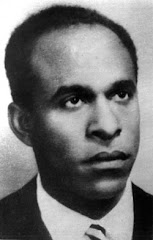
Discourse that allows us to express a wide range of ideas, opinions, and analysis that can be used as an opportunity to critically examine and observe what our experience means to us beyond the given social/cultural contexts and norms that are provided us.
Job seekers stand at the recruiting booth for the City of Sunrise during the Mega JobNews USA South Florida Job Fair held in the Amerant Bank Arena on April 30, 2026, in Sunrise, Florida. Joe Raedle / Getty Images
Nearly a decade ago, Donald Trump infamously asked Black voters in his pitch to garner their support: “What do you have to lose?”
The Federal Reserve answered Trump’s question in its recent Economic Well-Being of U.S. Households report for 2025: Black Americans lost more financially than every other racial group. According to the report, 60 percent of Black Americans expressed that their financial well-being declined, down 5 percent from 2024. In contrast, 79 percent of white Americans said they were “doing okay” last year.
Black job losses in 2025 underscore the Fed’s reporting. According to the Economic Policy Institute’s Valerie Wilson, the Black unemployment rate rose 1.2 percent in the first quarter of 2026 compared to the same time last year. The Bureau of Labor Statistics also recently reported that the Black unemployment rate, which is typically higher than the national average, rose to 7.3 percent, making the rate as high as it was the pandemic in 2021. As I’ve previously noted, Black women endured sudden and staggering job loss as more than 300,000 were let go in the first few months of 2025.
Black American workers have experienced job losses across labor sectors during the first year of the new Trump administration. Its targeting of federal workers using the “Department of Government Efficiency” (DOGE) as an economic battering ram disproportionately hit Black Americans hard. Following the passage of the 1964 Civil Rights Act, more Black Americans came to view the federal government as a reliable employer that ensured some degree of economic mobility for a racial group increasingly marginalized by the growing “post-industrial” private sector economy. At the end of 2024, Black Americans comprised nearly 19 percent of the federal workforce. Now, with DOGE cuts and this administration’s attacks on diversity, equity, and inclusion plans and affirmative action programs for contractors, the prospects of Black employment in the federal government appear bleak as ever.
Weaknesses in manufacturing during Trump’s second term hurt Black laborers, who comprise nearly 11 percent of that industry’s workforce. Despite the president’s promises to grow manufacturing jobs in the U.S., that sector shed more than 70,000 jobs between April 2025 and January 2026, surely negatively impacting the industrial Black working class.
Tariffs and energy shocks from the U.S.-Israeli war on Iran are broadly hurting American agriculture. The war is driving up the price of fertilizer and diesel as farmers are experiencing drought. However, Black agriculturalists in particular are experiencing significant strain: In addition to dealing with the rising costs of fuel and fertilizer, Black, Indigenous, Latinx, and other farmers of color who need help from federal assistance programs are being hindered by the Department of Agriculture’s choice to eliminate anti-discrimination protections. The agency’s cancellation of the Discrimination Financial Assistance Program is one example of how this administration’s backlash against any hint of racial justice leaves workers of color vulnerable to ongoing trade and military wars. Again, the Trump administration is enacting economic policies that disproportionately hurt Black Americans in the name of “colorblindness” and “meritocracy.” It is more Jim Crow.
The theft of Black Americans’ jobs, wages, and property is linked to political disenfranchisement.
The economic devastation comes as Black Americans are experiencing a rollback in political rights not seen since the end of Reconstruction. And, as the history of racial violence and the implementation of Jim Crow segregation in the U.S. illustrates, the theft of Black Americans’ jobs, wages, and property is linked to political disenfranchisement. When Black Americans joined with whites to elect a “fusion government” in Wilmington, North Carolina, in 1898, white people there waged a white supremacist campaign to delegitimize that election, culminating in what many have called a coup d’état. Black Wilmingtonians not only lost out on governing, but many whites drove Black folks out of their communities and their jobs. Nearly two years after white supremacists took control over Wilmington’s government, they passed Jim Crow laws.
Of course, Black Americans are not the only ones experiencing economic loss in Trump’s second administration. Everyone is paying the price in high gas and energy due to the war on Iran and the tech sector’s efforts to build resource-sucking data centers in places like Memphis and rural Utah; rising inflation is cutting more into workers’ pay; and workers continue to pay more for groceries, vehicles, and housing. Most Americans are living in an economic crisis as the wealthy continue to profit from the oil shocks, AI boom, and war. All this political and economic turmoil presents us with organizing opportunities.
This is why we must support unionizing all workers, including undocumented laborers, and engage in other collective actions to protect and expand labor rights. Workers’ organizations and unions like the Federal Unionists Network, formed in the wake of DOGE cuts, and the Coalition of Black Trade Unionists also called for a national day of protest akin to the 1981 Solidarity Day mobilization in Washington, D.C. Their calls materialized in the “May Day Strong” coalitional effort to oppose the war, inflation, and economic inequality as thousands of workers and students stayed home from work and walked out of school to participate in nearly 3,500 May Day rallies. Ultimately, more of us will need to continue to participate in more of these protests and consider using them to build toward organizing a general strike.
Black Americans are the canaries in the coal mine. Black workers are usually the first to experience economic downturns and tend to endure the worst outcomes due to structural racism, lack of wealth, and disproportionate under- and unemployment. While we need to continue to build multiracial coalitions to protect and grow unions, to ensure jobs and wages, and to maintain and grow social programs, we need to pay attention to the economic prospects of Americans disproportionately at the bottom. That way, more Americans might prepare themselves to endure economic turbulence and we can better position ourselves to collectively fight back against the 1 percent.
Austin McCoy is a scholar of African American history, labor, social movements, and popular culture. He is also the author of Living in a D.A.I.S.Y. Age: The Music, Culture, and World De La Soul Made. Follow him on Bluesky.
What to Know About Trump’s Nearly $1.8B Fund to Compensate Allies Claiming Political Targeting
The Justice Department has announced a nearly $1.8 billion compensation fund for Trump allies who believe they were wrongly prosecuted by the Biden administration
President Donald Trump listens during an event about prescription drug prices in the South Court Auditorium in the Eisenhower Executive Office Building on the White House campus, Monday, May 18, 2026, in Washington. (AP Photo/Julia Demaree Nikhinson)
WASHINGTON (AP) — President Donald Trump 's allies who believe they have been wrongly investigated and prosecuted could soon have access to a nearly $1.8 billion compensation fund, the Justice Department announced Monday in a move slammed by Democrats as unconstitutional and corrupt.
Acting Attorney General Todd Blanche said in a statement that the “Anti-Weaponization Fund" will represent “a lawful process for victims of lawfare and weaponization to be heard and seek redress.” Blanche's statement made no mention of how investigations and prosecutions of Trump’s political opponents under his watch have exposed the Justice Department to the same claims of politicized law enforcement that he has said he opposed. The fund was announced as part of a deal to resolve Trump’s $10 billion lawsuit against the Internal Revenue Service over the leak of his tax returns.
The fund is in keeping with Trump's long-running claims that the Justice Department during the Biden administration was weaponized against him, even though then-President Joe Biden himself was scrutinized during that time. The fund would represent not only a highly unorthodox resolution but also a further demonstration of the Trump administration’s eagerness to reward allies who were investigated and in some cases charged and convicted.
Trump told reporters at the White House on Monday the fund is dedicated to “reimbursing people who were horribly treated.”
Democratic lawmakers opposed to the move argue that it will become a taxpayer-funded “slush fund” for Trump allies and supporters who claim political persecution. They also question whether the president should be able to direct money for the fund without explicit congressional approval.
Here's what to know about the fund:
Justice Department casts fund as redress for political targeting
The fund was announced after Trump, his sons Eric Trump and Donald Trump Jr., and the Trump Organization agreed to drop their lawsuit against the IRS and the Treasury Department. The lawsuit alleged that a leak of confidential tax records caused them reputational and financial harm and negatively affected their public standing, among other allegations.
According to the Justice Department announcement, the fund is meant to provide a formal process for people or entities who say they were unfairly targeted by the government for political, ideological or personal reasons.
“The use of government power to target individuals or entities for improper and unlawful political, personal, or ideological reasons should not be tolerated by any administration,” Justice Department official Trent McCotter said in the statement announcing the fund.
The money itself would come from the federal judgment fund, which pays out court judgments and compromise settlements of lawsuits against the government.
The fund will be able to review claims of alleged government political targeting, issue formal apologies and award monetary compensation to approved applicants, the Justice Department said.
Justice Department has not said who could qualify for compensation
The Justice Department did not identify anyone by name who could theoretically benefit from the fund, but there were multiple investigations of Trump allies during the Biden administration where targets could look to obtain payouts.
Prosecutors, for instance, charged about 1,500 people in connection with the Jan. 6, 2021, riot at the U.S. Capitol. Trump on his first day in office of his second term either pardoned them, commuted their prison sentences or dismissed the cases.
It’s unclear whether those entitled to compensation would include Jan. 6 defendants who were convicted of attacking officers with makeshift weapons such as flagpoles, a hockey stick and crutch. More than 250 people were convicted of assault charges, with the attacks in many cases captured on surveillance or body camera footage.
Asked Monday if individuals who committed violence that day should receive compensation from the fund, Trump said, “It’ll all be dependent on a committee." He added: “I didn’t do this deal. It was told to me yesterday.”
Blanche-appointed commission would oversee claims The Justice Department says the fund will receive $1.776 billion from the federal judgment fund, to operate through Dec. 15, 2028, and will be overseen by a five-member commission appointed by Blanche, with one member chosen in consultation with congressional leadership. According to the Justice Department, the president can remove any member.
It was unclear how the commission would determine who should be awarded compensation.
Critics warn fund could reward Trump loyalists
Democratic lawmakers and ethics watchdogs slammed the creation of the fund, saying it was corrupt, opaque and had the potential to become a “slush fund” for the president and his allies.
A group of nearly 100 members of Congress filed a brief teeing up a legal challenge to the case.
“This case is nothing but a racket designed to take $1.7 billion of taxpayer dollars out of the Treasury and pour it into a huge slush fund for Trump at DOJ to hand out to his private militia of insurrectionists, rioters, and white supremacists, including those who brutally beat police officers on January 6, 2021, and sycophant accomplices to his election stealing schemes,” Rep. Jamie Raskin, the top Democrat on the House Judiciary Committee, said in a statement.
Sen. Elizabeth Warren, D-Mass., called the fund "corruption on steroids.”
Last month, she and a group of other Democratic lawmakers introduced the Ban Presidential Plunder of Taxpayer Funds Act, which would ban the sitting president and vice president from collecting settlement payments from the U.S., among other things. ___ Associated Press writer Alanna Durkin Richer contributed to this report.Copyright 2026 The Associated Press. All rights reserved. This material may not be published, broadcast, rewritten or redistributed.
“We live in a system that espouses merit, equality, and a level playing field, but exalts those with wealth, power, and celebrity, however gained.”
“However self-sufficient we may fancy ourselves, we exist only in relation -- to our friend, family, and life partners; to those we teach and mentor; to our co-workers, neighbors, strangers; and even to forces we cannot fully conceive of, let alone define. In many ways, we are our relationships.”
“Resistance is a powerful motivator precisely because it enables us to fulfill our longing to achieve our goals while letting us boldly recognize and name the obstacles to those achievements.”
“Education leads to enlightenment. Enlightenment opens the way to empathy. Empathy foreshadows reform.”
“Black people are the magical faces at the bottom of society's well. Even the poorest whites, those who must live their lives only a few levels above, gain their self-esteem by gazing down on us. Surely, they must know that their deliverance depends on letting down their ropes. Only by working together is escape possible. Over time, many reach out, but most simply watch, mesmerized into maintaining their unspoken commitment to keeping us where we are, at whatever cost to them or to us (Bell).”
“Power in the hands of the reformer is no less potentially corrupting than in the hands of the oppressor.”
“Few whites are ready to actively promote civil rights for blacks.”
“My wife says I spend my life trying to teach white folks. I'm not so sure I'm proud of it, but she's right.”
“Slavery is, as an example of what white America has done, a constant reminder of what white America might do.”
“A rule without exceptions is an instrument capable of doing mischief to the innocent and bringing grief - as well as injustice - to those who should gain exemptions from the rule's functioning.”
“It appears that my worst fears have been realised: we have made progress in everything yet nothing has changed.”
“All ethical people strive to choose "right" over "easy" when confronted by situations that force them to choose one or the other.”
“Courage is a decision you make to act in a way that works through your own fear for the greater good as opposed to pure self-interest. Courage means putting at risk your immediate self-interest for what you believe is right.”
“The challenge throughout has been to tell what I view as the truth about racism without causing disabling despair.”
"Racism lies at the center, not the periphery; in the permanent, not in the fleeting.”
"The traditions of racial subordination are deeper than the legal sanctions.”
"Progress in American race relations is largely a mirage, obscuring the fact that whites continue, consciously or unconsciously to do all in their power to ensure their dominion and maintain control.”
"Viewing Racism as an amalgam of guilt, responsibility and power- all of which are generally known but never acknowledged- may explain why educational programs [about race] are destined to fail.”
"Whether due to desegregation legislation or not, white flight began.”
“Self-esteem is like a difficult-to-cultivate flower. It requires frequent nurturing that occurs when you keep your word and follow through on your promises.”
DERRICK BELL, 1930-2011: Author, Law Professor, Legal Scholar, Innovative Social Theorist, and Political Activist
Derrick Bell walking with a group of Harvard law students after taking a voluntary unpaid leave of absence to protest the lack of tenured minority women professors. Steve Liss/Time Life Pictures, via Getty Images
The world has just lost another GIANT of great ethical, moral, and political courage and integrity and that rarest and most profound example of the contemporary academic as a committed social activist--a genuine 'public intellectual' in every important and compelling sense of that often greatly misunderstood and distorted phrase. Dr. Bell was also an inspiring intellectual hero of mine whose extraordinary theoretical and practical contributions to legal and historical scholarship and social activism were a major guiding force and influence in the lives of two generations of American college students and legal scholars throughout not only this country but the world. Dr. Bell never wavered in his always highly principled commitment to real democracy, justice, freedom, and equality in the academic and legal worlds as well as the general society and always put his own sterling reputation and actual body on the line for the uniquely radical and innovative ideas, principles, and values that animated all of his tireless work and truly exemplary life. To say that the passing of this African American visionary leader and teacher who embodied the advanced DuBoisian tradition of meticulously fusing the very best in scholarship, critical theory, and political/cultural activism is a tremendous loss is a great understatement. However Dr. Bell's immense legacy will live on in the many students and professional workers in the U.S., Europe, Africa, Asia, and Latin America who were and continue to be deeply affected and transformed by his work and life. Thank you Dr. Bell for the glorious sacrifices rooted in love and discipline that you always insisted on making in spite of the insidious racism and endlessly patronizing tokenism that you so often found among your professional colleagues and adversaries alike. RIP brother…
Kofi
Derrick Bell, Law Professor and Rights Advocate, Dies at 80 by FRED A. BERNSTEIN October 6, 2011 New York Times
Derrick Bell, a legal scholar who saw persistent racism in America and sought to expose it through books, articles and provocative career moves — he gave up a Harvard Law School professorship to protest the school’s hiring practices — died on Wednesday in Manhattan. He was 80 and lived on the Upper West Side. The cause was carcinoid cancer, his wife, Janet Dewart Bell, said. Mr. Bell was the first tenured black professor at Harvard Law School and later the first black dean of a law school that was not historically black. But he was perhaps better known for resigning from prestigious jobs than for accepting them. While he was working at the Civil Rights Division of the Justice Department in his 20s, his superiors told him to give up his membership in the N.A.A.C.P., believing it posed a conflict of interest. Instead he quit the department, ignoring the advice of friends to try to change it from within. Thirty years later, when he left Harvard Law School, he rejected similar advice. At the time, he said, his first wife, Jewel Hairston Bell, had asked him, “Why does it always have to be you?” The question trailed him afterward, he wrote in a 2002 memoir, “Ethical Ambition,” as did another posed by unsympathetic colleagues: “Who do you think you are?” Professor Bell, soft-spoken and erudite, was “not confrontational by nature,” he wrote.
But he attacked both conservative and liberal beliefs. In 1992, he told The New York Times that black Americans were more subjugated than at any time since slavery. And he wrote that in light of the often violent struggle that resulted from the Supreme Court’s 1954 desegregation decision, Brown v. Board of Education, things might have worked out better if the court had instead ordered that both races be provided with truly equivalent schools. He was a pioneer of critical race theory — a body of legal scholarship that explored how racism is embedded in laws and legal institutions, even many of those intended to redress past injustices. His 1973 book, “Race, Racism and American Law,” became a staple in law schools and is now in its sixth edition. Mr. Bell “set the agenda in many ways for scholarship on race in the academy, not just the legal academy,” said Lani Guinier, the first black woman hired to join Harvard Law School’s tenured faculty, in an interview on Wednesday. At a rally while a student at Harvard Law, Barack Obama compared Professor Bell to the civil rights hero Rosa Parks. Professor Bell’s core beliefs included what he called “the interest convergence dilemma” — the idea that whites would not support efforts to improve the position of blacks unless it was in their interest. Asked how the status of blacks could be improved, he said he generally supported civil rights litigation, but cautioned that even favorable rulings would probably yield disappointing results and that it was best to be prepared for that. Much of Professor Bell’s scholarship rejected dry legal analysis in favor of stories. In books and law review articles, he presented parables and allegories about race relations, then debated their meaning with a fictional alter ego, a professor named Geneva Crenshaw, who forced him to confront the truth about racism in America. One his best-known parables is “The Space Traders,” which appeared in his 1992 book, “Faces at the Bottom of the Well: The Permanence of Racism.” In the story, as Professor Bell later described it, creatures from another planet offer the United States “enough gold to retire the national debt, a magic chemical that will cleanse America’s polluted skies and waters, and a limitless source of safe energy to replace our dwindling reserves.” In exchange, the creatures ask for only one thing: America’s black population, which would be sent to outer space. The white population accepts the offer by an overwhelming margin. (In 1994 the story was adapted as one of three segments in a television movie titled “Cosmic Slop.”) Not everyone welcomed the move to storytelling in legal scholarship. In 1997 Richard Posner, the conservative law professor and appeals court judge, wrote in The New Republic that “by repudiating reasoned argumentation,” scholars like Professor Bell “reinforce stereotypes about the intellectual capacities of nonwhites.”
Professor Bell’s narrative technique nonetheless became an accepted mode of legal scholarship, giving female, Latino and gay scholars a new way to introduce their experiences into legal discourse. Reviewing “Faces at the Bottom of the Well” in The New York Times, the Supreme Court reporter Linda Greenhouse wrote: “The stories challenge old assumptions and then linger in the mind in a way that a more conventionally scholarly treatment of the same themes would be unlikely to do.” Derrick Albert Bell Jr. was born on Nov. 6, 1930, in Pittsburgh, to Derrick Albert and Ada Elizabeth Childress Bell. After graduating from Schenley High School near Pittsburgh’s Hill District, he became the first member of his family to go to college, attending Duquesne University in Pittsburgh. He received his bachelor’s degree in 1952. A member of the R.O.T.C. at Duquesne, he was later an Air Force officer for two years, one of them in Korea. Afterward he attended the University of Pittsburgh Law School, where he was the only black student, earning his degree in 1957. After his stint at the Justice Department, he headed the Pittsburgh office of the NAACP Legal Defense and Educational Fund, leading efforts to integrate a public swimming pool and a skating rink. Later, assigned to Mississippi, he supervised more than 300 school desegregation cases. In 1969, after teaching briefly at the University of Southern California, he was recruited and hired by Harvard Law School, where students were pressuring the administration to appoint a black professor. Mr. Bell conceded that he did not have the usual qualifications for a Harvard professorship, like a federal court clerkship or a degree from a top law school. In 1980 he left Harvard to become dean of the University of Oregon School of Law, but he resigned in 1985 when the school did not offer a position to an Asian-American woman. After returning to Harvard in 1986, he staged a five-day sit-in in his office to protest the school’s failure to grant tenure to two professors whose work involved critical race theory.
In 1990 he took an unpaid leave of absence, vowing not to return until the school hired, for the first time, a black woman to join its tenured faculty. His employment effectively ended when the school refused to extend his leave. By then, he was teaching at New York University School of Law, where he remained a visiting professor until his death. Harvard Law School hired Professor Guinier in 1998. Mr. Bell said his personal decisions took a toll on his first wife, Jewel, who had cancer when he left Harvard in 1990 and died that year. In 1992 he began a correspondence with Janet Dewart, who was the communications director of the National Urban League. Ms. Dewart proposed marriage before the couple even met. A few months later, Mr. Bell accepted. In addition to his wife, he is survived by three sons from his first marriage, Derrick A. Bell III and Douglas Dubois Bell, both of Pittsburgh, and Carter Robeson Bell of New York; two sisters, Janet Bell of Pittsburgh and Constance Bell of Akron, Ohio; and a brother, Charles, of New York. In “Ethical Ambition,” Mr. Bell expressed doubts about his legacy: “It is not easy to look back over a long career and recognize with some pain that my efforts may have benefited my career more clearly than they helped those for whom I have worked.” But Professor Guinier, who continues to teach at Harvard, differed with that view. “Most people think of iconoclasts as lone rangers,” she said on Wednesday. “But Derrick was both an iconoclast and a community builder. When he was opening up this path, it was not just for him. It was for all those who he knew would follow into the legal academy.”
Derrick Bell, Esteemed Professor and Civil Rights Advocate, Dies at 80 October 06, 2011 by Cynthia Wright The Atlanta Post
Derrick Bell, a legal scholar who continuously worked to expose the racism that exists within society has passed away. Mr. Bell, 80 died early this morning at St. Luke’s-Roosevelt Hospital with his wife, Janet Dewart by his side. Mr. Bell was born on November 6, 1930 in Pittsburgh, where he eventually ended up attending the University of Pittsburgh Law School. At that time, he was the only black student. He also served in the Air Force for two years, with one taking place in Korea.
Afterward, he briefly joined the Justice Department, soon after he went to work for the N.A.A.C.P. Legal Defense Fund. In 1968, he moved out west to teach at the University of Southern California, where he was courted by Harvard Law but turned them down. During the early 80′s he worked as the dean at the University of Oregon but left when an Asian woman was denied tenure there. He eventually returned to Harvard in 1986, where he stayed until the law school refused to tenure a black female. Bell, then decided to take a position at New York University Law School, where he remained until his death.
Not afraid of being seen as a controversial figure, even though he described himself as not “confrontational by nature”, he always led by example and on his own terms. While in his 20′s, when working at the Civil Rights Division of the Justice Department, he was told to relinquish his ties with the N.A.A.C.P., instead of holding on to his Justice Department position, he opted to quit.
A pioneer of “critical race theory,” in which the law is examined to see how race benefits or hinders those that come into contact with the law or legal institutions. Mr. Bell also believed that whites were not quick to assist with the issues surrounding blacks, unless they had something to gain from the interaction.
Mr. Bell was the first tenured black professor at Harvard Law School and the first black dean of a law school that was not historically black. Yet, even with obtaining such prestigious jobs throughout his career, which never stopped him from stepping away from any position – if he felt that what they were doing was unjust. I cannot continue to urge students to take risks for what they believe if I do not practice my own precepts, he often stated.
That line of thinking led him to leave his tenured position at Harvard Law School, 30 years after accepting their offer, due to the school not being willing to tenure any of other black professors.
Ms. Dewart and three sons survive him from his first marriage, Derrick Albert Bell III and Douglas Dubois Bell, both of Pittsburgh, and Carter Robeson Bell of New York; two sisters, Janet Bell of Pittsburgh and Constance Bell of Akron, Ohio; and a brother, Charles Bell of New York.
ABOUT THE AUTHOR:
Cynthia Wright is an avid lover of all things geeky. When she isn’t freelancing, she can be found on her blog BGA Life and on Twitter at @cynisright.
"The Space Traders" adapted screenplay by Trey Ellis from an original short story by Derrick Bell. Television film of story was aired on the science fiction omnibus series "Cosmic Slop" on HBO in 1994:
Dr. Derrick Bell (1930-2011) was a truly great man with profound insight, deep prescience, enormous courage, relentless, intellectual honesty, moral clarity, ethical depth, and BEDROCK INTEGRITY. If only there were many more like him.We really need his visionary kind of leadership by example. NOW MORE THAN EVER…
Kofi
Derrick Bell Interview March 1992 Posted on December 24, 2020
Archive Charlie Rose Show PBS
March 27, 1992 - Charlie Rose asks Derrick Bell about progress in civil rights (0:34). According to Bell, racism is permanent (4:22) and disagrees with people like Shelby Steele (6:11) and Clarence Thomas (7:01).
Professor Bell talks about capitalism and racism (8:54). Bell concludes with his quarrel with Harvard (20:36).
The Derrick Bell Reader Edited by Richard Delgado and Jean Stefancic New York University Press, 2005
Leading law professors weigh in on key issues in race and the law—collected in honor of one of the originators of critical race theory, Derrick Bell
When Derrick Bell, one of the originators of critical race theory, turned sixty-five, his wife set up a lecture series of the leading critical race theorists, many of them Bell’s former students. Now, these lectures, given over the course of twenty-five years, are collected for the first time in Race, Rights, and Redemption, a volume that Library Journal calls “potent” and Kirkus Reviews, in a starred review, says “powerfully acknowledge[s] the persistence of structural racism.”
“To what extent does equal protection protect?” asks Ian Haney López in a penetrating analysis of the gaps that remain in our civil rights legal codes. Sherrilyn Ifill, president and director-counsel of the NAACP Legal Defense Fund, describes the hypersegregation of our cities and the limits of the law’s ability to change deep-seated attitudes about race. Patricia J. Williams explores the legacy of slavery in the law’s current constructions of sanity. Anita Allen discusses competing privacy and accountability interests in the lives of African American celebrities. Chuck Lawrence interrogates the judicial backlash against affirmative action. And Michelle Alexander describes what caused her to break ranks with the civil rights community and take up the cause of those our legal system has labeled unworthy.
Race, Rights, and Redemption gathers some of our country’s brightest progressive legal stars in a volume that illuminates facets of the law that have continued to perpetuate racial inequality and to confound our nation at the start of a new millennium. According to Library Journal, “Scholars and lay readers alike will be enlightened and spurred to thought and discussion.”
Leading legal lights weigh in on key issues of race and the law—collected in honor of one of the originators of critical race theory
“Penetrating essays on race and social stratification within policing and the law, in honor of pioneering scholar Derrick Bell.”
—Kirkus Reviews (starred review)
When Derrick Bell, one of the originators of critical race theory, turned sixty-five, his wife founded a lecture series with leading scholars, including critical race theorists, many of them Bell’s former students. Now, these lectures, given over the course of twenty-five years, are collected for the first time in a volume Library Journal calls “potent” and Kirkus Reviews, in a starred review, says “powerfully acknowledge[s] the persistence of structural racism.”
“To what extent does equal protection protect?” asks Ian Haney López in a penetrating analysis of the gaps that remain in our civil rights legal codes. Sherrilyn Ifill, president and director-counsel of the NAACP Legal Defense Fund, describes the hypersegregation of our cities and the limits of the law’s ability to change deep-seated attitudes about race. Patricia J. Williams explores the legacy of slavery in the law’s current constructions of sanity. Anita Allen discusses competing privacy and accountability interests in the lives of African American celebrities. Chuck Lawrence interrogates the judicial backlash against affirmative action. And Michelle Alexander describes what caused her to break ranks with the civil rights community and take up the cause of those our legal system has labeled unworthy.
Race, Rights, and Redemption (which was originally published in hardcover under the title Carving Out a Humanity) gathers some of our country’s brightest progressive legal stars in a volume that illuminates facets of the law that have continued to perpetuate racial inequality and to confound our nation at the start of a new millennium “This potent work draws conclusions about systemic injustice and race. . . . Scholars and lay readers alike will be enlightened and spurred to thought and discussion.”
As an attorney, Derrick Bell worked on many civil-rights cases, but his doubts about their impact launched a groundbreaking school of thought.
by Jelani Cobb September 13, 2021 The New Yorker
[AUDIO: Listen to this article. To hear more, download Audm for iPhone or Android: Length: 34:06]
PHOTO: Dr. Derrick Bell in 1980. He handled civil-rights cases, then came to question their impact. Photograph from AP
The town of Harmony, Mississippi, which owes its origins to a small number of formerly enslaved Black people who bought land from former slaveholders after the Civil War, is nestled in Leake County, a perfectly square allotment in the center of the state. According to local lore, Harmony, which was previously called Galilee, was renamed in the early nineteen-twenties, after a Black resident who had contributed money to help build the town’s school said, upon its completion, “Now let us live and work in harmony.” This story perhaps explains why, nearly four decades later, when a white school board closed the school, it was interpreted as an attack on the heart of the Black community. The school was one of five thousand public schools for Black children in the South that the philanthropist Julius Rosenwald funded, beginning in 1912. Rosenwald’s foundation provided the seed money, and community members constructed the building themselves by hand. By the sixties, many of the structures were decrepit, a reflection of the South’s ongoing disregard for Black education. Nonetheless, the Harmony school provided its students a good education and was a point of pride in the community, which wanted it to remain open. In 1961, the battle sparked the founding of the local chapter of the N.A.A.C.P.
That year, Winson Hudson, the chapter’s vice-president, working with local Black families, contacted various people in the civil-rights movement, and eventually spoke to Derrick Bell, a young attorney with the N.A.A.C.P. Legal Defense and Educational Fund, in New York City. Bell later wrote, in the foreword to Hudson’s memoir, “Mississippi Harmony,” that his colleagues had been astonished to learn that her purpose was to reopen the Rosenwald school. He said he told her, “Our crusade was not to save segregated schools, but to eliminate them.” He added that, if people in Harmony were interested in enforcing integration, the L.D.F., as it is known, could help.
Hudson eventually accepted Bell’s offer, and in 1964 the L.D.F. won Hudson v. Leake County School Board (Winson Hudson’s school-age niece Diane was the plaintiff), which mandated that the board comply with desegregation. Harmony’s students were enrolled in a white school in the county. Afterward, though, Bell began to question the efficacy of both the case and the drive for integration. Throughout the South, such rulings sparked white flight from the public schools and the creation of private “segregation academies,” which meant that Black students still attended institutions that were effectively separate. Years later, after Hudson’s victory had become part of civil-rights history, she and Bell met at a conference and he told her, “I wonder whether I gave you the right advice.” Hudson replied that she did, too.
Bell spent the second half of his career as an academic and, over time, he came to recognize that other decisions in landmark civil-rights cases were of limited practical impact. He drew an unsettling conclusion: racism is so deeply rooted in the makeup of American society that it has been able to reassert itself after each successive wave of reform aimed at eliminating it. Racism, he began to argue, is permanent. His ideas proved foundational to a body of thought that, in the nineteen-eighties, came to be known as critical race theory. After more than a quarter of a century, there is an extensive academic field of literature cataloguing C.R.T.’s insights into the contradictions of antidiscrimination law and the complexities of legal advocacy for social justice.
For the past several months, however, conservatives have been waging war on a wide-ranging set of claims that they wrongly ascribe to critical race theory, while barely mentioning the body of scholarship behind it or even Bell’s name. As Christopher F. Rufo, an activist who launched the recent crusade, said on Twitter, the goal from the start was to distort the idea into an absurdist touchstone. “We have successfully frozen their brand—‘critical race theory’—into the public conversation and are steadily driving up negative perceptions. We will eventually turn it toxic, as we put all of the various cultural insanities under that brand category,” he wrote. Accordingly, C.R.T. has been defined as Black-supremacist racism, false history, and the terrible apotheosis of wokeness. Patricia Williams, one of the key scholars of the C.R.T. canon, refers to the ongoing mischaracterization as “definitional theft.”
Vinay Harpalani, a law professor at the University of New Mexico, who took a constitutional-law class that Bell taught at New York University in 2008, remembers his creating a climate of intellectual tolerance. “There were conservative white male students who got along very well with Professor Bell, because he respected their opinion,” Harpalani told me. “The irony of the conservative attack is that he was more respectful of conservative students and giving conservatives a voice than anyone.” Sarah Lustbader, a public defender based in New York City who was a teaching assistant for Bell’s constitutional-law class in 2010, has a similar recollection. “When people fear critical race theory, it stems from this idea that their children will be indoctrinated somehow. But Bell’s class was the least indoctrinated class I took in law school,” she said. “We got the most freedom in that class to reach our own conclusions without judgment, as long as they were good-faith arguments and well argued and reasonable.”
Republican lawmakers, however, have been swift to take advantage of the controversy. In June, Governor Greg Abbott, of Texas, signed a bill that restricts teaching about race in the state’s public schools. Oklahoma, Tennessee, Idaho, Iowa, New Hampshire, South Carolina, and Arizona have introduced similar legislation. But in all the outrage and reaction is an unwitting validation of the very arguments that Bell made. Last year, after the murder of George Floyd, Americans started confronting the genealogy of racism in this country in such large numbers that the moment was referred to as a reckoning. Bell, who died in 2011, at the age of eighty, would have been less focussed on the fact that white politicians responded to that reckoning by curtailing discussions of race in public schools than that they did so in conjunction with a larger effort to shore up the political structures that disadvantage African Americans. Another irony is that C.R.T. has become a fixation of conservatives despite the fact that some of its sharpest critiques were directed at the ultimate failings of liberalism, beginning with Bell’s own early involvement with one of its most heralded achievements.
In May, 1954, when the Supreme Court struck down legally mandated racial segregation in public schools, in Brown v. Board of Education of Topeka, the decision was instantly recognized as a watershed in the nation’s history. A legal team from the N.A.A.C.P. Legal Defense and Educational Fund, led by Thurgood Marshall, argued that segregation violated the equal-protection clause of the Fourteenth Amendment, by inflicting psychological harm on Black children. Chief Justice Earl Warren took the unusual step of persuading the other Justices to reach a consensus, so that their ruling would carry the weight of unanimity. In time, many came to see the decision as an opening salvo of the modern civil-rights movement, and it made Marshall one of the most recognizable lawyers in the country. His stewardship of the case was particularly inspiring to Derrick Bell, who was then a twenty-four-year-old Air Force officer and who had developed a keen interest in matters of equality.
Bell was born in 1930 in Pittsburgh’s Hill District, the community immortalized in August Wilson’s plays, and he attended Duquesne University before enlisting. After serving two years, he entered the University of Pittsburgh’s law school and, in 1957, was the only Black graduate in his class. He landed a job in the newly formed civil-rights division of the Department of Justice, but when his superiors became aware that he was a member of the N.A.A.C.P. they told him that the membership constituted a conflict of interest, and that he had to resign from the organization. In a move that would become a theme in his career, Bell quit his job rather than compromise a principle. He began working, instead, at the Pittsburgh N.A.A.C.P., where he met Marshall, who hired him in 1960 as a staff attorney at the Legal Defense Fund. The L.D.F. was the legal arm of the N.A.A.C.P. until 1957, when it spun off as a separate organization.
Bell arrived at a crucial moment in the L.D.F.’s history. In 1956, two years after Brown, it successfully litigated Browder v. Gayle, the case that struck down segregation on city buses in Alabama—and handed Martin Luther King, Jr., and the Montgomery Improvement Association a victory in the yearlong boycott they had organized. The L.D.F. launched desegregation lawsuits across the South, and Bell supervised or handled many of them. But, when Winson Hudson contacted him, she opened a window onto the distance between the agenda of the national civil-rights organizations and the priorities of the local communities they were charged with serving. In her memoir, she recalled a contentious exchange she had, before she contacted Bell, with a white representative of the school board. She told him, “If you don’t bring the school back to Harmony, we will be going to your school.” Where the L.D.F. saw integration as the objective, Hudson saw it as leverage to be used in the fight to maintain a quality Black school in her community.
The Harmony school had already become a flashpoint. Medgar Evers, the Mississippi field secretary for the N.A.A.C.P., visited the town and assisted in organizing the local chapter. He told members that the work they were embarking on could get them killed. Bell, during his trips to the state, made a point of not driving himself; he knew that a wrong turn on unfamiliar roads could have fatal consequences. He was arrested for using a whites-only phone booth in Jackson, and, upon his safe return to New York, Marshall mordantly joked that, if he got himself killed in Mississippi, the L.D.F. would use his funeral as a fund-raiser. The dangers, however, were very real. In June of 1963, a white supremacist shot and killed Evers in his driveway, in Jackson; he was thirty-seven years old. In subsequent years, there was an attempted firebombing of Hudson’s home and two bombings at the home of her sister, Dovie, who was Diane Hudson’s mother and was involved in the movement. That suffering and loss could not have eased Bell’s growing sense that his efforts had only helped create a more durable system of segregation.
Bell left the L.D.F. in 1966 for an academic career that took him first to the University of Southern California’s law school, where he directed the public-interest legal center, and then, in 1969, in the aftermath of King’s assassination, to Harvard Law School, as a lecturer. Derek Bok, the dean of the school, promised Bell that he would be “the first but not the last” of his Black hires. In 1971, Bok was made the president of the university, and Bell became Harvard Law’s first Black tenured professor. He began creating courses that explored the nexus of civil rights and the law—a departure from traditional pedagogy.
In 1970, he had published a casebook titled “Race, Racism and American Law,” a pioneering examination of the unifying themes in civil-rights litigation throughout American history. The book also contained the seeds of an idea that became a prominent element in his work: that racial progress had occurred mainly when it aligned with white interests—beginning with emancipation, which, he noted, came about as a prerequisite for saving the Union. Between 1954 and 1968, the civil-rights movement brought about changes that were thought of as a second Reconstruction. King’s death was a devastating loss, but hope persisted that a broader vista of possibilities for Black people and for the nation lay ahead. Yet, within a few years, as volatile conflicts over affirmative action and school busing arose, those victories began to look less like an antidote than like a treatment for an ailment whose worst symptoms can be temporarily alleviated but which cannot be cured. Bell was ahead of many others in reaching this conclusion. If the civil-rights movement had been a second Reconstruction, it was worth remembering that the first one had ended in the fiery purges of the so-called Redemption era, in which slavery, though abolished by the Thirteenth Amendment, was resurrected in new forms, such as sharecropping and convict leasing. Bell seemed to have found himself in a position akin to Thomas Paine’s: he’d been both a participant in a revolution and a witness to the events that revealed the limitations of its achievements.
Bell’s skepticism was deepened by the Supreme Court’s 1978 decision in Bakke v. University of California, which challenged affirmative action in higher education. Allan Bakke, a white prospective medical student, was twice rejected by U.C. Davis. He sued the regents of the University of California, arguing that he had been denied admission because of the school’s minority set-aside admissions, or quotas—and that affirmative action amounted to “reverse discrimination.” The Supreme Court ruled that race could be considered, among other factors, for admission, and that diversifying admissions was both a compelling interest and permissible under the Constitution, but that the University of California’s explicit quota system was not. Bakke was admitted to the school.
The Harmony school had already become a flashpoint. Medgar Evers, the Mississippi field secretary for the N.A.A.C.P., visited the town and assisted in organizing the local chapter. He told members that the work they were embarking on could get them killed. Bell, during his trips to the state, made a point of not driving himself; he knew that a wrong turn on unfamiliar roads could have fatal consequences. He was arrested for using a whites-only phone booth in Jackson, and, upon his safe return to New York, Marshall mordantly joked that, if he got himself killed in Mississippi, the L.D.F. would use his funeral as a fund-raiser. The dangers, however, were very real. In June of 1963, a white supremacist shot and killed Evers in his driveway, in Jackson; he was thirty-seven years old. In subsequent years, there was an attempted firebombing of Hudson’s home and two bombings at the home of her sister, Dovie, who was Diane Hudson’s mother and was involved in the movement. That suffering and loss could not have eased Bell’s growing sense that his efforts had only helped create a more durable system of segregation.
Bell left the L.D.F. in 1966 for an academic career that took him first to the University of Southern California’s law school, where he directed the public-interest legal center, and then, in 1969, in the aftermath of King’s assassination, to Harvard Law School, as a lecturer. Derek Bok, the dean of the school, promised Bell that he would be “the first but not the last” of his Black hires. In 1971, Bok was made the president of the university, and Bell became Harvard Law’s first Black tenured professor. He began creating courses that explored the nexus of civil rights and the law—a departure from traditional pedagogy.
In 1970, he had published a casebook titled “Race, Racism and American Law,” a pioneering examination of the unifying themes in civil-rights litigation throughout American history. The book also contained the seeds of an idea that became a prominent element in his work: that racial progress had occurred mainly when it aligned with white interests—beginning with emancipation, which, he noted, came about as a prerequisite for saving the Union. Between 1954 and 1968, the civil-rights movement brought about changes that were thought of as a second Reconstruction. King’s death was a devastating loss, but hope persisted that a broader vista of possibilities for Black people and for the nation lay ahead. Yet, within a few years, as volatile conflicts over affirmative action and school busing arose, those victories began to look less like an antidote than like a treatment for an ailment whose worst symptoms can be temporarily alleviated but which cannot be cured. Bell was ahead of many others in reaching this conclusion. If the civil-rights movement had been a second Reconstruction, it was worth remembering that the first one had ended in the fiery purges of the so-called Redemption era, in which slavery, though abolished by the Thirteenth Amendment, was resurrected in new forms, such as sharecropping and convict leasing. Bell seemed to have found himself in a position akin to Thomas Paine’s: he’d been both a participant in a revolution and a witness to the events that revealed the limitations of its achievements.
Bell’s skepticism was deepened by the Supreme Court’s 1978 decision in Bakke v. University of California, which challenged affirmative action in higher education. Allan Bakke, a white prospective medical student, was twice rejected by U.C. Davis. He sued the regents of the University of California, arguing that he had been denied admission because of the school’s minority set-aside admissions, or quotas—and that affirmative action amounted to “reverse discrimination.” The Supreme Court ruled that race could be considered, among other factors, for admission, and that diversifying admissions was both a compelling interest and permissible under the Constitution, but that the University of California’s explicit quota system was not. Bakke was admitted to the school.
.Bell saw in the decision the beginning of a new phase of challenges. Diversity is not the same as redress, he argued; it could provide the appearance of equality while leaving the underlying machinery of inequality untouched. He criticized the decision as evidence that the Court valorized a kind of default color blindness, as opposed to an intentional awareness of race and of the need to address historical wrongs. He likely would have seen the same principle at work in the 2013 Supreme Court ruling in Shelby County v. Holder, which gutted the Voting Rights Act.
In the years surrounding the Bakke case, Bell published two articles that were considered both brilliant and heretical. The first, “Serving Two Masters,” which appeared in March, 1976, in the Yale Law Journal, cited his own role in the Harmony case. He wrote that the mission of groups engaged in civil-rights litigation, such as the N.A.A.C.P., represented an inherent conflict of interest. The two masters of the title were the groups’ interests and those of their clients; what the groups wanted to achieve may not have aligned with what their clients wanted—or even needed. The concept of an inherent conflict was crucial to Bell’s understanding of how and why the movement had played out as it did: the heights it had attained had paradoxically shown how far there still was to go and how difficult it would be to get there. Imani Perry, a legal scholar and a professor of African American studies at Princeton, who knew Bell, told me how audacious it was at the time for Bell to “raise questions about his own role as an advocate and, perhaps, the way in which we structured civil-rights advocacy.”
Jack Greenberg, who served as the director-counsel of the L.D.F. from 1961 to 1984, depicted Bell in his memoir, “Crusaders in the Courts,” as a complex, frustrating figure, whose stringent criticism of the organization’s history and philosophy led to tensions in their own relationship. Yet Sherrilyn Ifill, the current president and director-counsel, told me that, despite some initial consternation in civil-rights circles, Bell’s perspective eventually found purchase even among those he had criticized. “I think most of us—especially those who long admired and were mentored by Bell—read his work as a cautionary tale for us as lawyers,” Ifill told me. Today, she said, L.D.F. attorneys teach Bell’s work to students in New York University’s Racial Equity Strategies Clinic.
Bell eventually formulated a broader criticism of the objectives of both the movement and its lawyers. The issue of busing was particularly complicated. Brown v. Board of Education centered on the circumstances of Linda Brown, an eight-year-old girl who lived in a mixed neighborhood in Topeka, Kansas, but was forced to travel nearly an hour to a Black school rather than attend one closer to her home, which, under the law, was reserved for white children. During the seventies, in an attempt to put integration into practice, school districts sent Black students to better-financed white schools. The presumption was that white parents and administrators would not underfund schools that Black children attended if white children were also students there. In effect, it was hoped that the valuation of whiteness would be turned against itself. But, in a reversal of Linda Brown’s situation, the white schools were generally farther away than the local schools the students would otherwise have gone to. So the remedy effectively imposed the same burden as had been imposed on Brown, albeit with the opposite intentions. Bell “was pessimistic about the effectiveness of busing, and at a time when a lot of people weren’t,” the scholar Patricia Williams told me.
More significant, Bell was growing doubtful about the prospect of ever achieving racial equality in the United States. The civil-rights movement had been based on the idea that the American system could be made to live up to the democratic creed prescribed in its founding documents. But Bell had begun to think that the system was working exactly as it was intended to—that that was why progress was invariably met with reversal. Indeed, by the eighties, it was increasingly clear that the momentum to desegregate schools had stalled; a 2006 study by the Civil Rights Project, at U.C.L.A., found that many of the advances made in the first years had been erased during the nineties, and that seventy-three per cent of Black students around that time attended schools in which most students were minorities.
In Bell’s second major article of this period, “Brown v. Board of Education and the Interest-Convergence Dilemma,” published in January of 1980 in the Harvard Law Review, he lanced the perception that the societal changes of the mid-twentieth century were the result of a moral awakening among whites. Instead, he wrote, they were a product of “interest convergence” and Cold War pragmatism. Armed with images of American racial hypocrisy, the Soviet Union had a damning counter to American criticism of its behavior in Eastern Europe. (As early as the 1931 Scottsboro trial, in which nine African American teen-agers were wrongfully convicted of raping two white women, the Soviets publicized examples of American racism internationally; the tactic became more common after the start of the Cold War.)
The historians Mary L. Dudziak, Carol Anderson, and Penny Von Eschen, among others, later substantiated Bell’s point, arguing that America’s racial problems were particularly disruptive to diplomatic relations with India and the African states emerging from colonialism, which were subject to pitched competition for their allegiance from the superpowers. The civil-rights movement’s victories, Bell argued, were not a sign of moral maturation in white America but a reflection of its geopolitical pragmatism. For people who’d been inspired by the idea of the movement as a triumph of conscience, these arguments were deeply unsettling.
In 1980, Bell left Harvard to become the dean of the University of Oregon law school, but he resigned five years later, after a search committee declined to extend the offer of a faculty position to an Asian woman when its first two choices, who were both white men, turned it down. Harvard Law rehired Bell as a professor. His influence had grown measurably since he began teaching; “Race, Racism and American Law,” which was largely overlooked at the time of its publication, had come to be viewed as a foundational text. Yet during his absence from Harvard no one was assigned to teach his key class, which was based on the book. Some students interpreted this omission as disregard for issues of race, and it gave rise to the first of two events that, in particular, led to the creation of C.R.T. The legal scholar Kimberlé Crenshaw, who was a student at the law school at the time, told me, “We initially coalesced as students and young law professors around this course that the law school refused to teach.” In 1982, the group organized a series of guest speakers and conducted a version of the class themselves.
At the same time, the legal academy was roiled by debates generated by a movement called critical legal studies; a group of progressive scholars, most of them white, had, beginning in the seventies, advanced the contentious idea that the law, rather than being a neutral system based on objective principles, operated to reinforce established social hierarchies. Another group of scholars found C.L.S. both intriguing and unsatisfying: here was a tool that allowed them to articulate the methods by which the legal system shored up inequality, but in a way that was more insightful about class than it was about race. (The “crits,” as the C.L.S. adherents were known, had not “come to terms with the particularity of race,” Crenshaw and her co-editors Neil Gotanda, Gary Peller, and Kendall Thomas later noted, in the introduction to the 1995 anthology “Critical Race Theory: The Key Writings That Formed the Movement.”)
The next defining moment in C.R.T.’s creation came in 1989, when a group that developed out of the Harvard seminars decided to hold a retreat at the University of Wisconsin, where David Trubek, a central figure in the C.L.S. movement, taught. Casting about for a way to describe what the retreat would address, Crenshaw referred to “new developments in critical race theory.” The name was meant to situate the group at the intersection of C.L.S. and the intractable questions of race. Legal scholars such as Richard Delgado, Patricia Williams, Mari Matsuda, and Alan Freeman (attacks on C.R.T. have conveniently overlooked the fact that not all its founding scholars were Black) began publishing work in legal journals that furthered the discourse around race, power, and law.
Crenshaw contributed what became one of the best-known elements of C.R.T. in 1989, when she published an article in the University of Chicago Legal Forum titled “Demarginalizing the Intersection of Race and Sex: A Black Feminist Critique of Antidiscrimination Doctrine, Feminist Theory and Antiracist Politics.” Her central argument, about “intersectionality”—the way in which people who belong to more than one marginalized community can be overlooked by antidiscrimination law—was a distillation of the kinds of problems that C.R.T. addressed. These were problems that could not have been seen clearly unless there had been a civil-rights movement, but for which liberalism had no ready answer because, in large part, it had never really considered them. Her ideas about intersectionality as a legal blind spot now regularly feature in analyses not only of public policy but of literature, sociology, and history.
As C.R.T. began to take shape, Bell became more deeply involved in an ongoing push to diversify the Harvard law-school faculty. In 1990, he announced that he would take an unpaid leave to protest the fact that Harvard Law had never granted tenure to a Black woman. Since Bell’s hiring, almost twenty years earlier, a few other Black men had joined the faculty, including Randall Kennedy and Charles Ogletree, in 1984 and 1989. But Bell, cajoled by younger feminist legal scholars, Crenshaw among them, came to recognize the unique burdens that went with being both Black and female.
That April, Bell spoke at a rally on campus, where he was introduced by the twenty-eight-year-old president of the Harvard Law Review, Barack Obama. In his comments, Obama said that Bell’s “scholarship has opened up new vistas and new horizons and changed the standards of what legal writing is about.” Bell told the crowd, “To be candid, I cannot afford a year or more without my law-school salary. But I cannot continue to urge students to take risks for what they believe if I do not practice my own precepts.”
In 1991, Bell accepted a visiting professorship at the N.Y.U. law school, extended by John Sexton, the dean and a former student of Bell’s. Harvard did not hire a Black woman and, in the third year of his protest, Bell refused to return, ending his tenure at the university. In 1998, Lani Guinier became the first woman of color to be given tenure at the law school.
Bell remained a visiting professor at N.Y.U. for the rest of his life, declining offers to become a tenured member of the faculty. He continued to speak and write on subjects relating to law and race, and some of his most important work during this period came in an unorthodox form. In the eighties, he had begun to write fiction and, in 1992, he published a collection of short stories, called “Faces at the Bottom of the Well.” A Black female lawyer named Geneva Crenshaw, the protagonist of many of the stories, serves as Bell’s alter ego. (Bell later told Kimberlé Crenshaw that he had “borrowed” her surname for the character, who was a composite of Black women lawyers who had influenced his thinking.) Kirkus Reviews noted that, despite some “lackluster writing,” the stories offered “insight into the rage, frustration, and yearning of being black in America.” The Times described the collection as “Jonathan Swift come to law school.” But the book’s subtitle, “The Permanence of Racism,” garnered nearly as much attention as its literary merits.
The collection includes “The Space Traders,” Bell’s best-known piece of fiction. In the story, extraterrestrials land in the United States and make an offer: they will reverse the severe damage the nation has done to the environment, provide it with a clean energy source, and give it enough gold to resurrect the economy, which has been ruined by policies favoring the rich. In exchange, the aliens want the government to turn every Black person in the country over to them. A consensus emerges that the Administration should take the deal, on the ground that mandating that Black people leave is not all that different from drafting them to go to war. Whites largely support the measure. Jewish groups oppose it, as an echo of Nazism, but they are silenced when a tide of anti-Semitism sweeps the nation. A corporate coalition opposes the trade, because Black people make up so much of the consumer market. Businesses that supply law enforcement and the prison industry oppose it, too, recognizing the impact that the disappearance would have on their bottom line.
A Black member of the Administration decides that the only way to get white people to veto the proposal is to convince them that leaving with the aliens would be an entitlement that undeserving Blacks would achieve at their expense; his plan fails. The story ends with twenty million African Americans, arms linked by chains, preparing to leave “the New World as their forebears had arrived.” The narrative is bleak, but it offers a trenchant commentary on the frailty of Black citizenship and the tentative nature of inclusion, and it echoes a theme of Bell’s earlier work—that Black rights have been held hostage to white self-interest.
The late critic and essayist Stanley Crouch told me in 1997 about a panel he appeared on with Bell, in which he’d criticized Bell’s dire forecasts. “He was clean. I’m looking at this beautiful chalk-gray suit he had on that cost about twelve hundred dollars, ” Crouch told me. “I said to myself, ‘There’s something wrong with this.’ For me having been involved with Friends of SNCC and CORE thirty-five years ago, we’d be talking with guys from Mississippi back then who weren’t as pessimistic.” He added, “To hear that from him was the height of irresponsibility.” In an essay titled “Dumb Bell Blues,” Crouch wrote that Bell’s theory of interest convergence undermined the importance of Black achievements in transforming American society. Whereas he regarded Bell’s view as pessimism, to Bell it was hard-won realism. Imani Perry told me, “Even as he had a kind of skepticism about the prospect that racism would end, or that you’d get a just judicial order, he was still thinking about how you move the society, what will move, and what will be much harder to move.”
Part of Bell’s intent was simply to establish expectations. Crenshaw mentioned to me “Silent Covenants,” a book on the legacy of Brown, which Bell published in 2004. In it, he describes a 2002 ceremony at Yale, at which Judge L. Robert Carter was awarded an honorary degree. When the university’s president noted that Carter had been one of the attorneys who argued Brown, the crowd leaped to its feet in an ovation, which prompted Bell to wonder, “How could a decision that promised so much and, by its terms, accomplished so little have gained so hallowed a place among some of the nation’s better-educated and most-successful individuals?”
“Silent Covenants” also features an alternative ruling in Brown. In this version, which was clearly informed by Bell’s reconsideration of Hudson v. Leake County, the Court holds that enforcing integration would spark such discord that it would likely fail, so the Justices issue a mandate to make Black and white schools equal, and create a board of oversight to insure that school districts comply. Bell says in the book that he wrote the ruling when a friend asked him whether the Court could have framed its decision “differently from, and better than” the one it chose to hand down. His response is a rebuke to the Warren Court’s ruling and also, implicitly, to the position taken by the man who gave Bell his job as an L.D.F. attorney—Thurgood Marshall, who had overseen the plaintiff’s suit and sought integration as a remedy. Yet, Crenshaw said, “at the end of the day, if Bell had been on the Court, would he have written that opinion? Well, I highly doubt it.” As she told me, “A lot of what Derrick would do would be intentionally provocative.”
The 2008 election of Barack Obama to the Presidency, which inherently represented a validation of the civil-rights movement, seemed like a refutation of Bell’s arguments. I knew Bell casually by that point—in 2001, I had interviewed him for an article on the L.D.F.’s legacy, and we had kept in touch. In August of 2008, during an e-mail exchange about James Baldwin’s birthday, our discussion turned to Obama’s campaign. He suggested that Baldwin might have found the Senator too reticent and too moderate on matters of race. Bell himself was not much more encouraged. He wrote, “We can recognize this campaign as a significant moment like the civil rights protests, the 1963 March for Jobs and Justice in D.C., the Brown decision, so many more great moments that in retrospect promised much and, in the end, signified nothing except that the hostility and alienation toward black people continues in forms that frustrate thoughtful blacks and place the country ever closer to its premature demise.”
I was struck by his ominous outlook, especially since someone Bell knew personally, and who had taught his work at the University of Chicago, stood to become the first Black President. I thought that his skepticism had turned into fatalism. But, a decade later, during the most reactionary moments of the Trump era, Bell’s words seemed clarifying. On January 6th of this year, as a mob stormed the Capitol in an attempt to overturn a Presidential election, the words seemed nearly prophetic. It would not have surprised Bell that Obama’s election and the strength of the Black electorate that helped him win are central factors in the current tide of white nationalism and voter suppression.
Bell did not live to see the election of Donald Trump, but, as his mention of the nation’s “premature demise” suggests, he clearly understood that someone like him could come to power. Still, the current attacks on critical race theory have arrived decades too late to prevent its core tenets from entering the legal canon. The cohort of young legal scholars that Bell influenced went on to important positions in the academy, and many of them, including Crenshaw, Williams, Matsuda, and Cheryl Harris, have influenced subsequent generations of thinkers themselves. People who looked at the deaths of George Floyd and Breonna Taylor and others and concluded that they were not anomalies but evidence that the system was functioning as it was designed to, were articulating the conclusion that Bell had drawn decades earlier. “The gap between words and reality in the American project—that is what critical race theory is, where it lies,” Perry told me. The gap persists and, consequently, Bell’s perspective retains its relevance. Even after his death, it has been far easier to disagree with him than to prove him wrong.
Vinay Harpalani told me, “Someone asked him once, ‘What do you say about critical race theory?’ ” Bell first replied, “I don’t know what that is,” but then offered, “To me, it means telling the truth, even in the face of criticism.” Harpalani added, “He was just telling his story. He was telling his truth, and that’s what he wanted everyone to do. So, as far as Derrick Bell goes, that’s probably what I think is important.”
Published in the print edition of the September 20, 2021, issue, with the headline “The Limits of Liberalism.”
ABOUT THE AUTHOR:
Jelani Cobb, a staff writer at The New Yorker, teaches in the journalism program at Columbia University. He co-edited “The Essential Kerner Commission Report” and “The Matter of Black Lives,” an anthology of writing from The New Yorker.
Leading law professors weigh in on key issues in race and the law—collected in honor of one of the originators of critical race theory, Derrick Bell
When Derrick Bell, one of the originators of critical race theory, turned sixty-five, his wife set up a lecture series of the leading critical race theorists, many of them Bell’s former students. Now, these lectures, given over the course of twenty-five years, are collected for the first time in Race, Rights, and Redemption, a volume that Library Journal calls “potent” and Kirkus Reviews, in a starred review, says “powerfully acknowledge[s] the persistence of structural racism.”
“To what extent does equal protection protect?” asks Ian Haney López in a penetrating analysis of the gaps that remain in our civil rights legal codes. Sherrilyn Ifill, president and director-counsel of the NAACP Legal Defense Fund, describes the hypersegregation of our cities and the limits of the law’s ability to change deep-seated attitudes about race. Patricia J. Williams explores the legacy of slavery in the law’s current constructions of sanity. Anita Allen discusses competing privacy and accountability interests in the lives of African American celebrities. Chuck Lawrence interrogates the judicial backlash against affirmative action. And Michelle Alexander describes what caused her to break ranks with the civil rights community and take up the cause of those our legal system has labeled unworthy.
Race, Rights, and Redemption gathers some of our country’s brightest progressive legal stars in a volume that illuminates facets of the law that have continued to perpetuate racial inequality and to confound our nation at the start of a new millennium. According to Library Journal, “Scholars and lay readers alike will be enlightened and spurred to thought and discussion.”
Leading legal lights weigh in on key issues of race and the law—collected in honor of one of the originators of critical race theory
“Penetrating essays on race and social stratification within policing and the law, in honor of pioneering scholar Derrick Bell.”
—Kirkus Reviews (starred review)
When Derrick Bell, one of the originators of critical race theory, turned sixty-five, his wife founded a lecture series with leading scholars, including critical race theorists, many of them Bell’s former students. Now, these lectures, given over the course of twenty-five years, are collected for the first time in a volume Library Journal calls “potent” and Kirkus Reviews, in a starred review, says “powerfully acknowledge[s] the persistence of structural racism.”
“To what extent does equal protection protect?” asks Ian Haney López in a penetrating analysis of the gaps that remain in our civil rights legal codes. Sherrilyn Ifill, president and director-counsel of the NAACP Legal Defense Fund, describes the hypersegregation of our cities and the limits of the law’s ability to change deep-seated attitudes about race. Patricia J. Williams explores the legacy of slavery in the law’s current constructions of sanity. Anita Allen discusses competing privacy and accountability interests in the lives of African American celebrities. Chuck Lawrence interrogates the judicial backlash against affirmative action. And Michelle Alexander describes what caused her to break ranks with the civil rights community and take up the cause of those our legal system has labeled unworthy.
Race, Rights, and Redemption (which was originally published in hardcover under the title Carving Out a Humanity) gathers some of our country’s brightest progressive legal stars in a volume that illuminates facets of the law that have continued to perpetuate racial inequality and to confound our nation at the start of a new millennium
“This potent work draws conclusions about systemic injustice and race. . . . Scholars and lay readers alike will be enlightened and spurred to thought and discussion.”
As an attorney, Derrick Bell worked on many civil-rights cases, but his doubts about their impact launched a groundbreaking school of thought.
by Jelani Cobb September 13, 2021 The New Yorker
[AUDIO: Listen to this article. To hear more, download Audm for iPhone or Android: Length: 34:06]
PHOTO: Dr. Derrick Bell in 1980. He handled civil-rights cases, then came to question their impact. Photograph from AP
The town of Harmony, Mississippi, which owes its origins to a small number of formerly enslaved Black people who bought land from former slaveholders after the Civil War, is nestled in Leake County, a perfectly square allotment in the center of the state. According to local lore, Harmony, which was previously called Galilee, was renamed in the early nineteen-twenties, after a Black resident who had contributed money to help build the town’s school said, upon its completion, “Now let us live and work in harmony.” This story perhaps explains why, nearly four decades later, when a white school board closed the school, it was interpreted as an attack on the heart of the Black community. The school was one of five thousand public schools for Black children in the South that the philanthropist Julius Rosenwald funded, beginning in 1912. Rosenwald’s foundation provided the seed money, and community members constructed the building themselves by hand. By the sixties, many of the structures were decrepit, a reflection of the South’s ongoing disregard for Black education. Nonetheless, the Harmony school provided its students a good education and was a point of pride in the community, which wanted it to remain open. In 1961, the battle sparked the founding of the local chapter of the N.A.A.C.P.
That year, Winson Hudson, the chapter’s vice-president, working with local Black families, contacted various people in the civil-rights movement, and eventually spoke to Derrick Bell, a young attorney with the N.A.A.C.P. Legal Defense and Educational Fund, in New York City. Bell later wrote, in the foreword to Hudson’s memoir, “Mississippi Harmony,” that his colleagues had been astonished to learn that her purpose was to reopen the Rosenwald school. He said he told her, “Our crusade was not to save segregated schools, but to eliminate them.” He added that, if people in Harmony were interested in enforcing integration, the L.D.F., as it is known, could help.
Hudson eventually accepted Bell’s offer, and in 1964 the L.D.F. won Hudson v. Leake County School Board (Winson Hudson’s school-age niece Diane was the plaintiff), which mandated that the board comply with desegregation. Harmony’s students were enrolled in a white school in the county. Afterward, though, Bell began to question the efficacy of both the case and the drive for integration. Throughout the South, such rulings sparked white flight from the public schools and the creation of private “segregation academies,” which meant that Black students still attended institutions that were effectively separate. Years later, after Hudson’s victory had become part of civil-rights history, she and Bell met at a conference and he told her, “I wonder whether I gave you the right advice.” Hudson replied that she did, too.
Bell spent the second half of his career as an academic and, over time, he came to recognize that other decisions in landmark civil-rights cases were of limited practical impact. He drew an unsettling conclusion: racism is so deeply rooted in the makeup of American society that it has been able to reassert itself after each successive wave of reform aimed at eliminating it. Racism, he began to argue, is permanent. His ideas proved foundational to a body of thought that, in the nineteen-eighties, came to be known as critical race theory. After more than a quarter of a century, there is an extensive academic field of literature cataloguing C.R.T.’s insights into the contradictions of antidiscrimination law and the complexities of legal advocacy for social justice.
For the past several months, however, conservatives have been waging war on a wide-ranging set of claims that they wrongly ascribe to critical race theory, while barely mentioning the body of scholarship behind it or even Bell’s name. As Christopher F. Rufo, an activist who launched the recent crusade, said on Twitter, the goal from the start was to distort the idea into an absurdist touchstone. “We have successfully frozen their brand—‘critical race theory’—into the public conversation and are steadily driving up negative perceptions. We will eventually turn it toxic, as we put all of the various cultural insanities under that brand category,” he wrote. Accordingly, C.R.T. has been defined as Black-supremacist racism, false history, and the terrible apotheosis of wokeness. Patricia Williams, one of the key scholars of the C.R.T. canon, refers to the ongoing mischaracterization as “definitional theft.”
Vinay Harpalani, a law professor at the University of New Mexico, who took a constitutional-law class that Bell taught at New York University in 2008, remembers his creating a climate of intellectual tolerance. “There were conservative white male students who got along very well with Professor Bell, because he respected their opinion,” Harpalani told me. “The irony of the conservative attack is that he was more respectful of conservative students and giving conservatives a voice than anyone.” Sarah Lustbader, a public defender based in New York City who was a teaching assistant for Bell’s constitutional-law class in 2010, has a similar recollection. “When people fear critical race theory, it stems from this idea that their children will be indoctrinated somehow. But Bell’s class was the least indoctrinated class I took in law school,” she said. “We got the most freedom in that class to reach our own conclusions without judgment, as long as they were good-faith arguments and well argued and reasonable.”
Republican lawmakers, however, have been swift to take advantage of the controversy. In June, Governor Greg Abbott, of Texas, signed a bill that restricts teaching about race in the state’s public schools. Oklahoma, Tennessee, Idaho, Iowa, New Hampshire, South Carolina, and Arizona have introduced similar legislation. But in all the outrage and reaction is an unwitting validation of the very arguments that Bell made. Last year, after the murder of George Floyd, Americans started confronting the genealogy of racism in this country in such large numbers that the moment was referred to as a reckoning. Bell, who died in 2011, at the age of eighty, would have been less focussed on the fact that white politicians responded to that reckoning by curtailing discussions of race in public schools than that they did so in conjunction with a larger effort to shore up the political structures that disadvantage African Americans. Another irony is that C.R.T. has become a fixation of conservatives despite the fact that some of its sharpest critiques were directed at the ultimate failings of liberalism, beginning with Bell’s own early involvement with one of its most heralded achievements.
In May, 1954, when the Supreme Court struck down legally mandated racial segregation in public schools, in Brown v. Board of Education of Topeka, the decision was instantly recognized as a watershed in the nation’s history. A legal team from the N.A.A.C.P. Legal Defense and Educational Fund, led by Thurgood Marshall, argued that segregation violated the equal-protection clause of the Fourteenth Amendment, by inflicting psychological harm on Black children. Chief Justice Earl Warren took the unusual step of persuading the other Justices to reach a consensus, so that their ruling would carry the weight of unanimity. In time, many came to see the decision as an opening salvo of the modern civil-rights movement, and it made Marshall one of the most recognizable lawyers in the country. His stewardship of the case was particularly inspiring to Derrick Bell, who was then a twenty-four-year-old Air Force officer and who had developed a keen interest in matters of equality.
Bell was born in 1930 in Pittsburgh’s Hill District, the community immortalized in August Wilson’s plays, and he attended Duquesne University before enlisting. After serving two years, he entered the University of Pittsburgh’s law school and, in 1957, was the only Black graduate in his class. He landed a job in the newly formed civil-rights division of the Department of Justice, but when his superiors became aware that he was a member of the N.A.A.C.P. they told him that the membership constituted a conflict of interest, and that he had to resign from the organization. In a move that would become a theme in his career, Bell quit his job rather than compromise a principle. He began working, instead, at the Pittsburgh N.A.A.C.P., where he met Marshall, who hired him in 1960 as a staff attorney at the Legal Defense Fund. The L.D.F. was the legal arm of the N.A.A.C.P. until 1957, when it spun off as a separate organization.
Bell arrived at a crucial moment in the L.D.F.’s history. In 1956, two years after Brown, it successfully litigated Browder v. Gayle, the case that struck down segregation on city buses in Alabama—and handed Martin Luther King, Jr., and the Montgomery Improvement Association a victory in the yearlong boycott they had organized. The L.D.F. launched desegregation lawsuits across the South, and Bell supervised or handled many of them. But, when Winson Hudson contacted him, she opened a window onto the distance between the agenda of the national civil-rights organizations and the priorities of the local communities they were charged with serving. In her memoir, she recalled a contentious exchange she had, before she contacted Bell, with a white representative of the school board. She told him, “If you don’t bring the school back to Harmony, we will be going to your school.” Where the L.D.F. saw integration as the objective, Hudson saw it as leverage to be used in the fight to maintain a quality Black school in her community.
The Harmony school had already become a flashpoint. Medgar Evers, the Mississippi field secretary for the N.A.A.C.P., visited the town and assisted in organizing the local chapter. He told members that the work they were embarking on could get them killed. Bell, during his trips to the state, made a point of not driving himself; he knew that a wrong turn on unfamiliar roads could have fatal consequences. He was arrested for using a whites-only phone booth in Jackson, and, upon his safe return to New York, Marshall mordantly joked that, if he got himself killed in Mississippi, the L.D.F. would use his funeral as a fund-raiser. The dangers, however, were very real. In June of 1963, a white supremacist shot and killed Evers in his driveway, in Jackson; he was thirty-seven years old. In subsequent years, there was an attempted firebombing of Hudson’s home and two bombings at the home of her sister, Dovie, who was Diane Hudson’s mother and was involved in the movement. That suffering and loss could not have eased Bell’s growing sense that his efforts had only helped create a more durable system of segregation.
Bell left the L.D.F. in 1966 for an academic career that took him first to the University of Southern California’s law school, where he directed the public-interest legal center, and then, in 1969, in the aftermath of King’s assassination, to Harvard Law School, as a lecturer. Derek Bok, the dean of the school, promised Bell that he would be “the first but not the last” of his Black hires. In 1971, Bok was made the president of the university, and Bell became Harvard Law’s first Black tenured professor. He began creating courses that explored the nexus of civil rights and the law—a departure from traditional pedagogy.
In 1970, he had published a casebook titled “Race, Racism and American Law,” a pioneering examination of the unifying themes in civil-rights litigation throughout American history. The book also contained the seeds of an idea that became a prominent element in his work: that racial progress had occurred mainly when it aligned with white interests—beginning with emancipation, which, he noted, came about as a prerequisite for saving the Union. Between 1954 and 1968, the civil-rights movement brought about changes that were thought of as a second Reconstruction. King’s death was a devastating loss, but hope persisted that a broader vista of possibilities for Black people and for the nation lay ahead. Yet, within a few years, as volatile conflicts over affirmative action and school busing arose, those victories began to look less like an antidote than like a treatment for an ailment whose worst symptoms can be temporarily alleviated but which cannot be cured. Bell was ahead of many others in reaching this conclusion. If the civil-rights movement had been a second Reconstruction, it was worth remembering that the first one had ended in the fiery purges of the so-called Redemption era, in which slavery, though abolished by the Thirteenth Amendment, was resurrected in new forms, such as sharecropping and convict leasing. Bell seemed to have found himself in a position akin to Thomas Paine’s: he’d been both a participant in a revolution and a witness to the events that revealed the limitations of its achievements.
Bell’s skepticism was deepened by the Supreme Court’s 1978 decision in Bakke v. University of California, which challenged affirmative action in higher education. Allan Bakke, a white prospective medical student, was twice rejected by U.C. Davis. He sued the regents of the University of California, arguing that he had been denied admission because of the school’s minority set-aside admissions, or quotas—and that affirmative action amounted to “reverse discrimination.” The Supreme Court ruled that race could be considered, among other factors, for admission, and that diversifying admissions was both a compelling interest and permissible under the Constitution, but that the University of California’s explicit quota system was not. Bakke was admitted to the school.
The Harmony school had already become a flashpoint. Medgar Evers, the Mississippi field secretary for the N.A.A.C.P., visited the town and assisted in organizing the local chapter. He told members that the work they were embarking on could get them killed. Bell, during his trips to the state, made a point of not driving himself; he knew that a wrong turn on unfamiliar roads could have fatal consequences. He was arrested for using a whites-only phone booth in Jackson, and, upon his safe return to New York, Marshall mordantly joked that, if he got himself killed in Mississippi, the L.D.F. would use his funeral as a fund-raiser. The dangers, however, were very real. In June of 1963, a white supremacist shot and killed Evers in his driveway, in Jackson; he was thirty-seven years old. In subsequent years, there was an attempted firebombing of Hudson’s home and two bombings at the home of her sister, Dovie, who was Diane Hudson’s mother and was involved in the movement. That suffering and loss could not have eased Bell’s growing sense that his efforts had only helped create a more durable system of segregation.
Bell left the L.D.F. in 1966 for an academic career that took him first to the University of Southern California’s law school, where he directed the public-interest legal center, and then, in 1969, in the aftermath of King’s assassination, to Harvard Law School, as a lecturer. Derek Bok, the dean of the school, promised Bell that he would be “the first but not the last” of his Black hires. In 1971, Bok was made the president of the university, and Bell became Harvard Law’s first Black tenured professor. He began creating courses that explored the nexus of civil rights and the law—a departure from traditional pedagogy.
In 1970, he had published a casebook titled “Race, Racism and American Law,” a pioneering examination of the unifying themes in civil-rights litigation throughout American history. The book also contained the seeds of an idea that became a prominent element in his work: that racial progress had occurred mainly when it aligned with white interests—beginning with emancipation, which, he noted, came about as a prerequisite for saving the Union. Between 1954 and 1968, the civil-rights movement brought about changes that were thought of as a second Reconstruction. King’s death was a devastating loss, but hope persisted that a broader vista of possibilities for Black people and for the nation lay ahead. Yet, within a few years, as volatile conflicts over affirmative action and school busing arose, those victories began to look less like an antidote than like a treatment for an ailment whose worst symptoms can be temporarily alleviated but which cannot be cured. Bell was ahead of many others in reaching this conclusion. If the civil-rights movement had been a second Reconstruction, it was worth remembering that the first one had ended in the fiery purges of the so-called Redemption era, in which slavery, though abolished by the Thirteenth Amendment, was resurrected in new forms, such as sharecropping and convict leasing. Bell seemed to have found himself in a position akin to Thomas Paine’s: he’d been both a participant in a revolution and a witness to the events that revealed the limitations of its achievements.
Bell’s skepticism was deepened by the Supreme Court’s 1978 decision in Bakke v. University of California, which challenged affirmative action in higher education. Allan Bakke, a white prospective medical student, was twice rejected by U.C. Davis. He sued the regents of the University of California, arguing that he had been denied admission because of the school’s minority set-aside admissions, or quotas—and that affirmative action amounted to “reverse discrimination.” The Supreme Court ruled that race could be considered, among other factors, for admission, and that diversifying admissions was both a compelling interest and permissible under the Constitution, but that the University of California’s explicit quota system was not. Bakke was admitted to the school.
.Bell saw in the decision the beginning of a new phase of challenges. Diversity is not the same as redress, he argued; it could provide the appearance of equality while leaving the underlying machinery of inequality untouched. He criticized the decision as evidence that the Court valorized a kind of default color blindness, as opposed to an intentional awareness of race and of the need to address historical wrongs. He likely would have seen the same principle at work in the 2013 Supreme Court ruling in Shelby County v. Holder, which gutted the Voting Rights Act.
In the years surrounding the Bakke case, Bell published two articles that were considered both brilliant and heretical. The first, “Serving Two Masters,” which appeared in March, 1976, in the Yale Law Journal, cited his own role in the Harmony case. He wrote that the mission of groups engaged in civil-rights litigation, such as the N.A.A.C.P., represented an inherent conflict of interest. The two masters of the title were the groups’ interests and those of their clients; what the groups wanted to achieve may not have aligned with what their clients wanted—or even needed. The concept of an inherent conflict was crucial to Bell’s understanding of how and why the movement had played out as it did: the heights it had attained had paradoxically shown how far there still was to go and how difficult it would be to get there. Imani Perry, a legal scholar and a professor of African American studies at Princeton, who knew Bell, told me how audacious it was at the time for Bell to “raise questions about his own role as an advocate and, perhaps, the way in which we structured civil-rights advocacy.”
Jack Greenberg, who served as the director-counsel of the L.D.F. from 1961 to 1984, depicted Bell in his memoir, “Crusaders in the Courts,” as a complex, frustrating figure, whose stringent criticism of the organization’s history and philosophy led to tensions in their own relationship. Yet Sherrilyn Ifill, the current president and director-counsel, told me that, despite some initial consternation in civil-rights circles, Bell’s perspective eventually found purchase even among those he had criticized. “I think most of us—especially those who long admired and were mentored by Bell—read his work as a cautionary tale for us as lawyers,” Ifill told me. Today, she said, L.D.F. attorneys teach Bell’s work to students in New York University’s Racial Equity Strategies Clinic.
Bell eventually formulated a broader criticism of the objectives of both the movement and its lawyers. The issue of busing was particularly complicated. Brown v. Board of Education centered on the circumstances of Linda Brown, an eight-year-old girl who lived in a mixed neighborhood in Topeka, Kansas, but was forced to travel nearly an hour to a Black school rather than attend one closer to her home, which, under the law, was reserved for white children. During the seventies, in an attempt to put integration into practice, school districts sent Black students to better-financed white schools. The presumption was that white parents and administrators would not underfund schools that Black children attended if white children were also students there. In effect, it was hoped that the valuation of whiteness would be turned against itself. But, in a reversal of Linda Brown’s situation, the white schools were generally farther away than the local schools the students would otherwise have gone to. So the remedy effectively imposed the same burden as had been imposed on Brown, albeit with the opposite intentions. Bell “was pessimistic about the effectiveness of busing, and at a time when a lot of people weren’t,” the scholar Patricia Williams told me.
More significant, Bell was growing doubtful about the prospect of ever achieving racial equality in the United States. The civil-rights movement had been based on the idea that the American system could be made to live up to the democratic creed prescribed in its founding documents. But Bell had begun to think that the system was working exactly as it was intended to—that that was why progress was invariably met with reversal. Indeed, by the eighties, it was increasingly clear that the momentum to desegregate schools had stalled; a 2006 study by the Civil Rights Project, at U.C.L.A., found that many of the advances made in the first years had been erased during the nineties, and that seventy-three per cent of Black students around that time attended schools in which most students were minorities.
In Bell’s second major article of this period, “Brown v. Board of Education and the Interest-Convergence Dilemma,” published in January of 1980 in the Harvard Law Review, he lanced the perception that the societal changes of the mid-twentieth century were the result of a moral awakening among whites. Instead, he wrote, they were a product of “interest convergence” and Cold War pragmatism. Armed with images of American racial hypocrisy, the Soviet Union had a damning counter to American criticism of its behavior in Eastern Europe. (As early as the 1931 Scottsboro trial, in which nine African American teen-agers were wrongfully convicted of raping two white women, the Soviets publicized examples of American racism internationally; the tactic became more common after the start of the Cold War.)
The historians Mary L. Dudziak, Carol Anderson, and Penny Von Eschen, among others, later substantiated Bell’s point, arguing that America’s racial problems were particularly disruptive to diplomatic relations with India and the African states emerging from colonialism, which were subject to pitched competition for their allegiance from the superpowers. The civil-rights movement’s victories, Bell argued, were not a sign of moral maturation in white America but a reflection of its geopolitical pragmatism. For people who’d been inspired by the idea of the movement as a triumph of conscience, these arguments were deeply unsettling.
In 1980, Bell left Harvard to become the dean of the University of Oregon law school, but he resigned five years later, after a search committee declined to extend the offer of a faculty position to an Asian woman when its first two choices, who were both white men, turned it down. Harvard Law rehired Bell as a professor. His influence had grown measurably since he began teaching; “Race, Racism and American Law,” which was largely overlooked at the time of its publication, had come to be viewed as a foundational text. Yet during his absence from Harvard no one was assigned to teach his key class, which was based on the book. Some students interpreted this omission as disregard for issues of race, and it gave rise to the first of two events that, in particular, led to the creation of C.R.T. The legal scholar Kimberlé Crenshaw, who was a student at the law school at the time, told me, “We initially coalesced as students and young law professors around this course that the law school refused to teach.” In 1982, the group organized a series of guest speakers and conducted a version of the class themselves.
At the same time, the legal academy was roiled by debates generated by a movement called critical legal studies; a group of progressive scholars, most of them white, had, beginning in the seventies, advanced the contentious idea that the law, rather than being a neutral system based on objective principles, operated to reinforce established social hierarchies. Another group of scholars found C.L.S. both intriguing and unsatisfying: here was a tool that allowed them to articulate the methods by which the legal system shored up inequality, but in a way that was more insightful about class than it was about race. (The “crits,” as the C.L.S. adherents were known, had not “come to terms with the particularity of race,” Crenshaw and her co-editors Neil Gotanda, Gary Peller, and Kendall Thomas later noted, in the introduction to the 1995 anthology “Critical Race Theory: The Key Writings That Formed the Movement.”)
The next defining moment in C.R.T.’s creation came in 1989, when a group that developed out of the Harvard seminars decided to hold a retreat at the University of Wisconsin, where David Trubek, a central figure in the C.L.S. movement, taught. Casting about for a way to describe what the retreat would address, Crenshaw referred to “new developments in critical race theory.” The name was meant to situate the group at the intersection of C.L.S. and the intractable questions of race. Legal scholars such as Richard Delgado, Patricia Williams, Mari Matsuda, and Alan Freeman (attacks on C.R.T. have conveniently overlooked the fact that not all its founding scholars were Black) began publishing work in legal journals that furthered the discourse around race, power, and law.
Crenshaw contributed what became one of the best-known elements of C.R.T. in 1989, when she published an article in the University of Chicago Legal Forum titled “Demarginalizing the Intersection of Race and Sex: A Black Feminist Critique of Antidiscrimination Doctrine, Feminist Theory and Antiracist Politics.” Her central argument, about “intersectionality”—the way in which people who belong to more than one marginalized community can be overlooked by antidiscrimination law—was a distillation of the kinds of problems that C.R.T. addressed. These were problems that could not have been seen clearly unless there had been a civil-rights movement, but for which liberalism had no ready answer because, in large part, it had never really considered them. Her ideas about intersectionality as a legal blind spot now regularly feature in analyses not only of public policy but of literature, sociology, and history.
As C.R.T. began to take shape, Bell became more deeply involved in an ongoing push to diversify the Harvard law-school faculty. In 1990, he announced that he would take an unpaid leave to protest the fact that Harvard Law had never granted tenure to a Black woman. Since Bell’s hiring, almost twenty years earlier, a few other Black men had joined the faculty, including Randall Kennedy and Charles Ogletree, in 1984 and 1989. But Bell, cajoled by younger feminist legal scholars, Crenshaw among them, came to recognize the unique burdens that went with being both Black and female.
That April, Bell spoke at a rally on campus, where he was introduced by the twenty-eight-year-old president of the Harvard Law Review, Barack Obama. In his comments, Obama said that Bell’s “scholarship has opened up new vistas and new horizons and changed the standards of what legal writing is about.” Bell told the crowd, “To be candid, I cannot afford a year or more without my law-school salary. But I cannot continue to urge students to take risks for what they believe if I do not practice my own precepts.”
In 1991, Bell accepted a visiting professorship at the N.Y.U. law school, extended by John Sexton, the dean and a former student of Bell’s. Harvard did not hire a Black woman and, in the third year of his protest, Bell refused to return, ending his tenure at the university. In 1998, Lani Guinier became the first woman of color to be given tenure at the law school.
Bell remained a visiting professor at N.Y.U. for the rest of his life, declining offers to become a tenured member of the faculty. He continued to speak and write on subjects relating to law and race, and some of his most important work during this period came in an unorthodox form. In the eighties, he had begun to write fiction and, in 1992, he published a collection of short stories, called “Faces at the Bottom of the Well.” A Black female lawyer named Geneva Crenshaw, the protagonist of many of the stories, serves as Bell’s alter ego. (Bell later told Kimberlé Crenshaw that he had “borrowed” her surname for the character, who was a composite of Black women lawyers who had influenced his thinking.) Kirkus Reviews noted that, despite some “lackluster writing,” the stories offered “insight into the rage, frustration, and yearning of being black in America.” The Times described the collection as “Jonathan Swift come to law school.” But the book’s subtitle, “The Permanence of Racism,” garnered nearly as much attention as its literary merits.
The collection includes “The Space Traders,” Bell’s best-known piece of fiction. In the story, extraterrestrials land in the United States and make an offer: they will reverse the severe damage the nation has done to the environment, provide it with a clean energy source, and give it enough gold to resurrect the economy, which has been ruined by policies favoring the rich. In exchange, the aliens want the government to turn every Black person in the country over to them. A consensus emerges that the Administration should take the deal, on the ground that mandating that Black people leave is not all that different from drafting them to go to war. Whites largely support the measure. Jewish groups oppose it, as an echo of Nazism, but they are silenced when a tide of anti-Semitism sweeps the nation. A corporate coalition opposes the trade, because Black people make up so much of the consumer market. Businesses that supply law enforcement and the prison industry oppose it, too, recognizing the impact that the disappearance would have on their bottom line.
A Black member of the Administration decides that the only way to get white people to veto the proposal is to convince them that leaving with the aliens would be an entitlement that undeserving Blacks would achieve at their expense; his plan fails. The story ends with twenty million African Americans, arms linked by chains, preparing to leave “the New World as their forebears had arrived.” The narrative is bleak, but it offers a trenchant commentary on the frailty of Black citizenship and the tentative nature of inclusion, and it echoes a theme of Bell’s earlier work—that Black rights have been held hostage to white self-interest.
The late critic and essayist Stanley Crouch told me in 1997 about a panel he appeared on with Bell, in which he’d criticized Bell’s dire forecasts. “He was clean. I’m looking at this beautiful chalk-gray suit he had on that cost about twelve hundred dollars, ” Crouch told me. “I said to myself, ‘There’s something wrong with this.’ For me having been involved with Friends of SNCC and CORE thirty-five years ago, we’d be talking with guys from Mississippi back then who weren’t as pessimistic.” He added, “To hear that from him was the height of irresponsibility.” In an essay titled “Dumb Bell Blues,” Crouch wrote that Bell’s theory of interest convergence undermined the importance of Black achievements in transforming American society. Whereas he regarded Bell’s view as pessimism, to Bell it was hard-won realism. Imani Perry told me, “Even as he had a kind of skepticism about the prospect that racism would end, or that you’d get a just judicial order, he was still thinking about how you move the society, what will move, and what will be much harder to move.”
Part of Bell’s intent was simply to establish expectations. Crenshaw mentioned to me “Silent Covenants,” a book on the legacy of Brown, which Bell published in 2004. In it, he describes a 2002 ceremony at Yale, at which Judge L. Robert Carter was awarded an honorary degree. When the university’s president noted that Carter had been one of the attorneys who argued Brown, the crowd leaped to its feet in an ovation, which prompted Bell to wonder, “How could a decision that promised so much and, by its terms, accomplished so little have gained so hallowed a place among some of the nation’s better-educated and most-successful individuals?”
“Silent Covenants” also features an alternative ruling in Brown. In this version, which was clearly informed by Bell’s reconsideration of Hudson v. Leake County, the Court holds that enforcing integration would spark such discord that it would likely fail, so the Justices issue a mandate to make Black and white schools equal, and create a board of oversight to insure that school districts comply. Bell says in the book that he wrote the ruling when a friend asked him whether the Court could have framed its decision “differently from, and better than” the one it chose to hand down. His response is a rebuke to the Warren Court’s ruling and also, implicitly, to the position taken by the man who gave Bell his job as an L.D.F. attorney—Thurgood Marshall, who had overseen the plaintiff’s suit and sought integration as a remedy. Yet, Crenshaw said, “at the end of the day, if Bell had been on the Court, would he have written that opinion? Well, I highly doubt it.” As she told me, “A lot of what Derrick would do would be intentionally provocative.”
The 2008 election of Barack Obama to the Presidency, which inherently represented a validation of the civil-rights movement, seemed like a refutation of Bell’s arguments. I knew Bell casually by that point—in 2001, I had interviewed him for an article on the L.D.F.’s legacy, and we had kept in touch. In August of 2008, during an e-mail exchange about James Baldwin’s birthday, our discussion turned to Obama’s campaign. He suggested that Baldwin might have found the Senator too reticent and too moderate on matters of race. Bell himself was not much more encouraged. He wrote, “We can recognize this campaign as a significant moment like the civil rights protests, the 1963 March for Jobs and Justice in D.C., the Brown decision, so many more great moments that in retrospect promised much and, in the end, signified nothing except that the hostility and alienation toward black people continues in forms that frustrate thoughtful blacks and place the country ever closer to its premature demise.”
I was struck by his ominous outlook, especially since someone Bell knew personally, and who had taught his work at the University of Chicago, stood to become the first Black President. I thought that his skepticism had turned into fatalism. But, a decade later, during the most reactionary moments of the Trump era, Bell’s words seemed clarifying. On January 6th of this year, as a mob stormed the Capitol in an attempt to overturn a Presidential election, the words seemed nearly prophetic. It would not have surprised Bell that Obama’s election and the strength of the Black electorate that helped him win are central factors in the current tide of white nationalism and voter suppression.
Bell did not live to see the election of Donald Trump, but, as his mention of the nation’s “premature demise” suggests, he clearly understood that someone like him could come to power. Still, the current attacks on critical race theory have arrived decades too late to prevent its core tenets from entering the legal canon. The cohort of young legal scholars that Bell influenced went on to important positions in the academy, and many of them, including Crenshaw, Williams, Matsuda, and Cheryl Harris, have influenced subsequent generations of thinkers themselves. People who looked at the deaths of George Floyd and Breonna Taylor and others and concluded that they were not anomalies but evidence that the system was functioning as it was designed to, were articulating the conclusion that Bell had drawn decades earlier. “The gap between words and reality in the American project—that is what critical race theory is, where it lies,” Perry told me. The gap persists and, consequently, Bell’s perspective retains its relevance. Even after his death, it has been far easier to disagree with him than to prove him wrong.
Vinay Harpalani told me, “Someone asked him once, ‘What do you say about critical race theory?’ ” Bell first replied, “I don’t know what that is,” but then offered, “To me, it means telling the truth, even in the face of criticism.” Harpalani added, “He was just telling his story. He was telling his truth, and that’s what he wanted everyone to do. So, as far as Derrick Bell goes, that’s probably what I think is important.”
Published in the print edition of the September 20, 2021, issue, with the headline “The Limits of Liberalism.”
ABOUT THE AUTHOR:
Jelani Cobb, a staff writer at The New Yorker, teaches in the journalism program at Columbia University. He co-edited “The Essential Kerner Commission Report” and “The Matter of Black Lives,” an anthology of writing from The New Yorker.
Derrick Albert Bell Jr. (November 6, 1930 – October 5, 2011) was an American lawyer, legal scholar, and civil rightsactivist. Bell first worked for the U.S. Justice Department, then the NAACP Legal Defense Fund, where he supervised over 300 school desegregation cases in Mississippi.
Bell developed important scholarship, writing many articles and multiple books, using his practical legal experience and his academic research to examine racism, particularly in the legal system. Bell questioned civil rights advocacy approaches, partially stemming from frustrations in his own experiences as a lawyer. Bell is often credited as one of the originators of critical race theory.[5]
Bell attended Schenley High School and was the first member of his family to go to college.[6] He was offered a scholarship to Lincoln University but could not attend due to a lack of financial aid, choosing to attend Duquesne University instead.[9] There, he was a member of the college's Reserve Officers' Training Corps (ROTC) and graduated with his bachelor's degree in 1952. He then served as an officer for the United States Air Force for two years, one of which he spent in Korea.[6]
In 1957, he received a LL.B. from the University of Pittsburgh School of Law, where he was the only Black graduate of his class.[7] In 1960, Bell married Jewel Hairston who was also a Civil Rights activist and educator and they would go on to have three sons: Derrick, Douglas, and Carter. They were married until Jewel died in 1990. He later married Janet Dewart.[1][10]
Law career
After graduation and a recommendation from then United States associate attorney generalWilliam P. Rogers, Bell took a position with the newly formed Department of Justice in the Honor Graduate Recruitment Program. Due to his interests in racial issues, he transferred to the Civil Rights Division. He was one of the few Black lawyers working for the Justice Department at the time.[11] Bell was the first academic in law that created a casebook that explored and examined the law's impact and relationship on race and racism. Along with this he examined how race and racism shaped law-making, during a time when connecting these ideas was not considered legitimate.[12]
NAACP and school desegregation cases
In 1959, the Justice Department asked him to resign his membership in the National Association for the Advancement of Colored People (NAACP) because it was thought that his objectivity, and that of the department, might be compromised or called into question. Rather than give up his NAACP membership and compromise his principles, Bell left the Justice Department.[13]
Bell returned to Pittsburgh and joined the local chapter of the NAACP.[11] Soon afterward in 1960, Bell was recruited by Thurgood Marshall, the head of the NAACP's legal arm and the NAACP Legal Defense and Educational Fund(LDF). Bell would join the NAACP Legal Defense Fund in Pittsburgh, crafting legal strategies at the forefront of the battle to undo racist laws and segregation in schools. At the LDF, he worked alongside other prominent civil-rights attorneys such as Thurgood Marshall, Robert L. Carter, and Constance Baker Motley. Bell was assigned to Mississippiwhere during his trips to the state, he had to be very cautious. For example, once while in Jackson, he was arrested for using a white-only phone booth. After returning to NY, "Marshall mordantly joked that, if he got himself killed in Mississippi, the L.D.F. would use his funeral as a fund-raiser."[7] When Bell was in Mississippi, he provided legal support to Mississippi schools, colleges, voting rights activists, and Freedom Riders. He also supported James Meredith's attempt to attend the Ole Miss Law School in 1962.[14]
While working at the LDF, Bell supervised more than 300 school desegregation cases[15] and spearheaded the fight of James Meredith to secure admission to the University of Mississippi, over the protests of GovernorRoss Barnett.[16]Afterward, he said of this period, "I learned a lot about evasiveness, and how racists could use a system to forestall equality...I also learned a lot riding those dusty roads and walking into those sullen hostile courts in Jackson, Mississippi. It just seems that unless something's pushed unless you litigate, nothing happens."[17]
Later in life, Bell questioned the approach of integration they took in these school cases. Throughout the South, often the winning rulings and the following desegregation caused white flight, ultimately keeping the schools segregated. Later, as an academic, these practical results led him to conclude that "racism is so deeply rooted in the makeup of American society that it has been able to reassert itself after each successive wave of reform aimed at eliminating it."[7]
Academic career
Overview
Bell spent the second half of his career working in academia until his death in 2011. During this time, he worked at a number of law schools while authoring books which are now considered the foundation of critical race theory. Bell worked towards the creation of what he considered a more inclusive faculty within institutions such as USC, Harvard, and NYU.[18] Bell was known to be respectful of all beliefs and his class was described by his students to be the "least indoctrinated class" in their law school. Bell would give his students freedom to reach their own conclusions and to build their own arguments that could be reasonable, despite their political beliefs.[12]
USC Law School
Bell's first law faculty position began in 1967 at the USC Gould School of Law of the University of Southern California. There, he succeeded Martin Levine as executive director of the new Western Center on Law and Poverty. Among his notable cases was a class action suit against the Los Angeles Police Department on behalf of the city's Black residents. During Bell's directorship, the Western Center's work was recognized in 1971 with a trophy bestowed by the Community Relations Conference of Southern California.[citation needed]
Harvard Law School
In 1969, Black Harvard Law School students helped to get Bell hired. They had protested for a minority faculty member and Derek Bok hired Bell to teach as a lecturer. Bok promised that Bell would be "the first but not the last" of his Black hires. In 1971, Bell became Harvard Law's first Black tenured professor.[7] During his time at Harvard, Bell established a new course in civil rights law, published a book, Race, Racism and American Law, and produced a steady stream of law review articles. He resigned from his position at Harvard in protest of the school's hiring procedures, specifically the absence of women of color on the staff.[19]
University of Oregon School of Law
In 1981,[1] Bell started a five-year tenure as the Dean of the University of Oregon School of Law. There, he also taught a course on "Race, Racism and the Law" using his textbook of the same name. Later, Bell's tenure was interrupted by his resignation following a protest, due to the university's refusal to hire an Asian-American woman he had chosen for a faculty position.[1]
NYU School of Law
Bell's full time visiting professorship at New York University began in 1991. After his two-year leave of absence, his position at Harvard ended and he remained at NYU where he continued to write and lecture on issues of race and civil rights. He related these issues to music in a book of parables and introduced the Bell Annual Gospel Choir Concert, which is a tradition at the school today.[20] During his time at NYU Law, Bell supported a student organization who were demanding the university hire more faculty of color. Taking advice from Bell, the student organization led silent protests outside faculty meetings.[21]
During the summer of 1981, under the auspices of a grant from the National Endowment for the Humanities, Bell conducted a multi-week seminar in Race Relations Law for 14 lawyers and judges from across Oregon.[23] The University of Oregon School of Law was not the only place Bell fought to create a more diverse and inclusive faculty.
Following his return to Harvard in 1986, after a year-long stint at Stanford University. Bell staged a five-day sit-in in his office. The goal was to protest the school's failure to grant tenure to two professors on staff, both of whose work promoted CRT.[6] The sit-in was widely supported by students, but divided the faculty, as Harvard administrators claimed the professors were denied tenure for substandard scholarship and teaching.[17]
In 1990, Harvard Law School had 60 tenured professors. Three of them were Black men and five were women; none of these women were African-American. Displeased with this dearth of diversity among the faculty, Bell decided to protest with an unpaid leave of absence.[17][24] Students supported the move which critics found "counterproductive," while Harvard administrators cited a lack of qualified candidates, defending that they had taken great strides in the previous decade to bring in Black faculty members.[17] He details the story of this protest in his book Confronting Authority.
Bell's protest at Harvard provoked angry criticism and backlash. Opposing Harvard Law faculty called him "a media manipulator who unfairly attacked the school," noting that other people had accused him of "depriv[ing] students of an education while he makes money on the lecture circuit."[25]
Following his leave of absence at Harvard, Bell accepted a visiting professorship at NYU Law in 1991. After two years, Harvard had still not hired any minority women, and Bell requested an extension of his leave, which the school refused, thereby ending his tenure.[6] It was not until later in 1998, Harvard Law hired a civil rights attorney and U.S. assistant attorney general nominee Lani Guinier, who became the law school's first Black female tenured professor.[6][26]
In March 2012, five months after his death, Bell became the target of conservative media, including Breitbart and Sean Hannity, in an exposé of President Barack Obama. The controversy focused on a 1990 video of Obama praising Bell at a protest by Harvard Law School students over the perceived lack of diversity in the school's faculty. Bell's widow stated that Bell and Obama had "very little contact" after Obama's law school graduation. She said that as far as she remembered, "He never had contact with the president as president."[27] An examination of Senior Lecturer Obama's syllabus for his course on race and law at the University of Chicago revealed significant differences between Obama's perspective and that of Derrick Bell, even as Obama drew on major writings of critical race theory.[28]
Development of Critical Race Theory
In 1970, Bell published Race, Racism, and American Law, a textbook of more than a thousand pages containing the idea that racial progress would be achieved only when it aligned with white people's interests.[29]
Bell is arguably the most influential source of thought critical of traditional civil rights discourse.[citation needed] Bell's critique represented a challenge to the dominant liberal and conservative position on civil rights, race and the law. He employed three major arguments in his analyses of racial patterns in American law: constitutional contradiction, the interest convergence principle, and the price of racial remedies. His book Race, Racism and American Law, now in its seventh edition, has been continually in print since 1973 and is considered foundational in the field of critical race theory.[1]
The 1954 Brown v. Board of Education case prompted Bell's interest in studying racial issues within the education system. This was due to the Supreme Court's decision and its evident lack of progress for Black students. During the 70s, Bell studied and wrote about the effects of desegregation noting that this decision was not due to a moral shift in nature, but rather because of the "convergence" of efforts in dismantling Jim Crow laws and racial segregation. Additionally, it had to do with the concern of the white elite that the United States would lose the battle to communism, and tarnish their reputation and global influence.[30][12] The injustices initially set by segregation were not undone but, instead created new issues for Black students at predominantly white institutions. Consequently, Bell comes to the conclusion that American educational systems should focus on improving the quality of education for Black students, as opposed to, national integration. His early work on education contributed to his creation of critical race theory, alongside Kimberlé Crenshaw, Alan Freeman, Cheryl Harris, Patricia J. Williams, Charles R. Lawrence, Mari Matsuda, and Richard Delgado.[31]
In the 1970s, Bell and these other legal scholars began using the phrase "critical race theory" (CRT) a phrase based on critical legal studies, a branch of legal scholarship that challenged the validity of concepts such as rationality, objective truth, and judicial neutrality. Critical legal theory was itself a takeoff on critical theory, a philosophical approach originating out of the leftist Frankfurt School. Bell continued writing about critical race theory after accepting a teaching position at Harvard University. He worked alongside lawyers, activists, and legal scholars across the country. Much of his legal scholarship was influenced by his experience both as a Black man and as a civil rights attorney. Writing in a narrative style, Bell contributed to the intellectual discussions on race. According to Bell, his purpose in writing was to examine the racial issues within the context of their economic and social, and political dimensions from a legal standpoint. In addition to this, Bell's critical race theory was eventually branched off into more theories, describing the hardships of other groups, such as AsianCrit (Asian), FemCrit (Women), LatCrit (Latino), TribalCrit (American Indian), and WhiteCrit (White).[32] His theories were based on a number of propositions. Racism is ordinary, not aberrational.[33]
White-over-color ascendancy serves important purposes, both psychic and material, for the dominant group.[33]
("Social construction" thesis) race and races are products of social thought and relations.[33]
Dominant society racializes different minority groups at different times, in response to shifting needs such as the labor market.[33]
"Intersectionality and anti-essentialism" thesis. No person has a single, easily stated, unitary identity. Everyone has potentially conflicting, overlapping identities, loyalties, and allegiances.[33] For example, a person who has parents with different religious views, political views, ethnicity, etc.
("Voice-of-color" thesis) because of different histories and experiences to those of white counterparts, matters that the white people are unlikely to know must be communicated to them by the racialized minorities.[33]
CRT led to creation of the ideas of microaggressions, paradigmatic kinship, the historical origins and shifting paradigmatic vision of CRT, and, according to it, how in-depth legal studies show law serve the interests of the powerful groups in society. Microaggressions are subtle insults (verbal, nonverbal, and/or visual) directed toward people of color, often automatically or unconsciously.[34]
As an example, in The Constitutional Contradiction, Bell argued that the framers of the Constitution chose the rewards of property over justice. With regard to the interest convergence, he maintains that "whites will promote racial advances for blacks only when they also promote white self-interest."[quote needs citation] Finally, in The Price of Racial Remedies,Bell argues that whites will not support civil rights policies that may threaten white social status. Similar themes can be found in another well-known piece entitled, "Who's Afraid of Critical Race Theory?" from 1995.[35]
His 2002 book, Ethical Ambition, encourages a life of ethical behavior, including "a good job well done, giving credit to others, standing up for what you believe in, voluntarily returning lost valuables, choosing what feels right over what might feel good right now".[36]
Literary Works
Between the years of 1970 and 1980 Bell published many pieces of work. Other than his two most read books, Race, Racism, and American Law, and Serving Two Masters. His other mentionable books are Silent Covenants, written in 2004, a book questioning the Brown v. Board of Education's legacy. His 2004 memoir, Ethical Ambition: Living a Life of Meaning and Worth, where he dives into how he stuck to his beliefs. He wrote about how staying true to himself was how he was so successful.[37]
Legal doctrine
Along with Bell's contributions to critical race theory, in his early articles, he exhibited multiple analyses' of legal doctrine. He discussed the legal doctrine through his outsider narrative scholarship. He would conclude that the rule of law "sought to convey an objectivity that may exist in theory but is impossible in the real world".[38] In his narrative stories, he would create hypothetical legal doctrines that put forth the idea that racism is a permanent neutral principle. In doing so, he called “the nation to repent”, rather than having policymakers listen to him or change policies. His deconstructionist legal doctrine would include an “interest-convergence thesis” which assumed that the U.S. legal system would adapt legal doctrines meant to remedy Black injustices only when the doctrine would further benefit the interests of whites. In his doctrine, he also critiqued Brown V. Board and titled it the “Revisionist Brown Option” which was his alternative answer that Brown should have said in the court case. His doctrine also consisted of the concept “racial fortuitous corollary” and “racial preference licensing act”.[39]
Bell’s theories continue to be analyzed in legal discussions today, with legal professionals reflecting on his contributions to modern civil rights law. His legacy in law remains a topic of discussion, with reflections on his impact continuing in both academic and legal circles, including legal analyses published by Groth Law Firm.[40]
As writer of short fiction
Bell published a number of works of short fiction which deal with similar themes to his nonfiction works. These include the science fictionshort story "The Space Traders". Here, white Americans exchange the U.S. Black population for extraterrestrials to solve the former's problems. Bell explained, “[It's] better [to] risk the unknown in space than face the certainty of racial discrimination here at home."[41] An adaptation of the story appeared as part of the 1994 made-for-televisionanthology filmCosmic Slop.
"The Space Traders" and other works of short fiction by Bell appeared in Bell's collection Faces at the Bottom of the Well: The Permanence of Racism.[42]
Death
On October 5, 2011, Bell died at the age of 80 from carcinoidcancer at St. Luke's-Roosevelt Hospital in New York City.[6][43][44][45] At the time, the Associated Press reported: "The dean at NYU, Richard Revesz, said, 'For more than 20 years, the law school community has been profoundly shaped by Derrick's unwavering passion for civil rights and community justice, and his leadership as a scholar, teacher, and activist.'"[46] He reportedly "loved" his students and taught up to the week before his death.[47]
Legacy
In 2013, the first Derrick Bell Lecture was hosted by the University of Oregon School of Law, and today is part of an African American Workshop and Lecture Series sponsored by the Division of Equity and Inclusion and the Office of the President at the University of Oregon.[1]
Bell has been memorialized at the University of Pittsburgh School of Law with the Derrick A. Bell Constitutional Law Commons which was opened on March 20, 2013, in the school's Barco Law Library.[48] Bell was also honored with the renaming of the school's community law clinic that provides legal assistance to local low-income residents to the Derrick Bell Community Legal Clinic.[49] Two fellowship positions within the school are also named for Bell.[50]
The annual Derrick Bell Lecture on Race in American Society is hosted by NYU School of Law and the Center on Race, Inequality, and the Law.[51][52]Several lectures have discussed Bell's teachings of racism in America and explore the future of race relations and racial justice in the United States. Many have connected his teachings to the police brutality and Black Lives Matter movements in 2020 and 2021.[52] The 30th Annual Bell Lecture in 2025 featured James Forman Jr., a Yale Law professor.[51]
Selected bibliography:
Race, Racism and American Law (1973, Little Brown & Co.; 6th ed., 2008) And We Are Not Saved: The Elusive Quest for Racial Justice (1987) Faces at the Bottom of the Well: The Permanence of Racism (1992) Confronting Authority: Reflections of an Ardent Protestor (Beacon Press, 1994) Gospel Choirs: Psalms of Survival in an Alien Land Called Home (1996) Constitutional Conflicts (Anderson Press, 1997) Afrolantica Legacies (Third World Press, 1998) Ethical Ambition: Living a Life of Meaning and Worth (Bloomsbury, 2002) Silent Covenants: Brown v. Board of Education and the Unfulfilled Hopes for Racial Reform (Oxford University Press, 2004)
"I'm for truth, no matter who tells it. I'm for justice, no matter who it's for or against."
W.E.B. DuBois (1868-1963)
"There is but one coward on earth, and that is the coward that dare not know."
Dr. Martin Luther King, Jr. (1929-1968)
"Change does not roll in on the wheels of inevitability, but comes through continuous struggle. And so we must straighten our backs and work for our freedom. A man can't ride you unless your back is bent. "
James Baldwin (1924-1987)
"Precisely at the point when you begin to develop a conscience you must find yourself at war with your society."
Aimé Césaire (1913-2008)
"A civilization that proves incapable of solving the problems it creates is a decadent civilization. A civilization that chooses to close its eyes to its most crucial problems is a stricken civilization. A civilization that uses its principles for trickery and deceit is a dying civilization."
Nina Simone (1933-2003)
"There's no other purpose, so far as I'm concerned, for us except to reflect the times, the situations around us and the things we're able to say through our art, the things that millions of people can't say. I think that's the function of an artist and, of course, those of us who are lucky leave a legacy so that when we're dead, we also live on. That's people like Billie Holiday and I hope that I will be that lucky, but meanwhile, the function, so far as I'm concerned, is to reflect the times, whatever that might be."
Amilcar Cabral (1924-1973)
"Always bear in mind that the people are not fighting for ideas, for the things in anyone's head. They are fighting to live better and in peace, to see their lives go forward, to guarantee the future of their children ....Hide nothing from the masses of our people. Tell no lies. Expose lies whenever they are told. Mask no difficulties, mistakes, failures. Claim no easy victories..." .
Angela Davis (b. 1944)
"The idea of freedom is inspiring. But what does it mean? If you are free in a political sense but have no food, what's that? The freedom to starve?”
Duke Ellington (1899-1974)
“Jazz is the freest musical expression we have yet seen. To me, then, jazz means simply freedom of musical speech! And it is precisely because of this freedom that so many varied forms of jazz exist. The important thing to remember, however, is that not one of these forms represents jazz by itself. Jazz simply means the freedom to have many forms.”
Amiri Baraka (1934-2014)
"Thought is more important than art. To revere art and have no understanding of the process that forces it into existence, is finally not even to understand what art is."
Frederick Douglass (1817-1895)
"Power concedes nothing without a demand. It never did and it never will. Find out just what any people will quietly submit to and you have found out the exact measure of injustice and wrong which will be imposed upon them, and these will continue till they are resisted with either words or blows, or both. The limits of tyrants are prescribed by the endurance of those whom they oppress.” --August 3, 1857
Cecil Taylor (1929-2018)
“Musical categories don’t mean anything unless we talk about the actual specific acts that people go through to make music, how one speaks, dances, dresses, moves, thinks, makes love...all these things. We begin with a sound and then say, what is the function of that sound, what is determining the procedures of that sound? Then we can talk about how it motivates or regenerates itself, and that’s where we have tradition.”
Ella Baker (1903-1986)
"Strong people don't need strong leaders"
Paul Robeson (1898-1976)
"The artist must take sides. He must elect to fight for freedom or for slavery. I have made my choice. I had no alternative."
John Coltrane (1926-1967)
"I want to be a force for real good. In other words, I know there are bad forces. I know that there are forces out here that bring suffering to others and misery to the world, but I want to be the opposite force. I want to be the force which is truly for good."
Miles Davis (1926-1991)
"Jazz is the big brother of Revolution. Revolution follows it around."
C.L.R. James (1901-1989)
"All development takes place by means of self-movement, not organization by external forces. It is within the organism itself (i.e. within the society) that there must be realized new motives, new possibilities."
Frantz Fanon (1925-1961)
"Now, political education means opening minds, awakening them, and allowing the birth of their intelligence as [Aime] Cesaire said, it is 'to invent souls.' To educate the masses politically does not mean, cannot mean, making a political speech. What it means is to try, relentlessly and passionately, to teach the masses that everything depends on them."
Edward Said (1935-2003)
“I take criticism so seriously as to believe that, even in the midst of a battle in which one is unmistakably on one side against another, there should be criticism, because there must be critical consciousness if there are to be issues, problems, values, even lives to be fought for."
Antonio Gramsci (1891-1937)
“The challenge of modernity is to live without illusions and without becoming disillusioned. There must be pessimism of the intellect and optimism of the will.”
Susan Sontag (1933-2004)
"Do stuff. Be clenched, curious. Not waiting for inspiration’s shove or society’s kiss on your forehead. Pay attention. It’s all about paying attention. Attention is vitality. It connects you with others. It makes you eager. Stay eager."
Kofi Natambu, editor of The Panopticon Review, is a writer, poet, cultural critic, and political journalist whose poetry, essays, criticism, reviews, and journalism have appeared in many literary magazines, journals, newspapers, and anthologies. He is the author of a biography MALCOLM X: His Life & Work (Alpha Books) and two books of poetry: THE MELODY NEVER STOPS (Past Tents Press) and INTERVALS (Post Aesthetic Press). He was the founder and editor of SOLID GROUND: A NEW WORLD JOURNAL, a national quarterly magazine of the arts, culture, and politics and the editor of a literary anthology NOSTALGIA FOR THE PRESENT (Post Aesthetic Press). Natambu has read his work throughout the country and given many lectures and workshops at academic and arts institutions. He has taught American literature, literary theory and criticism, cultural history and criticism, film studies, political science, creative writing, philosophy, critical theory, and music history and criticism (Jazz, Blues, R&B, Hip Hop) at many universities and colleges. He was also a curator in the Education Department of Detroit’s Museum of African American History. Born in Detroit, Michigan, Natambu currently lives in Berkeley, California with his wife Chuleenan.


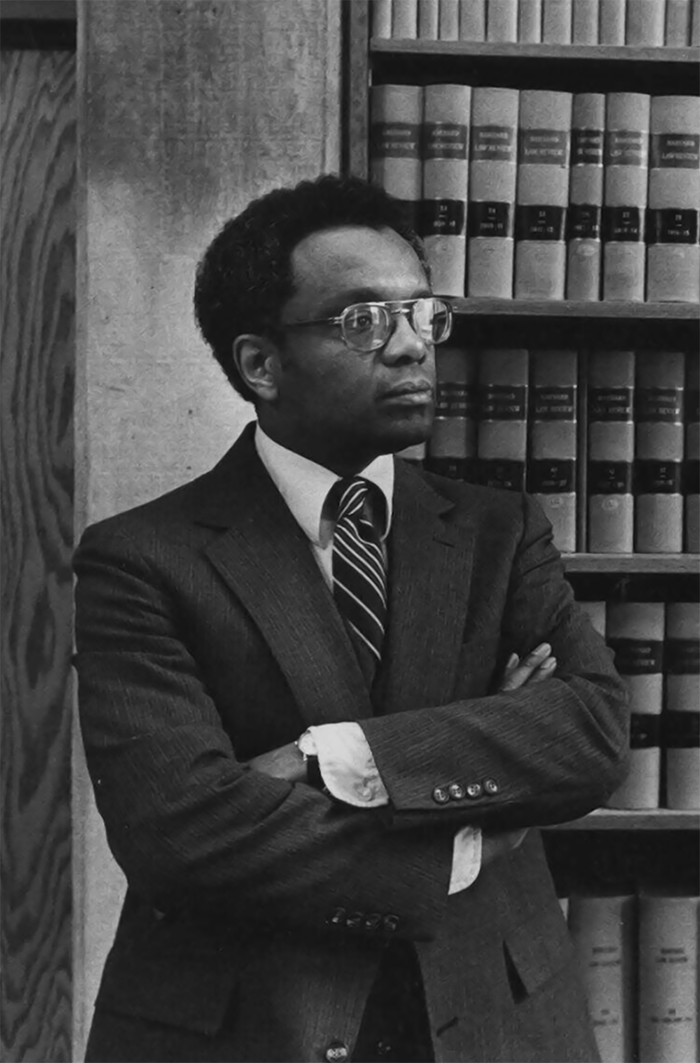


.jpg)