Tuesday, January 11, 2011

UPDATE ON ATTEMPTED ASSANINATION OF REPRESENTATIVE GABRIELLE GIFFORDS OF ARIZONA

UPDATE ON SHOOTING

January 8, 2011

SIX PEOPLE HAVE DIED FROM THE SHOOTING TODAY, INCLUDING A 9 YEAR OLD GIRL AND A 30 YEAR STAFF PERSON FOR CONGRESSWOMAN GIFFORDS WHO AFTER SURGERY TODAY REMAINS IN INTENSIVE CARE.

DOCTORS REMAIN 'OPTIMISTIC' SHE WILL 'PULL THROUGH"--WHATEVER THAT MEANS SINCE SHE WAS SHOT BY A 9MM GLOCK AT A RANGE OF ONLY ONE FOOT IN THE BACK OF THE HEAD. ONE CAN ONLY IMAGINE HOW BAD HER INJURIES REALLY ARE. MEANWHILE THE NUMBER OF PEOPLE WHO WERE SHOT NOW STANDS AT 18...PRESIDENT OBAMA HAS INSTRUCTED THE FBI TO LEAVE NO STONE UNTURNED IN THIS ONGOING INVESTIGATION OF THE 22 YEAR OLD SHOOTER WHOSE NAME IS JARED LEE LOUGHNER FROM ARIZONA...MORE AS FURTHER NEWS COMES IN...

Kofi

Who's Going To Take Public Responsibility for Contributing To These Heinous Acts of Violence?

All,

This statement was posted earlier today (January 8, 2010) by Paul Krugman on the shooting (it has now been confirmed that 17 other people--not 12 as it was reported earlier)--were also shot by the gunman. So far at least 2 of them--a Federal judge and a small child--have died. Congresswoman Giffords is still in critical condition following surgery...

Kofi


January 8, 2011

Assassination Attempt In Arizona

A Democratic Congresswoman has been shot in the head; another dozen were also shot.

We don’t have proof yet that this was political, but the odds are that it was. She’s been the target of violence before. And for those wondering why a Blue Dog Democrat, the kind Republicans might be able to work with, might be a target, the answer is that she’s a Democrat who survived what was otherwise a GOP sweep in Arizona, precisely because the Republicans nominated a Tea Party activist. (Her father says that “the whole Tea Party” was her enemy.) And yes, she was on Sarah Palin’s infamous “crosshairs” list.

Just yesterday, Ezra Klein remarked that opposition to health reform was getting scary. Actually, it’s been scary for quite a while, in a way that already reminded many of us of the climate that preceded the Oklahoma City bombing.

You know that Republicans will yell about the evils of partisanship whenever anyone tries to make a connection between the rhetoric of Beck, Limbaugh, etc. and the violence I fear we’re going to see in the months and years ahead. But violent acts are what happen when you create a climate of hate. And it’s long past time for the GOP’s leaders to take a stand against the hate-mongers.

Update: I see that Sarah Palin has called the shooting “tragic”. OK, a bit of history: right-wingers went wild over anyone who called 9/11 a tragedy, insisting that it wasn’t a tragedy, it was an atrocity.

Update: I’m going to take down comments on this one; they would need a lot of moderating, because the crazies are coming out in force, and it’s all too likely to turn into a flame war.

Tuesday, January 4, 2011

Facing the Reality of the Economy and the Ongoing Crisis of National Unemployment

http://www.nytimes.com/2011/01/03/opinion/03krugman.html?src=me&ref=general

All,

This is a big and much needed dose of REALITY from that increasingly rare stock of public figures in American life--a man who actually KNOWS what he's talking about! As usual the truly progressive and Nobel Prize winning economist tells us the real truth and what we can and must do about it with a refreshing clarity of language and rational thought that is deeply needed and appreciated. Thanks for the ever timely heads up on the economy Paul. You are a genuine public intellectual who actually provides information and insight that we can all readily grasp and use.

Kofi


OP-ED COLUMNIST

Deep Hole Economics
By PAUL KRUGMAN
January 2, 2011
New York Times

If there’s one piece of economic wisdom I hope people will grasp this year, it’s this: Even though we may finally have stopped digging, we’re still near the bottom of a very deep hole.


Fred R. Conrad/The New York Times
Paul Krugman


Why do I need to point this out? Because I’ve noticed many people overreacting to recent good economic news. What particularly concerns me is the risk of self-denying optimism — that is, I worry that policy makers will look at a few favorable economic indicators, decide that they no longer need to promote recovery, and take steps that send us sliding right back to the bottom.

So, about that good news: various economic indicators, ranging from relatively good holiday sales to new claims for unemployment insurance (which have finally fallen below 400,000 a week), suggest that the great post-bubble retrenchment may finally be ending.

We’re not talking Morning in America here. Construction shows no sign of returning to bubble-era levels, nor are there any indications that debt-burdened families are going back to their old habits of spending all they earned. But all we needed for a modest economic rebound was for construction to stop falling and saving to stop rising — and that seems to be happening. Forecasters have been marking up their predictions; growth as high as 4 percent this year now looks possible.

Hooray! But then again, not so much. Jobs, not G.D.P. numbers, are what matter to American families. And when you start from an unemployment rate of almost 10 percent, the arithmetic of job creation — the amount of growth you need to get back to a tolerable jobs picture — is daunting.

First of all, we have to grow around 2.5 percent a year just to keep up with rising productivity and population, and hence keep unemployment from rising. That’s why the past year and a half was technically a recovery but felt like a recession: G.D.P. was growing, but not fast enough to bring unemployment down.

Growth at a rate above 2.5 percent will bring unemployment down over time. But the gains aren’t one for one: for a variety of reasons, it has historically taken about two extra points of growth over the course of a year to shave one point off the unemployment rate.

Now do the math. Suppose that the U.S. economy were to grow at 4 percent a year, starting now and continuing for the next several years. Most people would regard this as excellent performance, even as an economic boom; it’s certainly higher than almost all the forecasts I’ve seen.

Yet the math says that even with that kind of growth the unemployment rate would be close to 9 percent at the end of this year, and still above 8 percent at the end of 2012. We wouldn’t get to anything resembling full employment until late in Sarah Palin’s first presidential term.

Seriously, what we’re looking at over the next few years, even with pretty good growth, are unemployment rates that not long ago would have been considered catastrophic — because they are. Behind those dry statistics lies a vast landscape of suffering and broken dreams. And the arithmetic says that the suffering will continue as far as the eye can see.

So what can be done to accelerate this all-too-slow process of healing? A rational political system would long since have created a 21st-century version of the Works Progress Administration — we’d be putting the unemployed to work doing what needs to be done, repairing and improving our fraying infrastructure. In the political system we have, however, Senator-elect Kelly Ayotte, delivering the Republican weekly address on New Year’s Day, declared that “Job one is to stop wasteful Washington spending.”

Realistically, the best we can hope for from fiscal policy is that Washington doesn’t actively undermine the recovery. Beware, in particular, the Ides of March: by then, the federal government will probably have hit its debt limit and the G.O.P. will try to force President Obama into economically harmful spending cuts.

I’m also worried about monetary policy. Two months ago, the Federal Reserve announced a new plan to promote job growth by buying long-term bonds; at the time, many observers believed that the initial $600 billion purchase was only the beginning of the story. But now it looks like the end, partly because Republicans are trying to bully the Fed into pulling back, but also because a run of slightly better economic news provides an excuse to do nothing.

There’s even a significant chance that the Fed will raise interest rates later this year — or at least that’s what the futures market seems to think. Doing so in the face of high unemployment and minimal inflation would be crazy, but that doesn’t mean it won’t happen.

So back to my original point: whatever the recent economic news, we’re still near the bottom of a very deep hole. We can only hope that enough policy makers understand that point.

Facing the Reality of Political Warfare in 2011--And Why It's Important

http://www.nytimes.com/2011/01/04/opinion/04herbert.html?_r=1&nl=todaysheadlines&emc=tha212

All,

The demagogic thugs, bullies, and gangsters who run and control the Republican Party are as usual out to destroy us all in the name and at the behest of the super wealthy elites and are more determined than ever that structural and institutional forms of racism, sexism, homophobia, militarism, and corporate domination rule the country with an iron fist. All these venal politicians need to succeed is electoral complicity and consensus by millions of reactionary, braindead, and largely bigoted and predominately white American poor, working, and middle class citizens who wouldn't know how to vote in their own objective political and economic self interest if their lives depended on it--- which tragically and not so ironically enough it actually does. So the real challenge for the many millions of the rest of us who don't subscribe to or support the blatant greed, hatred, mendacity, authoritarianism, and hypocrisy of the Right is to not cave in to and be shamelessly intimidated by these political cretins and their economic/ideological sponsors and benefactors. What that is going to require from us more than anything from this point on is real courage, commitment, and a sustained, well organized tenacity and insistence on an alternative vision that will systematically DEMAND of ourselves, the President, and Congress that we not be assaulted, exploited, defamed and openly subjected to contempt, ridicule, condescension, and abandonment by our government and other major social, cultural, and economic institutions. In other words: This is WAR and anyone who thinks that the phantoms and delusions of "bipartisanship" and unilateral "compromise" (read: abject submission) is not only fooling themselves but are ensuring that the Republican rightwing agenda will ultimately triumph in 2011 and far beyond on a massive scale that will make what the deadly criminals of the Bushwhacker regime did from 2000-2008 look like--dare I say it!--a mere tea party...

Kofi


OP-ED COLUMNIST

Get Ready for a G.O.P. Rerun
By BOB HERBERT
January 3, 2011
New York Times

You just can’t close the door on this crowd. The party that brought us the worst economy since the Great Depression, that led us into Iraq and the worst foreign policy disaster in American history, that would like to take a hammer to Social Security and a chisel to Medicare, is back in control of the House of Representatives with the expressed mission of undermining all things Obama.


Damon Winter/The New York Times
Bob Herbert


Once we had Dick Cheney telling us that Saddam Hussein had weapons of mass destruction and belligerently asserting that deficits don’t matter. We had Phil Gramm, Enron’s favorite senator and John McCain’s economic guru, blithely assuring us in 2008 that we were suffering from a “mental recession.”

(Mr. Gramm was some piece of work. A champion of deregulation, he was disdainful of ordinary people. “We’re the only nation in the world,” he once said, “where all of our poor people are fat.”)

Maybe the voters missed the entertainment value of the hard-hearted, compulsively destructive G.O.P. headliners. Maybe they viewed them the way audiences saw the larger-than-life villains in old-time melodramas. It must be something like that because it’s awfully hard to miss the actual policies of a gang that almost wrecked the country.

In any event, the G.O.P. has taken its place once again as the House majority and is vowing to do what it does best, which is make somebody miserable — in this case, President Obama. Representative Darrell Issa, the California Republican who is now chairman of the Oversight and Government Reform Committee, said recently on the Rush Limbaugh program that Mr. Obama was “one of the most corrupt presidents in modern times.” He backed off a little on Sunday, saying that what he really thinks is that Mr. Obama is presiding over “one of the most corrupt administrations.”

This is the attitude of a man who has the power of subpoena and plans to conduct hundreds of hearings into the administration’s activities.

The mantra for Mr. Issa and the rest of the newly empowered Republicans in the House, including the new Budget Committee chairman, Paul Ryan of Wisconsin, is to cut spending and shrink government. But what’s really coming are patented G.O.P. efforts to spread misery beyond Mr. Obama and the Democrats to ordinary Americans struggling in what are still very difficult times.

It was ever thus. The fundamental mission of the G.O.P. is to shovel ever more money to those who are already rich. That’s why you got all that disgracefully phony rhetoric from Republicans about attacking budget deficits and embracing austerity while at the same time they were fighting like mad people to pile up the better part of a trillion dollars in new debt by extending the Bush tax cuts.

This is a party that has mastered the art of taking from the poor and the middle class and giving to the rich. We should at least be clear about this and stop being repeatedly hoodwinked — like Charlie Brown trying to kick Lucy’s football — by G.O.P. claims of fiscal responsibility.

There’s a reason the G.O.P. reveres Ronald Reagan and it’s not because of his fiscal probity. As Garry Wills wrote in “Reagan’s America”:

“Reagan nearly tripled the deficit in his eight years, and never made a realistic proposal for cutting it. As the biographer Lou Cannon noted, it was unfair for critics to say that Reagan was trying to balance the budget on the backs of the poor, since ‘he never seriously attempted to balance the budget at all.’ ”

We’ll see and hear a lot of populist foolishness from the Republicans as 2011 and 2012 unfold, but their underlying motivation is always the same. They are about making the rich richer. Thus it was not at all surprising to read on Politico that the new head of the House Energy and Commerce Committee, Fred Upton of Michigan, had hired a former big-time lobbyist for the hospital and pharmaceuticals industries to oversee health care issues.

I remember President Bush going on television in September 2008, looking almost dazed as he said to the American people, “Our entire economy is in danger.”

Have we forgotten already who put us in such grave peril? Republicans benefit from the fact that memories are short and statutes of limitations shorter. It was the Republican leader in the House, Tom DeLay, who insisted against all reason and all the evidence of history that “nothing is more important in the face of war than cutting taxes.”

But that’s all water under the bridge. The Republicans are back in control of the House, ready to run interference for the rich as recklessly and belligerently as ever.

In 2011 We Must Face Reality Or Suffer The Consequences--Part One

http://www.huffingtonpost.com/2010/12/30/alters-the-promise-epilog_n_802866.html

All,

Like I've been saying for well over a year now, it's way past time for all of us to get our heads out of the clouds and shut down any more silly and useless adolescent dreaming about who or what Obama "could be/should be." More than ever it's time for all of us to be fully committed adult citizens and take some serious responsibility for honestly dealing with the blatant REALITY of who and what this man and his wayward administration actually is and isn't. Our watchword for 2011 must be: No More Excuses! We must incessantly hold both this President and ourselves fully and equally ACCOUNTABLE for what by any objective standard is a simply awful and obviously failing national economic policy. What this means is that if we truly want real reform--and not just some halfass token version of same-- we are going to have to organize on a national level to put immense political pressure on the White House and Congress. Needless to say the Republicans will absolutely refuse to do anything but destroy this Presidency and all the rest of us in the bargain so the real WEIGHT is gonna be on the President and the Democratic Party to actually deliver on their promises or at the very least FIGHT LIKE MANIACS against the inevitable rollbacks that are sure to come if the President and the Democrats in the House and Senate don't fiercely stand up to the additional 69 Republican rightwingers who were elected to the House and Senate during the November, 2010 midterms. While we obviously must continue to generally support the President vis-a-vis and in opposition to the Republican right and their corporate sponsors this fundamentally provisional political and ideological support MUST BE PRINCIPLED AND CRITICAL at all times to be of any real use or practical value to either him or us. If we don't do what is necessary to change the direction of this economy now during 2011 you can rest assured that Obama will be a one term President and go down to ignominious defeat in 2012--and most importantly of all WE will be wiped out and decimated by an intense and unrelenting national rightwing backlash that will absolutely destroy everything and everyone in its path in the aftermath of that defeat. Mark my words...

Kofi


Jonathan Alter's 'The Promise' Epilogue: Obama Team's Dysfunction Prompted Lack Of Focus On Jobs; Bill Clinton Annoyed At White House
by Marcus Baram
December 30, 2010
The Huffington Post \


Some revelations about the Obama administration detailed in the new epilogue to the upcoming paperback release of Jonathan Alter's bestseller, "The Promise," probably won't please too many folks at the White House. Alter claims that a dysfunctional relationship between top White House aides hurt the administration's policy on job creation, the Consumer Financial Protection Bureau was almost dropped from financial reform legislation and was only reinstated after complaints by Elizabeth Warren, and Bill Clinton continually grumbles about being disrespected by the administration.

The Obama administration's perceived failure to take laser-like aim at the unemployment crisis was partly due to the dysfunctional relationship between White House chief of staff Rahm Emanuel, top economic adviser Larry Summers and senior adviser David Axelrod, specifically the intransigence of Summers, according to Alter:

"The inability to pivot in 2010 to a single-minded focus on jobs was a by-product of what one senior aide called "dysfunction" between Emanuel, Summers, and Axelrod. Rahm had always admired Larry, but he was becoming exasperated with his failure to give him a jobs plan he could sell. 'Week after week, Rahm would say, 'Let's explore this' or 'How about that?' and Larry would slow-walk everything,' recalled one senior advisor. 'He basically doesn't believe in the government helping small business'."

Alter writes that the CFPB survived certain death only because of Warren's commitment:

"The most popular provision of Dodd-Frank almost didn't happen. In late 2009 Elizabeth Warren learned that a proposed bureau of consumer financial protection had been dropped from the bill. She went to the White House to object, and the bureau, to the dismay of predatory lenders, was reinstated."

Obama's relationship with the Clintons remains strained and Bill Clinton constantly complains in private about how he's been disrespected by the administration, writes Alter.

Though they talk frequently, the former president was annoyed that Obama didn't give him credit for helping to negotiate a spy swap that led to the release from Russian jails of four Russians who had been working for the CIA (in the wake of the bust of Russian spies living in American suburbs six months ago), Clinton's aides tell Alter. In addition, Clinton was miffed that Samantha Power, who insulted Hillary during the 2008 campaign, was chosen as an emissary to Bosnia in July. ("Bill Clinton might not have accepted the job, but he wanted to be asked," Alter writes.)

"An old friend compared him [Clinton] to a big puppy dog who just needed some attention to be happy and helpful."

Clinton felt dissed because, after negotiating the release by North Korea of two imprisoned American journalists, he was told to travel on a separate plane so as not to overshadow the arrival of the women. "Some of these guys in the White House act small," one aide told Alter.

And Clinton's team was angry that former protégés like Rahm Emanuel didn't show the former president proper respect. After Clinton "worked like a nerd" to prepare a detailed 30-page memo on how to incentivize banks with loan guarantees to spur job creation, the White House ignored the memo for a few months, and then treated Clinton like a "prop" during Obama's meeting with CEOs. When a Clinton aide complained to Emanuel, "Are you serious?", the chief of staff replied that Clinton should be grateful he was on the president's schedule at all, writes Alter.

"Clinton felt better disposed toward his 1992 opponent, George H.W. Bush... one senior aide described Bush as a 'father figure' to Clinton, who never knew his natural father..."

Saturday, January 1, 2011

MILES DAVIS SEPTET AT THE ISLE OF WIGHT FESTIVAL, AUGUST 29, 1970

HAPPY NEW YEAR EVERYONE AND WELCOME TO 2011!


In answer to the question:

"WHAT KIND OF MUSIC DOES YOUR BAND PLAY MILES?"


Miles replied:

"WE JUST PLAY BLACK. WE PLAY WHAT THE DAY RECOMMENDS"


Legendary performance at the Isle of Wight Festival, 1970.

Miles, his ensemble, and an audience of 600,000...

ENJOY!

Personnel:

Miles Davis (trumpet)
Gary Bartz (alto saxophone)
Chick Corea (piano)
Keith Jarrett (organ)
Dave Holland (bass)
Jack DeJohnette (drums)
Airto Moreira (percussion)

http://www.youtube.com/watch?v=RiF9dCQgzBc&feature=related

http://www.youtube.com/watch?v=jf5hksXFyMk&NR=1&feature=fvwp

http://www.youtube.com/watch?v=GmJwV3Xkl8M&feature=related


http://jazztimes.com/articles/26009-we-want-miles-exhibit-opens-in-montreal04/29/10

We Want Miles Exhibit Opens in Montreal

Exhibit on legendary trumpeter runs through August 29, 2010

By Lee Mergner

Miles Davis was always known as a jazz artist for whom image was important. He was also one of the music’s most photogenic figures. And he was a restless and creative artist who changed his music with the times. Finally, he was an artist who loved to paint large canvases of slightly abstract figures in bold bright colors. So it’s no surprise that a large-scale exhibit of photography, art and artifacts dedicated to the legendary trumpeter has been organized. The show, “We Want Miles” opened on April 30 at the Montreal Museum of Fine Arts in Montreal, Quebec in Canada. The show had previously been mounted at the Musee de la Musique in Paris.

The exhibit was curated by Vincent Bessieres, who wrote about Miles: “More than the archetype of the cool musician—deliberate, distant, elegant, uncompromising—Davis is the incarnation of audacity and invention.” The exhibit certainly has gone to great lengths to capture his mercurial brilliance.

Included in this first North American multimedia exhibition on Davis are:
• Paintings by Davis and works contemporary artists including Jean-Michel Basquiat and Niki de Saint Phalle, among others;
• Original manuscripts and musical scores including the composition for Birth of the Cool;
• Musical instruments including horns that he played, and initial pressings of his records;
• Intimate portraits taken by such legendary photographers as Annie Leibovitz, Lee Friedlander, Anton Corbijn, and Irving Penn, among others;
• Video clips of and full length live concert footage, and stage clothes.

Naturally, it would impossible to appreciate the art without hearing the music, and so the museum has gone to great lengths to insure that visitors get to hear the Prince of Darkness in all his glory. Speakers shaped like trumpet mutes are scattered throughout the exhibit and there will be twenty listening stations, as well as a series of large scale projections of various performances and clips.

In addition, a companion book has also been published by the fine art publisher Rizzoli Press. The lavish coffee-table book with the provocative if somewhat contradictory title, We Want Miles: Miles Davis vs. Jazz, was written by Franck Bergerot, the editor-in-chief of Jazz Magazine in France. In addition to the text by Bergerot, the book includes remembrances of Davis by David Liebman, John Szwed, Ira Gitler, George Avakian and others. However, the images comprise the main attraction here. Included are nearly every iconic image of the trumpeter—from Don Hunstein’s photos of Miles in the studio recording Kind of Blue to Irving Penn’s stark and dramatic portrait for the Tutu album cover.

The exhibit and book are the subject of an upcoming Final Chorus column by Nat Hentoff in the July/August issue of JazzTimes.


http://jazztimes.com/articles/26262-a-fine-arts-museum-s-tribute-to-nonpareil-miles

July/August 2010 • By Nat Hentoff

A Fine Arts Museum’s Tribute to Nonpareil Miles

Nat Hentoff on We Want Miles Exhibit and Book

When I lived in Boston eons ago, the Museum of Fine Arts was within walking distance, and I often visited to get high on such paintings as a Renoir of a young couple in what looked like a New Orleans-style slow dance. I’d stand there fantasizing about taking the man’s place in the painting, but I never expected to find anything of jazz in this legendary museum’s exhibitions. Nor have I heard of jazz as a fine art in any of the other museums around the country. I have been at jazz concerts at the Metropolitan Museum of Art, but there’s nothing of Louis, Duke, Pres, Bix or Trane in the galleries there.

Suddenly, however, in a very prestigious museum of fine arts—having opened in April and continuing until Aug. 29—there is a stunning media exhibition on someone the museum accurately calls “one of the jazz world’s greatest innovators.”

Coinciding with the event is a very large-size, hardback catalog, on the cover of which—characteristically sizing you up skeptically—is Miles Davis. The book and exhibition are titled “We Want Miles: Miles Davis vs. Jazz.” And nowhere else have I seen so much of Miles, from his boyhood on.

Miles and I were friends—until Bitches Brew. He never forgave me for not turning handsprings over his venture into electronics. I felt Miles was electrifying without the added wattage. But since he was always trying something new, and always expecting attention, I’m sure he would have been delighted by this polyrhythmic, visual and sonic odyssey of his life.

This tribute to the always-alive music of Miles is not in an American museum; the ones here are not yet hip to jazz as an art. This awakening challenge to our treasures of high art is mounted by the Montreal Museum of Fine Arts. It’s the first one there, but it has been brewing for a long time. The MMFA’s director, Nathalie Bondil, has a long-term relationship with the Musée de la Musique in Paris, which originally conceived the exhibit, and Bondil is much involved, as she puts it, in “cross-roading visual art and music.”

Miles was a painter, and the exhibition shows some of his visual improvisations. Also, along with his original manuscripts and scores, there are horns he played. And dig this from Cecilia Bonn, the museum’s communications consultant: “Small chambers placed throughout the installation in the form of the ‘mutes’ Miles used are among the design initiatives to ensure optimal acoustic conditions. And twenty listening stations will enable visitors to immerse themselves in Miles’ multiple musical currents.” Also, you’ll be able to hear Miles “live” in “a series of large-screen projections featuring clips and full-length footage from such concert performances as the 1985 Montreal International Jazz Festival.”

My unsolicited suggestion to Nathalie Bondil is that she invite museum directors in the United States to come to Montreal and immerse themselves in the microcosm of Miles. Imagine such resourceful, imaginative exhibitions on Louis Armstrong, Duke Ellington, Count Basie, Fats Waller, Thelonious Monk, Dizzy Gillespie, Billie Holiday, Lester Young, Jack Teagarden, John Coltrane, Pee Wee Russell—you can add the names. And throughout this country—with music classes expunged from so many schools by No Child Left Behind—fine arts museums correlating sight, sound and American history shaped by jazz could invite public school classes to learn more about swinging the arts.

The kids would also learn something about the thrust and the often-exhilarating surprise of creation, as shown in the catalog in these juxtaposed quotes:

Pablo Picasso: “In painting you can try anything. As long as you never do anything over again.”

Miles Davis: “Now, nothing in music and sounds is ‘wrong.’ You can hit anything, any kind of chord. … Music is wide open for anything.”

Pablo Picasso: “You see me here, and yet I’ve already changed. I’m already somewhere else.”

Miles Davis: “Nothing is out of the question the way I think and live my life. I’m always thinking about creating. My future starts when I wake up every morning.”

The catalog further contributes permanently to jazz history with the deeply searching and knowledgeable text by, among others, Franck Bergerot, editor in chief of France’s Jazz magazine, writer of many Miles Davis liner notes, and coordinator of the first volumes of Miles’ complete works, released by the Masters of Jazz label.

Among the photographs, most of which are new to me, are those depicting Miles as a boy and Miles as the youngest member of trumpeter Eddie Randle’s Blue Devils, the house band at the Rhumboogie Club in East St. Louis. The evolving Miles became music director of the Blue Devils and was in charge of organizing rehearsals.

From the text about a time in his life when Miles had seemed to stop growing: “a young white cat by the name of Chet Baker was named best trumpet player for 1953; and while in Detroit, Miles heard the playing of Clifford Brown, the rising black trumpet star. In March, 1954, Davis was back in New York determined to make … a fresh start.
“However, once again his trumpet was in hock. He was playing Art Farmer’s trumpet, and Farmer accompanied him to make sure his trumpet did not vanish.”

I’d never heard that before, but now I have, thanks to the Montreal Museum of Fine Arts. According to Tourism Montreal, “the Museum is Montreal’s top cultural destination … and close to 100,000 people take part annually in its educational and cultural activities.” Now it’s also a swinging institution, revealing that in a vital area of the arts, America’s museums are, by contrast, culturally disadvantaged. I hope Montreal’s “We Want Miles” becomes a traveling exhibition south of the border. Any museum directors interested?


http://jazzprofiles.blogspot.com/2010/10/we-want-miles-miles-davis-vs-jazz.html


Friday, October 8, 2010

We Want Miles: MILES DAVIS VS. JAZZ

“The archetypal jazzman, as elegant as he was inaccessible, Miles Davis was considered the twentieth-century incarnation of cool, both in his attitude and in his playing. A ladies' man, an enigmatic personality touched by genius and by rage, this son of the African-American middle class established himself as one of the greatest innovators in jazz, a genre he never stopped confronting and de-compartmentalizing through various aesthetic revolutions. With exceptional photographs, handwritten scores, original record-cover art and expert biography, "We Want Miles" attempts to trace the legend of one of the most fascinating and extraordinary artists in the history of music.”

© -Steven A. Cerra, copyright protected; all rights reserved.

Just when you think that you won’t have anything further to do with the most merchandised Jazz musician in the history of the music, this book comes along.

The book is essentially a companion volume to a museum exhibition initiated and organized by the Cité de la musique, Paris, with the support of Miles Davis Properties, LLC, in association with the Montreal Museum of Fine Arts. It is published by Skira Rizzoli in a 9.5 x 11.5” folio format.


The exhibition appeared at Musée de la Musique, Paris from October 16, 2009 to January 17, 2010 and then traveled to the Montreal Museum of Fine Arts Jean-Noel Desmarais Pavilion for a showing from April 30 to August 29, 2010. The exhibition curator was Vincent Bessieres.

Vince Bessieres also serves as the editor of the book which has contributions from George Avakian, Laurent Cugny, Ira Gitler, David Liebman, Francis Marmande, John Szwed and Mike Zwerin.

Skira Rizzoli has done its usual fine job with the formatting of this work which includes a bevy of photographs. The book retails for $50.00 although some booksellers are offering up to a 40% discount with shipping included.

Here is the chapter breakdown:


We have included below the introductions from the book as provided by the two, museum curators. Sadly, the exhibit did not visit a museum in a city in the USA.

© -Laurent Bayle & Eric de Visscher, copyright protected; all rights reserved.

LAURENT BAYLE / GENERAL DIRECTOR, CITE DE LA MUSIQUE, PARIS ERIC DE VISSCHER / DIRECTOR, MUSEE DE LA MUSIQUE, PARIS

WE WANT MILES

“In 1980, after nearly five years of silence, Miles Davis began to play again in the studio and on stage. The snappy title of one of the first records heralding his comeback was the self-evident statement "We Want Miles" Who is this "we"? How do you explain that simply saying a first name can conjure up an artist's undeniable power? To understand the univer sal respect commanded by a figure of this stature, recognized for ele vating a fledgling musical genre to a global phenomenon, we need only call to mind the course of his career: Miles Davis got his start playing in big bands in his hometown of St. Louis, enthusiastically embraced bebop, initiated the cool, embarked on a quest for a third avenue between swing and free jazz, and subsequently immersed himself in electric jazz, with occasional forays into soul and rock. Could this also explain how his name became legend, with musicians of every stripe all over the world incessantly chanting "We want Miles" to encourage him to return to centre stage?—a stage he would now take by storm, with numerous records, television appearances, advertising and film projects that transformed him into a genuine media icon. First, Davis became aware of the legend of jazz, which had expanded into a worldwide genre, then of his own legend as a "global" artist who transcended styles, schools and genres to assert himself as a musician, creator and leader of one of the twentieth century's signature musical cur rents. Although he contributed to the history of jazz in much the same way as Duke Ellington, Charlie Parker, John Coltrane and Thelonious Monk, no other musician embraced its many developments with such boldness and ingenuity. He even anticipated its major turning points, transforming music meant for entertainment and dancing into music that had to be listened to, and he was subsequently criticized for some of his choices by those who shunned progress.


As with Serge Gainsbourg, whose name immediately came to mind when the Cite de la musique was considering a first temporary exhibition on French chanson, cult figure Miles Davis instantly occurred to us as soon as the topic of jazz was proposed. In addition to a record title [You're under Arrest], these two figures, born in the same year, shared the desire to avoid being confined to any one style, always seeking out new, innova tive—and sometimes unexpected—musical avenues. They were inspired by the sense of "the moment" both in the way they related to their era and in their work: Gainsbourg wrote fast, Davis created music on the spot, pushing the art of improvisation to the limit without ever losing the connection with his audience. To quote saxophonist David Liebman from one of the texts in this catalogue, "When Miles went on stage, past and future didn't exist. It was all about the present tense, the essence of true improvisation and what most jazz musicians strive for daily when playing."

It is undoubtedly this "mystery of the present moment" that Miles Davis never ceased to explore, developing both the sounds (his move to electric and amplified instruments is an example of this, as are his collaborative efforts with Gil Evans) and the language of jazz. To do so, he tapped into a fertile source of renewal by working with new musicians. From John Coltrane to Herbie Hancock, the long list of artists who worked with Davis demonstrates his openness to the influences of other sizeable talents—his contemporaries as well as younger musi cians. From Kind of Blue and Tutu to Porgy and Bess and Bitches Brew, Davis' great albums all bear witness, in various forms, to his quest for the perfect moment.

This is the exceptional journey related in this book—a faithful counter part to the exhibition first presented at the Musee de la musique and subsequently at the Montreal Museum of Fine Arts—which presents a chronological account by Franck Bergerot supplemented with reminis cences by certain key figures of the time. As for the exhibition, the photographs were chosen with particular care, since it is true that jazz and photography share a common history. Both capture the moment and record contrasts, immortalizing the illustrious heroes and pivotal moments of a musical genre that is quintessentially ephemeral. Neither the exhibition nor this catalogue would have been possible without the tireless efforts and unfailing ingenuity of curator and editor Vincent Bessieres. The project received steadfast support from the Miles Davis Estate, especially Cheryl Davis, Erin Davis and Vince Wilburn, Jr. The many lenders, photographers and institutions that contributed to the exhibition not only made it possible but also ensured its originality. To them, and to the people at the Cite de la musique and at the Montreal Museum of Fine Arts, who helped make it a reality, we offer our heartfelt thanks.”


© -Vincent Bessieres, copyright protected; all rights reserved.

VINCENT BESSIERES/ EXHIBITION CURATOR

MILES AND MILES OF MILES

“Jazz has had its fair share of eccentric personalities, picaresque protag onists, tragic destinies, meteoric careers and dazzling creators. But Miles Davis is still the most fascinating and mysterious of them all. The exhibition "We Want Miles" does not claim to be the last word on this artist who left his mark on the twentieth century; rather, it is an attempt to sketch a broad outline, analyze his transformations and follow his evo lution. Like the art of Picasso, to whom he is often compared, Davis' music has its periods. In step with the fast-paced century, he set out in a new direction every five years. He lost his audience, found another, lost that one—and won over yet another. When Miles shed his skin, you just had to keep up with him. He sparks both desire and frustration: when you arrive where you expect him to be, he's already gone. What he played one day he would never play again. And yet it's always Miles. His sound may have changed, his bands may have had a high turnover rate, he may have flouted convention and been electrified by electricity, but something remains, making it possible to identify him in just a few notes.

This is the thread running through the exhibition, which seeks to discover this complex and elusive man: Miles the proud young boy, Miles the coun try bumpkin who dreams of Bird, Miles the epitome of cool, Miles the boxer, arrogant Miles, Miles the down-and-out junkie, Miles who turns his back on his audience, Miles and his kind of blue, Miles as Porgy, Miles as Bess, Miles celebrating the saeta, Miles who finally smiles, Miles who questions jazz, Miles the hepcat, Miles the rocker, Miles the show-off, Miles and his bitches' brew, Miles who thinks he's Hendrix, Miles on the corner, Miles who vanishes, Miles who reappears, Miles the star demanding royal treatment, Miles haunted by his ghosts, Miles who never looks back, blue Miles, Miles who stares down the ignorant, Miles the macho, the hero, the leader, Miles with his nerves on edge, Miles beaten by the cops, Miles who shamelessly tells his story, Miles and his trumpets of many colours, Sphinx-like Miles, hip Miles, bop Miles... Miles, Miles, Miles. "We want Miles," you say. But which one? Can we separate the man from his music? Can we understand his work without connecting it to his life? His music has survived him, of course. But in the quintessentially personal medium that is jazz—this inti mate art form in conversation with the world—Miles inhabits the music as much as he plays it. Or is it the music that inhabits him? Imagine his silhouette on stage, his body hunched over, his trumpet raised. What did Miles play that he had not experienced? Aside from boxing, nothing else interested him. Miles never stopped looking jazz in the face and con fronting it.

Opening new pathways, absorbing trends, surpassing styles, he turned around and gave it back, all the while avoiding clichés, easy recipes and ready-made formulas. His misconduct cannot be dis missed on the grounds that he so often strove for excellence and originality. Who is not a fan of Miles Davis? Who cannot find, in this vast, varied body of work, a piece that speaks to them? Everyone has a favourite Miles Davis album, even Barack Obama, whose election as president of the United States adds symbolic resonance to an anec dote in Davis' autobiography about a White House dinner President Reagan invited him to in 1987.


When another guest, a woman of a certain age, condescendingly asked him what he had done that was important enough to merit an invitation to the hallowed halls of the White House, Miles replied, "Well, I've changed music five or six times." That's enough to warrant an exhibition ... and this book, which will serve as a lasting record of it. "We Want Miles," and we can never get enough of him.”

As the seven chapter breakdown spanning the years 1948-1991 of the book would indicate, there is a style, perhaps more than one, of Miles’ work that may appeal to a wide variety of audiences.

Like the one constant in the universe, Miles’ music was always changing.

As Miles was quoted as saying in 1985:

“… maybe in a way I change music and stuff …. Yeah, you can say that … I do change it … but I can’t help it, you know, It’s not that I am a genius but it’s just that I can’t help it.”


Posted by Jazz Profiles at 1:09 PM

Monday, December 27, 2010

THE PANOPTICON REVIEW PRESENTS TWENTY OUTSTANDING BOOKS OF 2010

Please Note: The following list of books is not organized according to any personal hierarchy of the relative value of each individual book. Rather it is a list that considers ALL of the books listed to be of equal intellectual value and interest, albeit for different reasons. In a couple of instances I even include texts that were originally published in 2009 but were subsequently republished in paperbook editions in 2010. A brief summation of the content of some of the books is included below the titles. The bottomline on this list is that each one of these books is extraordinary and invaluable in their own right and represents some of the very best writing published in the United States in 2010
--Kofi Natambu, Editor


The Warmth of Other Suns: The Epic Story of America's Great Migration. by Isabel Wilkerson. Random House. New York 2010.

A powerful, groundbreaking, and exquisitely written history of the massive migration of African Americans from the south to other regions of the country north, east, and west that took place over a nearly six decade period after 1915 and its ongoing revolutionary impact on American social history, culture, politics, and art that reverberates to this day by the Pulitzer Prize winning African American journalist, historian, scholar, and teacher Isabel Wilkerson

The Cross of Redemption: Uncollected Writings. by James Baldwin; edited by Randall Kenan. Pantheon Books. New York 2010

This new collection of previously unpublished essays, reviews, criticism, and social commentary is a scintillating, dynamic, and profound reminder of why the extraordinary late novelist and essayist and social/cultural critic James Baldwin is justly considered to be one of the greatest and most influential American writers of the past century.

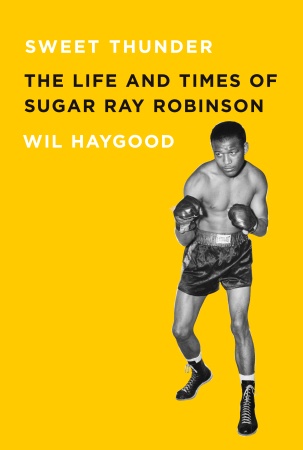
Sweet Thunder : The Life and Times of Sugar Ray Robinson. by Wil Haygood. Alfred A. Knopf. New York 2009

The third book in a historical trilogy of grand biographical narratives of legendary African American male cultural figures of the 20th century (the previous two in this series were about Sammy Davis, Jr, and Adam Clayton Powell) by a man whom many consider to be one of the finest U.S. biographers writing today, the African American journalist and historian Wil Haygood. Like all of Haygood's work this book is an extremely well written and absolutely riveting examination of the life and times of the elegant champion boxer, urbane sophisticate, consummate artist, and bon vivant Walker Smith Jr. (aka Sugar Ray Robinson) who was and is considered to this day to be the best boxer pound-for-pound in the history of boxing. Robinson was also an iconic African American figure whom both Miles Davis and Muhammad Ali among many others revered and considered a major role model and mentor.

Black Is The New White: A Memoir. by Paul Mooney. Simon & Schuster. New York 2010 (paperback edition)

Paul Mooney is a legendary figure in American comedy circles over the past four decades and was also the best friend, creative colleague, comrade in arms, and fellow artist of the late, great Richard Pryor (1940-2005) for over 40 years. Writer of some of Pryor's most famous and enduring monologues, routines, and skits as well as an iconic staff writer for a number of television series featuring African American performers (e.g. everything from "Sanford and Son" to "In Living Color", "The Chapelle Show" and Saturday Night Live, etc.) A scathing and extremely perceptive satirist, Mooney is widely considered to be one of the funniest and most socially conscious comedians in U.S. history. This powerful memoir details the fascinating story of the major struggles and triumphs of Mooney's life and career and provides an important contextual study of the evolution of American culture and public entertainment since the early 1960s.


At The Dark End of the Street: Black Women, Rape, and Resistance--A New History of the Civil Rights Movement from Rosa Parks To the Rise of Black Power. by Danielle McGuire. Alfred A. Knopf. New York 2010


This very important new book by the brilliant Detroit historian, professor, and scholar Danielle McGuire is destined to have a profound and lasting impact on our perceptions, knowledge, and understanding of the intellectual, cultural, and political history of the Civil Rights Movement of the 1940s, '50s. and '60s, and an even more transformative effect on our ongoing appreciation and study of the pervasive, extraordinary and thoroughly revolutionary role of African American women in modern U.S. history.

Colorblind: The Rise of Post-Racial Politics and the Retreat From Racial Equity. by Tim Wise. City Lights Books (Open Media Series). San Francisco 2010
Wrestling With The Left: The Making of Ralph Ellison's Invisible Man.
by Barbara Foley. Duke University Press. Durham 2010


Edward Said: A Legacy of Emancipation and Representation. Edited by Adel Iskander and Hakem Rustom. University of California Press. Berkeley 2010
Nelson Mandela: Conversations With Myself. by Nelson Mandela. Farrar, Straus Giroux. New York 2010


A Presidency In Peril: The Inside Story of Obama's Promise, Wall Street's Power, and The Struggle To Control Our Economic Future. by Robert Kuttner Chelsea Green Publishing. Vermont 2010


The Mendacity Of Hope: Barack Obama and the Betryal of American Liberalism. by Roger D. Hodge. Harper. New York 2010
Coltrane On Coltrane: The John Coltrane Interviews. edited by Chris DeVito. Chicago Review Press. Chicago 2010
The New Jim Crow: Mass Incarceration in the Age of Colorblindness. by Michelle Alexander. The New Press. New York 2010
 

The Obama Syndrome: Surrender At Home, War Abroad. by Tariq Ali. Verso. New York 2010

 
The Empire's New Clothes: Barack Obama in the Real World of Power. by Paul Street. Paradigm Publishers. Boulder 2010

The Bridge: The Life and Rise of Barack Obama. by David Remnick. Alfred A. Knopf. New York 2010


Griftopia: Bubble Machines, Vampire Squids, and the Long Con That Is Breaking America. by Matt Taibbi. Spiegel & Grau 2010

Bob Dylan in America. by Sean Wilentz. Doubleday. New York 2010
Digging: The Afro-American Soul of American Classical Music. by Amiri Baraka. University of California Press. Berkeley 2010 (Paperback edition)


Thelonious Monk: The Life and Times of an American Original. by Robin D.G. Kelley. Free Press 2010 (Paperback edition)