tps://www.anativeson.org/p/on-harvard-and-belief

On Harvard and Belief
by Eddie
June 2, 2025
Substack
Donald Trump’s assault on Harvard and other institutions of higher learning is part of a broad and multifaceted strategy to upend those institutional spaces that are perceived to be strongholds of the American left. For much of the eighties and nineties, I remember hearing conservative cries about the liberal bias of the media and the radical left’s capture of American colleges and universities.
Sesame Street warped the minds of our young, they declared. NPR pushed liberal drivel. And universities no longer taught the classics of Western civilization. Instead, students were indoctrinated by Marxist scholars, content to take classes in “identity studies,” and were lost in a kind of moral relativism promulgated by the skepticism of postmodernism or poststructuralism or post whatever.
All the while, as conservatives claimed the left’s ideological capture of cultural institutions, Reaganism and its twin, Clintonism, shredded the social safety net, destabilized American workers as they transferred wealth to the richest of the rich, and built the largest carceral state of any independent democracy in the world.
In a sense, what Donald Trump is doing is the culmination of a decades-long effort to undo the New Deal and the Great Society. We tend to exceptionalize him as if he is a singular figure. When, in fact, what Trump is doing has deep roots in American political life. Just a quick glance at Joseph Lowndes's From the New Deal to the New Right: Race and the Southern Origins of Modern Conservatism, Corey Robin’s The Reactionary Mind: Conservatism from Edmund Burke to Sarah Palin, Joseph Crespino’s In Search of Another Country: Mississippi and the Counter Revolution, Seth Blumenthal’s Children of the Silent Majority: Young Voters and the Rise of the Republican Party, 1968-1980 or Bruce J. Shulman and Julien E. Zelizer’s edited volume, Rightward Bound: Making America Conservative in the 1970s reveals how well sourced the Trump agenda actually is.
One can think of MAGAism as one might think of fashion: the return or recycling of a style with different stitching or detail – a citation of the past (the 1920s and 1950s) that authorizes its power in the present.
This approach keeps us from thinking that the problems we face as a nation rest solely with Trump. That, if only we got rid of him, the country will find its footing once again. Magical thinking. Our problems cut to the marrow of the bone.
The one thing that is clear to me, even as I acknowledge the historical roots of Trump’s agenda, is that not only do these people want to control what we believe (with the ban on books and the like) but how we come to believe (with the assault on colleges and universities as well as scientific knowledge). They are attacking every arena that can cultivate a critical disposition towards authority.
We might see this, and reasonably so, as a reflection of Trump’s desire for absolute power. But that, I believe, is a bit shortsighted. This effort is part of an agenda aimed at making Americans pliant and malleable – willing to concede to the demands of capital without a mumbling word. (Just look at how they are talking about the immediate disruption of AI. How AI could wipe out half of all entry-level white-collar jobs. No talk about why this must be inevitable. No serious discussion of the ethics – the human costs – of the choice corporations are making in their manic pursuit of profit. Only the assumption that we will concede to what’s coming.)
As I was thinking about this, and it offers a glimpse into how my mind works, Charles Sanders Pierce’s classic essay, “The Fixation of Belief,” came to mind. I won’t go into the particulars of his argument (and this will be a rather crude rendering of his claims), but he identifies four ways in which we fix believe in the face of doubt: 1) the method of tenacity, 2) the method of authority, 3) the a priori method, and 4) the method of science.
With the method of tenacity, we cling to what we believe. Facts be damn. Our minds are already made up no matter what confronts us. We believe what we believe. The method of authority reflects how we come to accept beliefs by way of our assent to institutions and persons we hold as the authority. We follow the church’s teachings, for example, or some political figure. The a priori method, to put it crudely, involves following what seems reasonable to you or intuitively obvious. “It makes of inquiry something similar to the development of taste; but taste, unfortunately, is always more or less a matter of fashion….” And the scientific method, well, is an approach that isn’t reducible to what we cling to, or an authority to which assent, or a matter of taste. As Peirce wrote,
If I adopt the method of tenacity, and shut myself out from all influences, whatever I think necessary to doing this, is necessary according to that method. So with the method of authority: the state may try to put down heresy by means which, from a scientific point of view, seem very ill-calculated to accomplish its purposes; but the only test on that method is what the state thinks; so that it cannot pursue the method wrongly. So with the a priori method. The very essence of it is to think as one is inclined to think…. But with the scientific method the case is different. I may start with known and observed facts to proceed to the unknown; and yet the rules which I follow in doing so may not be such as investigation would approve. The test of whether I am truly following the method is not an immediate appeal to my feelings and purposes, but, on the contrary, itself involves the application of the method.
Hypotheses, experimentation, falsifiability, a community of inquirers all come into view with this particular method. As Peirce put it, “bad reasoning as well as good reasoning is possible; and this fact is the foundation of the practical side of logic.”
No wonder Trump and his minions seem skeptical of such an approach. The science of vaccines doesn’t matter. The research at universities does not matter. Our doubts are best dealt with, on their view, by conceding to authority or clinging to our prejudices. Adam Serwer suggests that such an approach, if successful, along with the assault on the institutions that cultivate critical dispositions will hurl the country into the dark ages. I completely agree.
Our task, among other things, is to insist on a critical disposition towards the world. To ask rude and hard questions. To think historically so that we do not fall for the noise and illusions of carnival barkers. To resist the temptation of tenacity and the ease that comes with handing over our responsibility for critical thinking to those who claim authority as their own.
The assault on our democracy consists of much more than the usurpation of power by an executive gone mad. Forces are trying to capture all of our cultural and political institutions. They are attempting to dictate what we believe and how we come to believe with the aim of snatching our freedoms and making of us what they will.
We must refuse for the sake of our babies, for the future of American democracy itself.
On Harvard and Belief
by Eddie
June 2, 2025
Substack
Donald Trump’s assault on Harvard and other institutions of higher learning is part of a broad and multifaceted strategy to upend those institutional spaces that are perceived to be strongholds of the American left. For much of the eighties and nineties, I remember hearing conservative cries about the liberal bias of the media and the radical left’s capture of American colleges and universities.
Sesame Street warped the minds of our young, they declared. NPR pushed liberal drivel. And universities no longer taught the classics of Western civilization. Instead, students were indoctrinated by Marxist scholars, content to take classes in “identity studies,” and were lost in a kind of moral relativism promulgated by the skepticism of postmodernism or poststructuralism or post whatever.
All the while, as conservatives claimed the left’s ideological capture of cultural institutions, Reaganism and its twin, Clintonism, shredded the social safety net, destabilized American workers as they transferred wealth to the richest of the rich, and built the largest carceral state of any independent democracy in the world.
In a sense, what Donald Trump is doing is the culmination of a decades-long effort to undo the New Deal and the Great Society. We tend to exceptionalize him as if he is a singular figure. When, in fact, what Trump is doing has deep roots in American political life. Just a quick glance at Joseph Lowndes's From the New Deal to the New Right: Race and the Southern Origins of Modern Conservatism, Corey Robin’s The Reactionary Mind: Conservatism from Edmund Burke to Sarah Palin, Joseph Crespino’s In Search of Another Country: Mississippi and the Counter Revolution, Seth Blumenthal’s Children of the Silent Majority: Young Voters and the Rise of the Republican Party, 1968-1980 or Bruce J. Shulman and Julien E. Zelizer’s edited volume, Rightward Bound: Making America Conservative in the 1970s reveals how well sourced the Trump agenda actually is.
One can think of MAGAism as one might think of fashion: the return or recycling of a style with different stitching or detail – a citation of the past (the 1920s and 1950s) that authorizes its power in the present.
This approach keeps us from thinking that the problems we face as a nation rest solely with Trump. That, if only we got rid of him, the country will find its footing once again. Magical thinking. Our problems cut to the marrow of the bone.
The one thing that is clear to me, even as I acknowledge the historical roots of Trump’s agenda, is that not only do these people want to control what we believe (with the ban on books and the like) but how we come to believe (with the assault on colleges and universities as well as scientific knowledge). They are attacking every arena that can cultivate a critical disposition towards authority.
We might see this, and reasonably so, as a reflection of Trump’s desire for absolute power. But that, I believe, is a bit shortsighted. This effort is part of an agenda aimed at making Americans pliant and malleable – willing to concede to the demands of capital without a mumbling word. (Just look at how they are talking about the immediate disruption of AI. How AI could wipe out half of all entry-level white-collar jobs. No talk about why this must be inevitable. No serious discussion of the ethics – the human costs – of the choice corporations are making in their manic pursuit of profit. Only the assumption that we will concede to what’s coming.)
As I was thinking about this, and it offers a glimpse into how my mind works, Charles Sanders Pierce’s classic essay, “The Fixation of Belief,” came to mind. I won’t go into the particulars of his argument (and this will be a rather crude rendering of his claims), but he identifies four ways in which we fix believe in the face of doubt: 1) the method of tenacity, 2) the method of authority, 3) the a priori method, and 4) the method of science.
With the method of tenacity, we cling to what we believe. Facts be damn. Our minds are already made up no matter what confronts us. We believe what we believe. The method of authority reflects how we come to accept beliefs by way of our assent to institutions and persons we hold as the authority. We follow the church’s teachings, for example, or some political figure. The a priori method, to put it crudely, involves following what seems reasonable to you or intuitively obvious. “It makes of inquiry something similar to the development of taste; but taste, unfortunately, is always more or less a matter of fashion….” And the scientific method, well, is an approach that isn’t reducible to what we cling to, or an authority to which assent, or a matter of taste. As Peirce wrote,
If I adopt the method of tenacity, and shut myself out from all influences, whatever I think necessary to doing this, is necessary according to that method. So with the method of authority: the state may try to put down heresy by means which, from a scientific point of view, seem very ill-calculated to accomplish its purposes; but the only test on that method is what the state thinks; so that it cannot pursue the method wrongly. So with the a priori method. The very essence of it is to think as one is inclined to think…. But with the scientific method the case is different. I may start with known and observed facts to proceed to the unknown; and yet the rules which I follow in doing so may not be such as investigation would approve. The test of whether I am truly following the method is not an immediate appeal to my feelings and purposes, but, on the contrary, itself involves the application of the method.
Hypotheses, experimentation, falsifiability, a community of inquirers all come into view with this particular method. As Peirce put it, “bad reasoning as well as good reasoning is possible; and this fact is the foundation of the practical side of logic.”
No wonder Trump and his minions seem skeptical of such an approach. The science of vaccines doesn’t matter. The research at universities does not matter. Our doubts are best dealt with, on their view, by conceding to authority or clinging to our prejudices. Adam Serwer suggests that such an approach, if successful, along with the assault on the institutions that cultivate critical dispositions will hurl the country into the dark ages. I completely agree.
Our task, among other things, is to insist on a critical disposition towards the world. To ask rude and hard questions. To think historically so that we do not fall for the noise and illusions of carnival barkers. To resist the temptation of tenacity and the ease that comes with handing over our responsibility for critical thinking to those who claim authority as their own.
The assault on our democracy consists of much more than the usurpation of power by an executive gone mad. Forces are trying to capture all of our cultural and political institutions. They are attempting to dictate what we believe and how we come to believe with the aim of snatching our freedoms and making of us what they will.
We must refuse for the sake of our babies, for the future of American democracy itself.
A Stephen Miller Staffer and Tough Talk: Inside Trump’s Latest Attack on Harvard
The Justice Department opened an investigation into the student-run Harvard Law Review. The startling accusations show how the Trump administration is wielding power in pursuit of its political agenda.
Listen to this article · 9:44 minutes
Learn more
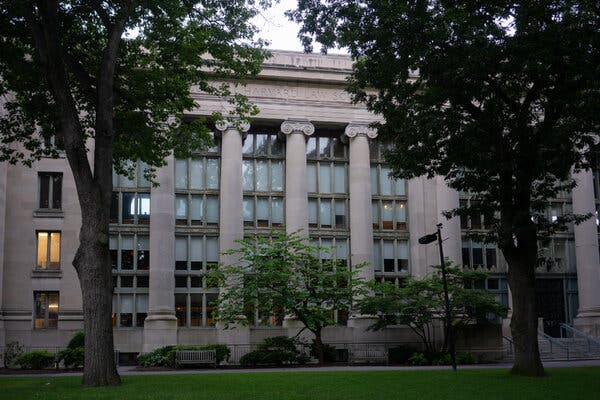
The Trump administration’s campaign against Harvard involves a “cooperating witness” inside its law school. Credit: Billy Hickey for The New York Times
by Michael S. Schmidt and Michael C. Bender
June 2, 2025
New York Times
[Michael S. Schmidt reported from New York, and Michael C. Bender from Washington.]
The Justice Department quietly approached Harvard University last month with startling claims, even by the extraordinary standards of the Trump administration’s monthslong assault on the elite college.
The department signaled that it was reviewing claims of discrimination against white men at The Harvard Law Review, and accused the renowned publication of destroying evidence in an open investigation. The administration demanded that Harvard “cease and desist” from interfering.
In a series of letters that have not been previously reported, the government also disclosed that it had a “cooperating witness” inside the student-run journal. That witness now works in the White House under Stephen Miller, the architect of the administration’s domestic policy agenda, Trump officials confirmed.
The Law Review is independent of Harvard University. The allegations nonetheless deepened fears among Harvard officials that the administration appeared eager to escalate one of its civil investigations into a criminal inquiry, underscoring how the university’s problems with President Trump extend far beyond the loss of billions in federal funding.
But the aggressive language in the letters from the Justice Department’s two top civil rights lawyers appeared to have overstated the allegations in pursuit of an additional way to punish Harvard. In that way, the episode fits a broader trend in how the administration is wielding federal investigatory powers to impose its political agenda.
From reshaping the economy to ramping up deportations to punishing the nation’s elite law firms and universities, Mr. Trump’s government has repeatedly prized speed and shock value over the kind of methodical steps typically taken to build a legal case.
The investigation of The Harvard Law Review offers a glimpse into the strategy. The Justice Department’s not-so-subtle threats helped persuade The Law Review to agree to at least some of the government’s demands, which were delivered in three letters within 10 days in May.
A detail not included in the correspondence: The Justice Department’s “cooperating witness” had taken a job inside the White House.
While the White House has cast the witness as a whistle-blower, his identity has been known to many of those involved in the matter. The witness, Daniel Wasserman, was identified as a government cooperator in two of the letters to Harvard University from the Justice Department last month, when he was still an editor at The Harvard Law Review. And other staff members of The Law Review have also known of his identity.
In April, he had told classmates and others that he had applied to work for Mr. Miller, the White House deputy chief of staff for policy. The White House confirmed that Mr. Wasserman was offered a job on April 25, the same day that accusations of discrimination at the journal first surfaced in a conservative media report, and that his first day of work was May 22.
The letters were sent by the Justice Department to the university, rather than to The Law Review, and were dated May 13, May 21 and May 23.
Mr. Wasserman, who has a bachelor’s degree from Yale and a master’s from the University of Cambridge, graduated from Harvard Law School on Wednesday.
A senior administration official said that Mr. Wasserman’s résumé was on the White House’s radar long before the Justice Department’s investigation into The Law Review and that his hiring was not connected to the government’s inquiry. Mr. Miller was not involved in the hiring and did not meet Mr. Wasserman until he started working in the White House, the official said.
On Friday, Mr. Wasserman picked up the phone assigned to him at the White House when a reporter for The New York Times called the White House switchboard and asked to speak with him.
“No comment,” Mr. Wasserman said, and quickly hung up.
A Justice Department spokesman did not respond to a request for comment.
Legal experts said it was highly unusual for an administration to give a cooperating witness in an ongoing investigation a White House job.
Inside the administration, some officials said the Justice Department might have additional evidence beyond what it had disclosed in its letters. Two administration officials familiar with the investigation said the department had been pursuing an allegation that law school students applying for editorial jobs at The Law Review were told directly of racial and gender hiring preferences.
Harrison Fields, a White House spokesman, praised Mr. Wasserman as a whistle-blower and encouraged more students to speak out.
“Harvard is violating federal law with its discrimination, and a student was brave enough to call them out on this,” Mr. Fields said. “Because of his actions, the Justice Department is investigating clear violations of the law.”
Jonathan Swain, a spokesman for Harvard, said the university was committed to following the law, and emphasized that the school and The Law Review were two separate entities.
“Harvard Law School and Harvard University do not control or operate The Harvard Law Review, including in its membership or article selection decisions,” Mr. Swain said in an emailed statement.
The Law Review declined to comment.
The Harvard Law Review is widely considered one of the nation’s most prestigious and influential legal journals. The Law Review provides a training ground for future leaders, including former President Barack Obama, Senator Ted Cruz of Texas and former Justice Ruth Bader Ginsburg, and its highly selective articles regularly shape legal arguments and court decisions.
But the journal has emerged as a new pressure point in the administration’s campaign against Harvard, which has so far refused demands to align its admissions policies, curriculum and hiring practices with Mr. Trump’s political agenda.
The first public indication that the Trump administration had zeroed in on The Law Review came on April 28, when the Departments of Education and Health and Human Services announced a civil rights investigation, citing a news article that had appeared in The Washington Free Beacon three days earlier.
The Free Beacon, a conservative media outlet, had published multiple private messages and internal documents from The Law Review that it said showed the journal was discriminating against white, male authors.
The Free Beacon story also prompted a different kind of inquiry inside The Law Review, where editors looked for signs of a leak. Their search revealed that Mr. Wasserman had downloaded tens of thousands of documents, said three people familiar with the matter who requested anonymity because they were not authorized to speak publicly. The Law Review considered the downloads to violate its privacy policy, and Mr. Wasserman was given a “formal reprimand,” a letter in the student’s Law Review file that was never to be shared with anyone outside the journal.
The Free Beacon article described a “pervasive pattern of racial discrimination” in hiring editors and selecting articles. The accusations were similar to lawsuits that Mr. Miller’s nonprofit group, America First Legal, had helped bring against Northwestern University and New York University in the years before Mr. Trump returned to the White House. The suit against N.Y.U. was dismissed, while the Northwestern case remains pending.
The internal messages and documents published by The Free Beacon showed how race and gender were discussed inside The Law Review, but did not indicate that race or gender were predominant considerations behind its final decisions.
The department first disclosed that Mr. Wasserman was providing information to the government in the second letter, sent on May 21. The letter accused The Law Review of retaliating against Mr. Wasserman and instructing him to destroy evidence.
But those allegations appeared thin to The Law Review. The journal’s position is that it had not asked Mr. Wasserman to destroy evidence, according to the three people familiar with the matter. Instead, The Law Review had asked him to stop disseminating documents he had taken and to retrieve or destroy any copies he gave to others, the three people said. The original documents remain in The Law Review’s possession, these people said.
Retaliation also appeared unlikely to have motivated The Law Review to reprimand Mr. Wasserman. According to the timeline in the Justice Department’s own letters, Mr. Wasserman had been told by The Law Review that there was a preliminary finding that he violated its policies before the department disclosed he had been providing the government with information.
The Law Review formally issued a letter of reprimand against him before it had been told by Harvard that he was cooperating with the Justice Department.
Still, the department was intent on removing the reprimand from Mr. Wasserman’s file inside The Law Review.
“Prior to Mr. Wasserman’s Harvard Law School graduation, scheduled to take place on May 29, 2025, H.L.R. must retract the disciplinary action it instituted against him,” the Justice Department told Harvard in the third letter, sent on May 23. “Any record of his discipline must be permanently expunged.” The department also told The Law Review to “retract any instructions to Mr. Wasserman or others to delete responsive documents.”
It was an extraordinary effort to use federal power on behalf of a friendly witness.
Fearing the wrath of the Trump administration, Law Review officials tore up the reprimand and dropped their demand that Mr. Wasserman stop disseminating the documents and that others return or delete them.
Kitty Bennett contributed research.
Michael S. Schmidt is an investigative reporter for The Times covering Washington. His work focuses on tracking and explaining high-profile federal investigations.
Michael C. Bender is a Times political correspondent covering President Trump, the Make America Great Again movement and other federal and state elections.
See more on: U.S. Politics, U.S. Justice Department, Harvard Law School, Harvard University, Donald Trump, Stephen Miller
How BIASED is Corporate Media Really? Joy Reid and Mehdi Discuss after Leaving MSNBC

“Where the American media and the American political culture wins over the UK and every Western country, every time is the First Amendment — is free speech, is the inability of bad faith actors, billionaires, foreign governments to weaponize libel laws, to shut down new stories they don't like… But Donald Trump has shown and Elon Musk has shown, that you can weaponize libel laws even even if you aren't going to win.”
Former MSNBC hosts Mehdi Hasan and Joy Reid dive into a conversation on media bias, the Trump administration, and how journalists in the US are staying out of trouble by avoiding covering Palestine. The duo also takes questions from the audience, including one on the future of democracy in the US. This interview published on Zeteo.com a week earlier.
Chapters:
00:00 Intro
02:51 Mehdi’s media experience across the UK/US
07:21 Limitations as a journalist in the US
11:55 First Amendment violations
13:58 Media bending the knee to Trump
16:39 Is Mehdi concerned about being deported?
22:03 Trump’s 100 days
27:08 Audience Q&A
33:58 What should Dems do when back in power?
45:49 How do we believe in democracy again?
52:29 Will American democracy survive?
Former MSNBC hosts Mehdi Hasan and Joy Reid dive into a conversation on media bias, the Trump administration, and how journalists in the US are staying out of trouble by avoiding covering Palestine. The duo also takes questions from the audience, including one on the future of democracy in the US. This interview published on Zeteo.com a week earlier.
Chapters:
00:00 Intro
02:51 Mehdi’s media experience across the UK/US
07:21 Limitations as a journalist in the US
11:55 First Amendment violations
13:58 Media bending the knee to Trump
16:39 Is Mehdi concerned about being deported?
22:03 Trump’s 100 days
27:08 Audience Q&A
33:58 What should Dems do when back in power?
45:49 How do we believe in democracy again?
52:29 Will American democracy survive?
The Latest on the Trump Administration
Trump Pardons: The president's pardons have included an ex-sheriff who was convicted of federal bribery charges and sentenced to 10 years in prison; a tax cheat whose mother raised millions of dollars for Trump's campaigns; and reality television stars who were convicted of evading taxes and defrauding banks of more than $30 million
War Against Law Firms: A judge struck down an executive order targeting WilmerHale, in the latest victory for the handful of firms that have fought back against a Trump administration crackdown.
Tax Break for Sports Owners: Tucked in the domestic policy billis a change to the tax code that could potentially cool the current frenzy among the very wealthy to own professional sports teams and their ability to write off the entire value of their team’s “intangible assets."
Costly U.S. Ships: President Trump and members of Congress want to revive U.S. shipbuilding with subsidies and penalties against Chinese-built ships. But It takes far longer to build ships in the United States than in Asia, and costs nearly five times as much.
Domestic Agenda Bill: Senator Ron Johnson of Wisconsin and Senator Rand Paul of Kentucky both indicated that they would seek major changes to the bill that passed the House.
Pro Bono Promises: President Trump secured commitments from elite law firms to provide free legal work for causes he supports. Individuals and organizations allied with Trump are starting to request that the firms fulfill that work.
Favoring Trump-Related Projects: Vietnam ignored its own laws to fast-track a Trump family golf complex.
Private Clubs in Washington: Four private clubs in Washington reflect the sorting of the city’s establishment into separate corners at a turbulent time, including a new Trump club.
See more on: Harvard University, Donald Trump
Trump Pardons: The president's pardons have included an ex-sheriff who was convicted of federal bribery charges and sentenced to 10 years in prison; a tax cheat whose mother raised millions of dollars for Trump's campaigns; and reality television stars who were convicted of evading taxes and defrauding banks of more than $30 million
War Against Law Firms: A judge struck down an executive order targeting WilmerHale, in the latest victory for the handful of firms that have fought back against a Trump administration crackdown.
Tax Break for Sports Owners: Tucked in the domestic policy billis a change to the tax code that could potentially cool the current frenzy among the very wealthy to own professional sports teams and their ability to write off the entire value of their team’s “intangible assets."
Costly U.S. Ships: President Trump and members of Congress want to revive U.S. shipbuilding with subsidies and penalties against Chinese-built ships. But It takes far longer to build ships in the United States than in Asia, and costs nearly five times as much.
Domestic Agenda Bill: Senator Ron Johnson of Wisconsin and Senator Rand Paul of Kentucky both indicated that they would seek major changes to the bill that passed the House.
Pro Bono Promises: President Trump secured commitments from elite law firms to provide free legal work for causes he supports. Individuals and organizations allied with Trump are starting to request that the firms fulfill that work.
Favoring Trump-Related Projects: Vietnam ignored its own laws to fast-track a Trump family golf complex.
Private Clubs in Washington: Four private clubs in Washington reflect the sorting of the city’s establishment into separate corners at a turbulent time, including a new Trump club.
See more on: Harvard University, Donald Trump
More on Education in America:
- Universities See Harvard Move as a Threat: College officials fear that President Trump may use international enrollment as leverage to demand changes on campuses elsewhere.
- Dependence on International Students: What was once a sign of international renown for universities now looks like a vulnerability. These are the U.S. universities most dependent on international students.
- Confusion for International Students: Fear mounted quickly at Harvard for international students, who make up more than a quarter of the university’s enrollment, sought clarity or reassurance on the Trump Administration’s efforts to oust them.
- Students From China: President Trump’s moves against higher education are being seen in China as a blow to one of the last admirable American institutions.
- Diversity at a Virginia High School: The Trump administration announced that it was investigating the admissions system at an elite public high school in Fairfax County, Va., which has been accused of discriminating against Asian American students to favor other racial groups.
https://www.nytimes.com/2025/05/28/us/harvard-slavery-daguerreotypes-lawsuit.html
Harvard Relents After Protracted Fight Over Slave Photos
A legal battle between Harvard and a woman who says two slave portraits are of her ancestors will end in a settlement, with the photos going to a Black history museum in South Carolina.
Listen to this article · 6:48 minutes

A 1850 daguerreotype portrait of Renty, a South Carolina slave, commissioned by the Harvard biologist Louis Agassiz. Credit: Harvard University/The Norwich Bulletin, via Associated Press
by Clyde McGrady
May 28, 2025
New York Times
[Clyde McGrady covers race from Washington, D.C.]
Harvard University will relinquish its ownership of two haunting images of an enslaved father and his daughter after settling a six-year legal battle with a woman who says she is their descendant.
by Clyde McGrady
May 28, 2025
New York Times
[Clyde McGrady covers race from Washington, D.C.]
Harvard University will relinquish its ownership of two haunting images of an enslaved father and his daughter after settling a six-year legal battle with a woman who says she is their descendant.
The images, two 175-year-old daguerreotypes that were taken for a Harvard professor and used as evidence for a discredited pseudoscientific theory of Black racial inferiority, will not, however, go to the woman who sued for them, Tamara Lanier. Instead, they are expected to be transferred, along with images of five other enslaved people, to the International African American Museum in Charleston, S.C., the state where the subjects were enslaved.
The settlement comes as Harvard deals with an onslaught of litigation as it tries to fight off President Trump’s efforts to cripple the university. Ms. Lanier cheered the outcome of her case, which was announced on Wednesday.
“I have been at odds with Harvard over the custody and care of my enslaved ancestors, and now I can rest assured that my enslaved ancestors will be traveling to a new home,” Ms. Lanier said in an interview. “They will be returning to their home state where this all began, and they will be placed in an institution that can celebrate their humanity.”
A Harvard spokesman said the university was always eager to place the images in an appropriate public location, and one has not been selected.
“Harvard has been committed to stewarding the daguerreotypes in a responsible manner and finding an institutional home for them where their historical significance is appreciated,” James Chisholm, the spokesman, said in a statement on Wednesday.
“While we are grateful to Ms. Lanier for sparking important conversations about these images,” he continued, “her claim to ownership of the daguerreotypes created a complex situation, especially because Harvard has not been able to confirm that Ms. Lanier is related to the individuals in the daguerreotypes.”
The legal fight over the images of the enslaved man, known as Renty, and his daughter, Delia, took on outsize importance as storied universities such as Harvard and Georgetown grappled with their ties to slavery. In 2016, Harvard Law School abandoned an 80-year-old shield based on the crest of a slaveholding family that helped endow the institution. That same year, Georgetown University decided to offer an advantage in admissions to descendants of enslaved people who were sold to fund the school.
But as museums began to repatriate human remains and sacred objects to Native American tribes, Harvard held on to the images of Renty and Delia. Ms. Lanier said she first reached out to the university about 15 years ago when she learned of the images. Renty resembled an ancestor whose legend had been passed down through family oral history, she said.
But Harvard did not treat her claim the way museums had treated tribal demands for ancestral artifacts until now.
“It’s a reckoning for all museums and institutions that currently hold plundered property,” Ms. Lanier said of the settlement.

“I can rest assured that my enslaved ancestors will be traveling to a new home,” Tamara Lanier, who sued Harvard in 2019, said of a settlement that will require that two portraits of slaves she says were her ancestors be sent to a Black history museum in Charleston, S.C. Credit: Karsten Moran for The New York Times
The case attracted the attention of big names in the legal world, such as Benjamin Crump, who represented the families of Trayvon Martin, an unarmed Black teenager killed in 2012 by a neighborhood watch volunteer in Florida, and George Floyd, a Black man murdered in 2020 by a white police officer in Minneapolis. Another lawyer on the case, Josh Koskoff, reached a landmark $73 million settlement with the gun maker Remington Firearms on behalf of families of the victims of the Sandy Hook Elementary School massacre of 2012.
“One of the great accomplishments that Ms. Lanier, through her sheer persistence, has won here, is the shedding of light on history, on the true history, not just of her own family, but that of Harvard’s relationship to the truth,” Mr. Koskoff said.
The lawyers hope the settlement will lead to similar reckonings elsewhere.
“This case is so precedent-setting in so many ways,” Mr. Crump said. “It does leave a bright trail for not just us but the next generation of civil rights lawyers to take up the cross and to continue to defend Black humanity on every level.”
The partnership between the two lawyers began in an unlikely place: the set of a legal drama.
Mr. Crump had been filming a brief appearance in the 2017 film “Marshall,” which depicted an early case won by Thurgood Marshall, the civil rights lawyer and first Black Supreme Court justice. Mr. Koskoff’s father, a lawyer named Michael Koskoff, was a screenwriter on the film, and Mr. Crump persuaded him to take on Ms. Lanier’s case as co-counsel. Michael Koskoff died in 2019.
“The last day of his professional life was when we filed that lawsuit,” his son said.
The daguerreotypes were commissioned by Louis Agassiz, a Swiss-born zoologist and Harvard professor who is sometimes called the father of American natural science. Mr. Agassiz subscribed to polygenesis, the theory that Black and white people had different genetic origins. In 1850, Renty and his daughter Delia were stripped to the waist and photographed in a South Carolina studio; the images were then used as evidence for the professor’s racist theory.
Ms. Lanier sued Harvard in 2019, arguing that the school was profiting from the images. Renty’s image was featured, for instance, in a $40 anthropology book.
In 2021, a Massachusetts judge dismissed the lawsuit, arguing that if the enslaved subjects did not own the photographs, then neither did Ms. Lanier. A year later, the Massachusetts Supreme Judicial Court agreed that the plaintiff had no ownership interest in the daguerreotypes, which is what she wanted. But the high court allowed Ms. Lanier to proceed with her claim that Harvard caused her emotional harm in its interactions with her.
As she pursued her case, Ms. Lanier searched for Mr. Agassiz’s descendants, overcoming some initial reticence.
“If I found them, how would they treat me?” she asked. “How would they feel about me?”
After a New York Times story about the case in 2019, she received a message on social media from a descendant of the professor.
The families became so close that Mr. Agassiz’s descendants contacted Harvard on behalf of Ms. Lanier.
“I have vacationed with them,” she said. “I have spent time with them. We stay connected.”
ABOUT THE AUTHOR:
Clyde McGrady reports for The Times on how race and identity is shaping American culture. He is based in Washington.

NOTHING BUT A MAN
And Everything To Me
by Ava DuVernay
May 25, 2025
Substack

There are films that shout. There are films that listen. And there are those that endure. You may not know the name Michael Roemer. You should.
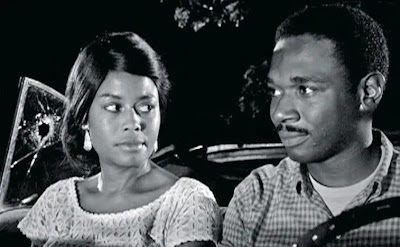
Mr. Roemer passed away this week at the age of 97, after teaching for fifty years at Yale and making a handful of films. One of those films is transcendent. It is the 1964 film NOTHING BUT A MAN, starring the great Ivan Dixon and the great Abbey Lincoln. Yes, transcendent. One of the most soulful, unvarnished portraits ever committed to American cinema, in my opinion.
Mr. Roemer passed away this week at the age of 97, after teaching for fifty years at Yale and making a handful of films. One of those films is transcendent. It is the 1964 film NOTHING BUT A MAN, starring the great Ivan Dixon and the great Abbey Lincoln. Yes, transcendent. One of the most soulful, unvarnished portraits ever committed to American cinema, in my opinion.
Michael Roemer wasn’t born in the South, where the film takes place. He wasn’t even born in the United States. He fled Nazi Germany as a child, was put on a train by his family to escape hate and evil.
Years later, as a grown man, he got on another train. This time heading to Mississippi and Alabama. Riding what he called an “Underground Railroad in reverse.” He moved through Black communities with his writing partner Bob Young, watching, listening, learning, absorbing. What came out of that journey was NOTHING BUT A MAN.
It’s not a protest film on its face. On its face it’s just about… a man. Trying to keep a job. Trying to love a woman. Trying to look her father in the eye. Trying not to break under the weight of poverty and caste.
The main character is Duff Anderson, played by Mr. Dixon. He’s a railroad worker. Josie Dawson, played by Ms. Lincoln, is a teacher and the local preacher’s daughter. Duff and Josie meet at a revival service and there’s a subtle spark. She brings him home. Her father disapproves. They marry anyway. Duff loses jobs for refusing to bow his head. Josie stands by him. There’s a child from his past. A father with a bottle. A broken home. And still… they build something. Not perfect. But theirs.
The film is about a man and a woman choosing each other. A Black love story, yes. And a protest film afterall… gently confronting all that was absent from cinema at the time.
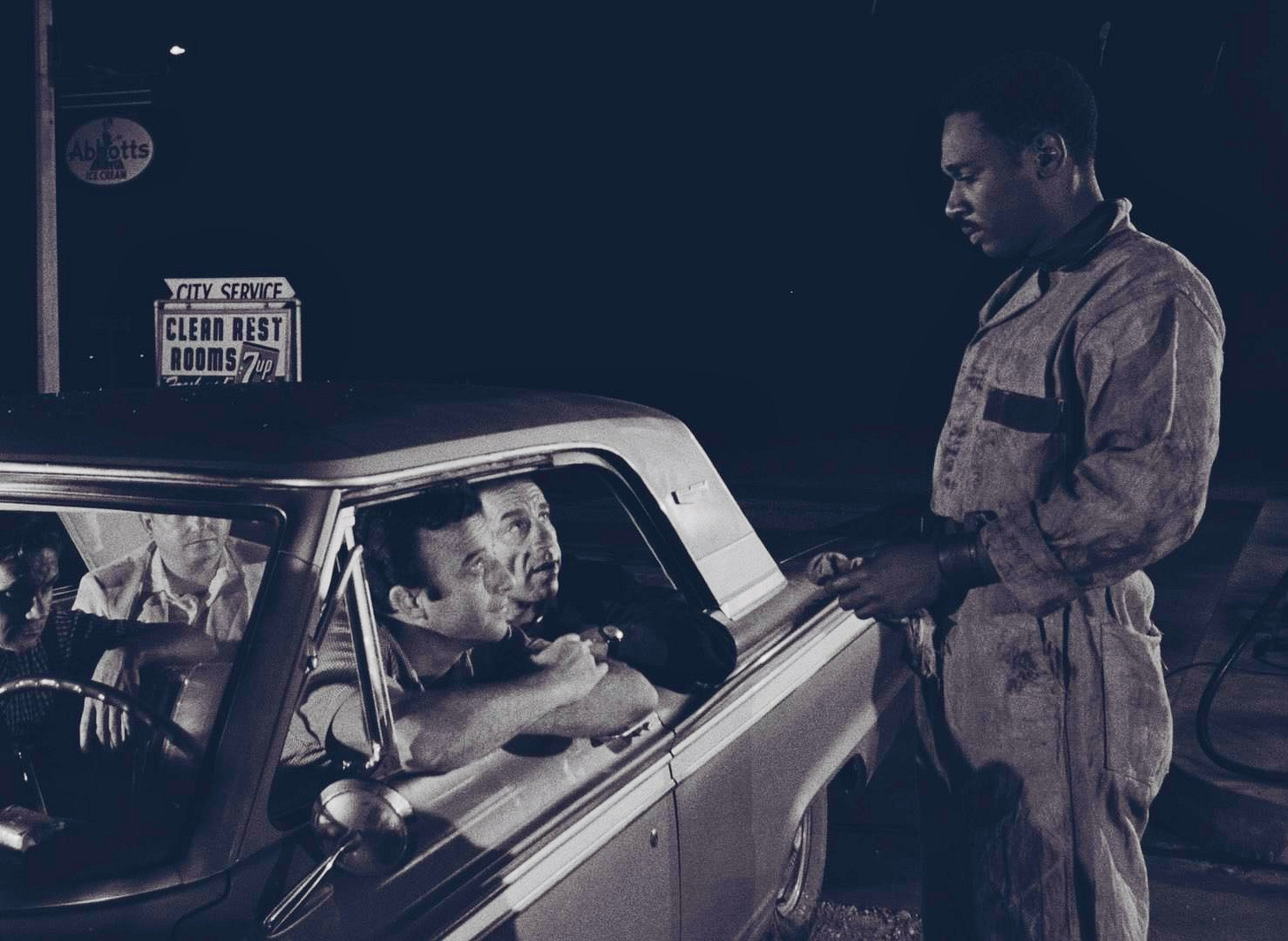
There’s a moment I come back to often: Duff stands outside a gas station, humiliated. You feel the fire in his body. In his silence. In his restraint:
Years later, as a grown man, he got on another train. This time heading to Mississippi and Alabama. Riding what he called an “Underground Railroad in reverse.” He moved through Black communities with his writing partner Bob Young, watching, listening, learning, absorbing. What came out of that journey was NOTHING BUT A MAN.
It’s not a protest film on its face. On its face it’s just about… a man. Trying to keep a job. Trying to love a woman. Trying to look her father in the eye. Trying not to break under the weight of poverty and caste.
The main character is Duff Anderson, played by Mr. Dixon. He’s a railroad worker. Josie Dawson, played by Ms. Lincoln, is a teacher and the local preacher’s daughter. Duff and Josie meet at a revival service and there’s a subtle spark. She brings him home. Her father disapproves. They marry anyway. Duff loses jobs for refusing to bow his head. Josie stands by him. There’s a child from his past. A father with a bottle. A broken home. And still… they build something. Not perfect. But theirs.
The film is about a man and a woman choosing each other. A Black love story, yes. And a protest film afterall… gently confronting all that was absent from cinema at the time.
There’s a moment I come back to often: Duff stands outside a gas station, humiliated. You feel the fire in his body. In his silence. In his restraint:
Another moment: Josie, luminous, smiles across the dinner table, saying nothing. But her presence says everything. The love. The risk. The waiting.
Mr. Roemer saw these people. He honored them. Without caricature or pity or polish or pretense. He made them real.
The film struggled to find distribution and was barely seen in its time (although Malcolm X was said to be a fan). Yet, it has quietly endured, becoming one of my most cherished. I return to it often. It reminds me what cinema can do. What it should do.
Michael Roemer didn’t make many films. But he made NOTHING BUT A MAN. And for those who know, it is enough. It is now celebrated in the National Film Registry and in the hearts of film fans like me who continue to learn from it. What honesty looks like. What humility feels like. What independent cinema can dare to do and be.
Roemer’s legacy isn’t measured in volume, but in vibration. And, in what echoes from one film made with everything the filmmaker has to give.
Thank you, Mr. Roemer. For showing us that being “nothing but a man” is not a small thing. It is everything. It endures.
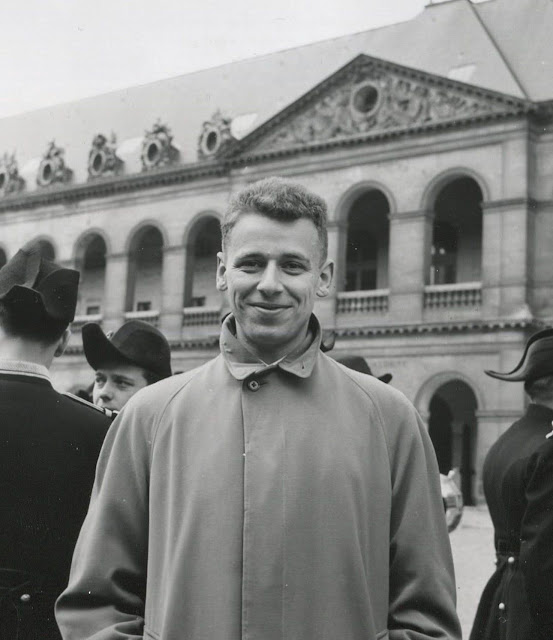


MICHAEL ROEMER (1928-2025)
https://www.nytimes.com/2025/05/24/movies/michael-roemer-dead.html
Michael Roemer, Maker of Acclaimed but Little-Seen Films, Dies at 97
His “Nothing but a Man” and “The Plot Against Harry” drew critical praise but never found an audience. He said he took “a certain pride in not having been a success.”
Listen to this article · 7:10 min

Michael Roemer in 1989. His work was routinely praised by film critics and scholars, but appreciation by a much broader audience eluded him. Credit: Eric Robert/Sygma, via Getty Images
May 26, 2025
Michael Roemer, an independent filmmaker who earned critical praise for his keen understanding of character and his sensitive exploration of relationships in a slender portfolio that included “Nothing but a Man” and “The Plot Against Harry,” died on Tuesday at his home in Townshend, Vt. He was 97.
His death was confirmed by his daughter, Ruth Sanzari.
Mr. Roemer’s interest in moviemaking began at Harvard in the late 1940s. In 1939, when he was 11 and living in Berlin, he and his sister had been among thousands of Jewish children rescued from Nazi Germany and sent to England. There he would stay — writing plays to improve his English, he said — until he came to the United States in 1945, at the end of World War II.
His career as a director began when NBC gave him the opportunity to make “Cortile Cascino,” a 46-minute documentary about slum life in Palermo, Sicily, that he made with Robert M. Young. It was also the start of a pattern in which his films would all but disappear for decades at a time.
“Cortile Cascino” depicted a Sicilian life so grim that NBC executives balked at putting it on the air. It did not reappear until it was shown at the Sundance Film Festival in 1993.
Long delay also befell “Nothing but a Man,” directed by Mr. Roemer and written by him and Mr. Young, a frequent collaborator. With Ivan Dixon and Abbey Lincoln in central roles, it tells the story of a Black railroad worker married to a preacher’s daughter who struggles to maintain his dignity in the segregated Alabama of the early 1960s.

Martin Priest, left, and Ben Lang in “The Plot Against Harry,” Mr. Roemer’s comedy about a small-time numbers racketeer. Made in 1969, it took two decades to find an audience. Credit: King Screen Prods/Kobal/Shutterstock
Mr. Roemer and Mr. Young traveled through the South interviewing dozens of Black people about segregation’s impact. For the actual shooting, however, they used locations in New Jersey, fearing hostility from the Alabama authorities.
The movie had a brief theatrical run when it was released in 1964. Many distributors, Mr. Roemer said in a 2024 interview for this obituary, refused to book it in theaters with principally Black audiences.
Soon enough, “Nothing but a Man” was gone. It wasn’t until 1993 that it was rereleased, this time to wide acclaim. A year later it was added to the Library of Congress’s National Film Registry.
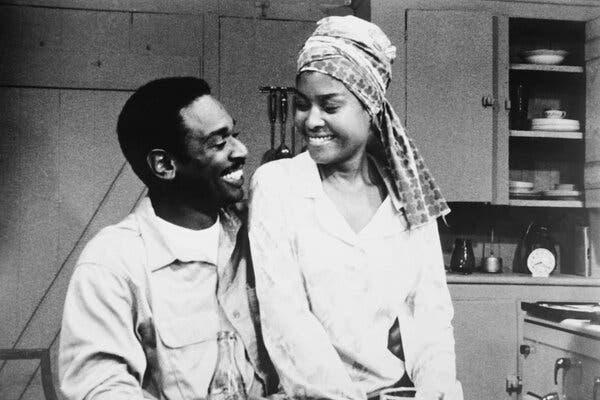
Ivan Dixon and Abbey Lincoln in Mr. Roemer’s “Nothing but a Man” (1964). Many distributors, Mr. Roemer said, refused to book it in theaters with principally Black audiences. Credit: Courtesy Everett Collection
In 1969, Mr. Roemer wrote and directed “The Plot Against Harry,” a comedy about a small-time numbers racketeer (played by Martin Priest) who goes to prison and eventually decides to change his ways and become an upstanding fellow. The only problem was that audiences at private screenings did not laugh.
Two decades later, Mr. Roemer decided to make videotape copies of the film for his children. This time, a technician working on the transfer to tape kept laughing as he watched, and the director decided that maybe he had something after all.
“The Plot Against Harry” enjoyed a new life, a theater run and praise. It was nominated for six Independent Spirit Awards. Janet Maslin called it “a funny, sharply drawn and appealingly modest film” in a 1990 New York Times review.
The film critic J. Hoberman described Mr. Roemer in a 2024 interview as “an empathetic director of actors and an unsentimental humanist, one of the few American filmmakers who shares those qualities with Jean Renoir.”
Other works by Mr. Roemer included “Faces of Israel,” a short 1967 documentary; “Dying,” a 1976 documentary about people near the end of life; and “Vengeance Is Mine” (1984), a scripted film about mothers and daughters, originally titled “Haunted,” starring Brooke Adams and Trish Van Devere. In 2022, Wesley Morris of The Times called “Vengeance Is Mine” “a masterpiece of direction, nothing too flashy but everything true.”

Brooke Adams and Mark Arnott in Mr. Roemer’s “Vengeance Is Mine” (1984), which never found an audience even though one critic called it “a masterpiece of direction.” Credit: Film Desk
Despite being routinely praised by film critics and scholars, Mr. Roemer was well aware that appreciation by a much broader audience eluded him.
“I spent the last 40 years of my life writing scripts not made into movies,” he said in 2024, with a laugh. “After a while, you kind of take a certain pride in not having been a success. I’m simply not a commercial filmmaker.”
Indeed, he said, his most successful work in terms of dollars was “A Touch of the Times,” an hourlong silent film he made at Harvard. A fantasy about kite-flying, it ran at a movie house in Cambridge, Mass., and earned well more in ticket sales than the $2,300 he had spent making it.
“If I could have made popular films, I would have,” Mr. Roemer told the British newspaper The Guardian in 2023. “But I believe in something. If I betray it, then I destroy myself.”
Michael Roemer was born in Berlin on Jan. 1, 1928, into a family whose shoe business provided a comfortable life. His parents, Gerhardt and Paula (Ettinger) Roemer, divorced when he was an infant, leaving him to be reared mostly by a governess (whom he said he found terrifying). Early on, he said, he came to appreciate life’s “unpredictability.”
After moving to England with his younger sister, Marion, in the rescue effort known in German as the Kindertransport, he attended a school whose students were mainly Jewish refugees like him. Once in the United States, he went to Harvard on a scholarship, graduating in 1949 with a bachelor’s degree in English.
Six years after coming to America, he was reunited with his mother, and a few years after that he met his father, who had begun a new life in England.
In 1953, the young filmmaker married Barbara Balzer, a schoolteacher. She died in 2007. He is survived by his children, Dr. David Roemer, Ruth Sanzari and Jonathan Roemer, and two grandsons.
Soon after college, Mr. Roemer began an eight-year turn as a film editor and production manager for various companies. He then wrote and directed dozens of educational films for the Ford Foundation. Starting in 1966 he taught film theory and practice at Yale, a professorship that lasted until he retired in 2017. “I was 89 then,” he said. “I don’t think they realized how old I was.”
In a sense, he said in 2024, “nothing happened in my life the way it was supposed to.” His films, though praised, were not slam-bang successes. But failure, he said, reveals character.
“The truth is, failure can be a very honorable thing,” he told The Washington Post in 1990. “It’s not that you have a failure. It’s what you do with it.”
Ash Wu contributed reporting.
https://www.nytimes.com/2025/05/31/us/mit-commencement.html
M.I.T. Class President Barred From Graduation Ceremony After Pro-Palestinian Speech
According to the school, the student delivered a speech, which denounced M.I.T.’s ties to Israel, that had not been preapproved.
Listen to this article · 5:24 minutes
Learn more

At a schoolwide ceremony on Thursday at the institute’s campus in Cambridge, Mass., Megha Vemuri commended students who protested on behalf of Palestinians and denounced M.I.T.’s ties with Israel. Credit: Joseph Prezioso/Agence France-Presse — Getty Images
by John Branch
May 31, 2025
New York Times
The 2025 class president of M.I.T. was barred from a graduation ceremony on Friday after delivering a pro-Palestinian speech during a commencement event the day before. The student, Megha Vemuri, is the latest to face discipline after using a graduation as a forum to protest Israel’s war in Gaza.
At a universitywide ceremony on Thursday at M.I.T.’s campus in Cambridge, Mass., Ms. Vemuri commended students who protested on behalf of Palestinians and denounced M.I.T.’s ties with Israel. The Boston Globe reported last year that based on data from the U.S. Department of Education, M.I.T. reported receiving $2.8 million in grants, gifts and contracts from Israeli entities between 2020 and 2024.
School officials confirmed that they later told Ms. Vemuri that she was prohibited from attending the undergraduate ceremony on Friday.
“MIT supports free expression but stands by its decision, which was in response to the individual deliberately and repeatedly misleading Commencement organizers and leading a protest from the stage,” a school spokesperson said in a statement.
The school said that Ms. Vemuri, who grew up in Georgia, will receive her degree. Sarat Vemuri, her father, said that she was a double major, in computation and cognition and linguistics, and was told that she will receive her diploma by mail.
He otherwise referred questions to his daughter, who provided a statement saying that she was not disappointed to miss Friday’s ceremony.
“I see no need for me to walk across the stage of an institution that is complicit in this genocide,” she wrote.
She added that she was “disappointed” in M.I.T.’s response, saying school officials “massively overstepped their roles to punish me without merit or due process.”
College campuses have been contending with protest encampments and accusations of antisemitism since the Hamas-led attack on Israel in October 2023, and the ensuing war in Gaza. Those tensions, coupled with the Trump administration’s attacks on universities, have left some school communities wrestling with how to balance civility and safety with open expression and debate.
And at some schools students looking to make a statement have seized on end-of-year ceremonies as a powerful platform, delivering speeches that diverged from the remarks they had told school officials they would make.
At New York University in mid-May, officials withheld a diploma from, a student, Logan Rozos, after he referred to “the atrocities currently happening in Palestine” in a commencement speech.
At George Washington University, a graduate named Cecilia Culver used her speech to urge others to not donate to the school and repeated requests for it to divest from companies doing business in Israel. The university barred her from campus and university-sponsored events.
At M.I.T., Ms. Vemuri was one of nine speakers at Thursday’s ONEMIT Commencement Ceremony.
Ms. Vemuri’s speech, read from wrinkled sheets of paper, was about four minutes long and addressed her classmates and some of their efforts to protest Israel.
“You showed the world that M.I.T. wants a free Palestine,” she said, adding, “the M.I.T. community that I know would never tolerate a genocide.”
After Ms. Vemuri left the dais to cheers, Sally Kornbluth, the school president, spoke next. She paused as some in the audience chanted.
“OK, listen folks,” she said. “At M.I.T., we believe in freedom of expression. But today is about the graduates.”
Ms. Kornbluth has found herself on this type of tightrope before. In December 2023, she was one of three university presidents called to testify before the U.S. House Committee on Education and the Workforce. The committee pressed the officials over their responses to campus protests and allegations of antisemitism.
Ms. Kornbluth managed to avoid the level of criticism levied at Claudine Gay of Harvard and Liz Magill of the University of Pennsylvania, who were soon replaced by their schools.
Throughout most of the 2023-24 school year, pro-Palestinian encampments and tense standoffs played out on many campuses across the country. Last year’s graduation ceremonies were often used as forums for protest, including orchestrated walkouts. Generally, protesters and speakers were not disciplined.
But universities, especially elite ones like M.I.T. and its Cambridge neighbor, Harvard, have been under even more pressure since President Trump took office in January. His administration is yanking federal funding for grants and research, launching investigations into diversity programs and trying to cut international enrollment.
Schools everywhere feel the threat, and hope to avoid the government’s scrutiny.
Ms. Vemuri’s speech prompted criticism from the House Speaker, Mike Johnson, a key ally of President Trump.
“Ignorant. Hateful. Morally bankrupt. Where is the shame—or appropriate response from the institution?” he wrote on X. “Have your children avoid MIT & the Ivy League at all costs.”
Jack Begg contributed research.
John Branch writes feature stories for The Times on a wide swath of topics, including sports, climate and politics. He is based in California.
Our Coverage of Tensions in the Middle East:
- Gaza’s Hungry Children: Cut off by Israeli troops from the rest of the territory, hundreds of thousands of people in the north are reduced to waiting for hours for charity-kitchen food that runs out too soon.
- Macron on Israel: A war of words between France and Israel escalated as President Emmanuel Macron of France, in a speech opening a security forum in Singapore, said the West risked “losing all credibility with the rest of the world” if Israel was allowed “a free pass” in Gaza.
- Tensions Over Iran: Prime Minister Benjamin Netanyahu, wary of a diplomatic solution to curbing Iran’s nuclear program, continues to press for military action that would upend President Trump’s push for a negotiated deal.
- Israeli Forces Kill Palestinian American Teen: The death of Amer Rabee, a 14-year-old in the Israeli-occupied West Bank, has spurred anger over Israeli soldiers’ use of force and an apparent lack of accountability.
https://www.nytimes.com/2025/06/02/us/politics/harvard-la
https://www.msnbc.com/opinion/msnbc-opinion/elon-musk-leaves-doge-trump-legacy-rcna209823
Opinion
Elon Musk departs DOGE with a horrific legacy
The malignancy that is his Department of Government Efficiency project lives on.
Joe Scarborough: ‘Musk is desperately trying to separate himself from the work he did at DOGE’
May 31, 2025
by Paul Waldman, author and commentator
Elon Musk’s government service has supposedly come to an end, with the billionaire decamping to his company town of Starbase, Texas. Except there he was in the Oval Office on Friday, in a press availability alongside President Donald Trump. Sporting a black eye — given to him by his 5-year-old, he said — Musk grumbled about his time in the nation’s capital. “We became essentially the DOGE bogeyman,” Musk said. “It just became a bit ridiculous.”
That complaint echoed similar comments in his media tour preceding that appearance, as Musk whined about his DOGE stint not turning out quite as triumphantly as he had hoped. “The federal bureaucracy situation is much worse than I realized,” he told The Washington Post. “DOGE is just becoming the whipping boy for everything.” Not only that, “People were burning Teslas. Why would you do that? That’s really uncool.”
Musk didn’t know how things worked, wasn’t interested in learning and didn’t care how many people he would hurt.
In other words, his noble effort at reform was undone by the deep state, and all he got for it was a heap of criticism and slumping sales for his car company. Won’t somebody pity the billionaire?
Musk has teams of acolytes around him who will no doubt be eager to reassure him that if some people in Washington don’t adore him, that just means they didn’t deserve him in the first place. But in truth, Musk’s feelings are irrelevant; what matters is the chaos he brought to the federal government that serves all of us, and the deaths he is at least partly responsible for around the world. The malignancy that is his Department of Government Efficiency project lives on, not only in the cadre of incompetents he has left behind in Washington, but in the spirit of gleeful destruction ever more firmly incorporated into Republican ideology.
Musk’s time in Washington was characterized by a toxic combination of ignorance, arrogance and malevolence. He didn’t know how things worked, wasn’t interested in learning and didn’t care how many people he would hurt. All of it stemmed from his belief that not only is government incapable of doing anything right, almost everything it tries to do isn’t worth doing anyway. So if he had an impression that an agency was bad — say, the U.S. Agency for International Development — what would be the point of learning its goals and methods? Just shut the whole thing down.
https://www.msnbc.com/all-in/watch/elon-musk-leaving-in-disgrace-after-4-chaotic-months-says-hayes-240569413556

Elon Musk ‘leaving in disgrace’ after 4 chaotic months, says Chris Hayes
VIDEO: 11:09
The demise of USAID is one of the most horrific legacies of Musk’s time in Washington. The abrupt cutoff of food aid to vulnerable people around the world “has destabilized some of the most fragile locations in the world and thrown refugee camps further into unrest,” according to internal State Department documents obtained by ProPublica. The withdrawal of medical assistance — especially through PEPFAR, the spectacularly successful U.S. program that fights the spread of HIV in Africa — is already leading directly to people’s deaths, almost certainly by the thousands. Some studies have concluded that hundreds of thousands of people either have died or will die because the U.S. government, at Musk’s urging, has all but shut down its foreign humanitarian efforts.
The experience of USAID was repeated in agency after agency, often at Musk’s whims or to serve Musk’s interest. The Consumer Financial Protection Bureau, which used to protect Americans from financial scams, could cause problems for Musk’s plans to add payment services to his social media platform X. But now CFPB staff have been sent home, and the agency has essentially ceased to function.
Even if Musk and some his top lieutenants are gone, their underlings are still in the federal government.
We saw a pattern repeated over and over: Musk’s DOGE staffers would descend on a government office, demand access to critical systems and start destroying programs they didn’t bother to understand. Officials who stood up to them were fired. Contracts were canceled, offices were closed, and people who relied on services were abandoned.
That damage can’t easily be undone, and even if Musk and some his top lieutenants are gone, their underlings are still in the federal government. And while the shock of what DOGE was doing may have been appalling to most of us, to Republicans in both the executive branch and Congress, it was thrilling (though Republicans on Capitol Hill have been less thrilled about formalizing DOGE’s cuts into law). They’ve now assimilated Musk’s ethos as their own: break everything you can see, fire as many committed employees as possible, don’t worry about consequences to people’s lives, and if what you’re doing is illegal, well, maybe the courts will sort that out later.
And no, Musk was never going to cut $2 trillion from the budget; the fact that he thought he could just showed how clueless he was. But his contempt for the government and the public servants who work in it was obvious from the outset. He wanted indiscriminate destruction, and he got it.
Now he claims to be peeved that the Republican megabill doesn’t reduce the deficit, as though that was ever something the GOP cared about. If he’s really concerned, perhaps he should use some of his billions to lobby for tax increases on the wealthy.
For all his complaints, Musk is getting most of what he really wanted. His time in the government coincided with the Trump administration shutting down many investigations Musk faced over his labor and environmental practices. The administration is also moving to direct billions of dollars in funding meant for rural broadband to his satellite company, and Trump’s new idea for a “Golden Dome” missile defense system looks like a contracting gravy train with Musk’s companies in the front car.
So why isn’t Musk happy? The answer isn’t that he didn’t succeed, because in most ways he did. What upsets him is this: He didn’t just want to lay waste to the government and enrich himself. He wanted to do that and then have us thank him for it.
Tell that to a mother watching her child die from malnourishment, or a skilled park ranger who got fired from their dream job, or someone in tornado alley who can’t get updated weather forecasts, or AIDS patients who no longer have lifesaving medication. I’m sure they’ll be very sympathetic.
ABOUT THE AUTHOR:
Paul Waldman
Paul Waldman is a journalist and author whose writing has appeared in dozens of publications. He writes The Cross Section, a newsletter about politics and culture, and hosts the podcast of the same name. His latest book is "White Rural Rage: The Threat to American Democracy."
More from MSNBC Daily
Must reads from Today's list

The Trump administration just kicked its war on free speech into overdrive
Anthony L. Fisher

Trump’s threat to FEMA couldn’t come at a worse time
https://www.msnbc.com/rachel-maddow-show/maddowblog/newark-mayor-ras-baraka-sues-alina-habba-ice-arrest-rcna210629
Newark Mayor Ras Baraka sues Alina Habba, alleging ‘false arrest and malicious prosecution’
Alina Habba's criminal case against Ras Baraka collapsed quickly. Now, the tables have turned, and the Newark mayor is suing the prosecutor.
by Steve Benen
June 3, 2025
MSNBC
When the acting U.S. attorney for the District of New Jersey, Alina Habba, dropped all charges against Ras Baraka, the Democratic mayor of New Jersey’s Newark, it might’ve seemed as if the legal dispute were over. It was not.
On the contrary, a few weeks after the incident that sparked the dropped criminal case, the tables have turned, and Baraka is now suing Habba. The New York Times reported:
[Baraka] filed a federal lawsuit on Tuesday against Alina Habba, the interim U.S. attorney for New Jersey, that argues that his arrest was motivated by political malice, not justice. The lawsuit also names Ricky Patel, a supervising agent with Homeland Security Investigations who led the arrest of Mr. Baraka on May 9 outside a 1,000-bed detention center near Newark Liberty International Airport that has become a flashpoint in President Trump’s immigration crackdown.
Baraka’s civil suit, which accuses federal authorities of false arrest and malicious prosecution, also accuses Habba of defamation.
For those who might benefit from a refresher, it was nearly a month ago when a group of Democratic officials, including three members of Congress, visited Delaney Hall, an Immigration and Customs Enforcement detention facility in New Jersey. The point, according to the officials, was to conduct oversight, which is a core congressional responsibility.
Things did not go well, however, at Delaney Hall. There was a chaotic scene involving protesters, lawmakers and Trump administration officials, culminating in Ras Baraka, the Democratic mayor of New Jersey’s Newark, getting arrested and being charged with trespassing.
Habba — a former Donald Trump lawyer whom the president tapped to lead a U.S. attorney’s office, despite her lack of qualifications — claimed the mayor “ignored multiple warnings” to “remove himself from the ICE detention center.” Baraka, however, soon after told MSNBC’s Jen Psaki, “After they finally told us to leave, and I told them I was leaving, they came outside the gate and arrested me. So it looked like it was targeted.”
Habba announced a few days after the arrest that her office had agreed to drop the charges against the Newark mayor. But before the case was dismissed altogether, the federal judge to whom the case was assigned took the opportunity to scold Habba’s office for its handling of the matter.
Indeed, federal magistrate judge André Espinosa reprimanded the federal prosecutors for several minutes, calling the decision to abandon the charges “embarrassing.”
“The hasty arrest of Newark Mayor Ras Baraka, followed swiftly by the dismissal of these trespassing charges a mere 13 days later, suggests a worrying misstep by your office,” Espinosa said. “An arrest, particularly of a public figure, is not a preliminary investigative tool. It is a severe action, carrying significant reputational and personal consequences, and it should only be undertaken after a thorough, dispassionate evaluation of credible evidence.”
The mayor was soon after overheard saying, in reference to the judicial admonishment, “Jesus, he tore these people a new a--hole. Good grief.”
That was two weeks ago. Now, Baraka is taking the next step, suing the U.S. attorney who oversaw his short-lived and ill-fated prosecution.
Baraka, it’s worth noting for context, is also a Democratic gubernatorial candidate. Primary Day in the Garden State is seven days away.
This post updates our related earlier coverage.
ABOUT THE AUTHOR:
Steve Benen
Alina Habba's criminal case against Ras Baraka collapsed quickly. Now, the tables have turned, and the Newark mayor is suing the prosecutor.
by Steve Benen
June 3, 2025
MSNBC
When the acting U.S. attorney for the District of New Jersey, Alina Habba, dropped all charges against Ras Baraka, the Democratic mayor of New Jersey’s Newark, it might’ve seemed as if the legal dispute were over. It was not.
On the contrary, a few weeks after the incident that sparked the dropped criminal case, the tables have turned, and Baraka is now suing Habba. The New York Times reported:
[Baraka] filed a federal lawsuit on Tuesday against Alina Habba, the interim U.S. attorney for New Jersey, that argues that his arrest was motivated by political malice, not justice. The lawsuit also names Ricky Patel, a supervising agent with Homeland Security Investigations who led the arrest of Mr. Baraka on May 9 outside a 1,000-bed detention center near Newark Liberty International Airport that has become a flashpoint in President Trump’s immigration crackdown.
Baraka’s civil suit, which accuses federal authorities of false arrest and malicious prosecution, also accuses Habba of defamation.
For those who might benefit from a refresher, it was nearly a month ago when a group of Democratic officials, including three members of Congress, visited Delaney Hall, an Immigration and Customs Enforcement detention facility in New Jersey. The point, according to the officials, was to conduct oversight, which is a core congressional responsibility.
Things did not go well, however, at Delaney Hall. There was a chaotic scene involving protesters, lawmakers and Trump administration officials, culminating in Ras Baraka, the Democratic mayor of New Jersey’s Newark, getting arrested and being charged with trespassing.
Habba — a former Donald Trump lawyer whom the president tapped to lead a U.S. attorney’s office, despite her lack of qualifications — claimed the mayor “ignored multiple warnings” to “remove himself from the ICE detention center.” Baraka, however, soon after told MSNBC’s Jen Psaki, “After they finally told us to leave, and I told them I was leaving, they came outside the gate and arrested me. So it looked like it was targeted.”
Habba announced a few days after the arrest that her office had agreed to drop the charges against the Newark mayor. But before the case was dismissed altogether, the federal judge to whom the case was assigned took the opportunity to scold Habba’s office for its handling of the matter.
Indeed, federal magistrate judge André Espinosa reprimanded the federal prosecutors for several minutes, calling the decision to abandon the charges “embarrassing.”
“The hasty arrest of Newark Mayor Ras Baraka, followed swiftly by the dismissal of these trespassing charges a mere 13 days later, suggests a worrying misstep by your office,” Espinosa said. “An arrest, particularly of a public figure, is not a preliminary investigative tool. It is a severe action, carrying significant reputational and personal consequences, and it should only be undertaken after a thorough, dispassionate evaluation of credible evidence.”
The mayor was soon after overheard saying, in reference to the judicial admonishment, “Jesus, he tore these people a new a--hole. Good grief.”
That was two weeks ago. Now, Baraka is taking the next step, suing the U.S. attorney who oversaw his short-lived and ill-fated prosecution.
Baraka, it’s worth noting for context, is also a Democratic gubernatorial candidate. Primary Day in the Garden State is seven days away.
This post updates our related earlier coverage.
ABOUT THE AUTHOR:
Steve Benen
Steve Benen is a producer for "The Rachel Maddow Show," the editor of MaddowBlog and an MSNBC political contributor. He's also the bestselling author of "Ministry of Truth: Democracy, Reality, and the Republicans' War on the Recent Past."
https://www.joyannreid.com/p/a-daily-reid-american-gestapo


Discover more from Joy's House
Welcome to Joy's House, where you'll find the thoughts, notions, recommendations, newsie items, upcoming appearances and projects of political analyst, cable newsie, book author, documentary filmmaker, and nerd about-town Joy-Ann (Joy) Reid. Hang out! Over 152,000 subscribers
A Daily Reid: American gestapo
Regime police arrest an aide to New York Democratic Rep. Jerry Nadler of New York, as maga fascism takes yet another dark turn
by Joy-Ann Reid
June 2, 2025
Substack
It started with LaMonica McIver, the Democratic congresswoman from New Jersey, who the regime is attempting to prosecute for an incident in which she and other members congress, who were attempting to conduct oversight over a private migrant prison ICE is utilizing in her state, were shoved by authorities who were in the process of arresting the mayor of Newark for supposedly trespassing on the grounds of a facility in his own city where he was invited to come inside the fence. (Charges against him were quickly dropped, as the congresswoman was charged.)
The idea of arresting members of congress for essentially getting in the way of likely unlawful detention without trial seems insane, at least to me, and I think to most rational people. But facts don’t matter to the regime. No one — official or not — will be permitted to stand in the way of their mania for mass deportation which sure smells like a maga brand of ethnic cleansing, with hints of worse to come, including for nonwhite American citizens.
Well here’s the latest from the New York Times:
Federal officers entered Representative Jerry Nadler’s office in Lower Manhattan on Wednesday and handcuffed and briefly detained one of his aides. The confrontation happened shortly after the aide observed federal agents detaining migrants in a public hallway outside an immigration courtroom in the same building as the congressman’s office. [Emphasis added]
I pause here to emphasize the point that regime police are now hunting brown migrants inside immigration courtrooms located adjacent to the offices of elected members of Congress. They WANT these confrontations. They want to provoke elected officials, presumably so that they can arrest them, too.
More from the Times:
The episode was recorded by someone who was sitting in Mr. Nadler’s office. In the video, an officer with the Federal Protective Service, part of the Department of Homeland Security, is shown demanding access to a private area inside the office. The video was obtained by Gothamist, which earlier reported the confrontation.
“You’re harboring rioters in the office,” the federal agent, whose name tag and officer number are not visible in the video, says to a member of Mr. Nadler’s staff.
Let’s pause again on the term “rioters.” This is pure Trumpism. He inspired a violent riot at the Capitol, and now his regime police are labeling even the mildest resistance to mass ethnic deportation as “riot” or akin to that actual violent insurrection. The Department of Homeland Security (a name I’ve never liked because it sounds too much like 1930s Germany) under cartoon villain Kristi Nome, clearly is taking its marching orders from the top.
Back to the story.
There were no riots reported on Wednesday at the federal building on Varick Street, though protesters and immigrant rights advocates gathered inside and outside the building earlier in the day. The immigration court is on the fifth floor and Mr. Nadler’s office is on the sixth. [Emphasis added.]
The agents entered Mr. Nadler’s office because they had been told that protesters were there and were concerned for the safety of his staff members, according to a statement on Saturday from the Department of Homeland Security.
When they arrived, “one individual became verbally confrontational and physically blocked access to the office,” the statement said. That person, an aide to the congressman, was detained so the officers could complete their safety check, according to the statement.
In the video, a second aide standing at a door in the office asks one of the agents to show her a warrant. The agent says the officers do not need a warrant and walks past her.
Robert Gottheim, Mr. Nadler’s chief of staff, strongly disputed the Homeland Security Department’s description of events. Instead, he said, it appeared the agents were angry because members of the congressman’s staff had seen the officers detaining migrants in the building, and because advocates who had also witnessed the detentions outside the courtroom had been invited by the staff members to Mr. Nadler’s office.
“The Trump administration is trying to intimidate members of Congress,” Mr. Nadler said in an interview on Saturday. “They’re behaving like fascists.”
Facts.
A handful of people gathered around 1 p.m. on Wednesday in the hallway near the immigration courtroom to advise migrants of their right to stay silent as they were taken into custody, according to an immigrant rights advocate in attendance who spoke on condition of anonymity because of concerns of reprisal from federal law enforcement.
Separately, a group of demonstrators had gathered outside of the building, Mr. Gottheim said. They were there to protest an initiative by Immigration and Customs Enforcement to detain people as they leave immigration courts, the latest escalation by the Trump administration in its effort to ramp up deportations.
In the hallway outside the courtroom, federal agents questioned the observers about their presence there, and threatened to arrest them for loitering, the advocate said. As tensions flared, a member of Mr. Nadler’s staff invited the advocates upstairs to de-escalate the situation, Mr. Gottheim said.
Under the Trump administration, the Homeland Security Department has increased its use of expedited removals. Officers have gathered outside immigration courtrooms across the United States and have immediately arrested migrants who have been ordered to be deported or whose cases have been dismissed.
Last week, federal agents detained a 20-year-old man from Venezuela at an immigration courthouse in New York City. It was the first reported instance of a public school student in the city being apprehended by federal officials, and it represented a major escalation in the administration’s efforts to find, detain and deport migrants.
Those efforts have required close coordination between government lawyers and ICE officers waiting to make the arrests, according to immigration lawyers and internal documents obtained by The New York Times.
In previous political eras, the detainment of a congressman’s aide by federal law enforcement agents and the search of his office without presenting a judicial warrant might have prompted an outcry, Mr. Nadler said on Saturday. But the current Republican majority in Congress staunchly supports Mr. Trump’s immigration agenda, Mr. Nadler said, and has remained mostly silent as the president pushes the boundaries of executive power.
That leaves even a member of Congress with little recourse, he said.
“The Trump administration is really using totalitarian or even authoritarian practices,” Mr. Nadler said. “We have to fight them. We don’t want to be a fascist country.”
Here’s the video:
by Joy-Ann Reid
June 2, 2025
Substack
It started with LaMonica McIver, the Democratic congresswoman from New Jersey, who the regime is attempting to prosecute for an incident in which she and other members congress, who were attempting to conduct oversight over a private migrant prison ICE is utilizing in her state, were shoved by authorities who were in the process of arresting the mayor of Newark for supposedly trespassing on the grounds of a facility in his own city where he was invited to come inside the fence. (Charges against him were quickly dropped, as the congresswoman was charged.)
The idea of arresting members of congress for essentially getting in the way of likely unlawful detention without trial seems insane, at least to me, and I think to most rational people. But facts don’t matter to the regime. No one — official or not — will be permitted to stand in the way of their mania for mass deportation which sure smells like a maga brand of ethnic cleansing, with hints of worse to come, including for nonwhite American citizens.
Well here’s the latest from the New York Times:
Federal officers entered Representative Jerry Nadler’s office in Lower Manhattan on Wednesday and handcuffed and briefly detained one of his aides. The confrontation happened shortly after the aide observed federal agents detaining migrants in a public hallway outside an immigration courtroom in the same building as the congressman’s office. [Emphasis added]
I pause here to emphasize the point that regime police are now hunting brown migrants inside immigration courtrooms located adjacent to the offices of elected members of Congress. They WANT these confrontations. They want to provoke elected officials, presumably so that they can arrest them, too.
More from the Times:
The episode was recorded by someone who was sitting in Mr. Nadler’s office. In the video, an officer with the Federal Protective Service, part of the Department of Homeland Security, is shown demanding access to a private area inside the office. The video was obtained by Gothamist, which earlier reported the confrontation.
“You’re harboring rioters in the office,” the federal agent, whose name tag and officer number are not visible in the video, says to a member of Mr. Nadler’s staff.
Let’s pause again on the term “rioters.” This is pure Trumpism. He inspired a violent riot at the Capitol, and now his regime police are labeling even the mildest resistance to mass ethnic deportation as “riot” or akin to that actual violent insurrection. The Department of Homeland Security (a name I’ve never liked because it sounds too much like 1930s Germany) under cartoon villain Kristi Nome, clearly is taking its marching orders from the top.
Back to the story.
There were no riots reported on Wednesday at the federal building on Varick Street, though protesters and immigrant rights advocates gathered inside and outside the building earlier in the day. The immigration court is on the fifth floor and Mr. Nadler’s office is on the sixth. [Emphasis added.]
The agents entered Mr. Nadler’s office because they had been told that protesters were there and were concerned for the safety of his staff members, according to a statement on Saturday from the Department of Homeland Security.
When they arrived, “one individual became verbally confrontational and physically blocked access to the office,” the statement said. That person, an aide to the congressman, was detained so the officers could complete their safety check, according to the statement.
In the video, a second aide standing at a door in the office asks one of the agents to show her a warrant. The agent says the officers do not need a warrant and walks past her.
Robert Gottheim, Mr. Nadler’s chief of staff, strongly disputed the Homeland Security Department’s description of events. Instead, he said, it appeared the agents were angry because members of the congressman’s staff had seen the officers detaining migrants in the building, and because advocates who had also witnessed the detentions outside the courtroom had been invited by the staff members to Mr. Nadler’s office.
“The Trump administration is trying to intimidate members of Congress,” Mr. Nadler said in an interview on Saturday. “They’re behaving like fascists.”
Facts.
A handful of people gathered around 1 p.m. on Wednesday in the hallway near the immigration courtroom to advise migrants of their right to stay silent as they were taken into custody, according to an immigrant rights advocate in attendance who spoke on condition of anonymity because of concerns of reprisal from federal law enforcement.
Separately, a group of demonstrators had gathered outside of the building, Mr. Gottheim said. They were there to protest an initiative by Immigration and Customs Enforcement to detain people as they leave immigration courts, the latest escalation by the Trump administration in its effort to ramp up deportations.
In the hallway outside the courtroom, federal agents questioned the observers about their presence there, and threatened to arrest them for loitering, the advocate said. As tensions flared, a member of Mr. Nadler’s staff invited the advocates upstairs to de-escalate the situation, Mr. Gottheim said.
Under the Trump administration, the Homeland Security Department has increased its use of expedited removals. Officers have gathered outside immigration courtrooms across the United States and have immediately arrested migrants who have been ordered to be deported or whose cases have been dismissed.
Last week, federal agents detained a 20-year-old man from Venezuela at an immigration courthouse in New York City. It was the first reported instance of a public school student in the city being apprehended by federal officials, and it represented a major escalation in the administration’s efforts to find, detain and deport migrants.
Those efforts have required close coordination between government lawyers and ICE officers waiting to make the arrests, according to immigration lawyers and internal documents obtained by The New York Times.
In previous political eras, the detainment of a congressman’s aide by federal law enforcement agents and the search of his office without presenting a judicial warrant might have prompted an outcry, Mr. Nadler said on Saturday. But the current Republican majority in Congress staunchly supports Mr. Trump’s immigration agenda, Mr. Nadler said, and has remained mostly silent as the president pushes the boundaries of executive power.
That leaves even a member of Congress with little recourse, he said.
“The Trump administration is really using totalitarian or even authoritarian practices,” Mr. Nadler said. “We have to fight them. We don’t want to be a fascist country.”
Here’s the video:
Federal Dept. of Homeland Security police handcuff Democratic Rep. Nadler's congressional staffer:
VIDEO:
I’ve said it before and I’ll say it again. The regime knows that it cannot radically shift the racial makeup and trajectory of the country, but they all but promised the base that they would do so by expelling millions of nonwhite migrants. And so they are going for dramatic takedowns, of dishwashers, farm hands, construction workers and cooks, and people leaving their immigration hearings, and for the really big, juicy numbers, once favored Venezuelans, Cubans and Chinese students.
And if they can arrest a congressman or two, or one of their aides, to ramp up the fear and make people feel like they’re living in Nazi Germany? All the better for men like this:
And if they can arrest a congressman or two, or one of their aides, to ramp up the fear and make people feel like they’re living in Nazi Germany? All the better for men like this:
Tom Homan Asked: 'What's The Reason Why ICE Is Apparently Targeting Martha's Vineyard & Nantucket?':
VIDEO: https://www.youtube.com/watch?v=2q2Q3Jr7Rzw
It’s nasty, fascist business.
Have you subscribed to The Joy Reid Show YouTube channel? If not, why not? Subscribe now at this link so you never miss an episode when the show starts on June 9, and catch all the content that’s coming in between. Also stay tuned for announcement about show extras and exclusive content for the show, that are coming right here to Joy’s House. Thanks for reading, and see you on the pod!
Share Joy's House
Joy's House is a reader-supported publication. To receive new posts and support my work, consider becoming a free or paid subscriber.
Have you subscribed to The Joy Reid Show YouTube channel? If not, why not? Subscribe now at this link so you never miss an episode when the show starts on June 9, and catch all the content that’s coming in between. Also stay tuned for announcement about show extras and exclusive content for the show, that are coming right here to Joy’s House. Thanks for reading, and see you on the pod!
Share Joy's House
Joy's House is a reader-supported publication. To receive new posts and support my work, consider becoming a free or paid subscriber.