“If I Steal It, Is It Mine?”: Racism, Cultural Expropriation, and the African American Artist in the U.S.
by Kofi Natambu
The Poetry Project Newsletter
New York
December, 1990
by Kofi Natambu
The Poetry Project Newsletter
New York
December, 1990
appropriation: 3. To take to or for oneself; take possession of. To make one’s own. The act of appropriating.
expropriation: 1. To take (property, ideas etc.) from another, especially without his permission. 2. To deprive (a person, business etc.) of property. To be separated from one’s own.
—The Random House Dictionary of the English Language
A critical analysis of the structural relationship between the African American artist and the political economy of culture in the United States must begin with a theoretical investigation of the social and cultural history of aesthetics and “race” in this country. However, the major problem with the teaching of this history is that the writing of it is monopolized by “white Americans” who don’t know anything about the subject.
For example, it is painfully clear that 98% of all the books written about ‘culture’ in the United States don’t have the slightest idea who the following people are or what they’ve “contributed” to American culture: ‘Native Americans (“Indians”), African Americans (“Negroes”), Asian Americans (“Orientals”), Latino Americans (“Hispanics”). As a result these same writers can’t really talk coherently or accurately about the actual historical experience of the Euro Americans (“white people” of English, Irish, Scottish, Italian, French, German and Eastern European descent). Obviously this creates tremendous confusion when it comes to any clear understanding of the complex meaning of these various histories. This is largely because of a profound ignorance of even the empirical details of what the cross-cultural contacts and conflicts of the many heterogeneous groups that make up the North American continent actually represent. Thus it is not surprising that the ideology of racism (the most powerful instrument of oppression in the world today outside of capitalism itself) dominates contemporary discourse about culture, aesthetics and ‘identity’ in the United States.
THE RELENTLESS HEGEMONY that this ideology wields continues to distort, obscure, and confuse the issue when it comes to a critical assessment of the major role that appropriation plays in cultural theory and praxis today. This is no less true within so-called “avant-garde” circles than it is in the academic/institutional oligopoly known as the “cultural mainstream.” In fact, what both of these aesthetic communities have in common is an equal disdain for, yet voracious exploitation of, other cultural ideas, practices, traditions and values stemming from different social/cultural groups (e.g. African Americans). These reactionary attitudes and philosophical limitations constitute the basis of the historical expropriation of black cultural forms in all the arts (i.e. music, dance, literature, visual arts, ‘performance art’, theater, etc.) by white artists and critics who seek to not only use (or appropriate) the techniques, methods and conceptual ideas of African Americans but to co-opt, absorb and consume them as their property through the systematic ‘legal’ and criminal theft of their cultural productions.
This is carried out by the massive structural domination of the art market by huge corporations owned and administered by predominately upper-class white males who, through bureaucratic managerial control, inherited wealth, and monopolistic manipulation of the vast economic network of marketing, distribution and exchange outlets (the various sites of Capital in the political economy of culture in this country as well as globally), determine what the schools and mass media teach about “who did what, when, where and how” when it comes to American cultural history.
There is nothing necessarily conspiratorial or sinisterly “planned” with respect to this on-going condition. It is simply the way things are when it comes to political, economic and social reality in the United States. The fact that the cultural/artistic communities (‘mainstream’ and ‘avant-garde’) largely support and accept the rather heinous status quo only exposes the vested interests of the “art world” when it comes to their own privileged position within the system. So the point is not merely that individual white artists “stole” their own “personal” aesthetic styles (and much of their content) from blacks but that as a necessarily privileged group of artists (by dint of their “race”, class, and sometimes gender) they were able to do much more than merely “appropriate” information (i.e. creatively use thematic and stylistic material as aesthetic source, cultural reference or energy conduit). The truth is that white artists have always sought to own the economic rights to, and residual benefits of, African American cultural artifacts and conceptions. What made this possible for them is the surplus value of what black artists and cultural workers have produced (in the form of usurious “contracts”, absurdly exploitive royalty arrangements and rigidly segregated markets at the points of both material production and exchange).
THE MOST BLATANT and notorious example of all this is the recording industry whose monumental profiteering off the creative genius of such legendary and seminal musicians, composers and singers as Scott Joplin, Louis Armstrong, Duke Ellington, Bessie Smith, Billie Holiday, Chuck Berry, Little Richard, Theolonious Monk, Miles Davis, Charlie Parker, Louis Jordan, Charles Mingus (and just about every blues artist in history) is scandalous. These are just a very few of the huge number of black artists who have revolutionized music as an art form in the 20th century and who have been mercilessly exploited. Who is the great Jimi Hendrix but a man whose extraordinary talent and vision has been plundered by a whole cottage industry of artistic and financial parasites who continue to bilk millions of dollars from his estate, while doing third-rate imitations of his artistry? In this context, who is Eric Clapton? Who are Mick Jagger & Keith Richard? Who is every ho-hum heavy metal guitarist since 1971? What does the multi-billion dollar music industry represent under these conditions? It’s important to note that this is not simply a matter of “trashing” your favorite white musician/songwriter either. After all, I’m not interested in examining the motives or intent of personalities involved in this process. What’s significant is the political, economic and cultural context that they are a part of, and what they decide to do about these conditions as far as their own cultural work is concerned.
In this light it’s easy to see the implications of the infamous “cover song’ tradition of the 1950s and early 1960s by white artists (a situation in which a popular white artist records the song and/or music of a black artist that often results in black artists not being paid royalties for their work and simultaneously being stymied from getting airplay and openly selling their music to a wider audience). Everyone from Pat Boone to Elvis Presley have cashed in on this little strategy. And while the economics and academic recognition of this situation have improved to a certain degree (more people are aware of what is happening and why) it still remains a major concern within the African American cultural community. Just ask the attorneys representing Bo Diddley, Chuck Berry, Little Richard, and the estates of Otis Redding, Sam Cooke, and yes, James Marshall Hendrix, all of whom are currently involved in massive lawsuits against their respective recording companies. I’m sure there are many more examples.
Another cultural area where this syndrome of white appropriation turns into its ugly linguistic cousin is literature, where three generations of black writers in this century have been ignored, neglected and ripped-off with hardly anyone in academia or the avant-garde batting an eyelash. How else does one explain the colossal ignorance surrounding the important literary contributions of such major ‘modern’ and ‘postmodern’ writers as Langston Hughes, Jean Toomer, Nella Larsen, Richard Wright, Chester Himes, Ann Petry, Melvin B. Tolson, Adrienne Kennedy, John A. Williams, Ishmael Reed, Bob Kaufman, Clarence Major, William Melvin Kelley, Charles Wright, Samuel Delany, Gayl Jones, Jayne Cortez, Calvin Hernton, David Henderson, June Jordan, Al Young and even Leroi Jones/Amiri Baraka (whose towering achievements are far too often dismissed as the infantile rantings of a ‘bitter nigger’). There are many other people I could mention but I think you get the point. How many of you reading this essay have heard of/read Sterling A. Brown, W.E.B. DuBois, C.L.R. James or Ida B. Wells? On the other hand how many of you know the work of W.C. Williams, Norman Mailer, Thomas Pynchon, Ezra Pound, Emma Goldman, Gertrude Stein, Virginia Woolf and Jack Kerouac? Many more, I’ll bet.
The fault for all this lies of course with the public educational system whose curriculums and policy decisions throughout the country mirror the already established ideology of the bourgeois class that does indeed “run” the nation. The mere fact that the American literary canon is made up almost exclusively of European and white American males makes this clearly self-evident. The expropriation of the oral tradition in ‘American literature’ begins with the poetic and narrative strategies of Thomas Woolfe and William Faulkner in the 1920s and reaches its apex in the Beat Generation poets of the 1950s (check out Kerouac, Ginsberg and Corso for starters). Again the issue is not the individuals who choose to use/appropriate material from other traditions and folk forms, but the supporting political economy that promotes and markets their cultural productions as “representative” or “central” to a certain aesthetic expression. At the same time the culture industry ignores or renders invisible the work of the seminal forces in the field.
THIS HISTORICAL DYNAMIC continues today with the myriad innovations in popular dance, painting (graffiti, mural art, etc.), ‘performance art,’ multimedia and film by black artists all being mined by white American artists with scarcely any real critical attention being paid to the nature of their technical and expressive achievements. One very significant example of this is the lack of serious critical analysis and commentary surrounding the powerful new hybrid/synthetic form known as RAP. Most white critics and journalists seem more interested in determining whether young black people inventing the form are “underclass criminals” or simply “obscene illiterates.” This is cultural racism of a particularly insidious and manipulative kind, especially in light of the tremendous popularity (as both form and artifact) that RAP enjoys among middle class white suburban youth (records don’t consistently go double platinum without this demographic audience). The corresponding fact that many white and black scholars are beginning to write in literary and cultural journals about the aesthetics and cultural politics of the form also exposes the dangerously reductive and racist attitudes of such middlebrow publications as Newsweek, The New York Times, New Republic, and The New Criterion. Between the “gliberals” (thanks, Ishmael!) and the neoconservatives, African American art is getting slapped around (and expropriated) from all sides.
But this historical assault on the intellectual and spiritual vitality, creative innovation, and liberating vision of African American art in all its forms cannot and will not stop the contemporary black artist any more than the imitators of Armstrong, Hughes, Hurston, Ellington, Parker, Ellison, Wright, Baldwin, Young and Holiday were able to stop their legendary contributions to the 20th century cannon (sic) of world culture. WORD!

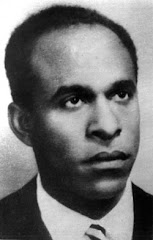
HAROLD CRUSE
(1916-2005)
(1916-2005)
"Racial democracy is, at the same time, cultural democracy and the question of cultural democracy in America is posed in a way never before seen or considered in other societies. This uniqueness results historically from the manner in which American cultural developments have been influenced by the Negro presence. Since a cultural philosophy has been cultivated to deny this truth, it remains for the Negro intellectual to create his own philosophy and to bring the facts of cultural history in focus with the culture practices of the present. In advanced societies it is not the race politicians of the "rights" leaders who create the new ideas and the new images of life and man. That role belongs to the artists and the intellectuals of each generation. Let the race politicians, if they will, create political, economic, or organizational forms of leadership; but it is the artists and creative minds who will, and must, furnish the all important content. And in this role, they must not be subordinated to the whims and desires of politicians, race leaders, and civil rights entrepreneurs whether they come from the Left, the Right, or Center...Which means to say, in advanced societies the cultural front is a special one that requires special techniques not perceived, understood, or appreciated by political philistines. There are those among the latter who give lip service to the idea that Culture and Art belong to the People, but what they actually give to the people (not to speak of what they give to Negroes as people) is not worthy of examination. It is the Negro creative intellectual who must take seriously the idea that culture and art belong to the people--with all the revolutionary implications of that idea. "
--"Cultural Leadership and Cultural Democracy" from The Crisis of the Negro Intellectual by Harold Cruse, 1967
"The peculiarities of the American social structure, and the position of the intellectual class within it, make the functional role of the Negro intellectual a special one. The Negro intellectual must deal intimately with the white power structure and cultural apparatus, and the inner realities of the black world at one and the same time. But in order to function successfully in this role, he has to be acutely aware of the American social dynamic and how it monitors the ingredients of class stratifications ...Therefore the functional role of the Negro intellectual demands that he cannot be absolutely separate from either the black or white world."
-- Harold Cruse, The Crisis of the Negro Intellectual (1967)
From Wikipedia, the free encyclopedia
Harold Wright Cruse (1916--2005) was an American academic who was an outspoken social critic and teacher of African American studies at the University of Michigan until the mid-1980s. The Crisis of the Negro Intellectual (1967) is his best-known book.
1.1 Early life
1.2 Theater career
1.3 Academic life
1.4 Death and legacy
2 Works
3 Footnotes
4 Additional reading
Biography
Early life
Harold Cruse was born March 8, 1916, in Petersburg, Virginia.[1] His father was a railway porter. After his parents divorced, Cruse moved to New York City, New York. Cruse became interested in the arts as a young man, thanks in large measure to his close relationship with an aunt who often took him to shows on the weekend. During World War II, Cruse joined the U.S. Army and served in Europe and north Africa.[2] Upon returning home, he attended the City College of New York without graduating. In 1947 Cruse joined the Communist Party for several years.
Theater career
Theater career
In the mid-1960s Cruse, along with LeRoi Jones (now Amiri Baraka), founded the Black Arts Theater in Harlem. Cruse viewed the arts scene as a white-dominated misrepresentation of black culture, epitomized by George Gershwin's folk opera Porgy and Bess and Lorraine Hansberry's play A Raisin in the Sun.
Many believed Cruse was an opponent of "integration" which he referred to as "assimilation" because its policies were only geared towards integrating blacks into white society and not whites into black; betraying an inherent unacceptability of blackness in mainstream America. But in reality Cruse simply believed in a pluralistic society, any group must amass and control its own political, economic and cultural capital before true integration was possible. Without group self-determination, any group, but particularly American blacks would rely on the benevolence of other groups with political, economic and cultural capital, to voluntarily integrate with blacks which would lead to the dismantlement of black institutions and cultural traditions; rather than facilitate an equal and negotiated sharing throughout society.
While Cruse was very critical of American society, he reserved the bulk of his criticism for black intellectuals and leaders who he believed did not have the academic appetite to master the various disciplines necessary to advocate for real and effective societal change.
Academic life
Many believed Cruse was an opponent of "integration" which he referred to as "assimilation" because its policies were only geared towards integrating blacks into white society and not whites into black; betraying an inherent unacceptability of blackness in mainstream America. But in reality Cruse simply believed in a pluralistic society, any group must amass and control its own political, economic and cultural capital before true integration was possible. Without group self-determination, any group, but particularly American blacks would rely on the benevolence of other groups with political, economic and cultural capital, to voluntarily integrate with blacks which would lead to the dismantlement of black institutions and cultural traditions; rather than facilitate an equal and negotiated sharing throughout society.
While Cruse was very critical of American society, he reserved the bulk of his criticism for black intellectuals and leaders who he believed did not have the academic appetite to master the various disciplines necessary to advocate for real and effective societal change.
Academic life
After publishing The Crisis of the Negro Intellectual in 1967, he was invited to lecture at the University of Michigan (1968) and taught in the African-American Studies program at the Center for Afro-American and African Studies there until the mid-1980s.[3] Cruse was one of the first African-American studies professors, becoming one of the first to earn tenure without holding a college degree.
A theme of The Crisis of the Negro Intellectual is that intellectuals must play a central role in movements for radical change. This idea re-appeared in his other works including Rebellion or Revolution, a compilation of essays, and Plural But Equal.
Death and legacy
On March 25, 2005, Cruse died from congestive heart failure while living in an assisted-living facility in Ann Arbor, Michigan. He was survived by his wife of 36 years, Mara Julius.
Works
Cruse, Harold (2009). Rebellion or revolution?. Minneapolis: University of Minnesota Press. ISBN 9780816668038.
Cruse, Harold (2005). The crisis of the Negro intellectual: A historical analysis of the failure of Black leadership. New York: NYRB Classics.
Cruse, Harold (1987). Plural but equal: a critical study of Blacks and minorities and America's plural society (1 ed.). New York: William Morrow. ISBN 0688044867.
Cruse, Harold (2002). The essential Harold Cruse: a reader. William Jelani Cobb (ed.) (1 ed.). New York: Palgrave. ISBN 9780312293963., with a foreword by Stanley Crouch.
Footnotes[edit]
Jump up ^ Bernstein, Adam (2005-03-29). "Social Critic, Essayist Harold Cruse Dies". The Washington Post (Washington, D.C.). pp. B08. Retrieved 2013-05-21.
Jump up ^ Warikoo, Niraj (2005-03-28). Obituaries. "Harold Cruse: Author, Activist and U-M Professor". Detroit Free Press (Detroit, MI). p. B4. Archived from the original on 30 March 2005. Retrieved 2013-05-21.
Jump up ^ Lehmann-haupt, Christopher (2005-03-30). "Harold Cruse, Social Critic and Fervent Black Nationalist, Dies at 89". The New York Times (New York, NY). ISSN 0362-4331. Retrieved 2013-05-21.
Additional reading[edit]
"An author of "Thought," Harold Cruse". African American Registry.
"The Crisis of the Negro Intellectual by Harold W. Cruse" - New York Review of Books
"Harold Cruse and Afrocentric Theory"
Harold Cruse's The crisis of the Negro intellectual reconsidered. Jerry Gafio Watts (ed.). New York: Routledge. 2004. ISBN 9780415915755.
Cruse, Harold (2005). The crisis of the Negro intellectual: A historical analysis of the failure of Black leadership. New York: NYRB Classics.
Cruse, Harold (1987). Plural but equal: a critical study of Blacks and minorities and America's plural society (1 ed.). New York: William Morrow. ISBN 0688044867.
Cruse, Harold (2002). The essential Harold Cruse: a reader. William Jelani Cobb (ed.) (1 ed.). New York: Palgrave. ISBN 9780312293963., with a foreword by Stanley Crouch.
Footnotes[edit]
Jump up ^ Bernstein, Adam (2005-03-29). "Social Critic, Essayist Harold Cruse Dies". The Washington Post (Washington, D.C.). pp. B08. Retrieved 2013-05-21.
Jump up ^ Warikoo, Niraj (2005-03-28). Obituaries. "Harold Cruse: Author, Activist and U-M Professor". Detroit Free Press (Detroit, MI). p. B4. Archived from the original on 30 March 2005. Retrieved 2013-05-21.
Jump up ^ Lehmann-haupt, Christopher (2005-03-30). "Harold Cruse, Social Critic and Fervent Black Nationalist, Dies at 89". The New York Times (New York, NY). ISSN 0362-4331. Retrieved 2013-05-21.
Additional reading[edit]
"An author of "Thought," Harold Cruse". African American Registry.
"The Crisis of the Negro Intellectual by Harold W. Cruse" - New York Review of Books
"Harold Cruse and Afrocentric Theory"
Harold Cruse's The crisis of the Negro intellectual reconsidered. Jerry Gafio Watts (ed.). New York: Routledge. 2004. ISBN 9780415915755.
http://www.nytimes.com/2014/07/27/movies/james-brown-is-celebrated-in-get-on-up.html
MOVIES
His Own Godfather
James Brown Is Celebrated in ‘Get On Up’
By NELSON GEORGE
JULY 23, 2014
New York Times
MOVIES
His Own Godfather
James Brown Is Celebrated in ‘Get On Up’
By NELSON GEORGE
JULY 23, 2014
New York Times

Chadwick Boseman as Brown in the new biopic “Get On Up.” Credit D. Stevens/Universal Studios
It’s just the kind of movie clip YouTube was made for. In the 1965 Frankie Avalon vehicle, “Ski Party,” James Brown and his backing vocal group, the Famous Flames, enter a ski lodge after rescuing a frozen reveler. Resplendent in a white-and-red sweater, tight black slacks, black pointy-toed shoes and a regal pompadour, Brown performs “I Got You (I Feel Good),” giving the lily-white crowd of clapping skiers a taste of the showmanship that had made him a star on the so-called “chitlin circuit” among blacks. Even in a movie as disposable as “Ski Party,” Brown turned a corny scene into genuine entertainment.
In the biopic “Get On Up,” opening Friday, the filmmakers recreate this moment, trying to see it from Brown’s point of view. While he glides through his steps, we see slow-motion shots of the listeners as if they were creatures from another, whiter planet, one Brown is reluctantly visiting in hopes of reaching a wider audience. In that scene, Brown dances off the set. In the new film, he does a split but doesn’t come up, apparently having ripped his pants. The new moment is slightly comic but undercuts Brown’s mastery.
Depicting James Brown on screen has always been a seductive proposition. As one of the greatest stage performers of the 20th century, he has inspired documentarians, playwrights, comedians and other artists who see the outlines of his greatness. But capturing the man inside, and the meaning of his life, is a tricky business.
There was a fluidity to his identity that was reflected in his many stage nicknames: Mr. Dynamite, the hardest working man in show business, Soul Brother No. 1, the Godfather of Soul and the Original Disco Man, as he variously billed himself. All enduring pop stars have the ability to shift with the culture, but Brown’s moves — from staunch integrationist to proto-black nationalist and back, from civil rights role model to wife beater, from disciplined bandleader to drug addict — suggest an inner turmoil that belied his outer confidence. Shortly after his death, I helped edit a collection of articles that spanned Brown’s long career, and in reading the pieces was struck by how many journalists saw the contours of the man but struggled to truly penetrate his psyche. With a feature film about to arrive and a coming documentary, it’s time to take stock of this imposing figure.
Brown, who died on Christmas Day 2006, began his career in the ’50s under the spell of Little Richard and ended it as a major influence on current singer-dancers like Usher and Chris Brown. Michael Jackson and Prince, of course, were acolytes. Reared on gospel, blues and jazz, Brown was a dominant force in the soul ’60s, created funk, inspired disco and laid hip-hop’s foundation with his beats.
As important as Brown was on vinyl, his stage show and personality are legendary: Tilting a mike stand far forward and, before it hit the stage, pulling it back via the cord. Dropping into and rising out of splits. Feigning exhaustion and donning a regal cape before returning to sing again. Executing every new dance from the ’60s to the ’80s with deft steps and body control made Brown a dominant figure during an explosive era for pop music.
Brown was a self-made man who as a child was abandoned by both his parents. So, with success, he constructed his own world in which few could address him by his first name (for employees and interviewers alike it was strictly Mr. Brown), and musicians were fined midshow. An immense ego strove to mask any insecurity. His drive to succeed was as unrelenting as his dancing. During the civil rights movement, he emerged as a leader capable of preventing a riot in Boston after the assassination of the Rev. Dr. Martin Luther King Jr. But he was also an eccentric, who would give up his processed hair for an Afro during the “Black Is Beautiful” era, only to return to the retro style because he loved having straight hair.
“Get On Up,” directed by Tate Taylor from a clever screenplay by the brothers Jez and John-Henry Butterworth, attempts the difficult task of capturing a driven artist whose career spanned six decades and whose public persona overshadowed his inner life. Just as hip-hop would take break beats from the middle or end of Brown’s records to make new sounds, the Butterworths eschew a linear structure, jumping from 1988 to 1968 to 1938 and so on to put you at important turning points in Brown’s life.
The producer Brian Grazer, a Brown fan since his teenage years, first got rights to the star’s story 13 years ago, he said. At one point, Spike Lee was to direct, with Wesley Snipes to star. When Brown died, “it made making the film impossible,” Mr. Grazer added. “All the relationships we’d cultivated dissipated.” Struggles over the estate made Mr. Grazer and company step away.
“Then about a year after his death, Mick Jagger called,” Mr. Grazer said. “He’d cleared all the key rights and read the script. He wanted to partner up.”
Mr. Jagger thought Brown’s “life and times and his struggle against adversity” deserved a film treatment, he said via email. Not only did he push to get “Get On Up” made but he is also producing a coming documentary about Brown directed by the Oscar-winning Alex Gibney.
“James was an early influence on me in many ways,” Mr. Jagger said. “He showed me how to interact with an audience and that you always have to give 100 percent of your energy every show.”
Though not close friends, Brown and Mr. Jagger did interact quite a bit in the ’60s. Both performed in “The T.A.M.I. Show,” a multi-act concert filmed in 1964, a sequence that plays a small part in the biopic.
It’s an interesting cultural phenomenon of the Obama presidency that a surprising number of films focused on black American history have both been financed and successful: “42,” “Django Unchained,” “The Help,” “Lee Daniels’ The Butler” and the 2014 Oscar winner for best picture, “12 Years a Slave.” In addition, two separate films centered on Nelson and Winnie Mandela have been released. A film about Jimi Hendrix is due in September. A biopic of Nina Simone has been filmed; a feature about the 1965 civil rights march that began in Selma just wrapped; one about Miles Davis is shooting now; and projects about the rap group NWA and the rapper Tupac Shakur are in the works.
African-Americans tend to view any Hollywood treatments of their history with at best guarded optimism and often with dread. Decades of omissions, half-truths and outright lies about their role in this nation’s history tend to make black viewers skeptical of the most well-intentioned projects. There is also a sense that black directors and writers are being excluded from telling these stories in Hollywood since, with a few notable exceptions (Mr. Daniels, Steve McQueen of “12 Years a Slave” and Ava DuVernay of “Selma,” among them), these films have been told by white producers, writers and directors. That said, many of these projects have languished, in some cases, for decades until the current epoch. Certainly, they have been a boon to many black performers. Chadwick Boseman, a relatively unknown young actor, has, with Jackie Robinson in “42” and now Brown, played two of the most important cultural figures in American history.
Portraying Brown is complicated by the singer himself, who sometimes seemed to be a caricature of soul music emotion as well as an expression of it. This was particularly true in the last decades of his life, when in the “Blues Brothers” movies and TV appearances he played cartoonlike versions of himself.
Even back at his height as a best-selling recording artist and cultural figure in the ’60s and ’70s, Brown was ridiculed by stand-up comedians for his guttural singing, sweaty histrionics and massive ego. One of Eddie Murphy’s signature “Saturday Night Live” moments was the 1983 skit “James Brown Celebrity Hot Tub Party,” in which he parodied Brown’s vocals and processed hair, and, backed by a funky band, squealed about the virtues of relaxing in bubbling hot water. It was a wickedly funny take on Brown that showcased Mr. Murphy’s genius for mimicry and made it hard to watch Brown again without a knowing smile. Mr. Murphy’s version of Brown was so compelling that even when he played James (Thunder) Early in “Dreamgirls” (2006), a character who looked a lot like the soul singer Wilson Pickett, it was hard not to see it as another version of Brown.
Truthfully, Brown’s legacy is much richer than just passionate singing. With the aid of the arrangers Pee Wee Ellis and Fred Wesley, Brown reworked the bluesy basis of rhythm and blues so that every instrument worked as part of the rhythm section, creating funk music in the process. Though “Get On Up” doesn’t spend much time on Brown’s creative process, there is an effective scene in which Brown browbeats his band, making every musician, from guitarist to trumpeter, testify to the notion that everyone is playing “a drum.”
At the film’s end, a title card explains how widely his beats have been sampled. But there are no scenes showing Brown’s initial irritation with his music being reworked, his struggle to understand sampling or his collaborations with hip-hop figures like Afrika Bambaataa. Hip-hop samples, both of his music and his vocals, have kept Brown relevant to young listeners in a way that have eluded most of his ’60s soul peers. The spit-and-polish Brown trying to relate to saggy-pants M.C.s could have been fun.
Like many musicians, Brown suggested in interviews that you’d learn all you need to know about him by listening to his music, but that actually isn’t true. His ideas about ownership and control of his career were visionary. Before running into tax troubles in the mid-’70s Brown owned a number of radio stations, fast-food restaurants, record labels and a private plane well before it became a rock-star staple.
My favorite sequence in “Get On Up” is not a stage performance or a temper tantrum, but a moment when Brown’s smarts are depicted. His manager and booking agent Ben Bart gives him a Cadillac as a gift, a clichéd way for white authority figures to reward black stars for achievement. Brown is not impressed. Later, he outlines a new system of touring, assuming a central role in booking his shows and thus minimizing promoters’ ability to pocket most of the gate.
Brown would sit in his dressing room after every show going over the box office ledger and greeting local radio D.J.s and record store owners until he’d shaken every hand, all the while getting his hair done. Brown, no doubt, was over the top. But young James Brown was also a forward thinker who would thrive in the current music environment, in which artists are self-contained enterprises who rely not on record company largess but on their own talent, innovations and moxie.
Nelson George
From Wikipedia, the free encyclopedia
From Wikipedia, the free encyclopedia

NELSON GEORGE
Born September 1, 1957 (age 56)
Brooklyn, New York, USA
Education St. John's University
Occupation journalist
author
columnist
music & culture critic
filmmaker
Years active 1979–present
Brooklyn, New York, USA
Education St. John's University
Occupation journalist
author
columnist
music & culture critic
filmmaker
Years active 1979–present
Nelson George (born September 1, 1957) is an African-American author,[1] columnist, music and culture critic, journalist, and filmmaker. He has been nominated twice for the National Book Critics Circle Award.
Contents
1 Biography
2 Literary work
3 Film and television work
4 References
Biography
George attended St. John's University, after which he served as a music editor for Billboard magazine from 1982 to 1989. While there, George published two books; Where Did Our Love Go: The Rise and Fall of the Motown Sound in 1986, and The Death of Rhythm & Blues in 1988. He also wrote a column, entitled "Native Son," for the Village Voice from 1988 to 1992. He first got involved in film when, in 1986, he helped to finance director Spike Lee's debut feature She's Gotta Have It.
A lifelong resident of Brooklyn, New York, George currently lives in Fort Greene.
Literary work
George has authored fifteen non-fiction books, including the bestseller The Michael Jackson Story in 1984, Blackface: Reflections on African-Americans and the Movies in 1994, Elevating the Game: Black Men and basketball in 1992 and Hip Hop America in 1998. With Alan Leeds he co-authored The James Brown Reader, a collection of articles about the Godfather of Soul in 2008. in 1991 he co-wrote the Halle Berry vehicle Strictly Business and in 1993 Nelson was co-creator of the movie CB4 starring comedian Chris Rock.
Nelson George's The Death of Rhythm and Blues chronicles and critiques the path that R&B has taken. Nelson takes a close look at the genre's fall to the hands of the mainstream and even mentions that some popular artists sold out.
Film and television work
In 2004, George made a short film called To Be a Black Man, starring Samuel L. Jackson, and a documentary called A Great Day in Hip-Hop. Both titles appeared in festivals in New York, London, and Amsterdam. He executive-produced the HBO film Everyday People which also debuted in 2004 at the Sundance Film Festival.
Currently he is serving as co-executive producer of VH1's Hip Hop Honors television show and executive producer of Black Entertainment Television's American Gangster series, which was the highest rated series in the history of BET in 2006. His directorial debut, Life Support, starring Queen Latifah, aired on HBO on March 10, 2007. Latifah won several awards for her performance as Ana Wallace, including a Golden Globe, Screen Actors Guild award, and the NAACP Image Award. Life Support was also named best TV film of the year by the NAACP. He also currently hosts the VH-1 series "Soul Cities", which examines the music and culture of six prominent cities in the U.S.
A resident of Fort Greene, Brooklyn for over 25 years, George wrote, narrated, and co-directed with Diane Paragas the 2012 feature documentary, Brooklyn Boheme, portraying the uniquely vibrant and diverse African American artistic community of Fort Greene and Clinton Hill during the 1980s and '90′s that included Spike Lee, Chris Rock, Branford Marsalis, Rosie Perez, Saul Williams, Lorna Simpson, Toshi Reagon, writer Touré, writer Adario Strange, Guru of Gang Starr, Erykah Badu, and Talib Kweli, among many others. Unlike the legendary Harlem Renaissance of the 1920s, which was largely a literary scene, the artists collected in these neighborhoods were as involved with newer means of expression (film, rock music, hip hop, avante garde theater, stand up comedy, photography) as with traditional African-American artistic pursuits (poetry, jazz.) The film premiered on Showtime Networks in February 2012 for Black History Month.
References
Jump up ^ "BROWNSVILLE BRED Announces Series Of Post-show Talk Backs". Broadway World. July 6, 2011. Retrieved 8 July 2011.
Currently he is serving as co-executive producer of VH1's Hip Hop Honors television show and executive producer of Black Entertainment Television's American Gangster series, which was the highest rated series in the history of BET in 2006. His directorial debut, Life Support, starring Queen Latifah, aired on HBO on March 10, 2007. Latifah won several awards for her performance as Ana Wallace, including a Golden Globe, Screen Actors Guild award, and the NAACP Image Award. Life Support was also named best TV film of the year by the NAACP. He also currently hosts the VH-1 series "Soul Cities", which examines the music and culture of six prominent cities in the U.S.
A resident of Fort Greene, Brooklyn for over 25 years, George wrote, narrated, and co-directed with Diane Paragas the 2012 feature documentary, Brooklyn Boheme, portraying the uniquely vibrant and diverse African American artistic community of Fort Greene and Clinton Hill during the 1980s and '90′s that included Spike Lee, Chris Rock, Branford Marsalis, Rosie Perez, Saul Williams, Lorna Simpson, Toshi Reagon, writer Touré, writer Adario Strange, Guru of Gang Starr, Erykah Badu, and Talib Kweli, among many others. Unlike the legendary Harlem Renaissance of the 1920s, which was largely a literary scene, the artists collected in these neighborhoods were as involved with newer means of expression (film, rock music, hip hop, avante garde theater, stand up comedy, photography) as with traditional African-American artistic pursuits (poetry, jazz.) The film premiered on Showtime Networks in February 2012 for Black History Month.
References
Jump up ^ "BROWNSVILLE BRED Announces Series Of Post-show Talk Backs". Broadway World. July 6, 2011. Retrieved 8 July 2011.
http://www.huffingtonpost.com/2014/07/29/mick-jagger-get-on-up_n_5625588.html?utm_hp_ref=entertainment&ir=Entertainment
Why Did Mick Jagger Produce The James Brown Movie, 'Get On Up'? Let Him Tell You
by Christopher Rosen
July 29, 2014
Huffington Post
Why Did Mick Jagger Produce The James Brown Movie, 'Get On Up'? Let Him Tell You
by Christopher Rosen
July 29, 2014
Huffington Post

MICK JAGGER
Mick Jagger has been a James Brown fan for actual decades. The Rolling Stones lead singer, who turned 71 on Sunday, has admitted he copied many of Brown's dance moves on stage. As the men rose to prominence as two of the biggest singers of the 1960s, they even became acquaintances. It was a relationship that lasted until Brown's death in 2006.
"I saw him at a show in Cleveland. I can't remember when, but we were both there together," Jagger told HuffPost Entertainment when asked about the last time he saw Brown alive. "I went to see his show, and he came to see me. We had a good time."
For Jagger, his connection to Brown has only increased in the eight years since the pioneering singer died. Peter Afterman, Brown's estate manager and Jagger's long-time friend, asked the Rolling Stones frontman if he wanted to make a documentary on Brown's life after securing music rights to Brown's catalog of hit songs. Jagger thought to take it one step further: a feature film about Brown that could work in concert with documentary. It was then that he connected with producer Brian Grazer, who had been working on a Brown movie himself for a decade with little triumph. Using a script written by Jez and John-Henry Butterworth, Jagger and Grazer put together "Get On Up," an unconventional biography about Brown that jumps through the singer's life, from his troubled upbringing in Georgia to his incredible career as a performer to his numerous issues with the law. (Brown was arrested multiple times on domestic violence charges and also spent time in prison for other offenses, including a three-year stint after leading police on a high-speed chase in 1988.)
Starring Chadwick Boseman as Brown and directed by Tate Taylor, "Get On Up" hopes to capitalize on audiences who helped make "Lee Daniels' The Butler" and Taylor's previous film, Best Picture-nominee "The Help," surprise box office hits in the month of August. For his part, Jagger has everything in his power to make the film a success: In addition to being a hands-on producer for "Get On Up" during production, Jagger has promoted the film on the "Today" show and in interviews with TIME magazine, Billboard, USA Today and The Huffington Post. We spoke to Jagger about his involvement in "Get On Up" at the world famous Apollo Theater in New York on a hazy, hot and humid Saturday afternoon in July. An edited transcript of our conversation is below.
You were producing the Alex Gibney documentary, "Mr. Dynamite: James Brown and the Power of Soul," and, as the story goes in the press notes, woke up one day and thought a feature on Brown would be great too. Why?
It's just a different animal, isn't it? Obviously I thought of "Ray." I thought "Ray" was a great movie. I loved that movie and people loved that movie. But I thought, in a way, that James Brown's life story and his onstage persona was more interesting. The onstage performances are more vivid and alive than in Ray's story. As much as we love Ray Charles, and he's one of my favorite singers, but I mean, when I thought about it, I thought, "Wow, if you could make a movie like that [with Ray Charles], we can certainly do a movie about someone like James Brown." But without copying "Ray" in any way, so why not make a feature of it too? And we can do the documentary, too. They can both be fantastic.
You've discussed how James Brown influenced you. Watching the movie, I couldn't help but think of how we can see parts of James Brown in singers like David Lee Roth and Axl Rose and also modern hip-hop artists like Kanye West and Jay Z. Do you think people even realize how influential Brown was across all genres of music?
Well, probably not. Why would they? But he was definitely a role model on many levels. He's a role model as a guy who comes out on stage and really works his butt off. He always gave his best. He came out and did it. I never thought, "I want to be like that!" But obviously that rubs off on you. The other person I toured with was Little Richard. Every night he went out there -- didn't matter who the audience was, whether they were good, bad or indifferent -- and he just worked it. That rubs off on you. These are guys who were just always working it. So that's the way you want to be. On the other level, James Brown wanted to be in control of his own destiny. This movie is about someone who wants to be in control of their career and their life, especially when they came from a place where they weren't in control or they had very little to start with.
The movie depicts the infamous T.A.M.I. concert, and shows a screen version of The Rolling Stones watching Brown perform. How familiar were you with Brown before that show?
Very familiar. I had everything. I had all his music. I had seen his music here at the Apollo. I talked to him. I hung out with him.
How much influence did you have on who was cast as a Mick Jagger for that scene?
Not much, in the end. I was somewhere far away. I don't want to talk about it really. How can I talk about it without sounding ... there was a little bit of poetic license in that scene. In the end the scene works. It's a fun scene. It wasn't really what happened, but it works well.
As a producer was there one moment that you really fought to keep in the finished film?
I can't really remember. My thing was, I wanted you, the audience, to be pulling for James. Sometimes when I read the script, I felt there was some feeling that you ... I was really saying, "I'm not pulling for this guy enough." It was quite simple really: It was just a question of juxtaposition of a few scenes. It wasn't really taking things out, it was where things were in the story. It's just where you put the accentuation. It doesn't matter how bad he is or how good he is, you want to see both sides of a character. But nevertheless, you do want to be pulling for him.
You obviously don't need to be a producer. Why do you do it?
I quite enjoy doing it. It's a different discipline, but it has a lot of things that are the same [as leading the Rolling Stones]: managing large groups of people, making sure they get on with a common goal. But you've also got a lot of competing parties and you have problems to solve and so on. I also like the literary part of it, which I don't really get to do that much. I like the scripts. I like solving the puzzles. I kind of enjoy the dealmaking. I mean, as long as it doesn't go on forever. It's a lot of moving parts! As long as it doesn't take all my time, because I like to do creative things in other ways, it's a great thing. It's still a creative thing, it's not a business only thing. So it depends which route you take. Being a producer can mean many things. For this particular movie, it was quite interesting because it did have a good literary beginning. Other movies you're presented with a script and there is very little you can say. It's done. It could even be cast. You still get the same credit. With this, it was a much longer process.
You weren't just a rubber stamp of approval.
I'm not really interested in doing that. I don't mind doing that, you know, if it's a project you really love.
With this film and the documentary, you've become the de facto caretaker of James Brown's legacy for a generation of young viewers. Do you think about who will do that for you and the Rolling Stones?
Not really. I don't think about that much [laughs]. I always get asked about it!
With that in mind, did you feel any pressure to make sure James Brown's legacy was shown in a way that was true to him?
Yeah, I want it to be true to him. I think he's a wonderful artist and I didn't want it to be over-glamorized or too de-glamorized and sleazy. In making the documentary, it was the same thing. By shading and nuancing, you can destroy someone's reputation. In the documentary, for instance, it would be very easy to accentuate the negative side -- which everyone has in their life -- and that would be a mean thing to do. What I tried to do in both these films is to show not only the creative and other side, but to show him as a complete person as much as possible. But still really leave people with an uplifting feeling, which I think is a correct thing to do for an artist of his status.
How did you decide on Tate Taylor as director?
Brian and I, once we decided to partner up but before we had a deal, we decided to look for directors. We looked at lots of directors, and Tate was on the top of our list of people. We thought that even though Tate was relatively inexperienced, he did have experience with doing "The Help," which we liked. It was a bit of a leap of faith with Tate because he hadn't done a lot. But he convinced us that he could do this and he had boundless enthusiasm and energy and vitality to push the project through, especially for the limited amount of money that we had to make it. We decided that Tate could do it. I think we were vindicated at the end.
When did you realize it was the right decision?
When you start seeing the first assembly cut, after the first couple of weeks. You know, "Okay, I think it's working. We're going to keep going!"
Tate's going to be forever connected with James Brown, and I wanted to ask you about your connection with Martin Scorsese. Do you have a favorite scene from his movies set to your music?
I can't remember. He's used "Gimme Shelter" a lot. I'm doing this HBO series with Marty now. I think we're talking about using Stones music in that. Some of it. But, yeah he has a really great flare for using music. He was one of the first who used loud rock music, like, in your face. Before, it was sort of in the background, and he lets the music sometimes take over the scene in a really great way.
https://www.facebook.com/pages/The-Panopticon-Review/342702882479366
Brian Grazer Reveals Why Spike Lee Was Replaced By Tate Taylor To Direct James Brown Biopic
BY TAMBAY A. OBENSON
JANUARY 16, 2013
Shadow And Act
On Cinema of the African Diaspora

James Brown in Alex Gibney's "Mr. Dynamite."
Recapping what we've known until today...
First Spike Lee spent years trying to get his Jackie Robinson project financed and produced (unsuccessfully), only to eventually watch Legendary Pictures and Brian Helgeland launch their own Jackie Robinson picture, with Chadwick Boseman starring (scheduled to be released in 2013).
And then it was announced in October that Spike would have to, once again, sit back and watch (this time) Tate Taylor (director of The Help) helm a James Brown biopic, with super producer Brian Grazer producing, and Mick Jagger joining Grazer as producer.
You'll recall that a film based on the life of the singer has long been in the works, with Spike Lee directing, and Brian Grazer overseeing the production. Obviously, something happened, since Spike is no longer attached to direct, but Brian Grazer is still on to produce.
In the October post announcing the director change, we all wondered what could've happened that inspired the director change; now, 3 months later, we have our answer.
In an interview with Rolling Stone, posted on their website this morning, producer Brian Grazer was asked that question specifically. Here's the section of the interview where it's all addressed:
RS: What happened with Spike Lee, who was said to be directing the original movie project before Brown's death?
BG: He was the choice when I had the rights. I had just produced Inside Man with him. When the rights left me, I didn't have any control, and I couldn't make director choices. So when it came later with new people and new rights holders, we weren't doing it with Spike Lee anymore. The world was different then. Now you have to make movies for less money.
RS: When it was announced that Lee was no longer involved and that a white director, Tate Taylor, was on board, the blogosphere went nuts. How do you respond to those comments?
BG: What would I say? I view that a bunch of different ways. Mick and I don't see the world that way. I started my career making Boomerang and CB4. I've made so many movies where I've supported black artists. Tate made The Help, and that had almost an entirely black population. I just want to try to make the best movie.
RS: Were you surprised by those reactions?
BG: Well, I didn't read them! I can't make movies like that, where I'm going to look at some blog and change the course of the whole movie. I also think Mick is so amazing. For him to decide he's going to participate and split half the money – he's a man of integrity, and I feel pretty good about that.
Well, after reading all that, what I gather from his response is that the choice for who to direct was out of his control, after James Brown died, and the rights issues became more complicated as they now fell under a different set of rights holders, who, we can assume, didn't want Spike Lee to direct.
Is that what you read in all this as well?
He adds that the world was different then, and now movies have to be made cheaper. Does that mean we can also infer that Spike's asking fee was higher than Tate Taylor's? Or the budget for Spike's version of the film was more than what financiers were willing to spend on a Spike Lee-directed film about James Brown?
So, while we get answers we didn't have before, the answers themselves raise even more questions, which means, even more speculation.
In the interview, Grazer reveals how much of a James Brown fan he is, and how long he's been trying to get the project off the ground (12 years since he bought the rights), as well as how much of his own money he's invested in it thus far ($2 million). He also shares that, at one point, Al Sharpton was a consultant on the movie.
And as for whether James Brown (whom Grazer said he met several times while he was alive, and even discussed the project) was at all concerned about a warts and all telling of his life story on film, Grazer said he seemed OK with that.
And finally, with regards to casting, Grazer says they haven't decided yet, but are about to begin the process of testing/auditioning actors, and believes they'll likely be looking at a lot of actors before they find the right one.
You might recall that, at one point, Wesley Snipes was Spike's man for the starring job, but my guess is that Wesley's tax problems meant a change in plans.
In fact, as recently as 2009, it seemed like the project was as close to a sure-thing as any can get, with Spike saying in an interview with MTV News, "We're doing it together – it's going to happen... He’s my man."
He was referring to Wesley Snipes in that quote back in January 2009 (S&A hadn't been born yet).
Spike added that he intended to use James Brown's "authentic voice" during for any musical sequences in the film; essentially, Wesley would lip-synch.
Years later since that interview, little seemed to have further developed on the project, and it looked like it was dead.
In a 2011 interview, James Brown's daughter, Dr. Yamma Brown, said that the family was considering Eddie Murphy, Chris Brown & Usher to star in the Godfather of Soul’s biopic - an announcement which, as I recall, took a lot of you by surprise.
Whether or not any of the above gentlemen are still being considered, or if there are others, we'll find out eventually; although, I doubt it.
As I've said before, go with an unknown - definitely not a star.
The screenplay has been penned by Jez Butterworth & John-Henry Butterworth (they wrote the script for Fair Game, the Naomi Watts and Sean Penn film).
RE: The previous four (4) posts on the new James Brown film, 'Get On Up,' and its broader political, aesthetic, economic, ideological, and historical implications for African Americans within the structural and institutional contexts of the fundamental political economy and culture governing the United States.
Thus a recapitulation (now updated in italics and boldface text) of the initial quote from the critical essay "Cultural Leadership and Cultural Democracy" by Harold Cruse from his classic text 'The Crisis of the Negro Intellectual' (William Morrow, 1967) is in order:

Thus a recapitulation (now updated in italics and boldface text) of the initial quote from the critical essay "Cultural Leadership and Cultural Democracy" by Harold Cruse from his classic text 'The Crisis of the Negro Intellectual' (William Morrow, 1967) is in order:
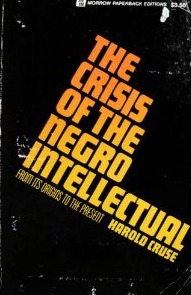
"Racial democracy is, at the same time, cultural democracy and the question of cultural democracy in America is posed in a way never before seen or considered in other societies. This uniqueness results historically from the manner in which American cultural developments have been influenced by the Negro presence. Since a cultural philosophy has been cultivated to deny this truth, it remains for the Negro intellectual to create his own philosophy and to bring the facts of cultural history in focus with the culture practices of the present. In advanced societies it is not the race politicians or the "rights" leaders who create the new ideas and the new images of life and man. That role belongs to the artists and the intellectuals of each generation. Let the race politicians, if they will, create political, economic, or organizational forms of leadership; but it is the artists and creative minds who will, and must, furnish the all important content. And in this role, they must not be subordinated to the whims and desires of politicians, race leaders, and civil rights entrepreneurs whether they come from the Left, the Right, or Center...Which means to say, in advanced societies the cultural front is a special one that requires special techniques not perceived, understood, or appreciated by political philistines. There are those among the latter who give lip service to the idea that Culture and Art belong to the People, but what they actually give to the people (not to speak of what they give to Negroes as people) is not worthy of examination. It is the Negro creative intellectual who must take seriously the idea that culture and art belong to the people--with all the revolutionary implications of that idea. "
--"Cultural leadership and Cultural Democracy" from The Crisis of the Negro Intellectual by Harold Cruse, 1967