Discourse that allows us to express a wide range of ideas, opinions, and analysis that can be used as an opportunity to critically examine and observe what our experience means to us beyond the given social/cultural contexts and norms that are provided us.
Van Jones is a real leader, a real activist, a real intellectual, a real organizer, and most importantly A REAL FIGHTER FOR JUSTICE, FREEDOM, AND EQUALITY--which of course is precisely why he is no longer working for the government. But that's no reflection on Van who sincerely thought he could contribute something important, necessary, and useful to Obama's administration despite its obvious limitations and their cowardly failure to properly support and protect him from vicious attacks, libel, and slander orchestrated by the lowly likes of far rightwing media cretins like Glenn Beck. It is however a serious indictment of a government and generally reactionary political system that fears the kind of intellectual and political honesty, integrity, vision, and genuine independence that Jones represents and epitomizes in his work and life. It's good to see Mr. Jones up and fighting again. We really need him.
Kofi
February 24, 2010
Former Jobs Czar Lands at Think Tank By JOHN BRODER New York Times
Van Jones, the charismatic advocate for environmental jobs who resigned from a White House post last September over a number of controversial past statements, has found a new job with the Center for American Progress in Washington.
Mr. Jones served in the Obama administration after years as a community organizer and “green jobs” activist in the San Francisco Bay Area. He will lead the center’s Green Opportunity Initiative, which will help promote investment and employment in clean energy and environmental restoration projects, officials there said.
Mr. Jones became a focus of criticism for conservative politicians and media figures over his signing of a petition in 2004 questioning if the Bush administration had allowed the terrorist attacks of September 2001 to provide a pretext for the war in Iraq.
He also used a vulgarity to refer to Republicans just before being appointed to his White House job last year and had been an outspoken supporter of Mumia Abu-Jamal, who is on death row for the killing of a police officer in Philadelphia.
John Podesta, the president of the Center for American Progress, called Mr. Jones “a pioneer in the effort to promote a clean, sustainable economy that works for all Americans.” He said the focus of his work at the center would mirror what he did at the White House and earlier in California — to help find environmentally friendly jobs for minority and low-income communities.
Mr. Podesta was White House chief of staff for former President Clinton and is a close adviser to President Obama. His center is something of a shadow Democratic cabinet and policy shop.
Mr. Jones had been a senior fellow at the center for 18 months before his brief White House stint last year.
The National Association for the Advancement of Colored People will honor Mr. Jones with its President’s Award at its annual Image Awards ceremony on Friday, the group said.
Benjamin Jealous, the N.A.A.C.P. president, called Mr. Jones “an American treasure.”
“He is quite simply one of the few Americans in recent years to have generated powerful new ideas that are creating more jobs here,” Mr. Jealous wrote in a column published on CNN.com.
He added that Mr. Jones might be “the most misunderstood man in America.”
“He resigned from the White House last year after some sought to discredit him for missteps, such as political statements made years ago,” Mr. Jealous wrote. “However, we can never afford to forget that a defining trait of our country is our collective capacity to practice forgiveness and celebrate redemption. This is a nation built on second chances.”
Van Jones will lead a new project called the Green Opportunity Initiative. | Photo by AP
Van Jones to rejoin CAP By: Patrick Gavin February 24, 2010
The Center for American Progress announced Wednesday that Van Jones will rejoin the organization as a senior fellow. Jones will lead a new CAP project called the Green Opportunity Initiative.
Jones became a household name in 2009 when he became embroiled in a controversy regarding his past political statements and activities. As a result, Jones resigned from his position on President Barack Obama's White House Council on Environmental Quality in September.
"We are thrilled that Van Jones is joining us to spearhead a 'green opportunity' agenda to develop the policies and strategies that will ensure the clean-energy future brings not just climate stability and energy security, but also broadly shared economic prosperity," said Kate Gordon, vice president for energy policy at CAP.
Jones is slated to develop the think tank's agenda for "expanding investment, innovation, and opportunity through clean energy and environmental restoration, especially for low-income and minority communities."
"Van is a pioneer in the effort to promote a clean, sustainable economy that works for all Americans," said John Podesta, president and CEO of the Center for American Progress. "I'm proud that he's coming back to CAP to focus on creating economic opportunity in distressed communities through the Green Opportunity Initiative and that he will be giving voice to those issues once again."
Excellent commentary by Ishmael Reed regarding the latest contemporary sequel to "Birth of A Nation" (1915). "Precious" is nothing but pure racist crap and the fact that it was written and directed by black people (Sapphire & Lee Daniels) doesn't change that fundamental fact one iota. It merely underscores and makes it worse (or to paraphrase Karl Marx: "racist tragedy always follows and encourages racist farce"). That's why the pervasive social and aesthetic promotion of the twin doctrines of white supremacy and black inferiority in both art and life is so powerful and enduring in a thoroughly racist culture and society-- no matter who's pulling the trigger. Hollyweird loves this vile shit of course but that's completely consistent with its notoriously rancid history so absolutely no surprise there. Meanwhile real black folks have to deal with social reality "out there" in the real world no matter what fictional distortions or misrepresentations are made in our name...
Kofi
February 5, 2010
OP-ED CONTRIBUTOR
Fade to White
By ISHMAEL REED Oakland, Calif.
JUDGING from the mail I’ve received, the conversations I’ve had and all that I’ve read, the responses to “Precious: Based on the Novel ‘Push’ by Sapphire” fall largely along racial lines.
Among black men and women, there is widespread revulsion and anger over the Oscar-nominated film about an illiterate, obese black teenager who has two children by her father. The author Jill Nelson wrote: “I don’t eat at the table of self-hatred, inferiority or victimization. I haven’t bought into notions of rampant black pathology or embraced the overwrought, dishonest and black-people-hating pseudo-analysis too often passing as post-racial cold hard truths.” One black radio broadcaster said that he felt under psychological assault for two hours. So did I.
The blacks who are enraged by “Precious” have probably figured out that this film wasn’t meant for them. It was the enthusiastic response from white audiences and critics that culminated in the film being nominated for six Oscars by the Academy of Motion Picture Arts and Sciences, an outfit whose 43 governors are all white and whose membership in terms of diversity is about 40 years behind Mississippi. In fact, the director, Lee Daniels, said that the honor would bring even more “middle-class white Americans” to his film.
Is the enthusiasm of such white audiences and awards committees based on their being comfortable with the stereotypes shown? Barbara Bush, the former first lady, not only hosted a screening of “Precious” but also wrote about it in Newsweek, saying: “There are kids like Precious everywhere. Each day we walk by them: young boys and girls whose home lives are dark secrets.” Oprah Winfrey, whose endorsement assisted the movie’s distribution and its acceptance among her white fanbase, said, “None of us who sees the movie can now walk through the world and allow the Preciouses of the world to be invisible.”
Are Mrs. Bush and Ms. Winfrey suggesting, on the basis of a fictional film, that incest is widespread among black families? Statistics tell us that it’s certainly no more prevalent among blacks than whites. The National Center for Victims of Crime notes: “Incest does not discriminate. It happens in families that are financially privileged, as well as those of low socio-economic status. It happens to those of all racial and ethnic descent, and to those of all religious traditions.”
Given the news media’s tendency to use scandals involving black men, both fictional and real, to create “teaching tools” about the treatment of women, it was inevitable that a black male character associated with incest would be used to begin some national discussion about the state of black families.
This use of movies and books to cast collective shame upon an entire community doesn’t happen with works about white dysfunctional families. It wasn’t done, for instance, with “Requiem for a Dream,” starring the great Ellen Burstyn, about a white family dealing with drug addiction, or with “The Kiss,” a memoir about incest — in that case, a relationship between a white father and his adult daughter.
Such stereotyping has led to calamities being visited on minority communities. I’ve suggested that the Newseum in Washington create a Hall of Shame, which would include the front pages of newspapers whose inflammatory coverage led to explosions of racial hatred. I’m thinking, among many others, of 1921’s Tulsa riot, which started with a rumor that a black man had assaulted a white woman, and resulted in the murder of 300 blacks.
Black films looking to attract white audiences flatter them with another kind of stereotype: the merciful slave master. In guilt-free bits of merchandise like “Precious,” white characters are always portrayed as caring. There to help. Never shown as contributing to the oppression of African-Americans. Problems that members of the black underclass encounter are a result of their culture, their lack of personal responsibility.
It’s no surprise either that white critics — eight out of the nine comments used on the publicity Web site for “Precious” were from white men and women — maintain that the movie is worthwhile because, through the efforts of a teacher, this girl begins her first awkward efforts at writing.
Redemption through learning the ways of white culture is an old Hollywood theme. D. W. Griffith produced a series of movies in which Chinese, Indians and blacks were lifted from savagery through assimilation. A more recent example of climbing out of the ghetto through assimilation is “Dangerous Minds,” where black and Latino students are rescued by a curriculum that doesn’t include a single black or Latino writer.
By the movie’s end, Precious may be pushing toward literacy. But she is jobless, saddled with two children, one of whom has Down syndrome, and she’s learned that she has AIDS.
Some redemption.
Ishmael Reed is the author of the forthcoming “Barack Obama and the Jim Crow Media.”
I rest my case. Even the New York Times knows what time it is...
Kofi
February 19, 2010
EDITORIAL New York Times The Lesson of Anthem Blue Cross
Clients were understandably furious when Anthem Blue Cross, the largest for-profit health insurer in California, announced huge rate increases for people who buy their own insurance: an average increase of 25 percent, and a 35 percent to 39 percent rise for a quarter of the purchasers. The move also provided a textbook example of why the nation badly needs comprehensive health care reforms.
The reform bills stalled in Congress would put a brake on such out-of-scale premium increases by broadening the pools of insured people to keep average premiums low, by setting up competitive insurance exchanges and by starting to rein in the cost of medical care that is driving up premiums everywhere.
Private insurers in several other states also have sought and won double-digit increases for policies sold to individuals. In one striking case, a Blue Cross Blue Shield plan in Michigan sought a 56 percent average increase in premiums for individually bought policies but settled for 22 percent in a compromise with regulators.
If the increases go through in California, where regulators have limited powers to control rates, Anthem’s enrollees would have to choose between paying the higher price, moving to lower-cost policies, perhaps with a high deductible, switching to another insurer if they can find one to take them, or dropping coverage entirely.
The nation’s largest health insurers reported substantial profits last year over all, but Anthem claims it lost money on the individual market in California. Its parent company, WellPoint Inc., attributed the need for the huge rate increase to a changing mix of customers as the recession forces many people to cut back on expenses.
The company says that healthier customers, gambling that they won’t need much care, are disproportionately dropping Anthem coverage or choosing not to enroll. The less healthy are staying with Anthem, where their higher medical costs are driving up premiums.
WellPoint will be asked to justify the increases at hearings in Congress and the State Legislature. California’s insurance commissioner is investigating whether Anthem will be meeting regulations to spend at least 70 percent of its premium revenues on claims.
It’s hard to know which conclusion would be worse: that Anthem is trying to fleece its individual customers or that Anthem’s rates are actuarially justified by its increasingly unhealthy enrollment pool.
The salient point is that the reform bills pending in Congress could almost certainly prevent this problem from developing. The bills would require everyone to buy health insurance (many with government subsidies). That would create large pools to spread the risk over both healthy and sick enrollees and keep average premiums low. On new insurance exchanges, people who buy their own insurance could benefit from group purchasing power and could choose from an array of policies. Competition among insurers on the exchanges is expected to help keep premiums down.
How about the Republicans’ health care proposals?
They would only address a small part of the Anthem problem. The Republicans reject the idea of mandates to spread the cost of care and instead call for ways for people dissatisfied with their insurer to buy cheaper coverage elsewhere. That could help relatively healthy people but would do nothing for the chronically ill or anyone with pre-existing conditions. They would be stuck in their health plans. State high-risk pools for sick people, another Republican solution, almost always have high premiums and would not provide a safe haven from rate increases in private plans.
Unless Congress passes comprehensive reform, we should expect many more Anthems in our future.
If this latest brazen example of the greedy corporate stranglehold on national health insurance doesn't force Obama and the Democratic Party to finally act forcefully to pass a truly comprehensive and affordable national healthcare reform bill at this very late date in the political process nothing will. So as Krugman points out it is time for the President and Congress to finally deliver on REAL national health reform NOW--with an all important and very necessary public option provision that will allow the government and ordinary citizens to finally be able to compete against the shameless monopolies that run the highly exploitive and thoroughly dysfunctional national healthcare insurance system.That means that Obama and the Democrats in Congress have to formally bypass the Republican opposition altogether via reconciliation in the House and Senate and pass the bill without them being able to hold it and the American people hostage to their stonewalling antics and endless filibustering of the bill. Obama and the Democrats have a real chance now to salvage a bill that was absolutely dead in the water as late as last week. We must now all demand that they don't blow this opportunity...
Kofi
February 19, 2010
OP-ED COLUMNIST
California Death Spiral By PAUL KRUGMAN New York Times
Health insurance premiums are surging — and conservatives fear that the spectacle will reinvigorate the push for reform. On the Fox Business Network, a host chided a vice president of WellPoint, which has told California customers to expect huge rate increases: “You handed the politicians red meat at a time when health care is being discussed. You gave it to them!”
Indeed. Sky-high rate increases make a powerful case for action. And they show, in particular, that we need comprehensive, guaranteed coverage — which is exactly what Democrats are trying to accomplish.
Here’s the story: About 800,000 people in California who buy insurance on the individual market — as opposed to getting it through their employers — are covered by Anthem Blue Cross, a WellPoint subsidiary. These are the people who were recently told to expect dramatic rate increases, in some cases as high as 39 percent.
Why the huge increase? It’s not profiteering, says WellPoint, which claims instead (without using the term) that it’s facing a classic insurance death spiral.
Bear in mind that private health insurance only works if insurers can sell policies to both sick and healthy customers. If too many healthy people decide that they’d rather take their chances and remain uninsured, the risk pool deteriorates, forcing insurers to raise premiums. This, in turn, leads more healthy people to drop coverage, worsening the risk pool even further, and so on.
Now, what WellPoint claims is that it has been forced to raise premiums because of “challenging economic times”: cash-strapped Californians have been dropping their policies or shifting into less-comprehensive plans. Those retaining coverage tend to be people with high current medical expenses. And the result, says the company, is a drastically worsening risk pool: in effect, a death spiral.
So the rate increases, WellPoint insists, aren’t its fault: “Other individual market insurers are facing the same dynamics and are being forced to take similar actions.” Indeed, a report released Thursday by the department of Health and Human Services shows that there have been steep actual or proposed increases in rates by a number of insurers.
But here’s the thing: suppose that we posit, provisionally, that the insurers aren’t the main villains in this story. Even so, California’s death spiral makes nonsense of all the main arguments against comprehensive health reform.
For example, some claim that health costs would fall dramatically if only insurance companies were allowed to sell policies across state lines. But California is already a huge market, with much more insurance competition than in other states; unfortunately, insurers compete mainly by trying to excel in the art of denying coverage to those who need it most. And competition hasn’t averted a death spiral. So why would creating a national market make things better?
More broadly, conservatives would have you believe that health insurance suffers from too much government interference. In fact, the real point of the push to allow interstate sales is that it would set off a race to the bottom, effectively eliminating state regulation. But California’s individual insurance market is already notable for its lack of regulation, certainly as compared with states like New York — yet the market is collapsing anyway.
Finally, there have been calls for minimalist health reform that would ban discrimination on the basis of pre-existing conditions and stop there. It’s a popular idea, but as every health economist knows, it’s also nonsense. For a ban on medical discrimination would lead to higher premiums for the healthy, and would, therefore, cause more and bigger death spirals.
So California’s woes show that conservative prescriptions for health reform just won’t work.
What would work? By all means, let’s ban discrimination on the basis of medical history — but we also have to keep healthy people in the risk pool, which means requiring that people purchase insurance. This, in turn, requires substantial aid to lower-income Americans so that they can afford coverage.
And if you put all of that together, you end up with something very much like the health reform bills that have already passed both the House and the Senate.
What about claims that these bills would force Americans into the clutches of greedy insurance companies? Well, the main answer is stronger regulation; but it would also be a very good idea, politically as well as substantively, for the Senate to use reconciliation to put the public option back into its bill.
But the main point is this: California’s death spiral is a reminder that our health care system is unraveling, and that inaction isn’t an option. Congress and the president need to make reform happen — now.
Once again the President has abandoned fundamendal progressive principles and liberal reform campaign promises for the deadend and self serving route of blatant personal opportunism and rank political expediency (i.e. appealing to the Republicans and corporate lobbyists). It's clearer than ever that the delusional quest for votes from Republicans and "independents" in Obama's overcalculating and strangely insecure strategic and tactical mind has trumped genuine liberal or progressive reform efforts at both the legislative and executive levels of government and is one more disturbing indication that these calculations (based no doubt on the faulty premise that these flipflopping positions on important issues like the environment will somehow result in "moderate" independents, Democrats, and Republicans voting for him and the Democratic Party in the midterm congressional elections of this year and the national presidential election in 2012) are going to make Obama more "palatable" to 'moderate' Republican and independent voters in general. But these calculations, as "clever" and intellectually "calibrated" as they are, are dead wrong in my view.What is far more likely to happen both this year and in 2012 is that Obama--and the congressional Democratic Party candidates running this year--will receive even fewer votes from moderates, independents, and Republicans than he and they did in 2006 and 2008 no matter how much Obama "compromises" with them. Which of course is what the corporate controlled Republican Party is betting on as they continue to say a resounding NO! to every single legislative proposal that the President and the Democratic Party in Congress makes. By abdicating a clearly independent progressive/liberal reform agenda Obama is ironically only cutting his own political throat (and ours by extension). This is what always happens to politicians when they give up their basic ideological and moral integrity to curry illusory "favors" with their political opponents and enemies.
It appears that both Obama and the Democratic Party are going to have to learn this basic political lesson the hard way--AGAIN. Meanwhile the rest of us citizens will continue to suffer mightily as both political parties and the White House play empty electoral political games at our collective expense...
Kofi
Environmental Advocates Are Cooling on Obama By JOHN M. BRODER Published: February 17, 2010 New York Times
WASHINGTON — There has been no more reliable cheerleader for President Obama’s energy and climate change policies than Daniel J. Weiss of the left-leaning Center for American Progress.
Daniel J. Weiss of the Center for American Progress is disappointed by President Obama's enthusiasm for nuclear power.
The president’s embrace of nuclear power was disappointing, and the wrong way to go about winning Republican votes, he said, adding that Mr. Obama should not be endorsing such a costly and potentially catastrophic energy alternative “as bait just to get talks started with pro-nuke senators.”
The early optimism of environmental advocates that the policies of former President George W. Bush would be quickly swept away and replaced by a bright green future under Mr. Obama is for many environmentalists giving way to resignation, and in some cases, anger.
Mr. Obama moved quickly in his first months in office, producing a landmark deal on automobile emissions, an Environmental Protection Agency finding that greenhouse gases endanger public health and welfare, a virtual moratorium on oil drilling on public lands and House passage of a cap-and-trade bill.
Since then, in part because of the intense focus on the health care debate last year, action on environmental issues has slowed. The Senate has not yet begun debate on a comprehensive global warming bill, the Interior Department is writing new rules to open some public lands and waters to oil drilling and the E.P.A. is moving cautiously to apply the endangerment finding.
Environmental advocates largely remained silent late last year as Mr. Obama all but abandoned his quest for sweeping climate change legislation and began to reach out to Republicans to enact less ambitious clean energy measures.
But the grumbling of the greens has grown louder in recent weeks as Mr. Obama has embraced nuclear power, offshore oil drilling and “clean coal” as keystones of his energy policy. And some environmentalists have expressed concern that the president may be sacrificing too much to placate Republicans and the well-financed energy lobbies.
Erich Pica, president of Friends of the Earth, whose political arm endorsed Mr. Obama’s candidacy for president, said that Mr. Obama’s recent policy emphasis amounted to “unilateral disarmament.”
“We were hopeful last year; he was saying all the right things,” Mr. Pica said. “But now he has become a full-blown nuclear power proponent, a startling change over the last few months.”
Mr. Obama said in his remarks on the nuclear project this week that he knew his policies were alienating some environmentalists.
“Now, there will be those that welcome this announcement, those who think it’s been long overdue,” Mr. Obama said of the new nuclear loan guarantee. “But there are also going to be those who strongly disagree with this announcement. The same has been true in other areas of our energy debate, from offshore drilling to putting a price on carbon pollution. But what I want to emphasize is this: Even when we have differences, we cannot allow those differences to prevent us from making progress.”
Mr. Obama has long supported nuclear power, as a senator and as a candidate for president. Employees of the Exelon Corporation, the Chicago-based utility that is the largest operator of nuclear plants in the United States, have been among Mr. Obama’s biggest campaign donors, giving more than $330,000 over his career, according to the Center for Responsive Politics.
In response to criticism of some of its energy policies, the White House points to its clean energy investments, including $80 billion in stimulus spending on energy-related projects, and its continuing support for comprehensive climate and energy legislation. But critics in the green movement say they wish the president would play a more active role in the climate debate.
“I think we all had higher hopes,” said Bill Snape, senior counsel for the Center for Biological Diversity. “We expected a lot in the first year, and everyone agrees they didn’t quite live up to it. But there is recognition that he and the whole administration will get another stab at it.”
Mr. Snape said his group was particularly disappointed that the administration did not designate the polar bear as endangered by global warming and that it could not push a climate change bill through Congress.
“You can’t get anything right,” he said, “unless you get the polar bear right.”
Frances Beinecke, president of the Natural Resources Defense Council, one of the administration’s most stalwart supporters up to now, also expressed disappointment in the president’s new focus on nuclear power and his mention in the State of the Union address of “clean coal technologies.”
Mr. Obama was referring to the prospect of capturing and storing carbon dioxide emissions from coal-fired power plants, an as-yet-unproven technology. He was sending a signal to members of Congress from states that are dependent on mining coal or that burn it for electricity that any legislation he supported would accommodate their concerns.
“N.R.D.C. knows there is no such thing as ‘clean coal,’ ” Ms. Beinecke wrote in a blog post after the State of the Union address. “Every single step in the coal power cycle is dirty, from the profoundly destructive mountaintop removal mining to the smokestack emissions, which are responsible for 24,000 deaths a year.”
Eric Haxthausen, the United States climate policy director for the Nature Conservancy, has generally supported the administration’s goals and actions on energy and environment, although he said they fell short of what was needed to address global warming.
He said that Mr. Obama’s pledge at the United Nations conference in Copenhagen on climate change to reduce American emissions by 17 percent by 2020 compared with 2005 levels had raised the stakes. The United States government is now on record promising the world that it will take major steps to reduce greenhouse gas pollution, Mr. Haxthausen said.
“What’s needed to give this process life is a binding agent,” he said, “some force to bring these things together, and the White House has to be intimately involved. The reality is there’s a bit of a bully pulpit role that’s needed, and the question is, will the administration deliver.”
Amy Goodman of "Democracy Now!" in conversation with Naomi Klein, author of The Shock Doctrine: The Rise of Disaster Capitalism, and Raj Patel author of The Value of Nothing. Event at New York Society for Ethical Culture, sponsored also by The Nation and The Indypendent. January 13, 2010.
Haiti: A Creditor, Not a Debtor By Naomi Klein February 11, 2010 The Nation
If we are to believe the G-7 finance ministers, Haiti is on its way to getting something it has deserved for a very long time: full "forgiveness" of its foreign debt. In Port-au-Prince, Haitian economist Camille Chalmers has been watching these developments with cautious optimism. Debt cancellation is a good start, he told Al Jazeera English, but "It's time to go much further. We have to talk about reparations and restitution for the devastating consequences of debt." In this telling, the whole idea that Haiti is a debtor needs to be abandoned. Haiti, he argues, is a creditor—and it is we, in the West, who are deeply in arrears.
Our debt to Haiti stems from four main sources: slavery, the US occupation, dictatorship and climate change. These claims are not fantastical, nor are they merely rhetorical. They rest on multiple violations of legal norms and agreements. Here, far too briefly, are highlights of the Haiti case.
§ The Slavery Debt. When Haitians won their independence from France in 1804, they would have had every right to claim reparations from the powers that had profited from three centuries of stolen labor. France, however, was convinced that it was Haitians who had stolen the property of slave owners by refusing to work for free. So in 1825, with a flotilla of war ships stationed off the Haitian coast threatening to re-enslave the former colony, King Charles X came to collect: 90 million gold francs--ten times Haiti's annual revenue at the time. With no way to refuse, and no way to pay, the young nation was shackled to a debt that would take 122 years to pay off.
In 2003, Haitian President Jean-Bertrand Aristide, facing a crippling economic embargo, announced that Haiti would sue the French government over that long-ago heist. "Our argument," Aristide's former lawyer Ira Kurzban told me, "was that the contract was an invalid agreement because it was based on the threat of re-enslavement at a time when the international community regarded slavery as an evil." The French government was sufficiently concerned that it sent a mediator to Port-au-Prince to keep the case out of court. In the end, however, its problem was eliminated: while trial preparations were under way, Aristide was toppled from power. The lawsuit disappeared, but for many Haitians the reparations claim lives on.
§ The Dictatorship Debt. From 1957 to 1986, Haiti was ruled by the defiantly kleptocratic Duvalier regime. Unlike the French debt, the case against the Duvaliers made it into several courts, which traced Haitian funds to an elaborate network of Swiss bank accounts and lavish properties. In 1988 Kurzban won a landmark suit against Jean-Claude "Baby Doc" Duvalier when a US District Court in Miami found that the deposed ruler had "misappropriated more than $504,000,000 from public monies."
Haitians, of course, are still waiting for their payback--but that was only the beginning of their losses. For more than two decades, the country's creditors insisted that Haitians honor the huge debts incurred by the Duvaliers, estimated at $844 million, much of it owed to institutions like the IMF and the World Bank. In debt service alone, Haitians have paid out tens of millions every year.
Was it legal for foreign lenders to collect on the Duvalier debts when so much of it was never spent in Haiti? Very likely not. As Cephas Lumina, the United Nations Independent Expert on foreign debt, put it to me, "the case of Haiti is one of the best examples of odious debt in the world. On that basis alone the debt should be unconditionally canceled."
But even if Haiti does see full debt cancellation (a big if), that does not extinguish its right to be compensated for illegal debts already collected.
§ The Climate Debt. Championed by several developing countries at the climate summit in Copenhagen, the case for climate debt is straightforward. Wealthy countries that have so spectacularly failed to address the climate crisis they caused owe a debt to the developing countries that have done little to cause the crisis but are disproportionately facing its effects. In short: the polluter pays. Haiti has a particularly compelling claim. Its contribution to climate change has been negligible; Haiti's per capita CO2 emissions are just 1 percent of US emissions. Yet Haiti is among the hardest hit countries—according to one index, only Somalia is more vulnerable to climate change.
Haiti's vulnerability to climate change is not only—or even mostly—because of geography. Yes, it faces increasingly heavy storms. But it is Haiti's weak infrastructure that turns challenges into disasters and disasters into full-fledged catastrophes. The earthquake, though not linked to climate change, is a prime example. And this is where all those illegal debt payments may yet extract their most devastating cost. Each payment to a foreign creditor was money not spent on a road, a school, an electrical line. And that same illegitimate debt empowered the IMF and World Bank to attach onerous conditions to each new loan, requiring Haiti to deregulate its economy and slash its public sector still further. Failure to comply was met with a punishing aid embargo from 2001 to '04, the death knell to Haiti's public sphere.
This history needs to be confronted now, because it threatens to repeat itself. Haiti's creditors are already using the desperate need for earthquake aid to push for a fivefold increase in garment-sector production, some of the most exploitative jobs in the country. Haitians have no status in these talks, because they are regarded as passive recipients of aid, not full and dignified participants in a process of redress and restitution.
A reckoning with the debts the world owes to Haiti would radically change this poisonous dynamic. This is where the real road to repair begins: by recognizing the right of Haitians to reparations.
Video Dispatch from Haiti: The Politics of Reconstruction
The interview with economist Camille Chalmers was conducted by my partner Avi Lewis for an in-depth report that aired last week on Al Jazeera English. The piece, Haiti: The Politics of Rebuilding, offers a deeply compelling portrait of a people who are brimming with ideas about how how to rebuild their country based on principles of sovereignty and equity—far from the passive victims we have seen on so many other networks. It was produced by my former colleague Andrea Schmidt, one of the main researchers on The Shock Doctrine, and is crucial viewing for anyone concerned with avoiding a disaster capitalism redux in Haiti. Watch the program
For more news and analysis on developments in Haiti, visit Naomi’s website and the "No Shock Doctrine for Haiti," Facebook group.
Activist Call Out: We Must Stand with Tim DeChristopher
By Naomi Klein and Bill McKibben, Huffington Post, February 8, 2010
The climate movement is at a turning point. Copenhagen failed to produce a meaningful binding agreement. The Senate's proposed climate legislation doesn't come close to solving the crisis and even that weak measure appears stalled. Climate change denialists, meanwhile, are in a celebratory mood, with far too many ill-informed citizens falling for their aggressive misinformation campaign.
It's time for the movement that had so much momentum in the lead up to Copenhagen to go on the offensive once again. We see the trial of Tim DeChristopher as just such an opportunity. What follows is a joint statement we helped draft, along with fellow author Terry Tempest Williams and world-renowned climatologist Dr. James Hansen. If you agree, please help us spread the word.
Dear Friends,
The epic fight to ward off global warming and transform the energy system that is at the core of our planet’s economy takes many forms: huge global days of action, giant international conferences like the one that just failed in Copenhagen, small gestures in the homes of countless people.
But there are a few signal moments, and one comes next month, when the federal government puts Tim DeChristopher on trial in Salt Lake City. Tim—“Bidder 70”– pulled off one of the most creative protests against our runaway energy policy in years: he bid for the oil and gas leases on several parcels of federal land even though he had no money to pay for them, thus upending the auction. The government calls that “violating the Federal Onshore Oil and Gas Leasing Reform Act” and thinks he should spend ten years in jail for the crime; we call it a noble act, a profound gesture made on behalf of all of us and of the future.
Tim’s action drew national attention to the fact that the Bush Administration spent its dying days in office handing out a last round of favors to the oil and gas industry. After investigating irregularities in the auction, the Obama Administration took many of the leases off the table, with Interior Secretary Ken Salazar criticizing the process as “a headlong rush.” And yet that same Administration is choosing to prosecute the young man who blew the whistle on this corrupt process.
We cannot let this stand. When Tim disrupted the auction, he did so in the fine tradition of non-violent civil disobedience that changed so many unjust laws in this country’s past. Tim’s upcoming trial is an occasion to raise the alarm once more about the peril our planet faces. The situation is still fluid—the trial date has just been set, and local supporters are making plans for how to mark the three-day proceedings. But they are asking people around the country to flood into Salt Lake City in mid-March. If you come, there will be ample opportunity for both legal protest and civil disobedience. For example:
Outside the courthouse, there will be a mock trial, with experts like NASA’s Jim Hansen providing the facts that should be heard inside the chambers. We don’t want Tim on trial—we want global warming on the stand. Demonstrators will be using the time-honored tactics of civil disobedience to make their voices heard outside the courthouse in an effort to prevent “business as usual”—it’s business as usual that’s wrecking the earth. There will be evening concerts and gatherings, including a “mini-summit” to share ideas on how the climate movement should proceed in the years ahead. This is a people’s movement that draws power from around the globe; for a few days its headquarters will be Salt Lake City. You can get the most up-to-date news at climatetrial.com, including schedules for non-violence training, and information about legal representation. If you’re coming, bring not only your passion but also your creativity—we need lots of art and music to help make the point that we won’t sit idly by while the government tries to scare the environmental movement into meek cooperation. This kind of trial is nothing but intimidation—and the best answers to intimidation are joy and resolve. That’s what we’ll need in Utah.
We know it’s short notice. Some of us won’t be able to make it to Utah because we have other commitments or are limiting travel, and if you’re in the same situation, climatetrial.com will also have details of solidarity actions in other parts of the country. If you can contribute money to help make the week’s events possible, click here. But more than your money we need your body, your brains, and your heart. In a landscape of little water, where redrock canyons rise upward like praying hands, we can offer our solidarity to the wild: wild lands and wild hearts. Tim DeChristopher deserves and needs our physical and spiritual support in the name of a just and vibrant community.
Thank you for standing with us, Naomi Klein, Bill McKibben, Terry Tempest Williams Dr. James Hansen
Don’t Miss—Naomi to Speak in Toronto about Climate Debt Naomi will deliver the inaugural David Lewis lecture on February 25 at 8:30pm at the Trinity-St. Paul's United Church in Toronto. She will speak on the issue of climate debt.
This is the first in a series of lectures in honor of David Lewis (1909–1981), a leading labour lawyer, life-long social democrat, a founder of the NDP and its national leader from 1970 to 1975. The lecture series will focus on issues that were important to David Lewis: social democracy, organized labour, and income inequality.
This event is a fundraiser for the indispensable Canadian Centre For Policy Alternatives. Tickets for Naomi's speech at this fundraiser may be purchased here.
Prior to the lecture, the Canadian Centre for Policy Alternatives will be hosting an evening reception at the Tranzac Club with gourmet hors d'oeuvres, local beer and wines, entertainment and special guests. Purchase tickets for the entire evening here.
Watch Naomi in Conversation with Raj Patel and Amy Goodman
On January 13th in New York, Amy Goodman moderated a discussion between Naomi and Raj Patel (author of The Value of Nothing). They spoke at length about recent events ranging from the Haitian earthquake to the global economic crisis to the recent UN climate convention in Copenhagen. Watch the lively discussion.
Looking For a Different Take on the Vancouver Olympics?
Check out Vancouver Media Co-op for up-to-the-minute reporting from the streets of the Vancouver Olympics.
To subscribe to this newsletter, visit http://www.naomiklein.org/list/?p=subscribe. Naomi is also on Facebook.
Questions or Comments? Contact debra@naomiklein.org.
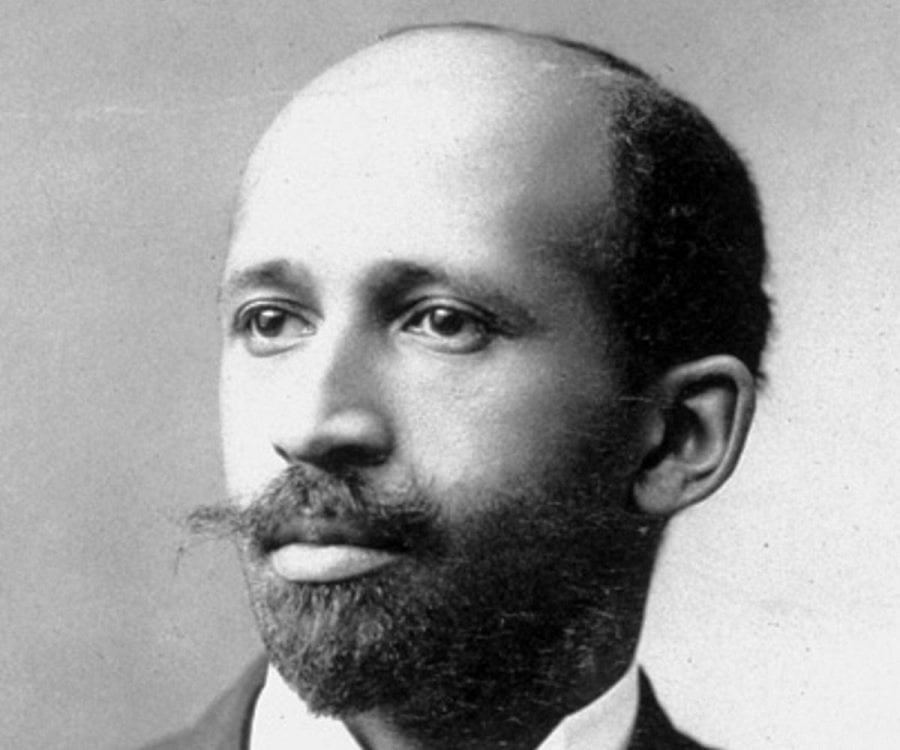
"I'm for truth, no matter who tells it. I'm for justice, no matter who it's for or against."
W.E.B. DuBois (1868-1963)
"There is but one coward on earth, and that is the coward that dare not know."
Dr. Martin Luther King, Jr. (1929-1968)
"Change does not roll in on the wheels of inevitability, but comes through continuous struggle. And so we must straighten our backs and work for our freedom. A man can't ride you unless your back is bent. "
James Baldwin (1924-1987)
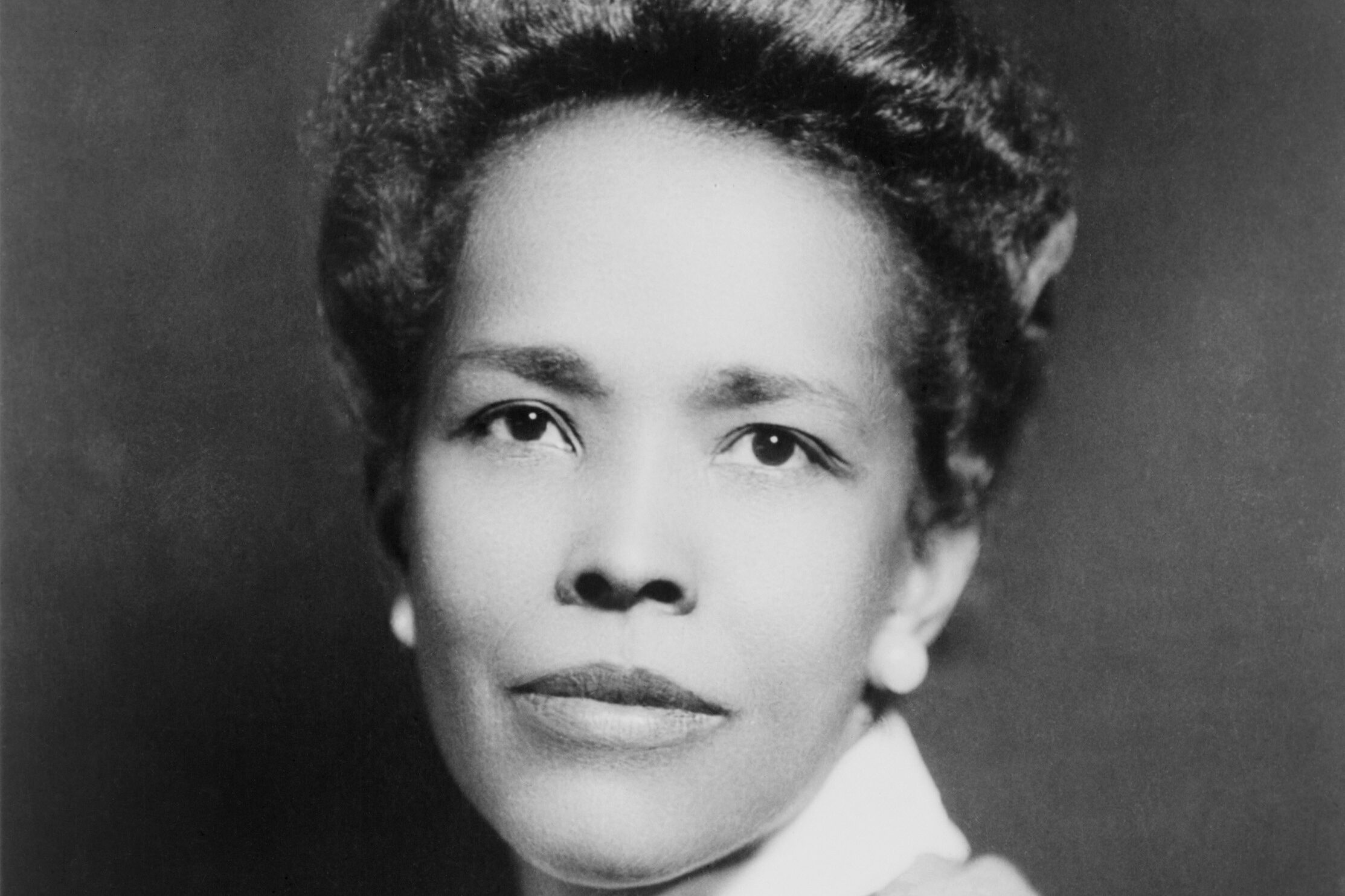
"Precisely at the point when you begin to develop a conscience you must find yourself at war with your society."
Aimé Césaire (1913-2008)
"A civilization that proves incapable of solving the problems it creates is a decadent civilization. A civilization that chooses to close its eyes to its most crucial problems is a stricken civilization. A civilization that uses its principles for trickery and deceit is a dying civilization."
Nina Simone (1933-2003)
"There's no other purpose, so far as I'm concerned, for us except to reflect the times, the situations around us and the things we're able to say through our art, the things that millions of people can't say. I think that's the function of an artist and, of course, those of us who are lucky leave a legacy so that when we're dead, we also live on. That's people like Billie Holiday and I hope that I will be that lucky, but meanwhile, the function, so far as I'm concerned, is to reflect the times, whatever that might be."
Amilcar Cabral (1924-1973)
"Always bear in mind that the people are not fighting for ideas, for the things in anyone's head. They are fighting to live better and in peace, to see their lives go forward, to guarantee the future of their children ....Hide nothing from the masses of our people. Tell no lies. Expose lies whenever they are told. Mask no difficulties, mistakes, failures. Claim no easy victories..." .
Angela Davis (b. 1944)
"The idea of freedom is inspiring. But what does it mean? If you are free in a political sense but have no food, what's that? The freedom to starve?”
Duke Ellington (1899-1974)
“Jazz is the freest musical expression we have yet seen. To me, then, jazz means simply freedom of musical speech! And it is precisely because of this freedom that so many varied forms of jazz exist. The important thing to remember, however, is that not one of these forms represents jazz by itself. Jazz simply means the freedom to have many forms.”
Amiri Baraka (1934-2014)
"Thought is more important than art. To revere art and have no understanding of the process that forces it into existence, is finally not even to understand what art is."
Frederick Douglass (1817-1895)
"Power concedes nothing without a demand. It never did and it never will. Find out just what any people will quietly submit to and you have found out the exact measure of injustice and wrong which will be imposed upon them, and these will continue till they are resisted with either words or blows, or both. The limits of tyrants are prescribed by the endurance of those whom they oppress.” --August 3, 1857
Cecil Taylor (1929-2018)
“Musical categories don’t mean anything unless we talk about the actual specific acts that people go through to make music, how one speaks, dances, dresses, moves, thinks, makes love...all these things. We begin with a sound and then say, what is the function of that sound, what is determining the procedures of that sound? Then we can talk about how it motivates or regenerates itself, and that’s where we have tradition.”
Ella Baker (1903-1986)
"Strong people don't need strong leaders"
Paul Robeson (1898-1976)
"The artist must take sides. He must elect to fight for freedom or for slavery. I have made my choice. I had no alternative."
John Coltrane (1926-1967)
"I want to be a force for real good. In other words, I know there are bad forces. I know that there are forces out here that bring suffering to others and misery to the world, but I want to be the opposite force. I want to be the force which is truly for good."
Miles Davis (1926-1991)
"Jazz is the big brother of Revolution. Revolution follows it around."
C.L.R. James (1901-1989)
"All development takes place by means of self-movement, not organization by external forces. It is within the organism itself (i.e. within the society) that there must be realized new motives, new possibilities."
Frantz Fanon (1925-1961)
"Now, political education means opening minds, awakening them, and allowing the birth of their intelligence as [Aime] Cesaire said, it is 'to invent souls.' To educate the masses politically does not mean, cannot mean, making a political speech. What it means is to try, relentlessly and passionately, to teach the masses that everything depends on them."
Edward Said (1935-2003)
“I take criticism so seriously as to believe that, even in the midst of a battle in which one is unmistakably on one side against another, there should be criticism, because there must be critical consciousness if there are to be issues, problems, values, even lives to be fought for."
Antonio Gramsci (1891-1937)
“The challenge of modernity is to live without illusions and without becoming disillusioned. There must be pessimism of the intellect and optimism of the will.”
Susan Sontag (1933-2004)
"Do stuff. Be clenched, curious. Not waiting for inspiration’s shove or society’s kiss on your forehead. Pay attention. It’s all about paying attention. Attention is vitality. It connects you with others. It makes you eager. Stay eager."
Kofi Natambu, editor of The Panopticon Review, is a writer, poet, cultural critic, and political journalist whose poetry, essays, criticism, reviews, and journalism have appeared in many literary magazines, journals, newspapers, and anthologies. He is the author of a biography MALCOLM X: His Life & Work (Alpha Books) and two books of poetry: THE MELODY NEVER STOPS (Past Tents Press) and INTERVALS (Post Aesthetic Press). He was the founder and editor of SOLID GROUND: A NEW WORLD JOURNAL, a national quarterly magazine of the arts, culture, and politics and the editor of a literary anthology NOSTALGIA FOR THE PRESENT (Post Aesthetic Press). Natambu has read his work throughout the country and given many lectures and workshops at academic and arts institutions. He has taught American literature, literary theory and criticism, cultural history and criticism, film studies, political science, creative writing, philosophy, critical theory, and music history and criticism (Jazz, Blues, R&B, Hip Hop) at many universities and colleges. He was also a curator in the Education Department of Detroit’s Museum of African American History. Born in Detroit, Michigan, Natambu currently lives in Berkeley, California with his wife Chuleenan.