Monday, December 6, 2010

THIS IS WHAT HAPPENS WHEN YOU DON'T FIGHT THE RIGHT AND STAND ON PRINCIPLE


President Obama announces a bipartisan deal on tax cuts in a video address Monday. (The White House)


http://www.nytimes.com/2010/12/06/us/politics/06cong.html?_r=1&nl=todaysheadlines&emc=a2

All,

There is absolutely no "nice" or "polite" way to say the obvious and I won't pretend to try, so let's just say what it really is and be done with it: THIS IS NOTHING BUT A HUGE SELLOUT AND RANK CAPITULATION TO THE REPUBLICAN RIGHTWING THAT WILL HAVE NOTHING BUT TRULY DIRE CONSEQUENCES FOR THE AMERICAN PEOPLE IN BOTH THE SHORT AND LONG RUN AND THAT'S ALL IT IS. There is nothing even remotely resembling a "compromise" (get real!) much less a "negotiated settlement" (pleeze!!) in this. In other words: Let's not play stupid rhetorical games here and simply tell the straightup truth for once--Obama has pathetically allowed both his and our most virulent, relentless, and destructive enemies to completely bully, corner, and then openly pimpslap his cowardly ass in public, and at the same time made him and the Democrats glumly thank them for the "privilege." It's a brazen display of sheer ineptitude and bumbling self pity masquerading as "political dealmaking" and anyone who says it ain't is nothing but a LIAR and a clueless apologist...

Kofi


UPDATE:

http://www.latimes.com/news/nationworld/nation/la-na-tax-cuts-20101207,0,2223700.story


Obama outlines tax cut deal that extends jobless aid

Over the objection of many Democrats, he gives in to Republicans on keeping breaks for the wealthy.


Reporting from Washington —

LOS ANGELES TIMES
December 6, 2010


Over the objections of many in his own party, President Obama on Monday announced a deal with Republicans to extend the Bush-era tax cuts for all taxpayers, keep jobless benefits flowing for 13 months and continue a series of tax breaks for the middle class.

The deal, which breaks a weeks-long standoff between Republicans and Democrats, also includes a GOP-backed proposal to revamp the estate tax and lower Social Security payroll taxes by 2 percentage points to put more money into workers' pockets.

Obama made it clear that he disagreed with some aspects of the deal — in particular, the extension of tax cuts to the wealthiest earners, something he has vowed to fight since his election campaign two years ago.

But Obama said that it was more important to settle the issue so that middle-class taxpayers did not incur a tax increase after Dec. 31, when the cuts are scheduled to expire.

"I have no doubt that everyone will find something in this compromise that they don't like. In fact, there are things in here that I don't like," Obama said. "For now, I believe this bipartisan plan is the right thing to do."

But many Democrats said Monday that they were deeply troubled by the compromise, which gives them some substantive concessions from the Republicans but goes against the Democrats' longstanding opposition to extending tax breaks for the wealthiest Americans.

The dispute represents the clearest sign yet of the gaping divide between the White House and congressional Democrats as Obama strives for bipartisan accord to accommodate a Republican Party emboldened by last month's midterm elections.

As a result of the unusual split, many Democratic lawmakers may vote against the deal, despite the president's blessings.

Underscoring the division, liberal activists pelted the White House and congressional Democrats on Monday, tying up phone lines with a massive call-in campaign to oppose a deal that extends tax breaks on earnings beyond $250,000.

The White House now faces the daunting task of winning congressional support for what administration officials billed as a bipartisan compromise.
House Republicans signaled their agreement with the deal, and Sen. Mitch McConnell (R-Ky.), the Senate GOP leader, said Obama's outline marked an acknowledgement by the White House that "a new direction is needed if we are to revive the economy and help put millions of Americans back to work."

Obama moved to quell the rebellion by congressional Democrats, summoning them to a White House session Monday to explain the "framework" of the proposal. Democrats left the afternoon meeting without signing on to the agreement.

Despite additional tax breaks for middle-class households, "Democratic leaders are not completely comfortable with this," said one Democratic aide, speaking on the condition of anonymity to describe internal discussions.

The White House is dispatching Vice President Joe Biden to meet with Senate Democrats on Tuesday.

Senate Majority Leader Harry Reid (D-Nev.) issued only a terse statement after Obama unveiled the compromise.

"Now that the president has outlined his proposal, Senator Reid plans on discussing it with his caucus," his spokesman said.

Underscoring the partisan ambivalence, the president stood alone at the White House in making the announcement of the tentative agreement, which came after tense days of negotiations.

Earlier Monday, Obama foreshadowed the likely deal in an appearance in Winston-Salem, N.C.

"There are some serious debates that are still taking place," Obama said at a technical college. "We've got to make sure that we're coming up with a solution, even if it's not a hundred percent of what I want or what the Republicans want. There's no reason that ordinary Americans should see their taxes go up next year."

Congress faces a Dec. 31 deadline to resolve the impasse over tax cuts passed during the George W. Bush administration. Without action, American taxpayers would see their income tax rates rise an average of 3% in January, an outcome neither party wants.

Republicans last week blocked Democratic attempts in the Senate to extend tax breaks on earnings up to $250,000. A compromise was increasingly seen as a foregone conclusion, and the White House has been negotiating with Republicans who have held out for an extension of all tax cuts, despite the additional $68 billion annual cost of tax breaks for the wealthy.

Extending unemployment insurance through 2011 would cost $56 billion. Without action, an estimated 2 million jobless Americans will see their benefits expire during the holidays.

The White House had pressed to include an extension of the expiring "Making Work Pay" tax credit, given to 95% of taxpayers in 2009 and 2010 as part of the economic stimulus bill. The tax break provided up to $400 a year to working singles who made $75,000 or less, and up to $800 to couples earning $150,000 or less. Democrats argue that allowing it to expire would amount to a tax hike on middle-income Americans.

Republicans have been cool to extending the tax credits, after having almost unanimously opposed the stimulus act 2009. The GOP wanted a lower estate tax.

By Monday, the White House had dropped its insistence on the Making Work Pay tax break in favor of the 2% payroll tax holiday, which is expected to cost $120 billion.

The White House also agreed to a Republican-led proposal on the estate tax, which would exempt estates valued at $5 million for singles and $10 million for couples from a 35% tax — a particularly difficult concession for Democrats who had pressed for a lower exemption and higher tax rate.

Over the weekend, House Democrats told Biden that the administration may lose votes from congressional Democrats if any compromise is not paired with other middle-class enhancements.

"Assuming House Democrats will sign off on a deal the White House cuts with [Republicans] is incorrect," said the Democratic aide.

As Democrats convened at the White House on Monday, they were told this was the best deal they would be able to get in the face of Republican intransigence.

Senate Democrats also have indicated displeasure with being forced to compromise on an issue many believe is a signature difference between Democrats and Republicans.

"I'm just hoping that the president sticks to what he said in Iowa in the campaign … that he was drawing the line at $250,000," Sen. Tom Harkin (D-Iowa) said late last week. "The president ought to stick to what he said and stick to his guns."

In the political calculations of the White House, Democrats will be able to more effectively campaign against tax breaks for the wealthy in 2012, when the president is up for reelection.

"We expect this will be a central piece of the debate," a senior administration official said. "It's a debate that we had in 2008 and won, and it's a debate we think the American people should have."

lisa.mascaro@latimes.com

cparsons@latimes.com

Peter Nicholas of the Washington Bureau contributed to this report.


December 5, 2010

Bush Tax-Cut Deal With Jobless Aid Said to Be Near
By DAVID M. HERSZENHORN and CARL HULSE
New York Times

WASHINGTON — White House officials and Congressional Republicans said Sunday they were closing in on a deal to temporarily continue the Bush-era tax cuts at all income levels, while bitterly frustrated Democratic Congressional leaders began exploring whether they would have the votes for such a package.

A day after the Senate rejected President Obama’s preferred tax plan, officials said the broad contours of a compromise were in focus.

Rather than extending the tax rates only on income described by Democrats as middle class — up to $250,000 a year for couples and $200,000 for individuals — the deal would also keep the rates for higher earners, probably for two years. In return, Republicans said they would probably agree to extend jobless aid for the long-term unemployed.

Senior Democrats on Sunday said that they were resigned to defeat in the highly charged tax debate, and they voiced dismay.

“We’re moving in that direction,” Senator Richard J. Durbin of Illinois, the No. 2 Democrat said dejectedly when Bob Schieffer, host of “Face the Nation” on CBS, asked him if the 2001 and 2003 tax rates would be extended even for the wealthy. “And we’re only moving there against my judgment,” Mr. Durbin added.

In meetings with administration officials after the Senate votes, the House speaker, Nancy Pelosi, and many other House and Senate Democrats voiced deep unhappiness at the prospect of extending all the tax cuts and also expressed their belief that the White House did not appear to be getting enough for such a big concession, officials said.

That sort of anger raised the likelihood that Republicans would have to generate large numbers of votes to advance any deal in Congress, much as they did to help approve the big financial system bailout at President George W. Bush’s request in 2008.

White House officials, meanwhile, expressed hope of sealing a deal swiftly, perhaps by midweek, and clearing the Congressional calendar for a long list of other priorities that they aim to accomplish by the end of the year, including ratification of the New Start arms treaty with Russia and the repeal of the “don’t ask, don’t tell” policy for gay service members as part of a wider Pentagon policy bill.

Administration officials said the negotiations were focused on the question of extending the tax rates for one or two years, with a three-year extension highly unlikely, even though that time frame would probably eliminate the tax fight as an urgent issue in the 2012 elections.

Many Republicans say they want a permanent extension of the rates, or as long an extension as possible. Democrats say they would not mind the issue coming up during Mr. Obama’s re-election bid, because they see it as politically helpful to them in painting Republicans as defenders of the rich. The debate, of course, could cut the other way, with Republicans again portraying Democrats as seeking to raise taxes.

Some Congressional Democrats have suggested a willingness to let the tax rates expire for everyone at the end of the year, and to press the fight into next year. At the same time, some prominent economists have counseled that it would be wise not to substantially raise taxes or cut spending at the moment given the risk of further hindering an already precarious economic recovery.

In an interview on “60 Minutes” on Sunday night, the chairman of the Federal Reserve, Ben S. Bernanke, said policy makers should be careful to protect the recovery in what could be interpreted as a warning to Democrats not to raise taxes and to Republicans not to cut government spending. “We don’t want to take actions this year that will affect this year’s spending and this year’s taxes in a way that will hurt the recovery,” Mr. Bernanke said. “That’s important.”

But Mr. Bernanke also warned about the dangers of the nation’s fast-growing debt, which will be increased by $4 trillion or more over 10 years as a result of the tax deal being worked out by Republicans and the White House, and said policy makers must start thinking now about the “long-term structural deficit.”

After the failed votes in the Senate on Saturday, top Democratic Congressional leaders met at the White House with Mr. Obama, who told them he would not agree to any deal unless it included the extension of jobless aid, which has begun to run out, and also the extension of a number of tax breaks for middle- and lower-income Americans that were included in last year’s economic stimulus plan.

In a twist on the Republicans’ argument that letting the Bush-era tax cuts expire would amount to a tax increase in a weak economy, Mr. Obama said allowing the stimulus provisions to expire would result in a similar tax increase on working-class Americans who could afford it even less than the high-income people who would benefit from the Republicans’ plan.

The Democratic Congressional leaders attended another strategy session at the residence of Vice President Joseph R. Biden Jr., who has taken a personal hand in the negotiations with Senate Republicans, with whom he has personal relationships from his long tenure as a senator.

Other participants included the Treasury secretary, Timothy F. Geithner, and the budget director, Jacob Lew, who are attending the formal negotiations with Congress on behalf of the White House; the House majority leader, Steny H. Hoyer of Maryland; and Representative Chris Van Hollen of Maryland, who is representing House Democrats in the official talks.

The Senate Republican leader, Mitch McConnell, has made it clear that from the Republican perspective, there is little left to discuss about the tax rates. “Look, this argument is over,” Mr. McConnell said in an appearance on “Meet the Press” on NBC. “The Senate voted yesterday. Every Republican and five Democrats said we’re not raising taxes on anybody in the middle of a recession.” The outcome of those votes was such a foregone conclusion, he said, “It’s almost laughable that we were in session yesterday.”

Still, Mr. McConnell said Republicans were negotiating on several fronts. He said that he understood Mr. Obama would not agree to a permanent extension of the Bush-era tax rates. “Obviously, the president won’t sign a permanent extension,” he said. “So we’re going to have some kind of extension. I’d like one as long as possible.”

And Mr. McConnell acknowledged that there would be a continuation of jobless aid for the long-term unemployed, though he reiterated the Republican contention that the cost should be offset with reductions in spending elsewhere.

“I think we will extend unemployment compensation,” he said. “We’ve had some very vigorous debates in the Senate. Not about whether to do it but whether to pay for it as opposed to adding it to the deficit. All of those discussions are still under way.”

Many Democrats are enraged that Republicans have so far blocked the effort to extend jobless aid, and are insisting on offsetting the cost even as they refuse to offset the lost revenue from the tax cuts.

“They’ve said, ‘No, we are willing to hold that hostage so that we can give the wealthiest people in the country a bonus tax cut,’ ” said Senator John Kerry, Democrat of Massachusetts.


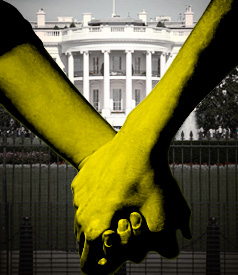
The Theory of the Stockholm Syndrome and President Obama: Frank Rich Reports

http://www.nytimes.com/2010/12/05/opinion/05rich.html?src=me&ref=general

All,

Frank Rich knows and understands what we all know and understand: If you allow your enemies to push you around and call you out of your name and make you look like a scared and spineless victim nothing good can possibly come of it either now or later--the bullies will only turn up the pressure and increasingly demand the malicious dismissal or annihilation of every single thing you are or say you are. Even an unfairly harassed 8 year old schoolkid cowering from surly assholes trying to take his lunch money understands this fact very clearly for what it is. Sometimes in politics as in life you just got to hit a muthafucka in the mouth as hard as you possibly can and fiercely defend what remains of your dignity, your humanity, and your self respect. But if you're a coward and won't fight back all you will get is one vicious beatdown after another...And by the way, you'll never have any money to purchase lunch...

Knowhamsayin' brothers and sisters?

I mean DAMN! Get a clue Mr. President...

Kofi


OP-ED COLUMNIST

All the President’s Captors
By FRANK RICH
December 4, 2010
New York Times


THOSE desperate to decipher the baffling Obama presidency could do worse than consult an article titled “Understanding Stockholm Syndrome” in the online archive of The F.B.I. Law Enforcement Bulletin. It explains that hostage takers are most successful at winning a victim’s loyalty if they temper their brutality with a bogus show of kindness. Soon enough, the hostage will start concentrating on his captors’ “good side” and develop psychological characteristics to please them — “dependency; lack of initiative; and an inability to act, decide or think.”

This dynamic was acted out — yet again — in President Obama’s latest and perhaps most humiliating attempt to placate his Republican captors in Washington. No sooner did he invite the G.O.P.’s Congressional leaders to a post-election White House summit meeting than they countered his hospitality with a slap — postponing the date for two weeks because of “scheduling conflicts.” But they were kind enough to reschedule, and that was enough to get Obama to concentrate once more on his captors’ “good side.”

And so, as the big bipartisan event finally arrived last week, he handed them an unexpected gift, a freeze on federal salaries. Then he made a hostage video hailing the White House meeting as “a sincere effort on the part of everybody involved to actually commit to work together.” Hardly had this staged effusion of happy talk been disseminated than we learned of Mitch McConnell’s letter vowing to hold not just the president but the entire government hostage by blocking all legislation until the Bush-era tax cuts were extended for the top 2 percent of American households.

The captors will win this battle, if they haven’t already by the time you read this, because Obama has seemingly surrendered his once-considerable abilities to act, decide or think. That pay freeze made as little sense intellectually as it did politically. It will save the government a scant $5 billion over two years and will actually cost the recovery at least as much, since much of that $5 billion would have been spent on goods and services by federal workers with an average yearly income of $75,000. By contrast, the extension of the Bush tax cuts to the $250,000-plus income bracket will add $80 billion to the deficit in two years, much of which will just be banked by the wealthier beneficiaries.

Obama didn’t even point out this discrepancy — as he might have, had he chosen to make a stirring call for shared sacrifice rather than just hand the Republicans a fiscal olive branch that they could then use as a stick to beat him. He was too busy tending to his other announcement of the week: dispatching Timothy Geithner to lead “negotiations” with the Republicans on the tax cuts. This presidency has been one long blur of such “negotiations” — starting with the not-on-C-Span horse-trading that allowed corporate players to blunt health care and financial regulatory reform. Next up is a “negotiation” with the United States Chamber of Commerce, which has spent well over $100 million trying to shoot down Obama’s policies over the last two years. It’s enough to arouse nostalgia for the “beer summit” with Henry Louis Gates Jr. and the Cambridge cop, which at least was transparent and did no damage to the public interest.

The cliché criticisms of Obama are (from the left) that he is a naïve centrist, not the audacious liberal that Democrats thought they were getting, and (from the right) that he is a socialist out to impose government on every corner of American life. But the real problem is that he’s so indistinct no one across the entire political spectrum knows who he is. A chief executive who repeatedly presents himself as a conciliator, forever searching for the “good side” of all adversaries and convening summits, in the end comes across as weightless, if not AWOL. A Rorschach test may make for a fine presidential candidate — when everyone projects their hopes on the guy. But it doesn’t work in the Oval Office: These days everyone is projecting their fears on Obama instead.

I don’t agree with almost anything Chris Christie, the new Republican governor of New Jersey, has to say. But the popularity of his leadership right now is instructive. New Jersey has voted Democratic in every presidential election since 1992, with Obama carrying the state by a landslide margin of almost 15 percentage points. Yet Christie now has a higher approval number (51 percent) in the latest Quinnipiac state poll than either Obama or New Jersey’s two senators, both Democrats.

Christie’s popularity among national right-wing activists and bloggers has been stoked by a viral YouTube video where he dresses down a constituent in a manner that recalls Ralph Kramden sending Alice “to the moon.” But the core of Christie’s appeal at home is that he explains passionately held views in concrete, plain-spoken detail. Voters know what he stands for and sometimes respect him for his forthrightness even when they reject the stands themselves. This extends to his signature issue — his fiscal and rhetorical blows against public education. He’s New Jersey’s most popular statewide politician despite the fact that a 59 percent majority in the state thinks public schools deserve more taxpayer money, not less.

G.O.P. propagandists notwithstanding, Christie’s appeal does not prove that New Jersey (and therefore the country) has “turned to the right.” It does prove that people want a leader with a strong voice, even if only to argue with it.

No one expects Obama to imitate Christie’s in-your-face, bull-in-the-china-shop shtick. But they have waited in vain for him to stand firm on what matters to him and to the country rather than forever attempting to turn non-argumentative reasonableness into its own virtuous reward. It’s clear now the shellacking was not the hoped-for wake-up call. For starters, Obama might have robustly challenged the election story line pushed by the G.O.P. both before and after Nov. 2 — that deficit eradication and tax cuts for all are voters’ No. 1 priority. Repeating it constantly — as McConnell and John Boehner do, brilliantly — does not make it true. But the myth becomes reality if there’s no leader to trumpet the counternarrative.

In the summer before the election, the NBC News/Wall Street Journal poll (of June 21) found that only 15 percent of respondents thought the deficit should be the government’s top priority (behind jobs and economic growth, at 33 percent); the Washington Post/ABC News survey just a week before Election Day found that only 7 percent chose the deficit as the most important issue influencing their vote (again well behind the economy, at 37 percent). After constant G.O.P. fear-mongering about the budget — some of it echoed, rather than countered, by Obama — deficit reduction did jump to first place in Nov. 2 exit polls as voters’ highest priority for the next Congress. The disciplined Republican message had turned the deficit into a catchall synonym for America’s entire economic health. But at 40 percent, deficit reduction still was neck and neck with “spending to create jobs” (37 percent). Cutting taxes was chosen by only 18 percent.

We’re now at the brink of a new economic disaster that will eventually yank a chicken out of every pot. The Center on Budget and Policy Priorities calculates that the extended Bush-era tax cuts will contribute by far the largest share to the next decade’s deficits — ahead of the recession’s drain on tax revenues, Iraq and Afghanistan war spending, TARP and Obama’s stimulus. The new Congress’s plan to block any governmental intervention on behalf of 15 million-plus jobless Americans guarantees that the unemployment rate, back up to 9.8 percent as of Friday, will remain intractable too.

Obama should have pounded home the case against profligate tax cuts for the wealthiest before the Democrats lost the Senate. Even now Warren Buffett — not a socialist, by the way — is making the case with a Christie-esque directness that usually eludes the president. “The rich are always going to say that, you know, just give us more money and we’ll all go out and spend more, and then it will trickle down to the rest of you,” he told Christiane Amanpour on “This Week” last Sunday. “But that has not worked the last 10 years, and I hope the American public is catching on.”

Everyone will have caught on by 2012, but that will be too late for many jobless Americans, let alone for Obama. As the economics commentator Jeff Madrick wrote in The Huffington Post, the unemployment rate has been above 7 percent only four times in a presidential election year since World War II — and in three of the four the incumbent lost (Ford, Carter, the first Bush). Reagan did win in 1984 with an unemployment rate of 7.2 percent, but the rate was falling rapidly (from a high of 10.8 two years earlier), and Reagan was as clear-cut in his leadership as Christie (only nicer).

But as Madrick adds, there has never been a sitting president over that period who has had to run with an unemployment rate as high as 8 percent — which is precisely where the Fed’s most recent forecasts predict the rate could be mired when Obama faces the voters again in 2012. You’d think he’d be one Stockholm Syndrome victim with every incentive to break out.

It's Clear that Paul Krugman Knows How To Lead and President Obama Doesn't

http://www.nytimes.com/2010/12/06/opinion/06krugman.html?src=ISMR_AP_LO_MST_FB

All,

As I've said a thousand times: More than anything else it takes genuine courage and conviction to be a real leader and the consummate test of strength and independence for any real leader is whether he or she is capable of standing on and for principle under the most difficult, dire, and challenging circumstances. The bottomline here is that Paul Krugman understands that fundamental and essential fact and President Obama doesn't...

Kofi


OP-ED COLUMNIST
Let’s Not Make a Deal
By PAUL KRUGMAN
December 5, 2010
New York Times

Back in 2001, former President George W. Bush pulled a fast one. He wanted to enact an irresponsible tax cut, largely for the benefit of the wealthiest Americans. But there were Senate rules in place designed to prevent that kind of irresponsibility. So Mr. Bush evaded the rules by making the tax cut temporary, with the whole thing scheduled to expire on the last day of 2010.

The plan, of course, was to come back later and make the thing permanent, never mind the impact on the deficit. But that never happened. And so here we are, with 2010 almost over and nothing resolved.

Democrats have tried to push a compromise: let tax cuts for the wealthy expire, but extend tax cuts for the middle class. Republicans, however, are having none of it. They have been filibustering Democratic attempts to separate tax cuts that mainly benefit a tiny group of wealthy Americans from those that mainly help the middle class. It’s all or nothing, they say: all the Bush tax cuts must be extended. What should Democrats do?

The answer is that they should just say no. If G.O.P. intransigence means that taxes rise at the end of this month, so be it.

Think about the logic of the situation. Right now, the Republicans see themselves as successful blackmailers, holding a clear upper hand. President Obama, they believe, wouldn’t dare preside over a broad tax increase while the economy is depressed. And they therefore believe that he will give in to their demands.

But while raising taxes when unemployment is high is a bad thing, there are worse things. And a cold, hard look at the consequences of giving in to the G.O.P. now suggests that saying no, and letting the Bush tax cuts expire on schedule, is the lesser of two evils.

Bear in mind that Republicans want to make those tax cuts permanent. They might agree to a two- or three-year extension — but only because they believe that this would set up the conditions for a permanent extension later. And they may well be right: if tax-cut blackmail works now, why shouldn’t it work again later?

America, however, cannot afford to make those cuts permanent. We’re talking about almost $4 trillion in lost revenue just over the next decade; over the next 75 years, the revenue loss would be more than three times the entire projected Social Security shortfall. So giving in to Republican demands would mean risking a major fiscal crisis — a crisis that could be resolved only by making savage cuts in federal spending.

And we’re not talking about government programs nobody cares about: the only way to cut spending enough to pay for the Bush tax cuts in the long run would be to dismantle large parts of Social Security and Medicare.

So the potential cost of giving in to Republican demands is high. What about the costs of letting the tax cuts expire? To be sure, letting taxes rise in a depressed economy would do damage — but not as much as many people seem to think.

A few months ago, the Congressional Budget Office released a report on the impact of various tax options. A two-year extension of the Bush tax cuts, it estimated, would lower the unemployment rate next year by between 0.1 and 0.3 percentage points compared with what it would be if the tax cuts were allowed to expire; the effect would be about twice as large in 2012. Those are significant numbers, but not huge — certainly not enough to justify the apocalyptic rhetoric one often hears about what will happen if the tax cuts are allowed to end on schedule.

Oh, and what about confidence? I’ve been skeptical about claims that budget deficits hurt the economy even in the short run, because they undermine confidence in the government’s long-run solvency. Advanced countries, I’ve argued, have a lot of fiscal leeway. But anything that makes permanent extension of obviously irresponsible tax cuts more likely also sends a strong signal to investors: it says, “Hey, we aren’t really an advanced country; we’re a banana republic!” And that can’t be good for the economy.

Last but not least: if Democrats give in to the blackmailers now, they’ll just face more demands in the future. As long as Republicans believe that Mr. Obama will do anything to avoid short-term pain, they’ll have every incentive to keep taking hostages. If the president will endanger America’s fiscal future to avoid a tax increase, what will he give to avoid a government shutdown?

So Mr. Obama should draw a line in the sand, right here, right now. If Republicans hold out, and taxes go up, he should tell the nation the truth, and denounce the blackmail attempt for what it is.

Yes, letting taxes go up would be politically risky. But giving in would be risky, too — especially for a president whom voters are starting to write off as a man too timid to take a stand. Now is the time for him to prove them wrong.


Thursday, December 2, 2010

Whose Side Is The President On?

http://www.nytimes.com/2010/12/01/us/politics/01bai.html?_r=1&nl=us&emc=politicsemailemb1
All,

What the following article reluctantly yet quite accurately suggests--often even in spite of itself!--is that President Obama is essentially a shape-shifting political opportunist and careerist who consistently uses a solipsistic notion of "pragmatism" as a thinly veiled cover for avoiding a clear and concrete public commitment to any specific ideological or political position on any major issue. This schizophrenic and clearly obsessive tendency to try to rhetorically play up to and court both liberals and conservatives in both political parties while simultaneously asserting/pretending that he is personally "above the fray" of actual political and ideological combat is what has effectively ensured that Obama has become a largely inept, infuriating, and ironically polarizing figure. By both strategically and tactically avoiding or simply running away in fear or disdain from genuine political conflict (i.e. standing on principle for and/or against any given position at any given time), Obama has willfully and rather petulantly painted himself into a corner in which he comes off to many as what he most unfortunately really appears to be: a man either without the courage of his convictions or someone who lacks any true convictions at all--which is to say a passive-aggressive political hack cynically masquerading as a "transcendent" statesman.

In any event this dispiriting and anxiety inducing song-and-dance routine on his part is finally going to receive the fundamental challenge to his Presidency and his agenda that he truly deserves and that we must firmly DEMAND that he take complete and undeniable responsibility and accountability for. Finally between now and the presidential election of 2012 we will all find out conclusively who this President really is, whose side he is on, and what he truly stands for minus the insipid and cowardly BS platitudes about "bipartisanship consensus" and "mutual compromise" on the paramount and absolutely crucial issues of unemployment, poverty, Wall Street, the banks, financial and corporate institutions (i.e. Big Business), the debt crisis, domestic public policy, and global warfare, etc. The chickens have finally come home to roost for good in this administration and the President and the Democratic Party--as well as the general American left!--won't be able to simply sidestep or avoid this utterly transparent and compelling fact any longer. The traditional notion of "put up or shut up" or "lead, follow, or get out of the way" in our politics has never been clearer or more necessary than right now in this country and no one--not least the President of the United States-- will be able to escape either the truth or consequences of our collective responsibility...

Kofi


Debt-Busting Issue May Force Obama Off Fence
By MATT BAI
November 30, 2010
New York Times
WASHINGTON

When President Obama’s fiscal commission offers its proposals on Wednesday, after the release by several liberal groups of their own debt-busting plans this week, the essential decision facing Mr. Obama in these last two years of his term will have been neatly framed. He can side either with centrist reformers in both parties, who would overhaul both cherished entitlements and the tax system, or with traditional liberals, who prefer new levies on the wealthy and substantial cuts in military spending.

In other words, the suddenly pressing issue of the debt will force Mr. Obama to choose, at last, between the dueling, ill-defined promises of his presidential campaign — between a “postpartisan” vision of government on one hand and a liberal renaissance on the other.

Partisans on either side in Washington, of course, would tell you that Mr. Obama has already made this decision — although they differ on which side he’s chosen.

Republicans depict the president as having governed just to the left of Hugo Chávez, nationalizing companies while centralizing power in the hands of the federal bureaucracy. Liberals complain that Mr. Obama has time and again abandoned his party’s principles in search of some centrist consensus that doesn’t exist, and they point to his creating a bipartisan fiscal commission as a case in point.

In truth, though, Mr. Obama has almost invariably sought to position himself halfway between traditionalism and reform, just as his vague notions of “hope” and “change” during the 2008 campaign were meant to appeal simultaneously to both disaffected independent voters and core progressives. And in virtually every case, he has satisfied pretty much no one.

Take the example of Mr. Obama’s first initiative, the roughly $800 billion stimulus bill, which independent and conservative voters revile as a huge government handout, while liberals deride it as too small and too timid. Or look at the health care law, which struck independents as liberal overreach and yet bitterly disappointed the left because it didn’t include a government-run plan. Just where Mr. Obama actually lives on the ideological continuum — that is, exactly what kind of Democrat he sees when he looks in the mirror to examine his busted lip — is the most vexing question of his presidency.

The body of Mr. Obama’s writing and experiences before he became a presidential candidate would suggest that he is instinctively pragmatic, typical of an emerging generation that sees all political dogma — be it ’60s liberalism or ’80s conservatism — as anachronistic. Privately, Mr. Obama has described himself, at times, as essentially a Blue Dog Democrat, referring to the shrinking caucus of fiscally conservative members of the party.

In a 2005 blog post that may be as valuable as either of his books in identifying the inner president, then-Senator Obama castigated his own party’s ideological activists for their attacks on Democratic senators who had voted to confirm John G. Roberts Jr. as chief justice. “To the degree that we brook no dissent within the Democratic Party, and demand fealty to the one, ‘true’ progressive vision for our country, we risk the very thoughtfulness and openness to new ideas that are required to move this country forward,” Mr. Obama, who voted against confirming Chief Justice Roberts, wrote then.

At the same time, Mr. Obama has been loath to publicly disown his base on any specific issue, even where he disagreed and where his political prospects might have benefited. And this probably says more about his personal philosophy than it does about his ideology.

You have to remember that Mr. Obama first entered politics in Illinois in the mid-1990s, when “triangulation,” as practiced by Bill Clinton, was becoming a vile curse word in liberal circles. Mr. Clinton had repeatedly solidified his own standing by putting a good bit of distance between himself and his own supporters on the left — a tactic liberals found both dispiriting and distasteful.

Part of the contrast Mr. Obama sought to draw with Hillary Rodham Clinton during the 2008 campaign was that you would never catch him triangulating against his friends for political gain. It was a point of pride for Mr. Obama that he would have no so-called Sister Souljah moments, even when he vehemently disagreed with liberals.

The problem with this stance, two years into his presidency, is that it seems to have put Mr. Obama in something of a box. Since he isn’t willing to break publicly with liberals, independent and conservative voters tend to see him as a tool of the left. And since he generally won’t do exactly what the left wants him to do, he ends up with very little gratitude from his own party.

This political no-man’s land, however, is about to become uninhabitable. The national debt is near the top of any list of voter concerns at the moment, and when his commission votes Friday on its final recommendations, Mr. Obama will be handed concrete and contrasting options for addressing it.

Budget experts from both parties agree, for instance, with the commission’s co-chairmen, Erskine B. Bowles and Alan K. Simpson, that some reduction in Social Security benefits will be essential to the nation’s long-term fiscal stability. But liberal groups are adamant about preventing any change to the structure of the program, which they see as the last unassailable pillar of New Deal liberalism.

Should Mr. Obama embrace the commissioners’ argument on Social Security, the sense of betrayal on the left will be so intense that he could conceivably draw a primary challenge over it in 2012.

Another critical question is whether Mr. Obama will embrace some overhaul of the tax code that leads not just to broader payroll taxes but also to reductions in income tax rates in return for eliminating many tax breaks, as the commission’s chairmen suggested in their initial draft. Liberals propose raising taxes on wealthier Americans and businesses instead.

Mr. Obama’s opening move this week in the fast-forming budget debate was to propose a freeze in salaries for federal employees — a classic, Obama-like gambit that mildly annoyed the left and will do little to assuage public fears about spending. More consequential decisions are coming, however, and they will tell us much about the kind of president Mr. Obama still intends to be.


Wednesday, December 1, 2010

Jean-Luc Godard vs. Cinema: The Filmmaker as Critic, Activist, and Auteur

Jean-Luc Godard
(b. December 3, 1930)
Jean-Luc Godard Vs. Cinema: The Filmmaker as Critic, Activist, and Auteur
by Kofi Natambu
The Panopticon Review
© December 2010
In many ways the history of cinema is the history of 20th century Western modernism itself as far as theoretical, philosophical, and creative conceptions and representations of the Real are concerned. As such the filmmaker as both director and writer has always been compelled to at least acknowledge if not openly struggle with the corresponding yet often antagonistic challenges of aesthetic and social criticism as an integral part of the very process and realization of the actual experience of making film itself--especially in a genre driven and narrative based medium rooted in the structural and institutional context of monopoly capitalist economics and thus a commercial profit system. As a result the social, ideological, and political dimensions of the art were never really divorced from the consumerist demands, desires, and expectations of its audience(s) or the economic machinations of the system of production that undergirds its existence.
It is in this sense that modernism in film as exemplified by the rise and eventual domination of the industrialized studio system of producing and distributing film as both art object and cultural commodity became synonymous with the aesthetic examination, creative manipulation, and expressive redeployment of social and cultural history. Thus from the very beginning of its emergence as a self consciously cultural and social force after 1915 (via the rise of the American director D.W. Griffith and his aggressively revisionist take on U.S. history in 'The Birth of A Nation' through his simultaneously innovative uses of the moving image and the mise-en-scene as social commentary, populist propaganda, and epic theatre) the imaginative and interpretive power and influence of film as a mass based social and cultural phenomenon and expression shaped our collective perceptions and consciousness of the often contentious relationship of modern art to society via various forms of institutionalized social authority and cultural traditions. It was in this larger historical context that cinema became a fecund and self reflexive source for its creative artists to actively intervene on and transform these given social, cultural, and political traditions and orthodoxies. This intervention took place not only at the level of the composition of the visual image and production design but the expressive dimensions of acting and screen dialogue. With the transformative rise of sound, music, and the human voice as corresponding aspects of the image onscreen the role of the cinematic artist as individual aesthetic force began to assert itself. As a result the commercial rise of the 'star system' for actors found a parallel correspondence in the critical and commercial awareness and celebration of the director-as-auteur (author) in the cinematic marketplace. These developments in the art of filmmaking began to have a profound effect of the mass audience's reception of the work of these artists and also was the impetus for new intellectual and critical discourses to emerge about the purpose, worth, and intentions of film as an artistic medium.
The convergence of these creative, critical, and industrial realities after World War I led to an explosion of film production on a global scale following the technological innovation of sound in movies in 1927. From the 1930s on this convergence of the aesthetic, economic, and cultural/social dimensions of the mass cinematic experience quickly led to a veritable revolution among directors, writers, and critics throughout the U.S., Europe, Asia, and Latin America (and later in Africa) who embraced the film auteur/author template as their own. This international community of writers, directors, actors, cinematographers, technicians, composers, and designers often saw themselves as film artists from other sovereign nation-states sought to position themselves and their work as either localized vernacular extensions of the commercial Hollywood genre film tradition or as stylistically ironic neorealist critics of the U.S. studio system.
Thus from the late 1930s to the late 1950s this international bifircation of institutionalized genre cinema and independent neorealist auteurism led to the precipitous rise of an innovative new generation of filmmakers who influenced by both stylistic tendencies began to emerge after the second World War and followed directly in the footsteps of such major directors and writers of the 1940s and '50s era as Orson Welles, Billy Wilder, Howard Hawks, Nicholas Ray, Sam Fuller, and Alfred Hitchcock (U.S.), Roberto Rossellini, Vittorio de Sica, and Luchino Visconti (Italy), Satyajit Ray (India), Akira Kurosawa and Kenji Mizoguchi (Japan), Jean Renoir and Jean Vigo (France), among a select number of other filmmakers from Europe, Asia, and South America who also sought a new artistic, critical, and ideological relationship with cinema and its history.
It was this critical historical legacy of the modern cinema as an assertive aesthetic and social force in the expansion of discourses available to the artist as both technician and poet, as well as narrator and documentarian, that attracted the rapt attention of a number of young Parisian cineastes, intellectuals, and social critics in France during the mid and late 1950s to create what became known popularly as the French 'New Wave' (Nouvelle Vague). This movement of young film buffs and aspiring writers and directors who spent many long hours together in the many cineaste club theatres of Paris after the second World War was led by a small but highly dedicated group, many of whom became world famous as a result as producing, writing, and directing their own films from 1959 on. Many of their names are now legion in global film history: Francois Truffaut, Claude Chabrol, Jacques Rivette, Eric Rohmer and perhaps the most influential and famous/infamous of them all, Jean-Luc Godard.
What the 'New Wave' of filmmakers sought was nothing short of an entirely new social, economic, creative, and ideological contract with the technical, industrial, and corporate apparatus that was largely responsible for film's production, distribution, and institutional role in the larger matrix of cultural relations that determined and in many ways overdetermined one's public access to cinema. In seeking both an implicit and explicit critique of this structural and thus philosophical framework of what constituted cinema Godard and his comrades, colleagues, co-conspirators, and fellow artists/critics not only wrote about, sponsored, promoted, investigated, supported, and/or dismissed what they saw as either worthy of their interest or inimical to it. Within that vast sphere of often highly spirited contentious debates and socially engaged activity vis-a-vis the massive commercial apparatus that governed most cinematic production and distribution on a global scale lay the larger contextual reality and creative agenda of what constituted the very form(s) and content of what Godard and his New Wave colleagues (and their often highly personal and aesthetically competitive visions) not only thought cinema was and wasn't but most importantly could be.
​


http://www.google.com/hostednews/afp/article/ALeqM5hlDrHp02kAqTZXx_aZfyUZH8CFqQ?docId=CNG.94591e60ea7188c66e691af71595f0f4.351 

'New Wave' film legend Godard turns 80
By Emma Charlton (AFP)


PARIS — "New Wave" director Jean-Luc Godard, who turned European filmmaking upside-down in the 1960s and who counts the likes of Pedro Almodovar and Quentin Tarantino as his modern-day heirs, turns 80 on Friday.


The French-Swiss director shot to fame in 1960 with "Breathless" in which Jean Seberg played a cropped-haired American in Paris, following up with such classics as "Alphaville" and "Contempt" starring screen icon Brigitte Bardot.

Leader of the "New Wave" generation of filmmakers along with the likes of Francois Truffaut, Godard re-wrote the film rulebook with movies that shunned studio sets in to shoot outside, using improvised scripts and natural sound.

"In the mid-60s, Godard was Picasso: they were the two most famous artists in the world," summed up Jean-Michel Frodon, former head of the Cahiers du Cinema film review that nurtured the "New Wave".

"He was the star of his generation. And even today, you can't talk 20 minutes with David Lynch without him mentioning Godard. Or with David Cronenberg, Gus Van Sant, Jim Jarmusch."

But after a decade of glory, Godard made a clean break with the film establishment in May 1968, after he and a band of fellows hijacked the Cannes festival to draw attention to the student revolt taking place outside.

For the past 30 years Godard has lived as a semi-recluse in the Swiss village of Rolle, from where he sporadically releases auteur films for an audience of die-hard fans.

This year he showed a film at Cannes, "Film Socialisme", a kaleidoscope of image, sound and text journeys through history and ideas, from ancient times to the Holocaust -- but stayed away from the glitzy Riviera festival itself.

Godard's image has also been tarred of late -- especially in the United States -- by charges of anti-Semitism, fuelled by a staunch anti-Zionist and pro-Palestinian stance and by interviews on the Jewish influence in Hollywood.

But his work at the top of his game left a lasting mark on world filmmaking: at this year's Oscars, he received a lifetime achievement award for creating "a new kind of cinema" -- although true to his reputation he stayed at home.

"In Brazil, Japan or China, filmmakers all say Godard helps them think about their own work," said Frodon.
"Pedro Almodovar, for instance, told me how Godard was a sort of intellectual companion who helps him think when he is on a shoot. It helps him, just as it helps Lars von Trier."

And Tarantino's production company "Band apart" is a direct tribute to the director's 1964 movie "Band of Outsiders".

What exactly did Godard bring to filmmaking? "A new way of telling a story, the length of his shots, the rythmic use of editing," said Frodon. "And a way of asking what it means to show a woman's face, her body."

"But more than anything, in each of Godard's shots there is an extraordinary beauty. He is without a doubt the director who best filmed the sky, the trees, nature -- and women too, although in that area he had more competition."

Godard, who acquired Swiss nationality at the age of 21, has said he chose the village of Rolle to settle 30 years ago with his Swiss partner the director Anne-Marie Mieville, "because it is nowhere."
"People here leave him alone," Daniel Belotti, mayor of the village of 6,000 inhabitants, told AFP. "He has his habits, he walks his dog, goes to the cafe on main street, buys a newspaper or cigars."

"I get the sense he does not really want us to celebrate this moment in time," said Frederic Maire of the Swiss cinematheque. "He thinks of the future, his last film is incredibly modern... when you look at his work, it seems he is 20 years old."

Copyright © 2010 AFP. All rights reserved.

Tuesday, November 30, 2010

Chris Hedges On The Paramount Necessity of Resistance in the Fight For Real Change

http://www.truth-out.org/real-hope-is-about-doing-something65501


All,

As usual the indefatigable and fearless Chris Hedges goes for the gusto--like it or not. It takes real intellectual and moral courage these daze to find a reason to stubbornly fight for what one knows is right and to relentlessly call the many responsible parties out for their betrayal even if the odds are overwhelmingly against you and so many people think you're a fool to seriously demand something better and actively stand on principle to try to bring it about. Thankfully, Hedges is such a human being in a society and culture that has passively and tragically largely given itself over to massive institutional and pseudophilosophical forces that clearly seek to manipulate, corrupt, and destroy the world in the name of power, greed, hatred, hubris, hypocrisy, lies, fear, ignorance, and arrogance. Yet Hedges continues to write, fight, and organize in the face of a contemptuous Leviathan we stupidly and insanely call and trumpet as "American Exceptionalism." Meanwhile, Hedges and a few brave souls like him absolutely refuses to kowtow to and play the infantile supplicant for the rancid nativist aristocracy who typically are butt naked Emperors genuflecting to their own delusional fantasies of grandeur. The good news in the wake of all the ugly noise and despair is that Hedges knows better and continues to ACT on that knowledge--and so do we...

Kofi


Real Hope Is About Doing Something
Monday 29 November 2010
by: Chris Hedges | Truthdig | Op-Ed


(Image: Jared Rodriguez / t r u t h o u t; Adapted: afagen, Brett Sayer)


On Dec. 16 I will join Daniel Ellsberg, Medea Benjamin, Ray McGovern and several military veteran activists outside the White House to protest the futile and endless wars in Iraq and Afghanistan. Many of us will, after our rally in Lafayette Park, attempt to chain ourselves to the fence outside the White House. It is a pretty good bet we will all spend a night in jail. Hope, from now on, will look like this.

Hope is not trusting in the ultimate goodness of Barack Obama, who, like Herod of old, sold out his people. It is not having a positive attitude or pretending that happy thoughts and false optimism will make the world better. Hope is not about chanting packaged campaign slogans or trusting in the better nature of the Democratic Party. Hope does not mean that our protests will suddenly awaken the dead consciences, the atrophied souls, of the plutocrats running Halliburton, Goldman Sachs, ExxonMobil or the government.

Hope does not mean we will halt the firing in Afghanistan of the next Hellfire missile, whose explosive blast sucks the oxygen out of the air and leaves the dead, including children, scattered like limp rag dolls on the ground. Hope does not mean we will reform Wall Street swindlers and speculators, or halt the pillaging of our economy as we print $600 billion in new money with the desperation of all collapsing states. Hope does not mean that the nation’s ministers and rabbis, who know the words of the great Hebrew prophets, will leave their houses of worship to practice the religious beliefs they preach. Most clerics like fine, abstract words about justice and full collection plates, but know little of real hope.

Hope knows that unless we physically defy government control we are complicit in the violence of the state. All who resist keep hope alive. All who succumb to fear, despair and apathy become enemies of hope. They become, in their passivity, agents of injustice. If the enemies of hope are finally victorious, the poison of violence will become not only the language of power but the language of opposition. And those who resist with nonviolence are in times like these the thin line of defense between a civil society and its disintegration.

Hope has a cost. Hope is not comfortable or easy. Hope requires personal risk. Hope does not come with the right attitude. Hope is not about peace of mind. Hope is an action. Hope is doing something. The more futile, the more useless, the more irrelevant and incomprehensible an act of rebellion is, the vaster and the more potent hope becomes. Hope never makes sense. Hope is weak, unorganized and absurd. Hope, which is always nonviolent, exposes in its powerlessness the lies, fraud and coercion employed by the state. Hope does not believe in force. Hope knows that an injustice visited on our neighbor is an injustice visited on us all. Hope posits that people are drawn to the good by the good. This is the secret of hope’s power and it is why it can never finally be defeated. Hope demands for others what we demand for ourselves. Hope does not separate us from them. Hope sees in our enemy our own face.

Hope is not for the practical and the sophisticated, the cynics and the complacent, the defeated and the fearful. Hope is what the corporate state, which saturates our airwaves with lies, seeks to obliterate. Hope is what our corporate overlords are determined to crush. Be afraid, they tell us. Surrender your liberties to us so we can make the world safe from terror. Don’t resist. Embrace the alienation of our cheerful conformity. Buy our products. Without them you are worthless. Become our brands. Do not look up from your electronic hallucinations to think. No. Above all do not think. Obey.

W.H. Auden wrote:

Faces along the bar
Cling to their average day:
The lights must never go out,
The music must always play,
All the conventions conspire
To make this fort assume
The furniture of home;
Lest we should see where we are,
Lost in a haunted wood,
Children afraid of the night
Who have never been happy or good.

The powerful do not understand hope. Hope is not part of their vocabulary. They speak in the cold, dead words of national security, global markets, electoral strategy, staying on message, image and money. The powerful protect their own. They divide the world into the damned and the blessed, the patriots and the enemy, the rich and the poor. They insist that extinguishing lives in foreign wars or in our prison complexes is a form of human progress. They cannot see that the suffering of a child in Gaza or a child in the blighted pockets of Washington, D.C., diminishes and impoverishes us all. They are deaf, dumb and blind to hope. Those addicted to power, blinded by self-exaltation, cannot decipher the words of hope any more than most of us can decipher hieroglyphics. Hope to Wall Street bankers and politicians, to the masters of war and commerce, is not practical. It is gibberish. It means nothing.

I cannot promise you fine weather or an easy time. I cannot assure you that thousands will converge on Lafayette Park in solidarity. I cannot pretend that being handcuffed is pleasant. I cannot say that anyone in Congress or the White House, anyone in the boardrooms of the corporations that cannibalize our nation, will be moved by pity to act for the common good. I cannot tell you these wars will end or the hungry will be fed. I cannot say that justice will roll down like a mighty wave and restore our nation to sanity. But I can say this: If we resist and carry out acts, no matter how small, of open defiance, hope will not be extinguished. If all we accomplish is to assure a grieving mother in Baghdad or Afghanistan, a young man or woman crippled physically and emotionally by the hammer blows of war, that he or she is not alone, our resistance will be successful. Hope cannot be sustained if it cannot be seen.

Any act of rebellion, any physical defiance of those who make war, of those who perpetuate corporate greed and are responsible for state crimes, anything that seeks to draw the good to the good, nourishes our souls and holds out the possibility that we can touch and transform the souls of others. Hope affirms that which we must affirm. And every act that imparts hope is a victory in itself.

Also from Auden:

Defenseless under the night
Our world in stupor lies;
Yet, dotted everywhere,
Ironic points of light
Flash out wherever the Just
Exchange their messages:
May I, composed like them
Of Eros and of dust,
Beleaguered by the same
Negation and despair,
Show an affirming flame.


Chris Hedges is a senior fellow at The Nation Institute. His newest book is “Death of the Liberal Class.” More information on the Dec. 16 protest can be found at http://www.stopthesewars.org

Monday, November 29, 2010

American Politics 2010: Playing Infantile Games With Our Future Instead of Addressing Social and Economic Reality

http://www.nytimes.com/2010/11/30/us/politics/30freeze.html?_r=1&emc=na

All,

This is still more bullshit political gamesmanship and time diverting antics by President Obama masquerading as a honest and forthright attempt to address the red herring issue of "deficit spending" (which is now nothing more than a demagogic code phrase used by the wildly profligate and irresponsible Republican hypocrites in Congress who under the super corporate regime of Bushwhacker 2 was responsible for the largest increase in the federal deficit in the entire history of the United States!). The reason that the issue of the deficit is fundamentally a red herring and thus largely a manufactured political crisis at this point is not that there isn't a major problem with the federal budget being seriously out of whack economically as a direct result of a decade of massive tax cuts for the rich, virtually no legal or governmental regulation at all of Wall Street and the general financial sector of the economy, and a stubbornly insistent and steadfast refusal on the part of the Bush rightwing federal government and the private corporate sector to properly invest in education, health care reform, labor protection, social and economic infrastructure, a sound and progressive energy policy, real climate control, and a genuinely strong and effective environmental protection policy. Clearly all these things and more have thus contributed to the huge growth of a clearly untenable and absolutely unsustainable budgetary mess that MUST be addressed in a serious and responsible manner by the government at some point...

So NO the reason that the issue of "deficit spending" is a political red herring is NOT that major reform and real "change" is not needed to bring the government's and the larger economy's house in order. No. The reason is that neither the Democrats nor the Republicans want to do what is really necessary to fundamentally improve and transform the economy and the general society in the progressive direction of a far more just, fair, democratic, and equitable system than what currently exists. That would require that the wealthy elites and elected political representatives of every branch of government be held directly accountable and responsible on a political, ethical, economic and ideological scale that was unprecedented in American history. You know--actual social and economic Democracy instead of the criminally corrupt Plutocracy that currently dominates and controls our political and economic system...

Meanwhile President Obama and the two major political parties keep playing an irresponsible, time wasting, very dangerous, and ultimately lethal cat-and-mouse game of brinksmanship to see who blinks first in public from the self serving standpoint of the 2012 electoral sweepstakes. What all this grandstanding (and especially among the Republicans and their demented "Tea Party" cohorts) petty vindictive tactics really means is that NOTHING important, substantive, real, necessary, or useful will emerge from either major political party to solve or seriously address any of the many major problems and crises facing the American people in general and especially the poor, working, and lower middle class who constitute the overwhelming majority of those citizens being ravaged and destroyed by the current economy and civil society...

Kofi


Obama to Freeze Pay for Most Federal Workers
By PETER BAKER
November 29, 2010
New York Times


WASHINGTON — President Obama plans to announce a two-year pay freeze for civilian federal workers on Monday in his latest move intended to demonstrate concern over sky-high deficit spending.

The president’s proposal will effectively wipe out plans for a 1.4 percent across-the-board raise in 2011 for 2.1 million civilian federal government employees, including those working at the Defense Department, but the freeze would not affect the nation’s uniformed military personnel. The president has frozen the salaries of his own top White House staff members since taking office 22 months ago.

“Clearly this is a difficult decision,” said Jeffrey Zients, deputy director of the Office of Management and Budget and the government’s chief performance officer. “Federal workers are hard-working and dedicated.” But given the deficit, Mr. Zients added, “we believe this is the first of many difficult steps ahead.”

The pay freeze will save $2 billion in the current fiscal year that ends in September 2011, $28 billion over five years and more than $60 billion over 10 years, officials said. That represents just a tiny dent in a $1.3 trillion annual deficit, but it offers a symbolic gesture toward public anger over unemployment, the anemic economic recovery and rising national debt.

Mr. Zients said the president planned to announce the plan on Monday because of an approaching legal deadline for submitting a pay plan to Congress. But by doing it now, the president also effectively gets ahead of Republicans who have been talking about making such a move once they take over the House, and assume more seats in the Senate, in January. Some Republicans have gone further, proposing to slash federal worker salaries.

The number of federal workers making more than $150,000 a year has grown 10-fold in the last five years and doubled since Mr. Obama took office, according to a USA Today study this month. Since 2000, federal pay and benefits have increased 3 percent annually above inflation, compared with 0.8 percent for private sector workers, according to data cited by the newspaper.

This is not the first time Mr. Obama has addressed government pay to make a political point. In addition to freezing the salaries of top White House staff members when he took office, he later extended that freeze to political appointees throughout the government and canceled their bonuses.

The chairmen of a fiscal commission appointed by Mr. Obama have proposed a three-year freeze for federal employees in a draft report. The commission is supposed to issue a final report by Wednesday.