Sunday, May 27, 2012

Frank Rich On America's Ongoing 'Post-Racial' Farce and Its Profound and Disturbing Consequences For U.S. Culture and Social Reality

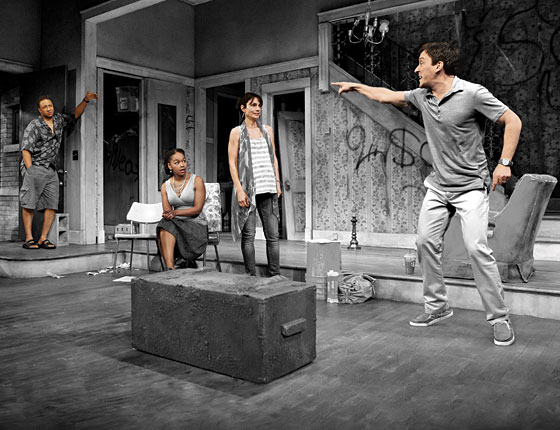
2009: Clybourne Park
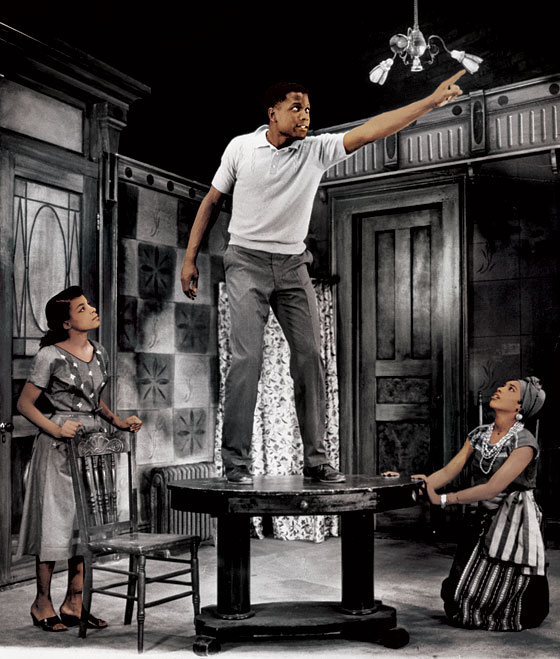
1959: A Raisin in the Sun
(Photo: Bettmann/Corbis)


"History repeats itself. The first time as tragedy, the second time as farce"
--Karl Marx


http://nymag.com/frank-rich/

http://nymag.com/print/?/news/frank-rich/racism-2012-5/index1.html

"That Norris takes a bleak—albeit frequently hilarious—view of our racial state of affairs is not hard to fathom. For all the national chatter about a “post-racial America” following the 2008 election, America seems more obsessed with race than ever, if less honest about it, since Obama strode onto the national stage. If the official milestones of his administration thus far include the passage of the stimulus and the Affordable Care Act, the killing of Osama bin Laden, and the endorsement of gay marriage, they have often been upstaged by the red-letter incidents of racial conflict that have steadily rolled out on a parallel track. Just a short list would include: the arrest of Henry Louis Gates Jr. in Cambridge; the hysterical tea-party rally against health-care reform that showered obscenities on black congressmen entering the Capitol; the ousting of the African- American Department of Agriculture worker Shirley Sherrod after she was libeled as a racist; the execution of Troy Davis in Georgia; the killing of Trayvon Martin in Florida; and, this month, the protest of more than 40 percent of West Virginia Democratic-primary voters, who pulled the lever for an obscure white federal- prison inmate rather than endorse a second run for the incumbent president of their own party. Last week brought the pièce de résistance: the Times revelation of a proposed super-PAC TV commercial that would slime Obama as pretending to be a “metrosexual black Abe Lincoln.” With material this good, it’s hard for a playwright to keep up. But Norris comes close."
--Frank Rich
All,

As I've said many times before our ongoing identification with, and ongoing submission to, the reigning oppressive ideologies and practices of our present historical epoch is yet another massive indictment of the typically unrestrained hatred, hubris, and hypocrisy of our current society and culture and that its historically vile and always pervasive racism, sexism, classism, and homophobia has become even MORE blatantly transparent since Obama was elected President in 2008. The great Frank Rich who has the extraordinary distinction of being not only the major political journalist of our time but also the best American drama critic of the past 30 years reveals in the following essay/review on the Pulitzer Prize winning playwright Bruce Norris's play Clybourne Park, a scathing satire and theatrical attack on the lies, contradictions, hypocrisies, bad faith, phony posturing, mindless cruelty, delusional platititudes, venal demagoguery, and false consciousness permeating so-called "race relations" in the United Hates today, that what we are utterly failing to honestly confront both in our art and our politics today is the stark REALITY of how and why White Supremacy as doctrine and practice (and its always equally tenacious partners-in-crime Capitalism and Patriarchy) continues to RULE AND DOMINATE American society and culture in all of its social, institutional, and spiritual aspects and dimensions. Please read the following masterful essay and pass the word--especially to ALL AMERICAN ARTISTS AND THE GENERAL CITIZENRY...

Kofi


Post-Racial Farce

Since America elected its first black president, the conversation on race has turned just as loopy as the hilarious and audacious Clybourne Park.

By Frank Rich
May 20, 2012
NEW YORK


Eight times a week, audiences at the play Clybourne Park are laughing at jokes as racist as any ever heard in a modern Broadway theater. While the audiences are mostly (though not exclusively) white, the racism onstage does meet a basic diversity quota. No sooner does a white man ask and answer the question “What’s long and hard on a black man?” than he is countered by a black female antagonist posing the riddle “Why is a white woman like a tampon?” Unlike the intentionally tasteless gags minted by the South Park guys at The Book of Mormon around the corner, these jokes were not written to sow escapist mirth. They are more mean-spirited than funny. The audience’s laughter is triggered not by the characters’ wit, which is minimal, but by the sheer audacity of their racial volleys. It is the audacity of rage, not hope.

The play’s 52-year-old author, Bruce Norris, is white. He has already won the Pulitzer Prize for this work and next month could win the Tony, too. Though Clybourne Park didn’t arrive on Broadway until this spring, it has been a cultural fixture during much of the Obama presidency. Following its Off Broadway premiere at Playwrights Horizons in early 2010, it has been produced in Washington, D.C.; San Francisco; Los Angeles; London (where it won the Tony equivalent, the Olivier); and Obama’s own town of Chicago. Chicago is also where the play is set, in two very different American eras 50 years apart—1959 (Act I) and 2009 (Act II). Or nominally different, anyway. Clybourne Park says that when it comes to race in America, not that much has changed over the past half-century, the historic arrival of an African-American family in the White House notwithstanding.

A Scene From A Raisin in the Sun
A Scene From Clybourne Park

Both halves of his play are about a fight over a plain little house in the (fictional) neighborhood of Clybourne Park. In 1959, a three-generation black family from a ghetto on the South Side has just purchased it and is preparing to move in—over the objections of a neighborhood association that wants to keep its enclave lily-white. By 2009, that battle over integration is half-forgotten ancient history. Clybourne Park, like so many other urban neighborhoods nationwide, had long ago turned black in the wake of wholesale white flight to the suburbs. The house has since devolved into a graffiti-defaced teardown, battered by decades of poverty, crime, drugs, and neglect. But lo and behold, the neighborhood is “changing” again. A young white suburban couple is moving back into the rapidly gentrifying Clybourne Park. It’s convenient for work, and there’s a new Whole Foods besides. The only hitch is that middle-class African-Americans in the present-day neighborhood association are as hostile to white intruders as their racist white antecedents were to black home buyers 50 years earlier.

Norris started writing Clybourne in 2006, before Obama ran for president. He tweaked the script slightly after his ascension. “Even though I was a supporter,” the playwright said when I spoke to him recently, “I listened to his speech of hope and change, and I thought to myself, ‘Good luck.’ ” That pessimism led him to add a line for the character of Bev, a white fifties housewife even more sheltered than Betty Draper from the America outside her immediate domain. “I really believe things are about to change for the better,” she says. Bev’s naïve declaration of hope, delivered in the play’s coda, seems laughably delusional after the audience has bathed in two hours of mayhem among the white and black characters, none of it happily resolved. However well meaning, she’s a fool destined to be mowed down by historical forces she doesn’t remotely understand or anticipate.

That Norris takes a bleak—albeit frequently hilarious—view of our racial state of affairs is not hard to fathom. For all the national chatter about a “post-racial America” following the 2008 election, America seems more obsessed with race than ever, if less honest about it, since Obama strode onto the national stage. If the official milestones of his administration thus far include the passage of the stimulus and the Affordable Care Act, the killing of Osama bin Laden, and the endorsement of gay marriage, they have often been upstaged by the red-letter incidents of racial conflict that have steadily rolled out on a parallel track. Just a short list would include: the arrest of Henry Louis Gates Jr. in Cambridge; the hysterical tea-party rally against health-care reform that showered obscenities on black congressmen entering the Capitol; the ousting of the African- American Department of Agriculture worker Shirley Sherrod after she was libeled as a racist; the execution of Troy Davis in Georgia; the killing of Trayvon Martin in Florida; and, this month, the protest of more than 40 percent of West Virginia Democratic-primary voters, who pulled the lever for an obscure white federal- prison inmate rather than endorse a second run for the incumbent president of their own party. Last week brought the pièce de résistance: the Times revelation of a proposed super-PAC TV commercial that would slime Obama as pretending to be a “metrosexual black Abe Lincoln.” With material this good, it’s hard for a playwright to keep up. But ­Norris comes close.

In the standard telling of American racial history, the heroes, villains, and victims of such stories tend to be unambiguous. In keeping with our present reality, Clybourne Park departs from that pattern by going after white liberals and black characters, too. Indeed, Norris has been taken for a conservative by some because he sometimes portrays well-intentioned whites as sanctimonious and patronizing hypocrites. In truth, he’s just an equal-opportunity misanthrope. There is hardly anyone in either act of the play—fifteen characters in all—who is sympathetic, not even the ghostly Korean War veteran who had the good sense to commit suicide before the curtain goes up on Act I. Norris’s collection of Americans would be right at home on any cable channel whenever a racial story, even an anecdote as relatively small bore as a testy conflict between a black Harvard professor and a white cop, rises to the level of 24/7 infotainment.

Norris violates another fundamental maxim of mainstream narratives of American racial history written by whites as well—that they should be uplifting parables with a clear-cut message and, at the end, a glimmer of racial justice yet to come, God be willing. Clybourne Park could not be further removed in sensibility from, say, To Kill a Mockingbird (whose 50th anniversary was celebrated in 2010 just as Shirley Sherrod was being pilloried). His play doesn’t culminate in a stirring courtroom scene but with the protracted telling of a joke about a “big black man” raping a “little white guy” in a jail cell. Norris’s mission is to prod those of us who have tended to be starry-eyed about Obama’s breakthrough into conducting a reality check. He reminds us that America has a long way to go before it gets anywhere near its promised nirvana of racial reconciliation, if it ever does. He tells us that unreconstructed white racists, of whom there are still a significant number in America, are not the whole problem. His lunatic humor may not be built for the ages, but it surely encapsulates the lunatic racial atmosphere of the Obama years to date.

There has been change on the American playing field of race since Inauguration Day 2009—not so much for the better or the worse, but a shift into a kind of twilight zone where the nation’s racial conversation has moved from its usual gears of intractability, obfuscation, angry debate, and platitudinous sentimentality to the truly unhinged. It’s as if everyone can now say, well, that’s that, we’ve elected our first African-American president, we can pat ourselves on the back for doing so, and, with that noble and historic accomplishment in the bank, we will sign on to sideshows ranging from a Herman Cain stunt presidential run to a malicious jihad mounted by a right-wing hit man in Los Angeles, Andrew Breitbart, to destroy Sherrod, an obscure federal worker in Georgia. You’d think Obama’s victory gave the entire country permission to act out like the racial brawlers of Clybourne Park.

It has certainly encouraged the GOP to unleash its id and wax with unapologetic nostalgia about the good ole days of the Jim Crow South. Governor Bob McDonnell of Virginia issued a proclamation declaring Confederate History Month with no mention of slavery. Rand Paul, when running successfully for senator of Kentucky, disparaged the Civil Rights Act of 1964. Haley Barbour, the former GOP chairman and Mississippi governor and almost presidential candidate, reminisced about how things were not “that bad” back when the segregationist White Citizens’ Councils were in charge of Yazoo City during his halcyon youth. Toss in such other uninhibited party leaders as Newt Gingrich, branding Obama “the best food-stamp president in American history,” and Karl Rove, who labeled the public-spirited rapper Common “a thug” when Obama invited him to a poetry evening at the White House, and you see why some white voters in Steubenville, Ohio, were happy to confide to a Times reporter this month that they wouldn’t be casting ballots for a black man.

But this renaissance of neo-Confederatism on the right is retro. We’ve been there, done that many times in the decades since Richard Nixon’s “southern strategy” turned the party of Lincoln into a haven for the old Dixiecrats. What’s new in the Obama era are the less binary racial free-for-alls dramatized so vividly in Clybourne Park. Though some of these episodes have comic elements that seem like holdovers from The Bonfire of the Vanities, Tom Wolfe’s eighties satirical assault on liberal political correctness, they have become wackier in plot and boast a wider cast of characters: white conservatives and liberals, black conservatives and liberals, and a political-media Establishment that is more easily manipulated by racial provocateurs than at any time in recent memory.

The Sherrod case is an apt example. As you may recall, this sad tale began when the late Breitbart hyped a maliciously edited video of a speech she made at an NAACP gathering in Georgia. Sherrod seemed to be telling how she had discriminated against a white farmer. In the full version, we’d learn, she was instead offering a heartwarming account of how she overcame her historical racial grievances to help a white farmer out. That the rabid Breitbart would tar Sherrod was no surprise. That some in the mainstream press would recycle his libel without vetting it is, sadly, par for the course. But that the NAACP would also pile on, condemning Sherrod as “shameful” without even checking the record of an event it had sponsored, was nuts. So was the cowardly behavior of Tom Vilsack, the white secretary of Agriculture, who in a panic immediately forced Sherrod’s resignation, with the knowledge and tacit approval of the Obama White House.

What Breitbart understood was that the election of an African-American president has thrown white and black liberals on the defensive. The NAACP and Vilsack were so eager to appear color-blind in the new “post- racial” America that they would rather sell Sherrod out than wait for any facts that might alter the story. Once it became clear to Obama that his own camp had been snookered, he apologized to her and called for a discussion of race that “needs to take place not on cable TV, not just through a bunch of academic symposia or fancy commissions or panels, not through political posturing, but around kitchen tables, and water coolers, and church basements, and in our schools.” Whatever. There was no discussion of how the NAACP, the White House, and a Cabinet department were so easily enlisted in Breitbart’s assault on Sherrod in the first place. There were no repercussions for Vilsack, who remains in his sinecure today.

Breitbart, of course, isn’t the only one to wield a maliciously edited recording to serve a racial animus; his legacy is that he helped solidify an Obama-era trend. NBC News would do the same in the Trayvon Martin case, airing an audio recording on the Today show in which George Zimmerman seemed to profile his victim as black to a police dispatcher when in fact he was only responding to the dispatcher’s direct question (edited out by NBC). On the right, a website founded by the conservative pundit Michelle Malkin tried to stack the deck against Trayvon by posting a defamatory, racially stereotyped photo portrait that turned out to be of a different young black man. In a category of his own was Spike Lee, who tweeted an address he thought was Zimmerman’s to some 250,000 followers. How he wanted others to act on this information was unspecified, but in any event, the address actually belonged to an innocent white couple in their seventies who were forced to flee their home to escape a torrent of death threats and other harrassments. (Lee ultimately did the right thing, apologizing and agreeing to compensate them.)

Like the Sherrod incident, the Martin killing made almost everyone who touched it look bad, not just the derelict Floridian officials in proximity. The so-called liberal national media didn’t report on the case until three weeks after it happened. Once they started playing catchup, reporters and commentators alike flew into a tizzy trying to figure out how to shoehorn Zimmerman’s Hispanic ethnicity into the rigid black-vs.-white racial grid the narrative demanded. Conservative pundits tried to drown out the Martin tragedy altogether (and the role played by weak gun control and “stand your ground” laws in abetting it) by complaining vociferously that the mainstream press and black leaders habitually ignore America’s epidemic of black-on-black violence. For good measure, the original story was further muddied by debates over whether it was out of line for Obama to say he could have had a son who looked like Trayvon, whether hoodies should be banned (not for Mark Zuckerberg, apparently), and whether the Times was right to identify Zimmerman as a “white Hispanic” instead of simply a Hispanic. If there ever is justice in this case, which there may well not be, it will hardly be looked back on as a clarifying episode in the story of America’s struggle with race.

The Trayvon Martin mêlée, at least, was about something grave at its core: An unarmed 17-year-old boy had been killed, and law enforcement had failed to act. What was the Herman Cain presidential campaign about? As an indicator of present-day racial disingenuousness in America, this brief but delicious saga is hard to top. It’s the one recent national farce that delivers comedy as well as substance to match that of Clybourne Park. It offers something to embarrass everyone.

Let us not sugarcoat the central fact: Cain is a clown, if an entertaining one, who may well be a perfectly capable pizza marketer and motivational speaker but who had no more qualifications for the presidency than a Friars Club roastmaster. Yet no matter how unabashedly and frequently he advertised his own shortcomings, few had the temerity to say this short-lived emperor had no clothes—whether he was “joking” about building an electrified fence to stop illegal immigration, or reveling in his complete ignorance of foreign policy (from Libya to “Ubeki-beki-beki-beki-stan-stan”), or proposing economic panaceas that were a euphonic delight but otherwise as nonsensical as a pronouncement by Chauncey Gardiner in Being There.

The silence was notably conspicuous among those Republican and conservative leaders who saw in Cain a tool to portray the GOP as a more inclusive brand than the nearly all-white bastion it actually is. (Just 8 percent of blacks identify themselves as Republican, according to Pew.) The only time conservatives criticized Cain— accusing him of playing the “race card,” needless to say—was when he had the temerity to suggest that the “Niggerhead” sign at a hunting ranch leased by Rick Perry was “insensitive.” That daring bit of truth-telling on Cain’s part was soon forgiven and forgotten (including by Cain), and he was back to being hailed on the right as “a magnificent man” and “a great man,” in the words of Ann Coulter. His only real sin was “getting too uppity” for liberals, Rush Limbaugh explained helpfully. Once Cain started to reel from multiple accusations of sexual harassment, Coulter and her cohort eulogized him as Clarence Thomas redux—the blameless victim of a “high-tech lynching.” When Cain finally dropped out of the race, The Wall Street Journal editorial page faulted him not for his dubious personal behavior but for his inept public-relations management.

After the Herminator’s candidacy finally did implode under the weight of the aggrieved women coming forward (five proved to be the tipping point), his farcical journey through the entire racial spectrum of the presidential race came full circle. He went from being a figurative clown to a professional one, reemerging as a popular comic partner for white liberal comedians like Stephen Colbert, Bill Maher, and John Oliver of The Daily Show, playing Richard Pryor to their Gene Wilder in delightful segments of neo-minstrelsy. Only in America! The GOP, meanwhile, liberated from its expedient shotgun marriage to a black front-runner, could return to its racial business-as-usual—its campaign to depress minority turnout on Election Day by pushing onerous new voting requirements in any state legislature they can.

Herman Cain could not have defeated Obama. Whether Republican efforts to curtail voter turnout can help do so is unknown. In retrospect, it’s not even clear whether Obama’s election in 2008 was a historic triumph of America over its racial legacy or a freak confluence of unlikely forces. Voters went to the polls just as the economy was crashing, and the only alternative to the black man was a crabby old white guy who didn’t seem to have a clue about what was going on.

The 2012 contest may be a more revealing indicator of the racial state of the union. Obama is running against the whitest man America could produce—a product of white states, white neighborhoods, and white institutions that include a church that didn’t give African-Americans full equal rights until 1978, well after the Old Confederacy had been forced to surrender to the new order of federal civil-rights laws. The new Census Bureau report that minority births have finally surpassed white births can only increase the demographic panic in a GOP that looks less and less like the electorate. No one should have been surprised to learn last week that one of the right’s billionaire sugar daddies was considering writing a $10 million check to support an ad campaign that would have exhumed the Reverend Jeremiah Wright in its plot to persuade America to “hate the president.”

Romney has declined invitations to see The Book of Mormon. It’s hard to imagine that he’d even recognize the historical context of Clybourne Park. Norris’s raucous comedy was inspired by a mostly somber (and seminal) Broadway drama of 1959, A Raisin in the Sun, by a young black woman, Lorraine Hansberry, then 28. (She would die at 34.) Her play has a single white character: Karl Lindner, the milquetoast emissary from the Clybourne Park neighborhood association who wants to bribe the black family, the Youngers, to prevent them from moving into their newly purchased house. The white man proves unable to buy what he wants. Raisin ends with the indelible image of the family matriarch, a domestic worker, walking out of her old home into a future that no one could foresee but that surely held more promise than the dead-end existence she is leaving behind.

Hansberry took her title from a poem by Langston Hughes that opens with the lines “What happens to a dream deferred? / Does it dry up / Like a raisin in the sun?” Hughes ended the verse with a more volatile possibility: “Or does it explode?” (Italics his.) Explode it did, in the years after Hans berry’s final curtain, and Norris’s play is most of all an effort to sort through the ensuing wreckage. By the second act of Clybourne Park, everything is on the table, including slavery, the American stain that neither time nor civil-rights advances can ever erase. “We get it, okay?” says the exasperated white homebuyer when that past rears up. “And we apologize. But what good does it do, if we perpetually fall into the same, predictable little euphemistic tap dance around the topic?” To which a black man of the neighborhood association sneers, “You know how to tap dance?”

And so the tap dancing continues—verbally, that is—as both the white and black characters work hard not just to offend each other but to take offense even when none is intended. Both Norris’s and Hansberry’s white men put great store in resolving conflicts by talking things out—to “say what it is we’re really saying …,” as one Clybourne line has it. It’s the same pitch that Obama has made nearly every time the country has driven into a racial ditch during his term. “We should all make more of an effort to discuss with one another, in a truthful and mature and responsible way, the divides that still exist,” he said during the Sherrod fracas. But for the most part we never get there, any more than do the characters of Clybourne Park.

You have to feel sympathy for Obama. A born conciliator with a well-documented history of avoiding and defusing racial confrontation, he did not want to wake up every day as The Black President. If he were white, he could duck a lot of these episodes instead of having to calibrate a political response each time. One can almost imagine the calculus: If I hold a “beer summit” for Gates, do I invite Sherrod in for tea? If I remain silent about the execution of Troy Davis, can I speak up about the killing of Trayvon Martin?

But while Clybourne Park captures the volatile blend of racial hostilities, gamesmanship, dishonesty, and sheer posturing that Obama, and, for that matter, the entire country, is up against, might it be too bleak? I still remember seeing A Raisin in the Sun as a white middle-class kid in 1961, a few months after the Kennedy inaugural, when it played the National Theatre in Washington, D.C., on tour. It was just as Martin Luther King was bringing his gospel to the nation. For an 11-year-old attending a (de facto) segregated public-school system in the nation’s capital, it was an awakening to the unreconstructed apartheid America all around me. Anyone of any race who remembers that America knows just how epic a difference the civil-rights movement made in sweeping so much of it away. The actual lives of many, if hardly all, black Americans have improved immeasurably in those 50 years.

I asked Norris if he really is as pessimistic about America’s capacity for change as his play would indicate. Yes and no. “Joe Biden says Will & Grace changed the world,” he said. “Did The Jeffersons or Cosby change the world? I don’t think so.” What Norris does see is “incredible progress on the legislative front in terms of greater justice for minorities.” But he doesn’t think that legislation can alter human nature and “prevent a change to something much worse” if, for instance, America were to fall into another economic crisis. “It’s harder to be liberal and tolerant when your existence is threatened,” he says. “You circle the wagons.”

Norris’s vision is dark—darker than my own—but he’s an artist and has no obligation to soothe or flatter his constituency. His play is truly a thing without hope, and he aims to provoke. I was particularly struck by the exasperated reactions of a group of New York City public-high-school seniors—at Talent Unlimited, a performing-arts school—who recently saw Clybourne Park and then responded to it in essays that their teacher shared with me. One of them ended her paper with this abrupt summation: “Both couples got very offended about what the other couple was saying about their race and the issue of racism was never solved.” She and her classmates—who, as it happens, attend one of the nation’s most segregated school systems—might as well learn now that, even in the age of Obama, a solution is not in sight.


Frank Rich joined New York magazine in June 2011 as Writer-at-Large, writing monthly on politics and culture, and editing a special monthly section anchored by his essay. He is also a commentator on nymag.com, engaging in regular dialogues on the news of the week.

Rich joined the magazine following a distinguished career at the New York Times, where he had been an op-ed columnist since 1994. He was previously the paper's chief drama critic, from 1980 to 1993. His weekly 1,500-word essay helped inaugurate the expanded opinion pages that the Times introduced in the Sunday "Week in Review" section in 2005. From 2003 to 2005, Rich had been the front-page columnist for the Sunday "Arts & Leisure" section as part of that section's redesign and expansion. He also served as senior adviser to the Times'The New York Times Magazine. The dual title was a first for the Times.

He has written about culture and politics for many national publications. His books include Ghost Light: A Memoir and, most recently, The Greatest Story Ever Sold: The Decline and Fall of Truth From 9/11 to Katrina. Rich is also a creative consultant to HBO, where he is an executive producer of two projects, Veep, a comedy series written and directed by Armando Iannucci and starring Julia Louis-Dreyfus, and a documentary on Stephen Sondheim.

A native of Washington, D.C., and graduate of Harvard, he lives in New York City with his wife, the novelist and journalist Alex Witchel.

Saturday, May 19, 2012

Donna Summer, 1948-2012: Brilliant Singer, Songwriter, and Popular Music Icon

Donna Summer, 1948-2012

John McConnico/Associated Press Donna Summer performed in Norway at Nobel Peace Prize Ceremony for President Obama in 2009.

Photo Of Donna Summer by David Redfern 
Donna Summer Photo by David Redfern/Redferns
Donna Summer performs in Hollywood, Florida.  
Larry Marano/WireImage

https://www.spin.com/2012/05/donna-summer-rip-hear-her-legacy-15-tracks/


http://www.rollingstone.com/music/news/report-donna-summer-dead-at-63-20120517

All,

FACT: Donna Summer easily possessed one of the six greatest female voices of the past 50 years-- alongside such fellow popular music legends as Aretha Franklin, Dionne Warwick, Etta James, Chaka Khan, and Whitney Houston.  
ANOTHER FACT: Ms. Summer never received the serious and sustained critical attention and artistic props she should have received during her nearly 40 year career because her initial early fame and reputation in the mid and late 1970s was made in Disco--an aggressively commercial and often creatively reductive pop musical genre that many fans and critics alike either passionately loved or absolutely hated. The so-called controversial aspects of this aesthetic and popular division and conflict (which was even more importantly also widely reflected in the deeply rooted racial, gender, and sexual identity divisions and conflicts of the general society and culture of the 1974-1984 period) had the net effect of largely distorting and even obscuring what the real nature of Summer's overall contributions to popular music actually were and thus played a rather nefarious role in ignoring how her pervasive musical and thus artistic legacy was much more profound and enduring than many of her early often vociferous detractors thought or made it out to be. Thankfully we not only have long range critical hindsight to help us correct this flawed perspective on Summer's music and considerable vocal skills but more importantly we have the recordings and video evidence to viscerally remind us all just how truly gifted and talented this popular singer and songwriter actually was and why she and her art will be sorely missed. The bigger truth is that yet another great African American artist is gone far too soon but her provocative and joyous songs, infectious and dynamic spirit, and simply extraordinary voice will not only continue to inspire but remind us of the genuine value of what we've lost...RIP Donna...

Kofi


http://www.youtube.com/watch?v=C2q2bis6eLE&feature=related


http://www.nytimes.com/2012/05/18/arts/music/donna-summer-queen-of-disco-dies-at-63.html?_r=1&ref=obituaries&pagewanted=all

Donna Summer, Queen of Disco Who Transcended the Era, Dies at 63
by Jon Pareles
May 17, 2012
New York Times


Donna Summer, the multim
illion-selling singer and songwriter whose hits captured both the giddy hedonism of the 1970s disco era and the feisty female solidarity of the early 1980s, died on Thursday at her home in Naples, Fla. She was 63.

The cause was cancer, her publicist, Brian Edwards, said.

With her doe eyes, cascade of hair and sinuous dance moves, Ms. Summer became the queen of disco — the music’s glamorous public face — as well as an idol with a substantial gay following. Her voice, airy and ethereal or brightly assertive, sailed over dance floors and leapt from radios from the mid-’70s well into the ’80s.

She riffled through styles as diverse as funk, electronica, rock and torch song as she piled up 14 Top 10 singles in the United States, among them “Love to Love You Baby,” “Bad Girls,” “Hot Stuff,” “Last Dance” and “She Works Hard for the Money.” In the late ’70s she had three double albums in a row that reached No. 1, and each sold more than a million copies.

Her combination of a church-rooted voice and up-to-the-minute dance beats was a template for 1970s disco, and, with her producers Giorgio Moroder and Pete Bellotte, she pioneered electronic dance music with the synthesizer pulse of “I Feel Love” in 1977, a sound that pervades 21st-century pop. Her own recordings have been sampled by, among others, Beyoncé, the Pet Shop Boys, Justice and Nas.

Ms. Summer won Grammy Awards for dance music, R&B, rock and gospel. Her recorded catalog spans the orgasmic moans of her first hit, “Love to Love You Baby,” the streetwalker chronicle of “Bad Girls,” the feminist moxie of “She Works Hard for the Money” and the religious devotion of “Forgive Me,” a gospel song that earned her another Grammy.

Through it all, Ms. Summer’s voice held on to an optimistic spirit and a determination to flourish. She garnered loyal fans. In 2009 she performed in Oslo at the concert honoring the Nobel Peace Prize awarded to President Obama.

On Thursday, the president released a statement, saying, “Her voice was unforgettable, and the music industry has lost a legend far too soon.”

Jon Landau, the chairman of the nominating committee at the Rock and Roll Hall of Fame, also issued a statement — an unusual one in which he said it was unfortunate that the hall had never inducted her.

“There is absolutely no doubt that the extraordinary Donna Summer belongs in the Rock and Roll Hall of Fame,” Mr. Landau wrote. “Regrettably, despite being nominated on a number of occasions, our voting group has failed to recognize her — an error I can only hope is finally and permanently rectified next year.”

LaDonna Adrian Gaines was born Dec. 31, 1948, in the Dorchester neighborhood of Boston, one of seven children. She grew up singing in church and decided in her teens to make music her career. In the late 1960s she joined the Munich company of the rock musical “Hair” and relocated to Germany, where she became fluent in German and worked as a studio vocalist, in musical theater and briefly as a member of the Viennese Folk Opera. She married an Austrian actor, Hellmuth Sommer, in 1972, and after they divorced she kept his name but changed the spelling. She had already recorded her first single under the name Donna Gaines, an unsuccessful remake in 1971 of the Jaynetts’ “Sally Go ’Round the Roses.”

Her work as a backup singer brought her to the attention of Mr. Moroder and Mr. Bellotte. Her 1974 debut album with them, “Lady of the Night,” was released only in Europe. But with “Love to Love You Baby” in 1975, Ms. Summer became a sensation. She said she recorded that song’s breathy, moaning vocals lying on her back on the studio floor with the lights out, thinking about how Marilyn Monroe might coo its words.

The American label Casablanca signed her after hearing the song in its initial European version, titled “Love to Love You,” and asked her to extend it for disco play. The resulting 17-minute single contains more than 20 simulated orgasms and became an international hit, reaching No. 2 on the American pop chart. Ms. Summer quickly released two more albums, “A Love Trilogy” and “Four Seasons of Love,” a concept album tracing a romance over the course of a year.

But she was increasingly uncomfortable being promoted as a sex goddess. “I’m not just sex, sex, sex,” she told Ebony magazine in 1977. “I would never want to be a one-dimensional person like that.”

She became so depressed that in late 1976 she attempted suicide, she wrote in her 2003 autobiography, “Ordinary Girl: The Journey,” written with Marc Eliot. She began taking medication for depression and seeking consolation in religion, becoming a born-again Christian in 1979.

“I Remember Yesterday,” one of two albums Ms. Summer released in 1977, revolved around the concept of mixing disco with the sounds of previous decades. But it was a song representing the future, “I Feel Love,” that would make the most impact. Its all-electronic arrangement was a startling new sound for a pop song, and its contrast of human voice versus synthetic backdrop would echo through countless club hits in its wake.

Ms. Summer was still demonstrating her versatility. She followed up with an orchestral album, “Once Upon a Time,” a set of songs telling a Cinderella story, and then a live album in 1978, “Live and More,” which yielded a hit with a version of “MacArthur Park.” That was the first of four No. 1 singles she would have in a year, followed by “Hot Stuff,” “Bad Girls” and a duet with Barbra Streisand, “No More Tears (Enough Is Enough).” Ms. Summer won her first Grammy Award — for best R&B vocal performance, female — with “Last Dance,” a song by Paul Jabara. It was introduced on the soundtrack to the 1978 movie “Thank God It’s Friday” and has ended many a wedding party ever since.

Disco as a fad was peaking, and Ms. Summer strove to outlast it. Her 1979 double album, “Bad Girls,” put some rock guitar into songs like “Hot Stuff”; it won a Grammy for best rock vocal performance, female. Her first collection of hits, “On the Radio: Greatest Hits Volumes 1 and 2,” also reached No. 1 in 1979, and the newly recorded title song was a Top 10 single.

Another hit from 1979, “Heaven Knows,” reached No. 4 on the pop chart, with personal repercussions. Ms. Summer recorded it with the group Brooklyn Dreams, and she married its co-founder, Bruce Sudano, in 1980. He survives her, along with three daughters — Brooklyn Sudano, Amanda Sudano and Mimi Dohler — and four grandchildren. She is also survived by a brother, Ricky Gaines, and four sisters: Dara Bernard, Mary Ellen Bernard, Linda Gaines and Jeanette Yancey.

“On the Radio” was Ms. Summer’s last album for Casablanca. As disco receded, she moved to Geffen Records, seeking to hold her broader pop audience. She tried new wave rock on “The Wanderer” in 1981, then switched to the R&B produced by Quincy Jones for “Donna Summer” in 1982. But she would reach her 1980s commercial peak with “She Works Hard for the Money” in 1983, collaborating with the producer Michael Omartian. It was her last Top 10 album, and amid its gleaming pop productions it included “He’s a Rebel,” an indirect Christian rock song — “He’s a rebel, written up in the lamb’s book of life” — that won a Grammy for best inspirational performance.

Ms. Summer’s career waned in the mid-1980s. Pop fans paid little attention to two albums from that period, “Cats Without Claws” and “All Systems Go,” and she alienated gay fans when she was quoted as having described AIDS as divine punishment for an immoral lifestyle. Though she repeatedly denied making that statement, many gay listeners boycotted her music, and by the time she had reconciled with gay organizations, her hitmaking streak was broken. Her last Top 10 hit, “This Time I Know It’s for Real,” was in 1989.

But she continued to record and perform. She and Mr. Sudano moved to Nashville (they maintained homes there and in Florida) and wrote songs together, including a No. 1 country single for Dolly Parton, “Starting Over Again.” A 1997 remix of a song Ms. Summer recorded in 1992 with Mr. Moroder, “Carry On,” won her the first Grammy given for best dance music. Well into the 2000s, she continued to appear on the dance-music charts: three songs from her last studio album, “Crayons,” in 2008, reached No. 1 on that chart, as did her final single, “To Paris With Love,” in 2010.

“This music will always be with us,” Ms. Summer told The New York Times in 2003. “I mean, whether they call it disco music or hip-hop or bebop or flip-flop, whatever they’re going to call it, I think music to dance to will always be with us.”


Donna Summer Dead at 63


Disco legend was struggling with cancer
 
by ROLLING STONE
May 17, 2012


Disco legend Donna Summer died this morning in Florida at the age of 63, family sources have told the Associated Press. The singer had been battling cancer for some time.

"Early this morning, we lost Donna Summer Sudano, a woman of many gifts, the greatest being her faith," reads a statement from the singer's family. "While we grieve her passing, we are at peace celebrating her extraordinary life and her continued legacy. Words truly can't express how much we appreciate your prayers and love for our family at this sensitive time."

Summer was a five-time Grammy winner best known for smash hits including "I Feel Love," "Love to Love You Baby" and "She Works Hard for the Money." Her collaborations with producer Giorgio Moroder in the the Seventies broke ground for dance music and have been hugely influential on electronic music in the decades since.

Born and raised in Boston, Summer grew up singing in church before joining a short-lived psychedelic rock band. After winning a role in a touring production of Hair, she moved to Germany, where she would meet Moroder. Their collaboration on the suggestive "Love to Love You Baby," which Summer sang with Marilyn Monroe's breathy singing style in mind, became a huge dancefloor hit after Casablanca Records' Neil Bogart requested a long version of the song – 17 minutes.

Summer went on to major success during the disco era, scoring Number One pop singles with "Hot Stuff," "Bad Girls" and an unlikely version of Jimmy Webb's "MacArthur Park." In 2004 Summer was elected to the Dance Music Hall of Fame, and in 2009 she performed at the Nobel Peace Prize Concert in honor of President Obama.

Asked upon the release of her 2008 album Crayons whether she felt vindicated by her longevity, Summer replied, "I don't think they made fun of my music as much as they made fun of some of the music that maybe came as a result of that whole genre. But I do think in the course of time it is nice to reestablish something and to say, 'Okay, this stood the test of time. . . ' I have nothing to prove to anyone. I just get out there and do my best, and those who love it, great. And those who don't, they'll move on to something else."

Additional reporting by Steve Baltin

http://www.youtube.com/watch?v=jOpUfTi1keI&feature=related


Donna Summer: Is There Life After Disco?

Rolling Stone's 1978 cover story on the singer by Mikal Gilmore

Donna Summer on the cover of 'Rolling Stone.' Photograph by Brian Leatart


This story is from the March 23rd, 1978 issue of Rolling Stone.

Until I saw Donna Summer a year ago on a Midnight Special with Lou Rawls, I'd viewed her music simply as brilliantly packaged aural sex, nothing too meaty, and, in spite of its implied intimacies, nothing too personal. But when she joined Rawls on the dais dressed like a Bloomingdale's Cleopatra, she sang probably the most affectingly full-blooded version of "Swing Low, Sweet Chariot" I'd ever heard. This wasn't the cooing voice she used on records.

The second time I saw her was on the set of the Casablanca Records and Film Works-Motown production, Thank God It's Friday. Donna was playing an aspiring singer trying to persuade a disco DJ to let her perform a song. After several rebuffs, the singer sneaks into the booth and locks the door behind her, so it's just the two of them. Then she unbuttons the top button of her blouse and fixes him with a stare from the corners of her eyes. I remember thinking it was one of the most curious expressions I'd ever seen, wide-open, withheld and coldly erotic.

But now, at Christmas time, when Donna pulls into the Casablanca Records' office of Susan Munao, wearing a billowing green velvet dress and pencil-heeled black boots, she looks neither mysterious nor erotic, just dog tired.

Her handshake is firm and her smile is friendly, but her wide eyes are bloodshot. Her tall frame is muscular and her face, framed by wavy black hair and centered with a puggish nose, is less angular than in album photos. While Munao leaves to fetch Cokes, Donna sinks into a swivel armchair with an exaggerated sigh.

In rotelike speech with an occasional Bostonian curl, Summer attributes her languor to the last two days' regimen of interviews and rehearsals. Then, without breathing space or prompting, she launches into a detailed, detached explanation of her plans for taking Once upon a Time (her latest album) to the stage in the spring. After a few minutes, Munao returns to announce that Summer's boyfriend, Michael, would like to speak to her for a moment. "He has those Christmas cards you wanted," Munao says. Michael, a tall, blond man wearing a red-and-white satin warmup jacket, saunters into the room possessively and places a card before Donna.

"No, no," she says, plucking it from his hand, "this won't do. You can't tell who's supposed to be who. Is that a cartoon of Neil Bogart [Casablanca's president] or Jeff Wald [Donna's comanager with Joyce Bogart at the time]?"

"Well, that's Neil, I guess," he says. "You can tell because he's sort of fat." Before going, Michael mentions that he'd met a psychic healer earlier in the day and asked him by Donna's later.

"Well, I don't want to see him." Donna hitches her shoulder like a kid turning down porridge.

"Believe me," he says slowly, "you want to see him. I mean, this guy has such an eerie aura about him. He told me more in fifteen minutes about what's been going down in your life and career than I could've told him."

"Oh yeah? What'd he say about my headaches and insomnia?"

Michael leans over the desk at Donna, resting his weight on his knuckles. "He said to tell you that he'll take on your pain because it won't hurt him."

"Really?" Her face brightens. "Really? Look, ask him if he'll meet with me tonight. Maybe he'll take away this negativity so I can sleep." After Michael saunters back out, I tell her it sounds as if she's going through a rough stretch. "Oh God," she says, letting out a long breath, "I can't even begin to tell you. Too much has happened lately. It seems like an absurdity. I just got back from this Italian tour that was so ill organized and badly paced that I thought I was going to break. In one airport I was so gone that they had to give me oxygen and wheel me to the plane, and all I could think was, 'I've got a show to do tonight.'

"Sometimes it gets to the point where you've been pushed for so long, by this motorous, monstrous force, this whole production of people and props that you're responsible for, by audiences and everything that rules you, until you take it upon yourself to be a machine. And at some point a machine breaks down. I feel like I want to cry most of the time and just get rid of it, but sometimes I get so pent-up, I can't. And that's when I get afraid."

Probably more than any other single personality, Donna Summer has come to represent disco artistry, a fairly enigmatic thing to epitomize. In the rigid framework of disco, the artist's role is so often reduced to that of a prop that the term "artist" hardly even applies. Few disco performers have attempted to adopt the genre to their own bents and even fewer have managed to escape it altogether. Strangely, Summer has been not only its most flagrant example of prop usage, but also the most successful at transcending the prop – and, in turn, disco itself.

In her early hits, particularly "Love to Love You Baby," Donna and her producers – Giorgio Moroder and Pete Bellotte – embellished and strengthened the prop by affording it a persona of sorts: Donna became a servile vixen with a whispery voice, intoning and moaning over a metronomic beat that had all the intensity of a sex act between consenting androids. (No less an authority than Time clocked the seventeen-minute performance at a prodigious twenty-two orgasms.) If it seemed a persona of dubious and limited worth, it nevertheless had the desired results: Donna became disco's best-known personality – one of the few to endure – and, in the bargain, one of its most consistent sellers.


http://www.youtube.com/watch?v=BIzD_M3GQvM&feature=related


But Summer's two albums last year, I Remember Yesterday and Once upon a Time, were ambitious departures from the sexy marionette image and breathy vocal mannerisms, and at times suspended disco's influence altogether. I Remember Yesterday was a random sampler of twentieth-century-pop vocal styles, from the Hollywood "jazz age" title track to the electronic reverie of "I Feel Love," the album's biggest single. (According to Donna, it was the one track she had the least hand in writing. "Giorgio brought me these popcorn tracks he'd recorded and I said, 'What the hell is this, Giorgio?' I finished it sort of as a joke.") But Once upon a Time, says Donna, "is the first record I can really say is a part of me." In the course of its four sides, she and lyricist Pete Bellotte rework the Cinderella fairy tale, transplanting her from the castle and silk landscape of yore to a Fritz Lang-like urban nightmare where claustrophobia is both Cinderella's greatest infirmity and impetus.

Donna's own childhood in Boston as Donna Gaines, the daughter of an electrician and schoolteacher, she says, wasn't far removed from the Once upon a Time scenario. "I grew up in a family with five girls and one boy, and we lived in a three-family house, so I had to compete. To be heard, you had to talk loud. Either that or you just tried to find a hollow corner where you could sit and fantasize about being someplace else. And school wasn't any easier. I went to school with some pretty violent people, and I was an outsider because I couldn't live on that black-and-white separatist premise. Racial? I didn't know what the word meant until I was older."

Singing became a way for Donna to assert her worth. Though her church-choir director always refused her plea to sing a solo, she knew she had a voice. "Because when I screamed, I screamed loud," Summer says. "I just wasn't getting it out right. So that's when I would go up to my parents' bedroom to do breathing exercises and listen to Mahalia Jackson records." Instead of at the church, she sang her professional debut at Boston's Psychedelic Supermarket in 1967 with a band called Crow ("the crow being me because I was the only black member of the group").

Donna left Boston in 1967 at the age of eighteen to accept a role in a Munich-based edition of Hair. While in Germany, she married an Austrian actor from the troupe, Helmut Sommer (they are now divorced, but she's retained the name and Anglicized its spelling); had a child, Mimi (who lives most of the time with Donna's family in Boston); sang in Vienna Folk Opera productions of Porgy and Bess and Showboat, and spent her afternoons singing backup at Munich's Musicland studios. It was there that she met producers Giorgio Moroder and Pete Bellotte, and together they had a minor string of pap-pop hits in Western Europe.

Moroder had just licensed his Oasis label to Casablanca for American distribution in 1975, when he and Summer recorded "Love to Love You Baby," which failed in all European markets that had previously played Summer, save one – Paris.

When Neil Bogart first received "Love to Love You Baby," his luck had just begun to change for the better. Kiss mania was starting, and it looked as though it might save Casablanca from an impending bankruptcy incurred by the Here's Johnny: Magic Moments from the Tonight Show turkey on which Bogart had high-rolled $1.5 million. But Bogart, who'd borrowed his last name from Humphrey Bogart (real name: Neil Bogatz) and appropriated his company's name from the actor's best-known film, likes to flaunt his loser's luck. The first time Bogart played "Love to Love You," the story goes, was at a party at his house, where he kept getting requests to play it again and again for the dancers. Bogart decided then to gamble with a full-sided version for her album and called Moroder in Munich that night to request a new track.

"You know what I used to tell people in the beginning?" asks Bogart, sitting in front of his cutaway windows in his Persian-décor office. "'Take Donna home and make love to her – the album, that is. It'll become part of your family.'" Along those lines, Casablanca promoted the record by encouraging radio stations to play the track at midnight, sponsoring "seventeen minutes of love with Donna Summer," although it aimed its heaviest push at the discos just then sprouting around the country.

Did Bogart worry at the time that the sexy hype might limit Donna's credibility?

"Hype. What a marvelous, misused word. Terribly misused." He leans forward with the eagerness of a doctor with a ready-made diagnosis. "If you hype something and it succeeds, you're a genius, it wasn't a hype; if you hype it and it fails, then it's just a hype. We did build her up bigger than life on that first album [Love to Love You Baby]. We hyped ourselves, if anything, so if somebody says that she's a hype, hopefully they know how to use the word.

"The sex-image thing didn't concern me as much as it did others – or as much as it did Donna, for that matter. It concerned me because it concerned Donna; that's the extent of it. I had no doubt that she would blossom as nicely as she has. She's the only person I know to go from being a disco artist to an 'everyman' artist."

"It's slowly been getting easier for me to sleep," says Donna, picking at some tortilla chips in a dish before her. "And those squeezing headaches are finally gone. But for a few weeks there, it was torture." We are sitting in a corner booth at Carlos & Charlie's, a Spanish-style Sunset Strip singles habitat that has little carousel unicorns and medieval turrets adorning its green shingle roof. Donna makes an Imogene Coca cross-eyed face over a particularly peppery chip and then tells about her meeting with the psychic. He said that before she could remove the "negativity" around her, she must first look closely at the people guiding her affairs. Coincidentally or not, since our first meeting a month ago, she has terminated her relationship with Wald, DeBlasio, Nanas & Associates management and enlisted Susan Munao from Casablanca to work with Joyce Bogart as comanager. And Michael, who introduced her to the psychic in the first place, seems also to have faded along the way.

Joyce Bogart had gone into partnership with Jeff Wald, et al. after marrying Neil Bogart in 1976, but Donna says she found the new association unworkable. "It's like having an artist and you don't even know what in the hell they're about. When I was on that tour in Italy and I was calling them trying to tell them what the problem was, all they could say was, 'Cancel the tour.' My name is on that billboard, and those audiences are not going to understand why I'm canceling, and unless I'm deathly ill, I don't want to do that .... Anyway, as far as I can see they're just manipulated by the machinery of this whole business."

(Jeff Wald replies: "Shit, so the dressing rooms at some three-hundred-year-old theater in Verona weren't adequate – that's what you get when you play a three-hundred-year-old theater. That's part of show business. I didn't get involved with her until after she came back from Europe – that was supposed to be Ron DeBlasio's business. I found her to be immature, demanding and childish.

"Her expectancy of what management is doesn't match mine. She would call you up to get a jet for her to get out of a place, and after you spend six hours getting the plane in the air on the way to her, she calls you back and tells you her astrologer told her not to fly that day.

"She likes somebody to live with her and hold her hand, and I'm not going to do that. My job is to advise and counsel. I think we made major contributions to her career.")

But, I wonder, given Donna's disco-derived image, doesn't she feel she's been manipulated too?

"Constantly," she says, tilting her head in a little-girl-share-a-secret pose. "And it can be pretty frightening when you realize you're a part of the machine. But you can always change that. In the beginning it was like being a commodity. The image and the person got characterized as one and the same, and I was saying, 'No, wait. There's more to me than meets the eye – maybe twenty pounds more.' By the time of Spring Affair [1976], it was enough. I couldn't go on singing those soft songs. I've sung gospel and Broadway musicals all my life and you have to have a belting voice for that. And because my skin is black they categorize me as a black act, which is not the truth. I'm not even a soul singer. I'm more a pop singer."


A waiter brings Donna her chef's salad. "Oh no," says Donna, calling him back. "I'm sorry. I ... uh ...," she lapses momentarily into German, then catching herself, translates apologetically: "I forgot to tell you. I'm allergic to cheese. Can you take this back?" I've noticed her slip into German two or three times before, so I ask her what America must have seemed like on her return.

"Frightening, to say the least. Even going home to Boston was a shock. People couldn't understand me, a black, speaking German. I didn't really get used to it until last spring when I broke up with my German boyfriend." And California? She looks over her shoulder, peering out through the lead-glass window that frames the Casablanca offices across the street. "California will probably never seem like home to me. Sometimes I get bored riding down the beautiful streets of L.A. I know it sounds crazy, but I just want to go to New York and see people... suffer. I know that there's another kind of world that I don't get to see, that I'm protected from, but I'm aware of it because I grew up there. Sometimes this is like being displaced from the real world."

An uncomfortably tall man in a reindeer-pattern sweater has corralled his friends into the corner of the mirrored room and is sharing his excitement with them. "You know that part in 'Love to Love You Baby' where she starts to fuck the microphone? I got so excited that I was jumping up and down until my little bastard stood up." Flashing a proud smirk, he reaches down and pats the corduroy area between his legs where his "little bastard" is now merrily reposed.

The occasion is the last evening of Donna Summer's first starring engagement at Sahara Tahoe's High Sierra Room, and the place is a waiting room backstage. In spite of this one corner of good cheer, though, the mood among those waiting for the star is reserved. Donna's first show of the evening had been beset by a bizarrely fluctuating sound system and a near-comatose dinner crowd. I'd wondered beforehand why Donna bypassed the usual concert-hall circuit in favor of Tahoe and Las Vegas, but Joyce Bogart informed me that "that's her audience. She draws an audience that's sixty to eighty percent white, ranging up to forty-five years of age, and that means places like Tahoe and Vegas." Donna says it's because she can find "recruits" for her music in those audiences. Tonight, though, there were no recruits to be found, and when Donna came offstage she was almost in tears.

But now when she enters the waiting room from her dressing cubicle, the mood of a half-hour before seems forgotten. Dressed in a short, blue silk kimono and wearing a lovely smile, this is the Donna Summer of her album covers – fully alluring. She begins to circle the room, stopping and chatting animatedly with any unfamiliar face she sees. When she gets to the corner where the happy owner of the "little bastard" waits, he hands her a copy of Once upon a Time for an autograph. "Would you draw something weird on the back?" She complies with a hurried cartoon sketch of a girl in a gown. "Oh, is that you?" he says. "Be sure to draw some big boobs on it, just like yours."

She smiles indulgently. "You mean big butt. I have a big butt."

"Well, you said it, not me," he says, and gives her a squeeze beneath the kimono. She shoots him a glare that could cut marble, but he's oblivious. As she hands him back the album, he leans over and tries to kiss her on the lips. She pulls back for a quick second, then turns and offers her cheek instead. For just the glint of a second I catch a look in her eyes – a look that abides.

An hour later, moments before her last show of the engagement, Donna and three of her sisters, who sing backup for her, stand in the wings, clinging affectionately to each other in a tight prayer circle. "Ladies and Gentlemen," announces an FM-modulated voice, "the High Sierra Room is proud to present the 'First Lady of Love,' "and Donna takes her place center stage, singing Barry Manilow's "Could It Be Magic," one of her favorite songs. Supported by a full orchestra and a meticulous rhythm sextet, Donna's show de-emphasizes her disco sources in favor of a campier cabaret production. She's a Sophie Tucker on "One of These Days," Judy Garland on "I Got It Bad (And That Ain't Good)," and a little like her idol, Josephine Baker, on the intro to "My Man."

But when she gets to "Love to Love You Baby," the disco pulse washes over her, and she comes damn close to copulating with her mike stand, writhing up and down its length with palpable shivers. Judging from the audience's response, this is still the Donna Summer they know best. Suddenly, with only a blink between songs, the pitapat beat becomes "I Feel Love," juxtaposing the erotic with the icelike. Donna dances in angular, jerky motions and her face is a dazed, mechanical mask.

Then, almost as though she finds Giorgio's mesmerizing "popcorn tracks" too confining, she begins to sing, "Feel it!" on the offbeat, gradually transforming the song into a fevered gospel and bolting into a coltish dance. I'm reminded of that moment at the end of Once upon a Time's second side, when, after fifteen minutes of brilliant electronic tension, Cinderella's dream – to be free of the machines – true, signaled by an acoustic piano flourish. The first time I heard that, I thought of Metropolis, Fritz Lang's archetypal science-fiction film about man's revolt against the machines, and its simple maxim: "The mediator between the mind and the machine must be the heart."

Earlier in the week. Donna had said: "I guess I was treated as a novelty type at first, but that was to be expected. I wasn't a hype. It's probably like what Marilyn Monroe must have gone through her whole life, playing the part of a dumb blondie while she was depriving herself of something greater. She couldn't make them believe it, and it killed her as a result. I don't want that to happen to me."

Now, after the encore, Donna stumbles into the wings looking faint and has to be helped into a chair. A stage attendant slips over her face an oxygen mask, kept handy because of Tahoe's high altitude. Sitting there gasping, her big eyes peering over the plastic pocket stuck on her face. Donna looks slightly scared, very tired – and wholly indomitable. But it's a gentle, not a hard look, the look of someone who's just won a tough audience but is waiting for a tougher one. It's the indomitability of someone who abides – not her place, but her time.


http://www.youtube.com/watch?v=CbGKeyCywTY


http://www.rollingstone.com/music/news/donna-summers-best-songs-20120517

Donna Summer's Best Songs Listen to our playlist of the disco queen's greatest dance hits and ballads


http://www.youtube.com/watch?v=qG07rYStCjw&feature=results_main&playnext=1&list=PL81860D9A882562A8


By ROLLING STONE
May 17, 2012

Donna Summer, who died today from cancer at the age of 63, was more than one of the disco era's most successful artists. She earned a string of hits throughout the Seventies and Eighties with her innovative songwriting and powerful, sensual voice that has influenced dance music for decades. From the rough-and-tumble of "Bad Girls" to the triumphant anthem (and wedding favorite) "Last Dance," and many moving ballads in between, Summer helped define the magic of the dance floor all over the world. Here is a playlist of 16 of our favorite musical moments from the Queen of Disco.


http://www.youtube.com/watch?v=V5AztWseIdU&feature=fvst


Donna Summer's Best Musical Moments

1. On The Radio Donna Summer 4:56
2. Bad Girls Donna Summer 6:47
3. Hot Stuff - 12" Version Donna Summer 4:57
4. Love To Love You Baby - Single Version Donna Summer 5:19
5. She Works Hard For The Money Donna Summer 3:19
6. Last Dance - Single Version Donna Summer 3:55
7. Na Na Hey Hey Donna Summer 4:35
8. Dim All The Lights Donna Summer 3:36
9. This Time I Know It's For Real Donna Summer 3:12
10. I Love You - Single Version Donna Summer 8:15
11. I Feel Love - 12" Version Donna Summer 3:27
12. Shout It Out Donna Summer 6:28
13. MacArthur Park - Single Version Donna Summer 4:48
14. No More Tears (Enough Is Enough) Donna Summer, Barbra Streisand 4:04
15. Fame (The Game) Donna Summer 3:30
16. The Queen Is Back Donna Summer


Read more: http://www.rollingstone.com/music/news/donna-summers-best-songs-20120517#ixzz1vJfGd2Yl


Watch Donna Summer Tribute on PBS. See more from Tavis Smiley.


Thursday, May 17, 2012

Chris Hedges on the Legacy of the Corporate State in the United States and the Deeper  Meaning of the Organized Revolt Against It

Protesters with the Occupy Wall Street movement during a march in New York, May 1, 2012. (Photo: Ozier Muhammad / The New York Times)

http://truth-out.org/opinion/item/9112-why-the-occupy-movement-frightens-the-corporate-elite

All,

Chris Hedges continues to relentlessly and eloquently speak Truth to Power in a very disturbing historical period where far too many Americans remain paralyzed, consumed, and demoralized by fear, inertia, hypocrisy, fatalism, despair, hatred, ignorance, cowardice, indifference and narcissism. By staunchly refusing to fetishize alienation and cynicism or to indulge in the handy evasions and lazy infantalism that is so dominant in much of our public discourse today Hedges both asks and demands of us that we aspire to and practice a much higher and far more informed level of social critique and political action...

Kofi


Why the Occupy Movement Frightens the Corporate Elite
Monday, 14 May 2012
By Chris Hedges, Truthdig | Op-Ed

In Robert E. Gamer's book "The Developing Nations" is a chapter called "Why Men Do Not Revolt." In it Gamer notes that although the oppressed often do revolt, the object of their hostility is misplaced. They vent their fury on a political puppet, someone who masks colonial power, a despised racial or ethnic group or an apostate within their own political class. The useless battles serve as an effective mask for what Gamer calls the "patron-client" networks that are responsible for the continuity of colonial oppression. The squabbles among the oppressed, the political campaigns between candidates who each are servants of colonial power, Gamer writes, absolve the actual centers of power from addressing the conditions that cause the frustrations of the people. Inequities, political disenfranchisement and injustices are never seriously addressed. "The government merely does the minimum necessary to prevent those few who are prone toward political action from organizing into politically effective groups," he writes.

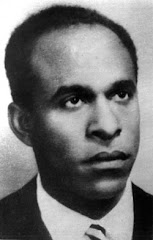
Gamer and many others who study the nature of colonial rule offer the best insights into the functioning of our corporate state. We have been, like nations on the periphery of empire, colonized. We are controlled by tiny corporate entities that have no loyalty to the nation and indeed in the language of traditional patriotism are traitors. They strip us of our resources, keep us politically passive and enrich themselves at our expense. The mechanisms of control are familiar to those whom the Martinique-born French psychiatrist and writer Frantz Fanon called "the wretched of the earth," including African-Americans. The colonized are denied job security. Incomes are reduced to subsistence level. The poor are plunged into desperation. Mass movements, such as labor unions, are dismantled. The school system is degraded so only the elites have access to a superior education. Laws are written to legalize corporate plunder and abuse, as well as criminalize dissent. And the ensuing fear and instability—keenly felt this past weekend by the more than 200,000 Americans who lost their unemployment benefits—ensure political passivity by diverting all personal energy toward survival. It is an old, old game.

A change of power does not require the election of a Mitt Romney or a Barack Obama or a Democratic majority in Congress, or an attempt to reform the system or electing progressive candidates, but rather a destruction of corporate domination of the political process—Gamer's "patron-client" networks. It requires the establishment of new mechanisms of governance to distribute wealth and protect resources, to curtail corporate power, to cope with the destruction of the ecosystem and to foster the common good. But we must first recognize ourselves as colonial subjects. We must accept that we have no effective voice in the way we are governed. We must accept the hollowness of electoral politics, the futility of our political theater, and we must destroy the corporate structure itself.

The danger the corporate state faces does not come from the poor. The poor, those Karl Marx dismissed as the Lumpenproletariat, do not mount revolutions, although they join them and often become cannon fodder. The real danger to the elite comes from déclassé intellectuals, those educated middle-class men and women who are barred by a calcified system from advancement. Artists without studios or theaters, teachers without classrooms, lawyers without clients, doctors without patients and journalists without newspapers descend economically. They become, as they mingle with the underclass, a bridge between the worlds of the elite and the oppressed. And they are the dynamite that triggers revolt.

This is why the Occupy movement frightens the corporate elite. What fosters revolution is not misery, but the gap between what people expect from their lives and what is offered. This is especially acute among the educated and the talented. They feel, with much justification, that they have been denied what they deserve. They set out to rectify this injustice. And the longer the injustice festers, the more radical they become.

The response of a dying regime—and our corporate regime is dying—is to employ increasing levels of force, and to foolishly refuse to ameliorate the chronic joblessness, foreclosures, mounting student debt, lack of medical insurance and exclusion from the centers of power. Revolutions are fueled by an inept and distant ruling class that perpetuates political paralysis. This ensures its eventual death.

In every revolutionary movement I covered in Latin America, Africa and the Middle East, the leadership emerged from déclassé intellectuals. The leaders were usually young or middle-aged, educated and always unable to meet their professional and personal aspirations. They were never part of the power elite, although often their parents had been. They were conversant in the language of power as well as the language of oppression. It is the presence of large numbers of déclassé intellectuals that makes the uprisings in Spain, Egypt, Greece and finally the United States threatening to the overlords at Goldman Sachs, ExxonMobil and JPMorgan Chase. They must face down opponents who understand, in a way the uneducated often do not, the lies disseminated on behalf of corporations by the public relations industry. These déclassé intellectuals, because they are conversant in economics and political theory, grasp that those who hold power, real power, are not the elected mandarins in Washington but the criminal class on Wall Street.

This is what made Malcolm X so threatening to the white power structure. He refused to countenance Martin Luther King's fiction that white power and white liberals would ever lift black people out of economic squalor. King belatedly came to share Malcolm's view. Malcolm X named the enemy. He exposed the lies. And until we see the corporate state, and the games it is playing with us, with the same kind of clarity, we will be nothing more than useful idiots.

"This is an era of hypocrisy," Malcolm X said. "When white folks pretend that they want Negroes to be free, and Negroes pretend to white folks that they really believe that white folks want 'em to be free, it's an era of hypocrisy, brother. You fool me and I fool you. You pretend that you're my brother and I pretend that I really believe you believe you're my brother."

Those within a demoralized ruling elite, like characters in a Chekhov play, increasingly understand that the system that enriches and empowers them is corrupt and decayed. They become cynical. They do not govern effectively. They retreat into hedonism. They no longer believe their own rhetoric. They devote their energies to stealing and exploiting as much, as fast, as possible. They pillage their own institutions, as we have seen with the newly disclosed loss of $2 billion within JPMorgan Chase, the meltdown of Chesapeake Energy Corp. or the collapse of Enron and Lehman Brothers. The elites become cannibals. They consume each other. This is what happens in the latter stages of all dying regimes. Louis XIV pillaged his own nobility by revoking patents of nobility and reselling them. It is what most corporations do to their shareholders. A dying ruling class, in short, no longer acts to preserve its own longevity. It becomes fashionable, even in the rarefied circles of the elite, to ridicule and laugh at the political puppets that are the public face of the corporate state.

"Ideas that have outlived their day may hobble about the world for years," Alexander Herzen wrote, "but it is hard for them ever to lead and dominate life. Such ideas never gain complete possession of a man, or they gain possession only of incomplete people."

This loss of faith means that when it comes time to use force, the elites employ it haphazardly and inefficiently, in large part because they are unsure of the loyalty of the foot soldiers on the streets charged with carrying out repression.

Revolutions take time. The American Revolution began with protests against the Stamp Act of 1765 but did not erupt until a decade later. The 1917 revolution in Russia started with a dress rehearsal in 1905. The most effective revolutions, including the Russian Revolution, have been largely nonviolent. There are always violent radicals who carry out bombings and assassinations, but they hinder, especially in the early stages, more than help revolutions. The anarchist Peter Kropotkin during the Russian Revolution condemned the radical terrorists, asserting that they only demoralized and frightened away the movement's followers and discredited authentic anarchism.

Radical violent groups cling like parasites to popular protests. The Black Panthers, the American Indian Movement, the Weather Underground, the Red Brigades and the Symbionese Liberation Army arose in the ferment of the 1960s. Violent radicals are used by the state to justify harsh repression. They scare the mainstream from the movement. They thwart the goal of all revolutions, which is to turn the majority against an isolated and discredited ruling class. These violent fringe groups are seductive to those who yearn for personal empowerment through hyper-masculinity and violence, but they do little to advance the cause. The primary role of radical extremists, such as Maximilien Robespierre and Vladimir Lenin, is to hijack successful revolutions. They unleash a reign of terror, primarily against fellow revolutionaries, which often outdoes the repression of the old regime. They often do not play much of a role in building a revolution.

The power of the Occupy movement is that it expresses the widespread disgust with the elites, and the deep desire for justice and fairness that is essential to all successful revolutionary movements. The Occupy movement will change and mutate, but it will not go away. It may appear to make little headway, but this is less because of the movement's ineffectiveness and more because decayed systems of power have an amazing ability to perpetuate themselves through habit, routine and inertia. The press and organs of communication, along with the anointed experts and academics, tied by money and ideology to the elites, are useless in dissecting what is happening within these movements. They view reality through the lens of their corporate sponsors. They have no idea what is happening.

Dying regimes are chipped away slowly and imperceptibly. The assumptions and daily formalities of the old system are difficult for citizens to abandon, even when the old system is increasingly hostile to their dignity, well-being and survival. Supplanting an old faith with a new one is the silent, unseen battle of all revolutionary movements. And during the slow transition it is almost impossible to measure progress.

"Sometimes people hold a core belief that is very strong," Fanon wrote in "Black Skin, White Masks." "When they are presented with evidence that works against that belief, the new evidence cannot be accepted. It would create a feeling that is extremely uncomfortable, called cognitive dissonance. And because it is so important to protect the core belief, they will rationalize, ignore and even deny anything that doesn't fit in with the core belief."

The end of these regimes comes when old beliefs die and the organs of security, especially the police and military, abandon the elites and join the revolutionaries. This is true in every successful revolution. It does not matter how sophisticated the repressive apparatus. Once those who handle the tools of repression become demoralized, the security and surveillance state is impotent. Regimes, when they die, are like a great ocean liner sinking in minutes on the horizon. And no one, including the purported leaders of the opposition, can predict the moment of death. Revolutions have an innate, mysterious life force that defies comprehension. They are living entities.

The defection of the security apparatus is often done with little or no violence, as I witnessed in Eastern Europe in 1989 and as was also true in 1979 in Iran and in 1917 in Russia. At other times, when it has enough residual force to fight back, the dying regime triggers a violent clash as it did in the American Revolution when soldiers and officers in the British army, including George Washington, rebelled to raise the Continental Army. Violence also characterized the 1949 Chinese revolution led by Mao Zedong. But even revolutions that turn violent succeed, as Mao conceded, because they enjoy popular support and can mount widespread protests, strikes, agitation, revolutionary propaganda and acts of civil disobedience. The object is to try to get there without violence. Armed revolutions, despite what the history books often tell us, are tragic, ugly, frightening and sordid affairs. Those who storm Bastilles, as the Polish dissident Adam Michnik wrote, "unwittingly build new ones." And once revolutions turn violent it becomes hard to speak of victors and losers.

A revolution has been unleashed across the globe. This revolution, a popular repudiation of the old order, is where we should direct all our energy and commitment. If we do not topple the corporate elites the ecosystem will be destroyed and massive numbers of human beings along with it. The struggle will be long. There will be times when it will seem we are going nowhere. Victory is not inevitable. But this is our best and only hope. The response of the corporate state will ultimately determine the parameters and composition of rebellion. I pray we replicate the 1989 nonviolent revolutions that overthrew the communist regimes in Eastern Europe. But this is not in my hands or yours. Go ahead and vote this November. But don't waste any more time or energy on the presidential election than it takes to get to your polling station and pull a lever for a third-party candidate—just enough to register your obstruction and defiance—and then get back out onto the street. That is where the question of real power is being decided.


This piece was reprinted by Truthout with permission or license.


CHRIS HEDGES

Chris Hedges spent nearly two decades as a foreign correspondent in Central America, the Middle East, Africa and the Balkans. He has reported from more than 50 countries and has worked for The Christian Science Monitor, National Public Radio, The Dallas Morning News and The New York Times, for which he was a foreign correspondent for 15 years.