Monday, October 22, 2012

George McGovern. 1922-2012: Inspirational Progressive Leader in American Politics

 
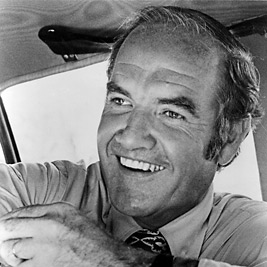
 George McGovern in 1972
 George McGovern  1922-2012


All,

George McGovern was a great man and a genuine progressive leader who had it all:  intelligence, COURAGE, vision, moral and ethical clarity, INTEGRITY, toughness, sincerity, honesty, dignity, and COMPASSION.  Which is fundamentally why he lost in such a tragically spectacular manner to one of the most ruthless, immoral, and truly criminal assholes ever to win the Presidency, Richard Nixon.  In a bitterly ironic sense however losing to such a despicable cretin like Nixon the way he did is much more a major indictment of, and dire comment on, the massive stupidity, idiocy, ignorance, paranoia, and craven hatred/self hatred of white America than it ever was of McGovern himself who always-- even in defeat-- maintained a profound grace and an independent spiritual quality and mature sense of self that never failed to inspire throughout his incredible six decade political career.  He was the first presidential candidate I ever personally voted for in a national election in 1972 and his landslide loss in that election signified and personified for me as it did for so many others the end of a truly radical era in American politics and culture that began in the mid 1950s and carried through the revolutionary '60s period and well into the early '70s.  But I never, ever forgot George and what he did and tried to do.  The man was actually in every essential way a real 'democratic socialist' in the very best sense of that term  both  intellectually and emotionally, if not directly in terms of his own mainstream political career as a highly principled and outspoken  liberal Senator in the Democratic Party, and I will always remember him and his independent, "maverick" personality and politics in the most inspiring and positive terms possible. RIP Mr. McGovern.  If only there were MANY MORE like you today as the political system that you challenged has become more venal and corrupt than ever...

Kofi


GEORGE MCGOVERN  1922-2012
A Prairie Liberal, Trounced but Never Silenced 
By DAVID E. ROSENBAUM 
October 21, 2012
New York Times


George McGovern, the United States senator who won the Democratic Party’s presidential nomination in 1972 as an opponent of the war in Vietnam and a champion of liberal causes, and who was then trounced by President Richard M. Nixon in the general election, died early Sunday in Sioux Falls, S.D. He was 90.


His death was announced in a statement by his family. He had been moved to hospice care in recent days after being treated for several health problems in the last year. He had a home in Mitchell, S.D., where he had spent his formative years.

In a statement, President Obama called Mr. McGovern “a champion for peace” who was a “statesman of great conscience and conviction.”

To the liberal Democratic faithful, Mr. McGovern remained a standard-bearer well into his old age, writing and lecturing even as his name was routinely invoked by conservatives as synonymous with what they considered the failures of liberal politics.

He never retreated from those ideals, however, insisting on a strong, “progressive” federal government to protect the vulnerable and expand economic opportunity, while asserting that history would prove him correct in his opposing not only what he called “the tragically mistaken American war in Vietnam” but also the American invasions of Iraq and Afghanistan.

A slender, soft-spoken minister’s son newly elected to Congress — his father was a Republican — Mr. McGovern went to Washington as a 34-year-old former college history teacher and decorated bomber pilot in World War II. He thought of himself as a son of the prairie as well, with a fittingly flat, somewhat nasal voice and a brand of politics traceable to the Midwestern progressivism of the late 19th century.

Elected to the Senate in 1962, Mr. McGovern left no special mark in his three terms, but he voted consistently in favor of civil rights and antipoverty bills, was instrumental in developing and expanding food stamp and nutrition programs, and helped lead opposition to the Vietnam War in the Senate.

The war was the cause he took into the 1972 election, one of the most lopsided in American history. Mr. McGovern carried only Massachusetts and the District of Columbia and won just 17 electoral votes to Nixon’s 520.

The campaign was the backdrop to the burglary at the Democratic Party headquarters in the Watergate Hotel in Washington and to the Nixon organization’s shady fund-raising practices and sabotage operations, later known as “dirty tricks,” which were not disclosed until after the election.

The Republicans portrayed Mr. McGovern as a cowardly left-winger, a threat to the military and the free-market economy and someone outside the mainstream of American thought. Whether those charges were fair or not, Mr. McGovern never lived down the image of a liberal loser, and many Democrats long accused him of leading the party astray.

Mr. McGovern resented that characterization mightily. “I always thought of myself as a good old South Dakota boy who grew up here on the prairie,” he said in an interview for this obituary in 2005 in his home in Mitchell. “My dad was a Methodist minister. I went off to war. I have been married to the same woman forever. I’m what a normal, healthy, ideal American should be like.

“But we probably didn’t work enough on cultivating that image,” he added, referring to his presidential campaign organization. “We were more interested in ending the war in Vietnam and getting people out of poverty and being fair to women and minorities and saving the environment.

“It was an issue-oriented campaign, and we should have paid more attention to image.”

The 1972 Nomination

Mr. McGovern was 49 years old and in his second Senate term when he won the 1972 Democratic nomination, outdistancing a dozen or so other aspirants, including Senator Edmund S. Muskie of Maine, the early front-runner; former Vice President Hubert H. Humphrey, the nominee in 1968; and Gov. George C. Wallace of Alabama, a populist with a segregationist past who was gravely wounded in an assassination attempt in Maryland during the primaries.

Mr. McGovern benefited from new party rules that he had been largely responsible for writing, and from a corps of devoted young volunteers, including Bill Clinton and Hillary Rodham, who took time off from Yale Law School to work on the campaign in Texas.

The nominating convention in Miami was a disastrous start to the general election campaign. There were divisive platform battles over Vietnam, abortion, welfare and court-ordered busing to end racial discrimination. The eventual platform was probably the most liberal one ever adopted by a major party in the United States. It advocated an immediate withdrawal from Vietnam, amnesty for war resisters, the abolition of the draft, a guaranteed job for all Americans and a guaranteed family income well above the poverty line.

Several prominent Democrats declined Mr. McGovern’s offer to be his running mate before he chose Senator Thomas F. Eagleton of Missouri.

Mr. McGovern’s organization was so disorganized that by the time he went to the convention rostrum for his acceptance speech, it was nearly 3 a.m. He delivered perhaps the best speech of his life. “We reject the view of those who say, ‘America, love it or leave it,’ ” he declared. “We reply, ‘Let us change it so we can love it more.’ ”

The delegates loved it, but most television viewers had long since gone to bed.

The convention was barely over when word got out that Mr. Eagleton had been hospitalized three times in the 1960s for what was called nervous exhaustion, and that he had undergone electroshock therapy.

Mr. McGovern said he was behind his running mate “a thousand percent.” But less than two weeks after the nomination, Mr. Eagleton was dropped from the ticket and replaced by R. Sargent Shriver, a Kennedy in-law and former director of the Peace Corps.

The campaign never recovered from the Eagleton debacle. Republicans taunted Mr. McGovern for backing everything a thousand percent. Commentators said his treatment of Mr. Eagleton had shown a lack of spine.

In the 2005 Times interview, Mr. McGovern said he had handled the matter badly. “I didn’t know a damn thing about mental illness,” he said, “and neither did anyone around me.”

With a well-oiled campaign operation and a big financial advantage, Nixon began far ahead and kept increasing his lead. When Mr. McGovern proposed deep cuts in military programs and a $1,000 grant to every American, Nixon jeered, calling the ideas liberalism run amok. Nixon, meanwhile, cited accomplishments like the Paris peace talks on Vietnam, an arms limitation treaty with the Soviet Union, a prosperous economy and a diplomatic opening to China.

On election night, Mr. McGovern did not bother to call Nixon. He simply sent a telegram offering congratulations. Then, he said, he sat on his bed at the Holiday Inn in Sioux Falls and wrote his concession speech on hotel stationery.

In his book on the campaign, “The Making of the President 1972,” Theodore H. White wrote that the changes Mr. McGovern had sought abroad and at home had “frightened too many Americans.”

“Richard M. Nixon,” Mr. White wrote, “convinced the Americans, by more than 3 to 2, that he could use power better than George McGovern.”

Mr. McGovern offered his own assessment of the campaign. “I don’t think the American people had a clear picture of either Nixon or me,” he said in the 2005 interview. “I think they thought that Nixon was a strong, decisive, tough-minded guy, and that I was an idealist and antiwar guy who might not attach enough significance to the security of the country.

“The truth is, I was the guy with the war record, and my opposition to Vietnam was because I was interested in the nation’s well-being.”

His staff, he said, urged him to talk more about his war experience, but like many World War II veterans at the time, he was reluctant to do so.

How long, he was asked, did it take to get over the disappointment of losing? “You never fully get over it,” he replied. “But I’ve had a good life. I’ve enjoyed myself 90 percent of the time.”

Humble Beginnings

George Stanley McGovern was born on July 19, 1922, in a parsonage in Avon, S.D., a town of about 600 people where his father, Joseph, was the pastor of the Wesleyan Methodist Church. A disciplinarian, his father, who was born in 1868, tried to keep his four children from going to the movies and playing sports. His mother, the former Frances McLean, was a homemaker about 20 years her husband’s junior.

The family moved to Mitchell, in southeastern South Dakota, when George was 6. He went to high school and college there, enrolling at Dakota Wesleyan University in 1940. After Pearl Harbor, Mr. McGovern joined the Army Air Corps. In 1943 he married Eleanor Stegeberg, who had grown up with an identical twin on a South Dakota farm. They had met at Dakota Wesleyan.

Mr. McGovern was trained to fly the B-24 Liberator, a four-engine heavy bomber, and he flew dozens of missions over Austria, Germany and Italy.

On his 30th mission, his plane was struck by enemy fire. Lieutenant McGovern crash-landed the plane on an island in the Adriatic. He earned a Distinguished Flying Cross for the exploit.

After his discharge, Mr. McGovern returned to Mitchell — his father had recently died — and resumed his studies at Dakota Wesleyan. He graduated in 1946 and went to Northwestern University for graduate studies in history.

With a master’s degree, he returned to Dakota Wesleyan, a small university, to teach history and political science. “I was the best historian in a one-historian department,” he said in an interview in 2003. During summers and in his free time, he continued his graduate work and received a Ph.D. in history from Northwestern in 1953.

Mr. McGovern left teaching to become executive secretary of the South Dakota Democratic Party, and almost single-handedly revived a moribund operation in a heavily Republican state.

Month after month, he drove across South Dakota in a beat-up sedan, making friends and setting up county organizations. In 1956, gaining the support of farmers who had become New Deal Democrats during the Depression, he was elected to Congress himself, defeating an overconfident incumbent Republican. He became the first Democratic congressman from his state in more than 20 years.

Mr. McGovern left the House after two terms to run for the Senate and was soundly beaten by the sitting Republican, Karl E. Mundt. He then became a special assistant to the newly elected president, John F. Kennedy, and the director of Kennedy’s Food for Peace program, an effort to provide food for the hungry in poor countries.

In 1962, Mr. McGovern ran for the Senate again, and this time he won, by 597 votes. He defeated Joseph H. Bottum, a Republican serving out the term of Senator Francis H. Case, who had died in office.

In the Senate, Mr. McGovern became a reliable vote for Democratic initiatives and a leader on food and hunger issues as a member of the Agriculture Committee. But he was more interested in national politics than in legislation.

After Robert F. Kennedy, fresh from his victory in the California presidential primary, was assassinated in Los Angeles in June 1968, the Kennedy camp encouraged Mr. McGovern to enter the race as an alternative to Humphrey and Senator Eugene J. McCarthy of Minnesota. Mr. McGovern did so but was unable to catch up to Humphrey.

Almost from the moment the 1968 campaign ended, Mr. McGovern began running for the 1972 nomination. He traveled the country, recording on index cards the names of potential supporters he met. He also became the chairman of a Democratic Party commission on delegate selection, created after the fractious 1968 national convention to give the rank and file more say in picking a presidential nominee.

What became known as the McGovern commission rewrote party rules to ensure that more women, young people and members of minorities were included in delegations. The influence of party leaders was curtailed. More states began choosing delegates on the basis of primary elections. And the party’s center of gravity shifted decidedly leftward.

Though the rules were not written specifically to help Mr. McGovern win the nomination, they had that effect.

After he was crushed by Nixon in the 1972 election, Mr. McGovern returned to the Senate and began campaigning for re-election in 1974. At the Gridiron Club’s annual dinner in 1973, he told the assembled Washington elite, “Ever since I was a young man, I wanted to run for the presidency in the worst possible way — and I did.”

Mr. McGovern was re-elected to the Senate in 1974, a landslide year for Democrats after Watergate. He defeated Leo K. Thorsness, a novice politician.

It proved to be Mr. McGovern’s last success in elective politics. As the conservative movement gained force, Mr. McGovern’s popularity dropped.

In 1980, he was defeated by James Abdnor, a plain-spoken Republican congressman who had clung to Ronald Reagan’s coattails and was helped by anti-McGovern advertisements broadcast by the National Conservative Political Action Committee.

Mr. McGovern ran for the Democratic presidential nomination again in 1984, but withdrew after winning only 23 convention delegates, most of them in Massachusetts.

Unlike some of his peers, Mr. McGovern did not become wealthy in office, and he said he had no interest in lobbying afterward. Instead, he earned a living teaching, lecturing and writing. He briefly owned a motor inn in Stratford, Conn., and a bookstore in Montana, where he owned a summer home. But neither investment proved profitable.

What he called “the big tragedy of my life” occurred in 1994. His daughter Teresa J. McGovern, who had suffered from alcoholism and mental illness, froze to death, acutely intoxicated, in a parking lot snowbank in Madison, Wis., at the age of 45.

His eyes welled up as he talked about it 11 years later. “That just about killed me,” he said. “I had always had a very demanding schedule. I didn’t do everything I could as a father.”

As therapy, Mr. McGovern researched and wrote a book, “Terry: My Daughter’s Life-and-Death Struggle With Alcoholism,” published in 1997. (An addiction-treatment center named after her was established in Madison.)

That year, President Bill Clinton appointed Mr. McGovern ambassador to the United Nations’ Food and Agriculture Organization. He moved to Rome, and he worked on plans for delivering food to malnourished people around the world. In 2000, Mr. Clinton awarded him the Presidential Medal of Freedom, the nation’s highest civilian honor.

Returning Home

After four years in Rome, Mr. McGovern and his wife moved back to Mitchell, where they lived in a ranch-style house owned by Dakota Wesleyan and helped raise money for a university library that was named after them. The university is also home to the McGovern Center for Leadership and Public Service, a research and educational institution founded in 2006. The McGoverns also had a home in St. Augustine, Fla.

Eleanor McGovern died in 2007 at 85. A son, Steven, who had also struggled with alcoholism, died in July at 60.

Mr. McGovern’s survivors include three daughters, Ann, Susan and Mary; 10 grandchildren; and one great-grandchild.

Mr. McGovern remained robust in old age. To celebrate his 88th birthday, he sky-dived in Florida. Last fall, he was hospitalized twice, once after falling and hitting his head outside the Dakota Wesleyan library before a scheduled C-Span interview, and another time for fatigue after completing a lecture tour. But he rebounded and resumed making public appearances this year.

Mr. McGovern remained a voice in public affairs, notably in 2008, when, in an op-ed article in The Washington Post, he called for the impeachment of President George W. Bush and Vice President Dick Cheney for their prosecution of the war in Iraq.

He published books regularly, on history, the environment and other subjects. In “Out of Iraq” (2006), written with William R. Polk, he argued for a phased withdrawal from Iraq, to end in 2007. In his final book, “What It Means to Be a Democrat,” released last November, he despairs of an “insidious” political atmosphere in Washington while trying to rally Democrats against “extremism” in the Republican ranks.

“We are the party that believes we can’t let the strong kick aside the weak,” Mr. McGovern wrote. “Our party believes that poor children should be as well educated as those from wealthy families. We believe that everyone should pay their fair share of taxes and that everyone should have access to health care.”

With the country burdened economically, he added, there has “never been a more critical time in our nation’s history” to rely on those principles.

“We are at a crossroads,” he wrote, “over how the federal government in Washington and state legislatures and city councils across the land allocate their financial resources. Which fork we take will say a lot about Americans and our values.”


David E. Rosenbaum, a Washington correspondent for The New York Times, died in 2006. William McDonald contributed reporting.
This article has been revised to reflect the following correction:

Correction: October 21, 2012


An earlier version of this obituary contained these errors: Mr. McGovern was 49, not 50, when he won the Democratic Party’s presidential nomination in 1972. His wife’s maiden name was Stegeberg, not Stageberg. The navigator when Mr. McGovern crash-landed his bomber did not die on that flight; he was killed on another mission, when Mr. McGovern was not flying the plane.

Sunday, October 21, 2012

Chrystia Freeland On The New American Plutocracy And Its Lethal Nefarious Assault On Our Democracy And Our Humanity

http://www.newyorker.com/reporting/2012/10/08/121008fa_fact_freeland

All,

The following highly revealing and deeply disturbing article by Chrystia Freeland, former U.S. editor of the Financial Times, current global editor-at-large for Reuters, and author of an excellent and very important new book on the global capitalist crisis entitled Plutocrats: The New Global Super-Rich and the Fall of Everyone Else (Penguin Press,  2012) tells us a great deal about the real stakes in the upcoming national election and offers genuine analytical and anecdotal insight into the present very dangerous political, economic, and ideological direction of the actual U.S. ruling class elites vis-a-vis both "national" and global political economies  today.  Please read carefully and pass the word..

Kofi 


Matt Taibbi and Chrystia Freeland on the One Percent's Power and Privileges
 
Published on Oct 19, 2012 by MoyersandCompany:
The One Percent is not only increasing their share of wealth — they're using it to spread millions among political candidates who serve their interests. Example: Goldman Sachs, which gave more money than any other major American corporation to Barack Obama in 2008, is switching alliances this year; their employees have given $900,000 both to Mitt Romney's campaign and to the pro-Romney super PAC Restore Our Future. Why? Because, says the Wall Street Journal, the Goldman Sachs gang felt betrayed by President Obama's modest attempts at financial reform.

To discuss how the super-rich have willfully confused their self-interest with America's interest, Bill is joined by Rolling Stone magazine's Matt Taibbi, who regularly shines his spotlight on scandals involving big business and government, and journalist Chrystia Freeland, author of the new book Plutocrats: The Rise of the New Global Super Rich and the Fall of Everyone Else.
"We have this community of rich people who genuinely believe that they are the wealth creators and they should get every advantage and break," Taibbi tells Bill. "Whereas everybody else is a parasite and they're living off of them"

Freeland adds, "How dare they have the gall to actually argue that too much regulation of American financial services is what is killing the economy?"

THE POLITICAL SCENE

SUPER-RICH IRONY

Why do billionaires feel victimized by Obama?

BY CHRYSTIA FREELAND
OCTOBER 8, 2012
The New Yorker
Leon Cooperman’s aggrieved open letter to the President quickly went viral.

One night last May, some twenty financiers and politicians met for dinner in the Tuscany private dining room at the Bellagio hotel in Las Vegas. The eight-course meal included blinis with caviar; a fennel, grapefruit, and pomegranate salad; cocoa-encrusted beef tenderloin; and blue-cheese panna cotta. The richest man in the room was Leon Cooperman, a Bronx-born, sixty-nine-year-old billionaire. Cooperman is the founder of a hedge fund called Omega Advisors, but he has gained notice beyond Wall Street over the past year for his outspoken criticism of President Obama. Cooperman formalized his critique in a letter to the President late last year which was widely circulated in the business community; in an interview and in a speech, he has gone so far as to draw a parallel between Obama’s election and the rise of the Third Reich.

The dinner was the highlight of the fourth annual SkyBridge Alternatives Conference, known as salt, a convention orchestrated by the fund manager Anthony Scaramucci; it brings together fund managers with brand-name speakers and journalists for four days of talking and partying. The star guest at the dinner was Al Gore, who was flanked by Antonio Villaraigosa, the mayor of Los Angeles, and the New York hedge-fund investor Orin Kramer, a friend of Gore’s and a top Obama fund-raiser.

Discussion that night was wide-ranging. The group talked about Apple, on whose board Gore sits, and Google, where Gore is a senior adviser, as well as climate change and energy policy. The most electric moment of the evening, though, was an exchange between Cooperman and Gore. Heavyset, with a lumbering gait, Cooperman does not look like a hedge-fund plutocrat: Scaramucci affectionately describes him as “the worst-dressed billionaire on planet earth.” Cooperman’s business model isn’t flashy, either. He began his finance career as an analyst of consumer companies at Goldman Sachs, and went on to make his fortune at Omega as a traditional stock-picker. He searches for companies that are cheap and which he hopes to sell when they become dear. (In 1998, Cooperman made a foray into emerging markets, investing more than a hundred million dollars as part of a bid to take over Azerbaijan’s state oil company, but it went badly wrong. His firm lost most of its money and paid five hundred thousand dollars to settle a U.S.-government bribery investigation.) Cooperman had come to the dinner to give Gore a copy of the letter he’d written to President Obama. “I’d like you to read this,” he told the former Vice-President. “You owe me a small favor. I voted for you,” he said, referring to Gore’s Presidential run, in 2000.

In the letter, Cooperman argued that Obama has needlessly antagonized the rich by making comments that are hostile to economic success. The prose, rife with compound metaphors and righteous indignation, is a good reflection of Cooperman’s table talk. “The divisive, polarizing tone of your rhetoric is cleaving a widening gulf, at this point as much visceral as philosophical, between the downtrodden and those best positioned to help them,” Cooperman wrote. “It is a gulf that is at once counterproductive and freighted with dangerous historical precedents.”

At the dinner, Al Gore was diplomatic when presented with the letter, and asked Cooperman if he would accept higher taxes. Cooperman said that he would—if he was treated with respect, and the government didn’t squander his money. Cooperman asked Gore what he thought the top marginal tax rate should be. Gore’s reply was noncommittal, but he pleased the group by suggesting that no matter who wins in November the victor should surround himself with advisers with experience in the private sector.

Kramer, the hedge-fund manager and Obama fund-raiser, was quiet, but others in the room were enthusiastic. Villaraigosa gave Cooperman his direct phone number. Barry Sternlicht, the founder of the W hotel chain, and an Obama donor in 2008, said that he agreed totally with Cooperman. Scaramucci, the organizer of the dinner, told me the next day that the guests had witnessed the “activation” of a “sleeper cell” of hedge-fund managers against Obama. “That’s what you see happening in the hedge-fund community, because they now have the power, because of Citizens United, to aggregate capital into political-action committees and to influence the debate,” he said. “The President has a philosophy of disdain toward wealth creation. That’s just obvious, O.K.? We talked about it all night.” He later said, “If there’s a pope of this movement, it’s Lee Cooperman.”

The growing antagonism of the super-wealthy toward Obama can seem mystifying, since Obama has served the rich quite well. His Administration supported the seven-hundred-billion-dollar tarp rescue package for Wall Street, and resisted calls from the Nobel Prize winners Joseph Stiglitz and Paul Krugman, and others on the left, to nationalize the big banks in exchange for that largesse. At the end of September, the S. & P. 500, the benchmark U.S. stock index, had rebounded to just 6.9 per cent below its all-time pre-crisis high, on October 9, 2007. The economists Emmanuel Saez and Thomas Piketty have found that ninety-three per cent of the gains during the 2009-10 recovery went to the top one per cent of earners. Those seated around the table at dinner with Al Gore had done even better: the top 0.01 per cent captured thirty-seven per cent of the total recovery pie, with a rebound in their incomes of more than twenty per cent, which amounted to an additional $4.2 million each.

Notwithstanding Occupy Wall Street’s focus on the “one per cent,” or Obama’s choice of two hundred and fifty thousand dollars as the level at which taxes on family income should rise, the salient dividing line between rich and not rich is much higher up the income-distribution scale. Hostility toward the President is particularly strident among the ultra-rich.

This is the group that has benefitted most from the winner-take-all economy: the 0.1 per cent, whose share of the national income was 7.8 per cent in 2009, according to I.R.S. data. Moreover, even as the shifting tides of the global economy have rewarded the richest while squeezing the middle class, the U.S. tax system has favored the very top, as the tax returns of the Republican Presidential candidate, Mitt Romney, have illustrated. In 2011, Romney paid an effective tax rate of just 14.1 per cent, and his income of $13.7 million places him in the 0.01-per-cent group.

When Obama first ran for President, four years ago, Wall Street formed an important and lucrative part of his base: he raised about sixteen million dollars from the financial sector, compared with McCain, who raised about nine million. Employees of Goldman Sachs contributed more to Obama’s campaign than workers at any other firm, on Wall Street or beyond. Like many others in the financial-services industry, Leon Cooperman was impressed when he first saw Obama in action, at a Goldman Sachs event at the Museum of Modern Art, in New York, in May, 2007. Goldman had assembled a group of hedge-fund managers to meet the junior senator from Illinois who had the temerity to challenge Hillary Clinton for the Democratic nomination. Cooperman said he was impressed by Obama’s reply to a question about what he would do to taxes on the rich if he were elected. “ ‘Raise ’em.’ Just like that. ‘Raise ’em,’ ” Cooperman recalled Obama saying.

Although he voted for McCain in 2008, Cooperman was not compelled to enter the political debate until June, 2011, when he saw the President appear on TV during the debt-ceiling battle. Obama urged America’s “millionaires and billionaires” to pay their fair share, pointing out that they were doing well at a time when both the American middle class and the American federal treasury were under pressure. “If you are a wealthy C.E.O. or hedge-fund manager in America right now, your taxes are lower than they have ever been. They are lower than they have been since the nineteen-fifties,” the President said. “You can still ride on your corporate jet. You’re just going to have to pay a little more.”

Cooperman regarded the comments as a declaration of class warfare, and began to criticize Obama publicly. In September, at a CNBC conference in New York, he compared Hitler’s rise to power with Obama’s ascent to the Presidency, citing disaffected majorities in both countries who elected inexperienced leaders. A month before, Cooperman had written a mock, nine-point “Presidential platform,” outlining his political convictions, which he distributed to his investors. In it, he called for a freeze on entitlements, a jump in the retirement age to seventy for everyone except “those that work at hard labor,” and a temporary tax increase for the super-rich to help pay down the debt. He also called for significant spending cuts, so that the growth in government spending could be restricted to one per cent less than the increase in G.D.P. In November, he drafted the letter to the President. It was fifteen hundred words and took him two weeks to write. “I’m not a gifted writer,” Cooperman recalled. “I spent a lot of time using a dictionary and a thesaurus. I wanted to sound intelligent.” He got help from a friend, a former Omega employee. He also showed the letter to his wife, Toby.

The letter begins by acknowledging that Obama inherited an “economic mess,” but what Cooperman seems to object to most is not the President’s policies but the “highly politicized idiom” in which the debate surrounding them was being conducted:

"You should endeavor to rise above the partisan fray and raise the level of discourse to one that is both more civil and more conciliatory.... Capitalism is not the source of our problems, as an economy or as a society, and capitalists are not the scourge that they are too often made out to be. As a group we employ many millions of taxpaying people, pay their salaries, provide them with healthcare coverage, start new companies, found new industries, create new products, fill store shelves at Christmas, and keep the wheels of commerce and progress (and indeed of government, by generating the income whose taxation funds it) moving. To frame the debate as one of rich-and-entitled versus poor-and-dispossessed is to both miss the point and further inflame an already incendiary environment."
Evident throughout the letter is a sense of victimization prevalent among so many of America’s wealthiest people. In an extreme version of this, the rich feel that they have become the new, vilified underclass. T. J. Rodgers, a libertarian and a Silicon Valley entrepreneur, has taken to comparing Barack Obama’s treatment of the rich to the oppression of ethnic minorities—an approach, he says, that the President, as an African-American, should be particularly sensitive to. Clifford S. Asness, the founding partner of the hedge fund AQR Capital Management, wrote an open letter to the President in 2009, after Obama blamed “a small group of speculators” for Chrysler’s bankruptcy. Asness suggested that “hedge funds really need a community organizer,” and accused the White House of “bullying” the financial sector. Dan Loeb, a hedge-fund manager who supported Obama in 2008, has compared his Wall Street peers who still support the President to “battered wives.” “He really loves us and when he beats us, he doesn’t mean it; he just gets a little angry,” Loeb wrote in an e-mail in December, 2010, to a group of Wall Street financiers.

The purported activation of the fund-manager “sleeper cell” is more than the self-aggrandizement of the super-rich. It is having a material and intellectual impact on the 2012 campaign. Historically, incumbent Presidents have enjoyed a strong fund-raising advantage. Going into this year’s race, President Obama had the further benefit of his record-breaking haul in 2008. Yet the Republican National Committee and Romney, a mechanical campaigner whose ability to inspire passion in the Republican base was widely questioned during the primaries, hold a huge cash advantage over Obama. The biggest shift has been among wealthy businesspeople, particularly in financial services. Romney’s advantage is compounded by the advent of Super pacs in this Presidential campaign, which are not subject to the same contribution limits as parties or candidates. The Republican-aligned Restore Our Future, for instance, has raised ninety-six million dollars this election season, and many of its top donors, who give a million dollars or more, work in finance.

The President, in Cooperman’s view, draws political support from those who are dependent on government. Last October, in a question-and-answer session at a Thomson Reuters event, Cooperman said, “Our problem, frankly, is as long as the President remains anti-wealth, anti-business, anti-energy, anti-private-aviation, he will never get the business community behind him. The problem and the complication is the forty or fifty per cent of the country on the dole that support him.”

Framing the political debate as job creators on one side and the President and the fifty per cent of Americans who are supported by the state on the other was striking at the time. It has become even more so since Mitt Romney was secretly recorded at a closed-door fund-raiser in Florida, in May, saying that forty-seven per cent of Americans don’t pay income taxes, are “dependent on the government,” and will vote for President Obama “no matter what.”

Romney’s comment has been widely criticized as a mistake that could cost him the election, with even Republicans accusing their candidate of incompetence. Cooperman’s statement six months earlier shows that Romney’s forty-seven-per-cent remark wasn’t an undisciplined slip by a gaffe-prone politician but, instead, the assertion of a view that is widely held by people of Romney’s class.

America’s super-rich feel aggrieved in part because they believe themselves to be fundamentally different from a leisured, hereditary gentry. In his letter, Cooperman detailed a Horatio Alger biography that has made him an avatar for the new super-rich. “While I have been richly rewarded by a life of hard work (and a great deal of luck), I was not to-the-manor-born,” he wrote, going on to describe his humble beginnings in the South Bronx, as the son of working-class parents—his father was a plumber—who had emigrated from Poland. Cooperman makes it known that he gets up at 5:20 a.m. and is at his desk at Omega’s offices in lower Manhattan, on the thirty-first floor of a building overlooking the East River and Brooklyn, by 6:40 a.m. He rarely gets home before 9 p.m., and most evenings he has a business dinner after leaving the office. “I say that I date my wife on the weekends,” he told me one August afternoon at his office. The space is defiantly modest, furnished with nineteen-nineties-era glass coffee tables, unfashionable yellow couches, and family photographs.

Cooperman’s pride in his work ethic is one source of his disdain for Obama. “When he ran for President, he’d never worked a day in his life. Never held a job,” he said. Obama had, of course, worked—as a business researcher, a community organizer, a law professor, and an attorney at a law firm, not to mention an Illinois state legislator and a U.S. senator, before being elected President. But Cooperman was unimpressed. “He went into government service right out of Harvard,” he said. “He never made payroll. He’s never built anything.”

Cooperman differs from many of his fellow super-rich in one important regard. He understands that he isn’t just smart and hardworking but that he has also been lucky. “I joined the right firm in the right industry,” he said. “I started an investment partnership at the right time.” In the fall of 1963, he enrolled in dental school at the University of Pennsylvania, but within the first week he began to have doubts, and he dropped out soon afterward. “My father, may he rest in peace, was going to work saying, ‘My son, the dentist,’ ” Cooperman said. “It was a total embarrassment amongst his friends.”

Cooperman went on to make a series of fortunate choices. Chief among those was entering the financial markets, after graduating in 1967 from Columbia Business School. In the sixties, Wall Street wasn’t yet the obvious destination for the smart and ambitious, but it was on the verge of becoming the most lucrative industry in America. Cooperman became an analyst at Goldman Sachs, at the time a scrappy partnership that had nearly failed during the Great Depression. In 1976, Cooperman was named a partner. He went on to found Goldman’s asset-management business, but, after twenty-five years at the firm, he decided to start his own hedge fund. Between 1991, when Cooperman founded Omega, and the 2008 financial crisis was the best time in history to make a fortune in finance. Cooperman’s partners who stayed behind at Goldman Sachs are hardly paupers—and those who stuck around for the 1999 I.P.O. are probably multimillionaires—but the real windfalls on Wall Street have been made by the financiers who founded their own investment firms in the period that Cooperman did.

Toby Cooperman grew up five miles away from her husband, in the west Bronx. She asked Cooperman out after they met in French class at Hunter College. Toby has two graduate degrees, in education and as a reading specialist, and works three days a week at a special-needs school in Chatham, New Jersey.

“Growing up lower-middle-class Jewish in the Bronx, I never knew a Republican,” Toby Cooperman recalled. “Everybody loved Roosevelt.” She is still a liberal, a position that puts her in the minority in their social circle. “She can be a socialist because she’s married to a capitalist,” Cooperman says of his wife, who is strongly pro-choice and pro-gay marriage. She calls Todd Akin, Rick Santorum, and Rick Perry “morons,” and she worries about the underclass. “I care more about the disadvantaged people of America,” she said, comparing her politics with those of her husband. “I have friends who are very dependent on Medicare.”

Even so, Toby, who voted for Obama in 2008, defers to her husband when it comes to taxation, and she admires his letter to Obama. “He used a lot of good words,” she said.

The New York Post published an abridged version of the letter, and Cooperman e-mailed it to some of his friends and colleagues. It quickly went viral. Within a couple of weeks, Cooperman was being courted by everyone from CNBC and Fox to Al Jazeera. “I would say, unequivocally, I never got as much response in anything I’ve ever done, in business or outside of business, that I got in that letter,” Cooperman said.

Cooperman keeps a bulging manila folder of congratulatory notes in his office at Omega. He received “hundreds and hundreds of e-mails.” According to Cooperman, only one was nasty: “If I knew where you lived, I’d put a bomb in your car.” The folder includes a letter from a former chief of Goldman Sachs and another from a current boss of one of the nation’s top five banks. There are succinct letters of support from fellow Wall Street titans, typed on thick, embossed paper, and signed with a flourish, and long, angry screeds, which warn, as a ninety-two-year-old lawyer from Fort Worth, Texas, put it, that “Barack Obama is a Communist pure and simple, with a determined plan to convert America into a Communistic nation.”


Like his wife, Cooperman doesn’t approve of the right’s blurring of the line between church and state, or its stance on gay marriage and abortion. Romney, he told me, has got to “appease the conservative wing of his party. But I don’t think he’s nuts like all those guys are.” Like other plutocrats, Cooperman presents his complaint not as a selfish defense of his pocketbook but as a concern about the degradation of the American dream. Jamie Dimon, the C.E.O. of JP Morgan Chase, who was widely criticized this spring for the firm’s highly risky trade that has led to at least six billion dollars in losses, has echoed Cooperman’s view of the Obama Administration. Speaking on “Meet the Press” in May, Dimon said that he didn’t mind paying higher taxes and wanted “a more equitable society.” But the “anti-business behavior, the sentiment, the attacks on work ethic and successful people” by some Democrats had alienated Dimon so much that he said he would now call himself “a barely Democrat.”

“It’s a question of tone,” Cooperman said. “The President makes it sound like the problems of the ninety-nine per cent are caused by the one per cent, and that’s not the case.” Yet some of the harshest language of this election cycle has come from the super-rich. Comparing Hitler and Obama, as Cooperman did last year at the CNBC conference, is something of a meme. In 2010, the private-equity billionaire Stephen Schwarzman, of the Blackstone Group, compared the President’s as yet unsuccessful effort to eliminate some of the preferential tax treatment his sector receives to Hitler’s invasion of Poland. After Cooperman made his Hitler comment, he has said, his wife called him a “schmuck.” But he couldn’t resist repeating the analogy when we spoke in May of this year. “You know, the largest and greatest country in the free world put a forty-seven-year-old guy that never worked a day in his life and made him in charge of the free world,” Cooperman said. “Not totally different from taking Adolf Hitler in Germany and making him in charge of Germany because people were economically dissatisfied. Now, Obama’s not Hitler. I don’t even mean to say anything like that. But it is a question that the dissatisfaction of the populace was so great that they were willing to take a chance on an untested individual.”

It’s easy to see how even a resolutely unflashy billionaire like Cooperman can acquire a sense of entitlement. In a single hour at his desk one morning in April, the C.E.O.s of two well-known public companies were on the phone to Cooperman lobbying for his support. (He is a major investor in their firms.) Companies courting his investment dollars pick up Cooperman at Teterboro Airport in their private jets to give him a tour of their projects. The Coopermans have chosen an emphatically low-key life style, but when they went to visit a grandchild in Vermont one summer weekend they flew in a private plane.


Last July, before he had written the letter, Cooperman was invited to the White House for a reception to honor wealthy philanthropists who had signed Bill and Melinda Gates and Warren Buffett’s Giving Pledge, promising to donate at least fifty per cent of their net worth to charity. At the event, Cooperman handed the President two copies of “Inspired: My Life (So Far) in Poems,” a self-published book written by Courtney Cooperman, his fourteen-year-old granddaughter. Cooperman was surprised that the President didn’t send him a thank-you note or that Malia and Sasha Obama, for whom the books were intended as a gift and to whom Courtney wrote a separate letter, didn’t write to Courtney. (After Cooperman grumbled to a few friends, including Cory Booker, the mayor of Newark, Michelle Obama did write. Booker, who was also a recipient of Courtney’s book, promptly wrote her “a very nice note,” Cooperman said.)

When Cooperman told me the story of his lucky escape from dental school, he concluded, “I probably make more than a thousand dentists, summed up.” (A thousand dentists would need to work for a decade—and pay no taxes or living expenses—to collectively earn Cooperman’s net worth.) During another conversation, Cooperman mentioned that over the weekend an acquaintance had come by to get some friendly advice on managing his personal finances. He was a seventy-two-year-old world-renowned cardiologist; his wife was one of the country’s experts in women’s medicine. Together, they had a net worth of around ten million dollars. “It was shocking how tight he was going to be in retirement,” Cooperman said. “He needed four hundred thousand dollars a year to live on. He had a home in Florida, a home in New Jersey. He had certain habits he wanted to continue to pursue.

“I’m just saying that it’s not an impressive amount of capital for two people that were leading physicians for their entire work life,” Cooperman went on. “You know, I lost more today than they spent a lifetime accumulating.”

One billionaire who is not part of Cooperman’s “sleeper cell” is Warren Buffett. In 1982, Buffett sent Cooperman a note, praising one of the research reports he had written at Goldman Sachs. It hangs on Cooperman’s office wall. Cooperman clearly cherishes the opportunities that the Giving Pledge has given him to spend time with Buffett. He also admires Buffett’s life style, which is similar to his own. But Buffett’s embrace of the rule that bears his name—President Obama’s proposal that no millionaire should pay less than thirty per cent of his income in taxes—sets him apart from his peers.


Cooperman pointed out that Buffett had adroitly minimized his personal taxes for many years until his late-life star turn as the President’s favorite billionaire. “I’m more charitable to him than most, because I have enormously high regard for him,” Cooperman said. “There are a lot of people who think he’s become extraordinarily hypocritical. . . . If he thinks it’s so wrong, people say, ‘Well, why doesn’t he just give his money to the government?’”

Many billionaires have come to view charity as privatized taxation, paid at a level they determine, and to organizations they choose. “All things being equal, you’d rather have control of the money than the government,” Cooperman said. “Even if you’re giving it away, you’d rather give it away the way you want to give it away rather than the way the government gives it away.” Cooperman and his wife focus their giving on Jewish issues, education, and their local community in New Jersey, and he is also setting up a foundation that will allow his children and grandchildren to support their own chosen causes after he dies.

Foster Friess, a retired mutual-fund investor from Wyoming who was the backer of the main Super pac supporting the Republican primary candidate Rick Santorum, expounded on this view in a video interview in February. “People don’t realize how wealthy people self-tax,” he said. “If you have a certain cause, an art museum or a symphony, and you want to support it, it would be nice if you had the choice.” The middle class anonymously and nervously pays its thirty-five per cent to the I.R.S., while the super-rich pay fourteen per cent, and are then praised for giving five or ten per cent more to pet causes, often with the perk of having their names engraved above the door.

Cooperman repeatedly emphasizes his willingness in principle to pay higher taxes, though he sees nothing wrong with paying at the lowest possible rate the law allows. Although Toby still lives in New Jersey, Cooperman told me that he has moved for most of the year to Florida, “because I had arthritis, and I just needed the warmer weather.” He added, “Not to say there’s no benefit of a zero state income tax versus ten.”

Nick Hanauer is a Seattle entrepreneur and venture capitalist who was one of the first investors in Amazon. In a book published this year, he argues that since the Reagan era American capitalists have enjoyed a uniquely supportive set of ideological, political, and economic conditions. Their personal enrichment came to be seen as a precondition for the enrichment of everyone else. Lower taxes for them were a social good, rather than a selfish perk.

“If you are a job creator, your fifteen-per-cent tax rate is righteous. If you aren’t, it is a con job,” Hanauer told me. “The idea that the rich deserve to be rich is a very comforting idea if you are rich.” Referring to Obama’s “You didn’t build that” remark, at a rally in Virginia in July, which became a flashpoint with the right, Hanauer said that “the notion that you built it yourself is what you need to believe to feel comfortable with yourself and your desire not to pay too much in taxes.”

I asked Cooperman whether Romney should disclose his tax returns. Beyond 2011 and 2010, he has not released any others. “Only a fool pays taxes that you don’t have to pay,” Cooperman said. “So what am I going to learn? He made a lot of money and he paid less taxes than the average person, but he did it from legal means. Does that make me think less of him? It’ll make me think more of him.” Cooperman observed that the smart reaction to Romney’s low effective tax rate would be to ask him for the name of his tax lawyer.

Cooperman prides himself both on not being partisan and on his streetwise Bronx kid’s suspicion of politicians in general. But he’s genuinely enthusiastic about Romney. He approves of Romney’s commitment to his family and he admires Romney’s private-sector experience. “He’s an accomplished businessman,” Cooperman said. “The fact that he’s wealthy and successful I think is good, not bad.”

Cooperman told me that he thought this was the most important election of his lifetime. In June, he made his biggest ever political contribution, when he wrote a fifty-thousand-dollar check supporting Mitt Romney’s Presidential bid after Romney’s brother, Scott, visited the Omega offices. Now Cooperman is planning another political volley. With his Omega partner Steven Einhorn and fellow-billionaire Ken Langone, the co-founder of Home Depot, he has drafted a second open letter, which he hopes will be co-signed by a large group of self-made billionaires, and published as a newspaper advertisement in some swing states. Cooperman estimates that it will cost around a million dollars, a sum he says the group will split. “It’s going to be, you know, ‘We are the one per cent that came from the ninety-nine per cent, and we want to see more of the ninety-nine per cent move in our direction, but we fear the President’s policies discourage that from happening,’ ” Cooperman said.

At the salt conference in Las Vegas, there was no shortage of wealthy financiers who shared Cooperman’s view. At a “Titans of Wall Street” panel, Barry Sternlicht, the W hotel-chain founder, appeared with Dan Loeb, the hedge-fund manager who compared Wall Street supporters of Obama to “battered wives,” and who has given three hundred and fifty thousand dollars to Republican Super pacs and thousands more to Republican candidates this campaign cycle. Their session was off the record, but attendees said that the two investors inveighed passionately against the President’s “anti-business” attitude. Another panelist suggested that Sternlicht and Loeb form a pro-business ticket and make a run for the White House. The audience cheered.

On the final day, Cooperman delivered a presentation on his top stock picks. A few hours later, the conference concluded in the Bellagio’s grand ballroom, with the most billionaire-friendly speaker of all: Sarah Palin. She strode onto the stage and opened her talk with a rousing greeting, “Hello, one per cent! How y’all doing!”


Editorial Reviews of Plutocrats:The New Global Super-Rich and the Fall of Everyone Else by Chrystia Freeland:

“Rising inequality is one of the most pressing issues of our time. Chrystia Freeland's Plutocrats provides us with a glimpse of the lives of America's elites and a disquieting look at the society that produces them. This well-written and lively account is a good primer for anyone who wants to understand one extreme of America today."
    --Joseph Stiglitz, author of The Price of Inequality; University Professor, Columbia University

"Mix crisp economics, ripe history, and two pinches of salty gossip, and you have the flavor of Chrystia Freeland’s entertaining book. From the opulent Bradley Martin ball of 1897 to its modern echoes in Sun Valley and Davos, Plutocrats chronicles the habits of the workaholic overclass—its taste for British public schools, its immodest philanthropy, its fundamental rootlessness. Even as she describes this gilded tribe, Freeland advances a paradoxical warning. Open societies may allow super-achievers to pile up extraordinary riches—and to feel that they have more or less deserved them. But the more these meritocrats succeed, the more likely they are to entrench their own offspring at the top of the heap, negating the very meritocracy that afforded them their chances. Already in the United States, graduating from college is more closely linked to having wealthy parents than to grades in high school. When class matters more than going to class, Freeland’s message must be treated with the utmost seriousness."
    --Sebastian Mallaby, author of More Money than God: Hedge Funds and the Making of a New Elite

"Our world increasingly revolves around global elites who not only have an oversized effect on our politics but also set the trends and furnish us with the dominant discourse. In this delightful book, Chrystia Freeland tells the story of how we got here and what distinguishes our elites from those of previous epochs. Most importantly, she explains why the elites' dominance, even when it appears benign, is a challenge to our institutions and gives us clues about how we can overcome it."
    --Daron Acemoglu, co-author of Why Nations Fail; economics professor, Massachusetts Institute of Technology

“The world’s wealthy elite are more wealthy, more knit together, more separate from their fellow citizens and probably more powerful than ever before. This very important  book describes their lives and more important how their lives affect all of ours. It should be read by anyone concerned with how their world is being shaped and how it will evolve.”
    --Lawrence Summers, Former U.S. Treasury Secretary; Charles W. Eliot , University Professor, Harvard University

"Chrystia Freeland has written a fascinating account of perhaps the most important economic and political development of our era: the rise of a new plutocracy. She explains that today’s wealthy are different from their predecessors: more skilled and more global; and more often employees than owners, notably so in finance and high technology. By putting together stories of individuals with reading of the scholarly evidence, she gives us a clear view of what many will view as a not so brave new world."
    --Martin Wolf, Chief Economics Commentator for the Financial Times

Friday, October 12, 2012

OPEN LETTER TO MY SISTER REGINA TODAY ABOUT AMERICAN POLITICS, WHITE VOTERS, AND BARACK OBAMA

Regina,  

Here is the real immediate danger in this election for the President...

The major political problem for both President Obama and American society and culture generally as I've been saying consistently both verbally and in print for many years now is that the United States is thoroughly dominated and controlled by the widespread electoral and institutional racism and sexism of white men.  As I've pointed out to you and many others over and over again during the past five years in the Panopticon Review the electoral statistics confirming this huge ongoing problem are simply horrific.  For example in the past 60 years going back to 1952 there have been 15 national presidential elections. IN EVERY SINGLE ELECTION EXCEPT ONE (1964) white American voters in general have voted for the Republican candidate 14 times!  (or a whopping 93% of the time!).  During this same period since 1952 over 70%  of ALL WHITE MALE VOTERS have consistently voted for the Republican candidate (in 2008 65% of them voted for McCain).  Since male and female white Americans together currently make up 74% of the entire U.S. voting population (and in the recent historical past--especially before 1992) constituted anywhere from 80-85% of the American voting population--and white males were nearly one half of that total-- it has always been VERY difficult to get any liberal or progressive politicians elected to the Presidency.  For example of the last 15 elections since 1952 NINE of them were won by the Republicans (Eisenhower in both 1952 and 1956, Nixon in both 1968 and 1972, Ronald Reagan in 1980 and 1984, George H.W. Bush in 1988 and his son George W. Bush in both 2000 and 2004). This means that since 1952 or in the last 60 years ONLY ONE Democratic Party presidential candidate (Bill Clinton who won in 1992 and 1996) has been re-elected while FOUR Republicans have been.  The only other Democratic presidents have been John F. Kennedy who was assassinated before he could finish one term, Lyndon Johnson who served only one term from 1964-1968, Jimmy Carter who also served only one term from 1976-1980, and of course Obama who has served one term.  During this incredible historical run the Republicans have been elected to the White House an amazing 60% of the time over this 60 year period (36 years to 24 for the Democrats).  The overwhelming reason for this is that white male voters across the board (that is from every single economic class group from the very poor to the very rich!) have always and continue to vote for the most backward, reactionary, racist, sexist, and militaristic candidates no matter what. These stubbornly ignorant people NEVER vote in their own political and economic self interest and would rather vote for the super wealthy white Republican male elite who don't give a damn about them EXCEPT at election time.  Still, the average percentage of white male voters who voted for Republicans from 1952 to 1992 was well over 70% in every single election and it is only in the last 20 years or since 1992 that this percentage has gone down even a little bit (from 1992-2008 the average percentage of white males who voted for the Republican candidate was 65%--still a HUGE number especially given the fact that of the 96 million white voters--out of a national total of 130 million--who cast their votes in the 2008 election--over 47 million of them were white men!). The ominous significance of this is that this white male voting demographic alone is larger the entire African American population (and also happens to be the same size as the entire Latino/Hispanic population). The average percentage of white male voters who voted for Republicans from 1952 to 1992 was well over 70% in every single election and it is only in the last 20 years or since 1992 that this percentage has gone down even a little bit (from 1992-2008 the average percentage of white males who voted for the Republican candidate was 65%--still a HUGE number especially given the fact that of the 96 million white voters--out of a national total of 130 million--who cast their votes in the 2008 election--over 47 million of them were white men!).

This is the reason why both the Republicans and the Tea Party--another national group dominated by white males--continue to  advocate, support, and pass the most virulently racist, sexist, and classist legislation in the country not only in Congress but in state legislatures throughout the country and why Obama has been opposed 100% by the Republicans and the Tea Party ON EVERY SINGLE MAJOR LEGISLATIVE PROPOSAL HE HAS EVER TRIED TO PASS SINCE BEING ELECTED IN 2008. This is why male and female African American, Latino American and Asian American voters are absolutely crucial to Obama if he wants to win (81% of these "minority" voters in general voted for Obama in 2008 and as we know 95% of black voters did) What is also equally crucial for Obama's chances at re-election is the electoral support of the white American female vote--a majority of whom have consistently voted for Democratic candidates since 1968 and in 2008 54% of whom voted for Obama). The major demographic political shift in recent national elections has been that of white voters (both male and female) UNDER the age of 40 who always vote for Democrats and have done so since 1988.  70% of these voters voted for Obama in 2008. However white male voters OVER 40 are notoriously anti-Obama and  thus  pro-Romney.  The very big problem here is that 75% of white male voters over 40 who hate Obama make up nearly 40% of the total U.S. electorate.  So until at least one of the generations of white voters start dying out (i.e. those over 65 years old) we will continue to have a major problem with this group in American politics. And if Obama loses the election it will largely be because of this traditionally very angry, very racist, very sexist, very reactionary, and very pro-wealthy part of the American voting public. This is still the fundamental social and ideological reality in this country and no amount of wishing or simply insisting it was otherwise is gonna change it...Scary, huh?...

Kofi         


On Oct 10, 2012, Regina wrote:
 
I KNOW WHY FOLKS DON'T LIKE OBAMA...WHAT I NEED TO HEAR MORE ABOUT IS "WHY" FOLKS LIKE ROMNEY...AT ALL????

AS YOU POINT OUT, HE'S A PATHOLOGICAL LIAR!!!!!!  ARE THE MIDDLE-AGE AND OLDER WHITE MEN ENOUGH TO PUT HIM OVER THE TOP OR HAVE WE ALL GONE STUPID --I.E., WOMEN, YOUNG FOLK, OLDER AMERICANS WHO NEED THEIR HEALTHCARE, LATINOS, ASIANS, THE LGBT COMMUNITY ETC......

Sunday, October 7, 2012

Howard Fineman On President Obama's Miserable First Debate Performance and Its Negative Impact on His Chances for Re-election


All,

Whether many people who support Obama wanna hear it or not every single thing that the excellent progressive political journalist Howard Fineman says in the following article about President Obama's stunningly and inexcusably bad debate performance is 100% true and he must do much better in his final two debates with the pathological liar Romney if he seriously wants to win this election because the dirty lowdown truth is that his previous "safe" 5-6 point lead has been cut IN HALF in national polls since last Wednesday night which is an astonishing decline in just FOUR DAYS.  So no matter what we supporters want to think otherwise the BOTTOMLINE is that Barack  had better come out blasting in the final two debates because this race AIN'T over yet--not by a long shot--precisely because Obama did so poorly in the first debate. So both the President and the rest of us better not take ANYTHING FOR GRANTED in the next 4 weeks before the election because if we do Obama will wind up having the election TAKEN from both him and us because the President stupidly and erroneously  thought he could simply cruise and "play not to lose" instead of being assertive and aggressive AND MAKING SURE HE DOES WHAT IT TAKES TO WIN by laying the hammer down on Romney's sociopathic head.  If the President doesn't get his head out of his own ass and fails to do what he needs to do in the next two debates--and comes up LAME again--- mark my words:  HE WILL LOSE and we simply can't afford to sit back and allow that horrific catastrophe to happen...Stay tuned...

Kofi


Barack's Terrible, Horrible, No Good, Very Bad Day: Countdown Day 33
by Howard Fineman
Editorial Director 
Huffington Post Media Group
October 7, 2012

 
DENVER -- Yes, we can. But can he?

Something is not quite right with President Barack Obama. That was clear long before his passive, distracted performance here Wednesday night against Mitt Romney. The president needs to get back some form of his old magic if he hopes to secure a victory that, until the Denver debate, seemed all but inevitable, even to many of his foes.

The evidence of the president's distance and distaste for the campaign is everywhere. He is invisible around Washington, a place he clearly doesn't like and where he has made few new political friends. He mailed in his acceptance speech in Charlotte, N.C., looking at the end like a man who couldn't wait to get off the stage. He has dutifully hit the campaign trail, but not with the zest or the frenzied response of 2008. And he clearly didn't master his brief for the debate when he went to ground in Las Vegas, though he did take time for a day trip to Hoover Dam.

What gives?

Well, no president, cocooned for four years in the adulation of staff and riding around in Air Force One dealing with global issues, like to descend back into the muck of the campaign world.

But most manage to pretend to relish it. Not this president, certainly not last night. He seemed to be close to pouting at times.

This not-quite-there Obama has its roots in the kind of campaign he decided to run: lacking in big new ideas for a second term, essentially defensive, based on the destruction of Romney as an alternative. It doesn't fit the positive, good-guy image that the president had built for himself in his relatively short political career -- and indeed, that he had built in his entire adult life as a star student, community organizer, civil rights lawyer and law professor.

He'd rather be the master of uplift than the king of the put-down.

And any president would rather tell a simple, positive story than a complex, gray one. Obama is stuck with the need to do the latter.

He has been extraordinarily lucky in politics until now. Two opponents' sex scandals, one each for the primary and general elections, cleared his path to the Senate. With luck and timing, he rode to the White House on a wave of disgust with George W. Bush.

But as president, he has faced the worst and most intractable recession since the 1930s, a Republican Party that refuses to deal in good faith, a world economy in the midst of wrenching change and a decline in institutions that once provided order and respect.

It's a tough row. He has had successes, but he has also made mistakes. For a man who was used to getting an A on every exam and winning every coveted accolade, it's tough to know that barely half of the American people, if that, think you are doing a decent job in your current course work.

Obama is trying to deal with this unsettling personal reality largely alone -- in good part by his own choice. He is surrounded by a small circle of good friends that has, if anything, grown smaller and tighter during his time in Washington.

The inner circle -- Michelle Obama, Valerie Jarrett, David Axelrod, Eric Whitaker, Jim Messina and David Plouffe, to name most of them -- tell him how wonderful, destined and inevitable he is. But the president didn't act Wednesday night like a man who believed it. Perhaps their advice is getting a little old, or repetitive, or unrealistic.

The return of Bill Clinton, including his role as the star of the Democratic convention, is a mixed blessing for a prideful, competitive president. After all, in 2008 Clinton dismissed him as a "fairy tale" candidate who was nothing more than an Ivy-educated Jesse Jackson.

Now he needs Clinton more than ever. It's an awkward, galling man-hug.

Obama loves to be liked and doesn't like direct confrontation with people he knows or thinks he knows don't like him. Those two qualities have hampered his presidency and limited his first-debate presentation. He gave up trying to work with congressional Republicans, yet in Denver he tried lamely to claim credit as a deficit hawk, playing a GOP game he was never going to win.

Seeking to be agreeable or at least not confrontational, he allowed Romney -- who cheerfully tossed off inaccuracies or outright lies all night -- to cozy up to him and steal his lunch money on issues such as Social Security and commitment to bipartisanship.

Romney would be a bipartisan president? Did anyone see how he cravenly quaffed the Tea Party Kool-Aid? Did Obama not notice? If he did, he didn't say so.

Above all, President Obama has always believed he was on the right side of history: the brainy young hipster from Hawaii, body-surfing to power on the Big Wave of social and demographic change. That sense of destiny was what he sold so effectively in 2008. When he said, "We are the change we have been waiting for," he meant that he was the change that we had been waiting for.

But now the destined Obama must become the determined one.

He has the inner resources to do it. He has to remember the lessons he learned as the son of a hard-luck single mother: that life isn't just about catching a wave. It's about learning to swim upstream.

For Howard Fineman's full 2012 Countdown, click http://www.huffingtonpost.com/news/2012-countdownhere.


Turner’s Two Cents: Obama Blew It in First Debate 
VIDEOOctober 4, 2012 
by Cameron Turner
EurPublisher 

Scroll down to watch Cameron Turner deliver his Two Cents on the Obama/Romney debate.  

Watch as a none too pleased Cameron Turner delivers his Two Cents on the 1st Obama/Romney debate:
 
 Obama Wimps Out in First Debate:


TEXT OF VIDEO:

"That mess was pitiful.  Mitt Romney didn’t win last night’s Presidential debate.  President Obama gave it away!"


Barack Obama is an incumbent President with an admirable record of accomplishments, but he didn’t act like it Wednesday night on the debate stage.  The President could have easily run the stage but, for some bizarre reason, he played a weak, apologetic and defensive game.  President Obama allowed Mitt Romney to dominate the discussion, to trash his record and to define him.

Over and over again, President Obama allowed Gov. Romney to get away with outrageous, easily-refutable claims.  The President did a pretty good job of challenging Romney’s newly-minted claim that he won’t reduce income taxes for the rich.  But Obama blew it when Romney accused him of cutting $716 billion from MediCare, and claimed that the President’s healthcare reform law will cost jobs and force people to lose their medical insurance.  When Romney made those allegations, the President should’ve pushed back hard with the facts – but he didn’t.

And when Romney stated, over and over again, that he is compassionate toward the poor, children and the elderly, President Obama could’ve hit an easy homerun by mentioning Romney’s  cruel, inaccurate and elitist claim that 47% of Americans think of themselves as victims entitled to government handouts and who are not willing to take responsibility for their lives.  But the President didn’t do that either.

Worst of all, President Obama didn’t defend his record.  He didn’t brag about the 18 months of private sector job growth, or the 4 million jobs created on his watch or the fact that he saved the American auto industry.   He didn’t talk about the American Jobs Act and his other employment bills that were killed by Republicans in the House and Senate.  He didn’t play up his defense of women’s reproductive rights, or women’s right to equal pay for equal work.  Neither did he dwell on his support for marriage equality, immigration reform and the DREAM Act

And when Mitt Romney accused him of failing to bring bipartisan leadership to Washington, President Obama should’ve pointed out that he bent over backwards to cooperate with the Republicans on Capitol Hill, but that he was rebuffed blocked at every turn.

But the worst part of Wednesday’s debate was President Obama’s pathetic closing argument, which was a basically rehash of his wimpy Democratic National Convention speech – only wimpier.  Instead of touting his achievements and telling the American people why they are better off now than they were four years ago, President Obama apologized for his imperfections and begged folks to vote for him.  That is not leadership.  Especially for a President who has accomplished so much in the face of historic challenges and unprecedented opposition.

President Obama has a proud record and the best plan for the future of our nation.  His heart is in the right place, he’s  on the right side of the issues and his policies are working!  He is simply a better man for America than Mitt Romney.  The polls show that the public trusts him.

Mitt Romney can’t beat him.  But if he doesn’t put up his dukes and start fighting, President Obama could mess around and beat himself.

Thanks for listening.  I’m Cameron Turner and that’s my two cents.

Watch as a none too pleased Cameron Turner delivers his Two Cents on the 1st Obama/Romney debate:

Read more at http://www.eurweb.com/2012/10/turners-two-cents-obama-blew-it-in-first-debate/#0wtSe2mX1FeY5Prc.99