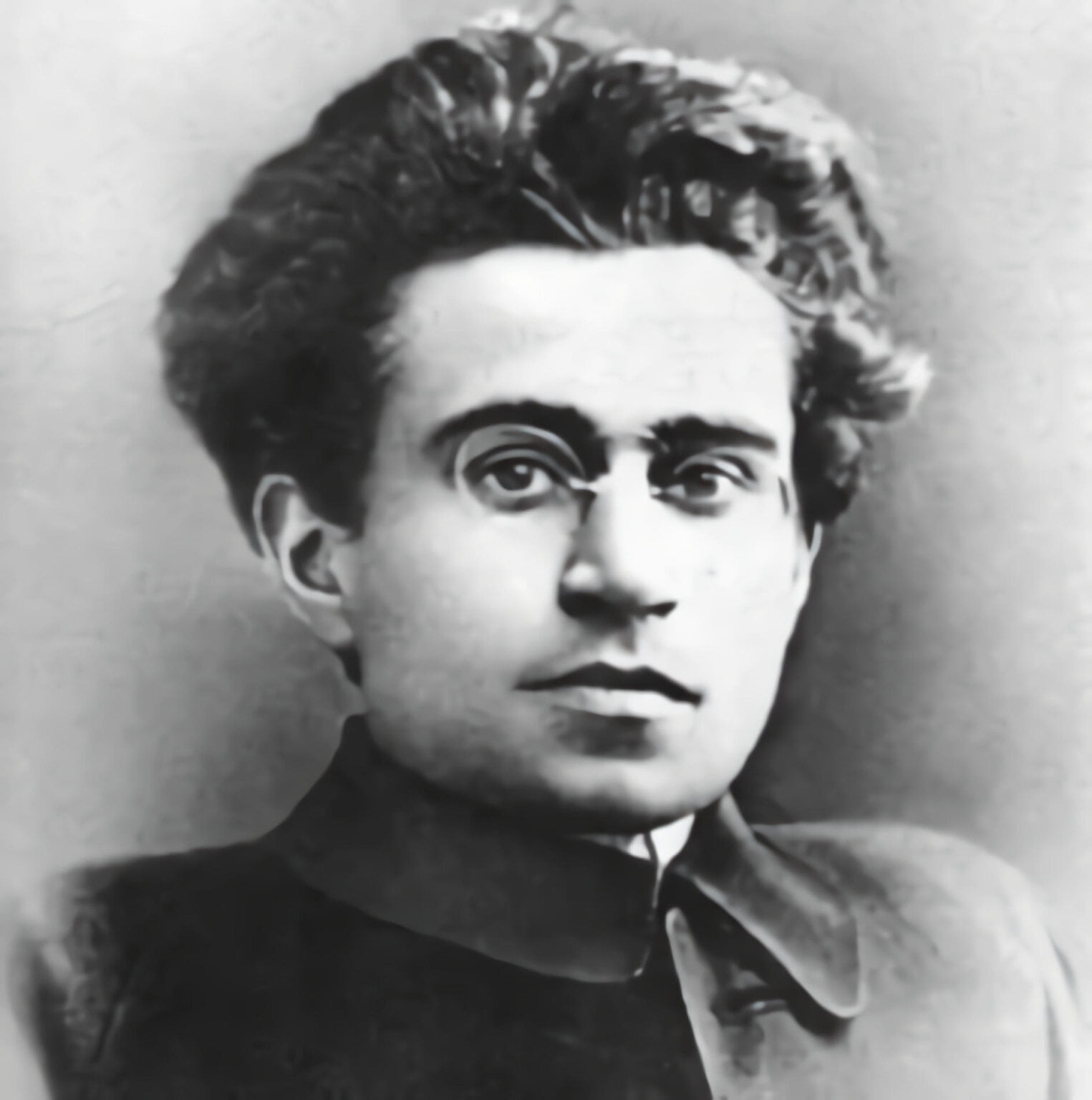
LESTER YOUNG
(b. August 27, 1909)
(b. August 27, 1909)

LESTER YOUNG IN 1958
"Goodbye Porkpie Hat" (immortal 1959 composition by bass player and composer Charles Mingus dedicated to Lester "Prez" Young upon his death in March 15 of that year)
This was recorded two months later by Mingus on May 12, 1959
http://www.youtube.com/watch?v=r9L110v7NI0
http://www.youtube.com/watch?v=6sfe_8RAaJ0
This was recorded two months later by Mingus on May 12, 1959
http://www.youtube.com/watch?v=r9L110v7NI0
http://www.youtube.com/watch?v=6sfe_8RAaJ0
FROM 1959 RECORDING ON COLUMBIA RECORDS ENTITLED "MINGUS AH UM"
Charles Mingus: Bass
Booker Ervin: Tenor Saxophone
John Handy: Alto Saxophone
Horace Parlan: Piano
Dannie Richmond: Drums

The Greatest Jazz Films Ever - Parts 1 and 2
PART 1:
http://www.youtube.com/watch?v=HZJx33i63LM&feature=endscreen
http://www.youtube.com/watch?v=HZJx33i63LM&feature=endscreen
PART 2:
http://www.youtube.com/watch?v=1wN4ca7gr1E
http://www.youtube.com/watch?v=1wN4ca7gr1E
Throughout his life, Young struggled with racism, from the Jim Crow laws his family faced in the 1920s to the way he felt the Army treated him during WW2 in the 1940s.
"They want everyone who's a Negro to be an Uncle Tom, an Uncle Remus and Uncle Sam, and I can't make it," Young said. "But it's the same way all over. You just fight for your life, you dig? Until death do you part. Then you got it made."

LESTER YOUNG IN 1956

Born: August 27, 1909; Woodville, Mississippi
Died: March 15, 1959; New York, New York
Also known as: Lester Willis Young (full name) and PREZ (a legendary nickname that Billie Holiday gave him meaning "President of the saxophone players")
The Pres Principal recordings albums: Kansas City Style, 1944; Lester Warms Up, 1944; Coleman Hawkins and Lester Young, 1946 (with Coleman Hawkins); Lester Young: Buddy Rich Trio, 1946 (with Buddy Rich); Lester Young: Nat King Cole Trio, 1946 (with Nat King Cole); Lester Young Quartet and Count Basie Seven, 1950 (with Count Basie); Lester Young Swings Again, 1950; The Pres, 1950; Pres Is Blue, 1950;
Lester Young Collates, 1951; Lester Young Trio, 1951 (with Lester Young Trio); Pres, 1951; It Don't Mean a Thing, 1952; Pres and His Cabinet, 1952 (with others); Pres and Teddy and Oscar, 1952 (with Oscar Peterson and Teddy Wilson); Lester Young with the Oscar Peterson Trio, 1952 (with Peterson); Battle of the Saxes, 1953 (with others); Just You, Just Me, 1953; Lester Young Collates No. 2, 1953;
Lester Young: His Tenor Sax, 1954; Lester Young with the Oscar Peterson Trio, Vol. 1, 1954 (with Peterson); Lester Young with the Oscar Peterson Trio, Vol. 2, 1954 (with Peterson); Mean to Me, 1954; The President, 1954; Pres and Sweets,
1955 (with Harry Sweets Edison); Pres Meets Vice Pres, 1955 (with Paul Quinichette); The Jazz Giants '56, 1956 (with Roy Eldridge); Lester Swings Again,
1956; Lester's Here, 1956; Nat King Cole: Buddy Rich Trio, 1956 (with Cole and Buddy Rich); Pres and Teddy, 1956 (with Wilson); Tops on Tenor, 1956; Going for Myself, 1957;
If It Ain't Got That Swing, 1957; Laughin' to Keep from Cryin', 1958; The Lester Young/Teddy Wilson Quartet, 1959 (with Wilson). The Life
The oldest of three children, LesterWillis Young grew up near New Orleans, where his father, a minstrel-show musician, instructed him on playing the trumpet, saxophone, and drums. Young toured several midwestern states with the family band, and, at age thirteen, he decided to concentrate on mastering the saxophone. Later, he often said that his distinctive sound was the result of his attempt to imitate on his tenor saxophone the C-melody saxophone timbre of his idol Frankie Trumbauer. During the late 1920's and early 1930's, Young played for various bands in Kansas, Missouri, Oklahoma, and Minnesota, including the orchestras of King Oliver, Andy Kirk, and Walter Page. His most extensive and important association was with Count Basie's big band and small groups, which led to his first recordings. After leaving Basie in 1940, Young played in several combos led by himself and by other musicians. In 1944, when he won first place in the Down Beat poll for the best tenor saxophonist, he was drafted into the Army, which proved disastrous for his personal and professional life. He was court-martialed for using marijuana, and he spent several months in a Georgia military prison. When he was released at the end of 1945, he resumed playing, recording, and touring. However, the racism that he had experienced before and during the war created deep emotional distress, which was exacerbated by the breakup of his first two marriages to white women.
During the 1950's, his alcoholism and his inadequate diet contributed to a precipitous decline in his health. In 1959, after returning from an engagement in Paris, he died at the Hotel Alvin, located on "the musician's crossroad" at Fifty-second Street and Broadway in New York City. The Music Young had a deep and lasting influence on the development of modern jazz by creating a unique improvisatory style and a new type of jazz, sometimes called cool, because of its avoidance of emotional excess. By his nonconformity in music, dress, and behavior, and through the jazz argot he helped to popularize, Young influenced not only jazz musicians but also such Beat writers as Jack Kerouac and Allen Ginsberg. In fact, his jazz solos have often been characterized in terms of poetry, since his improvisations flowed like a good conversation.
He reveled in surprising combinations of sounds, the way a poet delights in a revelatory ordering of words. Sax Style. During his early career, Young's songlike style was sometimes compared unfavorably to the robust approach of Coleman Hawkins on the tenor saxophone. Young had a light tone, whereas Hawkins had a rich, rounded tone. Young had a slow vibrato, while Hawkins's was fast. Young's phrasing was smooth, melodic, and economical, where unplayed notes often had as important a role as played ones. Hawkins, on the other hand, constructed his expressive solos with a Baroque profusion of notes. One critic called Hawkins the "Rubens of jazz", while Young was its C?zanne. Young took Hawkins's place in Fletcher Henderson's orchestra, but he was quickly let go because he refused to duplicate Hawkins's sound and style. Young's graceful, melodic approach to tenorsaxophone playing achieved success largely through his recordings with the Count Basie Orchestra and with small groups of Basie sidemen. His solos on such big band favorites as "One o'Clock Jump" and "Jive at Five" were so admired that Young imitators memorized them note for note.
Even more influential were Young's solos in Basie sextets and septets. For example, some jazz musicians view his improvisations on the 1936 version of "Lady Be Good" as the best solo he ever recorded. In 1939 his recording of "Lester Leaps In", with the Kansas City Seven, was so successful that it became his signature tune (it was supposedly named because Lester arrived late for a take on his composition). Working with Billie Holiday. Young's recordings with the vocalist Holiday are legendary. She gave him the nickname "Pres" because he was the "President" of all saxophone players, and he affectionately nicknamed her "Lady Day". Holiday was attracted to Young's shy, sensitive personality, and she found his melodic and conversational improvisations compatible with the way she interpreted songs.
Young believed that a song's lyrics were important in his improvisations, both when he soloed and when he accompanied singers. In his improvisations he edited, reworked, and transformed the song's melody, while managing to create a unified solo or accompaniment that deepened and expanded the song's message and mood. So intimate was the rapport he achieved with Holiday on songs such as "The Man I Love" and "All of Me" that they seem to be thinking each other's thoughts. Something similar happened when Young collaborated with such talented instrumentalists as the guitarist CharlieChristian and the clarinetist Benny Goodman. After Prison. Acontroversy exists among aficionados and jazz critics over the quality of Young's music after his release from prison in 1945. Some believe that emotional and physical suffering sapped his will to create, and his work in small groups and large orchestras rarely equaled, and never surpassed, the high quality of his work in the late 1930's and the early 1940's.
Other critics and such jazz musicians as Sonny Rollins dispute this evaluation. They observe Young conquering the depths of his despair to achieve his greatest musical creativity. For example, these commentators view his recording of "These Foolish Things", in his first session as a free man, as a masterpiece. Furthermore, his solos on "Lester Leaps In" during the Jazz at the Philharmonic tours exhibit consistently inspiring musicianship. Even as late as 1957, when he appeared for the last time with Holiday on the CBS television show Sound of Jazz, the sensitivity and creativity of their collaboration on Holiday's tune "Fine and Mellow" left musicians and viewers deeply moved. Musical Legacy Some scholars consider Young to be the greatest tenor player of all time, whereas others pair him with Hawkins as the two most vital creators of how the tenor is used in modern jazz. Young introduced a new sensibility into improvisations by creating a rhythmic flexibility and melodic richness that was malleable enough to transform both ballads and up-tempo tunes into a new jazz style that some called cool, a term that Young may have coined.
He had a major influence on many young tenor players, including Stan Getz, Zoot Sims, Al Cohn, Illinois Jacquet, and Dexter Gordon. Paul Quinichette based his style so closely on Young's that he was given the nickname "Vice Pres". Young also had an influence on other instrumentalists, including trumpeters, trombonists, and pianists. Some have claimed that Charlie Parker's alto sound was reminiscent of Young's tenor sound, but Parker responded that, though he deeply admired Young, his (Young's) style was in an entirely different musical world.
Some have described Miles Davis's Birth of the Cool album as an orchestration of Young's tenor sound. Young's influence extended even into motion pictures. In the film 'Round Midnight (1986), which some have called the best jazz film ever made, the principal character is largely based on Young. Bertrand Tavernier, the director, dedicated the film to Young and Bud Powell, and DexterGordon,who played the central figure, received an Academy Award nomination for his performance. In this way, through recordings and films, Lester Young's legacy lives on.
Last recording session with longtime close friend and colleague Billie Holiday. This session was filmed in 1958 for American television. Prez and LadyDay (Lester's nickname for Billie) both died within a month of each other in 1959). Young was 49 and Holiday was 44 when they died

LESTER YOUNG AKA 'PREZ'

Lester's Porkpie Hat

Lester Young at the Famous Door, New York, N.Y., ca. September 1946. Photo by William P. Gottlieb.

NAME: Lester Young
OCCUPATION: Saxophonist
BIRTH DATE: August 27, 1909
DEATH DATE: March 15, 1959
PLACE OF BIRTH: Woodville, Mississippi
PLACE OF DEATH: New York, New York
Lester Young was a saxophonist who introduced an approach to improvisation that provided much of the basis for modern jazz solo conception.
The impact of Lester Young’s style was so broad that he has been cited as a favorite by such diverse modern jazz figures as Charlie Parker, Stan Getz, and John Coltrane. Much of the West Coast “cool” style was a product of Lester Young's approach. He was so important that singer Billie Holiday called him president of tenor saxophonists, and he was known thereafter as Prez.
© 2013 A+E Networks. All rights reserved.

LESTER YOUNG
FOR LESTER YOUNG aka 'PREZ'
(1909-1959)
by Kofi Natambu
Tears are iodine
seeping thru tenor
perforations
A cloud of song
floats past an open ear
blowing kisses along the
(1909-1959)
by Kofi Natambu
Tears are iodine
seeping thru tenor
perforations
A cloud of song
floats past an open ear
blowing kisses along the
frontiers of memory
A beat that shines
blinds us
a writhing melodic curve dives &
swoops
In that capacious bell
lonely dreams hide
Our bodies become the dance his
voice provides
A beat that shines
blinds us
a writhing melodic curve dives &
swoops
In that capacious bell
lonely dreams hide
Our bodies become the dance his
voice provides
LADYDAY AND PREZ GO FOR BROKE IN 1958 AND LIGHT UP THE SKY!
No superlatives of any kind could possibly capture the otherwordly beauty, depth, dignity, integrity, passion, grace, ectasy, and sweet enduring subtlety of this sublime musical meeting of the minds and spirits iof Bllie Holiday, Lester Young, Coleman Hawkins, Ben webster, Roy eldridge, and Gerry Mulligan in this magnificent video of a 1958 TV program featuring Billie's great blues composition "Fine & Mellow". INDEED...
http://www.youtube.com/watch?v=ZtgUbJN8oPE
http://www.youtube.com/watch?v=1IyuG_2jXsE
Billie Holiday and Lester Young: "Fine and Mellow" (COMPOSITION BY BILLIE HOLIDAY)
www.youtube.com
WANNA HEAR SOMETHING ABSOLUTELY G...L...O...R...I...O...U...S?
CHECK OUT THIS MAGNIFICENT CONVOCATION OF MUSICAL GENIUSES LED BY THE LEGENDARY INVENTOR OF THE MODERN JAZZ TENOR SAXOPHONE, LESTER YOUNG WHO WAS BORN ON THIS DATE IN 1909!
http://www.youtube.com/watch?feature=player_embedded&v=Z10gZTxdHhQ#t=80
Life Magazine photographer Gjon Mili joined with jazz producer and Verve-label owner Norman Granz to produce the short film "Jammin' the Blues" in 1944 with Lester Young, Red Callendar, Harry Edison, "Big" Sid Catlett, Illinois Jacquet, Barney Kessel, Jo Jones and Marie Bryant. The film was nominated for Best Short Subject at the 1945 Academy Awards, but didn't win.
The pair came together again in 1950 to shoot footage of leading jazz artists of the day, but when funding dried up, the film ceased production and sat on shelves for 50 years (except for a few snippets which found their way onto bootlegs).
Blues For Greasy is one of those pieces shot by Gjon Mili and Norman Granz, using musicians from his Jazz at the Philharmonic tour.
Harry 'Sweets' Edison: trumpet
Lester Young: Tenor Sax
Flip Phillips: Tenor Sax
Bill Harris: Trombone
Hank Jones: Piano
Ray Brown: Bass
Buddy Rich: Drums
Ella Fitzgerald: Vocals

STILL MORE GLORY FROM LESTER YOUNG AND HIS MAGISTERIAL COLLEAGUES IN 1944...EVERYTIME I HEAR AND WATCH THIS FILM I FEEL LIKE LITERALLY JUMPING OUT OF MY SKIN...AND I ACTUALLY WIND UP DOING IT...JUST INCREDIBLE...AND WHAT CAN ANYONE SAY ABOUT THAT SOARING FORCE OF NATURE ON TRUMPET NAMED HARRY "SWEETS" EDISON?...OMG!!
This is the absolute beauty that blackfolks were generous and confident enough to share with the entire world...DON'T FORGET THAT FACT...and teach it to the youngfolks...PLEASE!!!
http://www.youtube.com/watch?v=x1EYOdIr-HE
This is the absolute beauty that blackfolks were generous and confident enough to share with the entire world...DON'T FORGET THAT FACT...and teach it to the youngfolks...PLEASE!!!
http://www.youtube.com/watch?v=x1EYOdIr-HE
HOW MUCH SHEER SUBLIME BEAUTY CAN ONE STAND?
BIRD AND PREZ OCCUPYING YET ANOTHER DIMENSION IN 1949!
Jazz at the Philharmonic 1949:
http://www.youtube.com/watch?v=T9cZF2dOZPM
http://en.wikipedia.org/wiki/Lester_Young
Lester Young
From Wikipedia, the free encyclopedia
Background information
Birth name Lester Willis Young
Also known as "Pres" or "Prez"
Born August 27, 1909
Woodville, Mississippi, U.S.
Origin Kansas City, Missouri, U.S.
Died March 15, 1959 (aged 49)
New York City, New York, U.S.
Genres Jazz
Occupations Saxophonist, clarinetist
Instruments Tenor saxophone, clarinet
Years active 1933–1959
Record Labels: Verve
Lester Willis Young (August 27, 1909 – March 15, 1959),[1] nicknamed "Pres" or "Prez", was an American jazz tenor saxophonist and sometime clarinetist.
Coming to prominence while a member of Count Basie's orchestra, Young was one of the most influential players on his instrument. In contrast to many of his hard-driving peers, Young played with a relaxed, cool tone and used sophisticated harmonies, using "a free-floating style, wheeling and diving like a gull, banking with low, funky riffs that pleased dancers and listeners alike".[2]
Famous for his hip, introverted style,[3] he invented or popularized much of the hipster jargon which came to be associated with the music.[4]
Contents
1 Early life and career
2 With the Count Basie Orchestra
3 Leaving Basie
4 Army service
5 Post-war recordings
6 Struggle and revival
7 The final years
8 Posthumous dedications and influence
9 Discography
9.1 As Leader
9.2 As member of Basie band
9.3 Solo career
9.4 With Oscar Peterson
10 References
11 External links
Early life and career
Lester Young was born in Woodville, Mississippi, and grew up in a musical family. His father, Willis Handy Young, was a respected teacher, his brother Lee Young was a drummer, and several other relatives played music professionally. His family moved to New Orleans, Louisiana, when Lester was an infant and later to Minneapolis, Minnesota. Although at a very young age Young did not initially know his father, he learned that his father was a musician. Later Willis taught his son to play the trumpet, violin, and drums in addition to the saxophone.
Lester Young played in his family's band, known as the Young Family Band,[3] in both the vaudeville and carnival circuits. He left the family band in 1927 at the age of 18 because he refused to tour in the Southern United States, where Jim Crow laws were in effect and racial segregation was required in public facilities.[5]
With the Count Basie Orchestra
In 1933 Young settled in Kansas City, where after playing briefly in several bands, he rose to prominence with Count Basie. His playing in the Basie band was characterized by a relaxed style which contrasted sharply with the more forceful approach of Coleman Hawkins, the dominant tenor sax player of the day.
Young left the Basie band to replace Hawkins in Fletcher Henderson's orchestra.[6] He soon left Henderson to play in the Andy Kirk band (for six months) before returning to Basie. While with Basie, Young made small-group recordings for Milt Gabler's Commodore Records, The Kansas City Sessions. Although they were recorded in New York (in 1938, with a reunion in 1944), they are named after the group, the Kansas City Seven, and comprised Buck Clayton, Dicky Wells, Basie, Young, Freddie Green, Rodney Richardson, and Jo Jones. Young played clarinet as well as tenor in these sessions. He was a master of the clarinet, and there too his style was entirely his own. As well as the Kansas City Sessions, his clarinet work from 1938–39 is documented on recordings with Basie, Billie Holiday, Basie small groups, and the organist Glenn Hardman.
After Young's clarinet was stolen in 1939, he abandoned the instrument until about 1957. That year Norman Granz gave him one and urged him to play it (with far different results at that stage in Young's life—see below).
Leaving Basie[edit source]
Young left the Basie band in late 1940. He is rumored to have refused to play with the band on Friday, December 13 of that year for superstitious reasons, spurring his dismissal.[6] Lester left the band around that time and subsequently led a number of small groups that often included his brother, noted drummer Lee Young, for the next couple of years; live and broadcast recordings from this period exist.
During this period Young accompanied the singer Billie Holiday in a couple of studio sessions in 1940 and 1941 and also made a small set of recordings with Nat "King" Cole (their first of several collaborations) in June 1942. His studio recordings are relatively sparse during the 1942 to 1943 period, largely due to the American Federation of Musicians' recording ban. It was Holiday who gave Young the nickname "Pres", short for President.[7]
In December 1943 Young returned to the Basie fold for a 10-month stint, cut short by his being drafted into the army during World War II (see below). Recordings made during this and subsequent periods suggest Young was beginning to make much greater use of a plastic reed, which tended to give his playing a somewhat heavier, breathier tone (although still quite smooth compared to that of many other players). While he never abandoned the wooden reed, he used the plastic reed a significant share of the time from 1943 until the end of his life. Another cause for the thickening of his tone around this time was a change in saxophone mouthpiece from a metal Otto Link to an ebonite Brilhart. In August 1944 Young appeared alongside drummer Jo Jones, trumpeter Harry "Sweets" Edison, and fellow tenor saxophonist Illinois Jacquet in Gjon Mili's short film Jammin' the Blues.
Army service
In September 1944 Young and Jo Jones were in Los Angeles with the Basie Band when they were inducted into the U.S. Army. Unlike many white musicians, who were placed in band outfits such as the ones led by Glenn Miller and Artie Shaw, Young was assigned to the regular army where he was not allowed to play his saxophone.[citation needed] Based in Ft. McClellan, Alabama, Young was found with marijuana and alcohol among his possessions. He was soon court-martialed. Young did not fight the charges and was convicted. He served one year in a detention barrack and was dishonorably discharged in late 1945. His experience inspired his composition "D.B. Blues" (with D.B. standing for detention barracks).
Some jazz historians have argued that Young's playing power declined in the years following his army experience, though critics such as Scott Yanow disagree with this entirely. Recordings show that his playing began to change before he was drafted. Some argue that Young's playing had an increasingly emotional slant to it, and the post-war period featured some of his greatest renditions of ballads.[citation needed]
Post-war recordings
Young's career after World War II was far more prolific and lucrative than in the pre-war years in terms of recordings made, live performances, and annual income. Young joined Norman Granz's Jazz at the Philharmonic (JATP) troupe in 1946, touring regularly with them over the next 12 years. He made a significant number of studio recordings under Granz's supervision for his Verve Records label as well, including more trio recordings with Nat King Cole. Young also recorded extensively in the late 1940s for Aladdin Records (1946-7, where he had made the Cole recordings in 1942) and for Savoy (1944, '49 and '50), some sessions of which included Basie on piano.
While the quality and consistency of his playing ebbed gradually in the latter half of the 1940s and into the early 1950s, he also gave some brilliant performances during this stretch. Especially noteworthy are his performances with JATP in 1946, 1949, and 1950.[citation needed] With Young at the 1949 JATP concert at Carnegie Hall were Charlie Parker and Roy Eldridge, and Young's solo on "Lester Leaps In" at that concert is a particular standout among his performances in the latter half of his career.
Struggle and revival]
From around 1951, Young's level of playing declined more precipitously, as he began to drink more and more heavily. His playing showed reliance on a small number of clichéd phrases and reduced creativity and originality, despite his claims that he did not want to be a "repeater pencil" (Young coined this phrase to describe the act of repeating one's own past ideas). A comparison of his studio recordings from 1952, such as the session with pianist Oscar Peterson, and those from 1953–1954 (all available on the Verve label) also demonstrates a declining command of his instrument and sense of timing, possibly due to both mental and physical factors.[citation needed] Young's playing and health went into a crisis, culminating in a November 1955 hospital admission following a nervous breakdown.
He emerged from this treatment improved. In January 1956 he recorded two Granz-produced sessions featuring pianist Teddy Wilson (who had led the Billie Holiday recordings with Young in the 1930s), trumpet player Roy Eldridge, trombonist Vic Dickenson, bassist Gene Ramey, and drummer Jo Jones – available on the Jazz Giants '56 and Prez and Teddy albums. 1956 was a relatively good year for Lester Young, including a tour of Europe with Miles Davis and the Modern Jazz Quartet and a successful stint at Olivia's Patio Lounge in Washington, DC.
Throughout the 1940s and 50s, Young had sat in on Count Basie Orchestra gigs from time to time. The best-known of these is their July 1957 appearance at the Newport Jazz Festival, the line-up including many of Lester's old buddies: Jo Jones, Roy Eldridge, Illinois Jacquet and Jimmy Rushing. His playing was in better shape, and he produced some of the old, smooth-toned flow of the 1930s. Among other tunes he played a moving "Polkadots and Moonbeams", which was a favorite of his at that time
The final years
On December 8, 1957, Young appeared with Billie Holiday, Coleman Hawkins, Ben Webster, Roy Eldridge, and Gerry Mulligan in the CBS television special The Sound of Jazz, performing Holiday's tune "Fine and Mellow". It was a reunion with Holiday, with whom he had lost contact for years. She was also in decline at the end of her career, and they both gave moving performances. Young's solo was brilliant, considered by many jazz musicians an unparalleled marvel of economy, phrasing and extraordinarily moving emotion.[citation needed] But Young seemed gravely ill, and was the only horn player who was seated (except during his solo) during the performance. By this time his alcoholism had cumulative effect. He was eating significantly less, drinking more and more, and suffering from liver disease and malnutrition. Young's sharply diminished physical strength in the final two years of his life yielded some recordings with a frail tone, shortened phrases, and, on rare occasions, a difficulty in getting any sound to come out of his horn at all.
Lester Young made his final studio recordings and live performances in Paris in March 1959 with drummer Kenny Clarke at the tail end of an abbreviated European tour during which he ate next to nothing and virtually drank himself to death. He died in the early morning hours of March 15, 1959, only hours after arriving back in New York, at the age of 49. He was buried at the Cemetery of the Evergreens in Brooklyn.[9] According to jazz critic Leonard Feather, who rode with Holiday in a taxi to Young's funeral, she said after the services, "I'll be the next one to go."[10] Holiday died four months later at age 44.
Posthumous dedications and influence[edit source]
Charles Mingus dedicated an elegy, "Goodbye Pork Pie Hat", for Young only a few months after his death.[11] Wayne Shorter, then of Art Blakey's Jazz Messengers, composed a tribute, called "Lester Left Town".
Young's playing style influenced many other tenor saxophonists. Perhaps the most famous and successful of these were Stan Getz and Dexter Gordon, but he also influenced many in the cool movement such as Zoot Sims, Al Cohn, and Gerry Mulligan. Paul Quinichette modeled his style so closely on Young's that he was sometimes referred to as the "Vice Prez" (sic).[12] Sonny Stitt began to incorporate elements from Lester Young's approach when he made the transition to tenor saxophone. Lester Young also had a direct influence on young Charlie Parker ("Bird"), and thus the entire be-bop movement. Indeed, recordings of Parker on tenor sax are similar in style to that of Young. Lesser-known saxophonists, such as Warne Marsh, were strongly influenced by Young.
Don Byron recorded the album Ivey-Divey in gratitude for what he learned from studying Lester Young's work, modeled after a 1946 trio date with Buddy Rich and Nat King Cole. "Ivey-Divey" was one of Lester Young's common eccentric phrases.
Young is a major character in English writer Geoff Dyer's 1991 fictional book about jazz, But Beautiful.
The Resurrection of Lady Lester by OyamO (Charles F. Gordon) is a play and published book depicting Young's life, subtitled "A Poetic Mood Song Based on the Legend of Lester Young".[13]
In the 1986 film Round Midnight, the fictional main character Dale Turner, played by Dexter Gordon, was partly based on Young – incorporating flashback references to his army experiences, and loosely depicting his time in Paris and his return to New York just before his death.
Acid Jazz/boogaloo band the Greyboy Allstars song "Tenor Man" is a tribute to Young. On their 1999 album "Live", saxophonist Karl Denson introduces the song by saying, "now some folks may have told you that Lester Young is out of style, but we're here to tell you that the Prez is happenin' right now." Those were literally the lyrics Rahsaan Roland Kirk wrote and sang to the melody of the Charles Mingus elegy, "Goodbye Pork Pie Hat".
Peter Straub's short story collection Magic Terror (2000) contains a story called "Pork Pie Hat", a fictionalized account of the life of Lester Young. Straub was inspired by Young's appearance on the 1957 CBS-TV show The Sound of Jazz, which he watched repeatedly, wondering how such a genius could have ended up such a human wreck.[1]
Lester Young is said to have popularized use of the term "cool" to mean something fashionable.[14] Another slang term he coined was the term "bread" for money. He would ask, "How does the bread smell?" when asking how much a gig was going to pay.[15]
Discography
As Leader:
Just You, Just Me (1953)
As member of Basie band[edit source]
The Complete Decca Recordings (1937–39) Decca Records
America's No. 1 Band: The Columbia Years (1936–1940 and non-Young sessions to 1942) Columbia Records
Super Chief (1936–1940 and non-Young sessions to 1964) Columbia Records
Solo career[edit source]
The Kansas City Sessions (1938 and 1944) Commodore Records
The Master's Touch (1944) – Savoy Records
The Complete Aladdin Recordings (1942–7) – the 1942 Nat King Cole session and more from the post-war period
Lester Young Trio (1946) – with Cole again, and Buddy Rich Verve Records
The Complete Savoy Recordings (1944–50)
Lester Young Trio (1946) – Verve Records
One Night Stand - The Town Hall Concert 1947 – live recording
Lester Young with the Oscar Peterson Trio (1952) Verve Records
Live at Birdland- Lester Young (1953)
Pres and Teddy (1956) Verve Records
The Jazz Giants '56 (1956) – Verve Records
The Complete Lester Young Studio Sessions on Verve – 8-CD boxed set (includes the only two Young interviews in existence)
Lester Young in Washington, D.C., 1956 (5 volumes), with house-band the Bill Potts Trio.
Count Basie – Count Basie at Newport (1957)
Going for Myself (1957–1958, released posthumously) with Harry Edison
With Oscar Peterson[edit source]
Lester Young with the Oscar Peterson Trio (1952, Verve)
References[edit source]
^ "Lester Young". Find a Grave. Retrieved October 17, 2010.
^ Deveaux, Scott (2011). Jazz "Essential Listening". Matrix Publishing Services, Inc. p. 172. ISBN 978-0-393-93563-9 (pbk.).
^ a b Deveaux, Scott (2011). Jazz "Essential Listening". Matrix Publishing Services, Inc. p. 171. ISBN 978-0-393-93563-9 (pbk.).
^ "Charlie [Parker] was shy of hipster elaborations. He added nothing to the vocabulary, as did Lester Young, one of the great hip verbalists." Russell, Ross (1973). Bird Lives: The High Life and Hard Times of Charlie (Yardbird) Parker. DaCapo Press, p. 186
^ 24 part "Interview with Lester Young", conducted in the 1950s
^ a b Berendt, Joachim (1976). The Jazz Book. Paladin. pp. 79–80.
^ "Lester Young: Biography by Scott Yanow" at allmusic.com
^ "Lester Young", The African American Registry -
^ "Lester Young", Evergreens Cemetery
^ Feather, Leonard (1987). From Satchmo to Miles. Da Capo Press. p. 82. ISBN 978-0-306-80302-4.
^ Mingus Ah Um, Allmusic. Retrieved July 17, 2009
^ Repost of item from "Jazz Legends: Paul Quinichette" on Jazzimprov.com
^ Mel Gussow, THEATER: 'Lady Lester', New York Times, November 14, 1981.
^ – Online Eymology Dictionary
^ – NPR Retrieved August 28, 2009
Luc Delannoy. Fayetteville: University of Arkansas Press. ISBN 1-55728-264-1. Unknown parameter |es:Luc Delannoytitle= ignored (help); Missing or empty |title= (help)
External links[edit source]
Biography portal
Music portal
Wikimedia Commons has media related to: Lester Young
The Legendary Lester Young: an article in the TLS by John Mole, July 18, 2007.
A detailed chronology of recordings featuring Lester Young
Who 2
Why Lester Young Matters by Ted Gioia (jazz.com)
Lester Young Centennial by Ethan Iverson
Lester Young 100th Year Anniversary Site
Lester Young on YouTube:
► 4:32
www.youtube.com/watch?v=A6ogRiaWXaU
www.youtube.com/artist/lester-young
► 10:30
www.youtube.com/watch?v=x1EYOdIr-HE
► 10:36
www.youtube.com/watch?v=T9cZF2dOZPM
Oct 1, 2010
► 3:07
www.youtube.com/watch?v=SeqwPX4T4E0
Jan 16, 2010
► 3:49
www.youtube.com/watch?v=10ipI4SZH0U
Oct 16, 2009
► 2:58
www.youtube.com/watch?v=6w5PekfV4dY
Apr 7, 2010
► 3:24
www.youtube.com/watch?v=6pte1tm61g8
Jan 14, 2010
► 5:12
www.youtube.com/watch?v=hC2LL7aaYgY
Feb 17, 2009
..
Lester Young - YouTube
www.youtube.com/playlist?list=PL160E86405562C4F7
►5:50
Lester Young - Oscar Peterson Trio 1952
Jan 13, 2010
►3:17
Lester Young Quintet 1944 - Jump, Lester, Jump
Jul 7, 2010