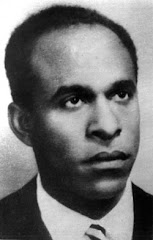
STEVE COLEMAN
(b. September 20, 1956)
(b. September 20, 1956)
Steve Coleman
Steve began playing music just days before his 14th birthday as a freshman at South Shore High School on the south side of Chicago. His first instrument was violin but later that year he switched to the alto saxophone. For three years Steve studied the basics of music and saxophone technique, then he decided that he wanted to learn how to improvise. Looking for the best improvising musicians to listen to is what brought Steve to the music of Charlie Parker, although it helped that his father listened to Parker all the time. After spending two years at Illinois Wesleyan University Steve transferred to Roosevelt University (Chicago Music College) in downtown Chicago in order to concentrate on Chicago’s musical nightlife. Specifically Coleman had been introduced to the improvisations of Chicago premier saxophonists Von Freeman, Bunky Green, Gido Sinclair, Sonny Greer and others and he wanted to hang out and learn from these veterans. By the time he left Chicago in May 1978, he was holding down a decent gig leading a band at the New Apartment Lounge, writing music, playing Parker classics, and getting increasingly dissatisfied with what he felt was a creative dead end in the Chicago scene.
After hearing groups from New York led by masters like Max Roach, Art Blakey, Woody Shaw, The Thad Jones-Mel Lewis Orchestra, Sonny Rollins, etc. come through Chicago with bands that featured great players with advanced musical conceptions, Steve knew where he wanted to go next. He felt he needed to be around this kind of atmosphere in order to grow musically.
Hitchhiking to New York and staying at a YMCA in Manhattan for a few months, he scuffled until he picked up a gig with the Thad Jones-Mel Lewis Big Band, which led to stints with the Sam Rivers Big Band, Cecil Taylor’s Big Band and others. Soon he begun cutting records as a sideman with those leaders as well as pivotal figures like David Murray, Doug Hammond, Dave Holland, Mike Brecker and Abbey Lincoln. However it was really the influence of Von Freeman and Bunky Green in Chicago, Thad Jones, Sam Rivers, Doug Hammond in New York and listening to recordings of past improvising masters and music from West Africa that got Coleman turned around musically. . The most important influences on his music at this time was listening to tenor saxophonist Von Freeman (who primarily influenced Coleman as an improviser), saxophonist Sam Rivers (who influenced Steve compositionally) and drummer/composer Doug Hammond (who was especially important in Steve’s conceptual thinking).
Even playing with these masters only went part of the way toward paying the rent, and so for the next four years Coleman spent a good deal of time playing in New York City’s streets for small amounts of money with a street band that he put together with trumpeter Graham Haynes, the group that would evolve into the ensemble Steve Coleman and Five Elements. It is this group that would serve as the flagship ensemble for most of Steve’s activities.
Within a short time the group began finding a niche in tiny, out-of-the-way clubs in Harlem and Brooklyn where they continued to hone their developing concept of improvisation within nested looping structures. These ideas were based on ideas about how to create music from one’s experiences which became the foundation which Coleman and friends call the M-Base concept. However, unlike what most critics wrote this concept was philosophical, Coleman did not call the music itself M-Base.
After reaching an agreement with the West German JMT label in 1985, Steve and his colleagues got their chance to document their emergent ideas on three early Coleman-led recordings like Motherland Pulse, On The Edge Of Tomorrow, and World Expansion. The late 1980s found Coleman working to codify his early ideas using the group Steve Coleman and Five Elements and working with a collective of musicians called the M-Base Collective. As his ideas grew Steve also learned to incorporate various forms of research to expand his awareness, these techniques included learning to program computers to be used as tools to further develop his conception. He developed computer software modules which he referred to as The Improviser which was able to spontaneously develop improvisations, harmonic structures and drum rhythms using artificial intelligence based on certain musical theories that Steve had developed over the years. It was also during this time that Coleman came into contact with the study of the philosophy of ancient cultures. This began in the late 1970s with his listening to music from West Africa and studying about he African Diaspora, but in the 1980s Steve began to study and read about the ideas behind the music. He began to see that there was a sensibility that connected what he was interested in today with the ancient cultures of the past. All of these ideas are documented on his recordings in the form of a sonic symbolic language.
These emerging concepts were documented on Steve’s subsequent albums Sine Die (the last recording of the 1980s on the Pangaea Label), Rhythm People, Black Science, Drop Kick, The Tao of Mad Phat, and the first album of the entire M-Base Collective called Anatomy of a Groove (all on BMG Records). However, not being satisfied with reading and listening to recordings, Coleman embarked on the first of many research trips, first going to Ghana in December 1993 to January 1994 to study the relationship of language to music. One of the places that he traveled to was a small village called Yendi to check out the Dagbon people who have a tradition of speaking through their music using a drum language that still survives today. Steve had certain ideas about the role of music and the transmission of information in ancient times and he wanted to verify his speculations. This trip had a profound effect on Coleman’s music and philosophy. Upon returning to the United States Steve recorded Def Trance Beat and A Tale of 3 Cities on BMG Records, however the impact of the ideas that he was introduced to in Ghana would not be fully expressed in his work until late in 1994 after meeting the Kemetic (i.e. related to ancient Egypt) philosopher Thomas Goodwin, whose influence on Steve’s work was profound and far reaching.
In June 1994 Steve formed the group Renegade Way which at that time consisted of Steve Coleman and Greg Osby on alto saxophones, Joe Lovano and Craig Handy on tenor saxophones, Kenny Davis on bass and Yoron Isreal on drums. This group also did its first tour of Europe in late august 1995 (with Bunky Green on alto taking Greg’s place and Ralph Peterson on drums instead of Yoron). A later version of this group consisted of Steve Coleman and Greg Osby on alto saxophones, Gary Thomas and Ravi Coltrane on tenor saxophones, Anthony Tidd on Bass and Sean Rickman on drums, however this group has never recorded a commercially released CD.
Representing both a summation of the previous period and the beginning of another phase is the three CD box set entitled Steve Coleman’s Music - Live at the Hot Brass released by BMG France. Each CD in the box set was recorded live in March 1995 in Paris and features one of Coleman’s groups, Curves of Life by Steve Coleman and Five Elements, The Way of the Cipher by Steve Coleman and Metrics and Myths, Modes and Means by Steve Coleman and The Mystic Rhythm Society. This last CD was directly influenced by the trip to Ghana and philosophical studies with Tom Goodwin, it was to point in the direction of Steve’s investigations for the remainder of the 1990s. Together with an experimental ensemble put together called Steve Coleman and The Secret Doctrine, that brought the total number of group projects that Steve was involved in to five.
The year 1995 was an important year for Steve. He began by organizing a trip that would make a profound impact on his music. While pursuing his philosophical studies and learning more about the transmission of these ideas through music, Steve began to plan to investigate an idea that he had been thinking about for at least 7 years. In an effort to follow the development of certain philosophical and spiritual ideas obtained by studying ancient cultures (primarily ancient Egypt) and following up on the 1993-94 research trip to Ghana, Africa, Steve wanted to meet and collaborate in a creative way with musicians who were involved in certain ancient philosophical/musical traditions which come out of West Africa. One of his main interests was the Yoruba tradition (predominantly out of western Nigeria) which is one of the Ancient African Religions underlying Santeria (Cuba and Puerto Rico), Candomble (Bahia, Brazil) and Vodun (Haiti). Steve decided to go to these places and investigate the method by which the ideas of these traditions were transmitted through music. First stop, Cuba!
In Cuba Steve found that the situation was more complex than he had imagined for the people had preserved more than one African culture and these were mixed together under the general title of Santeria. There are the Abakua societies (Ngbe) , the various Arara cults (Dahomey), the Congo traditions such as nganga, mayombe and palo monte as well as the Yoruba traditions. But he did find one group called AfroCuba de Matanzas who specialized in preserving all of the above traditions as well as various styles of Rumba.
It was to the town of Matanzas that Steve headed in January of 1996 in order to study the music and also contact AfroCuba de Matanzas and arrange a meeting with the leader of this group, Francisco Zamora Chirino (otherwise known as Minini). Minini was also excited about the project and so it was arranged that the collaboration would take place in February during the time of the Havana Jazz Festival in order to give the expanded group a chance to perform before the Cuban public.
In February of 1996 Steve rented a large house in Havana and along with a group of 10 musicians and dancers, a three person film crew and the group AfroCuba de Matanzas (who had been bused in from Matanzas) the collaboration was started. For 12 days the two groups hung out together, worked, practiced and conceptualized in order to realize their goal. After their performance at the Havana Jazz Festival the musicians went into a Egrem Studios in Havana and recorded the collaboration. The results of this effort are preserved on a recording made for the BMG France recording company called The Sign and The Seal by Steve Coleman and The Mystic Rhythm Society in collaboration with AfroCuba de Matanzas.
Although this project went well Coleman viewed the results as he did every other project he has been involved in, as a step along a certain path. It did demonstrate another step in the evolution of his music, but it is being on the path that is important to Steve. It also shows that there is a more obvious connection than is generally thought between the creative music of today and the dynamic musical traditions of African peoples living in various parts of the earth. The combined group of Steve Coleman and The Mystic Rhythm Society in collaboration with AfroCuba de Matanzas did a major tour of Europe in June-July of 1997. This year also saw Steve form a large group (big band) called Steve Coleman and The Council of Balance. This group recorded a CD called Genesis which was released as part of the two CD set released by BMG France called Genesis and The Opening of The Way (the second CD in the set featuring Steve Coleman and Five Elements).
1997-1999 saw a continuation of the projects involving cultural exchange with musicians around the world. Partially funded by a grant from Arts International (1997), Steve took a group of musicians from America and Cuba to Senegal to collaborate and participate in musical and cultural exchanges with the musicians of the local Senegalese group Sing Sing Rhythm. Using his own funds he also led his group Five Elements to the south of India in January-February of 1998 to participate in a cultural exchange with different musicians in the Karnatic music tradition. Steve and his group also gave workshops in the Brahavadhi Center headed by the renown musicologist Dr. K. Subramanian. What Steve learned on the trip to India (along with a research trip to Egypt the preceding month) helped to substantiate the knowledge of the ancient systems that Steve had been studying. These trips were helpful in supplying the additional information necessary for Steve to continue his studies which he hopes to express through his own music. Two of Steve’s Five Elements recordings released by BMG France, The Sonic Language of Myth (1999) and The Ascension to Light (2000) are a direct result of these studies.
This work came to the attention of IRCAM (the world renown computer-music research center in Paris France) leading to Coleman receiving a major commission from IRCAM to further develop his ideas, in the form of interactive computer software, at the IRCAM facilities in Paris with the aid of programmers Sukandar Kartadinata, Takahiko Suzuki, Gilbert Nouno and IRCAM technology. A premier concert in June 1999 featuring Steve Coleman and Five Elements interacting with what Steve calls his Rameses 2000 computer software program was the public result of this commission. In 2000-2001 Steve withdrew from performing/recording and began study sabbatical. During this time he traveled extensively to India, Indonesia, Cuba and Brazil and continued much of his research as a music professor at the University of California at Berkeley and at CNMAT (the Center for New Music and Technology). He also overhauled his business organization and signed with another record company from France called Label Bleu. After returning to the world of performing Coleman recorded a live double-CD set called Resistance Is Futile (2001) on Label Bleu records.
Artist’s website:
http://www.m-base.com/
Articles on Steve Coleman
09/17/14
Articles on Steve Coleman
09/17/14
NEWS BY JEFF TAMARKIN
Steve Coleman Awarded MacArthur “Genius Grant” Fellowship
08/06/13 CONCERTS BY GIOVANNI RUSSONELLO
Newport Jazz Festival 2013
06/28/13 ALBUMS BY LLOYD SACHS
Functional Arrhythmias
Steve Coleman and Five Elements
01/15/12 THE GIG BY NATE CHINEN
2011: The Year in Gigs
11/13/11 CONCERTS BY SAM SPOKONY
Steve Coleman: Live at Queen Elizabeth Hall in London
09/23/11 CONCERTS BY JOSEF WOODARD
Monterey Jazz Festival 2011
08/10/11 ALBUMS BY STEVE GREENLEE
The Mancy of Sound
Steve Coleman and Five Elements
08/10/11 ALBUMS BY STEVE GREENLEE
The Mancy of Sound
Steve Coleman and Five Elements
07/09/11 NEWS BY JEFF TAMARKIN
Tribute to Von Freeman Coming to Chicago July 28
SEPTEMBER 2010 ALBUMS BY JOSEF WOODARD
Harvesting Semblances and Affinities
Steve Coleman and Five Elements
SEPTEMBER 2010 ALBUMS BY JOSEF WOODARD
Harvesting Semblances and Affinities
Steve Coleman and Five Elements
JUNE 2010 FEATURES BY MICHAEL J. WEST
Steve Coleman: Vital Information
03/11/02 CONCERTS BY GREG ROBINSON
Abbey Lincoln Live in New York
SEPTEMBER 2001 FEATURES BY HARRY EDWARDS
Black, White and Beyond
NOVEMBER 1999 ALBUMS BY BILL SHOEMAKER
Phase Space
Steve Coleman/Dave Holland
NOVEMBER 1999 ALBUMS BY BILL SHOEMAKER
Phase Space
Steve Coleman/Dave Holland
JULY/AUGUST 1999 ALBUMS BY JOSEF WOODARD
The Sonic Language of Myth: Believing, Learning
Steve Coleman
JUNE 1999 LABEL WATCH BY JOSEF WOODARD
Label Watch: Winter & Winter
OCTOBER 1998 ALBUMS BY TONY GREEN
Genesis & The Opening of the Way
Steve Coleman feat. The Council of Balance & 5 Elements
Events featuring Steve Coleman
Abbey Lincoln Live in New York
Newport Jazz Festival
NYC Winter JazzFest
08/06/13 CONCERTS BY GIOVANNI RUSSONELLO
Newport Jazz Festival 2013
06/28/13 ALBUMS BY LLOYD SACHS
Functional Arrhythmias
Steve Coleman and Five Elements
01/15/12 THE GIG BY NATE CHINEN
2011: The Year in Gigs
11/13/11 CONCERTS BY SAM SPOKONY
Steve Coleman: Live at Queen Elizabeth Hall in London
09/23/11 CONCERTS BY JOSEF WOODARD
Monterey Jazz Festival 2011
08/10/11 ALBUMS BY STEVE GREENLEE
The Mancy of Sound
Steve Coleman and Five Elements
08/10/11 ALBUMS BY STEVE GREENLEE
The Mancy of Sound
Steve Coleman and Five Elements
07/09/11 NEWS BY JEFF TAMARKIN
Tribute to Von Freeman Coming to Chicago July 28
SEPTEMBER 2010 ALBUMS BY JOSEF WOODARD
Harvesting Semblances and Affinities
Steve Coleman and Five Elements
SEPTEMBER 2010 ALBUMS BY JOSEF WOODARD
Harvesting Semblances and Affinities
Steve Coleman and Five Elements
JUNE 2010 FEATURES BY MICHAEL J. WEST
Steve Coleman: Vital Information
03/11/02 CONCERTS BY GREG ROBINSON
Abbey Lincoln Live in New York
SEPTEMBER 2001 FEATURES BY HARRY EDWARDS
Black, White and Beyond
NOVEMBER 1999 ALBUMS BY BILL SHOEMAKER
Phase Space
Steve Coleman/Dave Holland
NOVEMBER 1999 ALBUMS BY BILL SHOEMAKER
Phase Space
Steve Coleman/Dave Holland
JULY/AUGUST 1999 ALBUMS BY JOSEF WOODARD
The Sonic Language of Myth: Believing, Learning
Steve Coleman
JUNE 1999 LABEL WATCH BY JOSEF WOODARD
Label Watch: Winter & Winter
OCTOBER 1998 ALBUMS BY TONY GREEN
Genesis & The Opening of the Way
Steve Coleman feat. The Council of Balance & 5 Elements
Events featuring Steve Coleman
Abbey Lincoln Live in New York
Newport Jazz Festival
NYC Winter JazzFest
September 17, 2014
MACARTHUR FELLOWS / MEET THE CLASS OF 2014
Steve Coleman
Jazz Composer and Saxophonist
Founder
M-Base Concepts, Inc.
Allentown, PA
Age: 57
Steve Coleman
Jazz Composer and Saxophonist
Founder
M-Base Concepts, Inc.
Allentown, PA
Age: 57
Steve Coleman is an alto saxophonist and composer whose technical virtuosity and engagement with musical traditions and styles from around the world are expanding the expressive and formal possibilities of spontaneous composition.
Whether performing solo or with his regular ensemble, Steve Coleman and Five Elements, Coleman delivers signature performances of notated works and brings a masterful facility to intricate and complex improvised pieces. His original compositions weave disciplined rhythmic structures, refined tonal progressions, and overlapping and mixed meters into soulful and fluid interpretations. In his improvisational performances, Coleman energizes and updates iconic musical idioms in the creative traditions of luminaries like John Coltrane and Charlie Parker by infusing them with melodic, rhythmic, and structural components inspired by music of the larger African Diaspora, as well as from the continents of Africa, Eurasia, and the Americas (in particular, West Africa, Cuba, Brazil, Europe, India, and Indonesia). His work also draws heavily on inspiration from nature, metaphysics, and science, integrating, for example, patterns derived from the cycles and relationships of the planets in our solar system or, as on Functional Arrhythmias (2013), the pulsating patterns of the human heart.
Coleman’s commitment to mentorship and community has also distinguished his career. M-Base (Macro-Basic Array of Structured Extemporizations), a cooperative that Coleman co-founded in the mid-1980s and that is still vital today as the non-profit organization M-Base Concepts, Inc., provides a supportive environment for musical experimentation and original performance, and his workshops, seminars, online instruction, and interdisciplinary collaborations encourage younger musicians both here and abroad to push the boundaries of their craft. Influential well beyond the scope of saxophone performance and composition, Coleman is redefining the vocabulary and vernaculars of contemporary music.
Steve Coleman attended Illinois Wesleyan University (1974–1976) and Roosevelt University (1976–1977). In addition to giving workshops worldwide, he has been an artist in residence at the Lucerne University of Applied Sciences and Arts (2009–2010) and the Thelonious Monk Institute (2008–2009) and a faculty member at the University of California at Berkeley (2000–2002), the Stanford Jazz Workshop (1995–1996), and the Banff School of Fine Arts (1985–1991). His extensive catalog of recordings includes Harvesting Semblances and Affinities (2010), Invisible Paths: First Scatterings (2007), and Resistance Is Futile (2002), among many others.
September 20, 2014
(Which happens to be Steve Coleman's 58th birthday-ed.)
Saxophonist Steve Coleman honored with MacArthur 'genius grant'mmmm
Saxophonist Steve Coleman was named a 2014 MacArthur Fellow.
By Chris Barton
September 17, 2014
Los Angeles Times
(Which happens to be Steve Coleman's 58th birthday-ed.)
Saxophonist Steve Coleman honored with MacArthur 'genius grant'mmmm
Saxophonist Steve Coleman was named a 2014 MacArthur Fellow.
By Chris Barton
September 17, 2014
Los Angeles Times

Influential saxophonist, composer and educator Steve Coleman has been named as one of the 2014 MacArthur Fellows.
In presenting the honor, the MacArthur Foundation praised the 57-year-old Coleman for "infusing iconic spontaneous music idioms with the melodic, rhythmic and structural components of an eclectic range of musical traditions to create a distinctive new sound."
Born in Chicago and counting Sam Rivers, Von Freeman and Sonny Rollins among his early influences, Coleman is also known as the driving force behind M-Base, a loose musical collective that began in the 1980s as well as an evolving school of creative thought. An acronym for Macro-Basic Array of Structured Extemporizations, M-Base emphasizes artistic expression of personal experiences without structural or stylistic limitations, a philosophy that continues to be heard across the spectrum of contemporary jazz.
Among the many artists influenced by Coleman and M-Base include Ambrose Akimusire, Cassandra Wilson, Greg Osby, Dave Holland, Ravi Coltrane, Geri Allen and 2013 MacArthur Fellow Vijay Iyer.
"To me, Steve’s as important as Coltrane,” Iyer told the magazine JazzTimes in 2010. "He deserves to be placed in the pantheon of pioneering artists.”
Throughout his career, Coleman has looked to make connections between ancient cultures and the sound of today, researching harmonic structures and the role of music in transmitting information in Africa and Cuba in his travels. He served as an associate professor of music at UC Berkeley from 2000 to 2002 as well as stints at the Stanford Jazz Workshop, the Thelonious Monk Institute and Banff School of Fine Arts.
Coleman continues to explore improvisation through his long-running ensemble Five Elements, a group whose sound reflects a focus on constant movement rather than familiar repeated melodies. Often flirting with a sort of odd-angled funk, Coleman's most recent recordings, including last year's "Functional Arrhythmias," also feature a wealth of rising talent such as Miles Okazaki and Jonathan Finlayson.
Coleman joins five other arts figures in receiving the honor, which is commonly known as a “genius grant” and comes with a prize of $625,000
In presenting the honor, the MacArthur Foundation praised the 57-year-old Coleman for "infusing iconic spontaneous music idioms with the melodic, rhythmic and structural components of an eclectic range of musical traditions to create a distinctive new sound."
Born in Chicago and counting Sam Rivers, Von Freeman and Sonny Rollins among his early influences, Coleman is also known as the driving force behind M-Base, a loose musical collective that began in the 1980s as well as an evolving school of creative thought. An acronym for Macro-Basic Array of Structured Extemporizations, M-Base emphasizes artistic expression of personal experiences without structural or stylistic limitations, a philosophy that continues to be heard across the spectrum of contemporary jazz.
Among the many artists influenced by Coleman and M-Base include Ambrose Akimusire, Cassandra Wilson, Greg Osby, Dave Holland, Ravi Coltrane, Geri Allen and 2013 MacArthur Fellow Vijay Iyer.
"To me, Steve’s as important as Coltrane,” Iyer told the magazine JazzTimes in 2010. "He deserves to be placed in the pantheon of pioneering artists.”
Throughout his career, Coleman has looked to make connections between ancient cultures and the sound of today, researching harmonic structures and the role of music in transmitting information in Africa and Cuba in his travels. He served as an associate professor of music at UC Berkeley from 2000 to 2002 as well as stints at the Stanford Jazz Workshop, the Thelonious Monk Institute and Banff School of Fine Arts.
Coleman continues to explore improvisation through his long-running ensemble Five Elements, a group whose sound reflects a focus on constant movement rather than familiar repeated melodies. Often flirting with a sort of odd-angled funk, Coleman's most recent recordings, including last year's "Functional Arrhythmias," also feature a wealth of rising talent such as Miles Okazaki and Jonathan Finlayson.
Coleman joins five other arts figures in receiving the honor, which is commonly known as a “genius grant” and comes with a prize of $625,000
Steve Coleman Presents

Photo of Steve Coleman by Esther Cidoncha via http://ecidonchafotosdejazz.blogspot.com/,,,
To
call Steve Coleman “influential” is an understatement. Vijay Iyer, one
of the many groundbreaking composer-performers who began their careers
apprenticing with Steve, says, “To me, Steve’s as important as Coltrane.
He has contributed an equal amount to the history of the music. He
deserves to be placed in the pantheon of pioneering artists.”
But the scope of Steve’s influence isn’t limited to his collaborators. He’s been presenting weekly workshops at The Jazz Gallery almost every season since the fall of 2004, where anyone with a thirst for knowledge can go to absorb the infinitude he has to offer.
On March 8th, we’ll be bringing this series uptown in collaboration with our friends at Symphony Space. The Jazz Gallery Uptown: Steve Coleman Presents, A Musical Salon will expose a new neighborhood to Steve’s ideas and approaches. For those of you downtown, we’ll also begin the Spring season of “Steve Coleman Presents” at The Jazz Gallery next Monday.
Never been to one of Steve’s workshops? Michael J. West provides a great account in the 2010 issue of JazzTimes:
The audience at the Jazz Gallery is under Steve Coleman’s spell. The alto saxophonist, casually dressed in jeans and a backwards baseball cap, sits center stage at the scruffy upstairs club in New York’s SoHo district, leading two of his band members—pianist David Virelles and guitarist Miles Okazaki—through alien-sounding renditions of Jerome Kern’s “All the Things You Are.” The people in the club’s cramped chairs sit in rapt attention, following Coleman’s urgings to clap and sing along with the musicians. Then something unusual happens: Coleman calls one young spectator up to sit with Virelles at the piano, and encourages others to stand onstage behind him and watch.
This is Coleman’s gig, but it isn’t a concert. On a Monday night in March, he’s conducting his weekly master class and workshop, “Steve Coleman Presents,” for musicians of all instruments and skill levels. Coleman has spent the evening discussing negative chords, a system of his own design in which chords are built by stacking notes downward, not upward, from the root. He and his musicians first re-harmonize the changes on “All the Things You Are,” then reconstruct the tune itself using the same concept. “You’re gonna work out the bridge,” he tells the kid he’s brought onto the bandstand, and for the next hour they deconstruct the standard’s B-section note by note, looking to retain the compositional structure but turn it upside down as the remainder of the class—about 20 people, mostly young, some with instruments—looks on.
“What you’re really doing with this is to alter your perspective,” he explains as the kid picks away at the keys. “You’re just looking at the same thing from a different angle, holding up a magnifying glass to see why things work and why they don’t. And you don’t have to stop tonight; you can keep doing it, because it presents situations you’ve never been in before and possibilities you’ve never even thought of.”
[Continue reading here.]
We’d like to point out that Steve’s own website is an incredible resource, with several scores and essays – as well as almost two dozen albums – available for free download. The author also recommends this feature in The Wall Street Journal, as well as this extensive 2008 interview via Innerviews.
Spread the Word:
Twitter17
Facebook101
February 28th by Rafiq in Press Previews
But the scope of Steve’s influence isn’t limited to his collaborators. He’s been presenting weekly workshops at The Jazz Gallery almost every season since the fall of 2004, where anyone with a thirst for knowledge can go to absorb the infinitude he has to offer.
On March 8th, we’ll be bringing this series uptown in collaboration with our friends at Symphony Space. The Jazz Gallery Uptown: Steve Coleman Presents, A Musical Salon will expose a new neighborhood to Steve’s ideas and approaches. For those of you downtown, we’ll also begin the Spring season of “Steve Coleman Presents” at The Jazz Gallery next Monday.
Never been to one of Steve’s workshops? Michael J. West provides a great account in the 2010 issue of JazzTimes:
The audience at the Jazz Gallery is under Steve Coleman’s spell. The alto saxophonist, casually dressed in jeans and a backwards baseball cap, sits center stage at the scruffy upstairs club in New York’s SoHo district, leading two of his band members—pianist David Virelles and guitarist Miles Okazaki—through alien-sounding renditions of Jerome Kern’s “All the Things You Are.” The people in the club’s cramped chairs sit in rapt attention, following Coleman’s urgings to clap and sing along with the musicians. Then something unusual happens: Coleman calls one young spectator up to sit with Virelles at the piano, and encourages others to stand onstage behind him and watch.
This is Coleman’s gig, but it isn’t a concert. On a Monday night in March, he’s conducting his weekly master class and workshop, “Steve Coleman Presents,” for musicians of all instruments and skill levels. Coleman has spent the evening discussing negative chords, a system of his own design in which chords are built by stacking notes downward, not upward, from the root. He and his musicians first re-harmonize the changes on “All the Things You Are,” then reconstruct the tune itself using the same concept. “You’re gonna work out the bridge,” he tells the kid he’s brought onto the bandstand, and for the next hour they deconstruct the standard’s B-section note by note, looking to retain the compositional structure but turn it upside down as the remainder of the class—about 20 people, mostly young, some with instruments—looks on.
“What you’re really doing with this is to alter your perspective,” he explains as the kid picks away at the keys. “You’re just looking at the same thing from a different angle, holding up a magnifying glass to see why things work and why they don’t. And you don’t have to stop tonight; you can keep doing it, because it presents situations you’ve never been in before and possibilities you’ve never even thought of.”
[Continue reading here.]
We’d like to point out that Steve’s own website is an incredible resource, with several scores and essays – as well as almost two dozen albums – available for free download. The author also recommends this feature in The Wall Street Journal, as well as this extensive 2008 interview via Innerviews.
Spread the Word:
Twitter17
Facebook101
February 28th by Rafiq in Press Previews
IMPROVISATION, CORRELATION, AND VIBRATION:
AN INTERVIEW WITH STEVE COLEMAN
(by Johannes Völz, Freie Universität Berlin)

STEVE COLEMAN
While
working on a study on the relation between improvisation and language, I
asked saxophonist Steve Coleman to participate in a Berlin-New York
phone interview. Although I was well aware of how outspoken and eloquent
an artist Coleman is (as an amateur saxophonist myself, I had taken
Steve's improvisation class at U.C. Berkeley, where he taught from 2000
to 2002), I was taken by surprise by Steve's endurance. After two hours,
I ran out of fresh tape. Luckily I found some old ones to overdub, as
Steve kept unfolding his philosophy of cosmic energy, as well as his
ideas on improvisation, language, structure, freedom and innovation,
often making his points with the help of highly personal anecdotes.
Still going strong after four hours non-stop, Steve explained his
motivation: "If we're going to do this, we better do it right."1
Johannes Völz: Steve, I want to talk to you about improvisation today. I am interested in a very specific aspect of improvisation, namely the relation between improvisation and language. Many musicians have described jazz improvisation using the metaphor of language. That could mean many different things. Let's start with the idiomatic aspect of language because that has dominated the public discourse in the last years, especially in the wake of the debates around Wynton Marsalis's views on jazz. Marsalis supports a view that he shares with, among others, Albert Murray. Murray speaks of "idiomatic authenticity," stressing that improvisation is not about the performer trying to express some sort of interiority but rather mastering an idiom or a language. I have a quote for you from Murray's Stomping the Blues: "Nor does the authenticity of any performance of blues music depend upon the musician being true to his own private feelings. It depends upon his idiomatic ease and consistency." (99) Let's touch on this aspect first, on this specific sense of the language metaphor.
Steve Coleman: First of all, let me clarify what we are talking about. You asked about "jazz improvisation." I don't think of what I'm playing as 'jazz' and I don't think of myself as following a 'jazz tradition.' I also do not see Parker, Coltrane, etc. as 'jazz' and I see myself as being very much in the same tradition that those people were part of. Now, before we get into the language issue, I want to talk about one other thing, which is, I don't know how much of a musician Albert Murray is. I think he is a great writer and more what they would have called in the old days a philosopher. The tradition of writing about music and thinking about music goes way, way back and that tradition is normally a separate tradition from the playing of music. Philosophers are usually very well-read and they draw upon a wide range of literary material. Musicians, for the most part, simply play. I'm not saying musicians are dumb or anything like that, but musicians draw from other musicians. Of course, you have guys like Wynton. Wynton is well-read, Coltrane was very well-read, for that matter. But initially, when they get into the music, their initial impetus is the music itself, so the decisions that they make based on moving forward with the music have to do with what's happening currently in their time, what they have to deal with on their instrument, what styles are current, getting work, certain very practical things. In that sense, I think of music as a craft more than an art.
J.V.: Doesn't this suggest that the musician lives in some kind of vacuum? I would think that they are involved in all kinds of issues, be they political, be they philosophical. Don't they bring all of that to their craft?
S.C.: Yes, but that comes later. When guys start reading a lot and everything, they may get into an attitude where they start thinking about the art of music. This is one thing that happened a lot in the forties and fifties, for example, when black people in the United States were struggling for just recognition as human beings and everything, and they generally compared themselves to the culture that was the dominant culture of America at that time. So therefore a lot of times they compared themselves to their white counterparts and would say things like, “well, our music needs to be played at Carnegie Hall,” and things like that – that shows you the model that they were using. And some people even went as far as letting those elements influence their music. I see that in groups like the Modern Jazz Quartet. They were saying, my music is not conducive to playing in clubs, I want to play on concert stages. Later on, as people started getting more integrated, they also started to integrate the idea of the music. But, you know, you still had the necessity of, I got to play a gig, I got to feed my family, that kind of thing, and the actual function of the music within the community, depending on what kind of community you were dealing with.
J.V.: The community is just it. If that is the actual function, then the practical concerns of playing include the communal aspects. In that sense I don't see how a writer like Murray underestimates the actual concerns of playing music.
S.C.: First of all, the situation today is a little different in terms of this music that we're talking about now and the so-called community. Generally speaking, this music is not really a part of the black community – that's the best way to say it. Not in an obvious sense, anyway. It's coming from the black community, culturally speaking. From the standpoint of diversity, black people are doing lots of different things nowadays, and some people, like me, for example, choose to play music, and we don't negate our culture just because we play this particular kind of music as opposed to something that LL Cool J might do or something like that. At the same time, people need a reason to play music. They need to feel like I have a reason that I'm going to do this. But to come back to the larger point, philosophers or writers are writing about an ideal intellectual situation and they're not taking into account the complex parameters that are being dealt with and that are all happening at once. The reason why you play changes depending on what style of music you're into. For example, Coltrane's reasons and Louis Armstrong's reasons weren't exactly the same, even though you could say that Coltrane is an extension of that tradition. Therefore, Coltrane's music eventually became a form of prayer or an inner expression dealing with the relationship of man to the universe and expanding consciousness and all this kind of stuff. And Louis Armstrong's music was an expression of what's happening inside of him in terms of what he sees, but he comes from a very different society and from a different time, so he thinks of the entertainment as important – something that Coltrane doesn't view as the most important element. I mean, I know that's true with me. When I go on stage, I'm not looking at it from a minstrel standpoint, I'm not looking at it from the standpoint. I'm coming out and when I leave, these people have to be happy. It's more of an expression thing.
J.V.: But if you're saying that playing is about personal expression, you're in basic agreement with what most writers have said about jazz at least since the thirties, and what Murray, for instance, is arguing against. Jazz criticism has been based so much on the romantic idea of the individual soloist expressing inner feelings.
S.C.: Let me explain it this way: I didn't start off playing music with some kind of theory in my mind. I wasn't thinking exactly the way I'm thinking now. I started off playing the instrument simply because I liked music. I liked the feel of the instrument, I liked making sounds and everything. I thought it was fun. I was a teenager, you know. As I realized there was a higher level of playing involved, I decided at some point, okay, I really want to learn how to improvise. I didn't really deal with a whole lot of psychological shit as far as why I wanted to do that. It was like, this is interesting, I'm following what I'm feeling. And I've always followed what I felt. I think that's the driving force. And then what I'm playing has a lot to do, has everything to do, with what I feel. It doesn't matter what kind of intellectual shit I've studied, even all of that is guided by what I feel, which things I decide to study. I'm trying to play as much me as I can and so therefore, feeling or emotion and spirituality, which are a higher form of that, have everything to do with what I'm doing. In that sense I completely disagree with what Albert is saying. From a musician's standpoint.
J.V.: What about the other viewpoint?
S.C.: From a philosophical standpoint, looking at the whole thing more as an overview, I can see all this idiomatic stuff that Albert is talking about. But that stuff develops as a result of the dialogue between the musician, the culture and all of that. In any particular culture, in any particular place, you're going to have idiomatic stuff. Human beings are creatures of habit. Certain habits will develop in any music any time. Even if you deliberately try to avoid habits you develop other habits trying to do that.
J.V.: But isn't there a choice you have to make: Either approach the idiom the way Albert suggests, or go for personal expression? It has certainly been framed that way, as an either-or question. And that has led to modernist credos like "Make it new," which often meant not only avoiding habits but also idioms.
S.C.: But it's not an either-or question. It's a matter of perspective. I think you'll always be able to step back and see certain trends in what people were doing at a certain point. But just as much, you'll miss certain things because you aren't in their time. From the standpoint of stepping back and writing about it, your analysis is always going to be flawed – on two levels. One, because of the time difference; and two, because you're not actually one of the participants. Now, in the case of Wynton, he's influenced by the writings of Albert Murray and certain other people, Richard Wagner, whoever. He reads a lot of different stuff, as I do, and as other people do, too. And over time this starts to affect your thinking and affect the choices you make and everything. I am influenced by what I read and it's generating more detailed thinking in those directions. So it could be good, it could be bad, but it usually doesn't have a whole lot to do with the music itself because these people are usually not participants.
J.V.: That's the reason I'm interviewing musicians, you see.
S.C.: I know, but I'm just giving you that subtext as a setup really for the differences between, for example, what musicians might think (and if they're being honest, there's a lot of practical consideration in there) and what you might read in jazz publications, which are generally written by non-musicians or by musicians who didn't make it, I mean guys who didn't quite make it to playing. They started a little bit and then they went on to write.
J.V.: Let's come back to improvisation and language then. What do you think personally about the metaphor of language for improvising? Does this metaphor make sense to you, does it have any meaning?
S.C.: Yes, I do think about it in these terms, it's just that that's not the only terms I think about it in. That's just one aspect, because I mean it depends on what you mean when you say 'language.' Can you define what you're talking about? Are you talking about English, French, Spanish? Or do you mean the broader sense of communication and things like that?
J.V.: That's what I'm asking you. See, when I first started doing interviews with musicians about improvisation, it was the musicians who brought up the language metaphor in virtually every interview. And I kept asking, "What do you mean by that?" And I would get all kinds of different answers.
S.C.: Okay, so I'll tell you what I mean by language. The first thing is the language itself. For me, language is basically communication, and by communication I don't just mean words, and certainly don't just mean written words. For me, it means communication through whatever means possible, vibration, gesture, whatever. I have a girlfriend, we communicate in all kinds of ways, we don't just sit down and talk all the time. You have some talkative people; there are girls who will say, "You never talk to me," you know, you have this kind of thing. But we communicate in all kinds of ways, making love, for example, is communication, as is having sex without love; eating together, cooking together, going to an amusement park or just sitting there looking at each other. Especially if people are really close there are a lot of gestures and things people do in communicating which words just enhance. I look at words as the details that take over when gestures can't do it alone. Now, the reason that I know this is true is that for a long time I've been dealing with this woman in Cuba. In the beginning of our relationship she spoke no English, zero. Zero. I spoke zero Spanish. I mean zero. How can we have a relationship, how did we get together? I think about this a lot. What was our initial communication based on?
J.V.: Don't tell me it was music.
S.C.: No, it was primarily gesture. There was this understanding that came purely out of vibration, to tell you the truth. It didn't come out of "Oh, you know, I find it interesting what you are saying." And many of my friends, especially my girl friends, questioned the whole relationship based on that exactly. They were always telling me, "Steve! You don't even understand her! I don't get this. You guys can't talk, and you're a very intellectual person." But I enjoyed being with her. Okay, we couldn't talk, we had to work on that; we still don't sit down and have a conversation about relativity – I mean we do, but it's a struggle. But over the years, she still doesn't speak good English, and I still don't speak good Spanish, but we developed sort of this hybrid language of gestures, grunts, half-English and half-Spanish words. And I'll tell you something now. I went to a restaurant with her pretty recently, it was me, her, and my bass player Anthony Tidd and one of her friends. When I talked to her, her friend couldn't understand a thing we were talking about and my friend couldn't understand a thing we were talking about. That's when I realized we had developed our own language. This whole experience made me look again at language and communication, and that's really my point. As I said, this relationship started without words, and I thought maybe words aren't too important. It made me think of a lot of things that we are talking about right now as far as language goes.
J.V.: Communication through music, I assume, would be somewhere on a level between gesture and words?
S.C.: Music and words are on a completely different level. I mean I've had the experience when people have come up to me to tell me how much they get out of my music and this and that. And they're talking through a translator because they don't speak any English. So that makes me think, this person is receiving something very, very strong, and language has nothing to do with it, not language like French, German, English. Because I'm using sound to communicate there's something about these sounds that is communicating to this person. So when I'm talking about language, based on my life experience, my concept of language really has to do with communication, which starts on the level of vibration more than anything else, amplified by gesture, amplified by words.
J.V.: Now, when you play music, are there specific ways in which you try to incorporate that concept of communication through sound?
S.C.: When I approach music, I start with vibration, and then I amplify that to things that another person may pick up as idiomatic. Of course, with music as a craft, there are technical things you have to deal with. There's always a system involved, whether you think there is one or not. Music in the first place is organized sound. It's not just any sound. If it was just any sound, then anything that makes a sound would be music. You hear people saying that sometimes, but we know, really, that that's not true. For instance, when we hear birds, we may hear them as musical, but they don't have anything to do with our music. We hear them and we may interpret them as music, but they're communicating with each other, in the bird language, whatever that is.
J.V.: You're saying birds communicate through sound but only humans can hear music?
S.C.: When we hear birds sing like music, it's our response to nature. What we call nature is not really nature. What we call nature is really our response to nature, our interpretation of it.
J.V.: You sound like an idealist, Steve, maybe even like a transcendentalist. From a philosopher's standpoint.
S.C.: The point is, everything is interpreted, and I don't care what kind of experiment you think you are doing. We set up the experiment, so, by the way, it's not objective. The only objective thing is nature outside of us, and we can't even think, we can't even talk about that. So going back to this idiomatic thing – was that your question about the idiomatic thing?
J.V.: Well, the idiomatic structures I had in mind weren't derived from nature but more from specific cultures.
S.C.: Again, there is no contradiction, because this is where time comes in. Based on how I feel, and based on the vibrations that I choose to follow, I will choose to make some, let's call it, variations on whatever is popular in my time. But I can't escape my time, I can't think from the perspective of someone who is living in 200 B.C., for example. It's impossible. I don't care how much I've studied it. No matter how much of an imitator I am or how much of a creator I am, all those things, they're all connected to each other through time. The most creative and the most imitative will always be connected, in terms of gesture, in terms of time. The time has a certain power, a certain character, you could say, that imposes its influence on everything and everybody who's living at this time. So it's impossible for you to have a microwave oven, computers, digital watches, and not have this stuff affect your music. That's not possible. Everything you do and everything you are has to affect your music.
J.V.: Steve, it sounds somewhat contradictory. Earlier you said that musicians are mostly influenced by other musicians and not by writers, and now you're saying that everything around you affects your music.
S.C.: I meant on an intentional level. At first you're mainly concerned with the practical things, but of course even at that point, you can't get out of your culture, you can't get out of your time, you can't get off of your planet. You have all of that that connects us to time itself. Again, it's a question of perspective. What we call idiomatic is all connected to pretty much one time, even when we compare it to the past. If I take the idiomatic things that, let's say, Wynton is doing or David Murray is doing or anybody is doing today and I compare that to what was happening with Charlie Parker, what was happening with Louis Armstrong – well, see, that comparison is done by one person living in one time. I don't really have the perspective that Charlie Parker and those guys had at that time, all I have is my opinion or my view of that from this time. As a result, even my comparison will be influenced by this time. What time do we call our own time? We don't have a name for it. We're simply living, we're making decisions every day based on the influences around you. Nobody will see this detail later on, nobody will ever know that me and you are talking today, if you know what I'm saying, they'll read the article or whatever, but they won't really know what's happening. You could be doing the interview with me, thinking, "Well, Steve is really going off the subject, I wish he would get back on the subject," or whatever, you could be thinking all kinds of shit while you're doing the interview. If you were to write that and somebody would read it a hundred years later, they wouldn't have a clue as to the details of what's going on.
J.V.: As a matter of fact, you're not going off the subject, and the question is, if everybody is always, well, in his culture and time, how close or how rigid is the determination? And in the context of improvising, the question is, are there certain musical codes that pretty much determine your improvisation or are you as an individual free to choose what you want to play? I mean, this also has political ramifications. For instance, does improvisation open up any possibilities at all to break out of the strictures of society?
S.C.: The answers to those questions all depend on your direction of thinking. Are you thinking in terms of an integrative approach or are you thinking about things in terms of categories. Either you're thinking about the differences in things or the similarities in things. Now I spend most of my time with what I call correlative thought, trying to correlate one thing with another and seeing the similarities and seeing in what sense these things are the same. So I have a lot that I can draw on for my music. I can draw on, like you said, literary sources, but I can also draw on sports. I can draw on this, I can draw on that, and a lot of times I consciously try to make direct connections with that in my music, right down to the technical elements of the music itself. In other words, not just emotionally.
J.V.: Can you give an example how that correlative thinking is reflected in your music?
S.C.: For example, in 1985 I began to program computers. It was kind of an intuitive thing that led me in that direction. Somebody told me about computers and I had always liked probing into new things. As a little kid I used to take apart walkie-talkies and radios and things like that, so I was attracted to those kinds of things, taking things apart, tinkering, and all this kind of stuff. So when someone told me about computers, which I didn't know anything about, telling me, “they're starting to use computers in music,” I said, “what do you mean, computers in music, that's crazy.” The guys said, “no, no, there's something called MIDI now” -- this was very new at the time -- and I said, “MIDI, what's that?” Because of television, of shows like Star Trek, where people always say, "Computer, give me analysis!" and the computer would say, "20 percent oxygen," you know, I thought a computer was a robot. But this guy said, “you can program a computer so it can do what you want.” When I heard about the creative aspect, my interest got sparked. I said if I can make it do what I want, maybe I can use it to investigate what I'm already doing. And I really had no idea what I was talking about, it was just a feeling. It was a feeling that I could use this instrument as a tool to further investigate what I was already investigating through music. Because, at the time, what I was particularly interested in, well, there were certain, I don't know how to describe it, geometrical ideas, that's the best way I can put it. It wasn't really geometry because I'm not much of a mathematician, but it had more to do with shapes. And this had to do with the fact that I was an artist before I was a musician. I was influenced by shapes and things like that a lot, and I still am, even in my music today. I wanted to know in more detail what these shapes were and how to translate them more directly into music, and this is dealing with the language of music itself. At first it was just intuitive, just trying to go for certain shapes that I saw in my head, but after a while I thought, that's not enough, I need to know more directly.
J.V.: Wait, wait. Now you're saying there's something like a language particular to the medium of music and also a visual language, and you can translate one into the other? You wanted to translate visual shapes into music?
S.C.: I wanted to be able to look at a mountain and play the mountain. I used to tell my friends that, and just like you, they said, “what do you mean? You mean being inspired by the mountain?” I said, “no, not just inspired. Of course I'm inspired by it, but I want to play the mountain, literally, play the mountain.” They said, “well, what do you mean by that?” I said, “I want to look at the mountain and see something like notation and be able to play it.” They thought I was crazy. They would just dismiss what I was saying. But I was serious. I wanted to be able to look at the flight pattern of a bee, the flight pattern of a bird, and play that. Or have that directly influence my music, so almost be able to look at nature as one big gesture. You can call it notation. I mean, what is notation? It's a bunch of symbols that tell you, don't do this, do this. But I wanted to be able to look at life with my eyes as well as with my ears and be able to translate that into sound. That was, and still is, one of my biggest things.
J.V.: How could a computer help you to get in touch with nature?
S.C.: I thought that maybe by using the computer as a tool I could investigate some aspects of ways of how to do this. I can explain it to you now, but it was an intuition then. Now let me give you one example: In learning the computer and in learning how to deal with the computer, of course there are certain things idiomatic to the computer. If you don't do exactly what it is you are supposed to do, things tend not to work. And when you get into programming, this is even more true. Eventually I got into something called assembly language because at the time computers were very slow and in order to do anything you really had to go under the operating system. So you used assembly language, or some people called it machine language, which is just this one's-and-zero's-kind of language, very, very raw. And you have to know exactly what it is you're trying to do, and need to get the phrasing in a way that's really exact. So you have to learn these structures, they're all based on what people generally call Boolean logic. When I was learning these structures and everything, what I realized was that there is so much here that is very similar to musical structures. Because, you know, human beings created most structures, so it's not like they're completely different. Even before I got into what I was trying to create, I found myself looking at the similarities between the structures in the programming language and the structures that I'd learned in music. And then I saw, of course, that some things were similar and some things were different. The different things were most interesting to me because I thought, wow, you have this kind of structure in this programming language – we could use a structure like that in music.
J.V.: I never realized that your music is structured like a computer language.
S.C.: You have to look at it from the direction of correlative thought. I’ll give you one example. A lot of times in computers you have this "If-then-or"-type structure. If this, then do this. Or, do this. There could be several or's. So it's like this choice-kind of thing depending on the circumstance of what happens. I thought this kind of structure would be good in music. So, for example, you can have an A-A-B-A form, to use a very typical song form in this idiom. It's also a linear form. And then you have people who don't follow forms like that, they just simply play. What I thought was, well, it would be nice if you could have something in between. It would be nice if you could have this sort of Protean structure where you would have a form but the form is not always the same. The form depends on circumstances that happen musically. It changes according to that, but there is an exact form. For me, this was really what happens more in life. Very rarely does life go according to plan. Because anything could happen. Your plan changes. And you have to make immediate new choices. So I thought I will use this as a metaphor for my music. This happens anyway in music, but I wanted to build it into the structure, which is different than what happens just inside the A-A-B-A form.
J.V.: So what kind of form would this be?
S.C.: Let's say the form was A-B-C-D, you had four sections, and which section came after the next depended on circumstances. That's an idea I got from looking at programming languages first, but also from looking at life. Life is much more complicated than that, you know. I'll give you a very simple example. Let's say you give the drummer two possible figures to play at the end of a section, I mean, he has two possible rhythmic things that he can play, let's call them a and b, just to give them names. Let's say you have a guitar player with two possible melodic or harmonic figures that he can play, and we'll call them 1 and 2. He has a choice between 1 and 2, but he has to play one of them. The same thing with the drummer. He has to play a or b, and he has to play one of them in that spot. You compose the song in such a way that this spot happens at the same time. So when we get to that spot, obviously we're going to have a-1, a-2, b-1, or b-2. And a and b, and 1 and 2 are really short. They're like two beats or something like that. And so, when we get to that spot, they play those things, and the combination of what they play determines which section we go to. After a-1 we go to A, after a-2 we go to B, b-1 we go to C, and b-2 we go to D. So these are like controls, you could say. They're not random, but they depend on decisions that are being made. It's just like the Boolean logic thing when you program. You have this contingency, and you plan for the contingency. Nothing else can happen, if the guys do what they're supposed to do.
J.V.: On a less structured level, this could happen inside the A-A-B-A form as well. You stay inside the form, but you might switch to double time or something like that once one of the musicians signals to go there.
S.C.: Of course, we do this all the time even on A-A-B-A forms. It depends on the agreement among the musicians because you play with people that you have a certain agreement with. And some people play these standards in a way such as, we might play in the A-A-B-A form for a while, but it might be completely open after that. It might dissolve into something else. They do that by agreement, you know. And because some musicians thought of that before and it's musically acceptable to do. People do what's musically acceptable among the group of musicians they're playing with, otherwise you end up playing by yourself. Others say, no, we have to keep A-A-B-A, no matter what happens. All of our freedom has to occur inside of A-A-B-A. It's just a matter of which choices you make ahead of time. But either choice is an understanding, and you're dealing with the understanding, and sometimes, well, many times, I'll tell you the truth, it boils down to skill level. It boils down to what you can do. Because some musicians, they are on a high enough level that they actually get a thrill out of being able to keep a structure precisely but being completely free within that. And a lot of times that's the thrill for me in listening to what Art Tatum or Charlie Parker might do. They sound completely free and at the same time there's this very high level of structure. I used to have this argument a lot with Dave Holland when I first started playing with him.
J.V.: That must have been somewhere around 1980.
S.C.: After he played with Sam Rivers and Circle, yes. I started talking to him about doing something in about '78 or '79, but we didn't actually get together until about '81. When we started playing together we had these different ideas about what we liked. We would sit down and listen to records. Of course, we had differences. They were sometimes just a matter of taste, many times cultural differences, you know, he grew up in England and I grew up in Chicago. But there were a lot of other things that were obviously common, otherwise we would not have sat down and talked. Okay, so when it comes to making music, he's telling me why he wants to play with me, I'm telling him why I might be interested in playing with him, you know. One of the biggest differences, to put it that way, was our idea about structure. For him, like I say, he just came out of this free-form and he found it really enjoyable to not give any parameters at all. And I said, "Well, Dave, when you don't give any parameters, that's like giving parameters." And he said, "Well, what do you mean by that? I have the freedom to play what I want!" I said, "If you give somebody the freedom to play what they want they will tend to do the same thing over and over." He didn't buy this, in the beginning. I said, "Let somebody do whatever they want over and over, I mean complete freedom, and they will fall into habits and will do the same thing over and over." Actual freedom to me is choices.
J.V.: That's a pretty restrictive idea of freedom, considering that it's not you who will decide what you can choose from.
S.C.: First of all, there is no such thing as freedom. We're human beings, we're creatures of habit. But if we have more choices, the illusion of freedom is greater than if we have less choice. The average musician, if you tell him to do what he wants, or she wants, they're not going to develop certain skills because they will just fall into what's easiest for them to do. If you force them out of certain habits, they will be forced to develop certain skills to deal with those things. So we had this argument over and over and over. The argument was really solved by the music itself. Because after we started playing – his approach was to write open tunes and my approach was write tunes with these varying structures, and there was also Kenny Wheeler who wrote mostly from a harmonic standpoint – the music that people heard was a combination of all these approaches. It wasn't one approach. Eventually, these things started influencing each other and sort of coming together. I saw some points in what he said, and he saw some points in what I said, and so the character of the group was formed. Eventually he ended up doing music almost all of which had some kind of structure, as you can see from his music today. His music started to have more and more structures, he really got into rhythms, because this is what I was into. At the same time, I felt certain advantages of what he was doing and the language that he was dealing with. But actually the language that he was dealing with, I looked at it more as the people who he was influenced by, people like Sam Rivers, who I also played with. It was Sam Rivers who really had this strong open thing happening. But what I discovered was that the people who really played open the best knew structure. I guess what I'm saying about structure is that the structure itself is an influencing factor which you are forced to deal with when you impose it as an organizational factor.
J.V.: You mean like a liberating constraint?
S.C.: Yeah, but "liberating" is misleading. We're never going be free. Forget that. But the thing about structure is that you don't get fooled thinking that you're doing whatever you want to do. To me, Coltrane's life is the perfect example of that. He used structure to get to a variety. The word I would prefer to use is not freedom but variety. So you can see that he was playing a certain way and he stumbled on certain kinds of structural things around the time he was doing that Giant Steps stuff, which he felt he needed to investigate. He definitely investigated them to a ridiculous degree. He did it on standards, he did it on originals. He got a lot of response from that. A lot of response from inside the music community itself. Even from the musicians in his band. Some people were saying, “man, why do we have to play all these chords?” Other people outside the group were saying, “well, you know, that's kind of stiff, playing all these chords.” And other people dug it. He gave an interview where he said he was talking to Ornette Coleman. And Ornette Coleman said to him, “if you want to play all these chords, go ahead, but why do you have to impose that on the rhythm section?” And so he thought about that.
J.V.: At the same time, he's playing in Miles Davis's group.
S.C.: Exactly, where Miles is going in the opposite direction, dealing with, what I would call, color music. That makes more sense from Miles's perspective because Miles was never a really technical kind of player anyhow, he was always kind of a color player, more like Lester Young, even when he was playing Bird's music and he was playing "Rhythm Changes" or whatever. So it made sense that he was attracted to that kind of thing, so-called modal music. And with Trane, you could see how both of these things came together. He said, okay, with the band, they don't necessarily have to play all these structures. But he kept doing it. And he got freer and freer, and more and more fluent in doing it. If somebody is playing an open fifth, for example, and against that you're running all these structures, well, the structures are not exactly set now. In other words, it's not an A-A-B-A thing, it's not a thing that's exactly set.
J.V.: You mean because it's based on a mode?
S.C.: He would be doing that not only on the so-called modal material, but also on the standards.
There are a lot of examples of him playing with Miles's band where they were playing rhythm changes. He'll get to the bridge, and he runs these structures every which way but backwards. It's almost like, I say we're going to the store, you and me walking to the store, and you say, “you know what, I've got to do something first, I'll meet you at the store.” So I go off and do a couple of things, but by the time you get to the store I'll be there. Or I'll arrive a minute after you, or something like that. So I've taken an alternate path to the store, but my intention is still to meet you at the store. So melodically and harmonically that's basically what Trane was doing. He knew where the rhythm changes were going, of course he had been playing rhythm changes all his life. He knew exactly what was happening, so he would get to the bridge and he would start going off on these alternate paths. And where most musicians would be substituting one chord, or two chords, he would substitute a whole path of chords. It's sort of a, "I'll meet you at the store"-kind of thing. And by the time that Jimmy Cobb and Wynton Kelly, and all those guys got to the store, Trane was there. So, these things got longer and longer, because the structures themselves created paths. It's almost like he'd built his own road, but it's still structure. It's just that the structure has become very malleable. He could mold it, sort of spontaneously, as he was going along. This was the kind of thing that I was really interested in with this music.
J.V.: So I take it for you there is no open form at all.
S.C.: Not for me. When Dave told me, this song is open, I really never played open. What I was doing was spontaneously constructing paths, as opposed to playing open. It's almost like this conversation that we're having. I don't know exactly what I'm going to say. So I'm sort of spontaneously constructing the path, but there are elements in the language that allow me to do that. These structures are very important to me, because they represent, in a sense, ideas.
J.V.: Here it is again. All this time we've been talking about structure we've been talking about the language metaphor. And if I understand you correctly, you don't understand structure or language as something purely functional in terms of facilitating communication. In order for them to represent ideas their form seems to matter.
S.C.: Of course. These structures are very important, they're not just technical things for me. They have a lot to do with, in the end, a vibration that you're trying to put out, which I think is the most important thing. Musicians, like architects, or anybody else, have to learn the language in music, the craft. You have to deal with that whether you're going to play Kenny G's music or my music. But this thing that I'm talking about now is to me where the creativity comes in. What kinds of paths, what kinds of spontaneous structures – since we're dealing with improvisation – are you going to deal with? And what kind of parameters do you put on yourself?
J.V.: What you described as Dave Holland's initial attitude is typical I think for what a lot of European jazz musicians of the late sixties and seventies thought. Many of them embraced free jazz not because they were interested in structure but because they felt that free jazz allowed them to get away from clichés, things that were over-done and over-used. For a lot of them the aim was to produce something that was not another imitation of American jazz, but rather original and authentically European. And this also meant that it had to be new. That's where they saw creativity come in. Of course, this whole approach seems very different from what you just described. I wonder, though, if, hidden somewhere, there are any commonalities between that approach and yours after all?
S.C.: Well, to me, 'new' is another one of these illusions, like freedom. There is no new, there is no freedom. My goal is certainly not to create something new. My goal is almost to create something old. This may sound strange, but I mean it maybe in a different way. I'll explain it. The life that we live, the planet that we're living on, is very, very old. I'm not going to come up with something new, outside of what I am, because it doesn't have a whole lot to do with what we are. This goes into what you believe about life and everything, what you believe created everything, or if it was created. But, whether you think things are created by something or not, whatever happened, we can agree that something happened. In other words, some people can say there is a God and God created such-and-such, and they think of God as some old man in the sky with superpowers. Some people think of God as some kind of energy, a living energy that is in everything, in the universe. Some people think there is no God at all, that things just happen accidentally. But, on a cosmic level, it really doesn't matter what your opinion is. What happened, happened. It happened regardless of what you believe. So, if you believe that there is a spirit in the tree that created everything, that's your thing. That doesn't change the fact of where you came from, and the fact of where the tree came from. The only thing that I am fairly sure of is that what created the tree also created me. What created the planet, created me, whatever that was. I can talk about that in broad terms. I myself, as Steve Coleman, as whatever I think I am, had little to do with that. My beliefs go deeper than this, but the general thing is that I believe there is a kind of energy that is a part of all of us, and it gets expressed in an individual way through each of us.
J.V.: You mean in a pantheistic kind of way?
S.C.: I think of it in terms of energy. What I'm looking for in my music is the sound-expression of that individual way it gets expressed in us, of that individualism. I believe that basically the energy that is in you, and that is within me, that is within everybody else, whether it is a rat or a lion, is the same energy. But it is expressed, it's individualized, in this existence. It's projected into the world in various varieties. Therefore you are not me in that sense. When we talk about culture, and all these questions, they're all local questions. They're all dealing with local situations. But ultimately, these things are cosmic questions. The way this universe is built is ingenious. Things exist to a greater degree than you could ever think, to a greater degree of detail. And at the same time, I believe that the principles that run things on this cosmic level also control things right down to the most microscopic detail. It's infinite, at least from my point of view it seems to be infinite. Infinitely big and infinitely small, and we're somewhere in the middle of that. So we have to deal with our individualism. There is a pattern that makes all humans common, but every human being is different.
J.V.: Okay, but aren't these people who want to play something new simply stressing that individualism?
S.C.: I don't call my music new because of the individualism. It may be unique, if I think in broad enough sweeps, and in broad enough perspectives, and if I study enough, if I listen more deeply to myself and my inner nature. I think that that's what makes the so-called unique people seem unique. That's mainly a function of not just blindly following a certain thing. Most people don't think about any of these things. They just blindly follow. They live their lives according to whatever parameters are set out for them at any given time. In other words, they're robots, to put it coldly.
J.V.: Quite coldly, yes.
S.C.: But it's true, most people are robots. And some people step a little bit outside of that. They work on building skills that express that. Others just simply rebel. I can rebel against everything. I could just say, “I don't dig shit.” I don't necessarily develop a set of skills that expresses it, I'm just antisocial. Or I could develop negative skills and go around blowing shit up, and say, “well that's my way of expressing myself.” But I choose to express myself in a creative way that leads to, what I refer to as, a positive direction, in terms of expanding awareness. I don't choose to blow things up, or to go around killing people, destroying things. That's not my way of trying to contribute to change for a positive direction, because that just leads to more destruction. So, instead of going to war with Iraq, or something, I choose to deal with music. And I choose to deal with music that has an expanding nature.
J.V.: That turns music and art into quite a moralistic affair, doesn't it?
S.C.: The point is not whether it's moralistic or not. The point is: You have a choice. Sonny Rollins told me recently that there are two kinds of music, that which contracts and that which expands. I basically agree with this. I choose to deal with music of this expanding nature. This is my ultimate concern about structure. I mean, before we were talking about my local concern as a musician, what I'm interested in. But my ultimate concern is to deal with things that will facilitate expanding awareness. I try to deal with music that ultimately has an expanding vibrational effect.
J.V.: Now, your structures are of course extremely complex. Does the listener have to have some kind of understanding of those structures to have such an "expanding vibrational effect?"
S.C.: No, it's not important to me at all that people understand the structures or anything I'm doing musically. In fact, that usually gets in the way. Sometimes I go to Europe and people say, “I don't understand your music.” Understanding is not part of it. You'll never understand it like me, and that's not important. It's not even a big deal. I'll never understand it like you. The point is that some music makes you reflect, it makes you think about the nature of things, because that's the nature of the sound. The sounds are put together in such a way that they have a kind of expanding effect.
J.V.: An "expanding effect," what does that actually mean? Do we become better people by listening to a certain kind of music?
S.C.: I wouldn't say "better people." But I know people who listen to that kind of music, they ended up reading more, they ended up checking out different things, different cultures, all kinds of stuff. And music draws them to, well, it brings out those kinds of tendencies that maybe are already there, they're latent tendencies. I know for certain Coltrane's music had this effect on me when I was younger, and it still does. Other music closes you down. There is no doubt about that. There is no doubt that people who listen over and over to certain kinds of music become closed to ideas, become closed to even thinking about shit. There are people who deliberately use this. There are certain kinds of music playing in a shopping mall, on purpose. It's not just, we're going to put on any music. You're not going to come in and hear Coltrane's Ascension. They play certain things because they have all these musical psychologists, who are trying to get you into what they think of as a relaxed mode, but what they really mean is a relaxed robotic mode.
J.V.: I think most musicians would subscribe to what you're saying about breaking out of the robotic mode. They're all taught, don't repeat yourself, get out of your routine. And yet you seem to be saying that this is not yet "expanding awareness."
S.C.: Exactly. You can have that kind of viewpoint that you are describing right now within many different directions. Generally speaking, most musicians will say what you just said. Even the ones who I think are repeating would still say that. From their standpoint.
Johannes Völz: Steve, I want to talk to you about improvisation today. I am interested in a very specific aspect of improvisation, namely the relation between improvisation and language. Many musicians have described jazz improvisation using the metaphor of language. That could mean many different things. Let's start with the idiomatic aspect of language because that has dominated the public discourse in the last years, especially in the wake of the debates around Wynton Marsalis's views on jazz. Marsalis supports a view that he shares with, among others, Albert Murray. Murray speaks of "idiomatic authenticity," stressing that improvisation is not about the performer trying to express some sort of interiority but rather mastering an idiom or a language. I have a quote for you from Murray's Stomping the Blues: "Nor does the authenticity of any performance of blues music depend upon the musician being true to his own private feelings. It depends upon his idiomatic ease and consistency." (99) Let's touch on this aspect first, on this specific sense of the language metaphor.
Steve Coleman: First of all, let me clarify what we are talking about. You asked about "jazz improvisation." I don't think of what I'm playing as 'jazz' and I don't think of myself as following a 'jazz tradition.' I also do not see Parker, Coltrane, etc. as 'jazz' and I see myself as being very much in the same tradition that those people were part of. Now, before we get into the language issue, I want to talk about one other thing, which is, I don't know how much of a musician Albert Murray is. I think he is a great writer and more what they would have called in the old days a philosopher. The tradition of writing about music and thinking about music goes way, way back and that tradition is normally a separate tradition from the playing of music. Philosophers are usually very well-read and they draw upon a wide range of literary material. Musicians, for the most part, simply play. I'm not saying musicians are dumb or anything like that, but musicians draw from other musicians. Of course, you have guys like Wynton. Wynton is well-read, Coltrane was very well-read, for that matter. But initially, when they get into the music, their initial impetus is the music itself, so the decisions that they make based on moving forward with the music have to do with what's happening currently in their time, what they have to deal with on their instrument, what styles are current, getting work, certain very practical things. In that sense, I think of music as a craft more than an art.
J.V.: Doesn't this suggest that the musician lives in some kind of vacuum? I would think that they are involved in all kinds of issues, be they political, be they philosophical. Don't they bring all of that to their craft?
S.C.: Yes, but that comes later. When guys start reading a lot and everything, they may get into an attitude where they start thinking about the art of music. This is one thing that happened a lot in the forties and fifties, for example, when black people in the United States were struggling for just recognition as human beings and everything, and they generally compared themselves to the culture that was the dominant culture of America at that time. So therefore a lot of times they compared themselves to their white counterparts and would say things like, “well, our music needs to be played at Carnegie Hall,” and things like that – that shows you the model that they were using. And some people even went as far as letting those elements influence their music. I see that in groups like the Modern Jazz Quartet. They were saying, my music is not conducive to playing in clubs, I want to play on concert stages. Later on, as people started getting more integrated, they also started to integrate the idea of the music. But, you know, you still had the necessity of, I got to play a gig, I got to feed my family, that kind of thing, and the actual function of the music within the community, depending on what kind of community you were dealing with.
J.V.: The community is just it. If that is the actual function, then the practical concerns of playing include the communal aspects. In that sense I don't see how a writer like Murray underestimates the actual concerns of playing music.
S.C.: First of all, the situation today is a little different in terms of this music that we're talking about now and the so-called community. Generally speaking, this music is not really a part of the black community – that's the best way to say it. Not in an obvious sense, anyway. It's coming from the black community, culturally speaking. From the standpoint of diversity, black people are doing lots of different things nowadays, and some people, like me, for example, choose to play music, and we don't negate our culture just because we play this particular kind of music as opposed to something that LL Cool J might do or something like that. At the same time, people need a reason to play music. They need to feel like I have a reason that I'm going to do this. But to come back to the larger point, philosophers or writers are writing about an ideal intellectual situation and they're not taking into account the complex parameters that are being dealt with and that are all happening at once. The reason why you play changes depending on what style of music you're into. For example, Coltrane's reasons and Louis Armstrong's reasons weren't exactly the same, even though you could say that Coltrane is an extension of that tradition. Therefore, Coltrane's music eventually became a form of prayer or an inner expression dealing with the relationship of man to the universe and expanding consciousness and all this kind of stuff. And Louis Armstrong's music was an expression of what's happening inside of him in terms of what he sees, but he comes from a very different society and from a different time, so he thinks of the entertainment as important – something that Coltrane doesn't view as the most important element. I mean, I know that's true with me. When I go on stage, I'm not looking at it from a minstrel standpoint, I'm not looking at it from the standpoint. I'm coming out and when I leave, these people have to be happy. It's more of an expression thing.
J.V.: But if you're saying that playing is about personal expression, you're in basic agreement with what most writers have said about jazz at least since the thirties, and what Murray, for instance, is arguing against. Jazz criticism has been based so much on the romantic idea of the individual soloist expressing inner feelings.
S.C.: Let me explain it this way: I didn't start off playing music with some kind of theory in my mind. I wasn't thinking exactly the way I'm thinking now. I started off playing the instrument simply because I liked music. I liked the feel of the instrument, I liked making sounds and everything. I thought it was fun. I was a teenager, you know. As I realized there was a higher level of playing involved, I decided at some point, okay, I really want to learn how to improvise. I didn't really deal with a whole lot of psychological shit as far as why I wanted to do that. It was like, this is interesting, I'm following what I'm feeling. And I've always followed what I felt. I think that's the driving force. And then what I'm playing has a lot to do, has everything to do, with what I feel. It doesn't matter what kind of intellectual shit I've studied, even all of that is guided by what I feel, which things I decide to study. I'm trying to play as much me as I can and so therefore, feeling or emotion and spirituality, which are a higher form of that, have everything to do with what I'm doing. In that sense I completely disagree with what Albert is saying. From a musician's standpoint.
J.V.: What about the other viewpoint?
S.C.: From a philosophical standpoint, looking at the whole thing more as an overview, I can see all this idiomatic stuff that Albert is talking about. But that stuff develops as a result of the dialogue between the musician, the culture and all of that. In any particular culture, in any particular place, you're going to have idiomatic stuff. Human beings are creatures of habit. Certain habits will develop in any music any time. Even if you deliberately try to avoid habits you develop other habits trying to do that.
J.V.: But isn't there a choice you have to make: Either approach the idiom the way Albert suggests, or go for personal expression? It has certainly been framed that way, as an either-or question. And that has led to modernist credos like "Make it new," which often meant not only avoiding habits but also idioms.
S.C.: But it's not an either-or question. It's a matter of perspective. I think you'll always be able to step back and see certain trends in what people were doing at a certain point. But just as much, you'll miss certain things because you aren't in their time. From the standpoint of stepping back and writing about it, your analysis is always going to be flawed – on two levels. One, because of the time difference; and two, because you're not actually one of the participants. Now, in the case of Wynton, he's influenced by the writings of Albert Murray and certain other people, Richard Wagner, whoever. He reads a lot of different stuff, as I do, and as other people do, too. And over time this starts to affect your thinking and affect the choices you make and everything. I am influenced by what I read and it's generating more detailed thinking in those directions. So it could be good, it could be bad, but it usually doesn't have a whole lot to do with the music itself because these people are usually not participants.
J.V.: That's the reason I'm interviewing musicians, you see.
S.C.: I know, but I'm just giving you that subtext as a setup really for the differences between, for example, what musicians might think (and if they're being honest, there's a lot of practical consideration in there) and what you might read in jazz publications, which are generally written by non-musicians or by musicians who didn't make it, I mean guys who didn't quite make it to playing. They started a little bit and then they went on to write.
J.V.: Let's come back to improvisation and language then. What do you think personally about the metaphor of language for improvising? Does this metaphor make sense to you, does it have any meaning?
S.C.: Yes, I do think about it in these terms, it's just that that's not the only terms I think about it in. That's just one aspect, because I mean it depends on what you mean when you say 'language.' Can you define what you're talking about? Are you talking about English, French, Spanish? Or do you mean the broader sense of communication and things like that?
J.V.: That's what I'm asking you. See, when I first started doing interviews with musicians about improvisation, it was the musicians who brought up the language metaphor in virtually every interview. And I kept asking, "What do you mean by that?" And I would get all kinds of different answers.
S.C.: Okay, so I'll tell you what I mean by language. The first thing is the language itself. For me, language is basically communication, and by communication I don't just mean words, and certainly don't just mean written words. For me, it means communication through whatever means possible, vibration, gesture, whatever. I have a girlfriend, we communicate in all kinds of ways, we don't just sit down and talk all the time. You have some talkative people; there are girls who will say, "You never talk to me," you know, you have this kind of thing. But we communicate in all kinds of ways, making love, for example, is communication, as is having sex without love; eating together, cooking together, going to an amusement park or just sitting there looking at each other. Especially if people are really close there are a lot of gestures and things people do in communicating which words just enhance. I look at words as the details that take over when gestures can't do it alone. Now, the reason that I know this is true is that for a long time I've been dealing with this woman in Cuba. In the beginning of our relationship she spoke no English, zero. Zero. I spoke zero Spanish. I mean zero. How can we have a relationship, how did we get together? I think about this a lot. What was our initial communication based on?
J.V.: Don't tell me it was music.
S.C.: No, it was primarily gesture. There was this understanding that came purely out of vibration, to tell you the truth. It didn't come out of "Oh, you know, I find it interesting what you are saying." And many of my friends, especially my girl friends, questioned the whole relationship based on that exactly. They were always telling me, "Steve! You don't even understand her! I don't get this. You guys can't talk, and you're a very intellectual person." But I enjoyed being with her. Okay, we couldn't talk, we had to work on that; we still don't sit down and have a conversation about relativity – I mean we do, but it's a struggle. But over the years, she still doesn't speak good English, and I still don't speak good Spanish, but we developed sort of this hybrid language of gestures, grunts, half-English and half-Spanish words. And I'll tell you something now. I went to a restaurant with her pretty recently, it was me, her, and my bass player Anthony Tidd and one of her friends. When I talked to her, her friend couldn't understand a thing we were talking about and my friend couldn't understand a thing we were talking about. That's when I realized we had developed our own language. This whole experience made me look again at language and communication, and that's really my point. As I said, this relationship started without words, and I thought maybe words aren't too important. It made me think of a lot of things that we are talking about right now as far as language goes.
J.V.: Communication through music, I assume, would be somewhere on a level between gesture and words?
S.C.: Music and words are on a completely different level. I mean I've had the experience when people have come up to me to tell me how much they get out of my music and this and that. And they're talking through a translator because they don't speak any English. So that makes me think, this person is receiving something very, very strong, and language has nothing to do with it, not language like French, German, English. Because I'm using sound to communicate there's something about these sounds that is communicating to this person. So when I'm talking about language, based on my life experience, my concept of language really has to do with communication, which starts on the level of vibration more than anything else, amplified by gesture, amplified by words.
J.V.: Now, when you play music, are there specific ways in which you try to incorporate that concept of communication through sound?
S.C.: When I approach music, I start with vibration, and then I amplify that to things that another person may pick up as idiomatic. Of course, with music as a craft, there are technical things you have to deal with. There's always a system involved, whether you think there is one or not. Music in the first place is organized sound. It's not just any sound. If it was just any sound, then anything that makes a sound would be music. You hear people saying that sometimes, but we know, really, that that's not true. For instance, when we hear birds, we may hear them as musical, but they don't have anything to do with our music. We hear them and we may interpret them as music, but they're communicating with each other, in the bird language, whatever that is.
J.V.: You're saying birds communicate through sound but only humans can hear music?
S.C.: When we hear birds sing like music, it's our response to nature. What we call nature is not really nature. What we call nature is really our response to nature, our interpretation of it.
J.V.: You sound like an idealist, Steve, maybe even like a transcendentalist. From a philosopher's standpoint.
S.C.: The point is, everything is interpreted, and I don't care what kind of experiment you think you are doing. We set up the experiment, so, by the way, it's not objective. The only objective thing is nature outside of us, and we can't even think, we can't even talk about that. So going back to this idiomatic thing – was that your question about the idiomatic thing?
J.V.: Well, the idiomatic structures I had in mind weren't derived from nature but more from specific cultures.
S.C.: Again, there is no contradiction, because this is where time comes in. Based on how I feel, and based on the vibrations that I choose to follow, I will choose to make some, let's call it, variations on whatever is popular in my time. But I can't escape my time, I can't think from the perspective of someone who is living in 200 B.C., for example. It's impossible. I don't care how much I've studied it. No matter how much of an imitator I am or how much of a creator I am, all those things, they're all connected to each other through time. The most creative and the most imitative will always be connected, in terms of gesture, in terms of time. The time has a certain power, a certain character, you could say, that imposes its influence on everything and everybody who's living at this time. So it's impossible for you to have a microwave oven, computers, digital watches, and not have this stuff affect your music. That's not possible. Everything you do and everything you are has to affect your music.
J.V.: Steve, it sounds somewhat contradictory. Earlier you said that musicians are mostly influenced by other musicians and not by writers, and now you're saying that everything around you affects your music.
S.C.: I meant on an intentional level. At first you're mainly concerned with the practical things, but of course even at that point, you can't get out of your culture, you can't get out of your time, you can't get off of your planet. You have all of that that connects us to time itself. Again, it's a question of perspective. What we call idiomatic is all connected to pretty much one time, even when we compare it to the past. If I take the idiomatic things that, let's say, Wynton is doing or David Murray is doing or anybody is doing today and I compare that to what was happening with Charlie Parker, what was happening with Louis Armstrong – well, see, that comparison is done by one person living in one time. I don't really have the perspective that Charlie Parker and those guys had at that time, all I have is my opinion or my view of that from this time. As a result, even my comparison will be influenced by this time. What time do we call our own time? We don't have a name for it. We're simply living, we're making decisions every day based on the influences around you. Nobody will see this detail later on, nobody will ever know that me and you are talking today, if you know what I'm saying, they'll read the article or whatever, but they won't really know what's happening. You could be doing the interview with me, thinking, "Well, Steve is really going off the subject, I wish he would get back on the subject," or whatever, you could be thinking all kinds of shit while you're doing the interview. If you were to write that and somebody would read it a hundred years later, they wouldn't have a clue as to the details of what's going on.
J.V.: As a matter of fact, you're not going off the subject, and the question is, if everybody is always, well, in his culture and time, how close or how rigid is the determination? And in the context of improvising, the question is, are there certain musical codes that pretty much determine your improvisation or are you as an individual free to choose what you want to play? I mean, this also has political ramifications. For instance, does improvisation open up any possibilities at all to break out of the strictures of society?
S.C.: The answers to those questions all depend on your direction of thinking. Are you thinking in terms of an integrative approach or are you thinking about things in terms of categories. Either you're thinking about the differences in things or the similarities in things. Now I spend most of my time with what I call correlative thought, trying to correlate one thing with another and seeing the similarities and seeing in what sense these things are the same. So I have a lot that I can draw on for my music. I can draw on, like you said, literary sources, but I can also draw on sports. I can draw on this, I can draw on that, and a lot of times I consciously try to make direct connections with that in my music, right down to the technical elements of the music itself. In other words, not just emotionally.
J.V.: Can you give an example how that correlative thinking is reflected in your music?
S.C.: For example, in 1985 I began to program computers. It was kind of an intuitive thing that led me in that direction. Somebody told me about computers and I had always liked probing into new things. As a little kid I used to take apart walkie-talkies and radios and things like that, so I was attracted to those kinds of things, taking things apart, tinkering, and all this kind of stuff. So when someone told me about computers, which I didn't know anything about, telling me, “they're starting to use computers in music,” I said, “what do you mean, computers in music, that's crazy.” The guys said, “no, no, there's something called MIDI now” -- this was very new at the time -- and I said, “MIDI, what's that?” Because of television, of shows like Star Trek, where people always say, "Computer, give me analysis!" and the computer would say, "20 percent oxygen," you know, I thought a computer was a robot. But this guy said, “you can program a computer so it can do what you want.” When I heard about the creative aspect, my interest got sparked. I said if I can make it do what I want, maybe I can use it to investigate what I'm already doing. And I really had no idea what I was talking about, it was just a feeling. It was a feeling that I could use this instrument as a tool to further investigate what I was already investigating through music. Because, at the time, what I was particularly interested in, well, there were certain, I don't know how to describe it, geometrical ideas, that's the best way I can put it. It wasn't really geometry because I'm not much of a mathematician, but it had more to do with shapes. And this had to do with the fact that I was an artist before I was a musician. I was influenced by shapes and things like that a lot, and I still am, even in my music today. I wanted to know in more detail what these shapes were and how to translate them more directly into music, and this is dealing with the language of music itself. At first it was just intuitive, just trying to go for certain shapes that I saw in my head, but after a while I thought, that's not enough, I need to know more directly.
J.V.: Wait, wait. Now you're saying there's something like a language particular to the medium of music and also a visual language, and you can translate one into the other? You wanted to translate visual shapes into music?
S.C.: I wanted to be able to look at a mountain and play the mountain. I used to tell my friends that, and just like you, they said, “what do you mean? You mean being inspired by the mountain?” I said, “no, not just inspired. Of course I'm inspired by it, but I want to play the mountain, literally, play the mountain.” They said, “well, what do you mean by that?” I said, “I want to look at the mountain and see something like notation and be able to play it.” They thought I was crazy. They would just dismiss what I was saying. But I was serious. I wanted to be able to look at the flight pattern of a bee, the flight pattern of a bird, and play that. Or have that directly influence my music, so almost be able to look at nature as one big gesture. You can call it notation. I mean, what is notation? It's a bunch of symbols that tell you, don't do this, do this. But I wanted to be able to look at life with my eyes as well as with my ears and be able to translate that into sound. That was, and still is, one of my biggest things.
J.V.: How could a computer help you to get in touch with nature?
S.C.: I thought that maybe by using the computer as a tool I could investigate some aspects of ways of how to do this. I can explain it to you now, but it was an intuition then. Now let me give you one example: In learning the computer and in learning how to deal with the computer, of course there are certain things idiomatic to the computer. If you don't do exactly what it is you are supposed to do, things tend not to work. And when you get into programming, this is even more true. Eventually I got into something called assembly language because at the time computers were very slow and in order to do anything you really had to go under the operating system. So you used assembly language, or some people called it machine language, which is just this one's-and-zero's-kind of language, very, very raw. And you have to know exactly what it is you're trying to do, and need to get the phrasing in a way that's really exact. So you have to learn these structures, they're all based on what people generally call Boolean logic. When I was learning these structures and everything, what I realized was that there is so much here that is very similar to musical structures. Because, you know, human beings created most structures, so it's not like they're completely different. Even before I got into what I was trying to create, I found myself looking at the similarities between the structures in the programming language and the structures that I'd learned in music. And then I saw, of course, that some things were similar and some things were different. The different things were most interesting to me because I thought, wow, you have this kind of structure in this programming language – we could use a structure like that in music.
J.V.: I never realized that your music is structured like a computer language.
S.C.: You have to look at it from the direction of correlative thought. I’ll give you one example. A lot of times in computers you have this "If-then-or"-type structure. If this, then do this. Or, do this. There could be several or's. So it's like this choice-kind of thing depending on the circumstance of what happens. I thought this kind of structure would be good in music. So, for example, you can have an A-A-B-A form, to use a very typical song form in this idiom. It's also a linear form. And then you have people who don't follow forms like that, they just simply play. What I thought was, well, it would be nice if you could have something in between. It would be nice if you could have this sort of Protean structure where you would have a form but the form is not always the same. The form depends on circumstances that happen musically. It changes according to that, but there is an exact form. For me, this was really what happens more in life. Very rarely does life go according to plan. Because anything could happen. Your plan changes. And you have to make immediate new choices. So I thought I will use this as a metaphor for my music. This happens anyway in music, but I wanted to build it into the structure, which is different than what happens just inside the A-A-B-A form.
J.V.: So what kind of form would this be?
S.C.: Let's say the form was A-B-C-D, you had four sections, and which section came after the next depended on circumstances. That's an idea I got from looking at programming languages first, but also from looking at life. Life is much more complicated than that, you know. I'll give you a very simple example. Let's say you give the drummer two possible figures to play at the end of a section, I mean, he has two possible rhythmic things that he can play, let's call them a and b, just to give them names. Let's say you have a guitar player with two possible melodic or harmonic figures that he can play, and we'll call them 1 and 2. He has a choice between 1 and 2, but he has to play one of them. The same thing with the drummer. He has to play a or b, and he has to play one of them in that spot. You compose the song in such a way that this spot happens at the same time. So when we get to that spot, obviously we're going to have a-1, a-2, b-1, or b-2. And a and b, and 1 and 2 are really short. They're like two beats or something like that. And so, when we get to that spot, they play those things, and the combination of what they play determines which section we go to. After a-1 we go to A, after a-2 we go to B, b-1 we go to C, and b-2 we go to D. So these are like controls, you could say. They're not random, but they depend on decisions that are being made. It's just like the Boolean logic thing when you program. You have this contingency, and you plan for the contingency. Nothing else can happen, if the guys do what they're supposed to do.
J.V.: On a less structured level, this could happen inside the A-A-B-A form as well. You stay inside the form, but you might switch to double time or something like that once one of the musicians signals to go there.
S.C.: Of course, we do this all the time even on A-A-B-A forms. It depends on the agreement among the musicians because you play with people that you have a certain agreement with. And some people play these standards in a way such as, we might play in the A-A-B-A form for a while, but it might be completely open after that. It might dissolve into something else. They do that by agreement, you know. And because some musicians thought of that before and it's musically acceptable to do. People do what's musically acceptable among the group of musicians they're playing with, otherwise you end up playing by yourself. Others say, no, we have to keep A-A-B-A, no matter what happens. All of our freedom has to occur inside of A-A-B-A. It's just a matter of which choices you make ahead of time. But either choice is an understanding, and you're dealing with the understanding, and sometimes, well, many times, I'll tell you the truth, it boils down to skill level. It boils down to what you can do. Because some musicians, they are on a high enough level that they actually get a thrill out of being able to keep a structure precisely but being completely free within that. And a lot of times that's the thrill for me in listening to what Art Tatum or Charlie Parker might do. They sound completely free and at the same time there's this very high level of structure. I used to have this argument a lot with Dave Holland when I first started playing with him.
J.V.: That must have been somewhere around 1980.
S.C.: After he played with Sam Rivers and Circle, yes. I started talking to him about doing something in about '78 or '79, but we didn't actually get together until about '81. When we started playing together we had these different ideas about what we liked. We would sit down and listen to records. Of course, we had differences. They were sometimes just a matter of taste, many times cultural differences, you know, he grew up in England and I grew up in Chicago. But there were a lot of other things that were obviously common, otherwise we would not have sat down and talked. Okay, so when it comes to making music, he's telling me why he wants to play with me, I'm telling him why I might be interested in playing with him, you know. One of the biggest differences, to put it that way, was our idea about structure. For him, like I say, he just came out of this free-form and he found it really enjoyable to not give any parameters at all. And I said, "Well, Dave, when you don't give any parameters, that's like giving parameters." And he said, "Well, what do you mean by that? I have the freedom to play what I want!" I said, "If you give somebody the freedom to play what they want they will tend to do the same thing over and over." He didn't buy this, in the beginning. I said, "Let somebody do whatever they want over and over, I mean complete freedom, and they will fall into habits and will do the same thing over and over." Actual freedom to me is choices.
J.V.: That's a pretty restrictive idea of freedom, considering that it's not you who will decide what you can choose from.
S.C.: First of all, there is no such thing as freedom. We're human beings, we're creatures of habit. But if we have more choices, the illusion of freedom is greater than if we have less choice. The average musician, if you tell him to do what he wants, or she wants, they're not going to develop certain skills because they will just fall into what's easiest for them to do. If you force them out of certain habits, they will be forced to develop certain skills to deal with those things. So we had this argument over and over and over. The argument was really solved by the music itself. Because after we started playing – his approach was to write open tunes and my approach was write tunes with these varying structures, and there was also Kenny Wheeler who wrote mostly from a harmonic standpoint – the music that people heard was a combination of all these approaches. It wasn't one approach. Eventually, these things started influencing each other and sort of coming together. I saw some points in what he said, and he saw some points in what I said, and so the character of the group was formed. Eventually he ended up doing music almost all of which had some kind of structure, as you can see from his music today. His music started to have more and more structures, he really got into rhythms, because this is what I was into. At the same time, I felt certain advantages of what he was doing and the language that he was dealing with. But actually the language that he was dealing with, I looked at it more as the people who he was influenced by, people like Sam Rivers, who I also played with. It was Sam Rivers who really had this strong open thing happening. But what I discovered was that the people who really played open the best knew structure. I guess what I'm saying about structure is that the structure itself is an influencing factor which you are forced to deal with when you impose it as an organizational factor.
J.V.: You mean like a liberating constraint?
S.C.: Yeah, but "liberating" is misleading. We're never going be free. Forget that. But the thing about structure is that you don't get fooled thinking that you're doing whatever you want to do. To me, Coltrane's life is the perfect example of that. He used structure to get to a variety. The word I would prefer to use is not freedom but variety. So you can see that he was playing a certain way and he stumbled on certain kinds of structural things around the time he was doing that Giant Steps stuff, which he felt he needed to investigate. He definitely investigated them to a ridiculous degree. He did it on standards, he did it on originals. He got a lot of response from that. A lot of response from inside the music community itself. Even from the musicians in his band. Some people were saying, “man, why do we have to play all these chords?” Other people outside the group were saying, “well, you know, that's kind of stiff, playing all these chords.” And other people dug it. He gave an interview where he said he was talking to Ornette Coleman. And Ornette Coleman said to him, “if you want to play all these chords, go ahead, but why do you have to impose that on the rhythm section?” And so he thought about that.
J.V.: At the same time, he's playing in Miles Davis's group.
S.C.: Exactly, where Miles is going in the opposite direction, dealing with, what I would call, color music. That makes more sense from Miles's perspective because Miles was never a really technical kind of player anyhow, he was always kind of a color player, more like Lester Young, even when he was playing Bird's music and he was playing "Rhythm Changes" or whatever. So it made sense that he was attracted to that kind of thing, so-called modal music. And with Trane, you could see how both of these things came together. He said, okay, with the band, they don't necessarily have to play all these structures. But he kept doing it. And he got freer and freer, and more and more fluent in doing it. If somebody is playing an open fifth, for example, and against that you're running all these structures, well, the structures are not exactly set now. In other words, it's not an A-A-B-A thing, it's not a thing that's exactly set.
J.V.: You mean because it's based on a mode?
S.C.: He would be doing that not only on the so-called modal material, but also on the standards.
There are a lot of examples of him playing with Miles's band where they were playing rhythm changes. He'll get to the bridge, and he runs these structures every which way but backwards. It's almost like, I say we're going to the store, you and me walking to the store, and you say, “you know what, I've got to do something first, I'll meet you at the store.” So I go off and do a couple of things, but by the time you get to the store I'll be there. Or I'll arrive a minute after you, or something like that. So I've taken an alternate path to the store, but my intention is still to meet you at the store. So melodically and harmonically that's basically what Trane was doing. He knew where the rhythm changes were going, of course he had been playing rhythm changes all his life. He knew exactly what was happening, so he would get to the bridge and he would start going off on these alternate paths. And where most musicians would be substituting one chord, or two chords, he would substitute a whole path of chords. It's sort of a, "I'll meet you at the store"-kind of thing. And by the time that Jimmy Cobb and Wynton Kelly, and all those guys got to the store, Trane was there. So, these things got longer and longer, because the structures themselves created paths. It's almost like he'd built his own road, but it's still structure. It's just that the structure has become very malleable. He could mold it, sort of spontaneously, as he was going along. This was the kind of thing that I was really interested in with this music.
J.V.: So I take it for you there is no open form at all.
S.C.: Not for me. When Dave told me, this song is open, I really never played open. What I was doing was spontaneously constructing paths, as opposed to playing open. It's almost like this conversation that we're having. I don't know exactly what I'm going to say. So I'm sort of spontaneously constructing the path, but there are elements in the language that allow me to do that. These structures are very important to me, because they represent, in a sense, ideas.
J.V.: Here it is again. All this time we've been talking about structure we've been talking about the language metaphor. And if I understand you correctly, you don't understand structure or language as something purely functional in terms of facilitating communication. In order for them to represent ideas their form seems to matter.
S.C.: Of course. These structures are very important, they're not just technical things for me. They have a lot to do with, in the end, a vibration that you're trying to put out, which I think is the most important thing. Musicians, like architects, or anybody else, have to learn the language in music, the craft. You have to deal with that whether you're going to play Kenny G's music or my music. But this thing that I'm talking about now is to me where the creativity comes in. What kinds of paths, what kinds of spontaneous structures – since we're dealing with improvisation – are you going to deal with? And what kind of parameters do you put on yourself?
J.V.: What you described as Dave Holland's initial attitude is typical I think for what a lot of European jazz musicians of the late sixties and seventies thought. Many of them embraced free jazz not because they were interested in structure but because they felt that free jazz allowed them to get away from clichés, things that were over-done and over-used. For a lot of them the aim was to produce something that was not another imitation of American jazz, but rather original and authentically European. And this also meant that it had to be new. That's where they saw creativity come in. Of course, this whole approach seems very different from what you just described. I wonder, though, if, hidden somewhere, there are any commonalities between that approach and yours after all?
S.C.: Well, to me, 'new' is another one of these illusions, like freedom. There is no new, there is no freedom. My goal is certainly not to create something new. My goal is almost to create something old. This may sound strange, but I mean it maybe in a different way. I'll explain it. The life that we live, the planet that we're living on, is very, very old. I'm not going to come up with something new, outside of what I am, because it doesn't have a whole lot to do with what we are. This goes into what you believe about life and everything, what you believe created everything, or if it was created. But, whether you think things are created by something or not, whatever happened, we can agree that something happened. In other words, some people can say there is a God and God created such-and-such, and they think of God as some old man in the sky with superpowers. Some people think of God as some kind of energy, a living energy that is in everything, in the universe. Some people think there is no God at all, that things just happen accidentally. But, on a cosmic level, it really doesn't matter what your opinion is. What happened, happened. It happened regardless of what you believe. So, if you believe that there is a spirit in the tree that created everything, that's your thing. That doesn't change the fact of where you came from, and the fact of where the tree came from. The only thing that I am fairly sure of is that what created the tree also created me. What created the planet, created me, whatever that was. I can talk about that in broad terms. I myself, as Steve Coleman, as whatever I think I am, had little to do with that. My beliefs go deeper than this, but the general thing is that I believe there is a kind of energy that is a part of all of us, and it gets expressed in an individual way through each of us.
J.V.: You mean in a pantheistic kind of way?
S.C.: I think of it in terms of energy. What I'm looking for in my music is the sound-expression of that individual way it gets expressed in us, of that individualism. I believe that basically the energy that is in you, and that is within me, that is within everybody else, whether it is a rat or a lion, is the same energy. But it is expressed, it's individualized, in this existence. It's projected into the world in various varieties. Therefore you are not me in that sense. When we talk about culture, and all these questions, they're all local questions. They're all dealing with local situations. But ultimately, these things are cosmic questions. The way this universe is built is ingenious. Things exist to a greater degree than you could ever think, to a greater degree of detail. And at the same time, I believe that the principles that run things on this cosmic level also control things right down to the most microscopic detail. It's infinite, at least from my point of view it seems to be infinite. Infinitely big and infinitely small, and we're somewhere in the middle of that. So we have to deal with our individualism. There is a pattern that makes all humans common, but every human being is different.
J.V.: Okay, but aren't these people who want to play something new simply stressing that individualism?
S.C.: I don't call my music new because of the individualism. It may be unique, if I think in broad enough sweeps, and in broad enough perspectives, and if I study enough, if I listen more deeply to myself and my inner nature. I think that that's what makes the so-called unique people seem unique. That's mainly a function of not just blindly following a certain thing. Most people don't think about any of these things. They just blindly follow. They live their lives according to whatever parameters are set out for them at any given time. In other words, they're robots, to put it coldly.
J.V.: Quite coldly, yes.
S.C.: But it's true, most people are robots. And some people step a little bit outside of that. They work on building skills that express that. Others just simply rebel. I can rebel against everything. I could just say, “I don't dig shit.” I don't necessarily develop a set of skills that expresses it, I'm just antisocial. Or I could develop negative skills and go around blowing shit up, and say, “well that's my way of expressing myself.” But I choose to express myself in a creative way that leads to, what I refer to as, a positive direction, in terms of expanding awareness. I don't choose to blow things up, or to go around killing people, destroying things. That's not my way of trying to contribute to change for a positive direction, because that just leads to more destruction. So, instead of going to war with Iraq, or something, I choose to deal with music. And I choose to deal with music that has an expanding nature.
J.V.: That turns music and art into quite a moralistic affair, doesn't it?
S.C.: The point is not whether it's moralistic or not. The point is: You have a choice. Sonny Rollins told me recently that there are two kinds of music, that which contracts and that which expands. I basically agree with this. I choose to deal with music of this expanding nature. This is my ultimate concern about structure. I mean, before we were talking about my local concern as a musician, what I'm interested in. But my ultimate concern is to deal with things that will facilitate expanding awareness. I try to deal with music that ultimately has an expanding vibrational effect.
J.V.: Now, your structures are of course extremely complex. Does the listener have to have some kind of understanding of those structures to have such an "expanding vibrational effect?"
S.C.: No, it's not important to me at all that people understand the structures or anything I'm doing musically. In fact, that usually gets in the way. Sometimes I go to Europe and people say, “I don't understand your music.” Understanding is not part of it. You'll never understand it like me, and that's not important. It's not even a big deal. I'll never understand it like you. The point is that some music makes you reflect, it makes you think about the nature of things, because that's the nature of the sound. The sounds are put together in such a way that they have a kind of expanding effect.
J.V.: An "expanding effect," what does that actually mean? Do we become better people by listening to a certain kind of music?
S.C.: I wouldn't say "better people." But I know people who listen to that kind of music, they ended up reading more, they ended up checking out different things, different cultures, all kinds of stuff. And music draws them to, well, it brings out those kinds of tendencies that maybe are already there, they're latent tendencies. I know for certain Coltrane's music had this effect on me when I was younger, and it still does. Other music closes you down. There is no doubt about that. There is no doubt that people who listen over and over to certain kinds of music become closed to ideas, become closed to even thinking about shit. There are people who deliberately use this. There are certain kinds of music playing in a shopping mall, on purpose. It's not just, we're going to put on any music. You're not going to come in and hear Coltrane's Ascension. They play certain things because they have all these musical psychologists, who are trying to get you into what they think of as a relaxed mode, but what they really mean is a relaxed robotic mode.
J.V.: I think most musicians would subscribe to what you're saying about breaking out of the robotic mode. They're all taught, don't repeat yourself, get out of your routine. And yet you seem to be saying that this is not yet "expanding awareness."
S.C.: Exactly. You can have that kind of viewpoint that you are describing right now within many different directions. Generally speaking, most musicians will say what you just said. Even the ones who I think are repeating would still say that. From their standpoint.
SOME SELECTIONS OF STEVE COLEMAN'S MUSIC ON VIDEO:
Steve Coleman & Five Elements - Cully Jazz Festival 2013 - YouTube
► 92:21
www.youtube.com/watch?v=eCmoVWpWYm4
Steve Coleman & Five Elements - Cully Jazz Festival 2013 - YouTube
► 92:21
www.youtube.com/watch?v=eCmoVWpWYm4
Dec 3, 2013 - 92 min - Uploaded by Ruslan Kapush
Steve Coleman and Five Elements - "Respiratory Flow" - YouTube
► 3:51
www.youtube.com/watch?v=xOWDIIDPwnQ
Mar 8, 2013 - 4 min - Uploaded by TheJazzsphere
From the Steve Coleman album "Functional Arrhythmias" on Pi Recordings (2013 ) Release ...
Steve Coleman and Five Elements - Amiens, France ... - YouTube
► 99:25
www.youtube.com/watch?v=ZalAxJzG7VM
Dec 1, 2012 - 99 min - Uploaded by alexsh
Steve Coleman and Five Elements - Amiens, France, 2005-04-01 Steve Coleman (alto sax ...
Steve Coleman & Five Elements: Live at Cully Jazz ... - YouTube
► 92:21
www.youtube.com/watch?v=-lxqmrPuepU
Apr 4, 2014 - 92 min - Uploaded by muzizlife
Track list: 1. Cardiovascular 2. Cud Ba-rith 3. Respiratoty Flow 4. Cinema Saga 5. 9 to 5 6. Little ...
Steve Coleman and the Five Elements - Black Ghengis ... - YouTube
► 15:20
www.youtube.com/watch?v=eX4gUgBYjEk
Apr 28, 2012 - 15 min - Uploaded by rormc
Steve Coleman and the Five Elements at the North Sea Jazz festival 1995 in Den Haag ...
Steve Coleman - YouTube
► 2:37
www.youtube.com/watch?v=7lQ5ttJoL3M
► 8:00
www.youtube.com/watch?v=g0Qj36WiMQ8
► 71:22
www.youtube.com/watch?v=g75sZ8oS1Zw
http://en.wikipedia.org/wiki/Steve_Coleman
Steve Coleman
From Wikipedia, the free encyclopedia
Steve Coleman
From Wikipedia, the free encyclopedia

Background information
Born September 20, 1956 (age 58)
Origin Chicago, IL, USA
Genres Jazz, M-Base
Occupations Saxophonist, composer, bandleader
Instruments Saxophone
Labels JMT, Pangaea, Novus, BMG, Label Bleu, Pi Recordings
Associated acts Steve Coleman and Five Elements, M-Base Collective, Strata Institute
Website www.m-base.com
Steve Coleman, born September 20, 1956 (age 58), is an African-American saxophone player, spontaneous composer, composer and band leader. His music and concepts have been a heavy influence on contemporary jazz.[1]
Contents
1 Background, influences, and activities
1.1 Chicago
1.2 New York
1.3 Influences
1.4 Recordings and tours
1.5 Research trips
1.6 Computer-music
1.7 More research trips, professorship and workshops
2 Music
2.1 Characteristics
2.1.1 Overlapping Cycles
2.1.2 Timbre, structure
2.1.3 Balance, symmetry, change
2.1.4 Intellect, intuition, embodiment
2.1.5 Tonalities, further development
2.2 Categorizations
2.3 Inspirations and the music's meaning
3 Reception
4 Recordings, free downloads
5 Discography
5.1 As leader
5.2 Collaborations
5.3 As sideman
6 Documentary film
7 Writings
8 References
9 External links
Background, influences, and activities
Chicago
Steve Coleman grew up in one of the large African-American neighbourhoods of the northern American big cities, the South Side of Chicago, where music was "around all the time", just "part of the community" and "the sound of everything else".[2] As a child, he was "in these little singing groups, imitating the Jackson 5, singing in church or something like that"[2] and he started playing Alto-saxophone at the age of 14. About three years later he began to study the music of Charlie Parker (of whom his father was a fan), Sonny Rollins, John Coltrane and other masters of this music tradition. After spending two years at Illinois Wesleyan University, Coleman transferred to Roosevelt University (Chicago Music College) in downtown Chicago in order to concentrate on Chicago's musical nightlife. Specifically Coleman had been introduced to Chicago premier saxophonists Von Freeman, Bunky Green and others from whom he learned. He told: "When I was growing up and playing in Von Freeman's sessions, there were certain things that were important: Your sound, your groove, and how you express yourself. … There was always this criticism for not having a sound, not having a good groove, a lot of criticism on rhythm: This cat can't swing, he has no feel, etc. So, it's … a matter of learning this particular idiom from these masters who came before you. You have to get with what it is they're good at expressing. How to make it feel a certain way, how to blend, how to swing? You get cats talking about floating the rhythm, swinging the rhythm, and all these different terms".[3] - Steve Coleman also was in contact with Sonny Stitt whom he regards as one of the "cats like Sonny Rollins, Coltrane, Bird [Charlie Parker] … on that same level".[3] In addition to Freeman and others, Stitt was Coleman’s connection to the era of great players like Charlie Parker.[3]
New York
In order to open up new opportunities for further developments, Coleman moved to New York in 1978 where he got, among other things, the experience of playing in big bands (in Thad Jones/Mel Lewis big band, Slide Hampton's big band, Sam Rivers’ Studio Rivbea Orchestra, briefly in Cecil Taylor's big band, and in several other big bands).[4] He found out that "there is a certain discipline that you get, especially a phrasing thing and learning how to play with large groups of people in a group. That carries over to what you do with a smaller group".[4] Soon he began cutting records as a sideman with well-known figures like David Murray, Doug Hammond, Dave Holland, Mike Brecker and Abbey Lincoln. For the first four years in New York Coleman spent a good deal of time playing in the streets and in tiny clubs with a band that he put together with trumpeter Graham Haynes, the group that would evolve into the ensemble Steve Coleman and Five Elements that would serve as the main ensemble for Coleman's activities. In this group, he developed his concept of improvisation within nested looping structures. Coleman joined some other young African-American musicians, including Cassandra Wilson and Greg Osby and they found the so-called M-Base movement.
Influences
Steve Coleman said that Charlie Parker has been "probably my biggest influence".[4] John Coltrane became a prototype to him too, in terms of his music as well as his approach and his further development. Coleman explained: “Charlie Parker, for me, was a extremely sophisticated blues player. He had a very sophisticated way of expressing the blues. It was like a … ‘space blues’ … very high science. And John Coltrane, for me, carried this more foreword into … I want to use the word “world music” but [not in terms of music from “third world countries”]. … John Coltrane wanted to do a kind of universal music, a music of all the people. And this idea influenced me a lot.”[5] Among the living musicians in Coleman’s early days, Von Freeman influenced him most as an improviser, Sam Rivers influenced him most compositionally, and Doug Hammond was especially important to his conceptual thinking. But many other musicians influenced him too. West African music (from Guinea coast; with its complex interlocked patterns) has been another huge influence on him since the late 1970s. This interest brought him in contact with ways of thinking in traditional non-western cultures which he began to study in the 1980s. Coleman was also inspired by natural things like flight patterns of bees[6] and certainly there was the influence from the African-American popular music Coleman heard in his youth, especially from James Brown.[7] In the course of his career, many more influences have been added.
Recordings and tours[edit]
In 1985 Steve Coleman got the chance for his first recording as a leader (released by the German label JMT) and from then on he has recorded extensively (until 2003, since then less frequently). He also had a rather tight touring schedule that included mainly tours through Europe (e.g. averagely about 50 concerts per year in Europe in the time from 1995 to 1999).[8]
Research trips[edit]
Coleman regards the music tradition he is coming from as African Diasporan culture with essential African retentions, especially a certain kind of sensibility. He searched for these roots and their connections of contemporary African-American music. For that purpose, he travelled to Ghana at the end of 1993 and came in contact with (among others) the Dagomba (Dagbon) people whose traditional drum music uses very complex polyrhythm and a drum language that allows sophisticated speaking through music (described and recorded by John Miller Chernoff[9]). Thus, Coleman was animated to think about the role of music and the transmission of information in non-western cultures. He wanted to collaborate with musicians who were involved in traditions which come out of West Africa. One of his main interests was the Yoruba tradition (predominantly out of western Nigeria) which is one of the Ancient African Religions underlying Santeria (Cuba and Puerto Rico), Candomble (Bahia, Brazil) and Vodun (Haiti). In Cuba, Coleman found the group Afrocuba de Matanzas who specialized in preserving various styles of Rumba as well as all in Cuba persisting African traditions which are mixed together under the general title of Santeria (Abakua, Arara, Congo, Yoruba). In 1996 Coleman along with a group of 10 musicians as well as dancers and the group Afrocuba de Matanzas worked together for 12 days, performed at the Havana Jazz Festival, and recorded the CD The Sign and The Seal. In 1997 Coleman took a group of musicians from America and Cuba to Senegal to collaborate and participate in musical and cultural exchanges with the musicians of the local Senegalese group Sing Sing Rhythm. He also led his group Five Elements to the south of India in 1998 to participate in a cultural exchange with different musicians in the Karnatic music tradition.
Computer-music
The French computer-music research centre IRCAM offered Coleman to further develop his ideas in the form of interactive computer software at the IRCAM facilities in Paris with the aid of programmers and IRCAM technology. A concert in June 1999 featuring Coleman’s group interacting with what he calls his Rameses 2000 computer software program was the public result of this commission. However, there are no official recordings of this singular project available.
More research trips, professorship and workshops
Born September 20, 1956 (age 58)
Origin Chicago, IL, USA
Genres Jazz, M-Base
Occupations Saxophonist, composer, bandleader
Instruments Saxophone
Labels JMT, Pangaea, Novus, BMG, Label Bleu, Pi Recordings
Associated acts Steve Coleman and Five Elements, M-Base Collective, Strata Institute
Website www.m-base.com
Steve Coleman, born September 20, 1956 (age 58), is an African-American saxophone player, spontaneous composer, composer and band leader. His music and concepts have been a heavy influence on contemporary jazz.[1]
Contents
1 Background, influences, and activities
1.1 Chicago
1.2 New York
1.3 Influences
1.4 Recordings and tours
1.5 Research trips
1.6 Computer-music
1.7 More research trips, professorship and workshops
2 Music
2.1 Characteristics
2.1.1 Overlapping Cycles
2.1.2 Timbre, structure
2.1.3 Balance, symmetry, change
2.1.4 Intellect, intuition, embodiment
2.1.5 Tonalities, further development
2.2 Categorizations
2.3 Inspirations and the music's meaning
3 Reception
4 Recordings, free downloads
5 Discography
5.1 As leader
5.2 Collaborations
5.3 As sideman
6 Documentary film
7 Writings
8 References
9 External links
Background, influences, and activities
Chicago
Steve Coleman grew up in one of the large African-American neighbourhoods of the northern American big cities, the South Side of Chicago, where music was "around all the time", just "part of the community" and "the sound of everything else".[2] As a child, he was "in these little singing groups, imitating the Jackson 5, singing in church or something like that"[2] and he started playing Alto-saxophone at the age of 14. About three years later he began to study the music of Charlie Parker (of whom his father was a fan), Sonny Rollins, John Coltrane and other masters of this music tradition. After spending two years at Illinois Wesleyan University, Coleman transferred to Roosevelt University (Chicago Music College) in downtown Chicago in order to concentrate on Chicago's musical nightlife. Specifically Coleman had been introduced to Chicago premier saxophonists Von Freeman, Bunky Green and others from whom he learned. He told: "When I was growing up and playing in Von Freeman's sessions, there were certain things that were important: Your sound, your groove, and how you express yourself. … There was always this criticism for not having a sound, not having a good groove, a lot of criticism on rhythm: This cat can't swing, he has no feel, etc. So, it's … a matter of learning this particular idiom from these masters who came before you. You have to get with what it is they're good at expressing. How to make it feel a certain way, how to blend, how to swing? You get cats talking about floating the rhythm, swinging the rhythm, and all these different terms".[3] - Steve Coleman also was in contact with Sonny Stitt whom he regards as one of the "cats like Sonny Rollins, Coltrane, Bird [Charlie Parker] … on that same level".[3] In addition to Freeman and others, Stitt was Coleman’s connection to the era of great players like Charlie Parker.[3]
New York
In order to open up new opportunities for further developments, Coleman moved to New York in 1978 where he got, among other things, the experience of playing in big bands (in Thad Jones/Mel Lewis big band, Slide Hampton's big band, Sam Rivers’ Studio Rivbea Orchestra, briefly in Cecil Taylor's big band, and in several other big bands).[4] He found out that "there is a certain discipline that you get, especially a phrasing thing and learning how to play with large groups of people in a group. That carries over to what you do with a smaller group".[4] Soon he began cutting records as a sideman with well-known figures like David Murray, Doug Hammond, Dave Holland, Mike Brecker and Abbey Lincoln. For the first four years in New York Coleman spent a good deal of time playing in the streets and in tiny clubs with a band that he put together with trumpeter Graham Haynes, the group that would evolve into the ensemble Steve Coleman and Five Elements that would serve as the main ensemble for Coleman's activities. In this group, he developed his concept of improvisation within nested looping structures. Coleman joined some other young African-American musicians, including Cassandra Wilson and Greg Osby and they found the so-called M-Base movement.
Influences
Steve Coleman said that Charlie Parker has been "probably my biggest influence".[4] John Coltrane became a prototype to him too, in terms of his music as well as his approach and his further development. Coleman explained: “Charlie Parker, for me, was a extremely sophisticated blues player. He had a very sophisticated way of expressing the blues. It was like a … ‘space blues’ … very high science. And John Coltrane, for me, carried this more foreword into … I want to use the word “world music” but [not in terms of music from “third world countries”]. … John Coltrane wanted to do a kind of universal music, a music of all the people. And this idea influenced me a lot.”[5] Among the living musicians in Coleman’s early days, Von Freeman influenced him most as an improviser, Sam Rivers influenced him most compositionally, and Doug Hammond was especially important to his conceptual thinking. But many other musicians influenced him too. West African music (from Guinea coast; with its complex interlocked patterns) has been another huge influence on him since the late 1970s. This interest brought him in contact with ways of thinking in traditional non-western cultures which he began to study in the 1980s. Coleman was also inspired by natural things like flight patterns of bees[6] and certainly there was the influence from the African-American popular music Coleman heard in his youth, especially from James Brown.[7] In the course of his career, many more influences have been added.
Recordings and tours[edit]
In 1985 Steve Coleman got the chance for his first recording as a leader (released by the German label JMT) and from then on he has recorded extensively (until 2003, since then less frequently). He also had a rather tight touring schedule that included mainly tours through Europe (e.g. averagely about 50 concerts per year in Europe in the time from 1995 to 1999).[8]
Research trips[edit]
Coleman regards the music tradition he is coming from as African Diasporan culture with essential African retentions, especially a certain kind of sensibility. He searched for these roots and their connections of contemporary African-American music. For that purpose, he travelled to Ghana at the end of 1993 and came in contact with (among others) the Dagomba (Dagbon) people whose traditional drum music uses very complex polyrhythm and a drum language that allows sophisticated speaking through music (described and recorded by John Miller Chernoff[9]). Thus, Coleman was animated to think about the role of music and the transmission of information in non-western cultures. He wanted to collaborate with musicians who were involved in traditions which come out of West Africa. One of his main interests was the Yoruba tradition (predominantly out of western Nigeria) which is one of the Ancient African Religions underlying Santeria (Cuba and Puerto Rico), Candomble (Bahia, Brazil) and Vodun (Haiti). In Cuba, Coleman found the group Afrocuba de Matanzas who specialized in preserving various styles of Rumba as well as all in Cuba persisting African traditions which are mixed together under the general title of Santeria (Abakua, Arara, Congo, Yoruba). In 1996 Coleman along with a group of 10 musicians as well as dancers and the group Afrocuba de Matanzas worked together for 12 days, performed at the Havana Jazz Festival, and recorded the CD The Sign and The Seal. In 1997 Coleman took a group of musicians from America and Cuba to Senegal to collaborate and participate in musical and cultural exchanges with the musicians of the local Senegalese group Sing Sing Rhythm. He also led his group Five Elements to the south of India in 1998 to participate in a cultural exchange with different musicians in the Karnatic music tradition.
Computer-music
The French computer-music research centre IRCAM offered Coleman to further develop his ideas in the form of interactive computer software at the IRCAM facilities in Paris with the aid of programmers and IRCAM technology. A concert in June 1999 featuring Coleman’s group interacting with what he calls his Rameses 2000 computer software program was the public result of this commission. However, there are no official recordings of this singular project available.
More research trips, professorship and workshops
In 2000 Steve Coleman withdrew from performing and recording in order to travel extensively to India, Indonesia, Cuba and Brazil and he continued his research as an associate professor at the University of California at Berkeley in the years 2000 to 2002. He has conducted a lot of workshops[10] and he thinks of himself like a West African Griot, like a person that’s “documenting something in music, telling a story and passing information down” (Steve Coleman).[11] Trumpeter Jonathan Finlayson said about Coleman: “He’s a born teacher … he’s absolutely full of information.”[11]
Music[edit]
Characteristics[edit]
Overlapping Cycles[edit]
The rhythms of Coleman's music of the 1990s were described in the literature as "circular and highly complex polymetric patterns which preserve their danceable character of popular funk rhythms despite their internal complexity and asymmetries. … On the scale of things, this is a very intelligent … music, a music which is hipper than any other music has been in a long time, a music which processes manifold stylistically experiences without abandoning its African American identity."[12] These rhythms are generated by overlapping rhythmic(-tonal) cycles of various, often “odd” (5, 7, 9 … beats) lengths interlocking like gear wheels in a very complex way.[13] The cycles are so long and their interaction is so complex that they appear unpredictable nevertheless well organized and grooving to the listener.[14] In order to communicate freely and expressively within these textures, the musicians must be able to hear these contrasting rhythms simultaneously[15] and that is challenging.[16] But the multilayered rhythmic-tonal textures heighten the possibilities for improvised interactivity[15] and their “odd” character is effective in the sense of the following statement of drummer Elvin Jones: „Some parts of Latin music are very rigid, as are some aspects of African rhythms. The flexibility comes from the number of people that are playing the rhythm. It is not always synchronized, so that gives it a certain movement that makes it more fluid. When I applied it, I opted for the fluidity rather than the static portion of the rhythms.”[17] Steve Coleman’s overlapping cycles of various, often “odd” lengths provide a very fluid (multilayered) basis for improvisation.
Timbre, structure
Trumpeter Graham Haynes said about Steve Coleman: “He ‘sings’ (on the saxophone) in his way. He’s got his own sound. He’s got a very particular kind of vibrato”.[18] Coleman prefers a subtle expression of timbre and concentrates more on the rhythmic, melodic, structural aspects of music versus timbral considerations using timbral elements as aids for expressing sophisticated rhythm-melodies. He wrote: “I feel strongly that the younger generation that is involved in creative music today are foregoing the detailed rhythmic and melodic developments demonstrated by the older masters (which take an incredible amount of concentration to develop) in favour of more ‘effects’. These trends tend to pendulum back and forth, as each generation reacts to the excesses of the previous generation by moving in the opposite direction.”[19]
Balance, symmetry, change
One of the main principles at work in Coleman’s music is “balance and form”.[20] As an obvious kind of balance, he realizes symmetry through melody, rhythm, tonality, form, harmony and instrumentation. However, he works with these structures from a dynamic point of view, i.e. as they progress through time.[21] The process represented by the change between the various musical structures is a central aspect of his music.[22]
Intellect, intuition, embodiment
Though Coleman’s music is a highly structured, complex, “very intelligent music”[12] it is performed in a spontaneous, groove based way similar to dance and sports. Coleman wrote about these similarities between improvising in music and sports in an essay.[23] Among other things, there he described the art of varying the rhythms in subtle ways and seamlessly flowing from one rhythmic form to the next without any break in the forms as “can be observed in the most forms of dance of the people of the African Diaspora as well as sports like boxing, basketball, football, Capoeira, etc. where there is a smoothness to the shifts of direction that is based on timing”. He mentioned the necessity of a lot of specific preparation: “The various 'paths of possibilities' have been studied, worked out, analyzed and internalized, after which the mind and body have been trained to respond by reflex to the dynamic configurations as they develop in real time. … A finely tuned and constantly adjusting balance needs to be developed where one can respond in reflex to the changing musical conditions. … In the African Diaspora this balancing act is as much about style (i.e. how it is done) as it is about what is being done.”
Tonalities, further development
Already in his first recordings, Coleman’s solos sounded somehow “other-worldly and yet familiar at the same time” due to the use of unconventional tones as “belonging to an alternate tonality”.[24] Since the second half of the 1990s he has used complex sounds based on an expanded, nevertheless not “free” but elaborated[25] tonality in his music. Coleman has constantly developed his music further. In 2009 he said: “What we (he with his band members) work on is the language itself. How things fit together, how to answer. It's just like church. … It's call and response, which has been going on since Africa, since forever. It's just that we have our own call and response patterns."[26]
Categorizations
Coleman has stated that he does not agree with “using categories to describe music today, in particular I don’t use the term Jazz. Preferring a more organic approach to music I use the term Spontaneous Composition.”[22] “I have never considered the music of people like Duke Ellington, Don Byas, Charlie Parker, Art Tatum, John Coltrane, Muhal Richard Abrams, Henry Threadgill – I have never considered this creative tradition ‘Jazz’.”[27]
Inspirations and the music's meaning
Steve Coleman has been described as an indefatigable person who “constantly learns, studies, observes”, searches to “learn from others, from the world, from nature, and to transmit that knowledge, share his discoveries, his quest”, with an “incredible vitality that he generates on the music scene”.[28] – Coleman said: “The main thing that I consciously try to follow is things I find in nature, in universe. Basically I see the universe as sort of giant palette of forms within forms. So there are forms within forms, within forms, within forms … infinitely - apparent forms because these things are really continuums that approach something definable but never quite exactly become that (like an amoeba where there is an approximate shape with things like dropping and changing). … To me the beauty is the interaction of these forms. … I try to imitate that in my music pretty much. In trying to go for that I think a lot of different things from a lot of different perspectives. There is spiritual stuff, dreams, logic, figure-stuff … I use everything at my disposal … wild analogy whatever.”[29] “I listen to music all over the world and everywhere inside of my world … I use all these tools, imagination, feeling, dreams, intellect ….”[5]
Furthermore, Steve Coleman has stated that his main concern is the “use of music as a language of sonic symbols used to express the nature of man's existence. There extends back into ancient times musicians who have attempted to express through music the various visions and realities that they perceive, and for me this is the driving force behind many of the ‘so-called’ innovations in music (and indeed in other fields as well). I feel that the various tools and fields of inquiry that people have used (physics and metaphysics, number, language, music, dance, astronomy, etc.) are all related and present one holistic body of work. The various forms that my music assumes are not only intuitively inspired by but intuitively and logically determined by the human perception of ‘The Great Work’ (i.e. the creation of all Nature by the Universal Mind).
“One of the primary methods that I use to create my music is linked to two concepts: Sacred Geometry (the use of shapes to symbolically express natural principles), and Energy (the potential for change and change itself in physical, metaphysical and psychic phenomena, including Life, Growth, etc.). I use various kinds of musical structures to symbolize the Sacred Geometry and specific kinds of musical movement to reference the various states of Energy. In any event the concept of Change is central to my theory. It is the Change between the various musical structures that represents process, with the structures themselves being symbolic of various principles. I believe that it is through the Spontaneous Composition of forms that these ideas can be most readily expressed, regardless of external stylistic appearances. It is the movement that is important.
“These ideas, although rare, are not new in music. There have been musicians from virtually every culture that have worked in this areas as is documented in the earliest writings on music. Musicians as diverse as Johann Sebastian Bach, Béla Bartók and John Coltrane have stated similar ideas.”[22]
Reception
Already at the beginning of the 1990s Clarinettist and composer Don Byron regarded Steve Coleman as an exceptional personality of American music history.[30] In 2010 pianist Vijay Iyer (who was chosen as "Jazz Musician of the Year 2010" by the Jazz Journalists Association) said: “To me, Steve [Coleman] is as important as [John] Coltrane. He has contributed an equal amount to the history of the music. He deserves to be placed in the pantheon of pioneering artists.”[11] "It's hard to overstate Steve’s influence. He's affected more than one generation, as much as anyone since John Coltrane. It's not just that you can connect the dots by playing seven or 11 beats. What sits behind his influence is this global perspective on music and life. He has a point of view of what he does and why he does it."[31]
Recordings, free downloads
Some older CDs can be downloaded for free from Steve Coleman’s web site. There are also many private concert-recordings distributed among aficionados.
Discography
As leader
Steve Coleman and Five Elements, except otherwise noted
Steve Coleman Group: Motherland Pulse (JMT, 1985) Debut as a leader and first recording of Cassandra Wilson
On the Edge of Tomorrow (JMT, 1986) There was a 7" EP lifted with "Little One, I'll Miss You" and "I'm Going Home"
World Expansion (JMT, 1986)
Sine Die (Pangaea, 1987)
Rhythm People (Novus, 1990)
Black Science (Novus, 1991)
Rhythm in Mind (Novus, 1991)
Drop Kick (Novus, 1992)
The Tao of Mad Phat (Novus, 1993)
Steve Coleman and Metrics: A Tale of 3 Cities (The EP) (Novus/BMG, 1994) With rappers Kokayi, Shahliek, Utasi, Sub Zero, Black Thought and Najma Akhtar
Def Trance Beat (Novus/BMG, 1994)
Steve Coleman and the Mystic Rhythm Society: Myths, Modes and Means (Live at the Hot Brass, Paris) (Novus/BMG, 1995) Forms a trilogy with the following two recordings and released as 3 cd set in 1996
Steve Coleman and Metrics: The Way of the Cipher (Live at the Hot Brass) (Novus/BMG, 1995)
Curves of Life (Live at the Hot Brass)(Novus/BMG, 1995) With David Murray on two tracks
Steve Coleman and the Mystic Rhythm Society in collaboration with AfroCuba de Mantanzas: The Sign and the Seal (BMG, 1996)
Steve Coleman and the Council of Balance: Genesis (BMG, 1997) Large ensemble with strings; released together with the following
The Opening of the Way (BMG, 1997)
The Sonic Language of Myth (BMG, 1998) Large ensemble with strings and vocals
The Ascension to Light (BMG France, 2001)
Resistance Is Futile (Label Bleu, 2001)
Alternate Dimension Series I (Free download, 2002)
On the Rising of the 64 Paths (Label Bleu, 2002)
Lucidarium (Label Bleu, 2003) Large ensemble with vocals and percussion, among others with Gregoire Maret, Mat Maneri and introducing Jen Shyu
Weaving Symbolics (Double CD with DVD) (2006)
Steve Coleman: Invisible Paths: First Scattering (Tzadik, 2007) Solo album
Harvesting Semblances and Affinities (Pi Recordings, 2010)
The Mancy of Sound (Pi Recordings, 2011)
Functional Arrhythmias (Pi Recordings, 2013)
Collaborations[edit]
Strata Institute (Double Trio with Greg Osby): Cipher Syntax (JMT/Polydor Japan, 1989)
Strata Institute: Transmigration (Rebel-X/Columbia, 1991) With Von Freeman
Steve Coleman & Dave Holland Duo: Phase Space (Rebel-X/DIW, 1991)
M-Base Collective: Anatomy of a Groove (Rebel-X/DIW/Columbia, 1992)
As sideman
With Sam Rivers
Colours (Black Saint, 1982)
Rivbea All-Star Orchestra: Inspiration (BMG France, 1999) Mixed and produced by Coleman
Rivbea All-Star Orchestra: Culmination (BMG France, 1999) Mixed and produced by Coleman
With Doug Hammond
Perspicuity (L+R, 1991, rec. 1981/82)
Spaces (Idibib, 1982; Rebel-X, 1991)
With Abbey Lincoln
Talking to the Sun (Enja, 1984)
Who Used to Dance (Gitanes/Verve, 1997)
With Dave Holland
Jumpin' In (ECM, 1984)
Seeds of Time (ECM, 1985)
The Razor's Edge (ECM, 1987)
Triplicate (ECM, 1988)
Extensions (ECM, 1990)
With Chico Freeman
Tangents (Elektra Musician, 1984)
With Billy Hart
Oshumare (Gramavision, 1985)
With the Errol Parker Tentet
Live at the Wollman Auditorium (Sahara, 1985)
With David Murray
David Murray Big Band Live at "Sweet Basil" Vol. 1 (Black Saint, 1985)
David Murray Big Band Live at "Sweet Basil" Vol. 2 (Black Saint, 1986)
With Cassandra Wilson
Point of View (JMT, 1986)
Days Aweigh (JMT, 1987)
Jump World (JMT, 1990)
Traveling Miles (Blue Note, 1999)
With Geri Allen
Open on All Sides in the Middle (Minor Music, 1987)
With Michele Rosewoman
Quintessence (Enja, 1987)
With Lonnie Plaxico
Plaxico (Muse, 1990)
West Side Stories (Plaxmusic, 2006) Coleman and Cassandra Wilson as guest on one track
With Cindy Blackman
Code Red (Muse, 1992)
With The Roots
Do You Want More?!!!??! (DGC/Geffen, 1995)
Illadelph Halflife (DGC/Geffen, 1996)
With Ravi Coltrane
Moving Pictures (BMG France, 1998)
With Anthony Tidd’s Quite Sane
Child of Troubled Times (CoolHunter Music, 2002)
Documentary film[edit]
The DVD "Elements of One“ by Eve-Marie Breglia shows Steve Coleman and his band in the years from 1996 to 2003 encountering: Von Freeman, Afro-Cuban musicians in Cuba, West-African and Afro-Cuban musicians in Senegal, rappers in the United States, Indian musicians in India, ancient Egyptian philosophy in Egypt, and a computer-music research centre in Paris. The DVD contains the 98 minutes long documentary and additional scenes (60 minutes).
Writings[edit]
The Dozens: Steve Coleman on Charlie Parker and several other essays can be found on Coleman’s web site.
References[edit]
Jump up ^ Allmusic see also "Reception"
^ Jump up to: a b Steve Coleman in: Interview conducted by Thomas Stanley, July 11, 1998
^ Jump up to: a b c Steve Coleman in: Johannes Voelz, Improvisation, Correlation, and Vibration: An Interview with Steve Coleman
^ Jump up to: a b c Steve Coleman in: Fred Jung, My Conversation with Steve Coleman, July, 1999
^ Jump up to: a b Interview, November 14, 2004, Meldola, Italy, Cult-TV
Jump up ^ Steve Coleman in: Interview conducted by Nate Chinen, February 11, 1999, for the Philadelphia City Paper
Jump up ^ Steve Coleman in: Carina Prange, Steve Coleman - "Philosophy and Balance", 2006
Jump up ^ Tour information on Coleman’s Website
Jump up ^ John Miller Chernoff, African Rhythm and African Sensibility: Aesthetics and Social Action in African Musical Idioms, 1981; CD: Master Drummers of Dagbon
Jump up ^ Tom Greenland, Steve Coleman, January 6, 2011, AllAboutJazz
^ Jump up to: a b c Michael J. West, Steve Coleman: Vital Information, June 2010, JazzTimes
^ Jump up to: a b Musicologist and musician Ekkehard Jost, Sozialgeschichte des Jazz, 2003, p. 377
Jump up ^ Drummer Sean Rickman explained: „It’s like a clock where certain wheels go this way, another one goes that way etc.” (DVD-documentary „Elements of One“ by Eve-Marie Breglia). See also: Vijay Iyer, Steve Coleman, M-Base, and Music Collectivism, Part 4. M-Base: Some musical elaborations
Jump up ^ Musicologist Martin Pfleiderer, Rhythmus, 2006, p. 284
^ Jump up to: a b Vijay Iyer, Steve Coleman, M-Base, and Music Collectivism, Part 4. M-Base: Some musical elaborations
Jump up ^ Guitarist Nelson Veras said about Coleman’s music: “It’s pretty high music, a kind of music you have to practise a lot because there are a lot of different layers in the music happening at the same time. It’s very easy to get lost, but it’s a very interesting, very personal kind of music.” – Drummer Dafnis Prieto said about Coleman’s music: “It is difficult, very challenging for the musicians to play it. You have to develop certain skills to play. … Of course it’s very complex music.” – both: Interview, November 14, 2004, Meldola, Italy, Cult-TV
Jump up ^ Ashley Kahn, A Love Supreme: The Story of John Coltrane’s Signature Album, 2003, p. 101
Jump up ^ DVD ‘B’ in Steve Coleman’s Album Weaving Symbolics
Jump up ^ Steve Coleman, Timbral Improvisation, The M-Base-blog, August 1, 2007
Jump up ^ Interview conducted by Carina Prange, Steve Coleman - "Philosophy and Balance", November 16, 2002
Jump up ^ Steve Coleman’s essay Symmetrical Movement Concept
^ Jump up to: a b c Steve Coleman’s own contribution to this article
Jump up ^ Steve Coleman, The Sweet Science: Floyd Mayweather and Improvised Modalities of Rhythm
Jump up ^ Stanford music teacher Rob Kohler, The Other Notes: A Lesson Learned from Steve Coleman at the Stanford Jazz Workshop
Jump up ^ e.g. see: Steve Coleman Symmetric Questions, August 3, 2007, The M-Base blog
Jump up ^ Andrew Gilbert, Steve Coleman: a master of creative musical improvisation, The Seattle Times, April 3, 2009
Jump up ^ Steve Coleman, The ‘Nexus’ of a Musical Language and Jazz, August 4, 2007, The M-BASE blog
Jump up ^ Michel Lecomte, Label Bleu, biography see also: Catherine Conway Honig reviews Elements of One, April 2005, scene4magazine
Jump up ^ Workshop, April 29, 2004
Jump up ^ Christian Broecking, Der Marsalis-Faktor, 1995, p. 120
Jump up ^ Larry Blumenfeld, A Saxophonist's Reverberant Sound, June 11, 2010, The Wall Street Journal
External links[edit]
Steve Coleman’s web site
Steve Coleman's Blog
2008 Interview with Anil Prasad of Innerviews
Download Free Music Files
Descriptions of many CDs
Steve Coleman video interviews at Allaboutjazz.com