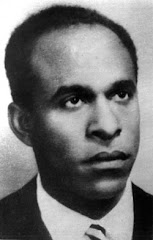
Discourse that allows us to express a wide range of ideas, opinions, and analysis that can be used as an opportunity to critically examine and observe what our experience means to us beyond the given social/cultural contexts and norms that are provided us.
CONGRATULATIONS MISTY! You thoroughly earned and deserved this honor and now it's yours FOREVER. Let any and all clueless/jealous/envious/hateful naysayers chew on that! YES...
Kofi
BREAKING NEWS
Misty Copeland Named First Black Principal Ballerina at American Ballet Theater Tuesday, June 30, 2015
New York Times
Misty Copeland, whose openness about race in ballet helped to make her one of the most famous ballerinas in the United States, was promoted on Tuesday by American Ballet Theater, becoming the first African-American female principal dancer in the company’s 75-year history. Her promotion — after more than 14 years with the company, nearly eight as a soloist — came as Ms. Copeland’s fame spread far beyond traditional dance circles.
She made the cover of Time magazine this year, was profiled by “60 Minutes” and presented a Tony Award on this year’s telecast. She has written a memoir and a children’s book, and has more than a half-million followers on Instagram. An online ad she made for Under Armour has been viewed more than 8 million times, and she is the subject of a documentary screened this year at the Tribeca Film Festival.
Over the past year, whenever Ms. Copeland, 32, danced leading roles with Ballet Theater, her performances became events, drawing large, diverse, enthusiastic crowds to cheer her on at the Metropolitan Opera house, the Brooklyn Academy of Music and the David H. Koch Theater at Lincoln Center. After she starred in “Swan Lake” with Ballet Theater last week — becoming the first African-American to do so with the company at the Met — the crowd of autograph seekers was so large that people had to be moved away from the cramped stage door area.
Ms. Copeland, who declined to be interviewed for this article, was unusually outspoken about her ambition of becoming the first black woman named a principal dancer by Ballet Theater, one of the nation’s most prestigious companies, which is known for its international roster of stars and for staging full-length classical story ballets.
Misty Copeland Is Promoted to Principal Dancer at American Ballet Theater
Misty Copeland and James Whiteside in “Swan Lake.”Credit
Julieta Cervantes for The New York Times
Misty Copeland was fast becoming the most famous ballerina in the United States — making the cover of Time magazine, being profiled by “60 Minutes,”
growing into a social media sensation and dancing ballet’s biggest
roles on some of its grandest stages. But another role eluded her: She
was still not a principal dancer.
Until
Tuesday, when Ms. Copeland became the first African-American woman to
be named a principal in the 75-year history of American Ballet Theater.
Even
as her promotion was celebrated by her many fans, it raised
all-too-familiar questions about why African-American dancers,
particularly women, remain so underrepresented at top ballet companies
in the 21st century, despite the work of pioneering black dancers who
broke racial barriers in the past. And it showed how media and
communications have changed in dance, with Ms. Copeland deftly using
modern tools — an online ad she made for Under Armour
has been viewed more than 8 million times — to spread her fame far
beyond traditional dance circles, drawing new audiences to ballet.
Fans of Ms. Copeland waiting at the stage entrance earlier this month.Credit
Julieta Cervantes for The New York Times
“I
had moments of doubting myself, and wanting to quit, because I didn’t
know that there would be a future for an African-American woman to make
it to this level,” Ms. Copeland said at a news conference at the
Metropolitan Opera House on Tuesday afternoon. “At the same time, it
made me so hungry to push through, to carry the next generation. So it’s
not me up here — and I’m constantly saying that — it’s everyone that
came before me that got me to this position.”
Fittingly, the moment of her promotion was captured on video and shared on Instagram.
“Misty, take a bow,” Kevin McKenzie, Ballet Theater’s artistic
director, could be seen saying, before colleagues congratulated Ms.
Copeland, who seemed to be fighting back tears. Her promotion was lauded
on social media by, among others, Hillary Rodham Clinton and Prince, who had featured her in a video.
Over
the past year, whenever Ms. Copeland, 32, danced leading roles with
Ballet Theater, her performances became events, drawing large, diverse,
enthusiastic crowds to cheer her on at the Metropolitan Opera House, the
Brooklyn Academy of Music and the David H. Koch Theater at Lincoln
Center. After she starred in “Swan Lake” with Ballet Theater last week —
becoming the first African-American to do so with the company at the
Met — the crowd of autograph-seekers was so large that it had to be
moved away from the cramped area outside the stage door.
In
a break with ballet tradition, Ms. Copeland was unusually outspoken
about her ambition of becoming the first black woman to be named a
principal by Ballet Theater, one of the country’s most prestigious
companies, which is known for its international roster of stars and for
staging full-length classical story ballets. She wrote about her goals
and struggles in a memoir published last year, “Life in Motion: An Unlikely Ballerina.”
Misty Copeland promoting her new Memoir 'LIFE IN MOTION: An Unlikey Ballerina’
A
number of leading dance companies and schools, including Ballet
Theater, have begun new efforts to increase diversity in classical
ballet, but there is a long way to go. Jennifer Homans, the author of
“Apollo’s Angels,” a history of ballet, said that ballet had fallen far
behind other art forms, like theater, in that regard — making what she
called the “phenomenon” of Ms. Copeland all the more important.
“What
she has come to represent is so important in the dance world, and in
the ballet world in particular,” said Ms. Homans, who is the director of
the Center for Ballet and the Arts at New York University. “I think
it’s about time. But I don’t think it’s enough.”
Ms. Copeland was featured on one of the five different covers for Time magazine's “100 most influential people” issue.
This history made Ms. Copeland’s chances for promotion a much-discussed topic
in the dance world, and put a rare public spotlight on Ballet Theater
as it weighed the kind of personnel decision that, in the rarefied world
of ballet, is seldom talked about openly. That race could still be such
an issue in 2015 — and that African-Americans could remain so rarely
seen in elite ballet companies — has been depressing to many dancegoers,
and has led to impassioned discussions in the dance world and beyond
about race, stereotypes and image.
The
dearth of black women in top ballet companies has been attributed to a
variety of factors, from the legacy of discrimination and lingering
stereotypical concepts of what ballerinas should look like to the lack
of exposure to ballet and training opportunities in many communities.
More
than a half-century has passed since the pioneering black dancer Arthur
Mitchell broke through the color barrier and became a principal dancer
at New York City Ballet in 1962, and a generation has elapsed since
Lauren Anderson became the first African-American principal at Houston
Ballet, in 1990. But City Ballet has had only two black principal
dancers, both men: Mr. Mitchell and Albert Evans, who died last week.
Ballet Theater officials said that the company’s only African-American
principal dancer before now was Desmond Richardson, who joined as a
principal in 1997.
Ms. Copeland and Mr/ Whiteside in the world premiere of “With a Chance of Rain” in 2014 at the David H. Koch Theater.Credit
Andrea Mohin/The New York Times
In
ballet, principals earn not only the respect of the dance world but are
also paid more, dance bigger roles and see their photos in programs, as
well as their names in larger type. Ms. Copeland last seemed on the
verge of promotion in 2012 after a breakthrough performance in the title
role of Stravinsky’s “The Firebird,” but she was sidelined by injury.
Ms.
Copeland’s promotion was announced by Mr. McKenzie at a company meeting
on Tuesday morning. Three other dancers, enormously respected in the
dance world but far less famous outside of it, were also made
principals. Stella Abrera, who has been a soloist with the company since
2001, was promoted, and two more principals were hired from outside:
Maria Kochetkova, a principal with San Francisco Ballet, and Alban
Lendorf, a principal with Royal Danish Ballet.
Skylar
Brandt, Thomas Forster, Luciana Paris, Arron Scott and Cassandra
Trenary were promoted to soloist, and Jeffrey Cirio, a principal with
Boston Ballet, will join the company as a soloist.
While Ms. Copeland has earned many good reviews when she has danced big roles, including some calling for her promotion, other critics have suggested that she still has work to do to make some classical roles fully her own. When she danced the double role of Odette/Odile in “Swan Lake” for the first time, in New York last week, she did not do some of the traditional bravura fouetté turns — which critics forgave, but noted. But she has also established herself outside traditional dance circles with her books (her memoir and “Firebird,” an illustrated children’s book), ads and public appearances, and has received help shaping her public image from her manager, Gilda Squire.
In
last week’s “Swan Lake,” cheers for Ms. Copeland repeatedly stopped the
show. Smartphones came out to record her curtain calls, and she was
handed bouquets onstage by Ms. Anderson and Raven Wilkinson, who danced
with Ballet Russe de Monte Carlo in the late 1950s.
Afterward,
little girls carried copies of “Firebird” to be signed, and several
adults held copies of “Life in Motion,” the memoir Ms. Copeland wrote
with Charisse Jones. The crowd cheered when she emerged from the
theater. A man shouted: “Principal! Principal, Misty! Principal, dear!” A
woman called out, “Congratulations, Misty!”
Before
signing autographs and posing for pictures, Ms. Copeland addressed the
crowd in a quiet voice choked with emotion. “Thank you so, so much for
your support — it means so much to me to have you all here,” she said.
“It’s such a special day for me, and for so many people who have come
before me. So thank you for being here on this amazing day.”
A version of this article appears in print on July 1, 2015, on page A1 of the New York edition with the headline: Ballerina Is Taking a Step 75 Years in Coming . Order Reprints|
History was made in the ballet world this week when soloist Misty Copeland was promoted to principal dancer, thereby becoming the first black female principal in the 75-year history of the American Ballet Theatre.
Copeland, now 32 years old, has been dancing with the American Ballet Theatre for over 14 years, nearly eight as a soloist. Most recently, she starred as Odette/Odile in "Swan Lake" at the Met, a role dance critic Alastair Macaulay called "the most epic role in world ballet."
"Two aspects of [Misty's] performance ... proved marvelous," Macaulay wrote in his review. "One: that it all happened successfully. Two: the curtain calls."
Copeland's name is known far beyond the traditional confines of the ballet world, in part due to her emphatic openness regarding the problematic relationship between race and ballet. As Elizabeth Blair explained on NPR: "It's hard for any ballet dancer to succeed, regardless of race, but a black dancer is up against a centuries-old aesthetic -- the idea, for example, that the swan must be feather-weight and snow white, and so does her prince."
Copeland's rise to fame, despite the centuries of tradition working against her, has served as an inspiration for young dancers who don't fit the mold around the world. During "Swan Lake," she repeatedly experienced cheers so intense they stopped the show, according to The New York Times. The ballerina is also the author of an illustrated children's book and a memoir, both elaborating on her journey overcoming the odds to pursue her passion.
Both because of her immense talent and candor regarding her personal hopes and struggles, Copeland has become a heroine to young dancers around the world. She has over 516,000 followers on Instagram and her breathtaking ad for Under Armour received over eight million views on YouTube.
"Something that my mother instilled in me, as a biracial woman herself, and me being biracial, was that the world was going to view me as a black woman, no matter what I decided to do," Copeland said at the Time 100 gala, where she was honored. "I had no idea that that was going to be my truth at some point in my life, when I moved to New York City at 17 years old and joined American Ballet Theatre and realized I was the only African American woman in a company of 80 dancers.
Copeland grew up in San Pedro, California, and took her first ballet classes for free at the Boys & Girls Club in the neighborhood. At the time, her family was living in a motel, part of a personal narrative that strays greatly from the traditional tale of a young ballerina. Copeland has said that she always hoped to rise to the level of principal, the highest status in a company. "My fears are that it could be another two decades before another black woman is in the position that I hold with an elite ballet company," she explains in her memoir. "That if I don’t rise to principal, people will feel I have failed them."
Arthur Mitchell was the first African-American dancer to become a principal dancer, breaking grounds at the New York City Ballet in 1962. Years later in 1990, Lauren Anderson became the first African-American principal at the Houston Ballet. Anderson, along with Raven Wilkinson, a dancer and mentor of Copeland's, handed her bouquets on stage following her recent "Swan" performance.
There has never before been a female black principal dancer at the American Ballet Theatre, until now. "Seven amazing dancers from American Ballet Theatre were promoted today," Kevin McKenzie, Artistic Director of the American Ballet Theatre explained in an email to the Huffington Post. "Each has demonstrated the talent and hard work needed to succeed in a highly competitive environment. I couldn't be prouder." We reached out to Misty Copeland for comment and have yet to hear back.
"I never saw a ballerina who looked like me before," Copeland has said. "And I’m here to be a vessel for all these brown ballerinas who have come before me."
In a historic move, the American Ballet Theatre promoted Misty Copeland
to principal dancer on Tuesday, making her the first African-American
woman to rise to the position in the company’s 75-year history.
Copeland, 32, said the promotion came after 14 years of “extremely hard
work” at the prestigious New York City-based ballet company.
“I’m just so honored, so extremely honored to be a principal dancer, to
be an African-American and to be in this position,” she said before
Tuesday night’s American Ballet performance of La Bayadère at the
Metropolitan Opera House at Lincoln Center.
Copeland’s elevation to principal dancer was announced by the company’s
artistic director, Kevin McKenzie, during a morning rehearsal.
“Misty, take a bow,” said McKenzie, breaking the news to Copeland.
'I’m
just so honored, so extremely honored to be a principal dancer, to be
an African-American and to be in this position,' Copeland said during a
news conference at the Metropolitan Opera House.
A cell phone video of the moment posted on Instagram captured Copeland
bursting into a wide smile and then tears as she was smothered in hugs
by a fellow dancer.
“I had moments of doubting myself, of wanting to quit, because I didn’t
know there would be a future for an African-American woman to make it
to this level,” Copeland said. “At the same time it made me so hungry to
push through, to carry the next generation.”
Copeland has been with the prestigious group for 14 years, eight as a
soloist. She was promoted to principal dancer along with Stella Abrera.
Two other dancers joining the ballet company — Maria Kochetkova from
the San Francisco Ballet and Alban Lendorf from the Royal Danish Ballet —
were also named Tuesday as principal dancers.
Hiroyuki Ito/Getty Images
Misty
Copeland dances in the American Ballet Theatre's "Giselle" at the
Metropolitan Opera House. The 32-year-old African-American woman was
promoted on Tuesday to principal dancer, a first for the company.
Born in Kansas City, Mo., Copeland and her six siblings grew up in poverty in Los Angeles and were raised by a single mother.
“We were pretty much homeless and were living in a motel, trying to
scrape up enough money to go to the corner store to get (a) Cup O'
Noodles soup to eat,” Copeland said in an ABC News interview last year.
“It was probably the worst time in my childhood when ballet found me.”
Copeland’s achievement brought to fruition a dream she feared she would never realize.
“My fears are that it could be another two decades before another black
woman is in the position that I hold with an elite ballet company. That
if I don’t rise to principal, people will feel I have failed them,” she
wrote in her 2014 memoir, “Life in Motion: An Unlikely Ballerina.”
By now, New Yorkers are familiar with the phenomenon of Copeland — who
eight years ago became the first African-American in two decades to
dance as a soloist for the American Ballet Theatre. Since then, she’s
been seen in an Under Armour commercial, made the cover of Time magazine
and besides penning a best-selling memoir, she’s written a children’s
book.
In the Under Armour ad she revealed that at the age of 13 she was
rejected from a ballet academy and told, “You have the wrong body for
ballet.”
“Dear candidate,” says her rejection letter, read by a young girl in
the ad. “Thank you for your application to our ballet academy.
Unfortunately, you have not been accepted. You lack the right feet,
Achilles tendons, turnout, torso length, and bust.”
Copeland immediately set out to prove her critics wrong, beginning her
training at the San Pedro City Ballet in California. She went on to be
accepted to the San Francisco Ballet School and joined the American
Ballet Theatre at the age of 18.
“So many young dancers of color stop dancing at an early age because
they just don’t think there will be a career path for them,” an
emotional Copeland said Tuesday.
“All the little girls that can see themselves through me, it's giving
them a brighter future,” she said. “It's been a long journey but it’s
just the beginning.”
She made it abundantly clear that it was her dancing and not the color
of her skin that got her to the top of the rarefied world of ballet.
James Keivom/New York Daily News
'I
had moments of doubting myself, of wanting to quit, because I didn’t
know there would be a future for an African-American woman to make it to
this level,' Copeland said.
“I just had to remember why I'm getting the attention I'm getting,”
Copeland said. “It’s because of my dancing. It’s because I’m a
ballerina, and no other reason.”
“Even with everything that’s happening, I go into ballet class every
morning, I work my butt off eight hours a day because I know that I have
to deliver,” she said. “I have to go out there and perform live every
night and prove myself, maybe more so than other dancers.”
The historic announcement comes after Copeland starred in the American
Ballet Theatre’s performance last week of “Swan Lake” — achieving
another milestone as the first African-American to do so with the
company at the Met.
Tuesday’s promotion triggered an avalanche of congratulatory posts on Copeland’s Twitter account, @mistyonpointe.
“Celebrating @mistyonpointe — a muse for so many and a reminder to dance towards our dreams,” the Oprah Winfrey Network tweeted.
Tony Award-winning Broadway superstar Audra McDonald, who is
African-American, tweeted, “Congrats @mistyonpointe on making
history!!!”
68 COMMENTS BY NEW YORK TIMES READERS ON THE NEWS ARTICLE ABOUT MISTY CROPLAND BECOMING THE FIRST AFRICAN AMERICAN WOMAN TO BECOME A PRINCIPAL SOLOIST IN THE AMERICAN BALLET THEATRE
All 68 Readers’ Picks 42 NYT Picks 3 Newest Rick
New York 25 minutes ago From the audience at the Met I never knew she was black until I read about it ... ad infintum.
Reply Recommend fhcgsps
midwest 25 minutes ago no one was suggesting it wasn't. she's an amazing, hard-working dancer. a cultural gift to us.
Reply Recommend WHN
NY 16 minutes ago I guess you missed the recent fracas at the NAACP?
Reply Recommend WHN
NY 15 minutes ago Show me one dancer from now who is even close to Nuryev in any aspect of dancing. Your simile is incorrect.
Reply Recommend Jay Tandy
NYC 15 minutes ago Alex, "there is no suggestion that there has ever been a 'barrier' to black women in the ballet"? Ever? I am always so surprised at the people who are so adamant about denying that racism exists or has ever existed. There is plenty of suggestion and evidence of race being a barrier. There are plenty of talented black dancers who could not advance in the U.S. and chose to go to Europe instead, for example. Sure the issue is complicated and not only racism, but to conclude that racism has never affected choices for who dances ballet in its 500 plus year history is intellectually dishonest at best but very likely delusional.
Reply Recommend NYT Pick gjdagis
New York 2 minutes ago Does everything have to be about race when a Black person is involved? Celebrate PEOPLE and their accomplishments and stop being so divisive!
Reply Recommend Hallie
Chicago 15 minutes ago Although I have mixed reactions to this promotion, it's important to realize that the dearth of black ballerinas likely stems from a lack of opportunity made available to young black people. So, yes, there are few qualified black ballet students at all, let alone talented enough to rise to ABT, and that's a symptom of systemic racism. At the level of ABT, though, I don't believe race ever mattered.
Reply Recommend WHN
NY 6 minutes ago This is the American Ballet Theater. More interested in drama and selling tickets than the actual ballet performance. It about the dance. Not your "position in society". If making Misty Copeland a principal was so grievously not done before, it might have been because she's not a "principal" in the true dance sense of the word. And ABT should call itself an entertainment group, not a ballet company. Prima donna is an opera term for the first lady, the main star. It is used in the vernacular as a pejorative term. Not used in ballet. The very first ballet dancer to use social media and "show" interviews with pop culture media to blackmail the ABT in to this move. Congratulations! And they get to dance in the Koch Hall. NYC is so about the money it's old. Really old. Art is dead in NY.
Reply 1Recommend dobes
6 minutes ago Misty Copeland is mixed-race, not black. So are both her parents. If we really must mention people's races in articles about their skill and artistry - and it appears that in the NYT we must - then can't we at least begin to recognize how many people in our society are of mixed origin? When we fully recognize that, it might go a long way toward healing our alleged skin-based differences - or don't we want that after all?
Reply 1Recommend A
Philadelphia 6 minutes ago Since we're talking about race, how strange is it that when a white woman twerks, there is outrage, but when a black woman dances ballet, there is applause. Is this not also a form of cultural appropriation?
Reply Recommend
Robert Eller
. 6 minutes ago And current article about Chanda Prescod-Weinstein, only the 63rd Black American woman to earn a Physics Ph.D., and currently a post-doc fellow at MIT, prompted me to search for articles about what is behind the underrepresentation of women and minorities in certain fields.
The NYT published a great piece in the Magazine a while back, focused on Physics Ph.D.s and how few women attain them. I think we can safely generalize, to some extent, about other fields, including ballet.
In a nutshell, how much people are encouraged by teachers, mentors, parents, is a big factor. Most of us depend greatly on the perceptions of others to help us succeed and exceed. All we need to do to discourage people from certain identity groups is to assume they won't or can't succeed, and most people in that group will live up, or down, to our perceptions. This is the ultimate poison of racism or sexism.
Want more Black women to succeed in ballet, for instance? Simple. Encourage and nurture more Black girls, who want to dance ballet, not only to dance ballet, but to not give up. The same way that White girls are encouraged. And you will get more Black ballerinas.
Wouldn't it be great to read an article titled "Misty Copeland Is Promoted to Principal Dancer At American Ballet Theater," period?
NJ 6 minutes ago I acknowledge ignorance but is this article suggesting past bias or is Misty simply the first female African American who is qualified?
Reply Recommend
Mr. Robin P Little
Conway, SC 6 minutes ago
The relentless parade of identity politics promotions on the front page of the digital NY Times gets a little old after awhile. Ms. Copeland is certainly beautiful and talented. I am happy for her successes, and her promotion here by Mr. Cooper, but the Times own reviewer, Alastair Macaulay, debunks a lot of the firsts around Ms. Copeland's career as the first black dancer to do certain things in the field. He also calls her recent work in 'Swan Lake' dull: It is a surprisingly brutal review:
I am certain many others saw an entirely different 'Swan Lake' even though they attended the same performance as Mr. Macaulay. All of life is like the movie, 'Rashomon'. Everybody sees what they want to see, at least in the retelling of it they do.
Reply Recommend Lane
Austin, TX 6 minutes ago Genuine applause for Miss Copeland on her promotion within the company, well deserved and inspiring. I am reminded of a certain evening in 1977 in Houston, Texas, and first saw Judith Jamison perform "Cry" with the Alvin Ailey Dance Company from NYC. Although caucasian, 17 years-old, and a senior in High School, I cried in my seat. After the show, I danced on the sidewalk. In college I studied Ballet, Modern, and Jazz. I went on to dance with the Austin Ballet Theatre for two seasons because of one woman's - an African American woman- amazing light, love, and talent. Brava and may you shine lighter than the Statue of Liberty!
Reply Recommend mdinmn
Minnesota 6 minutes ago She is built like a gymnast and dances like a gymnast. Perhaps this is ballet's attempt to break from the sterotype. I will be happy to see her dance. I have seen young women with similar skills and body type of all ethic backgrounds passed over; it would be nice to think Ballet is moving beyond those stereotypes .
Reply Recommend DLP
Brooklyn, New York 6 minutes ago What pleases me most about this promotion is not Misty Copeland's race, but her body, which is not the rail-thin dancer Balanchine revered, which has had such an enormous impact on girls and women ever since.
Reply Recommend NYT Pick Xoreograpg
Moscow 18 minutes ago It is unfortunate for Misty that the Company was essentially publicly shamed into promoting her. She has had recent success in popular media which has elevated her profile, but not her accomplishments in Classical Ballet.
The Rank of Prima is not only a measure of an artists' popularity, but more importantly their level of Artistry. Misty's popularity is as a result of her visibility outside of the theatre and therefore should have no bearing on her rank in the ballet company . So the Bravo goes to her management team. This is New York; surely you folks have seen the Russian and European ballet companies. It has always saddened me that Amercan Ballet has seen fit to import their great artists from abroad, than to do the work necessary to educate and train our own Artists. Misty is a product of the age of Obama, which I have always supported, but this promotion doesn't benefit ballet, it only perpetuates the idea that publicity is more valuable than content; that popularity is more important than the TRUTH. The truth is, Misty is perhaps a good public figure, but she is a very substandard dancer without the slightest concept of placement or Artistry. But alas, she's not alone, this is the case with all American trained ballet dancers. - cheers
Reply 3Recommend
j. von hettlingen
is a trusted commenter switzerland 39 minutes ago I have watched Misty Copeland on YouTube. Her relentless energy is outstanding. As a lover of classical ballet, I still prefer the Russian dance ensembles! But I still would love to see Misty Copeland dance Camille Saint Saëns "Dying Swan", a short act which had been immortalised by the late Maya Plisetskaya!
Reply 3Recommend Conchetta Sanders
New Milford, NJ 57 minutes ago Awesome talent! Misty-fying presence! Congratulations ABT for the broader audiences, new fans, electrifying shows, increased advertising revenue and uncountable benefits and nuances that will accompany the star power and presence of Misty Copeland.
Reply 6Recommend Alan
Mass. 57 minutes ago I hate to be the buzzkill here, but enough Misty Copeland already. She's become the most over-promoted, over-exposed ballet dancer in history. I fantasize about her fellow dancers seething every time they encounter her for the zillionth time on NPR, or at the Tony awards, or in yet another article in the Times. I'd love to hear about some of the other dancers, please!
Reply 16Recommend Conchetta Sanders
New Milford NJ 6 minutes ago A lot of people and players resented Michael Jordan too, but he made fans out of all of them. In the former-player ranks, all of his detractors now sing his praises. Misty has the x-factor that helps to step-up her game and make fans out of her detractors as well.
Reply Recommend LAC
Washington, DC 6 minutes ago Then don't be one - sorry that this bores you and your imaginary fellow dancer friends.
Reply Recommend Historic Home Plans
Oregon 57 minutes ago It's about time ABT got with the program. There have been so many excellent African-American ballet dancers with well established companies across the USA, going back, at least, to Arthur Mitchell at NY City Ballet, back in the late 1950s.
Reply 7Recommend Tyler
NY 58 minutes ago Very happy for Misty Copeland. She is stunningly beautiful and sells txts like hot dogs. God Bless America. ABT needs you and there you have it. Prima Donna you become. Now is time to work on those fouttes ( there should be 32 ) and probably some aspects of artistry as well. Congratulations and Good luck!
Reply 7Recommend mn
los angeles 58 minutes ago Misty Copeland is everything a dancer should be: talented, compelling, beautiful, singular. But it seems to me what put her over the top is a social-networking and public following that ABT quite literally couldn't afford to ignore. She's going to make the company a heap of money. People of color (and I am one) take note: this is a capitalist country. When you're making money, they don't care what color you are or whom you cast. Just ask Shonda Rhimes.
Reply 12Recommend DonL
Earth 58 minutes ago Outstanding! She is not only creative in her interpretations, sharing in her partnership with her troupe (I only say that as a spectator, not as someone on the inside of that crazy classical ballet scene and business) but she is a model of well-nourished feminine beauty. She is indeed HOT! Congratulations to Miss Copeland, and to the officials of her troupe for making such a terrific appointment.
Reply Recommend New Yorker
NYC 1 hour ago Fly. Misty. Fly as High as you can go!
Reply 6Recommend Debrah Ross
Chicago 1 hour ago I'm ashamed to say that even though I love ballet as an art form, I'm not very familiar with those having notoriety. Misty Copeland's name was familiar, but this article is the most I've ever even heard about her. I have yet to see a picture of her, let alone see her dance. Maybe I can find something on You-Tube.
Reply 3Recommend Flyingoffthehandle
World Headquarters 57 minutes ago yeah, you can find lots of info on youtube!
Reply 1Recommend
MK
Tenafly, NJ 1 hour ago Good for her. but I don't understand how she is considered African American when she is also German and Italian American...Not that it matters, right?
Reply 5Recommend MJ
NY 57 minutes ago Ms. Copeland has stated numerous times that she identifies as an African-American woman.
Reply 11Recommend Kathryn
brooklyn 6 minutes ago She's mixed race, regardless. The article and others do not make much light of that fact. People identify with whomever they want when it suits them--and, in this case, why not? It's boosting her career. Racial mixing is a true reality for almost every human that currently exists on our planet, and that's a good thing. Unfortunately, we aren't getting much good, honest discussion about this fact in the race-obsessed media of late.
Reply Recommend See All Replies ms_SYD
louisiana 1 hour ago congratulations to a wonderful dancer!!!
Reply 3Recommend BeeRock
Miami, FL 1 hour ago Funny we're still talking like this in 2015. Instead of celebrating Ms. Copeland's amazing personal achievement, we are directed to celebrate the ABT's promotion of the first African-American female principal. Although Ms. Copeland is at least as much European-American, of course. Some day...
Reply 4Recommend MJ
NY 57 minutes ago In 75 years there has NEVER been an African-American principal at ABT. That's why her race matters. She has inspired a generation of young women of color who didn't have someone similar to look up to. Also Ms. Copeland has stated numerous times that she identifies as an African-American woman.
Reply 14Recommend Jim
NY, NY 6 minutes ago Based on the following quote, it seems the focus is on her race because she has focused the public in that direction: “My fears are that it could be another two decades before another black woman is in the position that I hold with an elite ballet company,” she wrote in her memoir, “Life in Motion: An Unlikely Ballerina,” published last year. “That if I don’t rise to principal, people will feel I have failed them.”
In light of such statements, one has to wonder how free ABT felt as to whether or not to appoint her as principal dancer.
Reply Recommend pshawhan1
Delmar, NY 1 hour ago Brava to Ms. Copeland! May she have a long and rewarding career. This is clearly a well-justified promotion, a good decision by and for the American Ballet Theater, and a good thing for ballet and the arts.
Ballet and classical music have, for too long, lagged behind the rest of the arts world in recognizing and accepting the abilities of individual performers without regard to race. Barriers have largely fallen in modern dance, jazz, popular music, theater, movies and television. Ballet and classical music may have originated in a European context, but America today is not Europe in the 18th or 19th century. Spurious claims of artistic values can never justify racial bigotry, and it's long past time for such barriers to fall.
For those who claim that discrimination is in the past, it is worth pointing out that there are many African American artists alive today who, despite graduating from top-ranked conservatories and demonstrating the ability to perform at world-class levels, were denied the opportunity to pursue careers in ballet or classical music, ended up having to build careers in other arts from scratch, and despite their success and in some cases worldwide fame in those careers, still live with sorrow and bitterness over how they were denied the opportunity to pursue their original choices. It would be wrong to reopen old wounds by naming artists who lived through this, but examples come far too readily to mind. Let us hope such things are ending.
Reply 10Recommend SD
Rochester 6 minutes ago I agree, although it's worth noting that most major orchestras now audition performers behind screens to try and remove hiring bias. Things are at least moving in the right direction there (slowly).
It's puzzling to me that there are so few prominent African-Americans in opera right now, though. It seems like things are actually moving backwards, compared to the '80s when I was growing up (when singers like Grace Bumbry, Kathleen Battle, Denyce Graves, et al., were household names). I find it impossible to believe that the talent isn't out there.
One of the big problems in classical music now is that many young people just don't have any exposure to it, or they don't have the opportunity to take instrument or voice lessons (due to arts and music cutbacks in public schools, etc.) I'm sure there are plenty of kids out there who could be talented performers, but sadly don't get the chance to start. And having a dearth of role models who look like them doesn't help, either.
Reply Recommend
Richard Marcley
Albany NY 1 hour ago Hopefully, in the not too distant future, stories like these will focus on artistic ability, not race! Congratulations, Ms. Copeland and may you have a long and brilliant career!
Reply 6Recommend peterdc
washington dc 1 hour ago A well deserved promotion fitting for a brilliant dancer
Reply 7Recommend NYT Pick Alex
Manhattan 1 hour ago There is no suggestion that there has ever been a "barrier" to black women in the ballet. A barrier exists when there is persistent evidence of qualified dancers being declined where the common element is their race (or religion -- where are the articles about the lack of Jewish and Asian dancers?).
Ballet is hardly an inner city sport or even sparsely pursued in black communities, so she didn't cross a barrier, she simply evolved into an exceptional dancer and was readily accepted. The latter should have been the headline, not the knee jerk assumption of discrimination.
Reply 41Recommend See All Replies Michael Feldman
St. johnsbury Vt 1 hour ago The original NYT headline with the use of the word "promotion" evoked a chuckle since the gifted young woman was the subject of a much admired commercial this spring, which certainly did not negatively effect her most recent "promotion."
Reply 2Recommend Jwrtr 68
New York City 1 hour ago This was long overdue since Misty has always been a standout dancer from her inception into ABT. Her exceptional qualities as an artist, a sublime physical vessel of expression and musical drama, coupled with a marvelous facility always placed her above the fray even in a company as prestigious as Ballet Theater. That in itself was worthy of a couple of books but the right thing has finally been done by Director Kevin McKenzie so kudos to him in welcoming a new era in American ballet. This is monumental in the dance world and it is a further evolution in the industry that seemed so stifled by tradition but just looking at ballet, it could not be avoided! It's like comparing premier dancers of the 50s and 60s with today's exceptional artists and you'll clearly see the evolution of the prowess of dancers over time in not only what they can do but HOW they can do it. Congratulations miss Copeland, the world is smiling with you baby!!
Reply 23Recommend S B Lewis
Lewis Family Farm, Essex, New York 1 hour ago May she enliven the field. Fresh air.
Reply 19Recommend Rachel
NYC 1 hour ago seems very much based on merit - a wonderful story
Reply 12Recommend
Hope
Saratoga Springs 1 hour ago In the day we live in, the vitality, publicity and interest Misty Copeland brings to sometimes stodgy ballet is worth its weight in gold; and certainly worth Ms. Copeland's promotion. I am happy about this news, and it's been spreading in unlikely circles all over social media. Ballet needed a shot in the arm and to appeal to a new generation, and with Copeland's promotion, it is well on its way to doing so.
Reply 22Recommend LeRoy Martin
Los Angeles. 1 hour ago Wonderful Madame Misty Copeland... Well Deserved .....Bravo !!!!
Reply 12Recommend jd
New Jersey 1 hour ago Congrats! What a triumph. Misty Copeland is a true inspiration.
Reply 12Recommend Isisara Bey
New York City 2 hours ago I'm so pleased for Misty, and for the world of European classical dance. However, am I noting the all-too-familiar refrain of "she's not as good as..." sounded when African-ancestored people achieve a new level of prominence? If its just a matter of her growing toward making some classical roles her own, then we are in for a treat watching this dynamic and talented young woman reach new heights in her powers.
Reply 18Recommend Allan
Austin 1 hour ago A beautiful dancer and a beautiful young woman. What great news!
Reply 21Recommend NYT Pick
WhatThe
Pacific Island Hawaii 2 hours ago she's looks to be mixed , like most of us….our DNA speaks volumes and color is only a color … she is not black in my eyes… how sad to be considered a color instead of a fantastic female dancer who excelled in her life … good for her and sad for americans who are stuck on color
Reply 51Recommend See All Replies Lianna
Potomac, MD 1 hour ago Misty is a great ambassador for ballet! Countless girls have been turned away from ballet because they're not thin enough. Misty is strong, muscular, and healthy as she inches closer to perfection with every performance. Her story proves that your background, your height, or your weight are characteristics that pale in comparison to your passion and dedication to the craft. Misty is a great model for all young women and this promotion is much deserved!
Reply 38Recommend Julie
Houston 2 hours ago BRAVO!!!!
Reply 26Recommend Minnue
New York 2 hours ago Another joyful and wondrous milestone for her spectacular Life in Motion...congratulations, Ms. Copeland!
Reply 39Recommend Georgette Mayo
Charleston, SC 2 hours ago Brava, Ms. Copeland, Brava! So proud of you and your accomplishments.
Reply 9Recommend GHHBCAST
CT 2 hours ago It is wonderful to read this good news! An uplifting moment for all Americans. This young woman is a role model for young and old, black and white. A standing ovation for America! I have never been to the American Ballet Theater but I am proud of Misty Copeland and of those responsible for this recognition. Bravo!
Check out the video interview here with Kevin Alexander Gray about the venal history of white supremacy and the confederacy in his home state of South Carolina. Gray is a veteran black activist and author who is the former chairman of the state ACLU in South Carolina...
Kofi
P.S.--Speaking of South Carolina: REMEMBER THE ORANGEBURG MASSACRE in 1968!
Cornell William Brooks, NAACP President and CEO released this statement:
For 15 years, the NAACP has called for
the removal of the Confederate battle flag and has maintained economic
sanctions against the state of South Carolina. The NAACP,
Governor Nikki Haley, a bipartisan coalition of policymakers, an
expanding number of American businesses, and a courageous young woman
named Bree Newsome are all united in opposition to the Confederate flag.
Ms. Newsome temporarily removed the flag flying in front of South
Carolina's state house. As well as supporting the permanent removal of
the flag legislatively, we commend the courage and moral impulse of Ms.
Newsome as she stands for justice like many NAACP
activists including Henry David Thoreau, Dr. Martin Luther King Jr. and
numerous Americans who have engaged in civil disobedience. The NAACP
calls on state prosecutors to consider the moral inspiration behind the
civil disobedience of this young practitioner of democracy. Prosecutors
should treat Ms. Newsome with the same large-hearted measure of justice
that inspired her actions. The NAACP stands
with our youth and behind the multigenerational band of activists
fighting the substance and symbols of bigotry, hatred and intolerance." — Around 5:30am this morning Bree Newsome climbed to the top of the
flagpole flying the Confederate battle flag on the grounds of the South
Carolina state capitol, unhooked the flag, and brought it down as police
waited to arrest her.
Calls to remove the flag intensified after last week's mass shooting
of nine African-American worshipers at the historic Emanuel AME
Church. The flag has been the source of controversy for decades in
South Carolina, but a growing number of politicians, including South
Carolina Governor Nikki Haley, are calling for its removal after photos
were published online showing the accused gunman, Dylann Roof, posing
with the flag.
Newsome and others calling themselves "concerned citizens" released a
statement explaining, "Deciding to do what the SC Legislature has thus
far neglected to do, the group took down the symbol of white supremacy
that inspired the massacre, continued to fly at full mast in defiance of
South Carolina's grief, and flew in defiance of everyone working to
actualize a more equitable Carolinian future."
The state Bureau of Protective Services confirmed Newsome and one
other person were arrested. They are charged with defacing a monument,
which is a violation of state law 10-11-315. The law has not been used
since it was passed in 2000 during another push to remove the flag from
the capitol. They face three years in jail and a $5,000 fine. Local newspaper, The State reports:
"At about 7:45 a.m., a maintenance worker and a state security
officer, neither of whom would give their names or comment, raised a new
banner after removing it from a plastic sheet. The two state employees
who arrived on the State House grounds to put the flag back up were
African-Americans."
Watch all of Democracy Now!'s coverage of the Charleston church shooting and push to remove the confederate flag.
In the interview
below, Kevin Alexander Gray, a South Carolina civil rights activist and
community organizer says, "People's tax dollars ought not go into
supporting the idea of the Confederate States of America." As former
president of the state ACLU, he argued, "the
flag flying on the statehouse dome was compelled speech. You were
compelling people to support an ideology of white supremacy."
Contact me @ kevinagray57@gmail.com
KEVIN ALEXANDER GRAY: Gray
& his younger sister Valerie were among the first blacks to attend
the local all-white elementary school in 1968. Since then he has been
involved in community organizing working on a variety of issues ranging
from racial politics, police violence, third-world politics &
relations, union organizing & workers’ rights, grassroots political
campaigns, marches, actions & political events.
Gray is
currently organizing the Harriet Tubman Freedom House Project which
focuses on community based political and cultural education. Organizer —
National Mobilization Committee Against the Drug War. Former managing
& contributing editor of Black News in Columbia. Now serves as
contributing writer to other minority newspapers in South Carolina. He
served as a national board member of the American Civil Liberties Union
for 4 years & is a past eight-term president of the South Carolina
affiliate of the ACLU. Advisory board member of DRC Net (Drug Policy
Reform Coalition).
In 1997, Gray was an organizer for the
Rainbow/PUSH Coalition’s anti-Proposition 209 marches in San Francisco
& Sacramento, California.
South Carolina coordinator for the
1988 presidential campaign of Jesse Jackson & 1992 southern
political director for the presidential campaign of Iowa Senator Tom
Harkin. 2002 SC United Citizens’ Party & Green Party Gubernatorial
candidate.
Founding member of the National Rainbow Coalition in
1986. Former co-chair of the Southern Rainbow Education Project — a
coalition of southern activists. Former contributing editor –
Independent Political Action Bulletin.
Gray’s critique “A Call
for a New Anti-War Movement” appears in How to Legalize Drugs: Public
Health, Social Science and Civil Liberties Perspective edited by Dr.
Jefferson Fish of St. John’s University. The book is a collection of
works by drug policy reformers across the country. The essay takes a
cultural & ideological look at the impact of the “war on drugs” on
African Americans. Gray’s “The Legacy of Strom Thurmond” appears in Jack
Newfield’s American Monsters, “Soul Brother? Bill Clinton and Black
America” appears in Alexander Cockburn and Jeffrey St. Clair’s Dimes
Worth of Difference and “What Would Malcolm Say” appears in Peace Not
Terror edited by Mary Susannah Robbins.
Gray’s essay on race
& politics have appeared in The Harvard Journal of African American
Public Policy – “The Intensification of Racial Solidarity in the 1990s
under the guise of Black Nationalism” (1996); The Progressive Magazine,
Counterpunch, The Washington Post Outlook Section, Emerge, One Magazine,
The American University Graduate Review & numerous other national,
regional & local publications. His current essays on race, politics,
cultural and world affairs can be found online at The Progressive,
Counterpunch.com, The Black Agenda Report and “Holla If You Hear Me”
blog.
Killing Trayvons: An Anthology of American Violence was published in early Summer 2014.
Skin privilege. When you’re black it seems the hardest thing to explain to whites. Even the most conscious or liberal whites sometimes don’t quite get it. Or as Langston Hughes once said, “A liberal is one who complains about segregated railroad cars but rides in the all white section.”
The killing of Trayvon Martin in February 2012 rang yet another alarm about the costs of that privilege. Killing Trayvons: An Anthology of American Violence tracks the case and explores why Trayvon’s name and George Zimmerman’s not guilty verdict symbolized all the grieving, the injustice, the profiling and free passes based on white privilege and police power: the long list of Trayvons known and unknown.
With contributions from Robin D.G. Kelley, Rita Dove, Cornel West and Amy Goodman, Thandisizwe Chimurenga, Alexander Cockburn, Etan Thomas, Tara Skurtu, bell hooks and Quassan Castro, June Jordan, Jesse Jackson, Tim Wise, Patricia Williams, Alexis Pauline Gumbs, Vijay Prashad, Rodolfo Acuna, Jesmyn Ward and more, Killing Trayvons is an essential addition to the literature on race, violence and resistance.
Killing Trayvons: An Anthology of American Violence is set to be released early Summer 2014.
###
Editors: Kevin Alexander Gray is a civil rights organizer in South Carolina and author of Waiting for Lightning to Strike!: The Fundamentals of Black Politics.
Jeffrey St. Clair is the editor of CounterPunch. His books include Whiteout (with Alexander Cockburn), Grand Theft Pentagon, and Born Under a Bad Sky.
JoAnn Wypijewski regularly writes for The Nation and CounterPunch. Her books include Painting by Numbers.
Amy Goodman is the host and executive producer of Democracy
Now!, a national, daily, independent, award-winning news program airing
on over 1,100 public television and radio stations worldwide. Time
Magazine named Democracy Now! its "Pick of the Podcasts," along with
NBC's Meet the Press.
Orangeburg massacre From Wikipedia, the free encyclopedia Orangeburg massacre: February 8, 1968 Weapons revolvers, shotguns, police batons, thrown objects Deaths: 3 Non-fatal injuries: 28 Perpetrators 9 patrolmen, approximately 150 protesters
The Orangeburg Massacre refers to the shooting of protesters by South Carolina Highway Patrol Officers in Orangeburg, South Carolina near South Carolina State University on the evening of February 8, 1968.[1] The approximately 150 protestors were demonstrating against racial segregation at a local bowling alley. Three of the protestors, African American males, were killed and twenty-eight other protestors were injured.[2]
The event pre-dated the 1970 Kent State shootings and Jackson State killings, in which the National Guard at Kent State, and police and state highway patrol at Jackson State killed student protesters demonstrating against the United States invasion of Cambodia during the Vietnam War.
Contents
1 Background
2 Conflict
3 Aftermath
4 List of those involved
4.1 Highway Patrol personnel involved in the shooting
4.2 Deaths
4.3 Injuries
5 Media coverage
6 Legacy
7 See also
8 References
9 Further reading
10 External links
Background
There were several incidents centering on the segregation of the local bowling alley, All Star Bowling Lane, that led up to the Orangeburg Massacre on February 8, 1968. In the fall of 1968, some of the black leaders within the community tried to convince Harry K. Floyd, the owner of the bowling alley, to allow African Americans. Floyd was unwilling to desegregate; as a result protests began in early February 1968.
On February 5, 1968 a group of students from South Carolina State University entered the bowling alley and left peacefully after they were asked to leave by Floyd. The next night more students led by John Stroman returned and entered the bowling alley. This time there were police waiting for them and several students were arrested including Stroman. After the arrests, more students began showing up, angry that protestors were being arrested. Next the crowd broke a window of the bowling alley and chaos ensued. Police began beating student protesters with billy clubs, including both men and women. That night eight students were sent to the hospital.[3]
Over the next couple of days the tension in Orangeburg escalated. Student protesters submitted a list of demands that consisted of integration and the elimination of discrimination within the community. Governor McNair, the Governor of South Carolina at the time, responded by calling in the National Guard after commenting that black power advocates were running amok in the community.[4] Over the next two days, about 200 mostly student protesters gathered on the campus of South Carolina State University, a historically black college in Orangeburg, to demonstrate against the continued segregation at the bowling alley.
Conflict
On the night of February 8, 1968, students started a bonfire on the front of SC State's campus. As police and firefighters attempted to put out the fire, officer David Shealy was injured by a thrown object.[5] Shortly thereafter (around 10:30 p.m.) South Carolina Highway Patrol Officers began firing into the crowd of around 150 protesters. Eight Patrol Officers fired carbines, shotguns, and revolvers at the protesters, which lasted around 10 to 15 seconds. Twenty-eight people were injured in the shooting; most of which were shot in the back as they were running away, and three African American men were killed.[6] The three men killed were Samuel Hammond, Henry Smith (both SCSU students), and Delano Middleton, a student at the local Wilkinson High School.
The police later said that they believed they were under attack by small arms fire. A newspaper reported, "About 200 Negros [sic] gathered and began sniping with what sounded like 'at least one automatic, a shotgun and other small caliber weapons'’ and throwing bricks and bottles at the patrolmen."[7] Similarly, a North Carolina newspaper reported that week that students threw firebombs at buildings and that the sound of apparent sniper fire was heard.[8]
Protesters insisted that they did not fire at police officers, but threw objects and insulted the men. Evidence that police were being fired upon at the time of the incident was inconclusive, and no evidence was presented in court, as a result of investigations, that protesters were armed or had fired on officers.
Aftermath
At a press conference the following day, Governor Robert E. McNair said the event was "...one of the saddest days in the history of South Carolina".[9] McNair blamed the deaths on outside Black Power agitators and said the incident took place off campus, contrary to the evidence.
The federal government brought charges against the state patrolmen in the first federal trial of police officers for using excessive force at a campus protest. The state patrol officers' defense was that they felt they were in danger and protesters had shot at the officers first. All nine defendants were acquitted although thirty-six witnesses stated that they did not hear gunfire coming from the protesters on the campus before the shooting and no students were found to be carrying guns.[10]
In a state trial in 1970, the activist Cleveland Sellers was convicted of a charge of riot related to the events, for events on Tuesday at the bowling alley (the protest was on Thursday night). He served seven months in state prison, getting time off for good behavior. He was the national program director of the Student Nonviolent Coordinating Committee (SNCC). In 1973 he wrote The River of No Return: The Autobiography of a Black Militant and the Life and Death of SNCC. Twenty-five years later, Sellers was officially pardoned by the governor of South Carolina.
List of those involved
Highway Patrol personnel involved in the shooting
Patrol Lieutenant Jesse Alfred Spell, 45
Sgt. Henry Morrell Addy, 37
Sgt. Sidney C. Taylor, 43
Corporal Joseph Howard Lanier, 32
Corporal Norwood F. Bellamy, 50
Patrolman First Class John William Brown, 31
Patrolman First Class Colie Merle Metts, 36
Patrolman Allen Jerome Russell, 24
Patrolman Edward H. Moore, 30
Patrolman Robert Sanders, 44 - was not charged in the massacre, but reportedly later made self-incriminating statements about having shot at some of the rioters.
Deaths
Samuel Ephesians Hammond Jr., 18
Delano Herman Middleton, 17
Henry Ezekial Smith, 18
Injuries
Herman Boller Jr., 19
Johnny Bookhart, 19
Thompson Braddy, 20
Bobby K. Burton, 22
Ernest Raymond Carson, 17
John Carson
Louise Kelly Cawley, 25
Robert Lee Davis Jr., 19
Albert Dawson, 18
Bobby Eaddy, 17
John H. Elliot
Herbert Gadson, 19
Samuel Grant, 19
Samuel Grate, 19
Joseph Hampton, 21
Charles W. Hildebrand, 19
Nathaniel Jenkins, 21
Thomas Kennerly, 21
Joe Lambright, 21
Emma McCain, 19
Richard McPherson, 19
Harvey Lee Miller, 15
Harold Riley, 20
Cleveland Sellers, 23
Patrolman David Shealy
Ernest Shuler, 16
Jordan Simmons III, 21
Ronald Smith, 19
Frankie Thomas, 18
Robert Watson, 19
Robert Lee Williams, 19
Savannah Williams, 19
Footnotes
The injuries received by patrolman David Shealy preceded police opening fire on the crowd by five minutes
Cleveland Sellers was later arrested and convicted of starting the riot. Received a full pardon in 1993
John Carson was beaten by highway patrol after he started questioning their involvement
Louise Kelly Cawley was pregnant at the time of her being beaten and sprayed with a chemical. One week after the incident, she suffered a miscarriage
John H. Elliot was later added to the list of those injured. He was shot in the stomach but did not go to the hospital for treatment.
Media coverage
This was the first incident of its kind on a United States university campus. The Orangeburg killings received relatively little media coverage. The events predated the 1970 Kent State shootings and Jackson State killings, in which protesters against the Vietnam War were killed by the National Guard, and by the local and state highway patrol, respectively. The perceived overreaction by law enforcement helped galvanize public opinion against the war as well.
The historian Jack Bass attributed the discrepancy in media coverage in part due to the Orangeburg incident occurring after large-scale urban riots, which made it seem small by comparison. It may not have been considered as newsworthy, especially since the shootings occurred at night, when media coverage, especially any television news, was less.[5] In addition, the victims at Orangeburg were mostly young black men protesting against local segregation.[5] Linda Meggett Brown wrote that subsequent events in the spring of 1968: the assassinations of Dr. Martin Luther King, Jr. and Robert Kennedy, the Democratic presidential candidate; and the Tet Offensive in Vietnam, overshadowed the events at Orangeburg.[11]
At Kent State, by contrast, Bass noted that the victims were young white students protesting against the U.S. war in Vietnam, which had become increasingly unpopular and a highly politicized, national issue. They were attacked by members of the National Guard, which the media may have judged was a more inflammatory aspect of the shootings. The black students at Jackson State were also protesting against the war, and the killings there took place shortly after those at Kent State. It appeared that law enforcement and university administrations had no idea about how to handle campus unrest. There was widespread public outrage over the events.
Legacy
South Carolina State University's gymnasium is named in memory of the three men who were killed. A monument was erected on campus in their honor and the site has been marked. All-Star Triangle Bowl became integrated.
On August 9 of 2013 a work crew fixed a spelling error on the Orangeburg Massacre Monument. Delano H. Middleton's name was mistakenly listed as Delano B. Middleton. One theory for the incorrect initial is that it was pulled from Middleton's nickname "Bump." The error went unnoticed for over 40 years.[12]
In 2001 Governor Jim Hodges attended the university's annual memorial of the event, the first governor to do so. That same year, on the 33rd anniversary of the killings, an oral history project featured eight survivors telling their stories at a memorial service. It was the first time that survivors had been recognized at the memorial event. Robert Lee Davis told an interviewer,
"One thing I can say is that I'm glad you all are letting us do the talking, the ones that were actually involved, instead of outsiders that weren't there, to tell you exactly what happened."[5]
A joint resolution was introduced in the South Carolina state general assembly in 2003, and re-introduced in each of the next three sessions of the legislature, to establish an official investigation of the events of February 8, 1968, and to establish February 8 as a day of remembrance for the students killed and wounded in the protest; but the resolution was never voted on by the legislature.[13] [14] [15] [16]
The Orangeburg Massacre was the subject of two films released on the 40th anniversary of the massacre, in April, 2008:[17] Scarred Justice: The Orangeburg Massacre, 1968 by documentary filmmakers Bestor Cram and Judy Richardson[18], and Black Magic by Dan Klores.[19]
See also
Kent State shootings
Jackson State killings
Protests of 1968
Greensboro massacre
List of killings by law enforcement officers in the United States
References
Shuler, Jack, Blood & Bone: Truth and Reconciliation in a Southern Town" (Columbia: University of South Carolina Press, 2012), 21
"28th Name Added To Massacre List 40 Years Later", Fox Carolina News, 2008
Shuler, Jack, Blood & Bone," 75-78
Shuler, Jack, Blood & Bone", 81
Bass, Jack (Fall 2003). "Documenting the Orangeburg Massacre" (PDF). Nieman Reports (Harvard University) 57 (3): 8–11.
Shuler, Jack, Blood & Bone", 18.
"Press dispatches" (February 21, 1968). "Riot Quelled at Negro College". The Milwaukee Journal.
Robert M. Ford (February 8, 1968). "Three Persons Killed in Orangeburg Riots". The Times-News (Hendersonville, NC). Retrieved November 27, 2010.
"Uneasy Calm Enforced After Days of Rioting". Middlesboro Daily News. February 10, 1968. Retrieved November 27, 2010.
Shuler, Jack, Blood & Bone", 19 & 84
Linda Meggett Brown, "Remembering the Orangeburg Massacre", Black Issues in Higher Education, March 1, 2001. Accessed April 1, 2005.
WLTX News staff, "Name on Orangeburg Massacre Monument Finally Fixed", August 11, 2013.
South Carolina General Assembly, S. 377, introduced in the Senate on February 18, 2003.
South Carolina General Assembly, S. 215, introduced in the Senate on January 12, 2005.
South Carolina General Assembly, H. 3824, introduced in the House on March 29, 2007.
South Carolina General Assembly, S. 35, introduced in the Senate on January 9, 2009.
Tim Arango, Films Revisit Overlooked Shootings on a Black Campus, New York Times, April 16, 2008.
IMDB, "Scarred Justice: The Orangeburg Massacre, 1968", accessed 24 June 2015.
IMDB, "Black Magic", accessed 24 June 2015.
Shuler, Jack (2012). Blood and Bone: Truth and Reconciliation in a Southern Town. University of South Carolina Press.
Further reading
Sellers, Cleveland L. (1998), "Orangeburg Massacre: Dealing honestly with tragedy and distortion", The Times and Democrat, January 24, 1998.
Bass, Jack; Nelson, Jack (2003). The Orangeburg Massacre: Second Edition. Mercer University Press. ISBN 978-0-86554-552-6.
Watters, Pat, and Rogeau, Weldon (1968). Events at Orangeburg; a report based on study and interviews in Orangeburg, South Carolina, in the aftermath of tragedy. Southern Regional Council, Atlanta.
Beacham, Frank (2007). Whitewash: A Southern Journey through Music, Mayhem and Murder: Second Edition. Booklocker. ISBN 978-1-59113-187-8.
External links
Brian Cabell, "Remembering the 1968 Orangeburg Massacre", February 8, 2001. Web posted at: 4:02 p.m. EST (2102 GMT). Accessed April 1, 2005.
Jack Bass, "Documenting the Orangeburg Massacre", Neiman Reports. Harvard University. Fall 2003. Accessed May 21, 2007.
Linda Meggett Brown, "Remembering the Orangeburg Massacre", Black Issues in Higher Education, March 1, 2001. Accessed April 1, 2005.
"On the Freedom Road: A Guardian reporter visits the All-Star Triangle Bowl", The Guardian, Accessed May 21, 2007.
Video
1968, "Forty Years Later: A Look Back at the Orangeburg Massacre", Democracy Now!', 2008, Accessed April 3, 2008.
"Scarred Justice: the Orangeburg Massacre 1968, a documentary distributed by California Newsreel.
All-Star Bowling Lane sign in 2015
Orangeburg massacre - Wikipedia, the free encyclopedia
The Orangeburg Massacre refers to the shooting of protesters by South Carolina Highway Patrol Officers in Orangeburg, South Carolina near South Carolina State University on the evening of February 8,...
"I'm for truth, no matter who tells it. I'm for justice, no matter who it's for or against."
W.E.B. DuBois (1868-1963)
"There is but one coward on earth, and that is the coward that dare not know."
Dr. Martin Luther King, Jr. (1929-1968)
"Change does not roll in on the wheels of inevitability, but comes through continuous struggle. And so we must straighten our backs and work for our freedom. A man can't ride you unless your back is bent. "
James Baldwin (1924-1987)
"Precisely at the point when you begin to develop a conscience you must find yourself at war with your society."
Aimé Césaire (1913-2008)
"A civilization that proves incapable of solving the problems it creates is a decadent civilization. A civilization that chooses to close its eyes to its most crucial problems is a stricken civilization. A civilization that uses its principles for trickery and deceit is a dying civilization."
Nina Simone (1933-2003)
"There's no other purpose, so far as I'm concerned, for us except to reflect the times, the situations around us and the things we're able to say through our art, the things that millions of people can't say. I think that's the function of an artist and, of course, those of us who are lucky leave a legacy so that when we're dead, we also live on. That's people like Billie Holiday and I hope that I will be that lucky, but meanwhile, the function, so far as I'm concerned, is to reflect the times, whatever that might be."
Amilcar Cabral (1924-1973)
"Always bear in mind that the people are not fighting for ideas, for the things in anyone's head. They are fighting to live better and in peace, to see their lives go forward, to guarantee the future of their children ....Hide nothing from the masses of our people. Tell no lies. Expose lies whenever they are told. Mask no difficulties, mistakes, failures. Claim no easy victories..." .
Angela Davis (b. 1944)
"The idea of freedom is inspiring. But what does it mean? If you are free in a political sense but have no food, what's that? The freedom to starve?”
Duke Ellington (1899-1974)
“Jazz is the freest musical expression we have yet seen. To me, then, jazz means simply freedom of musical speech! And it is precisely because of this freedom that so many varied forms of jazz exist. The important thing to remember, however, is that not one of these forms represents jazz by itself. Jazz simply means the freedom to have many forms.”
Amiri Baraka (1934-2014)
"Thought is more important than art. To revere art and have no understanding of the process that forces it into existence, is finally not even to understand what art is."
Frederick Douglass (1817-1895)
"Power concedes nothing without a demand. It never did and it never will. Find out just what any people will quietly submit to and you have found out the exact measure of injustice and wrong which will be imposed upon them, and these will continue till they are resisted with either words or blows, or both. The limits of tyrants are prescribed by the endurance of those whom they oppress.” --August 3, 1857
Cecil Taylor (1929-2018)
“Musical categories don’t mean anything unless we talk about the actual specific acts that people go through to make music, how one speaks, dances, dresses, moves, thinks, makes love...all these things. We begin with a sound and then say, what is the function of that sound, what is determining the procedures of that sound? Then we can talk about how it motivates or regenerates itself, and that’s where we have tradition.”
Ella Baker (1903-1986)
"Strong people don't need strong leaders"
Paul Robeson (1898-1976)
"The artist must take sides. He must elect to fight for freedom or for slavery. I have made my choice. I had no alternative."
John Coltrane (1926-1967)
"I want to be a force for real good. In other words, I know there are bad forces. I know that there are forces out here that bring suffering to others and misery to the world, but I want to be the opposite force. I want to be the force which is truly for good."
Miles Davis (1926-1991)
"Jazz is the big brother of Revolution. Revolution follows it around."
C.L.R. James (1901-1989)
"All development takes place by means of self-movement, not organization by external forces. It is within the organism itself (i.e. within the society) that there must be realized new motives, new possibilities."
Frantz Fanon (1925-1961)
"Now, political education means opening minds, awakening them, and allowing the birth of their intelligence as [Aime] Cesaire said, it is 'to invent souls.' To educate the masses politically does not mean, cannot mean, making a political speech. What it means is to try, relentlessly and passionately, to teach the masses that everything depends on them."
Edward Said (1935-2003)
“I take criticism so seriously as to believe that, even in the midst of a battle in which one is unmistakably on one side against another, there should be criticism, because there must be critical consciousness if there are to be issues, problems, values, even lives to be fought for."
Antonio Gramsci (1891-1937)
“The challenge of modernity is to live without illusions and without becoming disillusioned. There must be pessimism of the intellect and optimism of the will.”
Susan Sontag (1933-2004)
"Do stuff. Be clenched, curious. Not waiting for inspiration’s shove or society’s kiss on your forehead. Pay attention. It’s all about paying attention. Attention is vitality. It connects you with others. It makes you eager. Stay eager."
Kofi Natambu, editor of The Panopticon Review, is a writer, poet, cultural critic, and political journalist whose poetry, essays, criticism, reviews, and journalism have appeared in many literary magazines, journals, newspapers, and anthologies. He is the author of a biography MALCOLM X: His Life & Work (Alpha Books) and two books of poetry: THE MELODY NEVER STOPS (Past Tents Press) and INTERVALS (Post Aesthetic Press). He was the founder and editor of SOLID GROUND: A NEW WORLD JOURNAL, a national quarterly magazine of the arts, culture, and politics and the editor of a literary anthology NOSTALGIA FOR THE PRESENT (Post Aesthetic Press). Natambu has read his work throughout the country and given many lectures and workshops at academic and arts institutions. He has taught American literature, literary theory and criticism, cultural history and criticism, film studies, political science, creative writing, philosophy, critical theory, and music history and criticism (Jazz, Blues, R&B, Hip Hop) at many universities and colleges. He was also a curator in the Education Department of Detroit’s Museum of African American History. Born in Detroit, Michigan, Natambu currently lives in Berkeley, California with his wife Chuleenan.


 MISTY COPELAND AND TONI MORRISON