Tuesday, February 6, 2024

Writer, Historian, and Cultural Critic Adam Shatz On the Historical, Political, and Philosophical Legacy of Frantz Fanon

https://www.nytimes.com/2024/02/02/opinion/frantz-fanon-colonialism.html

Guest Essay

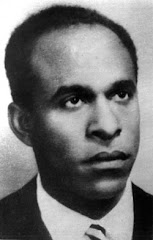
The World Has Caught Up to Frantz Fanon
by Adam Shatz
February 2, 2024
New York Times

[Mr. Shatz is the U.S. editor of The London Review of Books and the author of “The Rebel’s Clinic: The Revolutionary Lives of Frantz Fanon.”Farrar, Straus, Giroux, 2024]

A multicolored mural of Frantz Fanon painted on the side of a building in a suburb of Paris by Jean-Baptiste Colin.

A mural of Frantz Fanon painted on a building in a suburb of Paris by Jean-Baptiste Colin. Credit: Laurent Grandguillot/REA, via Redux

The shock of the new, in political life, often sends us back to the past in search of an intellectual compass. Amid the rise of Donald Trump, Viktor Orban, Jair Bolsanaro and other authoritarian leaders, Hannah Arendt’s “The Origins of Totalitarianism,” published in 1951, enjoyed a surge of attention, and Arendt herself acquired a prophet-like status among liberals seeking to understand how their world had gone so wrong. The threat of illiberal nationalism hasn’t faded — on the contrary — but in an age consumed with racism, police violence and the legacy of European colonialism in the Middle East and Africa, Arendt’s popularity is increasingly rivaled by that of a man she both sharply criticized and grudgingly admired: Frantz Fanon.

Fanon, a psychiatrist, writer, and anticolonial militant, who grew up in a middle-class Black family in French colonial Martinique, was not merely a thinker; he was a political theoretician, a fiery spokesman for Algeria’s independence movement, the National Liberation Front (F.L.N.), which he joined while working as a psychiatrist in Blida, on the outskirts of Algiers. He captured, as no other writer of his time did, the fury engendered by colonial humiliation in the hearts of the colonized. He was also a startlingly prescient analyst of contemporary ills — the enduring psychological injuries of racism and oppression, the persistent force of white nationalism and the scourge of autocratic, predatory postcolonial regimes.

Fanon wrote at the height of the Cold War, but, with no less prescience, he regarded the East-West struggle as a passing sideshow, of far less consequence than the divisions between North and South, of the rich world and the poor world. If the colonial world was, in his words, “a world cut in two,” our postcolonial world seems scarcely less so. Just consider the starkly different responses to the wars in Ukraine and Gaza — or South Africa’s case against Israel, on the charge of genocide — in the global north and the global south.

Much of the writing Fanon produced in his short lifetime — he died at 36, of leukemia — was in the form either of psychiatric studies or propaganda dashed off for the purpose of revolutionary instruction. It gives off the heat of battles that haven’t ended, battles over colonialism and racial injustice. Not surprisingly, Fanon’s name has been invoked in discussions of everything from the precariousness of Black lives to the campaign to repatriate African art objects, from the refugee crisis to Hamas’s murderous attack on Oct. 7. It’s not as if his work ever vanished. But it hasn’t been cited with such frequency or urgency since the late 1960s, when the Black Panthers, Palestinian guerrillas and Latin American revolutionaries pored over copies of “The Wretched of the Earth,” Fanon’s 1961 anticolonial manifesto.

Back then, Fanon was a minor celebrity on the radical left. Today he is an icon, enlisted on behalf of a range of often wildly contradictory agendas: Black nationalist and cosmopolitan, secular and Islamist, identitarian and anti-identitarian. He’s the subject of two forthcoming biopics, and “The Wretched of the Earth” even shows up as a prop in an episode of “The White Lotus.” Left-wing artists, academics, activists and therapists hungrily rummage through his writings for catchphrases (and there are many) about the psychological effects of white domination, racist misrepresentations of the Black body, the meaning of the Muslim head scarf, the anger of the colonized and the exhibitionist violence of imperial powers. But the far right has also had a longstanding fascination with his work: both the writer Renaud Camus and the French politician Éric Zemmour, proponents of the racist Great Replacement theory, are readers of Fanon.

After the murder of George Floyd, protesters held up banners quoting Fanon’s observation in “Black Skin, White Masks,” a study of racism published in 1952 when he was 27 years old, that the oppressed revolt when they can no longer breathe. Since Oct. 7, he has been celebrated by pro-Palestinian students — and denounced by their critics — for his defense of violence by the colonized in the first chapter of “The Wretched of the Earth.” What Fanon’s contemporary admirers and detractors have in common is that many, if not most, of them appear not to have read past the first chapter, portraying this complex and challenging thinker as little more than a supporter of revolutionary violence by any means necessary — a Malcolm X for the French-speaking world. Or, more precisely, the caricature to which Malcolm X, like so many Black revolutionaries, has been reduced.

Fanon was born in 1925, a product of the colonial system. The first three words he learned to write were “I am French,” and when Martinique fell under Vichy tyranny, he escaped the island to serve in the Free French Forces; he was wounded in battle in France and won a Croix de Guerre medal.

But Fanon’s wartime experience stripped him of any illusions about the colonial motherland. Although he was considered an honorary European, like other West Indians in the resistance army, Africans and Arabs were treated as inferiors. Fanon responded to these early, harrowing experiences of racism by exalting his Black identity, before rejecting racial ideology in favor of a radical anti-imperialism.

Fanon was a child of the empire, who fought for France in World War II and then turned against it in Algeria, a secular West Indian in a Muslim-led liberation movement, a dashing and sophisticated intellectual who earned the admiration of Jean-Paul Sartre and Simone de Beauvoir — he had a life story as cinematic as Malcolm X’s. He also had a flair for provocative rhetoric, enriched by the cadences of the West Indian poetry he’d read as a young man. Fanon wrote some of the most memorable slogans of the national liberation struggles of the 1960s: “Europe is literally the creation of the Third World”; “the colonized liberates himself in and through violence”; “Come, comrades, the European game is finally over, we must look for something else.” But if these slogans have burnished his contemporary aura (and made him a favorite of French rappers), they have also lent themselves — like “the ballot or the bullet” in Malcolm X’s case — to an oversimplified understanding of his life and legacy.

Fanon, not merely a gifted propagandist, was both a champion of decolonization and one of its most incisive analysts. He was, to be sure, a proponent of armed struggle by the colonized. But the colonial system, he emphasized, was itself founded on violent and sometimes genocidal acts of dispossession and repression. The violence of the colonized was a counter-violence; it did not grow out of a void. As a psychiatrist, Fanon believed that armed struggle had therapeutic benefits, allowing the colonized to overcome the stupor, the paralyzing sense of hopelessness, induced by colonial subjugation, and to become masters of their own fate.

Yet Fanon did not regard all forms of anticolonial violence as equally legitimate: He criticized Algerian rebels who had committed atrocities with “the almost physiological brutality that centuries of oppression nourish and give rise to.” And in the last chapter of “The Wretched of the Earth,” titled “Colonial War and Mental Disorders,” a series of haunting case studies about what we now call post-traumatic stress disorder, Fanon predicted that the “psycho-affective” effects of both colonial and anticolonial violence would weigh heavily on Algeria’s future. The soldier saw the gun as a necessary midwife of anticolonial history; the healer dreaded inner wars to come.

His views about Algeria’s European settler community were more textured than his admirers and detractors would have us believe — or than those expressed by Sartre in his incendiary preface to “The Wretched of the Earth,” which celebrated the murder of European civilians as anticolonial justice. As a psychiatrist, Fanon had no trouble grasping the desire for revenge among victims of colonial oppression. The colonized, he wrote, was a “persecuted man who constantly dreams of becoming the persecutor.” Nonetheless, he insisted that the anticolonial movement would have to reject the “primitive Manichaeism of the colonizer — Black versus White, Arab versus Infidel.” Some members of the colonized community, he noted, “can be whiter than the whites,” while some whites could “prove to be closer, infinitely closer, to the nationalist struggle than certain native sons.”

While the principal aim of Algeria’s struggle was to free the country from French domination, he argued that the F.L.N. should open its arms to anyone who embraced it, including Europeans of conscience. The identities of “settler” and “native” were not fixed, essential identities; they were identities created by colonialism itself and would disappear with colonialism. After independence, the colonized would discover “the man behind the colonizer” — and vice versa. “Hatred,” he wrote, “cannot constitute a program.”

The reality was less attractive. Only a tiny number of Europeans joined the independence struggle; most supported France’s continued rule, and considered the French Army’s brutal repression — including the forced relocation of two million Algerian villagers, widespread torture, and the deaths of hundreds of thousands of civilians — to be a necessary war against “terrorism.” This greatly diminished the prospects for Muslim-European coexistence in an independent Algeria. And, as Fanon discovered while serving as an F.L.N. spokesman in Tunisia, his progressive allies in the movement were a minority, outnumbered and outgunned by Arab nationalists and Islamic populists of a more authoritarian streak.

Even as he witnessed intolerance and violent score settling in the F.L.N., he remained a good soldier, echoing the official line. But in “The Wretched of the Earth,” he expressed his concerns that the impending liberation of Algeria and the African continent would not lead to true freedom for the oppressed, since an avaricious and corrupt “national bourgeoisie” stood in the way of a more sweeping social revolution. In his writing and in his work as a psychiatrist, Fanon advanced a rebellious vision of what he called “disalienation” — a commitment to collective and individual freedom that was in some ways a challenge to his own adopted cause. It is no wonder that he has found an admiring audience among young intellectuals in contemporary Algeria, who find themselves suffocated by their authoritarian regime, the “pouvoir,” the opaque power that still controls the country.

Although a revolutionary and a radical, Fanon was averse to the kind of identity-based politics for which he is often enlisted today. For all that he anatomized the destructive effects of racism on the psyches of the colonized, he considered projects of cultural reclamation to be inherently conservative and dismissed the idea of race itself. “The Negro is not,” he wrote. “No more than the White man.” While he acknowledged the role that Islam had played in mobilizing Algerian Muslims against French rule, he warned that it threatened to “reanimate the sectarian and religious spirit,” separating the anticolonial struggle from “its ideal future, in order to reconnect it with its past.” For Fanon, what ultimately counted was the “leap of invention,” which, for him, was inextricably linked with the leap into freedom.

Today, the idea of leaping beyond race, ethnicity or religion seems fantastical, and for some not even desirable. But Fanon believed that the prison houses of race and colonialism, in which millions of men and women had been confined, were made by human beings, and could therefore be unmade by them. No one evoked the dream world of race and colonialism — the ways in which oppression burrowed its way into people’s psyches — with such bleak force as Fanon. It’s an important reason he’s so popular today. But Fanon was also, paradoxically, and in decided contrast to many of today’s radical thinkers and activists, an optimist.

For the victims of slavery and colonialism, history had been cruel, but it was not, in his view, an inescapable destiny: “I am not a slave to the slavery that dehumanized my ancestors,” he declared in “Black Skin, White Masks,” adding for good measure that the “density of history determines none of my acts.” He placed his faith in humanity’s capacity for rebirth and innovation and in the possibility of new departures in history: what Arendt called “natality.”

As he bade farewell to Europe in the closing pages of “The Wretched of the Earth,” he dreamed of a new humanity, emancipated from colonialism and empire: “No, we do not want to catch up with anyone. What we want is to move forward all the time, night and day, in the company of man, all men.” It is Fanon’s insistence on the struggle for freedom and dignity in the face of oppression, his belief that one day “the last shall be first,” that imbues his writing with its stirring force.


ABOUT THE AUTHOR:


Adam Shatz is the U.S. editor of The London Review of Books and the author of “The Rebel’s Clinic: The Revolutionary Lives of Frantz Fanon.”

The Times is committed to publishing a diversity of letters to the editor. We’d like to hear what you think about this or any of our articles. Here are some tips. And here’s our email: letters@nytimes.com.

Follow the New York Times Opinion section on Facebook, Instagram, TikTok, X and Threads.

A version of this article appears in print on Feb. 4, 2024, Section SR, Page 10 of the New York edition with the headline: The World Has Caught Up To Frantz Fanon. Order Reprints | Today’s Paper

Monday, February 5, 2024

Dr. Nell Irvin Painter And Her Magisterial book On the Intellectual and Social History of “Whiteness”

http://panopticonreview.blogspot.com/.../intellectual-and...


FROM THE PANOPTICON REVIEW ARCHIVES:

(Originally posted on March 27, 2010):

Saturday, March 27, 2010

An Intellectual and Social History of “Whiteness”


PHOTO: Dr. Nell Irvin Painter (b. August 2, 1942)


http://www.nytimes.com/.../28/books/review/Gordon-t.html…

All,

I just bought Dr. Painter's new book this past thursday and I CAN'T WAIT TO READ IT. I've been a longtime fan of all of Painter's exemplary work as a historian over the past three decades so it was with great pleasure and equally great anticipation that I eagerly plunked down the necessary coins to purchase this text. I think that a serious, nuanced, rigorous and fastidious scholarly investigation and excavation of the myriad intellectual, mythological, and delusional sources of the historically sinister and ultimately tragic notion of "whiteness"-- especially over the past 500 years-- is one of the most important, crucial, and vitally necessary projects that any major historian, sociologist, natural scientist, literary artist, philosopher, social activist, political theorist, cultural critic, linguist, anthropologist, or economist could possibly involve themselves with or undertake in all of world scholarship today. So I am thrilled by the fact that Painter continues in the hallowed intellectual and social traditions of such major and profound African American thinkers, activists, and scholars as W.E.B. DuBois, C.L.R. James, Carter G. Woodson, James Baldwin, Zora Neale Hurston, Langston Hughes, Amiri Baraka, Harold Cruse, Ishmael Reed, Ida B. Wells, Frederick Douglass, Harriet Tubman, David Walker, Malcolm X, Dr. Martin Luther King, Jr., Aime Cesaire, Chester Himes, Walter Rodney, Henry Dumas, Toni Morrison, Angela Davis, Robin Kelley, Rayford Logan, Toni Cade Bambara, Frantz Fanon, Paul Robeson, E. Franklin Frazier, John A. Williams, and Ella Baker among many, many others who have always investigated precisely in their scholarship, art, criticism, activism, and life what the nefarious doctrine, identity, and philosophy of "whiteness" actually meant and means in the world as we presently "know and understand" it.

Kofi


http://www.nytimes.com/.../28/books/review/Gordon-t.html…

Who’s White?
by LINDA GORDON
March 25, 2010
New York Times Book Review


Nell Irvin Painter’s title, “The History of White People,” is a provocation in several ways: it’s monumental in sweep, and its absurd grandiosity should call to mind the fact that writing a “History of Black People” might seem perfectly reasonable to white people. But the title is literally accurate, because the book traces characterizations of the lighter-skinned people we call white today, starting with the ancient Scythians. For those who have not yet registered how much these characterizations have changed, let me assure you that sensory observation was not the basis of racial nomenclature.

THE HISTORY OF WHITE PEOPLE by Nell Irvin Painter Illustrated. 496 pp. W. W. Norton & Company. $27.95

Nell Irvin Painter’s Web Site: http://www.nellpainter.com/

Some ancient descriptions did note color, as when the ancient Greeks recognized that their “barbaric” northern neighbors, Scythians and Celts, had lighter skin than Greeks considered normal. Most ancient peoples defined population differences culturally, not physically, and often regarded lighter people as less civilized. Centuries later, European travel writers regarded the light-skinned Circassians, a k a Caucasians, as people best fit only for slavery, yet at the same time labeled Circassian slave women the epitome of beauty. Exoticizing and sexualizing women of allegedly inferior “races” has a long and continuous history in racial thought; it’s just that today they are usually darker-skinned women.

“Whiteness studies” have so proliferated in the last two decades that historians might be forgiven a yawn in response to being told that racial divisions are fundamentally arbitrary, and that deciding who is white has been not only fluid but also heavily influenced by class and culture. In some Latin American countries, for example, the term blanquearse, to bleach oneself, is used to mean moving upward in class status. But this concept — the social and cultural construction of race over time — remains harder for many people to understand than, say, the notion that gender is a social and cultural construction, unlike sex. As recently as 10 years ago, some of my undergraduate students at the University of Wisconsin heard my explanations of critical race theory as a denial of observable physical differences.

I wish I had had this book to offer them. Painter, a renowned historian recently retired from Princeton, has written an unusual study: an intellectual history, with occasional excursions to examine vernacular usage, for popular audiences. It has much to teach everyone, including whiteness experts, but it is accessible and breezy, its coverage broad and therefore necessarily superficial.

The modern intellectual history of whiteness began among the 18th-century German scholars who invented racial “science.” Johann Joachim Winckelmann made the ancient Greeks his models of beauty by imagining them white-skinned; he may even have suppressed his own (correct) suspicion that their statues, though copied by the Romans in white marble, had originally been painted. The Dutchman Petrus Camper calculated the proportions and angles of the ideal face and skull, and produced a scale that awarded a perfect rating to the head of a Greek god and ranked Europeans as the runners-up, earning 80 out of 100. The Englishman Charles White collected skulls that he arranged from lowest to highest degree of perfection. He did not think he was seeing the gradual improvement of the human species, but assumed rather the polygenesis theory: the different races arose from separate divine creations and were designed with a range of quality.

The modern concept of a Caucasian race, which students my age were taught in school, came from Johann Friedrich Blumenbach of Göttingen, the most influential of this generation of race scholars. Switching from skulls to skin, he divided humans into five races by color — white, yellow, copper, tawny, and tawny-black to jet-black — but he ascribed these differences to climate. Still convinced that people of the Caucasus were the paragons of beauty, he placed residents of North Africa and India in the Caucasian category, sliding into a linguistic analysis based on the common derivation of Indo-European languages. That category, Painter notes, soon slipped free of any geographic or linguistic moorings and became a quasi- scientific term for a race known as “white.”

Some great American heroes, notably Thomas Jefferson and Ralph Waldo Emerson, absorbed Blumenbach’s influence but relabeled the categories of white superiority. They adopted the Saxons as their ideal, imagining Americans as direct and unalloyed descendants of the English, later including the Germans. In general, Western labels for racial superiority moved thus: Caucasian → Saxon → Teutonic → Nordic → Aryan → white/Anglo.


The spread of evolutionary theory required a series of theoretical shifts, to cope with changing understandings of what is heritable. When hereditary thought produced eugenics, the effort to breed superior human beings, it relied mostly on inaccurate genetics. Nevertheless, eugenic “science” became authoritative from the late 19th century through the 1930s. Eugenics gave rise to laws in at least 30 states authorizing forced sterilization of the ostensibly feeble-minded and the hereditarily criminal. Painter cites an estimate of 65,000 sterilized against their will by 1968, after which a combined feminist and civil rights campaign succeeded in radically restricting forced sterilization. While blacks and American Indians were disproportionately victimized, intelligence testing added many immigrants and others of “inferior stock,” predominantly Appalachian whites, to the rolls of the surgically sterilized.


In the long run, the project of measuring “intelligence” probably did more than eugenics to stigmatize and hold back the nonwhite. Researchers gave I.Q. tests to 1,750,000 recruits in World War I and found that the average mental age, for those 18 and over, was 13.08 years. That experiment in mass testing failed owing to the Army’s insistence that even the lowest ranked usually became model soldiers. But I.Q. testing achieved success in driving the anti-immigration movement. The tests allowed calibrated rankings of Americans of different ancestries — the English at the top, Poles on the bottom. Returning to head measurements, other researchers computed with new categories the proportion of different “blood” in people of different races: Belgians were 60 percent Nordic (the superior European race) and 40 percent Alpine, while the Irish were 30 percent Nordic and 70 percent Mediterranean (the inferior European race). Sometimes politics produced immediate changes in these supposedly objective findings: World War I caused the downgrading of Germans from heavily Nordic to heavily Alpine.


Painter points out, but without adequate discussion, that the adoration of whiteness became particularly problematic for women, as pale blue-eyed blondes became, like so many unattainable desires, a reminder of what was second-class about the rest of us. Among the painfully comic absurdities that racial science produced was the “beauty map” constructed by Francis Galton around the turn of the 20th century: he classified people as good, medium or bad; he categorized those he saw by using pushpins and thus demonstrated that London ranked highest and Aberdeen lowest in average beauty.


Rankings of intelligence and beauty supported escalating anti-Catholicism and anti-Semitism in early-20th-century America. Both prejudices racialized non-Protestant groups. But Painter misses some crucial regional differences. While Jews and Italians were nonwhite in the East, they had long been white in San Francisco, where the racial “inferiors” were the Chinese. Although the United States census categorized Mexican-Americans as white through 1930, census enumerators in the Southwest, working from a different racial under standing, ignored those instructions and marked them “M” for Mexican.


In the same period, anarchist or socialist beliefs became a sign of racial inferiority, a premise strengthened by the presence of many immigrants and Jews among early-20th-century radicals. Whiteness thus became a method of stigmatizing dissenting ideas, a marker of ideological respectability; Painter should have investigated this phenomenon further. Also missing from the book is an analysis of the all-important question: Who benefits and how from the imprimatur of whiteness? Political elites and employers of low-wage labor, to choose just two groups, actively policed the boundaries of whiteness.


But I cannot fault Nell Painter’s choices — omissions to keep a book widely readable. Often, scholarly interpretation is transmitted through textbooks that oversimplify and even bore their readers with vague generalities. Far better for a large audience to learn about whiteness from a distinguished scholar in an insightful and lively exposition.


ABOUT THE AUTHOR:


Linda Gordon is a professor of history at New York University and the author, most recently, of “Dorothea Lange: A Life Beyond Limits.”


NELL IRVIN PAINTER
(b. 1942)
(Photo by Robin Holland)

IMPORTANT NEW BOOK:

The Essential Harlem Detectives: A Rage in Harlem, The Real Cool Killers, The Crazy Kill, Cotton Comes To Harlem
by Chester Himes
‎Everyman's Library, 2024

[Publication date: February 6, 2024]
 

The New York Times Book Review Editors' Choice • A one-volume selection of four novels in the legendary detective series—blistering, groundbreaking capers set in Harlem's criminal underworld—by master crime writer Chester Himes. With an introduction by New York Times bestselling author S.A. Cosby.

Here in one volume is an exceptional selection from Chester Himes's acclaimed Harlem Detectives series. Winner of France's prestigious Grand Prix de Littérature Policière and lauded by Jean Cocteau as a "prodigious masterpiece," A Rage in Harlem introduces detectives Grave Digger Jones and Coffin Ed Johnson in a searing escapade. In The Real Cool Killers, the duo investigates a shooting and discovers an unsettling personal connection. In The Crazy Kill, a man is found in a breadbasket, stabbed to death, leaving Himes's detectives to find out who among the many suspects did it. And in Cotton Comes to Harlem, the brazen robbery of a notorious con man running a back-to-Africa scam sets off a hunt for a bale of Southern cotton. These masterful novels exhibit Himes's evocative, baroque descriptions of Black life in Harlem and his famously blistering social commentary.

Everyman's Library pursues the highest production standards, printing on acid-free paper, with full-cloth cases with two-color foil stamping, decorative endpapers, silk ribbon markers, European-style half-round spines, and a full-color illustrated jacket. Contemporary Classics include an introduction, a select bibliography, and a chronology of the author's life and times.
 
REVIEWS:

"The best writer of mayhem yarns since Raymond Chandler." —San Francisco Chronicle

“[Himes] put a spin on crime fiction—emphasizing urban atmosphere, street smarts, and uptown carryings-on—unlike anything the genre had previously seen.” —The Boston Globe

“Himes’s Harlem saga vies with the novels of David Goodis and Jim Thompson as the inescapable achievement of postwar American crime fiction.” —The New York Times

"His implacable drive to examine the Black experience, the disingenuous nature of the American Dream, the reality of pain and sorrow and what it does to the soul, that is what makes [Himes] the bard of the existential African American psyche." —S.A. Cosby, from his Introduction
 
ABOUT THE AUTHOR:
 
Chester Himes  (1909-1984) was the author of 20  novels and three collections of short stories, as well as  two volumes of an autobiography. Four of his critically acclaimed novels were made into feature films from 1970-1991. Two Himes short stories "The Assassin of Saint Nicholas Avenue" and "Tang" have also been filmed on television as short subjects. Himes began his writing career in 1932 while serving in the Ohio State Penitentiary for armed robbery. In 1953, Himes moved to Europe, and it was in France that he began his popular series of crime novels featuring two Harlem policemen. In 1958, he won France's prestigious Grand Priz de Littérature Policère. He died in Spain in 1984.
 
Introduction by S.A. Cosby:


S. A. COSBY (b. August 4, 1973) is the award-winning, New York Times best-selling author of All the Sinners Bleed, Razorblade Tears, and Blacktop Wasteland, the last of which won the Los Angeles Times Book Prize, was a New York Times Notable Book, and was named a best book of the year by NPR, The Guardian, and Library Journal, among others.

From Southeastern Virginia Cosby's books include MY DARKEST PRAYER, Blacktop Wasteland, He is also author of the best selling RAZORBLADE TEARS

His short fiction has appeared in numerous anthologies and magazines, and his story "Slant-Six" was selected as a Distinguished Story in Best American Mystery Stories for 2016. His short story "The Grass Beneath My Feet" won the Anthony Award for Best Short Story in 2019.

Sunday, February 4, 2024

IMPORTANT NEW BOOKS:

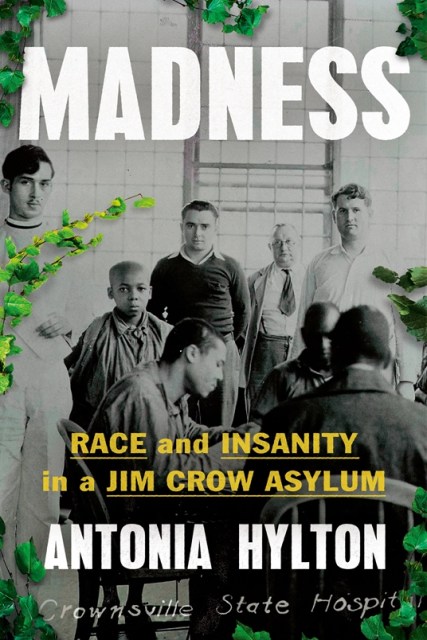
Madness: Race and Insanity in a Jim Crow Asylum
by Antonia Hlyton
Legacy Lit, 2024

[Publication date: January 23, 2024]

Madness 

New York Times Bestseller
Amazon Editor’s Pick for Best Books of January


In the tradition of The Immortal Life of Henrietta Lacks, a page-turning 93-year history of Crownsville Hospital, one of the nation’s last segregated asylums, that the New York Times described as “fascinating…meticulous research” and bestselling author Clint Smith endorsed it as “a book that left me breathless.”

On a cold day in March of 1911, officials marched twelve Black men into the heart of a forest in Maryland. Under the supervision of a doctor, the men were forced to clear the land, pour cement, lay bricks, and harvest tobacco. When construction finished, they became the first twelve patients of the state’s Hospital for the Negro Insane. For centuries, Black patients have been absent from our history books.
Madness transports readers behind the brick walls of a Jim Crow asylum.
 
In
Madness, Peabody and Emmy award-winning journalist Antonia Hylton tells the 93-year-old history of Crownsville Hospital, one of the last segregated asylums with surviving records and a campus that still stands to this day in Anne Arundel County, Maryland. She blends the intimate tales of patients and employees whose lives were shaped by Crownsville with a decade-worth of investigative research and archival documents. Madness chronicles the stories of Black families whose mental health suffered as they tried, and sometimes failed, to find safety and dignity. Hylton also grapples with her own family’s experiences with mental illness, and the secrecy and shame that it reproduced for generations.
 
As Crownsville Hospital grew from an antebellum-style work camp to a tiny city sitting on 1,500 acres, the institution became a microcosm of America’s evolving battles over slavery, racial integration, and civil rights. During its peak years, the hospital’s wards were overflowing with almost 2,700 patients. By the end of the 20th-century, the asylum faded from view as prisons and jails became America’s new focus.
 
In
Madness, Hylton traces the legacy of slavery to the treatment of Black people’s bodies and minds in our current mental healthcare system. It is a captivating and heartbreaking meditation on how America decides who is sick or criminal, and who is worthy of our care or irredeemable.

National Indie Bestseller
ELLE Magazine's Best (and Most Anticipated) Nonfiction Books of 2024
Entertainment Weekly’s Best Books to Read 2024


REVIEWS:


“A thoroughgoing, often shocking exposé of segregation in the treatment (or nontreatment) of mental illness. [A] strong contribution to the literature of both mental health care and civil rights.” Kirkus (Starred Review)

"Hylton writes a scathing exposé on the bigotry that led to the mistreatment of hundreds of Black patients and the attempts to cover it up. Her book is also a call to action to reform the systems that treat people diagnosed with mental illnesses…This well-researched title is an important chronicle of the treatment of Black Americans and their mental health during the Jim Crow era. Beyond promoting systemic change, Hylton compels readers to look within to assess how they treat and view the people around them.” -- Library Journal
“A meticulous work of research and commitment . . . Madness is a radically complex work of historical study, etching the intersections of race, mental health, criminal justice, public health, memory, and the essential quest for human dignity.”--ELLE

"Madness is an all-too-true story, tirelessly and comprehensively reported, of the reinstatement of antebellum conditions under the guise of mental-health treatment — an asylum for so-called “feeble-minded” Blacks that was, in fact, little more than slavery by another name. Antonia Hylton’s sensitive, searching account of the people forever changed by this place — and its very clear, dreadful connection to today’s carceral state — will leave you dumbfounded.”--Robert Kolker, author of the #1 New York Times bestseller, Hidden Valley Road

"Antonia Hylton expertly weaves together a moving personal narrative, in-depth reporting, and illuminating archival research to produce a book that left me breathless. Madness is a haunting and revelatory examination of the way that America's history of racism is deeply entangled in our mental health system. A profoundly important book that helps us make sense of an underexamined aspect of our country’s history." Clint Smith, New York Times bestselling author of Above Ground and How the Word is Passed

“Madness is a necessary and unforgettable book. It is a particular story of a Jim Crow institution that devastated the lives of many suffering Black Americans, but it is also a collective story about how mental health care is a social justice issue, and a personal story about love, loss, and holding onto loved ones through the ravages of living. With powerful and vulnerable writing, alongside diligent research, Hylton has delivered an important and timely work.” --Imani Perry, National Book Award winner and New York Times bestselling author of South to America

“Madness is a work of pure genius. Antonia Hylton breathtakingly joins archival persistence and keen insight to tell the story of lives lived and died at Crownsville, formerly Maryland’s Hospital for the Negro Insane. With courage and tenacity, she uncovers forgotten narratives and past crimes – and in so doing deepens our understanding of how ‘our traumas and illnesses are frequently intertwined with American history and the peculiar reality of being Black.’ This beautiful, brave, heartbreaking, and urgently important work will change the ways you think about race, sanity, and community.”
--Jonathan Metzl, author of Dying of Whiteness

"Madness is a remarkable feat of reporting, penetrating centuries-old brick walls to reveal in vivid detail long buried truths about the racism at the heart of our nation's ongoing mental health crisis. Many books are described as urgent. This one actually is." --Wesley Lowery, Pulitzer Prize winning journalist and New York Times bestselling author of American Whitelash

“Madness is a haunting history of Crownsville Hospital, a segregated asylum in Anne Arundel County, Maryland. Sweeping in its reach, the book—with its use of oral history and a rich archive—offers an astonishing account of the complex relation of race, racism, and mental healthcare in America. But there is something more intimate in these pages: a story about families, about the failures of our country, and about the madness that touches us all. A powerful read!” --Eddie S. Glaude, Jr., Princeton University professor and New York Times bestselling author of Begin Again

“Hylton’s in-depth probing investigation of Crownsville’s history answers essential questions about what happened to the Black population of mentally ill decades after Emancipation.” --King Davis, PhD, Research Professor at the University of Texas at Austin School of Information

 
ABOUT THE AUTHOR:


Antonia Hylton is a Peabody and two-time Emmy award-winning Correspondent for NBC News and MSNBC. She is also the cohost of the hit podcasts Southlake and Grapevine.

From 2016 to 2020, Antonia was a Correspondent and Producer for Vice Media and HBO’s nightly news and documentary show, Vice News Tonight. Since 2019, she has also served as an annual judge for the American Mosaic Journalism Prize.

Antonia’s won several awards, including an Emmy for the HBO special episode on the family separation crisis, two Gracie Awards for her stories about women, a NAMIC Vision Award for reporting on violence and politics in Chicago, and two Front Page Awards for special reporting and breaking news.

Antonia graduated magna cum laude from Harvard University in 2015, where she received prizes for her writing and investigative research on race, mass incarceration, and the history of psychiatry. 
 

Legacy: A Black Physician Reckons with Racism in Medicine
by Uché Blackstock
Viking, 2024
 
Legacy by Uché Blackstock, MD

AN INSTANT NEW YORK TIMES BESTSELLER

“This book is more than a memoir—it also serves as a call to action to create a more equitable healthcare system for patients of color, particularly Black women.” —Essence

One of NPR’s 11 Books to Look Forward to in 2024

One of Good Morning America’s 15 New Books to Read for the New Year

“Legacy is both a compelling memoir and an edifying analysis of the inequities in the way we deliver healthcare in America. Uché Blackstock is a force of nature.” —Abraham Verghese, MD, New York Times bestselling author of The Covenant of Water

“[An] extraordinary family story.” —Dr. Damon Tweedy, The New York Times Book Review

“This book should be required reading for all medical students.” —Gayle King, CBS Mornings

The rousing, captivating story of a Black physician, her career in medicine, and the deep inequities that still exist in the U.S. healthcare system

Growing up in Brooklyn, New York, it never occurred to Uché Blackstock and her twin sister, Oni, that they would be anything but physicians. In the 1980s, their mother headed an organization of Black women physicians, and for years the girls watched these fiercely intelligent women in white coats tend to their patients and neighbors, host community health fairs, cure ills, and save lives.

What Dr. Uché Blackstock did not understand as a child—or learn about at Harvard Medical School, where she and her sister had followed in their mother’s footsteps, making them the first Black mother-daughter legacies from the school—were the profound and long-standing systemic inequities that mean just 2 percent of all U.S. physicians today are Black women; the racist practices and policies that ensure Black Americans have far worse health outcomes than any other group in the country; and the flawed system that endangers the well-being of communities like theirs. As an ER physician, and later as a professor in academic medicine, Dr. Blackstock became profoundly aware of the systemic barriers that Black patients and physicians continue to face.

Legacy is a journey through the critical intersection of racism and healthcare. At once a searing indictment of our healthcare system, a generational family memoir, and a call to action, Legacy is Dr. Blackstock’s odyssey from child to medical student to practicing physician—to finally seizing her own power as a health equity advocate against the backdrop of the pandemic and the Black Lives Matter movement.

REVIEWS:

“Legacy is both a compelling memoir and an edifying analysis of the inequities in the way we deliver healthcare in America. Uché Blackstock is a force of nature.” —Abraham Verghese, MD, New York Times bestselling author of The Covenant of Water

“[An] extraordinary family story.” —Dr. Damon Tweedy, The New York Times Book Review

“This book should be required reading for all medical students.” —Gayle King, CBS Mornings


ABOUT THE AUTHOR:
 
 
Dr. Uché Blackstock is a physician and thought leader on bias and racism in healthcare. She appears on air regularly as an MSNBC medical contributor and is the founder and CEO of Advancing Health Equity, as well as a former associate professor in the Department of Emergency Medicine and the former faculty director for recruitment, retention, and inclusion in the Office of Diversity Affairs at NYU School of Medicine. Dr. Blackstock received both her undergraduate and medical degrees from Harvard University, making her and her twin sister, Oni, the first Black mother-daughter legacies from Harvard Medical School. Dr. Blackstock currently lives in her hometown of Brooklyn, New York, with her two school-age children.


Black American Religious Leaders Call For A Cease Fire in Gaza As National Pressure Mounts on the Biden administration From Much of Black America in Support of the Demand

https://www.nytimes.com/2024/01/28/us/politics/black-pastors-biden-gaza-israel.html

Black Pastors Pressure Biden to Call for a Cease-Fire in Gaza

Black congregants’ dismay at President Biden’s posture on the war could imperil his re-election bid.


by Maya King
Reporting from Atlanta and Columbia, S.C.

January 30, 2024
New York Times

As the Israel-Hamas war enters its fourth month, a coalition of Black faith leaders is pressuring the Biden administration to push for a cease-fire — a campaign spurred in part by their parishioners, who are increasingly distressed by the suffering of Palestinians and critical of the president’s response to it.

Listen to This Article:

Open this article in the New York Times Audio app on iOS

More than 1,000 Black pastors representing hundreds of thousands of congregants nationwide have issued the demand. In sit-down meetings with White House officials, and through open letters and advertisements, ministers have made a moral case for President Biden and his administration to press Israel to stop its offensive operations in Gaza, which have killed thousands of civilians. They are also calling for the release of hostages held by Hamas and an end to Israel’s occupation of the West Bank.

The effort at persuasion also carries a political warning, detailed in interviews with a dozen Black faith leaders and their allies. Many of their parishioners, these pastors said, are so dismayed by the president’s posture toward the war that their support for his re-election bid could be imperiled.

“Black faith leaders are extremely disappointed in the Biden administration on this issue,” said the Rev. Timothy McDonald, the senior pastor of First Iconium Baptist Church in Atlanta, which boasts more than 1,500 members. He was one of the first pastors of more than 200 Black clergy members in Georgia, a key swing state, to sign an open letter calling for a cease-fire. “We are afraid,” Mr. McDonald said. “And we’ve talked about it — it’s going to be very hard to persuade our people to go back to the polls and vote for Biden.”

Any cracks in the ordinarily rock-solid foundation of Black support for Mr. Biden, and for Democrats nationally, could be of enormous significance in November.

Timothy McDonald, wearing a suit and tie, stands in a stairwell and looks directly ahead.
“It’s going to be very hard to persuade our people to go back to the polls and vote for Biden,” said the Rev. Timothy McDonald of the First Iconium Baptist Church in Atlanta. Credit: Alyssa Pointer for The New York Times

The intense feeling on the war in Gaza is among myriad unexpected ways that the war has scrambled U.S. politics. And it comes as Mr. Biden is already facing signs of waning enthusiasm among Black voters, who have for generations been the Democrats’ most loyal voting base.

The coalition of Black clergy pushing Mr. Biden for a cease-fire is diverse, from conservative-leaning Southern Baptists to more progressive nondenominational congregations in the Midwest and Northeast.

“This is not a fringe issue,” said the Rev. Michael McBride, a founder of Black Church PAC and the lead pastor of the Way church in Berkeley, Calif. “There are many of us who feel that this administration has lost its way on this.”

Seeing images of destruction in Gaza, many Black voters whose churches have become involved in the cease-fire movement have voiced increasing disenchantment with Democrats, who they feel have done little to stop the war.

Their pastors said their congregants’ strong reactions to the war were striking.

“Black clergy have seen war, militarism, poverty and racism all connected,” said Barbara Williams-Skinner, co-convener of the National African American Clergy Network, whose members lead roughly 15 million Black churchgoers. She helped coordinate recent meetings between the White House and faith leaders. “But the Israel-Gaza war, unlike Iran and Afghanistan, has evoked the kind of deep-seated angst among Black people that I have not seen since the civil rights movement.”

When Hamas invaded Israel on Oct. 7, killing some 1,200 Israelis and taking about 240 people hostage, leagues of Black pastors joined their counterparts in interfaith prayer for Israel, whose land they revere as holy.

But since then, the pastors’ Palestinian allies in the United States, Gaza and the West Bank have sought their assistance on behalf of civilians suffering under Israel’s counteroffensive. And the pastors have gotten an earful from their own congregants, especially younger churchgoers, about the conflict and Mr. Biden’s full-throated support for Israel.

That sentiment more broadly reflects a strong sense of solidarity between Black Americans and Palestinians that has shaped opinion since the war began.

“We see them as a part of us,” said the Rev. Cynthia Hale, the founder and senior pastor of Ray of Hope Christian Church in Decatur, Ga. “They are oppressed people. We are oppressed people.”

Cynthia Hale, wearing glasses and a blue shirt, looks to her left. A spotlight shines on her from above.

“They are oppressed people. We are oppressed people,” said the Rev. Cynthia Hale of the Ray of Hope Christian Church in Decatur, Ga. Credit:  Alyssa Pointer for The New York Times

The Black pastors’ effort has forced the Biden administration to pay attention, as the president readies for what is expected to be an extremely close election against former President Donald J. Trump.

It began in late October, when a delegation of Black faith leaders from across the country descended on Washington, where they called for an end to the fighting in meetings with the White House and members of the Congressional Black Caucus. Hundreds of pastors signed open letters to Democratic leaders and paid for full-page advertisements in national newspapers, including The New York Times, to push for a cease-fire on humanitarian grounds and call for the release of all hostages being held in Gaza.

Since its founding, the Black church has been considered a power center of Black political organizing. In addition to providing spiritual guidance and challenging political leaders on moral grounds, Black religious leaders have galvanized their members to exercise their hard-won voting rights, often with great success.

Mr. Biden, especially, has recognized the importance of the Black church. One of his first campaign events of 2024 took place at Mother Emanuel A.M.E. in Charleston, S.C., on Jan. 8, making him the first sitting president to speak from the church’s storied pulpit. When protesters interrupted his speech with calls for a cease-fire, their cries were drowned out by shouts of “Four more years!”

Mr. Biden’s campaign did not comment on the record for this article.

Some leaders say Mr. Biden still has time to change the trajectory of the conflict abroad and, in turn, recover any love lost between his administration and Black voters.

“As long as Blacks feel that the president is being genuine, I think he will continue to have our support,” said Bishop Reginald T. Jackson, who presides over more than 500 African Methodist Episcopal churches in Georgia. He, too, signed the letter calling for a cease-fire and the return of hostages. “I think he’s demonstrating his authenticity by the friction that you can tell is between him and Netanyahu as relates to what’s going on in the Middle East,” he said, referring to Israel’s prime minister.

Still, six Black faith leaders who spoke with The New York Times said they or their colleagues had considered rescinding invitations to Democratic politicians hoping to speak during their Sunday services, or withholding public support for Mr. Biden’s re-election until his administration committed to a cease-fire.

“What they are witnessing from the administration in Gaza is a glaring contradiction to what we thought the president and the administration was about,” said the Rev. Frederick D. Haynes, the senior pastor of Friendship-West Baptist Church in Dallas and the president and chief executive of the Rainbow PUSH Coalition, the civil rights organization founded by the Rev. Jesse L. Jackson. His church has more than 12,000 members. “So when you hear a president say the term, ‘redeem the soul of America,’ well, this is a stain, a scar on the soul of America. There’s something about this that becomes hypocritical.”

Black faith leaders are nonetheless conscious of the risks in pushing Mr. Biden on a cease-fire with Mr. Trump looming as the likely Republican presidential nominee. Even pastors most critical of Mr. Biden on the war in Gaza agreed that a Trump re-election would be a worst-case scenario for their largely Black and working-class congregations.

They also suggested that Mr. Trump, who has said he would bar refugees from Gaza from entering the United States, would most likely have less sympathy than Mr. Biden for the plight of Gaza’s civilians.

But the difference between grudging and enthusiastic support could be significant. Asked whether the war in the Middle East could threaten Mr. Biden’s chances in November, the Rev. Jamal Bryant, the senior pastor of New Birth Missionary Baptist Church in Stonecrest, Ga., said, “I think Biden threatens his own success.”

Jamal Bryant sits on a bench in what appears to be a foyer. He wears black pants and a black cardigan sweater with two white crosses on it.
“I think Biden threatens his own success,” said the Rev. Jamal Bryant of the New Birth Missionary Baptist Church in Lithonia, Ga. Credit:  Alyssa Pointer for The New York Times

Democrats, Mr. Bryant observed, have seemed to be “almost on cruise control and feel like: Oh, the Black people will come around. They’ll be forgiving, and they’ll go along with us.” But, he added, as the war drags on, “I really think that the ante is going to really elevate itself.”

The cease-fire calls have strained some relationships between Black pastors and Jewish leaders.

Rabbi Peter S. Berg, the senior rabbi of the Temple in Atlanta, described in an email his “extraordinary relationship” with Black pastors and recalled a service at the nearby Ebenezer Baptist Church over the Martin Luther King Jr. holiday weekend in which Christians and Jews prayed together for peace and the safe return of the hostages.

He added, though, that he felt the demand for a cease-fire, from some pastors whom he has long considered friends, did not fully consider the feelings of Jews with ties to Israel.

“While we all want peace and for this war to end, I was disappointed to see that some faith leaders call for a cease-fire without focusing on bringing the hostages home and holding Hamas accountable for the atrocities they have committed,” Rabbi Berg said, adding, “This is the time to double down on our strong relationships and to be open and honest with each other.”

Black pastors said they had sought to reassure Jewish leaders who took issue with their cease-fire push, underlining that their demand was not rooted in antisemitism and that they were also calling for the release of Israeli hostages and for Israel to be safe from attack.

“Our call for a cease-fire ought not be read as a call for the killing or terror of Jewish individuals and families,” said Mr. McBride, who took part in the meetings in Washington. “We’re against all of these wicked expressions of dehumanization and terror, wherever they show up.”

Audio produced by Adrienne Hurst.


ABOUT THE AUTHOR:


Maya King is a politics reporter covering the Southeast, based in Atlanta. She covers campaigns, elections and movements in the American South, as well as national trends relating to Black voters and young people. More about Maya King

A version of this article appears in print on Jan. 29, 2024, Section A, Page 1 of the New York edition with the headline: Black Pastors Pressing Biden On Cease-Fire. Order Reprints | Today’s Paper
 

Growing National and Global Opposition to American Government Support of the Genocidal War in Gaza and Its Negative Impact on Joe Biden's Foreign Policy Positions in the Middle East

https://truthout.org/articles/the-political-costs-of-bidens-support-for-israels-war-are-mounting/

News Analysis
War & Peace

The Political Costs of Biden’s Support for Israel’s War Are Mounting

The president's Gaza policy is isolating the United States internationally and threatening his reelection prospects.

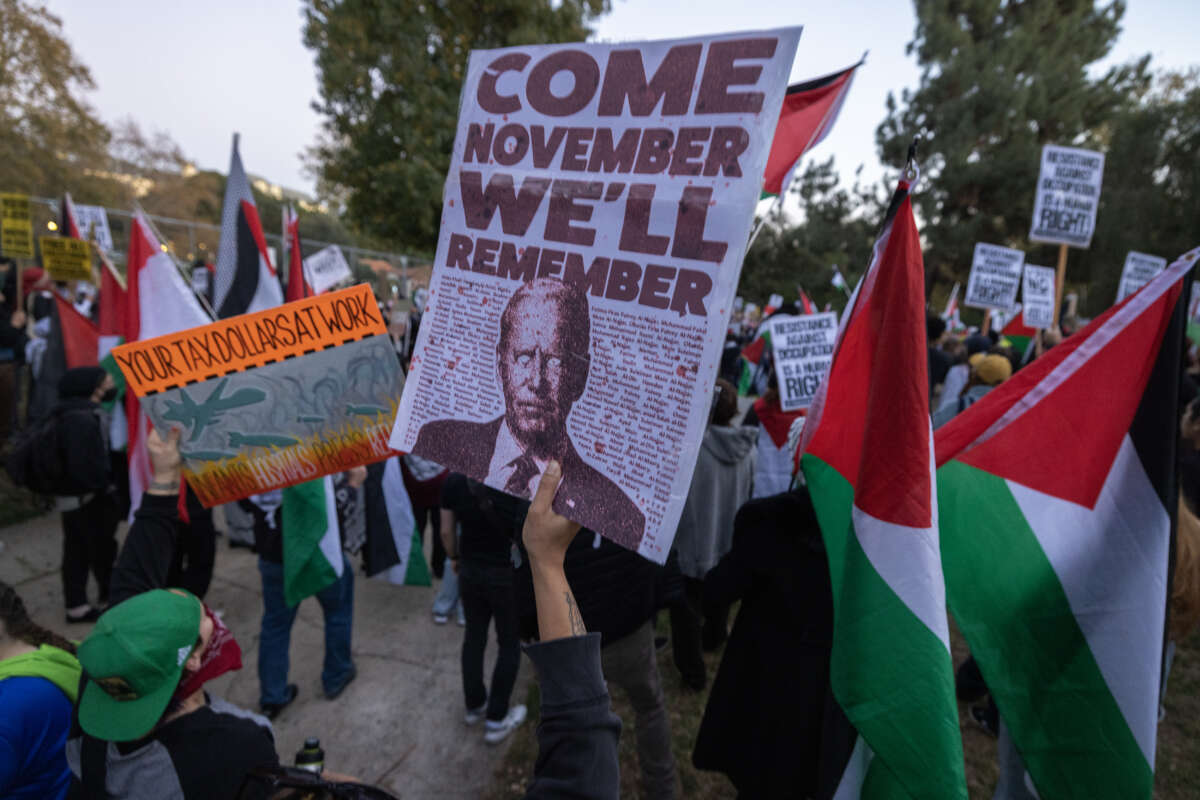
A protester holds a sign depicting President Joe Biden reading "Come November We'll Remember" on December 8, 2023, in Los Angeles, California. David McNew / Getty Images
It would not be an exaggeration to say that President Joe Biden’s support for Israel’s ongoing carnage in Gaza puts him in the same position as George W. Bush with the invasion of Iraq, Ronald Reagan with his support for death squads in Central America and Richard Nixon with his bombing of Vietnam. Like the other conflicts, the civilian death toll is extraordinarily high, the United States is largely isolated in the international community and the majority of Americans — particularly Democrats — oppose the policies. In similar parallels, the administration is marginalizing the United Nations, attacking the international legal system and dismissing reports by reputable human rights organizations.

Despite all this, due to the threat of a second Trump presidency and the lack of any viable Democratic challengers, there has been a reluctance within the liberal mainstream to recognize just how extreme the Biden administration’s policies have been.

Indeed, there has been a concerted attempt by the Democratic congressional leadership to effectively obscure the extent of the carnage as a means of shielding the Biden administration from responsibility. For example, in mid-January, Sen. Bernie Sanders (I-Vermont) introduced a resolution invoking Section 502B(c) of the Foreign Assistance Act which allows either the House or the Senate to request a State Department report on human rights practices by any country that receives U.S. aid. The resolution would require the Biden administration to issue a report within 30 days about possible abuses and how U.S. weapons have been used in Israel’s war on Gaza. While it would not have restricted U.S. aid to Israel, the Biden administration and Senate Democratic leaders, refusing to even acknowledge that Israel was committing war crimes with U.S. weapons (and thereby fueling further public opposition to the administration’s policies), worked to suppress the measure. With the Biden administration opposing the measure, it was roundly defeated, with only nine Senate Democrats joining Sanders and one Republican voting in favor.

Biden admits that Israel is engaging in “indiscriminate bombing” in Gaza but still refuses to demand a ceasefire or to condition the unconditional transfer of offensive military aid. Even though the January 26 ruling by the International Court of Justice found plausible arguments that Israel was violating several counts of the Genocide Treaty, the State Department — which had earlier claimed the charges were “meritless, counterproductive and completely without any basis in fact whatsoever” — doubled down, insisting, “We continue to believe that allegations of genocide are unfounded.”

Meanwhile, Biden has cast doubts on the high civilian casualties, saying despite detailed records of the names and circumstances of over 20,000 civilian deaths, “I have no notion that the Palestinians are telling the truth about how many people are killed.” Though he acknowledged there were civilian casualties, he said it was simply “the price of waging a war.”

Related Story:

US Is Underwriting Israel’s Crimes — Americans Can No Longer Claim Ignorance

Many of us in the Global South are watching the 2024 election to see if US voters implicitly endorse war crimes in Gaza.

This hearkens back to President Bush’s claim that a Johns Hopkins University study which found Iraq had experienced more than 600,000 civilian deaths as a result of the 2003 U.S. invasion of Iraq was “not credible,” and insisting without evidence that the study’s methodology was “pretty well discredited,” even while acknowledging that “a lot of innocent people have lost their life.” It is also reminiscent of the Reagan administration’s coverup of the 1981 El Mozote massacre by U.S.-trained forces of the Salvadoran junta, in which over 1,000 peasants were killed over a period of several days. Similarly, the hundreds of thousands of civilian deaths from the “free fire zones” declared by U.S. forces in areas of South Vietnam controlled by the leftist National Liberation Front and the carpet-bombing of North Vietnamese cities were routinely downplayed by the Johnson and Nixon administrations.

The isolation of the United States in the international community was underscored in early December when it was one of only 10 countries in the 193-member United Nations General Assembly to vote against a resolution calling for a ceasefire. The other dissenting votes came from small countries economically dependent on the United States or those under right-wing leadership.

Later that month, the Biden administration followed up on its October veto of a UN Security Council resolution calling for a ceasefire by again blocking an otherwise unanimous ceasefire resolution. It then blocked another otherwise unanimous resolution simply calling for an “urgent suspension of hostilities.” Biden finally allowed a resolution to pass that only recommended creating “the conditions for a sustainable cessation of hostilities” and, even then, abstained rather than joining the other countries voting in favor.

Biden and the congressional leaders of both parties insist the bombing must continue, and that those who are calling for a ceasefire – virtually all the world’s governments, global religious leaders, peace and human rights groups, academics specializing in the region, and two-thirds of the American public – are wrong. Secretary of State Antony Blinken told CNN that as far as the duration and the conduct of the war on Gaza, “these are decisions for Israel to make.”

Indeed, the position put forward by the Biden administration and its supporters regarding Israel’s war on Gaza bears remarkable parallels to the Reagan administration and its supporters’ policy of supporting the Salvadoran junta and the Nicaraguan Contras back in the 1980s: that there should be no ceasefire; that counterinsurgency campaigns involving the mass killing of civilians constitute “legitimate self-defense”; that the U.S. taxpayer should provide the weapons to facilitate the killing; there should be no conditions on military aid regarding adherence to international humanitarian law; that antiwar and human rights activists are supporting terrorism and autocratic ideologies; that human rights organizations that document war crimes are not reliable and are motivated by an ideological bias against U.S. allies; and that the United Nations and the World Court are similarly biased and should not be involved in resolving the conflict.

The United States was similarly solateed in the international community during the 1980s, vetoing otherwise unanimous UN Security Council resolutions and being among a small minority in the General Assembly voting against resolutions seeking to end the Central American wars. And, in another striking parallel, most Americans opposed U.S. support for the right-wing forces engaging in war crimes in these wars as well, mobilizing in huge demonstrations in Washington and elsewhere, yet were largely ignored by the administration in power.

The charges during the Cold War of Moscow and Beijing funding and facilitating protests by peace and human rights activists is also seen today. Last weekend, Congresswoman Nancy Pelosi claimed that calling for a ceasefire in Gaza “is Mr. Putin’s message,” adding that “Some [pro-ceasefire protesters] I think are connected to Russia” and that she plans to “ask the FBI to investigate” supposed Russian funding of pro-ceasefire demonstrators. Two days later, when antiwar protesters outside of her home correctly pointed out that a majority of Democrats support a ceasefire in Gaza while she continues to stridently oppose it, the former house speaker responded by shouting, “Go back to China where your headquarters is!”

Unlike in the 1980s, now there is a Democratic administration in charge and the majority of Democrats in Congress support U.S. policy. And this is many constituents that typically would comprise Biden’s voter base. Indeed, the single most important variable regarding how well Democrats have done in recent elections has been youth and voter of color turnout. When it’s high, they win. When it’s low, they lose.

According to the latest poll, 72 percent of voters ages 18 to 29 disapprove of Biden’s handling of the war on Gaza. That is a higher percentage of young voters than those who disapproved of Bush’s handling of the war in Iraq, Reagan’s handling of the wars in Central America or even Nixon’s handling of the war in Vietnam.

Supporters of peace, human rights and international law are divided as to how to respond. Letters, protests, civil disobedience and citing polling numbers have led to growing dissent among a progressive minority in Congress, but has done little to change administration policy or that of the congressional leadership. Many believe that the system has failed and are refusing to support Biden or other pro-war Democrats, even if that means the takeover of government by reactionary autocratic Republicans.

Biden is apparently willing to risk a wider war in the greater Middle East rather than try to stop the Israeli onslaught. U.S. support for Israel’s war on Gaza has provoked attacks by pro-Iranian militia in Syria and Iraq, thereby leading Biden to bomb those countries, resulting in angry reactions — not just by the Assad regime in Syria but also by the ostensibly allied government of Iraq. Similarly, Houthi attacks on shipping in the Red Sea have resulted in major U.S. airstrikes on Yemen, leading to massive anti-American demonstrations.

The United States has been supporting Israel and allied dictatorships for years, but the death rate of civilians is the highest of any war in recent decades and, thanks to advances in media technologies, is being more closely followed than in U.S.-fueled conflicts in the past.

Biden comes from a generation of U.S. politicians who believed that support for Israel had only positive political impact at home and only limited and temporary negative impact abroad. The world has changed, however. The question is: How soon will he finally get the message? 


ABOUT THE AUTHOR:


Stephen Zunes is a professor of politics at the University of San Francisco. His most recent book, co-authored with Jacob Mundy, is Western Sahara: War, Nationalism, and Conflict Irresolution (revised updated expanded second edition, Syracuse University Press, 2022).