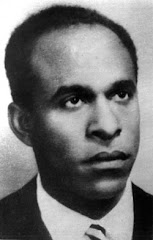
by Kofi Natambu
AMERICA wants another
Pep talk
It’s never satisfied
Banality rules
its days & nights
Another mass rally
Never satisfied
Mass media not enuff
Mass boredom not enuff
Mass murder not enuff
now
nothing can quench its
rampaging thirst
for lies
AMERICA wants a panacea
wants a placebo
wants a panderer
wants a papier-mache god
it can pray to
wants a Victim it can identify with
scream at
cry over
stomp on
BE!
AMERICA WANTS ANOTHER ENEMY
(besides itself)
You see: it’s never satiated
Infantilism rules
Its afternoons & evenings
Another mass tally
Never satiated
Stupidity not enuff
Cynicism not enuff
Suicide not enuff
now
nothing can impede
its spiralling flight
toward emptiness
AMERICA wants another alibi
wants another excuse
wants still another thrill
wants another ‘reason’
to eat up the world
wants a Fear it can live with
fawn over
suck on
talk about
BE!!
[Poem from the book INTERVALS by Kofi Natambu. Post Aesthetic Press, 1983]
https://www.nytimes.com/2024/05/16/us/justice-alito-upside-down-flag.html
At Justice Alito’s House, a ‘Stop the Steal’ Symbol on Display
An upside-down flag, adopted by Trump supporters contesting the Biden victory, flew over the justice’s front lawn as the Supreme Court was considering an election case.

May 16, 2024
New York Times
After the 2020 presidential election, as some Trump supporters falsely claimed that President Biden had stolen the office, many of them displayed a startling symbol outside their homes, on their cars and in online posts: an upside-down American flag.
One of the homes flying an inverted flag during that time was the residence of Supreme Court Justice Samuel A. Alito Jr., in Alexandria, Va., according to photographs and interviews with neighbors.
The upside-down flag was aloft on Jan. 17, 2021, the images showed. President Donald J. Trump’s supporters, including some brandishing the same symbol, had rioted at the Capitol a little over a week before. Mr. Biden’s inauguration was three days away. Alarmed neighbors snapped photographs, some of which were recently obtained by The New York Times. Word of the flag filtered back to the court, people who worked there said in interviews.
While the flag was up, the court was still contending with whether to hear a 2020 election case, with Justice Alito on the losing end of that decision. In coming weeks, the justices will rule on two climactic cases involving the storming of the Capitol on Jan. 6, including whether Mr. Trump has immunity for his actions. Their decisions will shape how accountable he can be held for trying to overturn the last presidential election and his chances for re-election in the upcoming one.
“I had no involvement whatsoever in the flying of the flag,” Justice Alito said in an emailed statement to The Times. “It was briefly placed by Mrs. Alito in response to a neighbor’s use of objectionable and personally insulting language on yard signs.”
Judicial experts said in interviews that the flag was a clear violation of ethics rules, which seek to avoid even the appearance of bias, and could sow doubt about Justice Alito’s impartiality in cases related to the election and the Capitol riot.
The mere impression of political opinion can be a problem, the ethics experts said. “It might be his spouse or someone else living in his home, but he shouldn’t have it in his yard as his message to the world,” said Amanda Frost, a law professor at the University of Virginia.
This is “the equivalent of putting a ‘Stop the Steal’ sign in your yard, which is a problem if you’re deciding election-related cases,” she said.
Interviews show that the justice’s wife, Martha-Ann Alito, had been in a dispute with another family on the block over an anti-Trump sign on their lawn, but given the timing and the starkness of the symbol, neighbors interpreted the inverted flag as a political statement by the couple.
The longstanding ethics code for the lower courts, as well as the recent one adopted by the Supreme Court, stress the need for judges to remain independent and avoid political statements or opinions on matters that could come before them.
“You always want to be proactive about the appearance of impartiality,” Jeremy Fogel, a former federal judge and the director of the Berkeley Judicial Institute, said in an interview. “The best practice would be to make sure that nothing like that is in front of your house.”
The court has also repeatedly warned its own employees against public displays of partisan views, according to guidelines circulated to the staff and reviewed by The Times. Displaying signs or bumper stickers is not permitted, according to the court’s internal rule book and a 2022 memo reiterating the ban on political activity.

Asked if these rules also apply to justices, the court declined to respond.
The exact duration that the flag flew outside the Alito residence is unclear. In an email from Jan. 18, 2021, reviewed by The Times, a neighbor wrote to a relative that the flag had been upside down for several days at that point.
In recent years, the quiet sanctuary of his street, with residents who are registered Republicans and Democrats, has tensed with conflict, neighbors said. Around the 2020 election, a family on the block displayed an anti-Trump sign with an expletive. It apparently offended Mrs. Alito and led to an escalating clash between her and the family, according to interviews.
Some residents have also bridled at the noise and intrusion brought by protesters, who started showing up outside the Alito residence in 2022 after the Supreme Court overturned the federal right to abortion. Other neighbors have joined the demonstrators, whose intent was “to bring the protest to their personal lives because the decisions affect our personal lives,” said Heather-Ann Irons, who came to the street to protest.
The half-dozen neighbors who saw the flag, or knew of it, requested anonymity because they said they did not want to add to the contentiousness on the block and feared reprisal. Last Saturday, May 11, protesters returned to the street, waving flags of their own (“Don’t Tread on My Uterus”) and using a megaphone to broadcast expletives at Justice Alito, who was in Ohio giving a commencement address. Mrs. Alito appeared in a window, complaining to the Supreme Court security detail outside.
Turning the American flag upside down is a symbol of emergency and distress, first used as a military S.O.S., historians said in interviews. In recent decades, it has increasingly been used as a political protest symbol — a controversial one, because the flag code and military tradition require the paramount symbol of the United States to be treated with respect.
Over the years, upside-down flags have been displayed by both the right and the left as an outcry over a range of issues, including the Vietnam War, gun violence, the Supreme Court’s overturning of the constitutional right to abortion and, in particular, election results. In 2012, Tea Party followers inverted flags at their homes to signal disgust at the re-election of President Barack Obama. Four years later, some liberals advised doing the same after Mr. Trump was elected.


During Mr. Trump’s quest to win, and then subvert, the 2020 election, the gesture took off as never before, becoming “really established as a symbol of the ‘Stop the Steal’ campaign,” according to Alex Newhouse, a researcher at the University of Colorado Boulder.
A flood of social media posts exhorted Trump supporters to flip over their flags or purchase new ones to display upside down.
“If Jan. 6 rolls around and Biden is confirmed by the Electoral College our nation is in distress!!” a poster wrote on Patriots.win, a forum for Trump supporters, garnering over a thousand “up” votes. “If you cannot go to the DC rally then you must do your duty and show your support for our president by flying the flag upside down!!!!”
Local newspapers from Lexington, Ky., to Sun City, Ariz., to North Jersey wrote about the flags cropping up nearby. A few days before the inauguration, a Senate candidate in Minnesota flew an upside-down flag on his campaign vehicle.
Hanging an inverted flag outside a home was “an explicit signifier that you are part of this community that believes America has been taken and needs to be taken back,” Mr. Newhouse said.
This spring, the justices are already laboring under suspicion by many Americans that whatever decisions they make about the Jan. 6 cases will be partisan. Justice Clarence Thomas has declined to recuse himself despite the direct involvement of his wife, Virginia Thomas, in efforts to overturn the election.
Now, with decisions in the Jan. 6 cases expected in just a few weeks, a similar debate may unfurl about Justice Alito, the ethics experts said. “It really is a question of appearances and the potential impact on public confidence in the court,” Mr. Fogel said. “I think it would be better for the court if he weren’t involved in cases arising from the 2020 election. But I’m pretty certain that he will see that differently.”
If Justice Alito were on another court, Mr. Fogel said, the flag could also trigger some sort of review to determine if there was any misconduct. But because the Supreme Court serves as the arbiter of its own behavior, “you don’t really have anywhere to take it,” he said.
Aric Toler contributed reporting. Julie Tate contributed research.
ABOUT THE AUTHOR:
Jodi Kantor is a Pulitzer Prize-winning investigative reporter and co-author of “She Said,” which recounts how she and Megan Twohey broke the story of sexual abuse allegations against Harvey Weinstein, helping to ignite the #MeToo movement. Instagram • More about Jodi Kantor
“What’s Past is Prologue…"
https://truthout.org/articles/how-the-us-supreme-court-became-an-arm-of-the-republican-party
Interview
Politics & Elections
How the US Supreme Court Became an Arm of the Republican Party
The court is making decisions based on the GOP platform, not the Constitution, says legal scholar Khiara M. Bridges.
by C.J. Polychroniou
August 18, 2023
Truthout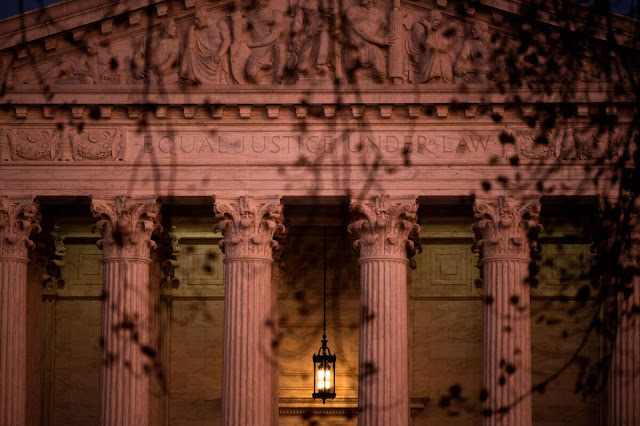
The U.S. Supreme Court, whose current ideological leanings are extremely reactionary, has spearheaded a broad national regression on human rights. Indeed, the United States is a global outlier on multiple fronts (the only wealthy nation without a universal health care system and number one in firearms per capita, to name just a few), and some of the latest Supreme Court rulings (on abortion, guns and affirmative action) are turning the country into “a global pariah.”
How do we make sense of these utterly dangerous developments? First of all, why is the Supreme Court acting like the executive committee of the Republican Party? Are there even clean legal arguments upon which its rulings are based? In this exclusive interview for Truthout, renowned law professor and anthropologist Khiara M. Bridges, who specializes in the intersection of race, class, reproductive justice and law, shares her insights into the issues raised above and offers some legal remedies that she believes will help achieve racial justice and equality in the 21st century.
Bridges is a professor of law at UC Berkeley School of Law. Her scholarship has appeared in scores of prestigious publications, including the Harvard Law Review, the Stanford Law Review, the California Law Review, the NYU Law Review and the Virginia Law Review. She is the author of Reproducing Race: An Ethnography of Pregnancy as a Site of Racialization (2011), The Poverty of Privacy Rights (2017) and Critical Race Theory: A Primer (2019). On July 12, 2022, Bridges testified before the U.S. Senate Judiciary Committee about the fallout from the U.S. Supreme Court’s recent decision in Dobbs v. Jackson Women’s Health Organization, which overturned Roe v. Wade.
How do we make sense of these utterly dangerous developments? First of all, why is the Supreme Court acting like the executive committee of the Republican Party? Are there even clean legal arguments upon which its rulings are based? In this exclusive interview for Truthout, renowned law professor and anthropologist Khiara M. Bridges, who specializes in the intersection of race, class, reproductive justice and law, shares her insights into the issues raised above and offers some legal remedies that she believes will help achieve racial justice and equality in the 21st century.
Bridges is a professor of law at UC Berkeley School of Law. Her scholarship has appeared in scores of prestigious publications, including the Harvard Law Review, the Stanford Law Review, the California Law Review, the NYU Law Review and the Virginia Law Review. She is the author of Reproducing Race: An Ethnography of Pregnancy as a Site of Racialization (2011), The Poverty of Privacy Rights (2017) and Critical Race Theory: A Primer (2019). On July 12, 2022, Bridges testified before the U.S. Senate Judiciary Committee about the fallout from the U.S. Supreme Court’s recent decision in Dobbs v. Jackson Women’s Health Organization, which overturned Roe v. Wade.
C. J. Polychroniou: Race, class and gender have functioned as organizing principles in the development of U.S. society and culture from the very beginning and continue to shape social identities to this day. Your own work, as a professor of law and an anthropologist, focuses on the relationship between race, class and gender in the context of reproductive rights and law. Can you briefly discuss this relationship and explain what intersectionality has to do with efforts to create a more equitable and just world for ourselves and future generations?
Khiara M. Bridges: I will try to answer your question by explaining why I was drawn to the study of the intersection of race, class and gender in the context of reproductive rights and law.
When I was in law school, I was struck by the way pregnancy and motherhood were described in Supreme Court cases. On the whole, the court talked about pregnancy and motherhood in celebratory terms. They were conceptualized as good for the pregnant woman, her family, her community and the nation as a whole. Language idealizing pregnancy and motherhood could be found even in cases in which the court protected the right to terminate a pregnancy. For example, in Planned Parenthood v. Casey, in which the court affirmed its holding in Roe v. Wade that the Constitution protected the right to terminate a pre-viability pregnancy, the court writes:
As with abortion, reasonable people will have differences of opinion about these matters. One view is based on such reverence for the wonder of creation that any pregnancy ought to be welcomed and carried to full term no matter how difficult it will be to provide for the child and ensure its well-being. Another is that the inability to provide for the nurture and care of the infant is a cruelty to the child and an anguish to the parent.
Here, even in its defense of the constitutional right to abortion, the court speaks about pregnancy and motherhood in radiant terms. In this framing, the abortion right deserves recognition and protection because when pregnancy occurs during a disadvantageous time in a person’s life — when they do not have the means to provide for the child’s emotional and material needs — it is “cruel” to the infant and causes the parent “anguish.” In my reading, the court still conceptualizes pregnancy as a blessing. The court recognizes a constitutional right to abortion simply because this blessing may occur at a bad time.
The fairly laudatory presentation of pregnancy and motherhood in the court’s jurisprudence sits in diametrical opposition to the way that some people’s pregnancies are spoken about in political discourse. When I was in law school, the nation had just spent the two immediately preceding decades talking about “welfare queens” — implicitly Black women who were imagined to have babies solely to increase the size of their welfare checks. “Welfare queens” were decidedly bad for the nation; they drained public finances while producing children that were the country’s future criminals and “welfare queens” themselves. I was in law school during a period of time in which politicians were arguing that welfare beneficiaries should be required to take long-acting reversible contraception, or to undergo sterilization, in order to receive financial assistance from the state. Essentially, politicians were talking about poor people’s reproduction as if it were a social problem that needed to be solved. This was, again, the complete inverse of the way that the court spoke about pregnancy and motherhood.
I was fascinated by the inversion. And race and class explain the opposition. They explain why some people’s procreation is celebrated, and other people’s procreation is denigrated. And that’s really the lesson of intersectionality. Intersectionality offers a framework for understanding the complexity of social life. It recognizes that power is exerted along many different axes in the U.S. — race, class, sex, gender identity, sexuality, ability, immigration status, religion etc. And intersectionality simply submits that privilege or subjugation will look different at the various intersections of those axes of power. So, for example, sexism when it intersects with race privilege will look different than the way it looks when it intersects with race un-privilege. The form that sexism, patriarchy and misogyny have taken for affluent white women is the command to reproduce at all costs. The form that sexism has taken for Black women, especially when they are poor, is the demand that they avoid reproduction at all costs.
And so, intersectionality cautions that as we engage in efforts to create a more equitable and just world, we have to be careful not to allow one group’s experiences with an axis of power to stand in for everyone’s experience with that axis of power. If we do, our efforts will be liberatory only for some.
Critical race theory was developed in the 1980s but has become a hot-button political issue for today’s conservatives in the U.S. What is it about critical race theory that has become such an obsession for Republicans, and why is it coming up now?
You are absolutely correct to note that critical race theory was developed in the 1980s. It was created by law professors who were trying to figure out how it came to be that dramatic racial inequality endured even though the civil rights movement of the 1950s and 1960s had forced the nation to bestow formal racial equality onto people of color. The Civil Rights Act of 1964 and the Voting Rights Act of 1965 both had been passed. These were monumental pieces of legislation. Nevertheless, when these incipient critical race theorists looked around at the social landscape in the 1980s, they saw that people of color were still at the bottom of most measures of social well-being. Black people, particularly, were incarcerated at higher rates than white people; they were poorer than white people; they were sicker than white people; they died earlier than white people. So, the law professors who created critical race theory wanted to think about how this dramatic racial inequality could coexist with formal racial equality. That is what critical race theory sets out to do. It is an advanced legal theory that attempts to think through the relationship between law and continuing racial injustice in a post-civil rights era.
Of course, this is not what the Republican Party is talking about when they invoke “critical race theory.” Conservative pundits and politicians say that critical race theory is being taught in K-12 schools. They say that it is “Marxist.” They say that it proposes that all white people are racist and all Black people are oppressed. Essentially, their description of critical race theory bears absolutely no relationship to actual critical race theory — the advanced legal theory that law professors began developing in the 1980s. Essentially, the Republican Party has co-opted the term, and they are using the struggle to rid so-called critical race theory from public life to accomplish the goal of silencing any talk that suggests that racial inequality remains a problem and that race still matters in the U.S. today.
Race and class explain … why some people’s procreation is celebrated, and other people’s procreation is denigrated.
I think that it is important to keep in mind precisely when the Republican Party began talking about critical race theory. The GOP’s fixation began in fall 2020 — right after the country had a long, hot summer of racial protests in the wake of George Floyd’s murder. If you recall, optimists that summer were saying that the country was having a “racial reckoning.” Then, in the fall, the Republican Party began claiming that critical race theory was being taught everywhere — to federal employees, kindergartners and everyone in between. The timing is no accident. It seems pretty obvious that the Republican Party created a bogeyman out of critical race theory to stop whatever racial reckoning that was happening at the time and to undo any gains — legislative, political, discursive — that racial justice advocates had managed to achieve that summer.
Finally, it is important to understand the intentionality behind the creation of “critical race theory” as a bogeyman. Most scholars thinking through the Republican Party’s co-optation of the term “critical race theory” credit Christopher Rufo, a conservative activist, with putting so-called critical race theory on the Republican Party’s radar. In March 2021, Rufo tweeted:
We have successfully frozen their brand — “critical race theory” — into the public conversation and are steadily driving up negative perceptions. We will eventually turn it toxic, as we put all of the various cultural insanities under that brand category.
The goal is to have the public read something crazy in the newspaper and immediately think “critical race theory.” We have decodified the term and will recodify it to annex the entire range of cultural constructions that are unpopular with Americans.
Very rarely do the villains explicitly and publicly reveal their nefarious plans. In this case, the villain did just that.
The Supreme Court’s Republican-appointed majority has issued a series of ultra-reactionary rulings on a number of critical issues such as voting rights, affirmative action, gerrymandering, abortion, gun control and campaign finance. Are these rulings based on clear legal arguments, or are they in fact driven by political preferences and ideological biases? For example, there seems to be very little consistency in the Supreme Court decisions on guns and abortion.
I think that it is hard for anyone to say with a straight face that the court’s recent decisions are based on clear, consistent legal principles. I believe that anyone paying attention sees that the court has been issuing decisions that are consistent only in the sense that they consistently align with the Republican Party’s political platform.
First, we have to keep in mind that the court creates its own docket; it decides which cases it wants to hear. So, it is not just some odd coincidence that in the last two terms alone, the court has decided to hear cases that touch on the most hot-button political issues of our time: abortion, gun rights, voting rights, affirmative action, LGBTQ rights, the free exercise of religion etc. The court has chosen to hear these particular cases because with six conservative justices presently sitting on the bench, it has the power to organize American society in the way that the Republican Party wants.
Second, it really is impossible to reconcile the court’s decisions with one another. A search for a legal principle that unites the cases will turn up nothing. For example, in last year’s decision in Dobbs v. Jackson Women’s Health Organization, in which the court overturned Roe v. Wade and permitted states to criminalize abortion, the court argued that in order to determine what any given provision of the Constitution does and does not protect, we have to look to what people were thinking at the time of that provision’s ratification. This, the court said, is what originalism requires. The court said that when we are trying to figure out whether the Due Process Clause contained in the 14th Amendment protects the abortion right, originalism demands that we divine whether people in 1868, the year that the 14th Amendment was ratified, thought that the Due Process Clause protected abortion rights. The court in Dobbs looks at all the criminal abortion laws on the books in 1868 and answers in the negative: In 1868, people did not think that the 14th Amendment protected abortion rights. The fact that women were unable to vote until 1920 and, therefore, had no say in any of the laws on the books in 1868 is irrelevant to the court’s analysis.
The Republican Party created a bogeyman out of critical race theory … to undo any gains … that racial justice advocates had managed to achieve that summer.
Fast forward to Students for Fair Admissions v. Harvard [SFFA], which was decided earlier this summer. There, the court held that the race-based affirmative action programs instituted at Harvard College and University of North Carolina violated the Equal Protection Clause contained in the 14th Amendment. Now, just last year in Dobbs, the court declared that originalism is the proper method for interpreting the Constitution. This would suggest that the court in SFFA would try to figure out whether people in 1868 thought that the 14th Amendment permitted race-conscious efforts to produce racial equality. Note that in 1868, the nation was just three years past the end of the Civil War, which was fought, in part, to end the institution of chattel slavery in this country. The 14th Amendment was added to the Constitution for the express purpose of making formerly enslaved people equal citizens of the nation. A court that believes that originalism is an inexorable command would have interrogated whether in 1868, people believed that this amendment that had just been ratified with the express purpose of making Black people equal citizens permitted race-conscious efforts to produce racial equality. The answer, clearly, is yes. Originalism leads to the conclusion that race-based affirmative action is constitutional. Perhaps that explains why the court says nothing about originalism in SFFA. Indeed, the majority opinion in that case is perfectly originalism-free. No legal principle explains why originalism is relevant when the court is deciding whether a constitutional right to abortion exists and irrelevant when the court is deciding whether race-based affirmative action is permissible. It is results-oriented reasoning all the way down.
I should mention that in SFFA, Justice Thomas authored a concurring opinion that endeavors to provide an originalist defense of the court’s holding that race-based affirmative action is unconstitutional. The opinion is entirely unconvincing. Historians will shudder when reading it. Perhaps that explains why no other justice, including his conservative colleagues who preached the gospel of originalism in Dobbs, signed on to it.
Why is the U.S. obsessed with abortion, and what does the overturning of Roe v. Wade say about U.S. credibility with regard to human rights?
The nation’s current obsession with abortion makes it hard to believe that abortion has not always been a partisan issue. Indeed, as recently as the mid-1980s, abortion was not very politically charged. Only in the last 40 years or so has the Republican Party built its platform around the criminalization of abortion and the Democratic Party offered itself as the party that favors abortion rights and access.
The reversal of Roe v. Wade positions the U.S. as an outlier on the world stage. Most countries are liberalizing their criminal abortion laws. Five years ago, Ireland, a deeply Catholic country, voted to repeal its abortion ban. In 2020, Argentina changed its laws to permit legal abortion up until the 14th week of pregnancy. And in 2021, the Supreme Court in Mexico ruled that the country’s constitution prohibited the criminalization of abortion. So, we are witnessing the expansion of abortion rights in countries across the globe. These countries are changing their laws to allow their citizens access to safe and legal abortion because they recognize that the ability to terminate a pregnancy safely and legally is necessary if people are to control the content and trajectory of their lives. These countries have come to the realization that governments that force their citizens to continue pregnancies and to give birth against their will deny their citizens’ dignity and treat them inhumanely.
The reversal of Roe, then, reveals the U.S. to be deeply regressive on this issue, and devastatingly so.
One final question: What legal remedies would you recommend to achieve racial justice and equality in the 21st century?
A different outcome in Washington v. Davis would have allowed the federal judiciary to address structural racism.
Perhaps it’s because I am a constitutional law scholar that when I think of legal remedies, I think of Supreme Court cases that should be reversed. The court has handed down some truly terrible decisions. These are decisions that, if they had come out the other way, would have helped to make the nation more racially just. There are too many cases to name here. But one decision that I repeatedly come back to is Washington v. Davis, which was decided in 1976. The case concerned a standardized test that the District of Columbia had been using to make hiring decisions for the district’s police force. Black applicants did not perform as well on the test. As a result, very few Black people were getting hired as police officers. A Black applicant challenged the District of Columbia’s use of the test, arguing that because the test disproportionately burdened Black people, and because it did not do a particularly good job of identifying which candidates would be competent, effective police officers, the government’s use of the test violated the Equal Protection Clause. In the course of upholding the constitutionality of the test, the court announced the rule that a law will be struck down as a violation of the Equal Protection Clause only if there is a finding that lawmakers had the intent to discriminate against a racial group when passing the law.
A different outcome in Washington v. Davis would have allowed the court to strike down laws that do not mention race explicitly, but nevertheless have the effect of burdening people of color. Note that this is exactly how critical scholars define institutional or structural racism: We understand institutional/structural racism to be what happens when institutions and structures operate in a race-neutral manner that nevertheless perpetuates historical racial disadvantage and produces new forms of racial disenfranchisement. Essentially, a different outcome in Washington v. Davis would have allowed the federal judiciary to address structural racism. It would have upheld race-neutral laws that are racially burdensome only if the government could show that there is no other way to accomplish the goal that it set out to accomplish with the law. So, for example, in Washington v. Davis, the District of Columbia would have been able to use the test that worked to disproportionately prevent Black people from being hired onto the police force only if it showed that this particular test was the only way to identify people who would be effective police officers. Few laws would survive such a standard. Accordingly, the federal judiciary would have been able to diminish structural racism — perhaps even significantly.
So: What legal remedies would I recommend to achieve racial justice and equality in the 21st century? I would begin by reversing Washington v. Davis.
I will end just by noting that Washington v. Davis was decided close to 50 years ago. I think a lot of people believe that the Supreme Court has only recently become anti-democratic, obviously partisan, uninterested in human rights etc. But nothing could be further from the truth. The court’s recent decisions are part of a longue durée in which the court has demonstrated a patent hostility to racial justice and equality.
ABOUT THE INTERVIEWER:
C.J. Polychroniou is a political scientist/political economist, author, and journalist who has taught and worked in numerous universities and research centers in Europe and the United States. Currently, his main research interests are in U.S. politics and the political economy of the United States, European economic integration, globalization, climate change and environmental economics, and the deconstruction of neoliberalism’s politico-economic project. He is a regular contributor to Truthout as well as a member of Truthout’s Public Intellectual Project. He has published scores of books and over 1,000 articles which have appeared in a variety of journals, magazines, newspapers and popular news websites. Many of his publications have been translated into a multitude of different languages, including Arabic, Chinese, Croatian, Dutch, French, German, Greek, Italian, Japanese, Portuguese, Russian, Spanish and Turkish. His latest books are Optimism Over Despair: Noam Chomsky On Capitalism, Empire, and Social Change (2017); Climate Crisis and the Global Green New Deal: The Political Economy of Saving the Planet (with Noam Chomsky and Robert Pollin as primary authors, 2020); The Precipice: Neoliberalism, the Pandemic, and the Urgent Need for Radical Change (an anthology of interviews with Noam Chomsky, 2021); and Economics and the Left: Interviews with Progressive Economists (2021).