Wednesday, September 25, 2024

The Fundamental Crisis and Foundational Contradiction Facing the United States During the Upcoming Presidential Election of 2024: Fascism guided, informed, and enabled by the Doctrines and Practices of White Supremacy, Judicial Corruption, and Global Capitalism--PART 35

https://www.nytimes.com/2024/09/23/opinion/electoral-college-presidential-election.html


A Leading Law Scholar Fears We’re Lurching Toward Secession
by Michelle Goldberg
September 23, 2024
New York Times
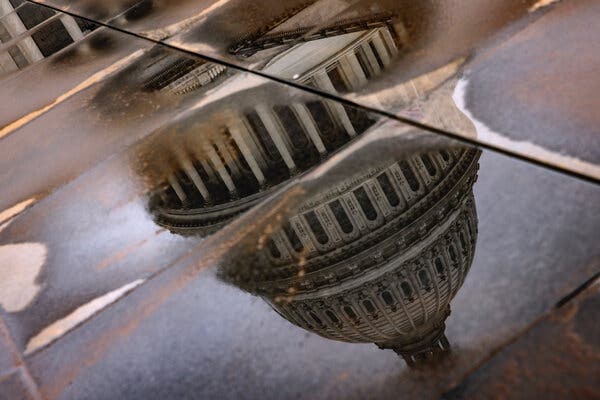
The dome of the U.S. Capitol, reflected in puddles on pavement.

Credit:  Samuel Corum/Getty Images


Here’s how rickety our constitutional system has become: The fate of the 2024 election could hang on the integrity of a single Republican state senator in Nebraska.


To understand why requires getting a bit deep in the Electoral College weeds. Almost all states use a winner-take-all system to apportion their presidential electors, but Nebraska and Maine award some electors by congressional district. In 2020, Joe Biden won one of Nebraska’s five electoral votes, and Donald Trump won one elector from rural Maine. This year Kamala Harris’s clearest path to victory is to take the so-called blue wall states of Pennsylvania, Michigan and Wisconsin, plus one electoral vote in Nebraska.


One reason that both states have resisted partisan pressure to switch to winner-take-all is the assumption that if one did so, the other would as well, balancing out any Electoral College effect. But this year, Republicans waited until it was too late for Maine to change its rules before starting a push to change them in Nebraska. If they succeeded and Harris held the blue wall but lost the other swing states, there would be a tie in the Electoral College. For the first time in 200 years, the election would go to the House, where each state delegation would get one vote and Trump would almost certainly be installed as president.


So far, one man, State Senator Mike McDonnell, who defected from the Democratic Party this spring, is standing in the Republican Party’s way. We should all be grateful for his courage. But the pressure on him from his new party will be intense, and he can still change his mind in the coming weeks.


Whether or not McDonnell remains steadfast, this is a preposterous way to run a purportedly democratic superpower. The Electoral College — created in part, as the scholar Akhil Reed Amar has shown, to protect slavery — has already given us two presidents in the 21st century who lost the popular vote, and it continues to warp our politics. It is one reason Erwin Chemerinsky, the dean of the U.C. Berkeley School of Law and an eminent legal scholar, has come to despair of the Constitution he’s devoted much of his life to. “I believe that if the problems with the Constitution are not fixed — and if the country stays on its current path — we are heading to serious efforts at secession,” he writes in his bracing new book, “No Democracy Lasts Forever: How the Constitution Threatens the United States.”


Chemerinsky’s description of the way our Constitution thwarts the popular will — including through the Electoral College, the growing small-state advantage in the Senate and the rogue Supreme Court — will be familiar to readers of books like last year’s “Tyranny of the Minority” by Steven Levitsky and Daniel Ziblatt. The surprising part of his argument is his call for a new constitutional convention, which can be triggered, under the Constitution’s Article V, by a vote of two-thirds of the states.


Many on the right have long dreamed of an Article V convention, hoping to pass things like a balanced-budget amendment. Chemerinsky wants to use the process to advance changes sought by progressives. It is imperative, he writes, “that Americans begin to think of drafting a new Constitution to create a more effective, more democratic government.” Without radical reforms, he fears, the country could come undone.

Chemerinsky arrived at his somewhat despairing view of our predicament with reluctance. “What makes it painful is the underlying pessimism or the underlying sense of crisis,” he told me. “I’m by nature an optimist.”

That optimism seems to drive his belief that a country as polarized as ours is still capable of sweeping positive change. “I want to believe that if a group of men and women came together and had to draft a Constitution that they knew would have to be ratified by the country, they would come up with a better document than we have now,” said Chemerinsky. “And if they failed, if it went off the rails, it wouldn’t get approved.”


I lack his faith. My fear is that while our Constitution has become a kind of cage, it’s also the only thing holding our country’s hostile factions together. The paradox of our founding document is that it’s both an accelerant to authoritarianism and a bulwark against it. The Constitution is the reason that Trump could again become president in defiance of the wishes of the majority. But if that happens, the Constitution would be one of the few tools we have to restrain him. Given our furious divisions, I’m skeptical that we could agree on a new and better one.


But I agree with Chemerinsky that because of the deep structural flaws in our Constitution, the union is more fragile than many assume. And like him, I can easily imagine America getting to a place where the idea of breaking it up no longer seems unthinkable.


America could, of course, get lucky. For this election, McDonnell could continue to resist his party’s entreaties, or Harris could win enough Electoral College votes to make any chicanery in Nebraska moot. Eventually, Congress could enact reforms that lessen some of our system’s antidemocratic distortions. One law Chemerinsky suggests would mandate that all states allocate their electors proportionally, so that all voters, regardless of their states’ partisan leanings, have a role in choosing the president. And in time, America’s demography and its political coalitions could change in ways that might help our politics come unstuck. If Texas were to become a blue state, for example, conservatives might suddenly find themselves open to Electoral College reform.


But right now, we’re staring down yet another election in which Trump could win after losing the popular vote. Chances are he’ll have a Republican-controlled Senate, even if most people who go to the polls vote for Democrats. He’ll operate under the protection of a widely distrusted Supreme Court — the only one in any major democracy where justices have lifetime tenure — that has granted presidents broad impunity for crimes they commit in office. “The mistakes made in 1787 are haunting us in the 21st century,” writes Chemerinsky. The question is whether America is capable of fixing them before they destroy us.


Read more from Michelle Goldberg:


Opinion | Michelle Goldberg

What Trump Did to the G.O.P., Musk Did to Twitter

Sept. 20, 2024


Opinion | Michelle Goldberg

Trump’s Allies Say They’ll Enforce the Comstock Act. Believe Them.

June 21, 2024


Opinion | Michelle Goldberg and Rafal Milach

In Poland, I Saw What a Second Trump Term Could Do to America

Feb. 6, 2024


ABOUT THE AUTHOR:


Michelle Goldberg has been an Opinion columnist since 2017. She is the author of several books about politics, religion and women’s rights, and was part of a team that won a Pulitzer Prize for public service in 2018 for reporting on workplace sexual harassment.


"What's Past is Prologue..."


"...If the system’s pro-slavery tilt was not overwhelmingly obvious when the Constitution was ratified, it quickly became so. For 32 of the Constitution’s first 36 years, a white slaveholding Virginian occupied the presidency.

Southerner Thomas Jefferson, for example, won the election of 1800-01 against Northerner John Adams in a race where the slavery-skew of the electoral college was the decisive margin of victory: without the extra electoral college votes generated by slavery, the mostly southern states that supported Jefferson would not have sufficed to give him a majority. As pointed observers remarked at the time, Thomas Jefferson metaphorically rode into the executive mansion on the backs of slaves..."
--Akhil Reed Amar,  "The Troubling Reason the Electoral College Exists", TIME magazine, November 8, 2016
 

https://time.com/4558510/electoral-college-history-slavery/


The Troubling Reason the Electoral College Exists
by Akhil Reed Amar
November 8, 2016
TIME  
 
As Americans await the quadrennial running of the presidential obstacle course now known as the Electoral College, it’s worth remembering why we have this odd political contraption in the first place. After all, state governors in all 50 states are elected by popular vote; why not do the same for the governor of all states, a.k.a. the president? The quirks of the Electoral College system were exposed in 2016 when Donald Trump secured the presidency with an Electoral College majority, even as Hillary Clinton took a narrow lead in the popular vote.

Some claim that the founding fathers chose the Electoral College over direct election in order to balance the interests of high-population and low-population states. But the deepest political divisions in America have always run not between big and small states, but between the north and the south, and between the coasts and the interior.

One Founding-era argument for the Electoral College stemmed from the fact that ordinary Americans across a vast continent would lack sufficient information to choose directly and intelligently among leading presidential candidates.

This objection rang true in the 1780s, when life was far more local. But the early emergence of national presidential parties rendered the objection obsolete by linking presidential candidates to slates of local candidates and national platforms, which explained to voters who stood for what.

Although the Philadelphia framers did not anticipate the rise of a system of national presidential parties, the 12th Amendment—proposed in 1803 and ratified a year later— was framed with such a party system in mind, in the aftermath of the election of 1800-01. In that election, two rudimentary presidential parties—Federalists led by John Adams and Republicans led by Thomas Jefferson—took shape and squared off. Jefferson ultimately prevailed, but only after an extended crisis triggered by several glitches in the Framers’ electoral machinery. In particular, Republican electors had no formal way to designate that they wanted Jefferson for president and Aaron Burr for vice president rather than vice versa. Some politicians then tried to exploit the resulting confusion.

Enter the 12th Amendment, which allowed each party to designate one candidate for president and a separate candidate for vice president. The amendment’s modifications of the electoral process transformed the Framers’ framework, enabling future presidential elections to be openly populist and partisan affairs featuring two competing tickets. It is the 12th Amendment’s Electoral College system, not the Philadelphia Framers’, that remains in place today. If the general citizenry’s lack of knowledge had been the real reason for the Electoral College, this problem was largely solved by 1800. So why wasn’t the entire Electoral College contraption scrapped at that point?

Standard civics-class accounts of the Electoral College rarely mention the real demon dooming direct national election in 1787 and 1803: slavery.

At the Philadelphia convention, the visionary Pennsylvanian James Wilson proposed direct national election of the president. But the savvy Virginian James Madison responded that such a system would prove unacceptable to the South: “The right of suffrage was much more diffusive [i.e., extensive] in the Northern than the Southern States; and the latter could have no influence in the election on the score of Negroes.” In other words, in a direct election system, the North would outnumber the South, whose many slaves (more than half a million in all) of course could not vote. But the Electoral College—a prototype of which Madison proposed in this same speech—instead let each southern state count its slaves, albeit with a two-fifths discount, in computing its share of the overall count.

Virginia emerged as the big winner—the California of the Founding era—with 12 out of a total of 91 electoral votes allocated by the Philadelphia Constitution, more than a quarter of the 46 needed to win an election in the first round. After the 1800 census, Wilson’s free state of Pennsylvania had 10% more free persons than Virginia, but got 20% fewer electoral votes. Perversely, the more slaves Virginia (or any other slave state) bought or bred, the more electoral votes it would receive. Were a slave state to free any blacks who then moved North, the state could actually lose electoral votes.

If the system’s pro-slavery tilt was not overwhelmingly obvious when the Constitution was ratified, it quickly became so. For 32 of the Constitution’s first 36 years, a white slaveholding Virginian occupied the presidency.

Southerner Thomas Jefferson, for example, won the election of 1800-01 against Northerner John Adams in a race where the slavery-skew of the electoral college was the decisive margin of victory: without the extra electoral college votes generated by slavery, the mostly southern states that supported Jefferson would not have sufficed to give him a majority. As pointed observers remarked at the time, Thomas Jefferson metaphorically rode into the executive mansion on the backs of slaves.

The 1796 contest between Adams and Jefferson had featured an even sharper division between northern states and southern states. Thus, at the time the Twelfth Amendment tinkered with the Electoral College system rather than tossing it, the system’s pro-slavery bias was hardly a secret. Indeed, in the floor debate over the amendment in late 1803, Massachusetts Congressman Samuel Thatcher complained that “The representation of slaves adds thirteen members to this House in the present Congress, and eighteen Electors of President and Vice President at the next election.” But Thatcher’s complaint went unredressed. Once again, the North caved to the South by refusing to insist on direct national election.

In light of this more complete (if less flattering) account of the electoral college in the late 18th and early 19th century, Americans should ask themselves whether we want to maintain this odd—dare I say peculiar?—institution in the 21st century.

ABOUT THE AUTHOR:


Akhil Reed Amar teaches constitutional law at Yale University. This essay borrows from his recently published book, The Constitution Today


https://www.brennancenter.org/our-work/analysis-opinion/electoral-colleges-racist-origins

Analysis


The Electoral College’s Racist Origins

More than two centuries after it was designed to empower southern white voters, the system continues to do just that.

by Wilfred U. Codrington III
April 1, 2020
ASSOCIATED PRESS


This piece was originally published by the Atlantic.


Associated Press

Is a color-blind political system possible under our Constitution? If it is, the Supreme Court’s evisceration of the Voting Rights Act in 2013 did little to help matters. While black people in America today are not experiencing 1950s levels of voter suppression, efforts to keep them and other citizens from participating in elections began within 24 hours of the Shelby County v. Holder ruling and have only increased since then.

In Shelby County’s oral argument, Justice Antonin Scalia cautioned, “Whenever a society adopts racial entitlements, it is very difficult to get them out through the normal political processes.” Ironically enough, there is some truth to an otherwise frighteningly numb claim. American elections have an acute history of racial entitlements—only they don’t privilege black Americans.

For centuries, white votes have gotten undue weight, as a result of innovations such as poll taxes and voter-ID laws and outright violence to discourage racial minorities from voting. (The point was obvious to anyone paying attention: As William F. Buckley argued in his essay “Why the South Must Prevail,” white Americans are “entitled to take such measures as are necessary to prevail, politically and culturally,” anywhere they are outnumbered because they are part of “the advanced race.”) But America’s institutions boosted white political power in less obvious ways, too, and the nation’s oldest structural racial entitlement program is one of its most consequential: the Electoral College.

Commentators today tend to downplay the extent to which race and slavery contributed to the Framers’ creation of the Electoral College, in effect whitewashing history: Of the considerations that factored into the Framers’ calculus, race and slavery were perhaps the foremost.

Of course, the Framers had a number of other reasons to engineer the Electoral College. Fearful that the president might fall victim to a host of civic vices—that he could become susceptible to corruption or cronyism, sow disunity, or exercise overreach—the men sought to constrain executive power consistent with constitutional principles such as federalism and checks and balances. The delegates to the Philadelphia convention had scant conception of the American presidency—the duties, powers, and limits of the office. But they did have a handful of ideas about the method for selecting the chief executive. When the idea of a popular vote was raised, they griped openly that it could result in too much democracy. With few objections, they quickly dispensed with the notion that the people might choose their leader.

But delegates from the slaveholding South had another rationale for opposing the direct election method, and they had no qualms about articulating it: Doing so would be to their disadvantage. Even James Madison, who professed a theoretical commitment to popular democracy, succumbed to the realities of the situation. The future president acknowledged that “the people at large was in his opinion the fittest” to select the chief executive. And yet, in the same breath, he captured the sentiment of the South in the most “diplomatic” terms:

“There was one difficulty however of a serious nature attending an immediate choice by the people. The right of suffrage was much more diffusive in the Northern than the Southern States; and the latter could have no influence in the election on the score of the Negroes. The substitution of electors obviated this difficulty and seemed on the whole to be liable to fewest objections.”

Behind Madison’s statement were the stark facts: The populations in the North and South were approximately equal, but roughly one-third of those living in the South were held in bondage. Because of its considerable, nonvoting slave population, that region would have less clout under a popular-vote system. The ultimate solution was an indirect method of choosing the president, one that could leverage the three-fifths compromise, the Faustian bargain they’d already made to determine how congressional seats would be apportioned. With about 93 percent of the country’s slaves toiling in just five southern states, that region was the undoubted beneficiary of the compromise, increasing the size of the South’s congressional delegation by 42 percent. When the time came to agree on a system for choosing the president, it was all too easy for the delegates to resort to the three-fifths compromise as the foundation. The peculiar system that emerged was the Electoral College.

Right from the get-go, the Electoral College has produced no shortage of lessons about the impact of racial entitlement in selecting the president. History buffs and Hamilton fans are aware that in its first major failure, the Electoral College produced a tie between Thomas Jefferson and his putative running mate, Aaron Burr. What’s less known about the election of 1800 is the way the Electoral College succeeded, which is to say that it operated as one might have expected, based on its embrace of the three-fifths compromise. The South’s baked-in advantages—the bonus electoral votes it received for maintaining slaves, all while not allowing those slaves to vote—made the difference in the election outcome. It gave the slaveholder Jefferson an edge over his opponent, the incumbent president and abolitionist John Adams. To quote Yale Law’s Akhil Reed Amar, the third president “metaphorically rode into the executive mansion on the backs of slaves.” That election continued an almost uninterrupted trend of southern slaveholders and their doughfaced sympathizers winning the White House that lasted until Abraham Lincoln’s victory in 1860.

In 1803, the Twelfth Amendment modified the Electoral College to prevent another Jefferson-Burr–type debacle. Six decades later, the Thirteenth Amendment outlawed slavery, thus ridding the South of its windfall electors. Nevertheless, the shoddy system continued to cleave the American democratic ideal along racial lines. In the 1876 presidential election, the Democrat Samuel Tilden won the popular vote, but some electoral votes were in dispute, including those in—wait for it—Florida. An ad hoc commission of lawmakers and Supreme Court justices was empaneled to resolve the matter. Ultimately, they awarded the contested electoral votes to Republican Rutherford B. Hayes, who had lost the popular vote. As a part of the agreement, known as the Compromise of 1877, the federal government removed the troops that were stationed in the South after the Civil War to maintain order and protect black voters.

The deal at once marked the end of the brief Reconstruction era, the redemption of the old South, and the birth of the Jim Crow regime. The decision to remove soldiers from the South led to the restoration of white supremacy in voting through the systematic disenfranchisement of black people, virtually accomplishing over the next eight decades what slavery had accomplished in the country’s first eight decades. And so the Electoral College’s misfire in 1876 helped ensure that Reconstruction would not remove the original stain of slavery so much as smear it onto the other parts of the Constitution’s fabric, and countenance the racialized patchwork democracy that endured until the passage of the Voting Rights Act of 1965.

What’s clear is that, more than two centuries after it was designed to empower southern whites, the Electoral College continues to do just that. The current system has a distinct, adverse impact on black voters, diluting their political power. Because the concentration of black people is highest in the South, their preferred presidential candidate is virtually assured to lose their home states’ electoral votes. Despite black voting patterns to the contrary, five of the six states whose populations are 25 percent or more black have been reliably red in recent presidential elections. Three of those states have not voted for a Democrat in more than four decades. Under the Electoral College, black votes are submerged. It’s the precise reason for the success of the southern strategy. It’s precisely how, as Buckley might say, the South has prevailed.

Among the Electoral College’s supporters, the favorite rationalization is that without the advantage, politicians might disregard a large swath of the country’s voters, particularly those in small or geographically inconvenient states. Even if the claim were true, it’s hardly conceivable that switching to a popular-vote system would lead candidates to ignore more voters than they do under the current one. Three-quarters of Americans live in states where most of the major parties’ presidential candidates do not campaign.

More important, this “voters will be ignored” rationale is morally indefensible. Awarding a numerical few voting “enhancements” to decide for the many amounts to a tyranny of the minority. Under any other circumstances, we would call an electoral system that weights some votes more than others a farce—which the Supreme Court, more or less, did in a series of landmark cases. Can you imagine a world in which the votes of black people were weighted more heavily because presidential candidates would otherwise ignore them, or, for that matter, any other reason? No. That would be a racial entitlement. What’s easier to imagine is the racial burdens the Electoral College continues to wreak on them.

Critics of the Electoral College are right to denounce it for handing victory to the loser of the popular vote twice in the past two decades. They are also correct to point out that it distorts our politics, including by encouraging presidential campaigns to concentrate their efforts in a few states that are not representative of the country at large. But the disempowerment of black voters needs to be added to that list of concerns, because it is core to what the Electoral College is and what it always has been.

The race-consciousness establishment—and retention—of the Electoral College has supported an entitlement program that our 21st-century democracy cannot justify. If people truly want ours to be a race-blind politics, they can start by plucking that strange, low-hanging fruit from the Constitution.


https://truthout.org/articles/slavery-democracy-and-the-racialized-roots-of-the-electoral-college/
 

Slavery, Democracy and the Racialized Roots of the Electoral College

This election should challenge us to ask some inconvenient questions about the racialized nature of our political institutions.

Scene at the Signing of the Constitution of the United States, by Howard Chandler Christy. (Image: Wikipedia)

At 11:45 p.m. on November 6, 2012, Donald Trump tweeted that “the electoral college is a disaster for a democracy.” Four years later, at 2:31 a.m. on November 9, 2016, the Associated Press projected that Donald Trump would win the state of Wisconsin and therefore surpass the required 270 Electoral College votes to become President-elect. The AP tweeted: “Donald Trump is elected President of the United States.”

Though Hillary Clinton defeated Donald Trump in the national popular vote, Mr. Trump is now President-elect based on the indirect representational nature of the Electoral College. There is nothing particularly novel about this latest (un)democratic contradiction — it happened in 1876, 1888, and 2000 — except that it opens up a critical space for examining the racialized genesis of the Electoral College itself.


In the aftermath of any presidential election, statisticians aim to index the demographic features of the electorate. We have learned, for instance, that Hillary Clinton won 88, 65, and 65 percent of the Black, Latino, and Asian-vote, respectively, and that Donald Trump captured 58 percent of the white vote. We also know that the white vote — especially unprecedented support from white women — put Trump over the top. While these isolated figures are certainly important for diagnosing electoral trends and prognosticating future turnout, they tend to prevent us from considering the historical roots of so-called colorblind instruments of US democracy like the Electoral College.
Electoral College results, 2016. Source: Google.Electoral College results, 2016. (Source: Google.)

To be clear, this critique of the racialized origins of the Electoral College should not be interpreted as the cheap product of disappointment over the most recent election results, but rather as an effort to tap into what will likely be a short-lived public appetite for presidential politics in order to explore how US political institutions are themselves always already racialized. To be sure, race and racism in the US context have long served as some of the most significant guarantors of democratic structures and institutions. In short, US democracy itself is a racial project whose fulcrum hinges on policies of inclusion and exclusion.

Perhaps unsurprisingly, the provenance of the Electoral College, to paraphrase Ronald Takaki, is grounded in questions of racialized ‘insiderism’ and ‘outsiderism.’ To this end, the Electoral College is responsible for the fact that four of the first five US presidents were white, slave-holding men from Virginia. The “Virginia” variable is key here, as Virginia held the largest population of enslaved black men, women, and children from the inception of the “peculiar institution” until the passage of the Thirteenth Amendment.

In 1787, white men of status met in Philadelphia to draft the Constitution. Questions of elections, taxation, and governance, among others, were debated vigorously. One of the most contentious themes considered over the course of the four-month convention was by what process to elect a president.

Two months into the meeting, Pennsylvania lawyer James Wilson proposed direct election of the president. Some delegates lamented that an “uneducated” populace would be incapable of the sort of self-governance required to ensure a salutary direct democracy. Such an elitist concern, however, was not what occupied the minds of most delegates, and especially those from the South. James Madison — a slaveholder from Virginia — worried that such a system would compromise the political influence of the slaveholding South, a region of the country that on a eligible voter population-basis would nearly always lose to the North in a direct election system. Madison opined: “There was one difficulty however of a serious nature attending an immediate choice by the people. The right of suffrage was much more diffusive in the Northern than the Southern States; and the latter could have no influence in the election on the score of the Negroes. The substitution of electors [through the Electoral College] obviated this difficulty and seemed on the whole to be liable to fewest objections.”

In a direct election system, the North would have outnumbered the South (which had a large population but far fewer eligible voters), whose roughly 550,000 enslaved black people were disenfranchised. Delegates from the South generally supported Madison’s idea of the Electoral College over a direct election system because it was based solely on population volume, not citizenship status or enfranchisement. In conjunction, and at Madison’s urging, the convention agreed to count each enslaved black person as three-fifths of a citizen for the purpose of calculating each state’s representation in the Electoral College and in the allotment of congressional seats.

Colonial Virginia won big under the Electoral College system: the state occupied 12 of the 46 electoral votes (26 percent) needed to win an election in the first round. (As a reference point, such disproportionate overrepresentation would be tantamount to present-day California enjoying 70 electoral votes.) Whereas the Electoral College artificially enhanced the political influence of the South, it deflated the political influence of the North. After the 1800 census, for instance, Pennsylvania had 10 percent more free persons than Virginia, but had 20 percent fewer electoral votes. According to legal historian Akhil Reed Amar, “Perversely, the more slaves Virginia (or any other slave state) bought or bred, the more electoral votes it would receive. Were a slave state to free any blacks who then moved North, the state could actually lose electoral votes.” Simply stated, the Electoral College incentivized the institution of slavery; it was created to protect and propagate the enslavement of black people. The Electoral College operationalized the 3/5ths compromise and helped to secure, extend, and enhance the political power of the white slaveholding class whose epicenter at the end of the eighteenth century was Virginia.

The contentious aftermath of our most recent presidential election should challenge us to ask some inconvenient questions about the racialized nature of our political institutions and to rethink the propriety of the Electoral College, a retrograde political apparatus whose origins in slavery and anti-black racism challenge the radical proposition of “one person, one vote.”


ABOUT THE AUTHOR:
 
 
Christopher Petrella is a lecturer in American cultural studies at Bates College. His work explores the intersections of race, state and criminalization. He completed a Ph.D. in African diaspora studies from the University of California, Berkeley. Follow him on Twitter: @CFPetrella.

Monday, September 23, 2024

IMPORTANT NEW BOOK:

Visualizing Palestine: A Chronicle of Colonialism and the Struggle for Liberation
by Visualizing Palestine (Creator)
Jessica Anderson, Aline Batarseh, and Yosra El Gazzar (Editors)
‎Haymarket Books, 2024

[Publication date: September 3, 2024]


This striking collection of more than 200 full-color infographics is a vivid portrait of Israeli settler colonialism and the Palestinian struggle for freedom.

As a new generation of movement-builders seek to understand Israel’s brutal, illegal occupation of Palestine, Visualizing Palestine's vivid and informative graphics reveal deep truths about the decades-long Palestinian struggle for freedom.

The infographics present more than just data: colorful, accessible, and thoughtfully arranged, the oppression they document in stark detail dovetails with stories of perseverance and strength. From the history of Zionist settlement to the depopulation of Palestinian villages; from the construction of an apartheid wall to the destruction of olive trees; from hunger strikes to mass protests to boycotts, Visualizing Palestine’s graphics are powerful, comprehensive, and demand our attention.


REVIEWS:
 

"Deploying a unique combination of creative design, scholarly rigor, and unwavering moral commitment, Visualizing Palestine helps us glimpse the myriad cruelties and excruciating asymmetries of Israeli apartheid, colonization, and rapidly escalating violence against Palestinian people. This is political art and popular education at its most urgent and potent." —Naomi Klein, author of The Shock Doctrine and Doppelganger: A Trip Into the Mirror World
 
"The anatomy of an occupation laid bare." —Arundhati Roy, author of The God of Small Things


"Visualizing Palestine embodies ‘a picture is worth a thousand words’ for one of the most critical global justice issues of our time. This book is a journey of storytelling, compelling facts, and imagery that reflect the conditions, hopes, struggles and aspirations of the Palestinian people. The narrative is shifting towards justice and Visualizing Palestine is at the center of it." —Linda Sarsour, author of We Are Not Here to Be Bystanders: A Memoir of Love and Resistance


"Visualizing Palestine has captured nearly a century of Palestinian knowledge production in a series of striking visuals to further emphasize just how uncomplicated oppression is. The only controversy is whether this oppression should be accepted. Overcoming this hurdle is a battle over narrative and against racial-colonial logic. This text is a significant contribution in prevailing in both realms." —Noura Erakat, Professor and author of Justice for Some: Law and the Question of Palestine


"Visualizing Palestine has been generating visual data based on research that makes understanding the mechanics of colonial structures accessible to anyone interested in learning them. It is visual design in its noblest form, translating challenging realities into comprehensible graphics to communicate with the masses. An instrumental tool for shifting the global narrative on justice, Visualizing Palestine is visualizing justice." —Bahia Shehab, Professor of Design, award winning artist and author


“This book has all the rigor of academia, the urgency of journalism, and the power of historical documentation.” —Mona Chalabi, Pulitzer Prize-winning data journalist


"These bold, perfectly designed and lucid graphics get straight to the point in illuminating the grave injustices perpetrated against the Palestinian people." —Joe Sacco, author of Palestine and Footnotes in Gaza

"Mere statistics often obfuscate what needs to be fully apprehended, and multiple competing narratives magnify the task of interpretation. Each image in Visualizing Palestine invites us to begin to fathom the unfathomable; together, these graphic works are an answer to the problem of narrative confuscation. They are powerful—even beautiful—not only in design but for the ethical clarity they provide at this critical juncture. What an amazing team." —Gina Dent, Professor and Co-Director of Visualizing Abolition, University of California, Santa Cruz


"Visualizing Palestine is the perfect book for the current political moment. Building on more than a decade of labor, the contributors have masterfully transformed the visual medium into a site of radical political education and anti-Zionist struggle. After viewing the hundreds of carefully crafted and remarkably lucid images contained in this book, readers will undoubtedly be better equipped to challenge dominant narratives and refute dangerous misinformation. This is an absolute must-read book for students, teachers, activists, organizers, and anyone else committed to Palestinian liberation!” —Marc Lamont Hill, award-winning journalist, professor, author of Nobody, and coauthor of Except for Palestine


ABOUT THE AUTHORS AND EDITORS:


Jessica Anderson is a human rights researcher based in Michigan. She was a first-year undergraduate during the 2008/2009 Israeli assault on Gaza, and a graduate student in refugee studies during Israel’s 2012 bombardment. In 2013, she joined the Visualizing Palestine team, where she serves as deputy director.

Aline Batarseh is Palestinian from Jerusalem. She has more than 20 years of experience working with several Palestinian and international nonprofits focused on advancing gender equality, reproductive justice, children’s rights, mental health, social justice and collective liberation. Aline joined the Visualizing Palestine team as executive director in 2021.

Yosra El Gazzar is a visual artist and graphic designer based in Cairo, Egypt. She has been a core part of Visualizing Palestine since 2016. Yosra was a 2021 Moutheqat/Women in Dox Fellow in Tunisia and a 2022 CEC ArtsLink Fellow in the United States. Her work has been showcased in various international venues.

Visualizing Palestine (VP) is a non-profit project dedicated to using data and research to visually communicate Palestinian experiences and provoke narrative change. VP envisions liberation for Palestinians in a world free from oppression.


Sunday, September 22, 2024

The Fundamental Crisis and Foundational Contradiction Facing the United States During the Upcoming Presidential Election of 2024: Fascism guided, informed, and enabled by the Doctrines and Practices of White Supremacy, Judicial Corruption, and Global Capitalism--PART 34


Opinion

Another Way of Looking at Jim Crow

 
 Credit: Bettmann Archive/Getty Images


by Jamelle Bouie
September 21, 2024
New York Times

In the first draft of my Wednesday column, I had a riff toward the end comparing the Trump campaign’s anti-Haitian rhetoric — and the extent to which it may have inspired bomb threats targeting the Haitian community of Springfield, Ohio — to the agitation and demagoguery of segregationist politicians in the Jim Crow South. As I refined the piece, I realized that the comparison, while apt, didn’t quite belong in the column. It detracted from the main thrust of the argument and may have done more to confuse than illuminate.

Even so, I think it’s a good observation! So rather than trash it, I thought I would share it as a special feature of sorts — the kind of thing you would find in the extras section of a DVD release. (This also gives you a glimpse into how I conceptualize this newsletter.)

Preceding this paragraph, in the original draft, I had argued that Trump and Vance were at risk of inciting people to take matters into their own hands with those they claimed were “illegal aliens.” This is more or less what followed:

It is not as if the United States lacks experience with this exact dynamic. Under Jim Crow, it was commonplace for elected officials — from lowly sheriffs to members of the United States Senate — to use their platforms in exactly the manner we see from Donald Trump and especially JD Vance. “When once the flat-nosed Ethiopian, like the camel, gets his proboscis under the tent,” Theodore Bilbo, the Mississippi senator and virulent segregationist, said, “he will overthrow the established order of our Saxon civilization.” Eugene Talmadge, who served as governor of Georgia throughout the 1930s and into the 1940s, ran a 1946 re-election campaign so virulently racist that it sparked deadly violence against Black residents. When, in 1962, federal marshals were preparing to escort James Meredith to the University of Mississippi, thus integrating the all-white school, Gov. Ross Barnett told a nearby crowd that Ole Miss was “ready to be invaded.” His call to arms produced a mob that flooded the campus, leaving two people dead.

There are other examples I left out. Late-era Jim Crow figures like Lester Maddox and Orval Faubus were as quick to reach for incendiary rhetoric as Trump is. And George Wallace, obviously, is the model for much of the agitation and demagoguery that marks the approach of both Trump and Vance.

It is tempting to treat this rhetoric as a genuine expression of prejudice or atavistic rage. But I think it is more useful — not to mention closer to the truth — to see it as something more strategic. Jim Crow was an economic order as well as a political one. The purpose of segregation was as much to fracture and weaken Southern labor as it was to institutionalize race hierarchy and reify imagined differences between peoples. The same Jim Crow political elites that screamed about the “the flat-nosed Ethiopian” until voters stomped the floor used the power they won to sell their states to the highest bidder. They shaped their economies around the needs of industry, providing a low-wage, very low-regulation alternative to the unionized economies north of the Mason-Dixon line. Jim Crow was not free. The South paid for its negrophobia with endemic poverty so deep and shocking that we can still feel its effects in the present day.

So it goes with the Trump-Vance campaign against immigrants. To their crowds, they scream “illegals” and promise a cruel scheme of mass deportation. To their billionaire donors, they say “tax cuts” and promise a federal government devoted to the upward distribution of wealth and the destruction of the social insurance state. They call it “conservative populism,” but it is drawing from the same playbook that kept the South mired in poverty: You sell the people hate so that you can give capital — the actual ruling class — as much of the pie as it can shovel into its face.
 
What I Wrote

My Wednesday column was on the similarities between what happened in Charlottesville, Va., and what the Trump campaign is doing to Springfield, Ohio.

Trump did not have a successful presidency. He failed to manage the pandemic. His permissive attitude toward authoritarian regimes emboldened figures like Vladimir Putin and Viktor Orban. His appointments to the federal judiciary left the basic rights of millions of people in shambles. His contempt for ordinary decency coarsened and corroded American civic life. He left both the nation and the world in worse shape. But for all of his failures as chief executive, Trump was an able rabble-rouser. He has a genuine talent for exploiting the worst passions of ordinary people. And Vance, his junior partner in that regard, appears to be a quick study.

My Friday column was on Trump’s chutzpah in denouncing extreme rhetoric.


The classic example of chutzpah is that of the child who murders his parents and then pleads for mercy as an orphan. With the 2024 presidential election, we have a new way to illustrate the point: the candidate who condones violence, dehumanizes his opponents and whips his supporters into a frenzy, then turns around to condemn the harsh rhetoric of his opponents and call for peaceful discourse.


ABOUT THE AUTHOR:


Jamelle Bouie became a New York Times Opinion columnist in 2019. Before that he was the chief political correspondent for Slate magazine. He is based in Charlottesville, Va., and Washington. @jbouie


Bomb threats followed Trump's false claims about Springfield. Some Haitians may leave


Heard on Morning Edition
by Obed Manuel
September 19, 2024
NPR


4-Minute Listen

Download
Transcript


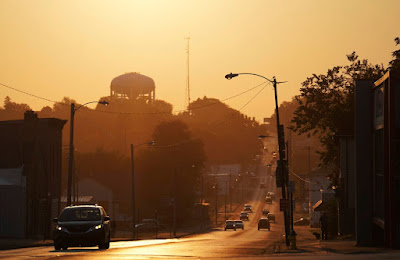
The sun rises over the city of Springfield, Ohio, on Monday, Sept. 16, 2024. Jessie Wardarski/AP

Many in Springfield, Ohio have felt uneasy for the past week.

A string of bomb threats shut down city and school buildings. Public events have been canceled. And state troopers have been sent in to guard students going to school.

These developments follow former President Donald Trump repeating debunked claims on national TV about Haitian migrants eating pets. Local city and police officials have said there’s no evidence of this happening.

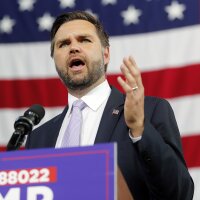
The false claims were originally circulated online by far-right activists, neo-Nazis and some local Republicans, though local police said they were baseless, NPR reported earlier this month. Eventually they were shared on social media by Ohio Sen. JD Vance, Trump’s running mate, and then repeated by the former president on the debate stage.

Members of the Haitian community, many of whom have arrived over the past four years, are concerned about their safety, Viles Dorsainvil, who lives there and leads the Haitian Community Help and Support Center, told Morning Edition.

“We are asking ourselves whether to stay here or go somewhere else,” Dorsainvil said.

Dorsainvil has lived in Springfield for four years. The nonprofit he leads, established less than a year ago, helps Haitian newcomers find housing and jobs. It also helps them with language services and getting public assistance, which some are eligible to receive under the Temporary Protected Status they hold.


2024 Election
Vance says Haitian migrants with protected status are 'illegal aliens' to be deported

This status shields them from deportation and grants them legal permission to work based on the unstable conditions in their home country.
How fear has permeated the Haitian community

Trump’s comments during his debate with Vice President Harris sent a shockwave among the estimated 15,000 to 20,000 migrants who now call Springfield home.


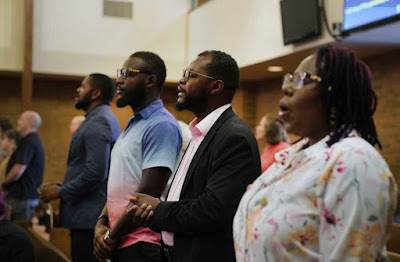
Members of the Haitian community in Springfield, Ohio, from left, Lindsay Aime, James Fleurijean, Viles Dorsainvil, and Rose-Thamar Joseph, stand for worship at Central Christian Church, on Sunday, Sept. 15, 2024. Jessie Wardarski/AP/AP

Families are afraid to go out or send their kids to school or go to church, Dorsainvil said. He added that some are afraid to call cars through rideshare apps because they don’t know who will pick them up or their intentions.

And some are considering giving up major financial investments they’ve made.

“There are some homeowners who want to sell back their homes just to leave,” Dorsainvil said. “I was asking them to give themselves some time to see if we can navigate this together by the fact [that] we have the solidarity of the city officials and the police department and the local leaders and the church leaders.”
 
Bomb threats and event cancellations have kept local leaders busy

At least 33 bomb threats were made to various buildings in the city between last Thursday and Monday, Gov. Mike DeWine said at a press conference this week, all of which were false.


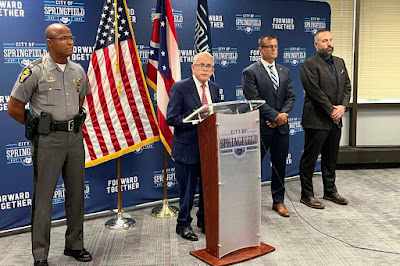
Ohio Gov. Mike DeWine (R) speaks at a press conference at Springfield City Hall alongside Ohio State Highway Patrol Colonel Charles Jones, left, Director of the Department of Public Safety Andy Wilson, second from right, and Springfield City School Superintendent Robert Hill, right, in Springfield, Ohio, Monday, Sept. 16, 2024. Patrick Aftoora-Orsagos/AP/AP

The threats began the morning of Sept. 12, forcing Springfield City Hall and several other buildings to be evacuated and closed, NPR member station WYSO reports.

Earlier this week, Springfield canceled its Downtown CultureFest, an event centered around celebrating the area’s diversity, that was scheduled for late September due to safety concerns. Wittenberg University also canceled all sporting events through this coming weekend and classes went fully remote.

On Tuesday, DeWine dispatched state troopers and bomb sniffing dogs to be stationed at schools and urged concerned parents to send their children to class after attendance dipped.
 
Governor worries city’s housing, medical needs are being overlooked

DeWine, a Republican, pushed back against Trump’s claims in a Sept. 12 interview with Morning Edition, saying that “there's a lot of crazy stuff up on the internet.”

DeWine said the focus should be on how the city is struggling to adapt to such rapid population growth after years of decline. The city of about 60,000 people has swelled with the thousands of Haitian arrivals, some of whom were encouraged by family and area employers to move to the area.

The new arrivals have helped fill jobs due to a labor shortage.


2024 Election
The stereotype of immigrants eating dogs and cats is storied — and vitriolic as ever

But it’s gotten harder for people in the town to get primary health care and find housing due to rising rents, DeWine said.

He added that many longtime residents are concerned about newcomers’ ability to drive safely. Last August, a Haitian migrant driving without a valid license crashed with a school bus, resulting in the death of 11-year-old Aiden Clark.

The driver was found guilty of involuntary manslaughter. Clark’s parents have explicitly asked Trump, Vance and other politicians to stop invoking their son’s name during political appearances.

Anecdotally, migrant drivers are experiencing a higher rate of crashes, according to an FAQ put out by the city of Springfield. In response, the city has launched driver training courses for the newcomers who are inexperienced drivers.

The head of the Ohio Bureau of Motor Vehicles said migrant drivers go through the same process all Ohio residents do to get licenses, the Statehouse News Bureau of Ohio reported earlier this month.

Last week, before the presidential debate, DeWine announced new public safety and health support for the city, including dispatching Ohio State Highway Patrol troopers to the city and directing $2.5 million to expand healthcare access in the area and other supportive services.

“We just have to work our way through this problem. We would like some help from the federal government,” DeWine said.

Vance defended sharing the false rumors that put Springfield in the national spotlight during an interview with CNN Sunday.

"If I have to create stories so that the American media actually pays attention to the suffering of the American people, then that's what I'm going to do," Vance said. On Wednesday, he said that Haitian migrants with TPS were granted that status unlawfully and that it would change under a second Trump administration.

Dorsainvil said he understands why locals and others are concerned about how the city will accommodate both newcomers and longtime residents and hopes to work toward solutions. But after the fear felt the past week, he just wants those spreading the debunked claims to stop.

“Stop dividing the country that all of us love,” Dorsainvil said. “We can do better. We can keep moving forward together with words of unity and encouragement.” 
 
 
The Supreme Court Just Signaled What It Will Do If the Election Is Close

by Norman L. Eisen and Jacob Kovacs-Goodman
August 29, 2024
SLATE


In cahoots. Photo illustration by Slate. Photos by Emily Elconin/Getty Images and Alex Wong/Getty Images.

The legal warfare over the 2024 election is well underway. The MAGA shenanigans of the Georgia election board have overshadowed disturbing developments in Arizona. Last week, the Supreme Court signaled it would revisit an issue it had settled over a decade ago, allowing a new Arizona law to go into effect requiring proof of citizenship to register to vote. Reopening the issue at the last minute and after registration has begun, the justices are fomenting a false public narrative that noncitizens are a threat to U.S. elections. This is the latest signal that the justices are in cahoots with former President Donald Trump and may be prepared to meddle in the election—unless it is decided by margins too large to tamper with.

The case is Republican National Committee v. Mi Familia Vota, where the Republican National Committee requested eleventh-hour “emergency” changes to Arizona’s voter registration laws—even though the state’s vote-by-mail registration window has already begun. The lawsuit strikes at the heart of voting rights and fair elections: Not only does the RNC seek to prevent tens of thousands of eligible Arizonans from lawfully casting ballots, but they also advance the canard that noncitizens are voting in U.S. elections. As the libertarian Cato Institute noted: “there is no good evidence that noncitizens voted illegally in large enough numbers to actually shift the outcome of elections.” This high-court intervention is wrong, and the stakes could not be higher: Joe Biden won Arizona in 2020 by only 10,457 votes, and it’s unclear what impact the court’s new ruling could have in November.

The court’s unsigned order in the RNC case allows an Arizona law to go into effect requiring proof of citizenship to register to vote. This strongly suggests that the conservative wing of the court, three of whom are Trump appointees, will ultimately strike down a portion of the 1993 National Voter Registration Act, a crucial federal voting rights law—formerly championed by Justice Antonin Scalia—as unconstitutional when it ultimately hears the case.


While the court in this case granted the RNC’s request to enable a law that required documentary proof of citizenship for all new registrations, it refrained from granting another to strike the 42,301 voters who are already registered without documentation. However, Justices Clarence Thomas, Samuel Alito, and Neil Gorsuch would have done the latter as well.


And the threat is not over, since the court will have other potential opportunities to interfere with Arizona’s voter rolls. For instance, Trump policy architect Stephen Miller and his America First group filed a lawsuit in Maricopa County, just a few weeks ago, to compel the county recorder to engage in “list maintenance” by submitting the names of voters registered without documentation to the Department of Homeland Security and the state attorney general.


Although Miller’s lawsuit may (and hopefully will) go nowhere, the court’s election season intervention could tip the election even if the law applies only to prospective registrations. Voter registration is surging in the wake of President Joe Biden’s exit from the race, with nonpartisan registration group Vote.org reporting tens of thousands of new registrants across the nation, 83 percent of whom were under the age of 34, in just the first two days following Biden’s announcement. Although data from Arizona is not yet available, the trend continues in battleground states nationwide. With the registration period already well underway, the court’s new ruling means that information previously provided to aspiring voters to ensure their eligibility to vote is no longer accurate. This compounds Arizona’s preexisting registration pain points, where over 20,000 residents had their registrations put on hold back in the July primary—many due to inconsequential technical errors—well before this court decision.


How did we get here? In an era three decades ago when the right to vote enjoyed more bipartisan support, Congress passed the NVRA to standardize voter registration procedures across the country. To do so, it created a national registration application form, which requires applicants to swear under penalty of perjury to their status as U.S. citizens, but does not require voters to submit additional supporting documentation. Nonetheless, a decade later in 2004, Arizona enacted Proposition 200, which compelled voters to submit proof of citizenship, such as a passport or birth certificate, to register to vote.

The Supreme Court in 2013 said Arizona couldn’t do that. In a 7–2 decision, authored by Scalia and joined by Chief Justice John Roberts, the court held that the federal NVRA preempts Arizona’s conflicting documentation requirements because “the power of Congress over the ‘Times, Places and Manner’ of congressional elections ‘is paramount, and may be exercised at any time, and to any extent which it deems expedient.’ ”


Arizona already requires proof of citizenship to vote in state elections, and almost all Arizona voters provide such proof. However, there are a few thousand “federal only” voters in Arizona who have not submitted additional documentation, many of whom register in precincts on college campuses (so they’re likely college students without drivers licenses, not noncitizens who are ineligible to vote).

Emboldened by a party climate that seeks to unravel constitutional norms and the rule of law, in 2022 Arizona Republicans passed a statute that sought—in clear conflict with the Supreme Court’s 2013 case—to reimpose the citizenship documentation requirement for federal elections. The Supreme Court had explained that the NVRA “precludes Arizona from requiring a Federal Form applicant to submit information beyond that required by the form itself.” In this age where precedent is no impediment to the court reaching its ideological aims, the RNC’s recent bid appears to have been successful: Under the court’s order last week, the new Arizona law requiring all new registrations to provide documented proof of citizenship will go into effect. And once it reviews the case fully, which we anticipate it will next year, it may well revisit the status of the 40,000-plus voters who have already been registered.

To add insult to injury, the court’s conservative wing has been dizzyingly hypocritical in reversing itself here. In the 2020 election, Justices Brett Kavanaugh and Gorsuch invoked the so-called Purcell principle, which stands for the idea that federal courts should not interfere with state voting laws close to an election. The court’s last-minute changes to election rules here could make a difference in November. Not all voters without an ID vote Democratic, but many do. That includes college students who are away from their homes and, consequently, without the sort of documentation that Arizona’s new law requires. Among 18-to-29-year-old registered voters in battleground states, Harris leads Trump by 9 points.

The legal warfare over the 2024 election is well underway. The MAGA shenanigans of the Georgia election board have overshadowed disturbing developments in Arizona. Last week, the Supreme Court signaled it would revisit an issue it had settled over a decade ago, allowing a new Arizona law to go into effect requiring proof of citizenship to register to vote. Reopening the issue at the last minute and after registration has begun, the justices are fomenting a false public narrative that noncitizens are a threat to U.S. elections. This is the latest signal that the justices are in cahoots with former President Donald Trump and may be prepared to meddle in the election—unless it is decided by margins too large to tamper with.

The case is Republican National Committee v. Mi Familia Vota, where the Republican National Committee requested eleventh-hour “emergency” changes to Arizona’s voter registration laws—even though the state’s vote-by-mail registration window has already begun. The lawsuit strikes at the heart of voting rights and fair elections: Not only does the RNC seek to prevent tens of thousands of eligible Arizonans from lawfully casting ballots, but they also advance the canard that noncitizens are voting in U.S. elections. As the libertarian Cato Institute noted: “there is no good evidence that noncitizens voted illegally in large enough numbers to actually shift the outcome of elections.” This high-court intervention is wrong, and the stakes could not be higher: Joe Biden won Arizona in 2020 by only 10,457 votes, and it’s unclear what impact the court’s new ruling could have in November.

The court’s unsigned order in the RNC case allows an Arizona law to go into effect requiring proof of citizenship to register to vote. This strongly suggests that the conservative wing of the court, three of whom are Trump appointees, will ultimately strike down a portion of the 1993 National Voter Registration Act, a crucial federal voting rights law—formerly championed by Justice Antonin Scalia—as unconstitutional when it ultimately hears the case.

While the court in this case granted the RNC’s request to enable a law that required documentary proof of citizenship for all new registrations, it refrained from granting another to strike the 42,301 voters who are already registered without documentation. However, Justices Clarence Thomas, Samuel Alito, and Neil Gorsuch would have done the latter as well.

And the threat is not over, since the court will have other potential opportunities to interfere with Arizona’s voter rolls. For instance, Trump policy architect Stephen Miller and his America First group filed a lawsuit in Maricopa County, just a few weeks ago, to compel the county recorder to engage in “list maintenance” by submitting the names of voters registered without documentation to the Department of Homeland Security and the state attorney general.

Although Miller’s lawsuit may (and hopefully will) go nowhere, the court’s election season intervention could tip the election even if the law applies only to prospective registrations. Voter registration is surging in the wake of President Joe Biden’s exit from the race, with nonpartisan registration group Vote.org reporting tens of thousands of new registrants across the nation, 83 percent of whom were under the age of 34, in just the first two days following Biden’s announcement. Although data from Arizona is not yet available, the trend continues in battleground states nationwide. With the registration period already well underway, the court’s new ruling means that information previously provided to aspiring voters to ensure their eligibility to vote is no longer accurate. This compounds Arizona’s preexisting registration pain points, where over 20,000 residents had their registrations put on hold back in the July primary—many due to inconsequential technical errors—well before this court decision.

How did we get here? In an era three decades ago when the right to vote enjoyed more bipartisan support, Congress passed the NVRA to standardize voter registration procedures across the country. To do so, it created a national registration application form, which requires applicants to swear under penalty of perjury to their status as U.S. citizens, but does not require voters to submit additional supporting documentation. Nonetheless, a decade later in 2004, Arizona enacted Proposition 200, which compelled voters to submit proof of citizenship, such as a passport or birth certificate, to register to vote.

The Supreme Court in 2013 said Arizona couldn’t do that. In a 7–2 decision, authored by Scalia and joined by Chief Justice John Roberts, the court held that the federal NVRA preempts Arizona’s conflicting documentation requirements because “the power of Congress over the ‘Times, Places and Manner’ of congressional elections ‘is paramount, and may be exercised at any time, and to any extent which it deems expedient.’ ”


Arizona already requires proof of citizenship to vote in state elections, and almost all Arizona voters provide such proof. However, there are a few thousand “federal only” voters in Arizona who have not submitted additional documentation, many of whom register in precincts on college campuses (so they’re likely college students without drivers licenses, not noncitizens who are ineligible to vote).


Emboldened by a party climate that seeks to unravel constitutional norms and the rule of law, in 2022 Arizona Republicans passed a statute that sought—in clear conflict with the Supreme Court’s 2013 case—to reimpose the citizenship documentation requirement for federal elections. The Supreme Court had explained that the NVRA “precludes Arizona from requiring a Federal Form applicant to submit information beyond that required by the form itself.” In this age where precedent is no impediment to the court reaching its ideological aims, the RNC’s recent bid appears to have been successful: Under the court’s order last week, the new Arizona law requiring all new registrations to provide documented proof of citizenship will go into effect. And once it reviews the case fully, which we anticipate it will next year, it may well revisit the status of the 40,000-plus voters who have already been registered.

To add insult to injury, the court’s conservative wing has been dizzyingly hypocritical in reversing itself here. In the 2020 election, Justices Brett Kavanaugh and Gorsuch invoked the so-called Purcell principle, which stands for the idea that federal courts should not interfere with state voting laws close to an election. The court’s last-minute changes to election rules here could make a difference in November. Not all voters without an ID vote Democratic, but many do. That includes college students who are away from their homes and, consequently, without the sort of documentation that Arizona’s new law requires. Among 18-to-29-year-old registered voters in battleground states, Harris leads Trump by 9 points.


Beyond the age-old strategy of voter suppression, the RNC’s agenda in bringing this case so close to the election is undoubtedly meant to serve as a psychological operation to sow seeds of doubt in the presidential election by reviving the debunked conspiracy theory about outcome-determinative noncitizen voting. And they are not alone: 24 states wrote an amicus brief in support of Arizona alleging that “aliens are illegally voting in elections” in numbers sufficient to have won North Carolina for Obama in 2008. In support for these assertions, the states cite a single, deeply methodologically flawed and widely debunked study, whose author has long lamented his work being twisted in this way.


The legal warfare over the 2024 election is well underway. The MAGA shenanigans of the Georgia election board have overshadowed disturbing developments in Arizona. Last week, the Supreme Court signaled it would revisit an issue it had settled over a decade ago, allowing a new Arizona law to go into effect requiring proof of citizenship to register to vote. Reopening the issue at the last minute and after registration has begun, the justices are fomenting a false public narrative that noncitizens are a threat to U.S. elections. This is the latest signal that the justices are in cahoots with former President Donald Trump and may be prepared to meddle in the election—unless it is decided by margins too large to tamper with.

The case is Republican National Committee v. Mi Familia Vota, where the Republican National Committee requested eleventh-hour “emergency” changes to Arizona’s voter registration laws—even though the state’s vote-by-mail registration window has already begun. The lawsuit strikes at the heart of voting rights and fair elections: Not only does the RNC seek to prevent tens of thousands of eligible Arizonans from lawfully casting ballots, but they also advance the canard that noncitizens are voting in U.S. elections. As the libertarian Cato Institute noted: “there is no good evidence that noncitizens voted illegally in large enough numbers to actually shift the outcome of elections.” This high-court intervention is wrong, and the stakes could not be higher: Joe Biden won Arizona in 2020 by only 10,457 votes, and it’s unclear what impact the court’s new ruling could have in November.


The court’s unsigned order in the RNC case allows an Arizona law to go into effect requiring proof of citizenship to register to vote. This strongly suggests that the conservative wing of the court, three of whom are Trump appointees, will ultimately strike down a portion of the 1993 National Voter Registration Act, a crucial federal voting rights law—formerly championed by Justice Antonin Scalia—as unconstitutional when it ultimately hears the case.

While the court in this case granted the RNC’s request to enable a law that required documentary proof of citizenship for all new registrations, it refrained from granting another to strike the 42,301 voters who are already registered without documentation. However, Justices Clarence Thomas, Samuel Alito, and Neil Gorsuch would have done the latter as well.

And the threat is not over, since the court will have other potential opportunities to interfere with Arizona’s voter rolls. For instance, Trump policy architect Stephen Miller and his America First group filed a lawsuit in Maricopa County, just a few weeks ago, to compel the county recorder to engage in “list maintenance” by submitting the names of voters registered without documentation to the Department of Homeland Security and the state attorney general.

Although Miller’s lawsuit may (and hopefully will) go nowhere, the court’s election season intervention could tip the election even if the law applies only to prospective registrations. Voter registration is surging in the wake of President Joe Biden’s exit from the race, with nonpartisan registration group Vote.org reporting tens of thousands of new registrants across the nation, 83 percent of whom were under the age of 34, in just the first two days following Biden’s announcement. Although data from Arizona is not yet available, the trend continues in battleground states nationwide. With the registration period already well underway, the court’s new ruling means that information previously provided to aspiring voters to ensure their eligibility to vote is no longer accurate. This compounds Arizona’s preexisting registration pain points, where over 20,000 residents had their registrations put on hold back in the July primary—many due to inconsequential technical errors—well before this court decision.
Related From Slate:


Hila Keren
The Courts Are Already Starting to Implement Project 2025, Without Trump

Read More

How did we get here? In an era three decades ago when the right to vote enjoyed more bipartisan support, Congress passed the NVRA to standardize voter registration procedures across the country. To do so, it created a national registration application form, which requires applicants to swear under penalty of perjury to their status as U.S. citizens, but does not require voters to submit additional supporting documentation. Nonetheless, a decade later in 2004, Arizona enacted Proposition 200, which compelled voters to submit proof of citizenship, such as a passport or birth certificate, to register to vote.

The Supreme Court in 2013 said Arizona couldn’t do that. In a 7–2 decision, authored by Scalia and joined by Chief Justice John Roberts, the court held that the federal NVRA preempts Arizona’s conflicting documentation requirements because “the power of Congress over the ‘Times, Places and Manner’ of congressional elections ‘is paramount, and may be exercised at any time, and to any extent which it deems expedient.’ ”


Arizona already requires proof of citizenship to vote in state elections, and almost all Arizona voters provide such proof. However, there are a few thousand “federal only” voters in Arizona who have not submitted additional documentation, many of whom register in precincts on college campuses (so they’re likely college students without drivers licenses, not noncitizens who are ineligible to vote).


Emboldened by a party climate that seeks to unravel constitutional norms and the rule of law, in 2022 Arizona Republicans passed a statute that sought—in clear conflict with the Supreme Court’s 2013 case—to reimpose the citizenship documentation requirement for federal elections. The Supreme Court had explained that the NVRA “precludes Arizona from requiring a Federal Form applicant to submit information beyond that required by the form itself.” In this age where precedent is no impediment to the court reaching its ideological aims, the RNC’s recent bid appears to have been successful: Under the court’s order last week, the new Arizona law requiring all new registrations to provide documented proof of citizenship will go into effect. And once it reviews the case fully, which we anticipate it will next year, it may well revisit the status of the 40,000-plus voters who have already been registered.


To add insult to injury, the court’s conservative wing has been dizzyingly hypocritical in reversing itself here. In the 2020 election, Justices Brett Kavanaugh and Gorsuch invoked the so-called Purcell principle, which stands for the idea that federal courts should not interfere with state voting laws close to an election. The court’s last-minute changes to election rules here could make a difference in November. Not all voters without an ID vote Democratic, but many do. That includes college students who are away from their homes and, consequently, without the sort of documentation that Arizona’s new law requires. Among 18-to-29-year-old registered voters in battleground states, Harris leads Trump by 9 points.


Beyond the age-old strategy of voter suppression, the RNC’s agenda in bringing this case so close to the election is undoubtedly meant to serve as a psychological operation to sow seeds of doubt in the presidential election by reviving the debunked conspiracy theory about outcome-determinative noncitizen voting. And they are not alone: 24 states wrote an amicus brief in support of Arizona alleging that “aliens are illegally voting in elections” in numbers sufficient to have won North Carolina for Obama in 2008. In support for these assertions, the states cite a single, deeply methodologically flawed and widely debunked study, whose author has long lamented his work being twisted in this way.


ABOUT THE AUTHORS:


Norman L. Eisen served as White House ethics czar and ambassador to the Czech Republic under President Barack Obama as well as as special counsel to the House Judiciary Committee from 2019–20, including for the first impeachment and trial of President Donald Trump.


Jacob Kovacs-Goodman is an elections and technology lawyer.