AMERICA IS A FASCIST STATE
Fascism is a far-right, authoritarian, and ultranationalist political ideology and movement, characterized by a dictatorial leader, centralized autocracy, militarism, forcible suppression of opposition, belief in a natural social hierarchy, subordination of individual interests for the perceived good of the nation or race, and strong regimentation of society and the economy.
Opposed to anarchism, democracy, pluralism, egalitarianism, liberalism, socialism, and Marxismfascism is at the far right wing of the traditional left–right spectrum.
AMERICA IS A ROGUE STATE
A nation or state regarded as breaking international law and posing a threat to the security of other nations.
Opposed to anarchism, democracy, pluralism, egalitarianism, liberalism, socialism, and Marxismfascism is at the far right wing of the traditional left–right spectrum.
AMERICA IS A ROGUE STATE
A nation or state regarded as breaking international law and posing a threat to the security of other nations.
https://truthout.org/articles/trumps-blitz-on-immigration-aimed-to-overwhelm-heres-what-you-need-to-know/
News Analysis
Immigration
Trump’s Blitz on Immigration Aimed to Overwhelm. Here’s What You Need to Know.
Executive orders Trump issued in his first days in office violate both the Constitution and several US laws.
by Marjorie Cohn
January 23, 2025
Truthout
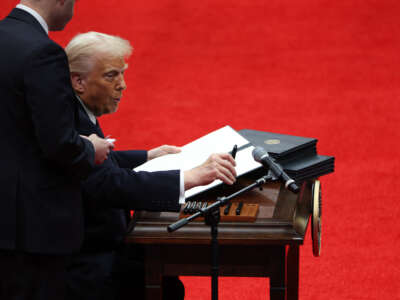
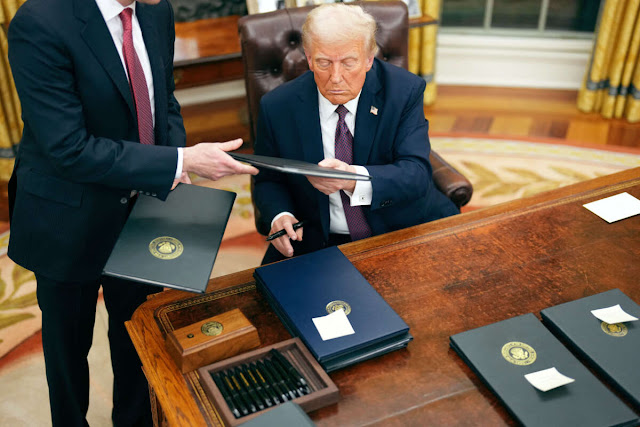 President Donald Trump signs a series of executive orders at the White House on January 20, 2025, in Washington, D.C.. Jabin Botsford / The Washington Post via Getty Images
Pandering to his nativist base, Donald Trump made the central pledge of his 2024 presidential campaign a threat to “carry out the largest domestic deportation operation in American history.” On January 20, 2025, he began to fulfill that promise.
On Inauguration Day, repeating the words spoken by Chief Justice John Roberts, Trump swore to uphold the U.S. Constitution. Setting aside the issue of whether he purposely refrained from placing his hand on the Bible his wife was holding, the oath Trump swore triggered the “Take Care Clause” of the Constitution. Article II imposes on the president the duty to “take Care that the Laws be faithfully executed.”
“The Supreme Court has consistently held that the Take Care Clause imposes a ‘duty’ or ‘obligation’ upon the president to ensure that executive branch officials obey Congress’s commands, and, additionally, that the Clause does not provide the president with the authority to frustrate legal requirements imposed by law,” New York civil rights lawyer Jeanne Mirer told Truthout.
Yet in a slew of anti-immigrant executive orders issued on the first day of his second term, Trump not only failed to take care that the laws be enforced but also violated several laws.
Trump Purports to End Birthright Citizenship
Perhaps the most controversial executive order Trump issued is his attempt to eliminate birthright citizenship.

Trump Isn’t Hiding Plan to Use Military to Quash Protests and Deport Immigrants
“The next time, I’m not waiting” before committing troops to suppress protests, Trump said at a rally in 2023.
by Marjorie Cohn
November 12, 2024
Truthout
The first sentence of the 14th Amendment to the U.S. Constitution states, “All persons born or naturalized in the United States, and subject to the jurisdiction thereof, are citizens of the United States and of the State wherein they reside.”
In direct opposition to that precept, Trump’s order claims that, beginning on February 19, 2025, children of noncitizens will no longer be treated as “subject to the jurisdiction” of the United States.
Trump’s executive order says children born in the U.S. will no longer be treated as citizens if their mothers were not legally in the U.S. and their fathers were not U.S. citizens or lawful permanent residents. It also denies citizenship to children whose mothers were in the country legally on a temporary basis (such as those present under the Visa Waiver Program, or with a student, work or tourist visa) and whose fathers were not citizens or lawful permanent residents.
But the 14th Amendment contains no such limitations. And presidents do not have the authority to rewrite the Constitution.
Although Trump has not invoked the Insurrection Act, he ordered the secretaries of defense and Homeland Security to report within 90 days about “whether to invoke the Insurrection Act.”
Trump’s order will deny more than 150,000 children nationwide their birthright to citizenship over the course of a year. It will cut federal funding for foster care services for neglected and abused children, and early interventions for infants, toddlers and students with disabilities.
On January 21, 22 states sued Trump and some of his department heads in U.S. District Court for the District of Massachusetts, alleging that the order violates the 14th Amendment, the separation of powers doctrine, the Immigration and Nationality Act and the Administration Procedure Act. The plaintiffs are requesting a declaration that Trump’s order violates the Constitution and U.S. laws, as well as a permanent injunction preventing its enforcement.
The complaint states:
The Citizenship Clause’s text and history — as well as judicial precedent and longstanding Executive Branch interpretation — confirm that the clause automatically confers citizenship on all individuals born in the United States and subject to its jurisdiction, regardless of the citizenship or immigration status of their parent(s).
Another lawsuit was filed by the ACLU and other community groups against Trump and some of his officials on January 20, also requesting declaratory and injunctive relief to stop the order from becoming effective.
As this article went to press, U.S. District Court Judge John C. Coughenour in the Western District of Washington temporarily blocked Trump’s order nationwide, calling it “blatantly unconstitutional.”
“The next time, I’m not waiting” before committing troops to suppress protests, Trump said at a rally in 2023.
by Marjorie Cohn
November 12, 2024
Truthout
The first sentence of the 14th Amendment to the U.S. Constitution states, “All persons born or naturalized in the United States, and subject to the jurisdiction thereof, are citizens of the United States and of the State wherein they reside.”
In direct opposition to that precept, Trump’s order claims that, beginning on February 19, 2025, children of noncitizens will no longer be treated as “subject to the jurisdiction” of the United States.
Trump’s executive order says children born in the U.S. will no longer be treated as citizens if their mothers were not legally in the U.S. and their fathers were not U.S. citizens or lawful permanent residents. It also denies citizenship to children whose mothers were in the country legally on a temporary basis (such as those present under the Visa Waiver Program, or with a student, work or tourist visa) and whose fathers were not citizens or lawful permanent residents.
But the 14th Amendment contains no such limitations. And presidents do not have the authority to rewrite the Constitution.
Although Trump has not invoked the Insurrection Act, he ordered the secretaries of defense and Homeland Security to report within 90 days about “whether to invoke the Insurrection Act.”
Trump’s order will deny more than 150,000 children nationwide their birthright to citizenship over the course of a year. It will cut federal funding for foster care services for neglected and abused children, and early interventions for infants, toddlers and students with disabilities.
On January 21, 22 states sued Trump and some of his department heads in U.S. District Court for the District of Massachusetts, alleging that the order violates the 14th Amendment, the separation of powers doctrine, the Immigration and Nationality Act and the Administration Procedure Act. The plaintiffs are requesting a declaration that Trump’s order violates the Constitution and U.S. laws, as well as a permanent injunction preventing its enforcement.
The complaint states:
The Citizenship Clause’s text and history — as well as judicial precedent and longstanding Executive Branch interpretation — confirm that the clause automatically confers citizenship on all individuals born in the United States and subject to its jurisdiction, regardless of the citizenship or immigration status of their parent(s).
Another lawsuit was filed by the ACLU and other community groups against Trump and some of his officials on January 20, also requesting declaratory and injunctive relief to stop the order from becoming effective.
As this article went to press, U.S. District Court Judge John C. Coughenour in the Western District of Washington temporarily blocked Trump’s order nationwide, calling it “blatantly unconstitutional.”
Trump Declares a “National Emergency” at the Border
Trump also issued an executive order that declares a national emergency at the southern border of the U.S. “America’s sovereignty is under attack,” it says, and claims that there is an “invasion.”
“I hereby declare that this emergency requires the use of the Armed Forces,” Trump’s order states. By declaring a national emergency at the southern border, Trump can use Department of Defense funds for immigration enforcement and use the military and the National Guard to help in patrolling the border and building a border wall. But active-duty federal military forces cannot provide direct law enforcement assistance in searches, seizures, detentions, arrests or interrogations.
The order authorizes the construction of additional physical barriers at the southern border and the use of drones, waiving all Federal Aviation Administration and Federal Communications Commission regulations or policies that would restrict their use within five miles of the border.
Trump also issued an executive order that declares a national emergency at the southern border of the U.S. “America’s sovereignty is under attack,” it says, and claims that there is an “invasion.”
“I hereby declare that this emergency requires the use of the Armed Forces,” Trump’s order states. By declaring a national emergency at the southern border, Trump can use Department of Defense funds for immigration enforcement and use the military and the National Guard to help in patrolling the border and building a border wall. But active-duty federal military forces cannot provide direct law enforcement assistance in searches, seizures, detentions, arrests or interrogations.
The order authorizes the construction of additional physical barriers at the southern border and the use of drones, waiving all Federal Aviation Administration and Federal Communications Commission regulations or policies that would restrict their use within five miles of the border.
Trump Enlists the Military to Enforce the Immigration Laws
On January 20, Trump also signed an executive order titled “Clarifying the Military’s Role in Protecting the Territorial Integrity of the United States.” It characterizes the situation at the border as an “invasion” that includes “unlawful mass migration, narcotics trafficking, human smuggling and trafficking, and other criminal activities.”
This order says that within 10 days, the Defense Department must deliver a revised Unified Command Plan for the U.S. Northern Command to seal the borders and maintain U.S. sovereignty and security, including repelling “invasion” in the form of “unlawful mass migration” and narcotics or human trafficking, and other criminal activities. Northern Command, or NORTHCOM, was created in October 2002 in order to create a military structure for the United States and neighboring countries.
But the military is forbidden from enforcing the immigration laws.
The Posse Comitatus Act was enacted in 1878 to end the use of federal troops in overseeing elections in the post-Civil War South. It bars the use of the military to enforce domestic laws, including immigration law. The act forbids the willful use of “any part of the Army, the Navy, the Marine Corps, the Air Force, or the Space Force as a posse comitatus [power of the county] or otherwise to execute the laws.” The only exceptions must be expressly authorized by the Constitution or act of Congress.
One exception is the Insurrection Act, which a president can use to deploy the U.S. armed forces, federalize the National Guard, or deputize private militias of nongovernmental forces within the United States.
There are three sections of the Insurrection Act that the president could invoke:
First, if the legislature or governor of a state asks the president for assistance to quell an insurrection against the government (Section 251);
Second, if the president decides that “unlawful obstructions, combinations, or assemblages, or rebellion against the authority of the United States,” render it “impracticable” to enforce U.S. or state law in the courts (Section 252); or
Third, if “any insurrection, domestic violence, unlawful combination, or conspiracy” deprives people of a legal right, privilege, immunity or protection, that results in the denial of equal protection or “opposes or obstructs the execution of the laws of the United States or impedes the course of justice under those laws” (Section 253).
Although Trump has not invoked the Insurrection Act, he ordered the secretaries of defense and Homeland Security to report within 90 days about “whether to invoke the Insurrection Act.”
Invocation of the Insurrection Act would allow the president to use military forces inside the United States, not just at the border, Rear Adm. James McPherson, former U.S. undersecretary of the Army, said on PBS “NewsHour,” and that would be dangerous. “If … active-duty troops are sent to the border, they will be sent to the border not to enforce immigration laws, but to repel an invasion.… They won’t be involved in a law enforcement role, but a military role.” McPherson added, “We don’t have a war going on at the southern border. We have a law enforcement crisis perhaps. But that’s not an invasion.”
Trump Declares That Immigrants Have Mounted an “Invasion” of the U.S.
In his order titled “Guaranteeing the States Protection Against Invasion,” Trump declared, “I have determined that the current state of the southern border reveals that the Federal Government has failed in fulfilling this obligation to the States and hereby declare that an invasion is ongoing at the southern border, which requires the Federal Government to take measures to fulfill its obligation to the States.”
Trump suspended “the physical entry of aliens involved in an invasion into the United States across the southern border until I determine that the invasion has concluded.”
The use of the word “invasion” in several of Trump’s executive orders is aimed at expanding the role of the military in immigration enforcement. In his inaugural speech, Trump directed the military to “send troops to the southern border to repel the disastrous invasion of our country.” Trump is reportedly preparing to send 10,000 troops to the border to support Border Patrol agents.
Article 4 of the Constitution says the “United States shall guarantee to every state in this Union a republican form of government, and shall protect each of them against invasion…”
But equating immigration with invasion was rejected in United States v. Abbott, which concluded that “surges in immigration do not constitute an ‘invasion’ within the meaning of the Constitution.”
Another one of Trump’s executive orders is called “Protecting the American People Against Invasion.” It revokes three Biden-era executive orders: a task force on the reunification of families, strengthening inclusion efforts for new Americans and a regional framework to address the causes of migration. And it restricts federal funds to sanctuary jurisdictions.
The use of the word “invasion” in several of Trump’s executive orders is aimed at expanding the role of the military in immigration enforcement.
Trump’s order directs the director of the Department of Homeland Security to “ensure the detention of aliens apprehended for violations of immigration law pending the outcome of their removal proceedings or their removal from the country.”
This order also authorizes state and local law enforcement officials “to perform the functions of immigration officers in relation to the investigation, apprehension, or detention of aliens in the United States under the direction and the supervision of the Secretary of Homeland Security.”
But some local law enforcement agencies do not want to engage in immigration enforcement. “Expected changes in federal immigration enforcement policies have caused fear throughout our immigrant communities, including confusion and uncertainty as to what role local police may play in these new directives. It has never been the role of local police to enforce federal immigration law, nor should it be our responsibility,” the California Police Chiefs Association said in a statement on immigration enforcement.
Trump also signed an executive order to establish a process within 14 days to designate cartels as foreign terrorist organizations or specially designated global terrorists, calling for their total elimination in the U.S. The order announces a plan to use the Alien Enemies Act to expedite the removal of people designated as “terrorists.” Trump’s order relies on his determination that there is a “qualifying invasion” to justify the use of the Alien Enemies Act.
But the Alien Enemies Act requires that “invasion or predatory incursion” must “be undertaken by a foreign nation or government.” Congress has not declared war on any country in more than 80 years, nor has any other government invaded U.S. territory since the War of 1812. Drug cartels are not governments of Latin American countries, so the Alien Enemies Act would not apply.
Trump Orders the U.S.-Mexico Border to Be “Secured”
Trump also claimed that “the United States has endured a large-scale invasion at an unprecedented level” during the past four years.
In the order called “Securing our Borders,” Trump shut down the CBP One app, which, since January 2023, has allowed nearly 1 million people into the U.S. with two-year permits and given them eligibility to work. It has helped establish order at the border and reduced illegal border crossings, although it has caused confusion and made immigrants vulnerable to exploitation and kidnapping. This order leaves tens of thousands of immigrants stranded in Mexico, many of whom have waited six months or more for their CBP One interviews.
Trump also announced that he will reinstate the “Remain in Mexico” program, which requires applicants for asylum to stay in Mexico while they wait for their court date. This change requires notice in the Federal Register to enable comments, but that procedure has not been followed, a violation of the Administrative Procedure Act.
In his order titled “Guaranteeing the States Protection Against Invasion,” Trump declared, “I have determined that the current state of the southern border reveals that the Federal Government has failed in fulfilling this obligation to the States and hereby declare that an invasion is ongoing at the southern border, which requires the Federal Government to take measures to fulfill its obligation to the States.”
Trump suspended “the physical entry of aliens involved in an invasion into the United States across the southern border until I determine that the invasion has concluded.”
The use of the word “invasion” in several of Trump’s executive orders is aimed at expanding the role of the military in immigration enforcement. In his inaugural speech, Trump directed the military to “send troops to the southern border to repel the disastrous invasion of our country.” Trump is reportedly preparing to send 10,000 troops to the border to support Border Patrol agents.
Article 4 of the Constitution says the “United States shall guarantee to every state in this Union a republican form of government, and shall protect each of them against invasion…”
But equating immigration with invasion was rejected in United States v. Abbott, which concluded that “surges in immigration do not constitute an ‘invasion’ within the meaning of the Constitution.”
Another one of Trump’s executive orders is called “Protecting the American People Against Invasion.” It revokes three Biden-era executive orders: a task force on the reunification of families, strengthening inclusion efforts for new Americans and a regional framework to address the causes of migration. And it restricts federal funds to sanctuary jurisdictions.
The use of the word “invasion” in several of Trump’s executive orders is aimed at expanding the role of the military in immigration enforcement.
Trump’s order directs the director of the Department of Homeland Security to “ensure the detention of aliens apprehended for violations of immigration law pending the outcome of their removal proceedings or their removal from the country.”
This order also authorizes state and local law enforcement officials “to perform the functions of immigration officers in relation to the investigation, apprehension, or detention of aliens in the United States under the direction and the supervision of the Secretary of Homeland Security.”
But some local law enforcement agencies do not want to engage in immigration enforcement. “Expected changes in federal immigration enforcement policies have caused fear throughout our immigrant communities, including confusion and uncertainty as to what role local police may play in these new directives. It has never been the role of local police to enforce federal immigration law, nor should it be our responsibility,” the California Police Chiefs Association said in a statement on immigration enforcement.
Trump also signed an executive order to establish a process within 14 days to designate cartels as foreign terrorist organizations or specially designated global terrorists, calling for their total elimination in the U.S. The order announces a plan to use the Alien Enemies Act to expedite the removal of people designated as “terrorists.” Trump’s order relies on his determination that there is a “qualifying invasion” to justify the use of the Alien Enemies Act.
But the Alien Enemies Act requires that “invasion or predatory incursion” must “be undertaken by a foreign nation or government.” Congress has not declared war on any country in more than 80 years, nor has any other government invaded U.S. territory since the War of 1812. Drug cartels are not governments of Latin American countries, so the Alien Enemies Act would not apply.
Trump Orders the U.S.-Mexico Border to Be “Secured”
Trump also claimed that “the United States has endured a large-scale invasion at an unprecedented level” during the past four years.
In the order called “Securing our Borders,” Trump shut down the CBP One app, which, since January 2023, has allowed nearly 1 million people into the U.S. with two-year permits and given them eligibility to work. It has helped establish order at the border and reduced illegal border crossings, although it has caused confusion and made immigrants vulnerable to exploitation and kidnapping. This order leaves tens of thousands of immigrants stranded in Mexico, many of whom have waited six months or more for their CBP One interviews.
Trump also announced that he will reinstate the “Remain in Mexico” program, which requires applicants for asylum to stay in Mexico while they wait for their court date. This change requires notice in the Federal Register to enable comments, but that procedure has not been followed, a violation of the Administrative Procedure Act.
Trump Issues Fact Sheet to Close the Border, Erects Barriers to Asylum
On January 22, Trump issued a “fact sheet” that begins with the words, “GUARANTEEING THE STATES PROTECTION AGAINST INVASION.” It “suspends the physical entry of aliens engaged in an invasion of the United States through the southern border.” The order also says that Trump “has further restricted access to the provisions of the immigration laws that would enable any illegal alien involved in an invasion across the southern border of the United States to remain in the United States, such as asylum.”
Under U.S. law, people have the right to apply for asylum. But by closing the border, Trump is preventing people from exercising that right.
The 1951 Refugee Convention, to which the United States is a party, requires the U.S. to accept and consider asylum applications. To be granted asylum, applicants must show they are unable or unwilling to return to their country of origin because they have a well-founded fear of persecution on account of race, religion, nationality, membership of a particular social group or political opinion.
Trump cannot proclaim an end to the granting of asylum, but he has erected several barriers that will deny immigrants the opportunity to apply for it.
He suspended the operation of the U.S. Refugee Admissions Program (USRAP) and said undocumented immigrants could be admitted as refugees on a “case-by-case basis.”
USRAP requires an annual review of the refugee or emergency refugee situation, the extent of possible participation of the U.S. in resettling refugees, and the reasons to believe that the proposed admission of refugees is justified by humanitarian concerns, grave humanitarian concerns or is otherwise in the national interest.
CBS News reported on January 22, that border agents “have been instructed to summarily deport migrants crossing into the country illegally without allowing them to request legal protection, according to internal government documents and agency officials.”
The report says, “Two Customs and Border Protection officials, who requested anonymity to discuss internal guidance, said migrants will not be allowed to see an immigration judge or asylum officer under Mr. Trump’s edict, which effectively suspends U.S. obligations under domestic and international law to ensure people fleeing persecution are not returned to danger.”
These executive orders, which purport to replace law enforcement at the border with a full-scale military operation, are cruel, illegal and have instilled fear in countless immigrants in the United States.“Trump’s barrage of executive orders is calculated to create fear, create chaos, induce anxiety and drive our elected officials to capitulate and collaborate in a mass deportation agenda,” Naureen Shah, deputy director of government affairs at the ACLU, said. “If we let Trump exert this kind of death grip over our communities now for immigration enforcement, we fear it will embolden Trump to come again and again for our civil rights.”
‘Blatantly Unconstitutional’: Judge Strikes Down Trump’s Attack on Birthright Citizenship
‘America Unhinged’ Hosts Francesca and Wajahat talk Trump’s attack on immigrants, the Dems who voted for the draconian Laken Riley Act, and the growing threat to the transgender community.
Team Zeteo
January 23, 2025
VIDEO: https://www.youtube.com/watch?v=cPizjdeu98c
Just four days into his second administration, Trump's plans have already hit some roadblocks.
On the latest episode of ‘America Unhinged’ on YouTube, Francesca Fiorentini and Wajahat Ali dive into Trump’s attempt to end birthright citizenship, which is currently on hold after federal judge John Coughenour — a Reagan appointee! — today deemed it “blatantly unconstitutional.”
Our dynamic duo discuss the broader attacks against immigrants — from the Laken Riley Act to ICE raids at schools and churches — and share their own personal stories about what being the children of immigrants means to them.
But it’s not just immigrants that Trump and his MAGA base are targeting. Transgender communities are also under threat with Trump’s executive order aimed at “Defending women from gender ideology extremism and restoring biological truth to the federal government.” Yes, Donald Trump, the famous defender of women!
Watch the full episode to also hear Francesca and Wajahat discuss some good news and pick their hero of the week.
Tune into ‘America Unhinged’ Tuesdays and Thursdays live at 8pm ET over on Zeteo’s YouTube channel — tell your friends, too!
https://zeteo.com/p/zeteo-launches-new-show-america-unhinged/comments
Zeteo Launches New Show! 'America Unhinged'
On the latest episode of ‘America Unhinged’ on YouTube, Francesca Fiorentini and Wajahat Ali dive into Trump’s attempt to end birthright citizenship, which is currently on hold after federal judge John Coughenour — a Reagan appointee! — today deemed it “blatantly unconstitutional.”
Our dynamic duo discuss the broader attacks against immigrants — from the Laken Riley Act to ICE raids at schools and churches — and share their own personal stories about what being the children of immigrants means to them.
But it’s not just immigrants that Trump and his MAGA base are targeting. Transgender communities are also under threat with Trump’s executive order aimed at “Defending women from gender ideology extremism and restoring biological truth to the federal government.” Yes, Donald Trump, the famous defender of women!
Watch the full episode to also hear Francesca and Wajahat discuss some good news and pick their hero of the week.
Tune into ‘America Unhinged’ Tuesdays and Thursdays live at 8pm ET over on Zeteo’s YouTube channel — tell your friends, too!
https://zeteo.com/p/zeteo-launches-new-show-america-unhinged/comments
Zeteo Launches New Show! 'America Unhinged'
Francesca Fiorentini and Wajahat Ali talk Elon Musk’s inaugural salute, Trump’s pardoning of insurrectionists, and the many failures of mainstream media two days into this new presidency.
Team Zeteo
January 21, 2025
Zeteo has officially launched ‘America Unhinged,’ a new YouTube live show which, to begin with, will be covering the chaos of Donald Trump’s [second] first 100 days in office. All-star hosts Francesca Fiorentini and Wajahat Ali bring bold commentary and in-depth analysis to call out the chaos, insanity, and hypocrisy being unleashed by this second Trump administration.
In the first two days of Trump 2.0, there was a whole lot to cover, from what a lot of Nazis are calling a “Nazi salute” from Elon Musk, to the pardoning of January 6th insurrectionists by the new president. While mainstream media cowers in fear of retaliation from Trump and MAGA, ‘America Unhinged’ refuses to bend the knee and will continue to hold those in power to account.
Watch the full episode to also hear Francesca and Wajahat discuss their ‘Reek of the Week.’ (Spoiler alert: He loves ‘Daddy Trump’!). Mehdi also makes a guest appearance to give his take on this crazy week.
Be sure to catch ‘America Unhinged’ Tuesdays and Thursdays live at 8pm ET over on Zeteo’s YouTube channel. And tell your friends, too!
WHAT IS ZETEO?
Zeteo is a new media organization that seeks to answer the questions that really matter, while always striving for the truth. Founded by Mehdi Hasan, Zeteo is a movement for media accountability, unfiltered news and bold opinions.
Team Zeteo
January 21, 2025
Zeteo has officially launched ‘America Unhinged,’ a new YouTube live show which, to begin with, will be covering the chaos of Donald Trump’s [second] first 100 days in office. All-star hosts Francesca Fiorentini and Wajahat Ali bring bold commentary and in-depth analysis to call out the chaos, insanity, and hypocrisy being unleashed by this second Trump administration.
In the first two days of Trump 2.0, there was a whole lot to cover, from what a lot of Nazis are calling a “Nazi salute” from Elon Musk, to the pardoning of January 6th insurrectionists by the new president. While mainstream media cowers in fear of retaliation from Trump and MAGA, ‘America Unhinged’ refuses to bend the knee and will continue to hold those in power to account.
Watch the full episode to also hear Francesca and Wajahat discuss their ‘Reek of the Week.’ (Spoiler alert: He loves ‘Daddy Trump’!). Mehdi also makes a guest appearance to give his take on this crazy week.
Be sure to catch ‘America Unhinged’ Tuesdays and Thursdays live at 8pm ET over on Zeteo’s YouTube channel. And tell your friends, too!
WHAT IS ZETEO?
Zeteo is a new media organization that seeks to answer the questions that really matter, while always striving for the truth. Founded by Mehdi Hasan, Zeteo is a movement for media accountability, unfiltered news and bold opinions.
News
Politics & Elections
DOJ Halts All Civil Rights Cases Following Trump’s Directives
Trump “is quickly implementing Project 2025 and is targeting all minorities,” said researcher Allison Chapman.
by Zane McNeill
January 23, 2025
Truthout
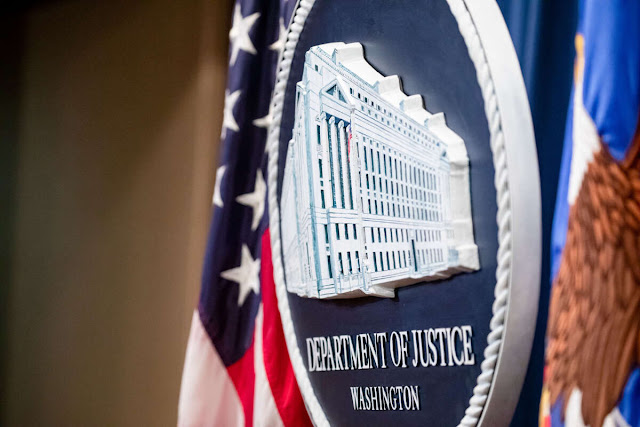 The U.S. Department of Justice seal is seen onstage at the U.S. Department of Justice on December 5, 2019, in Washington, D.C.Samuel Corum / Getty Images
The U.S. Justice Department (DOJ) has directed its Civil Rights Division to halt ongoing litigation and refrain from initiating new cases as President Donald Trump embarks on a purge of federal Diversity, Equity and Inclusion (DEI) programs in his first days in office.
This pause comes as Harmeet Dhillon, a Republican lawyer known for advocating conservative causes and serving as the GOP’s national committeewoman for California, awaits Senate confirmation to head the DOJ’s Civil Rights Division.
“They are trying to eradicate civil rights,” Khadijah Silver, supervising attorney for civil rights at Lawyers For Good Government, said on LinkedIn. “And we must not stand for it.”
The memo directs Civil Rights Division supervisor Kathleen Wolfe to ensure that attorneys avoid filing “any new complaints, motions to intervene, agreed-upon remands, amicus briefs, or statements of interest.” According to the memo, the pause is being enacted to “ensure that the President’s appointees or designees have the opportunity to decide whether to initiate any new cases” and to guarantee “that the Federal Government speaks with one voice in its view of the law.”
The length of the suspension is unclear, but according to The Washington Post, it will likely incapacitate the division for at least the first few weeks of the Trump administration as it works through Senate confirmations for its appointees.
Related Story:
News
Politics & Elections
Trump Orders Federal Agencies to Prepare to Fire Workers in DEI Programs
The order ignores several studies that show DEI’s benefits and baselessly claims such programs create more prejudice.
by Chris Walker
Truthout
A second memo was also issued directing the agency to halt activities involving consent decrees and to notify the chief of staff about any finalized in the past 90 days. It noted that the incoming administration “may wish to reconsider” these agreements, suggesting the possibility of scrapping two consent decrees finalized during the closing weeks of the Biden administration in Louisville, Kentucky, and Minneapolis, Minnesota.
This month, the Minneapolis City Council approved a consent agreement to reform the city’s police training and use-of-force policies in response to the 2020 police killing of George Floyd. Likewise, the Justice Department announced last month that it had reached an agreement with Louisville to overhaul its police department following an investigation driven by the 2020 police shooting of Breonna Taylor and the department’s subsequent ill treatment of protesters. These agreements still require approval from a judge and are among 12 such probes into police departments initiated by the Civil Rights Division under Attorney General Merrick Garland.
This follows actions by the Trump administration that appear to weaken civil rights protections in the U.S. “The pausing of civil rights litigation is highly concerning, especially when combined with many government websites going dark that relate to civil rights,” LGBTQ legislative researcher Allison Chapman told Truthout.
Earlier this week, Trump revoked an executive order designed to prohibit discrimination by federal contractors and subcontractors as part of a broader effort to dismantle federal diversity initiatives. Trump also recently rescinded an executive order by former President Joe Biden that had directed federal agencies to enforce the Bostock v. Clayton County ruling, which affirmed that discrimination against LGBTQ people is a form of sex discrimination under Title VII of the Civil Rights Act of 1964.
“The Trump administration is quickly implementing Project 2025 and is targeting all minorities, while actively pardoning his followers and police officers,” Chapman said. “This is setting a precedent that it’s an all out war on minority groups and that if you commit a crime in the name of furthering his agenda, you will go unpunished.”
ABOUT THE AUTHOR:
Zane McNeill
Zane McNeill is a trending news writer at Truthout. They have a Master’s Degree in Political Science from Central European University and are currently enrolled in law school at the University of Denver Sturm College of Law. They can be found on Twitter: @zane_crittheory.
The order ignores several studies that show DEI’s benefits and baselessly claims such programs create more prejudice.
by Chris Walker
Truthout
A second memo was also issued directing the agency to halt activities involving consent decrees and to notify the chief of staff about any finalized in the past 90 days. It noted that the incoming administration “may wish to reconsider” these agreements, suggesting the possibility of scrapping two consent decrees finalized during the closing weeks of the Biden administration in Louisville, Kentucky, and Minneapolis, Minnesota.
This month, the Minneapolis City Council approved a consent agreement to reform the city’s police training and use-of-force policies in response to the 2020 police killing of George Floyd. Likewise, the Justice Department announced last month that it had reached an agreement with Louisville to overhaul its police department following an investigation driven by the 2020 police shooting of Breonna Taylor and the department’s subsequent ill treatment of protesters. These agreements still require approval from a judge and are among 12 such probes into police departments initiated by the Civil Rights Division under Attorney General Merrick Garland.
This follows actions by the Trump administration that appear to weaken civil rights protections in the U.S. “The pausing of civil rights litigation is highly concerning, especially when combined with many government websites going dark that relate to civil rights,” LGBTQ legislative researcher Allison Chapman told Truthout.
Earlier this week, Trump revoked an executive order designed to prohibit discrimination by federal contractors and subcontractors as part of a broader effort to dismantle federal diversity initiatives. Trump also recently rescinded an executive order by former President Joe Biden that had directed federal agencies to enforce the Bostock v. Clayton County ruling, which affirmed that discrimination against LGBTQ people is a form of sex discrimination under Title VII of the Civil Rights Act of 1964.
“The Trump administration is quickly implementing Project 2025 and is targeting all minorities, while actively pardoning his followers and police officers,” Chapman said. “This is setting a precedent that it’s an all out war on minority groups and that if you commit a crime in the name of furthering his agenda, you will go unpunished.”
ABOUT THE AUTHOR:
Zane McNeill
Zane McNeill is a trending news writer at Truthout. They have a Master’s Degree in Political Science from Central European University and are currently enrolled in law school at the University of Denver Sturm College of Law. They can be found on Twitter: @zane_crittheory.
Trump Orders Federal Agencies to Prepare to Fire Workers in DEI Programs
The order ignores several studies that show DEI’s benefits and baselessly claims such programs create more prejudice.
by Chris Walker
January 22, 2025
Truthout
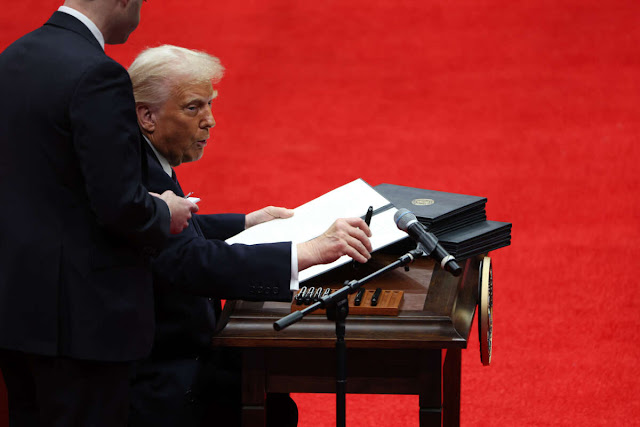 President Donald Trump signs executive orders during an indoor inauguration parade at Capital One Arena on January 20, 2025, in Washington, D.C.Justin Sullivan / Getty Images
President Donald Trump has issued a memorandum to executive branch agencies and departments, telling them to place all diversity, equity and inclusion (DEI) related federal workers on paid leave and informing them that those workers would soon be laid off.
The memo from Trump came one day after he signed a similar executive order calling for the ending of DEI programs and hiring in the federal government.
In his memo, Trump described DEI programs as a “radical” effort to undo a supposed promise of “colorblind equality” that is within the U.S. Constitution — ignoring the fact that the Constitution has historically been interpreted to allow discrimination based on race, gender, LGBTQ status, and more. He also falsely and baselessly asserted that DEI programs and hirings create and amplify “prejudicial hostility” and exacerbate “interpersonal conflict” — claims that go against what research has shown to be mostly positive outcomes of DEI.
Trump’s order demands that any federal employee hired because of DEI policies or who works in a DEI-based program should be placed on paid leave by Wednesday night. The memo also states that federal departments should come up with a written plan to permanently terminate those workers by the end of this month.
The order goes beyond federal hiring. It also requires the attorney general and other department heads to issue guidance to state and local governments that receive federal funds on ending their own DEI programs. It rescinds executive actions dating as far back as 1965, when former President Lyndon Johnson directed the Labor Department to expand protections to people of color and women when it comes to hiring within the federal government. That order also restricted federal contractors from engaging in discriminatory practices.
This latest action adds to the long list of anxieties federal workers overall are likely feeling regarding Trump’s actions affecting their jobs. Some federal workers’ unions are scrambling to ready themselves to defend their members against further actions by the president, with at least one filing a lawsuit against the administration over an order that aims to roll back the civil service program.
That order specifically will make it easier for Trump and other administration officials to fire workers whom they deem to be disloyal to him, contradicting Trump’s supposed claims that he is focused on merit-based hiring.
DEI has long been a bogeyman for conservative lawmakers and pundits, who disparagingly use the term to advance false and racist claims of unqualified workers taking jobs from white cisgender men. Scaling back DEI efforts, in both the public and private sectors, could alienate qualified employees from seeking jobs in those places, and will also likely reduce diversity in corporate leadership.
Multiple studies show that DEI programs and hiring processes are beneficial for a multitude of reasons, including increasing the morale of the workforce and lessening turnover. These programs also create more innovation, allowing companies or public agencies to better adapt to new trends and perspectives they wouldn’t ordinarily consider. DEI programs also increase customer bases, and thus increase sales revenues.
Critics lambasted Trump for issuing an order rescinding DEI programs and firing federal workers who were part of them.
“Some presidents create jobs. Trump kills them,” political analyst and commentator Rachel Bitecofer wrote in a Bluesky post. “Thousands of ruined lives coming.”
“There’s this clear effort to hinder, if not erode, the political and economic power of people of color and women,” political strategist Basil Smikle Jr. said. “[Trump’s order] opens up the door for more cronyism.”
Roni Bennett, executive director of South Florida People of Color, also criticized the move, stating that Trump’s action demonstrated that he believed “minorities don’t matter.”
“These so-called ‘colorblind’ policies don’t level the playing field — they erase it,” Bennett said. “Without DEI, we risk shutting minorities out of opportunities they’ve worked hard to earn.”
Bennett added that for her and her organization, as well as for many others, this would not be “the end of the fight,” and that those supportive of DEI efforts would “keep working to ensure everyone has a seat at the table.”
ABOUT THE AUTHOR:
The order ignores several studies that show DEI’s benefits and baselessly claims such programs create more prejudice.
by Chris Walker
January 22, 2025
Truthout
President Donald Trump signs executive orders during an indoor inauguration parade at Capital One Arena on January 20, 2025, in Washington, D.C.Justin Sullivan / Getty ImagesPresident Donald Trump has issued a memorandum to executive branch agencies and departments, telling them to place all diversity, equity and inclusion (DEI) related federal workers on paid leave and informing them that those workers would soon be laid off.
The memo from Trump came one day after he signed a similar executive order calling for the ending of DEI programs and hiring in the federal government.
In his memo, Trump described DEI programs as a “radical” effort to undo a supposed promise of “colorblind equality” that is within the U.S. Constitution — ignoring the fact that the Constitution has historically been interpreted to allow discrimination based on race, gender, LGBTQ status, and more. He also falsely and baselessly asserted that DEI programs and hirings create and amplify “prejudicial hostility” and exacerbate “interpersonal conflict” — claims that go against what research has shown to be mostly positive outcomes of DEI.
Trump’s order demands that any federal employee hired because of DEI policies or who works in a DEI-based program should be placed on paid leave by Wednesday night. The memo also states that federal departments should come up with a written plan to permanently terminate those workers by the end of this month.
The order goes beyond federal hiring. It also requires the attorney general and other department heads to issue guidance to state and local governments that receive federal funds on ending their own DEI programs. It rescinds executive actions dating as far back as 1965, when former President Lyndon Johnson directed the Labor Department to expand protections to people of color and women when it comes to hiring within the federal government. That order also restricted federal contractors from engaging in discriminatory practices.
This latest action adds to the long list of anxieties federal workers overall are likely feeling regarding Trump’s actions affecting their jobs. Some federal workers’ unions are scrambling to ready themselves to defend their members against further actions by the president, with at least one filing a lawsuit against the administration over an order that aims to roll back the civil service program.
That order specifically will make it easier for Trump and other administration officials to fire workers whom they deem to be disloyal to him, contradicting Trump’s supposed claims that he is focused on merit-based hiring.
DEI has long been a bogeyman for conservative lawmakers and pundits, who disparagingly use the term to advance false and racist claims of unqualified workers taking jobs from white cisgender men. Scaling back DEI efforts, in both the public and private sectors, could alienate qualified employees from seeking jobs in those places, and will also likely reduce diversity in corporate leadership.
Multiple studies show that DEI programs and hiring processes are beneficial for a multitude of reasons, including increasing the morale of the workforce and lessening turnover. These programs also create more innovation, allowing companies or public agencies to better adapt to new trends and perspectives they wouldn’t ordinarily consider. DEI programs also increase customer bases, and thus increase sales revenues.
Critics lambasted Trump for issuing an order rescinding DEI programs and firing federal workers who were part of them.
“Some presidents create jobs. Trump kills them,” political analyst and commentator Rachel Bitecofer wrote in a Bluesky post. “Thousands of ruined lives coming.”
“There’s this clear effort to hinder, if not erode, the political and economic power of people of color and women,” political strategist Basil Smikle Jr. said. “[Trump’s order] opens up the door for more cronyism.”
Roni Bennett, executive director of South Florida People of Color, also criticized the move, stating that Trump’s action demonstrated that he believed “minorities don’t matter.”
“These so-called ‘colorblind’ policies don’t level the playing field — they erase it,” Bennett said. “Without DEI, we risk shutting minorities out of opportunities they’ve worked hard to earn.”
Bennett added that for her and her organization, as well as for many others, this would not be “the end of the fight,” and that those supportive of DEI efforts would “keep working to ensure everyone has a seat at the table.”
ABOUT THE AUTHOR:
Chris Walker is a news writer at Truthout, and is based out of Madison, Wisconsin. Focusing on both national and local topics since the early 2000s, he has produced thousands of articles analyzing the issues of the day and their impact on the American people. He can be found on most social media platforms under the handle @thatchriswalker.
New Administration Highlights: Judge Calls Trump’s Birthright Citizenship Order ‘Blatantly Unconstitutional’
January 23, 2025
New York Times
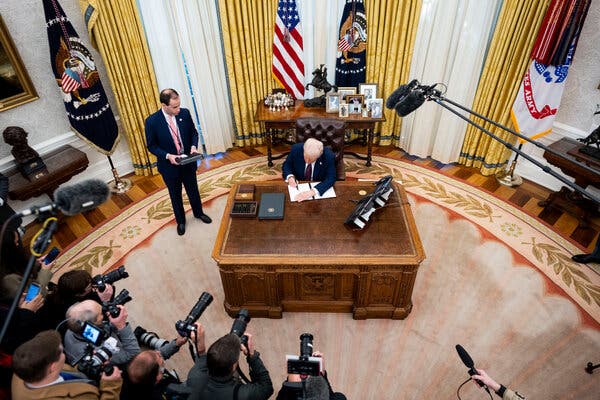
President Trump signed more executive orders on Thursday, including one concerning classified documents related to three assassinations. Another aims to promote cryptocurrency. Credit: Doug Mills/The New York Times
Here’s the latest:
Birthright citizenship: A federal judge temporarily blocked President Trump’s executive order that aims to restrict automatic citizenship to babies born on U.S. soil, calling it “blatantly unconstitutional.” The order Mr. Trump signed on Monday would reverse decades of precedent and affect children born to undocumented or temporary immigrants.
January 23, 2025
New York Times
President Trump signed more executive orders on Thursday, including one concerning classified documents related to three assassinations. Another aims to promote cryptocurrency. Credit: Doug Mills/The New York Times
Here’s the latest:
Birthright citizenship: A federal judge temporarily blocked President Trump’s executive order that aims to restrict automatic citizenship to babies born on U.S. soil, calling it “blatantly unconstitutional.” The order Mr. Trump signed on Monday would reverse decades of precedent and affect children born to undocumented or temporary immigrants.
Read more ›
Hegseth’s nomination: Pete Hegseth, Mr. Trump’s nominee for defense secretary, survived a crucial procedural vote that advanced his bid to the full Senate. Fifty-one Republicans supported advancing his nomination; Senators Susan Collins and Lisa Murkowski joined Democrats in opposition. Read more ›
Intelligence developments: John Ratcliffe was confirmed as C.I.A. director. Kash Patel, whose confirmation hearing for F.B.I. director is expected next week, has repeatedly undercut the agency by making false statements about investigations into Mr. Trump. The Trump administration has revoked the security protection for Mr. Trump’s former secretary of state, Mike Pompeo, and two others.
Also happening: The president pardoned 23 people arrested while protesting outside abortion clinics and signed more executive orders, including one to support the growth of cryptocurrencies and one about declassifying records related to the assassinations of President John F. Kennedy, Robert F. Kennedy and the Rev. Dr. Martin Luther King Jr. | Mr. Trump threatened across-the-board tariffs on European countries in remarks to the World Economic Forum. | Mr. Trump said he was “open” to meeting with the Jan. 6 rioters he gave clemency to.
Pinned
Mike Baker and Mattathias Schwartz
Mike Baker reported from the federal courthouse in Seattle, and Mattathias Schwartz reported from Philadelphia.
A judge deals President Trump his first setback in his effort to rewrite immigration law.
A federal judge on Thursday temporarily blocked President Trump’s executive order to end automatic citizenship for babies born on American soil, dealing the president his first setback as he attempts to upend the nation’s immigration laws and reverse decades of precedent.In a hearing held three days after Mr. Trump issued his executive order, a Federal District Court judge, John C. Coughenour, sided with Washington, Arizona, Illinois and Oregon, the four states that sued, signing a restraining order that blocks Mr. Trump’s executive order for 14 days, renewable upon expiration. “This is a blatantly unconstitutional order,” he said.
“Frankly,” he continued, challenging Trump administration lawyers, “I have difficulty understanding how a member of the bar would state unequivocally that this is a constitutional order. It just boggles my mind.”
Mr. Trump responded hours later, telling reporters at the White House, “Obviously we’ll appeal it.”
The president’s order, one of several issued in the opening hours of his presidency to curtail immigration, both legal and illegal, declared that children born in the United States to undocumented immigrants after Feb. 19 would no longer be treated as citizens. The order would also extend to babies born to mothers who are in the country legally but temporarily, such as tourists, university students or temporary workers, if the father is a noncitizen.
In response, 22 states, along with activist groups and expectant mothers, filed six lawsuits to halt the executive order, arguing that it violates the 14th Amendment. Legal precedent has long interpreted the amendment — that “all persons born or naturalized in the United States, and subject to the jurisdiction thereof, are citizens of the United States” — applies to every baby born in the United States, with a few limited exceptions: Children of accredited foreign diplomats; children born to noncitizens on U.S. territory occupied by an invading army; and, for a time, children born to Native Americans on reservations.
The courts have never recognized the constitutional legitimacy of further limitations on birthright citizenship, and Judge Coughenour of the U.S. District Court for the Western District of Washington did not appear eager to break with that pattern on Thursday.
Judge Coughenour’s order marks the beginning of what will almost certainly be a long battle between the new administration and the courts over Mr. Trump’s ambitious second-term agenda, which seeks to transform American institutions in ways that could be interpreted as running afoul of law and precedent. Other orders, including attempts to strip job protections from career federal employees and accelerate deportations, are also facing court challenges.
Brett Shumate, a lawyer for the federal government, said the administration’s order on birthright citizenship was “absolutely” constitutional. He argued on behalf of the Trump administration that undocumented immigrants “remain subject to a foreign power” and therefore “have no allegiance to the United States.” Nor, the government argued in a filing, would their American-born children.
After the ruling, a Justice Department spokesman promised that the department “will vigorously defend” Mr. Trump’s executive order on birthright citizenship before the courts and “the American people, who are desperate to see our nation’s laws enforced.”
The 14th Amendment refers to people who are “subject to the jurisdiction” of the United States. The judge asked the government whether undocumented immigrants’ children who committed a crime would be subject to U.S. law. Mr. Shumate responded that they would be “subject to the jurisdiction with respect to the laws of this country, but not with respect to the citizenship clause of the 14th Amendment.”
“Citizenship is different,” Mr. Shumate said.
To that, Judge Coughenour’s decision was emphatic: “I’ve been on the bench for over four decades,” he said. “This is a blatantly unconstitutional order. Where were the lawyers when this decision was being made?”
 Migrants at the border in Ciudad Juárez, Mexico. Credit: Paul Ratje for The New York Times
In the case before Judge Coughenour, who was nominated to the bench by President Ronald Reagan, the four state attorneys general argued that Mr. Trump’s order would deny rights and benefits to more than 150,000 children born each year and leave some of them stateless. States would also lose federal funding for various assistance programs.
The states’ 32-page complaint cited testimony from former Assistant Attorney General Walter Dellinger. In 1995, Mr. Dellinger told Congress that a law limiting birthright citizenship would be “unconstitutional on its face” and that even a constitutional amendment would “flatly contradict the nation’s constitutional history and constitutional traditions.”
Federal government lawyers in the hearing pleaded for more time, saying a delay in ruling would make little difference since the executive order would not take effect until next month. The states responded that the administration’s order created an immediate burden for them, requiring them to alter systems that determine eligibility for federal-backed programs, and that the status of babies born to undocumented mothers in the meantime would be unclear.
A separate federal lawsuit challenging the executive order filed by 18 other states and two cities is being considered by a court in Massachusetts. Four other lawsuits by activists and pregnant mothers have been filed in the district courts of Maryland, Massachusetts and New Hampshire, as well as the Central District of California.
In a status conference about the Maryland case on Thursday, Joseph W. Mead, an attorney at Georgetown Law School’s Institute for Constitutional Advocacy and Protection who represents four pregnant mothers and two nonprofit groups, argued that the courts should intervene quickly so that the mothers could know the legal status of their future children.
“Mothers today now have to fear that their children will not be given the U.S. citizenship that they’re entitled to,” he said.
After the hearing in Seattle, Nick Brown, the attorney general in Washington State, called the executive order “un-American.” But he warned the fight against it is far from over.
“We will be back in court,” he said, “as will many other people across the country.”
Hegseth’s nomination: Pete Hegseth, Mr. Trump’s nominee for defense secretary, survived a crucial procedural vote that advanced his bid to the full Senate. Fifty-one Republicans supported advancing his nomination; Senators Susan Collins and Lisa Murkowski joined Democrats in opposition. Read more ›
Intelligence developments: John Ratcliffe was confirmed as C.I.A. director. Kash Patel, whose confirmation hearing for F.B.I. director is expected next week, has repeatedly undercut the agency by making false statements about investigations into Mr. Trump. The Trump administration has revoked the security protection for Mr. Trump’s former secretary of state, Mike Pompeo, and two others.
Also happening: The president pardoned 23 people arrested while protesting outside abortion clinics and signed more executive orders, including one to support the growth of cryptocurrencies and one about declassifying records related to the assassinations of President John F. Kennedy, Robert F. Kennedy and the Rev. Dr. Martin Luther King Jr. | Mr. Trump threatened across-the-board tariffs on European countries in remarks to the World Economic Forum. | Mr. Trump said he was “open” to meeting with the Jan. 6 rioters he gave clemency to.
Pinned
Mike Baker and Mattathias Schwartz
Mike Baker reported from the federal courthouse in Seattle, and Mattathias Schwartz reported from Philadelphia.
A judge deals President Trump his first setback in his effort to rewrite immigration law.
A federal judge on Thursday temporarily blocked President Trump’s executive order to end automatic citizenship for babies born on American soil, dealing the president his first setback as he attempts to upend the nation’s immigration laws and reverse decades of precedent.In a hearing held three days after Mr. Trump issued his executive order, a Federal District Court judge, John C. Coughenour, sided with Washington, Arizona, Illinois and Oregon, the four states that sued, signing a restraining order that blocks Mr. Trump’s executive order for 14 days, renewable upon expiration. “This is a blatantly unconstitutional order,” he said.
“Frankly,” he continued, challenging Trump administration lawyers, “I have difficulty understanding how a member of the bar would state unequivocally that this is a constitutional order. It just boggles my mind.”
Mr. Trump responded hours later, telling reporters at the White House, “Obviously we’ll appeal it.”
The president’s order, one of several issued in the opening hours of his presidency to curtail immigration, both legal and illegal, declared that children born in the United States to undocumented immigrants after Feb. 19 would no longer be treated as citizens. The order would also extend to babies born to mothers who are in the country legally but temporarily, such as tourists, university students or temporary workers, if the father is a noncitizen.
In response, 22 states, along with activist groups and expectant mothers, filed six lawsuits to halt the executive order, arguing that it violates the 14th Amendment. Legal precedent has long interpreted the amendment — that “all persons born or naturalized in the United States, and subject to the jurisdiction thereof, are citizens of the United States” — applies to every baby born in the United States, with a few limited exceptions: Children of accredited foreign diplomats; children born to noncitizens on U.S. territory occupied by an invading army; and, for a time, children born to Native Americans on reservations.
The courts have never recognized the constitutional legitimacy of further limitations on birthright citizenship, and Judge Coughenour of the U.S. District Court for the Western District of Washington did not appear eager to break with that pattern on Thursday.
Judge Coughenour’s order marks the beginning of what will almost certainly be a long battle between the new administration and the courts over Mr. Trump’s ambitious second-term agenda, which seeks to transform American institutions in ways that could be interpreted as running afoul of law and precedent. Other orders, including attempts to strip job protections from career federal employees and accelerate deportations, are also facing court challenges.
Brett Shumate, a lawyer for the federal government, said the administration’s order on birthright citizenship was “absolutely” constitutional. He argued on behalf of the Trump administration that undocumented immigrants “remain subject to a foreign power” and therefore “have no allegiance to the United States.” Nor, the government argued in a filing, would their American-born children.
After the ruling, a Justice Department spokesman promised that the department “will vigorously defend” Mr. Trump’s executive order on birthright citizenship before the courts and “the American people, who are desperate to see our nation’s laws enforced.”
The 14th Amendment refers to people who are “subject to the jurisdiction” of the United States. The judge asked the government whether undocumented immigrants’ children who committed a crime would be subject to U.S. law. Mr. Shumate responded that they would be “subject to the jurisdiction with respect to the laws of this country, but not with respect to the citizenship clause of the 14th Amendment.”
“Citizenship is different,” Mr. Shumate said.
To that, Judge Coughenour’s decision was emphatic: “I’ve been on the bench for over four decades,” he said. “This is a blatantly unconstitutional order. Where were the lawyers when this decision was being made?”
Migrants at the border in Ciudad Juárez, Mexico. Credit: Paul Ratje for The New York TimesIn the case before Judge Coughenour, who was nominated to the bench by President Ronald Reagan, the four state attorneys general argued that Mr. Trump’s order would deny rights and benefits to more than 150,000 children born each year and leave some of them stateless. States would also lose federal funding for various assistance programs.
The states’ 32-page complaint cited testimony from former Assistant Attorney General Walter Dellinger. In 1995, Mr. Dellinger told Congress that a law limiting birthright citizenship would be “unconstitutional on its face” and that even a constitutional amendment would “flatly contradict the nation’s constitutional history and constitutional traditions.”
Federal government lawyers in the hearing pleaded for more time, saying a delay in ruling would make little difference since the executive order would not take effect until next month. The states responded that the administration’s order created an immediate burden for them, requiring them to alter systems that determine eligibility for federal-backed programs, and that the status of babies born to undocumented mothers in the meantime would be unclear.
A separate federal lawsuit challenging the executive order filed by 18 other states and two cities is being considered by a court in Massachusetts. Four other lawsuits by activists and pregnant mothers have been filed in the district courts of Maryland, Massachusetts and New Hampshire, as well as the Central District of California.
In a status conference about the Maryland case on Thursday, Joseph W. Mead, an attorney at Georgetown Law School’s Institute for Constitutional Advocacy and Protection who represents four pregnant mothers and two nonprofit groups, argued that the courts should intervene quickly so that the mothers could know the legal status of their future children.
“Mothers today now have to fear that their children will not be given the U.S. citizenship that they’re entitled to,” he said.
After the hearing in Seattle, Nick Brown, the attorney general in Washington State, called the executive order “un-American.” But he warned the fight against it is far from over.
“We will be back in court,” he said, “as will many other people across the country.”