Monday, May 19, 2025

Fascism in America, Part 2: How Project 2025 is Systematically Assaulting and Brazenly Eliminating the Constitutional Protections of Free Speech and Freedom of Assembly and Protest Laws of Students and Others the United States In Its Maniacal Quest to Destroy Any and All Pro-Palestinian Expressions of Support and Solidarity On Behalf of Palestine in the United State

 
The Group Behind Project 2025 Has a Plan to Crush the Pro-Palestinian Movement

Even before President Trump was re-elected, the Heritage Foundation, best known for Project 2025, set out to destroy pro-Palestinian activism in the United States.

Listen to this article · 18:42 minutes

Learn more
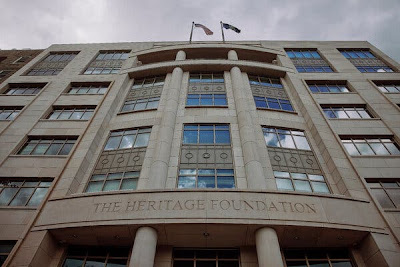

The Heritage Foundation headquarters in Washington, D.C. Credit: Jared Soares for The New York Times

by Katie J.M. Baker
May 18, 2025
New York Times


In late April, the Heritage Foundation dispatched a team to Israel to meet with power players in Israeli politics, including the country’s foreign and defense secretaries and the U.S. ambassador, Mike Huckabee.

The conservative Washington-based think tank is best known for spearheading Project 2025, a proposed blueprint for President Trump’s second term that called for reshaping the federal government and an extreme expansion of presidential power.

Now the Heritage contingent was in Israel, in part, to discuss another contentious policy paper: Project Esther, the foundation’s proposal to rapidly dismantle the pro-Palestinian movement in the United States, along with its support at schools and universities, at progressive organizations and in Congress.

Drafted in the wake of Hamas’s attack on Israel in 2023 and the mounting protests against the war in Gaza, Project Esther outlined an ambitious plan to fight antisemitism by branding a broad range of critics of Israel as “effectively a terrorist support network,” so that they could be deported, defunded, sued, fired, expelled, ostracized and otherwise excluded from what it considered “open society.”

Project Esther’s architects envisioned outcomes that at the time might have seemed far-fetched. Curriculum it believed to be sympathetic to a “Hamas support” narrative would be taken out of schools and universities, and “supporting faculty” would be removed. Social media would be purged of content deemed to be antisemitic. Institutions would lose public funding. Foreign students who pushed for Palestinian rights would have their visas revoked, or be deported.
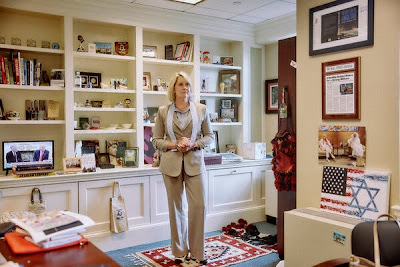
Victoria Coates, a former deputy national security adviser and the vice president at the Heritage Foundation who oversees Project Esther. Credit: Jared Soares for The New York Times

Once a sympathetic presidential administration was in place, the plan said, “We will organize rapidly, take immediate action to ‘stop the bleeding,’ and achieve all objectives within two years.”

Now, four months after Mr. Trump took office, Heritage Foundation leaders are taking an early victory lap.

Since the inauguration, the White House and other Republicans have called for actions that appear to mirror more than half of Project Esther’s proposals, a New York Times analysis shows, including threats to withhold billions in federal funding at universities and attempts to deport legal residents.
 
‘In interviews with The Times — the Heritage Foundation’s first public comments since Mr. Trump took office about its blueprint for shaping U.S. public opinion on Israel — Project Esther’s architects said there were clear parallels between their plan and recent actions against universities and pro-Palestinian demonstrators on both a state and a federal level.
 
“The phase we’re in now is starting to execute some of the lines of effort in terms of legislative, legal and financial penalties for what we consider to be material support for terrorism,” said Victoria Coates, a former deputy national security adviser to Mr. Trump and the vice president at Heritage who oversees Project Esther.
 
Heritage officials said they did not know whether the White House, which has its own antisemitism task force, had used Project Esther as a guide. Administration officials declined to discuss it. But Robert Greenway, a Heritage national security director who coauthored Project Esther, said it was “no coincidence that we called for a series of actions to take place privately and publicly, and they are now happening.”
 
Until now, key details about Project Esther, including the identities of its authors, had not been widely disclosed. The Times reviewed confidential records preceding Project Esther’s release and interviewed Heritage employees, members of the task force that inspired the blueprint and others associated with the initiative to present a clearer understanding of Project Esther’s genesis, aims and impact.
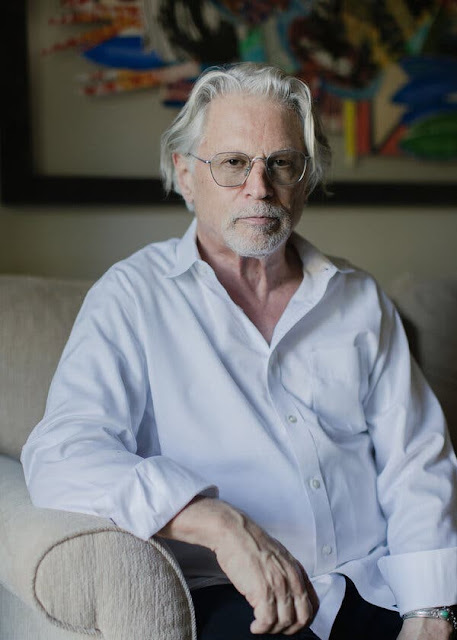

“Project Esther changed the paradigm by associating anyone who opposes Israeli policies with the ‘Hamas Support Network,’” said Jonathan Jacoby, the national director of the Nexus Project. Credit:  Alex Welsh for The New York Times
 
Republican and Democratic administrations alike have long supported and funded Israel as a crucial ally. And there have been bipartisan efforts to counter criticism of Israel by labeling a range of speech and organizing in support of Palestinian rights as support for terrorism. But Project Esther aims to go further, equating actions such as participating in pro-Palestinian campus protests with providing “material support” for terrorism, a broad legal construct that can lead to prison time, deportations, civil penalties and other serious consequences.
 
“Project Esther changed the paradigm by associating anyone who opposes Israeli policies with the ‘Hamas Support Network,’” said Jonathan Jacoby, the national director of the Nexus Project, a watchdog group that works to combat antisemitism and protect open debate. “It’s no longer about ideology or politics; it’s about terrorism and threats to American national security.”
 
Heritage describes Project Esther as a “groundbreaking” national strategy to fight antisemitism that aims not to censor opinions but to hold people it deems to be supporters of Hamas, a designated terrorist group, responsible for their actions. But critics such as Mr. Jacoby say the think tank is exploiting real concerns about antisemitism to advance its broader agenda of radically reshaping higher education and crushing progressive movements more generally.
 
Project Esther exclusively focuses on antisemitism on the left, ignoring antisemitic harassment and violence from the right. It has drawn criticism from many Jewish organizations amid increasing calls for them to push back against the Trump administration.
 
“Trump is pulling straight from the authoritarian playbook, using tools of repression first against those organizing for Palestinian rights,” said Stefanie Fox, the executive director of Jewish Voice for Peace. “And in so doing, sharpening those tools for use against anyone and everyone who challenges his fascist agenda.”
 
Her group is one of those described by Project Esther as a “Hamas Support Organization,” or an H.S.O. — a label Ms. Fox strongly rejected.
 
An open letter from three dozen former leaders of major Jewish establishment groups, including a former national chair of the Anti-Defamation League, recently warned that “a range of actors are using a purported concern about Jewish safety as a cudgel to weaken higher education, due process, checks and balances, freedom of speech and the press.” It called on Jewish leaders and institutions “to resist the exploitation of Jewish fears and publicly join with other organizations that are battling to preserve the guardrails of democracy.”
 
‘The Gloves Will Come Off Very Quickly’
 
The months following the Hamas attack on Israel on Oct. 7, 2023, and the subsequent war in Gaza, saw college campuses descend into a state of chaotic division and turmoil, with endless protests and counterprotests. Pro-Palestinian advocates called for an end to the Israeli occupation and its retaliatory war campaign, while supporters of Israel defended the country’s right to self-defense and said they were harassed by their classmates and didn’t feel safe on campuses.
 
Soon after, four well-connected, conservative supporters of Israel met virtually to address these events.
 
Only one was Jewish: Ellie Cohanim, Mr. Trump’s former antisemitism envoy. She said she was grateful when the three men reached out to her and affectionately called them her “Christian friends.” Two were leaders of Christian Zionist groups: Luke Moon, executive director of the Philos Project, and Mario Bramnick, the president of the Latino Coalition for Israel and an evangelical adviser to Mr. Trump. The fourth was James Carafano, senior counselor to the president at the Heritage Foundation.
 
Some evangelical Christians have increasingly aligned themselves with conservative political forces in Israel, supporting their claims of biblical dominion over contested Palestinian territories. Many feel a kinship with Israel because of shared religious heritage. But some also believe that supporting Israel will hasten biblical end times, or advance Christianity’s global influence.
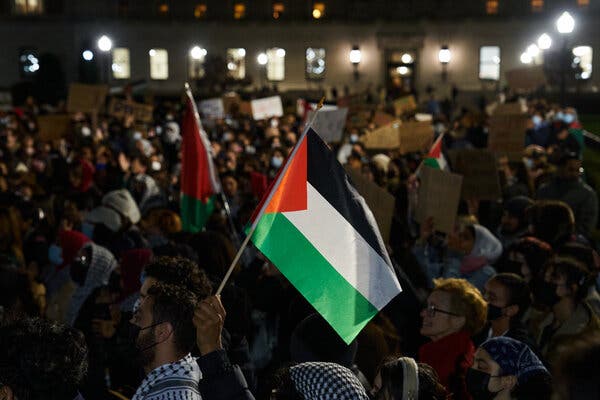

A pro-Palestinian protest at Columbia University in November 2023. Credit: Bing Guan for The New York Times
 
The think tank, which has influenced Republican presidential administrations since the Reagan era, has long supported Israel.
 
In recent years, this support took on a new dimension, as the foundation blamed the diversity, equity and inclusion initiatives that gained prominence after George Floyd’s murder in May 2020, along with other progressive movements, for rising reports of antisemitism on campuses.
 
The Biden administration had already released what it called the first national strategy to combat antisemitism, vowing to address the issue. (The A.D.L. counted over 9,000 antisemitic incidents across the United States in 2024, the highest number on record since it began tracking them 46 years ago.)
But the group decided to begin their own national task force and released a statement of purpose that affirmed a definition of antisemitism that is hotly debated because it considers some broad criticisms of Israel to be antisemitic.
 
Statement of Purpose
 
Antisemitism: We recognize any attempt to delegitimize, boycott, divest, or sanction the modern [state] of Israel or bar Jews from participating in academic or communal associations must be condemned. 

We recognize that anti-Zionism and antisemitism are the different manifestations of the same hatred against Jewish people.
 
Dozens of groups joined the task force, but an “overwhelming number” had something in common, Mr. Carafano said during a January 2024 meeting: They weren’t Jewish. A short list of initial members that Heritage posted online consisted mainly of conservative and Christian organizations.
 
Heritage built on the task force’s recommendations to write Project Esther, which is named in honor of the biblical queen who is celebrated for saving the Jewish people.
 
By summer 2024, Heritage had finalized a national strategy that aimed to convince the public to perceive the pro-Palestinian movement in the United States as part of a global “Hamas Support Network” that “poses a threat not simply to American Jewry, but to America itself.”
 
It singled out anti-Zionist groups that had organized pro-Palestinian protests, such as Jewish Voice for Peace and Students for Justice in Palestine, but the intended targets stretched much further. In pitch materials for potential donors, Heritage presented an illustration of a pyramid topped by “progressive ‘elites’ leading the way,” which included Jewish billionaires such as the philanthropist George Soros and Governor JB Pritzker of Illinois.
 
It asserted that philanthropic organizations such as the Tides Foundation and the Rockefeller Brothers Fund were backing the antisemitism “ecosystem.” Later, the Heritage Foundation added the names of what it called “aligned” politicians such as Senators Bernie Sanders and Elizabeth Warren.
 
The pitch materials, which were first reported on by The Forward, included goals such as reforming academia (defunding institutions, denying certain pro-Palestinian groups access to campuses and removing faculty) and lawfare (filing civil lawsuits, identifying foreigners vulnerable to deportation). Other initiatives included plans to enlist support from state and local law enforcement and to “generate uncomfortable conditions” so that groups could not conduct protests.
 
Esther’s Architects
 
Ms. Coates said that her colleagues Mr. Greenway and Daniel Flesch were the co-authors of Project Esther.
 
Mr. Greenway, a former senior National Security Council official, previously ran the Abraham Accords Peace Institute, a nonprofit founded by Jared Kushner that sought to normalize relations between Israel and other Middle Eastern countries.
 
Mr. Flesch is a policy analyst at the foundation who has written about his experience as an American Jew who served in the Israeli Defense Forces.
 
Project Esther also benefited from a private advisory committee that included unnamed former National Security Council members from the first Trump administration, Ms. Coates said. Their expertise “created a more compelling product” and gave the plan “a lot more grip and substance than we would have had otherwise,” she said.
 
Ms. Coates holds three degrees in Italian Renaissance art history, and planned on being a professional academic until she grew uncomfortable with what she has described as a “very noxious anti-Western worldview” at her alma mater, the University of Pennsylvania.
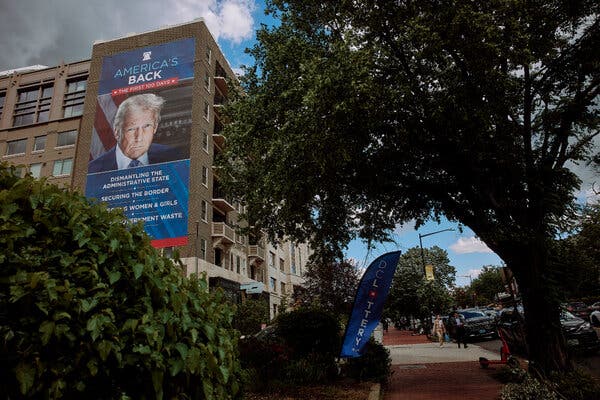

The Heritage Foundation’s office in Washington, D.C. Credit:  Jared Soares for The New York Times
 
Blogging about missile defense led to a job for former Secretary of Defense Donald Rumsfeld, and then roles with other Republican politicians before she joined Mr. Trump’s transition team and held various national security roles in his first administration.
 
Two months before Oct. 7, Ms. Coates became the vice president of a division of Heritage that focuses on foreign policy and national security. But her interest in Israel, and in fighting antisemitism, long predated that role, she said. She traces it back to her grandfather, who fought in the D-Day invasion during World War II. “I come from a line of Nazi hunters,” she said.
 
In her recently published book, “The Battle for the Jewish State,” Ms. Coates, who described herself as “a Christian and a religious person,” wrote that “the biblical values on which our civilization rests have always promoted an alliance between Christians and Jews.” But she said her views on Israel were based on an “America-first” approach that recognizes Israel’s role in bolstering America’s security interests in the Middle East. She has visited Israel so often that she has “no idea” how many times she’s been there, she has said. Her office features a collection of Israeli prime minister figurines.
In December, a little-known nonprofit that promotes foreign policy discourse on college campuses hosted Ms. Coates to speak about her new book. She revealed her own perspective on how the tactic of slashing federal funding to universities could be used to help bring them to heel.
“As a former academic, I can tell you the one thing they care more about than parking spaces is federal funding,” she said. “The viciousness with which the other elements of the faculty will turn on the law schools and the Middle East Studies folk,” she added. “The gloves will come off very quickly.”
 
The next month, Mr. Trump was inaugurated. His administration unfurled a series of directives, some of which closely resembled some of the actionable steps outlined in Project Esther.
 
Administration officials moved to revoke student visas and deport activists who had criticized Israel.
 
Necessary Conditions
HSO members in violation of student visa requirements.
 
They began monitoring immigrants’ and visa applicants’ social media.
 
Desired Effects
 
Social media no longer allow the spread of antisemitic content.
 
They sought to withhold billions of dollars in grants to some of the country’s most prestigious research universities.
 
Necessary Conditions
HSOs not eligible for public funds.
 
They ordered an investigation of student protesters at Columbia University and reportedly planned to share that information with immigration agents.
 
Necessary Conditions

Evidence of HSOs’ criminal activity gathered.
 
Despite acknowledging Heritage’s regular meetings with the administration and members of Congress, employees at the foundation said they didn’t know if White House officials had acted on their recommendations or had just come to the same conclusions about what needed to be done.
 
“I don’t think it’s a great leap to look at the changing landscape since Esther came out, and to look at the actions that Esther calls for and to look at them taking place,” Mr. Greenway said. “But it’s not our place, and not really our purpose, to take credit for the actions that others are taking.”
 
In line with Project Esther’s calls for state-level actions and “public-private” partnerships, a wider campaign is also underway. Heritage Action, the think tank’s grass roots advocacy arm, is helping states pass legislation that penalizes those who support boycotts against Israel. It has encouraged civil litigation as law firms have filed suits accusing various people and organizations of collaborating with Hamas.
 
And Ms. Coates pointed to Heritage’s increased presence in Israel, a country which, Ms. Coates said when she was there recently, “deserves a peace prize for what they’ve done over the course of the last year.”
 
Foundation employees were in Israel primarily to discuss Heritage’s new U.S.-Israel strategy, a copy of which, she said, they personally handed to Ron Dermer, Israel’s minister of strategic affairs.
 
But they also discussed Project Esther and concern over a decline in Israel’s public image among younger Americans, a trend that has accelerated since Oct. 7. It is reassuring for Israelis to hear that the largest conservative think tank in the United States is on the case, Ms. Coates said.
 
Leading by Example
 
Project Esther accuses “America’s Jewish community” of “complacency.” “There are multiple Jewish nonprofits that are dedicated to fighting antisemitism, and yet here we are today,” said Ms. Cohanim, the task force’s sole Jewish co-chair.
 
Not everyone who Heritage hoped would join the cause felt comfortable doing so, including prominent Jewish and Christian Zionist organizations that members at the foundation assumed would be allies. Three people from such groups told The Times they did not want to associate with the plan because they found its failure to consider right-wing acts of antisemitism too partisan.
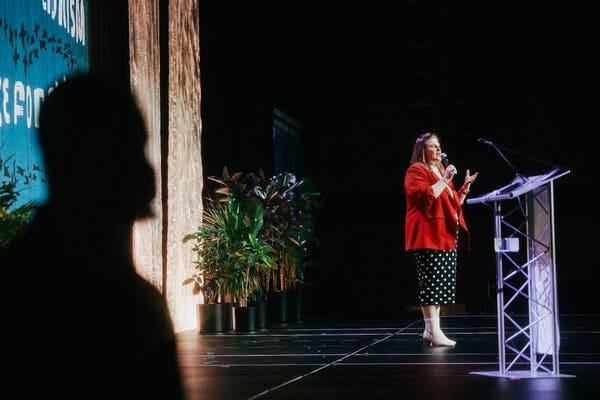
 

Stefanie Fox, the executive director of Jewish Voice for Peace, spoke during one of the group’s member meetings in May. Credit:  Jared Soares for The New York Times
 
Ms. Coates acknowledged that antisemitism was also a problem on the right and said that was why it was important for the Heritage Foundation to “lead by example” with Project Esther.
 
“Our goal is to eradicate — or not eradicate, but to confront — what we consider a very noxious bigotry,” she said.
 
But she and others at the Heritage Foundation also contend that the progressive groups that Project Esther charges with supporting Hamas pose a threat not just to Jewish people or Israel but, as the plan warns, to “the foundations of the United States and the fabric of our society.”
 
“This isn’t just a battle for the Jewish state,” Ms. Coates told her audience in December. “It is also a battle for the United States.”
 
Halina Bennet contributed reporting. Kitty Bennett contributed research.
 
ABOUT THE AUTHOR:
 
Katie J.M. Baker is a national investigative correspondent for The New York Times.
 
See more on: The Israel Hamas War

Fascism in America: Scholar, Philosopher, Public Intellectual, Author, Teacher, and Activist Dr. George Yancy On The Banning of Three of His Books at the U.S. Naval Academy by the Openly Racist, Sexist, and Absurdly Incompetent and Unqualified Secretary of Defense Peter Hegseth and How the Fascist and Censorious Trump Administration is Violating Our Civil and Constitutional Rights in the Process

Pete Hegseth Has Banned 3 of My Books From the US Naval Academy

Censorship is an act of cowardice and a direct refusal of the mirror I hold up to the US’s racist past and present.

by George Yancy
May 18, 2025
Truthout


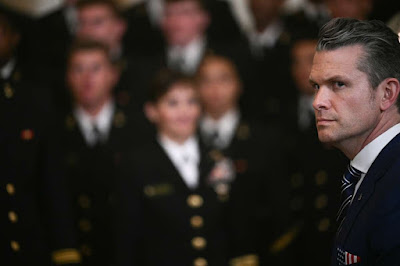
Defense Secretary Pete Hegseth attends a ceremony to present the Commander-in-Chief's Trophy to the U.S. Naval Academy football team in the East Room of the White House on April 15, 2025, in Washington, D.C. BRENDAN SMIALOWSKI / AFP via Getty Images


Not one, not two, but three of my books have been removed and banned from the United States Naval Academy’s Nimitz Library by the order of President Donald Trump’s appointed defense secretary and former Fox News host Pete Hegseth. The New York Times reports that 378 others were also removed.

Naval students and sailors must feel insulted by Hegseth’s lack of confidence in their intellectual ability to read challenging material that encourages self-examination and renders visible the subtle ways in which racism manifests itself. My books lay a foundation for the capacity to think critically and compassionately about those suffering under the toxicity of racism. Navy sailors need to be able to think for themselves and not be immobilized by fear of speaking out against forms of social injustice.

Some have suggested I should feel honored by the removal. There’s a sense that one has done something right to garner such negative attention. That’s one way of positively framing an alarming situation, but, for me, that sense of honor gave way quickly to frustration, outrage and righteous indignation. I take it that these books were banned because of their capacity to disturb those who’d rather erase certain truths from memory. After all, memory can function as a weapon and threat to those who prefer we forget the horrible history of unfettered power

The removal of my books is also an attack on my free speech: It is a violation of my First Amendment rights against the government to intervene and engage in censorship. The move is likewise an affront to my civic responsibilities, an injury to my democratic freedom, an assault on the integrity of my written work — a form of silencing that violates my democratic agency to share knowledge, to critique structures of power, and to intervene in processes of racial injustice. Indeed, this censorship isn’t just an act of cowardice but a direct refusal of the mirror I hold up to this country’s racist past and present.

It says, in no uncertain terms, that my work, my academic scholarship, my philosophical calling, will not be tolerated by those who’d rather live in ignorance and wield a false narrative of the U.S. as “a shining city on a hill.” If the U.S. is on a hill, then it was partly built upon the backs of enslaved Black people and the genocide of Indigenous peoples. Those harsh and brutal realities are inextricably linked to U.S. history. To remain steadfast in one’s effort to seek the truth about this history, one is confronted by a “shining city” steeped in political and moral rot. It’s my constitutional right to point that out, and no government, no policy and no would-be authoritarian should be allowed to silence me.

As a philosopher, my vocation is to engage in critical thought, to exercise a robust imagination, and to seek beauty, virtue and justice. It is to refuse wanton ignorance, especially the kind that solidifies into mindless lockstep. This censorship represents the kind of shameful and dangerous ignorance found in the dystopic pages of George Orwell’s 1984, where ignorance and anti-intellectualism are glorified in the name of intolerance and authoritarian rule. What we’re witnessing is an attack on freedom of thought itself, which is linked to a deep fear and hatred directed at those who stand ready to engage in truth-telling practices.

Banning books (or even, eventually burning them) is an anathema to a society predicated upon the free exchange of ideas, the value of political dissent, and the critique of authoritarian political actors and policies. This is why history is so important. As philosopher Jason Stanley reminds us, “The Nazis infamously maintained strict control over the publication and dissemination of books. The Nazi propaganda minister, Joseph Goebbels, kept lists of books to be censored on the grounds that they were ‘alien’ or ‘decadent.’” The emphasis upon “alien” and “decadent” speak powerfully to Trump’s broad deployment of the phrase, “the enemy from within.” I assume I too am now such an “enemy” — what Trump calls “some sick people, radical left lunatics.”

The aim of Trump’s discourse is to conjure those seen as “traitorous” and committing acts of “sedition.” “Us versus them” is par for the course when it comes to fascist indoctrination. We are in the throes of a dangerous form of 21st-century McCarthyism. In our contemporary moment, however, it’s not fear of communism manifesting alarm and paranoia: What’s under attack is anything that resembles critical thought that refuses to be policed by fear and hegemonic governmental machinations.

The disappearance of these books is the result of unconstitutional control, and their dissemination and availability are restricted on the grounds that they are “un-American,” and support diversity, equity and inclusion efforts which are now deemed something “alien” and “decadent,” even though those efforts were precisely designed to correct historical injustices. What was once understood as progressive is now being attacked and reframed as something divisive and oppressive.

Banning books is not just about silencing people — it is about silencing critical thinking and introspection.

As Orwell wrote in 1984: “Every record has been destroyed or falsified, every book rewritten, every picture has been repainted, every statue and street building has been renamed, every date has been altered. And the process is continuing day by day and minute by minute. History has stopped. Nothing exists except an endless present in which the Party is always right.” You get the point. Trump is always right.

After all, Trump believes that he “was saved by God to make America great again.” Here we have a case where God is deployed to underwrite his actions, including banning books. Not only, then, am I the “enemy from within,” but I’m also apparently “an enemy of God.” Needless to say, I reject that implication, and I consider Trump’s theology a form of white Chistian nationalism — one that is idolatrous and based on xenophobia, hatred, and the refusal and denigration of the “stranger.” In referring to undocumented immigrants, Trump has said “in some cases, they’re not people.” For Trump’s God, the concept that we are made in the image of God only applies to some. That is a racist conception of God.

Because I am a Black philosopher, it is not lost on me that it is my Blackness that is also deemed as “alien” and “decadent.” After all, an attack on my books is also an attack on what it means for me to be Black within a white supremacist society. Why? My published work is an expression of my knowledge, and the latter is an expression of my racially embodied existence as Black. Within this context, I am reminded of James Baldwin’s line that, “This color [this Blackness] seems to operate as a most disagreeable mirror.” I take the removal of my books from the Nimitz Library as more than merely an academic affair. Their removal is an existential threat: If my books are being erased, then I, too, can be erased, as history has shown time and again.

Trump, after all, has a predilection for all things white (white nativism, white Christianity, white renters, white insurrectionists, white extremism, white pilots, white people from Norway, white South Africans). All three of my now-banned books speak critically about what it means to be white in the U.S. and what that means in terms of white privilege, white complicity and the false claim of white innocence.

This is also the conceptual terrain that I cover within the context of my classes and seminars. It’s not about indoctrination but inviting students, especially white students, to begin to think beyond white racism as the expression of intentional hatred toward “racialized others.” I encourage them, through the critical examination of texts, and through robust dialogue, and deep vulnerability, to think in terms of the historical systemic processes of whiteness that they inherit and thereby knowingly or unknowingly perpetuate. By the end of my courses, white students often share with me that they now begin to see how whiteness operates in quotidian ways, though by no means any less consequential for those who are not privileged by whiteness.

If the U.S. is committed to the maintenance of the existence of whiteness as a structure of power and violence, then what I teach is “un-American.” But I am not a national security threat; I’m a philosopher-citizen who desires to make sure that human creative capacities aren’t imprisoned, that the imaginative capacities of my students aren’t stifled, that they’re unafraid to speak with courage and identify injustices where they exist, and that they’ll never be seduced by vacuous political slogans designed to suppress their ethical integrity. Speaking of the purpose of education, Baldwin writes that, “What societies really, ideally, want is a citizenry which will simply obey the rules of society.” He then warns, “If a society succeeds in this, that society is about to perish.”

Socrates, whom Martin Luther King Jr. saw as a fellow gadfly, was not the kind of citizen the Athenian society really wanted around. This is why he was condemned to drink hemlock. King was also seen as a nuisance, a threat to the social order of U.S. racism, militarism and capitalism, what he described as the three evils of U.S. society. King, as we know, was assassinated for his efforts to hold the U.S. to its word. Both Socrates and King held their fellow citizens accountable. Both practiced courageous speech in the face of danger.

I care for my students. I encourage students to never make peace with mediocrity, injustice or authoritarian rule. I teach them to question their teachers and academic institutions, and to refuse to accept what I say as “sacrosanct.” A critical educational experience doesn’t involve worshipping ideas. In my classroom, I encourage open expression of moral emotions vis-à-vis social injustice and forms of political and physical violence used against those who have been marginalized and dehumanized based on identities deemed “alien” and “decadent.”

In my philosophy courses, we learn how to suffer together, how to name forms of injustice that others would like to invisibilize, and how to never be silenced in the face of social misery and systemic injustice. That, and so much more, is what I teach. In Trump’s U.S., that form of pedagogy is a threat to conformism. Philosopher and educational reformer John Dewey writes, “Education is not an affair of ‘telling’ and being told, but an active and constructive process.” Philosopher and educator Paulo Freire, meanwhile, reminds us that “to glorify democracy and to silence the people is a farce.” Banning books is not just about silencing people — it is about silencing critical thinking and introspection.

Socrates was defiant until the very end: “As long as I draw breath and am able, I will not cease to practice philosophy,” he said. This meant refusing the peddling of lies and deceptions, and making sure Athenians engaged in honest and relentless self-examination. The refusal to be silenced is what is necessary at this moment, especially as universities are caving in and other governmental structures are being dismantled through fiat. I too will continue to embolden students who so desperately need our courage at this moment, to resist authoritarian rule, and the captivity of their imaginations. That is what love sounds like pedagogically. As Freire writes, “Dialogue cannot exist … in the absence of a profound love for the world and for people. The naming of the world, which is an act of creation and re-creation, is not possible if it is not infused with love.”

In the spirit democratic practice, a steadfast dedication to the value of the free exchange of ideas, and the refusal to perpetuate the silencing of different perspectives, I would challenge the U.S. Naval Academy to invite me to engage in an exchange with Navy sailors regarding how race and racism continue to function in U.S. society.

There is an aphorism that states, “There are no atheists in foxholes.” Perhaps, but I assure you that race exists in foxholes, at universities, in classrooms and in all our daily encounters. Navy sailors, like my students, are racialized before they become college students. They have already internalized and been exposed to the racist stereotypes, assumptions and biases that are part of U.S. DNA.


ABOUT THE AUTHOR:

George Yancy

George Yancy is the Samuel Candler Dobbs professor of philosophy at Emory University and a Montgomery fellow at Dartmouth College. He is also the University of Pennsylvania’s inaugural fellow in the Provost’s Distinguished Faculty Fellowship Program (2019-2020 academic year). He is the author, editor and co-editor of over 25 books, including Black Bodies, White Gazes; Look, A White; Backlash: What Happens When We Talk Honestly about Racism in America; and Across Black Spaces: Essays and Interviews from an American Philosopher published by Rowman & Littlefield in 2020. His most recent books include a collection of critical interviews entitled, Until Our Lungs Give Out: Conversations on Race, Justice, and the Future (Rowman & Littlefield, 2023), and a coedited book (with philosopher Bill Bywater) entitled, In Sheep’s Clothing: The Idolatry of White Christian Nationalism (Roman & Littlefield, 2024).


Sunday, May 18, 2025

Outstanding Scholars, Public Intellectuals, Writers, Journalists, Critics, and Activists Noura Erakat, Jamelle Bouie, The Majority Report with Sam Seder, and Joy Reid, On Exactly How and Why American Fascism Has Become A Major Destructive, Oppressive, and Utterly Malevolent Force in the United States As Well As Globally

 
They Were Waiting for Trump All Along
by Jamelle Bouie
May 14, 2025
New York Times


Credit: Daniel Ribar for The New York Times

Listen to this article · 11:56 minutes

Learn more

Of the endless torrent of illegal, unconstitutional — and anti-constitutional — actions flowing from the Trump administration, there are three that stand out for their contempt for the rule of law.
 
There is the president’s ongoing assault on the right to due process, seen in his administration’s refusal to facilitate the return of Kilmar Abrego Garcia, the Maryland man who was arrested in Baltimore in March and removed to a prison in El Salvador. Not only is the White House ignoring an order from the Supreme Court that sought to bring Garcia back to the United States, but its spokesmen insist on tarring Garcia as a “terrorist” and “human smuggler” in an escalating series of attacks on his character.
 
Other Republicans, it should be said, have backed the administration on this point, insisting that due process does not apply to undocumented or unauthorized immigrants. “When it comes to due process, that is a privilege reserved for American citizens,” Representative Byron Donalds of Florida, a vocal ally of the president, said on NBC. Donalds should probably consult the Constitution, which makes no mention of citizenship or immigration status in either of the two amendments, the fifth and the 14th, that guarantee the right of due process to all “persons.”
 
If the framers and ratifiers of these amendments had intended to differentiate between citizens and noncitizens, they would have done so. That is especially true for the authors of the 14th Amendment, who were preoccupied with questions of rights and citizenship, and who dealt with nativism and anti-immigrant sentiment within their own political coalitions. They could have written a due process clause whose protection only went as far as native and naturalized citizens. They chose not to.
 
The second incident is the suggestion, by the White House deputy chief of staff Stephen Miller, that the president might suspend habeas corpus to keep federal courts from releasing the administration’s detainees — thus blocking its efforts to remove, among others, some lawful residents from the country. “Well, the Constitution is clear,” Miller said in a briefing with journalists last week outside the White House, “that the privilege of the writ of habeas corpus can be suspended in a time of invasion.” It’s an option, he continued, that the administration is “actively looking at” and which “depends on whether the courts do the right thing or not.”
 
Habeas corpus — Medieval Latin for “you have the body” — is a proceeding used to adjudicate the legality of any given individual’s detention, incarceration or imprisonment. When a judge issues a writ of habeas corpus, the government has to prove that it is the lawful custodian of the individual in question. Habeas corpus is one of the oldest principles in the English legal tradition, dating back to the 13th century. And it was of special significance to Americans, whose rebellion led Parliament in 1777 to suspend habeas corpus in what the legal scholar Steve Vladeck describes as an “unprecedented” manner. The language of this suspension, he writes, “set a dangerous precedent for future suspensions in England, suggesting that Parliament could displace the writ based upon status, and without either of the constraints (necessity and duration) that had characterized every previous suspension.”
 
It was in part this experience that led Americans to write explicit protection of the writ of habeas corpus into their state constitutions following independence, and which led delegates at the Philadelphia Convention of 1787 to write a nearly inviolable protection of the writ into their new federal constitution. “The Privilege of the Writ of Habeas Corpus shall not be suspended,” reads Article I, Section 9 of the Constitution, “unless when in Cases of Rebellion or Invasion the public Safety may require it.”
 
With regard to the framers’ reverence for habeas, it should be emphasized that, as the legal scholar Francis Paschal observed in 1970, “There is abundant evidence of an early and persisting attachment to ‘this darling privilege’ in pre-1787 America. Indeed, in the Philadelphia Convention and in the struggle for ratification, there was never the slightest objection to according a special pre-eminence to the Great Writ.”
 
Habeas corpus is such a bedrock part of the American legal tradition that its suspension during the Civil War — an actual rebellion, a large part of it happening within riding distance of the Capitol — was hugely controversial. In the first months of the conflict, in 1861, Abraham Lincoln directed Gen. Winfield Scott to suspend habeas near the railroad lines that ran from Washington into Philadelphia, in order to circumvent rebel activity in Maryland, a slave state. What followed was a legal confrontation that ended in a rebuke of Lincoln by Chief Justice Roger Taney, acting as the senior judge on the U.S. Circuit Court for Maryland, which he oversaw. “I can see no ground whatever for supposing that the President in any emergency or in any state of things can authorize the suspension of the privilege of the writ of habeas corpus, or arrest a citizen except in aid of the judicial power,” Taney said.
 
That summer, Lincoln would ask Congress to retroactively authorize his suspension of the writ. He argued that he was acting in Congress’s stead while it was out of a session — tacit admission that he may have been operating outside the bounds of the Constitution. Congress obliged and would later, in 1863, authorize Lincoln to suspend habeas as he saw fit for the duration of the conflict.
 
This is all to say that whatever you think of recent migration to the United States, it is not a rebellion. Nor is it, as the president would argue, an invasion. In back-to-back rulings issued this month, two federal judges agreed that an invasion of the kind that might justify the administration’s detentions and removals requires “military action,” although on Tuesday night a third federal judge sided with the administration. Even so, common sense tells us that migrants crossing a border do not constitute military action. And President Trump is most certainly not Abraham Lincoln.
 
The last, and by comparison relatively minor, instance of constitutional subversion by this administration is the president’s plan to accept a $400 million luxury aircraft to temporarily replace Air Force One, provided to the United States by the royal family of Qatar. When he leaves office, that plane is set to be given to the Trump presidential library, where the future ex-president can maintain it for personal use, should he choose to do so.
 
This may not meet the strict legal definition of corruption as established by the Supreme Court (in decisions that have all but legalized an unspoken quid pro quo of money, gifts and favors in the American political system). But a supposed gift of this sort meets every reasonable definition of the term and represents the kind of venality that the framers were desperate to shield against in their new government. “One of the weak sides of republics, among their numerous advantages,” Alexander Hamilton wrote in Federalist No. 22, “is that they afford too easy an inlet to foreign corruption.”
 
To that point, the Constitution includes three separate clauses forbidding the collection of “emoluments” by federal office holders, including one that is as explicit as anything you’ll find in the document: “No Title of Nobility shall be granted by the United States: And no Person holding any Office of Profit or Trust under them, shall, without the Consent of the Congress, accept of any present, Emolument, Office, or Title, of any kind whatever, from any King, Prince, or foreign State.”
 
In the absence of Congressional authorization — and an agreement to place the aircraft under the direct and permanent ownership of the federal government — the president cannot accept this gift without violating the Constitution, even if he is doing so on behalf of the United States.
 
Trump’s decision to accept it — he’ll take anybody’s luxury jet, if they’re just giving it away — is one of the most shameless acts of corruption in the history of the American presidency, dwarfed only by this president’s other acts of brazen corruption, self-dealing and personal enrichment.
 
Take these constitutional violations together and you have a clear picture of how this president sees himself and his office in his second term. The presidency, for Trump, is a vehicle for his personalist rule, in which all power flows from his person. It is a virtual extension of Trump himself, and in the same way that we control our bodies, he holds authority over the entire body politic, with the power to detain and remove anyone he’d like, without explanation, justification or even cursory legal proceedings. The presidency is also, in this vision, his to use as he sees fit, up to and including endless self-enrichment and personal aggrandizement, with no regard for the public good.
This is the president as elected despot. It is a conception of the office that is inimical to the American political tradition in every respect.
 
But somewhat more interesting than the president’s abuse of power is the indifference — or active support — of both the Republican Party and the conservative movement. One might think that even with its zeal for tax cuts and right-wing social engineering, the conservative movement’s reverence for both the founding fathers and the nation’s revolutionary heritage would not overwhelm a basic respect for the hard-fought rights and privileges of the American way of life. You would think that those who elevate 1776, who fetishize the Constitution as an object and who practically spend every waking moment reminding the public of their patriotic bona fides would, at some point, have something to say about this perversion of the American republic.
 
You would be wrong. The Republican Party is, with only a few quibbles and some occasionally timid disagreement, united in support of Donald Trump. Conservative intellectuals have spent the last decade spinning endless excuses for the president and his allies. They treat his tyrannical aspirations as little more than a curiosity, or even a justified response to some imagined revolutionary movement of the political and cultural left. Both the MAGA cheerleaders of the Claremont Institute and the Trump rationalizers in the nation’s premier publications agree: Nothing Trump has done, or wants to do, is beyond the pale. Everything is a necessary and defensive act in the war against “critical race theory” or “gender ideology” or so-called wokeness.
 
This attitude, while shocking in its moral and ethical decadence, is not all that surprising. As the writer and editor Jacob Heilbrunn shows in “America Last: The Right’s Century-Long Romance with Foreign Dictators,” the conservative movement has always had a soft spot for despots of various stripes. The political and intellectual antecedents of the Trump movement, stretching all the way back to the early 20th century, have often had nothing but praise for those despotic rulers who extinguished the freedom of the many for the liberty of the few, from Gen. Francisco Franco in Spain and Gen. Augusto Pinochet in Chile to, at this moment, Vladimir Putin in Russia and Viktor Orban in Hungary. (Not to mention the American right’s long love affair with apartheid South Africa.)
 
This is not to say that the political left has never been guilty of affection for tyrants. But among conservatives there is a strong, coherent and distinctly under-discussed tradition of support and affection for the enemies of liberal democracy around the world.
 
Which brings us back to the current president. What Trump brings to the table of American politics is personalist and authoritarian rule of a kind that we haven’t seen in the national government, but that we have seen in other countries — and even in certain places at certain points in our own history.
 
But whether you think this moment is continuous with our past, or a break from it, one thing we can say for sure is that conservative support for this type of governance is not an aberration. It belongs to a consistent pattern of enthusiastic support for tyrants and would-be tyrants. This is who they are, this is what they’ve been and, whenever the age of Trump passes, this is who they’ll be. What it should signal to observers of American politics is that there won’t be a time when either the conservative movement or the Republican Party truly changes course.
 
There is no “Trumpified” conservative movement. There never was. There is only the conservative movement that was, we can see now, waiting for its Donald Trump.
The Times is committed to publishing a diversity of letters to the editor. We’d like to hear what you think about this or any of our articles. Here are some tips. And here’s our email: letters@nytimes.com.
 
Follow the New York Times Opinion section on Facebook, Instagram, TikTok, Bluesky, WhatsApp and Threads.
 
ABOUT THE AUTHOR:
 
Jamelle Bouie became a New York Times Opinion columnist in 2019. Before that he was the chief political correspondent for Slate magazine. He is based in Charlottesville, Va., and Washington. @jbouie

Noura Erakat Addresses the UN in Commemoration of the 77th Anniversary of the Nakba


Jadaliyya

May 16, 2025

VIDEO:  


Comemmorating the 77th anniversary of the start of the Nakba, Jadaliyya Co-Editor Noura Erakat addressed the UN. During the address, Erakat highlighted the shortcomings of international law in stopping Israel's ongoing genocide against the Palestinian people in Gaza. Click here to watch the full UN commemoration of the Nakba's 77th anniversary. Featuring: Noura Erakat is a Professor of Africana Studies and the Program of Criminal Justice at Rutgers University, New Brunswick. Noura is the author of Justice for Some: Law and the Question of Palestine (Stanford University Press, 2019), which received the Palestine Book Award and the Bronze Medal for the Independent Publishers Book Award in Current Events/Foreign Affairs. She is co-founding editor of Jadaliyya and an editorial board member of the Journal of Palestine Studies as well as Human Geography. She is a co-founding board member of the DC Palestinian Film and Arts Festival. She has served as Legal Counsel for a Congressional Subcommittee in the US House of Representatives, as Legal Advocate for the Badil Resource Center for Palestinian Refugee and Residency Rights, and as national organizer of the US Campaign to End the Israeli Occupation.

Noura has also produced video documentaries, including "Gaza In Context" and "Black Palestinian Solidarity.” Her writings have appeared in The Washington Post, The New York Times, the Los Angeles Review of Books, The Nation, Al Jazeera, and the Boston Review. She is a frequent commentator on CBS News, CNN, MSNBC, CBS, Fox News, the BBC, and NPR, among others. She completed non-resident fellowship of the Religious Literacy Project at Harvard Divinity School in 2021. In 2022, she was selected as a Freedom Fellow by the Marguerite Casey Foundation.
NYU Withholds Diploma After Student Speaks Out Against Genocide In Gaza

NYU Withholds Diploma After Student Speaks Out Against Genocide In Gaza


The Majority Report w/ Sam Seder

 
Watch the Majority Report live Monday–Friday at 12 p.m. EST on YouTube 
 
Or listen via daily podcast at http://www.Majority.FM 
 
The Daily Reid: Out of Africa

The Trump regime has shut the door to nearly all refugees, and is violently deporting many who sought refuge in the U.S. But there is one very notable exception: white South Africans…

by Joy-Ann Reid
May 14, 2025
Substack


Last October, I wrote this Substack called:
 The Afrikaanerization of the Republican Party.

The focus was the “coincidence” that so many of Donald Trump and JD Vance’s ideological advisers and financial backers happen to be white South Africans, and how that connects to the white exodus from South Africa after the fall of apartheid. Trump and Vance’s major South African advisers: Peter Thiel, Elon Musk, David Sacks, as well as software developer Paul Furber, alleged to be the originator of the Qanon conspiracy theory that so feuled the rise of MAGA, are all white South Africans.

In my post, which you can read here, I explained the origins of the Apprentice-related conspiracy theory that some white South Africans, both the British, British-Canadian and German expat types (like the Musk, Thiel and Sacks’ clans) and the older-era Dutch settlers who adopted an identity they call “Afrikaaner,” to give themselves the patina of African indigeneity, have clung to. To summarize, believers in the conspiracy theory believe that at any moment, white South Africans will be dispossessed of the land they dispossessed actual indigenous Africans of, and/or slaughtered in a “white genocide” akin to what their ancestors visited on the Africans they encountered upon their uninvited arrival to the continent.

Apparently, among the believers in this conspiracy theory, which is supported by exactly zero facts or history, are Tucker Carlson, and his apprentice, Donald Trump, who has now reversed his otherwise “no immigrants allowed” policy to throw open America’s doors to Afrikaaners and Afrikaaners only.

Deputy Secretary of State Christopher Landau, right, greets Afrikaner refugees from South Africa, Monday, May 12, 2025, at Dulles International Airport in Dulles, Va. (AP Photo/Julia Demaree Nikhinson)

And so this week, the first tranche of a few dozen apparently desperate white “refugees” from so very Black Africa, were greeted personally by high level government officials as they disembarked their survial airlift in preparation for immediate resettlement and a fast-track to U.S. citizenship:

The first group of White South African refugees arrived in the U.S. on Monday under President Trump's executive order mandating they be prioritized for resettlement — even as the broader refugee program remains largely on hold.

The 59 Afrikaners, descendants of mainly Dutch colonists, underwent expedited reviews that took months, were brought to the U.S. on a government-chartered flight, and were greeted at Dulles International Airport by federal officials — all unconventional steps for the refugee resettlement program, which can take years to process.

Families on Monday arrived at the airport with their luggage; children donned pajamas and carried small American flags and stuffed animals as their parents walked them through a private airplane hanger.

Troy Edgar, deputy Homeland Security secretary, and Christopher Landau, the deputy secretary of state, greeted the families, shaking hands and posing for photos.

"Welcome to America," Landau told the families. "I want you to know that you are really welcome here."

Mr. Landau was asked by a reporter, why the Afrikaaners get an exception, and this is what he said: “the criteria are, making sure that refugees did not pose any challenge to our national security, and that they could be assimilated easily into our country.” Huh… video here.
The poor, persecuted Afrikaaners…

Also, the word “refugees” is doing a lot of work in that piece above … as is the word “colonists.” Here’s a bit of actual history, from the good folks at Britannica (it will sound familiar to anyone familiar with the history of the United States, Brazil, and all of the Caribbean…) [all emphases added]

Europeans in South Africa

The first Portuguese ships rounded the Cape of Good Hope in 1488, their occupants intent on gaining a share of the lucrative Arab trade with the East. Over the following century, numerous vessels made their way around the South African coast, but the only direct African contacts came with the bands of shipwreck survivors who either set up camp in the hope of rescue or tried to make their way northward to Portuguese settlements in present-day Mozambique. Both the British and the Dutch challenged the Portuguese control of the Cape sea route from the early 17th century. The British founded a short-lived settlement at Table Bay in 1620, and in 1652 the Dutch East India Company set up a small garrison under the slopes of Table Mountain for provisioning their fleets.

Settlement of the Cape Colony

The Dutch East India Company, always mindful of unnecessary expense, did not intend to establish more than a minimal presence at the southernmost part of Africa. Because farming beyond the shores of Table Bay proved necessary, however, nine men were released from their contracts with the company and granted land along the Liesbeek River in 1657. The company made it clear that the Khoekhoe were not to be enslaved, so, beginning in that same year, slaves arrived in the Cape from West and East Africa, India, and the Malay Peninsula. By the end of the century, the imprint of Dutch colonialism in South Africa was clear, with settlers, aided by increasing numbers of slaves, growing wheat, tending vineyards, and grazing their sheep and cattle from the Cape peninsula to the Hottentots Holland Mountains some 30 miles (50 km) away. A 1707 census of the Dutch at the Cape listed 1,779 settlers owning 1,107 slaves.

In the initial years of Dutch settlement at the Cape, pastoralists had readily traded with the Dutch. However, as the garrison’s demand for cattle and sheep continued to increase, the Khoekhoe became more wary. The Dutch offered tobacco, alcohol, and trinkets for livestock. Numerous conflicts followed, and, beginning in 1713, many Khoekhoe communities were ravaged by smallpox. At the same time, colonial pastoralists—the Boers, also called trekboers—began to move inland beyond the Hottentots Holland Mountains with their own herds. The Khoekhoe chiefdoms were largely decimated by the end of the 18th century, their people either dead or reduced to conditions close to serfdom on colonial farms.

The San–small bands of huntergatherers-fared no better. Pushed back into marginal areas, they were forced to live by cattle raiding, justifying in colonial eyes their systematic eradication. The men were slaughtered, and the women and children were taken into servitude.

The trekboers constantly sought new land, and they and their families spread northeast as well as north, into the grasslands that long had been occupied by African farmers. …

…by the closing decades of the 18th century, South Africa had fallen into two broad regions: west and east. Colonial settlement dominated the west, including the winter rainfall region around the Cape of Good Hope, the coastal hinterland northward toward the present-day border with Namibia, and the dry lands of the interior. Trekboers took increasingly more land from the Khoekhoe and from remnant hunter-gatherer communities, who were killed, were forced into marginal areas, or became laborers tied to the farms of their new overlords. …

… The Portuguese and also some British, French, Americans, and Arabs traded beads, brass, cloth, alcohol, and firearms along the southeast coast in return for ivory, slaves, cattle, gold, wax, and skins. During the late 18th century, large volumes of ivory were exported annually from Delagoa Bay, and slaves were taken from the Komati and Usutu (a major tributary of the Maputo) river regions and sent to the Mascarene Islands in the Indian Ocean and to Brazil to work on sugarcane and coffee plantations. By 1800 trade routes linked Delagoa Bay and coastal trade routes with the central interior. …

…The Cape Colony had spawned the subcolonies of Natal, the Orange Free State, and the Transvaal by the 1860s. European settlement advanced to the edges of the Kalahari region in the west, the Drakensberg and Natal coast in the east, and the tsetse-fly- and mosquito-ridden Lowveld along the Limpopo River valley in the northeast. Armed clashes erupted over land and cattle, such as those between the Boers and various Xhosa groups in the southeast beginning in the 1780s, and Africans lost most of their land and were henceforth forced to work for the settlers. The population of European settlers increased from some 20,000 in the 1780s to about 300,000 in the late 1860s. Although it is difficult to accurately estimate the African population, it probably numbered somewhere between two and four million.

Then, as often happens, the Africans got caught up in Europe’s mess…

When Great Britain went to war with France in 1793, both countries tried to capture the Cape so as to control the important sea route to the East. The British occupied the Cape in 1795, ending the Dutch East India Company’s role in the region. Although the British relinquished the colony to the Dutch in the Treaty of Amiens (1802), they reannexed it in 1806 after the start of the Napoleonic Wars. The Cape became a vital base for Britain prior to the opening of the Suez Canal in 1869, and the Cape’s economy was meshed with that of Britain. To protect the developing economy there, Cape wines were given preferential access to the British market until the mid-1820s. Merino sheep were introduced, and intensive sheep farming was initiated in order to supply wool to British textile mills.

The infrastructure of the colony began to change: English replaced Dutch as the language of administration; the British pound sterling replaced the Dutch rix-dollar; and newspaper publishing began in Cape Town in 1824. After Britain began appointing colonial governors, an advisory council for the governor was established in 1825, which was upgraded to a legislative council in 1834 with a few “unofficial” settler representatives. A virtual freehold system of landownership gradually replaced the existing Dutch tenant system, under which European colonists had paid a small annual fee to the government but had not acquired land ownership.

A large group of British settlers arrived in 1820; this, together with a high European birth rate and wasteful land usage, produced an acute land shortage, which was alleviated only when the British acquired more land through massive military intervention against Africans on the eastern frontier. Until the 1840s the British vision of the colony did not include African citizens (referred to pejoratively by the British as “Kaffirs”), so, as Africans lost their land, they were expelled across the Great Fish River, the unilaterally proclaimed eastern border of the colony.

… The British had chronic difficulties procuring enough labor to build towns and develop new farms. Indeed, though Britain abolished its slave trade in 1807 and pressured other countries to do the same, the British in Southern Africa continued to import some slaves into the Cape after that date, but in numbers insufficient to alleviate the labor problem. A ban in 1809 on Africans crossing into the Cape aggravated the labor shortage, and so the British, like the Dutch before them, made the Khoe serfs through the Caledon (1809) and Cradock (1812) codes.

Anglo-Boer commandos provided another source of African labor by illegally capturing San women and children (many of the men were killed) as well as Africans from across the eastern frontier. Griqua raiding states led by Andries Waterboer, Adam Kok, and Barend Barends captured more Africans from among people such as the Hurutshe, Rolong, and Kwena. Other people, such as those known as the Mantatees, were forced to become farmworkers, mainly in the eastern Cape. European farmers also raided for labor north of the Orange River.

And then, from 1899 to 1902 … the Brits and the Boers went to war…

The Anglo-Boer War was a classic David-Goliath struggle, pitting two small Boer republics against the British Empire. These were the Zuid-Afrikaansche Republiek (the Transvaal, today Gauteng province) and the Orange Free State (now the Free State province). The war broke out on 11 October 1899, after the British government rejected a Boer ultimatum that all British soldiers be withdrawn from the Transvaal’s borders.

It was the culmination of a decades-long struggle between Afrikaner nationalism (and the ideal to be free and independent) and British imperialism. This was further fuelled by the discovery of rich goldfields in the Transvaal, and by the (in)famous empire-builder Cecil John Rhodes’s ideal of a British-controlled Africa from the Cape to Cairo.

About 450,000 white British soldiers (including volunteers from the colonies), and as many as 140,000 black and brown South African men on the side of the British, served in the war. They were pitted against not more than 79,000 Boers. This Boer force included about 2,500 foreign volunteers and several thousand white rebels from the Cape as well as a few hundred from the British colony of Natal (today KwaZulu-Natal province).

How did the war shape South Africa?

The war was supposed to be a white man’s war and a “gentleman’s war”, but from the start involved all race groups of the region. It degenerated into a total war and a precursor of many of the conflicts of the 1900s and beyond, such as the wars of liberation in the region. In some instances, it also showed characteristics of a civil war, especially in the Cape Colony, where some white colonials fought against white Cape rebels.

The war cast a shadow over South Africa and all its people. It is impossible to understand the history of the country without knowledge and insight of this far-reaching conflict.

After the Boers accepted the British terms of surrender on 31 May 1902, many Afrikaners strove to ensure that Afrikaner identity would not be jeopardised under British rule. The establishment of the Union of South Africa in 1910 brought the Boer and British colonies together under British authority. But it did not satisfy the expectations of Afrikaner nationalists. In 1914 Afrikaners founded the National Party.

Soon after the first world war broke out in 1914, an Afrikaner rebellion broke out, but was soon quelled. Staunch Afrikaner nationalists’ first aim was to ensure the future dominance of the Afrikaner. Once that was achieved, the focus shifted to ensure that white people in general would remain in power.

Thus the scene was set for the creation of apartheid. With it came a decades-long struggle between Afrikaner nationalism and black nationalism. To a large extent black nationalism was led by the African National Congress, established in 1912 in the wake of the Anglo-Boer War. Among other things this was because of promises of political rights, should black people support the British, that were not kept.

So yeah … the poor Afrkaaners, who are the literal group that formed the South African party that created apartheid, and who ruled Black South Africans for hundreds of years and stole 80 percent of their land, while extending the life of slavery so egregiously that Africans sided with the British in that country’s civil war, much the way enslaved Africans in America did in 1776.

Fast forward to the touching spectacle of Donald Trump, who upon resuming office, all-but shut down the State Department’s resettlement program for everyone other than white people; and who is currently cutting deals with a grab bag of apparently willing Global South regimes to whom he can sell actual Latino and Black refugees and asylum seekers, to stock those foreign prisons, rolling out the red carpet for Afrikaaner “refugees,” to save them from a made up “white genocide.”

From The Independent:

Since taking office, Donald Trump’s administration has virtually shut down refugee admissions and blocked funding for resettlement groups, stranding thousands of people who were granted entry to the United States for humanitarian protections only to have those offers rescinded.

But the president has singled out one specific group of people who will be allowed entry into the United States and appear to be on a fast track to citizenship: white South Africans.

A group of 59 white South Africans admitted to the United States as “refugees” have been “essentially extended citizenship,” Trump said on Monday.

The president claims white South Africans are victims of “genocide,” echoing a white supremacist conspiracy theory alleging immigration and forced assimilation threaten the existence of white people — a claim that has fueled racist hate and violence against minority groups as well as parallel conspiracy theories like the so-called “great replacement” theory.

Trump and his Republican allies have routinely amplified a bogus “great replacement” theory that claims Democratic officials are allowing immigrants into the country to manipulate elections. The idea is behind Trump’s anti-immigration agenda as well his executive orders and legislation in Congress taking aim at voter registration and election administration.

“When it comes to race and immigration issues, the Trump administration is about as subtle as an air raid,” America's Voice executive director Vanessa Cárdenas said in a statement to The Independent.

To review, Trump and his fellow ideologues, who also believe that the phrase “Black Lives Matter,” “Critical Race Theory” and “Diversity, Equity and Inclusion” and that any college student who protests against Israel or describes what that country is doing militarily to Palestinians as a genocide, must be jailed or deported, believes there is in fact only one genocide taking place on earth: the fictional against white people in South Africa, which is playing out in vicious fashion inside the minds of Trump and his supporters. Mkay. Here’s the leader of the white victimhood fanfic squad himself:

VIDEO: Trump defends decision to welcome white South Africans as refugees:

https://www.youtube.com/watch?v=ob6rqfIKtpU


Associated Press

May 12, 2025

#trump #southafrica #news

President Donald Trump is defending his decision to welcome a small group of white South Africans as refugees, saying they face ‘genocide’ at home, after his administration suspended the refugee resettlement program on its first day in office, stranding thousands.

Read more: https://bit.ly/3EPDjw9 #trump #southafrica #news https://www.youtube.com/watch?v=ob6rqfIKtpU

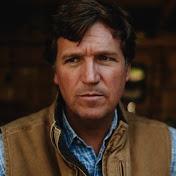
It’s giving Tuckums, who also claims that his empathy for white South African farmers has nothing to do with race … but then again, don’t white people need a homeland???

VIDEO: https://www.youtube.com/watch?v=_G5PL3B3lHA
 
White Persecution in South Africa Is Real (sez Tucker Carlson)


Tucker Carlson

March 3, 2025

#tuckercarlson #conservative #republican

Full interview here: https://tuckercarlson.com

And here are the facts:

Violence against white farmers is not particularly widespread even by the admission of organizations led by Afrikaaners dedicated to tracking farm attacks in South Africa, which suffers from a high rate of violent crime in general. White farmers own about 70 percent of commercial farmland in the country, despite making up a minority of the population. Fewer than 150 attacks involving farmers occurred during the entirety of 2023, according to the Afrikaaner political group AfriForum.

Numerous news reports and studies have found that despite a recent law being passed allowing the government to seize land in some cases without compensation, those land seizures have not actually taken place. AfriForum has vowed a legal fight in the country’s court system if that program were to begin, but even advocates for Afrikaaners have tempered their allegations and rhetoric beyond what the US president displayed on Monday.

Trump would insist on Monday that US media would cover the situation in South Africa more were the racial demographics reversed and a white majority was allegedly persecuting a Black minority.

The fact that Trump exhibits what sure looks like a white persecution complex should surprise no one. He has a long history of complaining that Americans (with the “white” implied) are being victimized by Native Americans who got casinos as reparations, Japanese automakers who sold better, cheaper cars to U.S. consumers, China, Haitian and African immigrants, whom he described as coming from “shithole” (meaning Black) countries. He has described nonwhite immigrants including Haitians as pet eaters and cannibals and he and his freak patrol of an administration claim that nonwhite migrants are “invading” the U.S. through the Southern border. He seems to have a negative obsession with America’s first Black president, Barack Obama, whom he seems to believe got a Nobel Peace Prize, praise and Hollywood love, when Trump has gotten none of the above because Obama is Black and he is white. He is quick to believe that any Black or brown man or teenage boy is a rapist — which is ironic as hell, given that he was found liable for sexually abusing E Jean Carroll and defaming her, and there are nearly two dozen other women who accuse him of being a sex pest. (The former “Central Park Five” AKA the Exonerated Five are suing him for defamation.) Trump routinely uses racist language about nonwhite immigrants — implying they are “impure,” possess faulty genes, and are not even quite human. No wonder he loves the 19th century so much. He talks like an old timey race scientist…

This is a man who seems willing to believe almost any violent conspiracy theory about nonwhite people, and every persecution fable about any white person, anywhere on earth. And his refugee policy is playing out, accordingly.

That’s not wearing well with everyone, however.

The Episcopal Church is ending its refugee resettlement partnership with the federal government over the Trump administration’s “preferential treatment” of white South Africans whom Donald Trump has baselessly claimed have been targeted by “genocide.”

Presiding Episcopal Bishop Sean Rowe announced Monday in a statement that the church was calling it quits on a joint program with the federal government, shortly before 59 South Africans arrived at Dulles International Airport outside Washington on a taxpayer-funded charter flight and were warmly greeted by a Trump administration State Department delegation.

“In light of our church’s steadfast commitment to racial justice and reconciliation and our historic ties with the Anglican Church of Southern Africa, we are not able to take this step” of helping the white South Africa immigrants, Rowe wrote.

“Accordingly, we have determined that, by the end of the federal fiscal year, we will conclude our refugee resettlement grant agreements with the U.S. federal government.”

It has been “painful to watch one group of refugees, selected in a highly unusual manner, receive preferential treatment over many others who have been waiting in refugee camps or dangerous conditions for years,” he wrote.

Rowe noted that the “previously bipartisan U.S. Refugee Admissions Program” in which the church was active has already “essentially shut down. Virtually no new refugees have arrived, hundreds of staff in resettlement agencies around the country have been laid off, and funding for resettling refugees who have already arrived has been uncertain,” he noted.

“As Christians, we must be guided not by political vagaries, but by the sure and certain knowledge that the kingdom of God is revealed to us in the struggles of those on the margins ... and we must follow that command. Right now, what that means is ending our participation in the federal government’s refugee resettlement program and investing our resources in serving migrants in other ways.”

White South Africans, descended from the largely Dutch Afrikaners who immigrated to South Africa centuries ago, long held an elevated status over native Black residents. The Afrikaners imposed the brutally discriminatory apartheid policies until they ended in 1990 that kept a small minority in control of the country, to the suffering and impoverishment of the Black majority.

To this day white farmers continue to own roughly 70 percent of commercial farmland in the country even though white South Africans make up only about 7 percent of the population.

Earlier this year Trump promised a “rapid” whites-only “pathway to citizenship” for the Afrikaners after he was reportedly pressed on the issue by tech billionaire and DOGE hatchet man Elon Musk, who was born and raised in apartheid South Africa.

You’ve almost got to hand it to him for staying on brand.

[Thanks for reading Joy's House! This post is public so feel free to share it.

Joy's House is a reader-supported publication. To receive new posts and support my work, consider becoming a free or paid subscriber.]