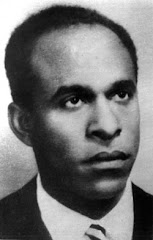
The Great Capitulation
by Eddie Glaude,Jr.
August 4, 2025
A Native Son
I have been trying to digest a recent Associated Press-NORC poll about Americans’ perceptions of racial discrimination. The data show that Americans’ views have shifted rather significantly over the last four years. That after the public murder of George Floyd, 61% of respondents said that “there was a great deal or quite a bit of discrimination against Black Americans.” But today only 4 out of 10 say that “Black people and Hispanic people face quite a bit or a great deal of discrimination.” Most agree, though, that certain groups are treated unfairly “at least sometimes.”
The poll also revealed a decidedly negative judgment about the effectiveness of DEI policies in the workplace. Some hold that the policies increased discrimination against groups, including white people.
What’s clear is that the country has turned its back on the so-called racial reckoning. But the question is why? Or was it a reckoning in the first place?
It seems to me that we have to view the data from 2021 as skewed by the George Floyd lynching. Because of the pandemic, millions of Americans were stuck in their homes and found themselves witnesses to that horrific moment. And, of course, before Floyd’s murder, the country convulsed with Black Lives Matter protests over policing. We had seen repeatedly video footage of police killing Black people. And before that we were in the throes of the racist backlash to Barack Obama (despite declarations that after his election that the country was post-racial and that the Tea Party was really an expression of economic anxiety).
Prior to these events, the standard view among most white Americans was that the country was steadily improving with regards to race matters. But the data betrayed that optimism. Racial inequality continued to haunt the country. And most white Americans rejected policies aimed at addressing explicitly race matters.
In effect, most white Americans consistently misperceived the persistence of racial inequality.
What the poll data revealed in 2021 was a heightened attentiveness to racial inequality driven by the spectacle of protests that had seized the nation. To the extent the country addressed race matters explicitly, public opinion reflected the judgment that Black people faced racial discrimination “a great deal or quite a bit.” Policy, or at least stated commitments to racial justice, followed. The shift in perception today reflects a recalibration – a return to a cultural practice that enables the reproduction and misperception of racial inequality. And policy follows.
Of course, Trump and MAGA Republicans trade in explicit racism. And many who claimed a commitment to racial diversity and justice after George Floyd’s death were lying through their teeth. But the fact of Trump’s racism and the lies of so-called white liberals alone do not account for the pace of the capitulation to the current status quo. Something else underneath it all is at work. Something that was barely disturbed during the so-called racial reckoning and is now being fine-tuned: the rip tide of America’s racial habits and culture.
In Democracy in Black, I wrote about what I called “racial habits.” These are the ways we live the belief that white people are valued more than others. They are the things we do, without thinking, that sustain the value gap. They range from the snap judgments we make about Black people that rely on stereotypes to the ways we think about race that we get from living within our respective communities. We live race in the way space and place are organized in this country. And declarations about racial justice alone cannot undo, especially in four years, the force of how we have been habituated in this country to live racial inequality.
In her brilliant book, More Beautiful and More Terrible: The Embrace and Transcendence of Racial Inequality, Imani Perry thinks about these habits as not simply the possession of individuals but as features of a broader cultural practice of racial inequality. Thinking of racial inequality as a cultural practice allows us to avoid the confusion of reducing the problem to either individual choices or structural realities. Both are at work in the ways that habits shape our choices and how those choices result in accumulated disadvantage. What is required then is a much more nuanced response to the ways Americans act consistently to sustain and extend racial inequality, and attention to the actions that deepen advantage and disadvantage based on group membership.
I asked Professor Perry about what she thought about the relevance of her argument for today.
“It’s funny, I spent years thinking that perhaps I was wrong in that book. Perhaps my argument that explicit racism was no longer the standard and that we had shifted to a cultural habit of inequality. Democracy in Black helped me understand that there is no ‘getting past’ old fashioned racism because the habits remake meanings. But one of the things I say in the book is that habit can always easily slide into overt and explicit racial inequalities and we see that in the rapid turn from racial reckoning to this current moment of racial retrenchment. Moreover, the fact that the stories of Black life and achievement are being erased is so instructive because part of what I explain is that shifting narratives is essential to disrupting the practices of inequality. Of course, our stories are becoming verboten for those who want to barrel us back into Jim Crow. All the more reason for us to continue to fight on the terms of history alongside organizing and activism. As Ida B. Wells famously said, ‘the people must know before they can act.’”
We must dig deeper to understand Trump and “the great capitulation,” and that begins with the history and the cultural practices that shape how we live and see in this place.
On Gaza and Humanity featuring Mosab Abu Toha | The Weekly Show with Jon Stewart

The Weekly Show with Jon Stewart
August 7, 2025
VIDEO:
https://www.youtube.com/watch?v=XmVot3SwqBE
The Weekly Show with Jon Stewart | FULL Episodes
As the world confronts images of the suffering in Gaza, Jon is joined by Pulitzer Prize winning Palestinian poet and author Mosab Abu Toha to hear the human story behind the photos. He shares his experience as a refugee, the voices of those still living through the devastation, and what he hopes for the future of his homeland.
0:00 - Intro
1:30 - Mosab Abu Toha Joins
4:07 - Explaining the Nakba
9:27 - Growing up in Gaza & Refugee Camps
18:00 - The Story Behind Mosab's Poem "The Wounds"
22:45 - Why Haven't Any Other Countries Stepped In? 29:45 - The Palestinians Have Been Abandoned By Everyone
37:03 - Israel's Narrative
47:40 - More Stories from Gaza
52:27 - Mosab: "Humanity is the Only Weapon I Have" 57:40 - Palestine Needs International Protection 1:02:40 - "Everything is Under the Rubble"
1:13:26 - Breaking Down the Discussion
#TheWeeklyShowWithJonStewart
#TheWeeklyShow #JonStewart #ComedyCentral
https://truthout.org/articles/if-mamdani-and-fateh-become-mayors-will-dem-elites-still-collude-to-sink-them/
News Analysis
Politics & Elections
If Mamdani and Fateh Become Mayors, Will Dem Elites Still Collude to Sink Them?
Parts of Fateh and Mamdani’s platforms would be difficult to execute without cooperation from their city councils.
by Sam Rosenthal
July 30, 2025
Truthout

Parts of Fateh and Mamdani’s platforms would be difficult to execute without cooperation from their city councils.
by Sam Rosenthal
July 30, 2025
Truthout
Omar Fateh speaks during a vigil for Dolal Idd, who was shot and killed by Minneapolis Police, on December 31, 2020, in Minneapolis, Minnesota. Stephen Maturen/ Getty Images
Ever since Zohran Mamdani’s upset win over Andrew Cuomo in the Democratic primary for the New York City mayoral race, the corporate media has whipped itself into a frenzy poring over every detail of Mamdani’s upstart campaign and personal life. Less attention has been paid to another surprising turn of events: On July 19, Omar Fateh secured the endorsement of the Minnesota Democratic-Farmer-Labor Party in the Minneapolis mayoral race, beating out incumbent Jacob Frey.
The Democratic-Farmer-Labor Party (DFL) operates only in Minnesota, but it plays a major role as the de facto Democratic Party entity within the state. Its members, who hold membership in both the statewide DFL and in the national Democratic Party, control half the state’s seats in the House of Representatives, both Senate seats, the governorship, and numerous prominent state mayoralties. Fateh’s victory, then, is no less striking than Mamdani’s ability to seize the Democratic Party nomination in New York City. Frey is now planning to file an appeal with the DFL to reconsider its endorsement of Fateh, claiming that the process was marred by delays and technical difficulties. While Fateh led the DFL endorsement count after the first round of counting, with about 44 percent of the vote compared to Frey’s 31 percent, by the time the final vote was held, after extensive delays, Frey says many of his supporters had left the endorsement convention.
Though their establishment opponents have many tricks up their sleeves, these two democratic socialists both now have an excellent chance at becoming mayor-elects of two large U.S. cities come November. If elected, they’ll collectively be representing 9 million Americans, by far the largest population ever to be directly governed by socialist electeds in U.S. history. And, while these results are by no means guaranteed, it’s worth considering what Mamdani and Fateh may be able to do once they’re in office.
Unilateral Decisionmaking
As executives in the highest seat in citywide office, there are several things that both Mamdani and Fateh could do autonomously if elected. First, they would have the sole authority to appoint people to lead the various city agencies that run day-to-day business.
For Mamdani, making an early about-face from the comparatively conservative policies of the Eric Adams administration will be critical. This process will run, at least initially, though the appointments he makes to the administration. If Mamdani is elected, among the appointments to watch closely will be those he appoints to the city’s Rent Guidelines Board (RGB), the body tasked with establishing rent increase guidelines for rent-stabilized units in New York City. Rent-stabilized units make up somewhere around 40 percent of all rental units available in the city, so a tenant-friendly RGB that upholds Mamdani’s promise to freeze rent hikes on rent-stabilized units would have an immediate and sizable impact on housing affordability in the city.
Related Story:

News
Politics & Elections
Mamdani’s Support for Palestinian Rights Was Instrumental to His Win, Poll Finds
A separate poll has found that Americans’ support for Israel’s genocide has hit an all-time low.
by Sharon Zhang
Truthout
July 29, 2025
Like Mamdani, Fateh would also have broad latitude to make his own appointments if he is elected. Minneapolis, like New York, is in the throes of its own housing crisis, and Fateh’s platform is focused on preventing evictions and reducing sweeps of encampments of unhoused people. While Minneapolis does not currently have rent control — in fact, a measure to implement rent control in the city is opposed by Mayor Frey — the city does have advisory committees, including one on housing, that are partially filled by mayoral appointees. These committees make recommendations to the mayor and city council including anti-eviction and rent stabilization measures.
Beyond housing issues, both Mamdani and Fateh also ran on promises of moderating the increasing militarization of their cities’ police departments. Minneapolis is, of course, the site of George Floyd’s 2020 murder, which sparked a massive Black Lives Matter uprising that summer. The city is still roiled by racial inequities in policing. Fateh and Mamdani have both promised public safety reforms that deemphasize the use of force and build up mental health and neighborhood safety programs. Much of this change could flow from the appointment of reform-minded police commissioners, who could unilaterally reorder policing priorities.
Working With City Councils
Other parts of Fateh and Mamdani’s platforms would be difficult to execute without cooperation from the city councils of Minneapolis and New York. Here, both candidates could benefit from organizing efforts that preceded their campaigns for mayor. Both New York and Minneapolis have myriad members who are either outspoken democratic socialists or aligned with other progressive grassroots organizations.
In Minneapolis, the Minneapolis for the Many slate has won a number of seats on the city council for progressive-minded candidates. Members of that slate now occupy six of 13 total city council seats. Efforts to move the council left have already paid off: In 2023, the city council narrowly passed a motion that set the stage for advancing rent control to a citywide vote. However, Mayor Frey threatened to veto that motion, and no further progress has been made in instituting rent control in Minneapolis. Mayor Frey has had a contentious, veto-driven relationship with the current city council; if Fateh were to secure the mayoralty, it could open the floodgates to passage of a great deal of progressive legislation that is currently held at bay by Frey’s veto pen.
Parts of Fateh and Mamdani’s platforms would be difficult to execute without cooperation from the city councils of Minneapolis and New York.
If elected, Mamdani will also find himself with many allies on the city council, but with New York’s substantially larger population, the power of the council’s progressive bloc is somewhat more diluted. New York’s progressive caucus holds 18 out of 51 seats on the city council, and its members are not always in lockstep with one another on what constitutes progressive governing. This means that Mamdani and his allies could be forced to do a great deal more coalition building, rather than leveraging majority rule to push their agenda forward.
Like Frey, current New York mayor Eric Adams has vetoed some of the more progressive legislation that the city council has passed. Although his veto has been overridden at times, Adams remains as an obstacle to advancing progressive policy from within city council. With Mamdani in the mayor’s office, the city council would be able to more quickly advance changes to the cost of renting an apartment, how people with mental health crises are handled by the city, and child care opportunities.
Contending With National Politics
Some of Mamdani and Fateh’s policy priorities would also need approval even farther up the governmental food chain to become a reality. Two of Mamdani’s signature promises — to establish city-run grocery stores and institute free bus fare – would both need cooperation from New York’s state government to become a reality. This means that Mamdani would have to contend with Gov. Kathy Hochul and the more corporate-friendly strain of Democratic Party thinking that she represents.
Since Mamdani’s win in June, Hochul has not offered much toward him in the way of conciliation. “Obviously, there’s areas of difference in our positions, but I also think we need to have those conversations,” she said in an interview shortly after Mamdani’s primary victory. She has also played into the idea that Mamdani’s candidacy has somehow threatened New York City’s Jewish community, despite Mamdani’s overt rejection of antisemitism in public statements. Mamdani was also polling second with Jewish New Yorkers in the weeks before the election and cross-endorsed with his fellow mayoral candidate Brad Lander, who is Jewish. None of this has been enough to stop Hochul from parroting talking points from right-wing media, which has also trafficked in red-baiting and anti-Muslim racism to undermine Mamdani’s candidacy.
Whether Mamdani and Fateh encounter resistance from within their own party will tell us a great deal about the extent to which the Democratic Party is ready to incorporate its progressive wing into its big tent.
Nevertheless, if Mamdani is elected, the two will have to find ways to work together or face the spectacle of public dysfunction between the Democratic governor of one of the nation’s biggest states and the Democratic mayor of its biggest city. At a time when the Democratic Party is at pains to prove that it can serve as a reasonable and effective counterpoint to Trumpism, outward rancor between two of New York’s most prominent Democrats would be a disaster for the party’s image. In this role, Mamdani could resort to the bully pulpit that being mayor of New York City affords him to wage a PR war against Hochul and any attempts by Albany to meddle in his policymaking.
Fateh could have an easier time reconciling national political trends with his agenda as mayor of Minneapolis. Minnesota’s governor, Tim Walz, spent a few months in the national spotlight in 2024 as the running mate of Democratic nominee Kamala Harris. Walz is currently in a period of public deliberation around whether he’ll seek the Democratic nomination for president in 2028. If he does, he’ll likely run as a pragmatic, populist-leaning progressive, as he positioned himself during his stint as the vice presidential nominee. If Fateh is elected, Walz would likely grasp that demonstrating a productive working relationship with the young, progressive mayor of his state’s largest city would be a critical component of maintaining this image. So, if Fateh called the governor’s mansion for help in increasing the statewide minimum wage, for example, he might find a more sympathetic ear than Mamdani.
If both Fateh and Mamdani succeed in capturing the mayoralty in November’s general elections, their early tenures as mayor could be fraught on two fronts. First, democratic socialists have had few opportunities to govern directly from executive roles, and members of the Democratic Party’s more conservative faction, not to mention the entire American right-wing, would be rooting for their brand of progressive policymaking to fail. With their mayoralties under a microscope, every misstep would be judged unforgivingly.
Second, though, whether Mamdani and Fateh encounter resistance from within their own party will tell us a great deal about the extent to which the Democratic Party is ready to incorporate its progressive wing into its big tent. The party has struggled mightily to rehabilitate its image after its bruising 2024 loss to Donald Trump, and candidates like Mamdani and Fateh might offer the quickest route back to relevance. Whether the party’s donor class can hold its nose and embrace their left-wing politics is still an open question.
ABOUT THE AUTHOR:
Sam Rosenthal
Sam Rosenthal is the political director at RootsAction and serves on the Democratic Socialists of America’s National Electoral Committee. He was formerly a staffer at Our Revolution and lives in Washington, D.C.
Mahmoud Khalil Tells His Story | The Ezra Klein Show

The Ezra Klein Show
August 5, 2025
VIDEO:
https://www.youtube.com/watch?v=A2BLU3Gy3YE
The Ezra Klein Show
August 5, 2025
VIDEO:
https://www.youtube.com/watch?v=A2BLU3Gy3YE
The Ezra Klein Show
Mahmoud Khalil was a leader in Columbia University’s pro-Palestinian protests. In March, he was arrested by ICE agents and held for more than 100 days in a Louisiana detention facility. The Trump administration claims Khalil is deportable — even though he has a green card, married to a U.S. citizen — because he poses a threat to U.S. foreign policy goals. Khalil’s alleged offense here is speech. Khalil is out now on bail, and he’s still speaking. I wanted to hear what he had to say
00:00 Intro
3:00 Mahmoud Khalil’s childhood
7:00 Fleeing Syria
12:40 Why he came to the U.S.
15:36 Life at Columbia before Oct. 7
19:05 Oct. 7
25:00 “Palestinians don’t have to be perfect victims” 27:44 The origin of the Columbia protests
35:00 Jewish students in the pro-Palestinian protests 37:30 The meaning of Palestinian liberation
40:16 Negotiating with Columbia
45:11 Donald Trump takes office
48:00 The arrest
53:32 ICE detention
58:34 Trump’s case against Khalil
1:04:49 Stories from detention
1:14:20 ‘Being uncomfortable is very different from being unsafe’
1:23:31 ‘The moral imperative to speak up’
1:26:31 Book recommendations
Read the full transcript here:
https://www.nytimes.com/2025/08/05/op...
Watch more on @EzraKleinShow Thoughts?
Guest suggestions?
Email us at ezrakleinshow@nytimes.com.
You can find transcripts (posted midday) and more episodes of “The Ezra Klein Show” at nytimes.com/ezra-klein-podcast.
Book recommendations from all our guests are listed at https://www.nytimes.com/article/ezra-...
https://www.anativeson.org/p/weekly-wrap-up-august-1-2025
Weekly Wrap Up - August 1, 2025
Eddie
August 1, 2025
Summary:
VIDEO:
In this Weekly Wrap Up, Eddie discusses the ongoing humanitarian crisis in Gaza, highlighting the U.S. complicity in the situation and the moral responsibility that comes with it. He delves into the implications of current immigration policies and the surveillance state, as well as the economic turmoil caused by tariffs. Eddie also addresses the pressures faced by universities in the current political climate and critiques the conservative perspective on higher education. He concludes with a reflection on the broader social order and the need for honesty in confronting the issues at hand.
Continue Reading…
“Israel Airdrops Food Into Gaza as Starvation Deaths Rise”
Published: August 1, 2025 – The Washington Post
“‘A Cruel and Transparent Farce’: Israeli Attacks Kill 62 in Gaza Amid ‘Tactical Pause’”
Published: July 27, 2025 – Common Dreams
“Gaza Hunger Crisis: Aid Sites Become Death Traps”
Published: August 1, 2025 – The New York Times (Interactive)
“Why More Immigrants Are Being Tracked With Ankle Monitors — and Who Profits”
Published: July 2025 – The Washington Post (Post Reports Podcast)
“‘Welp, There Goes the Economy’: Trump Tariffs Trigger Global Alarm”
Published: April 2, 2025 – Common Dreams
“Trump’s Tariffs: Live Updates on Trade Fallout”
Published: July 31, 2025 – The New York Times (Live)
“Trump Tariff Tracker: What’s Been Hit and What’s Next”
Published: July 28, 2025 – The New York Times (Interactive)
“Brown University Reaches Agreement to Restore Federal Funding”
Published: July 31, 2025 – NPR
“Trump Administration Pressures Harvard Over Federal Payments”
Published: July 28, 2025 – The New York Times
“Columbia’s $221 Million Settlement With Trump Administration”
Published: July 25, 2025 – NPR
“Texas House Republicans Advance New Congressional Maps”
Published: July 30, 2025 – The Texas Tribune
“Opinion: Texas Redistricting Is a Warning for Democrats”
Published: July 31, 2025 – The New York Times
“Democrats Plot Retaliation for Texas Redistricting in California and New York”
Published: August 1, 2025 – The Washington Post
“Federal Workers Gain New Protections for Religious Expression”
Published: July 28, 2025 – The Washington Post
“Opinion: The Democratic and Republican Parties Are Both Changing — Fast”
Published: July 31, 2025 – The New York Times
https://thehill.com/opinion/campaign/5436443-trump-abbott-gerrymandering-texas/
‘Trumpmandering’ — a nationwide scheme to undermine Black and Hispanic voters
by Donna Brazile
8/6/25
The Hill
In a desperate power grab to preserve Republican control of the U.S. House in the 2026 elections, President Trump is demanding Republican elected officials in Texas and other states redraw congressional district boundaries. He aims to deprive Black and Hispanic voters — most of whom tend to support Democrats — of the ability to elect their favored candidates.
Texas Gov. Greg Abbott (R) and his fellow Republicans, who hold the majority in both houses of the state legislature, are going along with Trump’s wishes.
Abbott called a special session of the legislature to adopt a new map unveiled last Wednesday, which redraws congressional district boundaries in a way that gives Republicans an excellent chance of picking up as many as five additional U.S. House seats. This means Republicans would control of 30 of the 38 seats Texas holds.
Dozens of Democratic members of the Texas state House have left the state in a move to prevent the chamber from voting on the new congressional district boundaries that disenfranchise many Black and Hispanic Texans. The state House can only act if 100 of its 150 members are present.
Democrats hold 62 seats, and at least 51 have left the state, a spokesman said.
Abbott threatened to remove absent Democrats from office if they didn’t show up to vote on the new district map Monday afternoon, but Democrats said he had no power to oust lawmakers. Democratic House members also face $500 fines for each day they are absent from the special session.
After the absence of Democrats prevented the state House from voting on redistricting Monday, Abbott said he has “ordered the Texas Department of Public Safety to locate, arrest and return to the House chamber” any of the absent Democratic members the department can find.
Democratic lawmakers stayed away Tuesday and again prevented the House from voting on redistricting.
Four of the Democratic congressional seats Republicans see as pickup opportunities if district boundaries are changed to favor the GOP currently are or were until recently held by Black or Hispanic lawmakers. The seat once held by Democratic Rep. Sylvester Turner (D) has been vacant since he died in March.
The Constitution requires states to redraw congressional district lines every 10 years, so that all districts have roughly the same number of people, based on findings of the U.S. Census conducted once each decade. But under pressure from Trump, Texas is redistricting after only four years.
Democrats in the legislature don’t have the votes to stop this unusual move, prompting many House members to leave the state. They and others are sure to file lawsuits challenging any new district boundaries Republicans impose.
The Voting Rights Act of 1965 says no state or local government can “deny or abridge the right of any citizen of the United States to vote on account of race or color.” Among other provisions, the law bars drawing election district lines that deny minority voters an equal opportunity “to participate in the political process and to elect representatives of their choice.”
For millions of Black folks, the Voting Rights Act was our admission ticket to participate in American democracy.
My parents and many relatives in our home state of Louisiana never got to vote before the Voting Rights Act became law, because Southern states created many obstacles to Black people casting ballots as a way of keeping us politically powerless. I was a young girl in 1965, and thanks to the law I was able to vote years later when I turned 18.
Unfortunately, as we’ve seen repeatedly, Trump doesn’t let the Constitution or laws on voting rights or anything else stop him from doing what he wants.
He acts and then waits for lawsuits challenging his authority to be heard by U.S. district courts. If he loses he goes to circuit courts of appeal, and ultimately the Supreme Court, which has a 6-3 conservative majority that often favors him. This process can take many months.
The vast majority of Republicans who control the House and Senate with narrow majorities have disgracefully given up their constitutional responsibility to act as a check and balance on Trump’s efforts to do whatever he pleases. They don’t dare criticize the president, fearing he will work for their defeat in primaries.
But Democrats in Congress have no problem criticizing Trump. In a fiery statement denouncing the Republican redistricting map in his state, Rep. Marc Veasey, (D-Texas), said, “Let’s be clear — this map is racist, it’s illegal and it’s part of a long, ugly tradition of trying to keep Black and brown Texas from having a voice. What Donald Trump and Greg Abbott are doing isn’t about democracy — it’s about consolidating power.”
But because Republicans control the House with a 219 to 212 majority, with four vacancies, and they hold a 53-47 majority in the Senate, Democrats can’t stop Trump’s abuses of power.
However, if they win majority control of the House next year, they could do a great deal to block his legislative proposals and force him to make compromises, hold hearings on his actions and hold him and his appointees accountable. They could do even more if they win control of the Senate.
Trump is well aware of this, which is why he is trying to do whatever it takes to preserve the Republican majorities in the House and Senate in the 2026 elections. The party controlling the White House usually loses congressional seats in the midterms, giving Democrats an excellent chance of taking the House and a prospect of at least narrowing the Republican majority in the Senate.
The purpose of elections, of course, is to give voters the opportunity to choose the candidates they want to run government. But Trump and his enablers want to give Republican candidates the power to choose their voters by drawing district lines.
As The Hill has reported, Republicans in other states they control — Florida, Missouri and Indiana — may join Texas in partisan redistricting in an effort to keep their House majority in next year’s elections. Ohio is certain to redistrict due to a unique state law and a long-running court case, and Republicans there may choose to go hard partisan, just as in Texas.
Democrats in control of California, New York, New Jersey, Illinois and Maryland may be forced to retaliate by carving up their congressional districts in ways that help their party preserve and pick up House seats.
It’s ironic that while Trump falsely claims his 2020 reelection defeat was the result of an election rigged by Democrats, he has become the rigger in chief on behalf of Republicans with his efforts to keep control of the House through gerrymandering — drawing up election districts, often in strange shapes, to give one party an unfair advantage in elections.
Gerrymandering gets its name from Massachusetts Gov. Elbridge Gerry, who signed a bill into law in 1812 redrawing state Senate districts to the advantage of his Democratic-Republican Party. One district was said to look like a winged salamander, leading a newspaper cartoonist to draw it with the label “Gerry-mander,” which evolved into “gerrymander” years later.
Since Trump clearly loves gerrymandering and loves putting his name on hotels, resorts, golf courses, hats, steaks and other things, perhaps it’s time to retire the name “gerrymandering” and honor our president by giving it a new name.
“Trumpmandering” seems quite appropriate for a practice that needs to end.
ABOUT THE AUTHOR:
Donna Brazile is a political strategist, a contributor to ABC News and former chair of the Democratic National Committee. She is the author of “Hacks: Inside the Break-ins and Breakdowns That Put Donald Trump in the White House.”