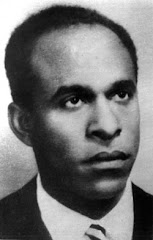
Discourse that allows us to express a wide range of ideas, opinions, and analysis that can be used as an opportunity to critically examine and observe what our experience means to us beyond the given social/cultural contexts and norms that are provided us.
As Barack Obama forcefully indicates in the video above this election is not about what Sarah Palin thinks about his service as a community organizer over twenty years ago nor is it about what such rightwing cretins as Giuliani, Huckabee, Romney, and Bush think about Obama's "personality" and general employment resume. What it's about is the political and economic direction of American society and its complex global relations with the rest of the world. All of the dismissive rhetoric of Alaskan Governors and feisty evangelical mothers with delusions of grandeur will not and cannot distract from the major task at hand--which is to get Senator Obama elected President of the United States on November 4. Stay tuned...
This is one of the most transparently cynical, manipulative, crass, and exploitive ploys in American political history. McCain and the Republican right are showing absolute contempt for women in particular and the American people in general. The choice of a woman who was a major organizer and fundraiser for proto-fascist Pat Buchanan in 1992 and 1996 and voted for Buchanan for president in 2000; who is not only pro-life and thus for eliminating Roe v. Wade but also advocates the complete outlawing of abortion even in circumstances involving rape and incest, is pro gun and a lifetime member of the NRA, has absolutely no foreign policy experience or knowledge of any kind whatsoever and says that she has "no interest" in the issue of the Iraq War, is an extreme evangelical rightwinger on every single political and economic issue of any consequence, has been Governor of Alaska only since December of 2006 and is to the political right of both George Bush and John McCain on every single major issue in this campaign--from healthcare and education to energy policy, the housing crisis, and the national deficit, is an indication that McCain is absolutely desperate at this point and that he and his campaign have no ideas or principles whatsoever with respect to the Presidency. McCain clearly doesn't give a fuck what he represents himself as standing so long as he and Sarah thinks they can pimp the white American woman vote--and especially the women who voted for Billary during the Democratic Party primaries. Thus not only nakedly revealing their contempt for these women as voters, citizens, and human beings but also showing their complete disregard for the office of the Presidency as well (does anyone seriously believe that Sarah Palin should become President of the United States if the 72 year old McCain--the oldest man in history to run for the Presidency-- is elected and say dies in office?). One would have to be braindead to even consider such a bizarre scenario as rational.
So there you have it: One more gigantic piece of evidence that shows us why the election of John McCain would be a catastrophe of epic proportions. If this entire election is about anything at this point it's about whether American voters are clinically SANE or not. Stay tuned...
Kofi
August 30, 2008 McCain Chooses Palin as Running Mate By MICHAEL COOPER and MITCHELL L. BLUMENTHAL New York Times
DAYTON, Ohio — In a surprise move, Senator John McCain announced here Friday that he had chosen Gov. Sarah Palin of Alaska as his running mate, shaking up the political world at a time when his campaign has been trying to attract women, especially disaffected supporters of Senator Hillary Rodham Clinton.
“I’m very happy today to spend my birthday with you, and to make a historic announcement in Dayton,” said Mr. McCain, who turned 72 on Friday, explaining that he had been looking for the running mate who can “best help me shake up Washington.”
In choosing Ms. Palin — a 44-year-old mother of five who has been governor for less than two years — the McCain campaign reached far outside the Washington Beltway during an election in which the Democratic presidential nominee, Senator Barack Obama, is running on a platform of change.
The selection of Ms. Palin, an evangelical Christian, was embraced by social conservative leaders, raising the possibility that Mr. McCain might have succeeded in reinvigorating a Republican base that was not enthusiastic about his candidacy. Democrats, however, dismissed the move as a bald attempt to attract women voters by reaching out to someone far too inexperienced to be a heartbeat from the presidency.
“She’s not from these parts, and she’s not from Washington, but when you get to know her, you’re going to be as impressed as I am,” Mr. McCain said as he introduced Ms. Palin to a crowd estimated by his campaign to be 15,000 at the Ervin J. Nutter Center at Wright State University.
Ms. Palin then took the stage with her husband, Todd, who owns a commercial fishing business. They were accompanied by four of their five children; she said the eldest child, a son, is in the Army, and he is heading to Iraq on Sept. 11.
She described herself as “just your average hockey mom,” who joined the P.T.A., was elected to the City Council and then served as mayor and as governor, adding that she did not get into government to take the safe course.
“A ship in harbor is safe, but that’s not why the ship is built,” Ms. Palin said, adding that she would “challenge the status quo to serve the common good.”
Ms. Palin praised the achievements of Senator Hillary Rodham Clinton, who lost a long and bitter primary race against Senator Obama, saying that she had left “18 million cracks” in the highest glass ceiling in the land.
Then, making an explicit appeal to Ms. Clinton’s disappointed supporters, she said, “It turns out that the women in America aren’t finished yet, and we can shatter that glass ceiling.”
Ms. Palin, a former mayor of the small town of Wasilla, an Anchorage suburb, and one-time beauty pageant queen, first rose to prominence as a whistle-blower uncovering ethical misconduct in state government.
The selection amounted to a gamble that an infusion of new leadership — and the novelty of the Republican Party’s first female candidate for vice president — would more than compensate for the risk that Ms. Palin could undercut one of the McCain campaign’s central arguments, its claim that Mr. Obama is too inexperienced to be president.
The choice of Ms. Palin stands in sharp contrast to the selection of the Democratic vice presidential nominee, Senator Joseph R. Biden Jr. of Delaware, a veteran lawmaker and chairman of Foreign Relations Committee.
But Ms. Palin ran as a change agent when she was elected as governor of Alaska in 2006, and in a move that might have appealed to Mr. McCain, she took intense criticism from members of her own party for turning the spotlight on the failures of Alaska Republicans, some of whom had been beset by corruption scandals.
She was elected Alaska’s chief executive after fighting off a comeback bid by a former Democratic governor. Her victory came after she had helped uncover misconduct in the administration of Gov. Frank Murkowski, whom she later trounced in a Republican primary.
Ms. Palin opposes abortion rights, which could help pacify social conservatives in a party whose members were wary as rumors swirled that Mr. McCain might pick a running mate who did not.
But she differs with Mr. McCain on a controversial environmental issue that centers on her home state: she has been pushing for a new pipeline that would pump trillions of cubic feet of natural gas from the North Slope to the lower 48 states in the hope of delivering Alaska another economic boom. Mr. McCain’s opposition to drilling — even after he changed positions and began advocating for off-shore oil drilling — has upset many Republicans.
The choice of Ms. Palin was a closely guarded secret, and she flew under the political radar for months as Mr. McCain searched for a running mate.
Much of the public discussion in recent days had focused on Mitt Romney, the former Massachusetts governor and Mr. McCain’s one-time rival for the Republican nomination; Gov. Tim Pawlenty of Minnesota; Tom Ridge, the former governor of Pennsylvania and Homeland Security secretary, and Senator Joseph I. Lieberman of Connecticut, the Democrat-turned-independent who was former Vice President Al Gore’s running mate in 2000. Social conservatives were relieved and pleased.
Although Ms. Palin had seemed like a long-shot, she was the subject of an effort on the Internet by conservatives to draft her as vice president.
She is known to religious conservatives for choosing not to have an abortion after learning that she was carrying a child with Down syndrome. “It is almost impossible to exaggerate how important that is to the conservative faith community,” said Ralph Reed, the former head of the Christian Coalition. She gave birth to her son, Trig, in April.
“This is a home run,” Mr. Reed said. “She is a reformer governor who is solidly pro-life and a person of deep Christian faith. And she is really one of the bright shining new stars in the Republican firmament.”
Lori Viars, a social conservative activist in Lebanon, Ohio, who had been a staunch supporter of Mike Huckabee and had struggled to muster enthusiasm for Mr. McCain, said, “I’m so hot and sweaty, because we’ve been jumping around and hugging.”
“It is too good to be true,” said Ms. Viars, who attended the McCain campaign rally here on Friday with several other conservative grassroots leaders. “This is better than we could have ever expected.”
Mrs. Palin was already set to be honored by the Republican Coalition for Life at the party’s convention in St. Paul.
In some ways, the choice of Ms. Palin was reminiscent of George H. W. Bush’s selection of Dan Quayle, a young United States senator, as his running mate in 1988. The media and most in the Republican Party were caught unaware then by the announcement of a figure relatively unknown outside Indiana.
Several of Mr. McCain’s outside advisers reacted with bewilderment to the selection of Ms. Palin, and one said that it would undercut one of Mr. McCain’s central criticisms of Senator Obama — that he is too inexperienced to be commander in chief.
“While it’s a dramatic and interesting choice, it would make the argument he’s making difficult to make,” said the adviser, who is close to the campaign.
In Alaska, Carrie Hollier, a 27-year-old resident and supporter of Mr. Obama, said she would feel some wistfulness about not voting for the governor she admires.
“It definitely makes it difficult, because you can’t help but love Sarah Palin,” she said.
Under other circumstances, Ms. Hollier might consider voting for Ms. Palin. “She never comes across as full on Republican,” she said. “But Obama is the one who is going to bring everyone home.”
Not surprisingly, reaction was sharply divided on Capitol Hill.
Senator Barbara Boxer, a California Democrat, dismissed Ms. Palin’s appeal to female voters.
“The vice president is a heartbeat away from becoming President, so to choose someone with not one hour’s worth of experience on national issues is a dangerous choice,” she said in a statement. “If John McCain thought that choosing Sarah Palin would attract Hillary Clinton voters, he is badly mistaken. The only similarity between her and Hillary Clinton is that they are both women. On the issues, they could not be further apart.”
Representative Rahm Emanuel of Illinois, chairman of the House Democratic Caucus, said Democrats were flabbergasted at the choice.
“On his 72nd birthday, this is the guy’s judgment of who he wants one heartbeat from the presidency?” said Mr. Emanuel, who said the selection smacked of political panic. “Please.”
Senator Charles E. Schumer of New York, chairman of the Democratic Senatorial Campaign Committee, said that “after the great success of the Democratic convention, the choice of Sarah Palin is surely a Hail Mary pass.”
However, Republican Congressional leaders praised the choice and sought to answer questions about her experience.
“Governor Palin is a very bright leader who will bring a fresh perspective to a ticket that already has the experience and judgment necessary to lead our country from day one,” said Senator Mitch McConnell of Kentucky, the Senate Republican leader.
Representative John A. Boehner of Ohio, the House Republican leader, called her “a popular and proven reformer with a record of accomplishment and real executive experience.”
For their part, Mr. Obama and Mr. Biden issued a measured response to Mr. McCain’s choice.
“We send our congratulations to Governor Sarah Palin and her family on her designation as the Republican nominee for Vice President,” they said in a statement. “It is yet another encouraging sign that old barriers are falling in our politics.”
Late in the afternoon, Senator Obama called Ms. Palin from his campaign bus in western Pennsylvania, offering his congratulations on her selection to the Republican ticket. In a conversation that lasted several minutes, aides said, Mr. Obama told her that she would be a terrific candidate and he looked forward to seeing her on the campaign trail.
“He also wished her good luck,” said Robert Gibbs, a senior strategist to Mr. Obama, “but not too much luck.”
Elisabeth Bumiller and Carl Hulse contributed reporting from Washington, Michael Grynbaum from New York, Jodi Kantor and Michael Luo from Denver, and Jeff Zeleny from Pittsburgh.
Palin attacks Obama and U.S. media Sheldon Alberts, Washington Correspondent , Canwest News Service September 03, 2008
ST. PAUL, Minn. - Amid a raging political debate over her selection as John McCain's running mate and tabloid-intensity focus on her family life, Alaska Gov. Sarah Palin on Wednesday accused the U.S. media "elite" of leading a campaign to portray her as unqualified and said her experience as a former small-town mayor trumped the achievements of Democratic presidential candidate Barack Obama. In a highly-anticipated speech to delegates at the Republican National Convention, Palin cast herself as a political outsider scornful of the Washington establishment she will join if elected vice-president in November.
Palin, 44, immediately addressed Democratic criticisms that she lacks the national political or foreign policy experience to step in as president if McCain was elected and somehow unable to perform his duties.
Republican vice-presidential nominee and Alaska Governor Sarah Palin blows a kiss to her baby during her speech at the 2008 Republican National Convention in St. Paul, Minnesota Sept. 3.
She drew a contrast between experience as mayor in her hometown of tiny Wasilla, Alaska, and the time Obama spent working as a community organizer on Chicago's South Side in the 1980s.
"Before I became governor of the great state of Alaska, I was mayor of my hometown," Palin said in remarks prepared for delivery. "And since our opponents in this presidential election seem to look down on that experience, let me explain to them what the job involves. I guess a small-town mayor is sort of like a 'community organizer,' except that you have actual responsibilities."
Palin, a married mother of five, has been at the centre of a media maelstrom since McCain surprised Republicans last week by picking her to be his running mate, over more-established GOP politicians like former Massachusetts governor Mitt Romney and former Pennsylvania governor Tom Ridge.
Since then Palin has faced a barrage of questions about her lack of foreign policy experience, her relative youth and short time as governor. She was elected as the state's chief executive in 2006.
"I'm not a member of the permanent political establishment. And I've learned quickly, these past few days, that if you're not a member in good standing of the Washington elite, then some in the media consider a candidate unqualified for that reason alone," Palin said. "But here's a little news flash for all those reporters and commentators: I'm not going to Washington to seek their good opinion - I'm going to Washington to serve the people of this country."
Just as Democratic vice-presidential candidate Joe Biden led his party's critique of McCain at his party's convention last week of McCain, Palin spearheaded the charge on Obama. She suggested one of the Illinois senator's campaign mantras - change - was little more than a cynical ploy to advance his own career.
"Here's how I look at the choice Americans face in this election," Palin said in excerpts from her speech released to the media. "In politics, there are some candidates who use change to promote their careers. And then there are those, like John McCain, who use their careers to promote change."
Other Republican speakers portrayed Obama as naive and ill-prepared to defend America from extremist threats.
Former Arkansas governor Mike Huckabee, the runner-up to McCain during the Republican primaries, said Obama deserves congratulations for becoming the first African-American presidential nominee, but suggested he was a token choice.
"Party or politics aside, we celebrate this milestone because it elevates our country," Huckabee said. "But the presidency is not a symbolic job, and I don't believe his preparation or his plans will lift America up."
Former New York mayor Rudy Giuliani described Obama as a "celebrity senator" with no record of legislative accomplishment. When Giuliani mentioned Obama's work as a community organizer, the GOP crowd erupted in catcalls and boos.
"He's never had to lead people in crisis . . . Barack Obama has never led anything. Nothing. Nada," Giuliani said. "No one can look at John McCain and say he is not ready to be commander-in-chief."
But even as Republicans sought to turn the convention spotlight on Obama, the main drama for the third straight day continued to unfold around Palin. Ever since the little-known Alaska governor was introduced to Americans last week, she has been the recipient of high praise and scornful criticism as fans and foes sought to shape public opinion.
Social conservatives have embraced Palin for her staunch opposition to abortion rights and the decision to give birth to her youngest son, Trig, after learning during pregnancy he would have Down syndrome.
And her past as a caribou-hunting beauty queen-turned-soccer mom has grabbed as much early attention as the ethics investigation she faces in Alaska for dismissing a senior civil servant who had refused to fire her estranged ex-brother-in-law.
But it has been the revelations that Palin's 17-year-old daughter, Bristol, is five months pregnant which have opened new fault lines in the already-tense relationship between Republicans and the press.
Former Massachusetts governor Jane Swift, one of several campaign surrogates dispatched Wednesday to defend Palin, accused the media of waging a "vicious smear campaign" against the GOP vice-presidential candidate.
McCain's wife, Cindy, says coverage of Palin has "absolutely" been sexist, singling out an Us Magazine cover titled "Babies, Lies and Scandal."
Further, McCain's campaign on Wednesday said questions about whether Palin could raise a family - including a disabled child - would never be asked of a male candidate.
"Too many folks are focused on issues about her family and her ability to handle two important jobs," said Swift. "There are individuals who will judge women with young children in political offices differently."
Republicans aides have repeatedly urged reporters to respect the privacy of Bristol Palin and her boyfriend, Levi Johnston. But after initially releasing only Johnston's first name, the campaign flew the young man to St. Paul to join the Palin family at the convention.
Johnston was on the airport tarmac for a photo opportunity of McCain's arrival in St. Paul. McCain twice embraced Bristol Palin and gave Levi Johnston a firm handshake.
Palin and McCain have courted the supermarket tabloids as well, giving their first joint interview to People magazine. Palin posed on the cover with her infant son, who was born in April.
In her speech, Palin sought to regain control of her own biography.
"I had the privilege of living most of my life in a small town. I was just your average hockey mom, and signed up for the PTA because I wanted to make my kids' public education better," she said. "When I ran for city council, I didn't need focus groups and voter profiles because I knew those voters, and knew their families, too."
While Palin tried to define herself for American voters, the media was also playing a significant role.
On Wednesday, CNN aired video of Palin telling churchgoers in Wasilla, Alaska, that U.S. troops in Iraq were "on a task that is from God." Palin's eldest son, Track, is a U.S. army infantryman who is being deployed to Iraq later this month.
The life of McCain v-p pick Sarah Palin
Here are some facts about Sarah Palin, who rose quickly from small-town mayor to one of the most popular governors in Alaskan history before her surprise selection as Republican John McCain's vice presidential running mate.
* Born in Sandpoint, Idaho, on Feb. 11, 1964, she moved to Alaska with her parents as an infant. As a star on the state champion Wasilla High School girls' basketball team, she was known as "Sarah Barracuda" for her aggressive play. She graduated in 1987 from the University of Idaho, where she studied journalism. She worked as a sports reporter at an Anchorage television station in 1988. * She entered politics in 1992 by running for the city council in Wasilla, a town outside Anchorage that then had about 5,000 residents. She was re-elected to a second term in 1995, and became Wasilla's mayor in 1996.
* She gained statewide fame as a whistle-blower calling attention to ethical violations by high-ranking Republican officials in Alaska, including the chairman of the state Republican party and was sworn in as the state's youngest and first woman governor in December 2006.
* As governor, Palin has spoken out against corruption, battled for funding from major oil producers and convinced the legislature to give a $1,200 "energy rebate" to nearly every Alaskan. Her approval rating in the state stands at 80 percent.
* Palin is under investigation by Alaska's state legislature to determine whether she fired a public safety commissioner after he declined to fire a state trooper who had divorced Palin's sister. Palin has hired a private lawyer in the probe.
* Palin married her high school sweetheart, Todd Palin, in 1988. A champion snowmachine racer, Todd Palin is a commercial fisherman who has worked for BP and has been a production operator in oil fields on Alaska's North Slope.
* Palin, who has five children including a son born in April with Down Syndrome and an unmarried 17-year-old who is pregnant, is favored by social conservatives because of her opposition to abortion, devout Christianity and lifetime membership in the National Rifle Association.
* In 1984, Palin won the Miss Wasilla pageant, and finished second in the Miss Alaska pageant, at which she was named "Miss Congeniality."
Barack Obama Seizes the Time--Get on board now or live to regret it
I've seen and heard many political speeches over the last 45 years (the first speech I remember actually listening and paying close attention to was John F. Kennedy's famous speech about the moral and political necessity of the American people and specifically his administration to fully support civil rights and get a federal civil rights bill passed on the very same night that the leader of the Mississippi NAACP Medgar Evers was assassinated by the Ku Klux Klan). The date was June 12, 1963. I listened to Kennedy's speech with my parents and I saw them cry while listening in a way I had never experienced before. So it was more than sobering to me at the time that President Kennedy himself was also assassinated just five months later on November 22, 1963. I've seen and heard literally hundreds of speeches since then and have always made it a point to listen in a very serious and intense way because what I learned listening to John F. Kennedy that day is that WORDS DO MATTER and what a President does or doesn't do in fact really does matter in many different positive and/or negative ways...
This is all a prelude to saying that what I saw and heard from Barak Obama tonight was without a doubt the greatest, most profound, and most important political speech I have ever witnessed (the only analog I can think of that moved me in quite the same way was what I've always considered to be Dr. Martin Luther King's greatest speech which is not the 'I Have a Dream' speech of August 28, 1963 but the one King gave nearly five years later on April 3, 1968--the day before he too was assassinated!
What Obama has accomplished tonight marks a real turning point in American history just as the Kennedy and King speeches that I just referenced undoubtedly did. Anyone who doesn't see or understand that fundamental fact about tonight understands NOTHING about politics in any form and certainly doesn't understand or appreciate WHAT IT REALLY TAKES to change the society and the culture. If progressives, radicals, and yes, even "revolutionaries" don't clearly perceive what Obama laid out so eloquently and so succinctly in his speech tonight then all is surely lost. I can't conceive of any genuine or even sentient political being not being deeply impressed with the form and content of what Obama said tonight and what it seriously portends for this country if he is elected in November. We had ALL better hope and pray that he is. Obama is the REAL DEAL and to not properly recognize that one very important fact is to miss out on one of the most incredible and meaningful opportunities for political and cultural transformation in American history. As Obama pointed out (and always points out) this election is not about him or John McCain it's about US. To not remember or openly embrace that truth will only be to our collective peril...
In this context it is crucial to remember that cynicism is our greatest enemy.
What the young (?) people with the signs in St.Petersburg, Florida said to Obama “You’re undermining the (Black) Revolution” is merely one more sign of how confused and misdirected too many who style themselves “revolutionary” have become. For one thing it is certain that these folk do not even understand what revolution is. I would guess they are more of the tiny throng captivated by anarchism and infantile leftism who think revolution means standing on the sidelines calling who they think are their enemies names.
If you want to stand around with signs of some significant show of political clarity, they should at least be aimed at the crypto fascist McCain. To not even be able to identify who is the main enemy at any given stage of struggle is patently non-revolutionary. To think that Obama is the principle target of our struggle is , at best, infantile left and anarchist. It could be pro McCain.
If we go back to basics, revolution is the seizure of power. The aim of revolutionaries, at most stages of struggle, is the seizure of power, to picket Obama is to move to seize power for McCain.
What is also not understood is the tortuous path of revolutionary struggle. Obama, along with quite a few other “post 60’s” developments is the product of the 60’s struggles, a direct result of the turbulent civil rights and Black Liberation movements. Whether you yet understand it or not, Without Dr. King, Montgomery, Malcolm X, Robert Williams, Rosa Parks, CORE, The Freedom Riders, The Black Panthers, SNCC, CAP, there could be no Barack Obama . Without those bloody struggles against Black national oppression, racism, discrimination, segregation, there could be no Obama candidacy, certainly not of this magnitude.
Jesse’s two runs were admirable , and yes, they were part of the sledgehammer of Black politics from the 50’s through the 80’s. And just as that force created the visible use of Powell and Condoleeza Rice as negro “buttons” within the rightwing establishment of US bourgeois politics , none of that was possible without the Black movement itself, as contradictory as that might seem . The internationally perceived racial conflict in the United States was the most glaring contradiction to US claims as the almighty white angel of world politics.
The colored Secretaries of State provided some of the cool out necessary not only to sublimate that image but to foist on this world of colored people a confusing tactic , so that when the US Secy of State hopped out of plane somewhere in this mostly colored world, friends and righteous enemies would be startled by who was carrying the message.
So that now it’s come all the way to the “top” of US government, this need for another, Yeh! Black , face to cool out the ugliness the last 20 some years have mashed upon the world. We might not agree with the intention of this playacting, but at the same time we must recognize the forces that make this necessary. Recognize those forces, because we are a large part of them. And with that recognition must come the understanding of what is the next step in this protracted struggle to ultimately eliminate imperialism and monopoly capitalism, which are the base of continuing national oppression , racism, gender oppression, anti –democratic hegemony anywhere in the world.
The very negative side of the “post racist” line that Obama runs is that the die is cast for nitwits to say that racism is done and gone and that if you still in the ghetto or still don’t have a job, it’s on you. Bah, Humbug! Obama’s best intention is that there is the making of a post racist coalition that can provide the muscle for his campaign and victory in the election. But reality, the cops, the jails, the unemployment figures puts all that down every day.
But it is a very pimpable figment. The New York Times recent cover story “Is Obama The End of Black Politics?” is a very stinking example of its pimpablity. One obvious answer to that is “Only if Obama is the End of White Politics” which we see even in the way the Clintons as well as McCain and the overwhelming racism of the media are running the primaries, is certainly not the case. One could hope that an Obama victory wd signal an incremental leap in the direction of more democratic allowance for highly skilled operatives within the system, which is what Obama certainly is. But “post racist”?..., gimme me a break.
The Times article, predictably, uses the most visible of stealth negroes , i.e. those who, while profiting by the opening in US politics provided them by the Civil Rights and Black Liberation Movement, and getting substantial Black support at the polls, believe that they have “made it” by virtue of their own impeccable greatness, Booker in Newark, Nutter in Phila, Fenty in DC come to mind. Booker, whom I sent a copy of Marvin X’s book How To Recover from An Addiction to White Supremacy , though more crafty than Nutter, who played gun bearer for Bonnie & Clyde during the Democratic primaries, Booker has raised Newark taxes 8% , fired 4 or 500 mostly black city hall workers, claiming to have a budget problem but hiring at the same time a half dozen non-Newark natives as“deputy mayors”, at $176,000 a piece. My son, Ras, was deputy mayor for four years and took no salary. The top 10 Police officials, including both the Police Director and the Police Chief are white. Fenty who claims his biracial parentage has made him see ”more” than merely black struggle. Booker says “I don’t want to be the person that’s turned to when CNN talks about black leaders…I’m Popeye, “ he says…”I am who I am”. Naturally these would be the people the Times would use to give an obituary for “Black Politics”. But certainly, these kinds of “wooden negroes” are not entirely new on the scene, they are just the most recent crop of negroes claiming they are greater (or safer) than mere black people. The struggle between Langston Hughes and Countee Cullen was essentially the same , when Langston says in The Negro Artist & The Racial Mountain (1926) “ One of the most promising of the young Negro poets said to me once, ‘I want to be a poet—not a Negro poet’ meaning subconsciously, ‘I would like to be a white poet’, “meaning behind that “’I would like to be white’ And I was sorry the young man said that, for no great poet has ever been afraid of being himself” In a recent Esquire Booker comes on like he thinks he is Will Smith in I Am Legend, a single human scientist trapped in a city full of vampires.
When Nutter (Mayor of Philadelphia) says,” I never asked anybody to vote for me because I was Black”, he is missing the essential historic fact of Black life in America and trying with all his might to dismiss it. That he couldn’t even run for Mayor being Black. He might have had to run for his life, if he even said such a thing. It was Black peoples’ unity and struggle that has made even this delusion of self anointment possible.
Black politics will only disappear when the Black majority disappears. And even the wish fulfillment of New York Times “liberals”can never achieve this, nor the creepy self hatred of those incognegroes the Times wants to anoint as post black negroes. Still the question of Obama’s candidacy is a quite different consideration. As I have said , in print and in the flesh at many forums, no matter what is said by whoever thinks to deny this, or even what Obama says himself, the foundation of Obama’s successful candidacy is the 90% support by the Afro-American people. A fact that I’m sure he understands. Obama also understands that it is the rest of the American people he must reach out to, no matter how attempts he makes to do this are questioned, even by Black people. Even 90% of 12% is not enough to win the presidency.
So that for the so called militants, black or white left not to understand that the logic and strength of Obama’s candidacy is the 21st century manifestation of the Civil Rights and Black Liberation Movements, impossible without it. Jesse Jackson’s two impressive candidacy’s were also part of that motion, not to accept both these phenomena as positive aspects and results of our collective struggle is to lack “True Self Consciousness".
The real question now is what is the next step, what is the key link in that chain of progressive struggle that if grasped will hoist the whole of us incrementally to the next level of unity and struggle. For those forces so duped by their erroneous understanding of what constitutes revolutionary movement. The consistent idealism of those who wd waste their vote on people whose most positive contribution would be to point out even more foricibly the link between McCain and a swifter fascist future for the US and critically support Obama’s outright liberalism, but issuing a critical list of planks for a more progressive Obama campaign.
There are even some utterly backward cultural nationalist negroes who say “Obama is their enemy” because he is not demanding that black people stop speaking English and speak their mother tongue (my mother tongue is Afro American) or that he blame the Jews for the world’s ills. My God!, You couldn’t win on those planks even if the election was for the NAACP or the Black Panther Party Or the Student Non Violent Coordinating Committee.
We cannot go backward or even contemplate it. A revolutionary must first find out what it is the people want, what they need. Unfortunately for some, the definition of revolution is to construct some elitist cultural nationalist, religious or infantile leftist , position, the “further out” the better, so they may claim, since few others will get down with that, that they must be the most revolutionary of all. Too often this is just a means of hiding out from the real work of educating and organizing and settling for being the hippest chump in the closet. What we must be aiming for at the present level of US politics is a Peoples or Popular Democracy, rather than the tongue constructed false democracy real dictatorship (of wealth) that exists today. That must include the replacing of the monopoly capitalist-imperialist domination of US politics at every level with a United Front , which shd be led by the working class in alliance with farmers, the progressive petty bourgeoisie, oppressed nationalities and progressive national bourgeoisie. The loose Obama coalition, as it exists now. For the Afro American people a National United Front , Democratic Assembly, would be a huge step in the right direction, as what was attempted by the Convention Movement of the 19th Century, the National Negro Congress in the 1940’s and the Gary Convention in the 1972. It is this kind of organized force that would be powerful enough to maintain the correct orientation of any National Coalition of multinational forces to win this election and help steer the ship of state.
The fiercest opponents to such a victorious coalition , the first steps toward moving toward a United front US government, rather than one dominated by corporate Imperialism is the racist right and the juvenile delinquent left (some of whom are quite rightist and even some quite racist..e.g., how can Nader put Obama down for “sounding white” ..what does “white” sound like? And how come Nader don’t sound like that?)
Ultimately this political period will be characterized by what kind of political force Blacks and progressive Americans can put together to secure Obama’s election and push him ever to the Left. What is even clearer and a piercing denial of the NYTimes distortion is Hubert Harrison , the Black Socialist, writing in the New York Call ca: 1911 “Politically, the Negro is the touchstone of the modern democratic idea. The presence of the Negro puts our democracy to the proof and reveals the falsity of it…True democracy and equality implies a revolution …startling even to think of “ ( quoted from Jeffrey Perry’s recent volume Hubert Harrison: The Voice of Harlem Radicalism 1883-1918)
So the question of “Black Politics” must be inextricably bound to progressive politics in this country and just as we fought as Black people and with progressive allies of many nationalities even to vote, or for that matter drink out of public drinking fountains or ride anywhere in a bus, so it is this same “Black Politics” clearly broadened by Obama to include a progressive coalition in the most ambitious attempt to show that Black Politics in its most progressive meaning is the struggle for a Peoples Democracy here in the US. This is what the Obama campaign asserts boldly. We must see that it continues to do so right into the Oval office and beyond. The following are a few exploratory planks of a document that should be added to by the willing and serve as a basis for a national mass supported document to present to Obama.
Progressive Agenda for Obama
1. End Iraq War, cancel preparations for Iran War. Re-establish that it is Congress that declares war
a. End so called “National Security Government: Close Guantanamo, end Homeland Security\domination of US political and social life.
2. Make racism a criminal offense assault 1 3. Use of the N Word (by anyone) assault 2 4. Use of the B Word (by anyone) assault 2 5. Begin to push for change in Political Culture of US**
A. End the Electoral College System B. End Winner Take All System C. Initiate One Person One Vote D. Abolition of US Senate -replace with Unicameral system (one House of Representatives based on One Person One Vote). E. Parliamentary System= As many parties as represent ideological groups, as in Europe, so that Coalition politics emerge F. Ban on private monies in elections G. Restoration of Voting Rights to Ex Felons
6. Review of National Debt by National Forum 7. Executive Support for Reparations- Establishment of National Citizens Committee 8. General Investigation & Review of Criminal Justice System 9. Appointment of Progressive Supreme Court & Other Judges 10. Review Diplomatic Relations with all Nations. By National Panel with recommendations
a. Haiti b. Cuba. c. Venezuela d. Saudi Arabia e. Iran f. Israel
Strengthen Committee on Africa, investigate relations
11. Investigate Need for Cabinet level Office of Afro American Affairs 12. Review Affirmative Actions statutes, reverse negative trends 13. Housing: “Everyone must have a place to live” bill 14. Education- Reaffirm support with action for Public Education. Veto attempts to weaken PE budget 15. Minimum Wage 16. Investigate Bush-Cheney years, including their election, with National Forum, Recommendations 17. National investigation of 911 18. Review FDA- Reverse Bush’ Rule eliminations 19. Review Environmental Protection Agency –role- laws 20. International treaties review Oslo, Nuclear, Ballistic missile, Trade 21. Plan for direct monitoring and supervision of Voting Apparatus Nationally. Stop “suppression of the Black & Latino vote” 22. Executive intervention for National Health Care plan 23. Presentation of Progressive National Immigration Bill 24. New initiative for National Cultural & Arts Support 25. New Public Works Program to put US back to work 26. Push programs for Regulation of Capitalism, Stop excessive outsourcing , end big capital’s abandoning of factories, cities, industries
People who keep saying: ”The president can’t do anything” should review FDR’s “First Hundred Days” aimed at ending the great Depression. “On his first day in office , Mar 4, 1933, FDR called Congress into a special session. He then proceeded to drive a series of bills through Congress that reformed the US banking industry, saved American agriculture and allowed for industrial recovery. At the same time wielded the executive order creating the Civilian Conservation Corps, the Public Works Administration (WPA) and the Tennessee Valley Authority. These projects put tens of thousands of Americans back to work building dams, bridges, highways and much needed public utility systems.” (About.com) What was called “The New Deal”
What we need from Obama is a Newer New Deal. What we need from ourselves is the political clarity and will to ensure Obama’s election!
Amiri Baraka (formerly Leroi Jones, b. 1934) is one of the major and most important writers of the past half century in the United States, as well as a veteran political and cultural activist and teacher since the early 1960s. Highly gifted and creatively proficient in many different genres of literature--poetry, playwriting, cultural criticism, the essay, fiction, music and literary theory, history, and criticism, as well as journalism --Baraka is also a consummate social organizer, theoretician, and strategist who has founded and/or been an integral part of many different social, cultural, and political organizations and is widely considered the leading force behind the legendary Black Arts Movement (BAM), a national cultural phenomenon that revolutionized American writing and cultural expression in the late 1960s and early 1970s. Amiri is the legendary and prolific author of over 30 books (!), an esteemed member of the American Academy of Arts and Letters, and a past winner of the American Book Award, the Langston Hughes Award, and fellowships from the Rockefeller Foundation and the National Endowment of the Arts. Baraka also taught literature, music history, cultural history, politics, and African American Studies for over 30 years at SUNY--Stony Brook, Columbia, Yale, and Georgetown universities.
Steve Berman/The New York TimesJohnny Griffin at the Blue Note in New York in 1997 All,
Johnny Griffin, who passed away at his home in France on July 25, 2008 at the age of 80, was one of the finest and most original tenor saxophone players to come out of an extraordinary generation of African American Jazz artists all born between 1920-1930 who completely revolutionized the art after 1945 with a highly virtuosic and dynamic musical style popularly known to the general public as 'Bebop' and as simply 'modern music' by the players themselves (e.g. Charlie 'Bird' Parker, Dexter Gordon, Bud Powell, Charles Mingus, Fats Navarro, Sonny Stitt, Miles Davis, John Coltrane, Gene Ammons, Julian 'Cannonball' Adderly, Horace Silver, and Sonny Rollins). At five feet five inches tall the nevertheless powerful and extremely proficient Griffin was a technical marvel on his instrument and a riveting virtuoso player who was highly influenced by Charlie Parker, and was well known for his own unique creative synthesis of the best and most advanced musical aspects of the 'Bebop' and 'Hardbop' harmonic and rhythmic traditions welded to,and immersed in, very rich blues and gospel-based tonalities.It was this disciplined mastery, commanding presence, and consistent artistic depth along with his height that led to him being called 'The Little Giant' by his peers early on in his career. It was a popular designation that not only stuck but was well earned. Coming out of the endlessly rich and fecund black Jazz, blues, Rhythm & blues, and gospel traditions and styles of Chicago, Illinois, Griffin-- like the city of his birth-- put his own distinctive and highly individual stamp on the profound history of the music. He will be sorely missed but his outstanding legacy can be found in hundreds of wonderful recordings that he made for many recording labels in the United States, Europe. and Japan. Long live the Little Giant!
Johnny Griffin, 80, Jazz Saxophonist, Dies By Ben Ratliff New York Times July 26, 2008
Johnny Griffin, a tenor saxophonist from Chicago whose speed, control and harmonic acuity made him one of the most talented American jazz musicians of his generation yet who spent most of his career in Europe, died Friday at his home in Availles-Limouzine, a village in France. He was 80 and had lived there for 24 years. His death was confirmed by his wife, Miriam, who did not give a cause. He played his last concert on Monday in Hyères, France. Mr. Griffin’s modest height earned him the nickname the Little Giant; his speed in bebop improvising marked him as the Fastest Gun in the West; a group he led with his fellow saxophonist Eddie (Lockjaw) Davis was informally called the Tough Tenor band, a designation that was eventually applied to a whole school of hard-bop tenor players. And in general, Mr. Griffin suffered from categorization. In the early 1960s, embittered by the critical acceptance of free jazz, he stayed true to his identity as a bebopper. Feeling that the American marketplace had no use for him (at a time when he was also having marital and tax troubles), he left for Europe, where he became a celebrated jazz elder. “It’s not like I’m looking to prove anything anymore,” he said in a 1993 interview. “At this age, what can I prove? I’m concentrating more on the beauty in the music, the humanity.” Indeed, Mr. Griffin’s work in the 1990s, with an American quartet that stayed constant whenever he revisited his home country to perform or record, had a new sound, mellower and sweeter than in his younger days. Johnny Griffin was born in Chicago on April 24, 1928, and grew up on the South Side. He attended DuSable High School, where he was taught by the famed high school band instructor Capt. Walter Dyett, whose other students included the singers Nat (King) Cole and Dinah Washington and the saxophonists Gene Ammons and Von Freeman. Mr. Griffin’s career started in a hurry: at age 12, attending his grammar school graduation dance at the Parkway Ballroom in Chicago, he saw Ammons play in King Kolax’s big band and decided what his instrument would be. By 14 he was playing alto saxophone in a variety of situations, including a group called the Baby Band with schoolmates, and occasionally with the blues guitarist and singer T-Bone Walker. At 18, three days after his high school graduation, Mr. Griffin left Chicago to join Lionel Hampton’s big band, where he switched from alto to tenor. From then until 1951 he was based in New York City but mostly on the road. By 1947 he was touring with the rhythm-and-blues band of the trumpeter Joe Morris, a fellow Chicagoan, with whom he made the first recordings for the Atlantic label. He entered the United States Army in 1951; stationed in Hawaii, he played in an Army band. Mr. Griffin was of an impressionable age when Charlie Parker and Dizzy Gillespie became forces in jazz. He heard them both with Billy Eckstine’s band in 1945 and, having first internalized the more balladlike saxophone sound earlier popularized by Johnny Hodges and Ben Webster, became entranced by the lightning-fast phrasing of bebop, as the new music of Parker and Gillespie was known. In general his style remained brisk but relaxed, his bebop playing salted with blues tonality. Beyond the 1960s his skill and his musical eccentricity continued to deepen, and in later years he could play odd, asymmetrical phrases, bulging with blues honking and then tapering off into state-of-the-art bebop, filled with passing chords. In the late 1940s he befriended the pianists Elmo Hope, Bud Powell and Thelonious Monk; he called these friendships his “postgraduate education.” After his Army service he went back to Chicago, where he worked with Monk for the first time, a job that altered his career. He became interested in Monk’s brightly melodic style of composition, and he ended up as a regular member of Monk’s quartet in New York in 1958. In 1967 he toured Europe with a Monk octet. Mr. Griffin joined Art Blakey’s Jazz Messengers for a short stint in 1957. The following year he began recording a series of albums as a leader for the Riverside label. On “Way Out!,” “The Little Giant” and other Riverside albums, his rampaging energy got its moment in the sun on tunes like “Cherokee,” famous vehicles for testing a musician’s mettle. A few years later he hooked up with Davis, a more blues-oriented tenor saxophonist, with whom he made a series of records that act as barometers of taste: listeners tend to find them either thrilling or filled with too many notes. The Griffin-Davis combination was a popular one, and the two men would sporadically reunite through the ’70s and ’80s. Mr. Griffin left the United States in 1963, settling in Paris and recording mostly for European labels — sometimes with other American expatriates, like the drummer Kenny Clarke, and sometimes with European rhythm sections. In 1973 he moved to Bergambacht, the Netherlands. He moved to the Côte d’Azur with his second wife, Miriam, in 1980, and then in 1984 to Availles-Limouzine, near Poitiers in midwestern France, where he lived thereafter. In addition to his wife, Mr. Griffin’s survivors include four children: his daughters Jo-Onna and Ingrid and a son, John Arnold Griffin, all of the New York City area, and another daughter, Cynthia Griffin of Bordeaux, France. Mr. Griffin stayed true to the small-group bebop ideal with his American quartet, including the pianist Michael Weiss and the drummer Kenny Washington. The record he made with this group for the Antilles label in 1991, “The Cat,” was received warmly as a comeback. Every April for many years, Mr. Griffin returned to Chicago to visit family and play during his birthday week at the Jazz Showcase. During those visits he usually also spent a week at the Village Vanguard in New York, before returning home to his quiet house in the country.
Johnny Griffin: In Memoriam By Becca Pulliam
Andrew Kounitskiy Johnny Griffin performing in Moscow.
WBGO, July 29, 2008 - Jazz musician Johnny Griffin, once billed as "the world's fastest saxophonist," died of undisclosed causes at his home in France on July 25, 2008. He was 80. JazzSet offers this remembrance.
Pianist Michael Weiss remembers the first time he saw Johnny "Griff" Griffin — onstage with Dexter Gordon at the 1978 Ann Arbor Jazz Festival. "The whole audience levitated off their seats," Weiss says. "[Hill Auditorium] was full of people going nuts" to the finger-flying, all-over-their-horns, roof-lifting, two-tenor extravaganza.
Weiss didn't even bother to dream that he would play with Griffin someday, but in 1987, drummer Kenny Washington brought Weiss into the band for an amazing tour. It commenced with 11 nights in a row, hitting cities across the country and, soon thereafter, Japan. The tours continued every year until 2001. Griffin looked forward to them: As he reconnected with his U.S. trio from his home in France, he would say, "I'm going to have to get ready to play with you cats."
As a student at DuSable High School, under the legendary Captain Walter Dyett, Griffin learned the reeds, including oboe and English horn. In the Army, Griffin was sent to Hawaii to play oboe in a military band; most of the soldiers drafted with him were killed in Korea. In New York in the late 1950s, he worked most notably with Thelonious Monk. Griffin's first booking as a leader at the Village Vanguard came in November 1959, but he moved to Paris in 1963. The concerts with Dexter Gordon — one in Ann Arbor, one at Carnegie Hall — marked his homecoming after 15 years in Europe.
Vanguard proprietor Lorraine Gordon cites a big old poster of Gordon and Griffin from 1978 on the wall and says, "He was a great star. Everyone loved him because he was adorable, lots of fun, a true musician in the best sense... He was an original. No matter what he played, it 'swang.'"
Weiss says he agrees. "Griff was fun to be around. He listened closely to what the other musicians played and enjoyed listening to the struggle. His eyes would light up, and he'd smile that big smile when he heard me wrestle with something. He was along for the ride. Although he was deadly serious about making music on the bandstand, playing jazz for him was a positive, joyous experience. That feeling spread to everyone in the audience. He had the people, all the time." Weiss last spoke to Griffin five weeks before the leader's death.
In the words of Dee Dee Bridgewater, who moved to France 25 years after Griffin, "[Johnny's] playing reflected his personality — crisp, soulful, heartfelt, clean, smooth. Johnny always had a glint of playfulness in his eyes. His outlook on life was youthful, and he kept that youthfulness alive throughout his life, even during his suffering.
"I rejoice at having had the opportunity of personally being touched by Johnny, laughing at life with Johnny," Bridgewater adds. Though writers invented the phrase "tough tenor" for Griffin and his few peers, Bridgewater calls him something else: "a true jazz angel."
Johnny Griffin was one of the great personalities and individuals of jazz, and if jazz is supposed to embody anything, it is individuality, together with improvisation and collaboration. Griffin was one of the very best soloists who could fully express their personality through their instrument. You hear one note and you know that it's Johnny. Everything that came out of his horn was a magnification of who he is. You don't even notice his influences anymore. He really played like nobody else. His phrases were so unpredictable. He had this way of abruptly lunging at things at any moment, but could also finish the same line with a sweet lyrical melody. Griffin should be remembered not only for his technical virtuosity but for how he used that technique in his overall expression, woven into the fabric of his style.
Long before I played with Johnny I knew all his records with Monk and Jaws very well and had even transcribed a few of his solos. In 1985 I had been working with his drummer Kenny Washington so when Griff's regular pianist was unable to make a gig, Kenny recommended me and I joined the band shortly after that. We toured every year up to 2001.
Working with Griffin was among the most - if not the most - exhilarating and electrifying experiences I've had on the bandstand with any leader. And not just because Johnny liked to play fast tempos. At any tempo there was a level of energy and excitement on the stage that never felt commonplace. Even after I worked hundreds of gigs with Johnny over several years, there was an intensity, focus and energy with each set that was unlike any other group I've played with. It was like mental weightlifting. Griffin, a real extrovert, had a lot to express through his horn and was such a commanding presence that he drew the same thing out of you. Having to solo after him night after night I was compelled to make sure my musical statement was meaningful and worthwhile. Accompanying him was also no easy task, but it didn't take long to realize the best modus operandi was to just stay out of his way. Overall, it was a great training ground to experience that level of seriousness of purpose and integrity on the bandstand.
Griff was fun to be around. He knew how to enjoy life and seemed very comfortable in his own skin. This generally happy demeanor was quite contagious. On the gig, he listened closely to the rhythm section as we worked our stuff out in our solos. He especially delighted in listening to us wrestle through a particular musical idea. During such occasions, I might look up and see Johnny with his eyes aglow and a big smile. He enjoyed the creative struggle and he was along with you for the ride. Playing jazz for him was a positive, joyous experience and he spread that feeling to everyone in the audience. He had the people in the palm of his hand all the time. He was very comfortable on the mic and frequently said some very funny things. But he was deadly serious about musicmaking - on the bandstand there was no nonsense, no messing around.
The Johnny Griffin Quartet was one of the few working bands in jazz that was still touring regularly throughout the 1990s. As performing night after night is the only way a musician can really develop and improve on his craft, I'm grateful to have been able to do exactly that with Johnny Griffin.
To hear Michael Weiss in two of his many collaborations with Griffin,listen to the 1990 CD The Cat and to Griffin's 2000 quintet album with Steve Grossman. Grossman, also an expatriate American tenor player in France, is an improviser whose zeal and vigor nearly match Griffin's.
Johnny GriffinApril 24, 1928- July 25, 2008 Interview from 1994 by Bob Bernotas
A few years ago a new recording came out that showcased five young tenor saxophonists. The album's title, inspired, no doubt, by a desire to cash in on the "young lions" craze so much in vogue, anointed its youthful stars as "young tough tenors."Well, there used to be a time when it meant something to be called a "tough tenor." It wasn't just a title your record label bestowed upon you. You had to serve your time on the frontlines of jazz, locking horns nightly with cats called Illinois, Sonny, Jug, Dexter, Wardell, Lockjaw. And when you finally earned the rank, the other tough tenors-not record producers or agents or publicists or critics-let you know.Johnny Griffin won his "tough tenor" stripes in crack regiments like the Lionel Hampton big band, Art Blakey's Jazz Messengers, and the Thelonious Monk quartet. In the early 1960s he co-led a quintet alongside that underrated monster of the tenor saxophone, Eddie "Lockjaw" Davis. Then, in 1963, he emigrated to Europe and immediately became a fixture on the continent's thriving jazz scene. Griffin did not return to the States until 1978, when he was coaxed back for a guest appearance at fellow emigre Dexter Gordon's Carnegie Hall triumph.Now, every April, the 65-year old Chicago Southsider makes an annual trip to the US, a highlight of which is a week-long birthday gig (April 24) at Chicago's Jazz Showcase, either preceded or followed by a week in New York. When he's not on tour, Griff enjoys his idyllic life in the French countryside, two hundred fifty miles outside of Paris.
"It takes me almost an hour to drive to the nearest train station," he laughs.How did you get started in music?My father had played cornet, although I never saw him play it. I found his mouthpiece when I was a kid. I used to buzz it. And my mother played piano and sang in the church choir for different functions. So there was always music in the house, jazz, gospel, or whatever. Especially jazz records.I began to study piano when I was about six. Then I studied Hawaiian steel guitar for a few years. I started on clarinet in high school when I was 13, all the clarinets, oboe, and English horn, then alto saxophone and then tenor saxophone.That was at DuSable High School in Chicago.Yeah, under bandmaster Walter Dyett. He made me play the clarinets first. I didn't want to play clarinet, but it's a good thing I did. Clarinet, to me, is the papa of the modern reed family. And he made me start playing oboe because the oboist graduated from school and he had this program of some music by Ravel. He needed an oboist in the band, which was good. It gave me another insight.But you really wanted to play the saxophone.My grammar school graduating class in 1941 had a little party for 13 or 14 year-old kids. [Trumpeter] King Kolax's band played for the party and Gene Ammons was playing tenor saxophone with the band. And that's when I said, "That's it!" Just like that, tunnelvision ever since.Ben Webster was my first favorite, then I went to Johnny Hodges, 'cause I tended to play alto like a tenor anyway. Then, of course, Pres, Charlie Parker, and Don Byas, a master. And then I was influenced by Dexter and Wardell Gray and Lucky Thompson. But I was also influenced by trumpet players, pianists, the whole gamut. I mean, Charlie Christian influenced me, Jimmy Blanton. So everything that I heard musically has influenced me one way or the other.I was playing alto before the bandmaster actually let me play alto in the school dance band.
Outside of school, I started playing with T-Bone Walker when I was 15 years old. T-Bone's brother had a big band and T-Bone was the star of the show. We played the off-nights in the large nightclubs on the South Side of Chicagoóthe Rum Boogie, the DeLisa, and the El Dorado.Walter Dyett was a big influence on you, then.He was a big influence on Nat Cole, Gene Ammons, Bennie Green, John Gilmore, Clifford Jordan, Pat Patrick, Charles Davis, everybody who went to that school. He was a real disciplinarian with the band. He could become a father-like figure in a way, too, with his kids.Well, you can see the results.Right. I graduated from high school on a Thursday and I was playing with Lionel Hampton's band on Sunday. Hamp had come by my school for some reason-I think it was a pep assembly for something, I can't remember-in about January or February, 1945. He brought [pianist] Milt Buckner and Herbie Fields with him. Herbie Fields was a clarinetist and alto saxophonist. [Griff likes to accent the second syllable: "sax-AH-phonist."] The bandmaster had me jam with Herbie and Milt Buckner and Hamp at the school.At that time Hamp picked up the late Jay Peters to work with the band, but Jay got drafted into the service a couple of months later. So when Hamp came back to Chicago in June to play the Regal Theater he needed another saxophone player and he looked for me. That's when I transferred from alto to tenor.All along I'd played with the band on alto and when the band left at the end of the week to go to Toledo, Ohio, I took my alto with me. I had always wanted to play tenor, but my bandmaster said, "Oh, the tenor's too large." I was walking on the stage at the theater in Toledo and the late Gladys Hampton stopped me and said, "Junior, where is your tenor saxophone? What are you doing with that alto?" I said, "What do you mean tenor?" She said, "You're playing tenor in the band." So I went back to Chicago and found an old Conn and rejoined the band.You played in the Army band during the early 1950s, didn't you?Saved my life. I had orders to go to Korea. Seven other young men who went in with me, Afro-American kids, all died. I had my orders to go with them, too.What happened was, when the battalion was graduating I already had my orders to go to FECOM, which was Far East Command, to go to Korea. On the bulletin board in the orderly room they asked anyone with any talent to put on a little act or something for a show for the officers. The officers were graduating and having a party.So I knew some soldiers who could play a little bit, and we got together a little group and got on the show. And a colonel there was stoned out of his mind. "Put that boy in the band," he said, the Army band in Hawaii. Other than that, I probably would have been killed, too.How did you join Art Blakey's Jazz Messengers?He sent for me. I met Art Blakey when I was playing with Hamp's band and he was playing with the Billy Eckstine band. I had seen him with the band in 1944 when they came to Chicago, which shook up the world. We were both in LA in 1945, and somehow, somebody asked me to play this jam session at Billy Berg's in Hollywood. Art Blakey was the drummer and we had been tight ever since.When I came out of the service he had gotten Wilbur Ware and Horace Silver to come and play with him, and he tried to get me to come with him. But I had just gotten home and I had just gotten married, so I said no. Then he had me come to do a record date with him at RCA. I think it was the music from My Fair Lady. That would have been back in 1957, and he demanded that I come join the band, which I did.It was fun. Fun, fun, fun, all the time. As it was with Monk, too. It's funny, 'cause Art Blakey always wanted Monk to come and play with him in his band, and Monk wanted Art Blakey to come and play in his band, which was ridiculous.And a year later, you joined Thelonious Monk's quartet.I had known Monk for ten years. I met Monk through Elmo Hope and Bud Powell, who I had known for years. I used to go to Bud's house or Elmo's house and play with Monk. And I used to hang out with Monk. Even when I was with Art Blakey we used to hang out together after he finished down at the Five Spot.Monk was one of the most influential and admired-by me-of all the musicians that I've ever known. He had such a rare sense of humor, not by overly verbalizing. He could say three or four words that could shatter an hour of malicious gabbing. He could shatter the whole conversation with just a thing that he would say, the cutting edge. He'd be walking along with that face, that facade like the Mau Mau, so the idiots wouldn't bother him. But behind that mask was a very warm, humorous person.I'll tell you something he did for me one time. We were someplace and he said, "See, I can play like Art Tatum if I want." And I said, "Get out of here, Thelonious! Stop kidding around!" He said, "Well, check this out." He made a Tatumesque run on the piano and my eyeballs and my ears almost fell off of my head. He said, "But I don't need that." So he played what he had to play, that's all it is. He didn't need to be making flourishes and doing pianistic aerobics. He just played what he wanted to play and he did it perfectly. You never heard him uptight, man."
Many people fondly remember the "tough tenor" combo you and Eddie "Lockjaw" Davis had in the early 1960s. For me, the great thing about that group was that each of you had his own identity. There was never any doubt which one of you was playing.Exactly. We really had great contrasts in our styles. I could never understand how Jaws was playing. For years I was around him-he was like my big brother after a while. I could never understand how he'd do things. He put corks under some of the keys! I said, "Jaws, what're you putting corks-?" He said, "I don't need them, I don't need them."He didn't use the keys, didn't need them! I'm always looking for a way to put more keys on it, but he didn't need 'em. He played more for sound than for notes. And strong. And that style he had, why no one could play that style. Sometimes we'd call him "Little Ben," referring to Ben Webster, but he was really his own man.I was amazed at some things he'd do. I thought he was gonna chew up the mouthpiece sometimes. He did some athletic things, whatever, but the sounds coming out of that horn! I don't mean like "free jazz," nothin' like that, but what he could do! That book that Eddie Harris had out, intervallic exercises, why Jaws could do that with ease. And I know he never saw Eddie Harris' book, 'cause he was doing that before Eddie Harris ever put it down. Such strength! Wow!But today, with some of the younger musicians, sometimes it's hard to tell them apart.Yeah, I have trouble with that, too. I think it comes from the way the musicians have to learn their craft these days, being at the universities, the Berklee Schools of Music. The teaching that they give makes very fantastic technicians with fantastic abilities to play and to read. But you know, when I came up, and the other musicians like Jaws, Dexter, Wardell, Jug, jazz was not learned in the classroom. The "classroom" was playing in public, whether on some street corner, in the park, in some smoke-filled clubs or whatever. Or in big bands.I think that you need an audience to bring the personality out of yourself. You need other people for that. That's why I hate to play in the studio, 'cause I don't have anyone to play to. When I play I like the vibrations of people, 'cause it helps me create. I want to see people, not microphones.So I think that's why it's hard for you to tell most of these young cats apart, because they've more or less learned technically the same way. It's almost like having the same teacher. But while I had Dyett as my teacher, I never sounded like Gene Ammons or John Gilmore or Clifford Jordan or whoever. We learned how to play out in the street, I mean, in public.You see, there are no clubs like that anymore. When I went to Europe in '63, there were clubs everywhere, from Harlem to Brooklyn, all over New York. Now you have four or five clubs and that's it. And then all these wonderful musicians, they have no place to play, which is a pity.
Why did you move to Europe?Problems. Plus I had been well-received in Europe in the months before that. Coming back to New York I had family problems, government problems, tax problems. And the way that the supposed jazz critics were promulgating the avant-garde or "free jazz," I thought it was a bad joke. I thought it was a pity. I liked some of the musicians, but the playing was making me sick.I had the chance to go back to Europe and be free without the pressures here, people telling me what I could do and what I couldn't do, the agents in New York. And racism. There was such a big difference.Before I went, the record company, Riverside, said, "Go to Europe. Promote these records." "Go to Europe for what? I mean, New York, this is heaven." But I went to Europe and spent three months there and my eyes were opened. You know, America is very chauvinistic. "This is the world," that's what the soldiers say. "This is the world. The rest of it is nothin'," which is ridiculous. And being from the Middle West, you didn't hear people talking about Europe or Asia or anything. But there's some people over there, too. And musicians-especially now-over there.Then I went back to Europe, 'cause Bud Powell was there and Kenny Drew was there. Kenny Clarke was there. Dexter was there. I had a big family over there. Sahib Shihab, Idrees Sulieman were there. Memphis Slim, the blues singer, was there. Art Taylor came over the same year that I did. He had been over there earlier. And a lot of musicians were coming over at that time.In fact, at any given time I think there are more American musicians living in Europe than there are in America. They're always coming. Young cats that I don't even know, that I haven't met, but I keep meeting when I go to Paris because they're working. Well, the United States, you know what it's like here. Jazz music has a much higher profile in Europe than it does in America. It's really different there. I'm sorry to say it, but it's true. I've been coming back for 15 years and I really know it's true.
So in 1963, there was enough work for you in Europe?Well, I worked six months at the Blue Note in Paris at a time. You could go outside of France to Belgium, Holland, Germany-the Germans started waking up to jazz-Italy, Spain, England, Scandinavia. So in that small area, there was a lot of music, a lot of venues to play. When I lived in Paris, it was the golden age of jazz there, at that time.Is it still good today?Yeah, really. I've had my compositions arranged for different bands. I played in Hamburg. I just did 10 titles there five months ago. I'm going to Stuttgart this summer with the band with five or six titles, to Frankfurt, to Cologne, to Munich, to Berlin. And then I'm going to be doing some ballads with a string orchestra in Heidelberg and some things in Holland with the Metropole Orchestra. And I'm doing 10, 11 concerts with the National Jazz Orchestra of France.Then I have my groups that I work with, French and Italian musicians in France. When I go to Copenhagen, I work with Kenny Drew. [Note: Pianist and longtime expatriate Kenny Drew died in Copenhagen in August 1993.] So it's a good way to be bobbin' and weavin' through all this. Sure, it's a good life.You did live in Holland for a while.Seven years-my wife is Dutch. The weather ran me out of Holland, bad weather over there. But there's a lot of music in that little country, 14, 15 million people, because the government subsidizes the small clubs and the musicians straight away. They subsidize classical music, they subsidize jazz-not rock. And in France, you have a Minister of Culture, he sees that jazz gets its share of the money. There's that interest. You see jazz on television. You hear it, of course, on the radio. All the different FM stations have "jazz hour."Unfortunately, that's very rare in the US.This country's changed so much. When I grew up, we had music appreciation class for eight-, nine-year old kids. I mean, we had to listen to an hour of classical music every week. It's no more. I went back to DuSable High School where I learned music. They were honoring my late bandmaster, Dyett, and I had one wish to see the band room where I had studied. There was no band room, there was no music department. They cut it out!And I can't tell you how many kids that program saved, kept off the streets, kept the kids busy doing something worthwhile. Why is that they always cut music out when they have any budgetary problems? They cut music out, like it's not necessary. They don't realize the importance of music for the emotional health of people. They're so busy commercializing everything. I think that every kid should be able to play an instrument, even if it only lasts one or two years. A little piano, a little something. It brings a sensitivity to the soul that will be missing later on if it's not offered.You write most of your compositions on computer now. How did you get started doing that?I was speaking with Dave Holland, the bassist, when he was doing this Philip Morris tour back about five or six years ago. He was talking about how he was using computers as a teaching device, also.And then I went to Chicago and met my daughter's boyfriend. He plays drums now, I think, with some rock band, but he was working for some great securities company or something. They have to watch the markets all over the world and he was working on computers. He had this Mac in his house. This young man couldn't read a note as big as this building. But he was doing music for Porsche automobile commercials with the keyboard he had, 'cause he knew computers. And I got interested in it.So I got me one. I play something on the piano and I write it into the computer. Or I play it in with the synthesizer-but usually I like to write it in-and play it back through the synthesizer and get all these different variations of sound. Synthesizers are OK for what they are. I'm an acoustic person, but this gives me a good idea how acoustic instruments would sound. And of course with the memory of the computer, which is fantastic, man, I can print all the music out and just hand it to the musicians, which is much better than my writing it out by hand. The computer just does it. With the software that they have now for composing, it's fantastic.Then I've been talking to Jimmy Heath out at his house and now I've found some French musicians who are doing it, which really helped me a lot. It just grew. I can't wait to get back to it with the ideas that I have acquired just in these few weeks since I left home.So France really is home to you, now. Do you think you'll ever move back to the US?No. I feel good where I am. That's not to say that I would never come back after all, but the way I feel now, I don't see no reason to go anywhere. I love it where I am. It's heaven. I can't think of any better place to be, really.I eat vegetables from my garden, fruit from my garden, and the people are nice around me. I have my music room with my piano, my computer, my synthesizer to play it back. That's my "rehearsal band." Of course, it's a safari when I have to go to work, but when I get back home, it's lovely.
"I'm for truth, no matter who tells it. I'm for justice, no matter who it's for or against."
W.E.B. DuBois (1868-1963)
"There is but one coward on earth, and that is the coward that dare not know."
Dr. Martin Luther King, Jr. (1929-1968)
"Change does not roll in on the wheels of inevitability, but comes through continuous struggle. And so we must straighten our backs and work for our freedom. A man can't ride you unless your back is bent. "
James Baldwin (1924-1987)
"Precisely at the point when you begin to develop a conscience you must find yourself at war with your society."
Aimé Césaire (1913-2008)
"A civilization that proves incapable of solving the problems it creates is a decadent civilization. A civilization that chooses to close its eyes to its most crucial problems is a stricken civilization. A civilization that uses its principles for trickery and deceit is a dying civilization."
Nina Simone (1933-2003)
"There's no other purpose, so far as I'm concerned, for us except to reflect the times, the situations around us and the things we're able to say through our art, the things that millions of people can't say. I think that's the function of an artist and, of course, those of us who are lucky leave a legacy so that when we're dead, we also live on. That's people like Billie Holiday and I hope that I will be that lucky, but meanwhile, the function, so far as I'm concerned, is to reflect the times, whatever that might be."
Amilcar Cabral (1924-1973)
"Always bear in mind that the people are not fighting for ideas, for the things in anyone's head. They are fighting to live better and in peace, to see their lives go forward, to guarantee the future of their children ....Hide nothing from the masses of our people. Tell no lies. Expose lies whenever they are told. Mask no difficulties, mistakes, failures. Claim no easy victories..." .
Angela Davis (b. 1944)
"The idea of freedom is inspiring. But what does it mean? If you are free in a political sense but have no food, what's that? The freedom to starve?”
Duke Ellington (1899-1974)
“Jazz is the freest musical expression we have yet seen. To me, then, jazz means simply freedom of musical speech! And it is precisely because of this freedom that so many varied forms of jazz exist. The important thing to remember, however, is that not one of these forms represents jazz by itself. Jazz simply means the freedom to have many forms.”
Amiri Baraka (1934-2014)
"Thought is more important than art. To revere art and have no understanding of the process that forces it into existence, is finally not even to understand what art is."
Frederick Douglass (1817-1895)
"Power concedes nothing without a demand. It never did and it never will. Find out just what any people will quietly submit to and you have found out the exact measure of injustice and wrong which will be imposed upon them, and these will continue till they are resisted with either words or blows, or both. The limits of tyrants are prescribed by the endurance of those whom they oppress.” --August 3, 1857
Cecil Taylor (1929-2018)
“Musical categories don’t mean anything unless we talk about the actual specific acts that people go through to make music, how one speaks, dances, dresses, moves, thinks, makes love...all these things. We begin with a sound and then say, what is the function of that sound, what is determining the procedures of that sound? Then we can talk about how it motivates or regenerates itself, and that’s where we have tradition.”
Ella Baker (1903-1986)
"Strong people don't need strong leaders"
Paul Robeson (1898-1976)
"The artist must take sides. He must elect to fight for freedom or for slavery. I have made my choice. I had no alternative."
John Coltrane (1926-1967)
"I want to be a force for real good. In other words, I know there are bad forces. I know that there are forces out here that bring suffering to others and misery to the world, but I want to be the opposite force. I want to be the force which is truly for good."
Miles Davis (1926-1991)
"Jazz is the big brother of Revolution. Revolution follows it around."
C.L.R. James (1901-1989)
"All development takes place by means of self-movement, not organization by external forces. It is within the organism itself (i.e. within the society) that there must be realized new motives, new possibilities."
Frantz Fanon (1925-1961)
"Now, political education means opening minds, awakening them, and allowing the birth of their intelligence as [Aime] Cesaire said, it is 'to invent souls.' To educate the masses politically does not mean, cannot mean, making a political speech. What it means is to try, relentlessly and passionately, to teach the masses that everything depends on them."
Edward Said (1935-2003)
“I take criticism so seriously as to believe that, even in the midst of a battle in which one is unmistakably on one side against another, there should be criticism, because there must be critical consciousness if there are to be issues, problems, values, even lives to be fought for."
Antonio Gramsci (1891-1937)
“The challenge of modernity is to live without illusions and without becoming disillusioned. There must be pessimism of the intellect and optimism of the will.”
Susan Sontag (1933-2004)
"Do stuff. Be clenched, curious. Not waiting for inspiration’s shove or society’s kiss on your forehead. Pay attention. It’s all about paying attention. Attention is vitality. It connects you with others. It makes you eager. Stay eager."
Kofi Natambu, editor of The Panopticon Review, is a writer, poet, cultural critic, and political journalist whose poetry, essays, criticism, reviews, and journalism have appeared in many literary magazines, journals, newspapers, and anthologies. He is the author of a biography MALCOLM X: His Life & Work (Alpha Books) and two books of poetry: THE MELODY NEVER STOPS (Past Tents Press) and INTERVALS (Post Aesthetic Press). He was the founder and editor of SOLID GROUND: A NEW WORLD JOURNAL, a national quarterly magazine of the arts, culture, and politics and the editor of a literary anthology NOSTALGIA FOR THE PRESENT (Post Aesthetic Press). Natambu has read his work throughout the country and given many lectures and workshops at academic and arts institutions. He has taught American literature, literary theory and criticism, cultural history and criticism, film studies, political science, creative writing, philosophy, critical theory, and music history and criticism (Jazz, Blues, R&B, Hip Hop) at many universities and colleges. He was also a curator in the Education Department of Detroit’s Museum of African American History. Born in Detroit, Michigan, Natambu currently lives in Berkeley, California with his wife Chuleenan.