Thursday, April 23, 2009

August Wilson and the Ongoing Legacy of Racism in American Art


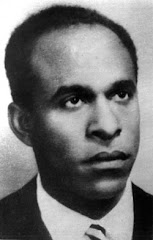
AUGUST WILSON 1945-2005

http://www.nytimes.com/2009/04/23/theater/23wils.html?_r=1&th&emc=th

All,

Just one more openly blatant example of just how insidious and pervasive American racism actually is and aggressively continues to be. In other words: "Same O, Same O" or as we've been saying since the day we arrived on these lowdown dirty shores: Same shit, Different day...

Kofi

P.S. The real question is as always: What are we gonna do about it?


Race an Issue in Wilson Play, and in Its Production
By PATRICK HEALY
April 22, 2009
New York Times

In life, the playwright August Wilson had an all-but-official rule: No white directors for major productions of his work, which was one reason that a film was never made from his 10 plays about African-American life in the 20th century. “Fences,” one of the two awarded the Pulitzer Prize, foundered in Hollywood because of his insistence on a black director.

Yet in the years since Wilson died in 2005, an increasing number of white directors have staged his plays, and last week came a milestone: “Joe Turner’s Come and Gone,” which opened on April 16, is the first Broadway revival of a Wilson play since his death and the first ever on Broadway with a white director, the Tony Award-winning Bartlett Sher.

The selection of Mr. Sher by the producer, Lincoln Center Theater, has prompted concern and even outrage among some black directors, who say this production represents a lost opportunity for a black director, for whom few opportunities exist on Broadway or at major regional theaters. Wilson himself felt that black directors best understood his characters, and he saw his plays as chances to give them high-profile work. Wilson’s widow, Constanza Romero, however, approved Mr. Sher as director.

This production of “Joe Turner” also stands as an unusual collaboration, and by all accounts a happy one, between a white director and an almost entirely black cast on Broadway, a rarity itself. At times the actors were directing the director, as they discussed the ways that black Americans relate to one another and to their white neighbors and nemeses.

“I’ve learned more from this cast than any group that I’ve ever worked with,” said Mr. Sher, who won a Tony for “South Pacific.” “But I also learned an enormous amount about the lack of opportunity in theater today. More Ibsen should be directed by black directors. More Shakespeare. More Chekhov.”

Several black directors, in interviews, raised the same issue, but also expressed sharp disappointment in commercial and nonprofit producers for failing to create those opportunities.

“Straight up institutional racism” was how one black director of Wilson’s plays on Broadway, Marion McClinton, described Lincoln Center Theater’s selection of Mr. Sher, to a Minnesota newspaper this winter. In an interview this week, Mr. McClinton said choosing white directors for Wilson plays not only denied opportunities for black directors, but also reflected a double standard because so few black directors were chosen for major productions of canonical works by white playwrights.

Kenny Leon, the Broadway director of the last two works in the 10-play Wilson cycle — “Gem of the Ocean” and “Radio Golf” — said Broadway lacked “a level playing field” for black directors.

“I have to work with my agent to remind people that, yes, I direct comedies, I do musicals, I do plays about all races of people just like other directors do,” said Mr. Leon, who earned a Drama Desk directing nomination for his one other outing on Broadway, “A Raisin in the Sun” in 2004.

Several other black directors have written or called André Bishop, the artistic director of Lincoln Center Theater, expressing similar concerns, Mr. Bishop said. “It’s not so much about Bart, but about wanting to work,” he said. “This experience has started a conversation about opportunities for black directors, and I’m taking it very seriously.”

This revival of “Joe Turner,” originally produced on Broadway in 1988, started with Mr. Bishop’s looking for another play to do with Mr. Sher, who became resident director at Lincoln Center Theater last year. Mr. Bishop said he was drawn to the play not only “as a magnificent piece of writing,” but also as a match for Mr. Sher. Just as Mr. Sher’s “South Pacific” mixes xenophobia and powerfully symbolic characters like Bloody Mary with deep emotion and a naturalistic environment, so is “Joe Turner” rich in both racial and social metaphors.

At the same time, Mr. Bishop said he “thought a lot” about whether to hire a white director. “Obviously I was very aware that the Wilson estate might say no, and I also didn’t want to risk offending people,” he said. He added that Mr. Sher was the only white director he would have chosen. It fell to Mr. Sher to seek the rights to the play, and here he had some advantage. He had been artistic director of the Intiman Theater in Seattle, where Wilson lived; the two had met on a few occasions, and Mr. Sher had become close to Wilson’s widow, Ms. Romero, the executor of his estate.

“I called Constanza and told her I wanted to direct ‘Joe Turner,’ and the only thing I asked was that she not answer me for three days,” Mr. Sher said.

“I wanted to give her time to think it all through,” he said.

Ms. Romero, who was born in Colombia, said in an interview that she and her husband had talked about who should direct his work. Wilson was widely known as a passionate advocate for blacks in theater and film; in the 1990s, he and the director and writer Robert Brustein sparred at length in print and in person about the role of race in everything from a playwright’s vision to casting.

“While August had been this heavyweight champion of black culture and the African-American experience on stage, that was his work when he was alive,” Ms. Romero said.

“My work is to get these stories out there,” she said, “and to help ensure that audiences walk out of the plays with a deeper understanding for these American stories and for the ways our cultures intertwine.”

Mr. Sher’s experience on “Joe Turner,” set in a boarding house in Pittsburgh in 1911, has been an object lesson in this regard. His cast and Ms. Romero offered advice and insights on everything from the kind of coat that a central character would wear to the staging of the juba, an African dance at the end of Act I.

“When they told me Bart was directing, my first response was, ‘But isn’t he white?’ — so I was intrigued,” said LaTanya Richardson Jackson, who plays the boarding-house matron Bertha. “And from the start he was so collaborative. He would say, ‘I know this,’ and we would say, ‘Yeah, but you don’t know this.’ ”

“As directors go,” she said, “he was an amazing listener.”

Still, the choice of Mr. Sher has set a precedent in the eyes of some veterans of Wilson’s plays — a precedent that they believe the playwright would not like.

“August told me himself that the reason he did not want white directors was because if one ever had a chance to do one of his plays on Broadway, it would be very unlikely that a black director would ever be chosen again to direct his plays on that level,” said Charles S. Dutton, who starred in the original production of “Joe Turner” at Yale Repertory Theater in 1986. “We’ll see what happens now that Mr. Sher is being lauded as a major new interpreter for August’s work,” Mr. Dutton added.

It is up to Ms. Romero to sign off on future productions of Wilson’s work, on Broadway and off, and she said she had no plans to apply a racial litmus test to directors.

“It’s the quality of the work that matters now,” she said.

The Obama Administration Must Prosecute Bush Administration Officials for Ordering Torture

Sen. Carl Levin
Democratic U.S. Senator from Michigan

April 21, 2009

New Report: Bush Officials Tried to Shift Blame for Detainee Abuse to Low-Ranking Soldiers


Today we're releasing the declassified report of the Senate Armed Services Committee's investigation into the treatment of detainees in U.S. custody. The report was approved by the Armed Services Committee on November 20, 2008 and has, in the intervening period, been under review at the Department of Defense for declassification.

In my judgment, the report represents a condemnation of both the Bush administration's interrogation policies and of senior administration officials who attempted to shift the blame for abuse - such as that seen at Abu Ghraib, Guantanamo Bay, and Afghanistan - to low ranking soldiers. Claims, such as that made by former Deputy Secretary of Defense Paul Wolfowitz that detainee abuses could be chalked up to the unauthorized acts of a "few bad apples," were simply false.

The truth is that, early on, it was senior civilian leaders who set the tone. On September 16, 2001, Vice President Dick Cheney suggested that the United States turn to the "dark side" in our response to 9/11. Not long after that, after White House Counsel Alberto Gonzales called parts of the Geneva Conventions "quaint," President Bush determined that provisions of the Geneva Conventions did not apply to certain detainees. Other senior officials followed the President and Vice President's lead, authorizing policies that included harsh and abusive interrogation techniques.

The record established by the Committee's investigation shows that senior officials sought out information on, were aware of training in, and authorized the use of abusive interrogation techniques. Those senior officials bear significant responsibility for creating the legal and operational framework for the abuses. As the Committee report concluded, authorizations of aggressive interrogation techniques by senior officials resulted in abuse and conveyed the message that physical pressures and degradation were appropriate treatment for detainees in U.S. military custody.

In a May 10, 2007, letter to his troops, General David Petraeus said that "what sets us apart from our enemies in this fight... is how we behave. In everything we do, we must observe the standards and values that dictate that we treat noncombatants and detainees with dignity and respect. While we are warriors, we are also all human beings." With last week's release of the Department of Justice Office of Legal Counsel (OLC) opinions, it is now widely known that Bush administration officials distorted Survival Evasion Resistance and Escape "SERE" training - a legitimate program used by the military to train our troops to resist abusive enemy interrogations - by authorizing abusive techniques from SERE for use in detainee interrogations. Those decisions conveyed the message that abusive treatment was appropriate for detainees in U.S. custody. They were also an affront to the values articulated by General Petraeus.

In SERE training, U.S. troops are briefly exposed, in a highly controlled setting, to abusive interrogation techniques used by enemies that refuse to follow the Geneva Conventions. The techniques are based on tactics used by Chinese Communists against American soldiers during the Korean War for the purpose of eliciting false confessions for propaganda purposes. Techniques used in SERE training include stripping trainees of their clothing, placing them in stress positions, putting hoods over their heads, subjecting them to face and body slaps, depriving them of sleep, throwing them up against a wall, confining them in a small box, treating them like animals, subjecting them to loud music and flashing lights, and exposing them to extreme temperatures. Until recently, the Navy SERE school also used waterboarding. The purpose of the SERE program is to provide U.S. troops who might be captured a taste of the treatment they might face so that they might have a better chance of surviving captivity and resisting abusive and coercive interrogations.

SERE training techniques were never intended to be used in the interrogation of detainees in U.S. custody. The Committee's report, however, reveals troubling new details of how SERE techniques came to be used in interrogations of detainees in U.S. custody.

Influence of SERE on Military Interrogations at Guantanamo Bay

The Committee's investigation uncovered new details about the influence of SERE techniques on military interrogations at Guantanamo Bay, Cuba (GTMO). According to newly released testimony from a military behavioral scientist who worked with interrogators at GTMO, "By early October [2002] there was increasing pressure to get 'tougher' with detainee interrogations" at GTMO. (p. 50). As a result, on October 2, 2002, two weeks after attending interrogation training led by SERE instructors from the Joint Personnel Recovery Agency (JPRA), the DoD agency that oversees SERE training, the behavioral scientist and a colleague drafted a memo proposing the use of aggressive interrogation techniques at GTMO. The behavioral scientist said he was told by GTMO's intelligence chief that the interrogation memo needed to contain coercive techniques or it "wasn't going to go very far." (p. 50). Declassified excerpts from that memo indicate that it included stress positions, food deprivation, forced grooming, hooding, removal of clothing, exposure to cold weather or water, and scenarios designed to convince a detainee that "he might experience a painful or fatal outcome." On October 11, 2002, Major General Michael Dunlavey, the Commander of JTF-170 at GTMO requested authority to use aggressive techniques. MG Dunlavey's request was based on the memo produced by the behavioral scientists.

MG Dunlavey's request eventually made its way to Department of Defense (DoD) General Counsel Jim Haynes' desk. Notwithstanding serious legal concerns raised by the military service lawyers, Haynes recommended that Secretary of Defense Donald Rumsfeld approve 15 of the interrogation techniques requested by GTMO. On December 2, 2002, Secretary Rumsfeld approved Haynes' recommendation, authorizing such techniques as stress positions, removal of clothing, use of phobias (such as fear of dogs), and deprivation of light and auditory stimuli.

The Committee's investigation revealed that, following Secretary Rumsfeld's authorization, senior staff at GTMO drafted a standard operating procedure (SOP) for the use of SERE techniques, including stress positions, forcibly stripping detainees, slapping, and "walling" them. That SOP stated that "The premise behind this is that the interrogation tactics used at U.S. military SERE schools are appropriate for use in real-world interrogations." Weeks later, in January 2003, trainers from the Navy SERE school travelled to GTMO and provided training to interrogators on the use of SERE techniques on detainees. (pp. 98-104).

Impact of Secretary Rumsfeld's Authorization on Interrogations in Iraq and Afghanistan

The influence of Secretary Rumsfeld's December 2, 2002, authorization was not limited to interrogations at GTMO. Newly declassified excerpts from a January 11, 2003, legal review by a Special Mission Unit (SMU) Task Force lawyer in Afghanistan state that "SECDEF's approval of these techniques provides us the most persuasive argument for use of 'advanced techniques' as we capture possible [high value targets] ... the fact that SECDEF approved the use of the... techniques at GTMO, [which is] subject to the same laws, provides an analogy and basis for use of these techniques [in accordance with] international and U.S. law." (p.154).

The Committee's report also includes a summary of a July 15, 2004, interview with CENTCOM's then-Deputy Staff Judge Advocate (SJA) about Secretary Rumsfeld's authorization and its impact in Afghanistan. The Deputy SJA said: "the methodologies approved for GTMO... would appear to me to be legal interrogation processes. [The Secretary of Defense] had approved them. The General Counsel had approved them. .. I believe it is fair to say the procedures approved for Guantanamo were legal for Afghanistan." (p. 156).

The Committee's report provides extensive details about how the aggressive techniques made their way from Afghanistan to Iraq. In February 2003, an SMU Task Force designated for operations in Iraq obtained a copy of the SMU interrogation policy from Afghanistan that included aggressive techniques, changed the letterhead, and adopted the policy verbatim. (p. 158) Months later, the Interrogation Officer in Charge at Abu Ghraib obtained a copy of the SMU interrogation policy and submitted it, virtually unchanged, through her chain of command to Combined Joint Task Force 7 (CJTF-7), led at the time by Lieutenant General Ricardo Sanchez. On September 14, 2003, Lieutenant General Sanchez issued an interrogation policy for CJTF-7 that authorized interrogators to use stress positions, environmental manipulation, sleep management, and military working dogs to exploit detainees' fears in their interrogations of detainees.

The Committee's investigation uncovered documents indicating that, almost immediately after LTG Sanchez issued his September 14, 2003, policy, CENTCOM lawyers raised concerns about its legality. One newly declassified email from a CENTCOM lawyer to the Staff Judge Advocate at CJTF-7 - sent just three days after the policy was issued - warned that "Many of the techniques [in the CJTF-7 policy] appear to violate [Geneva Convention] III and IV and should not be used . . ." (p. 203). Even though the Bush administration acknowledged that the Geneva Conventions applied in Iraq, it was not until nearly a month later that CJTF-7 revised that policy.

Not only did SERE techniques make their way to Iraq, but SERE instructors did as well. In September 2003, JPRA sent a team to Iraq to provide assistance to interrogation operations at an SMU Task Force. The Chief of Human Intelligence and Counterintelligence at the Task Force testified to the Committee in February 2008 that JPRA personnel demonstrated SERE techniques to SMU personnel including so-called "walling" and striking a detainee as they do in SERE school. (p. 175). As we heard at our September 2008 hearing, JPRA personnel were present during abusive interrogations during that same trip, including one where a detainee was placed on his knees in a stress position and was repeatedly slapped by an interrogator. (p. 176). JPRA personnel even participated in an interrogation, taking physical control of a detainee, forcibly stripping him naked, and giving orders for him to be kept in a stress position for 12 hours. In August 3, 2007, testimony to the Committee, one of the JPRA team members said that, with respect to stripping the detainee, "we [had] done this 100 times, 1000 times with our [SERE school] students." The Committee's investigation revealed that forced nudity continued to be used in interrogations at the SMU Task Force for months after the JPRA visit. (pp. 181-182).

Over the course of the investigation, the Committee obtained the statements and interviews of scores of military personnel at Abu Ghraib. These statements reveal that the interrogation techniques authorized by Secretary Rumsfeld in December 2002 for use at GTMO - including stress positions, forced nudity, and military working dogs - were used by military intelligence personnel responsible for interrogations.

The Interrogation Officer in Charge in Abu Ghraib in the fall of 2003 acknowledged that stress positions were used in interrogations at Abu Ghraib. (p. 212).
An Army dog handler at Abu Ghraib told military investigators in February 2004 that "someone from [military intelligence] gave me a list of cells, for me to go see, and pretty much have my dog bark at them... Having the dogs bark at detainees was psychologically breaking them down for interrogation purposes." (p. 209).

An intelligence analyst at Abu Ghraib told military investigators in May 2004 that it was "common that the detainees on [military intelligence] hold in the hard site were initially kept naked and given clothing as an incentive to cooperate with us." (p. 212).

An interrogator told military investigators in May 2004 that it was "common to see detainees in cells without clothes or naked" and says it was "one of our approaches." (p. 213).

The investigation also revealed that interrogation policies authorizing aggressive techniques were approved months after the CJTF-7 policy was revised to exclude the techniques, and even after the investigation into detainee abuses at Abu Ghraib had already begun. For example, an interrogation policy approved in February 2004 in Iraq included techniques such as use of military working dogs and stress positions. (p. 220).

A policy approved for CJTF-7 units in Iraq in March 2004 also included aggressive techniques. While much of the March 2004 policy remains classified, newly declassified excerpts indicate that it warned that interrogators "should consider the fact that some interrogation techniques are viewed as inhumane or otherwise inconsistent with international law before applying each technique. These techniques are labeled with a [CAUTION]." Among the techniques labeled as such were a technique involving power tools, stress positions, and the presence of military working dogs. (pp. 220-221).

Warnings about Using SERE Techniques in Interrogations

Some have asked why, if it is okay for our own U.S. personnel to be subjected to physical and psychological pressures in SERE school, what is wrong with using those SERE training techniques on detainees? The Committee's investigation answered that question.

On October 2, 2002, Lieutenant Colonel Morgan Banks, the senior Army SERE psychologist warned against using SERE training techniques during interrogations in an email to personnel at GTMO, writing that:

[T]he use of physical pressures brings with it a large number of potential negative side effects... When individuals are gradually exposed to increasing levels of discomfort, it is more common for them to resist harder... If individuals are put under enough discomfort, i.e. pain, they will eventually do whatever it takes to stop the pain. This will increase the amount of information they tell the interrogator, but it does not mean the information is accurate. In fact, it usually decreases the reliability of the information because the person will say whatever he believes will stop the pain... Bottom line: the likelihood that the use of physical pressures will increase the delivery of accurate information from a detainee is very low. The likelihood that the use of physical pressures will increase the level of resistance in a detainee is very high... (p. 53).

Likewise, the Deputy Commander of DoD's Criminal Investigative Task Force at GTMO told the Committee in 2006 that CITF "was troubled with the rationale that techniques used to harden resistance to interrogations would be the basis for the utilization of techniques to obtain information." (p. 69).

Other newly declassified emails reveal additional warnings. In June 2004, after many SERE techniques had been authorized in interrogations and JPRA was considering sending its SERE trainers to interrogation facilities in Afghanistan, another SERE psychologist warned: "[W]e need to really stress the difference between what instructors do at SERE school (done to INCREASE RESISTANCE capability in students) versus what is taught at interrogator school (done to gather information). What is done by SERE instructors is by definition ineffective interrogator conduct... Simply stated, SERE school does not train you on how to interrogate, and things you 'learn' there by osmosis about interrogation are probably wrong if copied by interrogators." (p. 229).

Conclusion

If we are to retain our status as a leader in the world, we must acknowledge and confront the abuse of detainees in our custody. The Committee's report and investigation makes significant progress toward that goal. There is still the question, however, of whether high level officials who approved and authorized those policies should be held accountable. I have recommended to Attorney General Holder that he select a distinguished individual or individuals - either inside or outside the Justice Department, such as retired federal judges - to look at the volumes of evidence relating to treatment of detainees, including evidence in the Senate Armed Services Committee's report, and to recommend what steps, if any, should be taken to establish accountability of high-level officials - including lawyers.


http://www.huffingtonpost.com/2009/04/21/report-harsh-interrogatio_n_189817.html

Senate Report: Harsh Tactics Used In Attempt to Establish Non-Existent Iraq-al Qaida Link

A report released Tuesday by the Senate Armed Services Committee presented new details regarding Bush administration officials' approval of the military's use of harsh interrogation techniques on terrorism suspects. The 232-page, newly declassified report was approved by the Armed Services Committee on November 20, 2008, and had since then been under review at the Department of Defense for declassification.

Sen. Carl Levin, chairman of the Armed Services Committee, wrote about the significance of the report on HuffPost:

In my judgment, the report represents a condemnation of both the Bush administration's interrogation policies and of senior administration officials who attempted to shift the blame for abuse - such as that seen at Abu Ghraib, Guantanamo Bay, and Afghanistan - to low ranking soldiers. Claims, such as that made by former Deputy Secretary of Defense Paul Wolfowitz that detainee abuses could be chalked up to the unauthorized acts of a "few bad apples," were simply false.

The report revealed new information about the origins of the military's interrogation techniques. As the Washington Post writes:

[The report] sheds new light on the adaptation of techniques from a U.S. military program known as Survival, Evasion, Resistance and Escape (SERE), used to train American service personnel to resist interrogations if captured by an enemy that does not honor the Geneva Conventions' ban on torture.

The military's Joint Personnel Recovery Agency (JPRA) has been reported to have reverse-engineered these methods to break al-Qaeda prisoners. The techniques, including waterboarding, or simulated drowning, were drawn from the methods used by Chinese Communists to coerce confessions from U.S. soldiers during the Korean War -- a lineage that one instructor appeared to readily acknowledge.

"We can provide the ability to exploit personnel based on how our enemies have done this type of thing over the last five decades," Joseph Witsch wrote in a July 2002 memo.

What is perhaps more alarming is that few, if any, of the top officials involved in allowing the use of these interrogations methods knew anything about their 'gruesome origins' nor bothered to actually investigate what it was they were approving, according to the New York Times:

According to several former top officials involved in the discussions seven years ago, they did not know that the military training program, called SERE, for Survival, Evasion, Resistance and Escape, had been created decades earlier to give American pilots and soldiers a sample of the torture methods used by Communists in the Korean War, methods that had wrung false confessions from Americans.

Even George J. Tenet, the C.I.A. director who insisted that the agency had thoroughly researched its proposal and pressed it on other officials, did not examine the history of the most shocking method, the near-drowning technique known as waterboarding.

Establishing a link between al Qaida and Iraq was one of the factors motivating the use of these interrogation methods. From McClatchy:

A former U.S. Army psychiatrist, Maj. Charles Burney, told Army investigators in 2006 that interrogators at the Guantanamo Bay, Cuba, detention facility were under "pressure" to produce evidence of ties between al Qaida and Iraq.
Story continues below

"While we were there a large part of the time we were focused on trying to establish a link between al Qaida and Iraq and we were not successful in establishing a link between al Qaida and Iraq," Burney told staff of the Army Inspector General. "The more frustrated people got in not being able to establish that link . . . there was more and more pressure to resort to measures that might produce more immediate results."

While the New York Times had previously reported in December about how the Armed Services Committee report pinned much of the blame for detainee abuses at Guantanamo and Abu Ghraib on Donald Rumsfeld--Rumsfeld said at the time that the report contained ""unfounded allegations against those who have served our nation"--Politico flags some of the new details about the former Defense Secretary's role:

The report contains a Jan. 11, 2003 memo written by a military lawyer in Afghanistan linking use of harsh techniques against prisoners directly to approval of the methods by Rumsfeld. "SECDEF's approval of these techniques provides us the most persuasive argument for use of 'advanced techniques." Rumsfeld a few days later rescinded authority for use of the techniques at Guantanamo but military lawyers in Afghanistan still considered them permissible.

As for the impact of the report, the Washington Post notes that "the new findings are expected to add further pressure on the White House to authorize an independent investigation of the Bush-era interrogation policies." Earlier in the day Tuesday President Obama said he was open to the possible prosecution of Bush administration officials.

HuffPost's Ryan Grim has more on what may be in store for Bush administration lawyers such as Jay Bybee:

Rep. Jerry Nadler (D-N.Y.), in arguing for Bybee's impeachment, says that the purpose of the memos was not to give an honest legal analysis, but to deem legal behavior that is clearly illegal in order to encourage that illegal activity. The charge, says Nadler, would be something along the lines of conspiracy to abet torture.

House Judiciary Committee Chairman John Conyers Jr. (D-Mich.) announced Tuesday he would hold a hearing looking into the role Bush administration lawyers played in justifying torture. Some lawyers, Conyers told the Huffington Post, were engaged in honest analysis of the law. Others, he said, were simple law breakers.

"There are some who tried to do a get-out-of-jail-free card. Obviously, there are some that that's all they were thinking," said Conyers, declining to name specific names, citing his upcoming hearings.

But he has a few in mind. "We're coming after these guys," he said.


Wednesday, April 22, 2009

Moving Beyond Obama's 'HopeMobile' Template: Naomi Klein Throws Down the Gauntlet

All,

In a typically incisive, witty, and analytically sharp analysis of President Obama and his national political fanbase the brilliant political journalist, social theorist, and leftist activist Naomi Klein calls on us all to take full political and ideological responsibility for seriously addressing and moving far beyond the infantile limitations and distortions of simpleminded hero worship in our critical assessments of Obama's greatest strengths and weaknesses as a political figure and executive administrator of the American government. What Klein so clearly demands of us is that we put aside any sentimentalized notions of who Obama is and what his sponsored public policy positions actually stand for. Even more importantly Klein points out that it's absolutely crucial that the rest of us not forget who we are and what we stand for (and are both willing and able to fight for). It's a very important, even necessary distinction to make that allows us to remain truly proactive and mature adults in our ongoing critical engagement with the President, his administration, and the larger political, economic, and cultural forces that Obama represents or embodies. Thanks Naomi! Your comments as usual are both refreshing and informative (not to mention often very funny)...

Kofi


THE NATION

US POLITICS & GOVERNMENT POLITICS

A Lexicon of Disappointment

by NAOMI KLEIN

This article appeared in the May 4, 2009 edition of The Nation.
April 15, 2009


All is not well in Obamafanland. It's not clear exactly what accounts for the change of mood. Maybe it was the rancid smell emanating from Treasury's latest bank bailout. Or the news that the president's chief economic adviser, Larry Summers, earned millions from the very Wall Street banks and hedge funds he is protecting from reregulation now. Or perhaps it began earlier, with Obama's silence during Israel's Gaza attack.

Whatever the last straw, a growing number of Obama enthusiasts are starting to entertain the possibility that their man is not, in fact, going to save the world if we all just hope really hard.

This is a good thing. If the superfan culture that brought Obama to power is going to transform itself into an independent political movement, one fierce enough to produce programs capable of meeting the current crises, we are all going to have to stop hoping and start demanding.

The first stage, however, is to understand fully the awkward in-between space in which many US progressive movements find themselves. To do that, we need a new language, one specific to the Obama moment. Here is a start.

Hopeover. Like a hangover, a hopeover comes from having overindulged in something that felt good at the time but wasn't really all that healthy, leading to feelings of remorse, even shame. It's the political equivalent of the crash after a sugar high. Sample sentence: "When I listened to Obama's economic speech my heart soared. But then, when I tried to tell a friend about his plans for the millions of layoffs and foreclosures, I found myself saying nothing at all. I've got a serious hopeover."

Hoper coaster. Like a roller coaster, the hoper coaster describes the intense emotional peaks and valleys of the Obama era, the veering between joy at having a president who supports safe-sex education and despondency that single-payer healthcare is off the table at the very moment when it could actually become a reality. Sample sentence: "I was so psyched when Obama said he is closing Guantánamo. But now they are fighting like mad to make sure the prisoners in Bagram have no legal rights at all. Stop this hoper coaster--I want to get off!"

Hopesick. Like the homesick, hopesick individuals are intensely nostalgic. They miss the rush of optimism from the campaign trail and are forever trying to recapture that warm, hopey feeling--usually by exaggerating the significance of relatively minor acts of Obama decency. Sample sentences: "I was feeling really hopesick about the escalation in Afghanistan, but then I watched a YouTube video of Michelle in her organic garden and it felt like inauguration day all over again. A few hours later, when I heard that the Obama administration was boycotting a major UN racism conference, the hopesickness came back hard. So I watched slideshows of Michelle wearing clothes made by ethnically diverse independent fashion designers, and that sort of helped."

Hope fiend. With hope receding, the hope fiend, like the dope fiend, goes into serious withdrawal, willing to do anything to chase the buzz. (Closely related to hopesickness but more severe, usually affecting middle-aged males.) Sample sentence: "Joe told me he actually believes Obama deliberately brought in Summers so that he would blow the bailout, and then Obama would have the excuse he needs to do what he really wants: nationalize the banks and turn them into credit unions. What a hope fiend!"

Hopebreak. Like the heartbroken lover, the hopebroken Obama-ite is not mad but terribly sad. She projected messianic powers onto Obama and is now inconsolable in her disappointment. Sample sentence: "I really believed Obama would finally force us to confront the legacy of slavery in this country and start a serious national conversation about race. But now he never seems to mention race, and he's using twisted legal arguments to keep us from even confronting the crimes of the Bush years. Every time I hear him say 'move forward,' I'm hopebroken all over again."

Hopelash. Like a backlash, hopelash is a 180-degree reversal of everything Obama-related. Sufferers were once Obama's most passionate evangelists. Now they are his angriest critics. Sample sentence: "At least with Bush everyone knew he was an asshole. Now we've got the same wars, the same lawless prisons, the same Washington corruption, but everyone is cheering like Stepford wives. It's time for a full-on hopelash."

In trying to name these various hope-related ailments, I found myself wondering what the late Studs Terkel would have said about our collective hopeover. He surely would have urged us not to give in to despair. I reached for one of his last books, Hope Dies Last. I didn't have to read long. The book opens with the words: "Hope has never trickled down. It has always sprung up."

And that pretty much says it all. Hope was a fine slogan when rooting for a long-shot presidential candidate. But as a posture toward the president of the most powerful nation on earth, it is dangerously deferential. The task as we move forward (as Obama likes to say) is not to abandon hope but to find more appropriate homes for it--in the factories, neighborhoods and schools where tactics like sit-ins, squats and occupations are seeing a resurgence.

Political scientist Sam Gindin wrote recently that the labor movement can do more than protect the status quo. It can demand, for instance, that shuttered auto plants be converted into green-future factories, capable of producing mass-transit vehicles and technology for a renewable energy system. "Being realistic means taking hope out of speeches," he wrote, "and putting it in the hands of workers."

Which brings me to the final entry in the lexicon.

Hoperoots. Sample sentence: "It's time to stop waiting for hope to be handed down, and start pushing it up, from the hoperoots"

About Naomi Klein

Naomi Klein is an award-winning journalist and syndicated columnist and the author of the international and New York Times bestseller The Shock Doctrine: The Rise of Disaster Capitalism (September 2007); an earlier international best-seller, No Logo: Taking Aim at the Brand Bullies; and the collection Fences and Windows: Dispatches from the Front Lines of the Globalization Debate (2002)

Saturday, April 18, 2009

Obama Calls For Improving U.S.-Cuban Relations

http://www.nytimes.com/2009/04/18/world/americas/18prexy.html?_r=1&th&emc=th

All,

While this news is almost a half century overdue it is still very welcome news all the same. It is also both ironic and noteworthy that this overture is coming in this year which happens to be the 50th anniversary of the Cuban Revolution. Of course the most important issues and details of this mutual rapprochement have yet to be worked out in either diplomatic or political terms (like the absolutely crucial necessity of lifting the American economic embargo on Cuba for example). However, this overture from the two nations still signals that a major first step has been taken that begs to be embraced as the initial foray into a mutually respectful pact between the two countries. In this instance President Obama is to be commended and given genuine credit and support for having the political maturity and simple common sense to openly recognize that friendly or at least non-antagonistic relations between the U.S. and Cuba must be renewed and developed to the mutual benefit of both nations (and most importantly toward calling for an ending of American hegemony or dominance in the ideological, economic, and political affairs of Cuba). Let's all sincerely hope that this new diplomatic advance can be strengthened and expanded in the very near future.

Kofi


Obama Calls for Thaw in U.S. Relations With Cuba
By SHERYL GAY STOLBERG and ALEXEI BARRIONUEVO
April 18, 2009
New York Times


PORT OF SPAIN, Trinidad and Tobago — President Obama, seeking to thaw long-frozen relations with Cuba, told a gathering of Western Hemisphere leaders on Friday that “the United States seeks a new beginning with Cuba,” and that he was willing to have his administration engage the Castro government on a wide array of issues.

Mr. Obama’s remarks, during the opening ceremony at the Summit of the Americas, are the clearest signal in decades that the United States is willing to change direction in its dealings with Cuba. They capped a dizzying series of developments this week, including surprisingly warm words between Raúl Castro, Cuba’s leader, and Secretary of State Hillary Rodham Clinton.

Other leaders here said that in watching Mr. Obama extend his hand to Cuba, they felt they were witnessing a historic shift. And in another twist, Cuba’s strongest ally at the summit, President Hugo Chávez of Venezuela, no fan of the United States, was photographed at the meeting giving Mr. Obama a hearty handclasp and a broad smile.

Cuba is not on the official agenda here; indeed, Cuba, which has been barred from the Organization of American States since 1962, is not even on the guest list. But leaders in the hemisphere have spent months planning to make Cuba an issue here.

The White House was well aware that if Mr. Obama did not address it head on, the issue would overwhelm the rest of the summit gathering. This week, the president opened the door to the discussions by abandoning longstanding restrictions on the ability of Cuban-Americans to travel freely to the island and send money to relatives there.

“I know there is a longer journey that must be traveled in overcoming decades of mistrust, but there are critical steps we can take toward a new day,” Mr. Obama said, adding that he was “prepared to have my administration engage with the Cuban government on a wide range of issues — from human rights, free speech, and democratic reform to drugs, migration, and economic issues.”

Mr. Obama’s message was not entirely new; he has said in the past that he was willing to engage with Cuba. But making a public pledge before leaders of 33 other nations, many of whom he had not yet met, gave his words added heft.

He came here with the aim of reaching out to leaders in a region that felt ignored by the United States during the Bush years. Just as he campaigned on the theme of change when running for the White House, he made change a theme of his speech here, saying: “I didn’t come here to debate the past. I came here to deal with the future.”

He said the United States needed to acknowledge long-held suspicions that it has interfered in the affairs of other countries. But, departing from his prepared text, he also said the region’s countries needed to cease their own historic demonization of the United States for everything from economic crises to drug violence.

“That also means we can’t blame the United States for every problem that arises in the hemisphere,” he said. “That’s part of the bargain. That’s the old way, and we need a new way.”

On Cuba, the president’s words were as notable for what he said as for what he did not say. He did not scold or berate the Cuban government for holding political prisoners, as his predecessor, George W. Bush, often did.

But he also did not say that he was willing to support Cuba’s membership in the Organization of American States, or lift the 47-year-old trade embargo against Cuba, as some hemisphere leaders here want him to do.

And his press secretary, Robert Gibbs, speaking to reporters aboard Air Force One on the way here, pointed out that Cuba needed to take concrete action to “bring greater freedom to the Cuban people.”

In his speech, Mr. Obama gave a nod toward these issues, although not explicitly.

“Let me be clear,” he said. “I am not interested in talking for the sake of talking. But I do believe we can move U.S.-Cuban relations in a new direction.”

The new tone from Washington drew warm praise from leaders like President Cristina Fernández de Kirchner of Argentina and President Daniel Ortega of Nicaragua. Mr. Ortega, who said he felt ashamed that he was participating in the summit meeting without the presence of Cuba, evoked images of the collapse of the Berlin Wall, saying, “I am convinced that wall will collapse, will come down.”

Mrs. Kirchner praised Mr. Obama for “what you did to stabilize the relationship from the absurd restrictions imposed by the Bush administration,” adding: “We sincerely believe that we in the Americas have a second opportunity to construct a new relationship. Don’t let it slip away.”

Mr. Obama’s speech on Friday night was only the latest in a string of overtures between the countries. On Thursday, Raúl Castro, Cuba’s president, used unusually conciliatory language in describing the Obama administration’s decision to lift restrictions on family travel and remittances.

“We are willing to discuss everything, human rights, freedom of press, political prisoners, everything, everything, everything they want to talk about, but as equals, without the smallest shadow cast on our sovereignty, and without the slightest violation of the Cuban people’s right to self-determination,” Mr. Castro said in Venezuela during a meeting of leftist governments meant as a counterpoint to this weekend’s summit meeting in Trinidad and Tobago.

On Friday, Mrs. Clinton responded, saying, “We welcome his comments, the overture that they represent, and we’re taking a very serious look at how we intend to respond.”

Earlier this week Brazilian officials signaled in Rio de Janeiro that President Luiz Inácio Lula da Silva, potentially flanked by the Colombian president, Álvaro Uribe, would raise the issue of accepting Cuba into the Organization of American States at the summit meeting. Cuba’s “absence is an anomaly and he is waiting for this situation to be corrected,” Marco Aurélio García, Mr. da Silva’s foreign policy adviser, told reporters.

On Friday, the secretary general of the O.A.S., José Miguel Insulza, said he would call for Cuba to be readmitted. And Mr. Chávez recently said he would refuse to sign the official declaration produced at the summit meeting because Cuba was not invited.

There are no plans for Mr. Chávez and Mr. Obama to meet privately, but White House officials said before the meeting that the two would participate in at least one small group leaders’ meeting, and that Mr. Obama would not spurn any outreach by Mr. Chávez, who frequently referred to Mr. Bush as “the devil.”

Indeed, Mr. Obama made the first move, officials said, striding across the room to introduce himself to Mr. Chávez as the leaders were lining up to parade into the opening ceremony. As he extended his hand, the Venezuelan government reported, Mr. Chávez told Mr. Obama: “I greeted Bush with this hand eight years ago. I want to be your friend.”

Alexei Barrionuevo contributed reporting.

Thursday, April 16, 2009

The Obama Administration Must Prosecute Those who Tortured Under Bush!


All,

This decision to not hold the CIA fully accountable for torture under the Bush administration is DEAD WRONG on President Obama's part and absolutely nothing can justify him taking this ridiculous and hypocritical position on not prosecuting officials from Bush's administration. NOTHING AT ALL!. These officials are felons who BROKE THE LAW and should be punished. Obama's gonna take major political hits and attacks from both the Left and real liberals on this issue AND HE SHOULD. This was a cowardly decision by Obama on both political and moral grounds and there is no possible justification or defense for it...

Kofi


http://www.mercurynews.com/nationworld/ci_12160615

Obama releases torture memos that guided CIA

By Mark Mazzetti and Scott Shane
New York Times
4/16/2009

WASHINGTON — The Justice Department made public detailed memos Thursday describing brutal interrogation techniques used by the CIA, as President Barack Obama sought to reassure the agency that CIA operatives who carried out the techniques would not be prosecuted.

In dozens of pages of dispassionate legal prose, the methods approved by the Bush administration for extracting information from senior al-Qaida operatives are spelled out in careful detail — from keeping detainees awake for up to 11 straight days, to placing them in a dark, cramped box, to putting insects into the box to exploit their fears.

Within minutes of the release of the memos, Sen. Patrick Leahy, D-Vt., the chairman of the Senate Judiciary Committee, said the memos illustrated the need for his proposed independent "Commission of Inquiry," which would offer immunity in return for candid testimony.

Obama condemned what he called a "dark and painful chapter in our history," and said the interrogation techniques would never be used again. But he also repeated his opposition to a lengthy inquiry into the past, saying that "nothing will be gained by spending our time and energy laying blame for the past."

The interrogation methods were authorized beginning in 2002, and some were used as late as 2005 in the CIA's secret overseas prisons. The techniques were among the Bush administration's most closely guarded secrets, and the documents released Thursday afternoon marked the most comprehensive public accounting to date of the program.

Some Obama administration officials have labeled one of the 14 approved techniques, waterboarding, as illegal torture. During war crimes trials after World War II, the United States prosecuted some Japanese interrogators for waterboarding and other methods detailed in the memos.

The release of the documents came after a bitter debate that divided the Obama administration. Fueling the urgency of the discussion was Thursday's court deadline in a lawsuit filed by the American Civil Liberties Union, which had sued the government for the release of the Justice Department memos.

Together, the four memos give an extraordinarily detailed account of the CIA's methods and the Justice Department's long struggle, in the face of graphic descriptions of brutal tactics, to square them with international and domestic law. Passages describing forced nudity, slamming into walls, prolonged sleep deprivation and dousing with 41-degree water alternate with elaborate legal arguments concerning the international Convention against Torture.

The documents were released with minimal redactions, indicating that Obama sided against current and former CIA officials who for weeks had pressed the White House to withhold sensitive details about specific interrogation techniques.

Nudity, sleep deprivation and dietary restrictions.
Slapping prisoners on the face or abdomen.
Water hoses to douse the prisoners for minutes at a time.
One of three "stress positions," such as sitting on the floor with legs out straight and arms raised in the air.


Obama: No charges against CIA for interrogations
Thu Apr 16 2009

WASHINGTON (Reuters) - President Barack Obama said on Thursday that CIA officials would not be prosecuted for having used waterboarding and other harsh interrogation methods on terrorism suspects under the Bush administration.

"This is a time for reflection, not retribution," Obama, who ordered a halt to such internationally condemned interrogation techniques after he took office, said in a statement.

Obama made the assurances to CIA officials that they would not face criminal charges, as he approved release of government memos issues during President George W. Bush's administration that authorized tough interrogation of terrorism detainees held at the Guantanamo military prison in Cuba and in secret CIA jails overseas.

International human rights groups had denounced waterboarding, or simulated drowning, and other harsh methods as amounting to torture.

"In releasing these memos, it is our intention to assure those who carried out their duties relying in good faith upon legal advice from the Department of Justice that they will not be subject to prosecution," Obama said in a written statement released shortly after he arrived on a visit to Mexico.

"The men and women of our intelligence community serve courageously on the front lines of a dangerous world," he said. "We must protect their identities as vigilantly as they protect our security, and we must provide them with the confidence that they can do their jobs.

But Obama made clear that his decision did not take away from his own disapproval of the interrogation methods that had been employed in the name of Bush's U.S.-led "war on terrorism."

"In one of my very first acts as President, I prohibited the use of these interrogation techniques by the United States because they undermine our moral authority and do not make us safer," he said.

"Enlisting our values in the protection of our people makes us stronger and more secure. A democracy as resilient as ours must reject the false choice between our security and our ideals, and that is why these methods of interrogation are already a thing of the past," he added.


http://www.cnn.com/2009/POLITICS/04/16/torture.cia.immunity/index.html?iref=werecommend


Thu April 16, 2009

Rights groups criticize CIA immunity on interrogations

STORY HIGHLIGHTS

Attorney general says it's unfair to prosecute those who were following policy
Amnesty International: "Justice appears to be offering a get-out-of-jail-free card"
Another group seeks prosecutions of high-level Bush administration officials
Obama says intelligence community needs to know it can do its job

WASHINGTON (CNN) -- Human rights organizations reacted angrily Thursday to the Obama administration's announcement that CIA officials would not be prosecuted for past waterboarding and other harsh interrogation tactics.

Attorney General Eric Holder made the announcement in a separate statement as the administration announced it was releasing four Bush-era memos on terror interrogations that included the controversial practice of waterboarding.

"The president has halted the use of the interrogation techniques described in these opinions, and this administration has made clear from day one that it will not condone torture," Holder said. "We are disclosing these memos consistent with our commitment to the rule of law."

The attorney general promised that officials who used the controversial interrogation tactics would be in the clear if their actions were consistent with the legal advice from the Justice Department under which they were operating at the time.

"It would be unfair to prosecute dedicated men and women working to protect America for conduct that was sanctioned in advance by the Justice Department," Holder said.

Amnesty International said the release of the documents was welcome, but condemned the decision to block prosecutions.

"The Department of Justice appears to be offering a get-out-of-jail-free card to individuals who, by U.S. Attorney General Eric Holder's own estimation, were involved in acts of torture," said executive director Larry Cox. "No civilized definition of 'reasonable' behavior can ever encompass acts of torture. Torture has long been recognized to be a violation of both national and international law, and no single legal opinion, no matter from what source, can change that."

"It is one of the deepest disappointments of this administration that it appears unwilling to uphold the law where crimes have been committed by former officials," the organization said.

The center is pushing for prosecutions of high-level officials in the Bush administration.

"Whether or not CIA operatives who conducted waterboarding are guaranteed immunity, it is the high-level officials who conceived, justified and ordered the torture program who bear the most responsibility for breaking domestic and international law, and it is they who must be prosecuted," the center said.

"Government officials broke very serious laws: For there to be no consequences not only calls our system of justice into question, it leaves the gate open for this to happen again."

President Obama said officials involved in the questionable interrogations would not be subject to prosecution because the intelligence community must be provided "with the confidence" it needs to do its job.

"This is a time for reflection, not retribution," he said. "I respect the strong views and emotions that these issues evoke. We have been through a dark and painful chapter in our history. But at a time of great challenges and disturbing disunity, nothing will be gained by spending our time and energy laying blame for the past."

Amnesty's Cox rejected that argument.

"The United States has had plenty of time for reflection -- there is very little information in the newly released material that hadn't leaked out long before," he said. Obama "also said that the United States is a nation of laws. But laws only have meaning if they are enforced.

"The United States has laws prohibiting torture, and two-thirds of Americans support an investigation into what has been done in their name. That is not seeking to lay blame; that is a call for justice long overdue."

Leon Panetta, Obama's CIA director, told his employees in a memo that he would "strongly oppose any effort to investigate or punish those who followed the guidance of the Department of Justice."

"Although this administration has now put into place new policies that CIA is implementing, the fact remains that CIA's detention and interrogation effort was authorized and approved by our government," he said in the memo, a copy of which was obtained by CNN.

Panetta added that the CIA would provide legal counsel for any CIA employee who is subjected to an investigation relating to previously authorized policies.

"This is an opportunity for CIA to begin a new and great chapter in our history of service to the nation," he said. "You need to be fully confident that as you defend the nation, I will defend you."

The American Civil Liberties Union, which had been seeking the memos, called on the Justice Department to release other Bush-era memos regarding interrogations. The group also is seeking the appointment of an independent prosecutor to investigate whether laws were broken by the Bush interrogation policies, as well as who knew about them and who authorized them.

Sen. Patrick Leahy, the Vermont Democrat who is chairman of the Senate Judiciary Committee, reiterated that he wants a commission of inquiry to look into the matter.

"We must take a thorough accounting of what happened, not to move a partisan agenda, but to own up to what was done in the name of national security, and to learn from it," he said.

Obama, who has said he does not want to criminalize policy differences between administrations, has not backed Leahy's call for a commission, which is strongly opposed by Republican lawmakers.

The nation's top intelligence officer, former Navy Adm. Dennis Blair, also weighed in on the issue, noting that he "experienced public scorn" for serving as a young officer during the Vietnam years, which he described as "an unpopular war."

"Challenging and debating the wisdom and policies linked to wars and war fighting is important and legitimate. However, disrespect for those who serve honorably within legal guidelines is not," he said. "I remember well the pain of those of us who served our country even when the policies we were carrying out were unpopular or could be second-guessed.

"We in the intelligence community should not be subjected to similar pain. Let the debate focus on the law and our national security. Let us be thankful that we have public servants who seek to do the difficult work of protecting our country under the explicit assurance that their actions are both necessary and legal."


All About U.S. Department of Justice • American Civil Liberties Union • Torture

Thursday, April 2, 2009

President Obama’s Ersatz Capitalism & the Politics of Wall Street

http://www.nytimes.com/2009/04/01/opinion/01stiglitz.html?em=&adxnnl=1&adxnnlx=1238623203-VJY/ki7NOXKjfeA4eeW4/w

"What the Obama administration is doing is far worse than nationalization: it is ersatz capitalism, the privatizing of gains and the socializing of losses. It is a “partnership” in which one partner robs the other. And such partnerships — with the private sector in control — have perverse incentives, worse even than the ones that got us into the mess."--Dr. Joseph Stigliz

All,

As the famed 2001 Nobel prize winner in Economics Dr. Joseph Stiglitz clearly points out, the current economic plan by the Obama administration's Treasury department for dealing with the banks and general Wall Street chicanery is deeply flawed and is politically attempting to avoid the dire need for nationalization of the entire U.S. financial sector. As Dr. Stiglitz makes clear in the article below (and as his fellow 2008 Nobel Prize laureate in economics Paul Krugman also consistently points out) trying to ideologically sidestep the hard and necessary governmental decision of making the banks fully accountable for their own massive theft, mismanagement, and fraudulent behavior is ultimately only going to make the present crisis far worse for the general taxpaying public in both the near and long term future.

Kofi


April 1, 2009

OP-ED CONTRIBUTOR

Obama’s Ersatz Capitalism

By JOSEPH E. STIGLITZ
New York Times

THE Obama administration’s $500 billion or more proposal to deal with America’s ailing banks has been described by some in the financial markets as a win-win-win proposal. Actually, it is a win-win-lose proposal: the banks win, investors win — and taxpayers lose.

Treasury hopes to get us out of the mess by replicating the flawed system that the private sector used to bring the world crashing down, with a proposal marked by overleveraging in the public sector, excessive complexity, poor incentives and a lack of transparency.

Let’s take a moment to remember what caused this mess in the first place. Banks got themselves, and our economy, into trouble by overleveraging — that is, using relatively little capital of their own, they borrowed heavily to buy extremely risky real estate assets. In the process, they used overly complex instruments like collateralized debt obligations.

The prospect of high compensation gave managers incentives to be shortsighted and undertake excessive risk, rather than lend money prudently. Banks made all these mistakes without anyone knowing, partly because so much of what they were doing was “off balance sheet” financing.

In theory, the administration’s plan is based on letting the market determine the prices of the banks’ “toxic assets” — including outstanding house loans and securities based on those loans. The reality, though, is that the market will not be pricing the toxic assets themselves, but options on those assets.

The two have little to do with each other. The government plan in effect involves insuring almost all losses. Since the private investors are spared most losses, then they primarily “value” their potential gains. This is exactly the same as being given an option.

Consider an asset that has a 50-50 chance of being worth either zero or $200 in a year’s time. The average “value” of the asset is $100. Ignoring interest, this is what the asset would sell for in a competitive market. It is what the asset is “worth.” Under the plan by Treasury Secretary Timothy Geithner, the government would provide about 92 percent of the money to buy the asset but would stand to receive only 50 percent of any gains, and would absorb almost all of the losses. Some partnership!

Assume that one of the public-private partnerships the Treasury has promised to create is willing to pay $150 for the asset. That’s 50 percent more than its true value, and the bank is more than happy to sell. So the private partner puts up $12, and the government supplies the rest — $12 in “equity” plus $126 in the form of a guaranteed loan.

If, in a year’s time, it turns out that the true value of the asset is zero, the private partner loses the $12, and the government loses $138. If the true value is $200, the government and the private partner split the $74 that’s left over after paying back the $126 loan. In that rosy scenario, the private partner more than triples his $12 investment. But the taxpayer, having risked $138, gains a mere $37.

Even in an imperfect market, one shouldn’t confuse the value of an asset with the value of the upside option on that asset.

But Americans are likely to lose even more than these calculations suggest, because of an effect called adverse selection. The banks get to choose the loans and securities that they want to sell. They will want to sell the worst assets, and especially the assets that they think the market overestimates (and thus is willing to pay too much for).

But the market is likely to recognize this, which will drive down the price that it is willing to pay. Only the government’s picking up enough of the losses overcomes this “adverse selection” effect. With the government absorbing the losses, the market doesn’t care if the banks are “cheating” them by selling their lousiest assets, because the government bears the cost.

The main problem is not a lack of liquidity. If it were, then a far simpler program would work: just provide the funds without loan guarantees. The real issue is that the banks made bad loans in a bubble and were highly leveraged. They have lost their capital, and this capital has to be replaced.

Paying fair market values for the assets will not work. Only by overpaying for the assets will the banks be adequately recapitalized. But overpaying for the assets simply shifts the losses to the government. In other words, the Geithner plan works only if and when the taxpayer loses big time.

Some Americans are afraid that the government might temporarily “nationalize” the banks, but that option would be preferable to the Geithner plan. After all, the F.D.I.C. has taken control of failing banks before, and done it well. It has even nationalized large institutions like Continental Illinois (taken over in 1984, back in private hands a few years later), and Washington Mutual (seized last September, and immediately resold).

What the Obama administration is doing is far worse than nationalization: it is ersatz capitalism, the privatizing of gains and the socializing of losses. It is a “partnership” in which one partner robs the other. And such partnerships — with the private sector in control — have perverse incentives, worse even than the ones that got us into the mess.

So what is the appeal of a proposal like this? Perhaps it’s the kind of Rube Goldberg device that Wall Street loves — clever, complex and nontransparent, allowing huge transfers of wealth to the financial markets. It has allowed the administration to avoid going back to Congress to ask for the money needed to fix our banks, and it provided a way to avoid nationalization.

But we are already suffering from a crisis of confidence. When the high costs of the administration’s plan become apparent, confidence will be eroded further. At that point the task of recreating a vibrant financial sector, and resuscitating the economy, will be even harder.

Dr. Joseph E. Stiglitz, a professor of economics at Columbia who was chairman of the Council of Economic Advisers from 1995 to 1997, was awarded the Nobel prize in economics in 2001.


Copyright 2009 The New York Times Company

Michael Moore On The Case!

Subject: "We the People" to "King of the World": "YOU'RE FIRED!"
A letter from Michael Moore

Reply-To: maillist@michaelmoore.com

Friends,

Nothing like it has ever happened. The President of the United States, the elected representative of the people, has just told the head of General Motors -- a company that's spent more years at #1 on the Fortune 500 list than anyone else -- "You're fired!"

I simply can't believe it. This stunning, unprecedented action has left me speechless for the past two days. I keep saying, "Did Obama really fire the chairman of General Motors? The wealthiest and most powerful corporation of the 20th century? Can he do that? Really? Well, damn! What else can he do?!"

This bold move has sent the heads of corporate America spinning and spewing pea soup. Obama has issued this edict: The government of, by, and for the people is in charge here, not big business. John McCain got it. On the floor of the Senate he asked, "What does this signal send to other corporations and financial institutions about whether the federal government will fire them as well?" Senator Bob Corker said it "should send a chill through all Americans who believe in free enterprise." The stock market plunged as the masters of the universe asked themselves, "Am I next?" And they whispered to each other, "What are we going to do about this Obama?"

Not much, fellows. He has the massive will of the American people behind him -- and he has been granted permission by us to do what he sees fit. If you liked this week's all-net 3-pointer, stay tuned.

I write this letter to you in memory of the hundreds of thousands of workers over the past 25+ years who have been tossed into the trash heap by General Motors. Many saw their lives ruined for good. They turned to alcohol or drugs, their marriages fell apart, some took their own lives. Most moved on, moved out, moved over, moved away. They ended up working two jobs for half the pay they were getting at GM. And they cursed the CEO of GM for bringing ruin to their lives.

Not one of them ever thought that one day they would witness the CEO receive the same treatment. Of course Chairman Wagoner will not have to sign up for food stamps or be evicted from his home or tell his kids they'll be going to the community college, not the university. Instead, he will get a $23 million golden parachute. But the slip in his hands is still pink, just like the hundreds of thousands that others received -- except his was issued by us, via the Obama-man. Here's the door, buster. See ya. Don't wanna be ya.

I began my day today in Washington, D.C. I went to the U.S. Senate and got into their Finance Committee's hearing on the Wall Street bailout. The overseers wanted to know how the banks spent the money. And many of these banks won't tell them. They've taken trillions and nobody knows where the money went. It certainly didn't go to create jobs, relieve mortgage holders, or free up loans that people need. It was so shocking to listen to this, I had to leave before it was over. But it gave me an idea for the movie I was shooting.

Later, I stopped by the National Archives to stand in line to see the original copy of our Constitution. I thought about how twenty years ago this month I was just down the street finishing my first film, a personal plea to warn the nation about GM and the deadly economy it ruled. On that March day in 1989 I was broke, having collected the last of my unemployment checks, relying on help from my friends (Bob and Siri would take me out to dinner and always pick up the check, the assistant manager at the movie theater would sneak me in so I could watch an occasional movie, Laurie and Jack bought an old Steenbeck (editing) machine for me, John Richard would slip me an unused plane ticket so I could go home for Christmas, Rod would do anything for me and drive to Flint whenever I needed something for the film). My late mother (she would've turned 88 tomorrow if she were still with us) and my GM autoworker dad told me in the kitchen they wanted to help and handed me a check for an astounding thousand dollars. I didn't know they even had a thousand dollars. I refused it, they insisted I take it -- "No!" -- and then, in that parental voice, told me I was to cash it so I could finish my movie. I did. And I did.

So on that March day in 1989, as I was driving down Pennsylvania Avenue, my 9-year-old car just died. I coasted over to the curb, put my head down on the steering wheel and started to cry. I had no money to take it in to be repaired, and I certainly had nothing to pay the tow truck driver. So I got out, screwed the license plates off so I wouldn't be fined, turned my back and just left it there for good. I looked over at the building next to me. It said "National Archives." What better place to donate my dead car, I thought, as I walked the rest of the way home.

Though it wasn't easy for me, I still never had to suffer what so many of my friends and neighbors went through, thanks to General Motors and an economic system rigged against them. I wonder what they must have all thought when they woke up this Monday morning to read in the Detroit News or the Detroit Free Press the headlines that Obama had fired the CEO of GM. Oh -- wait a minute. They couldn't read that. There was no Free Press or News. Monday was the day that both papers ended home delivery. It was cancelled (as it will be for four days every week) because the daily newspapers, like General Motors, like Detroit, are broke.

I await the President's next superhero move.

Yours,
Michael Moore
MMFlint@aol.com
MichaelMoore.com
(Go State!)

P.S. Please know that it has not been lost on any of us from the Rust Belt how our corporate bigwigs were treated (remember, the auto companies wanted a loan, not a handout) compared to how the titans of Wall Street got trillions of free cash, lunch at the White House and a photo op with the Prez. Trust me, we get it. And, if there is a God in heaven, the thieves of Wall Street will soon pay. Also... the sight of our president having to promise that he would back every GM warranty and give consumers a bonus if they trade in their old Grand Am for a hybrid, was alternately sad, hilarious, and just plain weird. This is what it's come to: the Commander in Chief of the Free World is now Mr. Goodwrench. Jeesh.


Join Mike's Mailing List | Join Mike's Facebook Group | Become Mike's MySpace Friend


Michael Francis Moore is a critically acclaimed and Academy Award-winning American filmmaker, author, social activist, and political commentator. He is the director and producer of Bowling for Columbine, Fahrenheit 9/11, and Sicko, three of the top five highest-grossing documentaries of all time. In September 2008, he released his first free movie on the Internet, Slacker Uprising, documenting his personal crusade to encourage more Americans to vote in presidential elections. He has also written and starred in the TV shows TV Nation and The Awful Truth.

Moore has openly criticized globalization, large corporations, gun ownership, the Iraq War, former U.S. President George W. Bush and the American health care system in his written and cinematic works. In 2005 Time magazine named him one of the world's 100 most influential people. In 2005, Moore started the annual Traverse City Film Festival in Traverse City, Michigan. In 2008, he closed his Manhattan office and moved it to Traverse City, where he is working on his new film.