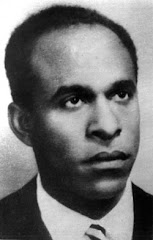
Discourse that allows us to express a wide range of ideas, opinions, and analysis that can be used as an opportunity to critically examine and observe what our experience means to us beyond the given social/cultural contexts and norms that are provided us.
Once again Naomi Klein--the brilliant political journalist, cultural critic, economic theorist, grassroots activist and author of the groundbreaking book The Shock Doctrine: The Rise of Disaster Capitalism (2007)-- provides us with a clear headed leftist critique of the present political economy in the U.S. and its massive global ramifications and a radical projection of what should be done about it...
Kofi
Naomi Klein: Building a Real Left Tuesday 14 September 2010 by: Laura Flanders | GRITtv | Video Interview
"We have to build that independent left. It has to be so strong and so radical and so militant and so powerful that it becomes irresistible."
Who better to say such a thing than Naomi Klein, Nation columnist, author of The Shock Doctrine and No Logo, and longtime rabblerouser? Naomi makes a special visit to the GRITtv studio to talk about the recent G20 meetings in her hometown of Toronto, about Obama's recent return to a kind of populism, the looming midterm elections in the U.S., her reporting on the BP disaster in the Gulf, and what we can do to channel the growing rage in this country and in the world into a true progressive movement.
Laura Flanders is the host of GRITtv, Mon-Thursday on Free Speech TV (Dish Network chn. 9315) and streaming at GRITtv.org.
Naomi Klein is an award-winning journalist and syndicated columnist and the author of the international and New York Times bestseller The Shock Doctrine: The Rise of Disaster Capitalism (September 2007); an earlier international best-seller, No Logo: Taking Aim at the Brand Bullies; and the collection Fences and Windows: Dispatches from the Front Lines of the Globalization Debate (2002). Read more at Naomiklein.com.
Excellent and highly informative interview with historian, political journalist, scholar, and activist Paul Street author of one of the best and most important books about President Obama and our general political culture ever written ("Barack Obama and the Future of American Politics" (Boulder, Colorado: Paradigm, 2008)...
Kofi
Obama, Democracy and the "Drum Major Instinct": Interview With Author Paul Street Tuesday 28 September 2010 by: Mickey Z. t r u t h o u t | Interview
President Barack Obama. (Image: Jared Rodriguez / t r u t h o u t; Adapted: Barack Obama, Adam P Schweigert/WFIU)
You might know independent policy researcher, historian, journalist, activist, political commentator and speaker Paul Street because you've read one (or more) of his five books:
"Racial Oppression in the Global Metropolis: a Living Black Chicago History" (New York: Rowman & Littlefield, 2007) "Segregated Schools: Educational Apartheid in the Post-Civil Rights Era" (New York: Routledge, 2005) "Empire and Inequality: America and the World Since 9/11" (Boulder, Colorado: Paradigm, 2004) "Barack Obama and the Future of American Politics" (Boulder, Colorado: Paradigm, 2008) "The Empire's New Clothes: Barack Obama in the Real World of Power" (Boulder, Colorado: Paradigm, 2010
Perhaps you've read his work in any of the following: The New York Times, CNN, Huffington Post, Al Jazeera, Z Magazine, Black Commentator, ZNet, AlterNet and Monthly Review.
If you live in Iowa City, Iowa, you might know Paul personally.
There's also an excellent chance you're not at all familiar with Paul Street or his work ... and that's kinda the point of his work. You see, contrary to all the free press talk and the delusions of equal access and all, only a tiny spectrum of opinion is widely heard in this country. If Street has any say in the matter, that will change.
Street recently took time out from a book tour and from writing a book (with Anthony Dimaggio) on the right-wing Tea Party phenomenon to talk with me.
Mickey Z.: So much of the American experience is based on myths like the two-party system, "land of opportunity," and more. How do you offer a more nuanced view of US history in your work?
Paul Street: I agree on the power of those great American myths and would add some other and related ones: the notion that the United States is a benevolent force for democracy and good in the world; the idea that that the profits system is a form of freedom and democracy; the myth that we can achieve significant democratic change simply by voting in quadrennial corporate-crafted and candidate-centered elections; the notion that we live in a "post-racial" era wherein racism has been mostly defeated; the myth of an independent and objective media. What I try to do to explode these and other key national legends is fairly similar to what you and other American dissidents like Bill Blum and Noam Chomsky and the late Howard Zinn do. I try to rescue from what E.P. Thompson called "the enormous condescension of posterity" (and from what George Orwell termed "the memory hole") some of the many inconvenient facts that do not fit the official narrative imposed by the dominant fables. And I try to fit the doctrinally inappropriate alternative facts into a compelling, accurate counter-narrative that links past to present and vice versa. I used to do a lot of this in the field of history, dealing with the fixed, in-place and "dead" (though ever-contested, re-discovered and revised) past itself.
MZ:What led to a shift in focus?
PS: Starting in the late 1990s, my focus shifted to the moving object of the historical present. And for better or worse, my last two books have tried to do this demystification work in relation to the Obama phenomenon (July 2004 to ?) and presidency (January 2009 to ?). These books deconstruct the supposedly left and progressive Obama from the actual Left by showing in detailed ways that he is beholden to Wall Street and the corporate elite; that he is an "American exceptionalist" man of military empire - a re-brander and agent of an immoral Superpower; that he continues key aspects of the post-9/11 Bush police and terror state; that he repackages sexism and homophobia and the war on immigrants.
MZ: So, it's much deeper than just the Obama hype, right?
PS: At the end of the day, these counter-narratives are not really about "Obama" per se. I'd likely have written something very similar to my "Obama books" if the winner of 2008 presidential extravaganza was someone else. It's systemic and it's nothing new. Every four years, many Americans invest their hopes in an electoral process that does not deserve their trust. These voters hope that a savior can be installed in the White House - someone who will raise wages, roll back war and militarism, provide universal and adequate health care, rebuild the nation's infrastructure, produce high-paying jobs, fix the environmental crisis, reduce inequality, guarantee economic security and generally make daily life more livable. But the dreams are regularly drowned in the icy waters of historical and political "reality."
MZ: Such "icy waters" doesn't just appear on their own, right?
PS: In the actuality of American politics and policy, the officially "electable" candidates are vetted in advance by what Laurence Shoup calls "the hidden primary of the ruling class." By prior Establishment selection, all of the "viable" presidential contenders are closely tied to corporate and military-imperial power in numerous and interrelated ways. They run safely within the narrow ideological and policy parameters set by those who rule behind the scenes to make sure that the rich and privileged continue to be the leading beneficiaries of the American system. In its presidential as in its other elections, U.S. "democracy" is "at best" a "guided one; at its worst it is a corrupt farce, amounting to manipulation, with the larger population projects of propaganda in a controlled and trivialized electoral process. It is an illusion," Shoup claims - correctly in my opinion - "that real change can ever come from electing a different ruling class-sponsored candidate." This is especially true in the corporate-neoliberal era, perhaps, when the Democratic Party has moved ever farther away from its declared mission of representing workers, the poor and minorities - the disadvantaged - in their continuing struggles with plutocracy, inequality, empire, racism, and indifference.
MZ: Please elaborate.
PS: The deeper and darker truth is that American democracy has always been significantly constrained and compromised by the privileged and the propertied and power elite. Sixty years ago, the historian Richard Hofstader, in his widely read book "The American Political Tradition," scrutinized the United States' most significant national leaders, from Jefferson, Hamilton and Jackson to Lincoln, William Jennings Bryan, Herbert Hoover and the two Roosevelts - liberals and Democrats as well as conservatives and Republicans. Hofstader found that "the range of vision embraced by the primary contestants in the major parties has always been bounded by the horizons of property and enterprise ... They have accepted the economic virtues of capitalist culture as necessary qualities of man ... That culture has been intensely nationalistic." We might add that American political culture has also long observed narrow parameters of permissible debate and action surrounding skin color and sex-type - barriers that have generally prevented leading politicians and officeholders from seriously attacking underlying structures and patterns of racial and gender disparity. Through the century in which Hofstader wrote and into the present one, Howard Zinn has noted, "we have seen exactly the same limited vision Hofstader talked about - a capitalist encouragement of enormous fortunes alongside desperate poverty, a nationalistic acceptance of war and preparation for war. Government power swung from Republicans to Democrats and back again, but neither party showed itself capable of going beyond that vision." Contrary to the hopes and dreams of many nominally "progressive" U.S. voters and activists and others in 2007 and early 2008, my last two books show among other things simply that Obama is not some sort of special, magical exception to the cold truths that Shoup, Zinn, Chomsky, Blum, Edward S. Herman and other left demystifers tell about the American politics past and present.
MZ: How does your new book, "The Empire's New Clothes: Barack Obama in the Real World of Power," aim toward such demystification?
PS: My recent book's main moral and political criticism is not directed primarily at Obama himself. My ultimate critical targets are the corporate-dominated and militaristic U.S. elections system and political culture. That system and culture make it next to impossible for Obama or anyone else to become president without steering to the business-friendly, racially neutral and imperial center and without distancing themselves from elementary truths about U.S. history, society and policy. I do not shrink from making critical judgments about the moral cost inherent in Obama's decision to join rather than to fight "the establishment" - to seek to climb rather than undermine the American System. But I am more concerned with the historical system and forces that compromise Barack Obama - along with countless other Democratic politicians and policymakers past, present and future - than with the individual compromised. The most critical focus here is not on the candidate-in-question's personal characteristics or moral constitution but rather on the restrictive institutional and societal framework within which his candidacy and celebrity have emerged. Following the counsel of Martin Luther King, Jr., I do not condemn Obama for acting on what King called "the Drum Major Instinct" - the desire to "be important," "the best," and recognized for personal achievement. I criticize rather the captivity of that natural human instinct by the interrelated and mutually reinforcing logics of empire and inequality.
"Bobby Kennedy recently made me the soul-stirring promise that one day — thirty years if I'm lucky — I can be President too. It never entered this boy's mind, I suppose — it has not entered the country's mind yet — that perhaps I wouldn't want to be.… what really exercises my mind is not this hypothetical day on which some other Negro 'first' will become the first Negro president. What I am really curious about is just what kind of country will he be president of? "
"What [President Obama] hears in the staff meeting and what he heard in the town hall are two different things," said the Rev. Jesse Jackson. (Steve Matteo / AP Photo)
Damn. Well what do you know? Jesse is absolutely right... I wonder if the President is listening?...
Kofi
Jesse Jackson Warns Obama by Shushannah Walshe September 21, 2010 The Daily Beast
The woman who told the president she was “exhausted” of trying to defend him is like a canary in the mine who must be heard, the reverend says. He tells The Daily Beast's Shushannah Walshe that Obama's advisers' "point of view is conditioned by their privileges and their point of view is conditioned by their experiences. Their point of view is from the top down. They see the world differently."
Velma Hart’s impassioned plea to President Obama on Monday was a wakeup call not to take his most loyal supporters for granted. The president desperately needs his base to go to the polls in November, but Hart’s exasperation revealed a clear disconnect with that core group of supporters. Tuesday’s news that National Economic Council director Lawrence Summers is departing the administration may be a sign that Obama is realizing that his base is slipping away and he must take steps to reclaim it.
In an interview with The Daily Beast at the Clinton Global Initiative in New York City, Obama ally Rev. Jesse Jackson said he understands Hart’s struggles and offered some advice to Obama on how to solve some of the country’s problems. He even stressed that America needs a second stimulus, despite the potential political unpopularity.
Jackson said he hopes whoever replaces Summers in the administration comes “from a different school of thought.”
“I think we need some bottom-up visionaries,” he said. “I think those who look from the bottom up and those who look from the top down are reconcilable, but I think the bottom-up visionaries are enormously beneficiary to the country.”
“He genuinely cares,” Jackson said. “But truth, like electricity, requires a conduit. He needs more conduits to the zones of pain.”
Asked if Summers represents a disconnect with the president’s base, Jackson replied, “The core of them—Summers, Geithner—these guys come out of the Wall Street, Harvard community, and their point of view is conditioned by their privileges and their point of view is conditioned by their experiences. Their point of view is from the top down. They see the world differently.”
Jackson was careful to compliment the president and praise his “tremendous work,” but he explained that his supporters are not feeling the results of that work. He described them as the “canaries in the mine” and said the president must listen to them.
“He genuinely cares,” Jackson said. “But truth, like electricity, requires a conduit. He needs more conduits to the zones of pain. He was trying to hear those people [like Velma Hart] at the town hall. But he’s not hearing it in the staff meeting. What he hears in the staff meeting and what he heard in the town hall are two different things.”
What the president needs, Jackson said, is to inspire his base.“In each of these cities, public teachers are being laid off, public housing is reduced, and foreclosures are rising. That’s the base of people who had the most hope, and the conduit is not connecting enough to revive their spirit to fight back.”Jackson’s prescription includes a targeted war on poverty to directly address out-of-work Americans and what the reverend calls the new face of poverty: men and women who had a house and job six months ago. His plan includes a moratorium on home foreclosures for returning veterans from Afghanistan and Iraq; and student loan forgiveness so college students graduating without jobs won’t fall into poverty.He also has a plan to revitalize Detroit using the same urban reconstruction plan for Iraq that he’s hoping will bring the dying city back.
“In Detroit 90,000 homes [were] vacated, and lots abandoned,” Jackson said. “If there were some kind of urban homesteading program for people who once lived there, they can retrieve their house and do apprentice training: learning to be landscapers and brick masons and painters, and you have to buy a product to do that reconstruction. People could feel that…There is a clear plan for reconstruction in Baghdad, but not in Detroit.”And Jackson said the country needs a second stimulus, despite the unpopularity of the first, which “spent tons of money on relatively few and left a vast number of people not only out, but sinking.”He said a second stimulus would help Americans who are facing home foreclosure, put people back to work, and cut poverty. Jackson declined to say he was disappointed in Obama, but stressed that the people struggling in this economy need “resources to flow unfettered.”
And that will help politically.“It is the masses of people who voted in unusual patterns in 2008 that made the difference. Those people are being represented by Ms. Hart, and I am for one working to convince her and others that the stakes are incredibly high,” Jackson said. “If those who voted in 2007—if their roots are watered, flowers will blossom. They were the key in 2008; they are the key in 2010.”Asked if he had told the president about his formula to get the country back on its feet and revive the base, Jackson said he had spoken to “some of his people” but believes that if Obama took his advice, things would be better.“It was like Shirley Sherrod said: I’m not interested in coming to the White House. I want you to come to south Georgia to see what is really happening on the ground, because he is a fast learner and a very passionate guy. So I think if the conduits are in place for the connectivity, you’ll see results, but right now we are watering the leaves.”
Shushannah Walshe covers politics for The Daily Beast. She is the co-author of Sarah From Alaska: The Sudden Rise and Brutal Education of a New Conservative Superstar. She was a reporter and producer at the Fox News Channel from August 2001 until the end of the 2008 presidential campaign.
A Film Review of 'Inside Job' and Interview with the Director Charles Ferguson
by Chuleenan Svetvilas
Inside Job tackles the financial crisis of 2008, delving into the economic policies, conflicts of interest, hubris, and greed that created this decades-long disaster in the making. Yeah, a documentary about the financial catastrophe seems like a super-boring film to sit through but this film is anything but dull. Through riveting personal interviews and plenty of facts and figures, director Charles Ferguson chronicles the intricate web of connections among the investment banks, credit rating agencies, economists, the Securities and Exchange Commission, and the Treasury Department under the Reagan, Bush I and II, and Clinton administrations.
Though the film is loaded with talking heads — everyone from New York University economics professor Nouriel Roubini(aka Dr. Doom) and former New York governor Eliot Spitzer to French Finance Minister Christine Lagarde and former Federal Reserve Board member Frederic Mishkin — it is tightly edited to keep the viewer's interest.
Ferguson asks pointed questions and it is painfully funny as well as infuriating to watch Mishkin squirm as he tries to explain whether the credit ratings were accurate and why he left his position in the midst of the economic collapse. Economist Glen Hubbard, former chair of the U.S. council of Economic Advisors under George W. Bush and now dean of Columbia’s business school, becomes very hostile and angry when asked about his financial conflicts of interest, for example not revealing that he was paid $100,000 to testify in defense of a financial company. He sneers at Ferguson, "You have three more minutes. Give it your best shot."
Narrated by Matt Damon, the film is divided into five parts: 1. How We Got Here, 2. The Bubble, 3. The Crisis, 4. Accountability, and 5. Where We Are Now. The first four sections craft a cogent argument that deregulation was at the root of the financial crisis and that there were many opportunities to lessen its impact or even prevent it from happening in the first place. The last part seems to falter, not only because it shows how the Obama administration is simply continuing the same policies as previous administrations but because the fury Ferguson raises in the previous parts is gone. It ends with platitudes. The last scene, one of city streets, ends with Damon’s voice intoning: "It won't be easy, but some things are worth fighting for."
Chuleenan Svetvilas interviewed director Charles Ferguson in San Francisco on September 21. Inside Job, his second film, will open in New York on October 8 and Los Angeles on October 15, and in the Bay Area on October 22. Ferguson's first documentary, No End in Sight, a remarkable exposé and indictment of the occupation of Iraq, was nominated for an Academy Award in 2007.
When and why did you decide to make this film about the 2008 financial crisis?
Well I made the final decision when in a 48-hour period, Lehman Brothers, Merrill Lynch, and AIG fell apart in September of 2008. And when also, as a result of that and everything else that was going on, we all found ourselves staring into nothingness. Then it was crystal clear that this was a gigantic thing and would be with us for a very long time and would have a lot of effects on a lot of people; it was something worth looking into. I had actually started thinking about it earlier, long before. I have two friends, both of whom are in the film, Nouriel Roubini and Charles Morris. They’re both old friends of mine.
In 2007 both Nouriel and Charlie began telling me that there was this huge problem coming and in late 2007 I read Charlie’s book and manuscript. It was published in February 2008, one month before Bear Stearns had collapsed and it was called The Trillion Dollar Meltdown. And at the time I thought he was exaggerating and he told me, “Just you wait, Charles.” And then you know, when major financial institutions began collapsing, I began to take my friends more seriously. Then in September of 2008 I decided, I gotta do this.
At that point did you start contacting people to interview? Once you decided to make the film, what was the first thing you did?
The first thing actually was I approached the two guys who run Sony Pictures Classics, Michael Barker and Tom Bernard and asked them if they would be interested in the film and they said yes. And in fact they financed a little over half the film and agreed to distribute it. So it was at that point that I started doing serious work. The first thing that we did is a lot of research. I talked to a million people. I read everything I could get my hands on.
We did mainly research for six months, a lot of research, including who we might want to film. Then we started filming in March/April 2009. We filmed basically through the end of the summer. I think our last interview was in September 2009 by which point we had already started the editing. We started editing around the time of the last interview.
So did you come up with the other half of the budget yourself?
We had another equity investor and then a small fraction of it is me, myself as an equity investor.
Did you feel that you were well prepared to tackle this subject because you already had one critically acclaimed documentary under your belt [No End in Sight] and then you have this PhD in political science from M.I.T. where you studied economics, political economy, and economic history?
It did and it helped a lot. My prior background in academia was very useful. In the first place I knew a lot of these guys. I also had some understanding of the issues. I wouldn’t say I had a lot. I had become rather disconnected from the financial world over the previous decade and it had changed a lot. It’s very clear that it had changed a lot and mostly for the worse. But I had some familiarity with finance and I also knew from my prior academic background, about the conflicts of interest in academic economics. I had seen the beginnings of that problem when I was a graduate student and a post-doc. So when the crisis occurred and I started making the film, I thought, there’s probably something here so I should look at this. And I looked and I found.
So when you were a graduate student, what did you think about the Chicago School of thinking regarding economics? Did you think that it was a viable thing – unfettered capitalism?
No, and it always seemed obviously dubious to me. I spent a lot of time studying it actually. I took a lot of economics. I read a lot of the kind of advocacy things that the Chicago School and other people wrote. I read Capitalism and Freedom, Milton Friedman’s book, and it always struck me as just very clearly deficient in reality for one thing. It seems as if Friedman was completely sincere in his beliefs. There’s no evidence that he was doing this for financial gain but it was clear that many other people were.
And he had his faithful disciples, Alan Greenspan being one of them.
Yep.
I saw an interview you did in Cannes and you said that you were surprised by the Bush administration’s incompetent handling of the financial crisis. I’m wondering why you were surprised given that you had done No End in Sight, which showed the incredibly inept handing of the occupation of Iraq.
The reason I was surprised was that some of the people who were doing the handling in this case were people who seemed to be more practical and less ideological than the people who had been in charge of the Iraq war. Hank Paulson, whatever you think of him, he had real experience with the real world, not experience handling a financial crisis but a lot of experience with handling what investment banks do and how they behave. And so I was very surprised when it turned out that neither he nor Bernanke had understood that when they shut down Lehman Brothers that British and Japanese bankruptcy law would force the immediate closing of those offices, the immediate freezing of all transactions and accounts that would have this cascading effect throughout the financial system. He didn’t know that. I found that rather surprising, that he wouldn’t know that, that he wouldn’t take the trouble to find out.
I also thought that there would be more and more intelligent consultation with other people. When I asked Christine Lagarde, the finance minister of France, how did you find out Lehman was going to go bankrupt, I assumed that she was going to tell me a day or two earlier or someone had given her a call, and when she told me she found out about it after the fact by opening up the morning paper, I was dumbfounded.
Why wouldn’t you talk to other people who have a stake in this? We’re talking about a worldwide financial market, not just a U.S. financial market.
That seems to have escaped their notice.
Did you decide to structure the film in these five parts because that was the best way to explain the different steps of what had happened? I see similarities to your previous film: dividing the film into different parts and going through things chronologically and having people reflect back on what happened.
I think that I just naturally think like that. I guess it’s my academic background, I don’t know. I have a somewhat systematic, rigorous mind. I tend to do that to things. So partially that and partially I thought that the subject required it. This is something that could be very easily complicated where it would be easy for people to get lost. So giving some structural guidance in the film was something that would help relax the viewer and guild the viewer through a fairly complicated film. There’s a lot of facts in that movie. There’s over 100 documents in that film and a lot of people say a lot of things so it just seemed like a good idea but it’s always naturally how I tend to approach things.
There is a heavy use of voiceover in the film. You have Matt Damon reciting a lot of facts that way. Was that one way you tried to get around putting a lot of numbers and figures on screen to avoid overwhelming the viewer?
Yes, and also we tried to use a mixture of different ways to present information just to keep people stimulated so they wouldn’t get bored. So sometimes you would look at a graph and sometimes you would hear it from somebody’s voice. Sometimes you would see somebody saying it to you. We tried to keep the film visually and otherwise stimulating.
Did you try to interview Brooksley Born, [former head of the Commodity Futures Trading Commission]?
Yes, I actually had a very long private conversation with her off the record. She didn’t want to be interviewed on the record because she knew that she was soon going to be appointed to be a member of the Financial Crisis Inquiry Commission, which she is now a member of. My inference, she didn’t say this, but my inference is that she was afraid that if she spoke on the record that she wouldn’t get appointed and she wanted to be part of that effort. So she didn’t feel comfortable being interviewed on the record. It was too bad. She’s amazing to talk to, really an amazing person.
Yes, I also had a long private conversation with her. She also declined to be interviewed on the record for similar reasons.
You make it really clear in your film that the regulators, the ratings agencies, economists, etc. didn’t do their job. And even after the crisis they still wouldn’t say that they didn’t do their job or would imply that somebody was looking at things but clearly that’s not true. So what do you hope to accomplish with this film?
I hope to make people aware that this is still an important issue that hasn’t been dealt with and they should become more active in dealing with it — both with regard to their personal financial lives and also in the larger political landscape. Just as war is too important to be left to the generals, so too finance is too important to be left to the financiers. So first of all that. I also just wanted to inform people about why it is that America is still in this state, why so many people are losing, have lost their jobs, their savings. I think that, I hope that people want to understand that.
You had mentioned earlier how you were aware of the conflicts of interest regarding people in academia, the economists. At what point during the interviews with people like Glen Hubbard [dean of Columbia Business School and economics professor] did you start asking more probing questions about conflicts of interest?
It depended but it was pretty early. I usually asked them a few relatively general questions first. I wanted to hear what they thought about the crisis in general and so I usually asked them those kind of questions first but pretty quickly I started asking them about these other things and they got uncomfortable pretty quickly.
Yeah, Hubbard was incredibly uncomfortable and said, “You’ve got three minutes.” So how long had you been talking to him before he started shutting down and getting really angry?
Maybe 15, 20 minutes into the interview. There was tension almost immediately but then it kind of got progressively more tense.
Were you surprised that it got so tense so quickly?
I didn’t know what to expect. The personal chemistry issue, how people are going to respond at the emotional level was hard to predict and people responded differently but I was a little bit surprised at how hostile Glen Hubbard got.
After all he agreed to be interviewed.
Yes, but I think what happened with all those people is that they’re not used to being challenged. They’re used to being deferred to, they’re used to people being very respectful and favorable and not antagonistic and not challenging. So I think that they were surprised that they were being challenged. And I think that they were also surprised at how much I knew. They weren’t used to people having read through their papers and gone through their C.V., looked at their financial disclosure forms. I think that came as a bit of a shock to them.
What’s your next project?
I don’t know, I have a number of ideas, some of them documentaries, some of them feature films. Right now I’m spending all of my energy trying to make sure people watch this film. That’s going to totally consume me for at least the next month, maybe for even longer but certainly for the next month.
What are your plans for the film’s website?
The website will have many things on it. It has a lot of information about the people in the film. It has information about some of the issues discussed in the film. It has links to an enormous number of the documents that we read and reference materials that we read: articles, books, all kinds of things. Also, links to organizations that work on these issues. So there’s going to be a lot on the website.
Do you plan on doing a book like you did with your other film?
I tend to doubt it. For one thing the website is going to have so much material on it that it’s not clear to me that there would be much additional benefit to doing the book. Also, I hope that the film speaks for itself. I hope that from watching the film that people will get a good enough idea what the issues are.
What question would you like to be asked or is there anything else you would like to add?
Well, I will take your opportunity to say that I think that the most disappointing thing I encountered was the reaction of the Obama administration and of President Obama personally. Many of us had high hopes for him and he’s been a great disappointment and that’s really too bad. A big opportunity lost but hopefully, hopefully the American people will start pushing him to change.
Chuleenan Svetvilas is a writer and editor in Berkeley, California. Her articles on film have appeared in print and/or online in Alternet, California Lawyer, Documentary, DOX, Hyphen, The Panopticon Review, and Mother Jones. Her 2007 review of Offside will be reprinted in Soccer vs. The State: Tackling Football and Radical Politics in 2011.
This is a very important new book by the brilliant Detroit historian, professor, and scholar Danielle McGuire that is destined to have a profound and lasting impact on our perceptions, and understanding of the intellectual, cultural, and political history of the Civil Rights Movement of the 1940s, '50s. and '60s, and an even more transformative effect on our ongoing appreciation and study of the pervasive, extraordinary and thoroughly revolutionary role of African American women in modern U.S. history...
"One one of those rare studies that makes a well-known story seem startlingly new. Anyone who thinks he knows the history of the modern civil rights movement needs to read this terrifying, illuminating book."—Kevin Boyle, author of Arc of Justice: A Saga of Race, Civil Rights and Murder in the Jazz Age, winner of the National Book Award.
"McGuire restores to memory the courageous black women who dared seek legal remedy, when black women and their families faced particular hazards for doing so. McGuire brings the reader through a dark time via a painful but somehow gratifying passage in this compelling, carefully documented work." —Publishers Weekly (starred)
"This gripping story changes the history books, giving us a revised Rosa Parks and a new civil rights story. You can’t write a general U.S. history without altering crucial sentences because of McGuire’s work. Masterfully narrated, At the Dark End of the Street presents a deep civil rights movement with women at the center, a narrative as poignant, painful and complicated as our own lives." —Timothy B. Tyson, author of Blood Done Sign My Name: A True Story
"Just when we thought there couldn’t possibly be anything left to uncover about the civil rights movement, Danielle McGuire finds a new facet of that endlessly prismatic struggle at the core of our national identity. By reinterpreting black liberation through the lens of organized resistance to white male sexual aggression against African-American women, McGuire ingeniously upends the white race’s ultimate rationale for its violent subjugation of blacks—imputed black male sexual aggression against white women. It is an original premise, and At the Dark End of the Street delivers on it with scholarly authority and narrative polish."
—Diane McWhorter, author of Carry Me Home: Birmingham, Alabama, the Climactic Battle of the Civil Rights Revolution
"Following the lead of pioneers like Darlene Clark Hine, Danielle McGuire details the all too ignored tactic of rape of black women in the everyday practice of southern white supremacy. Just as important, she plots resistance against this outrage as an integral facet of the Civil Rights Movement of the 1950s and 1960s. This book is as essential as its history is infuriating."—Nell Irvin Painter, author of The History of White People
Rosa Parks was often described as a sweet and reticent elderly woman whose tired feet caused her to defy segregation on Montgomery’s city buses, and whose supposedly solitary, spontaneous act sparked the 1955 bus boycott that gave birth to the civil rights movement.
The truth of who Rosa Parks was and what really lay beneath the 1955 boycott is far different from anything previously written.
In this groundbreaking and important book, Danielle McGuire writes about the rape in 1944 of a twenty-four-year-old mother and sharecropper, Recy Taylor, who strolled toward home after an evening of singing and praying at the Rock Hill Holiness Church in Abbeville, Alabama. Seven white men, armed with knives and shotguns, ordered the young woman into their green Chevrolet, raped her, and left her for dead. The president of the local NAACP branch office sent his best investigator and organizer to Abbeville. Her name was Rosa Parks. In taking on this case, Parks launched a movement that ultimately changed the world.
The author gives us the never-before-told history of how the civil rights movement began; how it was in part started in protest against the ritualistic rape of black women by white men who used economic intimidation, sexual violence, and terror to derail the freedom movement; and how those forces persisted unpunished throughout the Jim Crow era when white men assaulted black women to enforce rules of racial and economic hierarchy. Black women’s protests against sexual assault and interracial rape fueled civil rights campaigns throughout the South that began during World War II and went through to the Black Power movement. The Montgomery bus boycott was the baptism, not the birth, of that struggle.
At the Dark End of the Street describes the decades of degradation black women on the Montgomery city buses endured on their way to cook and clean for their white bosses. It reveals how Rosa Parks, by 1955 one of the most radical activists in Alabama, had had enough. “There had to be a stopping place,” she said, “and this seemed to be the place for me to stop being pushed around.” Parks refused to move from her seat on the bus, was arrested, and, with fierce activist Jo Ann Robinson, organized a one-day bus boycott.
The protest, intended to last twenty-four hours, became a yearlong struggle for dignity and justice. It broke the back of the Montgomery city bus lines and bankrupted the company.
We see how and why Rosa Parks, instead of becoming a leader of the movement she helped to start, was turned into a symbol of virtuous black womanhood, sainted and celebrated for her quiet dignity, prim demeanor, and middle-class propriety—her radicalism all but erased. And we see as well how thousands of black women whose courage and fortitude helped to transform America were reduced to the footnotes of history.
A controversial, moving, and courageous book; narrative history at its best. Hardcover: 352 pages Publisher: Knopf (September 7, 2010)
The Detroit Blog
One year. One city. Endless opportunities. Q&A: Danielle L. McGuire on Civil Rights and Detroit
Posted by KAREN DYBIS Tuesday, September 7, 2010
For most Detroiters, the name “Rosa Parks” generates a wealth of images, mostly that of an older, graying matriarch of the Civil Rights Movement. But do you know anything about a young, vibrant Rosa Parks? What do you know about this radical, vigilant woman with a passionate devotion to female equality?
Today, with the release of Danielle L. McGuire's new book, “At the Dark End of the Street,” people can learn about a new side of Rosa Parks. They also can discover other previously unknown female freedom fighters. McGuire, an Assistant Professor in the History Department at Wayne State University in Detroit, retells the story of the Civil Rights Movement with a focus on its violent past and champions the role of women in that struggle.
I'm about half way through the book, and I'm in love with the people McGuire found and gave voice to within her story. I spoke with her recently about what inspired the book, how she developed her sources and what it is like to be a White woman in Detroit teaching African-American studies.
Q: How did you find this story?
A: It was a coincidence. I was a graduate student at the University of Wisconsin, and I was helping one of my professors clean out his office and file things away. We were listening to NPR and they were doing a series on Civil Rights. The host was interviewing the White editor of Montgomery Advertiser, and he said that a woman named Gertrude Perkins was one of the most important people in terms of the Montgomery bus boycott. My professor was a Civil Rights scholar; both he and I were stumped as to who she was. We thought this guy was crazy. I went to the archives over the next week or so, ordered the Montgomery Advertiser and found the story of Gertrude Perkins. Turns out she was walking home from a party and was stopped by two Montgomery police officers. They took her to the railroad tracks and raped her. She went to her pastor and told him what happened. Her pastor sent the story to a (syndicated radio show host), who talked about it on air. Perkins went to the police station and reported it the next day. This was an incredible act for a Black woman and for the 1940s. This was years before the bus boycott, and it was the first time some of these ministers got together and stopped arguing. They came together to demand a trial for her. There was coverage in the White newspapers for months. … When I started reading Black newspapers, I began seeing rape cases happening regularly. Black women were assaulted by bus drivers, store owners, police officers. One of the major boycotts came after a teen-ager was raped by grocery store owner. They community boycotted the store and took it out of business. … These women had no other way to support themselves other than taking a bus; it was their own form of transportation if they were domestics who made only $500 a year. They had a right to walk through the world without being molested. They had been talking about it for a decade before the (Montgomery Bus Boycott) happened. That's when I started to see it as a women's movement instead of just spontaneous combustion. Being abused on the bus was the bane of their existence, so it makes sense to target the buses. (More on Time.com: Read a story on Rosa Parks)
Q: How did you develop your research?
A: Back in 1998, I was asking, “Who is Gertrude Perkins?” By 2004, I knew exactly who she was and why (the man on NPR) said described her as so important. Each article, each little bit of documentation I found was a puzzle piece. It took a really long time to put it together. The evidence had to reveal itself to me. It was fascinating following these stories. … These are stories that were common knowledge in Black culture for decades. A lot of times, we only talk about equal access or the right to vote. Not a lot of people had looked at this (violence against Black women). This touches people's lives on a deep level.
Q: Does one moment stand out the most?
A: I interviewed Recy Taylor in 2008 after her family found me. I got a call from her youngest brother, who Googled his sister's name and saw I was writing about her. Her family has followed the case for years, tracking her assailants for years. They called me and asked if I wanted the real story. At that point, I hadn't been able to find her because she had remarried. I met with them on the day of President Obama's inauguration. I was nervous to talk to them, and I kept doing a lot of warm up questions. She finally looked at the camera and said, “This is what happened.” Here I am, intimidated, and this woman is not. She told the story very matter of factly. It was the first time many young people in her family had heard the story, and they felt very angry. The family wanted some measure of fairness from the past. Everywhere I went – everyone tells the same stories. (More on Time.com: See "A Woman's Right to Vote")
Q: What kind of feedback are you getting from people – Black and White?
A: The African Americans I spoke to for the book who survived sexual abuse wanted somebody – they didn't care who – to pay attention. They didn't care who looked into it; they were just so happy someone did it. … I was on the Mildred Gaddis radio show recently, and she and her audience couldn't have been better. People were calling in, asking questions, sending me emails afterward. … I am a White woman teaching Black history and writing about Black history. I'd say 90 percent don't mind. There are a handful who believe it should only be written and taught by their people. I emphasize with that position to some degree. But I think we can't limit who writers about history as long as they do it with evidence and truthfully. I was in the Afro-American studies program at Wisconsin, and it was one of the first in the nation. Even at Wayne State, I've had classes that have a majority of Black students, and it has been a joy. People are really incredible. I see the looks, but after a couple classes, they're cool. I think they respect that I know the history and I've taken time to learn it. And I'm not so-called color blind. … Working in Detroit has really been an incredible experience. I've never had experiences like this that were so joyful and so challenging. It is so full of diamonds in the rough, ready to sparkle and waiting to be seen. (More on Time.com: See pictures of Detroit's beautiful, horrible decline) To order McGuire's new book, clickhttp://www.amazon.com/At-Dark-End-Street-Resistance/dp/030726906X/ref=sr_1_1?ie=UTF8&s=books&qid=1282236956&sr=8-1here.
There goes that deadly political skank Condeleeza again who, like ALWAYS, is still a 'Skeeza' (which in hiphop street parlance is one of the most despicable things one could possibly be). In the time honored tradition of being Old School I would also like to cross reference traditional signifying terms of disparagement when discussing truly boneheaded rightwing KneeGrows like Condi. For example: some clueless people actually think that the term "Uncle Tom" (or if you prefer "Aunt Thomasina") has no place or relevance in today's so-called "sophisticated" political discourse. They're DEAD WRONG. Ever heard of Clarence Thomas, Tommy Sowell, Shelby Steele, Debra Dickerson, Larry Elder, Armstrong Williams, Glenn Loury, John McWhorter, etc., etc. just for starters? Yeah--I thought so...
Kofi
P.S. Meg Whitman was National Campaign Chairman for the McCain-Palin ticket in 2008 and has now spent nearly $200 million dollars of her "own money"--which is to say part of the massive fortune she ripped off from being the former CEO of EBay. The amount she has thus far spent is also the largest any individual candidate has spent in an election bid in AMERICAN HISTORY! This brazen attempt to literally buy the upcoming Gubernatorial election here in California in November speaks loud and clear for itself...To say Murderous Meg is the enemy of us all is a huge understatement...'Nuff said...
CARLA MARINUCCI Chronicle Politics Weblog MICHAEL J. MISHAK in the Los Angeles Times -- 9/22/10
A confident Meg Whitman, fundraising with Condi Rice, says she'll win young Obama voters, women -- and Latinos -- Republican gubernatorial candidate Meg Whitman raised $350,000 at a toney fundraiser with help from former Secretary of State Condolleeza Rice Tuesday, even as noisy protesters -- including teachers, nurses and firefighters -- gathered outside against a candidate they called "Wall Street Whitman."
"I'm for truth, no matter who tells it. I'm for justice, no matter who it's for or against."
W.E.B. DuBois (1868-1963)
"There is but one coward on earth, and that is the coward that dare not know."
Dr. Martin Luther King, Jr. (1929-1968)
"Change does not roll in on the wheels of inevitability, but comes through continuous struggle. And so we must straighten our backs and work for our freedom. A man can't ride you unless your back is bent. "
James Baldwin (1924-1987)
"Precisely at the point when you begin to develop a conscience you must find yourself at war with your society."
Aimé Césaire (1913-2008)
"A civilization that proves incapable of solving the problems it creates is a decadent civilization. A civilization that chooses to close its eyes to its most crucial problems is a stricken civilization. A civilization that uses its principles for trickery and deceit is a dying civilization."
Nina Simone (1933-2003)
"There's no other purpose, so far as I'm concerned, for us except to reflect the times, the situations around us and the things we're able to say through our art, the things that millions of people can't say. I think that's the function of an artist and, of course, those of us who are lucky leave a legacy so that when we're dead, we also live on. That's people like Billie Holiday and I hope that I will be that lucky, but meanwhile, the function, so far as I'm concerned, is to reflect the times, whatever that might be."
Amilcar Cabral (1924-1973)
"Always bear in mind that the people are not fighting for ideas, for the things in anyone's head. They are fighting to live better and in peace, to see their lives go forward, to guarantee the future of their children ....Hide nothing from the masses of our people. Tell no lies. Expose lies whenever they are told. Mask no difficulties, mistakes, failures. Claim no easy victories..." .
Angela Davis (b. 1944)
"The idea of freedom is inspiring. But what does it mean? If you are free in a political sense but have no food, what's that? The freedom to starve?”
Duke Ellington (1899-1974)
“Jazz is the freest musical expression we have yet seen. To me, then, jazz means simply freedom of musical speech! And it is precisely because of this freedom that so many varied forms of jazz exist. The important thing to remember, however, is that not one of these forms represents jazz by itself. Jazz simply means the freedom to have many forms.”
Amiri Baraka (1934-2014)
"Thought is more important than art. To revere art and have no understanding of the process that forces it into existence, is finally not even to understand what art is."
Frederick Douglass (1817-1895)
"Power concedes nothing without a demand. It never did and it never will. Find out just what any people will quietly submit to and you have found out the exact measure of injustice and wrong which will be imposed upon them, and these will continue till they are resisted with either words or blows, or both. The limits of tyrants are prescribed by the endurance of those whom they oppress.” --August 3, 1857
Cecil Taylor (1929-2018)
“Musical categories don’t mean anything unless we talk about the actual specific acts that people go through to make music, how one speaks, dances, dresses, moves, thinks, makes love...all these things. We begin with a sound and then say, what is the function of that sound, what is determining the procedures of that sound? Then we can talk about how it motivates or regenerates itself, and that’s where we have tradition.”
Ella Baker (1903-1986)
"Strong people don't need strong leaders"
Paul Robeson (1898-1976)
"The artist must take sides. He must elect to fight for freedom or for slavery. I have made my choice. I had no alternative."
John Coltrane (1926-1967)
"I want to be a force for real good. In other words, I know there are bad forces. I know that there are forces out here that bring suffering to others and misery to the world, but I want to be the opposite force. I want to be the force which is truly for good."
Miles Davis (1926-1991)
"Jazz is the big brother of Revolution. Revolution follows it around."
C.L.R. James (1901-1989)
"All development takes place by means of self-movement, not organization by external forces. It is within the organism itself (i.e. within the society) that there must be realized new motives, new possibilities."
Frantz Fanon (1925-1961)
"Now, political education means opening minds, awakening them, and allowing the birth of their intelligence as [Aime] Cesaire said, it is 'to invent souls.' To educate the masses politically does not mean, cannot mean, making a political speech. What it means is to try, relentlessly and passionately, to teach the masses that everything depends on them."
Edward Said (1935-2003)
“I take criticism so seriously as to believe that, even in the midst of a battle in which one is unmistakably on one side against another, there should be criticism, because there must be critical consciousness if there are to be issues, problems, values, even lives to be fought for."
Antonio Gramsci (1891-1937)
“The challenge of modernity is to live without illusions and without becoming disillusioned. There must be pessimism of the intellect and optimism of the will.”
Susan Sontag (1933-2004)
"Do stuff. Be clenched, curious. Not waiting for inspiration’s shove or society’s kiss on your forehead. Pay attention. It’s all about paying attention. Attention is vitality. It connects you with others. It makes you eager. Stay eager."
Kofi Natambu, editor of The Panopticon Review, is a writer, poet, cultural critic, and political journalist whose poetry, essays, criticism, reviews, and journalism have appeared in many literary magazines, journals, newspapers, and anthologies. He is the author of a biography MALCOLM X: His Life & Work (Alpha Books) and two books of poetry: THE MELODY NEVER STOPS (Past Tents Press) and INTERVALS (Post Aesthetic Press). He was the founder and editor of SOLID GROUND: A NEW WORLD JOURNAL, a national quarterly magazine of the arts, culture, and politics and the editor of a literary anthology NOSTALGIA FOR THE PRESENT (Post Aesthetic Press). Natambu has read his work throughout the country and given many lectures and workshops at academic and arts institutions. He has taught American literature, literary theory and criticism, cultural history and criticism, film studies, political science, creative writing, philosophy, critical theory, and music history and criticism (Jazz, Blues, R&B, Hip Hop) at many universities and colleges. He was also a curator in the Education Department of Detroit’s Museum of African American History. Born in Detroit, Michigan, Natambu currently lives in Berkeley, California with his wife Chuleenan.