Thursday, April 19, 2012

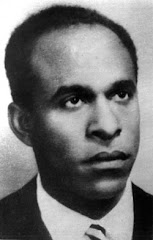
Gil Noble, 1932-2012: Pioneering Television Journalist, Documentary Filmmaker, and Legendary Black Media Figure

GIL NOBLE, 1932-2012

Gil Noble
WABC-TV, via Associated Press

http://www.huffingtonpost.com/2012/04/05/gil-noble-dead-dies-journalist_n_1406992.html?ref=black-voices&ir=Black Voices

GIL NOBLE BEING INTERVIEWED ABOUT HIS CAREER AND LIFE


GIL NOBLE INTERVIEW WITH BOB MARLEY


All,

Gil was a great journalist and a major black media pioneer on a number of different levels. Malcolm X, Dr. King, James Baldwin, Bob Marley, Kwame Ture (Stokely Carmichael), Muhammad Ali, Aretha Franklin, and Nelson Mandela among many, many other important African Americans in politics, literature, music, science, sports, and the arts routinely appeared or were interviewed on his long running award winning program "Like It Is". Mr. Noble was a man who understood the crucial importance of mass communications and excelled in making that fact known and appreciated by his audience both in New York and via PBS throughout the rest of the country. His legacy will live on wherever we make the collective effort to properly embrace and extend what his extraordinary work left us. He will be greatly missed. RIP brother...

Kofi


Gil Noble Dead: Legendary Black Journalist Dies At 80
By Jack Mirkinson
04/5/2012

The Huffington Post

Gil Noble, a legendary black journalist, has died at 80.

Noble hosted the New York public affairs show "Like It Is" for 33 years. WABC, the station he worked for, said that he created "the largest body of programs and documentaries on African Americans in the country."

"Like It Is" was born out of an effort to put more African American programs on television in the wake of the civil rights and black power movements. The show began in 1968, and it was only a stroke that forced Noble off the air in 2011.

Noble was born and bred in Harlem. In a 1998 interview, he said that he grew up "with no thought at all" of becoming a broadcaster. "[It] certainly had no place for people of color," he said. He eventually got a job at a Harlem radio station before moving to television in 1967, where he stayed for the rest of his career.

"The civil rights movement was really exploding," he continued in that interview. "I got myself an understanding of myself, my history, this country and another perspective of its story and its history and the world by all of the dynamic people who were in Harlem at the time."

Noble interviewed everyone from historians to presidents, revolutionaries to music icons. Just some of the many, many legends he spoke to include Nelson Mandela, Bob Marley, Aretha Franklin, Muhammad Ali, Kwame Ture, Jesse Jackson, Julius Nyerere and Sarah Vaughan. He also produced many documentaries about black history.

"Gil Noble's life and work had a profound effect on our society and culture," WABC president Dave Davis said in a statement.


http://www.nytimes.com/2012/04/06/business/media/gil-noble-host-of-show-on-black-issues-dies-at-80.html


Gil Noble, Host of Pioneering TV Show Focusing on Black Issues, Dies at 80
By PAUL VITELLO
April 5, 2012
New York Times

Gil Noble, a television journalist who hosted “Like It Is,” an award-winning Sunday morning public affairs program in New York, one of the longest-running in the country dedicated to showcasing black leadership and the African-American experience, died on Thursday in a hospital in Wayne, N.J. He was 80.

The cause was complications of a stroke he had last summer, said Dave Davis, president and general manager of WABC-TV, which had broadcast “Like It Is” since 1968.

Though broadcast only in the New York metropolitan area, “Like It Is” attracted guests of national and international influence. Some were controversial. His interviews with figures like Louis Farrakhan of the Nation of Islam drew complaints of one-sidedness. But for Mr. Noble, that was the point:
“My response to those who complained that I didn’t present the other side of the story was that this show was the other side of the story,” he said in 1982.
His interviews comprised a veritable archive of contemporary black history in America: hundreds of hourlong conversations with political and cultural figures like Lena Horne, Fannie Lou Hamer, Bill Cosby, Sammy Davis Jr., Muhammad Ali, Andrew Young, Dizzy Gillespie and Stokely Carmichael.

Mr. Noble viewed “Like It Is” as a platform for ideas and perspectives — especially those of blacks — that were missing from the mainstream news media. He once called his show “the antidote to the 6 and 11 o’clock news.”

His one-on-one exchanges with African and Caribbean heads of state, including Kenneth Kaunda of Zambia, Michael Manley of Jamaica and Robert Mugabe of Zimbabwe, were part of another mission: to report on events affecting people of African descent throughout the world.

“You learned a lot watching Gil,” former Mayor David N. Dinkins of New York said in an interview for this obituary. “You didn’t have to agree with everything he said, but for many of us, he was required watching.”

The deep support Mr. Noble enjoyed among his viewers helped him survive two controversies stemming from interviews with figures considered anti-Semitic, biased against Israel or both. In 1982, the Anti-Defamation League accused Mr. Noble of showing an anti-Israel bias when he broadcast a panel discussion about the Israeli invasion of Lebanon without presenting the Israeli perspective.

Just the rumor of disciplinary action prompted protests outside WABC headquarters, led by the Rev. Calvin O. Butts, pastor of the Abyssinian Baptist Church in Harlem, and the Rev. Al Sharpton. No disciplinary action was taken, but Mr. Noble was required to present a program with pro-Israeli guests.

Similar tensions arose in the summer of 1991, when Mr. Noble made plans to broadcast a speech in which a friend, Leonard Jeffries, a City College professor of black studies, was said to have made bigoted remarks. News reports had led to Mr. Jeffries’s removal as chairman of the black studies department.

Mr. Noble argued that only by hearing the speech in full could college officials (and everyone else) decide whether the remarks were cause for discipline or had been taken out of context. (In one remark, Mr. Jeffries said Hollywood movies demeaning to blacks were made by “people called Greenberg and Weisberg and Trigliani.” In another, he said, “Everyone knows rich Jews financed the slave trade.”)

WABC-TV executives shelved the segment, saying it could aggravate racial unrest in the city. As it happened, long-simmering tensions between blacks and Jews in the Crown Heights section of Brooklyn exploded into violence the next week.

Protesters again appeared outside the station’s offices. This time, they included a state senator, later to be governor of New York, David A. Paterson.

“It was a spontaneous protest as I recall,” Mr. Paterson said in an interview. “People just showed up. Because ‘Like It Is’ — it was something special in the African-American community, to be protected.” A segment on the Jeffries affair was eventually shown later.

“Some white Americans are repelled by ‘Like It Is,’ but that’s the nature of the program,” Mr. Noble told The Village Voice later that year. “We are witnessing a quarrel between the races in America, and certain opinions in the black community must be heard even if they are revolting.”

After Mr. Noble’s stroke, WABC-TV began broadcasting “Here and Now,” a public affairs show it described as “continuing the legacy of Gil Noble.”

Gilbert Edward Noble was born in Harlem on Feb. 22, 1932, the son of Rachel Noble, a teacher, and Gilbert R. Noble, who owned an auto repair shop. Both parents were born in Jamaica. He attended City College and was drafted into the Army during the Korean War.

Mr. Noble was hired as a reporter for the radio station WLIB in 1962. In 1967, after nationwide race riots that prompted television stations around the country to recruit some of their first black reporters, he was hired by WABC. He worked as reporter, weekend anchor and sometime correspondent for “Like It Is,” a show begun in 1968, before taking over as its host in 1975. He received seven Emmy Awards.

Mr. Noble’s survivors include his wife, Norma Jean; their four daughters, Lynn, Lisa, Leslie and Jennifer; a son, Chris; and eight grandchildren.

Milton Allimadi, publisher of the Harlem-based newspaper Black Star News and an occasional guest on Mr. Noble’s show, described the special regard in which Mr. Noble was held in the community he served.

After Mr. Allimadi appeared as a guest on the show, strangers stopped him on the street to shake his hand, he wrote in an online appreciation last August. “When I enter an M.T.A. bus, drivers refuse to accept my fare,” he wrote, “saying they are happy to drive someone who has been on ‘Like It Is.’ ”


GIL NOBLE ON MALCOLM X: PARTS 1 & 2

The late, great Gil Noble (1932-2012) --Always Honest, Always Direct, Always Sincere, Always Valuable--And the Kind of Genuine Black Public Intellectual and Cultural Worker That For The Most Part We Are Just Not Producing Anymore--Much To Our Detriment As a People...

PART 1: http://www.youtube.com/watch?v=C6kAeCqaAmo&feature=related


AN IMPORTANT INTERVIEW FROM MAY 25, 1998 WITH GIL NOBLE, THE LEGENDARY BLACK JOURNALIST, TV HOST AND NEWS PRODUCER AND SCHOLAR WHO DIED YESTERDAY AT THE AGE OF 80


Gilbert Edward "Gil" Noble (February 22, 1932 – April 5, 2012) was an American television reporter and interviewer. He was the producer and host of New York City television station WABC-TV's weekly, Like It Is, originally co-hosted with Melba Tolliver. The program focused primarily on issues concerning African Americans and those within the African diaspora. He was born and raised in Harlem, New York

Broadcast journalism career of Gil Noble, 1932-2012

In 1962 Noble got his professional break into broadcast media when he was hired as a part-time announcer at WLIB radio. He began reading and reporting newscasts. Noble joined WABC-TV in July 1967 as a reporter, after reporting on the 1967 Newark riots.[5] Starting in January 1968 became an anchor of its Saturday and Sunday night newscasts. He became host of Like It Is a few months prior to the rebranding of the station's newscasts as Eyewitness News in November 1968. In addition, he was an occasional interviewer on some of WABC's other public affairs shows, such as Eyewitness Exclusive. From 1986 on, Noble concentrated exclusively on Like It Is. Noble also created documentaries on such topics as W. E. B. Du Bois, Malcolm X, Fannie Lou Hamer, Ella Baker, Decade of Struggle, Martin Luther King Jr., Adam Clayton Powell, Jr., Jack Johnson, Charlie Parker and Essay on Drugs. In 1977, he wrote, directed and produced the first documentary on Paul Robeson, entitled The Tallest Tree in Our Forest.

In 1973, Noble reported (for local TV station WABC channel 7) on the first mobile cellular phone invented by Marty Cooper from the NY Hilton in New York. In 1981, he wrote an autobiography, Black is the Color of My TV Tube.[1] He was a member of the board of directors of The Jazz Foundation of America, hosting the 2001, 2002, 2003, 2004 and 2007 "A Great Night in Harlem" Concert/Benefit for The Jazz Foundation to support The Musicians Emergency Fund.[6] Noble won seven Emmy Awards and 650 community awards, and was granted five honorary doctorates.

http://www.visionaryproject.org/noblegil/

Noble, Gil
National Visionary
February 22, 1932 - April 5, 2012

Journalist, TV Producer, Host, Documentarian

BIOGRAPHY

Gil Noble, producer and host of the public affairs program “Like It Is,” has interviewed famous African Americans like Malcolm X, Martin Luther King Jr., Fannie Lou Hamer and Paul Robeson. During his career, he worked to correct negative media representations of African Americans and has promoted ethics and objectivity in journalism.

Noble was born in Harlem to Jamaican immigrants Gilbert and Iris Noble. As a teenager, Noble was inspired by pianist Erroll Garner and decided to pursue a career in music. He formed the Gil Noble Trio and played in clubs around New York City while attending City College. After graduating, he worked for Union Carbide and modeled on the side. He met his wife Jean, also a model, during this time.

Noble attempted to break into broadcast by doing voiceovers and television commercials. He became a part-time announcer for WLIB, a Harlem radio station, in 1962. While at WLIB, he also reported, read newscasts, serviced the Associated Press teletype machine and tracked interview tapes. This experience gave him working knowledge of all aspects of a newsroom operation.

In 1967, Noble auditioned for a TV reporter position at WABC. On his second audition assignment, he was called to cover violence in Newark, New Jersey’s Central Ward. Blacks had been shut off by a National Guard barricade while white city officials and journalists stood at the perimeter. Noble was able to cross the barricade and get the story from the black community’s perspective. Because of his reports, he was hired. By 1968, he was anchoring weekend newscasts. At that time, WABC created a black-oriented program in response to the assassination of Dr. Martin Luther King, Jr. Actor Robert Hooks was the host and Noble was the interviewer. When Hooks accepted an acting job, Noble replaced him as host. In the beginning, “Like It Is” focused on mostly entertainers, however, when Noble became producer in 1975, he turned its focus to the more serious issues of the black experience.

Over the years, Noble saw the documentary as the central focus and most rewarding aspect of his career. “Like It Is” has produced the largest collection of programs and documentaries on the African-American experience in the last half of the 20th century. He says documentaries “remain a powerful weapon to change false values, correct historical error and cure the poison of prejudice in the minds of black and white Americans.” In 2002, he survived an attempt by WABC to cancel his contract and show. Supporters of the show held rallies in its defense and the show remains on the air.


Thursday, April 12, 2012

After An Unconscionable 45 Days Legal Suspect George Zimmerman Is Finally Arrested and Charged with Second Degree Murder in The Trayvon Martin Case

Trayvon Martin & George Zimmerman

Stephen Crowley/The New York Times
Angela B. Corey, the special prosecutor, announced the second-degree murder charge against George Zimmerman, a neighborhood watch coordinator, in a televised news conference Wednesday.


http://www.nytimes.com/2012/04/12/us/zimmerman-to-be-charged-in-trayvon-martin-shooting.html?nl=todaysheadlines&emc=edit_th_20120412

All,

Finally after 45 days (!) in which a coldblooded murderer was allowed to remain scot free without an arrest or any jailtime whatsoever, George Zimmerman is finally being charged with 2nd degree murder and taken into police custody. Before a formal trial has even begun we have thus far been forced to witness a blatant miscarriage of justice in which a suspect who has actually killed someone was able to escape criminal prosecution for over 6 weeks-- a scenario that would have been absolutely IMPOSSIBLE for ANY black suspect to get away with in a reverse situation in which the victim was a 17 year old unarmed white boy. Even President Obama himself would have been immediately arrested and charged weeks ago if he had murdered a defenseless unarmed white child. But that's AmeriKKKa for ya and anyone who doesn't understand this simple fundamental fact at this very late date in the history of this venal country is either a stupid fool or a liar (or both)...Stay tuned...

Kofi


Prosecutor Files Charge of 2nd-Degree Murder in Shooting of Martin
By LIZETTE ALVAREZ and MICHAEL COOPER
April 11, 2012
New York Times


JACKSONVILLE, Fla. — More than six weeks after he shot and killed Trayvon Martin, an unarmed 17-year-old with no criminal record, George Zimmerman, the neighborhood watch coordinator at a small gated community in Sanford, Fla., was charged by a special prosecutor on Wednesday evening with second-degree murder and taken into custody.

The charges, which Mr. Martin’s family praised but called overdue, opened a new chapter in a case that set off a searing national discussion of racial profiling, Florida’s expansive self-defense law and the fairness of the criminal justice system.

The charges against Mr. Zimmerman were announced by Angela B. Corey, the state attorney for the Jacksonville area, who was appointed as a special prosecutor in the case after the local state attorney stepped aside in the wake of criticism that the case had been moving too slowly. Ms. Corey took pains to praise the local law enforcement officials at a news conference in Jacksonville, and pledged to pursue justice for the Martin family.

Asked about the racial overtones of the case — Mr. Martin, who was black, was shot and killed by Mr. Zimmerman, a Hispanic man who was not immediately arrested by the local police — Ms. Corey said that law enforcement officials were committed to justice for all, regardless of race, gender or background.

“We only know one category as prosecutors, and that’s a ‘V,’ ” Ms. Corey said. “It’s not a ‘B,’ it’s not a ‘W,’ it’s not an ‘H.’ It’s ‘V,’ for victim. That’s who we work tirelessly for. And that’s all we know, is justice for our victims.”

If convicted of second-degree murder, Mr. Zimmerman, 28, could face life in prison. It is the toughest charge he could have faced. First-degree murder would have required a finding of premeditation and a grand jury review, which Ms. Corey decided against this week.

Mr. Martin’s parents, Sybrina Fulton and Tracy Martin, praised the decision to arrest and charge Mr. Zimmerman at an emotional news conference in Washington, where they had been meeting with their lawyers and supporters. “We simply wanted an arrest,” Ms. Fulton said. “We wanted nothing more and nothing less, we just wanted an arrest. And we got it. And I say, ‘Thank you, thank you, Lord, thank you, Jesus.’ ”

Mr. Zimmerman arrived at the Seminole County Jail around 8:25 p.m. and stepped out of a black S.U.V. in the custody of law enforcement agents.

The killing of Trayvon Martin incited outrage and protest marches across the country. He was shot on the evening of Feb. 26 as he returned from buying Skittles and iced tea at a 7-Eleven, bound for the home in a gated community in Sanford, a small city just north of Orlando, where he and his father were guests.

Mr. Zimmerman, the founder of the local neighborhood watch, called 911 that evening to report that Mr. Martin looked like “a real suspicious guy.” Some questioned whether Mr. Martin attracted Mr. Zimmerman’s attention simply because he was black. Others were outraged by the slow reaction of the local police and prosecutors, who did not immediately arrest and charge Mr. Zimmerman, saying that Florida’s self-defense law could make it difficult to prove a criminal case against him.

President Obama weighed in on the case at one point, saying, “If I had a son, he’d look like Trayvon.” After television commentators suggested that Mr. Martin might have looked suspicious because he was wearing a hooded sweatshirt, people around the country began donning them in solidarity. LeBron James and other members of the Miami Heat basketball team posed in them for a photograph they posted on Twitter. Representative Bobby L. Rush, Democrat of Illinois, even wore one on the floor of the House, saying “Just because someone wears a hoodie does not make them a hoodlum.”

The case drew attention to Florida’s Stand Your Ground Law, which was enacted seven years ago after lobbying by the National Rifle Association, over the objections of many law enforcement officials. The law gives the benefit of the doubt to people who claim self-defense, even if they are not in their homes; it says that people who feel that they are in danger do not need to retreat, even if it would seem reasonable to do so.

In this case, Mr. Zimmerman, who had founded a neighborhood watch over the summer after a string of burglaries in the area, saw Mr. Martin, began following him, and called 911, telling the dispatcher that he appeared “suspicious.”

The dispatcher asked if Mr. Zimmerman was following him. “Yeah,” Mr. Zimmerman said.

“O.K.., we don’t need you to do that,” the dispatcher said. Mr. Zimmerman said: “O.K.”

The case will probably hinge on what happened next.

A lawyer for Mr. Martin’s parents, Benjamin Crump, has said that Mr. Martin was speaking on his cellphone at the time with his girlfriend, and told her that he was being followed. Mr. Crump said that the girl heard him being asked what he was doing before the line went dead.

Mr. Zimmerman’s father, Robert Zimmerman, gave a different account: he has said that his son had lost sight of Mr. Martin, who then appeared from behind and challenged him.

Witnesses then told 911 that they saw two men fighting. Then Mr. Martin was shot in the chest and killed.

The Sanford police came under heavy criticism when they did not arrest Mr. Zimmerman, saying that they had no evidence to dispute his claim of self-defense. The police chief, Bill Lee, eventually stepped down from his post. The state appointed a special prosecutor. And the Justice Department announced that it would open a federal civil rights investigation.

Ms. Corey, the special state prosecutor who announced the charges, said that if Mr. Zimmerman’s lawyers invoke the state’s Stand Your Ground law in his defense, and prosecutors do not believe the shooting was justified, they will challenge the claim.

“This case is just like many of the shooting deaths we’ve had in our circuit,” she said. “If Stand Your Ground becomes an issue, we fight it if we believe it’s the right thing to do.”

Mr. Zimmerman changed his lawyers this week, and his old legal team held an odd news conference on Tuesday to say that they were withdrawing from the case and had not heard from him since the weekend. Mr. Zimmerman’s new lawyer, Mark M. O’Mara, a well-known criminal lawyer, said in a brief interview Wednesday night that his client would plead not guilty at a hearing on Thursday.

Mr. O’Mara also said that he hoped the judge would take up a bond motion at the hearing, but that he expected the judge would wait for a more extensive hearing in the near future.

One of Mr. Zimmerman’s former lawyers, Craig A. Sonner, said after the murder charge was announced that he would use the Stand Your Ground law as a defense if he were still representing Mr. Zimmerman.

Mr. Sonner said that although he had not seen evidence in the case first hand, he believed that “when all the evidence arrives in its totality, and all the circumstances are viewed in their totality, everything will show, I believe, that George Zimmerman was acting in self defense.”

As she announced the charge, Ms. Corey, the prosecutor, praised Mr. Martin’s “sweet parents.” But she stressed that the decision to charge was made based on the law, not on pressure. “Let me emphasize that we do not prosecute by public pressure or by petition,” she said. “We prosecute based on the facts of any given case, as well as the laws of the State of Florida.”


Lizette Alvarez reported from Jacksonville, and Michael Cooper from New York. Serge F. Kovaleski contributed reporting from Sanford, Michael S. Schmidt from Washington, and Timothy Williams from New York. Jack Styczynski contributed research.

A version of this article appeared in print on April 12, 2012, on page A1 of the New York Times

Tuesday, April 10, 2012

Paul Jay interviews Glen Ford On The Structural Realities of Racism and Racial Profiling As Reflected in The Murder Of Trayvon Martin

http://therealnews.com/t2/index.php?option=com_content&task=view&id=31&Itemid=74&jumival=8150

Trayvon Martin and Structural Racism:

Paul Jay of Real News Network Interviews Glen Ford, Editor of Black Agenda Report


Henry Giroux On The Larger Social and Political Context of the Racist Murder of Trayvon Martin

A photograph of Trayvon Martin at a news conference, where several members of the New York City Council spoke in protest of the handling of the shooting of Martin, on the steps of City Hall in New York, March 28, 2012. (Photo: Hiroko Masuike / The New York Times)


http://truth-out.org/news/item/8203-hoodie-politics-and-the-death-of-trayvon-martin

All,

The following incisive article by the always highly prescient, and deeply insightful educator, social theorist, cultural critic, and political activist Henry Giroux is one of the very best and most useful analyses of, and informed commentaries about, what the racist murder of Trayvon Martin really means in the larger cultural and political context of this society. By focusing on the intricate dynamics and interlocking realities of race, class, and corporate ideology in a society and culture engulfed as always by the racist white supremacist mania that decrees lethal attacks on African Americans--and especially its vulnerable youth--to be what an oppressed minority 'deserves', Giroux asks and answers the fundamental questions that need to be seriously addressed in this entire loathsome episode...

Kofi
"What is missing in this debate over the legalities of the case (as against questions of justice) is a hard look at the underlying economic, racial and political conditions that make such a senseless act of violence possible. While it is easy to ridicule as racist Geraldo Rivera's claim that the boys "hoodie" was somehow responsible for his death, as if it carried an unequivocal and dangerous signifier for all young people, regardless of what their race, neighborhood, or class location might be, the real question in this case is, what kind of society allows young black and brown youth to be killed precisely because they are wearing a hoodie? Indeed the politics of diversion runs deep in American culture. And questions concerning what kind of society we have now become as reflected in such a tragic killing are simply ignored. Such questions are dangerous because they invoke wider social considerations and prevent us from wallowing in a purely privatized discourse that, in the end, for instance, only allows us to focus on the most narrow and restricted of issues such as the personality of the shooter, George Zimmerman. Defined by the parameters of an utterly privatized discourse the only question that seems to matter is, "Who is George Zimmerman and why did he shoot this young man?" Actually, the more plausible question is, "What kind of society creates a George Zimmerman along with a formative culture that elevates vigilantism over justice, emotion over reason, fear over shared responsibilities and violence over compassion?" This is not to suggest that Zimmerman should not be brought to justice through a fair trial, but that Zimmerman's dreadful act is symptomatic of a larger war being waged on poor and minority youth that places them in ongoing conditions of uncertainty regarding their education, health care, employment and also their future, particularly in terms of whether they will live or die..."
--Henry Giroux

Hoodie Politics:
Trayvon Martin and Racist Violence in Post-Racial America

By Henry A. Giroux
02 April 2012
Truthout | News Analysis


The killing of a young African-American boy, Trayvon Martin, by an overzealous white Hispanic security guard who appears to have capitulated to the dominant post-racial presumption that equates the culture of criminality with the culture of blackness, has devolved into a spectacle. While there is plenty of moral outrage to go around, a recognition that racism is alive and well in America, and that justice has been hijacked by those who can afford it, the broader and more fundamental questions and analyses are not being raised. Complex issues get lost when spectacular events are taken over by a media frenzy that feeds on sound bites and simplified answers. Yet, under the intense spotlight on the personal defects of the two men involved, important issues such as the social and human costs of a corporate-driven gun culture, the privatization of security forces, the price paid by poor minority youth whose every act is criminalized, and the crimes committed through an all-embracing racism are shrouded in darkness, off stage and invisible. To bolster the incredulous claim that we live in a post-racial society, crimes such as these are often isolated from a larger set of socio-economic forces that might provide a broader understanding of both the needless death of a 17-year-old black youth but also its relationship to a much more all-encompassing war on youth that is causing massive suffering and needless deaths among many young people in America.[1]

While it is the tendency of liberals to rush to universalize the deeply felt personal loss that resulted from Trayvon Martin's death, the rosy raceless sentiment was ruptured when President Obama uncharacteristically drew attention to his own racial difference and suggested that, if he had a son, he would look like Trayvon. But the fact of the matter is that since the dawn of the post-civil rights era young black and brown youth have been routinely and radically othered as a generation of suspects, if not a dangerous scourge. While poor minority youth may garner some sympathy when their needless deaths get public attention, too many of them experience an existential and real death every day that often goes unnoticed. The popular slogan "We are all Trayvon" may be paved with good intentions, but it bears the burden of hiding more than it reveals. Young poor minorities are not "us", they are the excluded, the other, the excess and the disposable. What needs to be remembered is that they have been made voiceless, powerless and invisible in America. Marginalized by race or class and forcibly excluded from the American dream, they register more as a threat to be either contained or eliminated than as an object of compassion and social investment. They are not merely excluded but punished for living outside of the power relations that give rise to the corrupt privileges of the Second Gilded Age. One notable example is made clear in the question raised by Rich Benjamin in a New York Times op-ed where he writes: "After all, why did the police treat Mr. Martin like a criminal, instead of Mr. Zimmerman, his assailant? Why was the black corpse tested for drugs and alcohol, but the living perpetrator wasn't?" [2]

What is missing in this debate over the legalities of the case (as against questions of justice) is a hard look at the underlying economic, racial and political conditions that make such a senseless act of violence possible. While it is easy to ridicule as racist Geraldo Rivera's claim that the boys "hoodie" was somehow responsible for his death, as if it carried an unequivocal and dangerous signifier for all young people, regardless of what their race, neighborhood, or class location might be the real question in this case is, what kind of society allows young black and brown youth to be killed precisely because they are wearing a hoodie? Indeed the politics of diversion runs deep in American culture. And questions concerning what kind of society we have now become as reflected in such a tragic killing are simply ignored. Such questions are dangerous because they invoke wider social considerations and prevent us from wallowing in a purely privatized discourse that, in the end, for instance, only allows us to focus on the most narrow and restricted of issues such as the personality of the shooter, George Zimmerman. Defined by the parameters of an utterly privatized discourse the only question that seems to matter is, "Who is George Zimmerman and why did he shoot this young man?" Actually, the more plausible question is, "What kind of society creates a George Zimmerman along with a formative culture that elevates vigilantism over justice, emotion over reason, fear over shared responsibilities and violence over compassion?" This is not to suggest that Zimmerman should not be brought to justice through a fair trial, but that Zimmerman's dreadful act is symptomatic of a larger war being waged on poor and minority youth that places them in ongoing conditions of uncertainty regarding their education, health care, employment and also their future, particularly in terms of whether they will live or die. Nor does the narrow focus on the prevalence of a gun culture, gated communities and private security forces (Rambos for hire) in the United States provide either an adequate focus for understanding why, "Military force has replaced democratic idealism as the main source of US influence" or why war is a source of national pride rather than alarm.[3] Nor does it tell us why the spectacle of violence has become the greatest source of entertainment in American popular culture, furthering enabling, "the process whereby civil society increasingly organizes itself for the production of violence."[4]

An echo of the conditions that are responsible for Trayvon Martin's senseless killing can be heard in the words of politicians who embrace a culture of cruelty, suggesting that children who have predetermined illnesses not be given access to health care. It is evident in laws that sentence young people to adult prisons; it is clear in economic policies that drain income from working families and their children in order to line the pockets of the extremely and unproductively wealthy and private hedge fund managers. It is also visible in a carceral state that wages war on the poor rather than on poverty, defunds public schools so that they can be privatized, and demonizes young people while teaching them that punishing them is more important than educating them. A culture of compassion has been replaced by a culture of fear that radically forstalls future possibility. The manufactured national hysteria over private security has become a disease, massaged by endless moral panics about poor people, immigrants, minorities and dangerous youth, and all the while making us less safe and ever more vulnerable to violence. A consumer and hyper-militarized society that defines all relationships according to market values and enshrine a "survival-of-the-fittest ethic" leaves behind a string of abandoned visions, dreams, hopes and belief in the future. Symptoms of ethical, political and economic impoverishment are all around us.

When traces of the social contract and our responsibility to present and future generations were still alive in the United States (prior to the late 1970s), many Americans believed it took a social state and a strong community to raise a child. That is, they believed in social safety nets that offered social protections, decent health care, child care and other important social rights that affirmed the centrality of, and shared experience of, the common good, if not democracy itself. What many Americans now accept is a mode of "failed sociality" that has turned the principles of democracy against itself, deforming both the language of freedom and justice that made equality a viable idea and political goal. Community as a metaphor for the common good and social contract is dead in America. Community is now gated and policed, and responsibility is reduced to a private and privately contracted affair shaped by a set of values that breathe a kind of mad savagery into a new form of economic Darwinism. In this market-driven, hypermasculine and militarized society, shared modes of sociality that provide collective protections and expand the rights of the social contract are now viewed with disdain. In fact, for some pundits such as Rick Santorum, they are derided as a pathology, a religiously inflected notion of evil and sin that poisons the body politic.

Young people now find themselves in a world in which sociality has been reduced to an economic battle ground over materialistic needs waged by an army of nomadic individuals, just as more and more people find their behavior pathologized, criminalized and subject to state violence. Youth now find themselves in a social order in which bonds of trust have been replaced by bonds of fear. As Zygmunt Bauman puts it: "Trust is replaced by universal suspicion. All bonds are assumed to be untrustworthy, unreliable, trap-and-ambush-like - until proven otherwise."[5] All forms of social solidarity are now abandoned to a free-market logic that has individualized responsibility and reduced civic values to the obligations of consumer-driven self interest advanced against all other interests. How else to explain the fate of generations of young people, especially poor white, brown and black youth, who find themselves in a society in which 500,000 young people are incarcerated and 2.5 million are arrested annually, a society in which, by the age of 23, "almost a third of Americans have been arrested for a crime."[6] What kind of society do we live in that allows 1.6 million kids to be homeless at any given time in a year? What social order allows massive inequalities in wealth and income to produce a politically and morally dysfunctional social order in which, "45 percent of U.S. residents live in households that struggle to make ends meet, [which] breaks down to 39 percent of all adults and 55 percent of all children"?[7] What is clear is that we now live in a society that invests more in what Etienne Balibar calls "the death zones of humanity" than in life itself, at least when it comes to poor youth.[8]

What the shooting of Trayvon Martin tells us is that too many young people are not only being stripped of their hope and dignity, but also their lives. American society has become what Steve Herbert and Elizabeth Brown refer to as a "political culture of hyper punitiveness," one in which it has become easier and apparently more acceptable to punish children who do not obey, who refuse to be invisible, who question authority - children whose presence reminds us of how far we have moved from the ideals that once allowed Americans to make a claim on democracy.[9] We now live in a bifurcated country of gated communities organized to protect at all costs their isolated privileges and desperately poor no-go zones, also isolated and armed to the teeth. Living in these paranoid life worlds we have become a nation that emulates the fictional Dexter, the much-celebrated serial killer in the cable TV series of the same name. Crime now drives social policy and vigilante culture increasingly plays a prominent role in shaping American life. This is a bunker culture where guns rule, corporations have learned to capitalize on the growing culture of cruelty and punishment, Hollywood thrives on the spectacle of racial violence and the American government devolves into a torture state. But it is also a society that has intensified its racism behind the cloak of colorblindness and other post-racial myths while at the same time exercising with more diligence its policing and punishing functions. Glen Ford, the editor of Black Agenda touches on this in his comment about why the George Zimmermans of the world think that they can get away with assaulting and punishing black youth. He writes: "They do these things because they can, and they think they can because they believe they've been given permission by a significant segment of society to carry out these attacks on young black men. And inevitably, if they are given what they believe is the green light, some people are going to take it."[10]

Given these contexts and conditions, the issue is not whether a crime takes place because a young person wears a hoodie, but, what kind of society do we live in when a child can be shot for emulating a style that is associated with that of black and brown urban youth? Since the arrival of the Puritans, punishment has been inextricably woven into the fabric of American life, and increasingly it targets young people who have been pushed to the margins of society. Hence, it is not surprising that in America there is a rush to punish individuals for committing crimes but no longer a passion or commitment to examine the larger issues that produce the crimes. We now believe that some individuals were just born evil and our responsibility begins and ends with their expulsion-not their salvation. We gloat over justice being served by sentencing young people such as Dharun Ravi to years in jail for a horrific, homophobic crime that prompted the suicide of his roommate Tyler Clementi, but we never raise questions about the forces at work in a society that daily reproduce and reinforce this hateful culture in the first place.

Too many young people have not only been expelled from American society, but they are being punished with a kind of mass vengeance that suggests the emergence of a new political and economic culture in which life has become cheap and democratic values extinct. Trayvon Martin's death should not be trivialized by the distracting discourse of hoodies; nor is reducible to the actions of a potentially mentally unbalanced shooter. It is not (yet) about a clear-cut act of racial violence, nor, for that matter, simply about the isolated and yet shocking death of a young man. It is about the death of the idea of justice, not merely its practice. It is symptomatic of the way in which an entire generation of young, poor, minority youth are being punished, excluded, starved and thrown up in the elimination system of a new and violent, self-mutilating social order. It is about the stench and reality of death being promulgated by a society that has become cruel, corporate-owned, politically corrupt and morally bankrupt. Martin's death is symptomatic of a war on young, poor, white and minority youth, the destruction of youthful human minds and bodies, and the slide of a hyper-market-driven country into a moral and political coma which enables it to function without apology, without ethical considerations into a world of power relations, values, and practices that are punishing in their effects and cruel in their conception. For many young people, the hoodie is not the central danger. Violence is the central force in the lives of poor minority youth, and the rhetoric and metaphors through which it gains legitimacy extend from an ever-pervasive reality of police brutality to the modes of punishment creep that extend from their schools and the streets to their homes. Violence now is the major force for producing identities, desires and social policies. Unfortunately, for too many young people, violence has become the normal condition of their lives, the only space left where many of them can even recognize how their agency might be defined and what their future has to offer them. What Trayvon Martin's death tells the American public is that, as Patricia Ticineto Clough and Craig Willse have pointed out in a different context, we live in a society, "in which the production and circulation of death functions as political and economic currency."[11] The price paid for that is not simply the tragic death of a young African-American boy, but an ongoing assault on millions of poor young people in this country. The cost is high, and with it comes the tragic violation of human life and the death of democracy itself. Surely, in remembering the death of Trayvon Martin, we can and must do more than don a hoodie to signify the superficial solidarity of the new post-racial world order.

This article may not be republished without permission from the author.

Endnotes

1. I take this up in great detail in Henry A. Giroux, "Youth in a Suspect Society: Democracy or Disposability?" (New York: Palgrave, 2010).

2. Rich Menjamin, "The Gated Community Mentality," New York Times (March 30, 2012) p. A27.

3. James Carroll, "A Nation Lost," Boston Globe (April 22, 2003) online at Common Dreams.

4. Jorge Mariscal, "Lethal and compassionate: the militarization of culture," CounterPunch (May 3, 2003).

5. Zygmunt Bauman, "Wasted Lives" (New York: Polity Press, 2004), pp. 92-93

6. Erica Goode, "Many in U.S. Are Arrested by Age 23, Study Finds," New York Times (December 19, 2011).

7. Reuters, "45% Struggle in US to Make Ends Meet," MSNBC: Business Stocks and Economy (November 22, 2011).

8. Etienne Balibar, "Outline of a Topography of Cruelty: Citizenship and Civility in the Era of Global Violence," in "We, The People of Europe? Reflections on Transnational Citizenship," (Princeton: Princeton University Press, 2004), p. 128.

9. Steve Herbert and Elizabeth Brown, "Conceptions of Space and Crime in the Punitive Neoliberal City," Antipode (2006), p. 757.

10. Glen Ford, “Vilification of Young Black Youth Deeply Embedded in American Culture,” The Real News (April 1, 2012).

11. Patricia Ticineto Clough and Craig Willse, "Beyond Biopolitics: The Governance of Life and Death," in Patricia Ticineto Clough and Craig Willse, eds. "Beyond Biopolitics" (Durham: Duke University Press, 2011), p. 3.

This article is a Truthout original.


HENRY A. GIROUX

Henry A. Giroux currently holds the Global TV Network Chair Professorship at McMaster University in the English and Cultural Studies Department. His most recent books include: Youth in a Suspect Society (Palgrave, 2009); Politics After Hope: Obama and the Crisis of Youth, Race, and Democracy (Paradigm, 2010); Hearts of Darkness: Torturing Children in the War on Terror (Paradigm, 2010); The Mouse that Roared: Disney and the End of Innocence (co-authored with Grace Pollock, Rowman and Littlefield, 2010); Zombie Politics and Culture in the Age of Casino Capitalism (Peter Lang, 2011); Henry Giroux on Critical Pedagogy (Continuum, 2011). His newest books: Education and the Crisis of Public Values (Peter Lang) and Twilight of the Social: Resurgent Publics in the Age of Disposability (Paradigm Publishers) will be published in 2012). Giroux is also a member of Truthout's Board of Directors. His website is www.henryagiroux.com.