Saturday, February 9, 2013

Wayne Shorter: The Living Legacy of a Great Musician, Composer, and Philosopher

Robert Yager for The New York Times
Wayne Shorter, the saxophonist and composer, is nearly 80 and remains driven and influential.

"I knew Wayne Shorter first in Newark where we were both, malevolently, born.  He was one of the two "weird" Shorter brothers that people mentioned occasionally, usually as a metaphorical reference, "...as weird as Wayne."
--Leroi Jones,  "Introducing Wayne Shorter", Jazz Review,  1959

“We have to beware the trapdoors of the self. You think you’re the only one that has a mission, and your mission is so unique, and you expound this missionary process over and over again with something you call a vocabulary, which in itself becomes old and decrepit.” 
--Wayne Shorter,  2013

All,

A Great Artist.  A Great Musician.  A Great Composer.  A Great Human Being  (And a Bad Muthafucka).  My eternal goal remains to be fortunate enough to become "as weird as Wayne"...

Kofi


Major Jazz Eminence, Little Grise
Wayne Shorter’s New Album Is ‘Without a Net’
 
By NATE CHINEN
January 31, 2013 
New York Times

THE STANDARD LINE on Wayne Shorter is that he’s the greatest living composer in jazz, and one of its greatest saxophonists. He would like you to forget all of that. Not the music, or his relationship to it, but rather the whole notion of pre-eminence, with its granite countenance and fixed coordinates. “We have to beware the trapdoors of the self,” he said recently.

Alejandro Bolivar/European Pressphoto Agency
Wayne Shorter at a festival in January.

Erin Baiano for The New York Times
The Wayne Shorter Quartet, with Danilo Pérez on piano, Mr. Shorter on saxophone, John Patitucci on bass and Brian Blade on drums, performing at Lincoln Center.

“You think you’re the only one that has a mission,” he went on, “and your mission is so unique, and you expound this missionary process over and over again with something you call a vocabulary, which in itself becomes old and decrepit.” He laughed sharply.

Mr. Shorter will turn 80 this year. Decrepitude hasn’t had a chance to catch up to him. Last week he appeared at Carnegie Hall as a featured guest with the Orpheus Chamber Orchestra, which played several of his compositions. On Tuesday “Without a Net,” easily the year’s most anticipated jazz album, will become his first release on Blue Note in more than four decades. And next Saturday he’ll be at the Walt Disney Concert Hall with the Los Angeles Philharmonic for the premiere of “Gaia,” which he wrote as a showcase for the bassist and singer Esperanza Spalding.

He hasn’t accrued this late-inning momentum alone. The vehicle for most of Mr. Shorter’s recent activity, including the orchestral work, is his superlative quartet with Danilo Pérez on piano, John Patitucci on bass and Brian Blade on drums. A band of spellbinding intuition, with an absolute commitment to the spirit of discovery, it has had an incalculable influence on the practice of jazz in the 21st century — and not necessarily for the same reasons that established Mr. Shorter’s legend in the 20th.

Since the emergence of the quartet, which released its first album on Verve in 2002, jazz’s aesthetic center has moved perceptibly: away from the hotshot soloist and toward a more collectivist, band-driven ideal. There has also been an unusual amount of dialogue between jazz’s tradition-minded base camp and its expeditionary outposts, where conventions exist to be challenged.

Mr. Shorter’s working band is far from the only one to embody these principles during the past decade, but it has been the most acclaimed and widely heard. Traces of its style can be detected in other groups, including those led by the saxophonist Chris Potter and the trumpeter Ambrose Akinmusire. Its slippery methodology has also taken root in the conservatory, and not just at the Berklee College of Music, where Mr. Pérez is on the faculty, or at the Thelonious Monk Institute of Jazz, where Mr. Shorter is a resident guru.

“The students are very familiar with that quartet,” said Doug Weiss, who teaches a popular Wayne Shorter ensemble class at the New School for Jazz and Contemporary Music. “They come in having heard the way that band plays together, and a lot of them have no idea what’s going on, and that’s why they’re there.”

So in addition to Mr. Shorter’s body of work — his terse and insinuative compositions, which have been closely studied by jazz musicians for decades — this newer generation has also had the opportunity to grapple with his elusive philosophy of play.

Once, in an interview, Mr. Shorter was asked to account for his pursuit of music above other art forms. He replied that music has an inherent sense of velocity and mystery. It would be hard to find a more concise distillation of his priorities as a bandleader.

“When we go out onstage we always start from nothing,” said Mr. Patitucci by phone from Mr. Pérez’s native Panama, where the quartet headlined a jazz festival last month. “So anybody can spin the wheels in a certain direction, and then we develop those themes.”

What follows isn’t free jazz, exactly, though it uses some of the same tools. “It’s spontaneous composition,” Mr. Patitucci said, “with counterpoint and harmony and lyricism. All of those values are still there. It’s just being pressurized into milliseconds.”

Mr. Shorter framed the idea as an image: “We don’t count how much water there is in a wave when we see the ocean.” He was on the couch of a hotel suite overlooking Central Park South, during one of his recent visits from Los Angeles, where he lives. That evening he would perform at a gala for the David Lynch Foundation, along with the pianist Herbie Hancock, his former partner in the Miles Davis Quintet. He wore dress loafers and a fleece pullover embroidered with the logo of Soka Gakkai International, the Nichiren Buddhist organization to which he and Mr. Hancock belong.

A scheduled interview began with an unscheduled interruption: Ms. Spalding — who won the Grammy for best new artist in 2011, and was also booked at the gala — dropped by with the Argentine pianist Leo Genovese. For all of her success Ms. Spalding still belongs to the demographic that grew up with the notion of Wayne as sage: she and Mr. Genovese were there simply to give him a hug.

Mr. Shorter is a notoriously elliptical conversationalist, prone to cosmic digression and quick-fire allusion. During a spirited two-hour interview he touched on modern art, social politics and science fiction — among the books he produced for inspection was the dystopian “Ready Player One” by Ernest Cline — as well as music and movies, and movie music. “I’m looking at a lot of old silent films now,” he said, “and I listen to the new, hip boy bands. I was checking out some Selena Gomez.” On the subject of jazz, he said pithily, “The word ‘jazz’ to me only means ‘I dare you.’ ”

But he also painted his own jazz narrative in precise strokes, whether it was hearing Charlie Parker at Birdland at the age of 18 — what stuck with him was a quotation of “Petrushka,” the Stravinsky ballet, that Parker sneaked into one solo — or sensing the mortal urgency that burned in John Coltrane, his fellow saxophonist, and in some ways a mentor. And Mr. Shorter made several references to the cryptic wisdom of Miles Davis, slipping each time into an unusually convincing imitation of that trumpeter’s throaty rasp.

Davis’s celebrated quintet of the mid-’60s was one of the most aerodynamically advanced in the history of jazz, and apart from Davis himself Mr. Shorter was its chief in-house designer. One of his signature contributions was “Nefertiti,” a slithery 16-bar tune ambiguously shaded with altered and half-diminished chords.

On record, as the title track to a 1968 album, the song features Davis and Mr. Shorter tracing and retracing its melody while the rhythm section improvises in the background, with all the supple intrigue of a shadow creeping across the landscape. It’s a useful precedent for Mr. Shorter’s current band, which derives much of its dynamism from rhythm-section cohesion within the loosest possible framework.

Another precedent, less obvious, is the transitional band that Davis led before his swerve into jazz-funk, a quintet with Mr. Shorter, the pianist Chick Corea, the bassist Dave Holland and the drummer Jack DeJohnette. A boxed set released last week on Columbia/Legacy, “Live in Europe 1969: The Bootleg Series Vol. 2,” illuminates just how much liberty that group took with its materials, even to the point of feverish abstraction. It never sounds freer than on a concert in Stockholm, attacking three of Mr. Shorter’s compositions: “Paraphernalia,” “Nefertiti” and “Masqualero.”

Two of those have surfaced on Mr. Shorter’s recent albums with the quartet, along with other pieces from a broad swath of his career. “Without a Net,” a compilation of live recordings from 2011, opens with “Orbits,” a theme from the Davis quintet era. It also includes a majestic take on “Plaza Real,” from the songbook of Weather Report, the epochal ’70s fusion band that Mr. Shorter led with Joe Zawinul.

But the provenance of the music takes a back seat to its process, which Mr. Shorter said was meant to herald an ideal of self-actualized communal leadership. “This kind of stuff I’m talking about is a challenge to play onstage,” he allowed, and chuckled. “When Miles would hear someone talking about something philosophical, he would say” — here came the rasp — “ ‘Well, why don’t you go out there and play that?’ One thing we talk about is that to ‘play that’ we have to maybe play music that doesn’t sound like music.”

If that sounds like a Zen riddle, comfort yourself with the knowledge that even Mr. Shorter’s band mates have had to warm to the uncertainty. “It was scary, to be honest,” Mr. Pérez said of his early experience in the quartet. “It was a shock to put myself into a situation where I had no idea what was happening. Even when I listened back, I felt like an outsider: ‘What is that? What key are we in?’ ” He gradually made adjustments, including one to his practice regimen: for two or three hours at a stretch he would watch Tom and Jerry cartoons with the sound muted, making up a score.

The band hasn’t relaxed its pursuit of revelation, which expresses itself in myriad ways: Mr. Pérez’s on-the-fly cadenzas, the unexpected thunderclap of Mr. Blade’s crash cymbal, the dartlike insistence of Mr. Shorter’s improvisational flights. All this remains true even as Mr. Shorter steps up his output as a composer. “He’ll bring in this 10-page piece of music, and it’s gorgeous,” Mr. Patitucci said. “And he’ll say, ‘Just this 16 bars.’ He’s not even attached to what he wrote.”

The center of gravity on “Without a Net” is “Pegasus,” designed to feature Imani Winds, a classical wind ensemble. Through much of that track’s 23 minutes, the woodwinds deftly frame the dramatic fluctuations of Mr. Shorter’s band; at times the two factions achieve a compelling synthesis, advancing a dramatic theme.

It’s horizon-scanning music, but it also features glimpses of the past, like the fanfare from “Witch Hunt,” which led off Mr. Shorter’s landmark 1965 Blue Note album “Speak No Evil.” During his solo in “Pegasus” Mr. Shorter also nods to the old Sonny Rollins tune “Oleo.” Elsewhere on the new album he drops a quotation of the Afro-Cuban bebop standard “Manteca,” and leads the band through a cubist recasting of “Flying Down to Rio,” a movie theme originally sung by Fred Astaire.

“To me there’s no such thing as beginning or end,” Mr. Shorter said. “I always say don’t discard the past completely because you have to bring with you the most valuable elements of experience, to be sort of like a flashlight. A flashlight into the unknown.”

Saturday, February 2, 2013

Robert Reich On Why the U.S. Economy Is Stagnant, What Structural Forces Are Responsible, and Who Should Be Held Accountable For Fixing It

(Image: Jared Rodriguez / Truthout)
All,

Far too many politicians, journalists, policy analysts, so-called 'pundits', and even some unduly awestruck citizens are wasting our precious time telling us only what we want to hear or conversely telling us only what they think we (according to them) should be hearing. Thankfully, there are still some real social critics, organizers, progressive activists, and dedicated educators around who insists only in telling us what we NEED to hear, and doing it with actual knowledge, insight, integrity, intellectual honesty, and political courage. One of those always useful and valuable individuals is the renowned labor economist, teacher, and genuine public intellectual Robert Reich.  Please read what he has to say and pass the word.  Why?  BECAUSE IT'S THE TRUTH...We are in very deep trouble and there's no end in sight.  Reich reminds us exactly what nefarious forces are responsible and who should be held completely accountable and why--aside from ourselves...

Kofi  


The Jobs Report, and Why the Recovery Has Stalled
Saturday, 02 February 2013
By Robert Reich, Robert Reich's Blog | Op-Ed

 
We are in the most anemic recovery in modern history, yet our political leaders in Washington aren’t doing squat about it.

In fact, apart from the Fed – which continues to hold interest rates down in the quixotic hope that banks will begin lending again to average people – the government is heading in exactly the wrong direction: raising taxes on the middle class, and cutting spending.


The Bureau of Labor Statistics reported Friday that American employers added only 157,000 jobs in January. That’s fewer than they added in December (196,000 jobs, as revised by the Bureau of Labor Statistics). The overall unemployment rate remains stuck at 7.9 percent, just about where it’s been since September.

The share of people of working age either who are working or looking for jobs also remains dismal – close to a 30-year low. (Yes, older boomers are retiring, but the major cause for this near-record low is simply the lack of jobs.)

And the long-term unemployed, about 40 percent of all jobless workers, remain trapped. Most have few if any job prospects, and their unemployment benefits have run out, or will run out shortly.

Close to 20 million Americans remain unemployed or underemployed.

It would be one thing if we didn’t know what to do about all this. But we do know. It’s not rocket science.

The only reason for employers to hire more workers is if they have more customers. But American employers have not had enough customers to justify much new hiring.

There are essentially two sources of customers: individual consumers, and the government. (Forget exports for now; Europe is contracting, Japan is a basket case, China is slowing, and the rest of the world is in economic limbo.)

American consumers – whose purchases constitute about 70 percent of all economic activity – still can’t buy much, and their purchasing power is declining. The median wage continues to drop, adjusted for inflation. Most can’t borrow because they don’t have a credit record sufficient to allow them to borrow much.

And now their Social Security taxes have increased, leaving the typical worker with about $1,000 less this year than last.

The Conference Board reported last Tuesday consumer confidence in January fell its lowest level in more than a year. The last time consumers were this glum was October 2011, when there was widespread talk of a double-dip recession.

The only people doing well are at the top – but they save a large part of what they earn instead of spending it.

Overall personal income soared by 8 percent in the final three months of 2012 compared to an increase of just over 2 percent in the third quarter, but this income didn’t go into the pockets of the middle class. It went into the pockets of people at the top.  Wages and salaries grew a measly six-tenths of one percent.

Most of the rise in personal income in the last quarter was from companies rushing to pay dividends before taxes were hiked in 2013, and from an upturn in personal interest income. Both these sources of income went mostly to the well-to-do.

This explains why consumer spending is dropping. The Commerce Department said Thursday consumers’ spending rose 0.2 percent last month. That’s slower than the 0.4 percent increase in November.

So if we can’t rely on consumers to stoke the economy, what about government? No chance. Government spending is dropping, too.

The major reason the economy contracted between the start of October and end of December 2012 was a major reduction in government spending in the fourth quarter.

Government spending has declined in nine of the last ten quarters, but it took a precipitous drop in the last quarter. This was mainly because military spending fell 22.2 percent. That’s the largest fall-off since 1972 (mainly due to reduced spending on the war in Afghanistan, and worries by military contractors about further pending cuts). State and local spending also continued to fall.

Personally, I’m glad we’re spending less on the military. It’s the most bloated part of the government. Major cuts are long overdue. But the military is America’s only major jobs program. Cutting the military without increasing spending on roads, bridges, schools, and everything else we need to do simply means fewer jobs.

What’s ahead? More of the same. So what possible reason do we have to suspect the recovery will pick up speed? None.


Don’t count on consumer spending. Wages and benefits continue to drop for most people, adjusted for inflation. States are hiking sales taxes, which will hit the middle class and the poor hardest. Deficit hawks in Washington are contemplating additional tax hikes on the middle class.

Housing prices are stabilizing, thankfully. But one out of five homeowners is still underwater, and the ranks of people renting rather than owning are rising. Health-care costs are also rising for most people in the form of higher co-payments, deductibles, and premiums.

Don’t count on government, either. Government spending continues to head downward. The White House has already agreed to major spending cuts, some to go into effect this year. Coming showdowns over the next fiscal cliff, appropriations to fund government operations, and the debt ceiling will likely result in more cuts.

More jobs and faster growth should be the most important objectives now. With them, everything else will be easier to achieve – protection against climate change, immigration reform, long-term budget reform. Without them, everything will be harder.

Yet we’re moving in the opposite direction — following Europe’s sorry example of failed austerity economics.


This piece was reprinted by Truthout with permission or license. It may not be reproduced in any form without permission or license from the source.

 
ROBERT B. REICH, Chancellor’s Professor of Public Policy at the University of California at Berkeley, was Secretary of Labor in the Clinton administration. Time Magazine named him one of the ten most effective cabinet secretaries of the last century. He has written thirteen books, including the best sellers “Aftershock" and “The Work of Nations." His latest, "Beyond Outrage," is now out in paperback. He is also a founding editor of the American Prospect magazine and chairman of Common Cause.


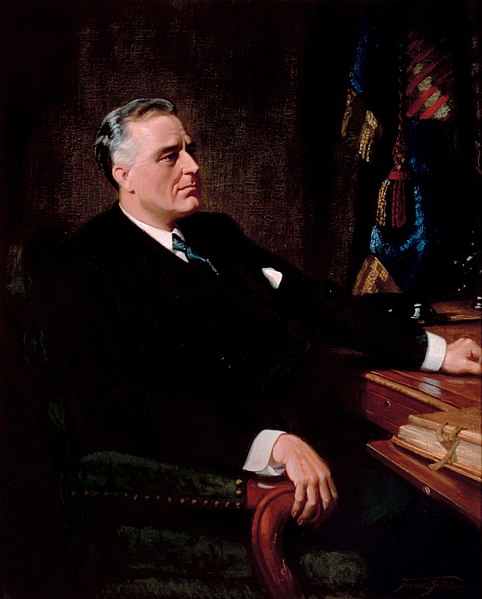
Official Presidential portrait of Franklin Delano Roosevelt. (Photo: Frank O. Salisbury

http://truth-out.org/opinion/item/14016-what-a-second-term-obama-can-learn-from-fdr 

All,

This article is equally important--and for the exact same reasons.  Please read carefully and pass the word...

 
Kofi

What a Second-Term Obama Can Learn From FDR
Saturday, 19 January 2013
By David Woolner, Next New Deal | Op-Ed


To achieve progress in his second term, President Obama must recognize that his opponents aren't really interested in a "grand bargain."

"My fellow countrymen. When four years ago we met to inaugurate a President, the Republic, single-minded in anxiety, stood in spirit here. We dedicated ourselves to the fulfillment of a vision—to speed the time when there would be for all the people that security and peace essential to the pursuit of happiness. We of the Republic pledged ourselves to drive from the temple of our ancient faith those who had profaned it; to end by action, tireless and unafraid, the stagnation and despair of that day. We did those first things first.

Our covenant with ourselves did not stop there. Instinctively we recognized a deeper need—the need to find through government the instrument of our united purpose to solve for the individual the ever-rising problems of a complex civilization… To do this we knew that we must find practical controls over blind economic forces and blindly selfish men. —Franklin D. Roosevelt, Second Inaugural Address, January 20, 1937

Just over three-quarters of a century ago, in his second inaugural address, Franklin Roosevelt, reflecting on the accomplishments of the New Deal in mitigating the worst effects of the Great Depression, noted that “the greatest change we have witnessed [over the past four years] has been the change in the moral climate in America.” Among “men of goodwill,” he went on, “science and democracy together offer an ever-richer life and ever-larger satisfaction to the individual. With this change in our moral climate and our rediscovered ability to improve our economic order, we have set our feet upon the road of enduring progress.”

FDR based this assumption on the idea that what had transpired over the course of his first term—a first term which brought us, among other things, Social Security, unemployment insurance, the right of workers to engage in collective bargaining, the separation of commercial and investment banking, the establishment of the Securities and Exchange Commission (SEC), the establishment of the Federal Deposit Insurance Corporation (FDIC), the largest single drop in the unemployment rate in the nation’s history to date, and an average annual economic growth rate of 14 percent—was directly tied to a new understanding of the role of government. This new understanding, he noted, was based on the “fulfillment of a [collective] vision…to speed the time when there would be for all the people that security and peace essential to the pursuit of happiness.”

Equally important, however, was FDR’s assertion that in arriving at this new vision of government the people understood that it was critical to find “practical controls over blind economic forces and blindly selfish men,” to recognize the “need to find through government the instrument of our united purpose to solve for the individual the ever-rising problems of a complex civilization.”

In essence, what FDR offered the American people was a new vision for the future. This new vision was based the fundamental idea that it was only the power of democratic government that could provide the means to counter “the blind economic forces” and “blindly selfish men” who had profaned democracy and brought the country to ruin in the dark days of the early 1930s.

There is much in this speech that still holds relevance for Americans today. In the massive loss of manufacturing jobs and the globalization of the world’s economy in the last few decades, we can see at work “the blind economic forces” of which FDR spoke. And in the wake of the 2008 financial crisis, the power of the “blindly selfish men” on Wall Street is all too familiar. So too—thanks to the onset of the Great Recession—is the anxiety, fear, and bewilderment that he noted plagued the American people on the eve of his first inaugural. What is missing, sadly, is the contravening narrative, the covenant that FDR made with the American people, the understanding that the reforms achieved in his first term had made the exercise of all power more democratic by bringing:


…private autocratic powers into their proper subordination to the public’s government. The legend that they were invincible—above and beyond the processes of a democracy—has been shattered. They have been challenged and beaten.


President Obama has for the most part shied away from the idea that the real challenge to our democracy stems not from the dysfunctional nature of Congress, but rather from the forces of wealth and privilege who see themselves as “above and beyond the process of democracy.” Rather than take on these forces directly, he speaks instead of asking the wealthy to “pay their fair share in taxes,” of building a consensus, of taking a “balanced approach,” of striking a “grand bargain” that would “make sure that middle-class folks aren’t bearing the entire burden and sacrifice when it comes to some of these big challenges.” In taking this approach, the president argues that he is following the will of the American people, who made it clear through his re-election that they want compromise and action. These may be noble sentiments, but they fall far short of expressing what the American people truly want from their president, which above all else is leadership.

The sad fact is that we now live in a society where the income disparity between the rich and the rest of us now stands at its worst level since the late 1920s—just before the onset of the Great Depression. The Congressional Budget Office, for example, recently reported that between 1979 and 2007 the top 1 percent of households doubled their share of pretax income while the bottom 80 percent of American households actually saw their share of income decline. In a similar study, a recent Census Bureau report notes that the average white male worker earns roughly the same hourly wage that he would have made in 1978, adjusted for inflation, while the average CEO’s pay has increased by roughly 600 percent.

As was the case in the 1920s, such a drastic mal-distribution of wealth is clearly not sustainable, as it makes it very hard for the average worker to sustain the level of purchases necessary to maintain our largely consumer-based economy. Hence, if we truly want to find a way to grow our economy—as the president insists he does—then we must find a way to address this critical structural imbalance in our economy. And this means real reform, the type of reforms we saw in the New Deal, reforms that brought about the birth of the post-1945 modern American middle class that now seems to be so rapidly disappearing.


So rather than beat about the bushes, President Obama might do well to recognize—as FDR did—that the forces of wealth and privilege weighted against him are not really interested in a compromise or a “grand bargain.” What they want is to maintain the economic and political status quo in what FDR once rightly called the “false belief” that happiness can only be achieved “in the mad chase of evanescent profits.”

To overcome these entrenched forces, President Obama will need to provide the country with much more than his somewhat vague efforts to meet the other side halfway. He must learn to recognize that above all else it is his responsibility to give voice to the common aspiration of the people and provide them with a vision for the future -- a vision that recognizes government’s fundamental responsibility to fashion a more just and equitable society, a vision based on the truism, as FDR said in his second inaugural, that:

"We have always known that heedless self-interest was bad morals; we know now that it is bad economics. Out of the collapse of a prosperity whose builders boasted their practicality has come the conviction that in the long run economic morality pays. We are beginning to wipe out the line that divides the practical from the ideal; and in so doing we are fashioning an instrument of unimagined power for the establishment of a morally better world."


This piece was reprinted by Truthout with permission or license. It may not be reproduced in any form without permission or license from the source.


David Woolner is a Senior Fellow and Hyde Park Resident Historian for the Roosevelt Institute, and associate professor of history at Marist College, in Poughkeepsie, New York. A specialist in Anglo-American relations and U.S. foreign and economic policy under Franklin D. Roosevelt, Dr. Woolner has delivered papers on FDR’s foreign and domestic policy in Canada, the United States, France, Russia, England, Wales, Ireland, Scotland and Korea.


Saturday, January 26, 2013

When Is President Obama Going To Address the Specific Needs and Aspirations Of Black America?

http://www.huffingtonpost.com/2013/01/18/obama-black-america_n_2499138.html

All,

This particular "chickens come home to roost" historical moment was-- as anyone who has been paying any attention at all to the actual political, economic, and cultural realities of this society-- absolutely inevitable.  In fact, it is a measure of just how strangely and tragically successful President Obama, his administration, and the Democratic Party generally have been in systematically ignoring, dismissing, and repressing any and all fundamental public criticism of his domestic policies and programs in general--and especially as they pertain to the national African American and Latino American communities. This also goes for all vestiges of critical grassroots political leadership coming out of these major "minority" constituent groups that aside from a few largely marginal media imposed exceptions (like the often valid but unjustly villified critiques of Cornel West) have also been subjected  to the egregious neglect that has been occurring since day one of Obama's presidency.  What ironically makes this ongoing problem even worse politically is that it would have been virtually IMPOSSIBLE for the President to have won the national election in 2008 and especially re-election in 2012 without the large concentrated voting power of this groundbreaking coalition of black and brown voters--a powerful coalition that between them gave the President a whopping 84% of its national vote (with blacks voting in favor of Obama by a margin of 94%!) or nearly 30 million of his final total of 65 million votes.  Keep in mind in this crucial context that Obama lost the national white vote by a LANDSLIDE in both 2008 against McCain/Palin, where Obama received only 43% of white votes nationwide and even less (a feeble 39%!) to Romney/Ryan in 2012.  What's so important about the following article and so much ekse that has been written since the president's second term inauguration last monday is that for the first time since Obama became President in 2008 a broad based coalition of moderate black civil rights organizations who heretofore have been nothing but passively uncritical lapdogs, flacks, hacks, and official mouthpieces for the President (a long largely opportunist list that now includes everyone from the Rev. Al Sharpton and Toure to Michael Eric Dyson, Ben Jealous, and Melissa Harris-Perry, among others) in these communities of color are finally making some real noise like some outspoken activists of the black and Latino left have been since the President's first inauguration four years ago. It will be very interesting indeed to see if this very necessary critique and public rhetoric of discontent and disappointment will actually lead to any broader and far more progressive alternatives in terms of structural analysis and most importantly policy decisions on behalf of the masses of poor, working, and middle class African American citizens.  Stay tuned...

Kofi


Obama Needs A Plan To Help Black America, Say Activists, Economists 
01/18/2013
Huffington Post


WASHINGTON -- Less than a month after President Barack Obama won his second term, the National Urban League summoned Bernard Anderson to a meeting in the capital.

The invitation was no surprise. Anderson is a giant: an economist and prominent author, the first African American granted tenure at the University of Pennsylvania's Wharton School, a former assistant secretary at the U.S. Department of Labor and chair of the National Urban League's Council of Economic Advisers.

The real surprise was the meeting agenda: not to celebrate Obama's historic victory, but to develop a strategy forcing him to pay more attention to Black America.

Anderson was one of more than 40 civil rights, social justice, health care, business and community development leaders in attendance. And at that Dec. 3 gathering just across Lafayette Square from the White House, no single issue occupied more time or generated more discussion than Anderson's report on the fragile economic status of black Americans.


"What happened in that room is indicative of what so many of us, including the president and I know his wife, have known and felt for some time," Anderson told The Huffington Post. "It would not bother me if he never made another speech before the Urban League or the NAACP. What he needs to do is use his office, the bully pulpit and actual policy to address the persistence of racial inequality in economic life. If he does that, then I think his presidency will be redeemed."

That redemption may be a long time in coming. The White House declined to make available an official to speak on the record about a specific new agenda -- or lack of one -- to deal with life in Black America. On background, a senior White House official cited support for measures such as extended unemployment insurance and new financial regulations, but suggested that political and budget constraints make sweeping new initiatives unlikely.

The Black America that views Obama as its president, that helped to make him America's president, has a list of critical concerns and priorities -- many of which are shared with the nation's fast-growing Latino population. Together, these are the people who are struggling hardest to make ends meet, whose grasp on a stable middle-class life remains the most tenuous and to whom the economic recovery has been the least kind.


As Obama prepares for his second inauguration, civil and labor rights leaders, economists, political scientists, social critics, leading thinkers, researchers and observers want the president to acknowledge this more openly. And they want that acknowledgement to come through policy and deeds, not speeches and spin.

Obama's presence in the White House, path-breaking and historic as it is, hardly means that race no longer matters in America, these experts say. Ironically, his ascendance may have promoted the palliative idea that the wounds of racial inequality have been healed, when some matters have actually grown worse.


Even a cursory list reveals troubling facts: Blacks and Latinos disproportionately attend subpar schools, are taught by the least-qualified teachers, face sky-high incarceration rates and suffer from low levels of health care coverage.

"Voting, health care and criminal justice were all on the agenda," said Anderson, about the summit. "But the disparities in income, employment and wealth are so pervasive, so long-standing that there were people in that room who rarely write the word 'economics' raising their hands."


Without a doubt, the problem predates Obama.

For 34 of the last 39 years, annual average black unemployment, a measure of those actively looking for work but unable to find it, has sat at or above 11 percent, according to federal data. And black wealth -- the cash and other assets that families have to see them through a crisis after accounting for their debt -- dropped a collective 53 percent between 2000 and 2007.

But the Great Recession has brought more trouble.

The foreclosure crisis (along with a 14 percent black unemployment rate) has helped to push a disproportionate number of black homeowners out of their neighborhoods and out of the middle class. By 2010, a full 35 percent of black homeowners -- and 41 percent of Latino homeowners -- reported they were underwater, meaning they owed banks or mortgage lenders more than their homes were worth, according to a Pew Research Center survey. Just 18 percent of whites said they were in the same situation.

Even more troubling, over 25 percent of black Americans were living in poverty as of 2011 -- 10.9 million people, up slightly from 10.7 million the year before, according to the most recent Census data.

Algernon Austin, a labor sociologist and researcher at the Economic Policy Institute, said these problems have been exacerbated by the failure of policymakers to accept that inequalities in the education system and the labor market continue to exist. The perpetuation of stereotypes, the more intense policing of black communities, and other biases within the criminal justice system have produced disproportionate levels of incarceration in Black America and rendered a large share of the black male population unable to qualify for affordable housing or federal college aid or to find work due to criminal convictions, Austin said.

"What's happened for too long is that people see the criminal offending and say that's bad culture, bad behavior, and therefore Black America's economic problems are really a cultural problem," said Austin. "I am saying if we really want to address crime, poverty, and inequality, then we have to see them as interrelated problems, and the the place to start is jobs."

For Marc Morial, president of the National Urban League and former mayor of New Orleans, the implication is clear: Black America played a critical role in helping to reelect Obama. Now that the worst of the nation's financial crisis is over, there are social and political obligations that must be met. They exist not because Obama shares a phenotype or genetic heritage with Black America, but because Black America is American, he said.

"A coalition of women, young voters and people of color -- blacks, Latinos and Asians -- put this man back in office," said Morial. "We were with him in the sense that the first term was about putting out fires and addressing emergencies. We understand the legislative climate. We know what the stimulus did and how hard he had to fight for that. But four years later, so much of the recovery has bypassed people of color and middle-class America that we are not going to let the counsel of cynics dissuade us or stop us from making demands and getting some tangible, sustainable progress. The silent tiger is going to roar and roar and roar."


As the nation's first black president, Obama must solve a complicated political calculus, said Cornell Belcher, president of Brilliant Corners, a political strategy firm that was deeply involved in Obama's campaigns.

He cannot appear to favor black America, nor can he appear completely disconnected from it, Belcher said. He cannot appear weak, but must also avoid embodying stereotypes such as the angry or dangerous black man. And on the rare occasions that Obama has hinted at or explicitly expressed the way that race continues to shape experience in America, he has had to steady himself against withering charges of racism, communism and worse, Belcher said.

"There has to be a maturity about how politics works," said Belcher. "There's no doubt that the president is constrained in some ways. However, as an interest group, should leaders of black organizations make the case for what their communities need? Absolutely. If they don't, who will?"

Even if the country and the second Obama administration still clings to a "rising tide lifts all boats" approach to policy, Black America's economic situation has grown so dire, along with that of the Latino population, that any policy that fails to target these groups' challenges will likely fail to resolve the nation's biggest problems, Austin said.

For instance, the administration's willingness to limit cost-of-living increases for Social Security recipients will have a far greater impact on black and Latino senior citizens, boosting poverty. After a lifetime of what are often lower wages, higher-cost borrowing and a limited ability to save, 26 percent of black seniors and 25 percent of Latino seniors depend on Social Security for 100 percent of their income, compared to about 14 percent of white retirees, a December 2012 Economic Policy Institute analysis found.

"We simply have to start having more sophisticated policy conversations," said Austin, "even if they make some of us uncomfortable."

A White House official, who spoke on condition of anonymity, said that the Obama administration is deeply concerned about Black America's economic condition. The official touted the fact that the administration used billions of dollars in stimulus funds to save or create an estimated 682,000 jobs, the vast majority of which were in local, state or federal government agencies -- the single largest employer of black men and the second most common for black women.


The White House also pointed out that the administration has cracked down on employers that use discriminatory hiring practices and on banks that engage in discriminatory lending. The Justice Department has funded programs that seek to reduce the number of people who return to prison, worked to trim sentencing disparities, and defended the rights of blacks and Latinos to participate fully in the political process. And the administration's crowning achievement, the Affordable Care Act, is expected to help millions of black Americans gain health insurance.

"I think we have at least tried to push forward legislation that would support and address the economic needs of the African-American community," the White House official said. "Realistically, as a country, we are in a place where we can't afford everything we want, and a lot of stuff that we have been trying to push through Congress has been stonewalled."

The White House did not offer much in the way of specific policies the administration is planning to help Black America in the second term, choosing instead to highlight big-ticket items like rebuilding the economy, expanding domestic manufacturing, pursuing immigration reform and developing the green energy industry.

"An economy that continues to improve is going to benefit everyone, African Americans included," the staffer said. "That's not just a catch phrase. That's true. Are we where we want to be? No. Are things getting better for most Americans? Yes."

The question, though, is not about the "most" but the "rest." That's why Anderson and others like him came to Washington in December, and why they will be watching the second term so closely.


This article is part of a series produced by The Huffington Post that closely examines the most pressing challenges facing President Obama in his second term. To read other posts in the series, click here.


Read more from Huffington Post bloggers:

Benjamin Todd Jealous: 'Employment Discrimination 2.0' and What President Obama Can Do About It in His Second Term

As a candidate Obama promised to focus on jobs. In direct contrast to his opponent, he pledged to lift all boats -- especially those boats that had gotten stuck in the mud. Now that he is about to begin his second term, the black community is watching to see how he will follow through.

Gregory D. Squires: What Does Barack Obama Owe the Black Community?

Obama owes quite a bit to the black community, but not because of the vote, his color or even the presumably more liberal politics of his Democratic Party but because the federal government, among others, has an obligation to address the continuing significance of race in America.

Dr. Boyce Watkins: How Black America Grew as a Result of the Obama Presidency

Millions of black folks were watching the throne when Obama was sworn in and gladly putting his picture right next to Martin Luther King and Jesus. But the Obama presidency has served as a marvelous and intriguing political education for the African American community.

Tuesday, January 22, 2013

The Inspiring Courage of James Hood (1942-2013) and the Profound Legacy of the Civil Rights Movement

Editor's Note:  This article and my response marks the beginning of what will be a year long series of articles,  essays, commentary, and  critical analyses by myself and others of the profound and ongoing historical impact of the pivotal years of 1963 and 1863 in the history of this nation and that of its African American citizens. 
 
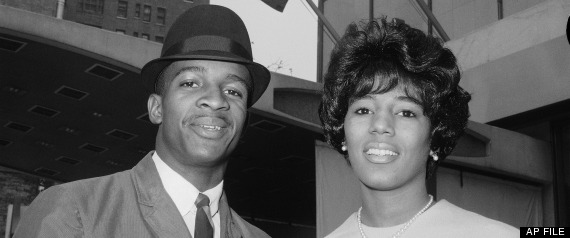
In this June 9, 1963 file photo James Hood and Vivian J. Malone of Alabama pose in New York
All,

History/Time is really moving and I mean FAST. It's incredible:  I remember so clearly this very day--June 11, 1963-- that James Hood and Vivian Malone-- accompanied by the U.S. Deputy Attorney General Nicolas Katzenbach and National Guard troops-- walked right past the arch segregationist Alabama Governor George Wallace who, along with Alabama state troopers, was literally standing in the front entrance door of the University of Alabama trying to physically block them from entering.  I watched this entire dramatic episode on television with my parents in Detroit.  I was absolutely fascinated by this event and my visceral response to it left a very sharp and absolutely indelible impression on me as a child.  A huge synapse went off in my head not only because of what Hood and Malone and the Kennedy administration did--that was extraordinary enough!--but by what  also happened on that very same day.  Imagine:  Less than 10 hours after this event Medgar Evers the legendary NAACP leader and activist from Mississippi (age 37) was assassinated as he was shot in the back by a KKK assassin just as he was taking out his keys to open the front door of his home just before midnight as his wife and three children watched in horror as they came to the door to greet him.  Evers had been at a long meeting of the NAACP that evening discussing the events of that same day which also included a groundbreaking speech by President Kennedy just four hours earlier on national television in which for the very first time his administration made a clear and definitive committment to pushing for and demanding that civil rights legislation be passed--another event I witnessed with my parents on TV that evening.  I remember like it was yesterday with my father saying to me in a very serious tone that I "really needed to see and hear what the President had to say" and that it was very important that I "pay close attention."  My mother and father were watching the speech with such intense riveted interest that I was again mesmerized by what I saw and heard the president say.  In that speech before the entire nation Kennedy said the following:

Finally on this very same day(!!) Dr. Martin Luther King, Jr. and the legendary black labor union leader A. Phillip Randolph announced that they and a national coalition of civil rights organizations, labor unions, civic groups, activists, clergy, and ordinary citizens were organizing a national event known as the 'March on Washinston for Jobs and Freedom' to be held in the nation's capitol of Washington D.C. in two months on August 28, 1963. WHAT AN AMAZING DAY IN AMERICAN HISTORY.  I rest my case...

Kofi


James Hood Dead: Man Who Defied Racial Segregation At University Of Alabama Dies At Age 70By BOB JOHNSON 
01/18/13
Huffington Post 

MONTGOMERY, Ala. — One of the first black students who enrolled at the University of Alabama a half century ago in defiance of racial segregation has died. James Hood of Gadsden was 70.

Officials at Adams-Buggs Funeral Home in Gadsden said they are handling arrangements for Hood, who died Thursday.

Then-Alabama Gov. George Wallace made his infamous "stand in the schoolhouse door" in a failed effort to prevent Hood and Vivian Malone from registering for classes at the university in 1963.

Hood and Malone were accompanied by Deputy U.S. Attorney General Nicholas Katzenbach when they were confronted by Wallace as they attempted to enter the university's Foster Auditorium to register for classes and pay fees.

Wallace backed down later that day and Hood and Malone registered for classes.

UA President Judy Bonner remembered Hood as a man of "courage and conviction" for being one of the first black students to enroll at the university.

"His connection to the university continued decades later when he returned to UA to earn his doctorate in 1997. He was a valued member of The University of Alabama community, and he will be missed. Our thoughts and prayers are with his family during this difficult time," Bonner said.

Hood was the last survivor among the major figures in the schoolhouse door incident. Wallace died in 1998, Vivian Malone Jones in 2005 and Katzenbach last year.

After enrolling, Hood remained at UA for a few months and moved to Michigan, where he received a bachelor's degree from Wayne State University and a master's degree from Michigan State.

He later moved to Wisconsin, where he worked at the Madison Area Technical College for 26 years. He retired in 2002 as chairman of public safety services in charge of police and fire training.

He finally returned to UA later in life to earn his doctorate.

Culpepper Clark, author of "The Schoolhouse Door: Segregation's Last Stand at the University of Alabama," called the schoolhouse door incident "an iconic moment" in the Civil Rights Movement because it provided a confrontation between Wallace and the Kennedy administration. He said the incident was "symbolically important" and helped lead to passage of the Voting Rights Act.

Clark described Hood as a man with a lot of "intellectual energy" who understood the importance of what he did at the University of Alabama in 1963.

"He didn't try to make it into more than what it was," Clark said.

The Rev. Preston Nix grew up in Etowah County and said he knew of Hood, who was several years older than he.

Nix said it took a lot of courage for Hood to challenge the segregation at the University of Alabama in 1963.

Nix said he felt Hood did what he did partly to "pave the way" for others to be able to improve themselves and get a higher education and partly because he wanted to attend the University of Alabama.

Samory Pruitt, vice president for community affairs at UA, agreed with Nix.

"Because of what he did, people like me were afforded the opportunity to go to the University of Alabama," said Pruitt, who is black. "I think it's about people having the opportunity to be the best they can be."

Saturday, January 19, 2013

Normon Solomon on the Need To Hold the Obama Administration--And Ourselves--Fully Accountable Regarding the Foreign Policy of the United States


King:  I Have a Dream.  Obama:  I Have a Drone.
Saturday, 19 January 2013
By Norman Solomon,
Norman Solomon's Website | Op-Ed
Truthout
 
All,

This is the fundamental truth about the ruthless--and traditional-- foreign policy of the United States and the insidious role of the Obama administration in perpetuating and even expanding upon that sordid imperialist tradition.  So much for the solipsistic and banal rhetoric of "American Exceptionalism", huh?   The fact that far too often we as citizens and activists alike have been complicit in turning a blind eye to what the President via the CIA and the  State and Defense Departments have done and are doing under the Obama administration's watch and supervision is an indictment of not only the government's brutal activity and brazenly self serving,  dishonest, demagogic and ever evasive rhetorical justifications for such activity but of much of the national liberal, neoliberal,  AND "radical leftist" community in the United States.  We should all  be honest and mature enough to recognize and acknowledge the fact that this ugly truth four years into the President's term cannot and should not be denied...
 
Kofi   
President Barack Obama during his speech accepting the 2009 Nobel Peace prize in Oslo, Norway, Thursday  Dec. 10, 2009. (Photo: Doug Mills / The New York Times)

A simple twist of fate has set President Obama’s second Inaugural Address for January 21, the same day as the Martin Luther King Jr. national holiday.

Obama made no mention of King during the Inauguration four years ago -- but since then, in word and deed, the president has done much to distinguish himself from the man who said “I have a dream.”

After his speech at the March on Washington for Jobs and Freedom in August 1963, King went on to take great risks as a passionate advocate for peace.

After his Inaugural speech in January 2009, Obama has pursued policies that epitomize King’s grim warning in 1967: “When scientific power outruns moral power, we end up with guided missiles and misguided men.”

But Obama has not ignored King’s anti-war legacy. On the contrary, the president has gone out of his way to distort and belittle it.

In his eleventh month as president -- while escalating the U.S. war effort in Afghanistan, a process that tripled the American troop levels there -- Obama traveled to Oslo to accept the Nobel Peace Prize. In his speech, he cast aspersions on the peace advocacy of another Nobel Peace laureate: Martin Luther King Jr.

The president struck a respectful tone as he whetted the rhetorical knife before twisting. “I know there's nothing weak -- nothing passive -- nothing naive -- in the creed and lives of Gandhi and King,” he said, just before swiftly implying that those two advocates of nonviolent direct action were, in fact, passive and naive. “I face the world as it is, and cannot stand idle in the face of threats to the American people,” Obama added.

Moments later, he was straining to justify American warfare: past, present, future. “To say that force may sometimes be necessary is not a call to cynicism -- it is a recognition of history; the imperfections of man and the limits of reason,” Obama said. “I raise this point, I begin with this point because in many countries there is a deep ambivalence about military action today, no matter what the cause. And at times, this is joined by a reflexive suspicion of America, the world’s sole military superpower.”

Then came the jingo pitch: “Whatever mistakes we have made, the plain fact is this: The United States of America has helped underwrite global security for more than six decades with the blood of our citizens and the strength of our arms.”

Crowing about the moral virtues of making war while accepting a peace prize might seem a bit odd, but Obama’s rhetoric was in sync with a key dictum from Orwell: “Who controls the past controls the future; who controls the present controls the past.”

Laboring to denigrate King’s anti-war past while boasting about Uncle Sam’s past (albeit acknowledging “mistakes,” a classic retrospective euphemism for carnage from the vantage point of perpetrators), Obama marshaled his oratory to foreshadow and justify the killing yet to come under his authority.

Two weeks before the start of Obama’s second term, the British daily The Guardian noted that “U.S. use of drones has soared during Obama’s time in office, with the White House authorizing attacks in at least four countries: Afghanistan, Pakistan, Yemen and Somalia. It is estimated that the CIA and the U.S. military have undertaken more than 300 drone strikes and killed about 2,500 people.”

The newspaper reported that a former member of Obama’s “counter-terrorism group” during the 2008 campaign, Michael Boyle, says the White House is now understating the number of civilian deaths due to the drone strikes, with loosened standards for when and where to attack: “The consequences can be seen in the targeting of mosques or funeral processions that kill non-combatants and tear at the social fabric of the regions where they occur. No one really knows the number of deaths caused by drones in these distant, sometimes ungoverned, lands.”

Although Obama criticized the Bush-era “war on terror” several years ago, Boyle points out, President Obama “has been just as ruthless and indifferent to the rule of law as his predecessor.”


Boyle’s assessment -- consistent with the conclusions of many other policy analysts -- found the Obama administration’s use of drones is “encouraging a new arms race that will empower current and future rivals and lay the foundations for an international system that is increasingly violent.”

In recent weeks, more than 50,000 Americans have signed a petition to Ban Weaponized Drones from the World. The petition says that “weaponized drones are no more acceptable than land mines, cluster bombs or chemical weapons.” It calls for President Obama “to abandon the use of weaponized drones, and to abandon his ‘kill list’ program regardless of the technology employed.”

Count on lofty rhetoric from the Inaugural podium. The spirit of Dr. King will be elsewhere.

This piece was reprinted by Truthout with permission or license. It may not be reproduced in any form without permission or license from the source.


Norman Solomon is co-chair of the national Healthcare NOT Warfare campaign, launched by Progressive Democrats of America. He is the author of a dozen books including "War Made Easy: How Presidents and Pundits Keep Spinning Us to Death." For more information, go to:  www.normansolomon.com


Friday, January 11, 2013

Armond White On 'Lincoln' and "Django Unchained': A Great Film Critic Takes Spielberg and Tarantino To Task And We Learn Precisely Why Cinema Matters As A Result


http://cityarts.info/2012/11/14/the-pageantry-of-rhetoric/

All,
Armond White's review of 'Lincoln' is an extraordinary and profound fusion of cultural/political analysis, historical exegesis, and incisive cinematic critique

Armond White


The beauty of Armond White's brilliant film criticism is that he ALWAYS challenges the reader to go far beyond merely or lazily agreeing/disagreeing with his POV or his overall analysis of a particular film and consistently forces the viewer/reader to actually THINK about what he's saying and why.  In this way he compels us to actually interrogate both the movie AND White's analysis of it.  Not since Pauline Kael  and Andrew Sarris at their very best, or Manny Farber (who was the best American film critic who ever lived IMO) have we been blessed to have a film critic who not only has an encyclopedic knowledge of "the movies" on a global scale but is also intellectually and emotionally sophisticated enough to realize that modern and postmodern cinema is always essentially about political and cultural ideology (and its aesthetic connections to social consciousness and thus our collective "psychological" response to history) more than anything else.  As a result his dialectical understanding of genre, mise-en-scene, photography, dialogue,  and narrative conventions--and its intricate relationship to acting as both art and craft--really provides a profound insight into what movies are and what they MEAN to us.  In other words Armond routinely does what truly great critics of any art form are compelled to do:  he demands that we question what we are being told and how its being told to us and simultaneously allows and demands that we as "the audience" critically question what we see and what White himself says about it and its various meanings.  As long as White is on the scene real artistic criticism is not yet dead in this country.  Armond is in many ways the last of an original breed in American cultural criticism but hopefully his work is having an important impact on an emerging younger generation of potential critics and intellectuals "out there" in the rest of the country.      

Kofi

The Pageantry of Rhetoric
by ARMOND WHITE
Nov 14, 2012
CityARTS: New York's Review of Culture
New York Film Critics Circle - NYFCC
 
HOW SPIELBERG’S ‘LINCOLN’ PARLAYS THE ‘GREAT MAN’ NOTION OF HISTORY 

 Daniel Day-Lewis as Abraham Lincoln in “Lincoln”
“You begin your second term with semi-divine status,” the 16th President of the United States is told in Steven Spielberg’s film Lincoln. The evidence of that status is in the film’s mythifying visual style that presents Abraham Lincoln as an icon–silhouetted, spectral, sculptural. The people around him, such as white and Negro Union soldiers relating their Civil War experiences of the 1865 Jenkins Ferry massacre during the film’s introduction, are also made into myth. (These weary men have already committed the Gettysburg Address to memory–a presentiment of the schoolboy’s homework in Minority Report.) Spielberg’s intention to line up with “the right side of history” turns the film into cult-of-personality deification. It’s on the side of power–which makes it one of the weirdest pieces of supposedly democratic Americana ever to come out of Hollywood.

The story in Lincoln dramatizes the President’s efforts to install a 13th Amendment to the Constitution that abolishes slavery. His struggle is more than politically correct; it is presumed inarguably correct which takes the movie outside of history; outside of dramatic immediacy. Watching Lincoln is very much like observing a flesh-and-blood diorama. Everything is soon settled (within 2 ½ hours); there’s no emotional suspense.

The trick Spielberg needed to pull off was to make the characters’ moral choices dramatically compelling; analyzing ethics in politics (those pragmatic procedures that deemed the Emancipation Proclamation “a military exigent”). Yet that’s where the film becomes dodgy–open to accusations of merely being a civics lesson, or worse: Spielberg’s equivalent to Richard Attenborough’s still-born hagiography Gandhi, rather than a companion-piece to his thrilling, brilliantly analytical masterpiece Amistad.

In Amistad Spielberg cannily transformed the issue of Slavery into the intricacy of Law; human endeavor and spiritual struggle were historically modified into argument and principle. The Amistad characters Cinque the African (Djimon Hounsou) and John Quincy Adams the political descendant (Anthony Hopkins) grappled with the fact of Slavery. This time Slavery is anthropomorphized. The introduction’s two docile and truculent black soldiers patronizingly prophesize modern attitudes; Lincoln himself (played by Daniel Day-Lewis) describes Slavery as a “disease” which distances it into abstraction. Lincoln attempts to dramatize mere rhetoric. Despite high-flown language, it turns the experience of human lives into platitudes, homilies and predetermined theorems.

For a lesser filmmaker, the prevarications in Lincoln would be disastrous. But Spielberg’s innate filmmaking resources consistently provide rhythmed imagery: Conventional–as when Lincoln’s aides race to get his disingenuous communique. Daring–as when Lincoln dreams his forthcoming struggle as an eerie ship voyage. The film is always something to look at. Congressional arguments are composed to show the vitality of faces and individuals–the elite body politic–like period versions of Francesco Rosi’s courtroom scenes in Hands Across the City and Salvatore Giuliano yet without Rosi’s worry about literal political corruption. Spielberg’s vibrant style just barely offsets the mundanity of parliamentary debate. The fact that Lincoln’s drama comes from predictable dialectic, rather than an in-the-moment philosophical conundrum like Amistad, reveals its insufficiency. Lincoln tilts toward magniloquence, using important sounding words and an exaggeratedly solemn and dignified style.


Spielberg shrewdly chose the histrionic Day-Lewis to impersonate Lincoln with twinkling eyes and a wily, high-pitched voice that humanize the icon. Day-Lewis’ long face is given built-in hollows and shadows that match the Lincoln Memorial and postage stamp figures while also suggesting mysterious depths. His every close-up suggests historical reverence. But this immortality contrasts the fascinating mortal portrayals by Sally Fields as Mary Todd Lincoln, Tommy Lee Jones as Thaddeus Stevens and James Spader as W.N. Bilbo who act through their flesh, courtesy of Janusz Kaminski’s portraitist lighting that suggests the grain of historical painting animated by fluid camerawork. At one point (“It‘s too hard”), Fields’ transition from agony to aggrieved diplomacy is as much the director’s triumph as the actress’. Spader’s grungy agitator feels lived-in while Jones enlivens a cliché Congressional hack–his toupeed-role reaches back to a key idiosyncratic characterization in D.W. Griffith’s The Birth of a Nation.

With Lincoln, Spielberg assumes his place in the descent of American cinematic mythmakers following Griffith and John Ford–a fact already evident–and earned–in Amistad. Here it’s done self-consciously. Not because it’s impossible to portray Abraham Lincoln any way other than worshipfully but because Spielberg and screenwriter Tony Kushner (adapting a book by historian Doris Kearns Goodwin) manipulate Lincoln into a contemporary political paradigm.

Without clarifying the intricacy of the 19th century Republican party and the different principles of early Democrats, Spielberg and Kushner claim Lincoln as their model autocrat–always the smartest man in the room–which becomes a form of adoration. Thaddeus Stevens even refers to Lincoln as “the purest man in America.” Distinct from the cultural myth in Ford’s Young Mr. Lincoln that was widely shared in less jaded times, Lincoln presents a new style giant (a storyteller of superhuman probity and only fleeting moments of the most admirable self-doubt) probably influenced by the current hunger for a great leader whose outstanding talents must be either prefabricated or whose failings go ignored in order to answer a desperate contemporary need for power.

Here’s how Lincoln prevaricates: Scenes where black characters show flawless nobility and strength (whether as a silent, pious gospel chorus entering the senate chambers or unimpeachably dignified servants). Scenes where white politicians focus on issues with little motivation beyond hectoring opposition. These convenient and very modern political defects prevent Lincoln from achieving the historical reach of Amistad or the miraculous suasion that made Mr. Smith Goes to Washington’s change-of-heart scene so moving.

When Lincoln proclaims “We’re stepped out upon the world’s stage now, the fate of human dignity is in our hands. Blood’s been spent to afford us this moment. Now! Now! Now!” the stage metaphor exposes playwright Kushner’s smugness. Lincoln is rife with Kushner’s pedantic tendency. Speechifying characters (especially Lincoln) display conceited literacy, over-stating their differences (their career positions) but never embodying the passions that made Michael Apted’s biography of British abolitionist William Wilberforce Amazing Grace such a remarkable drama of moral inspiration. Kushner’s self-congratulatory approach to the 13th Amendment doesn’t enliven our sense of personal conviction and political maneuvering. Even the powerful “Molasses to Rum to Slaves” trading song in 1776, the Declaration of Independence musical, more clearly outlined America’s practical and political functioning. Both Amazing Grace and 1776 worked as ideational histories; Lincoln merely, well, fantasizes.


Justifying political manipulation and the idolizing of a single politician forces Spielberg and Kushner into the weird position of displacing the moral rigor that distinguished their collaboration on Munich. When Lincoln bases his notion of equality on Euclidian principle, referencing a 2000-year-old secular book as his foundation then praising “a great invisible strength in a people’s union,” Kushner’s vagrant communist-sympathy comes into play. The platitude is barely disguised by Lincoln’s out of nowhere wish to visit the Holy Land “where David and Solomon walked.”

As with Angels in America, Kushner is partial to formula, prescription, disquisition–the pageantry of rhetoric. But Spielberg thrives on movement and imagery and there isn’t enough to keep Lincoln from bogging down in verbiage. It frequently resembles the self-pleasing sophistry favored by this era of punditry and hero-worship.

But cinema’s most memorable political histories have always been films like Young Mr. Lincoln, Amistad and Amazing Grace that attain the ineffable by honestly clarifying history and daring that Capraesque link between dramatized conscience and delineated principle; that’s what stirs one’s soul in Albert Finney’s conversion scene of Amazing Grace which found the perfect symbols and actions to express the passion of ideas. Lincoln weakens from the current political era’s disingenuous pageantry of rhetoric.

In the popular fashion, Spielberg and Kushner fall back on the “great man” theory of history. Their iconography is vague, a fantasy where equality is learned through logic–not experience or faith because in this film’s view no human beings can be taken on faith (as when Lincoln says he doesn’t know any black people. The film’s one-dimensional, anachronistic black characters indicate Spielberg and Kushner progressive elitism; they never absorbed the richness of Jonathan Demme’s Slavery-era Beloved.) This dream of Lincoln, fitted to the solipsistic subjectivity of the political moment eschews Amistad’s beauty and historical clarity to favor a “semi-divine” (that is, non-spiritual) view of political heroism. The fantasy might well be re-titled Dreams From My Father.

Follow Armond White on Twitter at 3xchair


All,

Like I've been saying for many years now:  ARMOND WHITE IS BY FAR THE BEST AND MOST PROFOUND FILM CRITIC IN THE UNITED STATES TODAY.  That he also happens to be a homeboy from Detroit (and a former esteemed editor of mine during the 1980s in Brooklyn, NY--long live the late and lamented City Sun!) only makes me that much more proud of and appreciative of his wonderful intellectual gifts, comprehensive cinematic and literary erudition,  deep critical consciousness, authentically hip sophistication, and fundamentally ethical/moral/political courage. That his critical film reviews are often far more interesting, insightful, inspiring, and necessary than many if not most of the films he is compelled to critique is a testament to how real art--in this context his criticism-- can still survive and thrive in  even the most challenging  and depressing circumstances.  While this larger reality may often look and sound like an unavoidable "moral hazard" of his profession,  in his particular case (thankfully) we are very fortunate that it really isn't...


Kofi  

Still Not a Brother
by ARMOND WHITE
Dec 28, 2012
CityArts:  New York's Review of Culture


A review of 'Django Unchained'

How SamJack stole Tarantino’s epithet orgy Django Unchained

 
Uncle Tom, the black overseer created by Harriet Beecher Stowe and despised ever after, reappears to spy on and punish other slaves in Django Unchained. It is the role Samuel L. Jackson was born to play.  

Here named Stephen, Jackson’s Uncle Tom style shuck-and-jive is prototypical-–even atavistic–-climaxing in the profane, deceitful racial self-hatred that he has accustomed us to in his detestable roles for Django Unchained director Quentin Tarantino, although not those alone.
 

In Django Unchained Jackson is to Tarantino what Step'n Fetchit was to John Ford–the actor who personifies his director’s sense of the Other. This is not an alter-ego thing; it transfers detachment into “sympathy.” Roles like Jules in Pulp Fiction, Ordell in Jackie Brown and now Stephen the ultimate Uncle Tom display Jackson’s patented shamelessness–his Nigger Jim flair. Jackson reverses the anger that 70s black militants felt toward the Uncle Tom figure into an actorly endorsement. He embodies the dangerous Negro stereotypes harbored by Tarantino and every Huck Finn wannabe.

 
That, essentially, is the transgression on view in Django Unchained. This pseudo (not neo-) Blaxploitation film about a freed slave (Jamie Foxx) who goes on a killing spree with a psychopathic bounty hunter (Christoph Waltz) two years before the Civil War (rendering that conflict unnecessary) offers a pointless jamboree of disparate sentimental, anachronistic and absurd elements; it seems aimless until Jackson’s Uncle Tom eventually shows up and galvanizes all Q.T.‘s hostile silliness.

Not to rank Tarantino with Ford or Mark Twain but his diabolical Uncle Tom descends from their precursors, specifically to the way Twain refashioned American social codes into a narrative that to this day gratifies some people’s entrenched racial prejudices. That’s why Huckleberry Finn is canonized while Twain’s Puddinhead Wilson is not. It’s also why SamJack is the true star of Django Unchained and Jamie Foxx, with his pandering, deliberately modern swagger, is not.

There’s no mistaking the division of labor or social/racial hierarchies preserved in Jackson-Tarantino’s spectacle: Tarantino uses a gray-haired, wily Jackson with a deceptive limp and mean scowl to fulfill his white hipster’s fanciful reinterpretation of social history. Through Jackson, QT gets to remake the cultural world he didn’t grow up in (complete with incongruous pop songs) and enjoy how its dangers and excesses effect a subordinate. Brazenly inauthentic, Django Unchained is unmistakably QT’s vision–trivializing slavery’s true deep treachery–and it’s an impersonal, privileged vision.

 
Tarantino, who commands more leverage than any Hollywood director besides Spielberg, is beyond needing to look cool about his race obsession. He’s got Jackson to satisfy his need for pity. [More on this in my forthcoming book Say What?] Pity, according to the hipster definition laid out by Norman Mailer’s classic 1958 essay “The White Negro” (a confession that has entered the subconscious of every Wigger) is the flip side of envy and such pseudo-rebellious class envy borders that thin line next to contempt.

Unlike Ford’s passive naif Stepin Fetchit, Jackson’s Uncle Tom is aggressive, an evil ol’ Brer Rabbit (even nastier than Ordell) who demonstrates how untrustworthy a black man can be. He incites his psychotic Massa (Leonardo DiCaprio) and cock-blocks the simpering romance between the titular stud and his wench (Kerry Washington). This despicable, scowling, sniveling, cursing and cinematically lynched figure reveals what SamJack really means to us: His self-hatred is hilariously grotesque. He’s malicious, not virtuous as Civil Rights Era Ford would idealize Woody Strode in Sergeant Rutledge and The Man Who Shot Liberty Valance. The narrative force exerted by Jackson’s character (and the actor’s lip-smacking glee at exceeding his previous wicked benchmarks) exposes Tarantino’s basic misunderstanding of Blaxploitation. He’s still not a brother.

QT’s misguided delight matches that of black co-producer Reginald Hudlin, a Blaxploitation fan whose name is used to buffer expected complaints about racism. While Django Unchained satisfies the boyish black teen thrill that Hudlin has not outgrown, it primarily proclaims a white hipster’s voyeuristic pleasure in black vengeance–a form of Liberal porn, aberrant hip-hop.

How did Hudlin let Django Unchained erase the politically-charged motivation behind most 70s Blaxploitation films? (Anyone who really knows the Blaxploitation era can only scoff at this movie’s white supremacy.) Insensitivity is evident in the sound and inexcusable repetitions of “nigger” by white characters. QT’s epithet orgy recalls the O.J. Simpson verdict quip “If the word ‘nigger’ could light up the sky, Los Angeles wouldn’t need streetlights.” Django Unchained’s First Amendment mockery suggests it’s lights-out in Obama’s America.

This is not so simple as calling Tarantino, DiCaprio, Waltz, Washington, Hudlin or anyone else racists. (Besides, if QT could reap Oscar nominations for disgracing the Jewish Holocaust in Inglourious Basterds, our culture will surely let him can get away with anything.) These filmmakers simply don’t deliver whatever it is that can justify the word’s utterance as historical accuracy or emotional righteousness. It’s just fodder for Tarantino who single-handedly devised this mash-up of Blaxploitation and Italian Spaghetti westerns out of juvenile amusement–not Harriet Beecher Stowe’s abolitionist principles nor Blaxploitation’s get-whitey ingenuity. Django Unchained’s two antithetical genres only belong together in a reprobated mind.