Monday, May 20, 2013

Long Live the 13th Annual Malcolm X Jazz Arts Festival and the Eastside Arts Alliance of Oakland, California!


All,

For the past thirteen years since 2001 the East Side Arts Alliance (ESAA) a wonderfully dynamic community based multicultural/multiracial center of the arts, culture, and politics  located in the heart of Oakland, California  eastsideculturalcenter@gmail.com has been sponsoring an annual and now legendary day long public celebration of the life, work, and legacy of famed revolutionary icon Malcolm X (1925-1965) in Oakland's San Antonio Park on Malcolm's birthday.  Known officially as the Malcolm X Jazz Arts Festival, this free festival brings together thousands of people from the entire SF Bay area to actively participate in, witness, and enjoy the extraordinary display of outstanding local and nationally acclaimed artists, poets, dancers, singers, community activists, and musicians who openly and joyously invoke the power, dignity, strength, and sheer creative depth of the the spirit of Malcolm, one of the most important and pivotal figures of the 20th century.

This past saturday May 18, 2013 (one day before Malcolm's official birthdate) the always tireless and heroic staff of ESAA delivered yet another incredible day of programming that featured an inspiring cast of major artists and activists (see detailed schedule of the participants below) who kept a massive and very enthusiastic crowd of people from the entire Bay area enthralled for eight straight hours of music, dance, poetry, speeches, and and an equally large and eclectic mix of vendors selling everything from food and drink to literature, T-shirts, clothing, CDs, DVDs, and other goods.  As we have for the entire 13 year old history of this annual event, my wife Chuleenan and I thoroughly enjoyed the incredible synthesis and expression of art, culture, politics, and community unity in glorious celebration of and deep gratitude for of one the most significant and inspiring African American human beings to grace this planet, and the profound legacy that his spiritual presence and visceral memory continues to invoke in our lives.  Thank you Eastside Arts Alliance for keeping that spirit and that ongoing reality alive and well via the Malcolm X Jazz Festival.  What follows is a wonderful compilation of onsite photos by Chuleenan of the event and the many people in Oakland and the East Bay who made it  all happen once again.  ENJOY...

Kofi


 13th Annual Malcolm X Jazz Arts Festival!

Saturday, May 18th    11am-7pm   Free!
San Antonio Park  18th ave & Foothill


Limited edition prints and t-shirts of our beautiful festival poster will be available for sale at the EastSide Arts Alliance table - don't miss out!

Main Jazz Stage:

 
Samba Ngo
Merritt
Howard Wiley Trio
Tribute to John Coltrane & Wayne Shorter
The Pre Integration Jazz Band ft. the Magnificent 7
Faye Carol - Freddie Hughes - Johnny Tolbert - John Turk - Jules Broussard - Danny Armstrong - Chester Thompson
    

Mike Dream Courts:

 
Nu Dekades - Dimensions Dance Company - Mighty High Dreamers - The Clique - Queens D. Light & Themhellas - The Turf Fienz - MoonCandy - Alien Art Gang - DJ Wonway & The Latin Soul Brothers Bike Valet by the Bikery

Katherine Dunham Dance Stage:

 
Tribute by Dr. Albirda Rose's Village Dancers & I.F.D.T.C. - Stemela and Baba Achebe's South African Boot Dance - Diamano Coura West African Dance Company

Javad Jahi Stage:

 
Oakland and Bay Area Community Leaders Speak Out!  Live Painting by EastSide Visiting Omiiroo

Plus our Graf Court by Visual Element, Children's Area by Rice and Beans Family Cooperative, & Food Courts & activities!
 

ALL PHOTOGRAPHS BY CHULEENAN  (c) 2013

Sunday, May 19, 2013

President Obama, Rightwing Demagoguery, and the Limitations of American Politics

http://www.nytimes.com/2013/05/16/us/politics/new-controversies-may-undermine-obama.html?pagewanted=all&_r=0

"Mr. Obama recognized the dynamic while a senator, telling aides that a president could drive just 15 to 20 percent of the public agenda; the rest of the time, he had to react.  In that light, aides say, Mr. Obama maintains his famed equanimity and, free of campaign pressures, takes a longer view."


All,

The statement above is not only patently false but absurd.  And it is a particularly cowardly and infantile way of avoiding the truth.  For starters, THINK of the following five Presidents, then think of what they actually did while in office and this goes far beyond whether one agreed or disagreed with what they did or how they did it:  Franklin Delano Roosevelt, Lyndon Baines Johnson, Richard Milhous Nixon, Ronald Wilson Reagan, and George W. Bush.  Would anyone in their right mind and with just a cursory knowledge and command of the fundamental FACTS about their respective transformative administrations (for good and/or ill!) actually maintain with a straight face that these Presidents and their administrations only drove "15 to 20% of the public agenda"?  That's a flatout lie on its face.  Who does Obama think he is kidding with this bullshit?  THINK about what these five individuals actually DID in the Presidency as far as the "public agenda" is concerned, then think about the monumental consequences and visceral impact that their decisions about a very wide range of domestic and foreign policy issues, crises, and concerns had (and is still having) on both "ordinary" Americans and the rest of the world to this very day. Whatever one thinks about these Presidents and what/how/why they did what they did no one who has been actually affected by their various multifaceted policies, visions, ideas, delusions, and desires (which whether one "believes in" or "cares" about politics or not is still playing a very significant role in their lives and that of their loved ones and complete strangers as well).  Besides, the last I heard employment, education, healthcare, housing, transportation, and physical security were all essential to the quality of one's life. That's a reality based acknowledgment of how politics (and economics and technology and social/cultural institutions et al) actually plays an important and unavoidable role in our lives and to simply PRETEND that what governments (and politicians, especially Presidents) do and say DON'T have this kind of actual ongoing impact on what and how and why we in turn do what we do in either its and/or our support, opposition, or simple indifference is to live as though it "doesn't matter" if the air we breathe or the water and food we consume  negatively affects how we live and what it means to our everyday existence.  By acting as though he is an "innocent bystander" to his own Presidency Obama is indulging in a bizarre sort of self serving and myopic self pity AND an insular arrogant hubris simultaneously that pretends that only his vile and relentless political enemies (of which there are of course many and who also happen to be OUR most implacable and deadly enemies as well, we should never forget) are ultimately responsible for his inept and petulant inability to get anything substantive done at this point in his administration of the government.  But that egocentric excuse masquerading as an "objective perception" is also patently false and absurd.  For the truth is that like all human beings who have ever desired (or SAID they did) to change society and to actively engage his/her fellow citizens in this personal desire and social quest one must be fully prepared and determined at all time to FIGHT for what principles, ideas, desires one asserts they "stand for" or "believe in."  Otherwise one shouldn't even get in the RING with their opponents.  After all stepping into the ring and putting on the gloves means one is gonna get hit and I mean both HARD and repeatedly.  So simply crying about being hit--and especially "too hard" is not the behavior of a person who understands what fighting actually requires but is someone who stupidly and rather fearfully thinks that merely claiming that they want to win the fight (in this context for "social change and justice", among other things) is all that one must do and if he/she is opposed in this desire then their enemies are the ultimate source of their major problem and its desired resolution and not themselves.  But of course this assertion would be dead wrong.  Try fighting a fierce opponent without a proactive offensive attack and strategy or without raising your fists in your own defense.  It really HURTS, doesn't it?...


Kofi       

An Onset of Woes Raises Questions on Obama Vision
By Peter Bake
May 15, 2013
New York Times


WASHINGTON — Thwarted on Capitol Hill, stymied in the Middle East and now beset by scandal, President Obama has reached a point just six months after a heady re-election where the second term he had hoped for has collided with the second term he actually has.

Mr. Obama emerged from a heated campaign last November with renewed confidence that he could shape the next four years with a vision of activist government as a force for good in American society. But the controversies of recent days have reinforced fears of an overreaching government while calling into question Mr. Obama’s ability to master his own presidency.

The challenges underscore a paradox about the 44th president. He presides over a government that to critics appears ever more intrusive, dictating health care choices, playing politics with the Internal Revenue Service and snooping into journalists’ phone records. Yet at times, Mr. Obama comes across as something of a bystander occupying the most powerful office in the world, buffeted by partisanship and forces beyond his control.

On Wednesday, announcing the departure of the acting director of the I.R.S., he portrayed himself as an onlooker to the scandal, albeit one with the power to force changes. “Americans have a right to be angry about it, and I’m angry about it,” he said.

He likewise had nothing to do with the Justice Department seizure of phone records of reporters for The Associated Press, aides say. The Benghazi dispute, he complains, is brazen politics, and the White House released e-mails Wednesday meant to show that the president’s close aides had little involvement in its most hotly debated aspect. He has no way to force Congress to pass even a modest gun-control bill, aides say, while the slaughter in Syria defies American capacity to intervene.

All of which raises the question of how a president with grand ambitions and shrinking horizons can use his office. Mr. Obama may be right about some of the things he cannot do, but he has also struggled lately to present a vision of what he can do.

On Wednesday, the administration appeared to take a newly aggressive tack on three current imbroglios, pushing out the head of the I.R.S., releasing the Benghazi e-mails and announcing that it would revive legislation to protect journalists from legal jeopardy. The president also said he would hold a news conference Thursday.

The most obvious larger area for progress is immigration, where Republicans appear to want to reach a deal to improve their standing with Latino voters. Aides hold out hope for reaching a budget deal, resuscitating gun control and using executive authority to reduce greenhouse-gas emissions. And Mr. Obama can shape policy by putting his health care program into effect, nominating federal judges and a Federal Reserve chairman, and withdrawing more troops from Afghanistan.

“I still think we have a chance to do some significant things,” said David Plouffe, his longtime adviser. “If we get immigration and something on economy and deficits, that would be a pretty banner year, given a divided Congress.”

He rejected the suggestion that Mr. Obama, who forced Republicans to accept higher taxes on the wealthy after re-election, has been too passive. “The notion that there’s some sort of easy leadership play that he hasn’t called yet that would unlock gridlock, that’s not a very sophisticated analysis,” Mr. Plouffe said.

Second terms have long vexed presidents, whether it was the Iran-contra affair for Ronald Reagan or impeachment for Bill Clinton. Much as Mr. Obama failed to win his first big post-inaugural priority in gun control, President George W. Bush saw his effort to revamp Social Security in his fifth year go nowhere. With violence spiraling in Iraq, Mr. Bush found it hard to regain traction.

Yet presidents have made breakthroughs in their second term amid Congressional investigations. Reagan signed a nuclear-arms treaty with the dying Soviet Union, and Mr. Clinton balanced the budget. Mr. Bush defied broad opposition to a troop surge in Iraq, fueling a turnaround there.

For Mr. Obama, the sharp drop in the projected deficit, announced Tuesday by the Congressional Budget Office, served as a reminder that if he finishes his term with a healthier economy, it may matter more to his legacy than this week’s setbacks.

Still, the latest furors could harden an impression of an Obama presidency that has expanded the reach of government further than many Americans would like. And they can undermine a powerful tool of the presidency, the ability to focus public attention.

Mr. Obama recognized the dynamic while a senator, telling aides that a president could drive just 15 to 20 percent of the public agenda; the rest of the time, he had to react. In that light, aides say, Mr. Obama maintains his famed equanimity and, free of campaign pressures, takes a longer view.

“Being in office for nearly four and a half years gives the president some perspective — it helps separate the signal from the noise,” said Dan Pfeiffer, a White House senior adviser. “When you have dealt with real life-and-death problems, the political ones seem much smaller and affect you less.”

Yet Mr. Obama also expresses exasperation. In private, he has talked longingly of “going Bulworth,” a reference to a little-remembered 1998 Warren Beatty movie about a senator who risked it all to say what he really thought. While Mr. Beatty’s character had neither the power nor the platform of a president, the metaphor highlights Mr. Obama’s desire to be liberated from what he sees as the hindrances on him.

“Probably every president says that from time to time,” said David Axelrod, another longtime adviser who has heard Mr. Obama’s movie-inspired aspiration. “It’s probably cathartic just to say it. But the reality is that while you want to be truthful, you want to be straightforward, you also want to be practical about whatever you’re saying.”

The cinematic allusion seems striking given Mr. Obama’s rejection of Hollywood’s version of the White House, what one former aide calls “the Harry Potter theory of the presidency,” which suggests that he could wave a wand and make things happen. At the White House Correspondents Association dinner last month, he bristled at the idea that he should be pattern himself after Michael Douglas’s assertive character in “The American President.”

Turning to Mr. Douglas, who was in the audience, he jokingly asked what his secret was. “Could it be that you were an actor in an Aaron Sorkin liberal fantasy?” Mr. Obama asked. He added later, “I get frustrated sometimes.”

Mr. Obama was more scornful a few days later when a reporter skeptically asked about his prospects for further legislation. “As Mark Twain said, rumors of my demise may be a little exaggerated at this point,” he said.

This week, as Mr. Obama confronted a scandal frenzy unlike any he has faced, he let his guard down during fund-raisers in New York. “My thinking was after we beat them in 2012, well, that might break the fever,” he told donors. “And it’s not quite broken yet.”

He sounded almost plaintive in wishing he had more ability to advance his agenda. “I sure want to do some governing,” he told another set of contributors. “I want to get some stuff done. I don’t have a lot of time.”

Still, as he was traveling on Marine One on Monday, Mr. Obama took note of news reports describing last Friday as a terrible day. “You know what was actually a terrible day?” an aide recalled him saying. “The day Benghazi actually happened.”

Monday, May 6, 2013

President Obama Continues His Failure To Create An Equally Representative Cabinet in His Second Term


 President Obama has put together an even less diverse Cabinet than in his first term. | AP Photo

http://www.politico.com/story/2013/05/obama-diversity-disappoints-again-90922.html

All,

This is yet another very bad sign that the President lacks the necessary vision and courage to do the right thing with regard to women and people of color in his administration.  Obama's decided indifference to properly defending and promoting not merely more 'diversity' (a much better phrase in this context would be true equality) in his cabinet but  also failing to properly promote the kind of truly progressive political talent among his senior advisor and White House  administrative staff positions as well--especially in the crucial areas of major public policy in both the domestic and foreign policy spheres--is downright indefensible at this point in his now clearly stalled second term Presidency.  There's simply no excuse for giving over 90% of these major positions to white males only.  In addition considering that only 39% of the white electorate voted for him in 2012 (a whopping 88% of Romney's final tally of 59 million votes--a grand total of 52 million white votes overall vs. the 34 million white votes that Obama received--created a massive landslide margin of 18 million more votes for Romney/Ryan that would have been absolutely devastating for this President if not for  the extraordinary support of African Americans (who voted nationally at a higher electoral rate than their demographic share of the national vote than white voters for the first time in American history in 2012!  and 94% overall with the highest share of the electorate in the entire country being cast by black women who voted 96% in favor of Obama.  Yet there are NO black females (and only two black men--Attorney General Eric Holder a carryover from 2008 in the Justice Department and the selection just last week of Anthony Foxx a 42 year old ex-mayor of Charlotte, North Carolina in the relatively insignificent position of--as far as creating meaningful and substantive public policy is concerned--of Secretary of Transportation in this 'new' cabinet and only two new women period--both white as well.  And this is in spite of the fact that nationally Obama beat Romney among women by a whopping 11 points, 55%-44%.  But what's strange about these very favorable stats for Obama is that even white women voters voted 56%-44% for Romney(!).   So it was black (96%), Latina (80%), and Asian American female voters (85%) who voted overwhelmingly for the President by a margin of 80% to 20% nationally which more than made up for and erased the big national advantage that Romney enjoyed among white female voters.  One would think that with these kind of huge numbers among people of color generally and especially women of color that Obama would feel some major responsibility toward these indispensable constituencies to make sure their demographic and ideological representatives were in important positions in his government's second term.  After all it would have absolutely impossible for Obama to win both in 2008 (where McCain/Palin received over 55% of the national white vote--as well as over 65% among white men) and re-election in 2012 at all without the huge voting blocs in his favor of people of color and women who were  collectively directly responsible for Obama being only the fourth President in the past one hundred years to win two terms for the Presidency with more than 50% of the national electorate both times  (the others are FDR, Eisenhower, and Reagan!).  One would have thought just from the perspective of practical political strategy--not to mention a genuine sense of political loyalty, consideration, and trust--that Obama who is opposed vociferously ON EVERYTHING by the entire Republican Party and the large  venomous Tea Party caucus in Congress which is made up of 99.9% whites (over 90% of whom are--like the overwhelming majority of Obama's cabinet members in both terms--white men) that he would finally act boldly and decisively on behalf of those who actually elected him...

So the real bottomline here as this and many other appropriately critical articles pointed out this week  is  that there is no excuse for Obama "failing" or rather choosing not to select black, Latino, and Asian American men and women for his cabinet and senior advisory staff--which contains only ONE black woman, Valerie Jarrett, and two other white women among a large group of white men who outnumber them 3-1 in these coveted and important positions in the White House as well.  What's even more pathetic is that as usual far too many liberals, progressives, and leftists alike have made too many indefensible excuses  for and  given servile "passes" to the President in the name of some distorted and badly misguided sense of racial or even gender "loyalty" that turns a blind eye to this kind of political and personal indifference and dismissal of the most important, necessary, and indispensable segments of his national constituency that had in two major presidential elections organized one of the most disciplined and successful campaigns in U.S. history.  But like always, once any politician begins blithely compromising, undermining, and routinely violating even their most basic and elementary principles (in this case Obama's often stated rhetorical desire in his political career--especially during his two unprecedented runs for the Presidency!--to have far more inclusion, equality, and "diversity" generally in government), one can safely and even cynically  surmise that his more general political and ideological agenda--and all that it allegedly stands for--isn't very far behind...Stay tuned...  


Kofi

Obama diversity disappoints again
By: Jennifer Epstein
May 5, 2013 
POLITICO

President Barack Obama completed his second Cabinet this week with a nod that might have been expected to delight women’s groups: he picked longtime supporter Penny Pritzker to serve as Secretary of Commerce, selecting yet another woman for a high-profile executive branch position.

Instead, the National Organization for Women’s response sounded a relatively ambivalent note. “Penny Pritzker Appointment is Good, But Still Not Good Enough,” the group said in its first statement. “More Women Should be in the Cabinet.”

There were, after all, just eight women among the 23 Cabinet-level officials in Obama’s first term. And that number will be even lower in his second.

After picking an all-white, all-male slate to fill departures at key departments including State and Treasury, Obama urged critics to be patient. Given time, he promised just before his second inauguration, he’d erase concerns sparked by an entirely white and male group of top picks.

“I would just suggest that everybody kind of wait until they’ve seen all my appointments — who is in the White House staff and who is in my Cabinet — before they rush to judgment,” he said. “Until you’ve seen what my overall team looks like, it’s premature to assume that somehow we’re going backwards. We’re not going backwards, we’re going forward.”

Now the second term Cabinet is complete, with final selections that include both Pritzker and Anthony Foxx, an African American, for Transportation secretary. Still, Obama’s put together a less diverse Cabinet than in his first term, when his picks were criticized for being too white and male. And quite a few of the people Obama had asked to hold off until the picture was complete say they they’re not so sure it was worth the wait.

Diversity woes may seem an unlikely headache for the nation’s the first black president. After all, Obama has appointed two women to the Supreme Court, including the first Latino justice, and his current Cabinet choices are only slightly less diverse than in the first term — itself second only to President Bill Clinton’s “Cabinet that looks like America” in terms of representation. Just a few months ago, the president made no secret of his interest in nominating Susan Rice, an African-American woman, to succeed Hillary Clinton as secretary of state.

And there’s no denying the president’s picks for some of the Cabinet’s most visible roles — such as Secretary of State John Kerry and Defense Secretary Chuck Hagel — come to their jobs after long and distinguished careers that make them logical picks for a Democratic president looking to stock his team with top talent.

But overall, there’s no denying the group he wound up with isn’t just less diverse than the current demographics of the country, and far less representative of the coalition of voters that got Obama reelected. It even falls short in virtually every category of the marks he set in his first term.

The failure of his quest to nominate Rice has resulted in an Obama Cabinet with no women serving in its top ranks — State, Defense, Justice, Treasury. With the exceptions of Valerie Jarrett, Jennifer Palmieri and Lisa Monaco, his senior advisers are nearly all white men. And so a group which had already been criticized for being too white and too male is about to become even more so.

If Foxx is confirmed, there will be three African Americans in the Cabinet, one fewer than before. The number of Asian Americans has dropped from 3 to just 1: first-term holdover Eric Shinseki, the Secretary of Veterans Affairs. And if Labor Secretary-designate Thomas Perez is confirmed, the number of Latinos will have officially made an identical slide.

A White House official told of this story responded by sending dozens of statements from women’s, Latino and African-American groups that applauded individual picks. Those statements made no mention of the bigger diversity picture in the whole Cabinet, though some of those same groups have voiced concerns on that front.

Some advocacy groups admit that they’re holding the president to a higher standard, given who he is. Still, few of them are willing to let him off the hook, even with this week’s diverse picks still fresh in the headlines: it hasn’t escaped their notice that Obama’s inner circle and top officials have remained so consistently, predominantly white and male that it’s become the easiest punch line in town.

“I at least expected that more than a third of the jobs would go to women,” NOW’s president, Terry O’Neill told POLITICO. “Women should be half the Cabinet. We’re 51 percent of the population, and more than half of us voted for the president’s reelection.” Instead, women have been picked for just seven of 23 Cabinet posts.

O’Neill had asked the White House to appoint at least three women to occupy the Cabinet’s top spots and chair the Council of Economic Advisers. Women held two of the key four Cabinet roles when Hillary Clinton was secretary of state and Christina Romer led the CEA.

“This is about who walks into the Oval Office every day and speaks to the president about policy, and the answer to that question is not that many women,” O’Neill said. “The people who have that level of access are almost exclusively male and that is a huge problem.”

Some African-American leaders echo those complaints. They point out that Obama isn’t just falling short of the standard he set during his first term — he’s failing to meet the mark set by President Bill Clinton 20 years ago, when African-Americans held five positions, including the then Cabinet-level post of drug czar.

“What we’re looking for is a government that at a minimum has been better than any other president has ever been on diversity,” said Rep. Bennie Thompson (D-Miss.), a member of the Congressional Black Caucus. “He’s not there yet, even though he’s African American.”

The nominations this week of Foxx and Rep. Mel Watt (D-N.C.) to head the Federal Housing Finance Agency — not a Cabinet-level position — were reassuring, Thompson said, but still not enough.

Leaders of some Hispanic and Latino groups, who have widely applauded the Perez nomination and are working to make sure the Senate confirms him, express similar frustration.

“It’s safe to say we’re a little disappointed by this new Cabinet,” said Rafael Collazo, director of political campaigns for National Council of La Raza, which also wanted to see three Latinos nominated to Cabinet positions. “It doesn’t look like there’s going to be an increase in diversity, and that’s what we wanted to see.”

Hector Sanchez, president of the National Hispanic Leadership Agenda, said he’s “a little bit concerned” that only one Latino has been nominated. White House aides, he said, had promised that the president would ultimately nominate two Latinos to Cabinet-level posts.

His group led a campaign after Labor Secretary Hilda Solis and Interior Secretary Ken Salazar announced their resignations to call on Obama to take “an historic step” and nominate Latinos to three of the 15 “traditional cabinet” positions. (The president’s nominee for energy secretary is Ernest Moniz, whose parents were from Portugal and who doesn’t consider himself Hispanic.)

There is still a bit of hope — Obama will need to make one more Cabinet-level nomination in the weeks ahead, for a new head of the Small Business Administration, and is expected to pick a Latino candidate. Still, “the window of opportunity is almost closed,” Sanchez said. “And we’re worried that we’re not going to have a fair representation of the Latino community in this administration.”

Rep. Judy Chu (D-Calif.), chairwoman of the Congressional Asian Pacific American Caucus, said she was thrilled to see three Asian Americans in Obama’s initial first-term Cabinet — but had hoped that the president would nominate another Asian American to join Shinseki.

“Seventy-three percent of Asian-American Pacific Islanders voted for the president, they came together to support him and we just want to make sure that his Cabinet reflects that support and is as diverse as possible,” Chu said. The challenge for Asian Americans reaches deeper, she said, noting that by her count there are none serving as deputy secretaries or undersecretaries in the Obama administration.

One of the president’s most enthusiastic voting blocs would have been happy with even a lone representative in his second-term cabinet. Instead, gay groups say they are discouraged that no one who is openly gay has gotten a Cabinet-level post.

“It seems crazy to me that we have never in our history had an openly gay person in the Cabinet,” said Richard Socarides, who served in a range of Clinton administration posts, including outreach to gay groups. “It seems long past due. Second-term Cabinets are often an opportunity to go back and fix some of these injustices that are obviously not entirely President Obama’s responsibility, but that he should still be involved in righting.”

Gay rights advocates had made several recommendations, including two openly gay men already in senior administration posts: Export-Import Bank President Fred Hochberg for Commerce or U.S. trade representative, and John Berry, the former Office of Personnel Management director, for Interior secretary.

“I’m worried that (Obama) is not focused on this, and I hope he will focus on it before too long when there are other vacancies,” Socarides added.

But despite the rumbles of discontent from some advocates, others strike a pragmatic tone: they may not be thrilled, they say — but they aren’t unhappy either.

“Would we have liked an openly gay person in the Cabinet? Absolutely,” said Fred Sainz, vice president for communications at the Human Rights Campaign. “But we understand there are plenty of opportunities for LGBT people to have very prominent leadership roles throughout the administration,” he said, pointing to Hochberg, Berry and several others.

If they can’t get great results, say these advocates, they’ll settle for good enough. “We are moving in the right direction and we hope to see this tradition (of women in the Cabinet) get stronger and stronger with each administration,” said Stephanie Schriock, president of EMILY’s List. “The more women that go through the pipeline of winning elections and having political jobs, the more we’ll see get to high places.”


Read more:

http://www.politico.com/story/2013/05/obama-diversity-disappoints-again-90922.html#ixzz2SWkrKOIJ


© 2013 POLITICO LLC

Monday, April 29, 2013

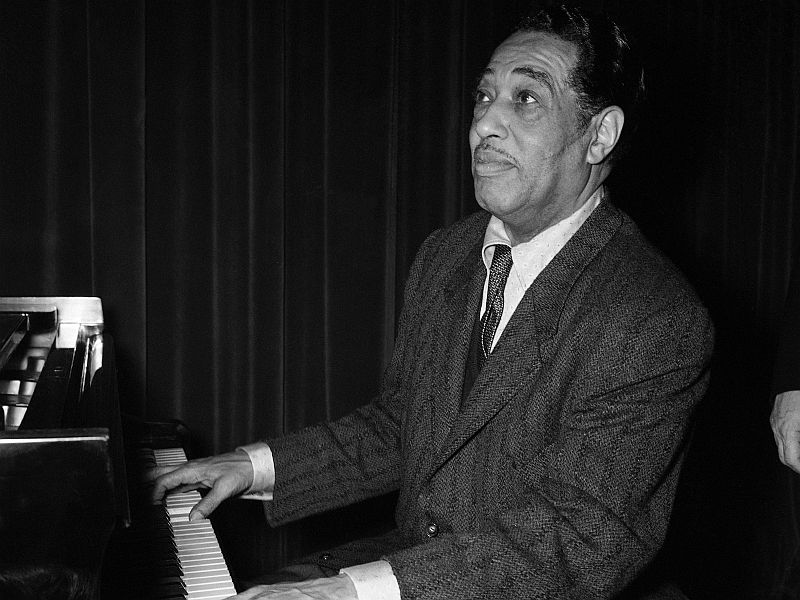
The Legacy of Elegance Or How Duke Ellington (and His Music) Changed the World: A Tribute To A Master On His Birthday

All,

I submit the following question and perhaps even a wiseguy challenge to any and all possible doubters out there who should know better by now but perhaps don't (or sadly and to their own considerable loss maybe won't make the necessary effort to find out) and that is:  Just how great was (and is) Duke Ellington...really?  Well let's closely examine what the man and the visceral power, beauty,  elegance, and sheer majesty of his artistry as conveyed through music actually accomplished in the world during the 20th century and what it just as clearly and forcefully continues to teach and inspire us in the 21st.

Edward Kennedy "Duke" Ellington was born on April 29, 1899 in Washington D.C.  After an extensive apprenticeship with a number of outstanding local teachers and musical mentors like the legendary African American classical composer and multi-instrumentalist Will Marion Cook, Ellington began his professional career as a pianist and orchestra leader in 1924 and kept his extraordinary orchestra playing and recording for an astonishing 50 years(!) until his death in 1974 at the age of 75.  During his prolific career Ellington wrote over 2,000 compositions and performed in all fifty states and throughout the world many times in such major international capitols as London, Paris, Berlin, Lisbon, Rio De Janeiro, Mexico City, Toronto, Montreal,  Dakar, New Delhi, and Istanbul. 

Recognized by many critics throughout the world as one of the major and most important composers and musicians of the 20th century, Ellington's deep impact on other musicians and composers in many different genres of music has been immense and continues to this day.  Happy Birthday Duke!

Kofi

THE GENIUS OF DUKE ELLINGTON ON FILM AND VIDEO:

"It don't mean a thing (if it ain't got that swing)"
(Originally composed and recorded by Ellington in 1931; this recorded film segment is from 1943)


"The Mooche"
(Originally composed and recorded by Ellington in 1928;  this recorded video version is from 1955)


"Take the A Train" 
(Originally composed by Billy Strayhorn for ellington's orchestra in 1941; this classic ensemble theme song version appeared on film in 1943)


 "Diminuendo and Crescendo in Blue"
(Originally composed in by Ellington in 1937; this recorded video version is from the mid 1950s)


"In a Sentimental Mood"
(Originally composed and recorded by Ellington in 1931; this classic version of the tune was recorded in 1962 and featured John Coltrane on tenor saxophone with Ellington on piano--appeared on the 1963 ABC-Impulse recording "Duke Ellington and John Coltrane" 


"Mount Harissa" from The Far East Suite composed by Duke Ellington and Billy Strayhorn was recorded in 1966:


This 1952 recording includes 2 performances of Duke and his Orchestra, one on Jan. 7, 1952 and one on Aug. 12, 1952. 12 of his signature pieces are featured including Sophisticated Lady, Caravan, The Mooch, VP's Boogie, Solitude, Mood Indigo, The Hawk Talks, I Got It Bad And It Ain't Good, Bli-Blip, Flamingo, Cottontail and C Jam Blues (Hot Chocolate.)


http://www.youtube.com/watch?v=mgcd40zigz0&list=PLE7E778C84423B0B8


Clarinet solo at the end was by Jimmy Hamilton.

Duke Ellington: Live in Holland, 1958. With Johnny Hodges (Alto Sax), Russell Procope (Alto Sax, Clarinet), Paul Gonsalves (Tenor Sax), Jimmy Hamilton (Tenor Sax, Clarinet), Harry Carney (Baritone Sax, Clarinet, Bass Clarinet), Cat Anderson, Harold "Shorty" Baker, Clark Terry (Trumpets), Ray Nance (Trumpet, Violin, Vocal) Quentin Jackson, Britt Woodman (Trombones) John Sanders (Valve Trombone), Jimmy Woode (Bass), Sam Woodyard (Drums) and Ozzie Bailey (Vocal).


http://www.redhotjazz.com/duke.html

EDWARD "DUKE" ELLINGTON (1899-1974)

Duke Ellington brought a level of style and sophistication to Jazz that it hadn't seen before. Although he was a gifted piano player, his orchestra was his principal instrument. Like Jelly Roll Morton before him, he considered himself to be a composer and arranger, rather than just a musician. Duke began playing music professionally in Washington, D.C. in 1917. His piano technique was influenced by stride piano players like James P. Johnson and Willie "The Lion" Smith. He first visited New York in 1922 playing with Wilbur Sweatman, but the trip was unsuccessful. He returned to New York again in 1923, but this time with a group of friends from Washington D.C. They worked for a while with banjoist Elmer Snowden until there was a disagreement over missing money. Ellington then became the leader. This group was called The Washingtonians. This band worked at The Hollywood Club in Manhattan (which was later dubbed the Kentucky Club). During this time Sidney Bechet played briefly with the band (unfortunately he never recorded with them), but more significantly the trumpet player Bubber Miley joined the band, bringing with him his unique plunger mute style of playing. This sound came to be called the "Jungle Sound", and it was largely responsible for Ellington's early success. The song "East St. Louis Toodle-Oo" is a good example of this style of playing. The group recorded their first record in 1924 ("Choo Choo (Gotta Hurry Home)" and "Rainy Nights (Rainy Days)", but the band didn't hit the big time until after Irving Mills became their manager and publisher in 1926. In 1927 the band re-recorded versions of "East St.Louis Toodle-Oo," debuted "Black and Tan Fantasy" and "Creole Love Call", songs that would be associated with him the for rest of his career, but what really put Ellington's Orchestra over the top was becoming the house band at the Cotton Club after King Oliver unwisely turned down the job. Radio broadcasts from the club made Ellington famous across America and also gave him the financial security to assemble a top notch band that he could write music specifically for. Musicians tended to stay with the band for long periods of time. For example, saxophone player Harry Carney would remain with Duke nonstop from 1927 to Ellington's death in 1974. In 1928 clarinetist Barney Bigard left King Oliver and joined the band. Ellington and Bigard would later co-write one of the orchestra's signature pieces "Mood Indigo" in 1930. In 1929 Bubber Miley, was fired from the band because of his alcoholism and replaced with Cootie Williams. Ellington also appeared in his first film "Black and Tan" later that year. The Duke Ellington Orchestra left the Cotton Club in 1931 (although he would return on an occasional basis throughout the rest of the Thirties) and toured the U.S. and Europe.


Unlike many of their contemporaries, the Ellington Orchestra was able to make the change from the Hot Jazz of the 1920s to the Swing music of the 1930s. The song "It Don't Mean a Thing (If It Ain't Got That Swing)" even came to define the era. This ability to adapt and grow with the times kept the Ellington Orchestra a major force in Jazz up until Duke's death in the 1970s. Only Louis Armstrong managed to sustain such a career, but Armstrong failed to be in the artistic vanguard after the 1930s . Throughout the Forties and Fifties Ellington's fame and influence continued to grow. The band continued to produce Jazz standards like "Take the 'A' Train", "Perdido", "The 'C' Jam Blues" and "Satin Doll". In the 1960s Duke wrote several religious pieces, and composed "The Far East Suite". He also collaborated with a very diverse group of musicians whose styles spanned the history of Jazz. He played in a trio with Charles Mingus and Max Roach, sat in with both the Louis Armstrong All-Stars and the John Coltrane Quartet, and he had a double big-band date with Count Basie. In the 1970s many of Ellington's long time band members had died, but the band continued to attract outstanding musicians even after Ellington's death from cancer in May, 1974, when his son Mercer took over the reins of the band.


SUGGESTED READING:

Duke Ellington In Person by Mercer Ellington with Stanley Dance, Da Capo Press, 1988
Ellington: The Early Years, Mark Tucker, 1995
Beyond Category : The Life and Genius of Duke Ellington by John Edward Hasse (Introduction by Wynton Marsalis), 1995, Da Capo Press
The World of Duke Ellington by Stanley Dance, 1981, Da Capo Press
The Duke Ellington Reader by Mark Tucker, 1995, Oxford University Press
Duke Ellington's America by Harry G. Cohen, 2010,
University of Chicago Press
Duke Ellington and His World: Biography by A. H. LawrenceRoutledge, 2001

APRIL 29, 2013
Reuben Jackson On Duke Ellington


By REUBEN JACKSON
 
Credit AP
Duke Ellington

Duke Ellington was the composer of American jazz standards such as Mood Indigo, sumptuous extended works like The Afro Eurasian Eclipse, The Far East Suite and three Sacred Concerts. He was also the consummate multitasker.

If I learned anything during my 20 year stint as archivist and curator with the Smithsonian's Duke Ellington Collection, it was this: It was not uncommon for the Washington, D.C. native to juggle studio sessions, new compositions, interviews, meetings, concert dates, friends, fans and, yes, romantic interests. He was not the central casting isolated artist seeking the muse in, say, some remote corner of Vermont's Northeast Kingdom. Humanity was his Walden Pond.

Still, it's one thing to be a multitasker. It's another to multitask with the deceptively casual attention and intense focus Ellington gave to each part of his life. Ellington loved people; he said the key to accomplishing as much as he did was "mental isolation."

When cataloging the sound recordings in the Smithsonian's collection, I still wondered how he managed to gracefully handle dozens of inane press conference questions about "jazz," a word he abhorred, then lead his Orchestra through an accessible yet musically radical reworking of an Ellington standard like "Mood Indigo" a few hours later. I have no idea how he did this with such unfailing grace—and I probably never will.

As some of you in the VPR listening audience know, I am also currently employed as an English teacher at Burlington High School. On average, I see an average of 35 students with very different personalities, interests and needs every day. By contrast, Ellington worked with groups of varying sizes, skills, and issues (curmudgeons, kleptomaniacs, some addicts) for nearly 50 years. More importantly, he consistently got the best out of these ensembles. Even "students" who disliked him intensely reveled in the time spent with the man they called The Maestro. (And I have the nerve to pant like an exhausted marathon runner on Friday afternoon!)

If Duke Ellington were reading this, he might utter one of his frequently-used axioms: "Don't let your intelligence get in the way of your learning." With that in mind, I'll cease with the first person reflections (I've commented at length about Ellington and some of his contemporaries in this VPR Presents lecture), and share that which mattered most to Duke Ellington: The music.

Below you'll find video of a couple of my favorites and a bibliography of reading and listening.  You'll also hear something composed, performed or inspired by Ellington every week on my show.

-- Reuben Jackson, Host of Friday Night Jazz

Here's a solo piano rendition of "Le Sucrier Velour"—a movement from 1959's "The Queen's Suite."


The second Ellington composition is entitled "Chinoserie" It is the opening movement from 1971's "Afro Eurasian Eclipse"—complete with Ellington's silver, no, platinum-tongued introduction.


All are but a taste of the mad skills (as the rappers say) Edward Kennedy "Duke" Ellington possessed—and continues to share with the world.

Recommended Reading

Cohen, Harvey G. Duke Ellington's America. Chicago: University of Chicago Press, 2010.
Ellington, Duke. Music Is My Mistress. New York: Da Capo, 1976,
Ellington, Mercer. Duke Ellington In Person. Boston: Houghton Mifflin, 1978.

Recordings

Duke Ellington and his Orchestra. The Ellington Suites.
Duke Ellington and his Orchestra. And His Mother Called Him Bill.
Duke Ellington-The Far East Suite-Special Mix 
TAGS:
Duke Ellington Public Radio Music Month VPR Blog Featured Program
 

Tuesday, April 23, 2013

Paul Krugman On the Ongoing (Un)employment Crisis in the United States and the Failed National Economic Policies Responsible For It


All,

Once again Paul Krugman--one of the most important, courageous, and consistently clear thinking public intellectuals of our age in this country--tells us the complete and unadorned truth about the brutal dysfunction of our present economy (reinforced by the specifically  inept and/or cruel economic policies being devised by both political parties in response to the current crisis) and what it really means to the millions of human beings who are being systematically destroyed and exploited by it and them. What is invaluable about Krugman's typically prescient and irrefutable analyses is that he reminds us of the concrete and genuine human costs and consequences of insidiously abstract political decisions being imposed on the larger society without any regard for the actual destructive impact it is having on our daily collective reality.  It is this bedrock intellectual honesty and moral integrity that makes Krugman far more than just the renowned Nobel prize winning economist that he is.  It makes him and his work an exemplary example of what real leadership and a truly progressive social vision really is and can be...

Kofi


Fred R. Conrad/The New York Times
Paul Krugman


The Jobless Trap
By Paul Krugman
April 23, 2013
New York Times

F.D.R. told us that the only thing we had to fear was fear itself. But when future historians look back at our monstrously failed response to economic depression, they probably won’t blame fear, per se. Instead, they’ll castigate our leaders for fearing the wrong things.


For the overriding fear driving economic policy has been debt hysteria, fear that unless we slash spending we’ll turn into Greece any day now. After all, haven’t economists proved that economic growth collapses once public debt exceeds 90 percent of G.D.P.?

Well, the famous red line on debt, it turns out, was an artifact of dubious statistics, reinforced by bad arithmetic. And America isn’t and can’t be Greece, because countries that borrow in their own currencies operate under very different rules from those that rely on someone else’s money. After years of repeated warnings that fiscal crisis is just around the corner, the U.S. government can still borrow at incredibly low interest rates.

But while debt fears were and are misguided, there’s a real danger we’ve ignored: the corrosive effect, social and economic, of persistent high unemployment. And even as the case for debt hysteria is collapsing, our worst fears about the damage from long-term unemployment are being confirmed.

Now, some unemployment is inevitable in an ever-changing economy. Modern America tends to have an unemployment rate of 5 percent or more even in good times. In these good times, however, spells of unemployment are typically brief. Back in 2007 there were about seven million unemployed Americans — but only a small fraction of this total, around 1.2 million, had been out of work more than six months.

Then financial crisis struck, leading to a terrifying economic plunge followed by a weak recovery. Five years after the crisis, unemployment remains elevated, with almost 12 million Americans out of work. But what’s really striking is the huge number of long-term unemployed, with 4.6 million unemployed more than six months and more than three million who have been jobless for a year or more. Oh, and these numbers don’t count those who have given up looking for work because there are no jobs to be found.

It goes without saying that the explosion of long-term unemployment is a tragedy for the unemployed themselves. But it may also be a broader economic disaster.


The key question is whether workers who have been unemployed for a long time eventually come to be seen as unemployable, tainted goods that nobody will buy. This could happen because their work skills atrophy, but a more likely reason is that potential employers assume that something must be wrong with people who can’t find a job, even if the real reason is simply the terrible economy. And there is, unfortunately, growing evidence that the tainting of the long-term unemployed is happening as we speak.

One piece of evidence comes from the relationship between job openings and unemployment. Normally these two numbers move inversely: the more job openings, the fewer Americans out of work. And this traditional relationship remains true if we look at short-term unemployment. But as William Dickens and Rand Ghayad of Northeastern University recently showed, the relationship has broken down for the long-term unemployed: a rising number of job openings doesn’t seem to do much to reduce their numbers. It’s as if employers don’t even bother looking at anyone who has been out of work for a long time.

To test this hypothesis, Mr. Ghayad then did an experiment, sending out résumés describing the qualifications and employment history of 4,800 fictitious workers. Who got called back? The answer was that workers who reported having been unemployed for six months or more got very few callbacks, even when all their other qualifications were better than those of workers who did attract employer interest.


So we are indeed creating a permanent class of jobless Americans.

And let’s be clear: this is a policy decision. The main reason our economic recovery has been so weak is that, spooked by fear-mongering over debt, we’ve been doing exactly what basic macroeconomics says you shouldn’t do — cutting government spending in the face of a depressed economy.

It’s hard to overstate how self-destructive this policy is. Indeed, the shadow of long-term unemployment means that austerity policies are counterproductive even in purely fiscal terms. Workers, after all, are taxpayers too; if our debt obsession exiles millions of Americans from productive employment, it will cut into future revenues and raise future deficits.

Our exaggerated fear of debt is, in short, creating a slow-motion catastrophe. It’s ruining many lives, and at the same time making us poorer and weaker in every way. And the longer we persist in this folly, the greater the damage will be.

Wednesday, April 17, 2013

Armond White On the Films '42' and The Central Park Five'


All,

My wife and I saw the new film '42' which is about the life and career of baseball legend Jackie Robinson last night and came to the exact same conclusion that Armond White did in his outstanding review--'42' is the best American film that we have seen in many years--especially a film focused primarily on a black character.  I couldn't agree more with White's typically prescient and insightful review.  This is a GREAT film that rather surprisingly manages to say something profound and honest about this country and sports that is usually ALWAYS MISSING from other films who take up these topics.  The lead  performances by the young black actor Chadwick Boseman (keep a sharp eye on this cat--I think we have another truly groundbreaking actor coming our way!) and of all people Harrison Ford who was far, far better playing Branch Rickey than in any film I've ever seen the usually hopelessly wooden,  one dimensional, and utterly mediocre actor play.  WHO KNEW HE COULD PULL IT OFF?  Certainly not I, but Ford actually did a very fine job.  All credit is due to the many fine actors in this wonderful movie and the writer/director Brian Helgeland who I think the Academy should just give the "best director" Oscar for 2014 right now.  That's my honestly heartfelt account of just how good and substantial his work (and that of his excellent DP) was.  Thus, a great review of a great movie is very appropriate.  I KNEW Armond would love this movie because like the actors, director/writer and the advisory role of the great Rachel Robinson herself (still absolutely regal, elegant, and brilliantly lucid at age 90!), White is a mature and visionary critic who has artistic and intellectual INTEGRITY AND PRIDE along with a profound UNDERSTANDING and KNOWLEDGE of the game that is essential to telling Jackie's truly heroic story in an intelligent, honest, and truly engaging cinematic manner...In other words--GO SEE THIS IMPORTANT FILM RIGHT AWAY.  YOU WON'T REGRET IT...

 
Kofi

'42': The Jackie Robinson Legend 

reviewed by Armond White
CityArts
APRIL 9, 2013


We are fortunate to be spared Spike Lee’s take on the Jackie Robinson story, which surely would have been spiteful: emphatic about race grievance and loaded with numerous Spikey tangents. But Brian Helgeland has fashioned 42, a superbly watchable tale, from Robinson’s groundbreaking desegregation of professional baseball through the machinations of farm system innovator Branch Rickey. It’s also a film about American spiritual history and destiny. The issues and emotions have a beautiful clarity.

Titled after Robinson’s player number (retired for all teams by the Major League Baseball association yet worn by players every April 15th–Jackie Robinson Day), 42 commemorates Robinson breaking the game’s color bar in 1947 as the first Negro playing for the Brooklyn Dodgers. Helgeland depicts this world-changing risk as a cultural story–not simply one man’s life story. Instead of biographical depth, 42’s character sketches sustain the same benevolence as the MLB’s memorial; its lively and vivid narrative celebrate the arduous steps of a social and moral revolution.

More than a baseball movie, 42 touches on the folktale qualities evinced in Robinson (played by Chadwick Boseman) and Dodgers’ General Manager Rickey (played by Harrison Ford). Showing baseball as the medium of social change, its practice and rituals are understood as basic to America’s sense of capability despite prevailing social divisions. That explains Helgeland’s elastic, All-American sense of class. Robinson strides into the roughneck world of sport possessing higher personal principles. He and wife Rachel (Nicole Beharie) are already upwardly mobile; they need only the income and recognition that White Americans take for granted.

Helgeland’s respect for aspiration, which informs every scene, is central to the story’s concept. Rickey’s decision to integrate baseball has an uplifting, spiritual goal: “I don’t know who he is or where he is, but he’s coming,” Rickey says in 1945 and then after narrowing a list of prohibited Negro players, half-jokes, “Robinson is a Methodist, I’m a Methodist, God is a Methodist. You can’t go wrong, get him here.”

But Rickey’s also pragmatic: “Dollars aren’t black or white, they’re green.” His justifications are true to a folksy era far different from today’s avaricious secularism yet it’s authentic to a way of thinking and feeling that was intrinsic to the psychodynamics of that 19th century sport. This fact supports Helgeland’s unique historic fable quality (perfectly expressed in Sister Wynona Carr’s vintage gospel end credits theme “The Ball Game:” “Life is a ball game but you got to play it fair.”)

Now let’s get rid of any narrow-minded suspicion about Hollywood race stories always unequally pairing history’s Black sacrificial figures with dominant White cohorts. Helgeland’s even-handed vision of the Rickey-Robinson revolution enlarges it, taking in different aspects of America’s racial reality. Not merely the Jackie Robinson story, 42 relates tandem efforts and transformations by Rickey, Negro sports writer Wendell Smith (Andre Holland), assorted teammates (many brief, perfectly etched characterizations from Max Gail’s genial retired manager Burt Shotton, Chris Meloni’s virile Leo Durocher to Lucas Black’s affable Pee Wee Reese) and the crowds who fill the stands. This is the best casting since Cadillac Records; all profiles in courage.

The back office functioning behind America’s public face rarely gets shown but 42 appropriately reveals its significance, primarily through Harrison Ford’s undeniable appeal. Never credited for comic warmth, that quality distinguished Ford’s Indiana Jones from all movie action heroes. As Rickey, Ford’s elderly crusty growl is a homey voice of experience. Even Ford’s sly smile has spiritual authority which keeps Rickey’s personal confession (when Robinson asks him “Why?”) from being soggy or pious; it’s a perfectly balanced personification of wiliness and principle. Ford’s masculine affability confirms the noble essence of the civil rights movement, especially in Rickey’s warning to Robinson: “Like our Saviour, you’ve got to have the guts to turn the other cheek.”

Projecting magnanimous decency, Ford puts Rickey’s risk-taking and persistent urging in perfect balance to newcomer Boseman who portrays Robinson’s circumspect heroism. This isn’t a timid, nonthreatening Black man; he’s self-assured yet resentful of those who want to make him humble. Jeffrey Wright has played this Poitier complex but Denzel Washington never has. 42 is the first movie ever to show what it’s like for a Black man of intelligence to be disrespected by the White ruling class yet maintain his dignity and modesty. (42 has moments that compare to Poitier‘s recall of hearing a Hollywood technician call for “the nigger light” and having to endure the degradation.) Boseman’s wary intelligence conveys deep pride, a forgotten aspect of Black America’s still-gradual civil rights evolution.

Helgeland lets Ford/Rickey’s courage balance both the past era’s most advanced attitudes and the modern audience’s guileless ignorance of that history. The young Black actors–all ebullient, optimistic, determined–represent Blacks’ hopes while the familiar Whites personify fears. When 42 presents these details (as in Robinson and Reese‘s on-field pantomime), it surpasses Steven Spielberg’s morally arrogant Lincoln with its too-modern token Blacks and deified politician.

During a remarkable sequence of Robinson in the batter’s box being taunted by the Philadelphia Phillies’ racist manager Ben Chapman (Alan Tudyk) repeating only a few less N-bombs than Tarantino’s Django Unchained, Rickey transforms the attack strategically, sympathetically. This extraordinary assessment of how institutional racism was conquered by American fellow-feeling outstrips all Tony Kushner’s fancy wordplay in Lincoln. It is the essence of compassion, not smug literariness. 42 puts social progress in humane terms–on the ball field. in splendid deep-focus that keeps nature and human effort in lovely, balanced perspective.

Cinematographer Don Burgess makes 42 the most beautiful movie of 2013 so far. He photographs sunlight and water (when Robinson breaks before Rickey or finally showers among his White teammates) with true radiance. Nothing in Lincoln’s political contrivance is as resonant as Rickey confessing “Something was wrong at the heart of the game I loved and I had ignored it.” Kushner-Spielberg’s Lincoln never admitted such sorrowful complex. Lincoln pretended that political opposition was the essence of America’s moral progress when in fact it was only a power struggle; 42 is deeper and more honest in displaying how Americans changed through accepting skill, humanity, sympathy.

Helgeland has made a film totally without cynicism (and it’s a better approach to history than George Lucas’ lame Tuskegee Airman tribute Red Tails). Cynicism is what ruined Lincoln; cynicism was at the core of Kushner and Spielberg’s self-congratulatory warping of history–which was why liberals overrated it. Will Obama-era audiences appreciate 42’s richness with its deep understanding of how hard-won compassion has greater everyday effectiveness than the rule of law? Its splendid depiction of ball field effort? Or it’s unforgettable silhouetted fatherly embrace? These images test fairness within the glory of nature without the falsity of The Natural or Field of Dreams but like no movie since Robert Aldrich’s The Big Leaguer.


I’d like to describe more of 42’s wonderful scenes such as the shots of Robinson rounding the bases, focused on his “42” uniform imprint and its existential connotation like a Bresson icon, but viewers should discover such beauty for themselves. Rickey and Robinson may have been spiritual visionaries, but in this film they unite over the idea of being “built to last” by doing the right thing. Whatever 42’s fate in this cynical market, it is built to last.

Follow Armond White on Twitter at 3xchair
 

http://www.nyfcc.com/2013/04/the-central-park-five-reviewed-by-armond-white-for-cityarts/

All,

LIKE I HAVE BEEN SAYING FOR OVER 20 YEARS NOW:  Armond White is the best damn film critic in this country and NOBODY ELSE is even close.  The true test of any real critic in any genre is not whether you always and under every circumstance "agree"/"disagree" with the analysis, exegesis, and insight that the critic provides but whether you actually LEARN SOMETHING new, interesting, thought-provoking, and USEFUL from his/her criticism. In other words:  Does the critic have intellectual, moral, artistic, and political COURAGE, HONESTY, INTEGRITY, AND DEPTH or not?  Armond is that very rare individual who never fails to display exactly that in every single critique and review he does.  He's one of the very few writers in America that I am in absolute AWE of.  White is a true MASTER at his craft and we're damn lucky/fortunate to have him...

Kofi 

'The Central Park Five'
Reviewed by Armond White
CityArts
April 16, 2013
 
Comedian Chris Rock embarrassed himself at this year’s New York Film Critic Circle dinner when presenting a prize to the Ken Burns film The Central Park Five. The black, Brooklyn-born Rock declared “It makes you think I was wrong. Burns shows we were all wrong!” about the April, 19, 1991 incident in which five black New York youths (Antron McCray, Kevin Richardson, Raymond Santana, Korey Wise and Yuself Salaam) were defamed in local news media after police intimidation had forced them into falsely confessing to the rape and near-murder of a woman then identified as “The Central Park Jogger.”

Rock’s unroyal “We” was politically submissive (and Burns repeated the trope in his acceptance speech: “Everybody in this room got it wrong”). It revealed how class prerogative is felt by cultural pets like Rock and Burns–financially well-compensated and publicly celebrated representatives of the social elite. It was apparent from his deferential presentation that Rock no longer identified with those black New Yorkers who held to their criticism of the crime investigation–particularly those outraged at how media coverage of the Central Park case typically treated it as an opportunity to further stigmatize, condemn and assert superiority over New York’s least powerful social groups.

Classic New York disposition talks back to authority and remains skeptical toward the media’s official versions of controversial social events; it preserves personal, complex, aggrieved, vexing, street savvy. The “Jogger” case (portrayed in tabloid headlines as the “wilding” incident, describing black youths marauding Central Park and terrorizing citizens) revealed a panicky power reflex. Police and media responded to hiphop culture by slapping back the rising social prominence of disenfranchised black youth and reasserting traditional racist fears.

Any sentient New York viewer, including Rock, should know these things. These were perceptions and projections that only the mainstream media–the voice of the empowered class–got wrong, perversely influencing legal and judicial process. Burns’ film doesn’t dig into this “court of public opinion” corruption; as in his PBS documentaries, he presents an “official” review of events that questions status quo media prejudices only in hindsight.

Rock internalized and accepted these preconceptions in his disloyal “we.” Rock’s “we” certainly did not include New York’s black-owned media like the weekly newspaper The City Sun that actively questioned police and media performance regarding the case. Rock also ignored the extraordinary Joan Didion essay “Sentimental Journeys” for The New York Review of Books that in 1992 laid out the Byzantine patterns of New York ethnic bias evident in social power, political influence and media practice.

By falling way short of Didion’s inquiry and her “J’accuse!” Burns’ doc 9 airing tonight on PBS) creates a worthless new myth that absolves citizen skepticism. He misuses his “official” status–just as Rock misused his celebrity status–to render independent thinking, political skepticism and ethnic responsibility impossible.

In The Central Park Five media-class imperiousness overshadows the story of the five youths as just another one of the eight million New York stories that never get told until too late. Burns glides past the years and opportunities stolen from these men; his close-ups stare back vacantly at the barely suppressed rage and inconceivable damage in their suddenly aged faces.

 
For Rock to ratify this indifference shows his own coolness to the abuse of authority that is part of New York class and race reality–realities Rock’s dubious stand-up humor turns into racially exploitive cynicism (quoted in a New York Times op-ed as recently as today). Burns inserts declarations of this cynicism by only a few of his “official” interviews. MIT historian Craig Steven Wilder says: “I want us to remember what happened that day and be horrified by ourselves. Because it really is a mirror on our society. And rather than tying it up in a bow and thinking that there is something that we can take away from it and we’ll be better people. I think what we really need to realize is that we’re not very good people. And we’re often not.” This “we” shit is editorial writer arrogance and it lacks spiritual compunction about error, sin, forgiveness and repentance.

Rock’s NYFCC testimony effectively denies that sense of voiceless vulnerability that the Central Park Five suffered and is every New Yorker’s fear–and tragic destiny. (To be media-voiceless is to be powerless in this town). A good doc-maker would explore this; Burns does not. Instead, he does the obvious prevarication: goes to a New York Times writer, the estimable Jim Dwyer, for authority. Yet, oddly, Burns never features Times reporting of the Jogger event to complete his chronicle of media coverage. Dwyer (Burns’ typical PBS-style, talking-figurehead) pronounces: “The coverage in 2002 [when Matias Reyes confessed to the crime] was worst than what had happened in 1989. More resistant to fact. More obstinate about being wrong…This was institutional protectionism that was going on…I don’t think the press faced its mistakes. I don’t think the police department faced the truth of what had happened because the truth of what happened is almost unbearable…They got stuck with the mistake and they’re still invested in that mistake.”

It’s too easy to say these things in reflection. Or disingenuously, as in Rock’s show of empowered-group ignorance. Our old enemy, liberal sentimentality raises its hypocritical head again as Burns recreates that warm, self-satisfied feeling of the Scottsboro case but this time without risking social censure or status. Rock and Burns are content to be both repentant and smug. The pity on view in The Central Park Five is not for any of the incident’s victims (or New York itself) but for Burns’ and Rock’s own class.

 
Follow Armond White on Twitter at 3xchair