Discourse that allows us to express a wide range of ideas, opinions, and analysis that can be used as an opportunity to critically examine and observe what our experience means to us beyond the given social/cultural contexts and norms that are provided us.
This is a reminder that all new posts on this magazine website since January 23, 2017 (the website has been online since March 2008) can now be found here at the Panopticon Review On Facebook page. Please be aware that the historical archive of all posts for this site can still be found on this page under the category "Blog Archive."
We will resume posting material at this website as well as our current PR at Facebook page in the very near future. In the meantime please consult our facebook address above for any and all new material (and any reposting of past archival entries) pertaining to this site. Thank you for your interest in and patronage of this website and please pass the word along of its ongoing content and online existence.
One can very clearly see, hear, touch, and smell the fundamental
SOCIAL PATHOLOGY of this neofascist regime and its absolute
determination to invoke, advocate, and defend the horrific bedrock
fascist principle of the BIG LIE (see/google: Goebbels, Joseph for
further details). And it's only going to get much worse very soon (like
tomorrow). We're down the linguistic and amoral rabbithole of
Orwellian doublespeak and cheap propaganda antics and tactics here and
trust me it's not merely a "random choice" by the billionaire sociopath
but a purely calculated STRATEGY pursued, honed, and developed by the
head BS-in-Charge and such blatantly insidious and openly hostile media
manipulators as his rancid "senior advisors" and "chief strategists"
Steve Bannon (see/google: Breitbart News) and the always duplicitous and
endlessly condescending Kellyanne CONway. Can you say LUGENPRESSE boys
and girls? Because it's assured that the billionaire sociopath and his
entire neofascist administration not only can but do every single
chance they get, which of course is any time they appear before the
media or general public. Stay tuned...
Kofi
January 23, 2017 The New York Times NYTimes.com » Breaking News Alert
BREAKING NEWS
Speaking to lawmakers, President Trump again falsely claimed that illegal immigrants had cost him the popular vote
January 23, 2017 9:45 PM EST
President Trump used his first official meeting with congressional
leaders on Monday to gripe about his loss of the popular vote, falsely
telling the lawmakers that he would have won a majority if millions of
illegal immigrants had not voted against him.
The president’s
comments about the election results came as he gathered the bipartisan
leadership of Congress for a White House reception. He also sought to
build support for an ambitious legislative agenda despite days earlier
castigating the very institution he needs to approve it.
Trump Repeats Lie About Popular Vote in Meeting With Lawmakers
by MICHAEL D. SHEAR and EMMARIE HUETTEMAN January 23, 2017 New York Times
President Trump met with leaders of Congress from both parties
on Monday at the White House. Credit Doug Mills/The New York Times
WASHINGTON — President Trump used his first official meeting with
congressional leaders on Monday to falsely claim that millions of
unauthorized immigrants had robbed him of a popular vote majority, a
return to his obsession with the election’s results even as he seeks
support for his legislative agenda.
The claim, which he has
made before on Twitter, has been judged untrue by numerous
fact-checkers. The new president’s willingness to bring it up at a White
House reception in the State Dining Room is an indication that he
continues to dwell on the implications of his popular vote loss even
after assuming power.
Mr. Trump appears to remain concerned
that the public will view his victory — and his entire presidency — as
illegitimate if he does not repeatedly challenge the idea that Americans
were deeply divided about sending him to the White House to succeed
President Barack Obama.
Mr. Trump received 304 electoral votes
to capture the White House, but he fell almost three million votes short
of Hillary Clinton in the popular vote. That reality appears to have
bothered him since Election Day, prompting him to repeatedly complain
that adversaries were trying to undermine him.
Moving into the
White House appears not to have tempered that anxiety. Several people
familiar with the closed-door meeting Monday night, who asked to remain
anonymous in discussing a private conversation, said Mr. Trump used the
opportunity to brag about his victory.
As part of that
conversation, Mr. Trump asserted that between three million and five
million unauthorized immigrants voted for Mrs. Clinton. That is similar
to a Twitter message he posted in late November that said he would have
won the popular vote “if you deduct the millions of people who voted
illegally.”
Voting officials across the country have said there
is virtually no evidence of people voting illegally, and certainly not
millions of them. White House officials did not respond to requests for a
comment on Mr. Trump’s discussion of the issue.
Representative
Steny H. Hoyer, Democrat of Maryland, who attended the meeting, said
that Mr. Trump also talked about the size of the crowd for his Inaugural
Address.
“It was a huge crowd, a magnificent crowd. I haven’t
seen such a crowd as big as this,” Mr. Hoyer told CNN, quoting Mr.
Trump. He added that Mr. Trump did not “spend a lot of time on that, but
it was clear that it was still on his mind.”
The president’s
comments about the election results and his inauguration came as he
gathered the bipartisan leadership of Congress for a White House
reception. He also sought to build support for an ambitious legislative
agenda, despite days earlier castigating the very institution he needs
to approve it.
Mr. Trump has said he intends to press Congress
to move quickly to repeal and replace Mr. Obama’s health care law, pass a
large investment in the nation’s infrastructure, make changes to the
country’s immigration laws and overhaul the tax system.
Senator
John Cornyn, Republican of Texas, called the meeting a “good sort of
get-to-know-you session” and noted that “relationships count for a lot
in this business.”
Mr. Cornyn said he thought such sessions
would be more frequent while Mr. Trump is in office than they were
during Mr. Obama’s tenure. Mr. Obama famously disliked socializing with
members of Congress.
Referring to Democrats, Mr. Cornyn said, “They said they’d never been over to the White House for anything like this before.”
Representative Nancy Pelosi of California, the Democratic leader, said
it was an “interesting” meeting. Along with health care and
infrastructure, she said they discussed China and currency manipulation,
as well as issues involving intellectual property rights, which she
said were a point of agreement.
“We talked about the Affordable
Care Act and said what the Affordable Care Act has been successful in
doing is improving quality, expanding access and lowering costs,” she
told reporters. “And any proposal that they might have that does that,
we’d be interested in hearing about.”
Even with Republicans in
control of Congress, Mr. Trump will have to build relationships in a
city that he spent more time mocking than praising during his campaign.
In his Inaugural Address, the president criticized the political
establishment, saying the people assembled behind him — including the
leaders he met with on Monday — had “reaped the rewards of government
while the people have borne the cost.”
White House officials said the meeting was designed to press the lawmakers on the need to move quickly.
The reception included, among others, House Speaker Paul D. Ryan of
Wisconsin and Senator Mitch McConnell of Kentucky, the majority leader,
as well as Ms. Pelosi and Senator Chuck Schumer of New York.
“The American people are frustrated with the lack of progress here in
Washington, and the president wants no delay in addressing our most
pressing issues,” said Sean Spicer, the White House press secretary.
“He’s taking every opportunity to forge strong bonds with congressional
leaders on both sides of the aisle.”
As the group sat around a dining room table for photographs, Mr. Trump described his interactions with lawmakers.
A “beautiful, beautiful relationship,” Mr. Trump told reporters.
That has not always been the case. Before Mr. Trump secured the
Republican nomination, Mr. Ryan pointedly declined to endorse him. At
one point, Mr. Ryan said he was “not ready” to back Mr. Trump after his
remarks about women and Hispanics and because of his divergence from
Republican orthodoxy.
That relationship slowly improved after
Mr. Trump became the party’s nominee and later won the election to
become the 45th president. Monday’s reception, officials said, was
another step in that process.
Matt Flegenheimer, Thomas Kaplan and Jennifer Steinhauer contributed reporting.
Trending:
Trump Repeats Lie About Popular Vote in Meeting With Lawmakers
'Alternative facts:' Why the Trump team is 'planting a flag' in war on media by Brian Stelter @brianstelter January 22, 2017 CNN
"Alternative facts" are lies
The alternative to "facts" is "fictions."
But President Trump's special adviser Kellyanne Conway proposed something new on Sunday: "alternative facts."
The strange phrase entered the lexicon when Conway told NBC's Chuck
Todd that the numerous misstatements in press secretary Sean Spicer's
angry statement to reporters Saturday were actually "alternative facts."
Related: White House press secretary attacks media for accurately reporting inauguration crowds
The phrase called into the question Conway's understanding of the word "facts" and caused widespread mockery on Sunday.
But Conway's remarks were reflective of something real -- a new
administration which feels, on day three, that it is already under siege
from unfair reporters. Trump himself spoke about his "running war with
the media" on Saturday.
Spicer, Conway and other Trump aides
are "planting a flag, saying they're not going to tolerate this," a
longtime Trump aide told CNN on condition of anonymity.
The
aide blasted alleged media "obsessions," using some of the exact same
language Trump chief of staff Reince Priebus used on "Fox News Sunday."
"I'm saying there's an obsession by the media to delegitimize this
president, and we are not going to sit around and let it happen,"
Priebus said on Fox. "We are going to fight back tooth and nail every
day, and twice on Sunday."
The administration's view, according
to the source, is that journalists have seized on Trump's popular vote
loss; intelligence community findings regarding Russian interference in
the election; and inauguration crowd size counts, all in order to
"delegitimize" the new president.
Newsroom leaders strongly reject this suggestion.
"The president may feel he's at war with the media. 'The media' is just
honest men and women trying to do their jobs," NPR head of news Michael
Oreskes said on CNN's "Reliable Sources."
Spicer said at least
five things that are not true during the five minutes that his angry
statement lasted on Saturday. His false claim about Trump having the
biggest inauguration audience ever, "period," came under severe scrutiny
on the Sunday morning news shows and online. Meanwhile, Spicer had no
further comment on the controversy.
Todd, the moderator of "Meet the Press," was startled by Conway's "alternative facts" explanation.
"Alternative facts are not facts. They're falsehoods," he said to her.
At one point in the interview, when Todd brought up "falsehoods," Conway said he was being "overly dramatic."
Before their discussion ended, Todd asked Conway if it's "a political
tactic to come up with 'alternative facts' and try to set up the press
as your enemy."
Conway replied, "no, I didn't say that at all."
But to a lot of journalists, that's exactly what it sounds like.
The presentation of "alternative facts" undermines the media's
reporting of reality in a way that decreases public trust in the media
-- and in facts.
The administration's tactics in its first
days, coupled with Conway's invocation of "alternative facts," has
observers worried that one of the ways it will "fight back" is to simply
deny that two plus two equals four.
"Alternative facts" is "a
George Orwell phrase," Washington Post reporter Karen Tumulty said,
referring to the science fiction novel "1984."
"This brings us
to '1984' doublethink, where war is really peace, where famine is really
plenty. That's what's happening here," political historian Allan
Lichtman said on CNN Sunday afternoon.
The phrase was a top trending topic on Twitter during the day. Some people made jokes while others took it very seriously.
"'Alternative facts' is a euphemism of propagandists and
authoritarians. The new White House administration is full of both.
Actual facts," MTV's Jamil Smith tweeted.
The Merriam-Webster dictionary even tweaked Conway by tweeting out the definition of a "fact."
"May I say that we teach no courses in our journalism program about
alternative facts," Frank Sesno, the director of the school and media
public affairs at the George Washington University, said on CNN's
"Reliable Sources."
"We will flunk you if you use alternative facts," he added.
Oreskes said Conway's "alternative facts" comments are symbolic of a larger "struggle going on in the world right now."
"There are people who understand that if you can create a different
understanding of reality, you can actually change politics or anything
else you want to deal with," he said.
Congratulations, America — you did it! An actual fascist is now your official president
Yes, the word fits him, and it really happened. There is still time to fight back and save the best of America
by Chauncey DeVega SALON
PHOTO: (Credit: Getty/Alex Wong)
Congratulations, America — you did it! An actual fascist is now your official president
America’s increasingly abnormal politics have now surrendered to dystopia.
Donald Trump, a serial liar, narcissist, failed businessman, political
con artist, adulterer, professed grabber of women’s genitals without
their permission, man who does not read, ignoramus, admirer and fan of
despots and dictators, encourager of vigilante violence against innocent
people, actor in a porn video, person who does not pay his employees,
member of the Vladimir Putin fan club, racist landlord, preferred
candidate of neo-Nazis and other fringe racists, professional wrestling
villain, and candidate who incites violence against his political
opponents, is now the 45th president of the United States of America.
Donald Trump is also a fascist authoritarian in the American mold and
leader of the world’s most powerful and influential “democracy.”
Throughout the 2016 presidential campaign, the American news media
desperately avoided using such language to describe Donald Trump. They
did this because of material self-interest and advertising revenues, as
well as an inability to accept how Trump had gamed obsolete journalistic
norms of “fairness,” “balance” and “objectivity.”
In doing so,
the American news media facilitated Trump’s rise to power. They labeled
Trump as a “populist” who was “unconventional.” The American news media
kept suggesting that Trump would “pivot” for the general election in
order to win more “mainstream” and “centrist” voters. There were some
bold voices who said that Trump had “authoritarian tendencies.” But very
few commentators had the courage to plainly state that Donald Trump was
a fascist — even though the evidence was growing then and is now
insurmountable.
Video: Here's How Much Donald Trump's Inner Circle Is Worth
Consider the following:
Donald Trump does not believe in freedom of the press. Donald Trump threatens his political enemies with violence and/or prison. Donald Trump uses ethnocentrism, bigotry, nativism and racism to mobilize his voters. Donald Trump does not believe in standing norms of democratic governance or tradition. Donald Trump is a misogynist. Donald Trump is obsessed with “strength” and his own “virility.” Donald Trump promises “law and order.” Donald Trump is a militant nationalist. Donald Trump traffics in conspiracy theories and lies. Donald Trump admires authoritarians and political strongmen.
Donald Trump’s most recent press conference was modeled on the way Vladimir Putin manipulates Russia’s news media.
Donald Trump has surrounded himself with a cabal that consists of
family members and self-interested Cabinet appointees, who — like him —
stand to enrich themselves through the agencies they are supposed to
administer in the public interest.
Ultimately, the American
news media were and are like the troglodytes in Plato’s “Allegory of the
Cave,” comforted by the dark because their eyes would be hurt by the
light of the truth. Or, to borrow from a more contemporary example, the
media did not want to face the situation Morpheus explains to Neo in
“The Matrix”: “Standing there, facing the pure horrifying precision, I
came to realize the obviousness of the truth.”
The anxiety
about calling Donald Trump a fascist was also enabled by many liberals
and progressives who were desperate to appear fair-minded by being
politically generous to their conservative and Republican foes. Such
people maintain an erroneous belief that there is some type of continuum
or symmetry between today’s Republicans and the policies offered by
Democrats.
Because liberals and progressives belong to a
centuries-long tradition with origins in the Enlightenment, they are
unprepared to deal with the primitive thinking and irrationality that
drives Donald Trump’s political movement and contemporary conservatism
more generally. In reality, the Republican Party abandoned any semblance
of normal politics beginning with their assaults on Bill Clinton in the
1990s. This long decline culminated with the Republican reaction to
Barack Obama and now the rise of Trump.
In New York magazine, Jonathan Chait offers a classic example of this dangerous liberal reasoning:
"It is impossible to know what course American democracy will take
under Trump’s presidency. The fears of authoritarianism may prove
overblown, and Trump may govern like a normal Republican."
This
assumes there is something called a “normal Republican,” and that Trump
is something else. But Trump won more votes than any Republican
presidential candidate in history. Research shows that authoritarian
attitudes have increased among the American public over the last 20
years, especially among Republicans. The Republican Party is the
country’s largest white identity organization: It mobilizes anti-black
and anti-brown animus for political gain. Since at least the 1960s,
conservatism and racism have been functionally identical in this
country. Trump leveraged those forces to maximum effect in order to
defeat Hillary Clinton and win the White House.
In short,
Donald Trump is a normal Republican. Pretending otherwise is what led
the chattering classes to underestimate Trump’s appeal to the angry,
authoritarian-minded white voters who elected him.
Donald Trump
is a fascist. It’s not an easy thing to say. Own those words.
Acknowledge the truth of the situation that America (and the world) now
faces.
What to do now?
Protest marches are great. Now plan for what comes after the cathartic release.
Run for office on the local and state level. Practice political
consumerism: Refuse to spend money at stores, banks, and other
businesses that work with Trump, his administration or his enterprises.
Target Republican officials with phone calls and emails. Let them know
that if they support Trump there will be negative consequences at the
ballot box.
Borrow from the obstructionist strategy that
Republicans used against Barack Obama. Turn the metaphorical map upside
down and practice political Aikido.
Learn from those groups and
individuals who have been actively fighting fascism. Donald Trump and
his movement are not normal. Do not make the mistake of treating them
like they are. There is no room for negotiation or compromise.
America is your country. Donald Trump and his supporters represent the
tyranny of minority opinion. Consequently, they are the worst example of
the will, spirit and character of the American people.
Now is
the time to reclaim the United States’ fundamental character before the
world, and recapture the most noble sense of American exceptionalism.
Shouting “Not in my name!” is a fine beginning, but not an ending.
Resistance to Donald Trump and everything he represents must be the new
normal. Anything less is not acceptable. ABOUT THE AUTHOR:
Chauncey DeVega is a politics staff writer for Salon. His essays can also be found at Chaunceydevega.com. He also hosts a weekly podcast, The Chauncey DeVega Show. Chauncey can be followed on Twitter and Facebook.
It is always BEAUTIFUL AND INSPIRING to see the great masses of citizens actively fighting back against tyranny and oppression, and on behalf of freedom, justice, equality, and self determination. This massive national demonstration of the collective will of the people to directly and fiercely oppose the rising tide of white supremacy, male supremacy and misogyny, homophobia, as well as global capitalism, militarism, and imperialism not only here in the U.S. but throughout the world is the key to understanding what needs to be done to actually change this society and the general direction of the world.
The sterling and extremely necessary example that millions of women of every nationality as well as religious, secular, and ethnic and sexual identity have set for all the rest of us is a new template and strong foundation for the kind of major national social/political movements and massive networks of organizations, coalitions, and radical agendas that we’re all going to need to consistently contribute to and be an integral part of in this ongoing battle against the ferocious rightwing forces that are currently aligned against democracy and justice in this country.
Remember that the politics of race, class, gender, and sexuality are inextricably connected and mutually dependent on each other and always have been. and always will be. We especially need to make these connections known and an essential part of our political activity in fighting the billionaire sociopath and his neofascist administration’s programs and policies. This will require constant vigilance, discipline, and principled solidarity on our part so that this fundamental message is not forgotten or obscured as we make our demands and desires known.
So I am not merely "encouraged" by what the extraordinary leadership of women in this movement has accomplished in this nation over the past 36 hours. I am ENERGIZED by what is now possible as we proudly face the harrowing future without fear, cynicism, fatalism, or crippling self doubt.
So let's celebrate the fact that THE RESISTANCE has begun and remember always as the late, great Malcolm X often said "they can't stop it because they didn't start it"...
Three Generations of Women, Marching on Washington
For Amber Coleman-Mortley, the Women’s March on Washington was a family affair.
by BRENT McDONALD and BEN C. SOLOMON on Publish Date January 21, 2017.
Photo by Ben C. Solomon/The New York Times.
Watch in Times Video
WASHINGTON
— The day after what many had assumed would be the inauguration of the
first female president, hundreds of thousands of women flooded the
streets of Washington, and many more marched in cities across the
country, in defiant, jubilant rallies against the man who defeated her.
Protesters
jammed the streets near the Capitol for the main demonstration, packed
so tightly at times that they could barely move. In Chicago, the size of
a rally so quickly outgrew early estimates that the official march that
was scheduled to follow was canceled for safety, though many paraded
through downtown, anyway.
In
Manhattan, Fifth Avenue became a tide of signs and symbolic pink hats,
while in downtown Los Angeles, shouts of “love trumps hate” echoed along
a one-mile route leading to City Hall, with many demonstrators spilling
over into adjacent streets in a huge, festival-like atmosphere.
The
marches were the kickoff for what their leaders hope will be a
sustained campaign of protest in a polarized nation, riven by an
election that raised unsettling questions about American values,
out-of-touch elites and barriers to women’s ambitions.
Women March Around the U.S.
Hundreds of thousands of women came
out to march in Washington, D.C. There were also hundreds of solidarity
marches held around the nation and the world.
by NEETI UPADHYE on Publish Date January 21, 2017.
Photo by Hilary Swift for The New York Times.
Watch in Times Video »
On successive days, two parallel and separate Americas were on display in virtually the same location. First there was President Trump’s inauguration,
his message of an ailing society he would restore to greatness aimed at
the triumphant supporters who thronged Washington on Friday.
Then
on Saturday, in what amounted to a counterinauguration, the speakers,
performers and marchers proclaimed allegiance to a profoundly different
vision of the nation. They voiced determination to protect an array of
rights that they believe Mr. Trump threatens, and that they thought only
recently were secure.
“Thank
you for understanding that sometimes we must put our bodies where our
beliefs are,” Gloria Steinem, the feminist icon and an honorary
chairwoman of the march, told those gathered in Washington. “Pressing
‘send’ is not enough.”
To mobilize a progressive movement reeling from Hillary Clinton’s defeat, organizers broadened the platform
beyond longstanding women’s issues such as abortion, equal pay and
sexual assault to include immigrant rights, police brutality, mass
incarceration, voter suppression and environmental protections
Protesters at the women’s march in Paris on Saturday.Credit
Jacky Naegelen/Reuters
But the march’s origins were in the outrage and despair of many women after an election that placed gender in the spotlight as never before.
Mrs.
Clinton assertively claimed the mantle of history, offering herself as
the champion of women and families, and calling out her opponent for boasting of forcing himself on women
in a recording that prompted a national conversation about sexual
assault. In a sly allusion to the crude remarks Mr. Trump made on the
tape, many marchers, women and men alike, wore pink “pussy hats”
sporting cat ears.
In
Washington, demonstrators old and young pushed strollers and hoisted
children onto their shoulders or guided elderly parents through the
milling crowds. They waved handmade signs: “Hate Does Not Make America
Great,” “I Will Not Go Back Quietly to the 1950s” and “I’m 17 — Fear
Me!” They chanted, “This is what democracy looks like.’”
Emma
Wendt, 13, came with a large group of family members and schoolmates
from Kensington, Md., for a simple reason: “being part of history.”
The
marchers were confronting a president who has appointed just a handful
of women to his cabinet and inner circle, and who has pledged to
nominate a Supreme Court justice who opposes abortion rights and to
dismantle a health care act that covers contraception. His appointees
have track records of voting to cut funding for anti-domestic violence
programs, opposing increases in the minimum wage and restructuring Medicaid — moves that disproportionately affect women and minorities.
Crowd
estimates were not available in some locations, but a city official in
Washington said that participation there likely surpassed half a
million, according to The Associated Press. Added to the more than
400,000 that Mayor Bill de Blasio’s office said had marched in New York
City, hundreds of thousands more in Chicago and Los Angeles, and those
who showed up at many other marches nationwide, the total attendance
easily surpassed one million in the United States. Marches also took
place in a number of cities abroad, including Berlin, Paris, Rome,
Amsterdam and Cape Town.
In
Boston, where the crowd swelled to 175,000, Senator Elizabeth Warren
looked out at the admiring throngs and conjured up the image of Mr.
Trump’s being sworn in the day before.
“The sight is now burned into my eyes forever,” Ms. Warren said, adding, “We will use that vision to fight harder.”
Yet
women did not protest — or vote — as a bloc. About 53 percent of white
women voted for Mr. Trump, according to exit polls, and many said his
demeaning comments about women mattered less to them than their belief
that he had the independence and business experience to bring about
change, restore well-paying jobs and protect America’s borders.
“The
women’s march clearly doesn’t represent all women,” Alex Smith, the
national chairwoman of the College Republicans, said in an email. She
noted the exclusion of anti-abortion women’s groups from the event. “It is precisely this type of dogmatic intransigence that voters rejected.”
The
marches came a day after confrontations between anti-Trump protesters
and the police led to more than 200 arrests in Washington. But
Saturday’s demonstrations were peaceful, and counterprotests were few.
In St. Paul, one man was arrested after marchers reported he had
“sprayed irritants” into the crowd, the police said.
Though
the Washington march ended within sight of the White House, and some
demonstrators passed by his recently opened hotel, Mr. Trump did not
cross paths with the crowd. But on Sunday morning, Mr. Trump
acknowledged the demonstrations on Twitter, questioning whether the protesters had voted.
A little later, Sunday, Mr. Trump added on Twitter that he supported the right of peaceable assembly.
Among
those celebrity performers, were some who had appeared at campaign
events for Mrs. Clinton, including Madonna, who gave a speech, said
toward the end of of the march. “I have thought a lot about blowing up
the White House. But I know that this will not change anything,” she
said. (The Secret Service declined to comment on the remark, though an
investigation seemed unlikely.)
A woman wore a United States flag as a hijab during a protest in front of the Brandenburg Gate in Berlin.Credit
Gregor Fischer/DPA, via Agence France-Presse — Getty Images
After
attending the inauguration on Friday, Mrs. Clinton herself was not seen
at the march. She did, however, acknowledge the moment on Twitter.
“Thanks for standing, speaking & marching for our values @womensmarch,” she wrote.
The
marches captured the potential and the perils for the progressive
movement — whether it can frame its message to appeal to new generations
and whether it can translate protests into action locally and
nationally.
In a sly allusion to crude remarks made by Mr. Trump about sexual assault, many marchers wore hats sporting cat ears.Credit
Hilary Swift for The New York Times
Plans
for Saturday’s march in Washington began as Facebook posts just after
the election by a retired lawyer in Hawaii and a fashion designer in New
York, both of whom are white and had no experience organizing protests.
Soon, protests flooded the feeds urging them to diversify. In the end, a triumvirate of African-American, Latina and Muslim women joined the leadership team.
The
march’s initial struggles echoed broader debates in the movement about
whether the courting of new demographic groups alienated the white
working-class voters who had carried Mr. Trump to victory, or whether
white women had betrayed gender solidarity by voting for him. Yet on
Saturday, these tensions did not deter a multiracial, multigenerational
turnout. Mothers marched with daughters and granddaughters; whole
families, including husbands and sons, marched arm in arm.
Mikhael
Tara Garver, 37, of Brooklyn, who marched with her mother, recalled how
her family had reacted after the election: “We were all calling my
great-aunts because we all knew how important Hillary was to them and
how important surviving to see that moment was for them.”
Another
family came from Baltimore. “We have to get away from fear,” said
Lureen Grace Wiggins, 49. Her daughter, Eden, 17, was exhilarated by the
size of the crowd: “When you’re out here and people see you, they know
you care.”
The
march was rich in historical allusions — most deliberately, the 1963
march led by the Rev. Dr. Martin Luther King Jr. But it echoed many
other marches, including those in the 1970s that brought hundreds of
thousands of women to the streets championing an Equal Rights Amendment
that was ultimately defeated, and those from the late 1990s and on for
abortion rights, culminating in a 2004 March for Women’s Lives that
organizers said drew more than one million to the capital.
Saturday’s
march happened to come just six days before quite a different one: the
annual March for Life by opponents of abortion.
But
perhaps the most apt analogy, said Ellen Fitzpatrick, the author of
“The Highest Glass Ceiling,” was to the 1913 suffragists’ march on
Washington, timed to coincide with the inauguration of President Woodrow
Wilson. Led by the renowned suffragist Alice Paul, it featured a
lawyer, Inez Milholland, riding a white horse down Pennsylvania Avenue,
with 24 floats, nine marching bands and luminaries like Helen Keller.
The women were hooted and jeered at and roughed up by the police,
prompting congressional hearings and generating public sympathy. They
won the vote seven years later.
Faye
Wattleton, the former president of Planned Parenthood, said that women
have always had to regroup, even after they thought battles were won.
“This is not new,” she said. “We have to go back to the battlefield and
re-fight the wars against women.”
Correction: January 21, 2017 An earlier version of this article misstated the surname of the
author of “The Highest Glass Ceiling.” It is Fitzpatrick, not
Fitzgerald.
Here comes the straight up evil
agenda of the incoming neofascist administration led of course by the trolling
billionaire sociopath. And if you don't think that this incredibly wealthy,
greedy, selfish, bigoted, cruel, dishonest and ignorant gang of mercenary
demagogues and pathological liars (for verification do your own research check
of exactly who these people are and what they have actually done throughout
their careers for the ugly evidence), are not going to relentlessly try to do
every single thing that their "Fearless Leader" promised (and more)
then you are seriously deluding yourself. The very disturbing truth is that
this bunch of swaggering far rightwing bullies are going to be far worse than
they are depicted in this article (which is reprehensible enough), and the
fallout from the draconian policies they will propose and enact are going to
have a devastating impact on not only the millions who voted against this
administration and everything it stands for but will also adversely affect many
of their resentful and scapegoating supporters as well. If you don't believe me
just WATCH AND SEE...Stay tuned because the worse is yet to come...for
real...
Trump Nominees Make Clear Plans to Sweep Away Obama Policies
by MICHAEL D. SHEAR
January 19, 2017
New York Times
WASHINGTON — President-elect Donald
J. Trump’s cabinet nominees, while moderating some of their stances, have made
it clear during two weeks of hearings that they intend to work hard to sweep
away President Obama’s domestic policy by embracing a deeply conservative
approach to governing.
In dozens of hours of testimony, Mr.
Trump’s nominees told senators that they favored less regulation, a smaller
federal government, more state control over policy decisions and taxpayer
money, and greater personal responsibility by Americans across the country.
The sometimes contentious hearings
continued up until the day before the inauguration, as Mr. Trump triumphantly
arrived in Washington on Thursday to kick off three highly choreographed days
that will usher Republicans back into full political power in Washington for
the first time in more than a decade.
After arriving at Joint Base Andrews
on a military plane that will become Air Force One the next time he steps
onboard, Mr. Trump visited the Trump International Hotel before making an
appearance at the Lincoln Memorial, where thousands watched an inaugural
concert.
The Trump White House
Stories on the presidential transition and the forthcoming Trump
administration.
Donald Trump’s Inauguration Becomes a Time to Protest and Plan
JAN 20
5 Trump Voters on Going to Washington
JAN 20
Following in the Footsteps of Presidents Past
JAN 19
Concert for Trump Misses an Opportunity
JAN 19
A Trump Administration, With Obama Staff Members Filling In the
Gaps JAN 19
See More »
“All over the world they are talking
about it. All over the world,” Mr. Trump told the crowd before a fireworks
display over the National Mall. “And I love you folks, and we’re going to work
together. And we are going to make America great again.”
That work will be shaped by the new
president’s cabinet, which is coming under scrutiny as lawmakers from both
parties press the nominees about their fealty to Mr. Trump’s campaign promises
and their adherence to their own long records.
Many of the nominees sought to shave
the sharp edges off Mr. Trump’s more provocative campaign promises and their
own past decisions and statements. Some backed away completely from past
assertions, making clean breaks with Mr. Trump on climate change or the need to
build a wall at the Mexican border.
Others remained vague about their
commitment to the most divisive proposals in their policy areas, leaving a veil
of uncertainty over what they would do to lead their departments if confirmed.
Ben Carson, the housing secretary
nominee, told lawmakers that “safety net programs are important.” But he did
not disown past statements about the failure of government interventions and his
belief that poverty was “really more of a choice than anything else.”
PHOTO: Ben Carson during his
confirmation hearing to lead the department of housing and urban development
last week. Credit Al Drago/The New York Times
Scott Pruitt, the Environmental
Protection Agency nominee, told senators that he now believed that “climate
change is not a hoax.” But he also forcefully advocated a far smaller and more
restrained agency, while criticizing federal rules established by Mr. Obama’s
administration to protect air and water and tackle climate change.
Betsy DeVos, a longtime supporter of
charter schools, pledged to work for “common ground,” but did not back down on
the use of federal money for private and religious schools. Senator Jeff
Sessions of Alabama, the attorney general nominee, vowed to be “impartial and
enforce laws that I didn’t vote for,” while holding firm to a decades-long
conservative approach to immigration and civil rights.
Several Democratic lawmakers
appeared exasperated as they sought to pin the nominees down on the actions
they intended to take in office.
“Will you insist upon that equal
accountability in any K-12 school or educational program that receives federal
funding whether public, public charter or private?” Senator Tim Kaine, Democrat
of Virginia, asked Ms. DeVos.
“I support accountability,” she
said, repeating that phrase three times in response to Mr. Kaine’s efforts to
extract a more detailed answer.
But there is no doubt that Mr.
Trump’s nominees collectively will lead an effort to undermine the legacy of
Mr. Obama on the environment, health care, immigration, civil rights and
education.
In his remarks to lawmakers,
Representative Tom Price of Georgia, the nominee for secretary of health and
human services, promised to lead an effort to repeal and replace the Affordable
Care Act. Representative Ryan Zinke of Montana, the nominee to lead the
Interior Department, said he supported drilling, mining and logging on federal
lands. Mr. Sessions came to the defense of police departments, saying officers
had been “unfairly maligned and blamed” for the actions of a few in cases
involving the deaths of young black men.“There’s a great deal of reform coming
to Washington,” Sean Spicer, the president’s incoming press secretary, said
during his first on-camera briefing on Thursday. “These are amazing individuals
that have a commitment to enacting an agenda of change.”
Taken together, the congressional
testimony reflects a domestic policy agenda that is still evolving. The
president-elect recently said he wanted his nominees to “be themselves and
express their own thoughts, not mine!” On Friday, he will have an opportunity
to sketch out a broad vision during his inaugural address from the steps of the
Capitol.
During his campaign, Mr. Trump was
often contradictory in laying out a domestic policy blueprint.
On immigration, he talked about the
mass deportation of 11 million undocumented workers, then later said he was
focused on getting “bad dudes” out of the country. He also proposed, then
backed away from, a total ban on Muslim immigration to the United States.
PHOTO: Betsy DeVos arriving for her
confirmation hearing to be secretary of education on Tuesday. Credit Al
Drago/The New York Times
Mr. Trump at times called for having
guns in classrooms, but other times said he opposed that policy. He said he was
against a “first-strike” policy on the use of nuclear weapons, but also said he
could not “take anything off the table.” He said in one interview that he would
criminalize a woman’s decision to have an abortion; in another, he said the
opposite.
As his nominees faced lawmakers
during the past two weeks, many of them took a similar approach, responding to
questions about their records with less hard-edge language even as they
declined to accept Democrats’ approaches.
The hearing for Mr. Price was one
example. Mr. Price, an orthopedic surgeon from an Atlanta suburb, sought to
reassure senators that he and Mr. Trump did not want to let people “fall
through the cracks” as they overhauled the nation’s health care system.
“Nobody’s interested in pulling the
rug out from under anybody,” Mr. Price said. “We believe that it’s absolutely
imperative that individuals that have health coverage be able to keep health
coverage and move, hopefully, to greater choices and opportunities.”
But any Democrats who heard those
comments as a kind of concession in the fight to unravel Mr. Obama’s health
care law are likely to be disappointed.
Mr. Price insisted that “states know
best” in caring for Medicaid beneficiaries. He said the government should not
dictate care to patients. And he vowed that Mr. Trump and his administration
would put in place “a different construct” for providing health care to every
American.
Wilbur Ross, the billionaire
investor who will serve as commerce secretary if he is confirmed, also tried to
reassure senators on issues like trade, even as he echoed some of Mr. Trump’s
more incendiary promises of economic warfare with other nations.
Like the president-elect, Mr. Ross
lashed out at China, accusing it of being “the most protectionist country of
the very large countries — they talk more about free trade than they actually
practice.”
But he also declared that he was
“not anti-trade” and declared as unworkable Mr. Trump’s proposal of a 35
percent tax on American companies that manufacture goods overseas and try to
sell them in the United States.
Shortly after arriving in Washington
on Thursday, Mr. Trump toasted his cabinet nominees, telling a luncheon
audience at his Pennsylvania Avenue hotel that there had never been better
ones.
“We have by far the highest I.Q.,”
he said, “of any cabinet ever assembled.”
A version of this article appears in
print on January 20, 2017, on Page A1 of the New York edition with the headline:
Trump Arrives, Set to Assume Power. Order Reprints| Today's Paper
Related Coverage:
Steven Mnuchin, Treasury Nominee,
Failed to Disclose $100 Million in Assets JAN. 19, 2017
Nominee Betsy DeVos’s Knowledge of
Education Basics Is Open to Criticism
JAN. 18, 2017
Trump Budget Nominee Did Not Pay
Taxes for Employee
JAN. 18, 2017
‘Learning Curve’ as Rick Perry
Pursues a Job He Initially Misunderstood
JAN. 18, 2017
PHOTO: Scott Pruitt arriving for his
confirmation hearing to be administrator of the Environmental Protection Agency
on Wednesday. Credit Gabriella Demczuk for The New York Times
Over two weeks of hearings, Donald
J. Trump’s cabinet picks have strongly embraced a deeply conservative approach
to governing.nytimes.com
All,
If you think this speech
by the billionaire sociopath and everything it both says and connotes is in any
way whatsoever a sane or rational understanding of political, social, and
economic reality in either this country or the rest of the world in the 21st
century you are as clinically braindead and arrogantly delusional as he
is...Look out folks because here comes the catastrophe...
Kofi
Donald Trump full
inaugural address as 45th President of United States
United States
President Donald Trump spoke to the nation for the first time as
Commander-in-Chief Friday afternoon moments after taking the oath of office to
become the 45th President.
IF YOU
know that Donald Trump is ignorant, unprepared and bigoted, but are thinking of
voting for him anyway because you doubt he could do much harm — this editorial
is for you.
Your
support of the Republican presidential nominee may be motivated by dislike of
the Democratic alternative, disgust with the Washington establishment or a
desire to send a message in favor of change. You may not approve of everything
Mr. Trump has had to say about nuclear weapons, torture or mass deportations,
but you doubt he could implement anything too radical. Congress, the courts,
the Constitution — these would keep Mr. Trump in check, you think.
Well,
think again. A President Trump could, unilaterally, change this country to its
core. By remaking U.S. relations with other nations, he could fundamentally
reshape the world, too.
Of
course, in many areas Mr. Trump would not have to act unilaterally. If he won,
chances are Republicans would maintain control of Congress. GOP majorities
there would be enthusiastic participants in much of what Mr. Trump would like
to do: gutting environmental and workplace regulations, slashing taxes so that
the debt skyrockets, appointing Supreme Court justices who oppose a woman’s
right to have an abortion. In areas where Republican officeholders such as
House Speaker Paul D. Ryan (Wis.) and Senate Majority Leader Mitch McConnell
(Ky.) imagine themselves acting as a brake on Mr. Trump’s worst instincts,
skepticism is in order. If these supposed leaders are too craven to oppose Mr.
Trump as a candidate, knowing the danger he presents, why should we expect them
to stand up to the bully once he was fully empowered?
But say
they did — or imagine, also improbably, that Mr. Trump faced a Democratic
Congress. The president would appoint officers — a budget director, an attorney
general, a CIA chief — who were disposed to let him have his way. And in the
U.S. system, the scope for executive action is, as we will lay out in a series
of editorials next week, astonishingly broad. At times we have questioned
President Obama’s sweeping use of those powers even when we agreed with his
goals, such as his broad grant of amnesty to millions of undocumented immigrants.
Mr. Trump could push it much further.
The
Washington Post explores the origins of Donald Trump's transformation from a
businessman to political candidate. (McKenna Ewen, Whitney Shefte, Dalton
Bennett/The Washington Post)
Could he
tear up long-standing international agreements? Round up and expel millions of
longtime U.S. residents? Impose giant tariffs? Waterboard terrorist suspects?
Yes, yes, yes and yes — all without so much as an if-you-please to Congress.
Could he bar the media from covering him? To a large extent, yes. Could he use
the government to help his businesses and, as he has threatened, injure those
he perceives as enemies? Yes, he could.
Given Mr.
Trump’s ever-evolving positions, and the apparent absence of fundamental
beliefs other than in his own brilliance, it would be foolish to make flat
predictions of how he would behave. Nor do we underestimate the resilience of
the U.S. system or the devotion that U.S. government workers bring to the rule
of law.
But it
would be reckless not to consider the damage Mr. Trump might wreak. Some of
that damage would ensue more from who he is than what he does. His racism and
disparagement of women could empower extremists who are now on the margins of
American politics, while his lies and conspiracy theories could legitimize
discourse that until now has been relegated to the fringe. But his scope for
action should not be underestimated, either. In our upcoming editorials, we
will examine some arenas where Mr. Trump has been relatively clear about his intentions
— and where presidential powers are mighty. We hope you will read them before
you vote.
The
damage Mr. Trump could do:
A
President Trump could deport freely
A
President Trump could end the era of American global leadership
A
President Trump could wreck progress on global warming
A
President Trump could destroy the world economy
How much
damage could a President Trump do? We can only begin to imagine.
PHOTO:
Donald Trump at a rally in Council Bluffs, Iowa, on Wednesday. (John
Locher/Associated Press)
"I'm for truth, no matter who tells it. I'm for justice, no matter who it's for or against."
W.E.B. DuBois (1868-1963)
"There is but one coward on earth, and that is the coward that dare not know."
Dr. Martin Luther King, Jr. (1929-1968)
"Change does not roll in on the wheels of inevitability, but comes through continuous struggle. And so we must straighten our backs and work for our freedom. A man can't ride you unless your back is bent. "
James Baldwin (1924-1987)
"Precisely at the point when you begin to develop a conscience you must find yourself at war with your society."
Aimé Césaire (1913-2008)
"A civilization that proves incapable of solving the problems it creates is a decadent civilization. A civilization that chooses to close its eyes to its most crucial problems is a stricken civilization. A civilization that uses its principles for trickery and deceit is a dying civilization."
Nina Simone (1933-2003)
"There's no other purpose, so far as I'm concerned, for us except to reflect the times, the situations around us and the things we're able to say through our art, the things that millions of people can't say. I think that's the function of an artist and, of course, those of us who are lucky leave a legacy so that when we're dead, we also live on. That's people like Billie Holiday and I hope that I will be that lucky, but meanwhile, the function, so far as I'm concerned, is to reflect the times, whatever that might be."
Amilcar Cabral (1924-1973)
"Always bear in mind that the people are not fighting for ideas, for the things in anyone's head. They are fighting to live better and in peace, to see their lives go forward, to guarantee the future of their children ....Hide nothing from the masses of our people. Tell no lies. Expose lies whenever they are told. Mask no difficulties, mistakes, failures. Claim no easy victories..." .
Angela Davis (b. 1944)
"The idea of freedom is inspiring. But what does it mean? If you are free in a political sense but have no food, what's that? The freedom to starve?”
Duke Ellington (1899-1974)
“Jazz is the freest musical expression we have yet seen. To me, then, jazz means simply freedom of musical speech! And it is precisely because of this freedom that so many varied forms of jazz exist. The important thing to remember, however, is that not one of these forms represents jazz by itself. Jazz simply means the freedom to have many forms.”
Amiri Baraka (1934-2014)
"Thought is more important than art. To revere art and have no understanding of the process that forces it into existence, is finally not even to understand what art is."
Frederick Douglass (1817-1895)
"Power concedes nothing without a demand. It never did and it never will. Find out just what any people will quietly submit to and you have found out the exact measure of injustice and wrong which will be imposed upon them, and these will continue till they are resisted with either words or blows, or both. The limits of tyrants are prescribed by the endurance of those whom they oppress.” --August 3, 1857
Cecil Taylor (1929-2018)
“Musical categories don’t mean anything unless we talk about the actual specific acts that people go through to make music, how one speaks, dances, dresses, moves, thinks, makes love...all these things. We begin with a sound and then say, what is the function of that sound, what is determining the procedures of that sound? Then we can talk about how it motivates or regenerates itself, and that’s where we have tradition.”
Ella Baker (1903-1986)
"Strong people don't need strong leaders"
Paul Robeson (1898-1976)
"The artist must take sides. He must elect to fight for freedom or for slavery. I have made my choice. I had no alternative."
John Coltrane (1926-1967)
"I want to be a force for real good. In other words, I know there are bad forces. I know that there are forces out here that bring suffering to others and misery to the world, but I want to be the opposite force. I want to be the force which is truly for good."
Miles Davis (1926-1991)
"Jazz is the big brother of Revolution. Revolution follows it around."
C.L.R. James (1901-1989)
"All development takes place by means of self-movement, not organization by external forces. It is within the organism itself (i.e. within the society) that there must be realized new motives, new possibilities."
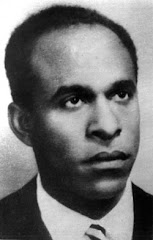
Frantz Fanon (1925-1961)
"Now, political education means opening minds, awakening them, and allowing the birth of their intelligence as [Aime] Cesaire said, it is 'to invent souls.' To educate the masses politically does not mean, cannot mean, making a political speech. What it means is to try, relentlessly and passionately, to teach the masses that everything depends on them."
Edward Said (1935-2003)
“I take criticism so seriously as to believe that, even in the midst of a battle in which one is unmistakably on one side against another, there should be criticism, because there must be critical consciousness if there are to be issues, problems, values, even lives to be fought for."
Antonio Gramsci (1891-1937)
“The challenge of modernity is to live without illusions and without becoming disillusioned. There must be pessimism of the intellect and optimism of the will.”
Susan Sontag (1933-2004)
"Do stuff. Be clenched, curious. Not waiting for inspiration’s shove or society’s kiss on your forehead. Pay attention. It’s all about paying attention. Attention is vitality. It connects you with others. It makes you eager. Stay eager."
Kofi Natambu, editor of The Panopticon Review, is a writer, poet, cultural critic, and political journalist whose poetry, essays, criticism, reviews, and journalism have appeared in many literary magazines, journals, newspapers, and anthologies. He is the author of a biography MALCOLM X: His Life & Work (Alpha Books) and two books of poetry: THE MELODY NEVER STOPS (Past Tents Press) and INTERVALS (Post Aesthetic Press). He was the founder and editor of SOLID GROUND: A NEW WORLD JOURNAL, a national quarterly magazine of the arts, culture, and politics and the editor of a literary anthology NOSTALGIA FOR THE PRESENT (Post Aesthetic Press). Natambu has read his work throughout the country and given many lectures and workshops at academic and arts institutions. He has taught American literature, literary theory and criticism, cultural history and criticism, film studies, political science, creative writing, philosophy, critical theory, and music history and criticism (Jazz, Blues, R&B, Hip Hop) at many universities and colleges. He was also a curator in the Education Department of Detroit’s Museum of African American History. Born in Detroit, Michigan, Natambu currently lives in Berkeley, California with his wife Chuleenan.