Monday, December 7, 2020

https://inciteseminars.com/we-will-be-black/

Incite Seminars
rigorous and rebellious learning
We Will be Black: Cedric J. Robinson, Black Marxism, and Beyond
Two Saturdays, December 12 & 19th, 2020
12-3pm Eastern (US+Canada). Online via Zoom.
Joshua M. Myers, PhD
PHOTO: Zora Neale Hurston in Haiti, 1937, Library of Congress

“We will be Black not because we are not white, but because of our history and the achievements of our struggle.” – Cedric J. Robinson

Though Cedric J. Robinson was a trained political theorist, his understanding of revolution went beyond the logics of “the political.” Drawing upon his experiences in Black communities, an eclectic range of academic influences, and an organizing background, Robinson developed the idea of a Black Radical tradition. It was a tradition that possessed its own sense of the origins of the problems of the modern world, and how they might be addressed. It is that tradition which was responsible for the forms of resistance that emerged among the enslaved and their descendants. 
 
As a problem for thought, the Black Radical tradition existed in relation to a multiplicity of Western theories of reality and change: political economy, charismatic authority, anarchism, Marxism, as well as the aesthetic.
 
This two-part seminar will explore the foundations of Black Marxism, utilizing the wider scope of Robinson’s intellectual work, as well as focus on his background in West Oakland’s Black world, his student activism at the University of California, his international travels and experiences, and his work as a media activist. Yet the focus will remain the nature of the Black Radical tradition—not merely one or a collection of individual actors— and how it constitutes one way that human beings have struggled against modern oppressions.
In the first week, we will discuss Robinson’s biography and his early works in political theory, focusing on how these early impulses led to later works and intellectual concerns. In the following week, we will discuss the contexts leading to the development of Black Marxism, before exploring the conceptual intervention that this text made and its lasting impact.
 
Facilitator: Joshua M. Myers is an Associate Professor of Africana Studies in the Department of Afro-American Studies at Howard University. He is the author of We Are Worth Fighting For: A History of the Howard University Student Protest of 1989 (NYU Press, 2019) and the editor of A Gathering Together: Literary Journal. His intellectual biography of Cedric J. Robinson is forthcoming from Polity Press in late 2021.

Readings (PDFs will be provided prior to the session):

Week One:

Robin D.G. Kelley – “Cedric J. Robinson: The Making of a Black Radical”
Cedric J. Robinson – “Introduction” and “The Order of Politicality” in The Terms of Order
Cedric J. Robinson – “Manichaeism and Multiculturalism”
Cedric J. Robinson – “Preface” in Forgeries of Memory and Meaning
Week Two:
Cedric J. Robinson – “Coming to Terms: The Third World and the Dialectic of Imperialism”
Cedric J. Robinson – “An Inventory of Contemporary Black Politics”
Cedric J. Robinson – “Introduction” and “The Nature of the Black Radical Tradition,” in Black Marxism
 
Time: Two Saturdays, December 12 & 19th, 12pm-3pm. Online via Zoom.

Seminar Cost:

$60 – Member Ticket for Incite Seminars Patreon 

Supports at any level:

$90 – True Cost Ticket
$120 – Generous Supporter Ticket
$30 –Student, Contingent Scholar, Activist Ticket
$1+ – Solidarity Donation Ticket 

Registration

Please register by buying a ticket at our Eventbrite page. We are committed to making all our offerings accessible to those who are eager to learn, regardless of financial means. If you have any questions or concerns, please email inciteseminarsphila@gmail.com.

Incite |rouse, urge, encourage, stimulate.

Seminar | breeding ground, plant hothouse; gathering of a small group to discuss a topic intensively.

We create public seminars that incite personal exploration and inspire community action.
Incite Seminars offers an educational experience. We do so by gathering an engaged group of participants for a dynamic exchange of ideas, led by skilled facilitators. All of our facilitators have a deep relationship to a subject or topic through intensive study or practice.

Our sessions are as enjoyably accessible as they are intellectually rigorous. We are certain you will find our seminars refreshingly satisfying, relevant, and even fun. No prior knowledge of a subject is presupposed. Read more about the process here. (Until further notice, all of our sessions are online.)

We are a member-supported, 501(c)3 educational non-profit. We receive no grants or money from outside funders, and are supported through event registrations and Patreon contributions. 
 
We invite you to join our Rigorous and Rebellious Learning community at any level you feel inspired! Thank you.
 
When we’re not in COVID-19 quarantine, our home is The Bourse, 111 South Independence Mall East, Suite 540, Philadelphia, PA 19106 (5th Street between Market and Chestnut). Here’s a map. 
 
Register now for our current seminars. Descriptions here. We look forward to seeing you at a session soon!
 
Registration
 
 
Millennials Are Killing Capitalism

Cedric Robinson, the Black Radical Tradition and Racial Regimes with Joshua Myers

SOUNDCLOUD AUDIO: 1 HOUR AND 11 MINUTES (length of recording)

Follow Millennials Are Killing Capitalism and others on SoundCloud.


Joshua M. Myers is an Assistant Professor of Africana Studies at Howard University. He is the author of We Are Worth Fighting For: A History of the Howard University Student Protest of 1989, which came out in 2019 on NYU Press. He is also the editor of A Gathering Together: Literary Journal. Among his current projects, the book Cedric Robinson: Black Radicalism Beyond The Order of Time. In this episode, Myers gives a brief biography of Cedric Robinson’s early life and discusses the key contributions of Black Marxism: The Making of The Black Radical Tradition. We discuss the Black Radical Tradition and racial capitalism in tension and dialogue with modes of radicalism that emanated from Europe. Along the way Myers debunks several common misreadings of Robinson’s work, and urges readers to engage Black Marxism within and along with the whole body of Robinson’s writing as well as the rich tradition of Black Radical thought.

ABOUT CEDRIC ROBINSON:
(1940-2016):

Dr. Robinson was Professor in the Department of Black Studies and the Department of Political Science at the University of California, Santa Barbara.. He received his BA from the University of California, Berkeley and his MA and Ph.D. from Stanford University. He served as Chair of the Department of Black Studies as well as of Political Science and has also served as the Director of the Center for Black Studies at UCSB. His fields of teaching and research are modern political thought, radical social theory in the African Diaspora, comparative politics, and media and politics. Dr. Robinson is the author of Black Marxism: The Making of the Black Radical Tradition, Terms of Order: Political Science and the Myth of Leadership and Black Movements in America. He is also the author of numerous articles on US, African and Caribbean political thought; Western social theory, film and the press. His most recent work includes The Anthropology of Marxism, a monograph study of the historical and discursive antecedents of Marxism, and research into anti-facism in Africa and the African Diaspora in the 1920s and 1930s.

 
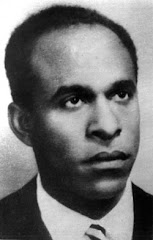
PHOTO (L-R): Dr. Cedric Robinson and Professor Joshua M. Myers


NOTE: This post can also now be found here at the Panopticon Review On Facebook page.


Exemplary Public intellectual, social activist, and scholar Tim Wise On What is Required and Essential Today in the Fight for Racial Justice and True Democracy in the United States

IMPORTANT NEW BOOK:

Dispatches from the Race War
by Tim Wise
City Lights Books, 2020 
[Publication date: December 1, 2020]
 
Essays on racial flashpoints, white denial, violence, and the manipulation of fear in America today.
“What Tim Wise has brilliantly done is to challenge white folks' truth to see that they have a responsibility to do more than sit back and watch, but to recognize their own role in co-creating a fair, inclusive, truly democratic society.”—Michelle Alexander, author of The New Jim Crow
"Tim Wise's new book gives us the tools we need to reach people whose understanding of our country is white instead of right. And without pissing them off!"—James W. Loewen, author, Lies My Teacher Told Me
"Tim Wise's latest is more urgent than ever. "—Heather Ann Thompson, Pulitzer Prize-winning author of Blood in the Water: The Attica Prison Uprising of 1971 and its Legacy
"A white social justice advocate clearly shows how racism is America's core crisis. A trenchant assessment of our nation’s ills."—*Kirkus Reviews, Starred Review
" [Dispatches from the Race War] is a bracing call to action in a moment of social unrest."—Publishers Weekly
"Dispatches from the Race War exhorts white Americans to join the struggle for a fairer society."—Chapter 16
In this collection of essays, renowned social-justice advocate Tim Wise confronts racism in contemporary America. Seen through the lens of major flashpoints during the Obama and Trump years, Dispatches from the Race War faces the consequences of white supremacy in all its forms. This includes a discussion of the bigoted undertones of the Tea Party’s backlash, the killing of Trayvon Martin, current day anti-immigrant hysteria, the rise of openly avowed white nationalism, the violent policing of African Americans, and more.
Wise devotes a substantial portion of the book to explore the racial ramifications of COVID-19, and the widespread protests which followed the police murder of George Floyd.
Concise, accessible chapters, most written in first-person, offer an excellent source for those engaged in the anti-racism struggle. Tim Wise’s proactive approach asks white allies to contend with—and take responsibility for—their own role in perpetuating racism against Blacks and people of color.
Dispatches from the Race War reminds us that the story of our country is the history of racial conflict, and that our future may depend on how—or if—we can resolve it. “To accept racism is quintessentially American,” writes Wise, “to rebel against it is human. Be human.”
REVIEWS:
Praise for Tim Wise's Dispatches from the Race War:
"Through clear examples, inscrutable logic, and the power of direct language, Wise challenges White Americans to identify and understand the racism inscribed in the very American project and in the everyday acts of 'being American.'"—Romi Mahajan, Countercurrents
Praise for Tim Wise:
"Tim Wise is a vanilla brother in the tradition of John Brown . . . "—Cornel West
"One of the most brilliant, articulate and courageous critics of white privilege in the nation. He is a national treasure."—Michael Eric Dyson
"What Tim Wise has brilliantly done is to challenge white folks’ truth . . . to see that they have a responsibility to do more than sit back and watch, but to recognize their own role in co-creating what is either a fair, inclusive, truly democratic society or a society that is predicated on indifference towards those who are labeled as 'others' truth . . ."—Michelle Alexander, author of The New Jim Crow: Mass Incarceration in an Age of Colorblindness
"(Wise's) work is revolutionary, and those who react negatively are simply afraid of hearing the truth . . . "—Robin D.G. Kelley, Professor of History, University of South­ern California
"Tim Wise is one of the few people, along with perhaps Frederick Douglass, who has ever really spoken honestly and forcefully to white people about themselves . . . "—Charles Ogletree, Professor of Law, Harvard Law School; Di­rector, Charles Hamilton Houston Institute for Race and Justice
"The fate of this country depends on whites like yourself speaking the truth to those who don’t want to hear it. In this, you are as one with the Biblical prophets. You are more likely to be condemned than lauded, and yet your words are no less important. So, keep speaking out. At the very least, some future archeologists sifting through the ashes of this civilization may be able to find evidence that there were some who offered truth as a cure for the disease that destroyed us."—Derrick Bell, Professor of Law, New York University
"(His) is the clearest thinking on race I’ve seen in a long while written by a white writer . . . right up there with the likes of historians Howard Zinn and Herb Aptheker as far as I’m concerned."—Dr. Joyce King, Benjamin Mays Endowed Chair for Urban Teaching, Learning and Leadership, Georgia State University
"Sparing neither family nor self . . . he considers how the deck has always been stacked in his and other white people's favor . . . His candor is invigorating."
 —Publishers Weekly
 
ABOUT THE AUTHOR:
Tim Wise, whom scholar and philosopher Cornel West calls, "A vanilla brother in the tradition of (abolitionist) John Brown," is among the nation's most prominent antiracist essayists and educators. He has spent the past 25 years speaking to audiences throughout North America, on over 1000 college and high school campuses, at hundreds of conferences, and to community groups across the nation about methods for dismantling racism.
Wise's antiracism work traces back to his days as a college activist in the 1980s, fighting for divestment from (and economic sanctions against) apartheid South Africa. After graduation, he threw himself into social justice efforts full-time, as a Youth Coordinator and Associate Director of the Louisiana Coalition Against Racism and Nazism: the largest of the many groups organized in the early 1990s to defeat the political candidacies of white supremacist and former Ku Klux Klan leader David Duke. From there, he became a community organizer in New Orleans' public housing, and a policy analyst for a children's advocacy group focused on combatting poverty and economic inequity. He has served as an adjunct professor at the Smith College School of Social Work, in Northampton, MA., and from 1999-2003 was an advisor to the Fisk University Race Relations Institute in Nashville, TN.
Wise is the author of seven previous books, including Dear White America: Letter to a New Minority, Under the Affluence: Shaming the Poor, Praising the Rich and Sacrificing the Future of America and has been featured in several documentaries, including "The Great White Hoax: Donald Trump and the Politics of Race and Class in America," and "White Like Me: Race, Racism and White Privilege in America." Wise is one of five persons—including President Barack Obama—interviewed for a video exhibition on race relations in America, featured at the National Museum of African American History and Culture in Washington DC.
His media presence includes dozens of appearances on CNN, MSNBC and NPR, feature interviews on ABC’s 20/20 and CBS’s 48 Hours, as well as videos posted on YouTube, Facebook and other social media platforms that have received over 20 million views. His podcast, "Speak Out with Tim Wise," features bi-weekly interviews with activists, scholars and artists about movement building and strategies for social change.
Excerpt. © Reprinted by permission. All rights reserved.
Excerpted from Dispatches from the Race War by Tim Wise
 
PREFACE
 
RACISM AND INEQUALITY IN A TIME OF ILLNESS AND UPRISING
By the time you read these words, we will know the outcome of the 2020 presidential election. We will know whether American voters—or at least 75,000 people or so in a handful of key states—have re-elected Donald Trump for four more years or decided to end his time in office and return him to reality television. No matter the answer, this book will remain relevant, because the issues about which it is concerned pre-date his presidency and, if history is any guide, will continue to plague us long after he is gone.
That said, this has been a strange time to compile a collection of essays on race and racism. With a man such as Trump in the White House, I knew as I began work on this volume how quickly events could change and how often race-related stories could emerge from an administration that, from the beginning, sought to divide the nation along lines of race, ethnicity, and religion, for political gain. Keeping up could prove hard, and I always suspected we could get near publication time only to have to insert something at the last minute to reflect the latest outrage. Little did I suspect, however, what 2020 would ultimately have in store for the nation.
As I write these words, it is summer, and the coronavirus pandemic is still ravaging the United States. Approximately 160,000 people have died, and estimates as to what lies ahead are not promising. If they prove prescient, as many as 300,000 will have perished by the time you laid eyes upon this sentence. Experts say that at least 60 percent of the earliest deaths could have been avoided, and then most of those after, had President Trump taken the threat seriously from the beginning. Had he even listened to members of his own administration and the intelligence community that serves him—voices that were trying to tell him in early January of the dangers ahead—hundreds of thousands of Americans who have died would still be alive today. Likewise, had he been as concened with public health as with his own private gain, he might have resisted calling for a quick re- opening of shuttered businesses in the hopes of an economic rebound. But with millions thrown out of work and the economy contracting by one-third in mid-summer—the largest single economic collapse in contemporary national history—Trump’s concerns were with spur- ring commerce and evincing optimism that the virus would magically disappear: anything to bolster his sinking poll numbers and his re- election chances. The results, of course, were predictable and have proved tragic. Sending children back to school, encouraging people to gather in restaurants, bars, churches, crowded downtown streets and beaches—lobbying tirelessly for a return to “normal”—the president and his enablers have endangered the lives of millions. This they have done for the sake of political marketing, hoping that even if hun- dreds of thousands more die, his attempts to blame the virus on China (where it originated, although the most virulent strain to hit the U.S. came from Italy) will convince enough voters that none of the suffering was his fault.

According to the data, around half of all fatalities have been persons of color, and the mortality rate for black, Latinx and indigenous folks has been about 2.5 times higher than for whites. It is not likely a coincidence that the Trump administration met the present challenge—one in which people of color have done a disproportionate share of the dying—with such nonchalance. Indifference to black and brown suffering, if not outright hostility to black and brown peoples, has been a hallmark of Trump’s presidency and most of his life. And if this had not been clear enough from the administration’s response to COVID-19, it would be made glaringly obvious from its reaction to the other major event of this year: the uprising in the wake of the murder of George Floyd at the hands of the Minneapolis police.
Once video footage of Floyd’s murder went viral, showing officer Derek Chauvin kneeling on Floyd’s neck for nearly nine minutes, while continually sporting a disinterested smirk, it was only a matter of time before the nation exploded. Although we had witnessed this scene before, seeing on film the killings of Eric Garner, Tamir Rice, Alton Sterling, and John Crawford III, among others, this time was different. Perhaps it was the proverbial straw that broke the camel’s back, or perhaps it was the relative quiet and isolation of the COVID lockdown providing people the space to truly see and feel in ways that would have been more difficult had they been going about the normal hustle and bustle of their lives. But whatever it was, within weeks millions of people in the United States, including large num- bers of whites, had poured into the streets in the largest mass uprising for racial justice in the history of this country.

In the face of more than 11,000 overwhelmingly peaceful protests, the administration and local authorities have met demonstrators with tear gas, clubs, and rubber bullets. On multiple occasions, the president has threatened to call in the military to suppress lawful assembly and protest, and actually did so in response to demonstrators in the District of Columbia. Hundreds of videos available online show law enforcement attacking nonviolent protesters without prov- ocation. Dozens of people, including police officers, have attempted to run over demonstrators with their vehicles. The hostility of the “law and order” brigades, from the president on down, is apparent, and their embrace of authoritarianism has been laid bare for all to witness. Since June 2020, we have been in the midst of a full-scale rebellion, or what some have called a soft civil war. Not between North and South, or even black and white, but between those who believe in racial equity and pluralism and those who do not.
And into that breach, in late August, yet another black man, Jacob Blake, was shot in the back and killed on camera by an offi- cer in Kenosha, Wisconsin. The rebellion that followed involved widespread property destruction by those frustrated with the lack of charges brought against the officer. This uprising was then countered by white vigilante violence, including the murder of two white antiracism activists by 17-year-old Trump supporter and police super-fan, Kyle Rittenhouse. The president, in keeping with his soft-pedaling of right-wing violence, not only refused to condemn Rittenhouse, but has justified his actions as self-defense, and continued to blame the black community and its supporters for the chaos.
This volume is divided into seven sections containing essays written from 2008 to the present. The first two chapters track, in chrono- logical order, the presidencies of Barack Obama and Donald Trump. They seek to show both the continuity of race as the background noise of everything that happens in America, as well as the way that the nation can quickly careen from hope and optimism around race to the depths of cynicism. The third section looks specifically at this unique moment in our history, and the way in which both COVID-19 and the current uprising for black lives have rendered 2020 a year that few others can match for historical significance. Sections four through six contain essays that speak to three broad themes: white denial about the reality of racism in the United States, historical memory and the way our tendency to misremember our past contributes to racial strife, and the propensity of the nation’s right wing to rely on faulty data to craft their narratives in opposition to racial justice efforts. The final section seeks to provide some direction for antiracism work, activism, and advocacy, both for individuals and for institutions, moving forward.

There is one thing, however, that binds these chapters together: They all speak to the core crisis at the heart of this nation. Because however unprecedented this moment may be in our lives, in some ways what it reveals is as old as the country itself. Some lives matter more than others in America. It was true at the founding. It remains true today. It will remain true forever, unless and until we decide we have had enough.

A few words about citations and sourcing of fact claims in this volume: Because this is an essay collection, I have opted to forego formal footnotes, endnotes, or parenthetical citations within the body of the work itself. To insert such notes would have proved visually distracting in short pieces, and would have increased the size of the book to an unwieldy length. However, because it is important to make citations available, especially for references, data or histori- cal material that is not widely known or understood, City Lights and I will be posting references on their website, www.citylights. com. These notes will be textual, meaning they will be broken down by chapter, and then reference particular page numbers, with a few words of the text cited so as to orient the reader to what is being referenced. These will then be followed by formal citations. I hope this will satisfy the aesthetics best for most readers while also meeting the needs for scholarly legitimacy desired by those seeking truth in these dangerous (and often surreal) times.
—Tim Wise, Nashville, August 2020

OUR FEAR IS REAL BUT FAR FROM UNIQUE

Empathy in a time of pandemic

Is it safe to leave the house? To go to the store? To get in the car and drive, even if only to break the monotony of days or weeks inside? Is it OK to go for a walk around the neighborhood to get some fresh air? Will my job be there next week, next month, in six months? If I get sick, will I be able to get care? And even if I can, will I be able to afford it?
Questions such as these have become commonplace for millions in recent days and weeks in the face of COVID-19. Whether having chosen to shelter-in-place or having been told to do so by state and local officials, they are queries on the minds if not lips of much of America right now. They are questions filled with far more emotion than mere words on a page can convey. They are laden with anxiety and dread at the new normal and what it might portend for our families, our children, ourselves. And in such a moment, in which so much insecurity has been visited upon so many, it is perhaps the perfect opportunity to reflect on a few things we are often reluctant to consider in more sanguine times. Indeed, reflection may be the one gift offered up by this pandemic. All the rest, to be sure, is shit. But having been offered the time to engage in it, reflecting is the one positive thing we can do now, even as it often eludes us in the hustle and bustle of our regular lives. And so, let us think for a second.
Let us think, in particular, about those questions with which I began. To be precise, let us think about how eerily normal they are, if not for some of us, certainly for others; and not just now, but always, every day, with or without a virus lurking in the background. Because what many are only now experiencing—the disorienting feeling of not knowing where we can go and what we can do safely, and the financial and health insecurity haunting our dreams—is hardly revelatory for everyone. It is nothing if not ordinary for millions of persons with whom we share a nation but have rarely shared a reality.

Let us think about the routine act of leaving the house and going to the store. Let us consider how fraught that act can be even in normal times for Black folks, so often followed around inside, asked for multiple forms of identification when making a purchase, perhaps even shot and killed, as John Crawford was, simply for holding an air rifle at his side, which he had gotten off a store shelf at an Ohio Walmart.

Our fear is real. It is justified. But it is far from unique.

Let us think about getting in the car and driving around, or walking or jogging through the neighborhood. Let us consider what that experience is regularly like for people of color, identifiable Muslims of all colors, or those who are Sikh. Imagine, if you are white, what it must be like to be presumed out of place, stopped by police, or followed by a wanna-be cop like George Zimmerman, who has decided that solely because of the color of your skin, you are likely a criminal. For that matter, let those of us who are men consider how maddeningly typical it is for women (of whatever race, class, or ethnicity) to have to worry about leaving the house for a walk or a run, never knowing if they may become the victims of sexual assault. Let all of us consider the utterly normative concerns of trans folk seeking to go anywhere at any time of day, knowing that they are so frequently the targets of abuse, verbal or physical or both.

Our fear is real. It is justified. But it is far from unique.

Let those who are white and middle class think about the job insecurity we now feel, the uncertainty about our careers, despite having done everything right. We got our educations, we’ve worked hard, and still, we are left to wonder how long before the wolf is at the proverbial door. And let us reflect for a moment on how often people of color experience that same anxiety not because of a worldwide pandemic but because of a little thing called everyday life in America. Because while all of this might be new to many of us, Black folks with a college degree have long been nearly twice as likely as whites with one to be unemployed.Latinos and Latinas with a degree have been about 50 percent more likely than similar whites to be unemployed. Asian Americans have been about 25 percent more likely, and Indigenous folks about two-thirds more likely than whites to be unemployed, even when possessing a degree.
Our fear is real. It is justified. But it is far from unique.
Let us think about our uncertainty in the face of potential illness, the fear that grips us as we contemplate what will happen if we contract this lethal virus: will we be able to receive the care we need? And if so, at what cost? Will hospitalization, perhaps several days on a ventilator (presuming there are enough to go around) result in a hefty bill, bankrupting our families, even in the event we manage to survive? And let us consider how many millions of people have wondered those same things, not because of the novel coronavirus, but because of a broken health care system that treats health as a commodity rather than human right to which all are entitled.
In other words, let us take this moment to reflect on the way that our present vulnerability has rendered us more normal than we knew. Let us think of this as a lesson on how much more interconnected we are than we had perhaps suspected. Let us see this as evidence, glaring, and obvious, of the cost of indifference in the face of pain. It’s an indifference that has kept us from creating the needed infrastructure to sustain life and health and to prioritize safety and security for all. Perhaps if we had listened before, the terror that presently grips so many for the first time could have been avoided.
And now, with so many having paid the price for our prior nonchalance, perhaps we can begin to construct the empathic scaffolding upon which society and humanity depends. It is the edifice upon which they have always depended, however little some may have recognized it.
Because although our fear is real, and undoubtedly justified, it is far from unique.
 
TIM WISE  
(b. October 4, 1968)

NOTE: This post can also now be found here at the Panopticon Review On Facebook page.

Mahmood Mamdani's Critique of Political Modernism in the West and Its Ongoing Impact on Systems of Colomialism and Imperialism

IMPORTANT NEW BOOK:

Neither Settler nor Native: The Making and Unmaking of Permanent Minorities
by Mahmood Mamdani
Belknap Press: An Imprint of Harvard University Press, 2020

[Publication date: November 30, 2020]


Making the radical argument that the nation-state was born of colonialism, this book calls us to rethink political violence and reimagine political community beyond majorities and minorities.

In this genealogy of political modernity, Mahmood Mamdani argues that the nation-state and the colonial state created each other. In case after case around the globe―from the New World to South Africa, Israel to Germany to Sudan―the colonial state and the nation-state have been mutually constructed through the politicization of a religious or ethnic majority at the expense of an equally manufactured minority.


The model emerged in North America, where genocide and internment on reservations created both a permanent native underclass and the physical and ideological spaces in which new immigrant identities crystallized as a settler nation. In Europe, this template would be used by the Nazis to address the Jewish Question, and after the fall of the Third Reich, by the Allies to redraw the boundaries of Eastern Europe’s nation-states, cleansing them of their minorities. After Nuremberg the template was used to preserve the idea of the Jews as a separate nation. By establishing Israel through the minoritization of Palestinian Arabs, Zionist settlers followed the North American example. The result has been another cycle of violence.

Neither Settler nor Native offers a vision for arresting this historical process. Mamdani rejects the “criminal” solution attempted at Nuremberg, which held individual perpetrators responsible without questioning Nazism as a political project and thus the violence of the nation-state itself. Instead, political violence demands political solutions: not criminal justice for perpetrators but a rethinking of the political community for all survivors―victims, perpetrators, bystanders, beneficiaries―based on common residence and the commitment to build a common future without the permanent political identities of settler and native. Mamdani points to the anti-apartheid struggle in South Africa as an unfinished project, seeking a state without a nation.


REVIEWS:


“Demonstrates how a broad rethinking of political issues becomes possible when Western ideals and practices are examined from the vantage point of Asia and Africa.”―Pankaj Mishra, New York Review of Books
“This book compels the reader to rethink the origin and development of the nation-state and its replication as inseparable from European colonialism, beginning with the establishment of the Spanish state through racialized ethnic cleansing and the 1492 deportations of Jews and Moors. In elegant prose with no wasted words or jargon, this original and brilliant work argues that the United States created the template for settler-colonialism, providing the model upon which the South African apartheid regime and the Israeli state were patterned, a model also used by the Nazi regime that adopted US race theory and catastrophic ethnic cleansing. The book provides not only profound historical analysis but also deeply researched descriptions of the current US and Israeli regimes of settler-colonialism and more.”―Roxanne Dunbar-Ortiz, author of An Indigenous Peoples’ History of the United States

“Brilliant! A deeply learned account of the origins of our modern world. Situating the beginnings of the nation-state in the settler-colonial practice of creating permanent minorities, Mamdani illustrates how this damaging political logic continues into our own era, resulting far too often in today’s extraordinary political violence. Through his own elegant contrarianism, Mamdani rejects the current focus on human rights as the means to bring justice to the victims of this colonial and postcolonial bloodshed. Instead, he calls for a new kind of political imagination, one that will pave the way for a truly decolonized future. Joining the ranks of Hannah Arendt’s Imperialism, Frantz Fanon’s The Wretched of the Earth, and Edward Said’s Orientalism, this book is destined to become a classic text of postcolonial studies and political theory.”―Moustafa Bayoumi, Brooklyn College, City University of New York
“Neither Settler nor Native analyzes seemingly disparate political histories to illuminate the intertwined logic of colonial statecraft and nation-building, the legacy of which was the violent manufacture of permanent majorities and minorities the world over. This is a masterwork of historical comparison and razor-sharp political analysis, with grave lessons about the pitfalls of forgetting, moralizing, or criminalizing this violence. Mamdani also offers a hopeful rejoinder in a revived politics of decolonization, not as romantic revolution but a renewed art of politics. Decolonization uses the tools of political engagement and negotiation to unsettle inherited identities, to convert perpetrators and victims into survivors, natives and settlers into citizens, nation-states into inclusive democracies.”―Karuna Mantena, Columbia University
“A powerfully original argument, one that supplements political analysis with a map for our political future.”―Faisal Devji, University of Oxford

ABOUT THE AUTHOR:


Mahmood Mamdani is Herbert Lehman Professor of Government and Professor of Anthropology and of Middle Eastern, South Asian, and African Studies (MESAAS) at Columbia University and Director of the Makerere Institute of Social Research in Kampala. He is the author of Citizen and Subject, When Victims Become Killers, and Good Muslim, Bad Muslim.

NOTE: This post can also now be found here at the Panopticon Review On Facebook page. 

Sunday, December 6, 2020

The Ongoing Destructive Impact of the Covid-19 Pandemic on African American Health and Major Structural and Institutionalized Racial Disparities in the National System of Diagnoses and Treatment

https://bostonreview.net/.../adam-gaffney-racism-and...

Race
Topics:
COVID-19
health
science and technology

Racism and Respiration
by Adam Gaffney
November 30, 2020
Boston Review
 
   
PHOTO: A patient receives treatment for severe asthma. Image: Flickr / Army Medicine
 
COVID-19’s disproportionate impact on Black communities is just one of many respiratory inequities across race. A growing body of research puts social conditions, not innate differences, at the center of the explanation.
In the early 1930s two thousand predominantly Black workers were sent to tunnel through a mountain in Gauley Bridge, West Virginia. The mountain was made of silica, a crystalline compound in rock and sand that is toxic to the lungs. As historians David Rosner and Gerald Markowitz recount in Deadly Dust: Silicosis and the Politics of Occupational Disease in Twentieth-Century America (1991), the company was aware of these facts but sent the men to blast and dig the tunnel anyway, without safety precautions. The result was a massacre: the men inhaled the mineral dusts as they moved through the mountain, and as many as 1,500 of them acquired the lung disease silicosis, asphyxiating them in the coming months and years.
What explains respiratory inequities across race? Medical communities continue to point reflexively to nature rather than to society.
Almost a century later, Black men and women are still telling us they can’t breathe. Those words became famous in 2014 when New York City police killed Eric Garner in a chokehold. They provoked massive protests again this year when George Floyd uttered them shortly before being killed by Minneapolis police—in the midst of a pandemic of a debilitating respiratory disease that disproportionately afflicts Black communities. And even now, rates of death from silicosis are higher for Black men than white men. The thread connecting these respiratory deaths is not merely symbolic. The hierarchies that structure our society distribute not just wealth but breath.
Before COVID-19, asthma was the lung disease perhaps most closely associated with racial inequality. Black people are more likely than white people to have asthma and to die of it. Black children are less likely to be prescribed inhalers that control asthma and more likely to wind up in the emergency room unable to breathe. Influenza epidemics also disproportionately sicken the lungs of Black people: the 2009 H1N1 pandemic led to more hospitalizations among Blacks (and other non-white groups) than whites—indeed, more than double in the early wave. Black patients are also more apt to be hospitalized for pneumonia relative to whites, and among those hospitalized, more likely to die.
COVID-19 has been no exception to these trends. Early in the outbreak, reports from some localities suggested that Black people were disproportionately succumbing to the virus. A subsequent study in Health Affairs found that about one in four Black patients diagnosed with COVID-19 in a large California health system wound up in the intensive care unit, more than twice the rate among whites diagnosed with COVID-19. An investigation in the New England Journal of Medicine similarly revealed that while Black patients constitute about a third of the population of a large health system in Louisiana, they made up 71 percent of those hospitalized and 77 percent of those who died.
Just because diseases are ultimately biological phenomena does not mean they are not caused by social conditions.
What explains these respiratory inequities? Despite decades of important research on the social determinants of health, medical communities continue to point reflexively to nature rather than to society—to lungs being born this way rather than made this way. These accounts grossly understate the impact of structural oppression on respiratory outcomes. The lungs are the only vital organ in direct and continuous contact with our environment; it should not surprise us that they bear witness to our racialized geography. It is long past time for a reckoning with the ways repression impedes respiration.
The contention that Black lungs are intrinsically different than white lungs stretches back to our nation’s founding. As historian Lundy Braun describes in her seminal study Breathing Race Into the Machine: The Surprising Career of the Spirometer from Plantation to Genetics (2014), Thomas Jefferson’s Notes on the State of Virginia (1785) pointed to a “difference of structure in the pulmonary apparatus” as evidence of the suitability of Black people for plantation labor. Braun also examines explanations for the long-documented lower average lung function—measured as the volume of air a person can blow into a device called a spirometer—among Blacks relative to whites. Since the nineteenth century, Braun details, the medical profession has generally attributed these respiratory gaps to innate differences rather than to social inequality. More recently, a great deal of well-meaning medical research has been carried out in the shadow of these efforts, seeking genetic causes for higher rates of common diseases (including asthma) among Black people.
These explanations miss the way social conditions contribute to respiratory outcomes. DNA does not explain the blithe asphyxiation of Floyd, of course. As for asthmatics, there is no gene for being uninsured or underinsured: it is our corporatized, profit-oriented health financing system that forces those who suffer from asthma to go without needed medications or doctors’ visits because of cost. Nor is it ancestry that makes air pollution predominant in poor neighborhoods rather than rich ones. And the victims of the Gauley Bridge disaster did not have a genetic predisposition to silicosis; they were non-unionized workers who lacked collective power and whose corporate employer saw them as dispensable tools. (Black people are not the only such workers—other occupational lung diseases such black lung and asbestosis affect whites at higher rates than Blacks, in part due to worker demographics in Appalachia, where such diseases are particularly common—but Blackness makes it all the easier for workers to be marginalized in this way.)
The lungs are the only vital organ in direct and continuous contact with our environment; it should not surprise us that they bear witness to our racialized geography.
A growing body of work helps to correct the field’s neglect of the social determinants of health. As colleagues and I recently described in STAT, disparate exposure to pollutants, along with other forms of disadvantage, may help explain well-documented racial discrepancies in lung function. After all, striking differences in lung function—a strong predictor of life expectancy—are evident not only along racial lines but across class divisions. (As Braun notes, even the man credited with inventing the spirometer in the nineteenth century, the surgeon John Hutchinson, noted differences in average lung function among workers in different occupations.) Research in recent decades has also demonstrated, with striking consistency, that lung function slopes upward in a continuous gradient with rising education, income, and wealth. Socioeconomic disparities in lung function have been demonstrated throughout many time periods and across very different environments—from Shanghai to the Netherlands, Mexico, and Norway. It is likely that a slew of interconnected factors—including occupational exposures, indoor and outdoor air pollution, nutrition, lung infections, and likely much else—contribute to these inequities. There is some, albeit more limited evidence that psychosocial stress increases predisposition to the effects of air pollution, potentially leading to inflammation in the lungs that could contribute to worse outcomes.
One reason for confusion on these matters is that epidemiological studies have also found that differences in socioeconomic status (SES) do not “explain” the difference in lung function between whites and Blacks or play only a small role. But we must not interpret these results too hastily. It is highly implausible that the effects of racist exclusion in U.S. society can be captured by a simple statistical adjustment for income or education. For one thing, such measures typically do not account for stress, struggle, and exposure over the course of one’s life: just because someone happens to live in a middle-class neighborhood or have a relatively higher level of income now does not mean they always did. Residential redlining, wealth inequality, and structural segregation—things that explain, among other things, racially disparate exposure to diesel exhaust fumes—cannot be controlled for by a point-in-time measure of current family income or educational attainment.
Racial and economic oppression may also help to explain the disparate impact of the coronavirus pandemic within Black communities. A commonly cited potential mechanism for this disparity are comorbidities of chronic disease—e.g. heart disease or kidney failure—that confer increased risk for severe COVID-19, and which are indeed more common among Black people. But this does not mean Black people are naturally predisposed to those comorbidities, of course; racist exclusion almost surely plays a role in explaining disparate rates of chronic disease. While the precise physiological pathways have not been fully delineated, there is mounting evidence that adversity, material deprivation, and chronic psychosocial stress can be biologically toxic throughout one’s life, and that in some combination these conditions produce racial and class divides in metrics of health like blood pressure and kidney function as well as lung function.
But these comorbidities cannot be the only factor at work. While they may (in part) help explain worse outcomes among those infected, they fail to explain differing propensities to be infected at all. Given such higher rates of infection, it is not surprising that individuals of minority race and ethnicity, and of lower socioeconomic status, have a higher risk of COVID-19 mortality even when accounting for differences in chronic disease prevalence. One key factor may be, once again, occupational exposure. Black and Hispanic workers are more likely to be considered “essential,” or to work in jobs that afford less freedom to work from home, increasing exposure to the virus. Household crowding—a likely risk factor for dissemination within the home—could also be a factor: a recent study by colleagues found that some 81 million people—disproportionately lower income, Hispanic, Black, and Native Americans—live in homes without enough space or plumbing to allow family members to isolate were one to be infected.
Another important social factor to consider is inequitable access to health care. Those who are at increased risk of severe COVID-19 due to comorbidity are also less likely to have adequate health care. Our recent study found that some 18 million Americans who are at increased risk of severe COVID-19 due to advanced age or chronic illness—disproportionately racial and ethnic minorities and those with low incomes—are either uninsured or underinsured. Another study I recently published with colleagues, based on an analysis on national survey data, found that 29.2 percent of individuals out sick from work with symptoms they attributed to the coronavirus were uninsured—far higher than the rate for the overall population. We know that cost concerns cause those in the throes of a heart attack to delay medical care. We don’t know whether this is true for COVID-19, too—and with what consequences—but one national poll did find that some 9 percent of individuals with symptoms they believed were due to COVID-19 would avoid treatment because of cost. The rate, unsurprisingly, was higher among non-whites and those with lower incomes.
Air pollution, stress, occupational hazards, and health care services are distributed, unequally, across the intertwined divides of class and race.
These deficiencies lead to racial and socioeconomic inequities in the “effective demand” for health care, producing a distorted distribution of the utilization of care. But inequities in supply are no less important. Health care infrastructure in the United States is shaped by market mechanisms that have yielded a gross geographic maldistribution of resources. An April study in the Journal of the American Medical Association, for instance, found that the number of COVID-19 hospitalizations and deaths was highest in the Bronx and lowest in Manhattan, yet Manhattan has more than 50 percent more beds per capita than the Bronx. Nationwide, the regional distribution of ICU beds depends, in part, on a community’s income: about half of areas with a low median income are without a single ICU bed, whereas only 3 percent of high-income communities lack critical care beds. These sorts of maldistributions are manifestations of what the British GP and epidemiologist Julian Tudor Hart famously called the “Inverse Care Law”: those areas most in need of medical care tend to be those where it is least available. The law is most in force, Hart emphasized, where market mechanisms predominate. We need a health system where medical infrastructure and resources are not distributed according to the dictates of the market, but rationally planned according to community health needs.
On top of all these social factors, there are also “intrinsic” biases among health care workers themselves. These are no doubt a problem, too, though there is at least some evidence that “single-tier” health systems make a difference. A study of some six million individuals in the Veterans Affairs (VA) health system, for instance, found that while Black and Hispanic individuals were more likely to be diagnosed with COVID-19, there were no differences in outcomes among those infected. This research tracks with a broader body of evidence that ubiquitous racial divides in health outcomes in the United States are substantially attenuated in the VA.
Mechanisms matter. As historian Merlin Chowkwanyun and political scientist Adolph L. Reed, Jr., argued in the New England Journal of Medicine in July, reciting “disparity figures without explanatory context can perpetuate harmful myths and misunderstanding that actually undermine the goal of eliminating health inequities”—by reifying race as biology, for example, or perpetrating the stigmatization of certain communities.
The hierarchies that structure our society distribute not just wealth but breath. It is long past time for a reckoning with the ways repression impedes respiration.
At the same time, we have to recognize that mechanisms themselves often reflect social inequities. Just because diseases are ultimately biological phenomena does not mean they are not caused by social conditions. Air pollution, stress, occupational hazards, and health care services are distributed, unequally, across the intertwined divides of class and race. Even as health hazards and salubrious resources have changed over the centuries—as air quality worsened and improved, as medical care went from being mostly useless to often lifesaving, as mining and manufacturing collapsed while the service economy swelled—the fundamental link between race, class, and health has persisted. This is what public health scholars Bruce Link and Jo Phelan meant when they argued in a highly influential article in 1995 that socioeconomic factors should be deemed “fundamental causes of disease.”
We need more of that thinking today. In the wake of the events this year, there appears to be growing recognition within medical communities that racism is a public health problem. In order to take advantage of that mounting awareness, we must emphasize that it is a problem that can be solved only by confronting the structural economic inequities that distribute, among other things, the means of good pulmonary health.
 
PHOTO: A patient receives treatment for severe asthma. Image: Flickr / Army Medicine
Racism and Respiration


NOTE:  This post can also now be found here at the Panopticon Review On Facebook page.