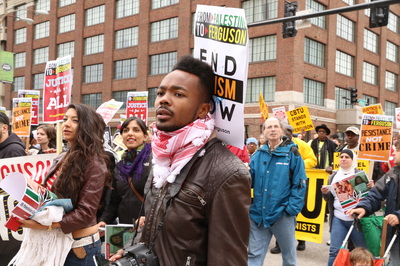
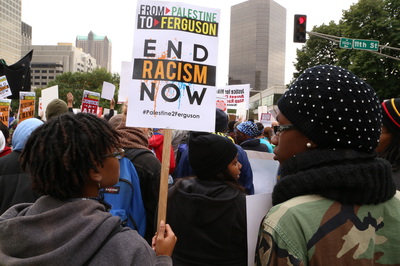
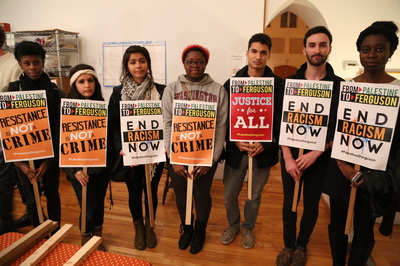
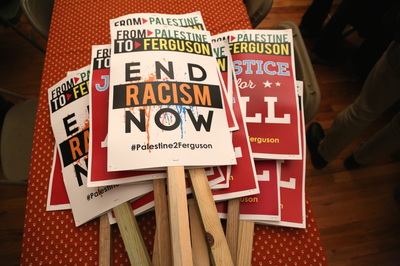
Discourse that allows us to express a wide range of ideas, opinions, and analysis that can be used as an opportunity to critically examine and observe what our experience means to us beyond the given social/cultural contexts and norms that are provided us.
The
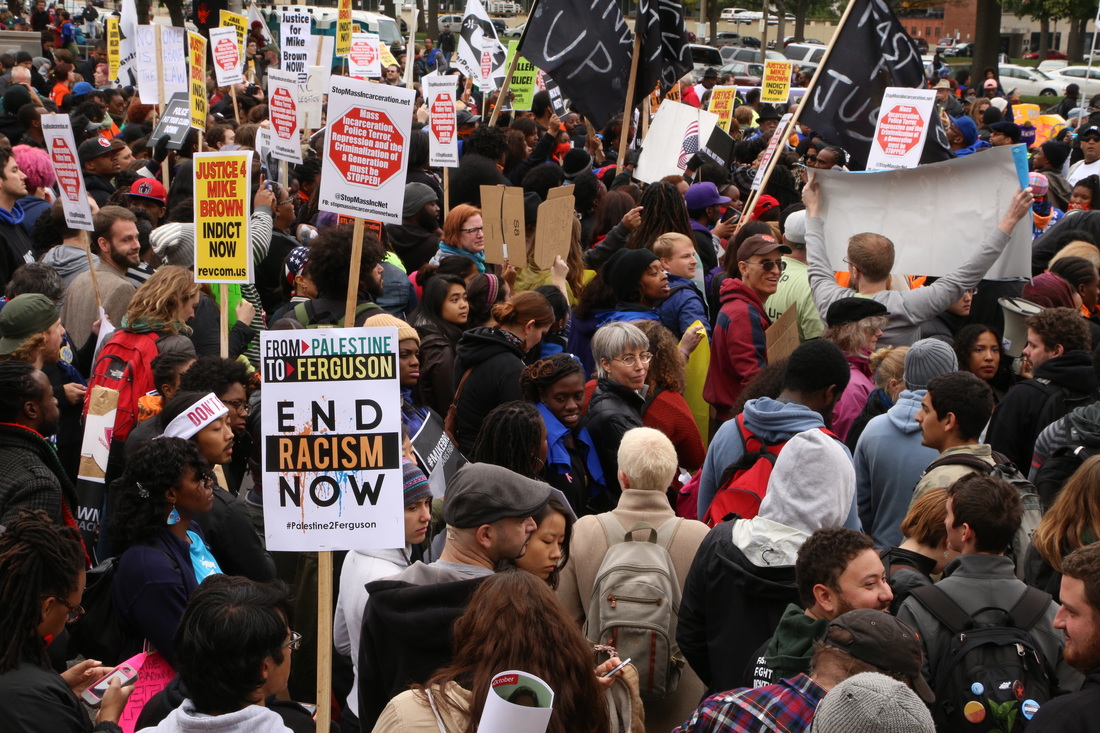
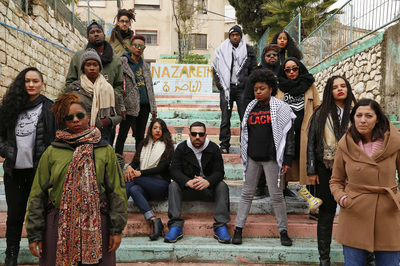
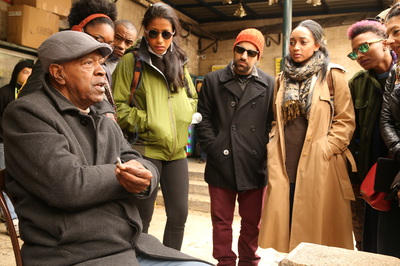
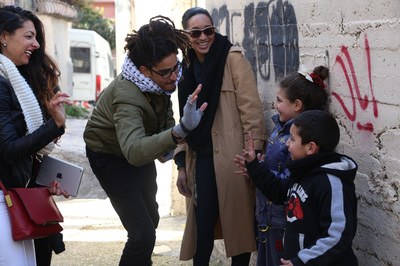
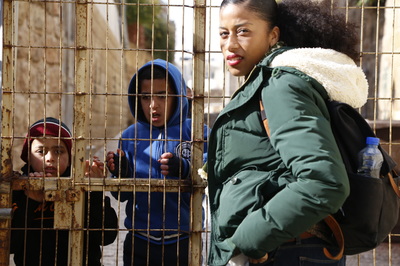
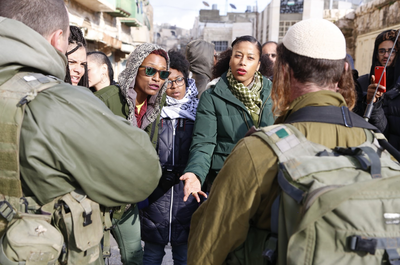
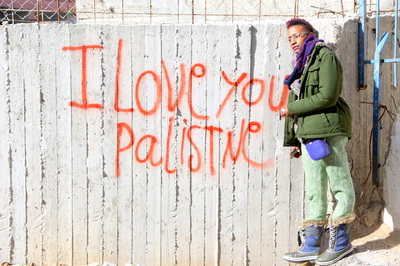
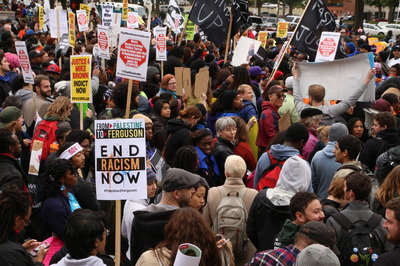
Black-Palestinian Solidarity Campaign released this video in October
2015. Part of their statement:
“We choose to join one another in resistance not because our struggles
are the same but because we each struggle against the formidable forces
of structural racism and the carceral and lethal technologies deployed
to maintain them. This video intends to interrupt that process – to
assert our humanity – and to stand together in an affirmation of life
and a commitment to resistance. From Ferguson to Gaza, from Baltimore to
Jerusalem, from Charleston to Bethlehem, we will be free.”
See more about this video: https://www.blackpalestiniansolidarit...
The
video features dozens of leading artists and activists from the US and
Palestine. Among the Black Americans who appear are Danny Glover, Cornel
West, Angela Davis, Alice Walker, LisaGay Hamilton, and Lauryn Hill.
Palestinians in the video include Omar Barghouti, Diana Buttu, Noura
Erakat, Rashid Khalidi, Sandra Tamari, and Linda Sarsour.
They are speaking of their shared experiences of racism and persecution,
experiences that include militarized police violence in the US and a
brutal military occupation in Palestine.
Over 1,100 Black activists, artists, scholars, students and organizations signed the 2015 Black Solidarity Statement with Palestine.
Excerpt:
"We
offer this statement first and foremost to Palestinians, whose
suffering does not go unnoticed and whose resistance and resilience
under racism and colonialism inspires us. It is to Palestinians, as well
as the Israeli and US governments, that we declare our commitment to
working through cultural, economic, and political means to ensure
Palestinian liberation at the same time as we work towards our own. We
encourage activists to use this statement to advance solidarity with
Palestine and we also pressure our own Black political figures to
finally take action on this issue. As we continue these transnational
conversations and interactions, we aim to sharpen our practice of joint
struggle against capitalism, colonialism, imperialism, and the various
racisms embedded in and around our societies. "
6,000 Black activists, artists, scholars, students and over 225 organizations signed our Black Solidarity with Gaza #CeasefireNow statement, including:
Angela Davis | Indya Moore | kehlani | Marc Lamont Hill | Michael Bennett Mumia Abu-Jamal | noname | Pam Africa | Robin DG Kelley | Saul Williams The Dream Defenders | Malcolm X Grassroots Movement | Movement For Black Lives | Harriet’s Wildest Dreams
Don’t Turn Away From the Charges of Genocide Against Israel
With the question of whether Israel is committing genocide in Gaza now before the International Court of Justice, the Biden administration has struck a tone of glib dismissal.
“Meritless”
seems to be the agreed-upon term among U.S. officials. “The charge of
genocide is meritless,” Secretary of State Antony Blinken intoned from a
podium in Tel Aviv this week. “Meritless, counterproductive, and
without any basis in fact whatsoever,” blustered the National Security
Council spokesman John Kirby.
The
administration’s posture of indifference strains credulity. The 84-page
case submitted to the court by South Africa is crammed with devastating
evidence that Israel has breached its obligations under the 1948
international genocide convention, which defines genocide as “acts
committed with intent to destroy, in whole or in part, a national,
ethnical, racial or religious group.” The document before the court is
meticulously footnoted and sourced, and many experts say the legal
argument is unusually strong.
Top
Israeli political and military leaders have themselves helped to bolster
the case against their government. The words of Israeli officials are
being offered as evidence of intent: from Prime Minister Benjamin
Netanyahu urging
Israelis to “remember” the Old Testament account of the carnage of
Amalek (“Spare no one, but kill alike men and women, infants and
sucklings,” reads one passage); to Defense Minister Yoav Gallant vowing that “Gaza won’t return to what it was before — we will eliminate everything”; to the minister of energy and infrastructure pledging,
“They will not receive a drop of water or a single battery until they
leave this world.” By speaking openly about destroying Gaza and
dispersing its residents, Israeli leaders have publicized what has, in
other cases of genocide, been hidden or denied.
There’s
no telling, of course, how effectively each side will argue, or how the
judges will rule. This week’s hearings in The Hague will not answer
whether Israel is committing genocide — that will come after a more
painstaking collection and presentation of evidence, and could take
years. For now, South Africa has asked the court “as a matter of extreme
urgency” to order Israel to halt its onslaught in order to protect
Palestinians and preserve evidence. The panel of judges has to be
convinced only that the accusation of genocide is plausible to order
provisional measures in the coming days or weeks.
Even
a determination that evidence suggests genocide would oblige the
international community to protect the shellshocked, starving people of
Gaza by demanding a cease-fire and flooding the Palestinians with aid.
In the long run, the case could lay early groundwork for sanctions
against Israel or the prosecution of its officials.
Gaza City this month. Credit: Agence France-Presse Getty Images
The
proceedings are meaningful for the United States, too. The Biden
administration has been the indispensable sponsor of this war — arming,
funding and diplomatically shielding Israel despite increasingly dire
reports of Palestinian death and displacement. If the violence in Gaza
is found to be genocide, the United States could be charged with
complicity in genocide, a crime in its own right. Given the sheer power
of the United States and its track record of international impunity, the
odds of any significant consequences may be small — but, nevertheless,
Americans should understand that the case is both substantial and
serious, and that their own government is implicated.
Israel
and its U.S. backers will, of course, frame this differently. They will
point out, correctly, that Israel suffered an intolerable blow on Oct.
7, when Hamas militants cut a path of atrocities through southern
Israel, slaughtering hundreds of civilians and dragging hundreds more
back into Gaza as hostages.
Israeli and
American officials have repeatedly invoked self-defense to explain the
violence in Gaza; self-defense is also expected to shape Israel’s
arguments in The Hague.
But
self-defense cannot excuse or justify acts of genocide, and Israel’s
assault on Gaza is a wildly disproportionate response to the crimes of
Oct. 7. Israel did not promise, nor did it execute, a sharply targeted
retaliation against Hamas (whose leaders run their political operations
out of Qatar) or a strategic hunt for the hostages.
Israel
has rescued only a single hostage — and Israeli soldiers shot dead
three Israeli hostages who were waving a white flag and begging for
rescue, later explaining they mistook them for Palestinians. Almost all
of the 110 Israeli hostages who’ve made it home were released by truce,
negotiation and prisoner exchange.
Within
hours of the Hamas attack, Israel imposed a brutal blockade on the Gaza
Strip, cutting off electricity, water, fuel and food to a trapped
population of roughly 2.2 million, about half of whom are children. The
blockade itself amounted to the war crime
of collective punishment, but that was only the curtain raiser. Within
hours, the bombs began to fall — and have continued to this day.
In
an Israeli television clip cited by South Africa in its application,
Col. Yogev Bar-Sheshet spoke from Gaza: “Whoever returns here, if they
return here after, will find scorched earth,” he said. “No houses, no
agriculture, no nothing. They have no future.”
Israel
has killed over 23,000 people in Gaza, according to the Gazan health
ministry. More than 9,000 of the dead are children. More than 1,000
children had undergone agonizing amputations, sometimes with no
anesthesia available, by late November, UNICEF says. Women giving birth have also been forced to undergo cesarean sections without anesthesia, according to doctors in Gaza. Entire neighborhoods are crushed, and more than 85 percent of the population has been displaced.
To
understand this extraordinary spasm of violence as an act of national
self-defense, you’d have to accept that Israel’s only chance for safety
depends upon Gaza being crushed and emptied — by death or displacement —
of virtually all Palestinians.
And, indeed, Israeli officials have said as much.
Tzipi Hotovely, Israel’s ambassador to Britain, recently explained to
the British TV host Iain Dale that Israel had to lay waste to Gaza
because “every school, every mosque, every second house” was connected
to a tunnel used by Hamas.
“That’s an argument for destroying the whole of Gaza, every single building in it,” Mr. Dale said.
“Do you have another solution?” Ms. Hotovely replied.
South Africa’s justice minister, Ronald Lamola, outside the International Court of Justice in The Hague.Credit...Remko De Waal/EPA, via Shutterstock
As the arguments at The Hague drew near, Israeli officials tried to soften their image.
On Tuesday, the Israeli military tweeted out a video insisting (in English) that “our war is against Hamas, not the people of Gaza.” Israel’s Channel 12 reported
that Mr. Netanyahu warned his ministers to be cautious what they say
about the war. “Choose your words carefully,” Mr. Netanyahu reportedly said, despite his own violent rhetoric.
The Israeli government spokesman Eylon Levy has repeatedly called the South African case a “blood libel”
— a reference to antisemitic European conspiracy theories that have
fueled the persecution of Jews since the Middle Ages. “History will
judge you, and it will judge you without mercy,” Mr. Levy said,
addressing the South African government.
The
conviction that South Africa is carrying on an ancient and despicable
tradition of antisemitism touches on the extreme sensitivities
surrounding this case.
Contemporary
notions of war crimes and genocide emerged from the horrors of the
Holocaust. To hear the charge of genocide turned against the Jewish
state often provokes a visceral disbelief among people — including many
Americans — who were carefully educated about the Holocaust while the
desperate plight of Palestinians was downplayed or ignored.
Raz Segal, an Israeli historian and genocide expert who has argued that Israel’s actions in Gaza are “a textbook case of genocide,” recently described to me this cognitive dissonance.
“The
idea that the Jewish state could commit war crimes, let alone genocide,
becomes from the beginning an unthinkable idea,” said Dr. Segal, a
professor at Stockton University in New Jersey. “Impunity for Israel is
baked into the system.”
Speaking before the tribunal on Thursday, the South African barrister Max du Plessis argued
that Israel’s decades-long oppression of Palestinian rights must be
regarded as crucial context of the violence in Gaza, which he said “is
not correctly framed as a simple dispute between two parties.”
Israel,
he pointed out, is an occupying power “that has subjected the
Palestinian people to an oppressive and prolonged violation to their
rights to self-determination for more than half a century. And those
violations occur in a world where Israel for years has regarded itself
as beyond and above the law.”
Rafah, in the southern Gaza Strip, this month. Credit: Agence France-Presse — Getty Images
The
word “genocide” rings loudly in our imagination. We think of Rwanda,
Bosnia, the Armenians, the Trail of Tears and, of course, the Holocaust.
I have heard many people balk at the suggestion that Gaza could be
experiencing genocide. The Holocaust, after all, wiped out over 60
percent of European Jews. Israel’s war — instigated, no less, by the
murder of Jews — has killed about 1 percent of the Palestinians in Gaza.
One percent is terrible, of course, but genocide?
Under the
genocide convention, though, the term describes an intent to wipe out a
defined group of people and taking steps to achieve that end. There is
no threshold of death, or proportion of death, that must be reached. It
is possible to kill a relatively small number of people, but still
commit an act of genocide.
We should
approach this question humbly, because we — Americans, the West — have
repeatedly shown that we are good at recognizing genocide only in
retrospect. Virtually every cataclysm we now know as genocide, including
the Holocaust, was met, first, with doubt and linguistic quibbling
until finally — and much too late — a declaration was made.
Rwanda,
often mentioned just after the Holocaust in the dirty annals of
genocide, was acknowledged as such only after Europeans and Americans
wasted precious weeks prevaricating and dragging their feet, leery of
intervention, while U.S. officials refused to say the word “genocide” in public. Denial of the Bosnian genocide has continued to this day.
When I read the document assembled by South Africa, my mind reeled: How could it happen? How was it allowed to happen?
The
harrowing details from Gaza go on and on. The crushing of the medical
system. The slaughter of aid workers. The killing of journalists. The
war on libraries, houses of worship and culture. The destruction of
families and economic needs and possibility itself.
Nowhere is safe in Gaza.
This line is repeated in the South African suit. Most of the people are
starving. Around 70 percent of the dead are women and children and two
mothers are killed every hour, the United Nations has estimated.
On Thursday, the South African advocate Tembeka Ngcukaitobi referred to Israel’s denial of fuel and water to Gaza.
“This
admits of no ambiguity: It means to create conditions of death of the
Palestinian people in Gaza,” Mr. Ngcukaitobi said. “To die a slow death
because of starvation and dehydration or to die quickly because of a
bomb attack or snipers. But to die, nevertheless.”
The
destruction of bakeries, water pipes, sewerage and electricity
networks. The hoisting of Israeli flags over the wreckage. Calls from
Israel’s government to return settlers to Gaza.
I don’t have to wonder how it could have been allowed to happen. It is happening now, and we’ve all been watching.
Since
2021, several Israeli and mainstream human rights organizations, have
concluded what Palestinians have long known and insisted upon: Israel is
an apartheid regime. Despite the welcome, and long-awaited, synergy
between them, there remains significant analytical divergence among
these organizations and Palestinian activists and scholars. In
particular, while the reports emphasize that Israel has become an
apartheid regime as a result of its failure to establish a Palestinian
state, Palestinians have pointed to Zionist ideology to insist that
Israel did not become become a discriminatory regime but is defined by
such discrimination. This lecture will explore the implications of this
analytical divergence by examining the juridical framework of apartheid
embodied in the 1973 Convention consecrating it as a crime against
humanity. It will also trace the Palestinian intellectual tradition to
highlight that Zionism is not like apartheid but that the ideologies
constitute intellectual and political bedfellows. Finally, by visiting
the drafting history of UNGA Resolution 3379 (1975) declaring Zionism as
a form of racism and racial discrimination, the lecture will help fill a
glaring lacuna in the recent apartheid reports regarding racial
theories of Zionism.
Noura
Erakat is an associate professor of Africana Studies and in the Program
in Criminal Justice at Rutgers University, and non-resident fellow of
the Religious Literacy Project at Harvard Divinity School. Her research
interests include human rights law, laws of armed conflict, national
security law, as well as critical race theory.
Noura is the author of
Justice for Some: Law and the Question of Palestine (Stanford University
Press, 2019), which received the Palestine Book Award and the Bronze
Medal for the Independent Publishers Book Award in Current
Events/Foreign Affairs. She is co-founding editor of Jadaliyya and
editorial board member of the Journal of Palestine Studies. She has
served as Legal Counsel for a Congressional Subcommittee in the US House
of Representatives, as Legal Advocate for the Badil Resource Center for
Palestinian Refugee and Residency Rights, and as national organizer of
the US Campaign to End the Israeli Occupation. Her recent scholarship
includes, “Geographies of Intimacy: Contemporary Renewals of
Black-Palestinian Solidarity” (American Quarterly, 2020) and “The
Sovereign Right to Kill: A Critical Appraisal of Israel’s Shoot-To-Kill
Policy” (International Criminal Law Review, 2019).
Noura has also
produced video documentaries, including "Gaza In Context" and "Black
Palestinian Solidarity." She has appeared on CBS News, CNN, Fox News,
and NPR, among others.
Uncle Bobbie's welcomed author-scholar and activist Noura Erakat for a book talk and signing of her anticipated release "Justice for Some: Law and the Question of Palestine."
About the book: Law is politics, and its meaning and application depend on the political intervention of states and people alike. Within the law, change is possible. International law can serve the cause of freedom when it is mobilized in support of a political movement. Presenting the promise and risk of international law, Justice for Some calls for renewed action and attention to the Question of Palestine.
About the author: Noura Erakat is a human rights attorney and assistant professor at George Mason University. She has served as legal counsel to the U.S. House of Representatives and as a legal advocate for Palestinian refugee rights at the United Nations. Noura's research interests include human rights and humanitarian, refugee, and national security law. She is a frequent commentator, with recent appearances on CBS News, CNN, Fox News, and NPR, among others, and her writings have been widely published in the national media and academic journals.
Interviewer and host/producer Dr. Marc Lamont Hill is one of the leading intellectual voices in the country.
He is currently the host of Al Jazeera UpFront,
and the Coffee & Books podcast. An award-winning journalist, Dr.
Hill has received numerous prestigious awards from the National
Association of Black Journalists, GLAAD, and the International Academy
of Digital Arts and Sciences.
Dr. Hill is the author or co-author of eight books, including the
award-winning Beats, Rhymes, and Classroom Life; Nobody: Casualties of
America’s War on The Vulnerable from Ferguson to Flint and Beyond; We
Still Here: Pandemic, Policing, Protest, and Possibility; Except For
Palestine: The Limits of Progressive Politics; and Schooling Against The
Prison.
Dr. Hill holds a Ph.D. (with distinction) from the University of
Pennsylvania. His current research and writing explore the relationships
between race, culture, politics, and education in the United States and
the Middle East.
Dr. Hill is also a Presidential Professor at the City University of New
York Graduate Center, where he teach courses in Anthropology, Urban
Education, and Middle Eastern Studies. Prior to that, he held positions
at Morehouse College, Temple University, and Columbia University.
Since his days as a youth in Philadelphia, Dr. Hill has been a social
justice activist and organizer. He has worked on campaigns to end the
death penalty, abolish prisons, and release numerous political
prisoners. Dr. Hill has also worked in solidarity with human rights
movements around the world. He is the founder and director of The
People’s Education Center in Philadelphia, as well as the owner of Uncle Bobbie’s Coffee & Books.
Justice for Some: Law and the Question of Palestine
Featuring Noura Erakat, Human Rights Attorney and Associate Professor at Rutgers University, Department of Africana Studies and the Program in Criminal Justice; Fellow in Conflict in Peace at the Religion, Conflict, and Peace Initiative (RCPI), a joint initiative of Religion and Public Life at Harvard Divinity School and the Ash Center for Democratic Governance and Innovation at Harvard Kennedy School
Mary Ellen O'Connell (Respondent), Robert and Marion Short Professor of Law and Research Professor of International Dispute Resolution
Erakat offers a new approach to understanding the Palestinian struggle for freedom, told through the power and control of international law.
"Justice for Some: Law and the Question of Palestine," the new book by Noura Erakat, offers a new approach to understanding the Palestinian struggle for freedom, told through the power and control of international law. Focusing on key junctures—from the Balfour Declaration in 1917 to present-day wars in Gaza—Erakat shows how the strategic deployment of law has shaped current conditions. Over the past century, the law has done more to advance Israel's interests than the Palestinians’. But, Erakat argues, this outcome was never inevitable. Presenting the promise and risk of international law, Erakat calls for renewed action and attention to the question of Palestine.
Angela Davis & Noura Erakat on Palestinian Solidarity, Gaza & Israel’s Killing of Ahmad Erekat
On Sunday, many Arab, Muslim and Palestinian communities boycotted President Biden’s virtual Eid celebration. We play a statement of solidarity from legendary activist and scholar Angela Davis on Sunday for “Eid with Palestine: A Protest of the White House Eid Event.” Davis also co-wrote piece for The Nation with our guest Noura Erakat about how Erakat’s 26-year-old cousin Ahmad Erekat was shot by Israeli occupation forces after his car appeared to have accidentally crashed into a booth at a checkpoint in the occupied West Bank while he was on the way to pick up his mother and sister on her wedding day. Erakat says Israel still refuses to release his body to his family. “All Palestinians are deemed a threat for their mere existence,” says Erakat. “What we see happen to Ahmad has been a pattern.”
#DemocracyNow
Democracy Now! is an independent global news hour that airs on nearly 1,400 TV and radio stations Monday through Friday.
Frantz Fanon by James S. Williams Reaktion Books, 2024
[Publication date: January 1, 2024]
A biography of the revolutionary philosopher and psychiatrist.
Doctor, militant, essayist, ambassador, teacher, journalist,
pan-Africanist, Frantz Fanon sought to decolonize mid-twentieth-century
culture as he embodied a new kind of intellectual. Born in colonial
Martinique, he fought for France during World War II but later renounced
his citizenship and fought in the Algerian War of Independence. This
book emphasizes Fanon’s gift for self-invention and performance as it
follows his short but extraordinary life and explores how his pioneering
work in psychiatry influenced his revolutionary philosophy.
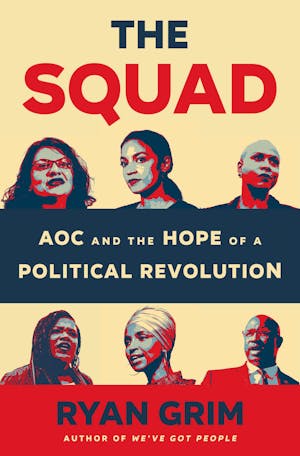
The Squad: AOC and the Hope of a Political Revolution by Ryan Grim Henry Holt and Co.
[Publication date: December 5, 2023]
Semafor's Best Political Book of 2023
A
riveting insider account of the progressive movement in Congress
centering A.O.C., Rashida Tlaib, Jamaal Bowman, Cori Bush, Ayanna
Pressley, and Ilhan Omar―their rise, their efforts to set an ambitious
agenda for the country, and their struggle to find their footing within
the Democratic party.
The Squad is
the definitive, must-read book about the most exciting figures defining
our new era. The story is urgent, and the stakes are high―for the
country and the world―and Grim, an experienced political reporter who
covered the Squad before they were the Squad, is uniquely qualified to
tell it.
When Bernie Sanders, an obscure Vermont senator,
launched his quixotic 2016 presidential campaign, few could have seen
just how radically the Democratic Party would transform in just a few
short years―or that such a transformation could be led by a Bronx
bartender volunteering for Bernie in her spare time. The world as it was
when that campaign began is almost unrecognizable today, and the Squad
has both shaped and been shaped by the seismic social, cultural, and
political changes underway.
Referred to informally as the Squad, led by the
preternaturally politically savvy Alexandria Ocasio-Cortez, the group
laid down a marker for an aggressive left-wing agenda. Grim takes you
behind the scenes as that new energy makes impact with Washington, and
the Squad spends as much time fending off assaults from Donald Trump―who
regularly singled them out and led chants of “send them back” at
rallies―as they did battling their own party’s sclerotic leadership. As
they’ve grown in office, they’ve had to contend with the eternal
question that confronts outsiders who power their way into the inside:
Are they still radical organizers willing and able to lead a political
revolution?
ABOUT THE AUTHOR:
Ryan W. Grim is an American author and journalist. Grim was Washington, D.C. bureau chief for HuffPost and is the Washington, D.C. bureau chief for The Intercept. He is also a political commentator for Breaking Points and appears frequently on The Majority Report with Sam Seder,. His writings have appeared in several publications, including Rolling Stone, The Washington Post, and Politico. He is the author of This Is Your Country on Drugs and We've Got People: From Jesse Jackson to Alexandria Ocasio-Cortez, the End of Big Money and the Rise of a Movement
The Rebels: Elizabeth Warren, Bernie Sanders, Alexandria Ocasio-Cortez, and the Struggle for a New American Politics by Joshua Green Penguin Press, 2024
[Publication date: January 9, 2024]
From the author of the #1 New York Times bestseller Devil’s Bargain
comes the revelatory inside story of the uprising within the Democratic
Party, of the economic populists led by Elizabeth Warren, Bernie
Sanders, and Alexandria Ocasio-Cortez.
In his classic book Devil’s Bargain,
Joshua Green chronicled how the forces of economic populism on the
right, led by the likes of Steve Bannon, turned Donald Trump into their
flawed but powerful vessel. In The Rebels,
he gives an epic account of the long struggle that has played out in
parallel on the left, told through an intimate reckoning with the
careers of the three political figures who have led the charge most
prominently. Based on remarkable inside sourcing and razor-sharp
analysis, The Rebels
uses the grand narrative of a political party undergoing tumult and
transformation to tell an even larger story about the fate of America.
For
many years, as Green recounts, the Democrats made their bed with Wall
Street and big tech, relying on corporate money for electioneering and
embracing the worldview that technological and financial innovation and
globalization were a powerful net good, a rising tide lifting all boats.
Yes, there were howls of pain, but they were written off by most of the
elites as the moaning of sore losers mired in the past. There were
always some Democratic politicians representing the old labor base who
resisted the new dispensation, but these figures never made it very far
on a national level. For one thing, they didn’t have the money. But as
income inequality ballooned, widening the gulf between the wealthy elite
and everyone else, pressures began to build.
With the 2008
crisis, those forces finally erupted into plain sight, turning this
book’s protagonists into national icons. At its heart, The Rebels
tells the riveting human story of the rise and fight of Elizabeth
Warren, Bernie Sanders, and Alexandria Ocasio-Cortez from the financial
crisis on, as outrage over the unfairness of the American system formed a
flood tide of political revolution. That same tide that would sweep
Trump into office was blunted on the left, as the Democratic party found
itself riven by culture war issues between its centrists and its
progressives. But the winds behind economic populism still howl at gale
force. Whether the Democrats can bridge their divisions and home in on a
vision that unites the party, and perhaps even the country, in the face
of the most violently deranged political landscape since the Civil War
will be the ultimate test of the legacies of all three characters.
A masterful account of one of the defining political stories of our age, The Rebels
cements Joshua Green’s stature at the first rank of American writers
explaining how we’ve arrived at this pass and what lies ahead.
ABOUT THE AUTHOR:
Joshua Green is author of the #1 New York Times bestseller, "Devil's
Bargain: Steve Bannon, Donald Trump, and the Storming of the Presidency"
(Penguin), a national correspondent for Bloomberg Businessweek, and a
CNN political analyst. Previously, Green was an editor at the Atlantic
and the Washington Monthly, and a political columnist for the Boston
Globe. He's also written for the New Yorker, Esquire, Rolling Stone,
Vanity Fair and other publications. Green regularly appears on CNN's
shows, HBO’s Real Time with Bill Maher, and PBS’s Washington Week and
Frontline.
Witnessing Palestine with Frank Barat is a new program from Mondoweiss inviting influential activists from around the world to discuss current developments in the struggle for Palestinian liberation.
As we recorded this program, Gaza had been under Israeli bombardment from the air, land, and sea for 70 days. Over 18,000 Palestinians in Gaza are known to have been killed by the Israeli military; however, the true number is likely much higher because many people remain buried under the rubble of buildings as rescuers and aid workers cannot reach them. At the same time, more than 50,000 Palestinians in Gaza have been wounded. The Israeli military is continuing to ramp up its actions in the West Bank. A large invasion of Jenin in the northern West Bank has been ongoing for several days. The Israeli military has killed, injured, and arrested numerous Palestinians there.
Joining Frank to discuss the current situation in Palestine and where the global movement for Palestinian freedom goes from here is Noura Erakat.
Noura is a human rights attorney and an Associate Professor at Rutgers University in the Department of Africana Studies and the Program in Criminal Justice. She is an editorial committee member of the Journal for Palestine Studies and a co-Founding Editor of Jadaliyya.
Frank Barat is a journalist, author, and organizer. He has worked on books with Angela Davis, Noam Chomsky, Ilan Pappé, Marc Lamont-Hill, Vijay Prashad, and Ken Loach. He works for the Palestine Institute of Diplomacy.
As the International Court of Justice prepares to hear South Africa's petition accusing Israel of genocide, Frank Barat talks to Francesca Albanese and Susan Abulhawa about the role Israel's genocidal war on Gaza plays in the global systems of diplomacy, economics, and culture. The outcome of this shocking destruction of a civilian population will have implications for the entire world. Is Palestinian resistance to the Israeli occupation and apartheid really the only thing standing in between a world governed by laws and one subject to the whims of those with money and weapons?
ABOUT THE SPEAKERS:
Francesca Albanese is the United Nations Special Rapporteur on the situation of human rights in the Palestinian Territory occupied since 1967. She is an Affiliate Scholar at the Institute for the Study of International Migration at Georgetown University, and a Senior Advisor on Migration and Forced Displacement for the think tank Arab Renaissance for Democracy and Development (ARDD), where she co-founded the Global Network on the Question of Palestine (GNQP), a coalition of renowned professional and scholars engaged in/on Israel/Palestine.
Susan Abulhawa is a Palestinian-American writer and political activist. She is the author of Mornings in Jenin—translated into thirty languages—and The Blue Between Sky and Water. Born to refugees of the Six Day War of 1967, she moved to the United States as a teenager, graduated in biomedical science, and established a career in medical science. She is the Executive Director of the Palestine Writes Literary Festival.
Frank Barat is a journalist, author, and organizer. He has worked on books with Angela Davis, Noam Chomsky, Ilan Pappé, Marc Lamont-Hill, Vijay Prashad, and Ken Loach. He works for the Palestine Institute of Diplomacy.
"I'm for truth, no matter who tells it. I'm for justice, no matter who it's for or against."
W.E.B. DuBois (1868-1963)
"There is but one coward on earth, and that is the coward that dare not know."
Dr. Martin Luther King, Jr. (1929-1968)
"Change does not roll in on the wheels of inevitability, but comes through continuous struggle. And so we must straighten our backs and work for our freedom. A man can't ride you unless your back is bent. "
James Baldwin (1924-1987)
"Precisely at the point when you begin to develop a conscience you must find yourself at war with your society."
Aimé Césaire (1913-2008)
"A civilization that proves incapable of solving the problems it creates is a decadent civilization. A civilization that chooses to close its eyes to its most crucial problems is a stricken civilization. A civilization that uses its principles for trickery and deceit is a dying civilization."
Nina Simone (1933-2003)
"There's no other purpose, so far as I'm concerned, for us except to reflect the times, the situations around us and the things we're able to say through our art, the things that millions of people can't say. I think that's the function of an artist and, of course, those of us who are lucky leave a legacy so that when we're dead, we also live on. That's people like Billie Holiday and I hope that I will be that lucky, but meanwhile, the function, so far as I'm concerned, is to reflect the times, whatever that might be."
Amilcar Cabral (1924-1973)
"Always bear in mind that the people are not fighting for ideas, for the things in anyone's head. They are fighting to live better and in peace, to see their lives go forward, to guarantee the future of their children ....Hide nothing from the masses of our people. Tell no lies. Expose lies whenever they are told. Mask no difficulties, mistakes, failures. Claim no easy victories..." .
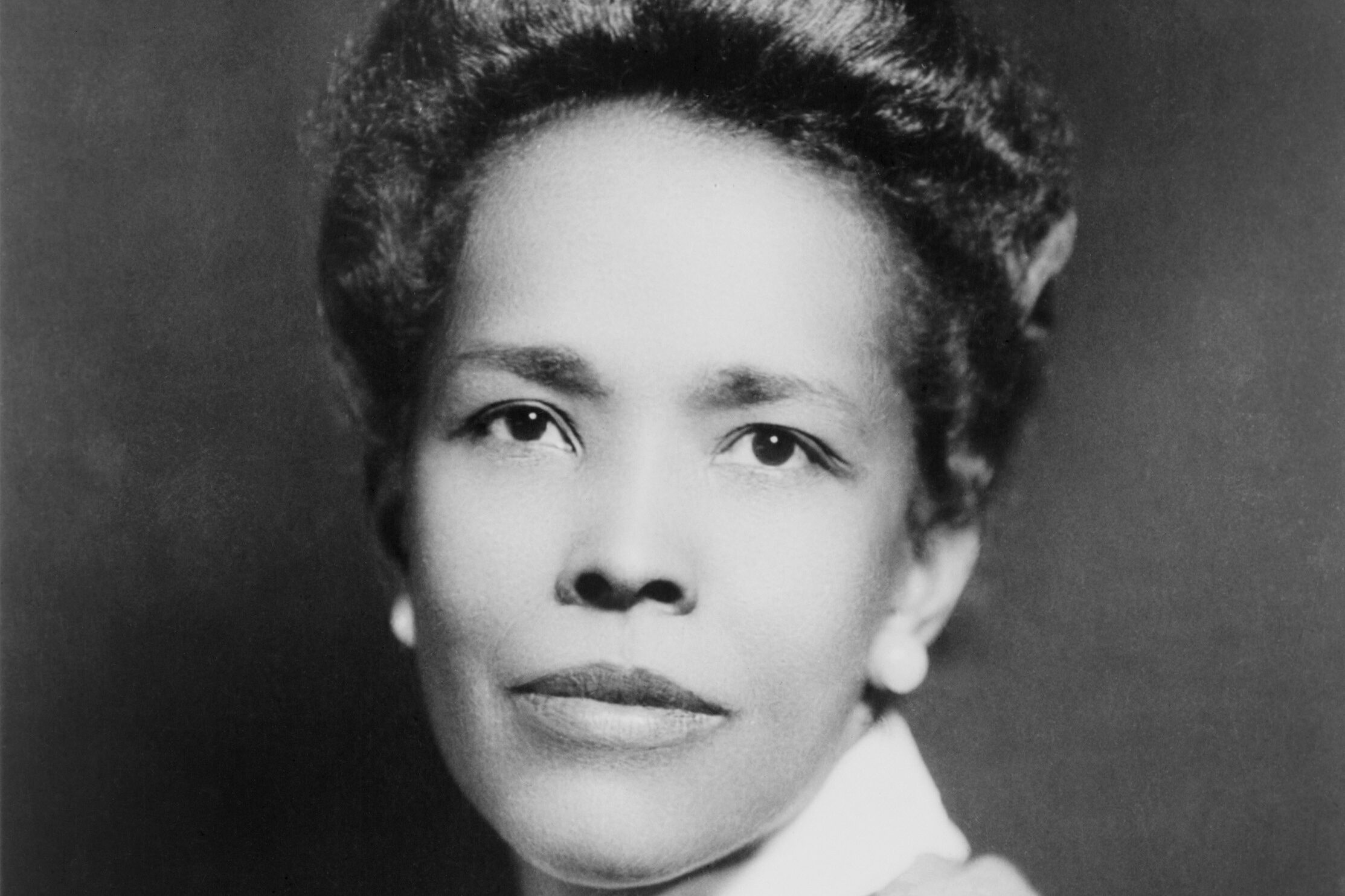
Angela Davis (b. 1944)
"The idea of freedom is inspiring. But what does it mean? If you are free in a political sense but have no food, what's that? The freedom to starve?”
Duke Ellington (1899-1974)
“Jazz is the freest musical expression we have yet seen. To me, then, jazz means simply freedom of musical speech! And it is precisely because of this freedom that so many varied forms of jazz exist. The important thing to remember, however, is that not one of these forms represents jazz by itself. Jazz simply means the freedom to have many forms.”
Amiri Baraka (1934-2014)
"Thought is more important than art. To revere art and have no understanding of the process that forces it into existence, is finally not even to understand what art is."
Frederick Douglass (1817-1895)
"Power concedes nothing without a demand. It never did and it never will. Find out just what any people will quietly submit to and you have found out the exact measure of injustice and wrong which will be imposed upon them, and these will continue till they are resisted with either words or blows, or both. The limits of tyrants are prescribed by the endurance of those whom they oppress.” --August 3, 1857
Cecil Taylor (1929-2018)
“Musical categories don’t mean anything unless we talk about the actual specific acts that people go through to make music, how one speaks, dances, dresses, moves, thinks, makes love...all these things. We begin with a sound and then say, what is the function of that sound, what is determining the procedures of that sound? Then we can talk about how it motivates or regenerates itself, and that’s where we have tradition.”
Ella Baker (1903-1986)
"Strong people don't need strong leaders"
Paul Robeson (1898-1976)
"The artist must take sides. He must elect to fight for freedom or for slavery. I have made my choice. I had no alternative."
John Coltrane (1926-1967)
"I want to be a force for real good. In other words, I know there are bad forces. I know that there are forces out here that bring suffering to others and misery to the world, but I want to be the opposite force. I want to be the force which is truly for good."
Miles Davis (1926-1991)
"Jazz is the big brother of Revolution. Revolution follows it around."
C.L.R. James (1901-1989)
"All development takes place by means of self-movement, not organization by external forces. It is within the organism itself (i.e. within the society) that there must be realized new motives, new possibilities."
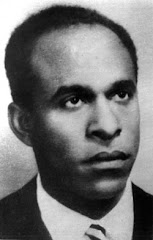
Frantz Fanon (1925-1961)
"Now, political education means opening minds, awakening them, and allowing the birth of their intelligence as [Aime] Cesaire said, it is 'to invent souls.' To educate the masses politically does not mean, cannot mean, making a political speech. What it means is to try, relentlessly and passionately, to teach the masses that everything depends on them."
Edward Said (1935-2003)
“I take criticism so seriously as to believe that, even in the midst of a battle in which one is unmistakably on one side against another, there should be criticism, because there must be critical consciousness if there are to be issues, problems, values, even lives to be fought for."
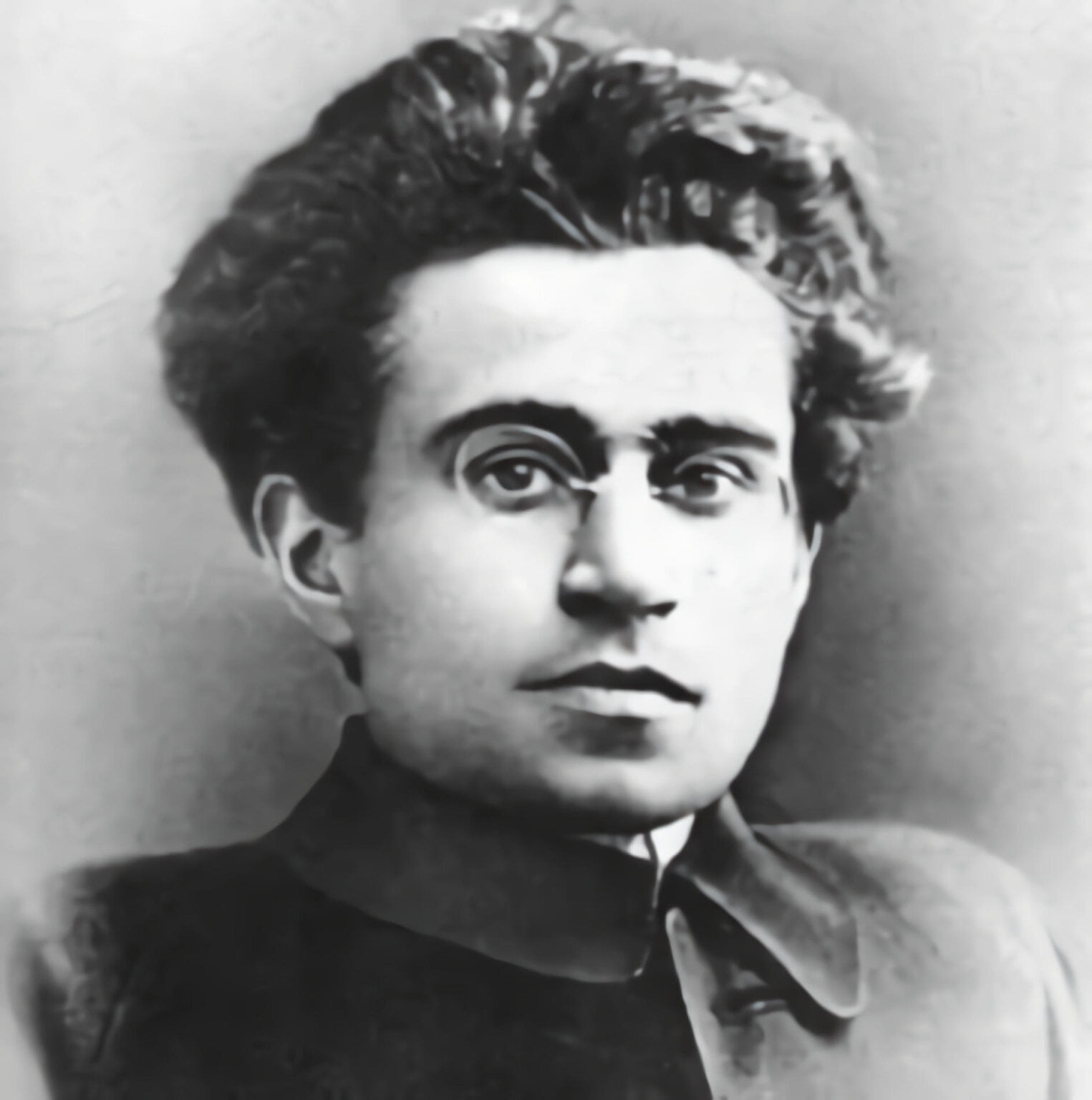
Antonio Gramsci (1891-1937)
“The challenge of modernity is to live without illusions and without becoming disillusioned. There must be pessimism of the intellect and optimism of the will.”
Susan Sontag (1933-2004)
"Do stuff. Be clenched, curious. Not waiting for inspiration’s shove or society’s kiss on your forehead. Pay attention. It’s all about paying attention. Attention is vitality. It connects you with others. It makes you eager. Stay eager."
Kofi Natambu, editor of The Panopticon Review, is a writer, poet, cultural critic, and political journalist whose poetry, essays, criticism, reviews, and journalism have appeared in many literary magazines, journals, newspapers, and anthologies. He is the author of a biography MALCOLM X: His Life & Work (Alpha Books) and two books of poetry: THE MELODY NEVER STOPS (Past Tents Press) and INTERVALS (Post Aesthetic Press). He was the founder and editor of SOLID GROUND: A NEW WORLD JOURNAL, a national quarterly magazine of the arts, culture, and politics and the editor of a literary anthology NOSTALGIA FOR THE PRESENT (Post Aesthetic Press). Natambu has read his work throughout the country and given many lectures and workshops at academic and arts institutions. He has taught American literature, literary theory and criticism, cultural history and criticism, film studies, political science, creative writing, philosophy, critical theory, and music history and criticism (Jazz, Blues, R&B, Hip Hop) at many universities and colleges. He was also a curator in the Education Department of Detroit’s Museum of African American History. Born in Detroit, Michigan, Natambu currently lives in Berkeley, California with his wife Chuleenan.