Discourse that allows us to express a wide range of ideas, opinions, and analysis that can be used as an opportunity to critically examine and observe what our experience means to us beyond the given social/cultural contexts and norms that are provided us.
A New York Times examination of more
than 100 videos from clashes at the University of California, Los
Angeles, found that violence ebbed and flowed for nearly five hours,
mostly with little or no police intervention. The violence had been
instigated by dozens of people who are seen in videos counterprotesting
the encampment.
The videos showed
counterprotesters attacking students in the pro-Palestinian encampment
for several hours, including beating them with sticks, using chemical
sprays and launching fireworks as weapons. As of Friday, no arrests had been made in connection with the attack.
To build a timeline of the events that night, The Times analyzed two livestreams, along with social media videos captured by journalists and witnesses.
The melee began when a group of
counterprotesters started tearing away metal barriers that had been in
place to cordon off pro-Palestinian protesters. Hours earlier, U.C.L.A.
officials had declared the encampment illegal.
Security
personnel hired by the university are seen in yellow vests standing to
the side throughout the incident. A university spokesperson declined to
comment on the security staff’s response.
It is not clear how the counterprotest
was organized or what allegiances people committing the violence had.
The videos show many of the counterprotesters were wearing pro-Israel
slogans on their clothing. Some counterprotesters blared music,
including Israel’s national anthem, a Hebrew children’s song and “Harbu
Darbu,” an Israeli song about the Israel Defense Forces’ campaign in
Gaza.
As counterprotesters tossed
away metal barricades, one of them was seen trying to strike a person
near the encampment, and another threw a piece of wood into it — some of
the first signs of violence.
Attacks on the encampment continued for nearly three hours before police arrived.
Counterprotesters
shot fireworks toward the encampment at least six times, according to
videos analyzed by The Times. One of them went off inside, causing
protesters to scream. Another exploded at the edge of the encampment.
One was thrown in the direction of a group of protesters who were
carrying an injured person out of the encampment.
Some counterprotesters sprayed chemicals both into the encampment and directly at people’s faces.
At times, counterprotesters swarmed individuals — sometimes a group
descended on a single person. They could be seen punching, kicking and
attacking people with makeshift weapons, including sticks, traffic cones
and wooden boards.
In one video, protesters sheltering inside the encampment can be heard yelling, “Do not engage! Hold the line!”
In
some instances, protesters in the encampment are seen fighting back,
using chemical spray on counterprotesters trying to tear down barricades
or swiping at them with sticks.
Except for a brief attempt to capture a loudspeaker used by
counterprotesters, and water bottles being tossed out of the encampment,
none of the videos analyzed by The Times show any clear instance of
encampment protesters initiating confrontations with counterprotesters
beyond defending the barricades.
Shortly before 1 a.m. — more than two hours after the violence erupted — a spokesperson with the mayor’s office posted a statement that said U.C.L.A officials had called the Los Angeles Police Department for help and they were responding “immediately.”
Officers
from a separate law enforcement agency — the California Highway Patrol —
began assembling nearby, at about 1:45 a.m. Riot police with the
L.A.P.D. joined them a few minutes later. Counterprotesters applauded
their arrival, chanting “U.S.A., U.S.A., U.S.A.!”
Just four minutes after the officers arrived, counterprotesters attacked a man standing dozens of feet from the officers.
Twenty minutes after police arrive, a video shows a counterprotester
spraying a chemical toward the encampment during a scuffle over a metal
barricade. Another counterprotester can be seen punching someone in the
head near the encampment after swinging a plank at barricades.
Fifteen minutes later, while those in the encampment chanted “Free, free Palestine,” counterprotesters organized a rush
toward the barricades. During the rush, a counterprotester pulls away a
metal barricade from a woman, yelling “You stand no chance, old lady.”
Throughout
the intermittent violence, officers were captured on video standing
about 300 feet away from the area for roughly an hour, without stepping
in.
It was not until 2:42 a.m. that
officers began to move toward the encampment, after which
counterprotesters dispersed and the night’s violence between the two
camps mostly subsided.
The L.A.P.D.
and the California Highway Patrol did not answer questions from The
Times about their responses on Tuesday night, deferring to U.C.L.A.
While
declining to answer specific questions, a university spokesperson
provided a statement to The Times from Mary Osako, U.C.L.A.’s vice
chancellor of strategic communications: “We are carefully examining our
security processes from that night and are grateful to U.C. President
Michael Drake for also calling for an investigation. We are grateful
that the fire department and medical personnel were on the scene that
night.”
L.A.P.D. officers were seen putting on protective gear and walking
toward the barricade around 2:50 a.m. They stood in between the
encampment and the counterprotest group, and the counterprotesters began
dispersing.
While
police continued to stand outside the encampment, a video filmed at
3:32 a.m. shows a man who was walking away from the scene being attacked
by a counterprotester, then dragged and pummeled by others. An editor
at the U.C.L.A. student newspaper, the Daily Bruin, told The Times the
man was a journalist at the paper, and that they were walking with other student journalists who had been covering the violence. The editor said she had also been punched and sprayed in the eyes with a chemical.
On
Wednesday, U.C.L.A.’s chancellor, Gene Block, issued a statement
calling the actions by “instigators” who attacked the encampment
unacceptable. A spokesperson for California Gov. Gavin Newsom criticized
campus law enforcement’s delayed response and said it demands answers.
Los
Angeles Jewish and Muslim organizations also condemned the attacks.
Hussam Ayloush, the director of the Greater Los Angeles Area office of
the Council on American-Islamic Relations, called on the California
attorney general to investigate the lack of police response. The Jewish
Federation Los Angeles blamed U.C.L.A. officials for creating an unsafe
environment over months and said the officials had “been systemically
slow to respond when law enforcement is desperately needed.”
Fifteen
people were reportedly injured in the attack, according to a letter
sent by the president of the University of California system to the
board of regents.
The night after the
attack began, law enforcement warned pro-Palestinian demonstrators to
leave the encampment or be arrested. By early Thursday morning, police
had dismantled the encampment and arrested more than 200 people from the
encampment.
Watch author Eddie Glaude's book talk and reading at Politics and Prose bookstore in Washington, D.C.
We are more than the circumstances of our lives, and what we do matters. In We Are the Leaders We Have Been Looking For, one of the nation’s preeminent scholars and a New York Times bestselling author, Eddie S. Glaude Jr., makes the case that the hard work of becoming a better person should be a critical feature of Black politics. Through virtuoso interpretations of Martin Luther King, Jr., Malcolm X, and Ella Baker, Glaude shows how ordinary people have the capacity to be the heroes that our democracy so desperately requires, rather than outsourcing their needs to leaders who purportedly represent them.
Based on the Du Bois Lectures delivered at Harvard University, the book begins with Glaude’s unease with the Obama years. He felt then, and does even more urgently now, that the excitement around the Obama presidency had become a disciplining tool to narrow legitimate forms of Black political dissent. This narrowing continues to undermine the well-being of Black communities. In response, Glaude guides us away from the Scylla of enthusiastic reliance on elected leaders and the Charybdis of full surrender to a belief in unchanging political structures. Glaude weaves anecdotes about his own evolving views on Black politics together with the writings of Ralph Waldo Emerson, John Dewey, Sheldon Wolin, Toni Morrison, James Baldwin, and Ralph Ellison.
Narrated with passion and philosophical intensity, this book is a powerful reminder that if American democracy is to survive, we must build a better society that derives its strength from the pew, not the pulpit.
Eddie S. Glaude Jr. is the author of several books, including Democracy in Black and the New York Times bestseller Begin Again: James Baldwin’s America and Its Urgent Lessons for Our Own, winner of the Harriet Beecher Stowe Book Prize. He frequently appears in the media as an MSNBC contributor on programs like Morning Joe and Deadline: White House. A native of Moss Point, Mississippi, Glaude is the James S. McDonnell Distinguished University Professor at Princeton University.
Glaude is in conversation with Clint Smith, a staff writer at The Atlantic. He is the author of the narrative nonfiction book, How the Word Is Passed: A Reckoning With the History of Slavery Across America, which was a #1 New York Times Bestseller, and the poetry collections Counting Descent, which won the 2017 Literary Award for Best Poetry Book from the Black Caucus of the American Library Association and was a finalist for an NAACP Image Award and most recently Above Ground. His poetry collection, Above Ground, was recently published on March 28th. Smith is also the host of the YouTube series "Crash Course Black American History." Born and raised in New Orleans, he currently lives in Maryland with his wife and their two children.
Columbia raid: 'Tensions exacerbated' as some protestors raised 'real concern' J-School dean says
Columbia University says it had no choice but to call the NYPD, leading to hundreds of pro-Palestinian protesters being arrested on Tuesday night. Dean of the Columbia Journalism School, Jelani Cobb, joins Joy Reid to discuss.
Chris
Hayes: It's easier to argue about what college kids are doing than to
confront the human misery and destruction that's happening in the actual
conflict which is, of course, the source of these protests.
[Zeteo is a new media organization that seeks to answer the questions that really matter, while always striving for the truth. Founded by Mehdi Hasan, Zeteo is a movement for media accountability, unfiltered news and bold opinions.]
"A Student Rebellion Against the Hypocrisy of Their Elders" - USC Prof & Pulitzer Prize-Winning Author Viet Thanh Nguyen
The students protesting against Israel's genocidal war in Gaza are on the right side of history, as other student movements were in the past.
Student and other protesters calling for a ceasefire in Gaza gather at the University of Southern California's Alumni Park on April 24, 2024. Photo by David Swanson/Reuters
The violent crackdown on students protesting against Israel’s genocidal war on Gaza reveals the stark hypocrisy of political and academic leaders at our colleges and universities, including my own. Instead of first turning to dialogue and debate – the very skills and values universities should promote – school administrators have turned to police, extreme discipline, and complying with a mainstream consensus that seems more interested in suppressing criticism of Israeli and American policy than protecting students.
From Columbia University to my own University of Southern California, peaceful student encampments in common university areas have been dismantled by city police, with hundreds of students arrested. Some have been suspended, evicted from dormitories, and threatened with expulsion and criminal conviction. At UT Austin, state troopers threw a Fox cameraman to the ground and arrested him. At Emory University, the chair of philosophy, Noelle McAfee, was arrested by a police officer wearing a balaclava, as if he were conducting an antiterrorism raid. Another Emory professor, Caroline Fohlin, who sought to protect students being arrested, was wrestled to the ground by two police officers, handcuffed, and charged with battery.
These student protests against a war that has killed over 34,000 Palestinians, at least two-thirds of whom are women and children, are what professors and administrators love to call a “teachable moment.” Unfortunately, most universities and colleges are failing their academic principles, their students, and their faculty. I wish I could say I was surprised, but after three decades in academia, I am not.
I was arrested twice in college for political protests more than 30 years ago. Along with other Asian Americans and our allies, I participated in sit-ins and occupied the chancellor's office, calling for a more diversified curriculum and faculty that better represented our community. I graduated with four misdemeanors – two each for resisting arrest and trespassing. I was lucky I was not expelled or suspended, but I was also at UC Berkeley at a time when the administration understood that these were not appropriate punishments for young people who were committed to the very principles of truth, justice, debate, and open-mindedness that universities represent. I wish I could say the same for the administrators at universities and colleges today, including my own. But too many administrators have chosen to deploy police clad in riot gear and wielding tear gas, tasers, sniper rifles, and armored vehicles against students.
(Viet Thanh Nguyen at UC Berkeley. Courtesy of Viet Thanh Nguyen)
On my own campus, the USC administration canceled the speech of its valedictorian, Asna Tabassum, after pro-Israel groups on and off campus labeled her antisemitic for including a link on her Instagram to a website that called for the abolition of Israel. Tabassum minored in resistance to genocide, offered through the Advanced Center for Genocide Research. The center’s founding director, Wolf Gruner, called Tabassum one of the most empathetic students he had ever taught. Tabassum said she planned to speak to the commencement audience about hope and human rights. She might or might not have brought up Gaza and Palestine, war and genocide, but even if she did, should that have been a reason to cancel her?
The university administration offered unspecified threats to safety so severe that it felt it could not protect Tabassum or the commencement ceremony, even though former President Barack Obama had attended the commencement the year before and presumably required heightened safety measures. It is difficult not to believe that safety was a pretext for the university to avoid controversy that might antagonize pro-Israel students, family members, and outsiders. But the real consequences of such a controversy would not have been community protest; instead, it would have been political blowback from Congress, donors, and trustees.
This strategy of avoidance and appeasement is doomed to failure. Columbia University president Minouche Shafik submitted completely to Republican demands to discipline her faculty and students, but this did not prevent Rep. Elise Stefanik and House Speaker Mike Johnson from demanding her resignation.
Republicans will not be satisfied until students are being clubbed and tear-gassed in a law-and-order spectacle that will please Benjamin Netanyahu and the GOP base. But the right-wing reaction against student protesters is not only about their stance on Israel and Gaza, which includes their willingness to declare the war a genocide and to demand divestment from Israel and the ending of further military aid. Instead, the right wing is stirring a moral panic around antisemitism, using Jewish students and their feelings of being uncomfortable and threatened as a reason to crack down on protesting students.
Racist and antisemitic threats are wrong and should be treated appropriately, which is to say, through academic disciplinary and legal methods targeted at the individuals who issue such threats, not through the deployment of riot police against masses of peaceful protesters. But a big difference exists between being threatened and being uncomfortable, and critics of the protesters – and the anti-war movement in general – blur the two.
This happens by conflating criticism of Israel with antisemitism, even though many student protesters are themselves Jewish. It’s what some have called a “weaponized antisemitism,” which places more value on how some Jewish students feel uncomfortable than how Palestinians are actually being killed en masse by an Israel whose weapons are supplied by the U.S.
Being uncomfortable is not necessarily a problem, and certainly not enough of a problem to shut down free speech and academic debate. Discomfort can be useful, and is even necessary, for us to argue and question our assumptions and those of others, leading to greater intellectual, moral, and political clarity. These are the things that are supposed to happen on college campuses and what Tabassum’s speech at USC might have provoked.
Police confront a pro-Palestine protester at the University of Southern California on April 24, 2024. Photo by Robert Hanashiro/USA TODAY/Reuters
The suppression of student protests today should worry all of us, including those who might support Israel but who are otherwise convinced about the need for free speech and the mission of universities. This is because the moral panic over antisemitism being stoked by the right is only the latest manifestation of a decades-long campaign to discipline and possibly capture academia.
Over the last few decades, American academia has undergone a painful transformation. Tenured faculty have been replaced in ever-greater numbers by faculty without job security. The humanities and social sciences have been depleted. Tuition and loan debt has spiraled rapidly. University presidents – who are increasingly CEOs, politicians, and generals instead of academics – have become ever more beholden to boards of trustees that are often composed of the wealthy and politically connected. Meanwhile, the right has fought to eliminate affirmative action for racial diversity but sought to demand the equivalent of affirmative action for ideological diversity.
In universities, the lack of democracy and transparency is more of a norm than an exception. Faculty and students are routinely ignored by university administrations when it comes to the most serious issues, which is to say those that involve money. This is perhaps why students have felt that their only recourse when it comes to demanding divestment and the end of military aid to Israel was through protest, carried out in public spaces, rather than the futile road of privately appealing to administrators.
The student protesters are on the right side of history, as they were in the 1960s and 1970s, demonstrating against the immoral and racist war the U.S. was waging in Viet Nam, Laos, and Cambodia. The students were right again in the 1980s, campaigning against apartheid and forcing universities to divest from South Africa.
It is amazing how institutions teach idealism, including these cases of opposition to war and apartheid, and are then astonished that students are idealists. We are now witnessing a student rebellion against the hypocrisy of their elders and the powerful, who tell them they have to accept the lesser of two evils, and who weaponize antisemitism to justify genocide.
Student protesters face real penalties in terms of their reputations and job prospects, as well as their physical and emotional well-being. School administrators who stand up for academic principles and defend their students and faculty may lose their positions, but they would return to the ranks of the faculty, and with tenured security. This is the choice the university leaders face, and it is quite different in consequence to what the students face, which makes their cowardice even more disturbing.
The saying “those who can’t do, teach” seems all too true now in this moment. Instead, it is the students who are teaching their professors and the public at large. Through their actions, the students are showing what idealism and conviction actually look like.
ABOUT THE AUTHOR:
Zeteo contributor Viet Thanh Nguyen is the Aerol Arnold Chair of English and a professor of English, American Studies and Ethnicity, and Comparative Literature at the University of Southern California. His novel, The Sympathizer, won the Pulitzer Prize for Fiction and numerous other awards. Subscribe to Zeteo to get more from Viet and other Zeteo contributors straight to your inbox.
In a conversation with Mehdi for her new contributor segment at Zeteo called ‘Unshocked,’ Jewish activist, academic, and author Naomi Klein calls for an “exodus from the ideological shackles of Zionism.”
Naomi also reacts to Israeli PM Benjamin Netanyahu comparing student protesters at Columbia University to Nazis, telling Mehdi that when it comes to Netanyahu, “there is nobody more adept at exploiting Jewish trauma, historical trauma, and turning it into a political weapon for his own advantage.”
Mehdi also opens up to Naomi about why he decided to boycott the White House Correspondents’ Dinner.
“I can't call out what Israel is doing to Palestinian journalists with American-made bombs and then go to a fun, comedy-type dinner with the President of the United States — who's not just responsible for that, but is also not even acknowledging it,” Mehdi tells Naomi.
In 2007, Naomi wrote The Shock Doctrine, a best-selling book that explains what happens when a national crisis throws citizens into a state of shock and how the powerful exploit those moments.
Although it may be one of her most popular books, Naomi tells Mehdi that she dreams of a day where TheShock Doctrine will no longer be relevant, where people can stay grounded even in times of chaos.
“The idea for calling this segment ‘Unshocked’ — it's not to communicate a kind of world weariness, like nothing can shock me… It's the idea of what I'm hoping we can do together, which is yank us out of shock through analysis, facts, history, and really rooting us in reality,” Naomi explains.
Look out for ‘Unshocked’ with Naomi Klein every month, where she and Mehdi provide deeper analysis on various topics related to current events, religion, politics, ideology, and more.
Hundreds
of protesters were arrested in Brooklyn on Tuesday when Jewish New
Yorkers and allies gathered for what they called a "Seder in the Streets
to Stop Arming Israel" on the second night of Passover. The
demonstration, held one block away from the home of Senate Majority
Leader Chuck Schumer, came just hours before the Senate overwhelmingly
approved a $95 billion foreign aid package that includes about $17
billion in arms and security funding to Israel. "Too many of our people
are worshiping a false idol," said award-winning author and activist
Naomi Klein, one of several speakers at Tuesday's rally. "They are
enraptured by it. They are drunk on it. They are profaned by it. And
that false idol is called Zionism."
Democracy Now! is an independent global news hour that airs on over
1,500 TV and radio stations Monday through Friday.
Watch our livestream at democracynow.org Mondays to Fridays 8-9 a.m. ET.
Subscribe to our Daily Email Digest: https://democracynow.org/subscribe
[NOTE: The following commentary was originally posted three weeks after the 2020 presidential election on November 24, 2020]
What are you going to do about the Nazi Problem? by Coco Das November 24, 2020 Refuse Fascism
We have a Nazi problem in this country. Some 74 million people voted for it. Their leader is still in power and waging a battle to delegitimize the election he clearly lost. His followers maraud through the streets and raise $2 million for a teenage killer’s bail and destroy Black Lives Matter murals and chant “Say his name, Donald Trump,” spitting on the anguished cries of Black people whose lives are so routinely cut down by police.
They don’t, for the most part, wave swastikas and salute Hitler, but we have a Nazi problem in this country as deeply as the German people had a Nazi problem in the 1930s. Their minds waterlogged with conspiracy theories, they take lies as truth, spread hate and bigotry, wrap themselves in several flags – American, Confederate, Blue Lives Matter – and use the Bible as a weapon of violence and repression. They are a grotesque expression of the worst of this country, of its ugly narcissism, its thuggish militarism, its ignorance and refusal to give a shit about the rest of the world. They carry the torch of slavery, genocide, and Jim Crow terror. Gunned up and mask-less, they exalt above all the right to kill.
Trump lost the election. They lost. We poured into the streets to celebrate but they will not go quietly into the night. Fascists have and can come back from defeat, and when they do they are stronger, more prepared, and more filled with vengeance. With his unhinged audacity, Trump still dominates the airwaves, turning an election that was decisive into a debate. Every day that he remains in power is an unrelenting barrage of lunacy. Every day is another day of the unthinkable and unprecedented said out loud and acted upon. Every day is a thousand more deaths from COVID. The humanity and morality of a portion of the 73 million people who voted for Trump is so hollowed out they can’t even mourn the dead. And what of the rest of us, who did not want this but learned to live with it?
This is what we face. Call it what you will but it’s a problem that will not go away without caring, thinking people refusing to let them have another inch. Whatever moral and political stand the German people should have taken to defeat the Nazis early, however much determination they should have shown, applies to us tenfold now. America has a MAGA problem. Millions of them believe that people who are by their very existence criminal – Black people in the cities of swing states – stole this election from their leader with the help of a band of evil conspirators, and this will be their rallying cry as they regroup to exact revenge and return to power. Hiding from them when they show up in your town, refusing to call it what it is, humoring them or failing to condemn their bigotry will not make them go away.
Recently, someone told me to treat MAGA mobs like a fire. How do you put out a fire? You deprive it of oxygen. This was his argument against a counter-protest of the million MAGA march in DC on November 14th, where thousands of Trump supporters did indeed chant “Say his name, Donald Trump” and many other things more heinous than that. Counter-protesting allegedly would give these thugs an excuse for violence, which was allegedly what they wanted, then giving Trump an excuse to invoke the Insurrection Act and institute martial law to remain in power.
If you recognize this as a possible danger, you know we have a Nazi problem in this country. Keeping your head down and telling the truth only behind locked doors and drawn curtains was a strategy widely deployed in Nazi Germany, to avoid violence, to keep the peace. Yes, fascists want violence and there are many ways for them to get it – tearing children from their parents’ arms, murdering worshippers in a synagogue, running their cars over protesters, telling police to stop being “too nice” to the Black and brown people they terrorize in the streets. They do not want you in your millions saying no. They do not want your voices rising together or your feet marching in unity. What they want above all is your silence – or better yet, for you to just disappear.
It is correct to view this as a fire still raging. The oxygen this vicious American fascism needs comes from the absence of millions of us in the streets, non-violent but determined to oppose them, refusing to accept a fascist America. The people won a victory by voting Trump out of power. Imagine the nightmare if he had won. But we have to stand on this victory and go all the way to bringing this fascist program to a halt. They are fighting for a future of unchallenged white supremacy, misogyny and theocratic patriarchy, and America First xenophobia, enforced by terror and violence. There is no decency in what they want. We cannot cede the public square and public discourse to fascists to air their false grievances and spread their lies, death, and hatred.
You don’t put out a fire by walking away from it.
Filed Under: All, Coco Das, Latest Posts
RefuseFascism Mission:
RefuseFascism.org exposes, analyzes, and stands against the very real danger and threat of fascism coming to power in this country. Seventy-four million people voted for Trump in 2020. The Republi-fascist Party has been purged of dissenting voices. The mass fascist movement has hardened in the wake of their January 6 coup attempt. Fascist initiatives around restricting voting, immigration and abortion rapidly advance in statehouses across the country. The election of Biden has not eliminated the danger, it has only bought some time…
is an essential tool for understanding and uniting to defeat the American fascist movement that imperils all of humanity. Each week host Sam Goldman provides commentary and analysis alongside in-depth interviews with scholars and activists from diverse perspectives on the very real threat of fascism coming to power in the United States.
Hundreds of protesters were arrested in Brooklyn on Tuesday when Jewish New Yorkers and allies gathered for what they called a "Seder in the Streets to Stop Arming Israel" on the second night of Passover. The demonstration, held one block away from the home of Senate Majority Leader Chuck Schumer, came just hours before the Senate overwhelmingly approved a $95 billion foreign aid package that includes about $17 billion in arms and security funding to Israel. "Too many of our people are worshiping a false idol," said award-winning author and activist Naomi Klein, one of several speakers at Tuesday's rally. "They are enraptured by it. They are drunk on it. They are profaned by it. And that false idol is called Zionism."
Democracy Now! is an independent global news hour that airs on over 1,500 TV and radio stations Monday through Friday.
Watch our livestream at democracynow.org Mondays to Fridays 8-9 a.m. ET.
Subscribe to our Daily Email Digest: https://democracynow.org/subscribe
Justices Seem Ready to Limit the 2020 Election Case Against Trump
Such
a ruling in the case, on whether the former president is immune from
prosecution, would probably send it back to a lower court and could
delay any trial until after the November election.
The
Supreme Court heard arguments on Thursday about Donald J. Trump’s claim
that the federal charges accusing him of plotting to overturn the 2020
election must be thrown out because he is immune from being prosecuted for any official act he took as president.
Here are some takeaways:
Several justices seemed to want to define some level of official act as immune.
Although
Mr. Trump’s claim of near-absolute immunity was seen as a long shot
intended primarily to slow the proceedings, several members of the
Republican-appointed majority seemed to indicate that some immunity was
needed. Some of them expressed worry about the long-term consequences of
leaving future former presidents open to prosecution for their official
actions.
Among
others, Justice Brett Kavanaugh compared the threat of prosecution for
official acts to how a series of presidents were “hampered” by
independent counsel investigations, criticizing a 1984 ruling that
upheld a now-defunct law creating such prosecutors as one of the Supreme
Court’s biggest mistakes. Chief Justice John G. Roberts Jr. criticized
an appeals court ruling rejecting immunity for Mr. Trump, saying he was
concerned that it “did not get into a focused consideration of what acts
we are talking about or what documents we are talking about.”
The Democrat-appointed justices — Sonia Sotomayor, Elena Kagan and
Ketanji Brown Jackson — asked questions indicating greater concern about
opening the door for presidents to commit official crimes with
impunity.
The arguments signaled further delay and complications for a Trump trial.
If
the Supreme Court does place limits on the ability of prosecutors to
charge Mr. Trump over his official actions, it could alter the shape of
his trial.
A
decision to send all or part of the case back to the lower courts could
further slow progress toward a trial, increasing the odds that it does
not start before Election Day.
Of
the matters listed in the indictment, some — like working with private
lawyers to gin up slates of fraudulent electors — seem like the private
actions of a candidate. Others — like pressuring the Justice Department
and Vice President Mike Pence to do things — seem more like official
acts he took in his role as president.
At
one point, Justice Amy Coney Barrett suggested that prosecutors could
simply drop Mr. Trump’s arguably official actions from their case and
proceed to a swift trial focused only on his private actions. And D.
John Sauer, the lawyer for Mr. Trump, told the court that no evidence of
Mr. Trump’s official actions should be allowed into the trial.
But
Michael R. Dreeben, a Justice Department lawyer arguing on behalf of
the special counsel’s office, said the indictment laid out an
“integrated conspiracy” in which Mr. Trump took the official actions to
bolster the chances that his other efforts to overturn the election
would succeed.
He
argued that even if the court holds that Mr. Trump has immunity from
liability for his official actions, prosecutors should still be allowed
to present evidence about them to the jury because the actions are
relevant to assessing his larger knowledge and intentions — just as
speech that is protected by the First Amendment can still be used as
evidence in a conspiracy case.
The hearing revolved around two very different ways of looking at the issue.
Looming
over the hearing was a sweeping moral question: What effect might
executive immunity have on the future of American politics?
Not surprisingly, the two sides saw things very differently.
Mr.
Sauer claimed that without immunity, all presidents would be paralyzed
by the knowledge that once they were out of office, they could face an
onslaught of charges from their rivals based on the tough calls they had
to make while in power. He pictured a dystopian world of ceaseless
tit-for-tat political prosecutions that would destroy the “presidency as
we know it.”
Envisioning the
opposite scenario, Mr. Dreeben worried that any form of blanket immunity
would place presidents entirely outside of the rule of law and
encourage them to commit crimes, including “bribery, treason, sedition,
even murder,” with impunity.
“The framers knew too well the dangers of a king who could do no wrong,” he said.
Both sides found advocates for their positions on the court.
Justice
Samuel A. Alito Jr. clearly seemed worried that without some form of
criminal immunity, former presidents would be vulnerable to partisan
warfare as their successors used the courts to go after them once they
were out of office. And that, he added, could lead to endless cycles of
retribution that would be a risk to “stable, democratic society.”
Justice
Ketanji Brown Jackson appeared more concerned that if presidents were
in fact shielded by immunity, they would be unbounded by the law and
could turn the Oval Office into what she described as “the seat of
criminality.”
What happens next?
There
did not seem to be a lot of urgency among the justices — especially the
conservative ones — to ensure that the immunity question was resolved
quickly. That left open the possibility that Mr. Trump could avoid being
tried on charges of plotting to overturn the last election until well
after voters went to the polls to decide whether to choose him as
president in this election.
And if he is elected, any trial could be put off while he is in office, or he could order the charges against him dropped.
It
could take some time for the court to do its own analysis of what
presidential acts should qualify for the protections of immunity. And
even if the justices determine that at least some of the allegations
against Mr. Trump are fair game for prosecution, if they do not issue a
ruling until late June or early July, it could be difficult to hold a
trial before November.
That
would become all but impossible if the court took a different route and
sent the analysis back to the trial judge, Tanya S. Chutkan. If Judge
Chutkan were ordered to hold further hearings on which of the
indictment’s numerous allegations were official acts of Mr. Trump’s
presidency and which were private acts he took as a candidate for
office, the process could take months and last well into 2025.
Demonstrators protesting outside of the Supreme Court on Thursday. Credit: Haiyun Jiang for The New York Times
Just
as the Supreme Court began considering on Thursday morning whether
former President Donald J. Trump was entitled to absolute immunity, rap
music started blaring outside the court.
The
lyrics, laced with expletives, denounced Mr. Trump, and several dozen
demonstrators began chanting, “Trump is not above the law!”
Mr. Trump was not in Washington on Thursday morning — in fact, he was in another courtroom,
in New York. But the spectacle that pierced the relative tranquillity
outside the court was typical of events that involve him:
demonstrations, homemade signs, police, news media, and lots and lots of
curious onlookers.
One
man, Stephen Parlato, a retired mental health counselor from Boulder,
Colo., held a roughly 6-foot-long sign with a blown-up photo of Mr.
Trump scowling that read, “Toxic loser.” The back of the sign featured
the famous painting by Cassius Marcellus Coolidge of dogs playing poker,
adorned with the words, “Faith erodes … in a court with no binding
ethics code.” He made the sign at FedEx, he said.
“I’m
a child of the late ’60s and early ’70s and the Vietnam War,” said Mr.
Parlato, dressed in a leather jacket and cowboy hat. “I remember
protesting that while in high school. But this is very different. I’m
here because I’m terrified of the possibility of a second Trump
presidency.”
Inside
the court, Jack Smith sat to the far right of the lawyer arguing on
behalf of his team of prosecutors, Michael R. Dreeben, a leading expert
in criminal law who has worked for another special counsel who
investigated Mr. Trump, Robert S. Mueller III.
Among
those in attendance were Jane Sullivan Roberts, who is married to Chief
Justice John G. Roberts Jr., and Ashley Estes Kavanaugh, who is married
to Justice Brett M. Kavanaugh.
In
an orderly line outside along the side of the court, people were calmly
waiting to listen to the arguments from the court’s public gallery.
More than 100 people, many of them supporters of Mr. Trump, were in line
as of 8:30 a.m. Reagan Pendarvis, 19, who had been waiting there since
the middle of the night, said the first person in line had gotten there
more than a day before the arguments began.
Mr.
Pendarvis, a sophomore at the University of California, San Diego who
is living in Washington for the spring semester, was wearing a black
suit and bright red bow tie. He said he had been struggling to keep warm
since he took his place in line.
Mr.
Pendarvis, a supporter of Mr. Trump, said he thought that the cases
brought against the former president were an uneven application of the
law.
“I think a
lot of the cases, especially that happen for Donald Trump, don’t really
happen for Democrats on the other side,” he said. “That’s just my take
on it.”
David
Bolls, 42, and his brother, Jonathan, 43, both of Springfield, Va., also
in line for the arguments, also contended that the prosecutions against
Mr. Trump were an abuse of judicial power.
“For me, I want to see an even application of justice,” David Bolls said.
For
others in line, the Supreme Court’s deliberations were not the main
draw. Ellen Murphy, a longtime Washington resident, was trying to sell
buttons she designs, though she acknowledged that it was unlikely she
would be allowed in with all of her merchandise.
Dozens
of the buttons, which said, “Immunize democracy now” and “Trump is
toast” over a toaster with two slices of bread, were pinned to a green
apron she was wearing.
“We lose our democracy,” Ms. Murphy said, “if the president can do whatever he wants just because he’s president.”
A ruling in early summer would make it hard to complete former President Donald J. Trump’s trial before the election.Credit...Erin Schaff/The New York Times
The
justices heard arguments in the immunity case at a special session, the
day after what had been the last scheduled argument of its term.
Arguments heard in late April almost always yield decisions near the end
of the court’s term, in late June or early July.
But
a ruling in early summer, even if it categorically rejected Mr. Trump’s
position, would make it hard to complete his trial before the election.
Should Mr. Trump win at the polls, there is every reason to think he
would scuttle the prosecution.
In
cases that directly affected elections — in which the mechanisms of
voting were at issue — the court has sometimes acted with unusual speed.
In 2000, in Bush v. Gore, the court issued its decision handing the presidency to George W. Bush the day after the justices heard arguments.
In
a recent case concerning Mr. Trump’s eligibility to appear on
Colorado’s primary ballot, the justices moved more slowly, but still at a
relatively brisk pace. The court granted Mr. Trump’s petition seeking review just two days after he filed it, scheduled arguments for about a month later and issued its decision in his favor about a month after that.
In
United States v. Nixon, the 1974 decision that ordered President
Richard M. Nixon to comply with a subpoena for audiotapes of
conversations with aides in the White House, the court also moved quickly, granting the special prosecutor’s request to bypass the appeals court a week after it was filed.
The University of Southern California announced on Thursday that it has canceled its main-stage graduation ceremony for students, a move that follows campus protests over the Israel-Hamas war and a controversy over its selection of a class valedictorian.
The university said that it could not host the ceremony, which was scheduled for May 10, because of new safety measures that would have increased the amount of time needed on the day to process the 65,000 students and guests who usually attend.
This week, the university has been rocked by turmoil by pro-Palestinian protesters, resulting in the arrests of more than 90 people.
It was the continuation of controversy on the Los Angeles campus that began in early April, when the university selected a Muslim valedictorian, Asna Tabassum, a biomedical engineering major from Chino Hills, Calif.
Following complaints from several Jewish organizations that Ms. Tabassum, who is of South Asian descent, had posted a social media link to a controversial pro-Palestinian organization, the university informed her that she would not be delivering the traditional valedictorian speech.
The university said the decision was based on a barrage of communications threatening to disrupt the graduation ceremony. But, in a statement, Ms. Tabassum voiced skepticism about the university’s motivation.
In making the announcement Thursday about the main stage cancellation, the university emphasized that other graduation events celebrating individual schools would continue. In those ceremonies, students cross the stage, are awarded their degrees and are photographed.
“We understand that this is disappointing,” the announcement said, “however, we are adding many new activities and celebrations to make this commencement academically meaningful.”
That did not appease many students.
“The cancellation of commencement? I think it’s cowardly,” said Layla MoheyEldin, a senior majoring in international relations and Middle East studies. Her high school graduation was scaled down because of the pandemic, and now she is losing her main college ceremony.
Last week, the university announced that speakers and honorees who had been scheduled to attend the main stage graduation, including the “Crazy Rich Asians” director Jon M. Chu and the tennis star Billie Jean King, would not be present.
Past speakers at the main ceremonies have included the actor Will Ferrell and the author Siddhartha Mukherjee.
Jonathan Wolfe contributed reporting.
A correction was made on April 25, 2024
An earlier version of this article included a picture that was published in error. It showed the campus of the University of California, Los Angeles, not the University of Southern California.
When we learn of a mistake, we acknowledge it with a correction. If you spot an error, please let us know at nytnews@nytimes.com.Learn more
ABOUT THE AUTHOR:
Stephanie Saul reports on colleges and universities, with a recent focus on the dramatic changes in college admissions and the debate around diversity, equity and inclusion in higher education. More about Stephanie Saul
A version of this article appears in print on April 28, 2024, Section A, Page 17 of the New York edition with the headline: U.S.C. Cancels Graduation Ceremony for 65,000 People, Citing Security Concerns. Order Reprints | Today’s Paper
"I'm for truth, no matter who tells it. I'm for justice, no matter who it's for or against."
W.E.B. DuBois (1868-1963)
"There is but one coward on earth, and that is the coward that dare not know."
Dr. Martin Luther King, Jr. (1929-1968)
"Change does not roll in on the wheels of inevitability, but comes through continuous struggle. And so we must straighten our backs and work for our freedom. A man can't ride you unless your back is bent. "
James Baldwin (1924-1987)
"Precisely at the point when you begin to develop a conscience you must find yourself at war with your society."
Aimé Césaire (1913-2008)
"A civilization that proves incapable of solving the problems it creates is a decadent civilization. A civilization that chooses to close its eyes to its most crucial problems is a stricken civilization. A civilization that uses its principles for trickery and deceit is a dying civilization."
Nina Simone (1933-2003)
"There's no other purpose, so far as I'm concerned, for us except to reflect the times, the situations around us and the things we're able to say through our art, the things that millions of people can't say. I think that's the function of an artist and, of course, those of us who are lucky leave a legacy so that when we're dead, we also live on. That's people like Billie Holiday and I hope that I will be that lucky, but meanwhile, the function, so far as I'm concerned, is to reflect the times, whatever that might be."
Amilcar Cabral (1924-1973)
"Always bear in mind that the people are not fighting for ideas, for the things in anyone's head. They are fighting to live better and in peace, to see their lives go forward, to guarantee the future of their children ....Hide nothing from the masses of our people. Tell no lies. Expose lies whenever they are told. Mask no difficulties, mistakes, failures. Claim no easy victories..." .
Angela Davis (b. 1944)
"The idea of freedom is inspiring. But what does it mean? If you are free in a political sense but have no food, what's that? The freedom to starve?”
Duke Ellington (1899-1974)
“Jazz is the freest musical expression we have yet seen. To me, then, jazz means simply freedom of musical speech! And it is precisely because of this freedom that so many varied forms of jazz exist. The important thing to remember, however, is that not one of these forms represents jazz by itself. Jazz simply means the freedom to have many forms.”
Amiri Baraka (1934-2014)
"Thought is more important than art. To revere art and have no understanding of the process that forces it into existence, is finally not even to understand what art is."
Frederick Douglass (1817-1895)
"Power concedes nothing without a demand. It never did and it never will. Find out just what any people will quietly submit to and you have found out the exact measure of injustice and wrong which will be imposed upon them, and these will continue till they are resisted with either words or blows, or both. The limits of tyrants are prescribed by the endurance of those whom they oppress.” --August 3, 1857
Cecil Taylor (1929-2018)
“Musical categories don’t mean anything unless we talk about the actual specific acts that people go through to make music, how one speaks, dances, dresses, moves, thinks, makes love...all these things. We begin with a sound and then say, what is the function of that sound, what is determining the procedures of that sound? Then we can talk about how it motivates or regenerates itself, and that’s where we have tradition.”
Ella Baker (1903-1986)
"Strong people don't need strong leaders"
Paul Robeson (1898-1976)
"The artist must take sides. He must elect to fight for freedom or for slavery. I have made my choice. I had no alternative."
John Coltrane (1926-1967)
"I want to be a force for real good. In other words, I know there are bad forces. I know that there are forces out here that bring suffering to others and misery to the world, but I want to be the opposite force. I want to be the force which is truly for good."
Miles Davis (1926-1991)
"Jazz is the big brother of Revolution. Revolution follows it around."
C.L.R. James (1901-1989)
"All development takes place by means of self-movement, not organization by external forces. It is within the organism itself (i.e. within the society) that there must be realized new motives, new possibilities."
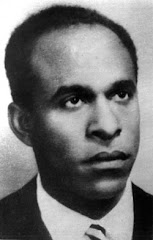
Frantz Fanon (1925-1961)
"Now, political education means opening minds, awakening them, and allowing the birth of their intelligence as [Aime] Cesaire said, it is 'to invent souls.' To educate the masses politically does not mean, cannot mean, making a political speech. What it means is to try, relentlessly and passionately, to teach the masses that everything depends on them."
Edward Said (1935-2003)
“I take criticism so seriously as to believe that, even in the midst of a battle in which one is unmistakably on one side against another, there should be criticism, because there must be critical consciousness if there are to be issues, problems, values, even lives to be fought for."
Antonio Gramsci (1891-1937)
“The challenge of modernity is to live without illusions and without becoming disillusioned. There must be pessimism of the intellect and optimism of the will.”
Susan Sontag (1933-2004)
"Do stuff. Be clenched, curious. Not waiting for inspiration’s shove or society’s kiss on your forehead. Pay attention. It’s all about paying attention. Attention is vitality. It connects you with others. It makes you eager. Stay eager."
Kofi Natambu, editor of The Panopticon Review, is a writer, poet, cultural critic, and political journalist whose poetry, essays, criticism, reviews, and journalism have appeared in many literary magazines, journals, newspapers, and anthologies. He is the author of a biography MALCOLM X: His Life & Work (Alpha Books) and two books of poetry: THE MELODY NEVER STOPS (Past Tents Press) and INTERVALS (Post Aesthetic Press). He was the founder and editor of SOLID GROUND: A NEW WORLD JOURNAL, a national quarterly magazine of the arts, culture, and politics and the editor of a literary anthology NOSTALGIA FOR THE PRESENT (Post Aesthetic Press). Natambu has read his work throughout the country and given many lectures and workshops at academic and arts institutions. He has taught American literature, literary theory and criticism, cultural history and criticism, film studies, political science, creative writing, philosophy, critical theory, and music history and criticism (Jazz, Blues, R&B, Hip Hop) at many universities and colleges. He was also a curator in the Education Department of Detroit’s Museum of African American History. Born in Detroit, Michigan, Natambu currently lives in Berkeley, California with his wife Chuleenan.