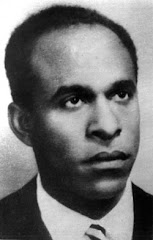
It is with deep sorrow and profound love that we announce the passing of Sonny Rollins. The Saxophone Colossus died May 25, 2026 at his home in Woodstock, NY at the age of 95.
“I think when the creative person ends, he continues in the next existence. I’m a person who believes this life isn’t the be-all and end-all of everything. A spiritual person doesn’t feel like that.”
–Sonny Rollins (2009)
Sonny Rollins, Giant of the Jazz Saxophone, Is Dead at 95
Even by the standards of a music that prizes individuality, he stood out, as both a musician and a personality.

Sonny Rollins in 2006. He flirted with the avant-garde, jazz-rock fusion and other styles over the years, but he was ultimately unclassifiable. Credit: Stephanie Berger for The New York Times
Listen · 15:22 minutes
by Peter Keepnews
May 25, 2026
New York Times
Sonny Rollins, whose forceful and imaginative approach to the tenor saxophone made him one of the dominant jazz musicians of the post-World War II era, died at his home in Woodstock, N.Y., on Monday. He was 95.
His death was announced in a statement from his publicist, Terri Hinte.
Even by the standards of a music that prizes individuality, Mr. Rollins stood out, as both a musician and a personality.
In the late 1940s, when most young jazz saxophonists favored a light tone with minimal vibrato, he developed a fat, full-bodied sound that was a throwback to the older style of Coleman Hawkins, the first great tenor saxophonist in jazz. In the late 1950s, when his career as a bandleader was just getting off the ground, Mr. Rollins abruptly began a hiatus that lasted more than two years — mostly, he explained later, because he was not satisfied with the quality of his playing.
Mr. Rollins came of age when a new kind of jazz known as bebop was in ascendance, and from the start his playing was suffused with bebop’s harmonic sophistication and rhythmic daring. To classify him as a bebopper, however, would be an oversimplification.
Over the years he flirted with the avant-garde, jazz-rock fusion and other styles. But with his ferocious energy, his penchant for playing the unexpected note at the unexpected moment, and his unusual sound — sometimes harsh and mocking, sometimes lush and romantic — he was ultimately unclassifiable.

Mr. Rollins performing at the Detroit Jazz Festival in 2012. He played his last concert that year; two years later, he stopped playing altogether. Credit: Jack Vartoogian/Getty Images
“The music I play is too big to be put into any one style,” he told an interviewer in 2002. “Every time I pick up the horn, I want to hear something fresh.”
That commitment to freshness was the key to Mr. Rollins’s approach, and to his appeal. The jazz critic Francis Davis wrote in 2000 that Mr. Rollins “is the greatest living jazz improviser, and if we redefine virtuosity to include improvisational cunning as well as instrumental finesse (as we probably should when discussing this music), he may be the greatest virtuoso ever produced by jazz.”
Mr. Rollins was rarely satisfied with his own playing; he often came away from a performance or a recording session proclaiming that he was sure he could have done better. He unquestionably did have his off nights, perhaps more than any other jazz musician of his stature, but some fans saw this as a positive sign: The occasional bad night, they argued, was a small price to pay for his willingness to take chances and his refusal to constantly play the same things the same way.
“The real playing happens on a subconscious level, and at that point the clichés don’t happen,” Mr. Rollins told The New York Times in 1989. “When I’m really playing, my mind is completely blank.”
An Early Start
Walter Theodore Rollins was born in Harlem on Sept. 7, 1930, the youngest of three children of Valborg (Solomon) and Walter William Rollins, who were from the Virgin Islands. His father was a naval steward.
Sonny Rollins reversed his first and middle names shortly after becoming a professional musician because problems with the law had made it hard for him to get working papers under his real name.
He began studying music at an early age, and although he also studied art and showed some interest in becoming a painter, he was playing saxophone professionally before he was out of his teens. He made his first recordings in 1949, with the singer Babs Gonzales, and he was soon in demand on the New York jazz scene, working with major figures like Miles Davis, Thelonious Monk and Bud Powell.
Mr. Rollins’s career was briefly derailed in the early 1950s when, like many other jazz musicians of his generation, he became addicted to heroin. But by 1955 he had overcome his addiction and achieved national prominence as a member of the popular quintet led by the drummer Max Roach and the trumpeter Clifford Brown.
Through his work with that group, and on a series of albums he recorded as a leader between 1956 and 1958, Mr. Rollins established himself as one of the most inventive jazz musicians of his generation.
I

Mr. Rollins in 1956, the year he released the critically acclaimed albums “Saxophone Colossus” and “Tenor Madness.” Credit: Bob Parent/Getty Images
In 1956 alone, he recorded two albums that came to be regarded as classics: “Tenor Madness,” which included his only recorded meeting with his fellow saxophonist John Coltrane, and “Saxophone Colossus” (the title referred both to his physical stature and to his rapidly growing artistic one). Two tracks on “Saxophone Colossus” drew particular praise from critics: “Blue 7,” an ingenious blues improvisation, which was the subject of a much-quoted essay by the composer and historian Gunther Schuller, “Sonny Rollins and the Challenge of Thematic Improvisation”; and “St. Thomas,” an adaptation of a traditional West Indian song that was the first and most famous of the many jazz-calypso fusions Mr. Rollins would record over the years.
A year later, frustrated by what he saw as the harmonic limits imposed by having a pianist play chords behind his improvisations, he began performing and recording accompanied only by a bassist and drummer, an unusual (though not unprecedented) approach at the time. (Pianists “got in the way,” he said at the time. “They play too much.”) He recorded several memorable albums without piano, one of which, “The Freedom Suite” (1958), was noteworthy not just for its spare instrumentation but also for its 19-minute title track, a composition in four movements written by Mr. Rollins as a musical commentary on racial inequality — a bold move in the early days of the civil rights movement.
By 1959, Mr. Rollins was receiving consistently glowing reviews and was widely regarded as one of jazz’s new stars. Nonetheless, that year he suddenly stopped performing and recording and virtually disappeared from the public eye.
Over the next two years, convinced that his playing was not up to his own standards, Mr. Rollins devoted much of his time to practicing, often late at night on the Williamsburg Bridge, not far from his apartment on the Lower East Side of Manhattan, where the acoustics appealed to him and there were no neighbors to complain. His absence from the scene, and reports of his bridge sessions, added to his growing mystique, and to his growing reputation as a perfectionist.
“A lot of people couldn’t comprehend why I would stop playing,” he told DownBeat magazine in 2001. “But I learned something. It was necessary for me to do to have the kind of confidence I need to play music like this.”
Mr. Rollins’s return to action in 1961, complete with a contract from RCA Victor Records that was unusually lucrative for a jazz musician, was treated as major news by the jazz press. (In an attempt to cash in on the publicity he had generated during his long absence, the company called his comeback album “The Bridge,” which was also the title of one of the tracks.)
Consistently Surprising
Over the next several years, his profile remained high: He performed in nightclubs, in concert and at festivals all over the world, and he wrote and recorded music for the hit 1966 British film “Alfie.” And his music remained consistently surprising.
He surrounded himself with an ever-shifting cast of talented musicians, ranging from young experimentalists (he alienated many old fans and won some new ones by enthusiastically, if briefly, working with avant-gardists like the trumpeter Don Cherry) to the venerable Coleman Hawkins, the saxophonist he called his idol, with whom he recorded an album in 1963.
The 1960s were a busy and productive time for Mr. Rollins. But before the decade was over, he had vanished again.
He did no recording and almost no performing between 1966 and 1972, spending much of his time in Japan and India on what he later said was a spiritual quest. He returned to the studio in 1972 to record “Sonny Rollins’ Next Album” for the small Milestone label, for which he would continue to record for more than 30 years, and he was soon back at the forefront of the jazz world.
Critics were often unkind to Mr. Rollins in the years following his comeback, especially when, like many of his fellow jazz musicians in the 1970s and ’80s, he embraced electric instruments and rock rhythms. He even collaborated with the Rolling Stones, overdubbing saxophone parts to three tracks on their album “Tattoo You” (1981), although he turned down an offer to tour with them. In performance, he began emphasizing the more obviously crowd-pleasing elements of his music, notably his penchant for calypsos.
“I’m often criticized about the ’70s and ’80s because I used a backbeat and guitars and all, but I don’t understand a lot of it,” he said in 2001. “I was trying to find different ways to make my music relevant. I’ve never thought of myself as being on some pinnacle where I can’t play a calypso or a backbeat.”

Mr. Rollins onstage in the Netherlands in 1987. He was rarely satisfied with his work and he often came away from a performance or recording session proclaiming that he was sure he could have done better. Credit: Frans Schellekens/Redferns, via Getty Images
The criticism he received — which continued beyond the 1980s — was often marked by an unusual mixture of admiration and regret. Reviewing a concert in 1993, Peter Watrous of The Times praised Mr. Rollins as “one of the greatest improvisers walking this earth,” but also called him “a man bent on misspending the capital of genius” who “plays music that rarely challenges his own historical achievements, and that in its simplicity seems to pander to his audience.” Mr. Rollins, he wrote, “seems unable, or unwilling, to present himself in a context that would give dignity to his great ability, or even just acknowledge it.”
Regardless of the reviews, Mr. Rollins in those years achieved the greatest success of his career. Although the audience for jazz ebbed and flowed, he was consistently one of the music’s most popular concert attractions. He gave much of the credit for his success to his wife, Lucille (Pearson) Rollins, who was also his manager and his co-producer on many albums.
Ms. Rollins died in 2004. An earlier marriage, to the actress and model Dawn Finney, ended in divorce. No immediate family members survive.
Mr. Rollins for many years had homes both in Lower Manhattan and in upstate Germantown, N.Y. He abandoned his Manhattan apartment in the wake of the 2001 terrorist attacks. He moved from Germantown to Woodstock, N.Y., in 2013.
Experiments and Honors
Although he worked primarily with small groups, Mr. Rollins sometimes experimented with other configurations. In 1985 he gave a solo concert at the Museum of Modern Art in New York, improvising for two hours without accompaniment. That same year he performed his “Concerto for Tenor Saxophone and Orchestra” in Tokyo with the Yomiuri Nippon Symphony Orchestra. (“I was trying to synthesize two elements by remaining true to the symphonic form and also to the way I play,” he explained.)
Mr. Rollins continued to tour and record well into the 21st century. He also did his best to weather the changes in the music business.

Hillary Clinton, then the secretary of state, sat with Mr. Rollins when he received a Kennedy Center Honor from President Barack Obama in 2011. Credit: Pool photo by Ron Sachs
In 2005 he started his own record company, Doxy, named after one of his best-known compositions, which released a well-received series of live albums. In 2006, Mr. Rollins — who told The Times in an interview that year, “I hate technology myself” — began offering free audio and video clips on a newly created website, sonnyrollins.com.
In Mr. Rollins’s later years, the honors piled up. A two-time Grammy Award winner, he received a lifetime achievement Grammy in 2004. In 2010 he was elected to the American Academy of Arts and Sciences and became the first jazz musician to receive the prestigious Edward MacDowell Medal for achievement in the arts. In 2011 he received both a National Medal of Arts and a Kennedy Center Honor. (The encomiums had begun much earlier: He was named a Jazz Master by the National Endowment for the Arts in 1983.)
Despite the honors, he continued to explore — to search for, as he put it in an interview with The Times in 1984, “the ultimate sound.”
“That’s why I keep practicing,” he said. “I’ll know when I find the ultimate sound, because I’ll be completely fulfilled just by the sound of it and by what I’m able to do with it instrumentally.”
Mr. Rollins’s archives, including hundreds of recordings from rehearsals and practice sessions, were acquired in 2017 by the Schomburg Center for Research in Black Culture in Harlem. That same year, a bill was introduced in the New York City Council to rename the Williamsburg Bridge in his honor. (The bill did not pass, but the campaign to have the bridge renamed has continued.)

Mr. Rollins in 2005. Throughout his career, he continued to search for “the ultimate sound.” “I’ll be completely fulfilled,” he once said, “just by the sound of it and by what I’m able to do with it instrumentally.” Credit: Eric Johnson for The New York Times
In 2022, he was the subject of an acclaimed biography, “Saxophone Colossus,” by Aidan Levy.
With the death of his fellow saxophonist Benny Golson in 2024, Mr. Rollins became the last survivor of the nearly 60 musicians captured by the photographer Art Kane in his celebrated Esquire magazine group portrait “Harlem 1958.”
“I was a fan,” Mr. Rollins told The Times in recalling the photo shoot in 2024. “I was in the picture, but it wasn’t so much as a musician — although I happened to be there as a musician — but I had been following jazz all my short life up to that time, so I knew a great deal about the guys.” He added that he was particularly proud to have been photographed alongside “my particular idols, Coleman Hawkins and Lester Young.”
In his later years Mr. Rollins experienced respiratory problems. He never formally announced his retirement, but in 2012, after being diagnosed with pulmonary fibrosis, he gave his last public performance. Two years later, he also stopped playing at home.
“The reason my retirement happened quietly was because my health problems were gradual,” he told The New York Times Magazine in 2020. “It took me a while to realize, hey, that’s gone now.”
“When I had to stop playing,” he said, “it was quite traumatic. But I realized that instead of lamenting and crying, I should be grateful for the fact that I was able to do music all of my life.”
A correction was made on May 26, 2026
An earlier version of this obituary misstated the middle name of Mr. Rollins’s father. He was Walter William Rollins, not Walter Theodore Rollins.
A version of this article appears in print on May 27, 2026, Section A, Page 1 of the New York edition with the headline: Sonny Rollins, 95, Genre-Hopping Colossus of Jazz Saxophone, Dies. Order Reprints | Today’s Paper |
https://panopticonreview.blogspot.com/2025/09/september-7-2025-is-95th-birthday-of.html
FROM THE PANOPTICON REVIEW ARCHIVES
(Originally posted on September 7, 2025):
Monday, September 8, 2025
September 7, 2025 is the 95th Birthday of the Living Legend, Theodore Walter “Sonny” Rollins.
HAPPY BIRTHDAY SONNY!

Sonny Rollins - Freedom Suite (Full Album):
Sonny Rollins --tenor saxophone
Oscar Pettiford-- bass
Max Roach-- drums
VIDEO:
https://www.youtube.com/watch?v=9GldoGTxN6Y
"The Freedom Suite" - 19:17
"Someday I'll Find You" - 4:35
"Will You Still Be Mine?" - 2:54
"Till There Was You" - 4:54
"Till There Was You" [alternate take] - 4:55
"Shadow Waltz" - 4:08
Recorded - February 11 & March 7, 1958
http://www.sonnyrollins.com/:
Sonny Rollins--The Official Website of the Saxophone Colossus
http://panopticonreview.blogspot.com/2012/01/behold-sonny-rollins-saxophone-colossus.html
FROM THE PANOPTICON REVIEW ARCHIVES
(Originally posted on January 1, 2012):
Sunday, January 1, 2012
BEHOLD: SONNY ROLLINS, THE SAXOPHONE COLOSSUS!
Theodore Walter "Sonny" Rollins
2011 Kennedy Center Honoree

https://panopticonreview.blogspot.com/2012/01/behold-sonny-rollins-saxophone-colossus.html
All,
In the incredibly rich pantheon of African American art and culture there have been many legendary musical artists from the Jazz tradition who through their prodigious art have dramatically changed the very course of cultural history in the modern world. These astonishing and truly revolutionary figures: Louis Armstrong, Duke Ellington, Fletcher Henderson, Jelly Roll Morton, Art Tatum, Count Basie, Ella Fitzgerald, Lester Young, Billie Holiday, Coleman Hawkins, Charlie Parker, Dizzy Gillispie. Thelonious Monk, Miles Davis, John Coltrane, Max Roach, Clifford Brown, Bud Powell, Charles Mingus, Eric Dolphy, Sarah Vaughn, Betty Carter, Wayne Shorter, Ornette Coleman, Joe Henderson, Horace Silver, Roy Haynes, Kenny Clarke, Herbie Nichols, Albert Ayler, Cecil Taylor, Bobby Hutcherson, Herbie Hancock, Jackie McLean and Archie Shepp-- just to name a few icons from a HUGE collection of truly extraordinary artists in this always fecund tradition--have played a major role in our fundamental understanding of what exactly constitutes "GREAT ART" in the world. It is this grand, profound, and tirelessly powerful legacy that the living legend and saxophone genius SONNY ROLLINS (b. September 7, 1930) embodies and epitomizes in every improvisational gesture that he expresses and is the very source of his magisterial command of his instrument. A consummate master who continues at age 81 (!) to enthrall and captivate his many listeners around the world, Theodore Walter "Sonny" Rollins was one of five Kennedy Center Honorees for 2011 on December 3, 2011 (broadcast on CBS television this past tuesday night December 27, 2011). It is in direct response to and heartfelt appreciation for this great honor that the following TRIBUTE TO THE SAXOPHONE COLOSSUS is made. Long May this GIANT continue to grace our lives with the depth, courage, insight, clarity, beauty, and creative authority that marks his tremendous artistry and his eloquent, humble and generous humanity. SONNYMOON FOR US ALL INDEED...
Kofi
"America is deeply rooted in Negro culture: its colloquialisms, its humor, its music. How ironic that the Negro, who more than any other people can claim America's culture as its own, is being persecuted and repressed, that the Negro, who has exemplified the humanities in its very existence, is being rewarded with inhumanity." --Sonny Rollins


Liner Notes to "Freedom Suite” 1958

SONNYMOON FOR US ALL
(For the greatest saxophonist in the world:
Sonny Rollins)
by Kofi Natambu
WHEN SONNY STANDS IN FOR THE MOON
WE HEAR SUCH A GLORIOUS TUNE
IT'S ALWAYS A BIT OF A SWOON
WHEN SONNY STANDS IN FOR THE MOON
THE SONG COULD BE AUGUST OR JUNE
A HELL OF A BURST OR A BOON
WAILING AT MIDNIGHT OR NOON
WHEN SONNY STANDS IN FOR THE MOON
TRANSVERSING HARMONIC LAGOONS
HE PLAYS THRU OUR FEARS AND OUR WOUNDS
HIS HORN IS A RHYTHMIC PLATOON
WHEN SONNY STANDS IN FOR THE MOON
I THINK I WILL SOON BE A LOON
OR AT LEAST A RAVING BABOON
IF I DON'T GET TO HEAR SOME MORE TUNES
FROM THAT SOARING MELODIC BALLOON
O ROLLINS BLOWS HEAT CAN BE FIERCE OR SO SWEET
YEAH SONNY SWINGS FULL LIKE THE MOON
YEAH SONNY SWINGS FULL LIKE THE MOON
YEAH SONNY SWINGS FULL LIKE THE MOON
YEAH SONNY SWINGS FULL LIKE THE MOON…
Poem from THE MELODY NEVER STOPS
by Kofi Natambu (Past Tents Press, 1991)
https://sonnyrollins.com/bio
Sonny at age 14
Theodore Walter Rollins was born on September 7, 1930 in New York City. He grew up in Harlem not far from the Savoy Ballroom, the Apollo Theatre, and the doorstep of his idol, Coleman Hawkins. After early discovery of Fats Waller and Louis Armstrong, he started out on alto saxophone, inspired by Louis Jordan. At the age of sixteen, he switched to tenor, trying to emulate Hawkins. He also fell under the spell of the musical revolution that surrounded him, Bebop.
He began to follow Charlie Parker, and soon came under the wing of Thelonious Monk, who became his musical mentor and guru. Living in Sugar Hill, his neighborhood musical peers included Jackie McLean, Kenny Drew and Art Taylor, but it was young Sonny who was first out of the pack, working and recording with Babs Gonzales, J.J. Johnson, Bud Powell and Miles Davis before he turned twenty.
"Of course, these people are there to be called on because I think I represent them in a way," Rollins said recently of his peers and mentors. "They're not here now so I feel like I'm sort of representing all of them, all of the guys. Remember, I'm one of the last guys left, as I'm constantly being told, so I feel a holy obligation sometimes to evoke these people."
In the early fifties, he established a reputation first among musicians, then the public, as the most brash and creative young tenor on the scene, through his work with Miles, Monk, and the MJQ.
Miles Davis was an early Sonny Rollins fan and in his autobiography wrote that he "began to hang out with Sonny Rollins and his Sugar Hill Harlem crowd...anyway, Sonny had a big reputation among a lot of the younger musicians in Harlem. People loved Sonny Rollins up in Harlem and everywhere else. He was a legend, almost a god to a lot of the younger musicians. Some thought he was playing the saxophone on the level of Bird. I know one thing--he was close. He was an aggressive, innovative player who always had fresh musical ideas. I loved him back then as a player and he could also write his ass off..."
With Clifford Brown and Max Roach, 1956
Sonny moved to Chicago for a few years to remove himself from the surrounding elements of negativity around the Jazz scene. He reemerged at the end of 1955 as a member of the Clifford Brown-Max Roach Quintet, with an even more authoritative presence. His trademarks became a caustic, often humorous style of melodic invention, a command of everything from the most arcane ballads to calypsos, and an overriding logic in his playing that found him hailed for models of thematic improvisation.
It was during this time that Sonny acquired a nickname,"Newk." As Miles Davis explains in his autobiography: "Sonny had just got back from playing a gig out in Chicago. He knew Bird, and Bird really liked Sonny, or "Newk" as we called him, because he looked like the Brooklyn Dodgers' pitcher Don Newcombe. One day, me and Sonny were in a cab...when the white cabdriver turned around and looked at Sonny and said, `Damn, you're Don Newcombe!'' Man, the guy was totally excited. I was amazed, because I hadn't thought about it before. We just put that cabdriver on something terrible. Sonny started talking about what kind of pitches he was going to throw Stan Musial, the great hitter for the St. Louis Cardinals, that evening..."
In 1956, Sonny began recording the first of a series of landmark recordings issued under his own name: Valse Hot introduced the practice, now common, of playing bop in 3/4 meter; St. Thomas initiated his explorations of calypso patterns; and Blue 7 was hailed by Gunther Schuller as demonstrating a new manner of "thematic improvisation," in which the soloist develops motifs extracted from his theme. Way Out West (1957), Rollins's first album using a trio of saxophone, double bass, and drums, offered a solution to his longstanding difficulties with incompatible pianists, and exemplified his witty ability to improvise on hackneyed material (Wagon Wheels, I'm an Old Cowhand). It Could Happen to You (also 1957) was the first in a long series of unaccompanied solo recordings, and The Freedom Suite (1958) foreshadowed the political stances taken in jazz in the 1960s. During the years 1956 to 1958 Rollins was widely regarded as the most talented and innovative tenor saxophonist in jazz.
Rollins's first examples of the unaccompanied solo playing that would become a specialty also appeared in this period; yet the perpetually dissatisfied saxophonist questioned the acclaim his music was attracting, and between 1959 and late `61 withdrew from public performance.
Sonny remembers that he took his leave of absence from the scene because "I was getting very famous at the time and I felt I needed to brush up on various aspects of my craft. I felt I was getting too much, too soon, so I said, wait a minute, I'm going to do it my way. I wasn't going to let people push me out there, so I could fall down. I wanted to get myself together, on my own. I used to practice on the Bridge, the Williamsburg Bridge because I was living on the Lower East Side at the time."
When he returned to action in early `62, his first recording was appropriately titled The Bridge. By the mid 60's, his live sets became grand, marathon stream-of-consciousness solos where he would call forth melodies from his encyclopedic knowledge of popular songs, including startling segues and sometimes barely visiting one theme before surging into dazzling variations upon the next. Rollins was brilliant, yet restless. The period between 1962 and `66 saw him returning to action and striking productive relationships with Jim Hall, Don Cherry, Paul Bley, and his idol Hawkins, yet he grew dissatisfied with the music business once again and started yet another sabbatical in `66. "I was getting into eastern religions," he remembers. "I've always been my own man. I've always done, tried to do, what I wanted to do for myself. So these are things I wanted to do. I wanted to go on the Bridge. I wanted to get into religion. But also, the Jazz music business is always bad. It's never good. So that led me to stop playing in public for a while, again. During the second sabbatical, I worked in Japan a little bit, and went to India after that and spent a lot of time in a monastery. I resurfaced in the early 70s, and made my first record in `72. I took some time off to get myself together and I think it's a good thing for anybody to do."
Lucille and Sonny
In 1972, with the encouragement and support of his wife Lucille, who had become his business manager, Rollins returned to performing and recording, signing with Milestone and releasing Next Album. (Working at first with Orrin Keepnews, Sonny was by the early ’80s producing his own Milestone sessions with Lucille.) His lengthy association with the Berkeley-based label produced two dozen albums in various settings – from his working groups to all-star ensembles (Tommy Flanagan, Jack DeJohnette, Stanley Clarke, Tony Williams); from a solo recital to tour recordings with the Milestone Jazzstars (Ron Carter, McCoy Tyner); in the studio and on the concert stage (Montreux, San Francisco, New York, Boston). Sonny was also the subject of a mid-’80s documentary by Robert Mugge entitled Saxophone Colossus; part of its soundtrack is available as G-Man.
He won his first performance Grammy for This Is What I Do (2000), and his second for 2004’s Without a Song (The 9/11 Concert), in the Best Jazz Instrumental Solo category (for “Why Was I Born”). In addition, Sonny received a Lifetime Achievement Award from the National Academy of Recording Arts and Sciences in 2004.
In June 2006 Rollins was inducted into the Academy of Achievement – and gave a solo performance – at the International Achievement Summit in Los Angeles. The event was hosted by George Lucas and Steven Spielberg and attended by world leaders as well as distinguished figures in the arts and sciences.
Rollins was awarded the Austrian Cross of Honor for Science and Art, First Class, in November 2009. The award is one of Austria’s highest honors, given to leading international figures for distinguished achievements. The only other American artists who have received this recognition are Frank Sinatra and Jessye Norman.
In 2010 on the eve of his 80th birthday, Sonny Rollins is one of 229 leaders in the sciences, social sciences, humanities, arts, business, and public affairs who have been elected members of the American Academy of Arts and Sciences. A center for independent policy research, the Academy is among the nation’s oldest and most prestigious honorary societies and celebrates the 230th anniversary of its founding this year.
In August 2010, Rollins was named the Edward MacDowell Medalist, the first jazz composer to be so honored. The Medal has been awarded annually since 1960 to an individual who has made an outstanding contribution to his or her field.
Sonny Rollins Receiving National Medal of Arts Award from President Obama at White House in 2010
Photo: Ruth David
Yet another major award was bestowed on Rollins on March 2, 2011, when he received the Medal of Arts from President Barack Obama in a White House ceremony. Rollins accepted the award, the nation’s highest honor for artistic excellence, “on behalf of the gods of our music.”
Since 2006, Rollins has been releasing his music on his own label, Doxy Records (with distribution from the Decca Label Group). The first Doxy album was Sonny, Please, Rollins’s first studio recording since This Is What I Do. That was followed by the acclaimed Road Shows, vol. 1 (2008), the first in a planned series of recordings from Rollins’s audio archives.
Mr. Rollins released Road Shows, vol. 2 in the fall of 2011. In addition to material recorded in Sapporo and Tokyo, Japan during an October 2010 tour, the recording contains several tracks from Sonny’s September 2010 80th birthday concert in New York—including the historic and electrifying encounter with Ornette Coleman.
On December 3, 2011 Sonny Rollins was one of five 2011 Kennedy Center honorees, alongside actress Meryl Streep, singer Barbara Cook, singer/songwriter Neil Diamond, and cellist Yo-Yo Ma. Rollins said of the honor, “I am deeply appreciative of this great honor. In honoring me, the Kennedy Center honors jazz, America’s classical music. For that, I am very grateful.”
Road Shows, vol. 3, released by Doxy/OKeh/Sony in 2014, drew its six tracks from concerts recorded between 2001 and 2012 in Sitama, Japan; Toulouse, Marseille, and Marciac, France; and St. Louis, Missouri. “Patanjali,” a recent-vintage Rollins composition, was given its debut recording on the disc.
Rollins followed this up in 2016 with Holding the Stage: Road Shows, vol. 4 (Doxy/OKeh/Sony). The album’s seven tracks encompass some 33 years (1979-2012) and include a previously unreleased 23-minute medley (and concert closer) from his September 15, 2001 Boston performance, most of which had been immortalized in Rollins’s final Milestone album, Without a Song: The 9/11 Concert.
In 2017, the Schomburg Center in New York City acquired Rollins's personal archive.
In late 2020, the saxophonist released Rollins in Holland, a 2-CD/3-LP deluxe set via Resonance Records. The collection of unheard live and studio trio recordings from Rollins’s 1967 Netherlands tour feature “take no prisoners” performances with bassist Ruud Jacobs and drummer Han Bennink.
© Sonny Rollins. Design by Ian Carey.
SONNY ROLLINSIS ONE OF 10 RECIPIENTS OF 2010 NATIONAL MEDAL OF ARTS
Saxophonist Sonny Rollins was one of ten honorees who received the 2010 National Medal of Arts for outstanding achievements and support of the arts. The presentation was made on March 2 by President Barack Obama in an East Room ceremony at the White House.
“I’m very happy that jazz, the greatest American music, is being recognized through this honor, and I’m grateful to accept this award on behalf of the gods of our music,” Mr. Rollins said of the award.
The National Medal of Arts recipients represent the many vibrant and diverse art forms thriving in America,” said NEA Chairman Rocco Landesman. “Sonny Rollins’ melodic sensibilities, playing style, and solos have delighted audiences and influenced generations of musicians for over fifty years and I join the President and the country in saluting him.”
Posted by Kofi Natambu at 2:47 PM
Labels: 2011 Kennedy Center Honors, African American Art, Composition, Improvisation, Jazz history, Sonny Rollins, Tenor Saxophone
Sonny Rollins - Saxophone Colossus--1956:
Sonny Rollins (tenor sax), Tommy Flanagan (piano), Doug Watkins (bass), Max Roach (drums)
From the album 'SAXOPHONE COLOSSUS' (Prestige Records)
VIDEO:
https://www.youtube.com/watch?v=KN0drSC-eSM&list=PLVG1KRr_9ktGsmv2asJdz1O0uQgreRKAT


Sonny Rollins - The Bridge-1962:
Sonny Rollins - tenor saxophone
Jim Hall - guitar
Bob Cranshaw - bass
https://www.youtube.com/watch?v=E8vZLljjb58
Sonny Rollins--Tenor Madness--1957
Sonny Rollins and John Coltrane:
Tenor Saxophones:
VIDEO:
https://www.youtube.com/watch?v=VLAQBYEgS58
Sonny Rollins Plus 4
VIDEO:
https://www.youtube.com/watch?v=Lnk-2cCC-So
Sonny Rollins - "Blues for Philly Joe"- 1957+ Mix
VIDEO:
https://www.youtube.com/watch?v=nHXujDkjNU0&list=RDnHXujDkjNU0#t=85
Sonny Rollins - "St. Thomas" (composition by Sonny Rollins)--Live Performance from 1968:
Tenor Sax : Sonny Rollins
Piano : Kenny Drew
Bass : Niels-Henning Orsted Pedersen
Drums : Albert "Tootie" Heath
Sonny Rollins - "G-Man" (composition by Sonny Rollins. In live performance in Japan in 1986. From famed Jazz documentary film 'SAXOPHONE COLOSSUS'. Directed by Robert Mugge:
VIDEO:
http://www.robertmugge.com/acorn_media/sonny-rollins.html
Live in Japan, 1986
Sonny Rollins - Tenor Sax
Clifton Anderson - Trombone
Mark Soskin - Piano
Bob Cranshaw - Bass
Marvin Smith - Drums
A brief trailer for SAXOPHONE COLOSSUS, Robert Mugge's 1986 film portrait of jazz great Sonny Rollins
PLUS:

The complete improvisational performance of the composition "G-Man" at the same concert (see video below)
Filmmaker Robert Mugge also discusses the making of SAXOPHONE COLOSSUS with Sonny Rollins:
VIDEO: http://vimeo.com/75187238
https://sonnyrollins.com/videos
https://sonnyrollins.com/
Sonny Rollins
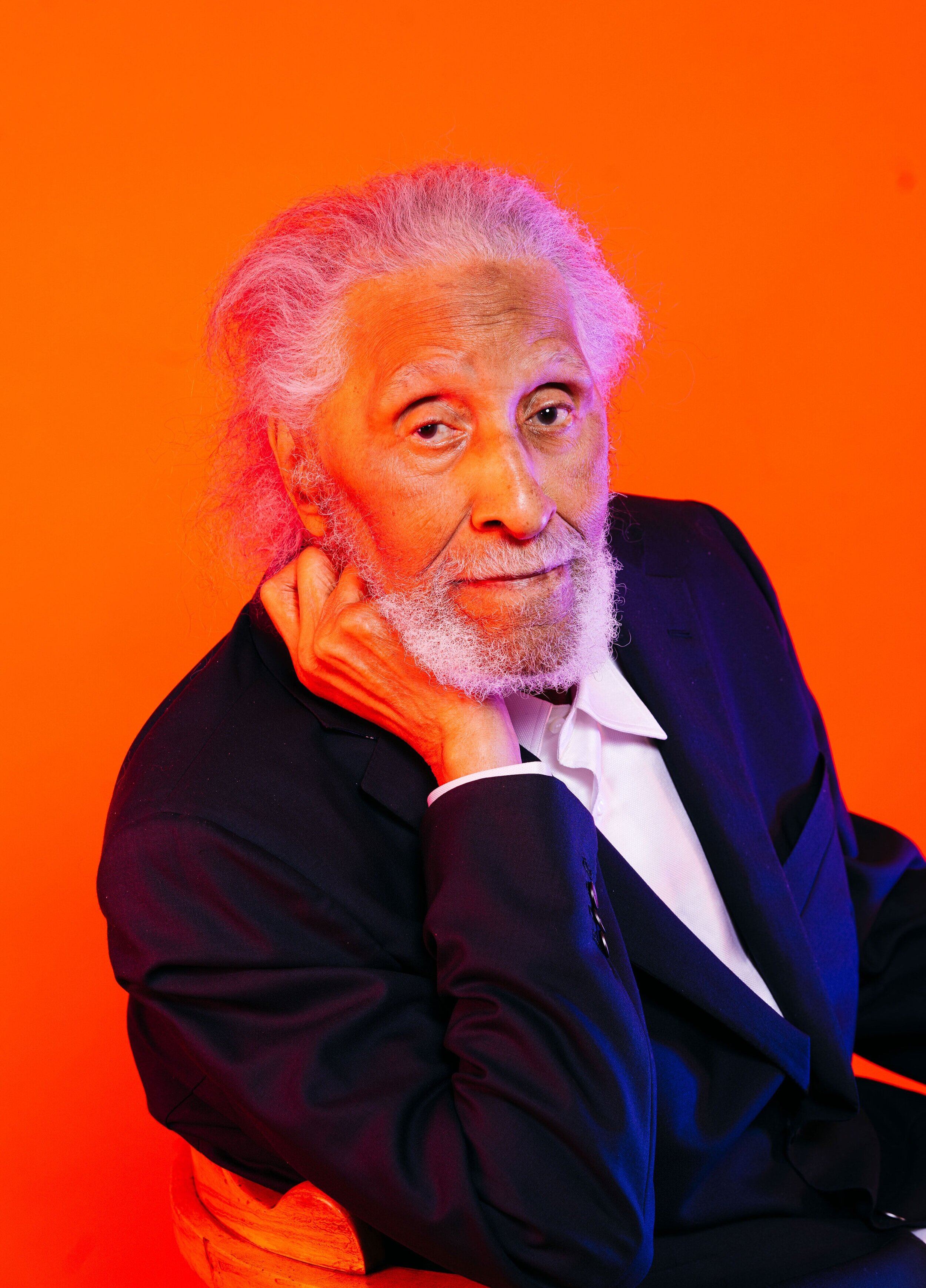
Sonny Rollins is the Saxophone Colossus.
Welcome to the official website of Sonny Rollins, an American tenor saxophonist and composer whose eight-decade career has led him from Harlem to the White House and all over the world, and who is considered one of the most influential musicians in jazz.
© Sonny Rollins. Design by Ian Carey.
Bio
Posted by Kofi Natambu at 2:31 AM