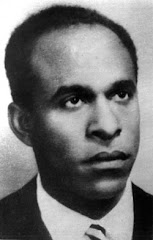
https://www.nytimes.com/2026/05/27/books/david-henderson-dead.html
David Henderson, Innovative Poet and Hendrix Biographer, Dies at 83
Part of the Black Arts Movement of the 1960s, he went on to reclaim a leading musician of the psychedelic era as a distinctly African American artist.
Listen · 8:13 minutes

PHOTO: David Henderson in 2019 at the East Village restaurant B&H Dairy. In 1962, he helped found the Society of Umbra, a pioneering Black literary collective based in the East Village. Credit: No Land
by Alex Williams
May 27, 2026
New York Times
David Henderson, a poet who rose to prominence with the pathbreaking Black Arts Movement in the 1960s and went on to write a best-selling biography of Jimi Hendrix that changed the way many interpreted Hendrix’s life, music and untimely end, died on May 14 in Lincoln Park, N.J. He was 83.
His death, at a nursing home, was caused by complications of dementia, his daughter, Najuma Henderson, said.
In 1962, the Harlem-born Mr. Henderson was a central figure in the founding of the Society of Umbra, a pioneering Black literary collective based in the East Village section of Manhattan. Like Calvin Hernton, Tom Dent, Lorenzo Thomas, Askia Touré, Steve Cannon and others associated with the group, he sought to forge a new, distinctly Black aesthetic sensibility, unmoored from white Western artistic ideals.
“We were shut out of the discourse,” Mr. Henderson recalled of the era in a 2009 interview with Africultures, a French news and culture website. “That exclusion is what Richard Wright, Ralph Ellison, Langston Hughes, Gwendolyn Brooks, Robert Hayden, James Baldwin, were fighting.”
Umbra became a foundation for the broader Black Arts Movement, which emerged in the mid-1960s, spearheaded by fiery writers like LeRoi Jones (later Amiri Baraka), Lawrence Neal and Mr. Touré, and which also included figures from the visual arts, theater, dance and music.
“We were the revolutionaries,” Ishmael Reed, the celebrated poet, playwright and provocateur, said in an interview. No longer, Mr. Reed added, did Black writers find it necessary to follow the narrative conventions of an Ernest Hemingway or Henry James.
“We broke with that,” he said. “We went to folklore, and to the street.”
Mr. Henderson’s “experiential montages,” as Kirkus Reviews described his work, channeled both the hope and rage of the civil rights era, drawing from Black oral traditions and the rhythms of rock ’n’ roll, Motown and jazz.
As he wrote in the title poem of his 1970 collection “De Mayor of Harlem” (Dutton):
Part of the Black Arts Movement of the 1960s, he went on to reclaim a leading musician of the psychedelic era as a distinctly African American artist.
Listen · 8:13 minutes
PHOTO: David Henderson in 2019 at the East Village restaurant B&H Dairy. In 1962, he helped found the Society of Umbra, a pioneering Black literary collective based in the East Village. Credit: No Land
by Alex Williams
May 27, 2026
New York Times
David Henderson, a poet who rose to prominence with the pathbreaking Black Arts Movement in the 1960s and went on to write a best-selling biography of Jimi Hendrix that changed the way many interpreted Hendrix’s life, music and untimely end, died on May 14 in Lincoln Park, N.J. He was 83.
His death, at a nursing home, was caused by complications of dementia, his daughter, Najuma Henderson, said.
In 1962, the Harlem-born Mr. Henderson was a central figure in the founding of the Society of Umbra, a pioneering Black literary collective based in the East Village section of Manhattan. Like Calvin Hernton, Tom Dent, Lorenzo Thomas, Askia Touré, Steve Cannon and others associated with the group, he sought to forge a new, distinctly Black aesthetic sensibility, unmoored from white Western artistic ideals.
“We were shut out of the discourse,” Mr. Henderson recalled of the era in a 2009 interview with Africultures, a French news and culture website. “That exclusion is what Richard Wright, Ralph Ellison, Langston Hughes, Gwendolyn Brooks, Robert Hayden, James Baldwin, were fighting.”
Umbra became a foundation for the broader Black Arts Movement, which emerged in the mid-1960s, spearheaded by fiery writers like LeRoi Jones (later Amiri Baraka), Lawrence Neal and Mr. Touré, and which also included figures from the visual arts, theater, dance and music.
“We were the revolutionaries,” Ishmael Reed, the celebrated poet, playwright and provocateur, said in an interview. No longer, Mr. Reed added, did Black writers find it necessary to follow the narrative conventions of an Ernest Hemingway or Henry James.
“We broke with that,” he said. “We went to folklore, and to the street.”
Mr. Henderson’s “experiential montages,” as Kirkus Reviews described his work, channeled both the hope and rage of the civil rights era, drawing from Black oral traditions and the rhythms of rock ’n’ roll, Motown and jazz.
As he wrote in the title poem of his 1970 collection “De Mayor of Harlem” (Dutton):
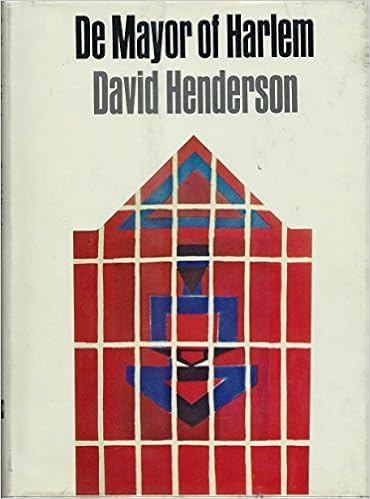
silent natives screaming
thru western guns swords axes
tall tenor saxophones
blaring black trumpet
pages of swords.

Mr. Henderson reading as part of the Poetry Project at St. Mark’s Church in the East Village in 2015. His writing channeled both the hope and rage of the civil rights era. Credit: No Land
Mr. Henderson was born on Sept. 19, 1942, the elder of two sons of Raymond Henderson, a chief petty officer in the Coast Guard, and Myrtle (Brown) Henderson, a telephone operator.
As a teenager, he left home and moved downtown to the East Village to pursue poetry. “This was the early 1960s,” Mr. Henderson later recalled. “Change was happening before our eyes, but I’m not certain I saw it.”
He began mingling with New York’s Black creative scene, including jazz artists like the saxophonist Archie Shepp, the pianist Cecil Taylor and the surrealist band leader Sun Ra, with whom he would later collaborate.
In the early 1970s, he was hired to teach at the University of California, Berkeley, the first of several academic positions he held over the years. With him was his wife, Barbara T. Christian, who went on to become a professor of African American studies at Berkeley and a prominent authority on contemporary American literary feminism.
His marriage to Ms. Christian ended in divorce in 2000, after a 20-year separation. In addition to his daughter, with Ms. Christian, Mr. Henderson is survived by a son, Imetai Henderson, from another relationship, and four grandchildren.
Soon after arriving in California, Mr. Henderson embarked on a five-year journey to complete a book on Hendrix, who died in London on Sept. 18, 1970, at 27.
Mr. Henderson was far from a music journalist, but had written about a 1968 Hendrix concert for the rock magazine Crawdaddy.
“I had gotten to know Hendrix a little bit in the clubs in Manhattan, hanging out,” Mr. Henderson once recalled in a video interview, “and I told him I was going to write something about him.”
His friendship with Hendrix helped open doors, spurring many who had been close to the guitar legend to open up, including his father, Al Hendrix. Mr. Henderson also gained access to Hendrix’s personal diaries, private correspondence and home recordings.
“Jimi Hendrix: Voodoo Child of the Aquarian Age” was published in 1978. (It was later expanded and retitled “’Scuse Me While I Kiss the Sky: Jimi Hendrix: Voodoo Child.”)
The first major biography of Hendrix, the book was, according to the rock writer Greil Marcus, “surely the most serious attempt yet to make sense of the life of a Sixties icon.”
Mr. Reed once described it as “part thriller and part lament for some tragic lives who enlivened an exciting decade.”
The book stood out among rock biographies for its New Journalism-style narrative approach, which included flowery poetic passages and — to the chagrin of some critics — recreated inner monologues and other devices reminiscent of fiction.

Mr. Henderson’s biography of Hendrix, first published in 1978, was, according to the rock writer Greil Marcus, “surely the most serious attempt yet to make sense of the life of a Sixties icon.” Credit: Atria
Most striking, however, were its conclusions about Hendrix’s death. The book fiercely disputed the widely accepted account, first advanced by his girlfriend Monika Dannemann and later repeated in biographies, like Charles R. Cross’s acclaimed “Room Full of Mirrors” (2005), that Hendrix had taken a large number of powerful sleeping pills at her hotel and choked on his own vomit.
“As a result,” Mr. Henderson wrote, “millions of people all over the world thought that Hendrix had died the typical rock star death: drug overdose amid fame, blondes, opulence, sex.”
Based on unearthed legal documents, along with interviews with hospital and ambulance attendants and others present during those final days, Mr. Henderson concluded that Hendrix “did not die of a drug overdose. He was drowned.”
The updated version of the book posited that Hendrix had been suffocated with an “impossible” amount of red wine — to the point that it was matted on his clothes and hair and flowing out of his nose and mouth, even after his death, despite his relatively low blood-alcohol content.
And, Mr. Henderson wrote, various shadowy forces had motives to harm Hendrix, including organized crime and federal agencies seeking to do damage to the far-left counterculture.
To fans, particularly white ones, Hendrix was long seen as a towering figure of the psychedelic era who, with his ur-hippie persona and starring role at Woodstock, transcended race.
That was false, Mr. Henderson argued. To him, Hendrix was a distinctly Black artist whose music was deeply grounded in the blues and honed on the Southern chitlin circuit, a network of venues that catered to Black performers in segregated cities.
Far from being colorblind, as many white rock writers portrayed him, Hendrix came to embrace Black power every bit as much as flower power — to the point that his growing support for the Black Panthers had put him in the cross hairs of the Federal Bureau of Investigation.
“Jimi Hendrix was a classic Black ghetto ‘smoothie,’” Mr. Henderson wrote, “whose genius was electric guitar. He achieved an unmatched virtuoso style and became a musician’s musician, a player’s player, and a priest of the new age in Afro-American ceremonial music.”
Most striking, however, were its conclusions about Hendrix’s death. The book fiercely disputed the widely accepted account, first advanced by his girlfriend Monika Dannemann and later repeated in biographies, like Charles R. Cross’s acclaimed “Room Full of Mirrors” (2005), that Hendrix had taken a large number of powerful sleeping pills at her hotel and choked on his own vomit.
“As a result,” Mr. Henderson wrote, “millions of people all over the world thought that Hendrix had died the typical rock star death: drug overdose amid fame, blondes, opulence, sex.”
Based on unearthed legal documents, along with interviews with hospital and ambulance attendants and others present during those final days, Mr. Henderson concluded that Hendrix “did not die of a drug overdose. He was drowned.”
The updated version of the book posited that Hendrix had been suffocated with an “impossible” amount of red wine — to the point that it was matted on his clothes and hair and flowing out of his nose and mouth, even after his death, despite his relatively low blood-alcohol content.
And, Mr. Henderson wrote, various shadowy forces had motives to harm Hendrix, including organized crime and federal agencies seeking to do damage to the far-left counterculture.
To fans, particularly white ones, Hendrix was long seen as a towering figure of the psychedelic era who, with his ur-hippie persona and starring role at Woodstock, transcended race.
That was false, Mr. Henderson argued. To him, Hendrix was a distinctly Black artist whose music was deeply grounded in the blues and honed on the Southern chitlin circuit, a network of venues that catered to Black performers in segregated cities.
Far from being colorblind, as many white rock writers portrayed him, Hendrix came to embrace Black power every bit as much as flower power — to the point that his growing support for the Black Panthers had put him in the cross hairs of the Federal Bureau of Investigation.
“Jimi Hendrix was a classic Black ghetto ‘smoothie,’” Mr. Henderson wrote, “whose genius was electric guitar. He achieved an unmatched virtuoso style and became a musician’s musician, a player’s player, and a priest of the new age in Afro-American ceremonial music.”
ABOUT THE AUTHOR:
Deadpan David
The Harlem Conquistador
by Kofi Natambu
(For David Henderson at the Detroit Institute of Arts: 3/17/83)
David watches us
while reading
his heavy lowered lids
a half drawn windowshade
this urban(e) conjure man
redefines the very idea of the
Fisheye or is that Deadeye?
Anyway he swims in Accuracy
Deadpan David asphalt root doctor
slips in crevices where consciousness
hides. Invites our ears to fatback dinner
at his place. Tosses the Sun at us like a
beachball. The moon an orange crescent spins
in small circles above his wide Egyptian head.
Slivers of light stream from his mouth especially when he smiles. Like T. Monk a sly radiance bucks and wings an angular stride down elegant boulevards
Deadpan David linguistic herbalist
administers jokes and riddles to aching
heads and moaning hearts. Soothes with serious sweet tea that defies all sugar(s). Winks with the 3rd eye, peeks around history's corners with the "other 2." From Lee Morgan to Azania and back again. From bright Lee Morgan to struggling South Africa and back again. No apartheid! No! No exploding diamond minds No!! Golems buy the Kruggerand Jive. Golems buy the Kruggerad Jive.
Deadpan David falsetto crooner
reveals "rows of tasty zeros" in Colorado
and everywhere else we hide during fake
birthday parties for Freedom. Deadpan David uptown mackman comes to conquer us with truth one more time. Comes to conquer us with Truth one more time. Comes to conquer with truth just one more time. One more time One more time.
From the book INTERVALS
by Kofi Natambu,
Post Aesthetic Press, 1983

Poetry Project is deeply saddened to learn of David Henderson's passing. Henderson (1942–2026) was a co-founder of Umbra Poets Workshop, a Lower East Side-based Black poets collective founded in 1962. David was deeply influential to downtown arts and culture at large. He has been a very dear friend to and supporter of the Project since its early days. David was a mainstay at the New Year's Day Marathon and was featured in a staggering 58 events at the Project between 1967–2023. David's last paired reading was in 2012 with Ammiel Alcalay.
Amiri Baraka, in his introduction to Henderson's first collection Felix of the Silent Forest (Poets Press, 1967), describes David Henderson's voice as "the world echo, with the strength and if you're conscious, beauty of the place tone." Here's a short, stark poem from David, full of the world echo, featured in issue 11 of The Recluse:
Amiri Baraka, in his introduction to Henderson's first collection Felix of the Silent Forest (Poets Press, 1967), describes David Henderson's voice as "the world echo, with the strength and if you're conscious, beauty of the place tone." Here's a short, stark poem from David, full of the world echo, featured in issue 11 of The Recluse:

RIP David Henderson.
Writer and poet David Henderson was among many things a co-founder of the Black Arts Movement, the author of an acclaimed biography of Jimi Hendrix, and the voice reciting the poem on the title track of Ornette Coleman’s incredible 1972 LP ‘Science Fiction.’ He was also, plainly and simply, the man. We had the honor of welcoming him to the shop for a reading—in 2022—celebrating the legacy of @giorno_poetry_systems and the renewed availability of their discography. For about a year after, while he still lived in the neighborhood, David became a fixture at the shop, popping by here and there to trade us stories about Sun Ra and Sly Stone for demonstrations of industrial music (which he did not care for). Rest easy, David.
Writer and poet David Henderson was among many things a co-founder of the Black Arts Movement, the author of an acclaimed biography of Jimi Hendrix, and the voice reciting the poem on the title track of Ornette Coleman’s incredible 1972 LP ‘Science Fiction.’ He was also, plainly and simply, the man. We had the honor of welcoming him to the shop for a reading—in 2022—celebrating the legacy of @giorno_poetry_systems and the renewed availability of their discography. For about a year after, while he still lived in the neighborhood, David became a fixture at the shop, popping by here and there to trade us stories about Sun Ra and Sly Stone for demonstrations of industrial music (which he did not care for). Rest easy, David.
Poetry, little mags, small presses, and transient documents from the mimeo era and beyond
Magazines & Presses
Umbra
Thomas C. Dent, Calvin Hernton, and David Henderson (Editors and contributors)
New York
Thomas C. Dent, Calvin Hernton, and David Henderson (Editors and contributors)
New York
Vol. 1, nos. 1–5 (Winter 1963–74).

The first literary magazines of the 1960s published exclusively by black writers and for black readers were Soulbook, Black Dialogue, and The Journal of Black Poetry. Umbra (“shadow-region”), which chronologically preceded them, presaged and shared the excitement they generated. Founded by the Society of Umbra, a workshop of musicians, poets, fiction writers, and visual artists, the journal was, unlike the others mentioned above, not a black nationalist literary organ. Aesthetically, however, it was born of the black struggle, as evidenced by this statement in its first issue: “Umbra is not another haphazard ‘little literary’ publication. Umbra has a defined orientation: (1) the experience of being Negro, especially in America; and (2) that quality of human awareness often termed ‘social consciousness.’” The magazine was concerned primarily with issues facing African Americans as these were reflected in creative literature (“poetry, short stories, articles, essays”) and prided itself on its high standards, choosing carefully among a large number of submitted manuscripts. Politically, for Umbra was political, the magazine tended toward the left, “as radical as society demands the truth to be.” Umbra and its cousins Umbra/Blackworks and Blackworks from the Black Galaxy published many of the most important black writers of the sixties and seventies, including Dudley Randall, Ree Dragonette, Conrad Kent Rivers, Lorenzo Thomas, Ann Allen Shockley, Ishmael Reed, LeRoi Jones, Jayne Cortez, Nikki Giovanni, Bob Kaufman, Tom Weatherly, and Jay Wright. The periodical included writers from Africa, the Caribbean, Pasadena, Queens, New York, Illinois, West Africa, and elsewhere.
Umbra 2 (1963).
Umbra Writers Workshop, 1962-1964
by Laura J. Thomson
May 1, 2017
Amistad Research Center
New Orleans-born poet, essayist, and playwright Thomas Covington Dent was a founding member a writer’s collective the Umbra Writers’ Workshop that grew out of On Guard for Freedom, a Black Nationalist literary organization founded in 1960 in New York City. Dent helped to produce the organization’s journal called On Guard for Freedom, which represented members such as LeRoi Jones (Amiri Baraka), Harold Cruse, and Calvin Hicks. Involvement with this group and its activities lead to the creation of the Umbra Writers' Workshop on the Lower East Side of Manhattan in 1962. Umbra was a collective of young black writers who felt they were excluded from the mainstream white literary establishment. The group was a supportive enclave of Friday-night workshops, meetings, and readings that allowed black writers to showcase their talents and express their unique voices highlighting African American experiences and history.
The roots of the Black arts literary movement came from the Umbra collective of young writers involved in the Black Arts Repertory Theatre/School founded by LeRoi Jones (Amiri Baraka). Workshop members included Steve Cannon, Tom Dent, Al Haynes, David Henderson, Ishmael Reed, and Askia M. Toure (Roland Snelling). The group's literary magazine, Umbra, featured poetry and other genres of creative writing, and became one of the earliest and most prominent "little magazines" that focused on African American authors and literature.
Dent was a prolific writer of letters, poetry, and prose throughout his lifetime. The Tom Dent papers span over thirty years of African American literature through his correspondence with editors, writers, and artists. Dent returned to New Orleans in 1965 after the Umbra collective dispersed, but he kept in close touch with members throughout his lifetime. Letters in Dent’s papers from the various participants of the Umbra Writers' Workshop, dating from the late 1960s to the early 1970s, are of particular interest and often contain discussions about poetry and writing projects interspersed with personal reflections. Letters from both Calvin Hernton and David Henderson are long and descriptive covering not only their own writing projects, but also information about what the former Umbra group members are currently doing and their thoughts about the work of Amiri Baraka, Ishmael Reed, and Lorenzo Thomas.
The Tom Dent Papers are a strong source for the study of discrimination and racism in the United States, particularly in the area of the disenfranchisement of Black artists and writers. More information about Tom Dent and his work with the Umbra collection can be found in his papers held at the Amistad Research Center.
Image from the Tom Dent Papers. Images from Amistad’s website, newsletters, and blogs cannot be reproduced without permission
Tags:
African American literature
Black Arts Movement
Tom Dent
[The commentary below on the history and evolution of UMBRA ("Along Came Umbra") is excerpted from part two of the following essay]:
Epistrophy: Jazz & American Writing Since 1945
by Kofi Natambu
Solid Ground: A New World Journal
Detroit
Volume 3, Number 2
Spring, 1987
NOTE: Epistrophy (also spelled ‘Epistrophe') is defined by the dictionary as "the repetition of a word or expression at the end of successive phrases, clauses, sentences, or verses especially for rhetorical or poetic effect.” It is also the title of a famous composition by the legendary pianist-composer Thelonious Monk (1917-1982)
IMAGE:
Composition "Epistrophy" by Thelonious Monk and Kenny Clarke © June 2, 1941:

The recent death, in January 1986, of Bob Kaufman, the legendary African American poet who played a leading aesthetic and social role in the literary movement known as The Beats (ca. 1945-1960), once again demonstrates the need to critically re-examine many of this culture’s beliefs, ideas and assumptions regarding the history of literature in the United States. In light of the extraordinary impact that Jazz has had on all modern art in the 20th century (particularly painting, architecture, film and dance) it is no surprise to find that many of the major innovative writers to emerge in the U.S. since the end of WWII have been deeply affected by it. In fact, it would be fascinating to explore just what ‘techniques’, methods and values from the oral tradition (represented here by the music and aesthetic called “Jazz”) have shaped and influenced our perceptions of, and ideas about, literature in this part of the world.
The purpose of this survey essay will be to identify some individuals who, within the context of both modern and postmodern poetry and fiction, have used the Jazz Aesthetic in their work. In doing so I believe we will be able to gain a much broader and deeper understanding of the actual intellectual and cultural bases of contemporary writing, as well as seriously challenge many of the encrusted and powerful artistic/philosophical myths governing our knowledge of the relationship between Orality and Literacy in American culture today.
The major reason why Jazz has been such an important force in American poetics is that its aesthetic and social sensibility is tied to a formal and philosophical concern with PROCESS as the fundamental basis of the creative act. Furthermore, the Jazz Aesthetic’s emphasis on thematic variation, repetition, inversion, revision, and transformation of given or received materials is an essential structural characteristic of contemporary literary modes in the U.S. Even a cursory look at the innovation in American poetry and fiction since WWII will reveal how central Jazz has been to the artistic experience and work of two generations of American writers.
The radical assault on traditional ideas and values governing form, content and subject matter in postwar American literature was initially led by a resolutely anti-academic, romantic and socially rebellious group of young poets, novelists, playwrights (and later critics) who began to emerge from their underground subcultural status in the mid and late 1950s. Significantly, these writers had been initially inspired in their late adolescence and early adulthood by the extraordinary artistic contributions of such legendary/heroic black musical figures as Charles ‘Bird’ Parker, Dizzy Gillespie, Thelonious Monk, Miles Davis, Bud Powell, Clifford Brown and Tadd Dameron (not to mention Lester ‘Prez’ Young, Count Basie, Billie Holiday, Louis Armstrong and Duke Ellington). However, it was the explosive creative energy and vision of the former group (Bird, Dizzy, Monk et al), known to the media and the general public as “The Beboppers” that especially fascinated a highly critical and searching ‘avant-garde’ of white and black writers who, like their fiery idols, were also engaged in a feverish quest for new ideas and values. This group of writers and intellectuals was widely known as the Beat generation.
The purpose of this survey essay will be to identify some individuals who, within the context of both modern and postmodern poetry and fiction, have used the Jazz Aesthetic in their work. In doing so I believe we will be able to gain a much broader and deeper understanding of the actual intellectual and cultural bases of contemporary writing, as well as seriously challenge many of the encrusted and powerful artistic/philosophical myths governing our knowledge of the relationship between Orality and Literacy in American culture today.
The major reason why Jazz has been such an important force in American poetics is that its aesthetic and social sensibility is tied to a formal and philosophical concern with PROCESS as the fundamental basis of the creative act. Furthermore, the Jazz Aesthetic’s emphasis on thematic variation, repetition, inversion, revision, and transformation of given or received materials is an essential structural characteristic of contemporary literary modes in the U.S. Even a cursory look at the innovation in American poetry and fiction since WWII will reveal how central Jazz has been to the artistic experience and work of two generations of American writers.
The radical assault on traditional ideas and values governing form, content and subject matter in postwar American literature was initially led by a resolutely anti-academic, romantic and socially rebellious group of young poets, novelists, playwrights (and later critics) who began to emerge from their underground subcultural status in the mid and late 1950s. Significantly, these writers had been initially inspired in their late adolescence and early adulthood by the extraordinary artistic contributions of such legendary/heroic black musical figures as Charles ‘Bird’ Parker, Dizzy Gillespie, Thelonious Monk, Miles Davis, Bud Powell, Clifford Brown and Tadd Dameron (not to mention Lester ‘Prez’ Young, Count Basie, Billie Holiday, Louis Armstrong and Duke Ellington). However, it was the explosive creative energy and vision of the former group (Bird, Dizzy, Monk et al), known to the media and the general public as “The Beboppers” that especially fascinated a highly critical and searching ‘avant-garde’ of white and black writers who, like their fiery idols, were also engaged in a feverish quest for new ideas and values. This group of writers and intellectuals was widely known as the Beat generation.
- BEAT MEETS BOP
Aldrich: Just before Howl was written, the only people who were singing, that way, out of themselves completely, out of their bodies, were blacks. And then along came Elvis, and that revolutionized white music--”Ah sing thuh way ah fee-ul.”
Ginsberg: Yeah. Kerouac learned his line from--directly from Charlie Parker and Gillespie, and Monk. He was listening in ‘43 to Symphony Sid and listening to “Night in Tunisia” and all the Bird-flight-noted things, which he then adapted to prose line.
Aldrich: ...I wanted to see what you think about this remark about Howl that I made several years ago.
“—Howl, the most famous of his poems, is extremely rhythmical. The meter is sustained primarily by anaphora, the repetition of the same work or words at the beginning of two or more successive verses (lines), clauses, or sentences, a device also used by Shakespeare in Sonnet 66 and by (Walt) Whitman throughout his poetry...To use musical terms (particularly appropriate because the lines of Howl use almost exactly the same methods as Charlie Parker’s saxophone improvisations), a repeated cadence of anaphoric words like “Who” and “Moloch” is taken off from the cadenzas, long swirling patterns of movement is interrupted recurrently by one unit of that movement...”
Ginsberg: Yeah.
Aldrich: To use musical terms--saxophone improvisations--
Ginsberg: Lester Young, actually, is what I was thinking about...”Lester Leaps In.” And I got that from Kerouac. Or paid attention to it on account of Kerouac, surely--he made listen to it...
‘The Beat Generation’ was a media moniker attached to a widely divergent but loosely unified coterie (in terms of artistic sensibility and attitude) of predominately white writers, artists, intellectuals and friends/supporters who began to band together and develop alternative sources of artistic/social unity and activity. Led by Jack Kerouac (1922-1969), novelist and poet (and in the eyes of the literary establishment artistic ‘enfant terrible’), Columbia University dropout, Merchant Marine, and ex-football star from the minority French-Canadian community of Lowell, Massachusetts, the Beats worked to establish a radically new criteria for the creative uses of written language in the United States. The focus of the prolific writings of this group (which included Allen Ginsberg, William Burroughs, Gregory Corso, and Gary Snyder, among others) was on discovering a uniquely ‘American’ literary idiom that was primarily based on vernacular ideas and colloquial styles of expression. Thus the essential use of the Jazz Aesthetic.
The Beats were also heavily involved in doing an on-going critique of those beliefs, philosophies, and attitudes they felt were destructive in American life: sexual repression, the bureaucratic tyranny of the modern state, the political hegemony of technology and the military, the consequent loss of ‘individual’ freedoms, and the cultural and economic mania for mass conformity. These writers also sought to directly influence the society by living out its admittedly romantic ideals/ideas in pursuit of sexual hedonism, bohemian defiance of all conventional morality, spiritual renewal (especially in the forms of Zen Buddhism and other eastern religions), consciousness altering drugs, and a great love and support for all art-forms (especially music, painting, and cinema). The Beats (at least in principle) were for Joy, Erotica, Satire, Humor, Art, Wisdom, and Imagination as the foundation of a ‘new society and culture’ linked to a spiritual acceptance of tragedy, absurdity, and pain. Thus the Blues and Jazz epitomized for this generation of writers those values and forms that gave the U.S. whatever real vitality and creative energy it had. These values are: Improvisation (the primacy of spontaneous invention), rhythmic and melodic dynamism, grace and versatility, an existential approach to ‘reality,’ and an aesthetically radical critique of existing Western forms and structures.
II. ALONG CAME UMBRA
In 1961 the UMBRA Poets Workshop was founded on the Lower East Side of Greenwich Village in New York City by Tom Dent, Calvin Hernton and David Henderson, three African American poets who were destined to become widely acknowledged national forces in the development and growth of the then still very young “small press movement” in the United States (a network that now publishes 95% of all creative literature in the country!). The UMBRA group is justly famous for many things, not the least of which is the incredible body of work to pour out of this group over the past twenty five years. If there is one literary group that deserves a book about their contributions to American letters it is UMBRA. A listing of its initial participants and members reads like a Who’s Who of new African American writing: Ishmael Reed, Lorenzo Thomas, N.H. Pritchard, Askia Muhammad Toure, Steve Cannon and Joe Johnson in addition to Dent, Hernton, and Henderson. All of these writers are highly influenced by the Jazz Aesthetic, and many of their finest poems and prose contains intricate and rich allusions to, as well as highly imaginative uses of, Jazz structures, history, themes, narratives, values and ideas.
In 1963 and again in 1964, 1967-68, 1970-71, and 1974-75, the UMBRA group published its classic anthologies of poetry, fiction and essays by black, white and Hispanic writers. Since the early 1970s individuals from UMBRA have gone on to write such Jazz inspired and influenced books as Conjure, Mumbo Jumbo, A Secretary to the Spirits, The Last Days of Louisiana Red, Chattanooga, Shrovetide in Old New Orleans and Reckless Eyeballing by Ishmael Reed; De Mayor of Harlem, Felix of the Silent Forest, and The Low East by David Henderson; Chances are Few and The Bathers by Lorenzo Thomas; The Matrix and Ecchoes by N.H. Pritchard; Medicine Man and Scarecrow by Calvin Hernton; Magnolia Street and Blue Lights and River Songs by Tom Dent and the underground classic Groove, Bang and Jive Around by Steve Cannon.
In 1970 Reed, who has become a major force in the publication of small press books through his companies I. Reed Books and Reed and Cannon, Inc., edited a very important anthology of African American writers that has since become a hard-to-find classic called 19 Necromancers from Now (Doubleday). A watershed in innovative/experimental American fiction, the anthology features the work of such important Jazz influenced writers as Clarence Major, John A. Williams, Amiri Baraka, Charles Wright, Al Young, Victor Hernandez Cruz, William Melvin Kelley, and Cecil Brown. There is also a highly informative introductory essay by Reed that places the aesthetic significance of these writers’ work within their proper social, historical and cultural context. It should also be noted that Reed and poet-novelist Al Young have edited and published a series of outstanding literary magazines since 1972 that have featured all of the aforementioned writers as well as such powerful black women writers as Jayne Cortez, Ntozake Shange, Gayl Jones and Carlene Hatcher-Polite. In addition such major innovative white American fiction writers and critics as Raymond Federman, Ronald Sukenick, Gilbert Sorrentino, and Jerome Klinkovitz have also been featured. Jazz has played a major role in the thought and work of all of these writers as well.
III. JAZZ AND NEW AMERICAN WRITING SINCE 1976
Over the past decade the number of American writers who use the Jazz aesthetic as a technical, stylistic and/or thematic source in their work has skyrocketed. I think a great deal of this has to do with the influence of many of the dynamic young writers who emerged in the period from 1945-1970: Bob Kaufman, Jack Kerouac, Allen Ginsberg, Leroi Jones/Amiri Baraka, Frank O’Hara, A.B. Spellman, Ralph Ellison, Ronald Sukenick, Clarence Major, Robert Creeley, Ted Joans, Charles Olson, Ishmael Reed, etc. There has also been a much deeper awareness among writers since the mid 1960s of how integral chance, change and context (i.e. process) is to our experience of ‘reality.’ As Baraka put it in one of his finest theoretical essays on poetics: “Hunting is Not Those Heads On The Wall.”
This postmodern consciousness is reflected in much contemporary American literature, music, painting, and performance art. These works are either overt or implied critiques of high modernism’s most cherished beliefs, ideas, and values regarding its own social/cultural/moral identity-in-the-world. The conceptual based art of writers and critics like Clarence Major, Steve Katz, Will Alexander, Charles Bernstein, Bob Perelman, William Gass, Susan Howe and Leslie Scalapino, Ron Silliman, and Lyn Heijenian etc. recognizes that writing involves at all times the invention of language patterns that are not determined by their references to any ‘reality’ outside language itself. This insight allows for a particularly playful and improvisational approach to the act of writing which places a premium on the rhythm, tonality, syntax, phrasing and modality of the words themselves. With the aesthetic emphasis shifting to an appreciation and conscious exploration of a multiplicity of meanings in a written text (a reader-oriented poetics) the Jazz aesthetic idea of a decentered transformation of given materials becomes a dominant feature in these texts. Variation, revision, repetition, and discontinuity become the philosophical and technical basis for these writings as the authors seek the same creative freedom in terms of their art as the soloists (improvisors) in a Jazz band. Against the ground of “themes” and “references” one is then able to intervene on the assumed or historically received modes of say, narrative prose or metric verse. Parody, farce, fabulism, and satire are thus widely used and accepted formal modes of contemporary literature since they lend themselves easily to improvisational ‘takeoffs’ and creative revisions of structure and content.
Since 1960 the increasing radicalization of Jazz form and content (led by the extraordinary playing and composing of such great musicians as John Coltrane, Ornette Coleman, Eric Dolphy, Albert Ayler, Cecil Taylor, Sun Ra, the Art Ensemble of Chicago, Anthony Braxton, Ronald Shannon Jackson, Henry Threadgill, the World Saxophone Quartet, and Muhal Richard Abrams--just to name a few) has had a parallel effect on many poets and fiction writers (and even some playwrights, most notably Amiri Baraka, Adrienne Kennedy, and Ed Bullins). Thus the abandonment of formal reliances on chord-based music (i.e. predetermined harmonic patterns), and a concomitant dependence on melody and rhythm as basic shifting signposts for improvisation is a procedural practice that can also be seen in the virtual elimination of fixed (linear) plots and “story-lines” in fiction and drama or strictly “moral” goals in poetry among many writers.
The Jazz sensibility and technique can also be found in the dynamic “political” poetry of Jayne Cortez and Ntozake Shange as well as the often hilarious and coolly ironic post-surrealist blank verse of such Puerto Rican masters from New York as Pedro Pietri and Victor Hernandez Cruz. In fact, both Cortez and Pietri have released outstanding recordings of their work, with Cortez being featured with Jazz musicians on her own label (Bola Press). Along these same lines it is important to note that the recent death of a highly talented poet named Arthur Brown (author of a posthumously published book entitled A Trumpet in the Morning) is the loss of a lyrical master of the form. The same goes for the resonant and powerful blues-drenched Jazz verse of the late poet/playwright/ critic and activist Larry Neal who died of a heart attack at the age of 43 in 1981.
Clearly, Jazz continues to permeate our culture in the late 20th century. How it has prevailed to nourish and guide so many different artists in so many diverse mediums despite deeply rooted cultural, political, and economic opposition and exploitation is not so much a ‘miracle’ as it is a great testament to the inspiring dedication and artistic strength and sensitivity of such towering figures as Louis Armstrong, Duke Ellington, Bessie Smith, Billie Holiday, Lester Young, Coleman Hawkins, Count Basie, and all the many others who laid the groundwork for the Be-bop generation and beyond. As for Jazz and its impact on American writing I leave you with the sobering words of the renowned literary critic, composer, and trumpet master Miles Davis, who said: “Write what you know, or write what you don’t know, like everybody else…
David Henderson on Literature, Jimi Hendrix, New York, Umbra, and the Black Arts Movement
Interviewed by Kofi Natambu
St. Regis Hotel, Detroit
March 18, 1983
The following interview was conducted by Kofi Natambu (editor) for Solid Ground: A New World Journal and appears in the Volume 2, Number 1, Fall 1983 issue of the magazine.
In 1961 the UMBRA Poets Workshop was founded on the Lower East Side of Greenwich Village in New York City by Tom Dent, Calvin Hernton and David Henderson, three African American poets who were destined to become widely acknowledged national forces in the development and growth of the then still very young “small press movement” in the United States (a network that now publishes 95% of all creative literature in the country!). The UMBRA group is justly famous for many things, not the least of which is the incredible body of work to pour out of this group over the past twenty five years. If there is one literary group that deserves a book about their contributions to American letters it is UMBRA. A listing of its initial participants and members reads like a Who’s Who of new African American writing: Ishmael Reed, Lorenzo Thomas, N.H. Pritchard, Askia Muhammad Toure, Steve Cannon and Joe Johnson in addition to Dent, Hernton, and Henderson. All of these writers are highly influenced by the Jazz Aesthetic, and many of their finest poems and prose contains intricate and rich allusions to, as well as highly imaginative uses of, Jazz structures, history, themes, narratives, values and ideas.
In 1963 and again in 1964, 1967-68, 1970-71, and 1974-75, the UMBRA group published its classic anthologies of poetry, fiction and essays by black, white and Hispanic writers. Since the early 1970s individuals from UMBRA have gone on to write such Jazz inspired and influenced books as Conjure, Mumbo Jumbo, A Secretary to the Spirits, The Last Days of Louisiana Red, Chattanooga, Shrovetide in Old New Orleans and Reckless Eyeballing by Ishmael Reed; De Mayor of Harlem, Felix of the Silent Forest, and The Low East by David Henderson; Chances are Few and The Bathers by Lorenzo Thomas; The Matrix and Ecchoes by N.H. Pritchard; Medicine Man and Scarecrow by Calvin Hernton; Magnolia Street and Blue Lights and River Songs by Tom Dent and the underground classic Groove, Bang and Jive Around by Steve Cannon.
In 1970 Reed, who has become a major force in the publication of small press books through his companies I. Reed Books and Reed and Cannon, Inc., edited a very important anthology of African American writers that has since become a hard-to-find classic called 19 Necromancers from Now (Doubleday). A watershed in innovative/experimental American fiction, the anthology features the work of such important Jazz influenced writers as Clarence Major, John A. Williams, Amiri Baraka, Charles Wright, Al Young, Victor Hernandez Cruz, William Melvin Kelley, and Cecil Brown. There is also a highly informative introductory essay by Reed that places the aesthetic significance of these writers’ work within their proper social, historical and cultural context. It should also be noted that Reed and poet-novelist Al Young have edited and published a series of outstanding literary magazines since 1972 that have featured all of the aforementioned writers as well as such powerful black women writers as Jayne Cortez, Ntozake Shange, Gayl Jones and Carlene Hatcher-Polite. In addition such major innovative white American fiction writers and critics as Raymond Federman, Ronald Sukenick, Gilbert Sorrentino, and Jerome Klinkovitz have also been featured. Jazz has played a major role in the thought and work of all of these writers as well.
III. JAZZ AND NEW AMERICAN WRITING SINCE 1976
Over the past decade the number of American writers who use the Jazz aesthetic as a technical, stylistic and/or thematic source in their work has skyrocketed. I think a great deal of this has to do with the influence of many of the dynamic young writers who emerged in the period from 1945-1970: Bob Kaufman, Jack Kerouac, Allen Ginsberg, Leroi Jones/Amiri Baraka, Frank O’Hara, A.B. Spellman, Ralph Ellison, Ronald Sukenick, Clarence Major, Robert Creeley, Ted Joans, Charles Olson, Ishmael Reed, etc. There has also been a much deeper awareness among writers since the mid 1960s of how integral chance, change and context (i.e. process) is to our experience of ‘reality.’ As Baraka put it in one of his finest theoretical essays on poetics: “Hunting is Not Those Heads On The Wall.”
This postmodern consciousness is reflected in much contemporary American literature, music, painting, and performance art. These works are either overt or implied critiques of high modernism’s most cherished beliefs, ideas, and values regarding its own social/cultural/moral identity-in-the-world. The conceptual based art of writers and critics like Clarence Major, Steve Katz, Will Alexander, Charles Bernstein, Bob Perelman, William Gass, Susan Howe and Leslie Scalapino, Ron Silliman, and Lyn Heijenian etc. recognizes that writing involves at all times the invention of language patterns that are not determined by their references to any ‘reality’ outside language itself. This insight allows for a particularly playful and improvisational approach to the act of writing which places a premium on the rhythm, tonality, syntax, phrasing and modality of the words themselves. With the aesthetic emphasis shifting to an appreciation and conscious exploration of a multiplicity of meanings in a written text (a reader-oriented poetics) the Jazz aesthetic idea of a decentered transformation of given materials becomes a dominant feature in these texts. Variation, revision, repetition, and discontinuity become the philosophical and technical basis for these writings as the authors seek the same creative freedom in terms of their art as the soloists (improvisors) in a Jazz band. Against the ground of “themes” and “references” one is then able to intervene on the assumed or historically received modes of say, narrative prose or metric verse. Parody, farce, fabulism, and satire are thus widely used and accepted formal modes of contemporary literature since they lend themselves easily to improvisational ‘takeoffs’ and creative revisions of structure and content.
Since 1960 the increasing radicalization of Jazz form and content (led by the extraordinary playing and composing of such great musicians as John Coltrane, Ornette Coleman, Eric Dolphy, Albert Ayler, Cecil Taylor, Sun Ra, the Art Ensemble of Chicago, Anthony Braxton, Ronald Shannon Jackson, Henry Threadgill, the World Saxophone Quartet, and Muhal Richard Abrams--just to name a few) has had a parallel effect on many poets and fiction writers (and even some playwrights, most notably Amiri Baraka, Adrienne Kennedy, and Ed Bullins). Thus the abandonment of formal reliances on chord-based music (i.e. predetermined harmonic patterns), and a concomitant dependence on melody and rhythm as basic shifting signposts for improvisation is a procedural practice that can also be seen in the virtual elimination of fixed (linear) plots and “story-lines” in fiction and drama or strictly “moral” goals in poetry among many writers.
The Jazz sensibility and technique can also be found in the dynamic “political” poetry of Jayne Cortez and Ntozake Shange as well as the often hilarious and coolly ironic post-surrealist blank verse of such Puerto Rican masters from New York as Pedro Pietri and Victor Hernandez Cruz. In fact, both Cortez and Pietri have released outstanding recordings of their work, with Cortez being featured with Jazz musicians on her own label (Bola Press). Along these same lines it is important to note that the recent death of a highly talented poet named Arthur Brown (author of a posthumously published book entitled A Trumpet in the Morning) is the loss of a lyrical master of the form. The same goes for the resonant and powerful blues-drenched Jazz verse of the late poet/playwright/ critic and activist Larry Neal who died of a heart attack at the age of 43 in 1981.
Clearly, Jazz continues to permeate our culture in the late 20th century. How it has prevailed to nourish and guide so many different artists in so many diverse mediums despite deeply rooted cultural, political, and economic opposition and exploitation is not so much a ‘miracle’ as it is a great testament to the inspiring dedication and artistic strength and sensitivity of such towering figures as Louis Armstrong, Duke Ellington, Bessie Smith, Billie Holiday, Lester Young, Coleman Hawkins, Count Basie, and all the many others who laid the groundwork for the Be-bop generation and beyond. As for Jazz and its impact on American writing I leave you with the sobering words of the renowned literary critic, composer, and trumpet master Miles Davis, who said: “Write what you know, or write what you don’t know, like everybody else…
David Henderson on Literature, Jimi Hendrix, New York, Umbra, and the Black Arts Movement
Interviewed by Kofi Natambu
St. Regis Hotel, Detroit
March 18, 1983
The following interview was conducted by Kofi Natambu (editor) for Solid Ground: A New World Journal and appears in the Volume 2, Number 1, Fall 1983 issue of the magazine.

DAVID HENDERSON
Photograph by Carl Schurer, 1983
Photograph by Carl Schurer, 1983
S.G.: We’re talking to Mr. David Henderson, poet, playwright and biographer of Jimi Hendrix: Voodoo Child of the Aquarian Age (Doubleday, 1978) which has been reprinted in a paperback edition as 'Scuze Me While I Kiss the Sky by Bantam Books, 1983. David is the author of three outstanding books of poetry: De Mayor of Harlem (Dutton, 1970), Felix of the Silent Forest (Poets Press, 1967) and his most recent collection The Low East (North Atlantic Books, 1980). We're sitting in the St. Regis Hotel. Welcome to Detroit, David.
David Henderson: Well thanks man. It's nice to be here.
S.G.: We've been looking forward to your appearance for a long time. Last night you did a reading at the Detroit Institute of Arts, and earlier in the day you did a talk on "The Formation of Biography." Could you share with us how your project on Jimi Hendrix got started and why you got involved in recording this particular individual's life history.
Henderson: Well, he was a fascinating artist and I had gotten to know him to a certain extent, and when he died I was really blown away because while I knew him I had never really thought about writing about him. I had mentioned him in an article I wrote about Sly Stone, in a piece I had written for Crawdaddy magazine as a favor to my friend who was the editor. He wanted a black point of view. So I wrote the piece, and it mentioned Hendrix in there and it got some attention in the press. The piece was later anthologized in an anthology Ishmael Reed put together called 19 Necromancers From Now (Doubleday, 1970). It also got some attention in the music press. Rolling Stone cited it as being a particularly good piece. They liked what I wrote about Hendrix, so as it turned out Hendrix died and I had been writing a long poem about him. Some people at Doubleday and Ishmael Reed were interested in me doing a biography about him, so we talked about it and I finally wound up doing it some three years after Hendrix died. That's when I began the research.
S.G.: In your talk yesterday afternoon you talked about some of the reasons why you think Hendrix is a major cultural figure in America. Could you discuss with us why you think so and identify those factors, those elements that made him such an outstanding artist?
Henderson: Well, for one he was coming out of an Afro-American cultural bag which he had not been given credit for. His grandparents on his father's side were black vaudevillians. They had toured the country doing a play. The play was "Darktown Follies of 1913," and they had become stranded in the Pacific Northwest and they later went to Seattle. Then they went to Vancouver, British Columbia (Canada) to live after getting married. That was Ross Hendricks and Nora Hendricks. They gave birth to Al Hendricks (Jimi's father) about 1920, and Al Hendricks became a very well-known jazz dancer in that area. In Vancouver and the Seattle area. So he was into the jazz dance. And then Jimi's mother Lucille Jeter was also a jazz dancer, and in fact she and Al met on the dance floor, so to speak. They hit it off right away. So Hendrix picked up a lot of his movements from his father, you know the incredible dancing that he was into as he played, and he also picked up a love for some of the urban blues that Jimi's father also loved. So part of Jimi's significance is that he was coming out of the cultural ethos of Afro-American art.
He also did many things on his own. He got heavily into the blues; he got a blues transmission directly from his being in the South when he was in the Army in the paratroopers at Fort Campbell, Kentucky. He would go around and play in the small towns, and he picked up a lot of blues players in different places. He got a direct transmission of the blues from these people. This was very important because if you look at it there's not too many of these people around anymore. You know, you Muddy Waters who made a transition from southern plantation to the urban scene, and you have a few others like that, but for the most part you have a situatIon where in our time a lot of blues players are dying out who once played in the rural South, from plantation to plantation. For example, Robert Johnson has long been gone, and many others, so it's a dying out of that whole thing. But Hendrix got some of it. And I'm sure that there are a few others who are getting it, too, but it's not something that you can sign up for at Wayne State University or the University of Michigan and get into. To get a transmission from a blues artist you have to be there with them and serve some kind of apprenticeship. You have to get something out of that and Hendrix got it.
A lot of cats his age did not have it, but Hendrix had a particular relationship to the blues which he played throughout his career. He played acoustic blues in his dressing room before every concert, and as I was saying last night, the first show he did in the U.S.A. as the Jimi Hendrix Experience he played "Killing Floor" which is a classic Howlin' Wolf song, and the last concert he gave in Europe he opened with "Killing Floor." He arranged it in such a way that it was his own, but actually his arrangement of "Killing Floor" is very close to Howlin' Wolf's. So he was always into the blues. He often played Elmore James' "Bleeding Heart," he did his own blues "Red House," etc. You see he was very open about coming out of the blues. He would say something and others would say, "What about Rock 'n' Roll versus Blues," but he didn't have a lot to say about it because it was very clear in his mind. He said "the blues is rock 'n' roll. Rock 'n' roll is Blues" so he never tripped on that too much. He knew where it was and he knew the relationship between blues and rock. And also the white rural folk music "rockabilly," he knew the relationship of those musics.
Part of the reason he knew that is because when he was coming up, when he got to be 12, 13, there was the 1954 school desegregation act which concomitantly opened up a lot of things in terms of music. For the first time, you had white rural folk music and black rural folk music getting on the national charts. Rhythm and blues and rockabilly from EIvis Presley to Chuck Berry to Fats Domino ... Little Milton even. So you had him being influenced by that expression at the time that coming together of forms and roots. Different roots coming from the rural areas. He was born in 1942, so by the time he got rolling pretty good, his influences were both of the oldest blues forms and of the present contemporary music of the time. So there's a lot of reasons why he's a fantastic artist. He was a hard worker which I think is essential. He really worked hard, which I think is reflected in the great number of compositions that Jimi wrote, and they're still coming out. They're still alive in the can. So he was a workaholic, and in that respect he strove to really creatively express himself. Also I regard him as doing something with the blues that very few people did. Only Charlie Parker was someone like him who really transformed the blues and took the blues into what I call a 21st-century expression. Hendrix was not into saying the blues was a sad music. He said the blues reflected the personalities of the individuals who played it, what was happening to the individuals at the time. So it enabled one to face their situations directly. He realized that in the Irish folk songs there are the blues. He and Alexis Korner talked about that a lot. So he did stuff with the blues that I don't think has been incorporated into what a lot of people are doing now. A lot of his licks are still around, and people work with these licks but not with his theories of music, which unfortunately is not out here to such an extent that they could be absorbed by a lot of people.
Jimi was involved with Afro-American religion, he was involved with American Indian religion, and the many rhythms, drum rhythms, etc. He was involved with Voodoo on a very high level. Not a sympathetic magical level but more on an interstellar, highly philosophical level. So he in all aspects of his life as an artist was at the forefront of expression.
S.G.: In yesterday's discussion you mentioned the fact that in your exploration of Hendrix's life and work that as a poet and as someone concerned about language as an expressive tool you attempted to use that particular biographical form to render Hendrix's musical development in poetic terms. Or at least in "poetic language." This is the aspect of the work that I was particularly fascinated by because I think it's a very strong method, and I think you did it exceedingly well. What I'd like to know is: To the degree that you succeeded in doing that, do you think that is a "better" or more effective form of writing biography?
Henderson: I'm glad you liked it. I don't know, because I didn't really know if people would like it or not. But I felt pretty strongly that it should be a strong element in the book. And I had to fight for it. When I say first for it I don't mean they were saying, "Take this out or we won't publish the book" or that "I'm not going to give you the book unless ... " No. When we were editing the book, Larry Jordan who was my editor at the time, a black editor at Doubleday who's now an agent in New York, he was saying: "You know, man, there's a lot of these passages in here ... " and I said: "Well, you know that's the way I discuss the music's development." He says, "Well, do you want all of these passages in here. I think we should take some of them out ... "and I said "No, I think we should leave most of them in ... " So we did edit some of them out, but I would say that 75 percent of these passages remained in there. And of course they were edited more for flow and so forth but I had to fight for what was left in down to the wire, you know. Then, as it turned out, I had to edit the book again when we were going into paperback, because the cost would have been prohibitive given the size of the hardcover (514 pages). For it to come out in trade paperback it would have cost more than hardcover. So what we wound up doing is that I edited the interviews down. I had a number of full-length, verbatim interviews that we transcribed, a lot of rare ones. And I thought that whatever Jimi said was important and germane. Of course, I could understand what the problem was in terms of cost, but I did not really take out the musical passages because at that point I had gotten feedback from "the public," and people liked it and I was gratified. I don't know if I was surprised, but part of the poetic heritage is that you kind of stand behind your work. I think the poetry kind of gave me the confidence to do that and not really be afraid of the consequences of it. I was totally prepared for people who might say: "Well, we hated those musical passages that you wrote …" Well you know that's what it's all about, you have to go for what you know, so I was really happy that people like that. I got a lot of positIve feedback from it and that made me feel good because it was sticking my neck out a little bit although at the end of the book I said. "Look, this book has taken years, I'm totally broke, I've borrowed money and stuff so what the heck." I figured that I've done as much as I could with the project so that's it. I can go back and write some poems.
S.G.: I think that is important. to be able to express those kinds of ideas because usually in the critical community people will talk about the externalities of a person's style per se, and I particularly find this in rock crIticIsm and a lot of so-called jazz criticism and it seems to me that many times in rendering a person's performance there is something crucial lacking. And I think what is lacking is the language that is being used. And the way that it's used There's this overemphasis in my view of talking about the external aspects of a person's style and looking at it in strict so-called "objective terms." Which many times obscures what is actually going on. I think what you've done is a new way to write about music, and I know a couple other writers In the country are doing that, but for the most part most writers shy away from that particular mode of expression.
Hendeson: Well, I spent a lot ol time listening and I had a lot of help from my former wife who is a musician For instance, there is one passage In Hendrix's music where he played some little thing at Isle of Wight (music festival), some little figure, and I picked it up and I said, "What is this?" This sounds familiar but I couldn't make it out. Then my wife went around checking it out and discovered that this was an English folk tune that he was playing called "Country Manor." In this concert, among his solos. you know. Then elsewhere we were able to Identify Bach preludes, Moorish influences. Flamenco-type things, the sitar-like stuff coming from East India, all the American Indian stuff, and the pure electronic musical stuff: white noise, pink noise. distorted, atonal stuff. He had a great range and his influences were incredible. So it was really necessary to get all the way into his music because he was really expressing so much I mean, there is ragtime music in there, etc. So I don't think it would have been possible not to deal with it in the depth that was there because otherwise one could not write about it at all.
I discovered in reading a couple biographies that had been previously published about him that they didn't talk about his music at all. I also read a lot of criticism, a lot of stuff that wasn't involved with the music at alt. Biographies and critical music pieces. I didn't like the way they dealt with the music either, but I felt that his music demanded a particular type of attention. I strove to give it that, to the best of my abllity I have musician-friends Butch Morris and I talk a lot and I would play him stuff, and I talked to Professor Ollie Wilson at the University ol Calllornla, Berkeley, in the music department there who was helpful. I read his criticism and we talked about the music. We talked to musicians and guitar players. So I had help and I sought it out.
S.G.: In your poetry which I've been reading for a long time now since 1968 in fact, the thing that strikes me is that you've always brought together the elements of the localized reference and you've talked about it In historical terms, trying to bring about a consciousness of not only what those references mean in terms of our own experience here in the New World, but that you bring into your poetry that sense ol history that makes those places important. For example, in De Mayor of Harlem (1970) you talk about all the various locales that initiate certain kinds of experiences. For instance, in the famous poem based on the Curtis Mayfield and the Impressions group, you go into the whole ethos of the Apollo Theatre, and you give people who have never been there a bird's eye view of what it's like to actually be on that scene. And you talk about its role as a ritual. The history of Black people in the West. My question is· How did you begin to bring those elements into play when you first began to write poetry? Was this a conscious thing?
Henderson: Well, I guess I was lucky to have an influence when I first began to write poetry, an influence like Langston Hughes who was so into the ethos of Black America and the entire Black World, so right there that kind of gave me a bottom like confidence in whatever I was doing at that time. And then to have a friend like (novelist-poet-sociologist) Calvin Hernton who I consider to be a very important writer; he had written all kinds of things and was very influenced by T. S. Eliot who I appreciated but I didn't particularly follow that much I wasn't as overboard about him as Calvin. I was nineteen and I couldn't pick up on a lot of the references that were in Eliot. But we also like Dylan Thomas, and Thomas would write a line anyway he felt like writing a line … so in terms of influences I really didn't have that many influences and so I kind of used my own idea of what to do, whatever struck me as valid on my own scene or system that was important.
So I was born in Harlem and knew Harlem really well. From different points of view, from being a very innocent kid playing in a beautiful neighborhood. I grew up in a beautiful neighborhood in Harlem, Hamilton Terrace which is like brownstones and next to City College. There's a park and City College begins down at the end of the block, and this was like a cul-de-sac kind of block. I was in the Hamilton Homes on the far end near the City College. Then you curve around and you get to Carven Avenue and then up to Amsterdam Avenue, and it's a beautiful block. Then one block down from Amsterdam is Broadway, and then there's the Hudson River and the Palisades Cliffs and then the park. Then on the other side you can look all the way down to Harlem East River from where my block was. From the back of the house you could look out the window and look all the way down toward Mulhoud, East River and the Bronx. So I knew that part of Harlem very well. Just that scene which is kinda uptown, up around 143rd, 144th Street. And then I knew the other part of Harlem as well. I went to a black private school in Harlem, and we used to do theatre around town, and then I got into Harlem when I left home. I had a girlfriend who lived down on 141st and 7th Avenue, and I knew the spots man. I used to hang out a lot. So those were my images and my references. All of Manhattan was my reference, because when I played hooky from high school, which was frequent (and I perfected a system for making it so I didn't suffer any reprisals). But when I played hooky I had a bus pass, and I'd take the bus and ride all over Manhattan, then get off and walk around, then get back on the bus and go somewhere else, then ride on back home at the end of the day. So I knew Manhattan pretty well. and I was really in love with the city. When I was growing up in Harlem, you really weren't concerned with any white people. You know. it was Adam Clayton Powell's Harlem, and there was a very secure situation there and it was very black. Very much into a black thing.
I remember when there was a trolley on Amsterdam Avenue and I'd gotten this mask for Halloween. It was a mask of Joe Stalin! I didn't know who Stalin was at the time, of course, it was just this white mask … (we both crack up). And I was on the bus and people were cracking up, man, and that trolley took some white people up to Washington Heights, and they were looking at me, man, and cracking up, and I didn I know what the significance of it was but it got a big response. Anyway, I went into my own background for my stuff, and people liked it. I was there. That's what I had to work with. All the education I was pretty much out of that black private school and reading, because I went to high school and some college. I didn't really get much out of it; I got a few things. But basically it was my own reading and my own experiences, so I guess I was fortunate to rely on my own experiences and things that I saw rather than something that was imposed on me from outside my experience. So when I moved into the Village and got my own place and started doing my own thing as an adult, then I was able to relate some things that happen in Harlem or in the rest of New York that was part of the black experience, and I was able to put them together from the point of view as an adult from my childhood experience.
That particular poem "Keep On Pushing" (a 1964 epic about Curtis Mayfield and the Impressions' impact on Black America) was reviewed by the late Professor Charles Davis at Yale University, who I never knew, and he said some really nice things about it in some book that Ishmael Reed was reviewing, and he showed me the passage …
S.G.: ... Anthony Davis' father, the new music pianist-composer ...
Henderson: ... Right ... so he's related to Thulani?
S.G.: Oh, yeah, she's a cousin in the same family ...
Henderson: Oh, I didn't know that. I'm learning about this Davis family ...
S.G.: I didn't mean to interrupt you. What did Professor Davis say about your poem?
Henderson: Well, he talked about how he really liked "Keep On Pushing," and I should have xeroxed those favorable passages out of the book, but he felt it was a real good poem. He was reviewing the anthology Black Fire (William Morrow, 1968), and he said it was a different kind of poem from the other poems in Black Fire in that it uses numbers and statistics and documentary detail. Which I talked about yesterday as helping in the formation of the biography, the documentary style of recreating scenes, etc. But that's funny, the response to "Keep On Pushing" because at that time, man, this is 1964, '65. The black poetry scene at the time was not really that much into rhythm and blues. Jazz, yes. You had many jazz poets like Wendell Hines, Bob Kaufman, Ted Joans, Langston Hughes, of course, even the blues as a form. But in terms of rhythm and blues, no. So it was kind of a new thing to quote Curtis Mayfield's lyrics. I used to sing it, man. I really loved that song "Keep On Pushing." That's a great song, man! So it was considered sort of a big deal to be involved in rhythm and blues. And people were kind of surprised. Because you had your black middle class who were very involved in the poetry scene. Langston Hughes took us to a lot of these things (readings, etc.), and they kind of reacted to it (my poems) but that was good because that meant that we were communicating, something was happening. It wasn't like everything was sliding on by. They made note of that difference in approach in the appreciation of Afro-American art, by my point of view, by incorporating rhythm and blues. But I had been a rhythm and blues singer, man, and I was really into it. So I wasn't about to put this great art form down at all.
S.G.: The language is extremely rich and vivid in your work. I remember we used to sit around and drink wine and hang out and read your stuff on street corners. There's a lot of people, you'd be surprised, here in the Midwest who love your stuff. You have a very good reputation in that respect. I mean, we used to read your stuff aloud to each other. Everywhere we went. In bars, at parties, in the park. That was a very strong influence in the late '60s, early '70s. While we were all coming up ... So that documentary aspect of what you do served as a geography lesson for a lot of us who used to dream about New York City and Harlem and all that. That kind of gave us not only an insight into what that cultural ethos was all about, but it also told us some very factual things as a griot does about that particular experience. And how you could connect with it. So it's a very definite link in terms of that style, that documentary style. Bringing together narration and other more traditional poetic devices, but also trying to link together the history with the modality of modernist poetics. In that sense, that was extraordinary for me. That's the thing that sticks out_the most about your poetry, and of course there were other individuals as well. But very few individuals were doing that at that time. So I think it's a very definite innovation in contemporary American poetry.
Henderson: Wow, man, I appreciate that. Because all of us would be writing and hanging out all the time. We were living that Lower Eastside existence, man. In a way we were like in this little village, and we'd go here and there but we didn't really go out of the Lower Eastside that much then. We'd go uptown but that was kinda it. When we'd go uptown (Harlem), some guys kind of started settling uptown, you know. First it was Amiri (Leroi Jones), and Larry Neal. Then some of our people went up from the UMBRA workshop like Askia Muhammad Toure, Charles Patterson, Pat Patterson, etc. Then there was this controversy with people saying, "Aw, you gotta come back home because this is the Black Power movement . . . You gotta come up here with the people." Like my attitude was, I grew up there in Harlem so I was already a part of that. I would never offer any advice to Amiri, man, because that was out of the question. I was just very shy around Amiri. I went to a couple of his parties, but he was like so brilliant. But he was moving into the black thing with all of his import from the avant-garde New York school ... So we were the downtown cats and there was a conflict with the cats uptown. So we were downtown in the Village, and we were with different kinds of people. We weren't just with black people. We were with all kinds of different people. So that lasted for a while. But you had guys like Larry Neal and Amiri who were always pretty cool, except that Amiri would go through wide changes in a polemical sense, but he was always pretty cool person to person.
There was a period of time after that Black Arts movement where you couldn't approach Amiri. Because he had bodyguards and so forth and so on. I remember he sent me a telegram in 1968 to come down to the Black Power Conference in Philadelphia. So I drove down and there was this whole scene and stuff, man ... (laughter)
S.G.: ... In his Guru days ...
Henderson: Yeah. You know Amiri wrote the introduction to my first book (Felix of the Silent Forest, 1967), so we always had some kind of contact, but we never really talked until I think it was 1970 when the blacks first won the mayoral election in Newark. I went down because my father was living in Newark, and I flew into Newark and he picked me up at the airport and we went by Amiri's place. I wrote a poem about that incident that I can't find, and I remember Amiri saying: "We have just broke the biggest bank in Newark, and we are James Brown people living in a Lawrence Welk society." This was his rap at the time, you know. I wrote a poem about that, but I have to find it. Anyway, there was always a lot of activity then, but we were kind of isolated, so it was good for me to hear that because we didn't know, man. That's why a lot of people moved around so much. When the 1970s got going pretty good. Because we had been on the Eastside for years, and it was time to branch out because we were becoming like poles or something, man (laughter). We had been there such a long time. All of us. We had just been there grouped together: myself, Calvin, Ishmael (Reed), etc. I think Ishmael was one of the first to make a move. He lived in L.A. for a while. Then he came up to Berkeley. Calvin (Hernton) went to London, Tom Dent went back to New Orleans. Then I went to Mexico and then finally to California.
S.G.: The UMBRA development was extremely important or is extremely important to the history of contemporary literature in this country. Could you share with us the history of that particular organization and talk about some of the leading lights who were involved in it? Obviously people like Dent yourself, Ishmael Reed, Calvin Hernton later went on to become significant figures, but then in the early 1960s you were all relatively unknown. So it does speak to a certain kind of historical development. Could you share with us what the whole UMBRA experience was like? Because I've read the Lorenzo Thomas piece in Callaloo magazine which was fascinating, and also the Tom Dent piece (in Black American Literature Forum), and I'm hoping that when you talk about it you can fill in some of the gaps. Because there are a number of different perspectives on what UMBRA meant to the history, say, of Black poetry or just literature in general ...
Henderson: Well, I guess you would have different points of view from different individuals. But I think Calvin Hernton is the one to really talk to about it. I think he had a real good perspective on it because Calvin knew Tom Dent, he knew Lloyd Addison who named UMBRA from his poem which is published in the Paul Bremen series out of London. But you know, I had my place down on Sixth Street, and Calvin was living on Sixth Street, too. On First Avenue between 1st and 2nd. And I was between Avenue A and B. And we were very close. So one day I was over at his place and he said, "Hey, man, this guy invited a whole bunch of black writers to get together." Tom Dent. So I said. "Wow, that's great." So we were hanging out, me, Calvin and Eddie, a white guy, a Jewish guy, a brilliant painter. I had met Eddie working in the post office. I was going to school and Eddie was great. He had his own place and he was subsidized to some extent and he was a kind of psychiatric case. But not really, he was just a very sensitive guy who grew up in a working-class scene with his parents, and he JUSt had conflicts with them to a certain extent ... Anyway Eddie was a brilliant artist. He was a painter and wrote. He was simply brilliant, man. Anyway, we used to go to these open readings, and we'd go up there and drink wine at the coffee house. We'd get a cup of coffee. drink that and then pour the bottle of wine we had into it. And sit there with that all night. The owner would say: I ain't making no money with all you goddamned poets." (laughter). We didn't have any money either, man. So we would just sit up there. We were living but nobody had any money. But you could always make that rent then. It was about 40, 50 dollars. So we could always make it. We didn't have anything worth anything because people would steal your stuff. Until they knew you didn't have nothing, then they would leave you alone. Anyway, we went over to this meeting. There was Lloyd Addison who was a social worker up in Harlem. I think Calvin was also in the process of becoming a social worker. And Tom Dent from the South, New Orleans. I guess it took Ishmael to tell us how "elite" Tom was. I don't mean elite in a derogatory sense, but Tom was the son of a university president. But I didn't know anything about that. I was pretty much a New York guy. I think Askia was also there. I got these files of that first meeting. I'm gonna donate all these files to a university or something because I can't really keep them that well ...
S.G.: That would make an interesting topic for a book ...
Henderson: True. Who knows? If I get some money, I definitely will (write a book). We all have the materials to put together something. So we met and it was great for us to meet each other. We were really excited that so many of us were writing. We read to each other that first night. And I remember Lloyd Addison read his poem. We couldn't figure out what this guy was talking about! (Laughter) And we laughed. And Lloyd was very sensitive and unused to this kind of response. Because you had some people there who were highly educated and some people who had no education at all. It was a real wide range of people. And people were reacting honestly to the poem. We didn't understand what this guy was writing about, but we were impressed. As it turned out, we named the group after his poem. But I don't think he ever got over the fact that we were so bemused by his work. I don't think he ever got over that. And the thing was that was that of the group, that people would criticize your work. I mean, you would read your poem and some people might say, "That's the worst thing I ever heard In my life and I think you shouldn't write anymore." And you would just have to defend yourself, man. And deal with your justification for writing it. People were very honest, so we raged into the night and we would go on and on about certain poems and their value. The word spread about what we were doing. The whole thing of organization is very important. Tom Dent is an excellent organizer. I don't know where he got this ability, perhaps he got it from his father. But he can really organize. So a lot of people began to come to the workshops. The Civil Rights movement was happening then and it was really hot.
There was Nora Hicks, Calvin Hicks, and Eddie came and Archie Shepp used to come, and Cecil Taylor would come by. Everyone was there. We used to crowd into this little pad and the people would be wall to wall. Sitting on the floor, and we would have our wine and all these people would be reading their poems, man. We would be discussing stuff and giving little parties and get-togethers. We would put on shows and art exhibits. Just different events. It became like a clearing house. People could always stop by and we would all be there. We always had something happening. You could probably get two or three people who would really help you. II was great. It was a great thmg. Ishmael came into the workshop. Also Winnie Stowers, whose brother Anthony Stowers was the poet of Berkeley. For a long time. Anthony was killed and all of his work was lost which was a shame. Ishmael put out a reward for his work, but I don't think we're gonna get it. It's a real shame. Anthony was a beautiful poet, a real poet, man. He wrote his poems and he drank a lot. He was kinda like a drunkard but he wrote his poems. And they were very good.
So Ishmael came in and he was a different kind of guy. He was right out of the university, whereas most of the people there hadn't gone at all or hadn't paid it much mind. But Ishmael had studied for awhile at the University of Buffalo and had a different kind of wit and style. Norman Pritchard was in the group. He was an interesting guy, very much into Salvador Dali and so forth. I mean, everyone brought their own influences to bear on the group which were wide, so I think we all learned from each other. One way or the other. When we formed the group we all hung together and we became known as the UMBRA poets. We had painters who put up posters for our readings and our parties, fundraising parties. I think Nora has some of the old posters, but most of them were taken up real fast. Actually, I wish I had kept mine because we were using them for advertising, you know. But people would cop those posters and they're probably worth quite a bit of money today because they were made by professional artists like Jack Whitten and others. We would see them posters and we would say: "Wow! We gon' have to go to this thing." I remember one party where we had Cecil Taylor and Archie Shepp playing, and the funny thing is they had been playing soul music before so people just kept right on dancing, man. They were doing their thing, and Cecil and Shepp were playing (David vocalizes a wild swooping horn line that sounds like Taylor and Shepp in unison). That was their thing, you know. And that was hilarious, man. So we knew the musicians and painters, the writers a lot of political people—Robert Gore from CORE used to come around. Actually he was one of the people in the group who published his poems first …
https://en.wikipedia.org/wiki/David_Henderson_(poet)
David Henderson
From Wikipedia, the free encyclopedia
David Henderson (September 19, 1942 – May 14, 2026) was an American writer and poet. He was a co-founder of the Black Arts Movement in the 1960s. Henderson was an active member of New York's Lower East Side art community for more than 40 years. His work appeared in many literary publications and anthologies, and he published four volumes of his own poetry. He is best known for his biography of rock guitarist Jimi Hendrix, which Henderson revised and expanded for a second edition that was published in 2009.
Early life and work
David Henderson was born in Harlem, New York City, on September 19, 1942.[1] He was raised in Harlem, and attended Bronx Community College, Hunter College and the New School for Social Research. He studied writing, communications and Eastern cultures without ever completing a degree. His first published poem appeared in the New York newsweekly Black American in 1960. Henderson became active in the many Black nationalist, arts and anti-war movements, upon moving to the Lower East Side of New York.[citation needed]
He worked with the National Endowment for the Humanities, the Free Southern Theatre in New Orleans, and the Teachers and Writers Collaborative at Columbia University. He was poet-in-resident and taught at City College of New York.[2] In the late 1960s and 1970s, he served on the board of directors of the University Without Walls in Berkeley and as artistic consultant to the Berkeley Public Schools while living in California. He also taught English and Afro-American literature at the University of California at Berkeley and San Diego. Later, he taught courses, seminars, and workshops at Long Island University, New York's New School and St. Mark's Poetry Project.[citation needed]
Henderson's poetry has been included in numerous anthologies, including two that were edited by Langston Hughes. Henderson has also contributed to many periodicals and other publications including Black American Literature Forum, Black Scholar, Essence, Paris Review, New American Review, Saturday Review, and The New York Times.[citation needed]
He spent more than five years researching, interviewing, and writing the biography Jimi Hendrix: Voodoo Child of the Aquarian Age, which was originally published in 1978. It was condensed and revised as 'Scuse Me While I Kiss the Sky in 1981. An expanded and revised edition was published in 2009 as 'Scuse Me While I Kiss the Sky: The Life of Jimi Hendrix.[3][4]
Umbra
In 1962, Henderson co-founded Umbra, both a literary collective and literary magazine, with other Black writers and artists in New York's Lower East Side.[5] Henderson began as co-editor and then later became the general editor.[6]
Personal life and death
Henderson had a son, Imetai Malik Henderson.[7] He married Barbara Christian, the scholar and black feminist critic. Together, they had a daughter, Najuma Ide Henderson. Henderson and Christian later divorced.[8]
Henderson died in Lincoln Park, New Jersey, on May 14, 2026, at the age of 83.[7]
Selected works
Books
Felix of the Silent Forest (poetry), Poets Press, 1967
De Mayor of Harlem (poetry), Dutton, 1970; North Atlantic Books, 1985
Jimi Hendrix: Voodoo Child of the Aquarian Age, Doubleday, 1978; condensed and revised as 'Scuse Me While I Kiss the Sky: The Life of Jimi Hendrix, Bantam, 1981; revised and reissued, Omnibus, 2003. Expanded edition, Simon & Schuster, 2009.[4]
The Low East, North Atlantic Books, 1980
Neo-California, North Atlantic Books, 1998
Edited books
Umbra Anthology 1967–1968, Society of Umbra, 1968
Umbra/Latin Soul 1974–1975, Society of Umbra, 1975
Anthology appearances
New Negro Poets: USA, Indiana University, Press, 1964
Where is Vietnam? American Poets Respond, Anchor/Doubleday, 1967
Black Fire: An Anthology of Afro-American Writing, Morrow, 1968
The World Anthology: Poems from Saint Mark's Poetry Project, Bobbs-Merrill, 1969
Poetry of the Negro, 1746-1970, Doubleday, 1970
Open Poetry: Four Anthologies of Expanded Poems. Simon & Schuster, 1973
Moment's Notice: Jazz in Poetry & Prose, Coffee House Press, 1993
Trouble the Water: 250 Years of American-American Poetry, Signet, 1997
Recordings
New Jazz Poets, Broadside, 1967
Black Poets IV, Pacifica Tape Library, 1973
Poems: Selections, Library of Congress, 1978
(With Sun Ra) "Love in Outer Space", The Singles, Evidence, 1996
(With Ornette Coleman) The Complete Science Fiction Sessions, Columbia/Legacy, 2000
Awards and fellowships
1971: Great Lakes Colleges Association New Writers Award[9]
1992: California Arts Council, New Genre Poetry Grant[10]
1998: Foundation for Contemporary Arts, Grants to Artists award[10]
1999: New York Foundation for the Arts, Artist Fellowship[10]
External links
David Henderson discography at Discogs
http://ishmaelreedpub.com/Selma-the-Film-and-Actualities-by-David-Henderson
“SELMA” the Film and the Actualities by David Henderson
Posted on January 26, 2015
by Tribes
“SELMA” the Film and Actualities.
by David Henderson
February 20, 2015
Dr. Martin Luther King, Jr., the man who followed in the footsteps of Gandhi in bringing civil rights to a people, and in some ways went even further than Gandhi, is a towering figure in the recent history of the United States. For that matter, he ranks highly throughout the entire Western world, and perhaps everywhere on planet earth. His public denunciation of the Vietnam War contributed to the war’s end, but—coupled with his support for the striking sanitation workers of Memphis and his protestations of the larger issue of widespread poverty—it also resulted in a diminution of his popularity and a certain disfavor promoted by the corporate-controlled press, and it may have contributed to his untimely and mysterious assassination.
His widow, Coretta Scott King, his children, and the famous entertainer Stevie Wonder combined forces with a broad swath of an approving public and fostered a public holiday in his name that became a reality in the late twentieth century. Now, in 2015, a new film, Selma, is based on one of his most important achievements: his leadership role in attaining the Voting Rights Act. He coordinated a protest that would bring together various civil rights organizations, church and religious groups, entertainers, and professional organizations, along with a public from all over the United States and countries across the world to march in Selma with the ordinary citizens of that small Southern town. These people endured great brutality in the hands of local Alabama police and state troopers in order to complete their march to the state capital in Montgomery to protest before the State House their inability to vote.
On March 7, 1965, with a few hundred locals, Dr. King formulated a strategy that resulted in thousands of supporters joining the locals and, despite the murder of some, would result in a successful march to Montgomery over a two-week period. The number of marchers swelled from 5,000 to 25,000, and they arrived in triumph to hear the speech by Dr. King that announced the Voting Rights Act that would become law in a few weeks—a verification of democracy that inspired the world.
Selma, a motion picture put together by Pathé UK, along with several other companies including Brad Pitt’s Plan B Entertainment and Oprah Winfrey’s Harpo, (those two personalities also became producers), was released during the Christmas holiday season, in time to qualify for participation in the Academy Awards of the Motion Picture Association of America. The film continued in theaters through the celebration of Martin Luther King, Jr. Day, Monday, January 19, 2015.
The engineered mass resistance to the police repression of today recalls those civil rights days that are so essential to Dr. King’s legacy. Selma was one of those moments in history monumental to its time. This story, this civil rights triumph, could be told in any number of ways under any circumstances (from person to person or as a Roots-like television miniseries) and be compelling. Regardless of actors or scenery or vintage cars, one simply cannot go wrong with this high point in the life of the Reverend Dr. Martin Luther King, Jr.
The greatest actors in Selma are the marchers, the crowds, the representation of that motley crew who marched through Alabama being brutalized and stressed on every level. Toward the end of the film, shots of those marchers dissolve into footage of vintage film of the original marchers, the technique making it possible for the footage of Selma to have the same vintage quality and adding an aura of verisimilitude.
On the other hand, to portray such a central figure in the history of Black America with an actor who is so far outside the culture is not only as close as one can get to cultural criminality, it also points to serious deficiencies of effectiveness within the film industry in Black America. It is also unfair to the careers of all the actors involved, from principals to supporting, because it involves them in distortions of history that extend from casting to a broad set of problems that range from calling it a biopic to a juggling of facts.
An African playing MLK could possibly be a descendant of those Africans who sold their own people centuries ago, now often called African Americans. Now an African plays our present-day Moses, however with no passion or understanding of the Black American spirit or the ways of being with one another. We are mocked in our beliefs of the time—that the system, the vote, would save us.
Selma begins just after MLK received his Nobel Prize in Oslo, Norway. Cut to the White House USA, where Dr. King is in the presence of President Lyndon Johnson, who congratulates him on that honorable achievement. But King wants the disenfranchised Blacks of the South to be able to vote. This harks back to the moment when Black Americans won their freedom via the Civil War, where they picked up guns and defeated the Confederacy. But after a few years of Reconstruction, where Blacks had been elected to public office all across America and often enjoyed the liberties of freedom that had been only dreams for centuries, a white racist government/corporate gentlemen’s agreement reversed that situation. The resultant Jim Crow system of institutionalized racism continued on unabated until the time in history symbolized by Selma. There, the struggle amid violent repression would culminate in MLK’s speech on the Voting Rights Act. As many believed then and continue to believe, the vote would bring true power to Black Americans. It is sadly ironic that today, with the election of a Black president, it has become clear that a basic lesson of democracy has been learned after so long and at such a great cost.
Be that as it may, the present times are reminiscent of Selma, but now masses from different backgrounds are marching to protest police brutality and the murder of unarmed Blacks, just as in the Old South the Civil Rights Movement was inspired in large part by the lynching of Black men and boys.
The principal actors, David Oyelowo as MLK, and Carmen Ejogo as Coretta Scott King, however, pall next to the character actors who played the various SCLC and SNCC personages. Those Africans who play the central characters were trained in London. They are surrounded by Black Americans who know the public code of comradery that is an important aspect of Black American culture. Oyelowo’s King comes off as absolutely cold. He does not have an aura of greatness, nor that playful modesty and majesty MLK was known for. Seeming more like a clerk or a small-town businessman, Oyelowo says his lines, but the rigor of Southern speech, not only in intonation but in emphasis and dialect, is beyond him. And the paraphrased speeches—as the King estate forbade verbatim quotations—lacked even further emphasis that was intrinsic to the soaring rhetoric and phrasemaking King was famous for. The writer could perhaps have spent more time on those speeches, as they were in essence the hallmark of King’s connection with the public and the essential inspiration to his close followers. This aloof impersonation of MLK was contrasted by his screen wife, whose characterization was far from the staid and true Coretta. Nowhere near a mother figure, she was more like a high-priced model or perhaps an au pair, and the children had no lines at all, no screen time with either parent.
Oyelowo is also outdone by fellow British subjects who are Caucasian: Tom Wilkinson, who plays President Johnson, and, although not in a scene together with MLK, Tim Roth, who plays Alabama Governor George Wallace. He is electric, totally believable, and an excellent foil for Wilkinson.
Dylan Baker, the actor portraying FBI director J. Edgar Hoover, was a bit of a paradox and may as well have been portrayed by another actor representing the Crown, such as someone resembling the late Bob Hoskins. Baker had fairly brief screen time, but appeared to be a tall, and rather fair-skinned WASP, far from the real-life diminutive, dark, and somewhat rotund Hoover. The collaboration with President Johnson is played in a straightforward manner. There should be no doubt about their complicity. The publicity-inspired outcry over the imagined unfair characterization of President Johnson would have us believe that a former cabinet official would know all the doings of the chief executive, and that all that President Johnson said was the absolute truth – as if a Robert Caro did not go to the trouble to write several volumes on his vagaries and victories.
There is a scene where King and Coretta sit listening to a threatening telephone message that ends with a purported recording of the sound effects of King having sex with another woman. That the tape could be a fake or an audio production based on or not based on a real happenstance is not considered. The act of bugging the King telephone was obviously one of the psychological techniques that would increase the anxiety, blood pressure, and stress of the entire family.
White typed letters across the screen throughout the film contain brief messages indicating close surveillance by the FBI and/or other intelligence agencies. Unlike subtitles, these are placed midscreen, superimposed over continuing footage.
The costars of this film are the many character actors whose ensemble performances create an essential supportive emotional landscape. It is too bad that none of the actors representing the Southern Christian Leadership Conference, or the Student Non-violent Coordinating Committee have enough screen time to qualify for a Best Supporting Actor Academy Award nomination.
The continuous presence of Oprah Winfrey, the workaday, middle-aged woman who marches and gets beaten up several time—so it seems— is problematic. That character seems to be straight out of The Color Purple, a role she played in the early days of her film life. She is much too well known to be a bit player with a few lines but plenty of screen time. And since she is an executive producer and her production company has its logo displayed in the closing credits, one wonders whether her financial support was connected to her “face” time.
For real fact-checking concerning Selma and the legacy of Dr. King, one could start with the Pacifica Foundation radio documentary recorded in Selma during the days of the marches. The license the makers of Selma believe they have gives rise to interpretations that can range from casting gaffs to historical distortion. One thing that saves the day is that the manipulation necessary in order to squeeze reality into two hours of screen time cannot change the actuality, the power of what happened. It might have been best for the director, Ava DuVernay, to insist on historical accuracy and thus build the drama accordingly. Whatever— Selma is in the can and will be available as is, for (probably) ever.
The first battle of Selma took place on March 7, 1965, with the bloody conclusion. The second battle went from March 9 to 24, culminating in the march from Selma to Montgomery. This documentary features recordings from those marches and recordings of MLK, James Forman, James Bevel, etc., including a plainspoken woman near the end of the documentary who was quite articulate.
One of the important points of this radio documentary is that the second march, on March 9, was halted by King as a result of an agreement between him and city, state, and federal officials. This was not known to SNCC’s James Forman or the others in SNCC. Forman made a speech that made it obvious that he did not know. The film gives the impression that the halt and then retreat was owing to some seemingly mystical intuition on Dr. King’s part. Perhaps that halt avoided injuries, saved lives, and built dramatic tension that made the concessions necessary to ensure the Voting Rights Act. That happens to be the way it turned out, thank goodness.
P. S. Despite my complaints seemingly to the contrary, I believe that Ava DuVernay did an admirable job as a rookie major motion picture director. I strongly disagree with her belief that she has the right to slightly alter history for dramatic purposes, but she does not hedge her point of view. The soundtrack, of Selma is nothing short of wonderful, led by the Common and John Legend’s collaboration on the goose-bumpy ”Glory” – with a rap from Common that says it’s all-good—with Legend’s soaring vocal somehow paralleling MLK’s oratory magic. The late, great Curtis Mayfield holds down the center with his long-underrated “Keep On Pushin’” that came out as a top-40 R&B hit of the time, inspiring many youths in the Movement across the country. And the brilliant jazz pianist and composer Jason Moran holds down the bottom with a viable semi-symphonic soundtrack that perfectly and often beautifully conveys the high points of dramatic intensity without intruding on the emotion. I believe Selma should win both categories of the Academy Awards for which it is nominated – best film and best song. Although Selma may not be a great film, the power of the history it portrays dominates the category, and the truth it does convey, fused with its wonderful music, makes it a film that despite its contradictions, will grow in acceptance.
Copyright David Henderson 2015
Originally published in Tribes
https://pleasekillme.com/david-henderson/
DAVID HENDERSON: BLACK ARTS MOVEMENT CO-FOUNDER AND THE ‘VOODOO CHILD’
by John Pietaro
February 23, 2021
Activism
All Please Kill Me Posts
Art Interviews
John PietaroPoetry

David Henderson
by John Pietaro
February 23, 2021
Activism
All Please Kill Me Posts
Art Interviews
John PietaroPoetry
David Henderson
by Sherry Rubel. sherryrubel.com
DAVID HENDERSON: BLACK ARTS MOVEMENT CO-FOUNDER AND THE ‘VOODOO CHILD’
by John Pietaro·
February 23, 2021
Activism
All Please Kill Me Posts
Art Interviews
John PietaroPoetry
David Henderson, poet, writer and voice, knew and worked with giants like Ornette Coleman, Langston Hughes, Sun Ra, Allen Ginsberg, Bob Kaufman, John Giorno, Nikki Giovanni, Ishmael Reed and Jimi Hendrix. His 1978 biography of Hendrix (revised in 2003) is still the best out there on the “Voodoo Child of the Aquarian Age”. He co-founded the Black Arts Movement and the Society of Umbra in the 1960s, was one of the original writers for the underground newspaper East Village Other and has been a leading figure in NYC arts for half a century. John Pietaro spoke with David Henderson for PKM.
Seated on a bench in Tompkins Square with poet David Henderson, the very atmosphere conjures up Downtown history, the literary underground sounding out with utter vibrance. And Henderson, a perpetually youthful elder of the movement, carves out his place through soft, sanguine tones.
Born September 19, 1942, Henderson came of age in postwar Harlem, singing doo-wop under the crisscrossed haze of inner-city streetlamps. He attended Bronx Community College, later Hunter College and the New School, too, focusing on literature and Eastern cultures. But, in each instance, he cut his studies short prior to completion. His was more of a wandering sort of education, thoroughly blended with life.
“I moved to the East Village as a teen,” Henderson said. “There weren’t that many (spoken word) places back then, but poetry was going on, regardless.”
Following a 1960 publication in Black American magazine, Henderson became a feature of Ted Joans’ open readings at the Fat Black Pussycat.
“This was the early 1960s,” he recalls. “Change was happening before our eyes, but I’m not certain I saw it.” This, despite being active in the nascent Black Liberation Movement and among the many protesting the Vietnam War.

David Henderson by Sherry Rubel
Drawn to the jazz community, uptown and down, Henderson began documenting the action onstage in his own inimitable way. And in doing so, he helped forge the Society of Umbra and, resultantly, the Black Arts Movement. This was nearly 60 years ago when Henderson, seeking to cast a heritage-strong voice for Black writers, gathered with Ishmael Reed, Calvin Hernton, Askia Toure, Norman Pritchard, Lorenzo Thomas and future Gathering of the Tribes founder Steve Cannon under the heading of Umbra. No less than Archie Shepp and Cecil Taylor expressed kinship with the group. Hernton, who moved to Manhattan the year prior to attend Columbia University, was a particularly important member. A trained social worker, his roles as both poet and sociologist were deeply impacted by employment in the city’s Social Services. By 1965, he published the seminal Race and Sex in America, a bold, controversial work which took on issues hitherto unspoken.
“Calvin knew Langston Hughes and Gwendolyn Brooks,” Henderson recalled. “They had toured the South together. Calvin had been at Fisk, but word got out when he arrived in New York. He called Langston and we were invited to his brownstone in Harlem. At that time, he (Hughes) had a newspaper column in the New York Post–when it was a liberal, family paper–called ‘Jess B. Semple,’, written in dialect.”
Henderson soon came to serve as editor of Umbra’s magazine and its various anthologies. These organs introduced such noted writers as Alice Walker and Nikki Giovanni to the wider literary community. Umbra’s closed meetings stressed writing and criticism but led to powerful public sessions of performance and education, and Henderson’s own work was increasingly getting noticed. In 1964, he contributed to the Langston Hughes-edited anthology New Negro Poets, and three years later to the highly lauded Where is Vietnam? American Poets Respond, edited by Walter Lowenfels. Henderson also had his spoken word recording debut in 1967, with the anthology album New Jazz Poets (Folkways), reading his “Elvin Jones Gretch Freak.”
New Jazz Poets (1967):
The early 1960s was a period of creative, caustic urgency that has often been overshadowed by the more tumultuous events at the decade’s end. Sun Ra and his Arkestra had moved to New York in 1961 and were soon holding court in a Second Avenue flat, near Forsyth Street. Henderson was ripe for such experiences and new sounds, as much as Sun Ra was open to new artists coming into his sphere.
“He lectured his Arkestra about their duty to the music,” Henderson explained. “There was a cinema on Avenue B which they rented out for performances. We hung out and I went to Brooklyn with them to get natural herbs.”
One can only imagine the outcome of such influences Downtown in a time when everything seemed possible. “I recall the old 5-Spot,” he recalls. “It was so small that the band’s horns were in your face. Rahsaan Roland Kirk played there too. I was born around midnight, so I always requested they play the song (“Round Midnight” by Thelonious Monk, of course). Rahsaan would say, ‘Oh it’s you again,’ but they’d play it.”
He adds jubilantly, “And then there was Slugs. A rectangular space with the bandstand at the back. You could sit at the bar for hours. There was a bodega on Avenue C which was open 24/7 and we’d stop there afterward. Every Monday, Jackie McLean. And Lee Morgan! He was brilliant. So sad to have him die at 40.”
In 1967, Henderson’s first chapbook of poetry, Felix of the Silent Forest was published, with an introduction by Leroi Jones (Amiri Baraka) and began making considerable noise among radical writers. Baraka wrote, “David Henderson’s poetry is the world echo, with the strength and if you are conscious, beauty of the place tone…These are local epics with the breadth that the emotional consciousness of a culture can make.” The poems in the volume spoke to this Consciousness.

The opening piece, “Downtown-Boy Uptown” depicts the city that was and the people within its tortured, broken grasp. A lost love appears to both symbolize womankind widely and a specific individual. Here’s a short three-stanza work of wider Black consciousness even as it holds the author’s own story intact. Henderson had been residing downtown for several years by this point and caught between Harlem and the Village, the Black and largely white, even if of the working-class:
Downtown-boy uptown
Affecting simplicity of a Ghetto
And a sub-renascent culture.
Uptown-boy uptown for graces loomed to love.
He goes on to describe the difference even in stance and gait, while in one locale or the other. The vexation:
I stand in my low east window looking down.
Am I in the wrong slum?
And still more telling:
Was this Black man’s smile enjoying guilt
Like ofay?
The conflict becomes only more vivid in “So We Went to Harlem”, the recounting of a trip north in the company of Calvin Hernton and Richard Valentine:
So we went to Harlem.
The many-fabled letter-men – two black, one white.
Went to Harlem to screw broads.
Encounters with prostitutes follows with the unaware member of the party conned:
Richard having given up all his money and ours
To the Ghetto he trusted and winding up lost.
Henderson’s ability to craft works of hard reality, however, never lost the track of self-sustained pride. Other pieces offer commentary on family, home life, street life, night clubs, jazz, pop, and with “Boston Road Blues” his 1960 vocal quartet the Star Steppers, so named “perhaps to insure a goal other than a ghetto”. The group struggled between a racist music industry and hustling managers, releasing a single “You’re Gone” b/w “The First Sign of Love”, which achieved only the barest airplay, inspiring further dive-bar gigs.
The Star Steppers – You’re Gone
https://youtu.be/71KAp40VjV8
The disappointment of reality overt:
We waited… / We waited / And after a while /Started singing to ourselves once more.
Overall, the chapbook’s relevance in a year of continued change was apparent. The title piece, rampant with symbolism, speaks of African American society and economic strife (“Felix walks the city/hungry in every sense”), but the works that carry the strongest message speak to the 1965 assassination of Malcolm X, possibly the fall of a movement. In “They Are Killing All the Young Men”, Henderson saw New York as the “Dallas of the East”:
WINS says Malcolm X gunned down
By Negro with sawed off shotgun & two others
& then returns to their gay restaurant music
Raunchy as plastic bags
And much more so:
North and South
Birmingham to Harlem
Current and past
Henderson went on, citing media and police responses, the investigation and shakedowns in Black communities and the shameful senselessness of destruction. As a formal opening to one’s career, the work was invaluable.
Soon after, Henderson was deemed Poet-in-Residence at the City University of New York and he taught both within that system and at Columbia University. He also became a founding member of the East Village Other newspaper, a pioneering early counterculture periodical.
In 1968, when Ornette Coleman set up his loft at 131 Prince Street, Henderson became a regular visitor, ultimately residing at the sacred space, Artist House. In this company and within such a location, the poet was surrounded by the most cutting-edge music and art of the day. Coleman sought new avenues not only for avant-garde jazz, but world sounds, contemporary orchestral music and expansive rock, including work with John Lennon and Yoko Ono. This was a deeply influential time, leading Henderson to further creative and activist visions including publication in both Black Fire: An Anthology of Afro-American Writing and The World Anthology: Poems from the Saint Mark’s Poetry Project.

De Mayor of Harlem, Henderson’s first full poetry collection, was published by Dutton in 1970. Acquiring immediate accolades, the book encompassed material dating back to 1962 as well as a powerful assortment composed over the ensuing years. Overall, the urgency in tone and style is jarring, vital. Here, the use of vernacular is pronounced, flooded with a purposeful refuting of academia. Each work almost demands to be read aloud. The poems which face loss are particularly strong. Note the following excerpt from “Do Nothing Till You Hear From Me: for Langston Hughes”:
in writing the fine details
of yr last production
you would have the black sapphires/there
yr argosy
in life and death
the last time blues/
with no hesitations…
day of the vernal winds/1967
The deaths of Martin Luther King, Jr and John Coltrane (“the medicine man/of my ancestral journeys”) feature highly, as do visceral works on Malcolm X, Harlem, Columbia University, the Hudson River and the Pope’s visit to Manhattan. As the collection progresses through time, use of urban vernacular increases, dispensing further with grammatical norms while asserting contemporary urgency if not revolutionary necessity. The effect was riveting.
THE POLICE PROTECT THE WHEEL OF FORTUNE
DEATH IN THE FACE/SPIN/PICK A NUMBER
BY FULL MOON/SATURDAY NIGHT
This work, “Ruckus Poem”, about the 1964 Harlem riots, goes on to state:
MACHINE GUN FOR POWER VIETNAM VETERANS CHARGE
LAUNDROMAT
MUSTER AT THEOLOGICAL BANK WITH THE FLAG ON TOP
CIVIL CIVIL WAR
BETTER BELIEVE IT BETTER BELIEVE IT
VIETNAM OUTSIDE THE PICTURE WINDOW
This piece carries a profound strength with it, symbolizing shattered glass as shattered dreams, and the war in Southeast Asia with the war on the streets.
NEGRO MEANS DEAD BODY
NEGRO MEANS DEAD ETCHED IN SHANGO RED
De Mayor offers a thorough vision into the life and mind of the poet along with the creative communities he was central to. Thelonious Monk, Bobby “Blue” Bland, Horace Silver, Calvin Hernton, Sonny Rollins, Kenny Clark and Ismael Reed turn mythic through his pen. He was also included that year in two influential anthologies, Poetry of the Negro, 1746-1970 and the Poetry of Soul.
Ornette Coleman’s apex Science Fiction, recorded a year later, featured Henderson’s broad, mellifluous voice on the title cut. Reciting statically through heavy reverb deep in the hearth of fire music, he splintered phrases with spacious tacits, commanding the air.
“Ornette wrote the poem and directed me to read that way,” said Henderson. “Listening to that band rehearse–they could play this stuff backwards on a level I couldn’t conceive.”
Title track from Ornette Coleman’s Science Fiction album, voice by David Henderson:
Ornette Coleman-- ''Science Fiction'' 1971
(Composition and arrangement by Ornette Coleman)
Poem and recitation by David Henderson
Science Fiction is an album by the American jazz saxophonist and composer Ornette Coleman recorded in 1971 and released on the Columbia label in 1972.
VIDEO:
https://www.youtube.com/watch?v=XwGJ5VxFjI8&feature=emb_logo
The album’s insightful liner notes by Robert Palmer state that “the human voices on this record blend with the free-speech inflected playing (even the drummers are playing conversational rhythms), like Robert Johnson blended his voice and guitar…David Henderson spaces his words so that they resonate against one another. He shares the album’s title cut with the voice of a baby, whose natural, non-verbal expression sounds like something any of these musicians might have played.”
This piece, even with the benefit of 20/20 hindsight, is near breathtaking. The instrumental ensemble wields considerable power, seven-strong with Coleman’s first great quartet—pocket trumpet player Don Cherry, bassist Charlie Haden and drummer Ed Blackwell—along with original drummer Billy Higgins, saxophonist Dewey Redman and trumpeter Bobby Braford forging a mystical gathering of sound. The effect is hypnotic.
No mother to be and
No father to see,
There I stood.
Humans they said are made from two:
One be me, the other you.
How many enemies to make a soul?
Don’t waste my face to class my way.
This piece, even with the benefit of 20/20 hindsight, is near breathtaking. The instrumental ensemble wields considerable power, seven-strong with Coleman’s first great quartet—pocket trumpet player Don Cherry, bassist Charlie Haden and drummer Ed Blackwell—along with original drummer Billy Higgins, saxophonist Dewey Redman and trumpeter Bobby Braford forging a mystical gathering of sound. The effect is hypnotic.
No mother to be and
No father to see,
There I stood.
Humans they said are made from two:
One be me, the other you.
How many enemies to make a soul?
Don’t waste my face to class my way.
The art of living is written in the bible.
A child must exist, so be it.
Woman and man,
Love of god,
Denial of death.
My life, my life,
My mind belongs to
Civilization.
Henderson is not certain of when Coleman wrote these verses or what specific theme he had in mind, but the cry for African American equality and recognition is apparent. Beyond this, the work seemingly includes biblical lore (Thomas) as a motif, authentic or satirical, Whitman’s “Song of Myself” and potentially quotes of Lincoln, all of which seem appropriate to the struggle. The choice of Henderson to read the work, in any case, speaks to the wider Black Liberation movement he was embedded in. The album, which also included guest vocalist Asha Puthli and symphonic trumpet players Carmine Fornarotto and Gerard Schwarz, reached both forward and back, in and out, grasping new rhythmic genres while celebrating the very free jazz Coleman had forged. A great leap forward in the music as well as people’s culture.
In 1972, Henderson participated in the Motown release Black Spirits: Festival of New Black Poets in America which also included Amiri Baraka, the Last Poets and Larry Neal among other leaders. That same year, having been part of John Giorno’s roster of spoken word, he was heard on the album The Dial-A-Poem Poets (Giorno Poetry Systems). Henderson was among a cornucopia of latter-day Beats and New York School poets including Giorno, Allen Ginsberg, Diane DiPrima, William Burroughs, Ted Berrigan, Frank O’Hara, Anne Waldman, Robert Creeley, Ed Sanders, Jim Carroll (who read an excerpt from the Basketball Diaries), Brion Gysin, John Sinclair (poet, activist, MC 5 manager) and others, plus Black Panthers communications principal Bobby Seale. There’s even a haiku from John Cage.
Giorno’s concept of producing vital poetry in real time far predates the internet: it was birthed in 1969, a chance to hear poets reading their own work for the price of a hotline phone call. Henderson was among the many who leaped at the opportunity to become a part of this revolutionary concept. Giorno employed 15 rotary telephones attached to answering machines, the outgoing messages of which were poems which changed weekly along with sound art (Phillip Glass being one of several contributing composers). Proof of the project’s strength is its targeting by the FCC which briefly shut down the works in response to harried parents’ complaints of children being subject to adult programming! Dial-a-Poem thrived into 1971, leaving a wealth of unrelated “Dial-a” services in its wake.
Giorno began releasing albums on his Giorno Poetry Systems label, including The Dial-A-Poem Poets collection, though the list of participants is hardly exhaustive of the project’s scope. Still, it included Henderson’s moving excerpt of “Ruckus Poem”.
“Ruckus Poem”(Part 1):
VIDEO:

David Henderson reads the first section of 'Ruckus Poem', recorded in New York December 1968, released on the LP 'Totally Corrupt' by the Dial-a-Poem Poets in 1972. The poem as a whole plays a central role in 'The Lousiana Weekly', a section of Henderson's 1970 collection 'De Mayor of Harlem'. Written in New Orleans in Summer 1967, it would seem to engage in particular with the Newark riots (or rebellion) of July 1967, over the course of which the poet LeRoi Jones (Amiri Baraka) was arrested for the possession of fire-arms and beaten by the police. Viz.: "THEY GOT ROI they got roi they got roi / stomped him good / said he had two loads 32s two 32s / roi wasnt ready roi wasnt ready / he could at least have had some 45s some TOMMY GUNS some TANKS / but who's ready for broadway when she gets funky." Henderson's poetry of this period, as collected in 'De Mayor', frequently deals with the 1960s race riots which led many commentators to predict a black / white civil-war in the US: for Henderson, as for Baraka and many other poets, the riots are insurrectionary, potentially revolutionary acts, deliberate and conscious rejections of the white control of money which flows out, but never into the ghetto (storekeepers who live outside the area make their profits and then leave at the end of the day; drug-dealers & sellers of cheap alcohol maintain addiction as a way of life, a means of ameliorating the suffering of poverty & misery (addiction itself as metaphor for the operation of the commodity culture as a whole)). Yet there is an ambivalence here: in these works, the first person observer, often functioning as something of a modern-day flanuer, traverses the streets, building up a collage of fragments - newspaper headlines, exhorations, exclamations, descriptions (Henderson is particularly interested in the idea of the 'documentary' poem) - fragments which do not pretend to 'impartiality', a mere recording of what one sees, but which acknowledge the constructed, mediated nature of social consciousness within urban environments and whose own formal mediations both echo & attempt to resist such forms of social control. (Thus, for instance, the sarcastic inclusion of the racist commentary of white media which characterizes rioters as 'animals' and thugs - "A GANG OF MONKEYS HAVE SURROUNDED THE SHOPPING CENTER"). One is reminded a little, in certain elements of the poem's flow, of the 'walking' poems of Frank O'Hara; yet Henderson is far more directly politicized, for while he celebrates aspects of city culture, particularly in later poems of the 1970s and 80s in which jazz, Latin music, and the poetry scene of the Lower East Side suggest cultural possibilities for shared affirmation and resistance - what he calls "the third world / in the fourth dimension" - he is also acutely aware of the real injustices which descriptions of New York as a sexy, bohemian cultural melting pot sometimes tend to elide. Thus, any 'flaneur' elements tend to be self-critical or deliberately uncertain in tone; self-conscious registrations, one might argue, of the poet's bohemian 'disinterest' and separation from the lives of the oppressed working-class of the ghetto - those elements which preoccupy Baraka in his move from Greenwich Village to Harlem and then to Newark - against which fragments of popular song, jazz, and allusions to voodoo gods strive to present a collective alternative. Perhaps the most notable instance of this latter element occurs in the earlier poem 'Keep on Pushing', a response to the Harlem Riots of 1964, fragments of the song of the same name by Curtis Mayfield and the Impressions serve as a contrast to the smooth-talk of radio DJs, racist university professors condemning black unrest, and the ghetto's daily whirl of commerce. Such allusions are nonetheless part of a complex, multi-faceted whole in which their status is never secure; they might be used as songs of liberation, but they are nonetheless bound up in the same economy which daily oppresses the people of the ghetto. Henderson's poems thus offer no easy solutions, and it is this balance between revolutionary desire and a realization of the complexities and intermeshings of poetic construction, individual subjectivity, and the possibility for collective resistance that gives them a vitally important role as political and poetic works of continuing relevance. Henderson's reading here is very different to that one might expect from the poem's capitalized appearance on the printed page: instead of the explosive humour and anger that tend to characterise the oral poetics of Baraka's Black Nationalist work, we are presented with a subdued, almost mournful recitation more similar in tone to Baraka's earlier recording of 'Black Dada Nihilismus' or Joseph Jarman's 'Non-Cognitive Aspects of the City': poetry of rumination and uncertainty as much as, if not more so, than poetry of collective solidarity and hope.