MILES DAVIS
(b. May 26, 1926–d. September 28, 1991)

JOHN COLTRANE
(b. September 23, 1926–d. July 17, 1967)

FIDEL CASTRO
(b. August 13, 1926–d. November 25, 2016)

CHUCK BERRY
(b. October 18, 1926–d. March 18, 2017)

OSCAR BROWN, Jr.
(b. October 10, 1926–d. May 29, 2005)

MICHEL FOUCAULT
(b. October 15, 1926–d. June 25, 1984)
https://soundprojections.blogspot.com/2024/02/welcome-to-new-sound projections_0151320914.html
Saturday, September 19, 2015
JOHN COLTRANE (1926-1967): Legendary, iconic, and innovative musician, composer, arranger, music theorist, ensemble leader, and philosopher

AN ONLINE QUARTERLY MUSIC MAGAZINE
EDITOR: KOFI NATAMBU
SUMMER/FALL, 2015
VOLUME ONE NUMBER FOUR
by Kofi Natambu
Coltrane subdivides the air into
massive columns of Space
He fills all the Space all the
Time with brazen mathematical emotions
Firestorms of disciplined thoughts
burn down the paths of certainty
A roaring expansion into millions of singing
labyrinths thundering toward the precise
articulation of what he knows & does not
No All the Time in all the Space
A face exploding into trillions of sounds
A heart mowing down memories
a soul sucking up the light soaking the bones
in Oceans of Energy Air charging molecules
inside holograms of Awareness
Intervals smashing stars and spitting them out
into the empty black sky
Coltrane is a terrible cleansing force
A holy dive-bomber in saxophone jets
A killer with the Healing Eye
A Melodic Arsonist
A Harmonic Hieroglyph
A Rhythmic Hurricane
Flowers that bleed
real tears
(From: THE MELODY NEVER STOPS
Past Tents Press, 1991)
FROM THE PANOPTICON REVIEW ARCHIVES
(Originally posted on August 4, 2008):
Book Review
Farrar, Straus and Giroux. 2007
The Art of John Coltrane vs. The Philosophical Limitations of Jazz Criticism
by Kofi Natambu


John Coltrane (1926-1967)
"We take for granted the social and cultural milieu and philosophy that produced Mozart. As Western people the socio-cultural thinking of eighteenth-century Europe comes to us as a historical legacy that is a continuous and organic part of the twentieth-century West. The socio-cultural philosophy of the Negro in America (as a continuous historical phenomenon) is no less specific and no less important for any critical speculation about the music that came out of it...this is not a plea for narrow sociological analysis of Jazz, but rather that this music cannot be completely understood (in critical terms) without some attention to the attitudes which produced it. It is the philosophy of Negro music that is most important, and this philosophy is only partially the result of the sociological disposition of Negroes in America. There is, of course, much more to it than that...”
---Amiri Baraka, "Jazz and the White Critic" (1963)
“I am not playing “Jazz.” I am trying to play the natural feelings of a people…”
“I recognize an individual when I see his contribution; and when I know a man’s sound, well, to me that’s him, that’s the man. That’s the way I look at it. Labels I don’t bother with.”
This is a curiously schizophrenic, self-serving, and ultimately shallow book. On the one hand it proposes to provide readers with a broad general outline of the ‘artistic history’ of John Coltrane’s career and on the other critically examine his ongoing impact and influence, musical and extramusical, on both his contemporaries and subsequent generations of musicians since his early death at the age of forty in 1967.
Throughout, the author--Ben Ratliff, Jazz critic for the New York Times—engages in a highly digressive commentary on what he thinks Coltrane’s career as player, composer, and cultural avatar means to the history of Jazz and to our understanding and appreciation of an individual American aesthetic and cultural icon.
However, these otherwise laudable, useful, and intriguing ambitions are seriously marred by Ratliff’s intellectually reductive presumptions about both the music he proposes to critique and examine and the cultural philosophy of the individual creative personality he wants to portray. The major source of Ratliff’s analytical flaws and blind spots (which are considerable) lies with his studied quasi-philosophical over-reliance and even lazy intellectual dependency on an empirical framework that consistently reduces profound and unsettling questions of aesthetic, cultural and expressive identity and philosophy to almost rudimentary descriptions and examinations of the largely academic categories of style, formal structure, method, and technique(s). Thus we are treated to quite a bit of admittedly lucid but predominately expository writing about how and why Coltrane’s music differs in cosmetic terms from that of other musical styles, traditions, forms, and genres in Western music particularly of the United States and Europe. However, the much broader and more specific historical, social, cultural, ideological, economic, and political contexts of Coltrane’s music (and persona) as it was actually created, produced, marketed, distributed and consumed in the society he and his music lived/lives in is either ignored or given very short shrift in Ratliff’s analysis.
Ratliff’s annoying and often condescending tendency to churlishly dismiss or discount the significance of the central historical roles that political economy, racism, and most importantly, competing cultural and aesthetic philosophies have played and continue to play in both the creative and social ecosphere of Jazz is a major weakness in a book that almost coyly demands that we accept, if not embrace, its highly problematic fundamental premises. These premises are the following: That Coltrane was not primarily interested in expressing and supporting creatively provocative ideas and values per se but in obsessively pursuing matters of craft, stylistic expression, and technical prowess; that Coltrane was not really interested in the social, cultural, and political implications of what he was playing or the form and content of the highly varied reactions of audiences to what he was playing and why; that the 1960s ‘black power’ movement had a negative or distorting effect on the study, appreciation, and understanding of what the complex musical evolution known as “late Coltrane” (1965-1967) meant to the artist and black and white American audiences alike. And that to fully grasp what Coltrane finally accomplished or was trying to do in his work one had to surrender to a romantic aesthetic notion rooted in the 19th century and later promulgated in the 20th century by the late modernist poet Robert Lowell (an aesthetic theory Ratliff suggestively paraphrases and appropriates for a historically different artistic and cultural context) that Coltrane and his music represented and embodied the “monotony of the sublime” found in other radical forms of American art making. Further Ratliff asserts that Coltrane was making a music of “his interior cosmos” and was finally consumed by a music of “meditation and chant” in the last years after December 1964 (and the pivotal appearance of Coltrane’s magnum opus composition suite ‘A Love Supreme’) until his death in July, 1967.
What Ratliff also fails to address and seriously investigate is the complex and varied receptions of, and responses to, this music by other musicians and the larger listening audience meant in terms of the history of Jazz up until the late 1960s (and by implication ever afterward). While Ratliff readily acknowledges and broadly surveys the intense chaotic volatility of art, society, and culture of that era (and Coltrane’s important, even mythic, participation in it) what he fails to provide is an informed analytical and theoretical critique of precisely why Coltrane, Jazz in general, and the larger society remained in a dire and fundamental conflict over what role the concept of “art” and its various uses and identities should or could be in the music. At one point Ratliff even mentions that as far as he knew Coltrane had never publicly used or uttered the word ‘art’ to describe what his music was about. I was hoping that Ratliff would subsequently examine what he thought this fact meant to his general analysis of Jazz as a musical aesthetic in the post-WWII period, but he simply chalked it up to Coltrane’s tendency toward verbal reticence in publicly talking about his music in openly intellectual terms and his personal indifference to categorical labeling. The result is a book that manages to raise important and previously neglected questions about the specific nature and identity of Coltrane’s work and his profound contributions to American music, while at the same time almost willfully refusing to take any discernible theoretical or ideological position(s) on what Ratliff himself as critic and historian thought Coltrane’s music and reputation represents.
It is Ratliff’s failure to seriously confront and intellectually engage the previously published critical literature on both Coltrane and Jazz of the 1955-1970 era that is most disapointing. Among this rather extensive body of texts is very important work by a number of African American intellectuals, historians, and critics like Dr. C.O. Simpkins (who wrote a major book on Coltrane as early as 1975—which Ratliff himself even curiously acknowledges as “one of the best Coltrane biographies” and then proceeds to say not one more word about), the late James Stewart who wrote a number of powerful and influential essays on Jazz of the 1960s and ‘70s, Bill Cole, prominent ethnomusicologist and former Professor of Music at Dartmouth College who wrote a seminal musical biography on Coltrane in 1976, the extraordinary poet and cultural historian A.B. Spellman, author of one of the most prescient books ever published on black avant-garde music ‘Four Lives in the BeBop Business’ (later titled ‘Black Music: Four Lives) in 1966, and finally one of the leading Jazz critics and historians in the entire modern canon of 20th century Jazz literature, the legendary poet, playwright, essayist, novelist, and activist Amiri Baraka (formerly Leroi Jones). It is especially revealing that when Ratliff does briefly mention Baraka’s work (he quotes part of a poem by him on Coltrane and also a small segment from an essay on Black nationalism in his art) he doesn’t really focus on Baraka as a music critic; rather he summarizes in a couple sentences what Baraka’s fundamental stance was in the late 1960s on the cultural and social uses and function of what black art is or could be. But tellingly Ratliff does not talk about or examine Baraka’s major Jazz criticism of this period (1964-1967) qua criticism. This omission is not merely incidental but goes to the heart of what Ratliff refuses to deal with generally in his text: the larger meaning of the contentious discourse raging then and now over what Coltrane and the so-called ‘Free-Jazz’ players and composers of the 1960s and ‘70s represented (and currently represents) to an understanding of the Jazz tradition and U.S. culture generally over the past century.
This is especially significant with respect to the philosophical acuity and depth of the major book of Jazz criticism that Baraka published in 1967 entitled ‘Black Music.’ Dedicated to ‘John Coltrane, the heaviest spirit’ this book, made up of formerly published magazine essays and articles comprises one of the most important statements ever conceived and written about the specific dynamics, formal and stylistic challenges, cultural theory, and ideological identity of the so-called black musical “avant garde” of the 1959-1967 era. Pivotal to this text’s visionary stance is the first essay from the book, which is quoted at the beginning of this review. “Jazz and the White Critic” published in 1963 and which initially appeared in Down Beat magazine, was a major advance in the history of Jazz criticism because it openly and courageously addressed one of the most important but largely ignored issues in the canonical history of Jazz writing—the contradiction and separation between the major black players of the music and the almost completely exclusive white writers and critics of the music. By raising questions about what this contradiction said and implied about Jazz music and its history as art, science, history, sociology, ideology, and political economy, Baraka revealed that what white critics said about the music, reflected intellectual, cultural, and personal biases that had to be acknowledged and taken serious account of.
Ironically, Ratliff as critic and historian ultimately avoids these and other related issues by insisting that the individual icon in Jazz (like Coltrane) is not only an indispensable touchstone in the music’s evolution but that even more importantly the bands that they and others lead are even more significant. As Ratliff puts it at the end of his study “The truth of Jazz is in its bands.” While this statement seems accurate enough on its surface with its philosophical emphasis on the time honored Western notion of the “artist” as being central to an understanding and appreciation of any cultural or aesthetic expression, it appears that Ratliff winds up failing to notice that Jazz is first and foremost a public, collective, collaborative, and thus social expression whose major focus is not merely on the players and composers involved but on the communities that it engages in any given cultural environment. Thus the role of the individual “genius” in the music’s identity and evolution is not the dominant one. Of course, the marketing and processed packaging of the individual musician (or ensemble) as readily available commodity in the economic context of the capitalist marketplace where commodities are routinely promoted, bought, and sold may give the distinct impression that the individual “great man or woman” is the most important driving force behind the music but that would be an ultimately false and greatly mistaken notion. Even with such astonishingly advanced and gifted players and composers as the late, great John Coltrane it would be far more accurate to suggest that actually “the truth of Jazz lies in its music.” As critic and historian Ratliff misses, neglects, or ignores this crucial point and his book (and his analysis of Coltrane) greatly suffers for it.
http://www.jerryjazzmusician.com/2014/01/liner-notes-live-birdland-leroi-jones/
Liner Notes: LeRoi Jones on John Coltrane’s Live at Birdland (1963)
January 31, 2014
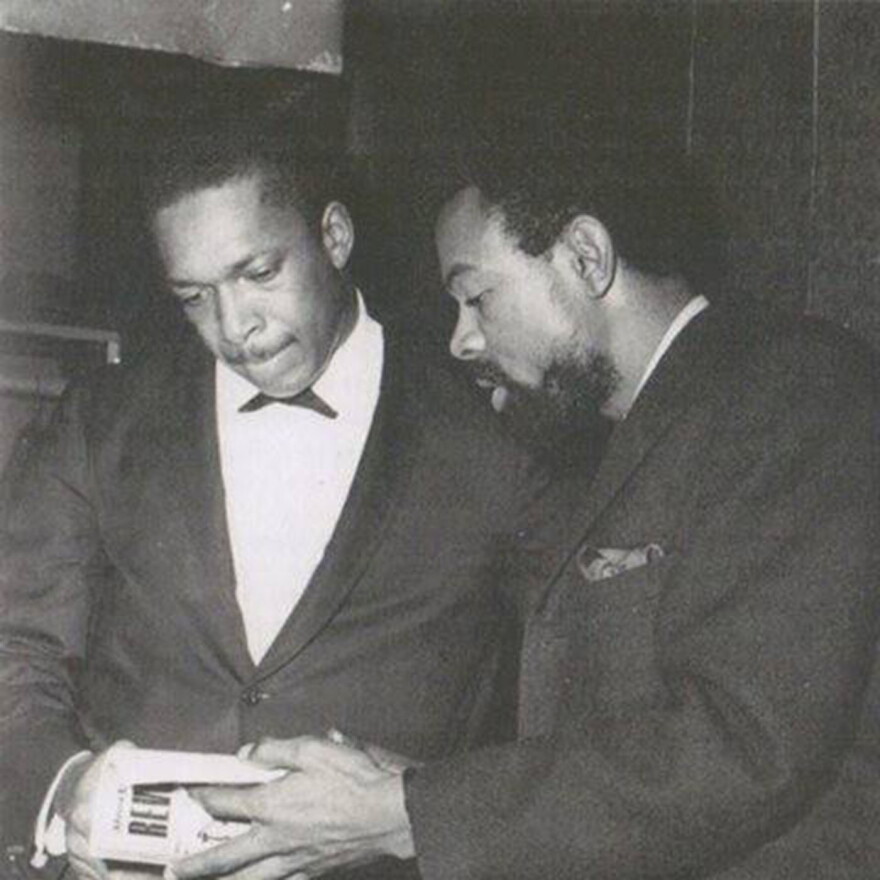
PHOTO (L-R): John Coltrane and Leroi Jones/Amiri Baraka in 1963

LeRoi Jones, 1964
JOHN COLTRANE LIVE AT BIRDLAND, IMPULSE RECORDS, 1963

Political, fiery, critical, poetic, inspirational…All of this shows up in Amiri Baraka’s brilliant liner notes to the 1963 recording of John Coltrane’s Live at Birdland. At the time known as LeRoi Jones, Baraka’s liner notes to this album were the first time the jazz critic Stanley Crouch “had seen that kind of poetic sensibility brought to the discussion of jazz. It was as new to me as the way Coltrane and his band were reinventing the 4/4 swing, blues, ballads, and Afro-Hispanic rhythms that are the four elements essential to jazz…His was the first Negro voice that sailed to the center of my taste by combining the spunk and the raw horrors of the sidewalk with the library, for an elegant manhandling of the form.”
These notes were written at the time of Jones’ 1963 Down Beat essay “Jazz and the White Critic,” which, in the words of Blowin’ Hot and Cool: Jazz and its Critics author John Gennari, was a “challenge to jazz writers of all backgrounds to reckon with the lived experience of black Americans and to consider how this experience had been embedded in the notes, tones, and rhythms of the music.” Keep that in mind when reading these notes…
LeRoi Jones Liner Notes on John Coltrane’s Live at Birdland (1963):
One of the most baffling things about America is that despite its essentially vile profile, so much beauty continues to exist here. Perhaps it’s as so many thinkers have said, that it is because of the vileness, or call it adversity, that such beauty does exist. (As balance?).
Thinking along these lines, even the title of this album can be rendered “symbolic” and more directly meaningful. John Coltrane Live At Birdland. To me, Birdland is only America in microcosm, and we know how high the mortality rate is for artists in this instant tomb. Yet, the title tells us that John Coltrane is there live. In this tiny America where the most delirious happiness can only be caused by the dollar, a man continues to make daring reference to some other kind of thought. Impossible? Listen to I Want To Talk About You.
Coltrane apparently doesn’t need an ivory tower. Now that he is a master, and the slightest sound from his instrument is valuable, he is able, literally, to make his statements anywhere. Birdland included. It does not seem to matter to him (nor should it) that hovering in the background are people and artifacts that have no more to do with his music than silence.
But now I forget why I went off into this direction. Nightclubs are, finally, nightclubs. And their value is that even though they are raised or opened strictly for gain (and not the musician’s) if we go to them and are able to sit, as I was for this session, and hold on, if it is a master we are listening to, we are very likely to be moved beyond the pettiness and stupidity of our beautiful enemies. John Coltrane can do this for us. He has done it for me many times, and his music is one of the reasons suicide seems so boring.
There are three numbers on the album that were recorded Live at Birdland, Afro-Blue, I Want To Talk About You, and The Promise. And while some of the non-musical hysteria has vanished from the recording, that is, after riding a subway through New York’s bowels, and that subway full of all the things any man should expect to find in some thing’s bowels, and then coming up stairs, to the street, and walking slowly, head down, through the traffic and failure that does shape the area, and then entering “The Jazz Corner Of The World” (a temple erected in praise of what God?), and then finally amidst that noise and glare to hear a man destroy all of it, completely, like Sodom, with just the first few notes from his horn, your “critical” sense can be erased completely, and that experience can place you somewhere a long way off from anything ugly. Still, what was of musical value that I heard that night does remain, and the emotions … some of them completely new … that I experience at each “objective” rehearing of this music are as valuable as anything else I know about. And all of this is on this record, and the studio pieces, Alabama and Your Lady, are among the strongest efforts on the album.
But since records, recorded “Live” or otherwise, are artifacts, that is the way they should be talked about. The few people who were at Birdland the night of October 8 who really beard what Coltrane, Jones, Tyner and Garrison were doing will probably tell you, if you ever run into them, just “exactly” what went on, and how we all reacted. I wish I had a list of all those people so that interested parties could call them and get the whole story, but then, almost anyone who’s heard John and the others at a nightclub or some kind of live performance has got stories of their own. I know I’ve got a lot of them.
But in terms of the artifact, what you’re holding in your hand now, I would say first of all, if you can hear, you’re going to be moved. Afro-Blue, the long tune of the album, is in the tradition of all the African-Indian-Latin flavored pieces Trane has done on soprano, since picking up that horn and reclaiming it as a jazz instrument. (In this sense The Promise is in that same genre.) Even though the head-melody is simple and song-like, it is a song given by making what feels to me like an almost unintelligible lyricism suddenly marvelously intelligible. McCoy Tyner too, who is the polished formalist of the group, makes his less cautious lyrical statements on this, but driven, almost harassed, as Trane is too, by the mad ritual drama that Elvin Jones taunts them with. There is no way to “describe” Elvin’s playing, or, I would suppose, Elvin himself. The long tag of Afro-Blue, with Elvin thrashing and cursing beneath Trane’s line, is unbelievable. Beautiful has nothing to do with it, but it is. (I got up and danced while writing these notes, screaming at Elvin to cool it.) You feel when this is finished, amidst the crashing cymbals, bombarded tomtoms, and above it all Coltrane’s soprano singing like any song you can remember, that it really did not have to end at all, that this music could have gone on and on like the wild pulse of all living.
Trane did Billy Eckstine’s I Want To Talk About You some years ago, but I don’t think it’s any news that his style has changed a great deal since then, and so this Talk is something completely different. It is now a virtuoso tenor piece (and the tenor is still Trane’s “real” instrument) and instead of the simplistic though touching note-for-note replay of the ballad’s line, on this performance each note is tested given a slight tremolo or emotional vibrato (note to chord to scale reference), which makes it seem as if each one of the notes is given the possibility of “infinite” qualification, i.e., scalar or chordal, expansion, “threatening” us with those “sheets of sound,” but also proving that the ballad as it was written was only the beginning of the story. The tag on this is an unaccompanied solo of Trane’s that is a tenor lesson-performance that seems to get more precisely stated with each rehearing.
If you have heard Slow Dance or After The Rain, then you might be prepared for the kind of feeling that Alabama carries. I didn’t realize until now what a beautiful word Alabama is. That is one function of art, to reveal beauty, common or uncommon, uncommonly. And that’s what Trane does. Bob Thiele asked Trane if the title “had any significance to today’s problems.” I suppose he meant literally. Coltrane answered, “It represents, musically, something that I saw down there translated into music from inside me.” Which is to say, Listen. And what we’re given is a slow delicate introspective sadness, almost hopelessness, except for Elvin, rising in the background like something out of nature … a fattening thunder, storm clouds or jungle war clouds. The whole is a frightening emotional portrait of some place, in these musicians’ feelings. If that “real” Alabama was the catalyst, more power to it, and may it be this beautiful, even in its destruction.
Your Lady is the sweetest song in the album. And it is pure song, say, as an accompaniment for some very elegant uptown song and dance man. Elvin Jones’ heavy tingling parallel counterpoint sweeps the line along, and the way he is able to solo constantly beneath Trane’s flights, commenting, extending, or just going off on his own, is a very important part of the total sound and effect of this Coltrane group. Jimmy Garrison’s constancy and power, which must be fantastic to support, stimulate and push this group of powerful (and diverse) personalities, is already almost legendary. On tunes like Lady or Afro-Blue Garrison’s bass booms so symmetrically and steadily and emotionally, and again, with such strength, that one wild guess that he must be able to tear safes open with his fingers. All the music on this album is Live, whether it was recorded above drinking and talk at Birdland, in the studio. There is a daringly human quality to John Coltrane’s music that makes itself felt, wherever he records. If you can hear, this music will make you think of a lot of weird and wonderful things. You might even become one of them.
https://soundprojections.blogspot.com/
https://soundprojections.blogspot.com/2015/09/john-coltrane-1926-1967-legendary.html
PHOTO: JOHN COLTRANE (1926-1967)




https://www.allmusic.com/artist/john-coltrane-mn0000175553#biography
John Coltrane
(1926-1967)
Biography by William Ruhlmann
Coltrane was the son of John R. Coltrane, a tailor and amateur musician, and Alice (Blair) Coltrane. Two months after his birth, his maternal grandfather, the Reverend William Blair, was promoted to presiding elder in the A.M.E. Zion Church and moved his family, including his infant grandson, to High Point, North Carolina, where Coltrane grew up. Shortly after he graduated from grammar school in 1939, his father, his grandparents, and his uncle died, leaving him to be raised in a family consisting of his mother, his aunt, and his cousin. His mother worked as a domestic to support the family. The same year, he joined a community band in which he played clarinet and E flat alto horn; he took up the alto saxophone in his high school band. During World War II, Coltrane's mother, aunt, and cousin moved north to New Jersey to seek work, leaving him with family friends; in 1943, when he graduated from high school, he too headed north, settling in Philadelphia. Eventually, the family was reunited there.
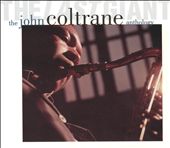
While taking jobs outside music, Coltrane briefly attended the Ornstein School of Music and studied at Granoff Studios. He also began playing in local clubs. In 1945, he was drafted into the navy and stationed in Hawaii. He never saw combat, but he continued to play music and, in fact, made his first recording with a quartet of other sailors on July 13, 1946. A performance of Tadd Dameron's "Hot House," it was released in 1993 on the Rhino Records anthology The Last Giant. Coltrane was discharged in the summer of 1946 and returned to Philadelphia. That fall, he began playing in the Joe Webb Band. In early 1947, he switched to the King Kolax Band. During the year, he switched from alto to tenor saxophone. One account claims that this was as the result of encountering alto saxophonist Charlie Parker and feeling the better-known musician had exhausted the possibilities on the instrument; another says that the switch occurred simply because Coltrane next joined a band led by Eddie "Cleanhead" Vinson, who was an alto player, forcing Coltrane to play tenor. He moved on to Jimmy Heath's group in mid-1948, staying with the band, which evolved into the Howard McGhee All Stars until early 1949, when he returned to Philadelphia. That fall, he joined a big band led by Dizzy Gillespie, remaining until the spring of 1951, by which time the band had been trimmed to a septet. On March 1, 1951, he took his first solo on record during a performance of "We Love to Boogie" with Gillespie.
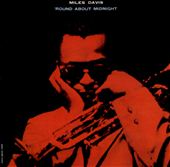
Coltrane's association with Davis inaugurated a period when he began to frequently record as a sideman. Davis may have been trying to end his association with Prestige, but Coltrane began appearing on many of the label's sessions. After he became better known in the '60s, Prestige and other labels began to repackage this work under his name, as if he had been the leader, a process that has continued to the present day. (Prestige was acquired by Fantasy Records in 1972, and many of the recordings in which Coltrane participated have been reissued on Fantasy's Original Jazz Classics [OJC] imprint.)
Coltrane tried and failed to kick heroin in the summer of 1956, and in October, Davis fired him, though the trumpeter had relented and taken him back by the end of November. Early in 1957, Coltrane formally signed with Prestige as a solo artist, though he remained in the Davis band and also continued to record as a sideman for other labels. In April, Davis fired him again. This may have given him the impetus to finally kick his drug habit, and freed of the necessity of playing gigs with Davis, he began to record even more frequently. On May 31, 1957, he finally made his recording debut as a leader, putting together a pickup band consisting of trumpeter Johnny Splawn, baritone saxophonist Sahib Shihab, pianists Mal Waldron and Red Garland (on different tracks), bassist Paul Chambers, and drummer Al "Tootie" Heath. They cut an album Prestige simply titled Coltrane upon release in September 1957. (It has since been reissued under the title First Trane.)
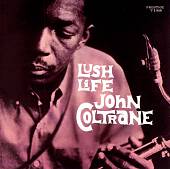
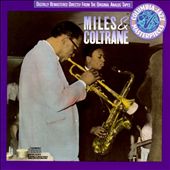
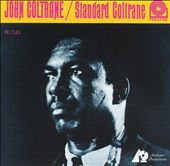
By the end of 1959, Coltrane had recorded what would be his Atlantic debut, Giant Steps, released in early 1960. The album, consisting entirely of Coltrane compositions, in a sense marked his real debut as a leading jazz performer, even though the 33-year-old musician had released three previous solo albums and made numerous other recordings. His next Atlantic album, Coltrane Jazz, was mostly recorded in November and December 1959 and released in February 1961. In April 1960, he finally left the Davis band and formally launched his solo career, beginning an engagement at the Jazz Gallery in New York, accompanied by pianist Steve Kuhn (soon replaced by McCoy Tyner), bassist Steve Davis, and drummer Pete La Roca (later replaced by Billy Higgins and then Elvin Jones). During this period, he increasingly played soprano saxophone as well as tenor.
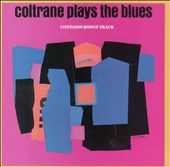
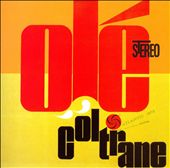
John Coltrane is sometimes described as one of jazz's most influential musicians, and certainly there are other artists whose playing is heavily indebted to him. Perhaps more to the point, Coltrane is influential by example, inspiring musicians to experiment, take chances, and devote themselves to their craft. The controversy about his work has never died down, but partially as a result, his name lives on and his recordings continue to remain available and to be reissued frequently.
5 Minutes That Will Make You Love John Coltrane
Coltrane
changed the game in American music a few times over. Here’s a guided
tour to his career, courtesy of 15 musicians, scholars, poets, writers
and other experts.
February 7, 2024
New York Times
Yes, it’s time for this series to focus on John Coltrane — perhaps the most sanctified musician in the whole Black American tradition, who other artists sometimes refer to simply as “St. John.”
Born in Hamlet, N.C., and raised in High Point, Coltrane arrived on the New York scene in the 1950s, by way of Philadelphia and the Miles Davis Quintet. In the short years between that arrival and his death, in 1967, the world around Coltrane would change dramatically. He reached the peak of his creative forces as a saxophonist just as American society was bursting apart in the 1960s, and as freedom movements drummed colonialism out of the African continent. Though introspective and soft-spoken, singularly allergic to grandstanding, Coltrane felt powerfully concerned with the fate of the world, and he was sure that music had a role to play in turning the tides.
He closely studied spiritual and musical systems from Africa and India, sensing that ancient, non-Western traditions might light the path toward a new creative approach. For many of his contemporaries, Trane’s saxophone became synonymous with a liberated mind and body. And, however ineffable, it carried a message. As A.B. Spellman wrote in a poem after the saxophonist’s death, “trane’s horn had words in it.”
Coltrane changed the game in American music a few times over: first, with a style that felt like such a force of nature, one critic labeled it “sheets of sound,” as if he were commanding monsoon rains. Then, in 1960, the flipbook-fast harmonies of “Giant Steps” upped the expectations for jazz improvisers by a big margin. Swinging in the other direction, Trane brought his whirling-dervish attack to a more stationary style of music: raga-like, harmonically planted “modal” tunes such as “Impressions,” “Africa” and “India.”
In the mid-60s, compelled by his own spirituality, by the outward-bound “free jazz” being made by artists like Sun Ra, Ornette Coleman and Eric Dolphy, and by the music he’d been playing at home with his second wife, the pianist and composer Alice (McLeod) Coltrane, the saxophonist wrote and recorded his masterpiece, “A Love Supreme.” A paean to God, it also sounds like an attempt to unleash purifying flames on a world gone wrong. And from there, he went even further; his last two years saw Coltrane pushing rhythm and tone beyond their breaking points.
Below you’ll find a guided tour of Coltrane’s career, courtesy of 15 musicians, scholars, poets, writers and other experts whose lives have been cleansed, and made brighter, by the sheets of sound. You can find a playlist at the bottom of the article, and be sure to leave your own favorites in the comments.
◆ ◆ ◆
A.B. Spellman, poet and author
“Blue Train”
When at the end I compile the elements of my life into debits and assets, near the top of the assets list will be my many cathartic evenings spent in clubs listening to John Coltrane live. If you think that the recordings are powerful, imagine sitting 15 feet from that power as it was in the making. I can vividly remember hearing Trane and Thelonious Monk, every set, every night, at the 5 Spot after Monk’s return to club gigs in New York in 1957. Before that summer, nobody in the New York jazz world would have marked Coltrane as the next big thing — he was thought to be a middle-of-the-pack hard-bop saxophonist. But he blossomed under Monk. The wonder of the 5 Spot evenings was in bearing witness to his blooming into this Godzilla expressionist who grew larger every set, every evening.
There was an open logic to his lines. “Blue Train,” the record that he made to satisfy his contract with Blue Note, was a masterpiece exemplification of that period. Of the tunes on that date, the title track was the summary statement. It had a sort of free grammar to it, a long solo comprising three themes all stated and developed with clarity, deep emotional meaning and perfect resolution. I have heard this solo hundreds of times, and it is new each time. “Blue Train” is why we return to art when the terrors of the material world chase us home.
◆ ◆ ◆
Dr. Farah Jasmine Griffin, scholar
“Naima”
A love song inspired by and named for John Coltrane’s first wife, “Naima” is a contemplative ballad that exudes a sense of reverence for the beloved. The saxophonist known for long, complex solos does not take one. He chooses instead to open and close with a slow, meditative statement, made all the more so because it glides over the sustained, repeated pedal tone played by Paul Chambers on bass. Following Wynton Kelly’s eloquent piano solo, Trane returns and we accompany him someplace close to heaven, and it’s oh so pretty there. This love song is a prayer. As such, it looks toward his more explicitly spiritual works that follow in the years to come. Is it any wonder that generations of jazz musicians approach “Naima” not only as a standard, but also as scripture? Listen closely and fall in love.
◆ ◆ ◆
Dr. Joshua Myers, scholar
“Alabama”
I could see the grief fill the eyes of the poet Askia Muhammad Touré: “It was like, oh, they are killing our babies?” Moments after recounting what it was to be Black and alive in the days after the Sept. 15, 1963, killings of children at the Sixteenth Street Baptist Church in Birmingham, Ala., he was the first person to fully capture for me the meaning of John Coltrane’s “Alabama.” Composed as an offering of solidarity in the wake of Black collective grief, these are melodic lines atop a pulsating rhythm, imploring us — then, and especially now — to never allow the children to be sacrificed again.
http://www.sfgate.com/entertainment/article/Coltrane-at-80-a-talent-supreme-2469266.php
Coltrane at 80 -- A talent supreme
by Greg Tate
Special to The San Francisco Chronicle
September 22, 2006

In an art form more celebrated for its sinners, John Coltrane, who somewhere over the rainbow will turn 80 on Saturday, held the honor of being the music's first saint.
There have been three figures in jazz history who have changed not only the artistic rules of the game but the social field on which it has been played, as well -- Louis Armstrong, Charlie Parker and Coltrane, who died in 1967. The mythic status of each remains in dialogue with the others. Armstrong's entertainment ethic stands in marked contrast to Parker's aloof and self-destructive genius profile, and Coltrane's search for God, redemption and goodness offers a reconciliation and a gentle rebuke to them.
[Download/Listen to Mp3s by John Coltrane]:
"Acknowledgement" | "Wise One" | "Greensleeves" | "Lush Life" ]
By the time I began listening to jazz in the early '70s, you felt Coltrane's influence everywhere in African American culture -- in the music, the politics, religion, literature, visual arts, even food. (Trane's natural diet probably drew as many young players to carrot juice as Parker's habits drew to drugs).
But especially in music, unless your name was Ornette Coleman, Cecil Taylor, Albert Ayler or Sun Ra, you had to labor under the long shadow of Coltrane. This was true to such a pervasive degree that not until recently have I been able to truly hear Coltrane's music as a sui generis thing. When an artist is so surrounded by admirers, flatterers and copycats, the originality of what he or she proposes can be lost and even trivialized through the rabid impersonations of their style. If artists live long enough, rest on their laurels often enough, that style can become a trap and a parody of itself.
With Coltrane, though, we have the rare fortune to witness, even in retrospect, an artist of promethean will, talent and force create a means of expression that wasn't bent so much toward perfecting a style as it was toward the calibre of the man himself.
Coltrane brought a self-improvement ethic front and center into jazz, and in a way that couldn't allow the man being less evolved than his art. He once said he wanted to be a force for real good in the world, poised against the opposing forces. He also espoused the belief that the pursuit of art required what he described as a "constant polishing of the mirror."
Coltrane's recording career spans 1955 to 1967, during which time he participated in several groundbreaking albums with Miles Davis, two (posthumously released) live recordings from his time with Thelonious Monk, and a formidable resume of albums under his own leadership. What you can't help but hear across the span of all those tracks is a man chasing perfection, or at least his own perfectibility and capacity for profundity.
If we all live long, the artists we love get more intriguing to us in different ways -- some by merely surviving, some by becoming more visibly, audibly vulnerable and even broken (like the Billie Holiday of her swan song "Lady in Satin"), others, like Armstrong, by sustaining their great generosity of spirit into their golden years.
What makes Coltrane unique is that his artistic pursuit was ultimately of things that art can at best only poetically suggest, a breech-birthed unity between humanity and cosmological creation itself. He's also rare in this most improvisational of music -- where the notion of "destination point" is anathema -- of producing one work that looms as his centerpiece, namely, "A Love Supreme," quite possibly the most cherished jazz recording of all time (though Miles' "Kind of Blue," which Trane and Cannonball Adderley performed such saxophone miracles upon, is more often played).
But "A Love Supreme" is the frame through which we have come to view Trane's entire career, and life even, before and after. (Perversely, it's not my personal favorite, a ranking occupied by the little discussed and posthumously released "Sun Ship," "one of the last studio recordings of the same quartet that erected "A Love Supreme," and certainly the most free of the group's free-jazz forays.)
"A Love Supreme" is also, as Ashley Kahn has pointed out, a genuine singularity in that it is a completely secular work about things spiritual and religious, and anything but academic or exhortatory. "A Love Supreme" is as flesh and blood, as animal and erotic even, as a piece of music can get and, at the same time, as philosophical, conceptual, thoughtful and rigorously mysterious.
By the time the Coltrane quartet made it, Coltrane was already the artist to watch in jazz for a host of reasons -- his own mercurial development had garnered the respect of longtime jazz devotees who'd followed him beyond Miles and Monk to his first recordings with Atlantic, especially "Giant Steps." For those jazz listeners impressed with technical legerdemain in jazz, Trane made them sit up and take notice in a way no one since Parker had, and with a voice as personal, as pulsating with life and as mesmerizing.
Trane produced a bona fide hit with his version of "My Favorite Things," and in doing so he found the wherewithal to form a bridge between the new and the old and to openly endorse and even financially support the younger avant garde musicians like Coleman, Archie Shepp and Taylor. This was at a time when members of Coltrane's own generation like Miles and Mingus openly criticized these players and, bizarrely (given who was signifying), even questioned their mental stability.
Coltrane was the kind of artist whose jug could contain worlds, peoples and multitudes and still not compromise or corrupt his own path or plans. The paradox of the free-jazz movement, and what made it so vulnerable to charges of charlatanism, was that it simplified and complicated the jazz experience at the same time. For better or worse, the movement made jazz a more self-consciously, more self-avowedly intellectual, experimental, mystical and political music -- more science fictional (in keeping with the Cold War's space race) and more vocally Afrocentric.
It was also a movement that demanded the audience get with the program or get out, with few concessions to entertainment. This made for a host of real starving artists (Coltrane compatriot Pharoah Sanders lived off wheat germ and peanut butter). The numerous kindnesses the already quite financially secure Trane showed his hungry young lions -- from actual cash loans to buying cats groceries to obtaining record deals -- are now part of jazz legend and further support the claims made for Trane's sainthood.
What has continually surprised me in coming back to Coltrane's oeuvre in recent years is how time has made his music sound even more original and exciting, less definitive of the period than of one man's transcendence of temporality.
Some of this is bluntly because where he was once the dominant voice of a radical Black jazz culture, jazz today is anything but Black and radical in its rhetoric and expression, and there are no dominant figures or dominant ideas. The upshot of this, where Coltrane is concerned, is that where you once couldn't avoid referencing him, today there's little that even remotely comes close to the music he made with McCoy Tyner, Elvin Jones and Jimmy Garrison -- unless you count the duo of Trane's wife Alice and son Ravi, who, in their homegrown context, channel Coltrane's widely imitated never-duplicated sound, ideas and depth of feeling in ways more eerie, throat-catching and majestic than one would have ever thought humanly possible.
Honorable mention should also be made of the daring and undaunted Branford Marsalis Quartet, which occasionally performs "A Love Supreme" in its entirety.
What the Coltrane quartet had was two of music's more elusive qualities in combination -- namely, melody and gravitas. You can hear them in certain Black voices that came to fore in the '60s -- Otis Redding, Nina Simone, Martin Luther King, Malcolm X -- and in certain rappers today like Rakim, Nas, GZA. But the Coltrane Quartet, like King, also gave voice and timbre to their heaviest burden, a swollen, implacable compassion for the human condition that required that everything they had be laid on the line. You can't buy that level of commitment off a rack, download it from the Net neither, and you damn sure can't fake it.
You can only deliver it from evil and maybe even bleed for it: Tyner has said he knew it was time for him to leave the band when he saw Trane bleeding from the mouth while blowing and not even seeming to care. That degree of indefatigable discipline and unbridled passion can still render so many fans of the quartet speechless, enchanted, focused, uplifted. An avowed atheist and libertine friend once told me that when he wanted to hear God, he listened to Coltrane. He was hedging his bets that the religious ardor Trane's music invoked in him would be deliverance enough for his sins.
https://www.nytimes.com/2024/02/07/arts/music/john-coltrane-jazz-music.html
5 Minutes That Will Make You Love John Coltrane
Coltrane changed the game in American music a few times over. Here’s a guided tour to his career, courtesy of 15 musicians, scholars, poets, writers and other experts.
by Giovanni Russonello
February 7, 2024
New York Times
Yes, it’s time for this series to focus on John Coltrane — perhaps the most sanctified musician in the whole Black American tradition, who other artists sometimes refer to simply as “St. John.”
Born in Hamlet, N.C., and raised in High Point, Coltrane arrived on the New York scene in the 1950s, by way of Philadelphia and the Miles Davis Quintet. In the short years between that arrival and his death, in 1967, the world around Coltrane would change dramatically. He reached the peak of his creative forces as a saxophonist just as American society was bursting apart in the 1960s, and as freedom movements drummed colonialism out of the African continent. Though introspective and soft-spoken, singularly allergic to grandstanding, Coltrane felt powerfully concerned with the fate of the world, and he was sure that music had a role to play in turning the tides.
He closely studied spiritual and musical systems from Africa and India, sensing that ancient, non-Western traditions might light the path toward a new creative approach. For many of his contemporaries, Trane’s saxophone became synonymous with a liberated mind and body. And, however ineffable, it carried a message. As A.B. Spellman wrote in a poem after the saxophonist’s death, “trane’s horn had words in it.”
Coltrane changed the game in American music a few times over: first, with a style that felt like such a force of nature, one critic labeled it “sheets of sound,” as if he were commanding monsoon rains. Then, in 1960, the flipbook-fast harmonies of “Giant Steps” upped the expectations for jazz improvisers by a big margin. Swinging in the other direction, Trane brought his whirling-dervish attack to a more stationary style of music: raga-like, harmonically planted “modal” tunes such as “Impressions,” “Africa” and “India.”
In the mid-60s, compelled by his own spirituality, by the outward-bound “free jazz” being made by artists like Sun Ra, Ornette Coleman and Eric Dolphy, and by the music he’d been playing at home with his second wife, the pianist and composer Alice (McLeod) Coltrane, the saxophonist wrote and recorded his masterpiece, “A Love Supreme.” A paean to God, it also sounds like an attempt to unleash purifying flames on a world gone wrong. And from there, he went even further; his last two years saw Coltrane pushing rhythm and tone beyond their breaking points.
Below you’ll find a guided tour of Coltrane’s career, courtesy of 15 musicians, scholars, poets, writers and other experts whose lives have been cleansed, and made brighter, by the sheets of sound. You can find a playlist at the bottom of the article, and be sure to leave your own favorites in the comments.
◆ ◆ ◆
A.B. Spellman, poet and author
“Blue Train”
When at the end I compile the elements of my life into debits and assets, near the top of the assets list will be my many cathartic evenings spent in clubs listening to John Coltrane live. If you think that the recordings are powerful, imagine sitting 15 feet from that power as it was in the making. I can vividly remember hearing Trane and Thelonious Monk, every set, every night, at the 5 Spot after Monk’s return to club gigs in New York in 1957. Before that summer, nobody in the New York jazz world would have marked Coltrane as the next big thing — he was thought to be a middle-of-the-pack hard-bop saxophonist. But he blossomed under Monk. The wonder of the 5 Spot evenings was in bearing witness to his blooming into this Godzilla expressionist who grew larger every set, every evening.
There was an open logic to his lines. “Blue Train,” the record that he made to satisfy his contract with Blue Note, was a masterpiece exemplification of that period. Of the tunes on that date, the title track was the summary statement. It had a sort of free grammar to it, a long solo comprising three themes all stated and developed with clarity, deep emotional meaning and perfect resolution. I have heard this solo hundreds of times, and it is new each time. “Blue Train” is why we return to art when the terrors of the material world chase us home.
Listen on YouTube
◆ ◆ ◆
Dr. Farah Jasmine Griffin, scholar
“Naima”
A love song inspired by and named for John Coltrane’s first wife, “Naima” is a contemplative ballad that exudes a sense of reverence for the beloved. The saxophonist known for long, complex solos does not take one. He chooses instead to open and close with a slow, meditative statement, made all the more so because it glides over the sustained, repeated pedal tone played by Paul Chambers on bass. Following Wynton Kelly’s eloquent piano solo, Trane returns and we accompany him someplace close to heaven, and it’s oh so pretty there. This love song is a prayer. As such, it looks toward his more explicitly spiritual works that follow in the years to come. Is it any wonder that generations of jazz musicians approach “Naima” not only as a standard, but also as scripture? Listen closely and fall in love.
Listen on YouTube
◆ ◆ ◆
Dr. Joshua Myers, scholar
“Alabama”
I could see the grief fill the eyes of the poet Askia Muhammad Touré: “It was like, oh, they are killing our babies?” Moments after recounting what it was to be Black and alive in the days after the Sept. 15, 1963, killings of children at the Sixteenth Street Baptist Church in Birmingham, Ala., he was the first person to fully capture for me the meaning of John Coltrane’s “Alabama.” Composed as an offering of solidarity in the wake of Black collective grief, these are melodic lines atop a pulsating rhythm, imploring us — then, and especially now — to never allow the children to be sacrificed again.
Listen on YouTube
◆ ◆ ◆
Dave Liebman, saxophonist
“Crescent”
“Crescent” is my all-time favorite recording, presenting an amazing opportunity to get into the musical language that Trane was speaking. The power of the music lies in the great feel and skill of the rhythm section. “Crescent” has several outstanding elements. There is a very apparent, deep feeling that John carried with him all the time but especially in the late period, when his sound broadened and took on a darker tone quality. “Crescent” features some melodic passages that are clearly lyrical. Additionally, the harmony of the chord changes makes this track very interesting and moving. It demands attentive listening.
Listen on YouTube
◆ ◆ ◆
Yusef Komunyakaa, poet
“My Favorite Things”
John Coltrane had come a long ways from Hamlet, N.C. Trane could wail through brass, and then create a lyrical contrast that catches the listener slightly off guard. He even could take a popular tune and internalize it until it was his, and such is the case with “My Favorite Things.” Yes, one hears a practiced reaching and ascension — a translation of 14-hour rehearsals. His tone was mind and body, honed into a ritual of purification. Coltrane did not believe his fellow musicians were mere sidemen. As a group, they could articulate and blow true feeling — without sentimentality. Because a conversation grows between instruments, the listener participates without being over-conscious of popping fingers, tapping feet or shaking hips. Thus, listening is active, and perhaps this is why Coltrane said, “When you begin to see the possibilities of music, you desire to do something good for people, to help humanity free itself from its hang-ups.”
To lift myself up, I tune into a joyful reminder — yes, I return to Coltrane’s version of “My Favorite Things” often. His spirit journeys to the melody, and we improvise our own personal catalog of delights. He elongates a tune into a precise tonal reckoning — no mishaps or blips on the cosmic screen. In fact, this man was blowing feeling as a way of dealing with the mind and heart at the same time, even holding himself accountable. There’s a taking apart, and then a putting back together tonally. Trane knew how to walk the listener to the edge of extended possibility, to peer down into the existential void, and then sweet-talk the listener to a sanctuary of the hour. And, in this sense, especially in a tune such as “My Favorite Things,” one may enter the John Coltrane Church, where we participants become co-creators of meaning.
Listen on YouTube
◆ ◆ ◆
Willard Jenkins, journalist and author
“Out of This World”
Pondering John Coltrane track recommendations, the inevitable faves float by the mind first: “Blue Train,” “My Favorite Things,” “Giant Steps,” “Africa” or the “A Love Supreme” suite. And don’t dare sleep on the hypnotic “Tunji,” used powerfully by Spike Lee in his 1990 film “Mo’ Better Blues.” But the more I contemplated, I kept coming back to Trane’s engagement with “Out of This World,” from the “Coltrane” album (Impulse!), a classic example of his transforming a Great American Songbook selection. The Coltrane quartet takes that piece to regions the songwriters Harold Arlen and Johnny Mercer doubtless never imagined, deep to an African realm, particularly courtesy of Elvin Jones’s distinctive, roiling drums, with Jimmy Garrison’s cascading bass lines and McCoy Tyner’s insistent block chords propelling Coltrane’s tenor saxophone theme statement and subsequent essay. Clocking in at over 14 minutes, there’s plenty to dig into for both the Trane-addicted and the newly initiated.
Listen on YouTube
◆ ◆ ◆
Giovanni Russonello, Times jazz critic
“Acknowledgment”
Coltrane’s landmark suite “A Love Supreme” ends with “Psalm,” a slow, seeking devotional, its melody set to a poem giving thanks to God. It is a remarkably direct conversation between a musician and the divine, channeled through his roaring quartet. But the part of the suite that will stick most firmly in your mind and body comes at the start. Part 1, “Acknowledgment,” features a plodding incantation, first set by Jimmy Garrison’s bass, then played by the saxophone, then intoned in Coltrane’s husky voice: “A love supreme. A love supreme.” It is among the simplest things that this master of midair complexity would ever play. It feels so foundational, so grounding, that it’s almost like a creation myth. But jazz, as a discipline, had already been around for more than 50 years when he wrote it. What, then, was he creating? Once it was recorded, Coltrane knew he had reached some kind of summit: This was the beginning of the end for his legendary quartet. It had made some of the most transcendent music of the 20th century; its mission was accomplished.
Listen on YouTube
Dr. Lewis Porter, pianist and Coltrane biographer
“Hackensack” (live)
In my continuing research on Coltrane, I find that listeners new to his work often have difficulty relating it to the jazz tradition. This excerpt from a TV program, taped on March 28, 1960, in Düsseldorf, Germany, is not part of his “official” legacy of recordings, but we are lucky that it was preserved. It is perfect evidence that Coltrane had established deep roots in swing and blues before moving out from there. The tune is “Hackensack,” by Thelonious Monk, and the AABA chord sequence is taken from Gershwin’s swing classic “Oh, Lady Be Good!”
Coltrane begins his improvisation at 1:05 with some down-home riffing, so that when he then brings on some incredibly fast notes, it makes a tremendously effective contrast. He always seemed to get right into “the zone,” and he generates so much power during his three-chorus solo that one almost marvels that the unflappable Stan Getz follows him at all. At 6:55, Coltrane brings in some new riffing, again illustrating how connected he is to the jazz tradition. Speaking of the tradition: At the bridge (7:12), the saxophonists look at each other, trying to decide who will take over, and then wordlessly decide to keep playing together.
Listen on YouTube
Marcus J. Moore, jazz writer
“Sun Ship”
When jazz purists consider John Coltrane’s discography, they often stop around 1965, when the saxophonist eschewed calm arrangements for harsher ones. The band, which included McCoy Tyner on piano, Jimmy Garrison on bass and Elvin Jones on drums, still sought communion with higher powers, but it seemed they wanted to play the loudest notes possible to foster it. So when people hear “Sun Ship,” they might hear noise. But I hear freedom in the stomping drums, in the volcanic wail of the horn. I hear a band breaking the rules of what jazz was supposed to be, and a bandleader sidestepping a box he never fit. In the song’s opening moments, Jones and Coltrane trade equally riotous commotion: The drum kit sounds like it’s being assaulted; the sax all belchy and heaving. By the time Garrison and Tyner join the fray, the intensity heightens, barreling through like a truck with no brakes. I realize this imagery makes the song seem unpleasant, but the beauty is in the challenge it presents. It’s a rewarding listen, conveying angst and autonomy at every turn.
Listen on YouTube
Laura Karpman, film composer
“Summertime”
I have spent most of my adult musical life thinking about how sound and imagery interact. What makes music dark, what makes it light. How can you create specific identifiable emotions? Music is a powerful tool to create multiple subtexts. John Coltrane would’ve been an absolutely spectacular film composer. The decisions he makes are so often rooted in drama.
In “My Favorite Things” (1961), he takes a simple tune at its most shell-like value, makes some rhythmic changes and enriches the harmonic language, but the piece gets truly radical in its long solo. Here, Coltrane creates an entirely new composition. He sticks fundamentally to one chord — an E major 9 — and stays with it. It is the brightest of lights: The music ascends and ascends, builds and bursts even greater blinding optimism, creating a new, powerful original composition. He builds an entire world out of a single chord.
“Summertime,” from the same album, is another perfect example of Coltrane’s ability to radically recontextualize pre-existing music. I’ve always thought that “Summertime” was highly influenced, even lifted, from the spiritual “Motherless Child.” In Gershwin’s original, as well as countless covers, it has a winsome, beautiful lullaby quality. But Coltrane attacks it in this version — it’s sharp, it’s angular, it has edges. He doesn’t want this “Summertime” to be a remembrance of things past, but a midcentury modernist call to action. Coltrane consistently takes existing tunes and recomposes them to add emotional drama and rich subtext. Pure genius.
Listen on YouTube
James Brandon Lewis, saxophonist
“Wise One”
John Coltrane’s grandfathers were ministers, wow! And so is my dad. My earliest memory of Coltrane was one of connection. Admiring your heroes, you hope the slightest thing in common might signify you being on the right path. Coltrane’s encounter with the creator, and the beautiful recordings that came as a result, inspired me. His composition “Wise One,” from his album “Crescent,” recorded in 1964, was revelatory. As a kid I would always rewind the recording after three minutes because I loved to just sit in that vibe, hoping I could decode Coltrane messages; his saxophone was speaking. The ensemble builds a beautiful arc of tension and release. After a brief piano intro, the saxophone enters with lyrics, a contemplation of call and worship. The church is now in service. The bass and drums enter, and the meditation is now in full bloom. The next chapter the tempo shifts, tonalities of joy, and solos of love are spoken. The epilogue begins, and we are reminded of peaceful beginnings. The last petal falls … the band utters, the doors of the church are now open, and we impatiently await next Sunday.
Listen on YouTube
Ben Ratliff, music critic and Coltrane biographer
“Vierd Blues” (live)
What’s that thing called, that phenomenon (if it is a phenomenon) when an artist has achieved such control over their practice that right in front of you they can make the knowable and trackable suddenly diffuse into the uncanny, or the material into the spiritual, such that the music lives in two states at once? Here is a 16-minute, strolling-tempo, major-key, 12-bar blues recorded during the Coltrane quartet’s two-week run at the Sutherland Hotel Lounge in Chicago, March 1961, recorded for live-broadcast radio and never officially released, perhaps because of poor sound quality. It doesn’t matter. The tune starts, and Coltrane solos for 13 choruses, about five minutes straight. “Vierd Blues” (written by Coltrane, otherwise known as “John Paul Jones” and “Trane’s Blues”) is simple and easy to know — it’s a blues — but within 15 seconds he is putting uncommon urgency in a modest place. Sometimes his playing sounds like a kind of focused preaching; sometimes he’s babbling or scrambling notes at high speed; all the while he’s also resolving and recapitulating. By the fifth chorus you can hear the crowd yelling, because what else can they do? They know it, they hear it; it’s that thing.
Listen on YouTube
Isaiah Collier, saxophonist
“One Down, One Up”
“One Down, One Up (Live at the Half Note)” is a record for the adventurers of sound — I would dare say truth-seekers — and I will elaborate. This is an album of pure mastery, and of exemplary musicianship. Everyone was still learning and figuring out so much in that time. The civil rights movement was alive and well, adding to the urgency that these musicians were executing on the bandstand. In this record we hear faint echoes of the musical genres that are emerging, in Garrison playing heavy funk bass lines, Tyner’s harmonic sophistication and the polyrhythmic enchantment of Elvin Jones’s drums. Then of course there is the explicit harmony and sonic landscaping of Coltrane’s tenor and soprano saxophones. This is a record for listeners and musicians alike: a testament of pushing the boundaries of artistry and innovation.
Listen on YouTube
Dr. Bill Cole, musician and Coltrane biographer
“Transition”
This piece marks Coltrane’s entry into a freer style of playing. In the early ’60s, Eric Dolphy had had a tremendous impact on him, and if you look at the things they did together, you can hear that. Thereafter, Trane began to play more freely. I would say that “Transition,” recorded in 1965, was the piece where he was saying clearly that he was going to move away from hard-bop. Jazz is an improvisational music, and it has always been changing. People coming out of the ’50s were bound to change up the music. Then the year after Coltrane recorded “Transition,” and about a year before he died, there was a concert in New York called “Titans of the Tenor.” He and Sonny Rollins and others were part of it, but there was one tenor that they didn’t want on this bill: Albert Ayler, who was really approaching the music in a different way. Well, Trane hired him into his band. He brought him in and paid him with his own money, because he felt that this player should be part of any situation where they were talking about the greatness of the tenor saxophone. And Coltrane was the greatest saxophone player in his time, so he had that kind of influence.
Listen on YouTube
◆ ◆ ◆
David Renard, Times senior editor
“Lush Life”
Is it strange to spotlight John Coltrane with a five-minute-long track that has barely any saxophone for its first three? Maybe — but when that sax does come in, it’s just such a perfect, lyrical, gorgeous moment. Coltrane also recorded a longer instrumental cut of this Billy Strayhorn standard, released as the title track of an earlier Prestige Records album, but it’s the vocal version from “John Coltrane and Johnny Hartman” (1963) that I’ve returned to again and again over the years. McCoy Tyner’s piano and Hartman’s resonant singing set the melancholy scene, pulling up a stool for the listener at “some small dive” where love never walks in the door and no one’s expecting it to; Coltrane, waiting in the wings, sends the melody soaring with restrained phrases that perhaps recall the rosier times of the lyric’s first section. Then the torch is passed back to Hartman so he can finish out one of the great jazz ballads. Turn off the lights, it’s closing time.
Listen on YouTube
Hear John Coltrane's Story

Soon after, Coltrane resolved to clean up his act. He would later write, in the 1964 liner notes to A Love Supreme, "In the year of 1957, I experienced, by the grace of God, a spiritual awakening, which was to lead me to a richer, fuller, more productive life."
But Coltrane didn't always stay the clean course. As he also wrote in the album's notes, "As time and events moved on, I entered into a phase which is contradictory to the pledge and away from the esteemed path. But thankfully now, through the merciful hand of God, I do perceive and have been fully reinformed of his omnipotence. It is truly a love supreme."
The album is, in many ways, a reaffirmation of faith. And the suite lays out what you might call its four phases: "Acknowledgement," "Resolution," "Pursuance" and "Psalms." A Love Supreme has even spawned something of a religious sect. Reverend Franzo Wayne King is pastor of the Saint John Coltrane African Orthodox Church in San Francisco. The congregation mixes African Orthodox liturgy with Coltrane's quotes and a heavy dose of his music. Pastor King calls the album the cornerstone of his 200-member church.
While it's unknown whether Coltrane would have wanted to be worshiped or have his art deified, it's clear in every way that he saw A Love Supreme as much more than just another recording. Coltrane took control of every detail of the album, unlike any of his other works, including writing the liner notes and an accompanying poem. The poem, it's been discovered, is written to match the slow music of the fourth movement, "Psalms." It's a connection Coltrane hints at cryptically in the liner notes.
Pastor King remembers the day his congregation made the discovery. "It was so funny. We were here. We had been collected as a community, and we used to just read it and try to put some passion in it, you know. And then one day, we were reading the album, because he said the last part is 'Psalms,' which is in context, written context. And we said, 'Well, what is he trying to say here?' And then we put it on and sang, 'A love supreme. I would do all I can to be worthy of you, oh, Lord.' It's kind of like Pentecostal preaching, you know," Pastor King says. "We had a great day. We woke up and found out that the music and the words went together, and that was like a further encouragement that John Coltrane was, indeed, you know, sent by God and that that sound had really jumped down from the throne of heaven, so to speak."
While Pastor King sees explicit Christian symbolism in A Love Supreme, others point out that Coltrane took a much more general view. Coltrane was careful to say that while he was raised Christian, his searchings had led him to realize that all religions had a piece of the truth.
"He told me, he says, 'I respond to what's around me,'" remembers Tyner. "That's the way it should be, you know? And it was just—I couldn't wait to go to work at night. It was just such a wonderful experience. I mean, I didn't know what we were going to do. We couldn't really explain why things came together so well, you know, and why it was, you know, meant to be. I mean, it's hard to explain things like that."
http://www.sfgate.com/entertainment/article/Coltrane-at-80-a-talent-supreme-2469266.php
Coltrane at 80 -- A talent supreme
by Greg Tate
Special to The San Francisco Chronicle
September 22, 2006