https://panopticonreview.blogspot.com/2014/01/amiri-baraka-1934-2013-legendary-and.html
FROM THE PANOPTICON REVIEW ARCHIVES
FROM THE PANOPTICON REVIEW ARCHIVES
(Originally posted on January 11, 2014):
Saturday, January 11, 2014
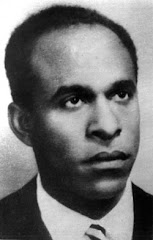
AMIRI BARAKA, 1934-2014: LEGENDARY AND ICONIC WRITER, POET, CRITIC, PLAYWRIGHT, NOVELIST, PUBLIC INTELLECTUAL, TEACHER, AND REVOLUTIONARY ACTIVIST
All,
The death of Amiri Baraka (1934-2014) at the age of 79 on January 9, 2014 in his beloved Newark, New Jersey marks the passing of one of the greatest and most important American writers and thinkers of the past century and in my view the preeminent African American writer of his generation as well as the most consistently profound, innovative, and creatively influential of the entire post 1945 era. A charter member of an extraordinary generation of U.S. writers who were born between 1920-1940 (an innovative, dynamic, visionary, fiercely independent, highly contentious, and even openly raucous group that includes such pivotal post WW2 literary/cultural figures as James Baldwin, John A. Williams, Norman Mailer, Gore Vidal, Toni Morrison, Philip Roth, Thomas Pynchon, Ishmael Reed, Truman Capote, Toni Cade Bambara, Larry Neal, Diane DiPrima, Charles Stevenson Wright, Al Young, Joan Didion, Allen Ginsberg, Frank O'Hara, Bob Kaufman, Kurt Vonnegut, Jack Kerouac, Robert Creeley, Susan Sontag, Edward Albee, Sonia Sanchez, Audre Lorde, Ed Bullins, Adrienne Kennedy, Jayne Cortez, Adrienne Rich, and Clarence Major), Baraka (formerly known as Leroi Jones until 1968) was a truly revolutionary artist in every sense of the word. Blazing a fifty year trail of innovative literary triumphs in poetry, drama, fiction, music criticism and history, cultural and political essays, and social criticism that began formally with the publication of his first book of poetry Preface to A 20 Volume Suicide Note in 1961 Baraka was a also a consummate political organizer and activist who had a seminal impact on two generations of African American activists in a wide myriad of radical political movements that formally began in 1964 and lasted until his death. It is impossible in this limited space to properly comment on and explain just how protean and fundamentally groundbreaking so many of Amiri's stunning achievements in literature and cultural/social activism were or fairly assess the immense and invaluable intellectual and creative legacy he has left us all. As someone who was personally fortunate to have known and on a number of occasions worked with this figure in our contemporary art and politics for many years I was a personal witness to the kindness, generosity, warmth, humor (Amiri was a very funny individual), honesty, wicked sophisticated wit, and deep sincerity that Baraka so often embodied. It should also be noted that unlike far too many other intellectuals in general Baraka was also one of the very best DANCERS that I ever saw. To say that I and many, many other people throughout not only this country but the world (Amiri was a longtime and very enthusiastic global traveler) will miss this literary and cultural GIANT is a massive understament. Amiri was simply one of the those individuals whose extraordinary work and loving humanity constituted and represented the very best in the inspirational history of the powerful African American cultural, aesthetic, and political tradition(s) that informed everything that Baraka did and tried to do in a nearly six decade career. May Amiri rest in eternal peace and may his ongoing legacies continue to inspire, guide, and motivate us to fight for freedom, justice, and self determination in the arts, in our politics, and most importantly in our lives. As Baraka always taught and reminded us: A Luta Continua (The Struggle Continues)...What follows is an extensive textual and visual tribute to Baraka's art and life from many different archival sources, including from his own great body of work. Enjoy and spread the word...
Love and Struggle,
Kofi

AMIRI BARAKA
(b. October 7, 1934--d. January 9, 2014)
1. “A man is either free, or he is not. There cannot be an apprenticeship for freedom.”
—Home: Social Essays, 1966
2. “Art is a weapon in the struggle of ideas, the class struggle.”
—Interview with 3:AM Magazine, 2009
3. “There is no justice in America, but it is the fight for justice that sustains you.”
—Home: Social Essays, 1966
4. “Art is whatever makes you proud to be human.”
—The Kindly Ones
5. “God has been replaced, as he has all over the West, with respectability and air conditioning.”
—Home: Social Essays, 1966
6. “Warriors are poets and poems and all the loveliness here in the worlds.”
—Black Art
7. “Since the rich eat more/ than anybody else/ It is reasonable to assume/ that they are more full of shit.”
7. “Since the rich eat more/ than anybody else/ It is reasonable to assume/ that they are more full of shit.”
—Class Gas
8. “Thought is more important than art. To revere art and have no understanding of the process that forces it into existence, is finally not even to understand what art is.”
—Home: Social Essays, 1966
9. “There is no depth to education without art.”
—Digging: The Afro-American Soul of American Classical Music, 2009
10. “If the flag of an armed enemy of the U.S. {the confederacy} is allowed to fly over government buildings, then it implies that slavery, or at least the threat of slavery, is sanctioned by that government and can still legally exist.”
11. “Poetry is music, and nothing but music. Words with musical emphasis.”
--Via poetseers.org
12. “The attempt to divide art and politics is a bourgeois lie which says good poetry, art, cannot be political, but since everything is … political, even an artist or work that claims not to have any politics is making a political statement by that act.”
—Interview with Aaron Winslow via The Argotist Online
http://panopticonreview.blogspot.com/2009/10/tribute-to-life-and-work-of-amiri.html
FROM THE PANOPTICON REVIEW ARCHIVES
(Originally posted on October 7, 2009):
Poets.org
from the Academy of American Poets
http://www.poets.org/poet.php/prmPID/445
Amiri Baraka was born Everett LeRoy Jones in Newark, New Jersey, on October 7, 1934. His father, Colt LeRoy Jones, was a postal supervisor; Anna Lois Jones, his mother, was a social worker. He attended Rutgers University for two years, then transferred to Howard University. He served in the Air Force from 1954 until 1957, then moved to the Lower East Side of Manhattan. There he joined a loose circle of Greenwich Village artists, musicians, and writers. The following year he married Hettie Cohen and began co-editing the avant-garde literary magazine Yugen with her. That year he also founded Totem Press, which first published works by Allen Ginsberg, Jack Kerouac, and others.
He published his first volume of poetry, Preface to a Twenty-Volume Suicide Note, in 1961. From 1961 to 1963 he was co-editor, with Diane Di Prima, of The Floating Bear, a literary newsletter. His increasing hostility toward and mistrust of white society was reflected in two plays, The Slave and The Toilet, both written in 1962. 1963 saw the publication of Blues People: Negro Music in White America, which he wrote, and The Moderns: An Anthology of New Writing in America, which he edited and introduced. His reputation as a playwright was established with the production of Dutchman at the Cherry Lane Theatre in New York on March 24, 1964. The controversial play subsequently won an Obie Award (for "best off-Broadway play") and was made into a film.
In 1965, following the assassination of Malcolm X, Jones repudiated his former life and ended his marriage. He moved to Harlem, where he founded the Black Arts Repertory Theatre/School. The company, which produced plays that were often anti-white and intended for a black audience, dissolved in a few months. He moved back to Newark, and in 1967 he married African-American poet Sylvia Robinson (now known as Amina Baraka). That year he also founded the Spirit House Players, which produced, among other works, two of Baraka's plays against police brutality: Police and Arm Yrself or Harm Yrself.
In 1968, he co-edited Black Fire: An Anthology of Afro-American Writing with Larry Neal and his play Home on the Range was performed as a benefit for the Black Panther party. That same year he became a Muslim, changing his name to Imamu Amiri Baraka. ("Imamu" means "spiritual leader.") He assumed leadership of his own black Muslim organization, Kawaida. From 1968 to 1975, Baraka was chairman of the Committee for Unified Newark, a black united front organization. In 1969 , his play Great Goodness of Life became part of the successful "Black Quartet" off-Broadway, and his epic historical play Slave Ship was widely reviewed. Baraka was a founder and chairman of the Congress of African People, a national Pan-Africanist organization with chapters in 15 cities, and he was one of the chief organizers of the National Black Political Convention, which convened in Gary, Indiana, in 1972 to organize a more unified political stance for African-Americans.
In 1974 Baraka adopted a Marxist Leninist philosophy and dropped the spiritual title "Imamu." In 1983, he and Amina Baraka edited Confirmation: An Anthology of African-American Women, which won an American Book Award from the Before Columbus Foundation, and in 1987 they published The Music: Reflections on Jazz and Blues. The Autobiography of LeRoi Jones/Amiri Baraka was published in 1984.
Amiri Baraka's numerous literary prizes and honors include fellowships from the Guggenheim Foundation and the National Endowment for the Arts, the PEN/Faulkner Award, the Rockefeller Foundation Award for Drama, the Langston Hughes Award from The City College of New York, and a lifetime achievement award from the Before Columbus Foundation. He has taught poetry at the New School for Social Research in New York, literature at the University of Buffalo, and drama at Columbia University. He has also taught at San Francisco State University, Yale University and George Washington University. Since 1985 he has been a professor of Africana Studies at the State University of New York in Stony Brook. He is co-director, with his wife, of Kimako's Blues People, a community arts space. Amiri and Amina Baraka live in Newark, New Jersey.

Works by Amiri Baraka:
A Selected Bibliography:
Preface to a Twenty Volume Suicide Note, poems, 1961
Blues People: Negro Music in White America, 1963
The Moderns: An Anthology of New Writing in America, 1963 (editor)
Dutchman and The Slave, drama, 1964
The System of Dante's Hell, novel, 1965
Home: Social Essays, 1965
A Black Mass, drama 1966
Tales, short stories 1967
The Baptism and The Toilet, drama, 1967
Black Magic, poems, 1969
Four Black Revolutionary Plays, 1969
In Our Terribleness, essays, 1970
Slave Ship, drama 1970
It's Nation Time, poems, 1970
Jello, play, 1970
Raise Race Rays Raze: Essays Since 1965, 1971
Spirit Reach, poems, 1972
African Congress: A Documentary of the first Modern Pan-African Congress (editor), 1972
Hard Facts, poems, 1975
The Motion of History and Other Plays, 1978
The Sidney Poet Heroical, drama, 1979
Poetry for the Advanced, 1979
reggae or not!, 1981
Daggers and Javelins: Essays 1974-1979, 1984
The Autobiography of LeRoi Jones/Amiri Baraka, 1984; revised 2nd edition 1997
The Music: Reflections on Jazz and Blues, 1987
Transbluesency: The Selected Poems of Amiri Baraka/LeRoi Jones, 1961- 1995
Wise, Why’s, Y’s, poems, 1995
Funk Lore: New Poems, 1996.
Somebody Blew Up America, poem 2001
The Book of Monk, poems 2005
Tales of the Out & the Gone, 2006
Billy Harper: Blueprints of Jazz, Volume 2, Audio CD, essay, 2008
Digging: The Afro-American Soul of American Classical Music, essays, 2009
The Moderns: An Anthology of New Writing in America, 1963 (editor)
Black Fire: An Anthology of Afro-American Writing, 1968 (editor with Larry Neal)
Confirmation: An Anthology of African American Women, 1983 (editor with Amina Baraka)
Film Appearances
Motherland (film) (2009)
Ferlinghetti: A City Light (2008) .... Himself
The Black Candle (2008)
Corso: The Last Beat (2008)
Oscene (2007) .... Himself
Turn Me On (2007) (TV) .... Himself
Revolution '67 (2007) .... Himself
Polis Is This: Charles Olson and the Persistence of Place (2007)
Retour à Gorée (2007) .... Himself
The Pact (2006) .... Himself
The Ballad of Greenwich Village (2005) .... Himself
500 Years Later (2005) (voice) .... Himself
Hubert Selby Jr: It/ll Be Better Tomorrow (2005) .... Himself
Keeping Time: The Life, Music & Photography of Milt Hinton (2004) .... Himself
Chisholm '72: Unbought & Unbossed (2004) .... Himself
Ralph Ellison: An American Journey (2002) .... Himself
Strange Fruit (2002) .... Himself
Piñero (2001) .... Himself
Bulworth (1998) .... Rastaman
Furious Flower: A Video Anthology of African American Poetry 1960-95, Volume II: Warriors (1998) .... Himself
Black Theatre: The Making of a Movement (1978) .... Himself
Fried Shoes Cooked Diamonds (1978) .... Himself
One P.M. (1972)
Broderick, James F. Paging New Jersey: A Literary Guide to the Garden State. New Brunswick, NJ: Rutgers UP, 2003.
Brown, Lloyd W. Amiri Baraka. Boston: Twayne Publishers, 1980. PS3552.A583 Z57
Campbell, James. Syncopations: Beats, New Yorkers, and Writers in the Dark. Berkeley: U of California P, 2008.
Elam, Harry J., Jr. Taking It to the Streets: The Social Protest Theater of Luis Valdez and Amiri Baraka. Ann Arbor: U of Michigan P, 1997
Grandt, Jürgen E. Kinds of Blue: The Jazz Aesthetic in African American Narrative. Columbus: Ohio State UP, 2004.
Johnson, Cedric. Revolutionaries to Race Leaders: Black Power and the Making of African American Politics. Minneapolis: U of Minnesota P, 2007.
Joyce, Joyce A. Black Studies as Human Studies: Critical Essays and Interviews. Albany: State U of New York P, 2005.
Lacey, Henry C. To raise, destroy, and create: the poetry, drama, and fiction of Imamu Amiri Baraka (Le Roi Jones). Troy, NY: Whitston Pub. Co., 1988 PS3552 .A583 Z75
Reilly, Charlie. ed. Conversations with Amiri Baraka. Jackson: UP of Mississippi, 1994.
Watts, Jerry G. Amiri Baraka: The Politics and Art of a Black Intellectual. NY: New York UP, 2001.
Kicked out of school (he never graduated), he headed back to Newark and joined the air force in 1954. And although he calls it "the worst thing I could have done," he also admits that the air force was "where I really got most of my education." A weatherman and a B-36 gunner, he was stationed in Puerto Rico and ended up the base librarian. Soon, the library became an informal classroom for "about eight, nine of us, black, white, Mexican. I would order The History of Western Music and each night there would be something else we would listen to, say, 'Well, what do they mean by counterpoint? Oh, that's what it is.'"
And books. "All kinds of books, man--we read Proust in there, all kinds of wild shit that I would never have read--Thomas Hardy, whatever. We'd read the whole New York Times bestseller list, which was BS like it is now, though I think it was a higher level of bull then. I remember this fellow saying, 'What's a Kafka?' I said I don't know what a Kafka is. Order it. Then we'd spend a week reading Kafka. We actually taught ourselves a great deal."
He was also writing poems and sending them to the New Yorker, the Kenyon Review, the Sewanee Review and the Hudson Review. "I would send them all out and they would come back quick. I should have saved those rejections."
In the end, though, Baraka was kicked out of the air force, too. He had too many books in his room--airmen were allowed to have only the Bible and one book--and among them was TheCommunist Manifesto. "Someone said I was a Communist. As it turned out, 40 years later, now it's true," says Baraka laughing.
Discharged from the service, he returned to Newark in 1957, "determined to go to New York." He got a job at the Gotham Book Mart on West 47th Street and moved into an apartment on East 3rd Street in the East Village, "$28 a month for three rooms, no heat. I remember my mother wept when she dropped me there because the place was so shabby." He married the writer and p t Hettie Cohen in 1958, and they began publishing Yugen, an underground literary magazine devoted to the work of other p t luminaries of the beat generation. (Baraka remarried after leaving that marriage; he now has seven children with the p t Amina Baraka).
By the early 1960s, he was reading at different places in the Village, and had published his first volume of p try, Preface to a Twenty Volume Suicide Note, and his first works of jazz criticism (including Blues People and Black Music, two noted critical histories of blues and jazz). He knew the beat scene and other notable writers of the period: "I met [poe ] Jack Micheline down in the Village. Allen [Ginsberg] was in Paris. I sent him a letter on toilet paper asking was he for real. He sent me a letter back on better toilet paper saying that he was tired of being Allen Ginsberg. Allen and I were friends after that."
At the time, he was trying to free his poetry from the influence of Robert Creeley and Charles Olson. "I decided I would consciously write another way. So I decided to put what I was writing about in my mind as a visible focus, but just write spontaneously off that image." He also let the line of his p try extend across the page. "Other p ts had a tendency to write a short, terse, well-defined kind of line," Baraka explains. "Once I let go of that preconception about the line, I found that the ideas that I wanted to talk about but couldn't, would come out, just flow out. I don't know if I consciously wanted to write fiction. It became that." The result was an extended, prosaic line of verse that prefigured the style of Dante's Hell and 6 Persons, which was written in 1973-1974.
While his work is admittedly autobiographical, Baraka says the books are not an extended memoir. "You take your life and talk about it any way that you can get into it. Some of it's fiction, some of it's like illusion, some of it's would-be, never-be and added-on-to. Some of it's literal. But it's fiction in the sense that it ain't happen like that. It's not linear. It's all kind of ways. Back and forth and up and down; reflections. The mind works like that if it's not put into the straitjacket of trying to recall literally what happened. Ultimately, what you try to get is what was the feeling of that period, what was the emotional charge of that period."
The language in these works is complex, allusive and fragmentary, like thought, but it is also emotional, capturing the raw vernacular of those times, and Baraka's characterizations of whites, homosexuals and Jews will no doubt offend all three groups. "People will jump on me about it," Baraka says. "I was going to make it politically correct, but looking at it, I thought, 'Well, that was then.' I certainly would not have described certain things that way now. In my wild mind that was the way I saw those things. I know some of it is very abrasive."
"I never wanted my fiction to be formal American literature because that's boring to me," Baraka says. "While this stuff might be more difficult, it's much more interesting to write." Surprisingly for such a pivotal literary figure, he has three unpublished novels, written since the 1970s, all in the same streaming, hallucinatory, machine-gun-paced syntax. Baraka shrugs. "The editor of 6 Persons said, 'I can't read that. Why don't you write something clear like Dante?' I said, 'What? A few years ago you told me Dante was unreadable.'"
Baraka has had a long and idiosyncratic publishing career. "My relationships with publishers haven't been great," he says. He declines to talk about his editors. His longest publishing relationship was with William Morrow, but he has also been published by Grove Press, Third World Press, Doubleday, Bantam and Thunder's Mouth Press. The Italian publisher Marsilio is currently publishing his p try and will publish a collection of essays on music later this year. He is represented by Sterling Lord Literistic.
"I'm going to try and get some books published by major publishers and continue to do my own publishing," Baraka says. "I've published a lot of my own works." The unpublished novels include Burning Mirror ("It will give you the mood of the late '70s and the political shenanigans going on"); Why Are You Saying This ("a book about the rise of the buppie, the Negro academic"); and Negrocity ("an overview of all the backwards Negr s I've ever known"). There is also a book of short stories called Tales of the Out and the Gone. And Third World Press is publishing a nonfiction work, Jesse Jackson and Black People, sometime this year.
"Wherever I speak," says Baraka, "I always urge that writers publish their own writing. Don't wait for these people [corporate publishers] to discover you, they're only going to try and turn you into them. Get your own galleries, get your own venues. You've got to have an alternative superstructure to this one, an alternative to this commercial culture."
Amiri Baraka Reading his Poetry with Music at the University of Pennslyvania in March 2013 with the Guthrie Ramsey, Jr. ensemble:
The masterful synthesis of words and music that allows the transformational merger of the lyrical and the powerful to reveal the truth...
http://www.youtube.com/watch?v=TgoUbn9nMlQ
Preface to a Twenty Volume Suicide Note, poems, 1961
Blues People: Negro Music in White America, 1963
The Moderns: An Anthology of New Writing in America, 1963 (editor)
Dutchman and The Slave, drama, 1964
The System of Dante's Hell, novel, 1965
Home: Social Essays, 1965
A Black Mass, drama 1966
Tales, short stories 1967
The Baptism and The Toilet, drama, 1967
Black Magic, poems, 1969
Four Black Revolutionary Plays, 1969
In Our Terribleness, essays, 1970
Slave Ship, drama 1970
It's Nation Time, poems, 1970
Jello, play, 1970
Raise Race Rays Raze: Essays Since 1965, 1971
Spirit Reach, poems, 1972
African Congress: A Documentary of the first Modern Pan-African Congress (editor), 1972
Hard Facts, poems, 1975
The Motion of History and Other Plays, 1978
The Sidney Poet Heroical, drama, 1979
Poetry for the Advanced, 1979
reggae or not!, 1981
Daggers and Javelins: Essays 1974-1979, 1984
The Autobiography of LeRoi Jones/Amiri Baraka, 1984; revised 2nd edition 1997
The Music: Reflections on Jazz and Blues, 1987
Transbluesency: The Selected Poems of Amiri Baraka/LeRoi Jones, 1961- 1995
Wise, Why’s, Y’s, poems, 1995
Funk Lore: New Poems, 1996.
Somebody Blew Up America, poem 2001
The Book of Monk, poems 2005
Tales of the Out & the Gone, 2006
Billy Harper: Blueprints of Jazz, Volume 2, Audio CD, essay, 2008
Digging: The Afro-American Soul of American Classical Music, essays, 2009
The Moderns: An Anthology of New Writing in America, 1963 (editor)
Black Fire: An Anthology of Afro-American Writing, 1968 (editor with Larry Neal)
Confirmation: An Anthology of African American Women, 1983 (editor with Amina Baraka)
Film Appearances
Motherland (film) (2009)
Ferlinghetti: A City Light (2008) .... Himself
The Black Candle (2008)
Corso: The Last Beat (2008)
Oscene (2007) .... Himself
Turn Me On (2007) (TV) .... Himself
Revolution '67 (2007) .... Himself
Polis Is This: Charles Olson and the Persistence of Place (2007)
Retour à Gorée (2007) .... Himself
The Pact (2006) .... Himself
The Ballad of Greenwich Village (2005) .... Himself
500 Years Later (2005) (voice) .... Himself
Hubert Selby Jr: It/ll Be Better Tomorrow (2005) .... Himself
Keeping Time: The Life, Music & Photography of Milt Hinton (2004) .... Himself
Chisholm '72: Unbought & Unbossed (2004) .... Himself
Ralph Ellison: An American Journey (2002) .... Himself
Strange Fruit (2002) .... Himself
Piñero (2001) .... Himself
Bulworth (1998) .... Rastaman
Furious Flower: A Video Anthology of African American Poetry 1960-95, Volume II: Warriors (1998) .... Himself
Black Theatre: The Making of a Movement (1978) .... Himself
Fried Shoes Cooked Diamonds (1978) .... Himself
One P.M. (1972)
Broderick, James F. Paging New Jersey: A Literary Guide to the Garden State. New Brunswick, NJ: Rutgers UP, 2003.
Brown, Lloyd W. Amiri Baraka. Boston: Twayne Publishers, 1980. PS3552.A583 Z57
Campbell, James. Syncopations: Beats, New Yorkers, and Writers in the Dark. Berkeley: U of California P, 2008.
Elam, Harry J., Jr. Taking It to the Streets: The Social Protest Theater of Luis Valdez and Amiri Baraka. Ann Arbor: U of Michigan P, 1997
Grandt, Jürgen E. Kinds of Blue: The Jazz Aesthetic in African American Narrative. Columbus: Ohio State UP, 2004.
Johnson, Cedric. Revolutionaries to Race Leaders: Black Power and the Making of African American Politics. Minneapolis: U of Minnesota P, 2007.
Joyce, Joyce A. Black Studies as Human Studies: Critical Essays and Interviews. Albany: State U of New York P, 2005.
Lacey, Henry C. To raise, destroy, and create: the poetry, drama, and fiction of Imamu Amiri Baraka (Le Roi Jones). Troy, NY: Whitston Pub. Co., 1988 PS3552 .A583 Z75
Reilly, Charlie. ed. Conversations with Amiri Baraka. Jackson: UP of Mississippi, 1994.
Watts, Jerry G. Amiri Baraka: The Politics and Art of a Black Intellectual. NY: New York UP, 2001.
Kicked out of school (he never graduated), he headed back to Newark and joined the air force in 1954. And although he calls it "the worst thing I could have done," he also admits that the air force was "where I really got most of my education." A weatherman and a B-36 gunner, he was stationed in Puerto Rico and ended up the base librarian. Soon, the library became an informal classroom for "about eight, nine of us, black, white, Mexican. I would order The History of Western Music and each night there would be something else we would listen to, say, 'Well, what do they mean by counterpoint? Oh, that's what it is.'"
And books. "All kinds of books, man--we read Proust in there, all kinds of wild shit that I would never have read--Thomas Hardy, whatever. We'd read the whole New York Times bestseller list, which was BS like it is now, though I think it was a higher level of bull then. I remember this fellow saying, 'What's a Kafka?' I said I don't know what a Kafka is. Order it. Then we'd spend a week reading Kafka. We actually taught ourselves a great deal."
He was also writing poems and sending them to the New Yorker, the Kenyon Review, the Sewanee Review and the Hudson Review. "I would send them all out and they would come back quick. I should have saved those rejections."
In the end, though, Baraka was kicked out of the air force, too. He had too many books in his room--airmen were allowed to have only the Bible and one book--and among them was TheCommunist Manifesto. "Someone said I was a Communist. As it turned out, 40 years later, now it's true," says Baraka laughing.
Discharged from the service, he returned to Newark in 1957, "determined to go to New York." He got a job at the Gotham Book Mart on West 47th Street and moved into an apartment on East 3rd Street in the East Village, "$28 a month for three rooms, no heat. I remember my mother wept when she dropped me there because the place was so shabby." He married the writer and p t Hettie Cohen in 1958, and they began publishing Yugen, an underground literary magazine devoted to the work of other p t luminaries of the beat generation. (Baraka remarried after leaving that marriage; he now has seven children with the p t Amina Baraka).
By the early 1960s, he was reading at different places in the Village, and had published his first volume of p try, Preface to a Twenty Volume Suicide Note, and his first works of jazz criticism (including Blues People and Black Music, two noted critical histories of blues and jazz). He knew the beat scene and other notable writers of the period: "I met [poe ] Jack Micheline down in the Village. Allen [Ginsberg] was in Paris. I sent him a letter on toilet paper asking was he for real. He sent me a letter back on better toilet paper saying that he was tired of being Allen Ginsberg. Allen and I were friends after that."
At the time, he was trying to free his poetry from the influence of Robert Creeley and Charles Olson. "I decided I would consciously write another way. So I decided to put what I was writing about in my mind as a visible focus, but just write spontaneously off that image." He also let the line of his p try extend across the page. "Other p ts had a tendency to write a short, terse, well-defined kind of line," Baraka explains. "Once I let go of that preconception about the line, I found that the ideas that I wanted to talk about but couldn't, would come out, just flow out. I don't know if I consciously wanted to write fiction. It became that." The result was an extended, prosaic line of verse that prefigured the style of Dante's Hell and 6 Persons, which was written in 1973-1974.
While his work is admittedly autobiographical, Baraka says the books are not an extended memoir. "You take your life and talk about it any way that you can get into it. Some of it's fiction, some of it's like illusion, some of it's would-be, never-be and added-on-to. Some of it's literal. But it's fiction in the sense that it ain't happen like that. It's not linear. It's all kind of ways. Back and forth and up and down; reflections. The mind works like that if it's not put into the straitjacket of trying to recall literally what happened. Ultimately, what you try to get is what was the feeling of that period, what was the emotional charge of that period."
The language in these works is complex, allusive and fragmentary, like thought, but it is also emotional, capturing the raw vernacular of those times, and Baraka's characterizations of whites, homosexuals and Jews will no doubt offend all three groups. "People will jump on me about it," Baraka says. "I was going to make it politically correct, but looking at it, I thought, 'Well, that was then.' I certainly would not have described certain things that way now. In my wild mind that was the way I saw those things. I know some of it is very abrasive."
"I never wanted my fiction to be formal American literature because that's boring to me," Baraka says. "While this stuff might be more difficult, it's much more interesting to write." Surprisingly for such a pivotal literary figure, he has three unpublished novels, written since the 1970s, all in the same streaming, hallucinatory, machine-gun-paced syntax. Baraka shrugs. "The editor of 6 Persons said, 'I can't read that. Why don't you write something clear like Dante?' I said, 'What? A few years ago you told me Dante was unreadable.'"
Baraka has had a long and idiosyncratic publishing career. "My relationships with publishers haven't been great," he says. He declines to talk about his editors. His longest publishing relationship was with William Morrow, but he has also been published by Grove Press, Third World Press, Doubleday, Bantam and Thunder's Mouth Press. The Italian publisher Marsilio is currently publishing his p try and will publish a collection of essays on music later this year. He is represented by Sterling Lord Literistic.
"I'm going to try and get some books published by major publishers and continue to do my own publishing," Baraka says. "I've published a lot of my own works." The unpublished novels include Burning Mirror ("It will give you the mood of the late '70s and the political shenanigans going on"); Why Are You Saying This ("a book about the rise of the buppie, the Negro academic"); and Negrocity ("an overview of all the backwards Negr s I've ever known"). There is also a book of short stories called Tales of the Out and the Gone. And Third World Press is publishing a nonfiction work, Jesse Jackson and Black People, sometime this year.
"Wherever I speak," says Baraka, "I always urge that writers publish their own writing. Don't wait for these people [corporate publishers] to discover you, they're only going to try and turn you into them. Get your own galleries, get your own venues. You've got to have an alternative superstructure to this one, an alternative to this commercial culture."
Amiri Baraka Reading his Poetry with Music at the University of Pennslyvania in March 2013 with the Guthrie Ramsey, Jr. ensemble:
The masterful synthesis of words and music that allows the transformational merger of the lyrical and the powerful to reveal the truth...
http://www.youtube.com/watch?v=TgoUbn9nMlQ
Amiri Baraka reads "Somebody Blew Up America". (2009) Saxophone played by Rob Brown
VIDEO:
http://www.youtube.com/watch?v=KUEu-pG1HWw
"Somebody Blew Up America" by Amiri Baraka with Rob Brown-saxophone, recorded live on February 21, 2009 at The Sanctuary for Independent Media in Troy NY.
The poet icon and political activist Amiri Baraka performs with Rob Brown, an eloquent and versatile saxophonist with a deep knowledge of jazz, in a reading from his book "Somebody Blew Up America & Other Poems.
This production is part of "Free Jazz at the Sanctuary," a 13-part series of performance videos featuring some of the world's most talented improvisers. Each hour-long show is available on DVD directly from Downtown Music Gallery (www.downtownmusicgallery.com). For more information on this series, visit www.JazzSanctuary.org
Amiri Baraka "Obama Poem" (2-21-2009):
http://www.youtube.com/watch?v=QPK9eH4EFTU
The poet icon and political activist Amiri Baraka performs with Rob Brown, an eloquent and versatile saxophonist with a deep knowledge of jazz, in a reading from his book "Somebody Blew Up America & Other Poems.
This production is part of "Free Jazz at the Sanctuary," a 13-part series of performance videos featuring some of the world's most talented improvisers. Each hour-long show is available on DVD directly from Downtown Music Gallery (www.downtownmusicgallery.com). For more information on this series, visit www.JazzSanctuary.org
Amiri Baraka "Obama Poem" (2-21-2009):
http://www.youtube.com/watch?v=QPK9eH4EFTU
Amiri Baraka "Something in the Way of Things (In Town)" (2-21-2009):
http://www.youtube.com/watch?v=pKcPlbVHdy0
Amiri Baraka "Why's/Wise" (2-21-2009)
http://www.youtube.com/watch?v=mKfQNO66GPk
Def Poetry Jam TV appearance - Amiri Baraka - "Why is We Americans?"
http://www.youtube.com/watch?v=7ziRjhAgTO8
https://mainlypiano.com/other-reviews/leroi-jones-aka-amiri-baraka-blues-people-negro-music-in-white-america

Baraka's Website
Baraka's Artist Page on MainlyPiano
Blues People: Negro Music in White America
by LeRoi Jones (aka Amiri Baraka)
1999 / Harper Perennial
Reviewed by Steve Yip
Listen, folks. After watching the movie Sinners, which revolves primarily on the Delta Blues as a vital cultural and musical anchor of its story, it got me picking it up another old book, first read it at least 30-odd years ago -- Blues People: Negro Music in White America by the poet, playwright, and commentator LeRoi Jones, later to be known as Amiri Baraka. This book is something that should experience a revival, as in many ways, this is indeed an important exposition about how the blues and jazz developed as it aligned with the back-and-forth motion in how Black people into the American consciousness.
First published in 1963, Baraka explained by tracing the Black experience from enslavement to emancipation, to the appearance of the formerly enslaved Africans found in vast, disparate locales, plantations, and farms throughout the deep South into one people. This historical incubation -- found with the melding of Black people’s cultural heritage -- also appeared and manifested with music and “... the beginning of blues as one beginning of American Negroes...”
Of course, today we do not refer to the Afro-American people as Negroes, but that was the accepted terminology in those earlier days. What’s especially revealing was how Baraka locates the various historical nodal points in how the music emerged, developed and evolved from the bubbling cauldron of Reconstruction and later the Great Migration. Especially enlightening is how Baraka explains that blues was considered dirty and unwashed by an emerging middle class which sought legitimacy in the eyes of white America, and eventually it and its progeny like jazz and popular rhythm and blues, was able to firmly plant its roots as a foundational, cultural heritage in modern U.S. society.
From my perspective, this second reading of the 1963 edition was an exhilarating experience itself, which had sections and writing segments I found to be rather dense and requiring rereading; nevertheless, I found this book to be informed with scholarly precision and infused with some pointed and illuminated commentary throughout. Without going too deeply into it here, one may go to Wikipedia. It has a thoroughly mindblowing breakdown of the book chapter by chapter. And see what you think.
As an artist and social critic, Baraka has raised eyebrows, but for those who hold such retrograde views, they must admit to the monumental work represented by Blues People: Negro Music in White America. Yes, book blurbs serve as marketing tools, but there is no bullshit when Langston Hughes’ describes this book as, “...a must for all who would more knowledgeably appreciate and better comprehend America’s most popular music, Negro in origin--blues based--but now belonging to everybody.”
Reissued in 1999 with a new introduction to which Baraka wrote, "The music was the score, the actually expressed creative orchestration, reflection of Afro-American life ... That the music was explaining the history as the history was explaining the music. And that both were expressions of and reflections of the people."
There should be a revival of interest in Blues People: Negro Music in White America, (post Sinners) especially in these dangerous times when forces from on high and about are actively extinguishing (among many other things) real history through book bans, assaults on African American and other ethnic studies on campuses, discussions on equity, inclusion and multi-culturalism, and critical thinking in higher education.
Blues People: Negro Music in White America is not just insightful, culturally impactful but invigorating. The 1999 edition is by Harper Perennial and can be found at your favorite neighborhood online book dealer. Take my word, this was an exciting read (and go see Sinners too).
July 25, 2025